Root Causes: A PKI and Security Podcast
Digital certificate industry veterans Tim Callan and Jason Soroko explore issues surrounding digital identity, PKI, and cryptographic connections in today's dynamic computing world. They discuss best practices in digital certificates under pressure from technology trends, new laws, cryptographic advances, and evolving computing architectures. The podcast helps listeners stay current on developments in this essential technology platform and understand the whys and wherefores of popular Public Key Infrastructures.
Episodes
Root Causes 675: The Quantum Choir - Simulating Grover's Algorithm, Part 1
In this first of two episodes, Jason walks guest Bruno Coulliard and me through his real-world experience building quantum simulators, including some of the lessons he learned.
Root Causes 674: Cryptographic Agility on Both Axes
Repeat guest Bruno Coulliard of Crypto4A joins us to discuss the accelerating pace of change in digital technology, which is going at a rate unprecedented in human history. How do we as people adjust to the hyperspeed of today's technology landscape? And how do we apply these ideas to cryptography?
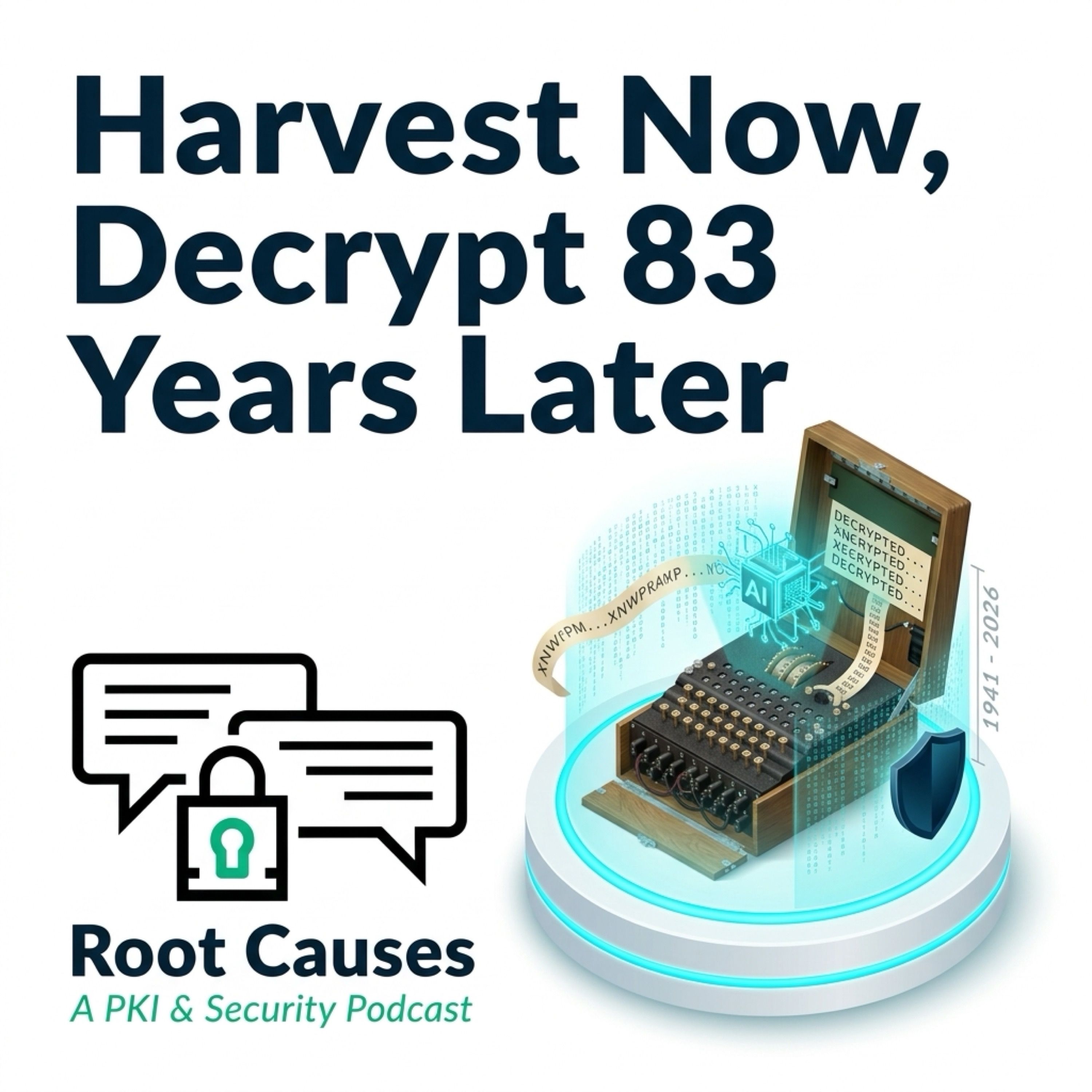
Root Causes 673: Harvest Now, Decrypt 83 Years Later
Researchers have used AI to decode two German Enigma messages that have remained unbroken since the second world war. We describe how this was accomplished.
Root Causes 672: New AI-driven Attack on RSA 1024 Revealed
This year we have seen a series of AI-enabled cryptographic attacks. In this episode we discuss a new exploit to abuse signing mechanisms in HSMs.
Root Causes 671: IETF Releases MTC Draft 6
The PLANTS working group in IETF recently released its draft 6 of the Merkle Tree Certificates standard. We go over what is new in this draft.
Root Causes 670: Apple Announces Its MTC Root Program
Apple has announced it will support Merkle Tree Certificates for PQC and has released a draft root store policy. We share some of the surprising requirements in this draft.
Root Causes 669: The clientAuth EKU Deprecation Is Coming
Publicly trusted client authentication certificates have a hard deadline to be deprecated in Q1 2027. Not everyone is ready for that. We discuss some of the reasons why and what to do about it.
Root Causes 668: AI in 1000 Days - Ownership of IP
In our ongoing series on how AI will change in the next three years, we discuss unresolved questions involving ownership of AI-created or -modified content. Plus, what happens when your AI steals intellectual property without your knowledge?
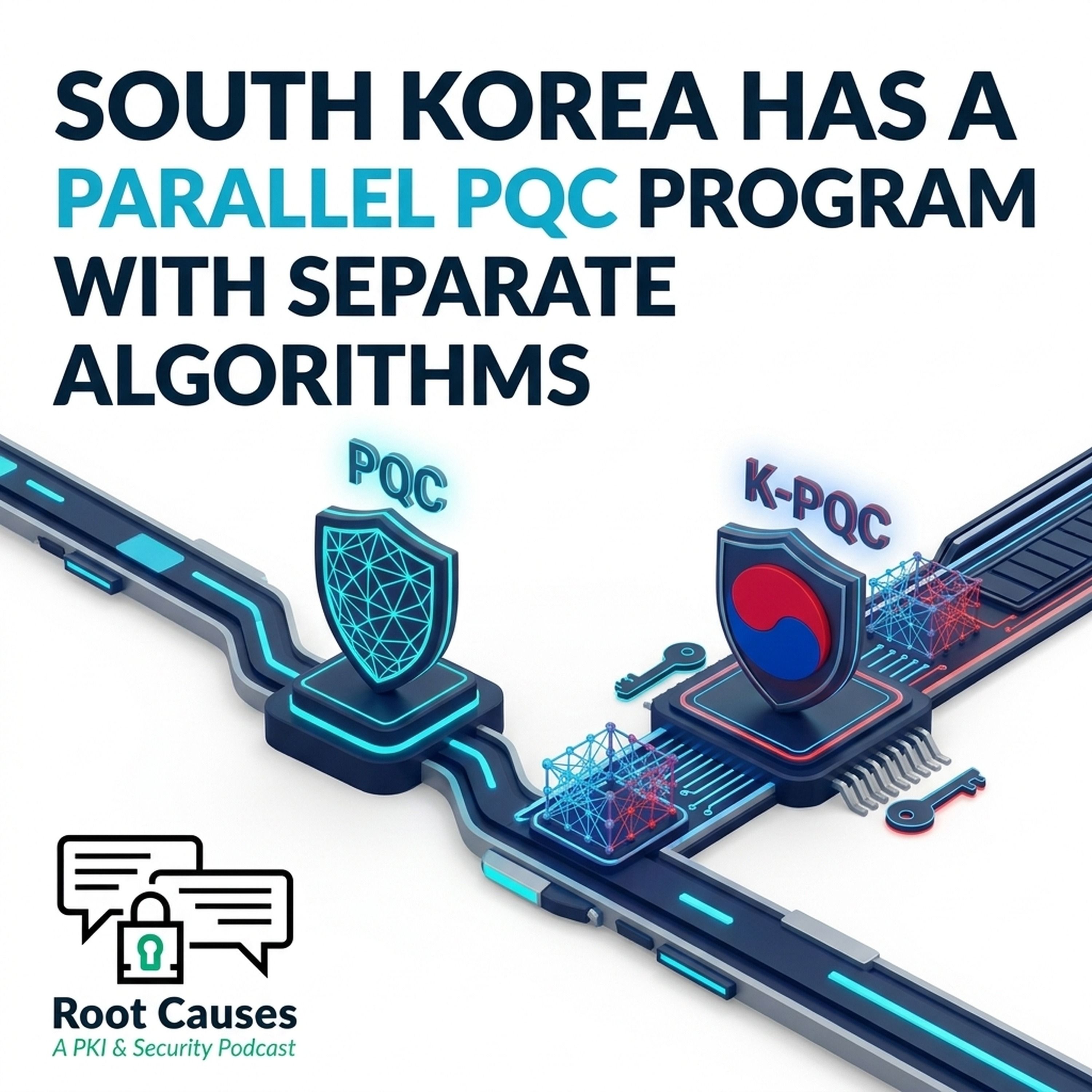
Root Causes 667: South Korea Has a Parallel PQC Program with Separate Algorithms
The NIST contest has not been the only government-led effort to discover qunatum-resistant algorithms. In this episode we describe South Korea's PQC contest, which is entirely independent of the NIST contest.
Root Causes 666: What Is a Scientifically Relevant Quantum Computer? Part 2
In this second of two episodes, we finish our discussion of Scientifically Relevant Quantum Computers (SRQC) and their implications.
Root Causes 665: What is Quantum Security Posture Management (QSPM)?
We define a new term, Quantum Security Posture Management (QSPM) and explain what it is and why it's important for PQC plans.
Root Causes 664: What Is a Scientifically Relevant Quantum Computer? Part 1
Much ado has been made about quantum computers breaking traditional cryptography. But that's not the reason so much effort is going into their creation. In this first of two episodes, we discuss the expected scientific applications for quantum computing architecture and the idea of a Scientifically Relevant Quantum Computer (SRQC).
Root Causes 663: The Trouble with Quantum Key Distribution
Quantum Key Distribution (QKD) is supposed to be this highly secure method of key exchange. But is it as secure as people say? We explore the potential weaknesses with QKD.
Root Causes 662: HAWK Eliminated from NIST Competition, FALCON Unaffected
We follow up on the recent Mythos attack against PQC candidate HAWK. We discuss the impact of this attack on both HAWK and FALCON.
Root Causes 661: What Will Happen with eIDAS and MTC?
TLS certificates from CA/Browser Forum CAs are not the only server certificates in the WebPKI. eIDAS QWACs are treated as server certificates by the major browsers. We see clear progress toward post quantum cryptography (PQC) for TLS by way of the Merkle Tree Certificate (MTC) architecture. But what is the path to PQC for eIDAS? We examine this question.
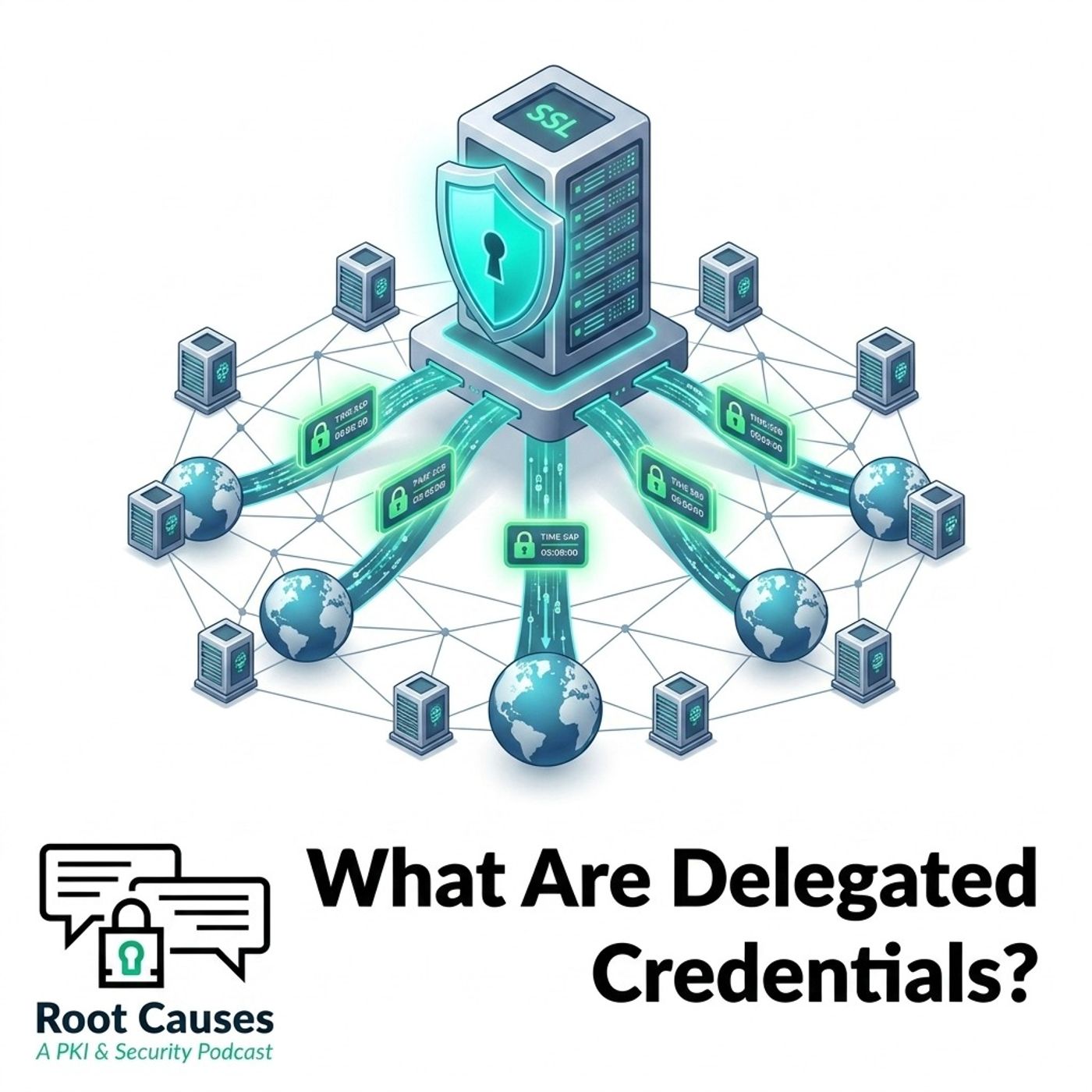
Root Causes 660: What Are Delegated Credentials?
As certificate lifespans become extremely short, new methods of delivery become functionally necessary. We explain RFC 9345 and how delegated credentials play a role in CDNs to deliver very short-lived certificates.
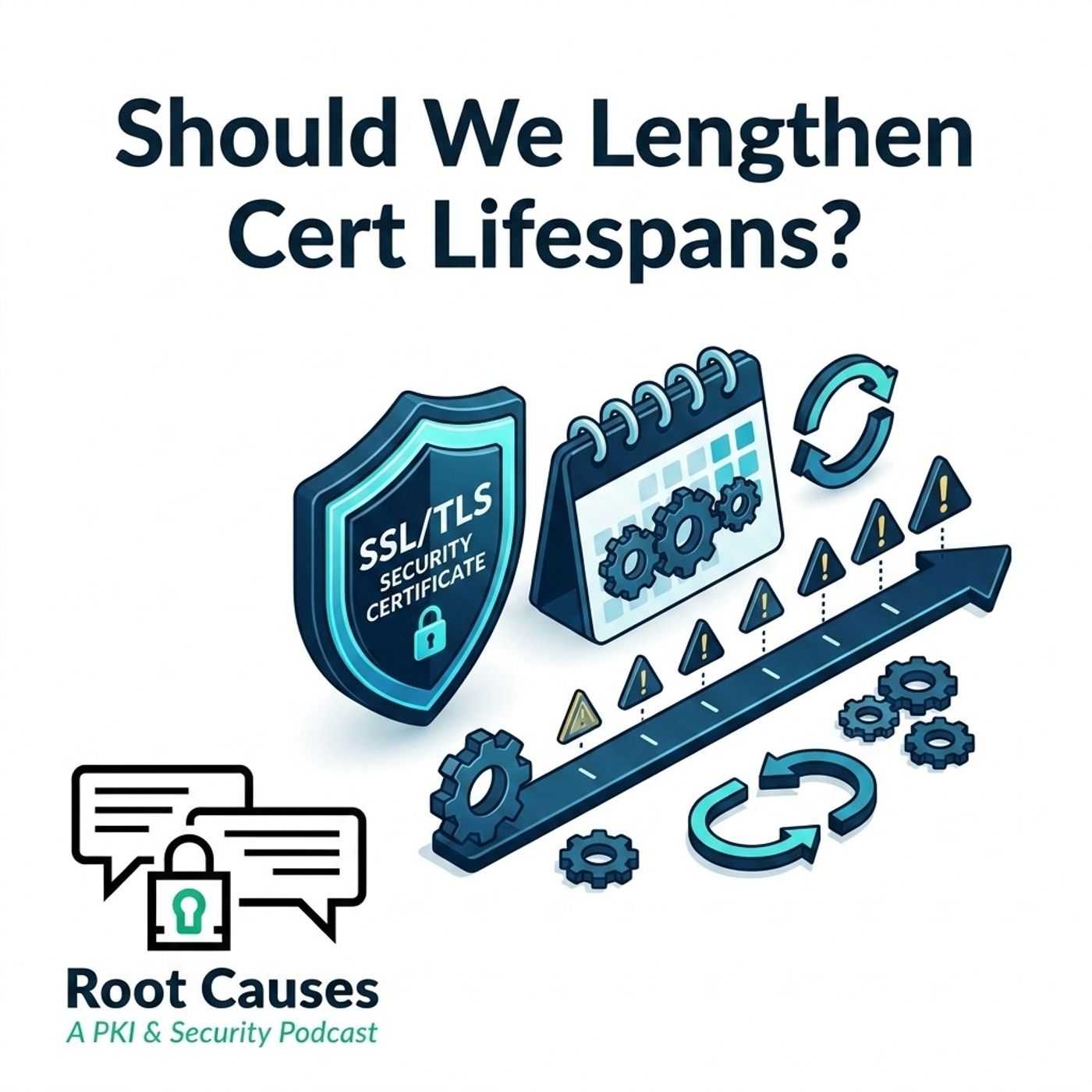
Root Causes 659: Should We Lengthen Certificate Lifespans?
With certificate lifespans shortening, we occasionally run into those who disagree with this trend and seek to lengthen maximum term once again. We examine regressive attitudes in PKI, why they occur, and the reasons that lessening security is generally a bad policy.
Root Causes 658: The Trouble with X9 Certificates
X9 is a consortium certificate for interbanking applications. There is a common misunderstanding that X9 certificates are a public-trust surrogate for mTLS using WebPKI certificates. We clarify why this is not the case.
Root Causes 657: What Is Chaos Engineering?
"Chaos engineering" describes the practice of injecting faults into a system to see what happens. This is a known strategy for deterministic systems, but with the advent of non-deterministic AI systems, chaos engineering has taken on greater importance.
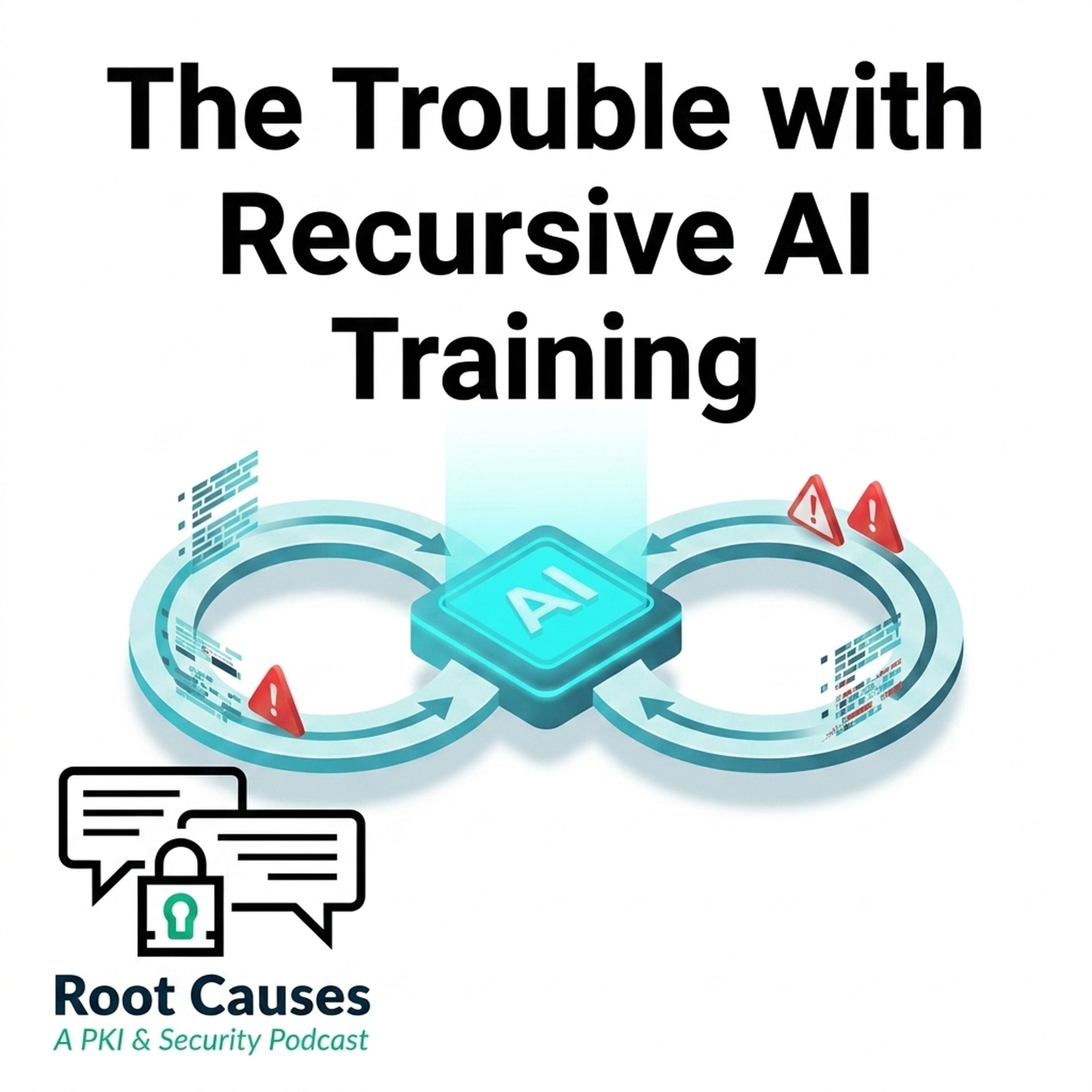
Root Causes 656: The Trouble with Recursive AI Training
Since frontier-model AIs have been trained on a large portion of published human knowledge, widespread publication of incorrect information can taint AI results. As more AI-generated slop finds its way onto the internet, this runs the risk of further poisoning AI results. This ultimately can result in completely unusable information.
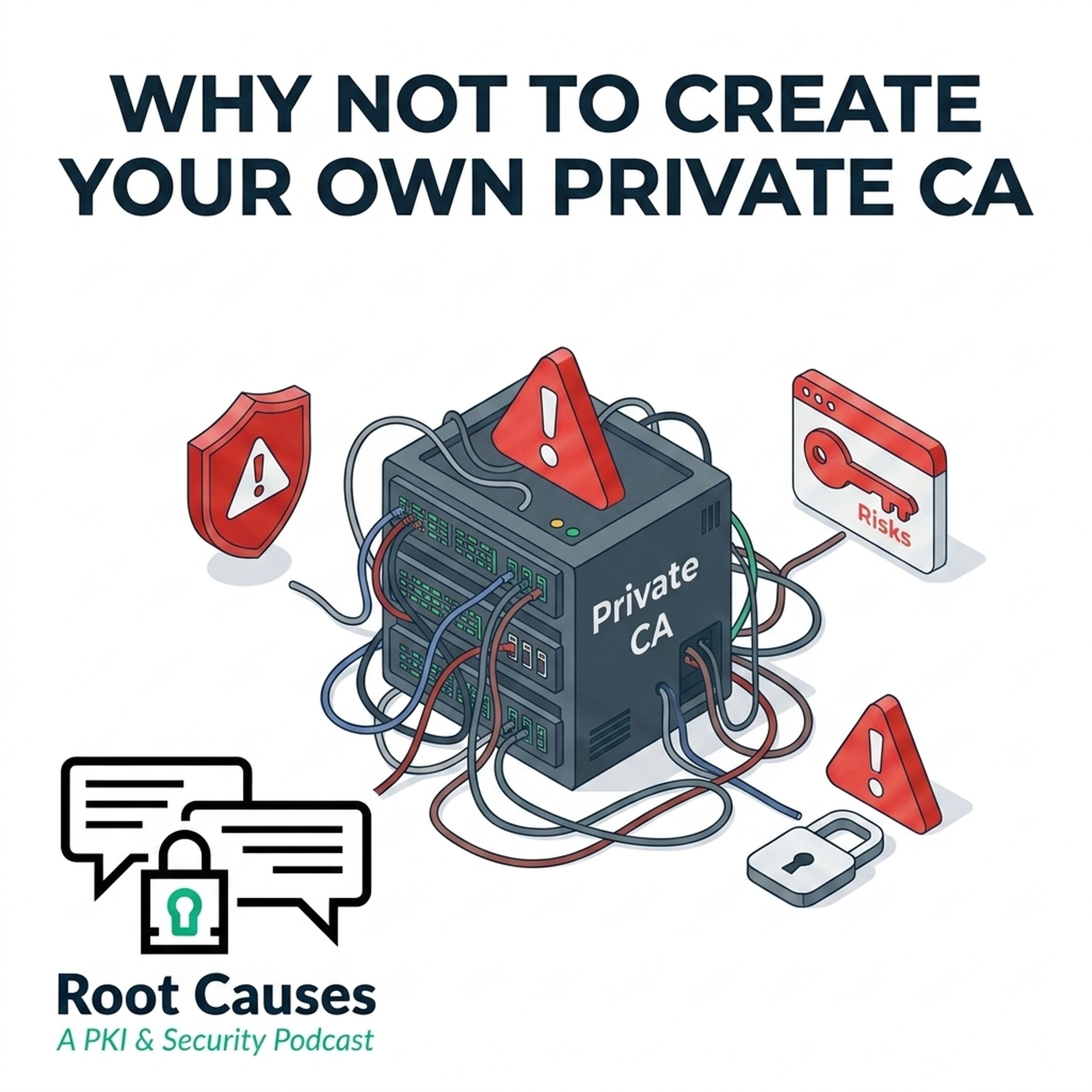
Root Causes 655: Why Not to Create Your Own Private CA
It is possible to use common tools like OpenSSL to create your own ML-DSA private CA. This is a great tool for development and research projects, but Jason explains the pitfalls with trying to do this for production systems.
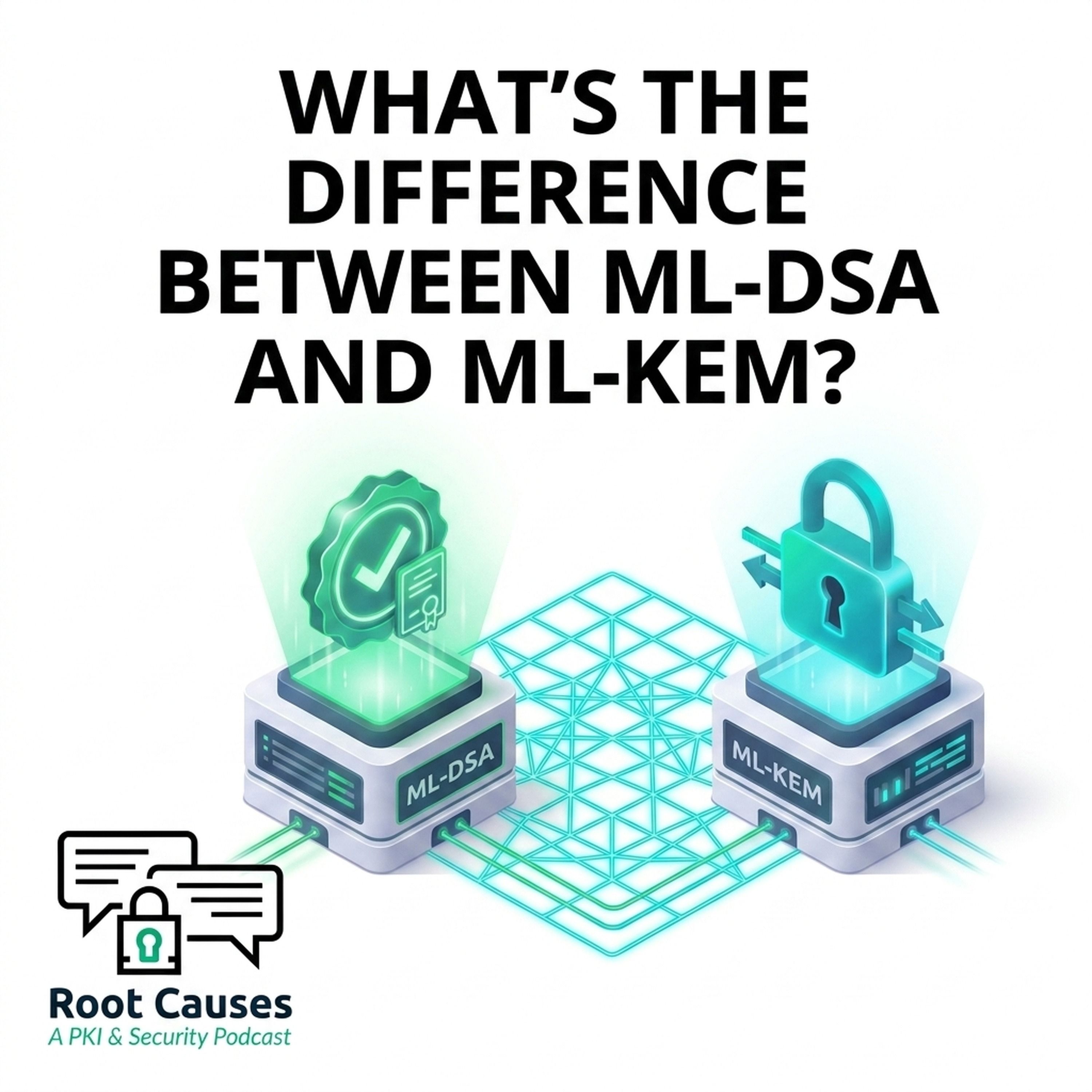
Root Causes 654: What's the Difference Between ML-DSA and ML-KEM?
We are replacing RSA with the combination of ML-DSA and ML-KEM. We explain the naming convention and specifically what these two algorithms do.
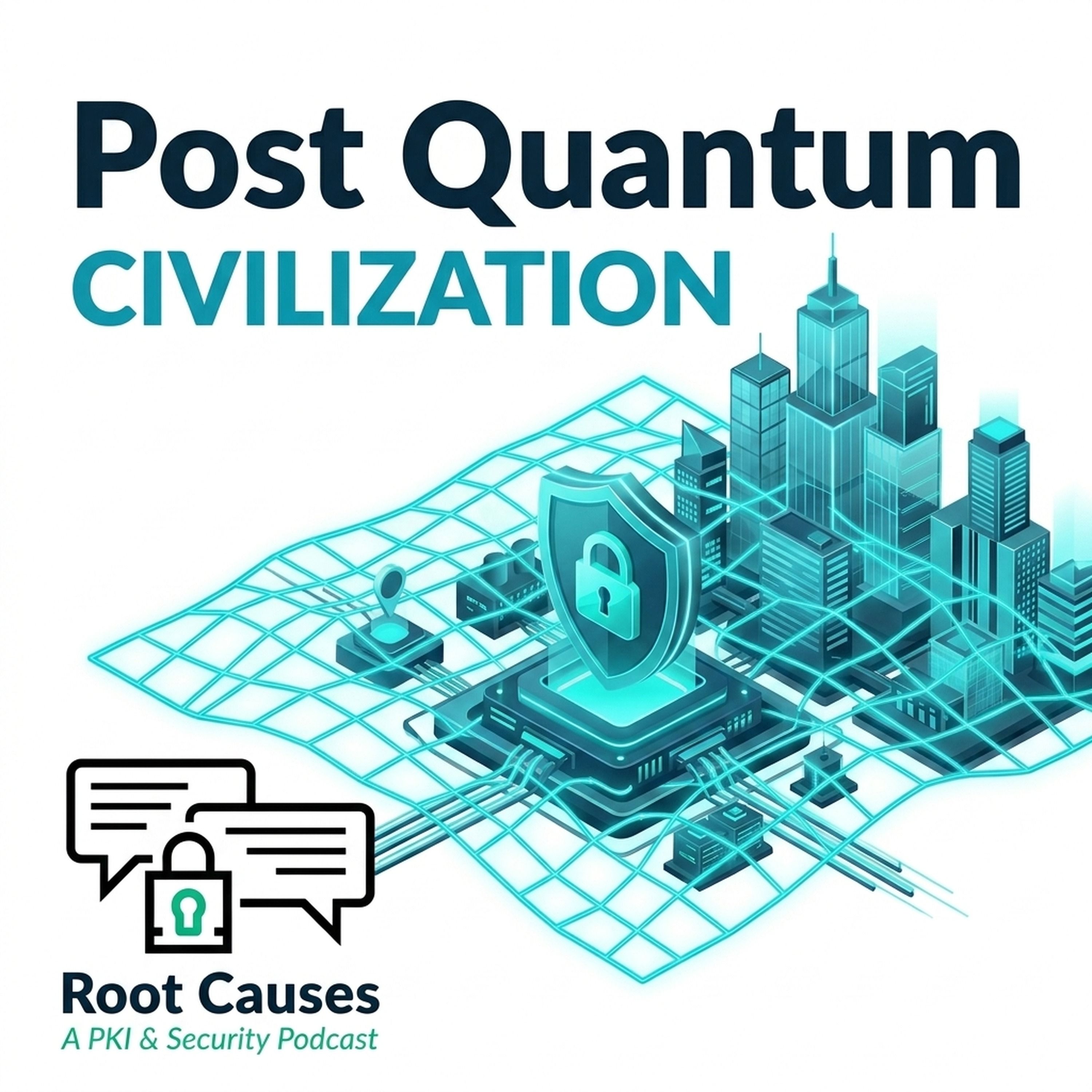
Root Causes 653: Post Quantum Civilization
Jason explains de-quantization, which is the practice of using our knowledge of how to use a quantum computer to reframe problems for processing using traditional computing architecture.
Root Causes 652: Choosing WebPKI Deprecation Dates
There is no CABF or root program rule preventing public CAs from implementing new requirements earlier than their assigned due dates. We discuss reasons to implement a rule early and how early it should be.
Root Causes 651: Look at a Calendar
It is surprising that we continue to see root expirations occur at the most inopportune times. Weekends, public holidays, even New Year's Eve. In this episode we have simple advice to anybody setting up a new root, which is "look at a calendar."
Root Causes 650: Is It Time to Stop Saying SSL?
SSL hasn't been a standard in use for nearly thirty years, but we still use the word. We discuss why that is, what else we might say, and the expected effect of Merkle Tree Certificates (MTC) on our technical vocabulary.
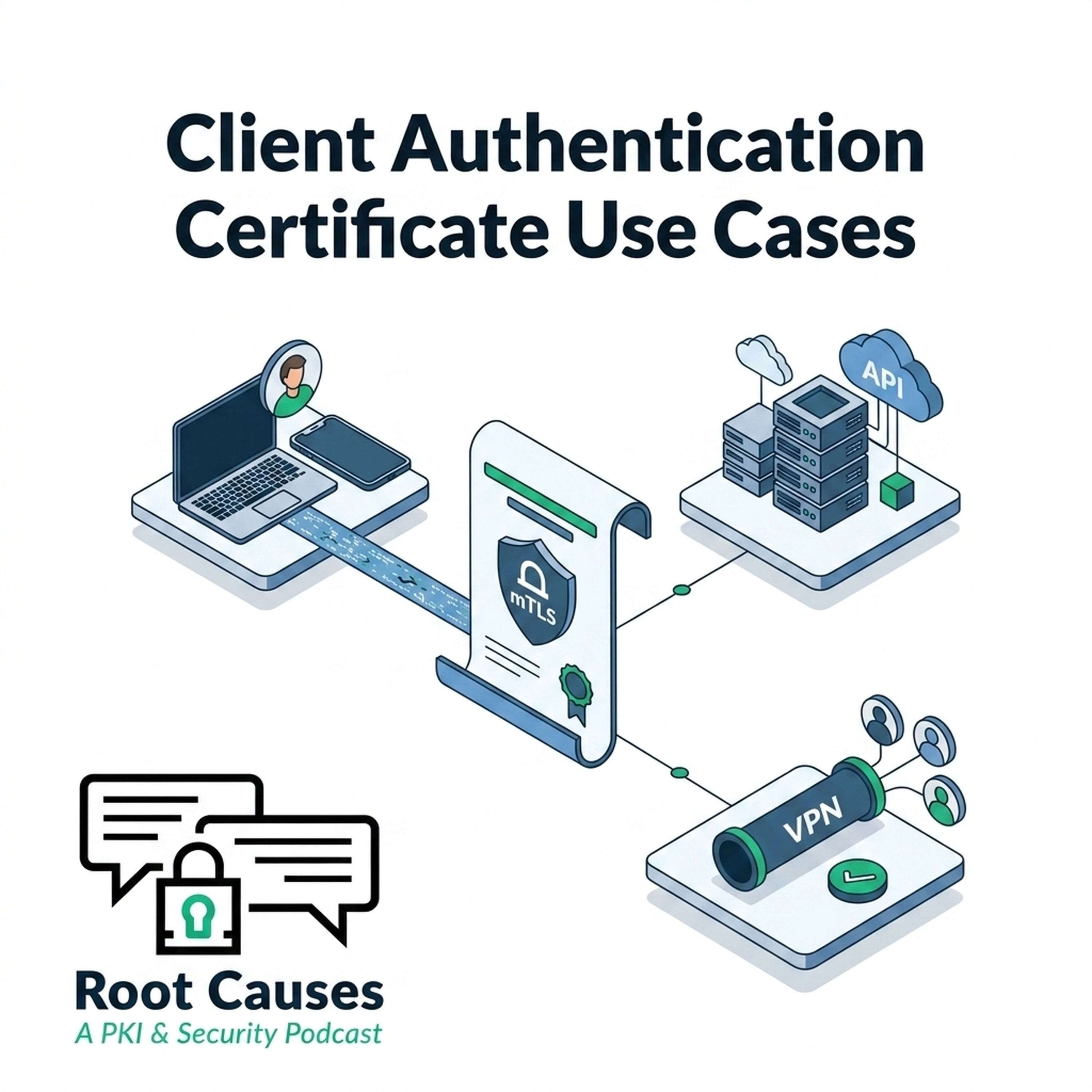
Root Causes 649: Client Authentication Certificate Use Cases
With the upcoming deprecation of client authentication using publicly trusted TLS certificates, we go over the common use cases for these certificates. We discuss the reasons public trust is often chosen and how to transition away from it.
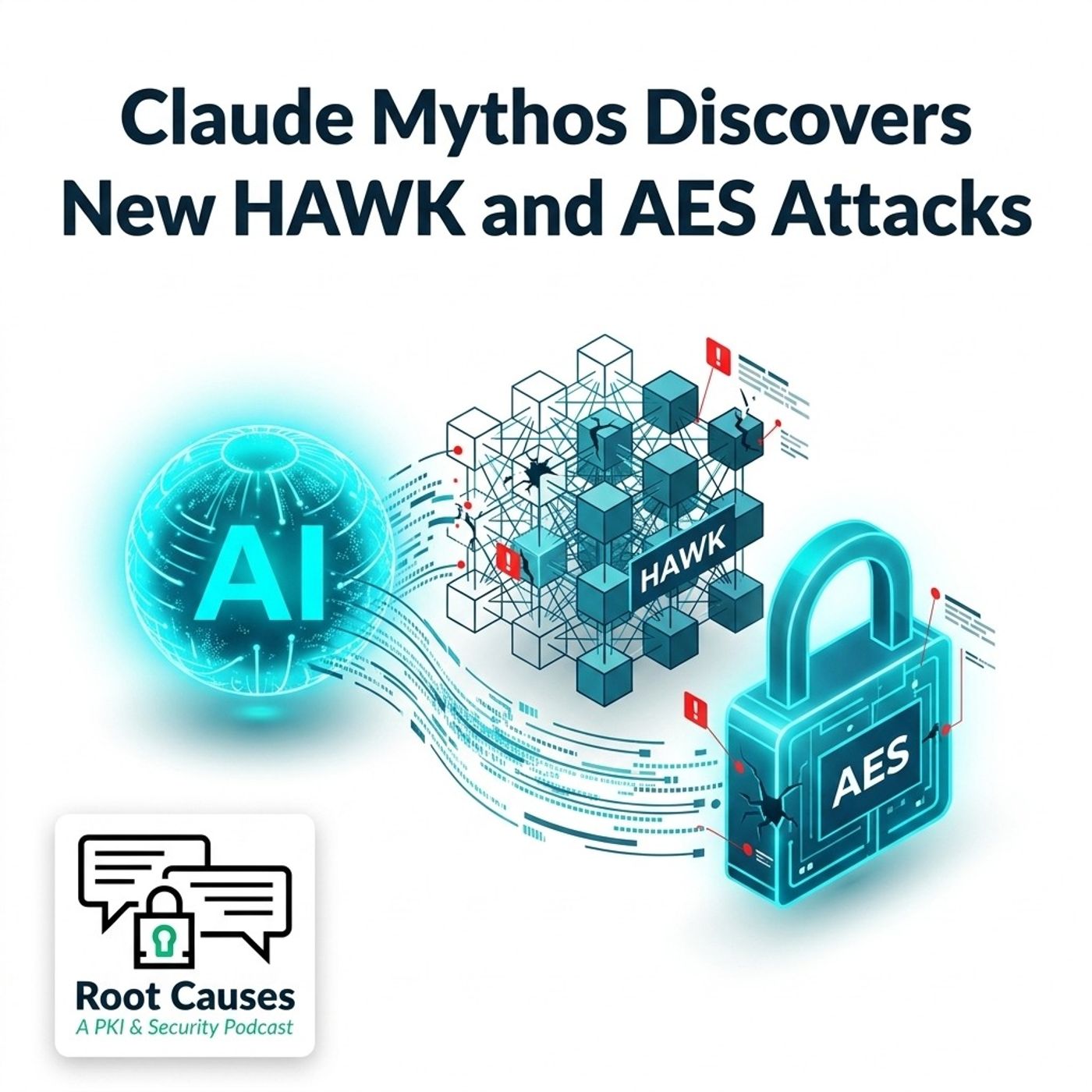
Root Causes 648: Claude Mythos Discovers New HAWK and AES Attacks
Anthropic recently announced that Mythos has found mathematical weakness in the core algorithm for the third-round NIST PQC candidate HAWK, effectively halving its effective key strength. Mythos also developed a faster attack on a round-reduced version of AES-128. These are not implementation attacks but mathematical attacks on the core cryptography. We discuss the massive implications of these de
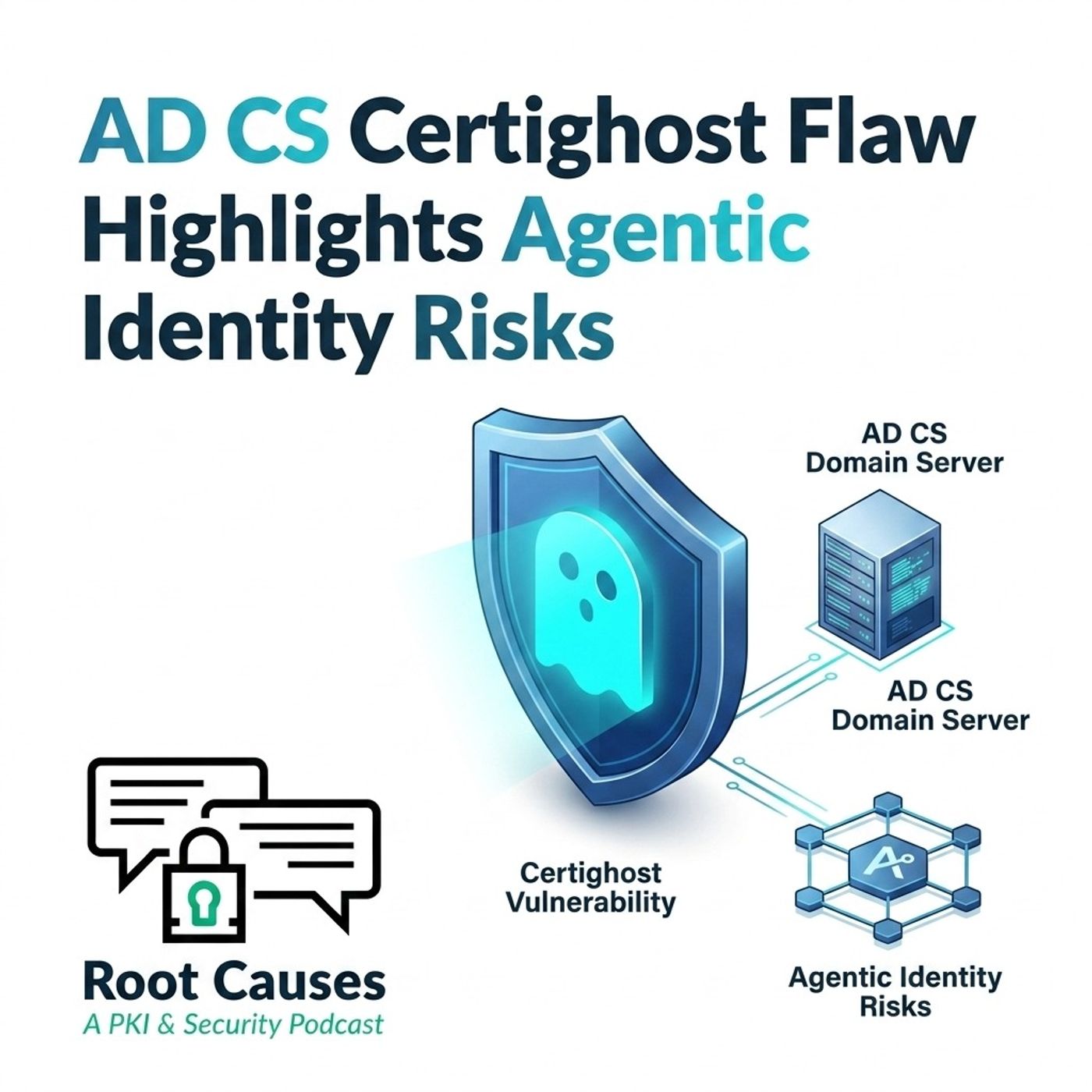
Root Causes 647: AD CS "Certighost" Flaw Highlights Agentic Identity Risks
A newly revealed flaw in Active Directory Certificate Services (AD CS) allows an attacker to improperly obtain cryptographic credentials for an agent. We discuss the implications that this flaw Certighost (pronounced sert-uh-GHOST) has for agentic AI at large.
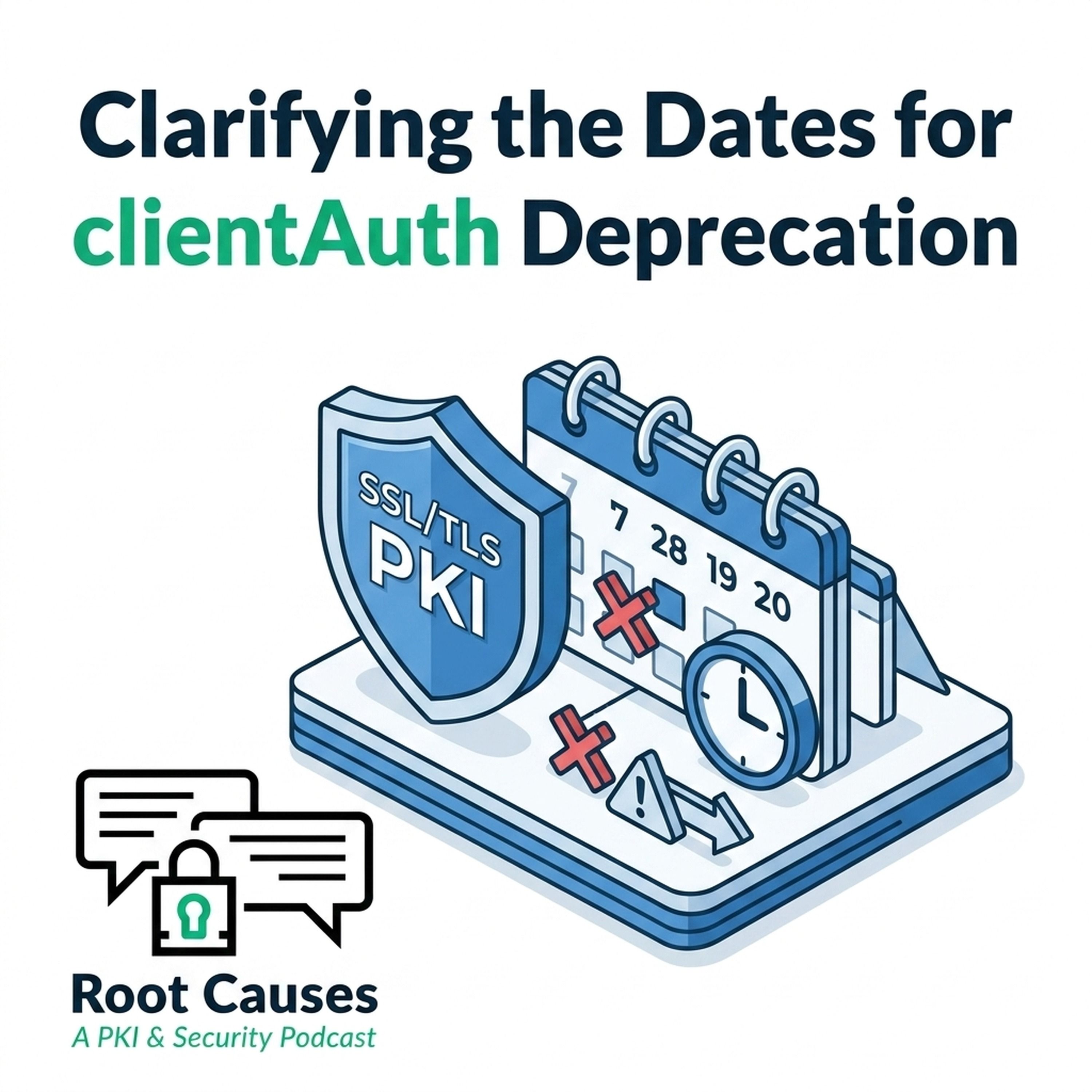
Root Causes 646: Clarifying the Dates for clientAuth Deprecation
Because of a change in the drop-dead date, we have observed confusion in the timeline for deprecation of client authentication and mTLS for public TLS certificates. This is an inflexible deadline, and enterprises that are not ready risk outage. In this episode we spell out these dates very clearly.
Root Causes 645: FAPI 2.0 Principles
In our series on digital identity for AI agents, we discuss FAPI 2.0 as an option.
Root Causes 644: Cryptographically Bound Tokens
In our ongoing series on digital identity for agents, we have previous discussed use of certificates for authentication. In this episode we describe how cryptographic proof of possession can enable secure authentication using tokens.
Root Causes 643: Certificates for Stronger Agent Authentication
We survey different strategies for securely authenticating agentic AI, including certificates and SPIFFE. We discuss Zero Trust and the Principle of Least Privileges as applied to agents.
Root Causes 642: Anthropic to Support SPIFFE/SPIRE
Anthropic has announced its intentions to support SPIFFE/SPIRE with the SPIRE server rooted in an "upstream authority," which will require a root private CA rather than allowing self-attestation for agentic AI.
Root Causes 641: What Is SPIRE?
In our episode 640 we defined SPIFFE, which provides digital identity for agentic workloads. In this episode we explain SPIRE (SPIFFE Runtime Environment), the SPIFFE certificate provisioning protocol.
Root Causes 640: What is SPIFFE?
SPIFFE (Secure Production Identity Framework for Everyone) is a standard for digital identity for agentic workloads. In this episode we explain.
Root Causes 639: Fighting Static API Key Spillage Is Like Fighting Gravity
Static API keys are a common security practice. In this episode we discuss the risk of these keys being revealed, including directly by the AIs that use them.
Root Causes 638: Catfishing
Tim shares his very personal experience with would-be catfishers and we talk about how AI is set to change the catfishing attack.
Root Causes 637: Is It Time to Get Rid of EV SSL?
The Baseline Requirements, CT logs, the Bugzilla Bloodbath, shortening certificate lifespans, all these trends serve to enforce a high level of quality and predictability across WebPKI certificates. Nearly twenty years after the introduction of EV SSL, we ask if it has served its purpose and should be retired.
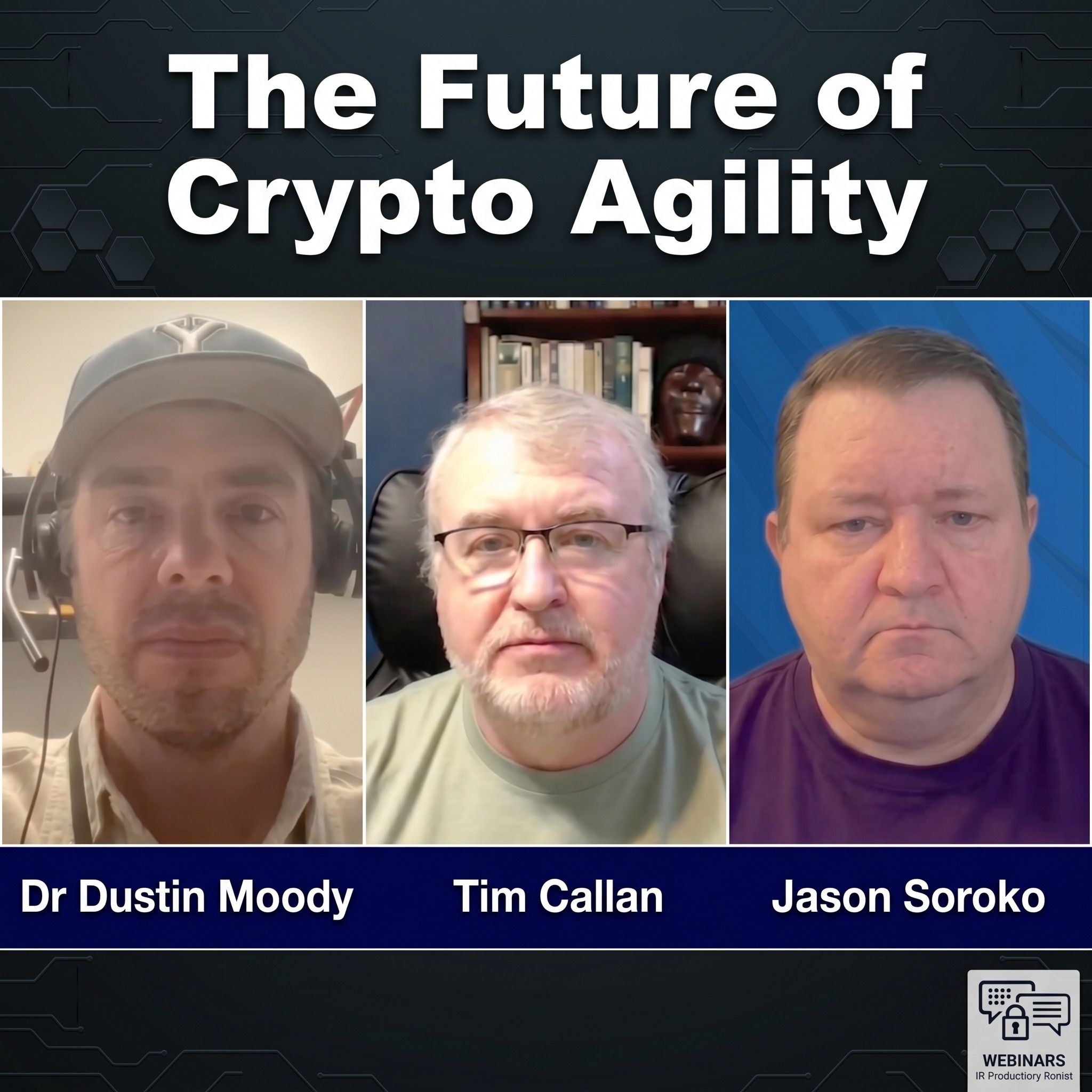
Root Causes 636: The Future of Crypto Agility
Dustin Moody of NIST joins us to talk about the evolution of standardized cryptography beyond the current PQC efforts. Topics include maintaining visibility on cryptography presently in use, 50 years of RSA, and cryptographic heterogeny.
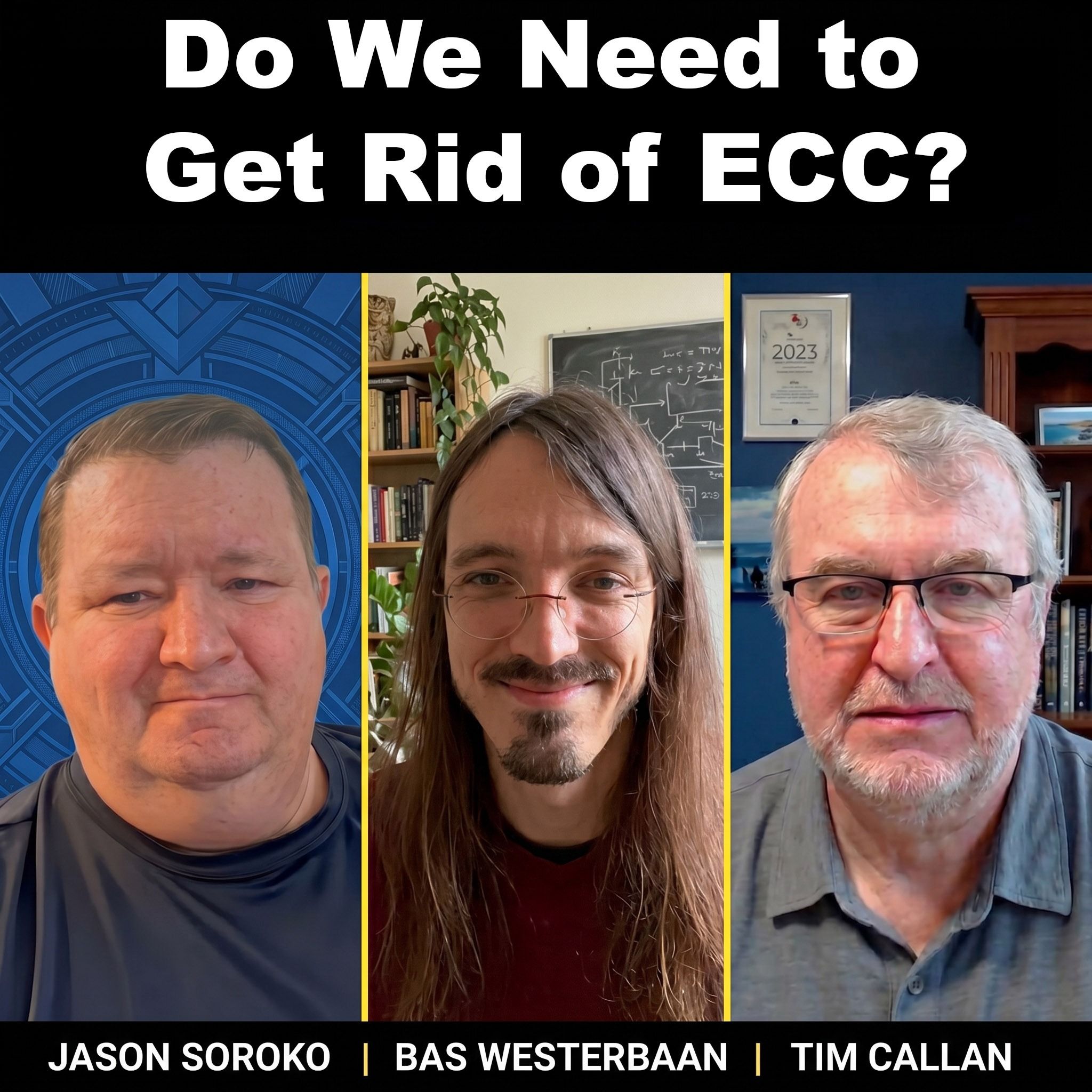
Root Causes 635: Do We Need to Get Rid of ECC?
Bas Westerbaan of Cloudflare joins us to discuss recent information that heightens concerns about Elliptic Curve Cryptography (ECC) and its vulnerability to a cryptographically relevant quantum computer (CRQC). We pose the question do we need to deprecate ECC in advance of our migration to ML-DSA and other PQC algorithms.
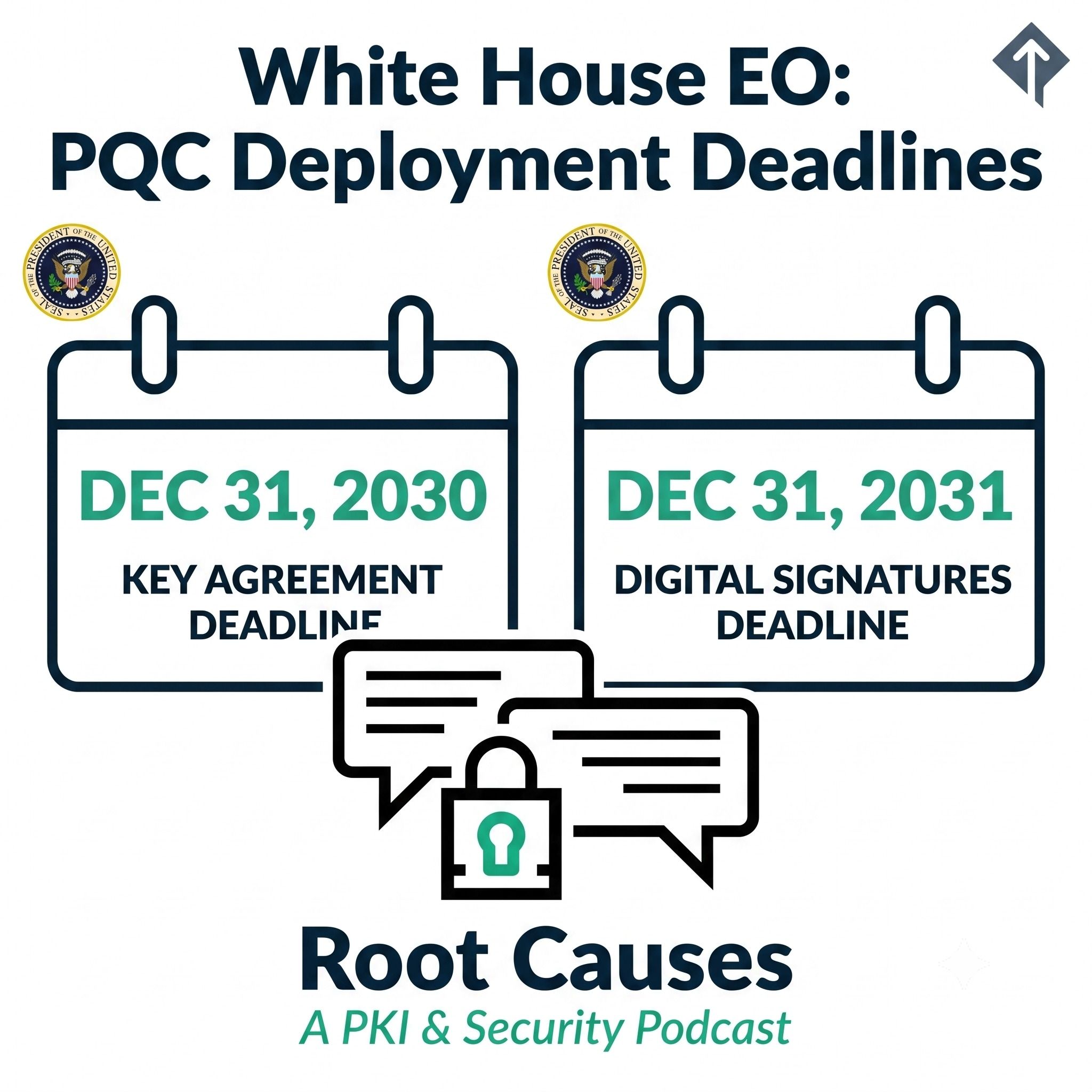
Root Causes 634: White House Executive Order Accelerates PQC Deployment
A new Executive Order (EO) moves the deadline for ML-DSA deployment up to 2031. We talk about why this happened and its implications on government, the technology industry, and enterprises around the globe.
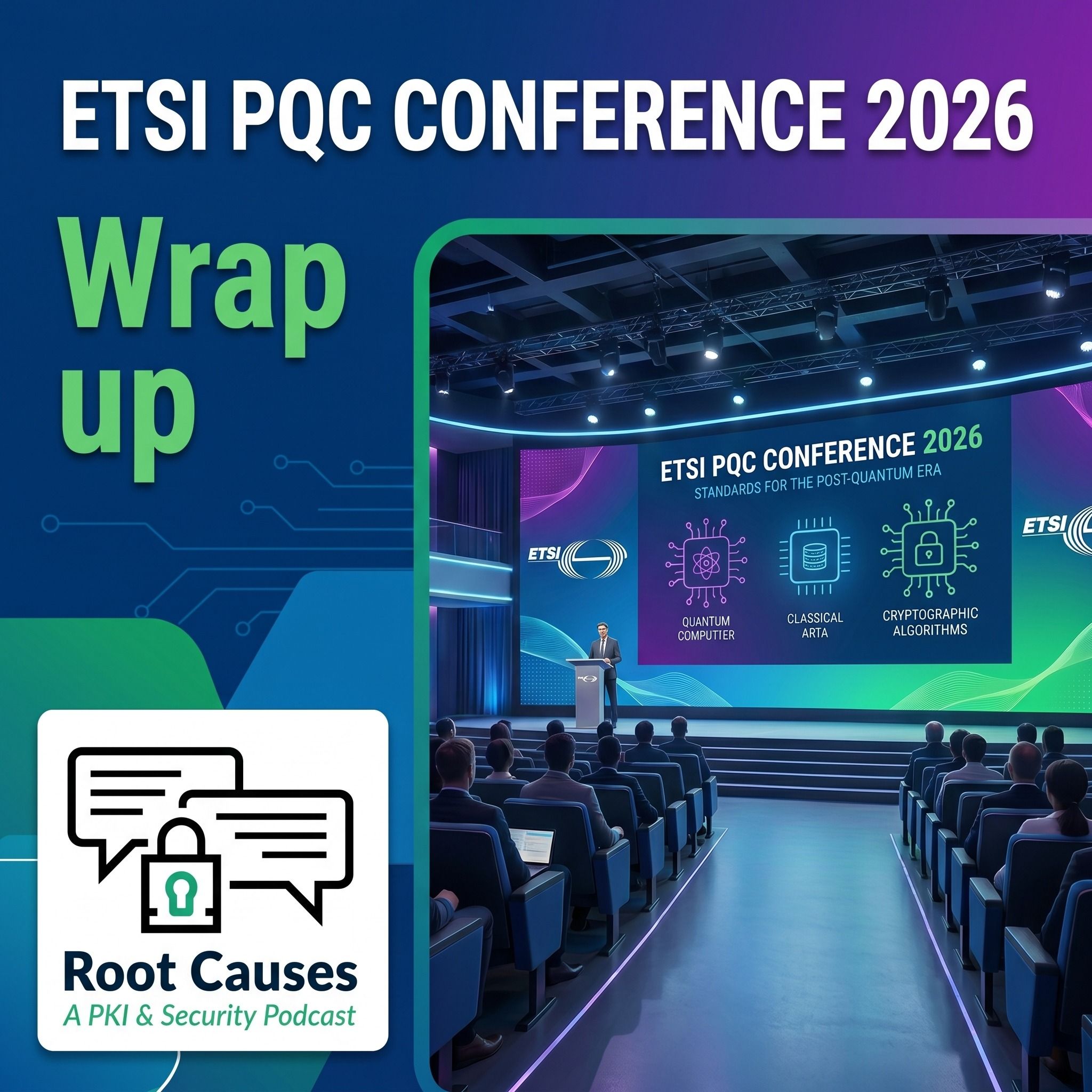
Root Causes 633: ETSI PQC Conference Wrap Up
We are freshly returned from the 2026 ETSI PQC Conference. We give a debrief on the conference, including the difference between post quantum cryptography (PQC) and quantum key distribution (QKD), the algorithmic zoo, PQC for blockchain, the Dunning Kruger Effect, and cryptographic Frogger.
Root Causes 632: Gartner Risk and Security 2026 Wrap Up
We recently attended the Gartner Risk and Security conference for 2026, where we observed a great deal of attention on not only AI but also post quantum cryptography (PQC). Join us as we share the key takeaways.
Root Causes 631: Did the Bugzilla Bloodbath Change Anything?
2024 saw a flurry of high profile incidents for public CA, which we named the Bugzilla Bloodbath. We look back to see how the WebPKI has changed as a consequence.
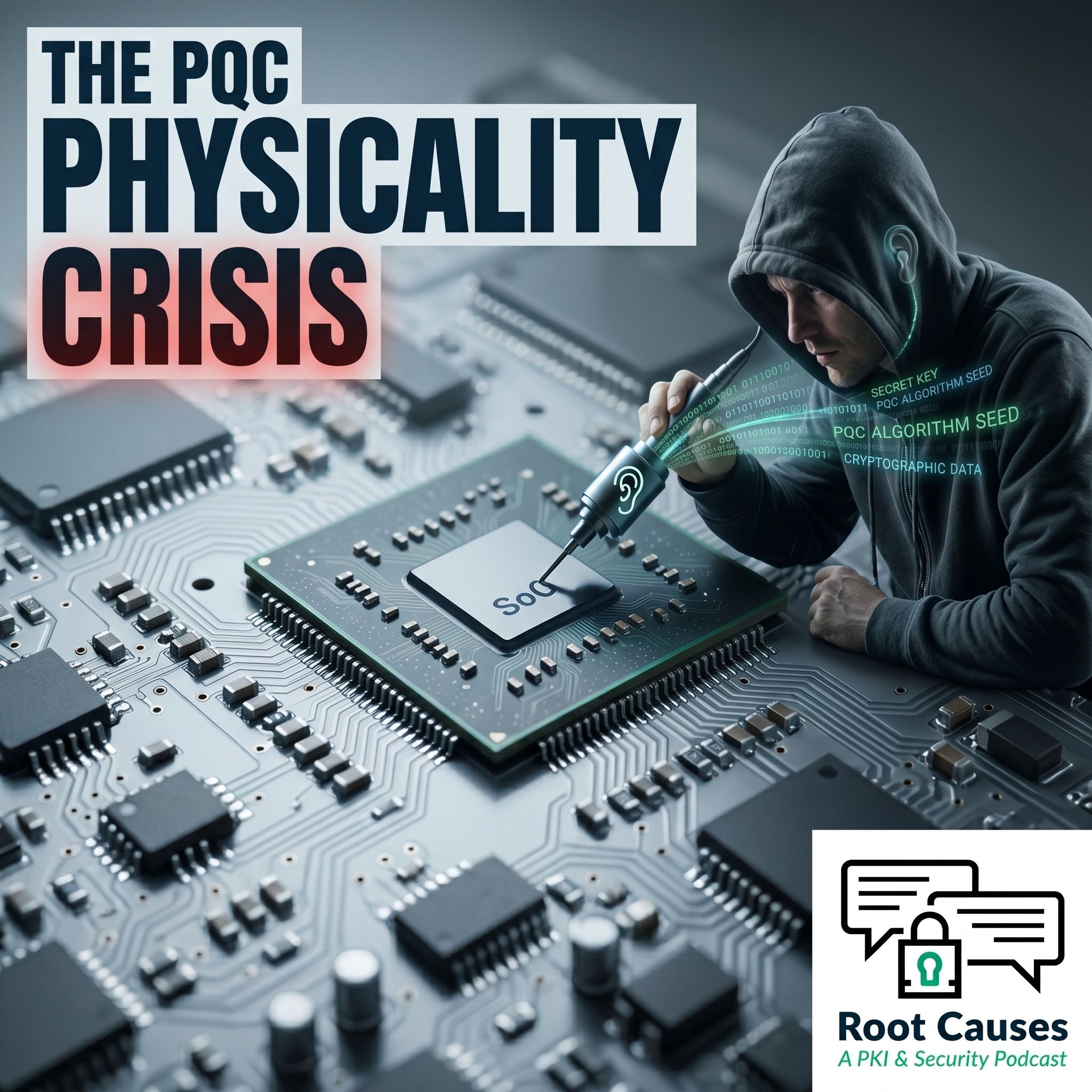
Root Causes 630: The PQC Physicality Crisis
Resource-constrained devices may need to address PQC through real-time, seed-based, key generation. Unfortunately, this leaves the full key exposed very briefly in RAM. The potential consequences of this are far-reaching and scary. We go into the details.
Root Causes 629: Does the Evidence Support Moving PQC Deadlines to 2029?
Sam Jaques of the University of Waterloo returns to discuss his tracking of progress in quantum computers and offer a perspective on moving our PQC deadlines up to 2029.
Root Causes 628: PI-DOS (Prompt Injection-based Denial of Service)
An emerging attack against AIs is to create a significantly complex and recursive prompt that will occupy the AI indefinitely or for a sufficiently long time that it acts as a Denial-of-Service (DoS) attack. We describe how this works.
Root Causes 627: UK vs Apple E2EE Backups
In the latest in our coverage of government versus encryption, the UK issued secret orders to Apple to give it a cryptographic backdoor to Apple's advanced data protection capability for iCloud. Apple responded by eliminating encryption entirely for UK users. We break it down.
Root Causes 626: TLS 1.3 Roadblock
TLS 1.3 is required to take advantage of post quantum cryptography (PQC) algorithms. Yes, we still see a lot of TLS 1.2 or earlier in deployment. We examine why this is the case and what to do about it.
Root Causes 625: AI in 1000 Days - Cyber Defense
Recent revelations about Mythos and its ability to expose vulnerabilities have forced us to rethink basic assumptions about cyber defense. In our "AI in 1000 Days" series, Jason Soroko and I examine the implications of these revelations three years from now. This includes upping the overall pace of attack and changes to best practices in cyber security defense.
Root Causes 624: Implications of Mythos
Anthropic has delayed its widespread release of Mythos to give major software providers a chance to close off the many vulnerabilities it has discovered. We dig into the vast implications of Mythos and other AI models for the future of cybersecurity.
Root Causes 623: Are PQC Key Sized Big Enough?
We discuss the possibility that our standardized ML-DSA keys turn out to be too short for true confidence, why that might occur, and the implications for private PKI certificates.
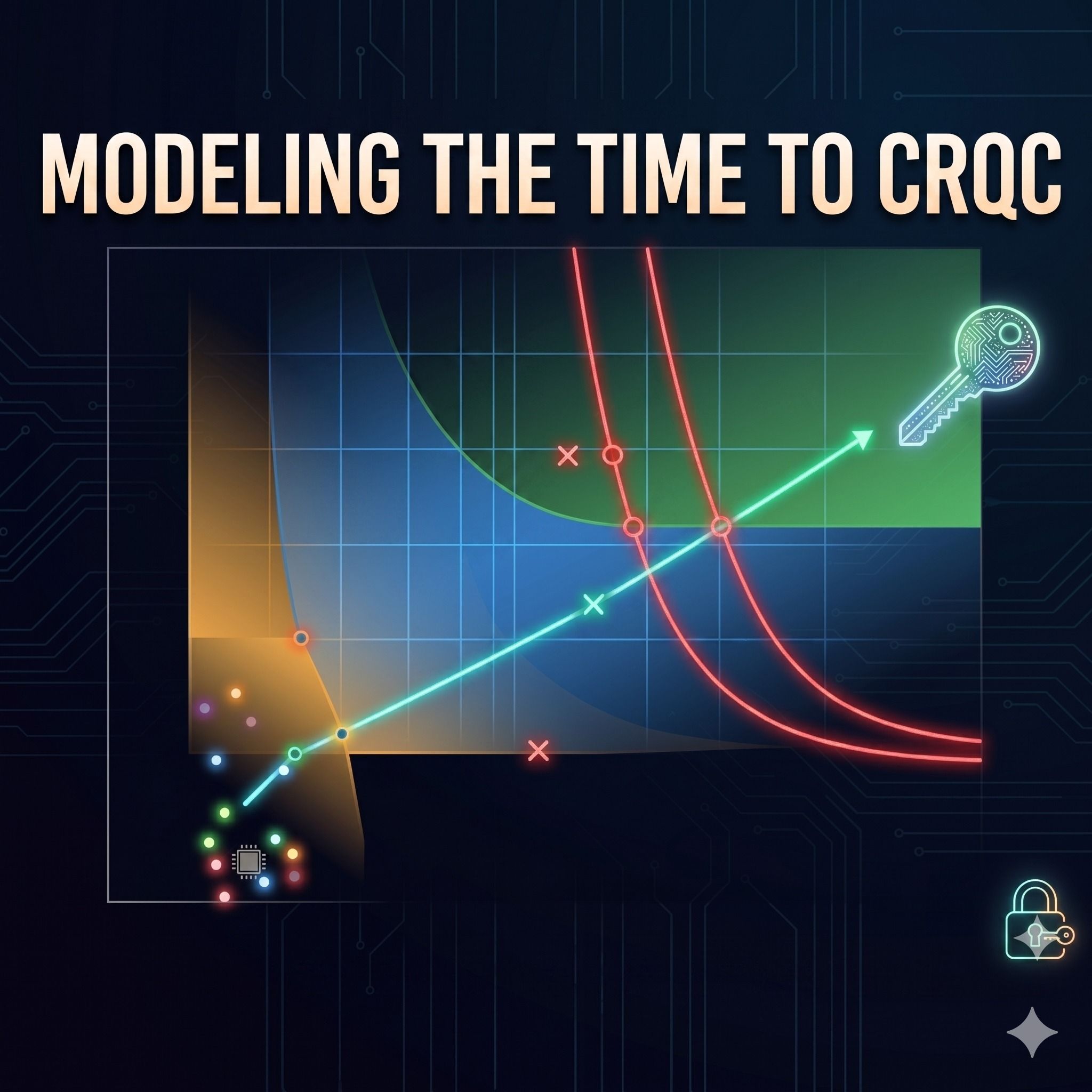
Root Causes 622: Modeling the Time to CRQC
Sam Jaques joins us to explain his much-referenced chart mapping progress toward cryptographically relevant quantum computing (CRQC).
Root Causes 621: Simplicity at Scale
We break down the phrase "Simplicity at Scale" to see what it means to us in the context of CAs and CLM.
Root Causes 620: Will NIST Update Its PQC Timelines?
A few years ago NIST proposed deadlines for PQC deployment at 2030 and 2035. But recent announcements from Google and Cloudflare suggest 2029 as a better deprecation target. We are joined by Dustin Moody to get the NIST perspective on these announcements.
Root Causes 619: Do We All Need to Adopt PQC by 2029?
Recent announcements from Google and Cloudflare have declared new 2029 deadlines for full post quantum cryptography (PQC) migration. Bas Westerbaan explains the rationale behind Cloudflare's decision and discusses implications for other enterprises, asking "Are you a gambler?"
Root Causes 618: MTC and Private PKI
Repeat guest Bas Westerbaan of Cloudflare joins us to explore the role of Merkle Tree Certificates in private CA scenarios with an eye toward where they will be needed and where traditional PKI will be better suited.

Root Causes 617: What Are X9 Certificates?
The US-based X9 financial industry consortium has created a server certificate. We explain what X9 certificates are and suitable use cases for this certificate type.
Root Causes 616: NIST and Merkle Tree Certificates
Dustin Moody of NIST joins us to discuss Merkle Tree Certificates (MTC) and the NIST position on them.
Root Causes 615: What Is IETF PLANTS?
Repeat guest Bas Westerbaan of Cloudflare joins us to explain the PLANTS working group in IETF, which is driving standards around post quantum cryptography (PQC) and Merkle Tree Certificates (MTC). Bas explains the path to becoming a final standard, where we are in this process, and how you can get involved.
Root Causes 614: MTC and Downgrade Attacks
It's reasonable to believe that Merkle Tree Certificates (MTC) and traditional RSA will co-exist on the same servers for years, if not decades, during the transition to post quantum cryptography (PQC). Bas Westerbaan of Cloudflare joins us in this episode to explore the possibility of quantum downgrade attacks and what we can do about them.
Root Causes 613: Status of the NIST PQC Contests
We are joined by Dustin Moody of NIST to go over the current state of the various post quantum cryptography (PQC) contests, including upcoming FIPS standards for Falcon (FN-DSA) and HQC, other Round 4 algorithms, the digital signing algorithm (DSA) On Ramp, isogeny, and future cryptographic exploration.
Root Causes 612: What Do Subscribers Need for MTC?
We are joined by Bas Westerbaan of Cloudflare to explain considerations and requirements for use of Merkle Tree Certificates (MTC). This includes full adoption of TLS 1.3, offering PQC and RSA at the same time, the imperative value of automation, and running production MTC in 2027.
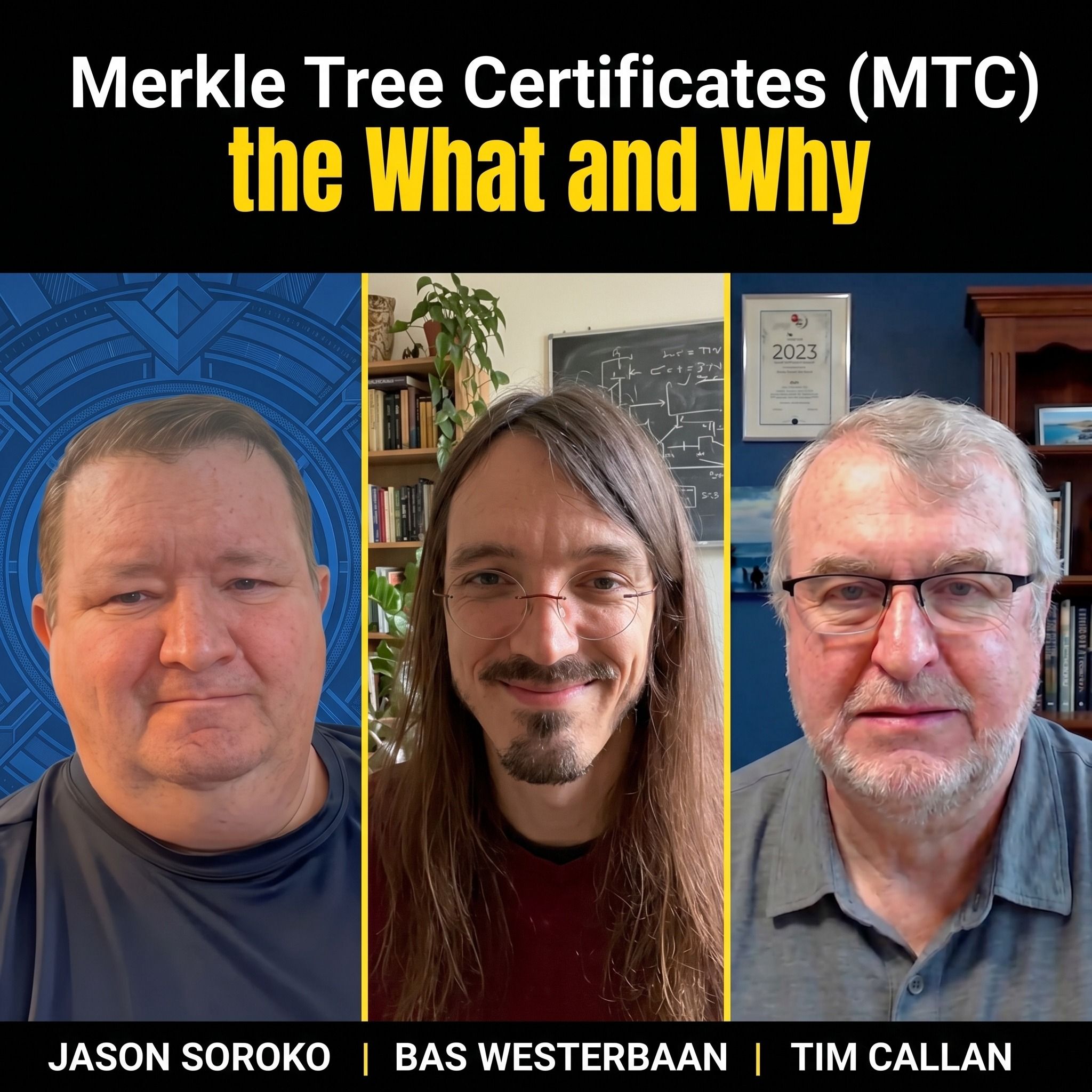
Root Causes 611: Merkle Tree Certificates, What and Why
There are strong reasons to believe that the architecture of PQC TLS will take the form of Merkle Tree Certificates (MTC). We are joined by post quantum cryptography expert Bas Westerbaan of Cloudflare as he explains this new PKI architecture, how it works, and why we need it. We define new concepts like landmark certificates and log mirrors and discuss what's necessary to move to this new archite
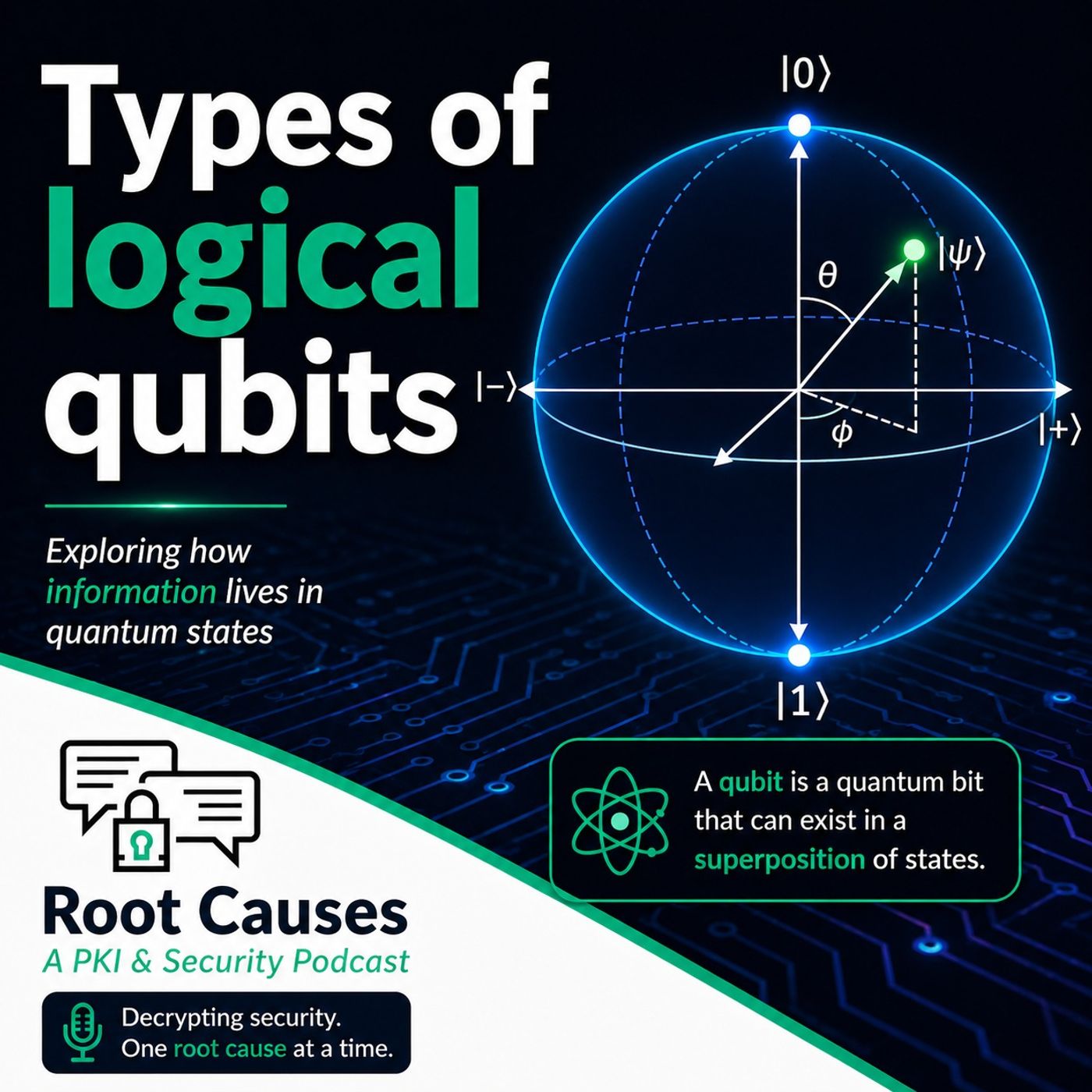
Root Causes 610: Types of Logical Qubits
We describe three different kinds of logical qubits with their relative strengths and weaknesses.
Root Causes 609: Side Channel Apocalypse
Jason explains the extreme danger of side channel attacks in the new post quantum cryptography (PQC) era.
Root Causes 608: The Fragility of Formal Verification
The reliability of cryptographic algorithms is largely a matter of conjecture based on track record. Proving security is impaired by the difficulty of formal verification, implementation weaknesses, and failure in randomness.
Root Causes 607: PKI That's Hard to Discover
The first of the five pillars of Certificate Lifecycle Management (CLM) is discovery. While many of your certificates are easily discoverable, some difficult PKI remains.
Root Causes 606: What Is the UK Online Safety Act?
The UK Online Safety Act intends to force vendors who sell hardware and software to allow the government to scan end-to-end encrypted communication on end devices. We once again marvel at governments seeking to undermine the security of their own citizens.
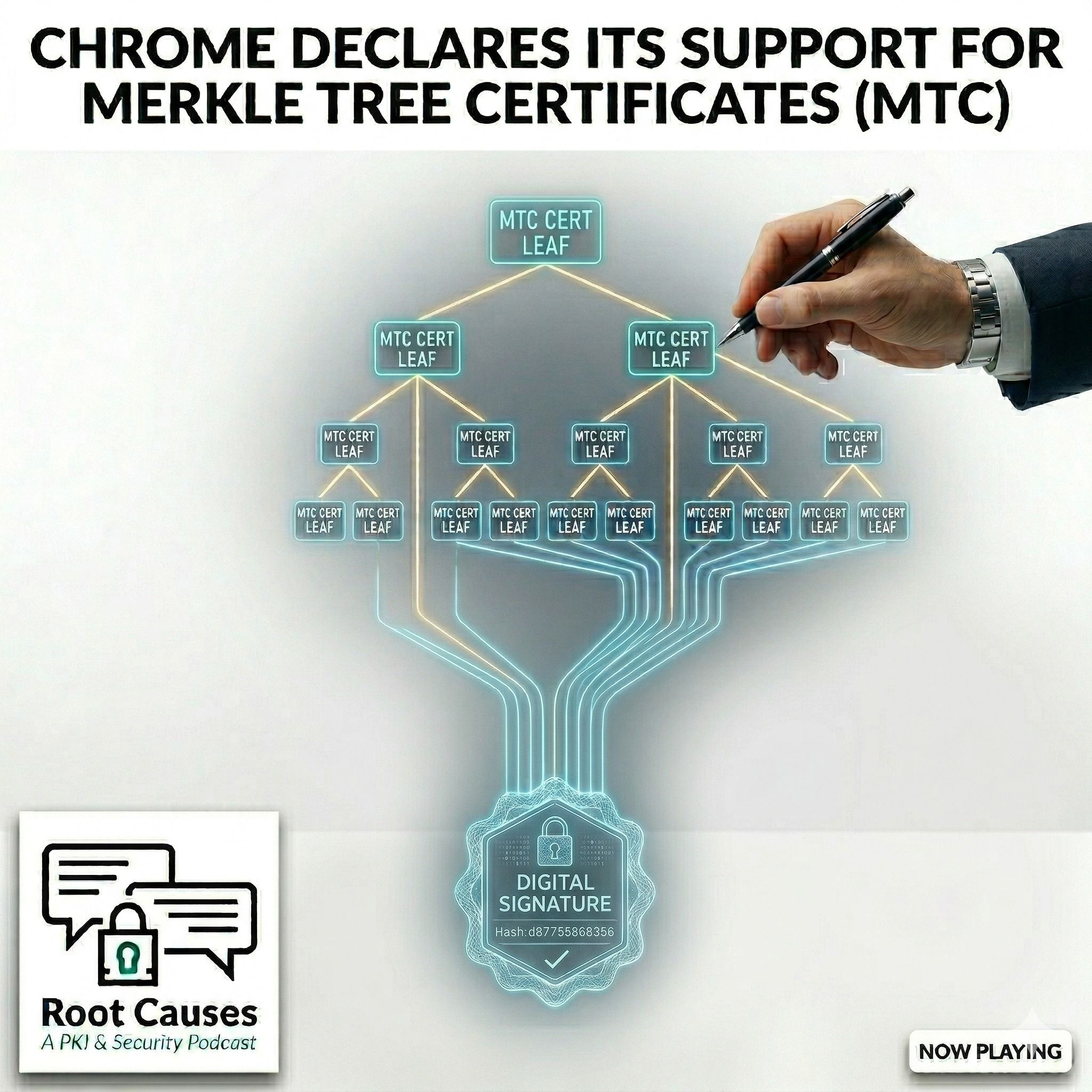
Root Causes 605: Chrome Declares Its Support for Merkle Tree Certificates (MTC)
Google has taken a strong position supporting Merkle Tree Certificates (MTC) as the PQC-enabled future for SSL / TLS. We unpack this extremely important position from the WebPKI's most influential organization.
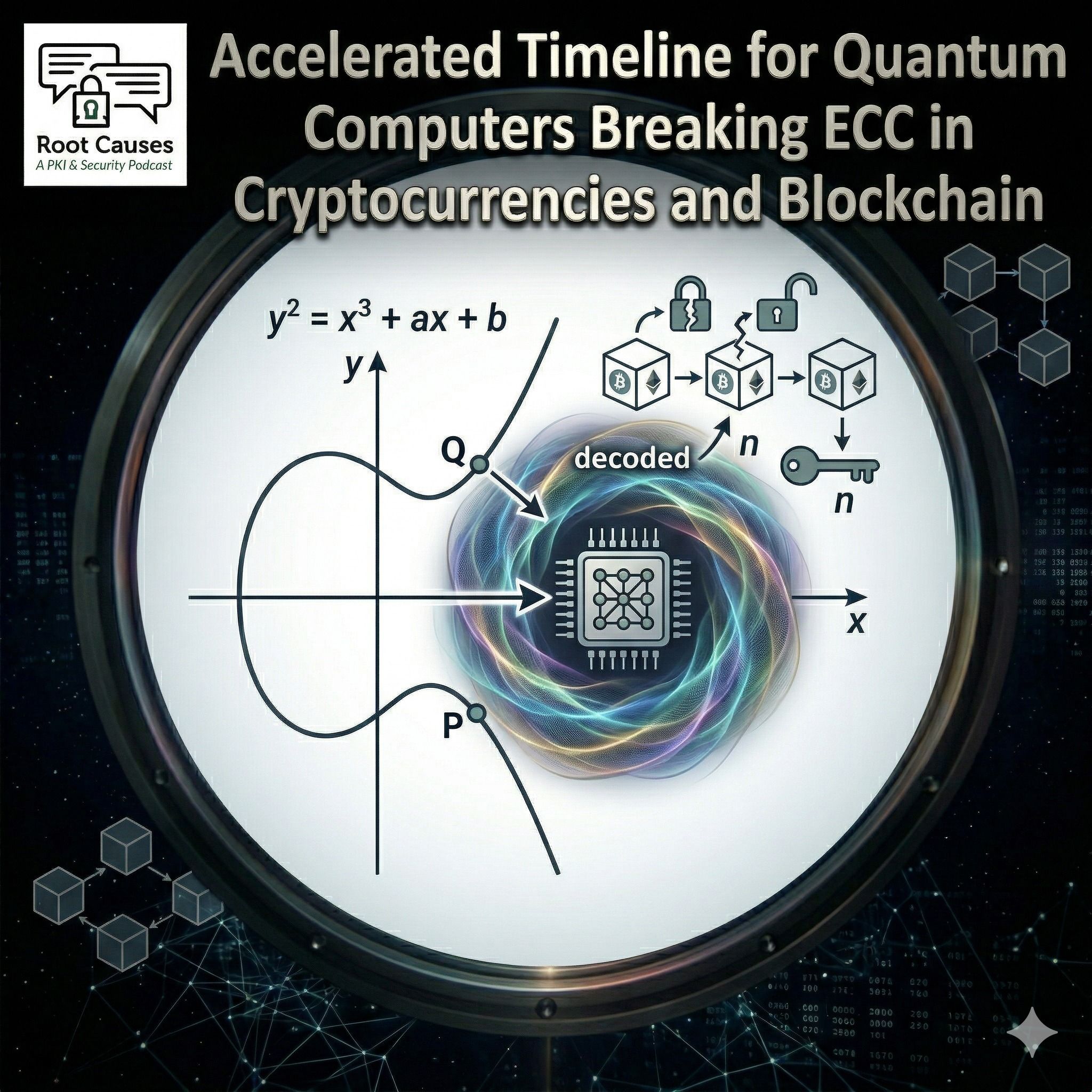
Root Causes 604: Accelerated Timeline for Quantum Computers Breaking ECC in Crypto and Blockchain
A new paper from Google Quantum AI and others documents a new technique for breaking ECC, particularly the curve protecting crypto currencies, smart contracts, and blockchain. This accelerates post quantum cryptography (PQC) timelines.
Root Causes 603: Cryptographically Relevant Quantum Computing (CRQC) with Only 10,000 Qubits
New research suggests that a cryptographically relevant quantum computer is achievable with only 10,000 qubits. This was an important contributor to Google moving its PQC target to 2029.

Root Causes 602: Google Moves the PQC Date Forward to 2029
Google has announced that it is moving its target for full PQC support to 2029. This is a strong statement from one of the most knowledgeable PQC technology companies that the existing 2030 target is too late.
Root Causes 601: The Zombie in the Server Room
Legacy PKI implementations in the enterprise are holding back technical progress and creating security risk. We discuss reasons why, consequences, and what to do about it.
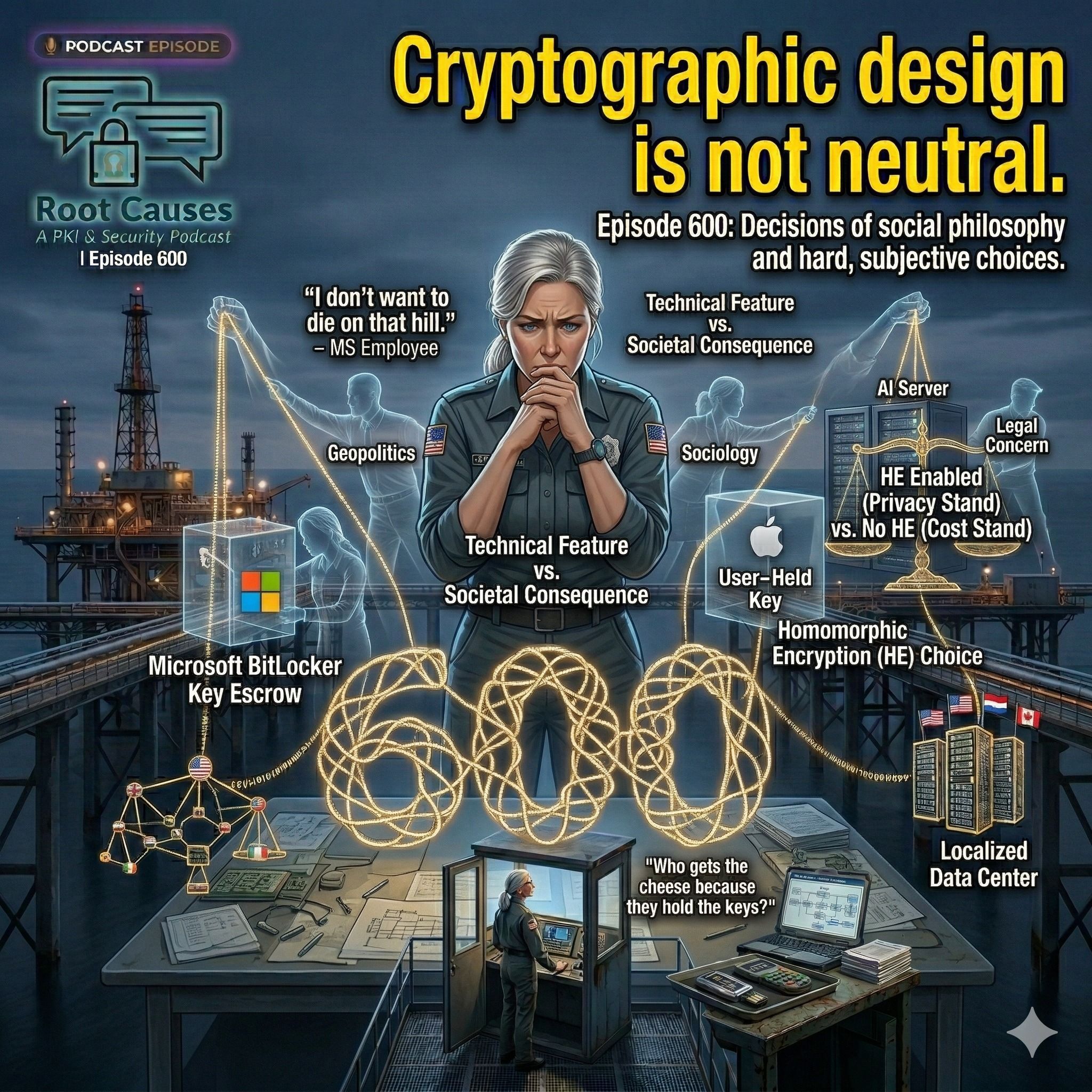
Root Causes 600: Cryptographic Design Is Not Neutral
In our previous episode we defined cryptography as the new geopolitics. Now in our 600th episode we follow up to explain how all cryptographic decisions reflect the social, political, and legal viewpoints of the cryptography's designers.
Root Causes 599: Cryptography Is the New Geopolitics
In the last decade or so, nations around the world have become keenly determined to use cryptography for their own legal, economic, and military advantage. We explore this concept.

Root Causes 598: Why Johnny Can't authN in OT
A recent CISA report declares that the nation's OT infrastructure is incapable of keeping up with the crypto agility and certificate management needs that modern security demands. We examine this finding.
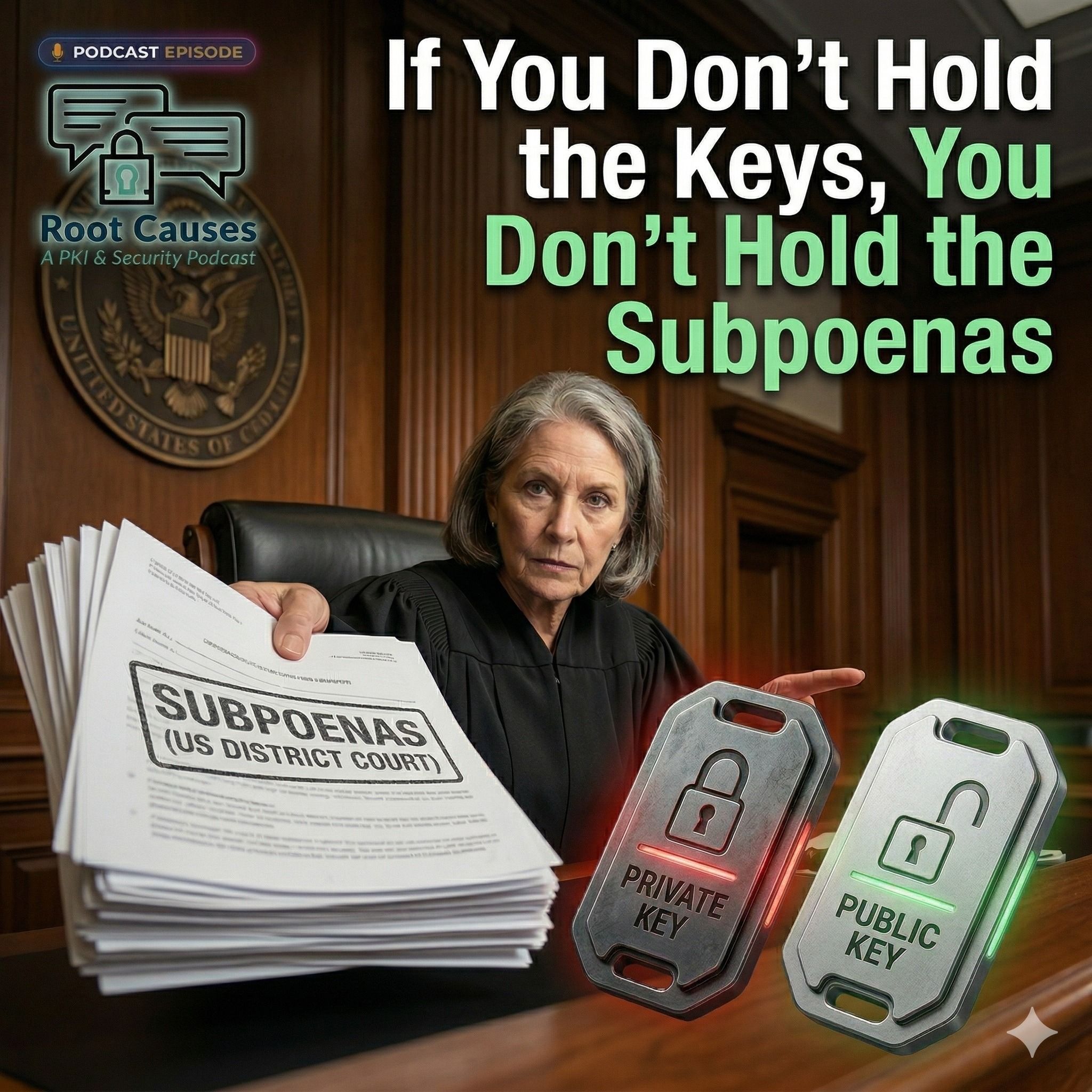
Root Causes 597: If You Don't Hold the Keys, You Don't Hold the Subpoenas
Microsoft has publicly stated that it will hand over Bitlocker keys to US law enforcement agencies without requiring a subpoena or court order. These keys can be held by users rather than Microsoft, at their option. We dive into this topic.
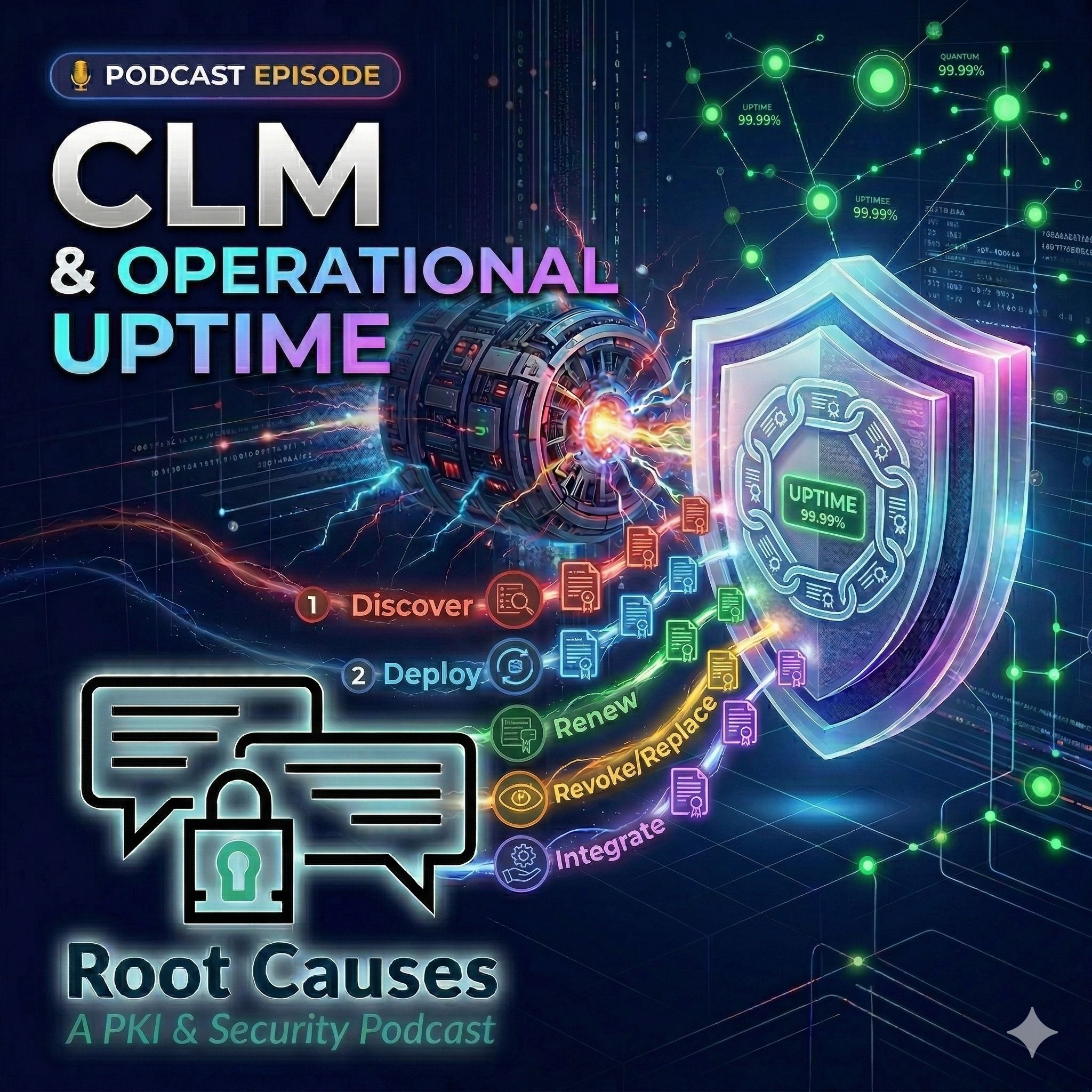
Root Causes 596: CLM and Operational Uptime
We usually think of Certificate Lifecycle Management (CLM) as a security category. But we could equally well categorize it as an operations category that enables uptime. In this episode we make our case.
Recommended
TED Business
Dark Night Tales with Brian King

Fantasy Flex

زن بودن

Medicine with Meaning

Yours Truly Johnny Dollar Collection

Take Back Your Health®

CBS Radio Mystery Theater | Old Time Radio

Solved Murders - True Crime Stories
紐約鳥|New York Aperture
The Swerve Podcast: Obscure Topics | Conspiracy Theories

The Bread and Banter Podcast
