
Bhagavat Gita - One Sloka A Day | Eternal Raga
This podcast offers a daily exploration of the Bhagavad Gita, one shloka at a time. It aims to uncover the timeless wisdom of this ancient text and its relevance to modern life. Each episode presents a single verse along with thoughtful commentary, inviting listeners to reflect on profound philosophical questions. The series begins by examining the true nature of the Gita and the pivotal question Arjuna asked on the battlefield.
Episodes

When Togetherness Stays Individual | The Courage to Sound Your Own Conch | Gita Explained Chapter 1 Sloka 18
In this episode, we explore Bhagavad Gita Chapter 1, Verse 18, where Drupada, the sons of Draupadi, and Abhimanyu all sound their conches — pṛthak pṛthak — each one separately.
This small Sanskrit phrase carries enormous meaning.
The Pandavas are united in purpose.
Bound by family.
Standing on the same battlefield.
And yet each warrior must still blow his own conch.
This verse reveals a timeless t

When Destiny Takes Attendance | The Power of Chosen Warriors | Gita Explained Chapter 1 Sloka 17
In this episode, we explore Bhagavad Gita Chapter 1, Verse 17, where the Pandava allies are named one by one.
The King of Kashi.
Shikhandi.
Dhrishtadyumna.
Virata.
Satyaki.
This is not just a roll call.
This is destiny… taking attendance.
Each of these warriors carries a story.
A preparation.
A purpose that has been unfolding long before this battlefield.
🌿 What This Verse Teaches Us
Destiny is
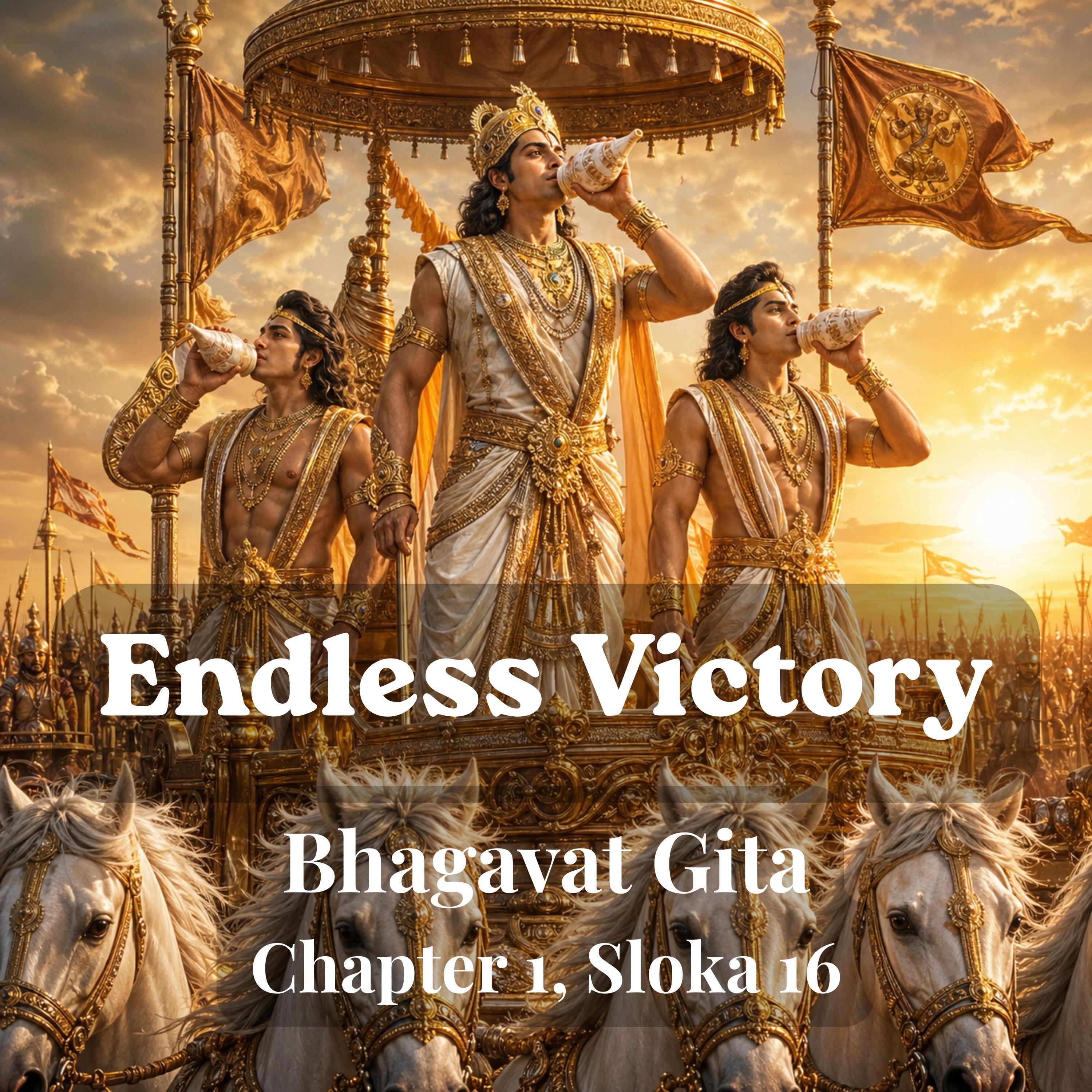
When Leadership Stands Firm | The Sound of Endless Victory | Gita Explained Chapter 1 Sloka 16
In this episode, we explore Bhagavad Gita Chapter 1, Verse 16, where King Yudhishthira blows his conch Anantavijaya—the sound of endless victory.
Nakula and Sahadeva join him with Sughosha and Manipushpaka, completing the Pandava harmony of strength, grace, and wisdom.
This verse is not just about names.
It is about leadership.
👉 Yudhishthira represents steadiness in conflict.
👉 Endless victory be

When Your Sound Has Identity | The Power of Named Strength | Gita Explained Chapter 1 Sloka 15
In this episode, we explore Bhagavad Gita Chapter 1, Verse 15, where Krishna, Arjuna, and Bhima each blow their individually named conch shells.
Panchajanya.
Devadatta.
Paundra.
These are not random names.
They carry identity, meaning, origin, and purpose.
Unlike the anonymous noise of the Kaurava army, the Pandava side acts through named individuals and accountable strength.
This verse reveals a
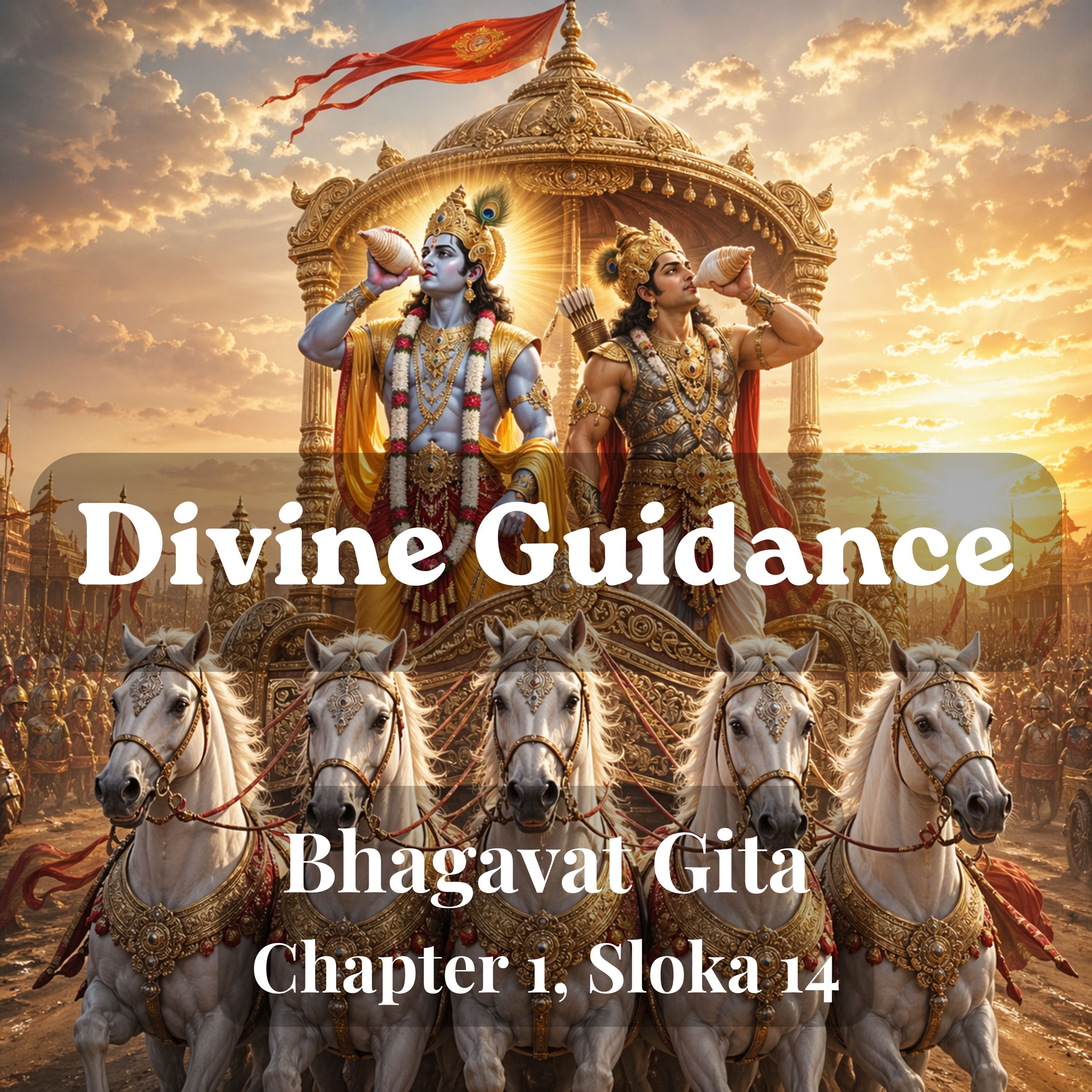
When Guidance Meets Strength | The Divine Partnership | Gita Explained | Chapter 1 Sloka 14
In this episode of the Bhagavad Gita, we explore Chapter 1, Verse 14, where Krishna and Arjuna stand together in their great white chariot and sound their divine conch shells.
The battlefield is loud.
The armies are ready.
But now something entirely different appears:
Alignment.
This verse reveals one of the deepest truths of the Gita:
When wisdom and action stand together, fear begins to lose pow
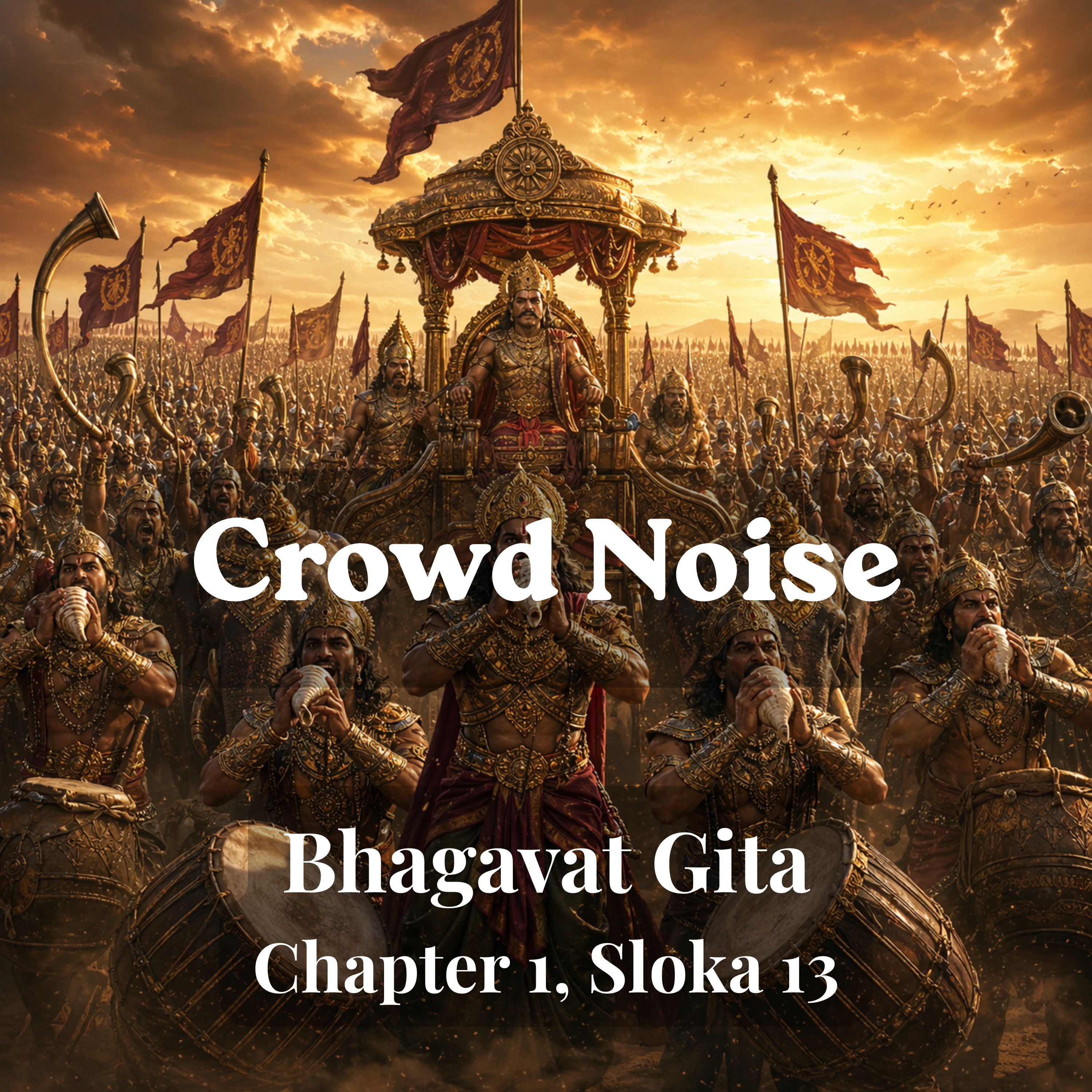
When Noise Becomes Power | Losing Your Own Voice | Gita Explained | Chapter 1 Sloka 13
In this episode of the Bhagavad Gita, we explore Chapter 1, Verse 13, where the battlefield erupts into a deafening roar of conches, drums, horns, and war instruments.
What began with one sound… becomes collective noise.
It sounds powerful.
It sounds united.
It sounds unstoppable.
But beneath that force lies a deeper truth:
When many voices merge into one crowd, the individual voice can disappear.

When Loyalty Chooses Sides | The Sound of Commitment | Gita Explained Chapter 1 Sloka 12
In this episode of the Bhagavad Gita, we explore Chapter 1, Verse 12, where Bhishma responds to Duryodhana’s anxiety with a lion’s roar and the blast of his conch shell.
It is the first great sound of the war.
It sounds powerful.
It sounds glorious.
It sounds decisive.
But beneath the sound lies a deeper question:
What happens when loyalty stands with the wrong side?
This verse reveals a timeless

When Power Needs Protection | Fear Behind Strategy | Gita Explained | Chapter 1 Sloka 11
In this episode of the Bhagavad Gita, we explore Chapter 1, Verse 11, where Duryodhana commands all his warriors to protect Bhishma from every side.
It sounds strategic.
It sounds decisive.
It sounds like leadership.
But beneath the command lies something deeper:
Fear.
Why must the strongest warrior be protected by everyone else?
This verse reveals one of the deepest truths in life and leadership:

When Power Feels Superior | The Illusion of Strength | Gita Explained | Chapter 1 Sloka 10
In this episode of the Bhagavad Gita, we explore Chapter 1, Verse 10, where Duryodhana compares the strength of both armies.
He declares that his army, protected by Bhishma, is unlimited…
while the Pandavas’ army, protected by Bhima, is limited.
It sounds like confidence.
It sounds like certainty.
But is it truly strength… or perception?
This verse reveals a subtle but powerful truth:
When we feel

When Strength Needs Proving | Counting Every Ally | Gita Explained Chapter 1 Sloka 9
In this episode, we explore Bhagavad Gita Chapter 1, Verse 9, where Duryodhana continues describing the strength of his army and the warriors ready to fight for him.
He speaks with certainty.
He reinforces his strength again and again.
But beneath that repetition lies a deeper truth.
Why do we feel the need to keep proving our strength?
This verse teaches us:
The psychology of overcompensation
Wh

When Power Needs Support | Naming the Strong | Gita Explained Chapter 1 Sloka 8
In this episode, we explore Bhagavad Gita Chapter 1, Verse 8, where Duryodhana lists the powerful warriors standing with him in the Kurukshetra war.
On the surface, it appears as strength.
But look deeper… and you’ll see something else.
Why do we feel the need to list our strengths or alliances?
This verse teaches us:
The psychology behind external validation
The difference between real strength

When Confidence Needs Validation | Duryodhana’s Hidden Fear | Gita Explained | Chapter 1 Sloka 7
In this episode, we explore Bhagavad Gita Chapter 1, Verse 7, where Duryodhana begins analyzing the strength of his own army before the war begins.
What appears as confidence… may actually be a sign of inner insecurity.
This verse offers a deep insight into:
Leadership mindset
Self-awareness
The difference between confidence and comparison
The Bhagavad Gita begins revealing human psychology even

When Power Isn’t Enough | Duryodhana’s Fear | Gita Explained | Chapter 1 Sloka 6
When power surrounds you, confidence should follow.
But what happens when it doesn’t?
In this episode, we explore a subtle yet powerful moment from the Bhagavad Gita — Chapter 1, Shloka 6 — where Duryodhana continues listing the warriors on the battlefield. On the surface, it appears like a simple acknowledgment of strength. But beneath it lies something deeper — hesitation, comparison, and the qu
Why Even Powerful Kings Chose the Losing Side | Gita Explained - Chapter 1 Sloka 5
Duryodhana's roll call deepens and something shifts. The six warriors he names in this verse had no family obligation to fight for the Pandavas. Dhrishtaketu's own father was killed by Krishna, yet he chose Krishna's side. The King of Kashi brought the spiritual weight of India's holiest city to the Pandava camp. Shaibya carried the legacy of King Shibi; the man who cut his own flesh to
When Fear Pretends to Be Confidence | Gita Explained - Chapter 1 Sloka 4
Duryodhana begins naming the warriors on the Pandava side — and every name he speaks is a mirror reflecting his own fear. In this episode, we break down every Sanskrit word of Shloka 4 and discover something extraordinary: Duryodhana uses Bhima and Arjuna — the two men he fears most — as the benchmark for describing the enemy. His own warriors never enter the equation. We explore the three names h
Respect That Hides a Dagger — Gita Chapter 1, Shloka 3 | Duryodhana Speaks to Drona
"Behold, O teacher, this mighty army — arranged by your own gifted disciple, the son of your enemy." With these words, Duryodhana delivers praise that cuts deeper than any sword. Today we explore why he says "son of Drupada" instead of using the commander's name, what the word "pashya" reveals about how little Duryodhana actually respects his guru, and the extraordinary backstory of two childhood
Why Even the Strong Need Reassurance | Gita Explained - Chapter 1 Sloka 2
The Gita's first scene on the battlefield does not belong to Krishna or Arjuna. It belongs to Duryodhana — the man whose jealousy brought two million warriors to the edge of destruction. And his very first act? Walking away from his position to seek comfort from his teacher Drona. In this episode, we break down every Sanskrit word of Shloka 2, explore why Duryodhana approaches Drona instead of Bhi

The One Question That Started the War | Gita Explained - Chapter 1 Sloka 1
The Bhagavad Gita does not begin with God's voice. It begins with a blind king's anxiety. In this episode, we explore the very first verse of the Gita — where Dhritarashtra asks Sanjaya what is happening on the battlefield of Kurukshetra. One question. One word — "mamakah" (mine) — that reveals the root cause of an entire war. We break down every Sanskrit word, uncover what Adi Shankaracharya saw
Why Despair Is the Beginning of Wisdom | Gita Chapter 1
Why does the Bhagavad Gita begin with a breakdown, not a breakthrough? In this episode, we explore Chapter 1 : Arjuna Vishada Yoga, and discover how Arjuna's crisis on the battlefield of Kurukshetra mirrors the moments in our own lives when every choice feels impossible. We cover the Mahabharata backstory, the symbolism of Krishna as charioteer, and why despair, honestly felt, becomes the first st
Recommended

True Crime Classics

The Healer Revolution

Becoming: HER with Nikki Spoelstra

Booked, Blonde & Busy w/ Olivia Ponton

McKinsey on Consumer and Retail

megahired.com

Hard Knocks Podcast

Effective Weight Loss for Moms | High protein, Strength Training, Lose Weight, Meal Planning, Fat Loss, Healthy Habits

The Human-Animal Connection - Pet Life Radio Original

Infinite Health with Dr. Arasi Maran

The Daily

World News Tonight with David Muir
