
Programming Throwdown
Programming Throwdown educates Computer Scientists and Software Engineers on a variety of programming and tech topics. Each episode covers a new programming language, enabling listeners to speak intelligently about any language. The show is hosted by Patrick Wheeler and Jason Gauci.
Episodes
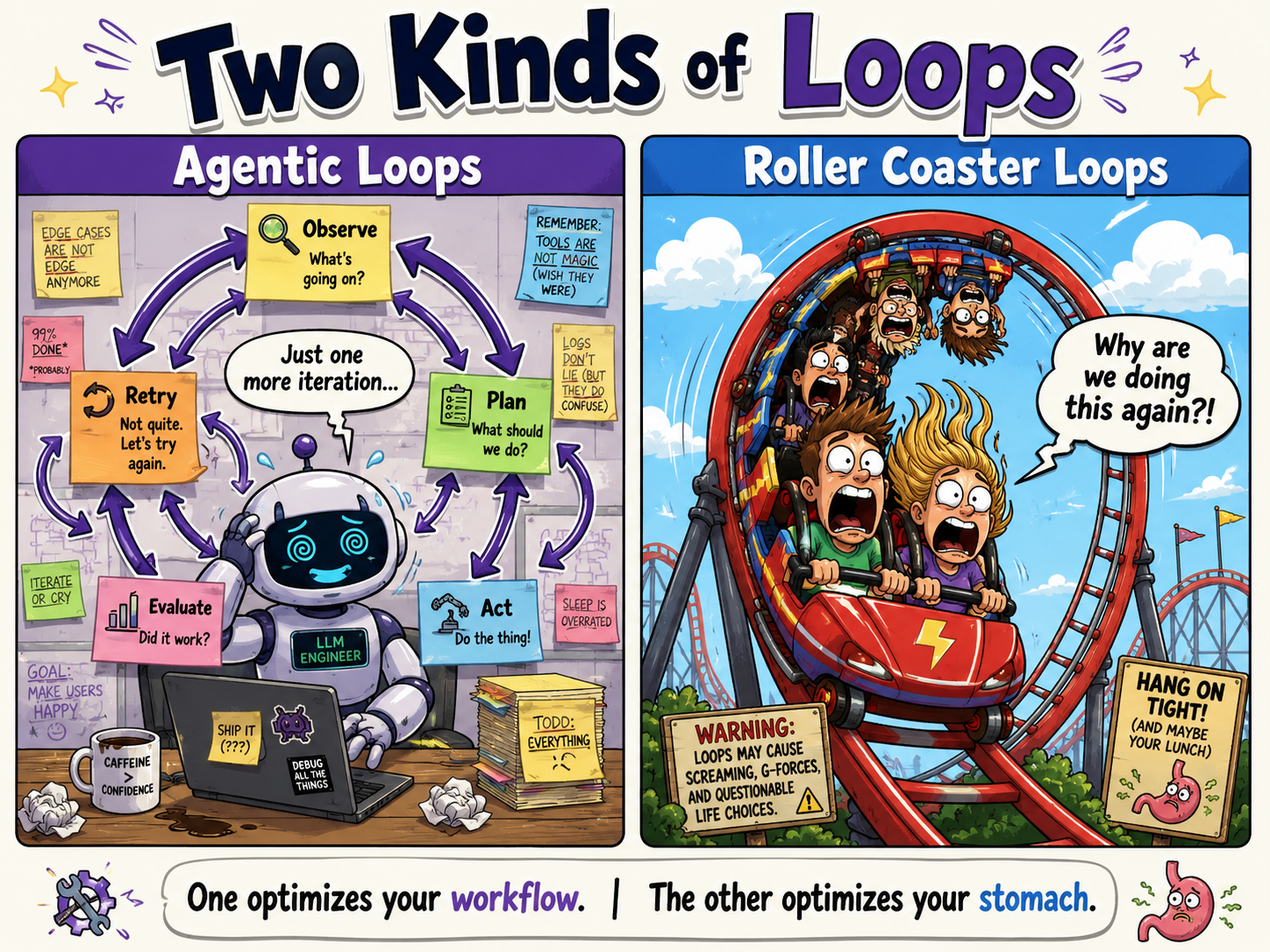
189: Agentic Loops
Running AI in loop hands-free.
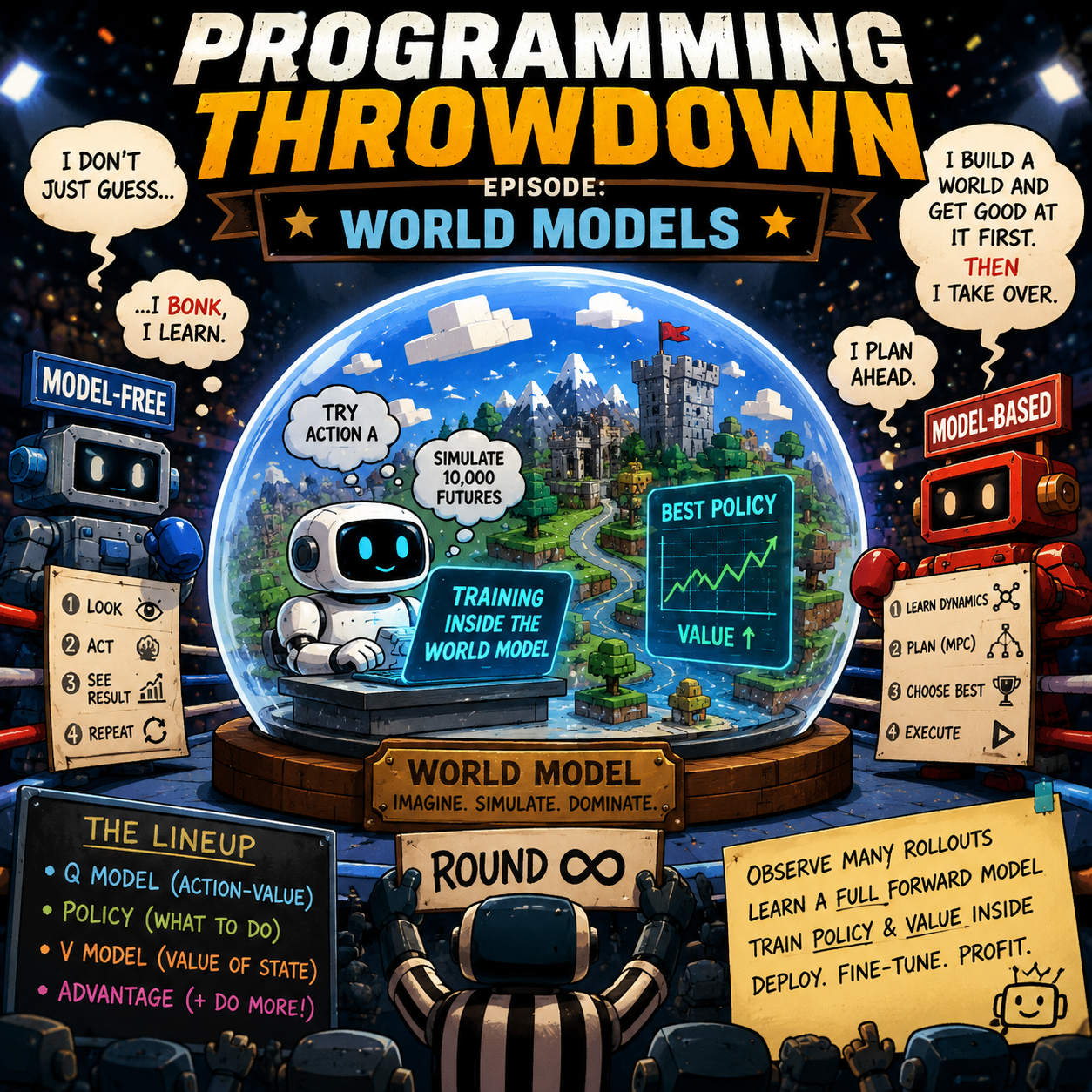
188: World Models
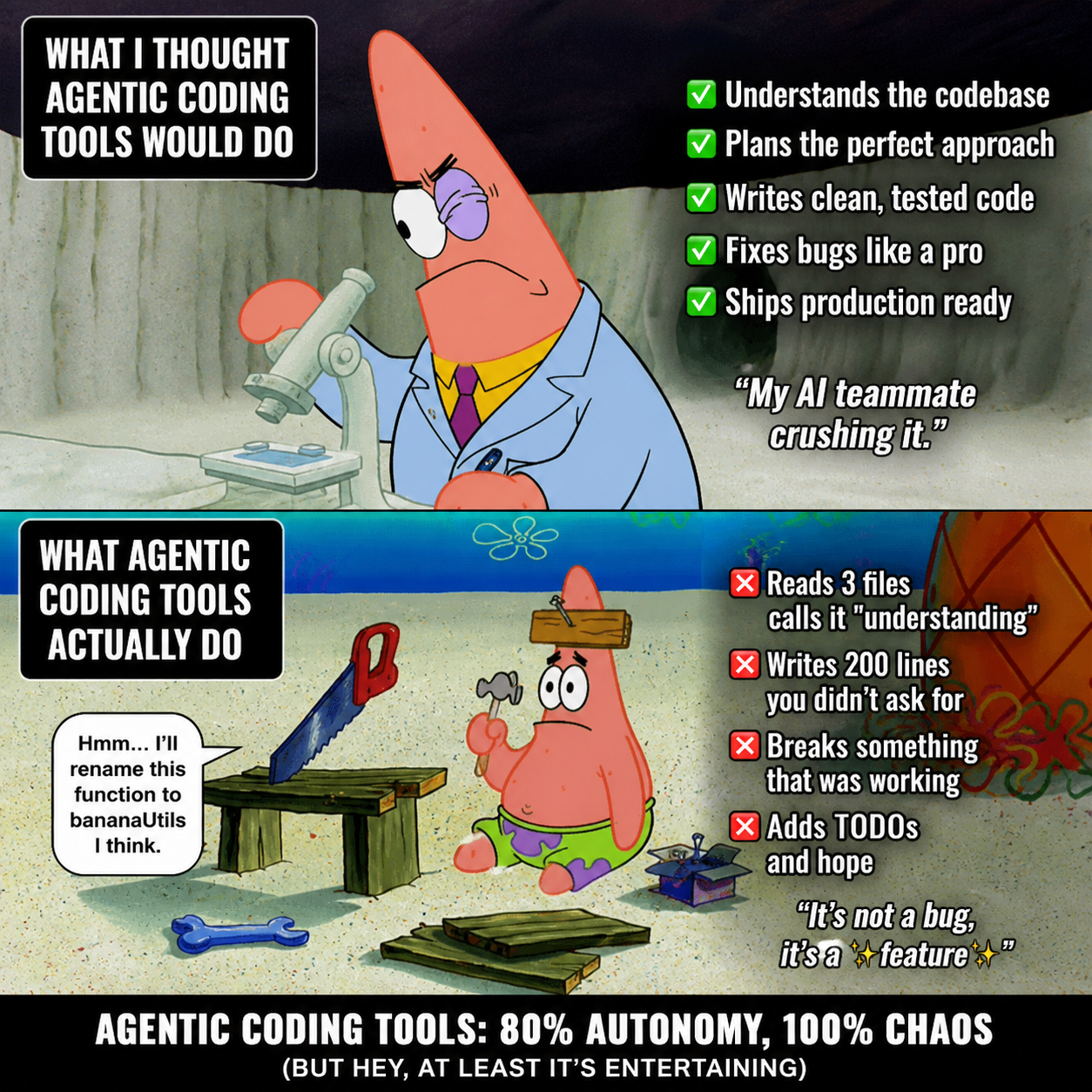
187: Agentic Coding
In this episode, Patrick and Jason cover Agentic Coding!
186: Becoming a Manager
Patrick and Jason discuss what it means to become a manager and how the role differs from individual engineering work. They cover hiring, coaching, performance management, team goals, and when moving into management is or is not the right choice.
185: Workflow Orchestrators
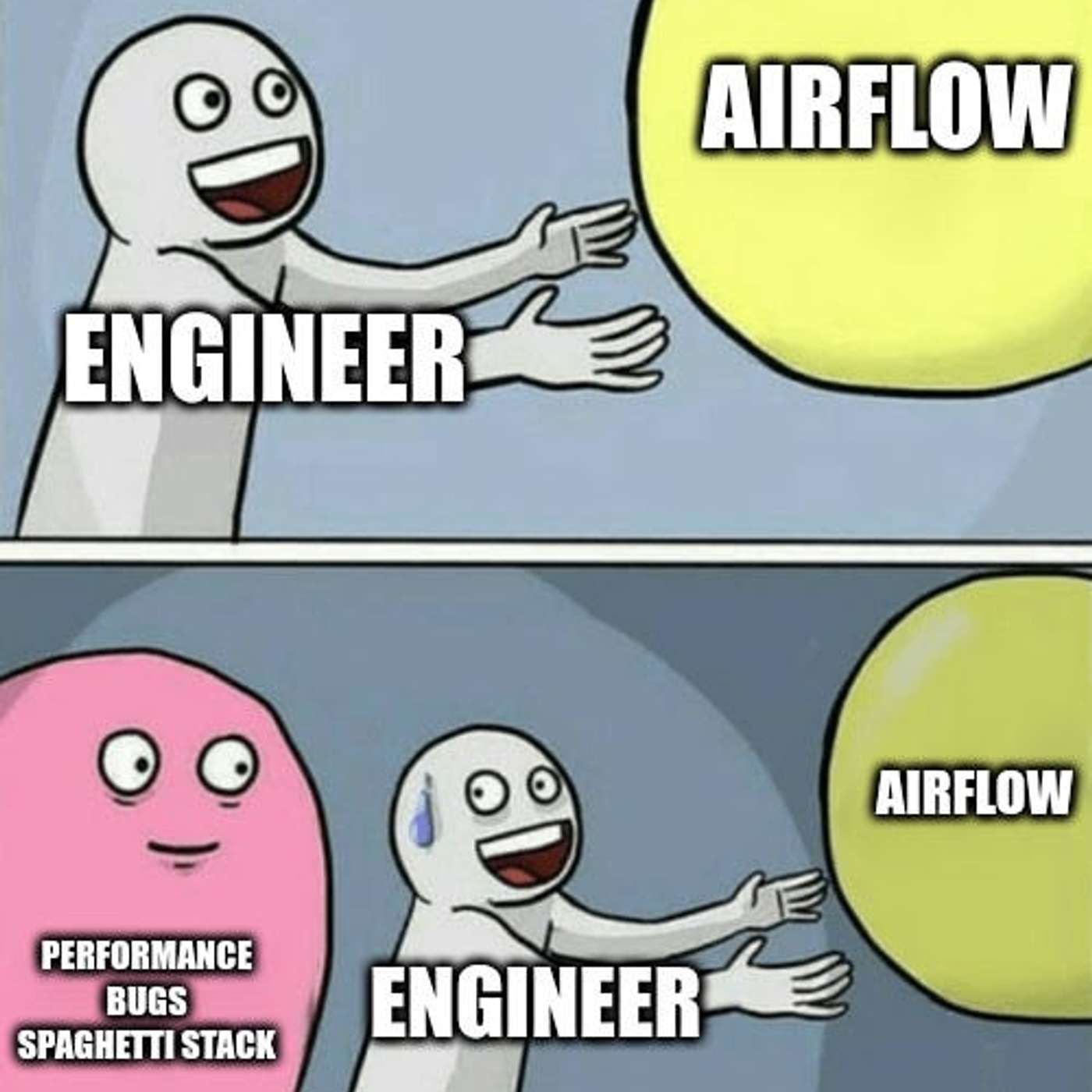
Patrick and Jason break down workflow orchestrators and why they matter for batch jobs, long-running tasks, and resumable distributed systems. They compare tools such as Airflow, Dagster, Temporal, Ray, and Kubeflow while explaining the infrastructure patterns behind them.
184: Asynchronous Programming
Patrick and Jason explain asynchronous programming and how it differs from traditional multithreading and multiprocessing. They cover coroutines, blocking versus non-blocking operations, promises, callbacks, async/await, and the tradeoffs behind each approach.

183: Landing a Software Job in 2025
Patrick and Jason are joined by Mark Cunningham to discuss how software engineers can find strong job opportunities and perform well throughout the interview process. They cover sourcing strategies, reverse interviews, negotiation, hiring-manager expectations, and common mistakes candidates should avoid.
182: AI Assisted Coding
Patrick and Jason discuss how AI-assisted coding tools can speed up development, answer questions about a codebase, and reduce boilerplate work. They compare common workflows and tools such as Copilot, Cursor, and command-line assistants while talking through where these systems help most.
181: Memory Management
Patrick and Jason cover memory management from both the operating-system and language-runtime perspectives. They discuss heap management, virtual memory, garbage collection, ownership models, and practical techniques for diagnosing and reducing excessive memory use.
180: Reinforcement Learning
Patrick and Jason introduce reinforcement learning and place it alongside supervised and unsupervised learning. They cover Q-learning, SARSA, policy gradients, actor-critic methods, PPO, imitation learning, and why training and evaluating RL systems is so challenging.
179: Project Planning
Patrick and Jason discuss project planning and management for software teams. They cover why planning matters, how frameworks like SMART goals, Gantt charts, Scrum, Agile, and Kanban fit together, and how to deal with uncertainty, dependencies, and scheduling risk.

178: Working from Home
Patrick and Jason revisit working from home and the realities of remote engineering work. They cover communication, scheduling, home-office setup, motivation, distractions, and why remote work is not equally effective for every team or every person.
177: Vector Databases
Patrick and Jason explain vector databases by starting with embeddings, similarity metrics, and approximate nearest-neighbor search. They discuss how these systems store and query high-dimensional vectors and where tools like pgvector, Weaviate, Pinecone, and Milvus fit.
176: MLOps at SwampUp
James Morse: Software Engineer at Cisco System Administrator to DevOps Difference between DevOps and MLOps Getting Started with DevOps Luke Marsden: CEO of Helix ML How to start a business at 15 years old BTRFS vs ZFS MLOps: the intersection of software, DevOps and AI Fine-tuning AI on the Cloud Some advice for folks interested in ML Ops Yuval Fernbach: CTO MLOps & JFrog Starting Qwak Going from a
175: Resume Writing
Patrick and Jason discuss how to write a strong technical resume that gets attention without becoming bloated or misleading. They cover what to include, what to avoid, how automated screening changes resume writing, and how career choices shape the resume you build over time.
174: Devops
Patrick and Jason explain DevOps and how it relates to site reliability, build systems, testing infrastructure, and release processes. They cover infrastructure as code, CI/CD, deployment strategies, operational metrics, and the kinds of failures good DevOps practices are meant to prevent.
173: Mocking and Unit Tests
Patrick and Jason discuss unit testing, regression testing, and system testing, with a focus on when mocking actually helps. They explain mocks versus fakes, testing tradeoffs, and the practical role of testing libraries across several major languages.

172: Transformers and Large Language Models
Patrick and Jason explain transformers and large language models from the ground up. They cover attention, encoders and decoders, self-supervised learning, RLHF, and the key architectural ideas that made modern LLMs possible.

171: Compilers and Interpreters
Patrick and Jason walk through the differences between compilers and interpreters, starting from machine code and assembly and moving up to high-level languages. They cover bytecode, JIT compilation, intermediate representations, and the tradeoffs between portability and performance.

170: 2023 Holiday Special Live
Predictions: Jason VR for Work Lowering AI training cost/ improved efficiency RISC-V takeoff Patrick Ai claim of AGI Ai peer reviewer Ai Video Generator More space vehicles reaching orbit Early career, finding role at FAANG, liaising vs shipping code. Upcoming in tech What are essential programmer knowledge items?
169: HyperLogLog
Patrick and Jason explain HyperLogLog and the broader problem of estimating cardinality efficiently at scale. They walk through the ideas behind Linear Counting, LogLog, and HyperLogLog, including how these probabilistic techniques make distributed counting practical.

168: Godot
Patrick and Jason discuss the Godot game engine and what a game engine actually provides to developers. They cover graphics, physics, scripting, portability, rapid prototyping, and why Godot has become an appealing open-source option for game development.
167: Desktop User Interfaces
Patrick and Jason survey the landscape of desktop user-interface development and compare common toolkit choices. They cover Qt, wxWidgets, Electron, notebooks, Streamlit, and game engines while discussing the architectural choices that make desktop applications easier to build and maintain.
166: Speedy Database Queries with Lukas Fittl
pganalyze: - Weekly series "5mins of Postgres": - How Postgres chooses which index to use: - CMU databases courses: - Postgres community: As well as social links: - Mastodon: - Twitter/X: @pganalyze, @LukasFittl - GitHub: @pganalyze, @lfittl - LinkedIn.

165: Differential Equations
Patrick and Jason explain differential equations and why programmers should care about them. They cover rates of change, ordinary versus partial differential equations, numerical solvers, and practical examples ranging from simulations to PageRank and game physics.
164: Choosing a Database For Your Project With Kris Zyp
Things to consider when choosing a database Speed & Latency Consistency, ACID Compliance Scalability Language support & Developer Experience Relational vs. NoSQL) Data types Security Database environment Client vs Server access Info on Kris & Harper: Website: harperdb.io Twitter: @harperdbio, @kriszyp Github: @HarperDB, @kriszyp.

163: Recursion
Patrick and Jason break down recursion as a practical problem-solving technique rather than a classroom trick. They cover base cases, recursive steps, common pitfalls such as nontermination and stack limits, and real applications in trees, graphs, and divide-and-conquer algorithms.
162: Interactive Fiction
In the latest episode of Programming Throwdown, we delve into the captivating world of interactive fiction. We explore: Wordnet, Inform, and how games in the past have been the forerunners of today’s NLP challenges.
161: Leveraging Generative AI Models with Hagay Lupesko
MosaicML’s VP Of Engineering, Hagay Lupesko, joins us today to discuss generative AI! We talk about how to use existing models as well as ways to finetune these models to a particular task or domain.

160: Position Localization
It’s a question that may seem easy to answer on the surface, but in truth hides more complexity than people expect. In today’s episode, we tackle the latest on AI, creative endeavors, and more before diving into the meaty discussion of position localization.
159: GraphQL with Tanmai Gopal
GraphQL is one of the biggest API enablers in software development, but just how complicated can things be? Tanmai Gopal – Hasura’s CEO extraordinaire – talks with Jason and Patrick about how the secret sauce gets made.
158: Software Supply Chain with Bill Manning
In today’s episode, Jason and Patrick dive deeply with JFrog’s Senior Solutions Engineer, Bill Manning. With the conversation tackling the depth and complexity of software supply chains, vulnerabilities and more, Bill deftly offers grounded advice to listeners old and new.
157: Kubernetes with Craig Box
There’s more than what meets the eye when it comes to Kubernetes, and Craig Box – ARMO’s VP of Open Source & Community –is one of several who have seen its many twists and turns since its inception. He talks with Jason and Patrick about Kubernetes’ origins in pop culture, utility in the modern workflow, and possible future in today’s episode.
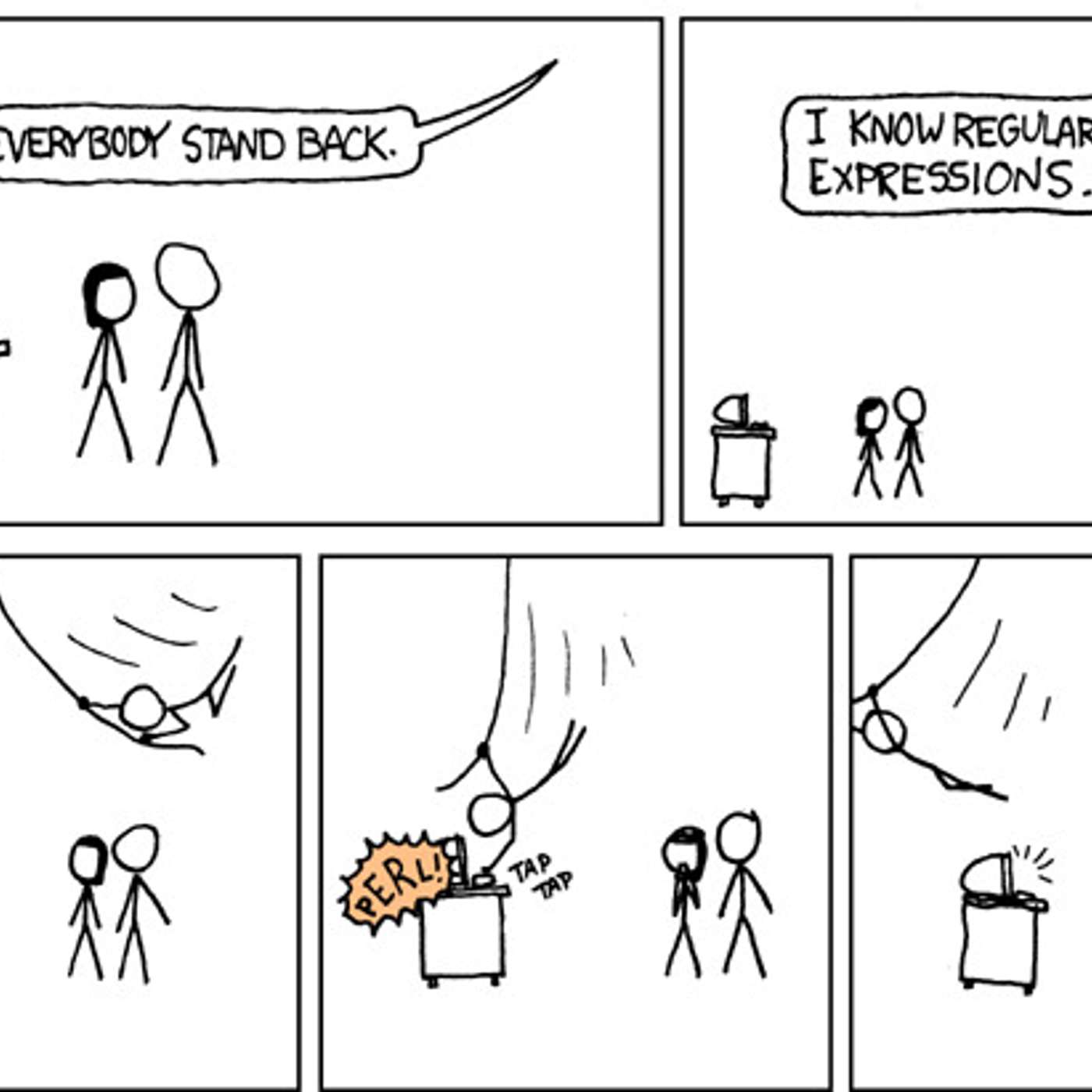
156: Perl and Regular Expressions
Join Patrick and Jason as they tackle their answers to these timely questions – plus an in-depth discussion on Perl in practice – with today’s episode of Programming Throwdown.

155: The Future of Search with Saahil Jain
When it comes to untangling the complexities of what lies ahead for search engines in this age of AI, few are as deeply versed in the subject as You.com Engineer Saahil Jain. Jason and Patrick talk with him in this episode about what search even is, what challenges lie ahead, and where the shift in paradigms can be found.
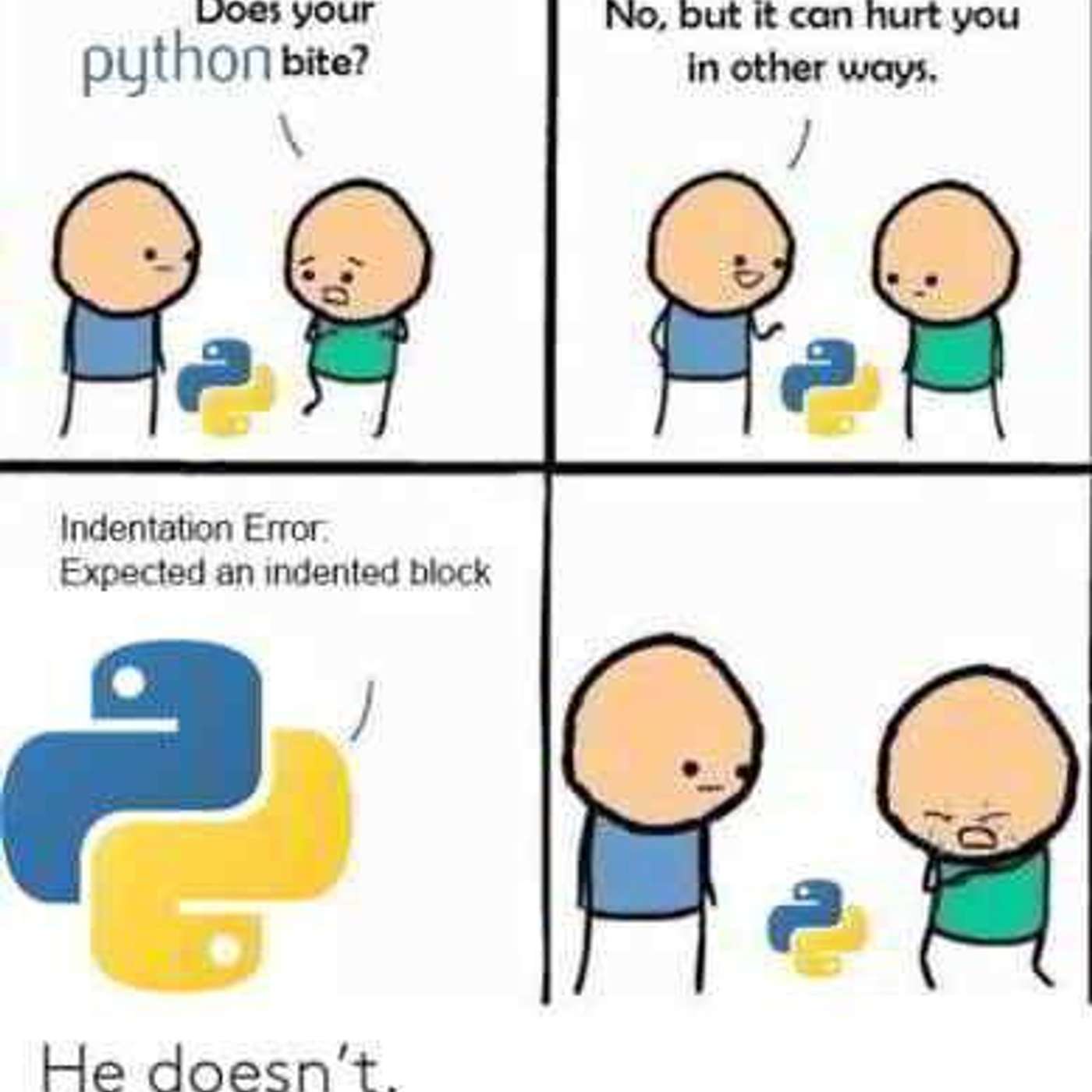
154: Python Again with Jason C. McDonald
A second Jason joins this episode of Programming Throwdown! Jason McDonald – Python evangelist, author, and more – talks to Patrick and Jason about his experience with the programming language, how his disability helped and hindered his software career, and where its strengths and weaknesses lie.
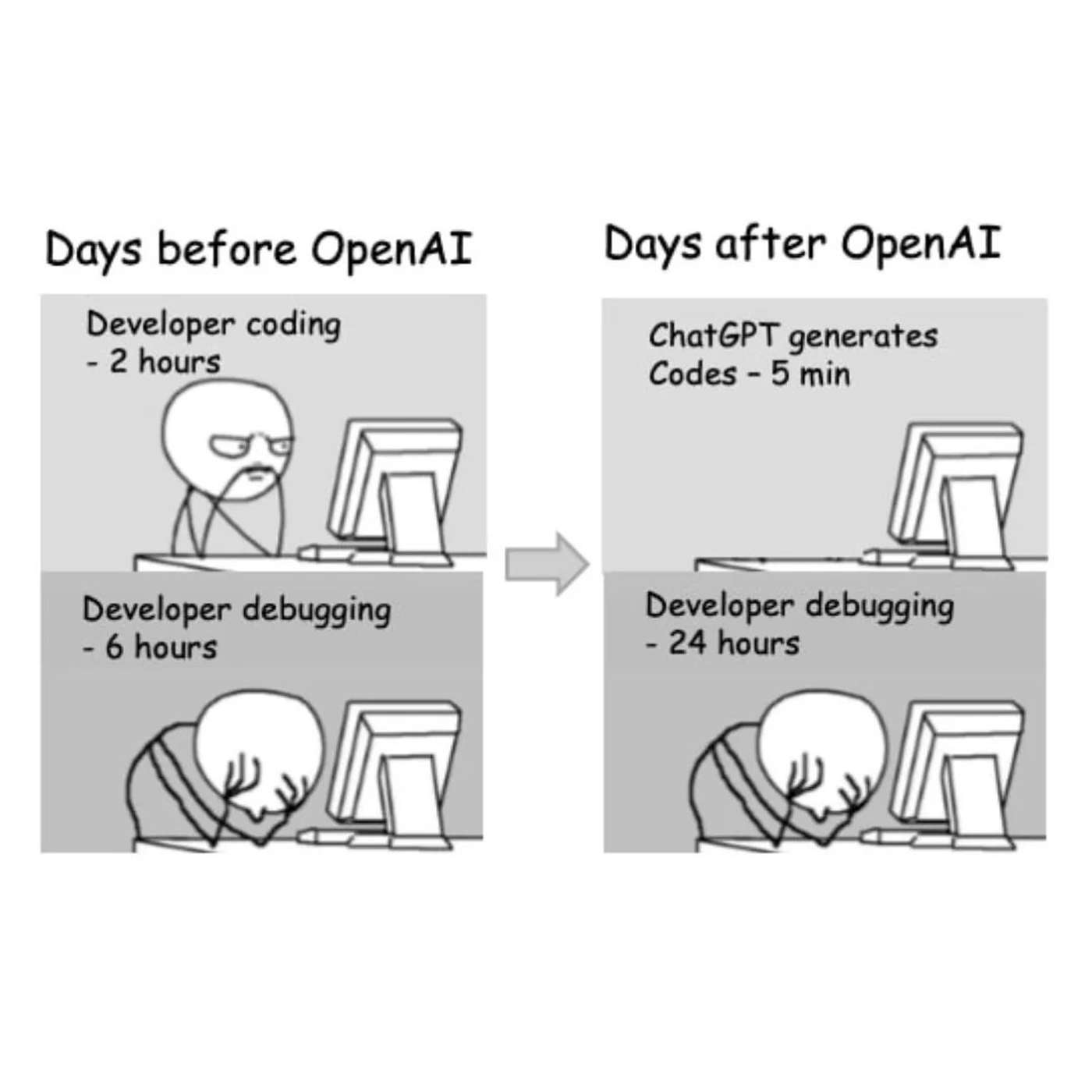
153: ChatGPT
has made a mark on the world as we know it, but that’s only the tip of the AI iceberg. Join us as we discuss how the field of artificial intelligence is growing – including some developments that might not be on your radar!

152: The Future Database with Sam Lambert
Databases are key to almost any project, large or small. Most database systems in the cloud are designed for heavy use and the costs can get expensive quickly, but database-as-a-service is a rapidly growing area, where many databases can share the same hardware for a much reduced rate, or even for free! Sam Lambert, CEO of PlanetScale, joins Jason and Patrick to discuss database-as-a-service.
151: Machine Learning Engineering with Liran Hason
Machine Learning Engineer is one of the fastest growing professions on the planet. Liran Hason, co-founder and CEO of Aporia, joins us to discuss this new field and how folks can learn the skills and gain the experience needed to become an ML Engineer!
150: Code Reviews with On Freund
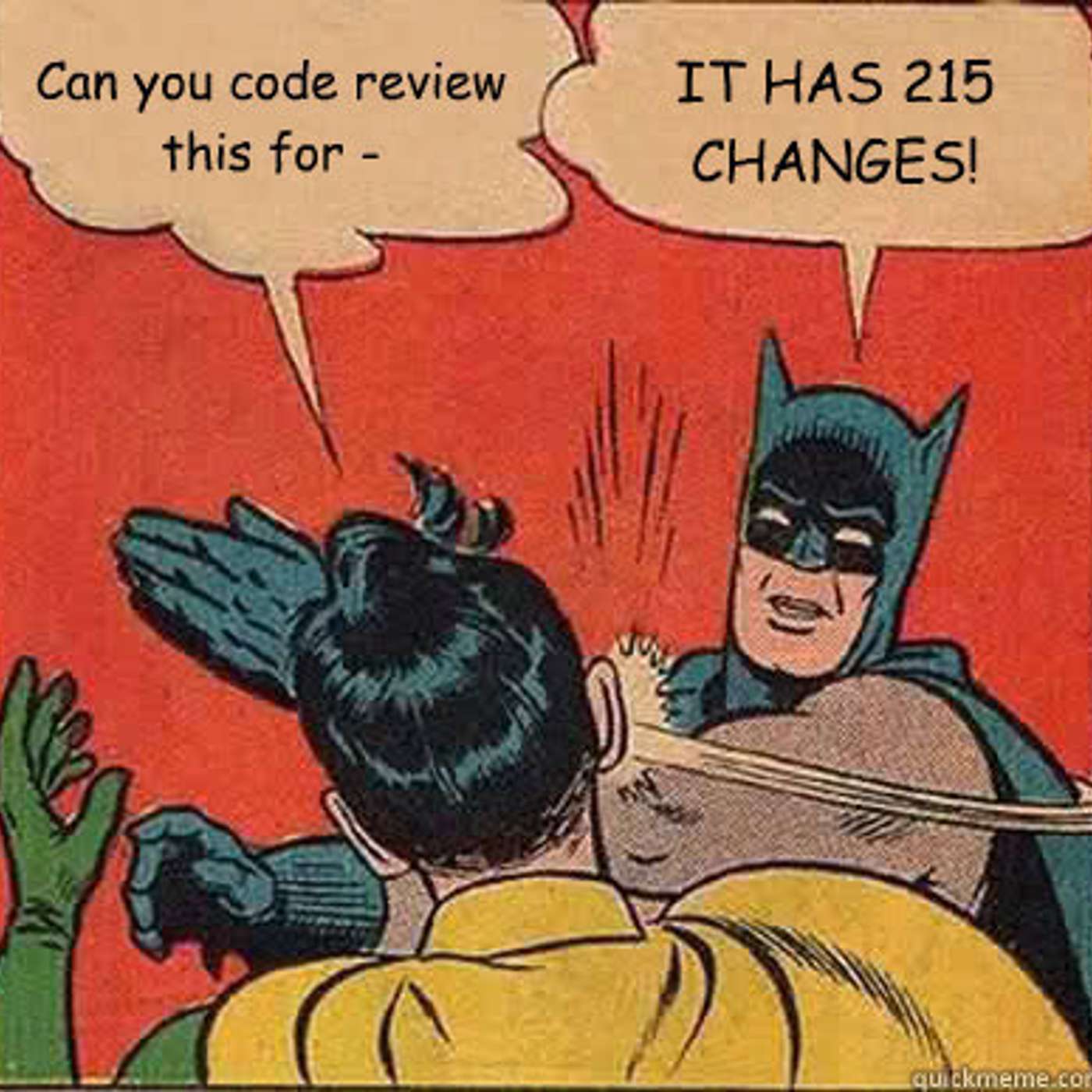
Patrick and I are always stressing the importance of code reviews and collaboration when developing. On Freund, co-founder & CEO at Wilco, is super familiar with how code review processes can go well, or become a hinderance. In today’s episode with us, he shares his unique perspective on code reviews and maintaining high code quality!

149: Workflow Engines with Sanjay Siddhanti
At scale, anything we build is going to involve people. Many of us have personal schedules and to-do lists, but how can we scale that to hundreds or even thousands of people? When you file a help ticket at a massive company like Google or Facebook, ever wonder how that ticket is processed? Sanjay Siddhanti, Akasa’s Director of Engineering, is no slouch when it comes to navigating massive workflow

S1: Holiday 2022 Special
Today we field questions from Programming Throwdown’s listeners about AI, machine learning, and more practical matters as developers in our annual holiday special!
148: Package Management with Max Howell
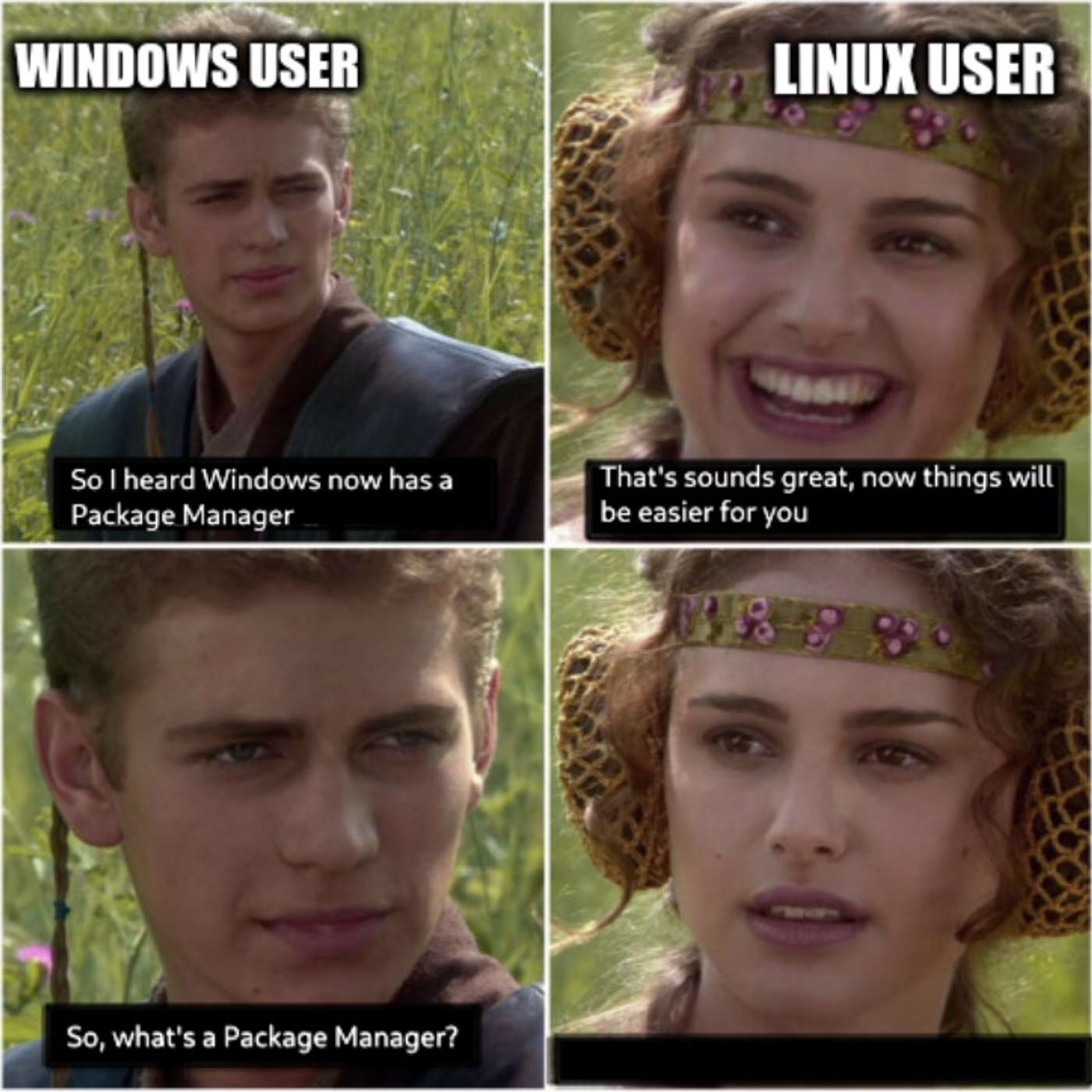
Package managers are an often-overlooked aspect of any operating system, but their importance is not to be underestimated – especially in today’s development environment. As both creator of Homebrew and CEO of tea.xyz, Max Howell is intimately familiar with the ins and outs of open-source development, software engineering, and balancing passion with practicality. He shares these experiences and mo
147: Quantum Computing with Yonatan Cohen
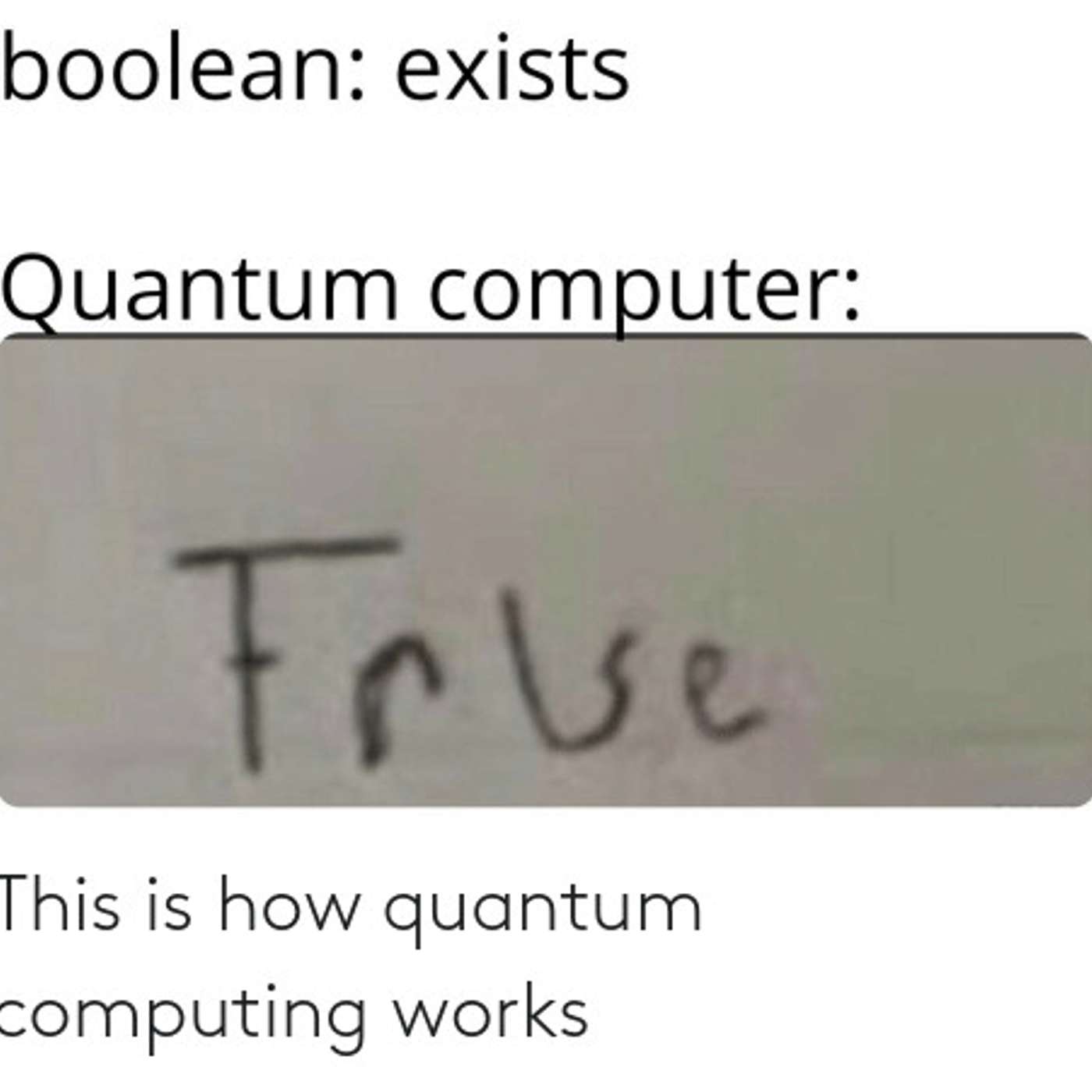
Yonatan Cohen – Co-Founder & CTO of Quantum Machines – joins us in this episode to tackle quantum computing! Did you know anyone can run quantum programs on Amazon Web Services for mere dollars? Learn about this field early to take pole superposition in the race to understand and use quantum computers!

146: RubyShield, Ruby Central, and Shopify with Mike Dalessio and Evan Phoenix
In this tour-de-force, Mike Dalessio – Engineering Director at Shopify – and Evan Phoenix – self-described “long-time Rubyist” – join us for a practical discussion of all things Ruby! Ruby is a beautiful language, and we're really excited to cover the history and present of this language with two experts.

145: Unsupervised Machine Learning
Today we discuss adventures, books, tools, and art discoveries before diving into unsupervised machine learning in this duo episode!

144: Kotlin Coroutines with Marcin Moskala
Today we go back to our programming language roots with author, KT Academy founder, and Kotlin rockstar Marcin Moskala! We talk about how Kotlin makes itself doubly useful for app and backend development.

143: The Evolution of Search with Marcus Eagan
Finding something online might seem easy - but as Marcus Eagan tells it, it’s not easy to get it right. In today’s episode, MongoDB’s Staff Product Manager on Atlas Search speaks with Jason and Patrick about his own journey in software development and how to best use search engines to capture user intent.

142: Data Ops with Douwe Maan
Douwe Maan’s journey sounds too fantastic to be true, yet the tale that Meltano’s founder shares with Jason and Patrick today is very, very real. Whether it’s about doing software development by 11, joining Gitlab while juggling college responsibilities, or building his own company during today’s challenging times, he has quite the story to tell. In today’s episode, he speaks on Twitter, his persp

141: Social Gaming with Chip Morningstar
Chip Morningstar, Software Engineer at Agoric, has had quite a career in the software industry – from designing spaceships, to joining Lucasfilm’s entertainment brands, to the emerging cryptocurrency industry. In this episode, he talks with Patrick and Jason about these and more: security in today’s online world, AI’s nascent role in gaming, and how expectations in game releases have changed with

140: Developer Burnout and Infrastructure as Code with Ronak Rahman
Burnout in the tech industry is a very prominent concern among both leaders and developers alike. Ronak Rahman, Developer Relations Manager at Quali, joins Patrick and I in this episode to share his experience, and why having the right infrastructure in place can prevent work-life erosion (plus sticker shock with cloud service bills)!

139: Scientific Python with Guido Imperiale
Coming off the heels of the scientific python conference, we are delighted to have Guido Imperiale, OSS Engineer at Coiled, to talk with us about this exciting space, including his own work on Dask, remote work benefits, and how distributed computing with the latest Python tools has allowed him to manage large data science projects with ease.

138: Fixing the Internet with John Day
In the second part of a two-episode special, Professor John Day continues to share his stories from the early days of the internet. From the debate surrounding IPv6, different methodology around network design, and John’s own career advice, there’s tons of wisdom and practical experience to be gained here!

137: The Origins of the Internet with John Day
Computing has certainly come a long way from punch cards and literal system bugs – yet there is so much more to learn. Professor John Day shares his stories from the heyday of the computer revolution, the challenges that they faced, and what he’s been up to lately, among others. This first part of a two-episode special is a rare treat with a pioneer, and one that people in the tech industry should

136: Metaverse with Daniel Liebeskind
Decentralizing the future can often lead to missing out on genuine human communication. Daniel Liebeskind, Cofounder and CEO of Topia, talks about how they’re working to avoid that pitfall while building the foundation of a better online experience. Whether its his lessons from Burning Man, keeping the human spirit alive in today’s technological frontier, or how Topia fits in the future, Daniel ha

135: Kubernetes with Aran Khanna
Not sure how to take the website or service you built on your machine and put it in the cloud? Kubernetes is by far the most popular system for deploying applications, but it is also pretty intimidating for new developers. In this episode, we are joined by Aran Khanna from Archera to explain how Kubernetes works and how you can go from n00b to expert in Kubernetes in less time than it takes to say

134: Ephemeral Environments with Benjie De Groot
How do you test changes to your web backend or database? Many people have a "production" and one "development" database, but the development database can easily become broken by one engineer and thus unusable for the rest of the team. Also, how would two engineers make changes in parallel to the development environment? What if you could spin up hundreds or thousands of development databases as yo

133: Solving for the Marketplace Problem with Andrew Yates
As anyone who listens to the show regularly knows, I've always been fascinated by marketplaces. How do we figure out what to charge for something, and how do we match buyers and sellers? How does a company like Uber match drivers to riders so quickly? Today we have Andrew Yates, Co-Founder & CEO at Promoted.ai, to talk about marketplaces and how to optimize for this two-sided problem.

132: Funding Open-Source Projects
Hey everyone! Today we have a guest co-host for a special duo episode! We are joined by Adam from the CoRecursive Podcast to talk about how open-source projects can survive (and even thrive) financially.

131: Supporting your Favorite Creators with Brave with Jimmy Secretan
I've been a big fan of Brave Browser ever since attending a presentation from Brandon Eich back in 2017. Brave was one of the first browsers to aggressively block the ability for websites to share information on your computer without your consent (i.e. third party cookies). I'm so excited to sit down with Jimmy Secretan, VP of Ads and Premium Services of Brave, and talk about all things Brave, fro

130: Ethical Hacking with Ted Harrington
"Hacking" is a word that evokes awe from the public, laughter from developers, and pure fear from technology leaders. But what really is hacking? What does trust really mean and how do we acquire and keep trust on the Internet? It turns out that, while hacking is associated with computers, the methods behind it have been around since the dawn of time. Today we have Ted Harrington from ISE to dive

Episode 129 - Web3.0: Breaking free from the Client Server Model with Michelle Lee
What is Web 3.0? Guest speaker Michelle Lee, Product Lead of Protocol Labs, shares how web 3.0 will revolutionize the Internet and bring trust back into the web.

128: WebAssembly with Kevin Hoffman
What is WebAssembly? Guest speaker Kevin Hoffman, CTO of Cosmonic shares what WebAssembly is, why it exists, and what kind of things you can do with it.

127: AI for Code with Eran Yahav
Programming is difficult as it is, but imagine how difficult it was without all the current tools, compilers, synthesizers, etc. that we have today. Eran Yahav, Chief Technology Officer at Tabnine shares how AI is currently helping with code writing and how it could change in the future.

126 - Serverless Computing with Erez Berkner
Erez Berkner, CEO of Lumigo, talks about his company, going serverless, and why you should too. He shares his experience and tips regarding serverless computing and its ever-growing opportunities in modern computing.

125 - Object Caching Systems
Many people have heard the names "redis" or "memcached" but fewer people know what these tools are good for or why we need them so badly. In this show, Patrick and I explain why caching is so important and how these systems work under the hood.

124 - Holiday Episode 2021!
In this holiday episode, Jason and Patrick answer questions from listeners. They also look back at the past year’s challenges and victories.

123 - Project Planning
How do you stay focused when working on large projects that span many months? In this duo episode, we talk about Project Planning techniques and trends! We also cover solving personal data storage problems and building CNC machines & printers.

122 - Building Conversational AI's with Joe Bradley
When you ask Alexa or Google a question and it responds, how does that actually work? Could we have more in-depth conversations and what would that look like? Today we dive into conversational AI with Joe Bradley and answer these questions and many more. Thanks for supporting the show!

121 - Edge Computing with Jaxon Repp
What is "The Edge"? The answer is that it means different things to different people, but it always involves lifting logic, data, and processing load off of your backend servers and onto other machines. Sometimes those machines are spread out over many small datacenters, or sometimes they are in the hands of your customers. In all cases, computing on the edge is a different paradigm that requires

Machine Learning Embeddings with Edo Liberty
How can you tell if two images are similar? What about two videos, or two podcast episodes? Finding similar items in a data set is the foundation of Search, Recommendations, Spam Fighting, and many other areas of machine learning. To do this, we need some examples of images that are similar & not similar (called labels), and a method that can learn patterns from these examples (called a model). To

The Art of Vacations
Taking a good vacation is as important as getting a good night's sleep (*very important*). It may sound silly on its face, but planning a vacation and planning around your vacation is extremely important to ensure that you are in the right headspace the rest of the year. This is especially true in the COVID era where many of us are working from home. In this episode, we dive into why vacations are

Building a Robotics Software Platform with Abhay Venkatesh
You’ve seen the dancing Boston Dynamics dogs, Honda’s ASIMO greeting people at malls, and the half-court-shooting robot at the Olympics, among other awe-inspiring robot stories that nowadays are getting increasingly more common. But equally fascinating, especially for us programmers, is the amount of programming and structure needed to make sure these robots work as intended. In this episode, we t

117 - Authentication with Aviad Mizrachi
Authentication has become a necessity in a digital world that’s ever-increasing in complexity. What can you do to arm yourself against the constant threat of data breaches and hacks? In this episode Jason sits down with Aviad Mizrachi, CTO and Co-Founder of Frontegg, to give us valuable insight into how Authentication works, and how these help you become more defensible against attacks.

Hash Maps
What are hash maps, and when do you need them? What are examples of hash functions? And can you bring a water calculator to your SATs?

Route Planning with Parker Woodward
Ever wondered how route planning apps, well, plan routes? In this episode, we navigate through this fascinating topic, a field as data-driven and systemic as it is magical and compelling. Joining us is Parker Woodward, Route Expert and Marketing Director for Route4Me. We discuss how route planning works, the intricacies behind it, and how services like Route4Me perform complex balancing acts betwe

Code Documentation with Omer Rosenbaum and Tim Post
What makes for good documentation? In this episode, we dive into one of the most important yet overlooked facets of coding. With us are Omer Rosenbaum and Tim Post of Swimm.io. Swimm is an app that allows you to create docs coupled with your code, which are auto-synced and integrated into your workflow. It makes for much more efficient, elegant, and accessible documentation. Omer is the CTO of Swi

Episode 113 - Full Stack Web Apps Using Only Python with Meredydd Luff
In this episode, we’re excited to have Meredydd Luff, the founder of Anvil. Anvil is a powerful tool that allows you to build full stack web apps with just Python. Without the need to be fluent in Javascript or other languages, Anvil is easy enough for beginners, but robust enough for professional work. We talk to Meredydd about Anvil and its features, as well as delve into the importance of makin

Trees
In another duo episode, Jason and Patrick give an in-depth introduction to trees, their many types, approaches and functions, and their importance in modern programming. Also, peppered throughout the episode are the games, books, tools, and ideas that have currently piqued their interest.

Episode 111: Real-time Data Streaming with Frank McSherry
In this episode, we talk with Frank McSherry, Gödel Prize-winning data scientist, and Co-founder and Chief Scientist at Materialize, Inc. Frank shares expert viewpoints drawn from his years as an academic, as well as personal insights on helping run a company at the cutting edge of real-time data streaming.
Recommended

Effective Weight Loss for Moms | High protein, Strength Training, Lose Weight, Meal Planning, Fat Loss, Healthy Habits

The Human-Animal Connection - Pet Life Radio Original

Infinite Health with Dr. Arasi Maran

The Daily

World News Tonight with David Muir
The Joe Rogan Experience

English Vocabulary Help

TED Talks Daily

Learn English B1 with Daily News | English Listening Practice

Talk About Talk - Executive & Leadership Communication Skills

English with Olivia | Slow Conversations & Vocabulary

Stand In The Circle
