
Proof Over Precedent
The Access to Justice Lab at Harvard Law School discusses the work of bringing credible evidence to lawyers, judges, and decision makers, to transform the U.S. justice system into an evidence-based field. We bring you weekly one-on-one interviews with experts in the area of access to justice -- researchers, lawyers, professors, law students, data analysts, research participants, and anyone who has an interesting role in this growing area.
Episodes

Episode 71: When and How to Study Attorney Influence in Asylum Cases
It helps to have a lawyer in court, no question. But in immigration court, where the vast majority of individuals are self-representing and not enough immigration lawyers exist to represent them all anyway, is there a point in asylum proceedings where an attorney could be most effective at supporting due process for clients?

Episode 70: Exploring a Lawyer's Impact on Immigration Proceedings
No counsel, worse outcomes in immigration proceedings? This week on Proof Over Precedent, Access to Justice Lab Faculty Director and occasional podcast host Jim Greiner interviewed two Vera Institute of Justice researchers, Jacquelyn Pavilon and Neil Agrawal, about their study measuring the effect of a lawyer in detained 240 removal proceedings in Chica

Episode 69: Study Interrupted—In-Person v. Remote Hearing Modalities
We like to use Proof Over Precedent as a platform to highlight our evidence-based findings, as well as others' studies, from randomized control trials in the field of law. This is not one of those times. In this week's episode, Professor Jim Greiner talks with the A2J Lab researcher and data analyst who spent years working on our Online Courts study abo

Episode 68: Evaluating Procedural Fairness in Court and on Zoom
Self-represented litigants primarily measure procedural justice by whether they had a voice, were listened to, and were treated fairly in court. Do these basic marks of overall satisfaction differ between the mode in which the hearing took place though? This week's Proof Over Precedent episode features an interview with justice reform consultant Emily L
Are Death-Qualified Juries Qualified?
Jury selection should aim for a balanced and thoughtful panel; in capital cases, that balance is further underscored. This week's "Student Voices" post argues that "death-qualifying juries"--the practice of excluding jurors who oppose the death penalty--disrupts that balance. Those constitutional guarantees of impartiality, equality, and reliability? No

Episode 67: Capital Jury Selection's Hidden Biases
Serving as a juror fulfills one's civic duty to ensure a system of checks and balances in the U.S. In capital cases, however, "death qualification" ensures that prospective jurors opposed to the death penalty will not have the opportunity to perform this civic duty. This week's Proof Over Precedent episode features a "Student Voices" interview with Mega

Episode 66: Heirs' Property's Fragile Hold on Land Ownership and Justice
Just because an individual may own property, does not guarantee that the person may keep that property—that’s the warning stemming from this week's podcast episode featuring an interview with Dr. Kara Woods, research analyst at Alcorn State University’s National Policy Research Center. Issues may arise from heirs property—co-owned land in which the name

Episode 65: Access vs. Efficiency—Supreme Court Weighs Frivolous Filings
"Martinizing", the controversial Supreme Court practice of denying court fee waivers for indigent litigants, is meant to reduce frivolous filings, but at what cost? This episode looks at the January 2026 Howell order in which Justice Ketanji Brown Jackson was the sole dissenting voice against Martinizing indigent prisoners. Her argument reignites the pe

Episode 64: Can AI Resolve Brazil's Judicial Backlog?
More than 100 million pending cases await Brazil courts, so it may not be surprising that the country's Supreme Court Justice has a reportedly rosy view of AI in the court system, especially in time-sensitive civil and criminal matters. The potential for AI to help alleviate the backlog and potentially bring more balance and less bias may brush over the

Episode 63: Texas Two-Step Bankruptcy--Corporate Restructuring or Legal Loophole?
The Texas Two-Step is a fairly simple dance, but in the world of corporate bankruptcy, it's the name of a sophisticated maneuver that some profitable companies employ to stop mass tort liabilities and limit the settlements due to victims. It splits a company and strategically divides its assets and liabilities. In this manner, the companies win and the
Episode 62: Navigating Immigration Law Post-Trump v. CASA
Trump v. CASA did not directly address immigration and birthright citizenship when it ruled against universal injunctions, and yet...The aftermath of the ruling left the immigration law landscape in a tailspin. This week's Proof Over Precedent episode interviews Katie Taylor, Legal Director of the Neighbors Immigration Clinic (Lexington, KY), where the

Episode 61: The Promise and Pitfalls of Active Judging
Pro se litigants have reason to hope for a better civil courtroom experience with active judging. If done right, this reform promises more clarity and mercy for those unfamiliar with legal procedures, and better fact-finding and balanced evidence for judges overseeing the cases. This week's Proof Over Precedent episode discusses the potential for reform
Episode 60: Beyond Gideon—Rethinking Access to Justice
Is it time for an inquisitorial legal system? How about a redesigned "lawyer-less" court? This isn't the wild west of the legal world, but rather a lively discussion among three access to justice advocates on the merits–or rather shortcomings–of a push for a civil right to counsel and possible alternatives to closing the access to justice gap. Join Law
Episode 59: Legal Aid on the Front Line of Immigration
When it comes to immigration, the legal aid sector has pivoted its resources from affirmative relief for immigrants to defense deportation and detention center intakes. In this "Student Voices" podcast, the discussion between fellow Harvard Law School J.D. candidates Andrew Garcia and Emily Irigoyen, the latter of whom co-leads the Harvard Immigration P

Episode 58: Labor Innovations Bridge Access-to-Justice Gap for Immigrants
Labor movements have had to get creative when it comes to labor justice for immigrant workers. That's where worker centers fill the niche not covered by traditional labor unions. In this Proof Over Precedent episode, HLS Professor Sharon Block, executive director of the Center for Labor and a Just Economy, discusses the difference between the two labor

Episode 57: Libraries and AI—Partners for Accessible Justice?
In this "Student Voices" episode, HLS student Grace Gao interviews Ari Scourtas, Product and Research Manager of the Library Innovation Lab at Harvard Law School, about making AI legal tools accessible for people facing digital barriers. The discussion covers legal AI's risks and opportunities for self representation and the expanding role libraries pla
Episode 56: The Conflicting Sides of Police Procedural Protections
This bonus episode of Proof Over Precedent looks at the access to justice issues around the Law Enforcement Officer Bill of Rights (LEOBR) statutes and contract provisions that grant police officers enhanced procedural protections during internal misconduct investigations. At odds are the tensions between public accountability and officers’ claims of ne

Episode 55: Navigating Workplace Justice Through an AI Lens
Workplace justice issues take center stage in this Proof Over Precedent "student voices" episode focused on Reclamo AI, an AI chatbot, developed to help workers--especially immigrant communities -- address wage theft and find local advocates. Joshua Medina, legal director for Pro Bono Net's JusticiaLab, shares insight on the transformation of the tool,

Episode 54: Will Clearing a Criminal Record Lead to Happiness (and Housing)?
"My criminal record doesn't reflect who I am anymore."
This sentiment overwhelmingly topped the list of reasons why expungement study participants wanted to clear their record that it seemed plausible to predict that clearing one's criminal record would lead to higher levels of life satisfaction. Likewise, it did not seem far-fetched to assume individua

Episode 53: Expungement Expectations vs. Reality in Employment
The A2J Lab's randomized control trial on expungement examined the uptake and obstacles of criminal record clearing while also looking into its effect on various socio-economic outcomes. This week's Proof Over Precedent episode gathers study researchers to discuss the "surprising and depressing" findings on expungement's effect on employment. They also

Episode 52: Study Exposes Complex Criminal Record Clearing Process
Is the form-filling expungement process as easy for unrepresented individuals as some believe? In this week's Proof Over Precedent episode, host Jim Greiner welcomes the A2J Lab team involved in our long-running Kansas-based study looking at the current record-clearing process and its obstacles. The results offer clear evidence for what it takes for a s

Episode 51: How Lawyers and Rental Assistance Impact Eviction Cases
Facing an eviction, a tenant has to decide if the added expense of an attorney is worth it for the possibility of avoiding an eviction judgment. In a discussion of a randomized controlled trial outside the A2J Lab, Faculty Director Jim Greiner talks with economists Aviv Caspi and Charlie Rafkin about when, why, and whether lawyers make a difference in e

Episode 50: Pro Se Litigants, AI, and the Future of Legal Assistance
State bar associations typically file more UPL complaints than consumers. Given the intended aim of protecting consumers, UPL may actually be serving more as an obstacle and less as a protection for consumers using generative AI in the legal space. That's the argument Wake Forest Law Professor and UPL expert Ellen Murphy makes in the latest Proof Over P

Episode 49: AI and the Future of Legal Aid—Navigating Unauthorized Practice
The low cost and accessibility of AI make it a potential game changer for pro se litigation and the future of affordable legal aid. But with the patchwork of state unauthorized practice of law (UPL) rules and no court resolution on AI's UPL liability, it also faces an uncertain future as a legal tool. HLS students tackle the issue in the latest Proof Ov
Episode 48: Legal Evolution from Auto Clubs to Access Barriers
When the organized bar association faced financial strain during the Depression, it cracked down on low-cost legal service providers via auto clubs like AAA, contributing to today's access-to-justice gap. In this "How did we get here?"-style episode, HLS student Andrew Reed interviews Stanford Professor Nora Freeman Engstrom and University of Chicago Fe
Episode 48: Legal Evolution from Auto Clubs to Access Barriers
When the organized bar association faced financial strain during the Depression, it cracked down on low-cost legal service providers via auto clubs like AAA, contributing to today's access-to-justice gap. In this "How did we get here?"-style episode, HLS student Andrew Reed interviews Stanford Professor Nora Freeman Engstrom and University of Chicago Fe
Episode 47: How Does Interrogation Room Design Impact Legal Outcomes?
How likely would you be able to answer questions under duress seated in a hard chair in a windowless, flourescent-lit box of a room? What about in a larger space with natural lighting and comfortable seating? In this episode of Proof Over Precedent, HLS student Spencer Thieme discusses interrogation rooms and the effect of a physical environment on stre
Episode 47: How Does Interrogation Room Design Impact Legal Outcomes?
How likely would you be able to answer questions under duress seated in a hard chair in a windowless, flourescent-lit box of a room? What about in a larger space with natural lighting and comfortable seating? In this episode of Proof Over Precedent, HLS student Spencer Thieme discusses interrogation rooms and the effect of a physical environment on stre

Episode 46: Upsolve in Depth—When does Legal Explanation Become Illegal?
The role of trained nonlawyer volunteers is at the center of a back-and-forth court case between nonprofit Upsolve, Inc. and Letitia James, attorney general of the state of New York. This "Student Voices" episode tackles both the access to justice issues at stake for indigent defendants in debt collection cases, as well as New York's unauthorized practi
Episode 45: Proof and Property—Is Civil Forfeiture a Just Practice?
In this week's Proof Over Precedent episode, we look at civil forfeiture—law enforcement's seizing and relinquishing of property based on probable cause in a criminal connection—and the impact it has on individuals, including innocent third-party owners. With no guaranteed right to counsel for these cases, most individuals never challenge forfeitures; t
Episode 44: Chief Judge Wilson's Family Court Vision—Problem Solving the Present Over Punishing the Past
In this "Student Voices" episode, HLS J.D. candidate Matthew Hohmann interviews Hon. Rowan Wilson, Chief Judge of the New York Court of Appeals, about the challenges facing litigants in New York Family Court, a topic he focused on in his 2026 State of the Judiciary address. Hear about his holistic, long-range view in approaching family court cases.

Episode 43: Navigating Child Custody Challenges From Behind Bars
This week's "Student Voices" episode of Proof Over Precedent explores access to justice issues for incarcerated parents in the child welfare system. HLS student Mia Robertson looks at the process of removing a child from a home, working toward permanent placement and/or reunification, and the numerous barriers an incarcerated parent faces in custody cas
Episode 42: Can Financial (and Other) Support Help Reduce Child Welfare Involvement in Neglect Cases?
This week, Proof Over Precedent speaks with Melody Webb, Founder and Executive Director of the Mother's Outreach Network, a Washington, DC-based racial justice and anti-poverty organization that the Access to Justice Lab partnered with in its Mother Up pre-pilot study. Webb shares her vision for the study—which looks at providing Black indigent mothers
Episode 41: How Evidence-Based Research Could Transform the Child Welfare System
A2J Lab Director and Professor Jim Greiner sat down with five A2J Lab staff members to discuss "Mother Up", a DC guaranteed income pre-pilot program with Mothers Outreach Network for Black mothers with recent CFSA involvement. The privately funded program explored how feasible it would be to conduct a larger study on the subject of guaranteed income, bu
Episode 40: EmPwR Study–How Financial Support Means Family Support
The Empower Parents with Resources Study is the largest randomized control trial of the effect of unrestricted cash gifts on child maltreatment in the United States. Researchers aim to find out if a reduction in financial stress equals a reduction in child welfare involvement. In this week's Proof Over Precedent episode, HLS J.D. candidate Julia Saltzma

Episode 39: On the Medical-Legal Collaboration Pioneering Child Welfare Solutions
If poverty can sometimes appear as neglect within a family, would better social and legal support help prevent unnecessary child welfare involvement? An Access to Justice Lab ongoing randomized controlled trial aims to find out. This episode gives a research partner's point of view to the trial.

Episode 38: Fair or Foul--AI in Medicine and Law
In this week's Proof Over Precedent episode, HLS J.D. candidate Strong Ma discusses how public perceptions of fairness influence the adoption of AI and algorithms in medicine and law, two industries with varying levels of support and trust in AI. The podcast includes interviews with HLS Professors Jim Greiner and Jon Hanson weighing in on AI's strength

Episode 37: Navigating Pretrial Risk Assessments and Cash Bail Reform
Is ending cash bail a path to a fairer justice system? California attempted this route in 2018 with its SB10, which would have ended cash bail statewide and replaced it with pretrial risk assessment. The effort could potentially have avoided a two-tiered, wealth-based system, but it fell short with voters. This "Student Voices" episode of Proof Over Pre

Episode 36: Record Clearing Insights: How Data Can Impact Policy
This episode of Proof Over Precedent looks at predictive modeling research that could be used alongside policy research to answer the question, "What can we do to increase the number of criminal records cleared?" Researchers examined existing data on automatic record sealing in Pennsylvania and petition-based expungements in Kansas and adjusted criteria

Episode 35: Legal Hurdles in Expungement: A Kansas Case Study
In this episode of Proof Over Precedent, the criminal record clearing process gets a close-up examination. Researchers and a former field partner at Kansas Legal Services discuss an expungement study in Kansas that reveals the numerous, and sometimes prohibitive and illogical, steps it takes for an individual to clear a record – a task made exponentiall
Episode 34: Studying the Expungement Paradox
Expungement appears to have all the signs of promising policy including better job and housing outcomes for individuals whose criminal records have been cleared; low recidivism rates; and subsequently better societal outcomes. Where it falls short, researchers in a Michigan study found, is with accessibility and uptake. This episode of "Proof Over Prece

Episode 33: Are Federal Regulations Protecting Prisoners or Paralyzing Research?
This episode of "Proof Over Precedent" brings together IRB Director Shannon Sewards and A2J Lab Faculty Director and podcast host Jim Greiner to talk about the complexity of ethical research involving incarcerated individuals and the balance between maintaining those ethical standards and advancing social and behavioral research. The discussion also del

Episode 32: Arbitration vs. Litigation -- Who Benefits?
When it comes to consumer protection, signing off on the fine print may equate to signing off certain legal rights and agreeing not to sue a company in court but rather to use arbitration. Does the process actually matter? Several studies find variances in consumer financial relief and win rates, along with potential incentives in mandatory arbitration

Episode 31: Life Without Parole—a Death Sentence in Disguise
In this "Student Voices" episode, HLS J.D. candidate Kristen Arnold looks at the procedural shortcomings of life sentences without the possibility of parole, particularly in comparison to capital punishment cases. She dives into the injustices of the LWOP procedure, the no-hope consequences for inmates and the system, and opportunity for a randomized co

Episode 30: Do Judges Actually Read Search Warrants?
Despite search warrants being a topic of significant interest in court cases and legal scholarship, the process of obtaining warrants offers comparatively little information. But when researchers found a surprising public data point in this field, their analysis led to sobering findings regarding the time judges spend reviewing warrants and the high app
Episode 28: Pretrial Detention Efficacy and Alternatives
This Student Voices episode focuses on the data and studies pointing to the shortcomings of pretrial detention – the significant costs, lack of impact on reducing crime, and shortage of failure-to-appear connections. HLS JD candidate Leann Poarch instead suggests a low-cost, relatively low-tech alternative that may be more effective.

Episode 27: The Hidden Costs of Pretrial Detention
In this Student Voices episode, HLS J.D. candidate Leann Poarch discusses the significant costs of detaining individuals who await trial, such as legal fees, loss of employment, and long-term economic and psychological effects. Given that detaining individuals not yet convicted can cost local governments more than $13 billion, is it time to look into re

Episode 26: When is Informed Consent Unnecessary?
Image by Courtney Chrystal, J.D. candidate, Harvard Law School
In this episode of Proof Over Precedent, the fourth in a series on Ethics in the Law, host Jim Greiner talks again with IRB expert Shannon Sewards to discuss the complexities and criteria involved in obtaining waivers of informed consent within the realm of social science and legal resea

Episode 25: Legal Labyrinths Reveal Divorce Filing Woes
Image by Felicia Quan, J.D. candidate, Harvard Law School
Why is it so hard logistically to file for divorce when legally some cases are quite simple and uncomplicated? This second divorce study episode of Proof Over Precedent dives into the data behind the hassle factors and shares the surprising results of measuring the pro se accessibility of a c

Episode 24: Till Death—or an Affordable Divorce—Do Us Part
Image by Felicia Quan, J.D. candidate, Harvard Law School
When it comes to obtaining a divorce, pro se litigants face significant obstacles, stemming primarily from financial challenges. Without a lawyer, many are ill equipped to undertake the complex paperwork, waiting periods, and logistical hurdles that come with filing for divorce. This first of

Episode 23: Innovative Approaches to Mental Health Hearings
Image by Courtney Chrystal, J.D. candidate, Harvard Law School
Rogers hearings allow Massachusetts judges to approve treatment plans for involuntarily committed individuals, but the process is criticized for its inefficiency and 99% approval rate. What if procedural reforms could improve outcomes? Replacing district court judges with administrative

Episode 22: Exploring Involuntary Commitment and Legal Reforms
In this "Student Voices" episode of Proof Over Precedent, HLS student Aarushi Solanki discusses involuntary commitment laws for psychiatric patients in Massachusetts, where the process of holding separate commitment and treatment hearings winds up denying patients access to timely treatment.

Episode 21: What is the Impact of Legal Counsel at First Hearings?
Image by Felicia Quan, J.D. candidate, Harvard Law School
Can the presence of legal counsel at a criminal justice defendant’s first court hearing transform their journey through the justice system? Two Texas counties examined this possibility in a now-completed A2J Lab study. Director Jim Greiner hosts fellow A2J Lab researcher Renee Danser and Texa

Episode 20: Caught in the Web — Government Websites and Accessibility
Image by Courtney Chrystal, J.D. candidate, Harvard Law School
Access to justice via government websites should mean ease of digital access to information. But what if your simple search on filing for a restraining order returned lists of forms in legalese or 37 pages of links to weed through for the appropriate form? In this Student Voices episode

Episode 19: How to Grow from a Global Study Setback
Image by Felicia Quan, J.D. candidate, Harvard Law School
Early this year, the A2J Lab was expanding globally for the first time, bringing its mission to study access to justice to both Kenya and Tunisia — and just about half-way through its study — when a federal stop-work order abruptly shut down the project. In this episode of Proof Over Preceden

Episode 18: No Money Down Bankruptcy, Part II — Navigating Possible Solutions
Image by Felicia Quan, J.D. candidate, Harvard Law School
More bankruptcy cases were filed in 2024 than all other civil cases in federal court combined – a factor that should make access to the bankruptcy filing process a priority in the U.S., HLS student Joe Liberman argues in this Student Voices podcast. Part II of this series discusses potential

Episode 17: The Inaccessibility of a Financial Fresh Start
Image by Courtney Chrystal, J.D. candidate, Harvard Law School
Is the financial reset system too difficult to navigate? In this “Student Voices” episode of Proof Over Precedent, HLS J.D. candidate Joe Liberman discusses the complexities and accessibility issues associated with “no-money-down” bankruptcy filings that often hurt the people who can lea

Episode 16: Can Community Diversion Program Help Repeat Offenders Rehabilitate?
Image by Felicia Quan, J.D. candidate, Harvard Law School
A recently launched A2J Lab study examines the effectiveness of an education and community resource-focused program at reducing recidivism among low-level offenders. The program has been in practice for seven years in Toledo, Ohio, but has not yet been studied thoroughly. In this episode of P

Episode 15: Pro Se Problems -- Defining and Deploying Legal Knowledge
In this “Student Voices” episode of Proof Over Precedent, HLS J.D. candidate Rachel Barkin discusses the challenges faced by pro se litigants in complying with civil procedure rules. While interpretation of legal language may be an obstacle, she argues that "deployability" is the more significant hurdle for self-represented litigants.

Episode 14: Ethical Conundrums in Legal Research
Image by Courtney Chrystal, J.D. candidate, Harvard Law School
In this Proof Over Precedent episode, the third show in the ‘Demystifying IRBs’ series, host Jim Greiner meets with IRB expert Shannon Sewards to answer the tricky question: Who counts as a ‘human subject’? Medical fields can easily point to human subjects in their research; but in socia

Episode 13: Criminal Gideon, Civil Gideon, And Gender
Image by Courtney Chrystal, J.D. candidate, Harvard Law School
This “Student Voices” episode of Proof Over Precedent discusses the critical need for providing legal representation in civil cases—particularly those in which an individual’s home, family, or safety is at risk. While the right to counsel already extends to criminal cases in both federal

Episode 13: Criminal Gideon, Civil Gideon, And Gender
Image by Courtney Chrystal, J.D. candidate, Harvard Law School
This “Student Voices” episode of Proof Over Precedent discusses the critical need for providing legal representation in civil cases—particularly those in which an individual’s home, family, or safety is at risk. While the right to counsel already extends to criminal cases in both federal

Episode 12: Can Texts Help Secure Housing and Avoid Evictions?
Image by Felicia Quan, J.D. candidate, Harvard Law School
In this episode of Proof Over Precedent, host Jim Greiner talks with the A2J Lab’s Renee Danser about the recently completed pilot study referred to as the “Eviction Diversion Study.” The study aimed to combat housing security by providing legal information and resources to at-risk population

Episode 11: Breaking Legal Traditions — Insights from Medicine’s Evidence-Based Evolution
Image by Courtney Chrystal, J.D. candidate, Harvard Law School
In this “Student Voices” episode of Proof Over Precedent, HLS student Andrew Reed explores how the legal profession could benefit from adopting data-driven, evidence-based practices similar to those in medicine. The episode examines the historical transformation of medicine from traditio

Episode 10: What is Human Subjects Research in Law?
Image by Courtney Chrystal, J.D. candidate, Harvard Law School
In this second episode in the Proof Over Precedent series on demystifying the institutional review board process in law, host Jim Greiner speaks again with IRB expert Shannon Sewards, this time to define human subjects research and differentiate it from medical research. The pair delve i
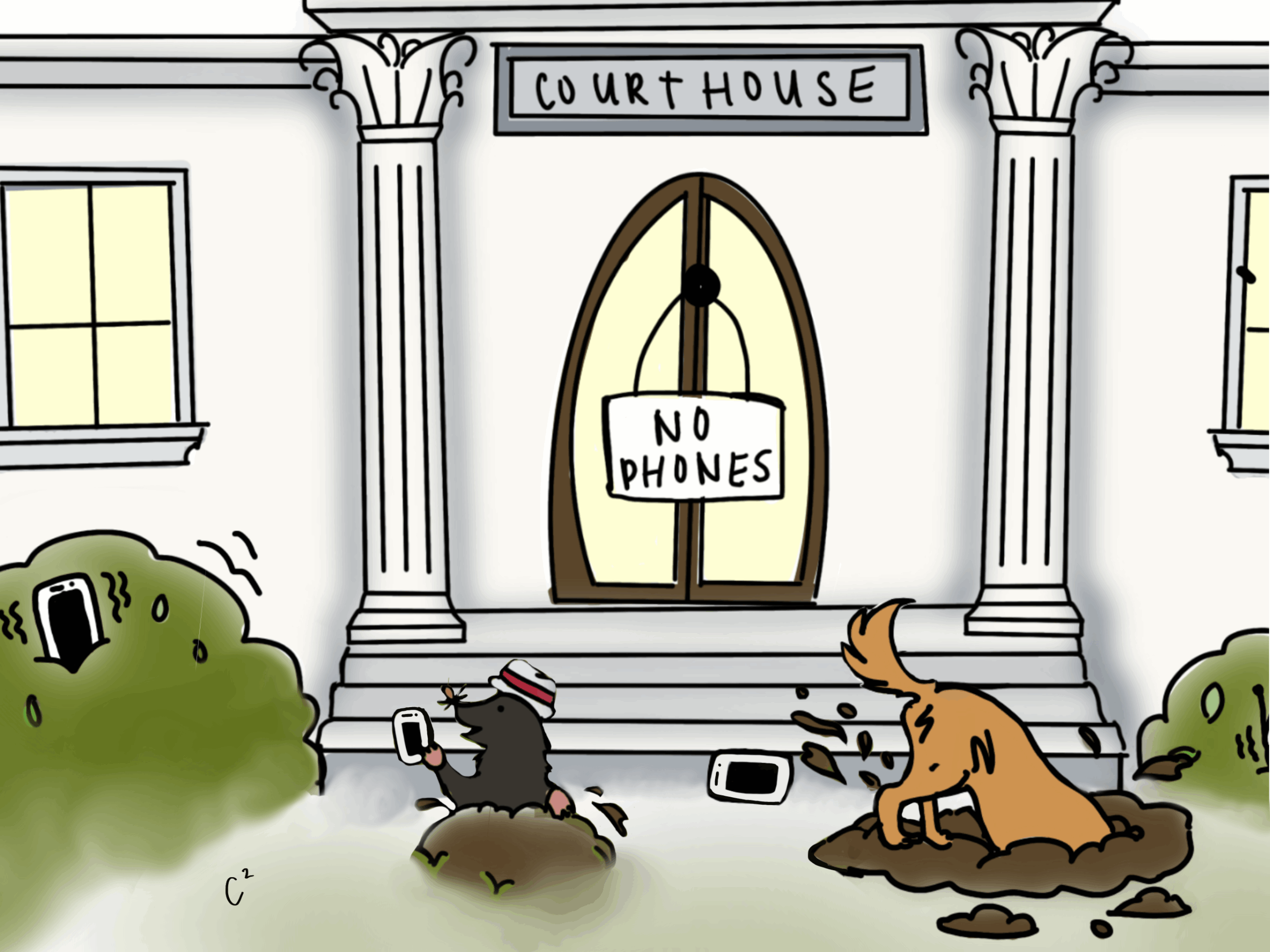
Episode 9: Cellphone Bans: Courthouse Nuisance or Necessity?
Image by Courtney Chrystal, J.D. candidate, Harvard Law School
In this “Student Voices” episode of Proof Over Precedent, HLS student Joe Lieberman interviews classmate Andrew Reed on the implications of courthouse cell phone bans on access to justice, particularly as it relates to self-represented litigants. Though intended to maintain courtroom ord

Episode 8: Ethics in Research — IRBs and the Common Rule Explained
Image by Courtney Chrystal, J.D. candidate, Harvard Law School
Institutional Review Boards (IRBs) watch over human subjects research to ensure ethical compliance. Ubiquitous in medical research, IRBs may still baffle those working in legal research. This week, in the first of a series of podcast talks demystifying IRBs, Proof Over Precedent host

Episode 7: Evaluating Online and In-Person Family Law Hearings
Image by Courtney Chrystal, J.D. candidate, Harvard Law School
Does the medium of family law cases — online or in-person — factor into procedural justice and the satisfaction of litigants in these cases? In this episode, A2J Lab Associate Director Renee Danser talks with Jim Greiner, faculty director of the A2J Lab, about a study nearing completion,

Episode 6: Online Courts Show Promise but Little National FTA Data
STUDENT VOICES: The views expressed are those of the student podcasters and do not necessarily reflect the position of the Access to Justice Lab.
Image by Felicia Quan, J.D. candidate, Harvard Law School
Hypothetical situation (that was real for at least one person): You’re issued a traffic ticket requiring appearance in a courthouse 400 miles aw

Episode 5: Can Simple, Affordable Ideas Improve Courts’ Costly Failure-to-Appear Rates?
Image by Courtney Chrystal, J.D. candidate, Harvard Law School
Failure to appear in criminal cases can lead defendants to jail time, draining resources from police, courts, and taxpayer dollars. But according to Alissa Fishbane, managing director at ideas42, a nonprofit think tank, the solution may be cheaper and easier than expected. A2J Lab Facult

Episode 4: Can Immigration Courts Save Time, Money, AND Noncitizen Dignity with Legal Information Programs?
STUDENT VOICES: The views expressed are those of the student podcasters and do not necessarily reflect the position of the Access to Justice Lab.
Image by Felicia Quan, J.D. candidate, Harvard Law School
Harvard Law School student Julia Saltzman leads a Student Voices episode of Proof Over Precedent to discuss legal information programs amid immi

Episode 3: Can Non-Lawyers Offer Relief and Expertise in Deportation Cases?
STUDENT VOICES: The views expressed are those of the student podcasters and do not necessarily reflect the position of the Access to Justice Lab.
Image by Courtney Chrystal, J.D. candidate, Harvard Law School
With a growing backlog of deportation cases, overwhelmed U.S. immigration courts are struggling to deliver due process. In this first Stude

Episode 2: Should AI Dole Out Legal Advice to Lawyers?
Image by Courtney Chrystal, J.D. candidate, Harvard Law School
This episode looks into the OpenJustice project, a study combining access to justice and artificial intelligence. It’s just a year in development but already moving relatively quickly through its randomized control trial. A2J Lab Faculty Director Jim Greiner spoke with Mandy Mobley Li, A

Episode 1: Could Holistic Legal Services Help Families Avoid the Child Welfare System?
This episode offers a mid-study update on a decades-long randomized control trial, unofficially referred to as the “Child Welfare” project. Proof Over Precedent host and Access to Justice Lab Director Jim Greiner interviews Project Director Renee Danser about the study, which evaluates whether families with children who face poverty-related legal a

Episode 0: Get to Know Us Again
This episode introduces listeners to the Proof Over Precedent podcast and the work of the Access to Justice Lab at Harvard Law School. The lab focuses on bringing empirical research into the legal field for both civil and criminal justice systems. Professor Jim Greiner shares plans for future episodes to address randomized control trials conducted by t
Recommended

True Crime Classics

The Healer Revolution

Becoming: HER with Nikki Spoelstra

Booked, Blonde & Busy w/ Olivia Ponton

McKinsey on Consumer and Retail

megahired.com

Hard Knocks Podcast

Effective Weight Loss for Moms | High protein, Strength Training, Lose Weight, Meal Planning, Fat Loss, Healthy Habits

The Human-Animal Connection - Pet Life Radio Original

Infinite Health with Dr. Arasi Maran

The Daily

World News Tonight with David Muir
