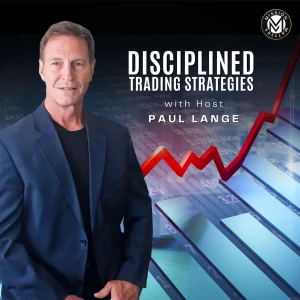
Disciplined Trading Strategies
Welcome to Disciplined Trading Strategies, the podcast where Paul Lange, a seasoned trader with over two decades of experience, reveals the real truths behind successful trading and investing. No more vague market predictions or debates on Fed policies. Paul shares practical strategies that work, dissecting the myths and showing you the power of technical analysis. Whether you're an experienced investor or just starting out, join us as we challenge conventional wisdom and empower you to make informed, disciplined, and successful financial decisions.
Episodes

Getting to Targets
Understanding price action, finding good chart setups, and identifying reasonable target areas are among the first skills every new trader needs to learn. But turning the profits you see on a chart into real gains in your account is a different challenge: making appropriate money on good trades while limiting losses on bad ones.<br>In this episode, Paul discusses three major obstacles that k
Lessons From Coaching Sessions
After years of coaching traders, Paul has seen certain problems surface again and again—often without the traders themselves recognizing them. In this episode, he shares the top three of the most important lessons to emerge from those sessions and explains why traders who genuinely want to improve often remain stuck. If you have been working hard at your trading but are not seeing the progress you
To Take No Action is an Action
Does successful trading always require taking action? Many traders feel they should be doing something whenever the market is open—but that instinct may be creating problems they don’t recognize. In this podcast, Paul explores why taking no action can be a deliberate decision based on knowledge and discipline. He also discusses the question every trader should ask before entering, exiting, or mana
DTS Trading Quick Tips Part 3
On the Disciplined Trading Strategies resource page, down at the bottom, I have what are called 21 Trading Quick Tips. These have slowly accumulated over recent years, with no particular schedule.I feel these have incredible value in them, even though they are mostly only one-line snippets with powerful trading lessons. So what I am doing is taking them seven at a time over three podcasts and expl
DTS Trading Quick Tips Part 2
On the Disciplined Trading Strategies resource page, near the bottom, there is a section called 21 Trading Quick Tips. These tips have slowly accumulated over recent years, without any particular schedule.
I believe these tips have incredible value, even though most of them are only one-line snippets with powerful trading lessons. So, I am taking them seven at a time over three podcast episodes an
DTS Trading Quick Tips Part 1
On the Disciplined Trading Strategies resource page, down at the bottom, I have what are called 21 Trading Quick Tips. These have slowly accumulated over recent years, with no particular schedule.I feel these have incredible value in them, even though they are mostly only one-line snippets with powerful trading lessons. So what I am doing is taking them seven at a time over the next three podcasts
What Holds All Traders Back
Most podcasts are on specific individual topics. I know a lot of you have listened to many or all of them, but even if you have, it is sometimes difficult to pull the topics together in a meaningful way. So, occasionally, I like to do some podcasts that tie a few topics together.This is one of those. Is this everything that can hold a trader back? Of course not. But it's a quick, off-the-top-of-my
McDonald's Days
This is a much bigger deal than the quiet title may be indicating to you. And I imagine the title brought about a little curiosity, and you probably have some idea what I’m going to talk about. It’s not meant to be a cute title, it is actually a term I use virtually every day. It does apply to both day trading and longer-term trading or swing trading, at least most aspects of this conversation do.
Diversification and Leverage
This episode is a practical look at two topics that are not directly related, but are often misunderstood: diversification and leverage. Diversification is often misused. There are different goals when diversifying, and different methods for doing it. Leverage is also frequently misunderstood and, for the most part, is a much simpler topic. This episode will be fairly short and will focus on answe
A Common Sense Warning
This episode is a brief common-sense reminder about staying aware, thinking clearly, and not getting too comfortable IF or when conditions may be changing. It is about preparation, perspective, and avoiding the kind of complacency that can quietly create bigger problems later.Sometimes the biggest risk is not what you see coming, but what you stop paying attention to. This has great information ab
A Beginner's Guide to Trading
If you’re new to trading, this is where you start. Before you ever place a trade, there are a few things you must understand, from choosing the right broker and charts to learning how to read price and manage risk. In this episode, we break down the true foundation of trading, including time frames, account structure, and why education and planning come before anything else. Trading doesn’t start
The Real Purpose of Scanning
If you’re new, scanning is the process of taking a large number of symbols and narrowing them down to a smaller group by identifying the characteristics you want for a possible trade setup. It applies to long-term trading, swing trading, and day trading. The main focus of this podcast is the balance and trade-off between quality and focus when scanning. There can be a real cost to watching too man
Averaging Down — The Trade That May Never End
The term averaging can be confusing for newer traders. In simple terms, it means entering a stock at one price and then adding more shares later, which creates an average cost basis based on how many shares were purchased at each price. Buying at higher prices is known as averaging up, while buying at lower prices is averaging down.In this episode, we take a deeper look at the pros and cons of the
Strategies from a Cookbook
Due to the holidays, it's been an extra couple of weeks since my last podcast. This one actually came as an offshoot from the last DTS educational event I did in mid-December. That event was called A Fireside Chat at DTS and highlighted some of my favorite topics from the year. One of those topics had to do with the role of strategies and the misunderstanding of that role as it comes to traders. T
FOMO in Trading - Summary of Demons
This one was inspired by many questions I received. In this episode, I break down one of the biggest trading demons we all face — FOMO. I talk about how fear, impatience, and the pressure to “catch the move” can quietly push us into overtrading and stepping outside our plan. I’ll show you how these emotions connect, how they trick even experienced traders, and what I personally do to stay discipli
That Good Trade May Not Be So Good
In this episode, I dive into the trap of judging trades by their results. Sometimes we get rewarded for doing something sloppy, and other times we take a clean, disciplined trade that just doesn’t work out. I talk about why a “good trade” might not be as good as it looks — and why a “bad result” might still be one of your best trades of the week. It’s a simple idea, but once you really understand
Trading Plans Follow Up
Two podcasts ago, I talked about trading plans for the first time in this series. Now, it’s not because trading plans aren’t important — they’re actually critical — but they’re not always the easiest topic to break down in a podcast format.That said, I got a lot of great feedback and a few interesting questions, so in this episode I want to take a little time to follow up and dig deeper.If you hav
The PDT Rule Abolished - Likely
The Pattern Day Trader Rule essentially prevents people from day trading stocks unless they have a $25,000 balance. This rule was enacted in 2001 and was intended to protect traders. In my view, it has hurt those it has tried to help. This video explains why, and also what an opportunity it may open up for the average person.
Set up a free coaching session with Paul: https://calendly.com/dts-paul/
Trading Plans – Just Some Tips
In all this time, this is Podcast 68, I have not had a full presentation on trading plans. The answer is partly because I just haven’t gotten around to it yet, partly because the detailed topic of trading plans may not be best for a podcast, and partly because many people feel this to be a boring topic. However, it is among the most important topics. So listen a little even if you don’t want to.In
Timeframes - How The Money Works
A while back I did a podcast that was simply titled “Time frames” which discussed some of the basics and what you may choose to focus on as a trader. This podcast is a little more advanced and based on constant questions I receive, so I will try to clear up some misconceptions about the differences in time frames and how we make money from the different time frames. If you are very new, by time fr
Risk Management v. Trade Management
While on one hand this may seem like a fairly basic topic, I get a lot of questions that let me know that a lot of traders are confused about risk management versus trade management. I have talked specifically about the “risk unit” back in Podcast #35, and a lot of comments in general about trading management back on podcast #25. However, this podcast is devoted to discussing how they tie together
Five Biggest Pitfalls for Active Trader-Investors
Sorry about using one of those “top-five” titles. But that’s what this one is. It’s a new topic to discuss these as a group, but naturally each one of these may have had some partial discussion in prior podcasts. Here is the redacted list:Over xxx-ing…Dxxxxxxing Inappropriately…Risking amounts that xxxxxxxxxx…Listening to xxxx xxxx…Trading with xxxxxxx which leads to xxxxxxxx.
Set up a free coachi
Helpful Comments to Aspiring Traders
There is an entire category of comments you’re not likely to ever hear when you’re learning to trade. That is because they are unsavory and not things a lot of people like to talk about. That’s exactly why they can be the most helpful comments. I discuss these all the time. I have a fairly long list I will discuss in this podcast. It includes things like, as one example, dealing with losing trades
Recent False Perceptions
Some recent events and a new DTS Question of the Week email sparked several comments and questions that generated this podcast topic. I don’t want to describe it too much or I may ruin the effect of this podcast. I do want to add that perhaps I didn’t and with the correct concluding line. If it isn’t obvious, the conclusion is simply this. If you follow these misperceptions, it is a factual certai
Oh Those Bots... Algos and AI
While it is not normally the case, this podcast is a takeoff from an hour-long live DTS Educational Event I did last week. The reason I’m doing that is because this is what seems to be a very hot topic. Everyone has tons of questions about how these technologies may or may not affect traders, whether they are long-term or short-term, and whether there’s any way to benefit from them. Also this topi
Markets, Crashes, and Ponzis
This episode touches on the importance of understanding market pullbacks/corrections/all-out crashes even though the market is up the majority of time both pricewise and timewise. It discusses the truth about why markets crash and there can be no argument about what the truth is about market crashes. There’s also a fun discussion about the relationship between the market and Ponzi schemes although
A Bigger Picture Look at Price Movement
Most traders are wired to trade a certain way. Everything is a “breakout” to them whether it occurs on a weekly chart or a one minute chart. That poor wiring for most people is why so many people lose trading or investing in the market. Understanding that the price action that occurs is usually the reverse of how people are wired is important. This podcast goes into several broad general topics ab
More on Trading Psychology
While I have done an awful lot of podcasts, none are directly titled about psychology. This one says “More on Trading Psychology” because it has been mentioned in many prior podcasts as it is obviously a large topic, and rightfully should be, for many traders. However, for many traders, they don’t have the right to even claim psychology because they are not at a level where psychological issues ca
Living Through a Pullback
This is a very timely discussion I think most of you will appreciate. It discusses several things including the different ways that traders can handle an extended bull market or when it transitions to pull back or a bear market. It discusses the psychological problems traders often have that can end up causing huge losses, and how to potentially deal with them.
Set up a free coaching session with
Strategies v Reading a Chart
This is a higher-level discussion that you all may not relate to. If you are new, you may simply tune out as it seems like a bit of an abstract discussion. But for many of you who have been involved in the markets, you may find it refreshing and may learn something from the conversation. It’s an in-depth discussion about what is really at the heart of making money and some of the names that we com
When Your Hairstylist Is Buying Tesla -A Deeper Look into Technical Analysis
When your hairstylist is buying Tesla. Is that part of technical analysis? My first for podcasts I discussed why about 6% of the world does not even need to listen to these podcasts, why fundamentals and news will never directly make you a penny, and then wrapped it up on the next podcast by talking about how you make money with technical analysis. I wanted to follow-up with some more concepts jus
Trading: Correlation v Causation
I have mentioned these two words in at least one or two other prior podcasts. I received a couple questions about what exactly I mean when I use these words in trading, and this is definitely worthy of an entire topic. Naturally the words in English are fairly easy to define and understand, and yes that is the general meeting that they have been trading. But specific examples can show you how they
You Don't Have to Be a Genius
This is actually a great topic. Yes, this is episode 54, and I’m still calling things great topics as if they should’ve been the first thing you heard. There is such tremendous misconception about the skills needed to trade/invest for yourself that it leads to two issues. Some people who try to be geniuses and focus on the wrong things, and people who simply just don’t try because they figure they
Let's Talk About Using Stops
Note for the faint of heart… A quick word if you are very new. When a trader takes a trade, that trader will always (should always) have a point at which they feel the trade is no longer working and therefore have to exit. This protects the account so that you don’t take your account down to zero hanging onto garbage. That level at which you exit is called your stop. You can stop out of the trade
Learning From the Internet
The Internet is obviously a very useful tool for many things. But how useful is it in the endeavor to learn special skills, like learning the skill of trading or investing for yourself? This presentation is about taking a look at the pros and cons, the good and the bad, the useful and not useful, of what the Internet has to offer for anyone trying to learn trading on their own. As always, I want t
The ONLY 2 Times That Psychology Matters
You may be curious about the phrasing of the title of this episode. Because it kind of implies that there’s only certain times that psychology matters. To be fair the title is a little “tongue-in-cheek”, although in a literal sense it is 100% true. Sounds confusing? Well, you have to listen to the beginning of the episode but I assure you it will be filled with more information that will help you
Slippage - An Advanced Talk
This is a more advanced talk, at least for a podcast. On the DisciplineTradingStrategies.com website this is on the free stuff page, in the educational videos section as a topic. But this is dedicated to somebody who is beginning to trade or actually trading. For anyone trading this is a very important topic because it deals with wasted money. And over time and over many trades, it can add up to a
Missed Money
I love this title because it has some different implications depending upon where you are in the trading world. If you’re kind of new you may just be excited about what the topic is that involves “missed money”. If you have been around for a while maybe you recognize this is a beginning of a famous or perhaps I should say infamous saying. But it leads to a great discussion about a topic that’s nea
Perseverance
My last podcast was largely technical, at least as technical as you can get in a podcast. It was about understanding some of the concepts and misconceptions about trends. This one is a soft topic. In trading that means more about psychological and thinking type issues. And this particular one is really on the far side of psychology because it applies to most everything in your life, not just tradi
The Concept of Trend
A lot of clichés exist in trading. One of the more common ones is the common-sense notion of following the trend. It is one of the very few good clichés, and while it seems like a simple concept, there is a lot more involved. Like all of trading, you need to understand some of these concepts that are higher-level to get all the arts in your favor.Here are the charts to follow along:Chart 1:https:/
The Use of Options
As a podcast, this of course will not be a detailed lesson on exactly how to make money from options. However, there will be some great information discussed including; the stupidest comment that I hear on a monthly basis, options actually accomplished in your trading, what you should never do with options, and the best general use for options provided you understand when to use it.
Set up a free
Overtrading
In the DTS seminar program there is a discussion near the end about pitfalls that new traders may run into. The first pitfall is listed as overtrading. The second pitfall is listed as overtrading. It then goes on to discuss why overtrading ranks as the first two pitfalls that new traders may run into. Tune in to hear the reasons why, as this is another one of those possible career killers for trad
The Top Fear Explained
You likely already know that emotions play a big part in trading, no matter how much of a cool cucumber you think you are. And we all know those emotions are fear and greed. But one towers over the other, and inside of that one emotion there is perhaps one big issue that damages more traders’ careers than anything else. I want to sort out these various psychological issues, discuss them to some de
How a Trader Spends Their Time
Whether you are a new and developing trader, or an experienced trader, the use of your time is a very important facet. And this is one category where the more experienced you get, oftentimes the worst your time management becomes.There are two issues. One is wasting time by focusing on things you perhaps should not be studying, at all. But of the list of things that really do matter, very few trad
The Psychology of Losing
New traders get knocked out of the game because they don’t take their stops. You probably heard that 5000 times if you spent even one hour researching the topic of trading. As a matter of fact, there is even a special division of hell saved just for traders who don’t take their stops in case you weren’t aware of that. But here’s another one for you and perhaps my favorite saying. Experienced trade
Excuses
This episode has two purposes. First it is to set the record straight about what many traders use as excuses for their own poor trading. The list is long and most of them are fallacies and to the extent any are real, they are always fixable by the trader. Second, it is important as a mental concept to take responsibility for everything you do. When you simply blame some abstract concept, it preven
Rules and Expectations
When you start listening to this podcast you will hear the actual quote about rules and expectations. That quote actually comes from Mark Douglas, who is the author of the book called Trading in the Zone. But I want to expand on the discussion quite a bit because I feel it is at the heart of issues for new traders, and oftentimes for moderately developed traders. I am also going to start with my t
How We Learn as Traders-Humans
This is definitely what I consider to be one of those “soft” topics when it comes to trading. It actually is about the learning process that we go through as humans and applies to everything, it was not actually designed as a discussion for traders. It’s a fairly well-known concept so forgive me if you heard it before. It is nothing I invented but I feel it is unusually applicable to traders and t
Two Comments on Common Sense
Yes, there are two very different comments about common sense in the markets. We need to draw a very hard line between preparing yourself for exactly what you want to do in the world of trading / investing, and then what you do to make money. If you are listening to this podcast or reading this, you’re probably an exceptional person. And you got to be exceptional by using a certain amount of commo
Self-Fulfilling Prophecy
A self-fulfilling prophecy is a prediction that comes true because someone believes or expects it to come true. This concept is very alive and well in trading. I actually refer to it quite often and it’s not always in a negative way. It has its place in certain situations, although it has a very “soft” use. It sort of gets into the concept of subjective versus objective. A few Podcasts back I talk
Long versus Short
This podcast is about the difference between being “long” stock positions and being “short” stock positions. It’s going to come to you at several different levels. I find a lot of new traders don’t even understand or are not even familiar with the concept of being “short”. I want to explain what it is and discuss two unbelievable myths about “short selling”. I also want to explain why it needs to
The Risk Unit
Okay, this may be a little bit of a boring topic for a podcast. At least to the average person. However, as I have mentioned in some prior podcasts, oftentimes these boring topics are the most important when it comes down to the final strokes of making a good living in the market. I also have to continue to remind myself that while some of these topics seem obvious and boring, to many new traders
Patience
Lack of patience is probably one of the greatest trader-killers out there. If that grabs your attention, it should. In my experience, when a trader starts to develop technical skill and starts to potentially become profitable, it is the lack of patience that ends their career. Lack of patience is related closely to FOMO and they are both concepts that you need to handle if you truly want to be a d
Learn as a Pro Day ONE
Don’t let the title fool you, this has great information. If you are going to learn how to trade, there are many pitfalls. There are enough natural pitfalls out there, like the fact that trading is counter-intuitive. But there are ‘man-made’ pitfalls as well. Most everything you view, read, or hear will be incorrect. Some through ignorance, some through design.
Set up a free coaching session with
Use of Technical Indicators
• This is important enough for its own podcast.• Formal definition – from two different sources. • Simple definition.• What is NOT a technical Indicator.• Cool kids.• What you can use them for.• What you cannot use them for• The dangers are huge. They END careers. Here are the charts to follow along:Chart 1:https://drive.google.com/file/d/1t9bvK0UtBc3oQFklHiA32o66jlCBs5xv/view?usp=drive_
The Shocking Way to View the Market
This podcast is short and sweet and to the point. The more complete title should be, “the absolute way you must view the market to make money, which would shock the average person, even the average person in the market”. It will in a sense, summarize some thoughts of prior podcasts, and lead to a conclusion that you must hear, if you really want to understand how to trade/invest properly.
Se
What is the Best Setup
I don’t want to give anything away but some of you who have been listening for a while may be thinking that there is a little sarcasm in the title of this podcast. This is going to cover several important topics including a couple of favorite lessons from a book, those cookie-cutter patterns, the language of charts, and pictures of learning. A good rule to follow is that nothing is as it seems whe
Management Is More Than Critical
In almost anything you read or listen to about trading, you will likely read or hear that trade management is important. This is not accurate. Trade management is more than important. It is critical and will eventually determine your fate as a trader/investor. Traders that can read charts but cannot put the money in the bank are a dime a dozen. It takes some skill to read a chart, but many traders
Why the Pundits Seem Right
There is a section called “Look for the Pitfalls That Stop Most” that is toward the end of the free course that I do for everybody called, Introduction to Mastering Technical Analysis. It’s a half-day course that is packed with some great information. I mention that because, as a trader/investor, today’s topic is one of the key pitfalls that often make it difficult for anyone new. Or in many cases
Rules You Should Question
I think this has become one of my favorite small topics to pick on, as I probably mention one or two of these when talking about other topics. I also did an event with a similar title. It’s an important topic because so many people go off looking for some training and there are an awful lot of things you read and see that vary from being at the least, not useful, and at the most, being downright w
Is the Market a Random Walk
Is the market a random walk? Well, you have to listen to the podcast to get that answer. The answer may surprise you a little bit, but the answer also has what I consider to be one of the greatest concepts you need to understand to be a successful trader or investor. I’m going to talk about my 97% rule and how I stumbled across it many years ago. We will also discuss the market being a zero-sum ga
What is Risk
When a trader says that a trade was “risky”, what exactly does that mean? I hate to say it but in the absence of any other information it means that the trader is very novice. Risk can have a lot of meanings, and I want to review each of those as they are critically important to your trading. Maybe it’s just semantics, but saying any trade is risky is very difficult to define. The true definition
Your Progress as a Trader
This particular podcast is actually based on an article that I wrote, well, quite a long time ago. But it was one of those that received many comments for a long time, and I felt it helped a lot of people. It discusses stages most traders go through, and where they often get stuck. Obviously, many of the comments in this podcast are concepts that I say frequently, but a lot comes together in this
Boring is Best - Ordinary Moves
This is a big one to me because it gets at the very heart of what we do as traders/investors and also addresses what is perhaps one of the biggest mistakes made by traders across the board. This has to do with selecting trades on simple ordinary stocks to make money from moves that occur virtually every day. Unfortunately, new traders are drawn into trying to find stocks that make the top ga
A Top Trading Fear - FOMO
FOMO, in case you have been in an underground shelter for the last 20 years, stands for “Fear of Missing Out” and it is a saying that certainly started somewhere else besides the trading world. But it probably applies to the trading world more than anywhere else. There are several very key topics in trading that are all very related. FOMO, patience, discipline. They are the top demons, not only fo
Self-Improvement Versus...
The full title is simply too long to be an actual title, but it should be “ should you spend more time on self-analysis and less on technical analysis”. In trading there are SO many things that you hear as advice that seem to be the professional’s answer, but they are not. It is kind of like the doctor saying “go home and rest”, no matter what your ailment is. The advice is safe, it is not bad, an
The Odds We Have as Traders
This is a great topic to me. Of course, what I think is a great topic does not necessarily line up with what new or struggling traders think is a great topic. The way odds work in trading is generally not even close to how most people picture the concept. And it is very important to understand this topic or you will struggle to make money even with good chart knowledge. Many traders learn to read
My Story Helps
When I say “My Story”, I am referring to how I got involved in trading/investing. I feel that my story may help the average person because it brings out a lot of issues that I discuss frequently. I was never on Wall Street or involved with any financial institution. I started off learning on my own. And it leads to several discussions that involve questions I frequently hear from many new and expe
Trading Timeframes
Warning! Part of this may be kind of boring to some of you. However, I will get into some discussions that will enlighten even the most sophisticated trader. I’m going to start off with a basic discussion about the popular time frames that traders can trade. Anything from a monthly chart to a “tick” chart. I will discuss the appropriate charts that go with each of these time frames, but I also wan
Proper Mindset
Proper mindset may seem like a fuzzy topic, but it will get clear once I get into the topic. It encompasses a lot of issues that I truly believe become the most important part of trading. The truth of it is that learning technical analysis is not a terribly complex procedure. As a matter of fact, I certainly don’t mean to offend anyone who is struggling, but the intelligence required to trade prop
Structure
One of the bigger issues I always face in training somebody new to the market (or someone struggling) is getting them to understand that trading involves structure. It’s fairly easy for me to spot this issue in a trader (very easy), all I need to do is see three or four of their trades. It doesn’t even matter if they are winning or losing trades. Good traders may have several strategies they know,
What to Trade
If you are very new, you may not even understand what the question is regarding “what to trade”. And if you have some experience, you may think this is a boring topic. I’m going to discuss the pros and cons of trading stocks, futures, Forex, Options, Crypto, or commodities. They all in the trade long-term, and they all can be good for daytrading. If you’ve been around a while this may sound boring
My 3-Legged Stool in Trading
I know the “Three-Legged Stool'' concept has a lot of uses as a metaphor. For a long time however, I’ve used it to describe what people need in order to be successful in trading/investing. I have spent some of my prior podcasts discussing what you do not need, what you should never be looking at. I always make that a focus because so many people fail by looking at all the wrong things. You can gla
Human Biases in Trading
Without a question, the biggest disadvantage we have as traders is being human. Along with all the good things come some really bad things for traders. We come with emotions that do nothing but confuse us. We have hidden demons that we do not even know are operating. In addition, whether you realize it or not, as you develop as a human, you develop ‘biases’. A predetermined view of how something w
Some of Your Best Traits May Be Hurting You
Trading or investing in the market is a unique profession. The ability to make a former week’s salary in minutes can have even very educated and disciplined people doing crazy things. Just like a construction site often attracts kids, the market attracts successful people. However, the success these people have had does not translate to the market directly, sometimes not at all. Unfortunately, the
Is Trading Subjective or Objective
This may sound like a simple question but it is actually quite a complex question and it is also a very important one. Is trading subjective or objective, should a good trader be more subjective or objective? What does it mean to be subjective or objective when it comes to trading? When traders first come to the market, they are inherently very subjective. They don’t know what else to be, although
Those Cookie Cutter Patterns
I will make this clear again when you begin listening to this podcast but in case you’re wondering what direction this is going to take or what exactly cookie-cutter patterns are (if you been trading a while you probably know, if not you may not) this podcast will be a scathing ridicule of anyone who thinks are going to make money from cookie-cutter patterns.The term cookie-cutter patterns is one
Precision in Trading is Everything
I am going to bet that this podcast gets fewer downloads than the others. Discipline? Really? What a boring topic. Discipline. It is an important word in most everything we do in life. But in trading it has a very special place. When a new trader discovers that you can make a former week’s salary in a couple of hours it brings about emotions of greed and fear that have intelligent people often doi
Discipline in Trading
I am going to bet that this podcast gets fewer downloads than the others. Discipline? Really? What a boring topic. Discipline. It is an important word in most everything we do in life. But in trading it has a very special place. When a new trader discovers that you can make a former week’s salary in a couple of hours it brings about emotions of greed and fear that have intelligent people often doi
4 "Secrets" to Trading-Investing
The word Secrets is in quotation marks because I tend to make fun of crazy emails that act like trading or investing revolving around some magic formula or great new strategy. After a long time of working with many traders, one discovers that there are certain truths that cannot be denied. There are four things that are done so consistently wrong by new, and even fairly experienced traders, that e
Recommended

Solved Murders - True Crime Stories

紐約鳥|New York Aperture
The Swerve Podcast: Obscure Topics | Conspiracy Theories

The Bread and Banter Podcast

The Church of What's Happening Now: The New Testament
Busted Open

Deadline: White House

Panda Show - Picante

Crickets Corner

History of the Earthquake and Fire in San Francisco

Fox news

K-Drama Obsessed Mamas | Beyond “Just One More Episode!”
