
PolicyCast
PolicyCast explores research-based policy solutions to the big problems and issues we're facing in our society and our world. Host Ralph Ranalli talks with leading Harvard University academics and researchers, visiting scholars, dignitaries, and world leaders. PolicyCast is produced at the Kennedy School of Government at Harvard University.
Episodes
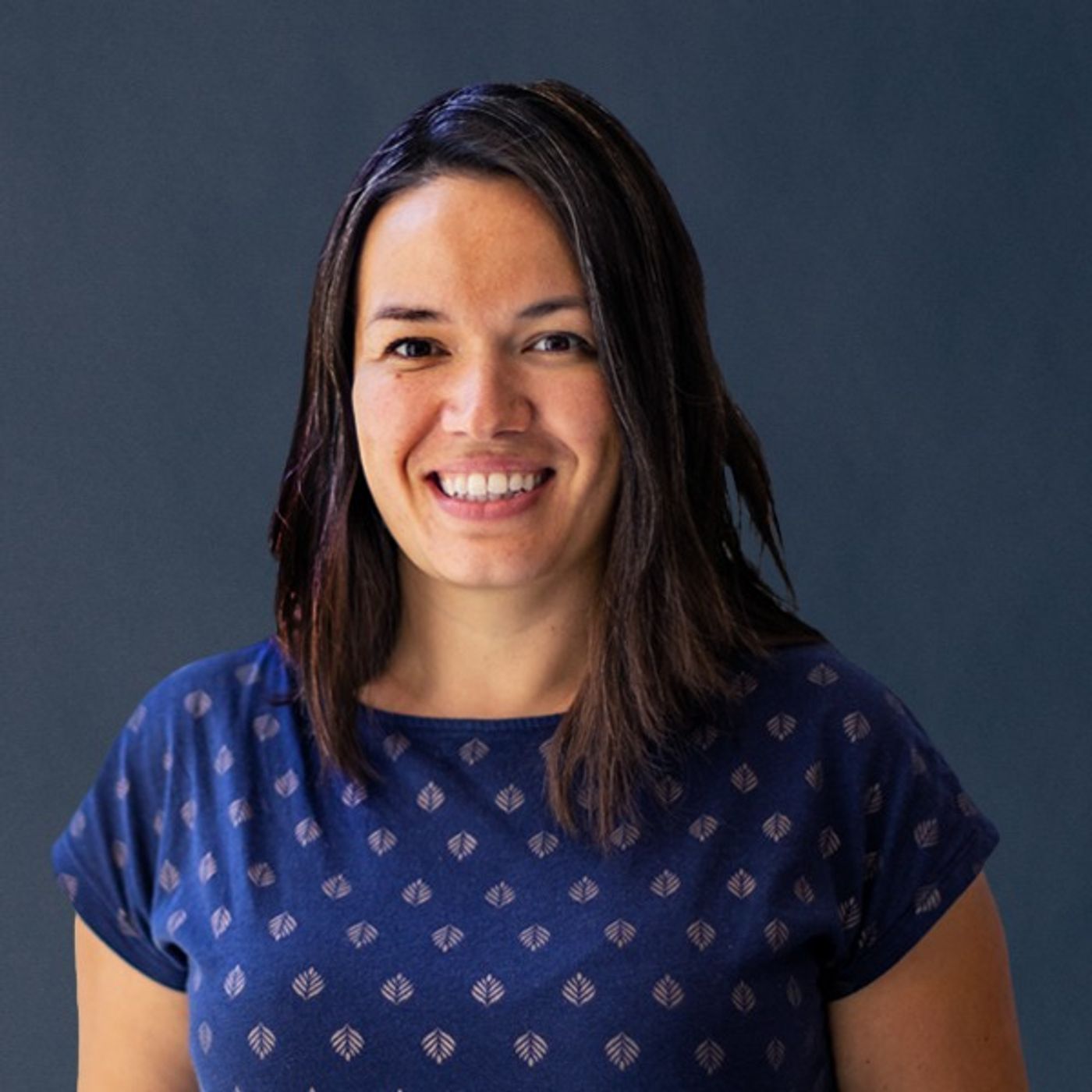
Forget smaller or bigger. If you want better government, invest.
Elizabeth Linos is the Emma Bloomberg Associate Professor for Public Policy and Management, and Faculty Director of The People Lab at the Harvard Kennedy School of Government. The majority of her research focuses on how to improve government by focusing on its people and the services they deliver. Specifically, she uses insights from behavioral science and evidence from public management to consid

Christiane Amanpour says objective journalism means pursuing truth—not neutrality
Christiane Amanpour is chief international anchor of CNN’s flagship global affairs program “Amanpour,” which airs weekdays on CNN International and nightly on PBS in the United States. She is also host of “The Amanpour Hour,” and is based in the network’s London bureau. Beginning in 1983 as an entry-level assistant on the international assignment desk at CNN’s headquarters in Atlanta, Amanpour ros

The Arctic faces historic pressures from competition, climate change, and Trump
John Holdren is the Teresa and John Heinz Research Professor for Science and International Affairs at Harvard University’s Kennedy School of Government and co-director of the Science, Technology, and Public Policy Program at the School’s Belfer Center for Science and International Affairs. He is a former Professor of Environmental Science and Policy in the Department of Earth and Planetary Science

Moments that matter: How to bake fairness into the workplace
Iris Bohnet is the Albert Pratt Professor of Business and Government and the co-director of the Women and Public Policy Program at Harvard Kennedy School. She is a behavioral economist, combining insights from economics and psychology to improve decision-making in organizations and society, often with a gender or cross-cultural perspective. Her most recent research examines behavioral design to em

Crypto is merging with mainstream finance. Regulators aren’t ready
Timothy Massad is currently a Senior Fellow at the Mossavar-Rahmani Center for Business and Government at Kennedy School of Government at Harvard University, an Adjunct Professor of Law at Georgetown Law School and a consultant on financial regulatory and fintech issues. Massad served as Chairman of the U.S. Commodity Futures Trading Commission from 2014-2017. Under his leadership, the agency impl

Professor Joe Nye coined the term “soft power.” He says America’s is in decline under Trump
Joseph S. Nye Jr. is a Harvard University Distinguished Service Professor, Emeritus, and former Dean of Harvard's Kennedy School of Government. He has served as assistant secretary of defense for international security affairs, as chairman of the National Intelligence Council, and as deputy undersecretary of state for security assistance, science and technology. In a recent survey of international

America’s geopolitical realignments, authoritarianism, and Trump’s endgame
Ambassador Wendy Sherman, the 21st U.S. Deputy Secretary of State and the first woman in that position, has been a diplomat, businesswoman, professor, political strategist, author, and social worker. She served under three presidents and five secretaries of state, becoming known as a diplomat for hard conversations in hard places. As Deputy Secretary, she was the point person on China. While servi

If the U.S. courts can’t defend the rule of law, who can?
With a Republican Congress apparently unwilling to check Trump’s power, many Americans fear a looming constitutional crisis and are looking to the federal courts to ride to the rescue. But political scientist and Harvard Kennedy School Professor Maya Sen, who studies the federal judiciary, says the cavalry probably isn’t coming. The Trump administration has seemingly defied judicial orders on depo

AI can make governing better instead of worse. Yes, you heard that right.
Danielle Allen and Mark Fagan say that when tested, thoughtfully deployed, and regulated AI actually can help governments serve citizens better. Sure, there is no shortage of horror stories these days about the intersection of AI and government—from a municipal chatbot that told restaurant owners it was OK to serve food that had been gnawed by rodents to artificial intelligence police tools that m

Ricardo Hausmann on the rise of industrial policy, green growth, and Trump’s tariffs
For market purists, any mention of the term industrial policy used to evoke visions of heavy-handed Soviet-style central planning, or the stifling state-centric protectionism employed by Latin American countries in the late 20th century. But that conversation turned dramatically over the last several years, as President Joe Biden’s signature legislative achievements like the CHIPS and Science Act

Oligarchy in the open: What happens now as the U.S. confronts its plutocracy problem?
Ten years ago, political scientists Martin Gilens of Princeton and Benjamin Page of Northwestern took an extraordinary data set compiled by Gilens and a small army of researchers and set out to determine whether America could still credibly call itself a democracy. They used case studies 1,800 policy proposals over 30 years, tracking how they made their way through the political system and whose i

What the EU must do to compete—and become the leader the world needs
Alexander De Croo became Belgium’s prime minister in October of 2020. It’s a relatively small country, with about 12 million inhabitants—slightly less than the city of Los Angeles—but it’s very much the face of Europe with the European Commission, the Council of the European Union, and NATO all calling Brussels home. Prime Minister De Croo, who saw the country through the COVID pandemic, says tha

The policy changes needed now to avoid a climate-driven global food crisis
The warning lights are blinking for the world’s food supply. At least that’s what 150 Nobel Prize and World Food Prize laureates said in a recently-published open letter calling for a “moonshot” urgency effort to start the immediate ramping up of food production to meet the global demands of 9.7 billion people by 2050. Harvard Kennedy School economist Wolfram Schlenker, the new Ray A. Goldberg Pro

From insight to impact: Dean Jeremy Weinstein wants the Kennedy School to embrace and solve complex public problems
Jeremy Weinstein became the newest dean in the 88-year history of the Harvard Kennedy School this past June, arriving from Stanford University, where he was an award-winning scholar and the founding faculty director of the Stanford Impact Labs. The pursuit of deep scholarly curiosity and roll-up-your-sleeves impact has been a theme in his life and career, as well as an approach he intends to accel

Legalized gambling is exploding globally. What policies can limit its harms?
Turbocharged by the internet and mobile technology, legalized gambling has exploded across the globe, leaving behind ruined lives, broken families and financial hardships, and should now be classified as a major public health concern. A four-year study by a public health commission on gambling convened by The Lancet, the respected British journal of medicine, found that net global losses by gamble

How emotion science could help solve the leading cause of preventable death
The World Health Organization says smoking is the leading cause of global preventable death, killing up to 8 million people prematurely every year—far more than die in wars and conflicts. Yet the emotions evoked by national and international anti-smoking campaigns and the impact of those emotions has never been fully studied until now. HKS Professor Jennifer Lerner, a decision scientist who studie

Policies—and a new global program—to fight anti-LGBTQI+ discrimination
Anti-LGBTQI+ (Lesbian, Gay, Bisexual, Transgender, Queer and Intersex) discrimination is on the rise, both in the United States, where hate crime statistics are climbing, and globally, with the increase in right-wing populist governments weaponizing public sentiment against marginalized people. But there are also rights advocates around the world pushing back, despite threats of physical harm, pro

The essential reforms needed to fix the housing crisis
America is in the grip of a severe housing crisis. Tenants have seen rents rise 26 percent while home prices have soared by 47 percent since early 2020. Before the pandemic, there were 20 US states considered affordable for housing. Now there are none. And 21 million households—including half of all renters—pay more than one-third of their income on housing. Harvard Kennedy School Associate Profes

How to change the narrative on women as leaders
As Vice President Kamala Harris making a strong bid for the U.S. presidency, HKS Women and Public Policy Program Co-Director Hannah Riley Bowles says Harris is just one of many “path breakers” who have dramatically increased leadership opportunities for women. But she also says the reaction to Harris’ campaign in the media and the public conversation shows how the popular narrative about the effic

How to turn back a rising tide of political threats and violence
The attempted assassination of former President and candidate Donald Trump has catalyzed an important discussion about both actual violence and threats of violence against political candidates, office-holders, policymakers, election officials, and others whose efforts help make our democracy work. Harvard Kennedy School professors Erica Chenoweth and Archon Fung join host Ralph Ranalli to talk abo

Self-destructive populism: How better policy can reverse the anti-clean energy backlash
Populism—the political term that describes a group of self-described common people who oppose elite—has turned up in what for many is an unexpected place: the push for a worldwide transition to clean energy. Even though they’re vital to preventing the most catastrophic consequences of the manmade global climate crisis, clean energy measures are encountering pushback from multiple sources ranging f

Public policy, values, and politics: Why so much depends on getting them right
Public policy has great power, both to improve people’s lives if it is planned and executed well and to cause significant suffering if it is not, says Harvard Kennedy School Dean Douglas Elmendorf, who will step back from his post this summer to rejoin the faculty. He joins PolicyCast host Ralph Ranalli in this episode to discuss the crucial role policy plays in everyday life, the often-imperfect

The Ghost Budget: How U.S. war spending went rogue, wasted billions, and how to fix it
HKS Senior Lecturer Linda Bilmes, an expert on public finance who has studied post-9/11 war costs for the past 20 years, says their staggering $5 trillion cost was enabled by what she calls “The Ghost Budget.” Using an unprecedented combination of borrowing, accounting tricks, and outsourcing, presidential administrations, Congress, and the Pentagon were able to circumvent traditional military bud

The Great Creep Backward: Policy responses to China’s slowing economy
Harvard Kennedy School Professor Rana Mitter and Harvard Business School Associate Professor Meg Rithmire say that after decades of tremendous growth, an economically slowing China is the new normal. With a growing debt-to-GDP ratio, an aging population, a devastating real estate bubble, and a loss of confidence among both foreign investors and domestic consumers, Chinese President Xi Jinping and

Two peoples. Two states. Why U.S. diplomacy in Israel and Palestine needs vision, partners, and a backbone
Former U.S. Ambassador to Israel Ed Djerejian says Israeli Prime Minister Yitzak Rabin once told him “There is no military solution to this conflict, only a political one.” Rabin was assassinated a few years later and today bullets are flying, bombs are falling, and 1,200 Israelis are dead after the Hamas terrorist attacks of October 7 and nearly 30,000 Gazans have been killed in the Israeli respo

We can productively discuss even the toughest topics—here’s how
As our discourse and our politics have become both more polarized and paralyzed, Harvard Kennedy School faculty members Erica Chenoweth and Julia Minson say we need to refocus on listening to understand, instead of talking to win. In mid-2022, the School launched the Candid and Constructive Conversations initiative, based on the idea that frank yet productive discussions over differences are not o

The document that redefined humanity: The Universal Declaration of Human Rights at 75
Harvard Kennedy School Professor Kathryn Sikkink and former longtime Human Rights Watch executive director Kenneth Roth have spent years both studying the transformational effects of the Universal Declaration of Human Rights and have worked on the ground to make its vision of a more just, equal world a reality. On December 10th, the world celebrated not only the annual Human Rights Day, but also t

Legacy of privilege: David Deming and Raj Chetty on how elite college admissions policies affect who gains power and prestige
Legacy admissions, particularly at elite colleges and universities, were thrust into the spotlight this summer when the U.S. Supreme Court effectively ended affirmative action in admissions. The ruling raised many questions, and fortunately, Harvard Kennedy School professor David Deming and Harvard Economics Professor Raj Chetty were there with some important answers—having just wrapped up a 6-yea

Need to solve an intractable problem? Try collaborative governing
Harvard Kennedy School faculty member Jorrit de Jong and Harvard Business School Professor Amy Edmondson say the big, intractable problems challenges facing city leaders today are too complex to be addressed by any one agency or government department. Complex challenges like the shortage of economic opportunity and affordable housing, homelessness, the effects of the climate crisis, crime—and can

How to keep "TLDR" syndrome from killing your policy proposal
Harvard Kennedy School Professor Todd Rogers and Lecturer in Public Policy Lauren Brodsky say trying too hard to sound intelligent—even when communicating complex or nuanced ideas—isn't a smart strategy. Because today’s overburdened information consumers are as much skimmers as readers, Rogers and Brodsky teach people how to put readers first and use tools like simplification, formatting, and stor

Dr. Rochelle Walensky on making health care policy under fire
Dr. Rochelle Walensky, who served as CDC director from 2021 to 2023, calls the job “probably the hardest thing I will ever do.” But she also calls it “the honor of a lifetime.” When she was appointed by President Biden as the CDC’s 19th director, she was already used to politicized health care issues, having spent her formative years as a physician working on HIV and AIDS. But COVID thrust her int

AI can be democracy’s ally—but not if it works for Big Tech
Kennedy School Lecturer in Public Policy Bruce Schneier says Artificial Intelligence has the potential to transform the democratic process in ways that could be good, bad, and potentially mind-boggling. The important thing, he says, will be to use regulation and other tools to make sure that AIs are working for us, and just not for Big Tech companies—a hard lesson we’ve already learned through ou

The more Indigenous nations self govern, the more they succeed
Harvard Kennedy School Professor Joseph Kalt and Megan Minoka Hill say the evidence is in: When Native nations make their own decisions about what development approaches to take, studies show they consistently out-perform external decision makers like the U.S. Department of Indian Affairs. Kalt and Hill say that’s why Harvard is going all in, recently changing the name of the Project on American I

If you don’t have multiracial democracy, you have no democracy at all
The history of American democracy has always been fraught when it comes to race. Yet no matter how elusive it may be, Harvard Kennedy School professors Khalil Gibran Muhammad and Archon Fung say true multiracial democracy not only remains a worthy goal, but achieving it is critically important to our collective future. From the earliest, formative days of the American political experiment, the cre

Why smart infrastructure is a smart investment—for both Democrats and Republicans—in an era of historic public works spending
As the U.S. prepares to spend hundreds of billions on new projects, HKS Professor Stephen Goldsmith says successfully upgrading our infrastructure will not only require spending all that money smartly, but spending it on infrastructure that is itself smart—full of sensors that can anticipate problems before they require costly repairs and that serve multiple functions instead of just one. With the

Transitioning to clean power without workers absorbing the shock
Harvard Kennedy School Professor Gordon Hanson and Harvard Vice Provost for Climate and Sustainability James Stock say an important part of the green energy transition will be mitigating its effects on employment, both in the United States and overseas. Talking about the clean energy transition can conjure up images of commuters using sleek electric trains and electric cars powered by the sun and

The rising tide no one’s talking about—finding homes for millions of climate crisis migrants
When it comes to the climate crisis, there’s barely a day that goes by when we don’t hear about the impending effects of rising sea levels and storm-driven tides. But Harvard professors Jaqueline Bhabha and Hannah Teicher say there’s another rising tide that’s not getting as much attention, despite its potential to reshape our world. It’s the wave of climate migrants—people who have been and will

Local news is civic infrastructure. And it’s crumbling. Can we save it?
Harvard Kennedy School professors Nancy Gibbs and Tom Patterson say local news is civic infrastructure. And it's crumbling. Like bridges, local news organizations use facts to help people connect with each other over the chasm of partisan political divides. People need reliable information to make important decisions about their lives—Where should I send my child to school? Who should I vote for?

There's groundbreaking new science to help cut methane emissions, but is there the political will?
Harvard Kennedy School Professor Robert Stavins and Professor Daniel Jacob of Harvard’s School of Engineering and Applied Sciences are at the forefront of new efforts to monitor and control methane, a potent greenhouse gas. It used to seem like methane wasn't such a big deal. It was that other climate gas, the one that was the butt of cow flatulence jokes and that only stayed in the atmosphere for

Joe Aldy on the complex economics of the clean energy transition
Economist and Harvard Kennedy School Professor Joe Aldy says possibly the most complex—and one of the most existentially important—problems facing humanity is how to pull out the roots of fossil fuel infrastructure that are so deeply embedded in the global economy. The work is complex and the scale is immense; In fact it’s been said that transitioning the global economy from fossil fuels to susta

Goals and realities: What World Cup performances can teach us about development in African countries
Matt Andrews, the faculty director of the Building State Capability program at Harvard Kennedy School, says the reasons why African nations haven’t done better at soccer’s world championships have a lot in common with why much of the continent’s economic promise has also gone unfulfilled. The World Cup, the biggest championship in soccer—or football, depending on where you are from—is currently un

How American cities can prepare for an increasingly destructive climate
Former New York City Mayor Bill de Blasio has a unique perspective on the topic of climate resiliency. He was a city official in 2012 for Superstorm Sandy—which many call the worst disaster in New York City’s history—and in 2021 for Hurricane Ida, which caused $24 billion worth of flooding in the Northeastern United States, making it the costliest and most damaging storm since Sandy nine years bef

Why women are authoritarianism’s targets—and how they can be its undoing
Harvard Kennedy School Professor Erica Chenoweth and Lecturer in Public Policy Zoe Marks say the parallel global trends of rising authoritarianism and attempts to roll back women’s rights are no coincidence. The hard won rights women have attained over the past century—to education, to full participation in the workforce, in politics, and civic life, and to reproductive healthcare—have transformed

Former Swedish Prime Minister Stefan Löfven on stemming the tide of right-wing authoritarianism
During his 7 years leading Sweden’s government from 2014 to 2021, Stefan Löfven had a front row seat to observe the rise of right-wing and neo-fascist political parties both at home and around Europe. A former welder, and union leader from working class roots, Löfven earned the nickname “the escape artist” during his years as prime minister for his knack for holding together governments despite hi

Low-wage and gig workers have it worse than we thought—and why that matters for us all
Harvard Kennedy School Professor Danny Schneider says research shows that even as they were being lauded as heroes during the COVID-19 pandemic, working conditions for hourly workers were deteriorating. Eight years ago, Schneider co-founded The Shift Project, which has built an unprecedented repository of data on scheduling and working conditions for hourly service workers. But if there was silve
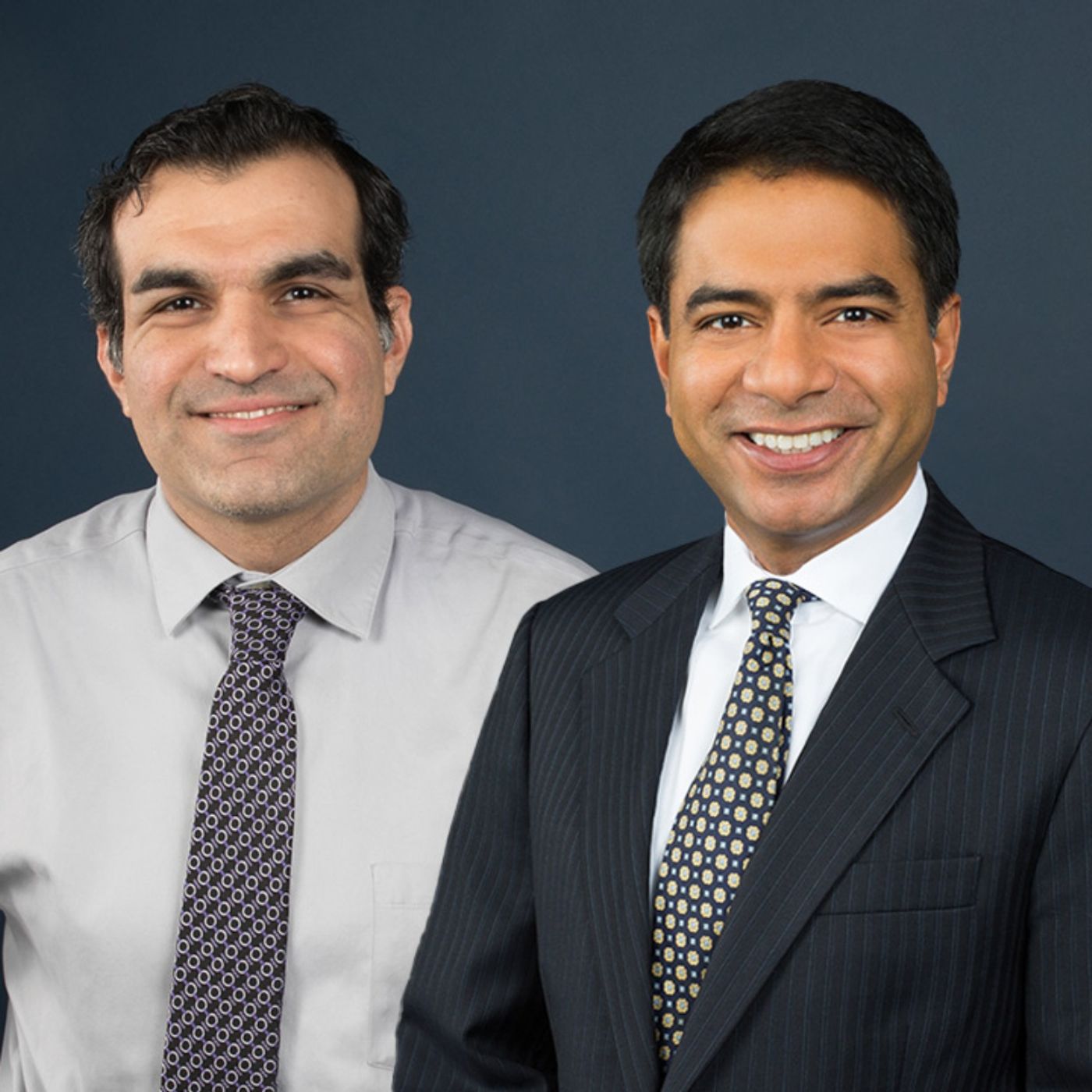
Data analysis and policy design—not good intentions—will fix healthcare post COVID
As healthcare policy navigates what is widely seen as a historic inflection point, Harvard Kennedy School professors Amitabh Chandra and Soroush Saghafian say policymakers need to pursue change with care, deeply analyzing the weaknesses the COVID-19 pandemic exposed and using that data to design intelligent policy that can create truly transformational change. COVID stretched the U.S. health care

Values, courage, and how good public leadership can save us
New Center for Public Leadership co-director Deval Patrick ascribes bad leadership as a root cause of many of the huge problems facing human society and the world, including the climate crisis, and threats to democracy and human rights. But are bad leaders flawed because of their personal shortcomings or are they an inevitable product of the flawed systems they operate within? And what makes a goo
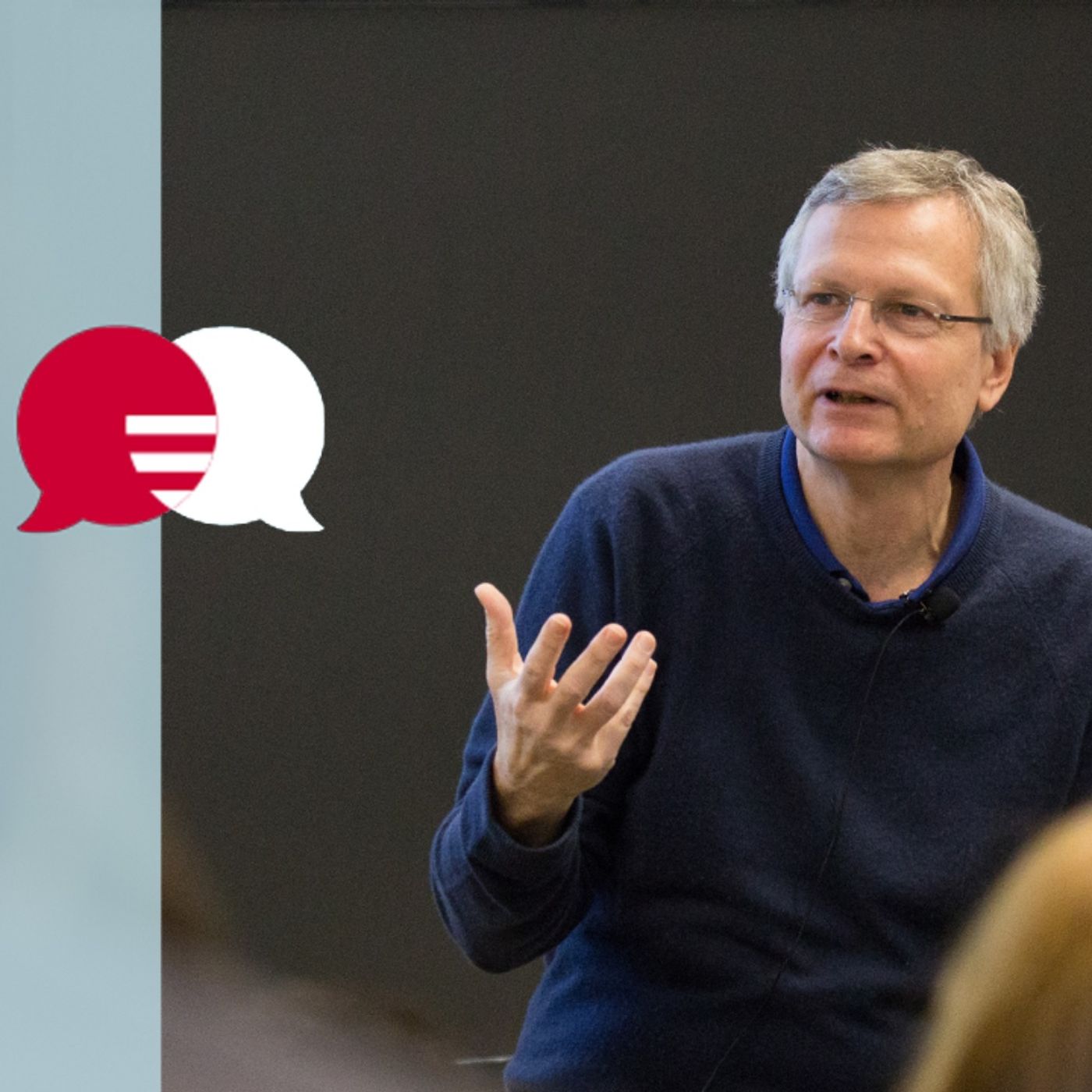
He predicted globalization’s failure, now he’s planning what’s next
For more than a quarter century, economist and Harvard Kennedy School professor Dani Rodrik has been ringing alarm bells about the dangers of globalization. And for a long time, it didn’t seem like a whole lot of people were listening. Now as record economic inequality, a climate in crisis, and global financial shocks from to the COVID pandemic and Russia’s invasion of Ukraine have exposed the vul

Reform, refugees, and the war next door: President Maia Sandu of Moldova
As war rages in neighboring Ukraine, Moldovan President Maia Sandu talks to about fighting corruption, moving her country toward the European Union, and the half million refugees who’ve crossed the border since February. Sandu is a popular choice on lists of up-and-coming world leaders, including a recent one that nicknamed her “the tightrope walker.” Sandu’s task has been daunting—preserving her

The pandemic's silver lining—a trove of data on social protection programs
Rema Hanna is the Jeffrey Cheah Professor of South-East Asia Studies and Chair of the International Development Area at the Harvard Kennedy School. She also serves as the Faculty Director of Evidence for Policy Design (EPoD) at Harvard University’s Center for International Development and is the co-Scientific Director of the Abdul Latif Jameel Poverty Action Lab (J-PAL) South East Asia Office in
How worldwide outrage over atrocities in Ukraine is fueling a new push for international justice
International outrage over Russia's war on Ukraine could be a watershed moment for the advance of international justice and accountability, say Harvard Kennedy School Professor Kathryn Sikkink and Harvard T.H. Chan School of Public Health Assistant Professor Patrick Vinck. With the eyes of the world focused on atrocities in places like Bucha and Mariupol, Sikkink and Vinck say it is time for count
O'Sullivan and Frankel: How the sanctions on Putin's Russia are reshaping the world economic order
HKS professors Meghan O’Sullivan and Jeffrey Frankel say the draconian sanctions on Putin’s regime—which came together faster than almost anyone predicted—will have far-reaching and lasting effects well beyond Russia’s borders. In a nuclear-armed world where direct superpower conflict can have apocalyptic consequences, the proxy battlefield has become economics and finance. Instead of firing missi
Keyssar and Fung: America’s flawed democracy is in deep—and possibly fatal—trouble
Harvard Kennedy School Professors Alex Keyssar and Archon Fung say the U.S. political system, stripped of a consensus belief in democratic principles, is racing down a dangerous road toward political and social upheaval and possible minority rule. American democracy, they tell PolicyCast host Ralph Ranalli, is in trouble to an extent not seen in many decades, possibly since the Civil War, or perha
The U.S. pays reparations every day—just not to Black America
HKS faculty members Cornell William Brooks and Linda Bilmes explore the vexing disconnect between the vast US system of restorative justice and the deep-rooted, intergenerational harms suffered by Black Americans. Every day, someone somewhere in America is being compensated under what is known as restorative justice, a type of justice that instead of meting out punishment to a wrongdoer, seeks to
Graham Allison on how China’s rising global power could lead to superpower conflict—or something else.
It takes a lot to impress Professor Graham Allison when it comes to geopolitics. He is, after all, the Cold Warrior’s Cold Warrior—as one of America’s most influential defense policy analysts and advisors, he was twice awarded the Defense Department’s highest civilian honor for his work on nuclear disarmament with Russia. He’s a former Assistant Secretary of Defense, former director of the Council
Nobel Prize winner Maria Ressa on how social media is pushing journalism—and democracy—to the brink
The Nobel Committee has awarded its 2021 Peace Prize to Maria Ressa for being a fearless defender of independent journalism and freedom of expression in the Philippines, and particularly for her work exposing the human rights abuses of authoritarian President Rodrigo Duterte. But the prize is also a de facto acknowledgement that Ressa has become something of a one-woman personification of the stru
How our flawed debates about cost prevent us from spending public money wisely
Barely a news cycle goes by these days without someone in public office saying ‘We can’t afford that,’ while at the same time defending their favorite budget priorities and tossing around mind-numbingly large cost figures in the billions and trillions of dollars. Those debates can seem very cynical, and of course Oscar Wilde famously defined a cynic as a person who knows the cost of everything but

Systems Failure: With the climate crisis hitting poor people hardest, David Keith says now is the time to explore solar geoengineering
Leaders from around the globe are meeting in Scotland today for the COP26 summit, talking about ways to speed up efforts to fight global warming. Yet even the optimists in Glasgow admit that the scientific consensus is that it’s already too late to cut emissions fast enough to avoid a dangerous rise in the earth’s temperature by 2 degrees Celsius, which is expected to lead to severe droughts, blis

Systems Failure: Economist Jason Furman says economic inequality costs everyone
Harvard Kennedy School Professor Jason Furman recently testified before the House Select Committee on Economic Disparity and Fairness in Growth and called growing inequality the fundamental challenge for the U.S. economy. He says that slow income growth, coupled with growing disparities in how the overall economic pie is divided, have contributed to inequality that is now pervasive by race, ethnic

Systems Failure: How to respond when our algorithms are biased and our privacy is in peril
Harvard Kennedy School Professor Latanya Sweeney is a pioneer in the fields of algorithmic fairness and data privacy and the founding director of the new Public Interest Tech Lab at Harvard University. The former chief technology officer for the US Trade Commission, she’s been awarded 3 patents and her work is cited in two key US privacy regulations, including the Health Information Portability an

Happiness in an age of fear and grievance
Harvard Kennedy School and Harvard Business School Professor Arthur Brooks studies happiness: Where it comes from, how to achieve it, and how it affects our lives, our decision-making, and the world around us. But how do we define happiness? Is it how we feel? Is it an approach to life? And how much control over it do we really have? What percentage of our happiness comes from, say, our environmen
Staying Power: Tony Saich on 100 Years of the Chinese Communist Party
The Chinese Communist Party rules a country that is already an economic superpower and is poised to become a military and geopolitical one as the 21st Century unfolds. But Harvard Kennedy School Professor Tony Saich says the party’s 100th birthday next month is also a time to remember the party’s struggles and humble beginnings. From it’s early days as Soviet-supported client and its existential s
Between blind faith and denial: Finding a productive approach to merging policy, science, and technology
PolicyCast is a production of Harvard Kennedy School and is hosted by Associate Dean for Communications and Public Affairs Thoko Moyo.Our guest for this episode, Sheila Jasanoff, is the Pforzheimer Professor of Science and Technology Studies at the Harvard Kennedy School and the founder and director of the Program on Science, Technology and Society.PolicyCast is produced and engineered by Ralph R
Democracy’s uncertain prospects 10 years after the Arab Spring
PolicyCast is a production of Harvard Kennedy School and is hosted by Associate Dean for Communications and Public Affairs Thoko Moyo.PolicyCast is produced and engineered by Ralph Ranalli and co-produced by Susan Hughes.For more information please visit our web page or contact us at PolicyCast@hks.harvard.edu.
Joe Aldy on how Joe Biden can jumpstart the global climate effort
Joseph Aldy, an economist and professor of the practice of public policy at Harvard Kennedy School, has seen this all before. A climate in crisis. A big economic downturn. A transition from a Republican administration to a new Democratic president looking to drastically change the country’s direction. Twelve years ago, Aldy was a member of then-President-elect Barack Obama’s transition team as it
Young voters ascendant: How a generational shift won the 2020 election and could remake American politics
In 2019, the 72-million strong Millennial generation (23-to-38-year-olds) quietly surpassed the Baby Boomers as America’s largest living generational cohort. In the 2020 election, they made their voices heard with a roar. Not only did younger voters—and particularly younger voters of color—turn out to vote and organize for candidates in record numbers, they also provided the margin of victory for
Garbage in, garbage out: Dissecting the disinformation that clouds our decisions
Some choices are easy. Some are hard. Some are momentous, which is how many people are describing today’s US national election. Yet all of the choices we make have one thing in common: Our decisions are only as good as the information we have to base them on. And with the rise of disinformation, misinformation, media manipulation, and social media bubbles, we’re finding it increasingly hard to kno
The end of Us versus Them policing: The tough road ahead for reform
Recent polls show a majority of Americans say we need major changes to how police enforce the law and provide public safety. Policymakers and political leaders—under pressure from the Defund and Black Lives Matter movements after high police killings of Black people like Breonna Taylor, George Floyd, and numerous others—are now considering a variety of measures to curb police brutality. But Harvar
If the Electoral College is a racist relic, why has it endured?
This is the first episode of PolicyCast's 2020-2021 season. Alexander Keyssar is the Matthew W. Stirling Jr. Professor of History and Social Policy at Harvard Kennedy School. An historian by training, he specializes in the exploration of historical problems that have contemporary policy implications.In this episode, Professor Keyssar discusses his new book: "Why Do We Still Have the Electoral Coll
Championing human rights amid disease and discrimination
Joining PolicyCast and host Thoko Moyo for this episode are Kennedy School Professors Mathias Risse and Jacqueline Bhabha of the Carr Center for Human Rights Policy. Professor Risse is faculty director of the Carr Center and his work focuses on global justice and the intersections of human rights, the climate crisis, inequality, and technology. He is also the Lucius N. Littauer Professor of Philo
A historic crossroads for systemic racism and policing in America
For more information, please visit:The Institutional Anti-Racism and Accountability Project at the Shorenstein Center.The Nonviolent Action Lab at the Carr Center.
No quick or easy answers for the pandemic's toll on developing economies
Ricardo Hausmann, the founder and director of Harvard Kennedy School’s Growth Lab, is helping developing countries around the globe create capacity to model the coronavirus pandemic and develop economic and epidemiological responses. The Growth Lab COVID-19 Task Force explores the macroeconomic and fiscal implications of the pandemic and offers strategic guidance on policy decisions for collaborat
When discrimination and a pandemic collide
First there was the shock of realizing that the COVID-19 pandemic would be widespread and lengthy. Now issues of race, equity, and the coronavirus are quickly coming to the fore, as data pours in showing how the virus is hitting minority communities the hardest.Harvard Kennedy School Professor Cornell Brooks says historic systemic discrimination, lack of access to healthcare and healthy food, hous
Managing crisis without resources: Developing nations brace for Coronavirus
Visit the Building State Capability program's “Public Leadership Through Crisis” blog.All PolicyCast episodes are now being recorded remotely. This episode was recorded on March 27, 2020 using SquadCast.
When bad things happen to everybody: Crisis management in a chaotic world
Responding to a threatening virus is nothing new to HKS Senior Lecturer Juliette Kayyem, who played a major role in managing the US response to the H1N1 virus pandemic in 2009 as an official in the Obama administration.But now as the COVID-19 coronavirus has spread from Asia to Europe and the Middle East and threatens to reach pandemic status, Kayyem says globalization and other factors have chang

Post-expert democracy: Why nobody trusts elites anymore
Democratic governance expert Archon Fung says that since 2016 we have entered a political dramatically different from the previous 35 years. He calls it a period of “wide aperture, low deference Democracy.” In simplest terms, it’s an era when a much wider range of ideas and potential policies are being debated and when traditional leaders in politics, media, academia, and culture are increasingly

The climate crisis was caused by economics, can economics be part of the solution?
The New York Times called it one of the worst outcomes in a quarter-century of climate negotiations. United Nations Secretary General António Guterres said the international community "lost an important opportunity to show increased ambition on mitigation, adaptation and finance to tackle the climate crisis” at the recent UN Climate Summit in Madrid.But Harvard Kennedy School Professor Robert Stav

Redistricting and democracy: Can we draw the line on gerrymandering?
Harvard Kennedy School Assistant Professor of Public Policy Benjamin Schneer says the drawing of electoral districts is a complex and partisan process that often results in politicians picking their voters instead of the other way around. But it doesn't have to be that way.
Schneer's work explores political representation, elections, and ways to mitigate forces that distort the ability of citizens
The precarious fate of the African Century
A short decade from now, Africa will have the youngest workforce in an aging world and the potential to become a spectacular economic success story. Or it could become home to the overwhelming majority of the world’s poor.
“By 2030 or so, we'll probably need to create about 11 million jobs a year,” says Ngozi Okonjo-Iweala, one of the world's leading development economists. “That’s a tall order.”

Mightier than the sword: The unexpected effectiveness of nonviolent resistance
Activists from around the world reach out to Harvard Kennedy School Professor Erica Chenoweth on an almost daily basis. And they mostly ask the same question: How can we fight authoritarianism — and the often-brutal repression that comes with it — without resorting to violence ourselves? They turn to her because her groundbreaking research has shown that, when done the right way, nonviolent civil
Recommended

Yours Truly Johnny Dollar Collection

Take Back Your Health®

CBS Radio Mystery Theater | Old Time Radio

Solved Murders - True Crime Stories
紐約鳥|New York Aperture

The Swerve Podcast: Obscure Topics | Conspiracy Theories

The Bread and Banter Podcast
The Church of What's Happening Now: The New Testament

Busted Open

Deadline: White House

Crickets Corner

History of the Earthquake and Fire in San Francisco
