REAP/SOW
Dispatches from the frontlines of food, farming, and the environment. From the Food & Environment Reporting Network, the producers of Hot Farm, REAP/SOW brings you narrative and investigative reporting that examines the consequences of what we choose to eat and why. Currently featuring BUZZKILL, a six-part series on the pollinator crisis.
Episodes
Rep. Kat Cammack to Congress: Grow up and pass the farm bill
GOP rising star Kat Cammack drops by to talk with Theodore and Helena about the future of the farm bill, her perspective on SNAP fraud and errors, why some government regulation is BS, how MAHA and MAGA can make nice, and more. This is a rollicking, in-depth conversation about serious issues in the American food system, providing deep insight into how a working legislator thinks about pol
Talkin’ MAHA and the Midterms
As the fight for Congress grows more tense, the difference between victory for Red or Blue may hinge on the MAHA movement. Are its members satisfied with what the GOP and Donald Trump have done for them? Do they feel betrayed by everything that hasn’t gone their way? RFK Jr. may still be their charismatic leader, but he’s not on the ballot. Theodore Ross sits down with three great FERN re
Did Mitch McConnell’s return help resurrect the farm bill?
There was a Mitch McConnell sighting in the Senate last week, which could mean a proof of life for Mitch McConnell ... but probably not for the farm bill. Helena and Theodore both think Congress is basically cooked. Meanwhile, RFK Jr.'s speech at the Children’s Health Defense Conference in D.C. showed everyone he is still very, very antivax, and that the movement has a “strong and steadfa
Why are America’s cattle ranchers beefing with Donald Trump?
Forked is back for a third season, and the premiere episode is all about BEEF. The cattle ranchers are beefing with the president about importing tariff-free beef from other countries. The president is beefing with the Big Four meat processors, who he blames for high prices. Trump says he’s going to make it easier for ranchers to process their own meat, and that Americans will be better a
A conversation with Kelly Ryerson, aka Glyphosate Girl
The grassroots activist and MAHA leader Kelly Ryerson, known as Glyphosate Girl, has been an influential voice on agricultural issues for years. But with the Trump administration siding with Big Ag at the Supreme Court, it’s an open question where Ryerson and MAHA’s political home will be in the future. Helena and Theodore talk to Ryerson about these and other issues. Bonus: Why does the
Did MAHA really go from dominant to done?
Some parts of the media have pronounced MAHA DOA PDA. But maybe they’re just FOI? Helena and Theodore discuss. They also tackle the staggering, stunning, Holy Guacamole adoption of GLP-1s by Americans, and the rise – and risks – of compounded weight loss drugs and direct-to-consumer pharma. Finally, a good vibe: a pool full of pickles for a proper purpose!
SNAP bans on sugary foods were blocked in federal court. Now what?
A signature goal of the MAHA-backed USDA was to stop SNAP recipients from using their benefits to purchase sugary foods. They were on their way to achieving that – granting waivers in nearly half the country – until a federal judge struck it down in five states. It’s a potentially precedent-setting move that may ultimately end up at the Supreme Court. Theodore and Helena get into the cons
Workers take on the world’s largest meat processor
America’s meat supply is produced largely by vulnerable immigrant workers, many of whom have been targeted by the Trump Administration. But a group of workers in Colorado voted to strike against conditions in the JBS flagship plant – risking the loss of their jobs and potentially being deported. FERN staffer Ted Genoways gives an in-depth interview with Tom Philpott about his reporting on
MAHA vs Trump in Iowa — guess who won.
This episode dives deep into the impact the MAHA movement has been having on the midterm elections. Zach Lahn was the first statewide candidate endorsed by MAHA Action, the movement’s largest political action committee. Donald Trump supported the other candidate, Rob Sand. Lahn won. That doesn’t mean Trump’s influence is on the wane. But it does mean MAHA issues are moving votes. Also in
How food became a right-wing movement, with Michael Pollan
It’s been 20 years since Michael Pollan published The Omnivore's Dilemma, a book that drove a huge shift in how Americans thought about food and agriculture. He joins us to discuss how his ideas have been adopted across the spectrum of American food politics. Plus: psychedelics, consciousness, and Theodore’s favorite dim sum spot in Brooklyn.
Have we reached peak MAHA or is this just a bad week?
The MAHA movement has hit some turbulence. Is it a few bumps or is it gonna crash? Casey Means for Surgeon General didn’t happen. Marty Makary flamed out at FDA. On this episode, Helena and Theodore discuss what it means for the movement, plus what the work requirements for SNAP are doing around the country. Bonus: Theodore brags about his James Beard Media Award nominations.
Cory Booker finds hope in food policy
The senior senator from the Garden State has taken a leading role on the food and ag issues that we care about at Forked. We were so excited that Cory Booker was our guest on this episode. Helena and Theodore get his take on what Democrats should be doing about food policy, whatever happened to the farm bill – and whether his party can grab food issues back from Republicans before the mid
Is the MAHA movement Roundup ready?
The Supreme Court recently heard arguments in Monsanto v. Durnell, a case that could decide the fate of state-level glyphosate warning-label lawsuits — and perhaps the MAHA movement. If the Supremes rule in favor of Bayer, which owns Roundup, the glyphosate-based herbicide that powers industrial agriculture in this country and around the world, MAHA’s leaders may revolt. Theodore and Hele
Doing it live with Leah Douglas and Sean Sherman, the Sioux Chef
What happens when you get a James-Beard-Award-winning chef together with one of the best food and ag daily reporters out there for a live, in-depth conversation on what’s happening now in food in this country? You get a Forked special episode! Taped live in Washington, D.C. with Theodore Ross, this episode gets into glyphosate battles, the GLP-1 future, and how restaurants are recovering
Food safety Mission Accomplished – or not so much?
How would you feel if someone told you one of the most pressing problems in food safety in this country was fixed? Now how would you feel if you learned that wasn’t really true? Helena and Theodore provide answers to these questions and more – in this episode.
A conversation about fighting food waste with Katelan Cunningham
This episode dives back into the issue of food waste, why it matters, and what you can do about it. But it’s also a behind-the-scenes conversation about reporting on the topic. Katelan Cunningham, the host of the Second Nature podcast, talks about why she pursued this story, what the biggest obstacles to her reporting were, and what you do when failing on food waste makes you feel guilty.
Soda wars: fighting new SNAP restrictions in the states
In this episode, Helena and Theodore look at how efforts to allow states to ban soda and candy purchases for SNAP recipients may fizzle out — for now. We also unpack what the war with Iran is doing to fertilizer and food prices, and in Colorado, workers at one of largest meatpacking plants in the country go on strike.
These immigrant meatpacking workers are risking it all in a labor fight
FERN senior editor Ted Genoways traveled to Colorado to report on a strike vote by the unionized workers at the JBS meatpacking plant in Greeley. Many of these workers are from Haiti and are at risk of losing their work visas in the United States. Yet, given the opportunity to exercise their political power by voting, they’ve chosen to do so. It’s a moving act of basic democracy, and Geno
Just how mad is MAHA about glyphosate?
In this episode, Helena and Theodore do a … Roundup … of what people who don’t have time to come up with better nicknames are calling “glyphogate.” It’s an in-depth conversation about the power of Big Ag and why MAHA may not get the regenerative agriculture future they thought RFK Jr. promised. We’re also taking a close look at the Senate testimony of Casey Means, nominee for Surgeon Gene
Can Mike Tyson really kick some ultraprocessed butt (and save lives!)?
Helena and Theodore talk about Iron Mike Tyson’s mama-said-knock-you-out vibes on ultraprocessed foods, RFK Jr. tag-teaming with David Kessler on 60 Minutes, and why Kennedy’s remarks about doing cocaine off a toilet seat actually kinda sorta make sense maybe a little.
“What can we do to reduce food waste?” from Second Nature podcast
A third of the food Americans produce goes to waste, and a shocking amount of that waste happens in our own homes. But reducing food waste is possible, if we make a few simple changes. In this episode, which comes to REAP/SOW courtesy of Second Nature, reporter Katelan Cunnigham talks to plastic-free, low-waste chef Anne-Marie Bonneau about how she limits food waste. Surprise: food delive
Reporter Michael Grunwald tells us why he has hope for our food system future
Our guest on this episode is Michael Grunwald, a journalist and the author of We are Eating the Earth: The race to fix our food system and save our climate. He’s also well-known for his opinion columns in The New York Times, and his writing often takes on, well, the sacred cows of the progressive environmental movement — CAFOs, chemicals, veganism, and more.
The Food Babe dishes on MAHA’s next moves
Helena and Theodore are joined by Vani Hari, “the Food Babe,” a New York Times Best Selling Author, wellness entrepreneur, and social media influencer. This is a wide-ranging conversation, on Roundup, the new dietary guidelines, and why Hari wishes she’d been nicer to the head of the Environmental Protection Agency.
Forked welcomes in the new year with bold (and unsubstantiated) predictions!
It’s 2026 and Forked has returned from a short holiday break. Helena and Theodore are excited – and maybe a little nervous – to see what happens in the second year of life in the MAHA moment. Along with bold (and unsubstantiated) predictions, in this episode: it’s SNAP bans on junk food, why skinny santas matter, and the pill that just may eat the American appetite.
The future of Louisiana oysters is farmed
The Gulf Coast is one of the last places in the world where there is still a major wild oyster harvest. Lately, though, that harvest is in trouble. In this episode, the second in a two-part series on the future of seafood, produced in partnership with WWNO’s Sea Change, we ask: What can the downfall and resurrection of the Louisiana oyster tell us about a future in which the ocean is a fa
What’s the problem with offshore aquaculture?
Americans now eat more farmed seafood than they do from the wild ocean. That’s turned farming fish into big business, one that consumers have benefited from. But the U.S. imports most of that seafood – we have very few domestic fish farms. Now, though, that might start to change. There are proposals to build massive fish farms in U.S. federal waters. And the Gulf of Mexico is where some o
Forked goes on the road with the What You’re Eating podcast
In this episode, Helena and Theodore take the show on the road, talking many things MAHA and more with Jerusha Klemperer, host of the What You’re Eating podcast, from FoodPrint, a nonprofit dedicated to research and education on food production practices. This is a big-picture discussion, trying to figure out if MAHA is a political movement, whether it will last, and most importantly, is
Live in DC – A Forked special event on MAHA momentum
This episode explores whether MAHA momentum in the states translates into actual policy change nationwide. Helena and Theodore host the first episode of Forked recorded in front of a live audience in Washington DC with two special guests: Summer Barrett, a self-described MAHA Mom – and influential lobbyist – in West Virginia who led the state’s charge to ban food dyes; and Scott Faber, fr
Food, power, and hope in the American West
In this postscript to FERN’s special issue of High Country News, Food and Power in the West, Mary-Charlotte Domandi, host of Radio Café’s Down to Earth podcast, goes deep with writers Rick Bass and Laureli Ivanoff about their essays in the special issue. Domandi also gets the issue’s backstory from HCN Editor-in-Chief, Jennifer Sahn.
The federal government shutdown and the SNAP default
In this episode, Helena and Theodore look at the federal government shutdown and what it means for SNAP. Also, the Truth Social post from President Trump to America’s ranchers, calling on them to lower their prices, has spurred an America First maelstrom. And finally — peanuts are back! (Or, research shows that introducing children to peanuts and other potential food allergens at a young
Update: Immigrant meatpacking workers are still under threat
In February, FERN senior editor Ted Genoways investigated how JBS, the world’s largest meat producer, had come to rely heavily on Haitian migrants and other refugees at its plant in Greeley, Colorado. His reporting shined a light on a burgeoning food economy in the United States, one that is shifting away from undocumented labor and relying on immigrant workers with legal, but often tenuo
How many people did they actually fire at the CDC?
Theodore and Helena discuss a kind of chaos that is almost becoming normal: painful layoffs and firings at a federal agency, which are then mostly undone not long after. This time it was the CDC, with the nation’s “disease detectives” going out the door and then back in before it even closed (among other layoffs.) The context here is the shutdown of the federal government, which means ta
How refugees remade a Colorado meatpacking town
In 2006, a recently created ICE cracked down on undocumented labor in meatpacking plants. Large meat companies were desperate for workers, and so they turned to a new source of vulnerable labor – refugees. This shift transformed the nation’s food economy and the cities and towns that feed us. Greeley, Colorado, home to the U.S. headquarters of JBS, the world’s largest meat processor, was
Special episode: A collaboration with the Unconfined podcast
Veteran food policy journalist Tom Philpott, one of the hosts of the Unconfined podcast from the Center for a Livable Future at Johns Hopkins University, joins Helena and Theodore in a unique collaboration. Unconfined is a monthly interview show focused on the public-health implications of industrial meat production. They talk about why RFK Jr. rejected the UN Declaration on Noncommunicab
FERN’S special issue on food and power, with High Country News
In this episode, FERN Editor-in-Chief Theodore Ross talks food and power in the West. There’s Ted Genoways on a JBS meatpacking plant in Colorado; Jeremy Miller on how large pecan growers are strangling a declining Rio Grande; and Paisley Rekdal on the history of Chinese oppression and resistance through food in the United States. This episode is part of FERN’s special issue on food and p
How the MAHA Commission’s strategy doc was a win for Big Ag
The MAHA Commission has made big promises about what it would do to fix the nation’s food system and health. Its new strategy document includes 128 proposals for change – but little evidence that those changes can be made real. Helena and Theodore go through the report and ask: Did RFK Jr. bow to pressure from Big Ag? Is he more interested in cracking down on vaccine injury than high-fruc
The U.S. has lost 1.2 million immigrants since January. What happens now?
The impact of the Trump Administration’s immigration crackdown is starting to show up in new preliminary census data, and that poses major problems for all parts of U.S. society, but particularly in our food system: Nearly half the country’s food system workers are immigrants. In this episode, Helena and Theodore go through the numbers, and explain why the chances of immigration reform ar
What happens if RFK Jr.’s radical reinvention of the food system…isn’t so radical?
In this episode, Helena and Theodore talk about the MAHA commission’s leaked strategy report. Turns out that there’s more talk than action. Also: a former FDA chief challenges RFK Jr. to put up or shut up on ultraprocessed foods. And finally – MAGA vs. MAHA.
What makes MAHA so popular?
In this episode, Theodore and Helena discuss why the (non-vaxx) ideas of the MAHA movement are popular, but the movement itself is less so.. That split presents a major problem for Democrats, who can’t resist the Trump administration when it’s pushing for things they want. Also, does Coke taste better with cane sugar or high-fructose corn syrup? The answer: they taste about the same, and
Small town's residents find common ground at the Grange
In this episode, FERN contributor Lisa Morehouse reports on the Anderson Valley Grange Hall in California’s Mendocino County. She finds an organization, and a community, trying to adapt to a changing social landscape – and finding help at the Grange. “Whether it’s doing a holiday dinner or … hosting a local food bank, it’s a place where people can do what’s most natural to us, which is fo
Did Coca-Cola really say it was going to switch to sugar instead of high fructose corn syrup?
The major companies that produce and sell ultraprocessed foods are making big changes, or at least they are promising to. The Trump administration has celebrated “wins” over companies as varied as PepsiCo and Steak ‘n Shake. It’s not clear whether decisions from these companies to change their products – out with synthetic dyes and in with beef tallow – are coming from pressure at the fed
How bad are the SNAP cuts in Trump’s One Big Beautiful Act?
Helena and Theodore explain why Alaska senator Lisa Murkowski flipped to cast the deciding vote on Trump’s Big Beautiful Act: an exemption that rewards her state’s highest-in-the-nation SNAP error rates. They also take a look at how the law creates barriers to food assistance and healthcare, with paperwork, work requirements, and pushing administrative costs to the states. Finally, RFK Jr
Does anyone in Biloxi care about seafood fraud?
In 2024, the owners Mary Mahoney’s Old French House, an iconic restaurant in Biloxi, Mississippi, pleaded guilty to fraudulently selling more than 29 tons of fish between December 2013 and November 2019, claiming it was locally caught when in fact it was imported. Quality Poultry and Seafood—another iconic Gulf Coast business—had sold mislabeled fish to other restaurants, too. Eventually,
Forked: Trump stopped immigration enforcement raids on food system workers – but not for long
In the “Double Take,” Helena and Theodore have Trump whiplash on the threat of mass deportations in the food system. In “Forks and Knives,” the discussion turns to the historic cuts to food assistance for low-income Americans that are playing out as the “One, Big Beautiful Bill” makes its way through Congress. And for “Good Vibes,” the federal Dietary Guidelines may drop recommendations f
Introducing: Forked, presented by REAP/SOW
American food politics are a mess. The traditional forces driving policy in agriculture and nutrition have been wiped away, and ordinary people are struggling to figure out who is in charge, what they’re up to, and why. Every two weeks, Forked hosts Helena Bottemiller Evich of Food Fix and Theodore Ross FERN's Editor-in-chief cut through the confusion, providing context and analysis, hope
Black land loss: A Conversation with Brea Baker from What You're Eating
In 1910, Black farmers owned as many as 16 million acres of American farmland. Today that figure has plummeted. Between 1910 and 1997, Black Americans lost an estimated 90 percent of their farmland to violent land theft and discrimination. In this episode, courtesy of the FoodPrint podcast “What you’re eating,” Jerusha Klemperer interviews Brea Baker, author of Rooted: The American Legacy
Fertilizer’s toxic journey
The chemical industry is a cornerstone of modern American farming. It helps grow the food billions of people eat. It’s also causing vast environmental damage. In this episode of REAP/SOW, produced in collaboration with WWNO’s Sea Change podcast, you’re going to hear the story of synthetic fertilizer, and how this powerful concoction of chemicals has radically reshaped how we farm and what
Forked: MAHA drama as food fighters duke it out with anti-vaxxers
Theodore Ross and Helena Bottemiller Evich work through the tumultuous nomination process for Surgeon General. Donald Trump’s first nominee withdrew (questions about her medical and anti-vaxx credentials) and the newest one, Casey Means, has been branded a “Marxist tree hugger” by Laura Loomer. (Questions also remain about her anti-vaxxness). Conversation addresses the split within the gr
Mexico’s Spirit: A Conversation with Ted Genoways, author of ‘Tequila Wars’
FERN editor-in-chief Theodore Ross talks to Genoways about his new book, Tequila Wars, which is an extraordinary exploration of the little-known – and often bloody history – of Jose Cuervo. Cuervo’s life, and his struggle to bring stability and prosperity to his industry during the profound disruptions of the Mexican revolutionary era, is an epic tale. This new book pulls Cuervo’s name of
Forked: RFK Jr.’s ‘massive’ promise to ‘eliminate’ autism ‘exposures’
Is it possible that RFK Jr. believes autism research can be done so fast because he already thinks he knows what those causes of autism are? Other topics include: RFK Jr. “hitting his stride” after attending the funeral of a child who died of measles. How many people have been laid off at HHS and why doesn’t anybody know? Bipartisan bonhomie on the issue of plant-based milk, in a Senate p
To me, it’s junk food – a Q and A with Marion Nestle
Americans increasingly rely on processed food products as key parts of their everyday meals, even as scientists are just starting to scratch the surface in understanding how these food products influence our health. Now, these products have reached the political discourse. Robert F. Kennedy Jr. has targeted ultraprocessed foods as a key part of his plan to “Make America Healthy Again.” As
Forked: Among the MAHA Moms
The premiere of FERN’s newest podcast looks at how RKF Jr. is making waves on food policy.
Trouble on the Line
This is a story about how a single TikTok video, taped in 2023 outside a meatpacking plant in Greeley, Colorado would change the lives of hundreds of Haitian immigrants, and embroil JBS – the world’s largest meatpacking company – in a controversy over mistreating workers. Reported by FERN senior producer Ted Genoways and produced in partnership with Reveal, this episode dives deep into a
Buzzkill Bonus Episode: “Is urban beekeeping bad for bees?”
This is an engaging conversation on urban pollinators taped live during the Buzzkill celebration in New York City on March 3, 2025, moderated by Sewell Chan, executive editor of the Columbia Journalism Review, with Buzzkill host Teresa Cotsirilos, Sara Hobel, executive director of the Horticultural Society of New York, and Rebecca Louie, executive director of the Bee Conservancy.
Buzzkill: A post-pollinator world
The Golden State’s annual almond harvest shows what happens when biodiversity collapses and bees become a commodity valuable enough to steal.
Buzzkill: Bats and the blue agave
Nearly all tequila is made from cloned plants that are vulnerable to species collapse. In Mexico, a small group of people is trying to change that – and protect an endangered, nectar-slurping, agave-pollinating bat that’s only three inches long.
Buzzkill: The lawn war
A suburban couple was passionate about pollinators, native plants, and living in harmony with nature. Their neighbors were not impressed. This “battle of the backyard” turned out to have national implications.
Buzzkill: Colonialism and the land
White settlers viewed farmland as a resource to be exploited, while Indigenous people saw it as a partnership for mutual benefit. Now, a Native American tribe is solving today’s environmental problems and helping pollinators with ancient techniques.
Buzzkill: The mystery of the dead bees
In Nebraska, a researcher’s bee colonies kept dying, and the evidence pointed to the ethanol plant next door – and a food system built on pesticides.
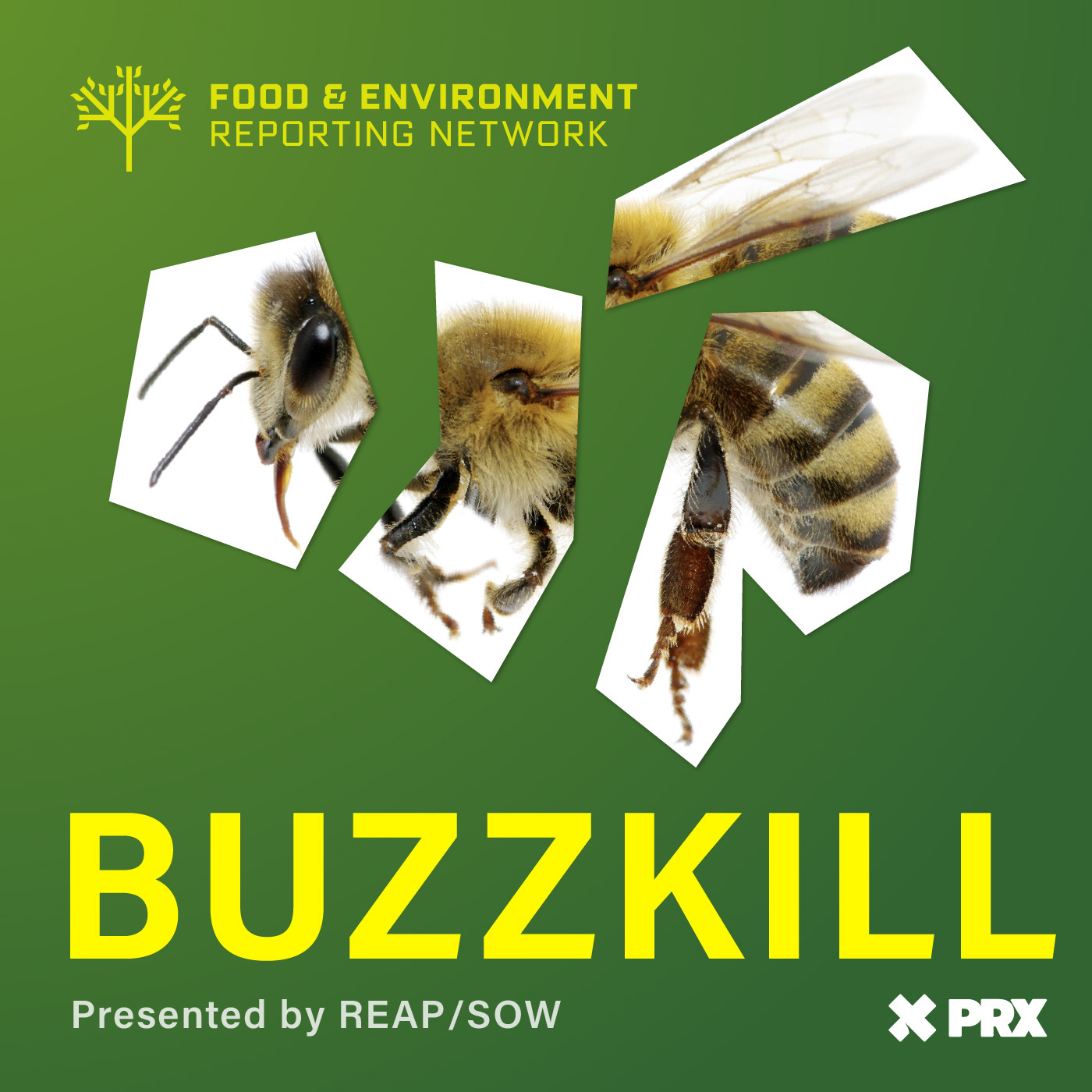
Buzzkill: Save which bees?
Americans stepped up to do something about dying bees. But what if all those backyard colonies are making the problem worse? In Buzzkill’s premiere episode, we take an in-depth look at whether raising domesticated bees, especially in cities, is harming the wild species we need to preserve biodiversity.
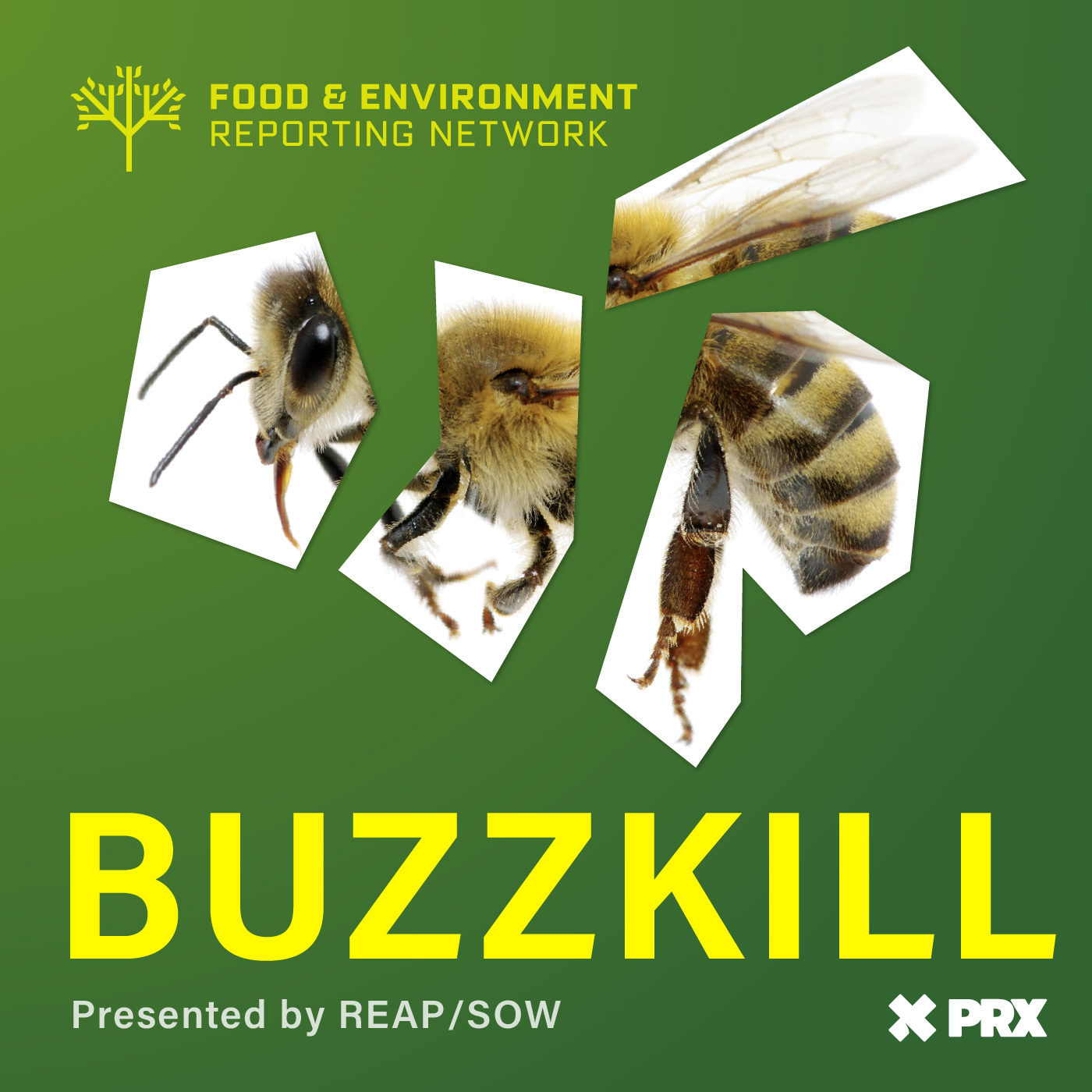
Introducing: Buzzkill, presented by REAP/SOW
We’re in the middle of a full-blown biodiversity crisis: American honeybee populations have declined by 90 percent in the last two decades. It's not rocket science. How we produce our food is killing off the very pollinators that food relies on. But don't panic, because it is not too late to fix this – and Buzzkill will show you how. Premiering January 28. 2025.
The railroad's surprising impact on food and civil rights in California
Here’s a thing you may not know about the Transcontinental Railroad: It helped turn California into an agricultural powerhouse – transforming the food system – and it also galvanized a series of Civil Rights victories. This episode, reported by FERN contributor Lisa Morehouse, was produced in partnership with “California Foodways” and KQED’s alifornia Report” podcast.
“Farmin’ ain’t easy” from the Points North Podcast
Nic Theisen and his wife, Sara, operate a small but bustling farm in northern Michigan, growing flowers and vegetables with the help of a large team of farmworkers. It's backbreaking work, the farm hardly makes a profit… and Nic's a little surprised he’s doing this at all. It’s real life on a small farm. This episode, originally entitled “Labor of Mixed Emotions” is courtesy of the “Point
The divers keeping the water flowing on California’s farms
California transports water to Central Valley farmers through a complex network of reservoirs, aqueducts, and canals. This water system is controversial… and without constant maintenance, it might collapse. For REAP/SOW, reporter Lisa Morehouse, host of the “California Foodways” podcast, profiles California’s irrigation canal divers. This episode was produced in partnership with “Californ
Redfish blues
Boyce Upholt's report on the environmental threat to redfish on the Gulf Coast of Louisiana anchors this episode of REAP/SOW. It dives deep into the cultural history of this fish that was made globally famous by Paul Prudhomme’s blackened redfish dish, while also engaging with the modern-day politics driving how much – if at all – it should be taken from the water. This episode was produc
A native people fight for their stolen waters
Los Angeles was running out of water in the early 1900s, and Payahuunadü, "land of flowing water" in the Nüümü language, had lots of it. City officials hatched a plan to take the water from what white settlers had renamed the Owens Valley. Today, about a third of L.A.'s water comes from Payahuunadü and other parts of the Eastern Sierra, and many of its streams and lakes are mostly gone. F
The forever chemicals on the farm from What You’re Eating
This episode, courtesy of the podcast “What you’re eating,” heads to Maine to investigate PFAS, a category of chemicals known as “forever chemicals” because they don’t break down over time. Found in everything from pizza boxes to rain jackets, PFAS is now being discovered in our farms, our food, and in our bodies. Originally released in September 2023, we hear from family farmers Fred and
Farming with ghosts
David “Mas” Masumoto says he farms with ghosts. This episode of REAP/SOW is a FERN/KQED California Report partnership, telling the story of a Japanese-American farming family that’s survived generations of discrimination. Masumoto’s small organic farm just south of Fresno, California is on land that’s been in his family for decades. In 2012, he uncovered a secret about his family that sho
White gold fever from Snap Judgment
In a small fishing village in Mexico, Belen Delgado made a discovery that would change his life: a massive cache of callo de hacha, a large black scallop that’s one of the most prized species in the Gulf of California. Years of overfishing had depleted the area’s fish and seafood, and Belen knew his discovery could change his village’s economic future. But reaching the scallops was only t
Weaponized food from The Switchyard Podcast
FERN contributor Ted Genoways interviews Jori Lewis and Siddhartha Deb, two writers taking on popular foods and their fraught cultural history – the racist cultural history of the watermelon, and the Hindu nationalist politics of beef in India. The final installment of a collaboration between FERN and Switchyard, a magazine and podcast from the University of Tulsa and Public Radio Tulsa.
The Sioux Chef’s decolonized cuisine from The Switchyard Podcast
FERN Editor-in-chief Theodore Ross interviews Sean Sherman, the Sioux Chef, co-owner of Owamni, a James-Beard-Award winning restaurant in Minneapolis that is decolonizing food by using only indigenous ingredients and cooking techniques. Part 2 of a collaboration between FERN and Switchyard, a magazine and podcast from the University of Tulsa and Public Radio Tulsa.
Tom Colicchio: Finding my voice in food from The Switchyard Podcast
Top Chef star Tom Colicchio sits down with longtime FERN contributor Ted Genoways for an in-depth conversation with the acclaimed celebrity chef. Part 1 of a collaboration between FERN and Switchyard, a magazine and podcast from the University of Tulsa and Public Radio Tulsa.
Introducing REAP/SOW!
REAP/SOW: dispatches from the front lines of food, farming, and the environment, is the latest audio project from the Food and Environment Reporting Network, an independent, non-profit news organization. Learn about what you can expect and check out the trailer for our upcoming limited series, BUZZKILL!
Hot Farm Bonus Episode: Climavores - "Bursting the 'eat local' bubble"
From our friends at Climavores: The eat local movement is huge. Bumper stickers in liberal towns across the U.S. tell us to “Eat local” or ask “Who’s your farmer?” But eating local food may be wildly overrated when it comes to climate change. When we look at how foods are produced, transportation accounts for less than 10% of carbon emissions. So should we abandon farmers’ markets for big
Hot Farm Bonus Episode: "Should I Give up Beef?" from How to Save a Planet
We have a bonus episode from a show called “How to Save a Planet,” a Spotify Original podcast produced by Gimlet Media. This show looks at climate change from the lens of — OK, so what do we do about it? The episode we’re running takes on one of the biggest climate issues in agriculture, Beef. And it asks whether adopting a plant-based diet would fight global warming. So should we all go
Hot Farm Part 4. The New California
More than a fourth of our food, including most of our fruits and vegetables, comes from California. But what happens when drought parches the region we depend upon to eat? Producer Travis Lux travels into the Delta region of Arkansas to explore a vision of the future — a new California.
Hot Farm Part 3. Grain of the Future
Modern agriculture has been tweaking the same system for decades, but scientists think we need a new approach for a warmer world — one that involves novel crops. Producer Rachel Yang visits with researchers and explores the challenges of changing what we grow and what we eat.
Hot Farm Part 2. Enlisting the Unconvinced
Most American farmers don’t believe man-made climate change is real. Yet we need those farmers to be part of the climate change solution. So how can we get them on board? Producer Dana Cronin finds a surprising answer in Illinois. Hint: It starts with the soil.
Hot Farm Part 1. Change Is Hard
In 1988, a drought made Dave Bishop a different farmer. Back then, he was a freak in farm country. Today, he is the model that we need all farmers to be if we are to have any chance of fighting climate change and continuing to eat.
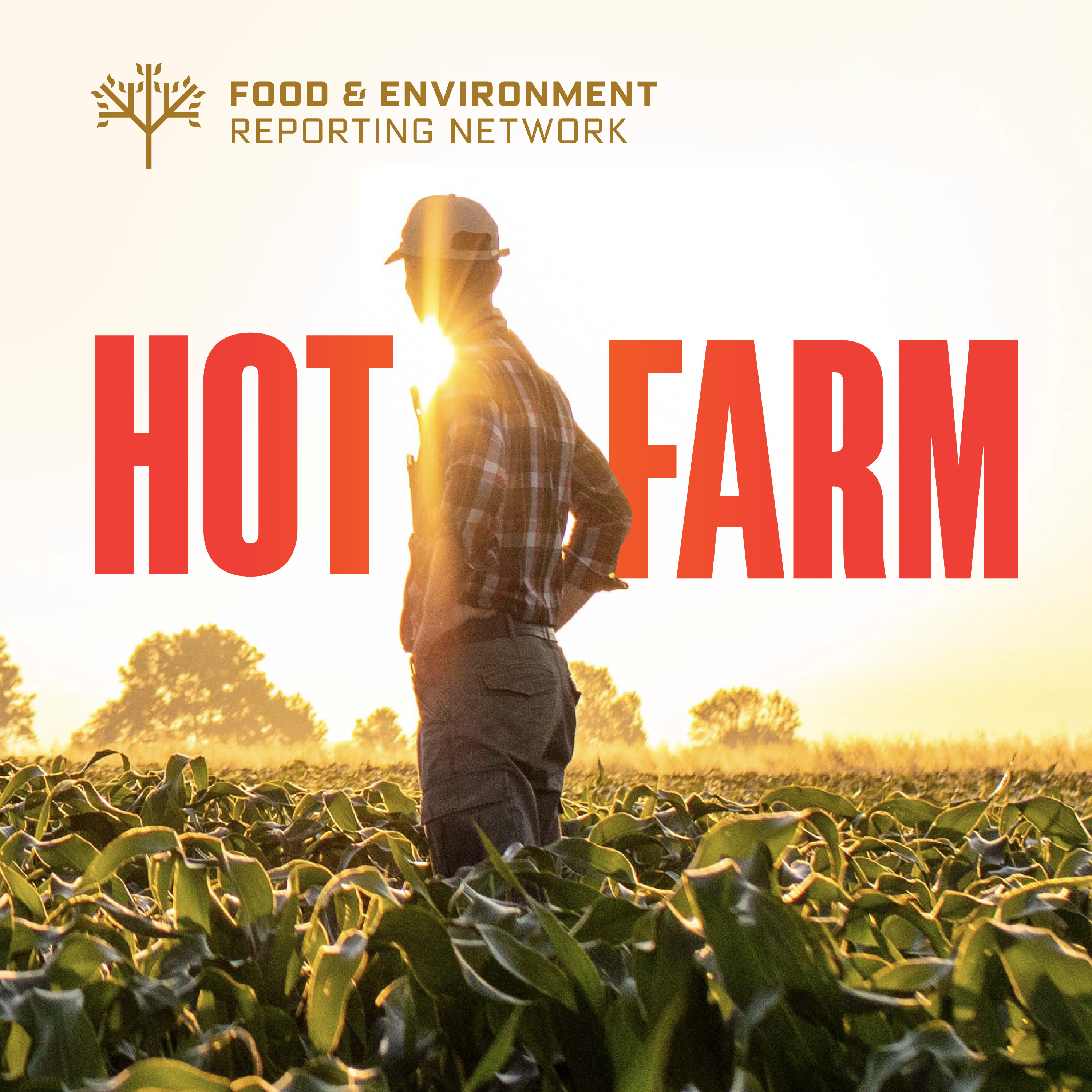
Hot Farm Trailer
Over four episodes, host Eve Abrams and her team travel the Midwest, engaging with farmers who are confronting the difficult reality of climate change—increasingly extreme floods and heat—including those who don’t believe they’re part of the problem. We also meet the scientists who are developing new crops that are better suited to an unpredictable climate, and the people who are trying t
Recommended

megahired.com

Hard Knocks Podcast

Effective Weight Loss for Moms | High protein, Strength Training, Lose Weight, Meal Planning, Fat Loss, Healthy Habits

The Human-Animal Connection - Pet Life Radio Original

Infinite Health with Dr. Arasi Maran

The Daily

World News Tonight with David Muir

English Vocabulary Help
The Joe Rogan Experience

TED Talks Daily

Learn English B1 with Daily News | English Listening Practice

Talk About Talk - Executive & Leadership Communication Skills
