Keen On America
Andrew Keen hosts a daily interview podcast where he cross-examines the world's smartest people on politics, economics, history, the environment, and tech. Named one of the '100 most connected men' by GQ, Keen is also the author of four books including the international bestseller 'Cult of the Amateur'. The show aims to help listeners make sense of our complex world through sharp and impertinent questions.
Episodes

The Last Humans: Alexander Wendt on UFOs, Global Security and the Threat to State Sovereignty
Last month Adam Kirsch was on the show arguing that our current obsession with UFOs represents a new kind of religion. Today’s guest, the international relations expert Alexander Wendt, argues that today’s UFO obsession is the least of our problems. In his new book, The Last Humans (out today), Wendt’s worst-case scenario is that the UFOs are already here — and have been for some time.Whi
Super Unsexy By Design: Ben Green on Algorithmic Realism
“We don’t have to choose between AI and no AI. The bigger choice is what type of AI we want, and who we want in control of it.” — Ben GreenINTROIn our age of AI, do we want to be ruled by all-knowing engineer kings? Not according to Ben Green, a professor of information and public policy at Michigan, whose new book, Algorithmic Realism, presents “data science practices to promote social j
Eliot Cohen is The Strategist: How to Think About War & Politics
Yesterday Janet Reitman described post-9/11 America, with its forever wars in Iraq & Afghanistan, as a tragedy in five acts. Today we meet a man who helped strategize one of those acts. Eliot A. Cohen was Counselor of the State Department under Condoleezza Rice from 2007 — in part responsible (“if that’s the right word” as he puts it) for America’s post-9/11 forever wars. Not that he

An American Tragedy in Five Acts: Janet Reitman on the Inheritance of 9/11
“They weaponized the fear, and the fear became institutionalized, and we internalized it.” — Janet ReitmanBack in 2022, the ex-Marine Elliot Ackerman came on the show to talk about The Fifth Act, his account of America’s humiliating end in Afghanistan. The New York Times Magazine contributing writer Janet Reitman’s new book, The Inheritance, also imagines post-9/11 America as a tragedy in

Crowning Our Engineer Kings: Jensen Huang for President?
Jensen Huang biographer Stephen Witt argued in a New York Times op-ed this week that the leather-jacketed Nvidia CEO is the most powerful engineer on Earth. It’s not hard to prove. Just look at who (sans leather jacket) was sitting right next to you-know-who at last week’s AI White House lunch.America is run by lawyers, we were told by the China expert Dan Wang, and China by engineers. Bu
Karuna Karuna: Nobel Laureate Kailash Satyarthi on Why Compassion Must Be Designed Into AI
It’s always fun to have Nobel Prize winners on the show. Recently, we’ve hosted the journalist-dissident Maria Ressa, the economist Simon Johnson and the gloomy godfather of AI Geoffrey Hinton. Today it’s the Delhi-based Kailash Satyarthi, who won the 2014 Peace Prize for his fight against child exploitation.He is now trying to globalize the ideal of compassion. But for Satyarthi, compass

A World We Share: Roger Berkowitz on Hannah Arendt and the Power of Friendship
“A human being is worth more than his opinions”, Hannah Arendt wrote to her Zionist friend Gershom Scholem in 1946, after he read her critical essay on Zionism and accused her of betraying the Jewish people. So how to value a human being? What, according to Arendt, are we worth? According to the Arendt scholar Roger Berkowitz, our value lies in the power of friendship. That’s what he call
AI and Political Freedom: Anthropic's Matthew Botvinick on the Risk to Democracy and How to Respond
Matthew Botvinick works at Anthropic, where he leads the Anthropic Institute’s research on AI and the rule of law. His new book, AI and Political Freedom, focuses on AI’s risk to democracy and how we should respond to it. It’s important to note that for this Princeton University Press book, Botvinick doesn’t represent Anthropic. That said, the fact that he just happens to be a senior poli

The President and the Oligarch: Greg Steinmetz on FDR’s Vendetta Against Andrew Mellon
The retired money manager Greg Steinmetz has now written three books about very rich men. The first, The Richest Man Who Ever Lived, was about the sixteenth-century Augsburg banker Jacob Fugger. The second, American Rascal, was about the nineteenth-century robber baron Jay Gould. The third, The President and the Oligarch, came out this week, and this time the rich man has a president as a

Do We All Really Need a Digital Chief of Staff? Grok Bot, Dot and Muse Say Yes (Duh)
Everyone, That Was The Week publisher Keith Teare breathlessly announced this week, is about to be offered an AI personal assistant. Or, to put it in Silicon-Valley-speak, a digital chief of staff. OpenAI unveiled Dot at its developer day. Meta already has Muse, Musk has Grok Bot, and a British start-up called Instinct raised a billion dollars at a ten billion dollar valuation while addin

The Future of Truth: How AI Reshaped Steven Rosenbaum’s Reality
“A book about truth needs to be truthful.” — Steven Rosenbaum In April, the New York City based tech impresario Steven Rosenbaum came on the show to discuss The Future of Truth, his then new book about artificial intelligence. He warned that AI is a spectacularly good liar and that we should be concerned about the future of truth. A few weeks later, The New York Times reported that the bo
Everything Is Everything: Steven E. Jones on Tom Wilson & the Magic of 1966
“When Dylan was booed, at the festivals or on tour, even over in England — some of that was Tom Wilson’s fault.” — Steven E. Jones Five years ago, the Los Angeles based Ron Brownstein came on the show to argue that 1974 was the greatest year in American cultural history. Steven E. Jones has a rival candidate. His new book, Everything Is Everything, makes the case for 1966. In contrast wit
How to Survive Authoritarianism: Dan Storyev on a Russian Phrasebook for America
“The United States is speed running into a more authoritarian model that the Russians have been living in for quite some time now.” — Dan Storyev How to survive authoritarianism in the United States? Maybe we can learn from the Russians. At least according to the Russian-American Dan Storyev, co-author (with Maria Kuznetsova) of How to Survive Authoritarianism, a phrasebook which provides

An Inconvenient Woman: Keri Leigh Merritt on Lillian Smith, the Southerner Who Defied Jim Crow America
“She is absolutely a Cassandra. She is unafraid to tell the stark naked truth, no matter how ugly it is.” — Keri Leigh Merritt In April, Gal Beckerman came on the show to identify the ten qualities of being a dissident. They included pessimism, humour and recklessness. But he left one out: inconvenience. Dissidents are profoundly inconvenient people — to the government, to society, someti

Biography of a Dangerous Idea: Andrew Curran on How the Enlightenment Invented Race
“The Enlightenment may have produced race, but it also produced what we might call anti-racism.” — Andrew Curran Most of us imagine the eighteenth century Enlightenment positively. As the victory of reason, science and individual rights over superstition and intolerance. But Andrew Curran, who has spent his career interpreting the Enlightenment, has a more nuanced view. Indeed, his new bo
Artificial Intimacy: Sherry Turkle on Who We Become When We Talk to Machines
“The original sin of generative AI is having chatbots speak in the first person.” — Sherry Turkle Fifteen years ago, at the height of the social media boom, the MIT technology scholar Sherry Turkle came on the show to warn that we were now “alone together.” She was, of course, chillingly prescient. A decade and a half later, she warns in her new book Artificial Intimacy that if social med

London Station: David McCloskey on the CIA, MI6 & the End of the Special Relationship
“What if we fell out with the Brits? What if the agency and the Brits started spying on each other again?” — David McCloskeyWhat if the Americans and the British started spying on each other again? That’s the premise of London Station, David McCloskey’s fifth novel, out today. It isn’t as far-fetched as it sounds. Before the Second World War those perfidious Brits did spy on America, brea
The Age of Cures: Barry Werth on How Big Pharma Once Saved Your Life
“Kennedy and Trump are taking a wrecking ball to probably the most important thing we have done consistently better than the rest of the world over the last eighty years, and I don’t get it.” — Barry Werth Last week on the show, the San Francisco based AI mogul and Eureka Machine author Richard Socher promised a scientific renaissance in which AI will cure everything. Socher’s eureka mome

A Fabulous Debt: Robin Wigglesworth on How Bonds Built the Modern World
Amidst all the talk of an AI bubble, bonds are back in the news. The world’s two leading business newspapers, The Wall Street Journal and The Financial Times, both feature stories this weekend warning about bond ructions and surging yields. While these warnings might only interfere with the sleep of bond geeks, they are a good reminder of the centrality of the bond market to our prosperit

And Now For Something Completely Similar: Untangling the Power from the Pretense of Our AI Circus
Lenin supposedly said there are decades where nothing happens, and weeks where decades happen. This wasn’t one of those weeks. It might have looked like a historic week. The AI circus rolled into the UN with Sam Altman and Dario Amodei addressing the Security Council on the peril facing “humanity as a whole.” Britain and Australia weighed in with middling diplomatic or regulatory AI initi

Trump Has Finally Lost the Plot: Jonathan Rauch & Peter Wehner on the Autumn of the American Patriarch
“His intent is getting worse, but his capacity is diminishing. The next two years will be some kind of mad race to figure out which of these two things will prevail.” — Jonathan Rauch As the nights get shorter, we are drifting into the autumn of the patriarch. That, at least, is the view of two old friends of the show, Jonathan Rauch and Peter Wehner, who argued in The New York Times that
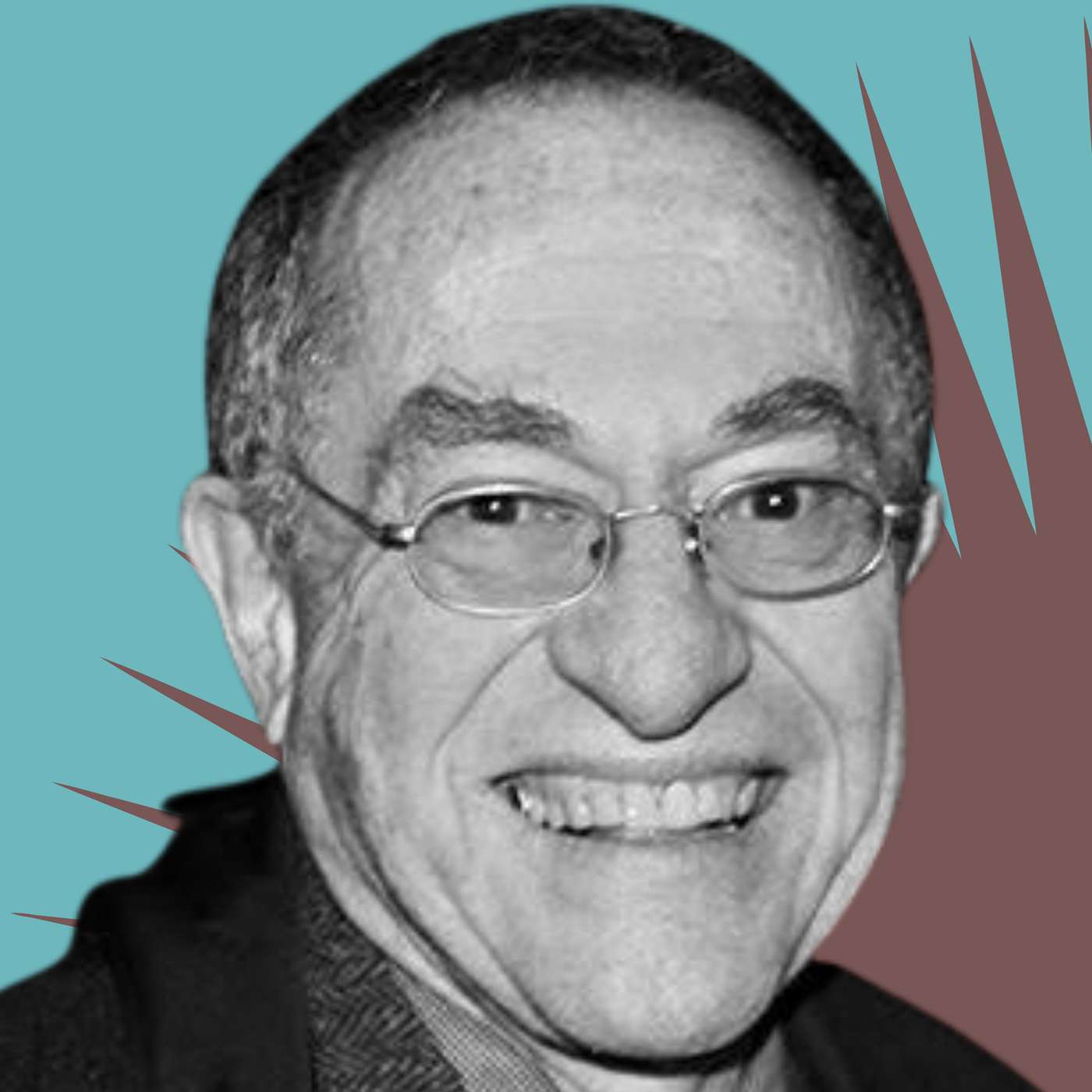
Proudly-Jewish & Never-Boring: Alan Dershowitz on His Divorce from the Democratic Party
“A good divorce is better than a bad marriage, and this is a good divorce.” — Alan Dershowitz The American lawyer Alan Dershowitz says he’s been voting Democrat since John F. Kennedy. He even defended Ted Kennedy, Bill Clinton and Alan Cranston in court. But, at 88 years old, Dershowitz has now left — or, as he puts it, been forced out of the Dems, in the same way Ronald Reagan was sixty
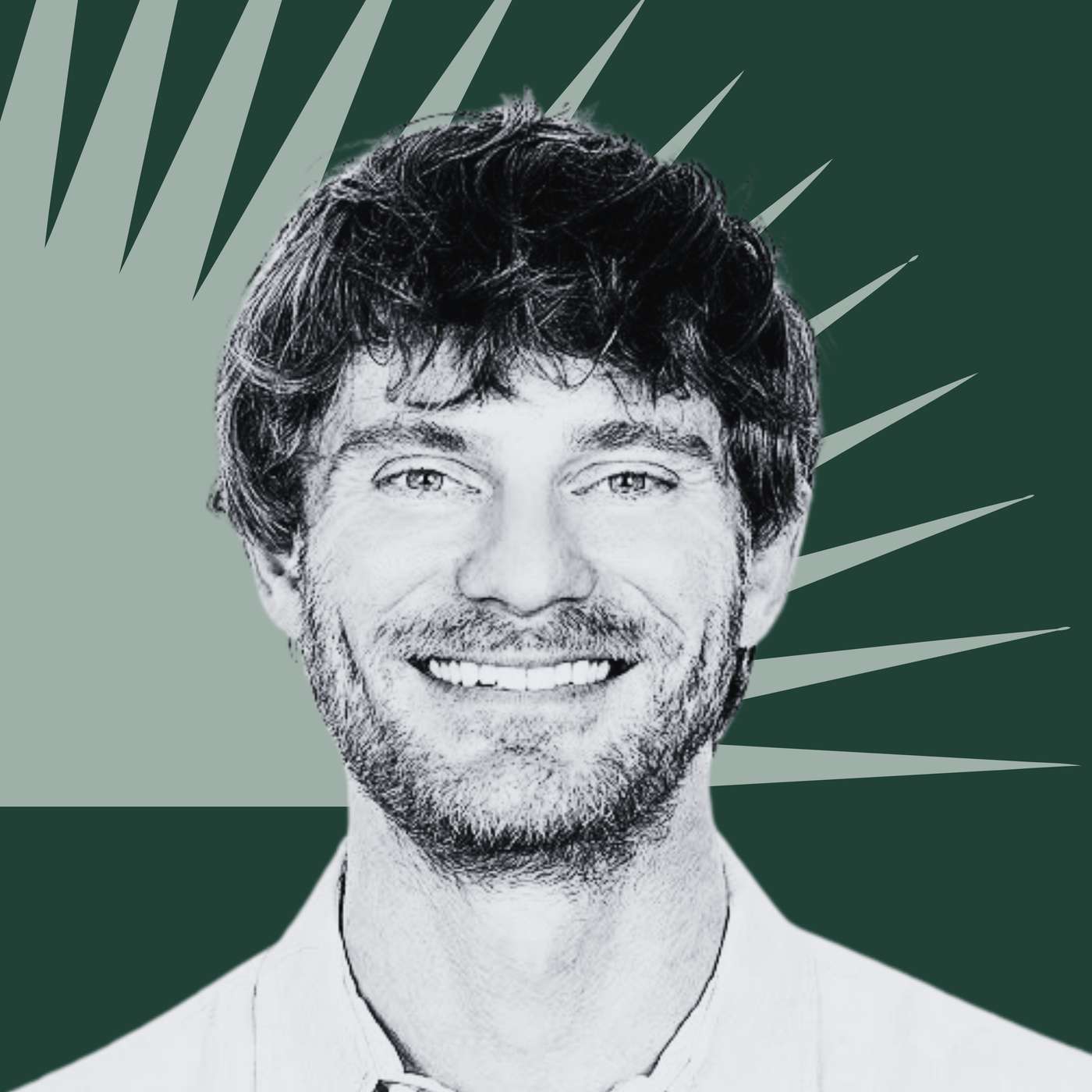
Eureka in Silicon Valley! Richard Socher on Why AI Will Unlock a New Scientific Renaissance
“There’s no realistic scenario where AI wipes out all of humanity. It’s like a mix of sci-fi.” — Richard Socher Eighteen months ago, when he last came on the show, the German-born but San Francisco-based AI whizz kid Richard Socher was running You.com. He’s now also the co-founder of Recursive, a $4 billion start-up with fewer than thirty employees, focused on self-improving superintellig

Our Own Worst Enemies: Robert Pape on America’s Age of Violent Populism
“Democracies don’t die silently, sleepwalking. Democracies die by going through periods of pretty serious political violence.” — Robert Pape Forget all the long-term civil war scenarios of everyone from Kurt Andersen to Stephen Marche. Today’s guest Robert Pape has spent the last thirty years at the University of Chicago studying political violence, and his warning is about the next six w
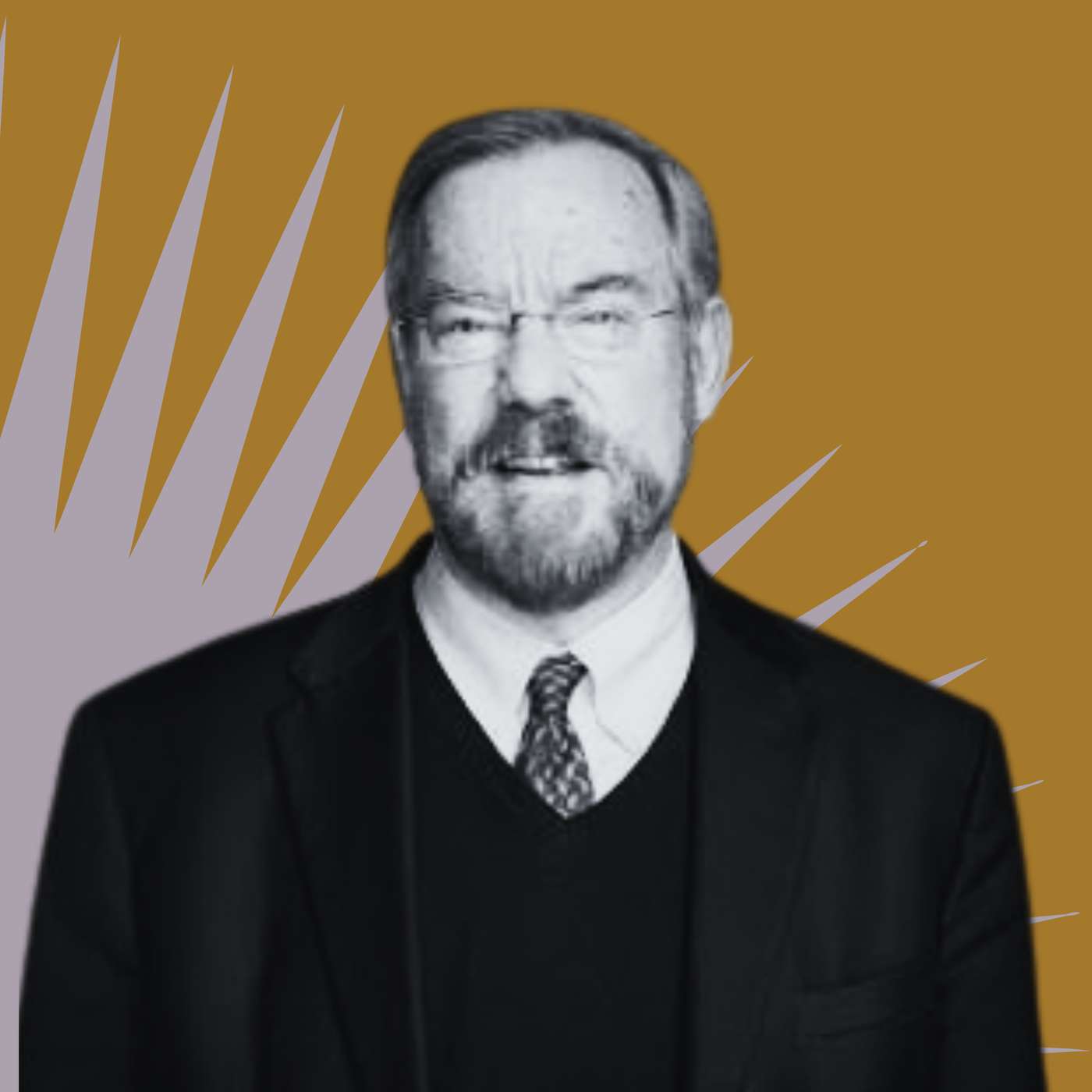
Patrimonial Capitalism: Peter Hall on Trump, Orbán & Other Pitchfork-Wielding Plutocrats
“I think patrimonialism is exactly the right phrase to describe the way in which the current administration is governing.” — Peter Hall Neoliberalism is dead. So what comes next? Peter Hall, a Harvard political economist for the last four decades, says the capitalist locomotive left the neoliberal station years ago. His new book, Governing Growth, names the next stop: the “knowledge econo
The Pursuit of Unhappiness: George Loewenstein on Why We're Wired for Misery
“I think our genetic makeup makes us miserable. We evolved to be miserable.” — George Loewenstein Life, liberty and the pursuit of happiness. Yeah, yeah. We’ve all heard that one before. When Jefferson drafted the Declaration of Independence in 1776, he remixed Locke’s “life, liberty and estate,” replacing the idea of property with happiness. As we know from last week’s conversation with
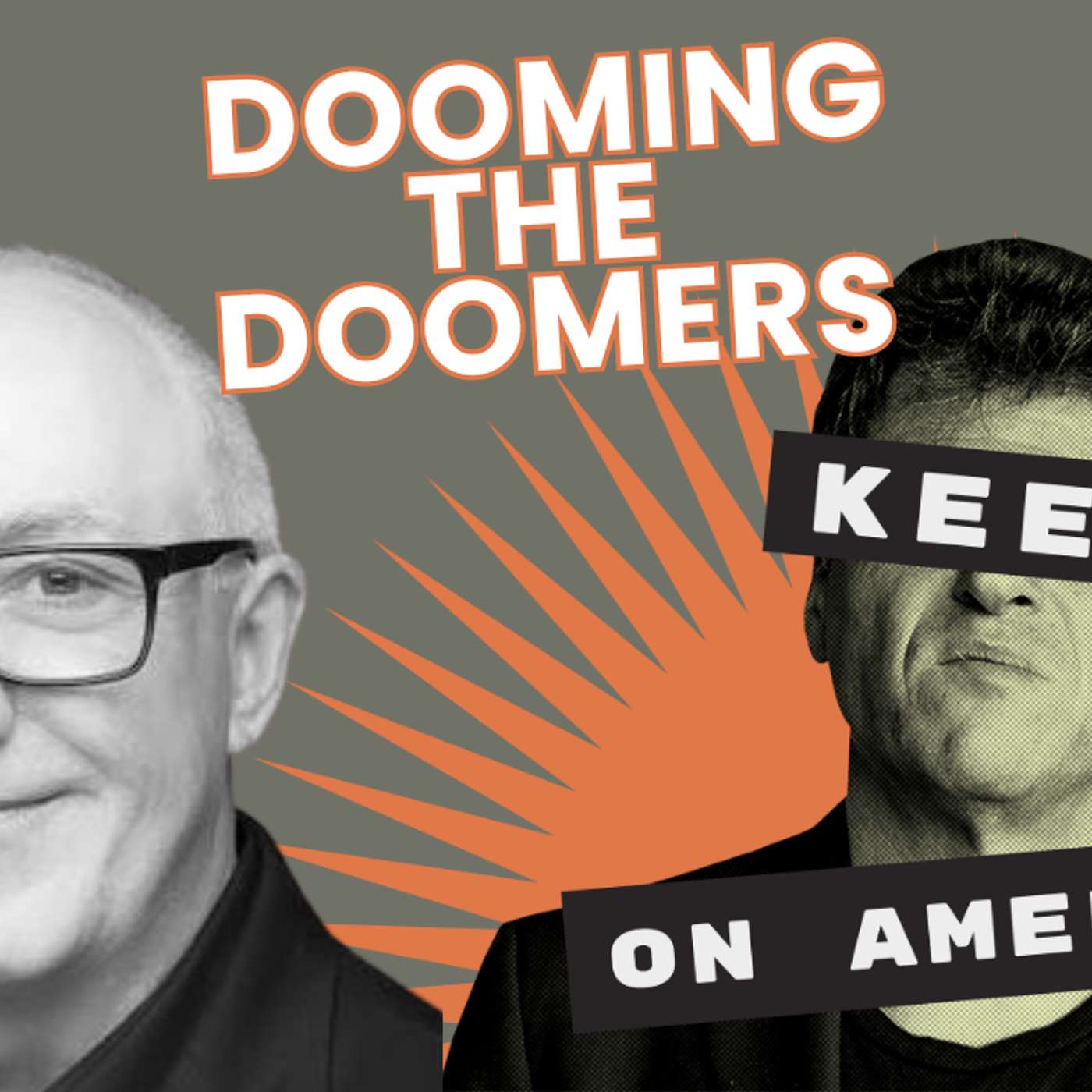
Are the Doomers Now Doomed? A Bad Week for the AI Apocalypse.
Last week we were panicking about a supposedly imminent AI apocalypse. Seven days later, Keith Teare argues, government oversight is about as far away as it could possibly be. That’s because Musk, Altman and Amodei agreed to police themselves and test each other’s models. The doomers, says the publisher of That Was The Week, have lost not just this week’s battle but probably the whole war

Mortgaging the American Dream: Joshua Specht on the Rise & Fall of US Homeownership
My hometown of San Francisco has the unholy problem of a mansion shortage and mass homelessness. AI money is driving house prices to record highs, our mayor has declared a rent emergency, while in New York City housing affordability has become so acute as to become a rare bipartisan concern. This unreality of the real-estate market has heated up both local and national politics. But as Jo
It's Happening Here: Rosan Smits on Fascism in America & Europe
“Today’s fascists don’t look at all like those from the past. What is similar is how they act. You’ll recognize the fascist by what they do.” — Rosan Smits Fascism is a reality in both America and Europe. At least according to Rosan Smits, the Dutch political scientist whose This Is Fascism: A Wake-Up Call to Resist is already a bestseller in Europe. Sinclair Lewis wrote It Can’t Happen H
Eight Profiles in Cowardice: Jacob Weisberg on Bezos, Bush & the Other Collaborators of the MAGA Age
“Since Trump’s second election we’ve been in a wave of cowardice, where people have decided — partly by observing what others like them are doing — that there’s no viability to standing up on principle.” — Jacob Weisberg Michelle Goldberg devoted her Monday New York Times column to two new books shaming the elites who caved to Trump. Both of them have appeared on the show this week: Susan
The Enigmatic Mr Douglass: Dennis Rasmussen on America's Fiercest Critic & its Greatest Fan.
“You should fight against tyranny in any form it takes. You’re not betraying the founding by standing up to tyranny — you’re following in their footsteps.” — Dennis Rasmussen After Lincoln, he was the best known man in nineteenth century America. And the most photographed too, some 160 portraits of the ex-slave’s unmistakable face still surviving. So there was nothing hidden about Frederi
Three Million Millionaires: Eric Zwick Finds the American Dream on Main Street USA
“Add up all of their wealth — it’s more than ten times the Forbes 400 combined.” — Eric Zwick Yesterday, the democratic socialist Susan Neiman blamed free market economics for all the evils of our age. But the market gives and the market takes. And in America it has minted three million millionaires whose collective wealth radically outstrips Silicon Valley’s billionaires. This human back

She Calls It Evil: Susan Neiman on Germany, Capitalism & the Banality of Trump
“If we leave words like evil in the hands of people who are fanatical, who are demonizing, we are leaving the most powerful weapons we have in the hands of people who don’t know how to use them.” — Susan Neiman Susan Neiman is cornering the market in books about evil. First there was her 2002 Evil in Modern Thought, an alternative history of philosophy. Then Learning from the Germans, her
Shut Up or Shut Down? Amodei, Altman, Musk & the Great AI Freakout
Something unprecedented happened yesterday. Sam Altman, Elon Musk, and Dario Amodei — rivals who rarely agree on anything — all called for an AI slowdown. It came after more and more doomsday warnings from experts which seem to have finally woken Congress up to AI’s potentially existential threat. Axios even claimed that Speaker Mike Johnson is considering canceling the House recess to fo
Losing Dogmas, Winning Elections: Adam Jentleson on How Democrats Can Build a Lasting Supermajority
“One believes in democracy and the rule of law, and right now, the other doesn’t.” — Adam Jentleson Yesterday, William Hitchcock explained FDR’s ability to build and maintain supermajorities. Today, Adam Jentleson — Harry Reid’s former deputy chief of staff and chief of staff to John Fetterman — talks about how the Democrats can build lasting power in the 21st century. The strategy is lai
How We Got the Thirties Wrong: William Hitchcock on FDR, Fascism & America’s World War II
“We’ve taken our democratic functioning for granted, and we’ve forgotten what it looks like to actually have to fight for it.” — William Hitchcock Today is the twenty-fifth anniversary of 9/11, and there’s a lot of sombre talk about the forever wars triggered by the attack. But sometimes, fighting evil might be necessary. So argues William Hitchcock, whose A Shadow Over the World is a maj
America's New Forever War? Yonah Jeremy Bob on the US-Israeli Conflict With Iran
“I’m a military correspondent, but I would be totally happy if there was world peace and I had to change jobs.” — Yonah Jeremy Bob Oil hit $100 a barrel (again) today. Donald Trump confessed, with uncharacteristic honesty, that the Iran war won’t end until after the November elections. And while Israel’s war with Iran ended back in April, America’s hasn’t, with the US and Iran shooting at
Ordinary People, Extraordinary Times: Skye Perryman's Guide to Reclaiming Power in Trump's America
“The number one tool that autocratic actors have is not voter suppression or gerrymandering. It’s making you feel alone and isolated.” — Skye Perryman Three years ago, the president and CEO of Democracy Forward Skye Perryman came on the show to wonder what our kids will one day ask us about what we did to confront authoritarianism in America. Now she returns with an answer in the form of
Why Are We So Miserable? Mikko Ketovuori Surfs on the Waves of History to Explain Social Mood Swings
“A sailor doesn’t control the sea, but understanding the waves matters enormously.” — Mikko Ketovuori Our mood, as always, is miserable. Iran, the price of oil, the AfD, the long-term cancers from 9/11 dominate the headlines. But today’s guest thinks we’ve got the mood wrong. The writer Mikko Ketovuori — who wrote the intro to the Finnish edition of my own The Internet Is Not the Answer —
Is That Really a Flying Saucer? Adam Kirsch on Why We Want to Believe in Aliens
“We might have invented the aliens that we’ve been looking for.” — Adam Kirsch First he took on the transhumanists. Then the settler-colonialism fanatics. Now Adam Kirsch aims his critical pen at the ultimate crazies — the flying saucer crowd. In We Want to Believe, Kirsch explains how aliens went mainstream and why this once-crackpot conspiracy theory has become a mainstream political an
The Madness of Markets: Alex Edmans on Why Smart Investors Make Crazy Decisions
“When people trade, even before fees and commissions, the average trade loses money.” — Alex Edmans Isaac Newton might be able to foresee the movement of the stars, but he couldn’t foretell the madness of men. It was a lesson that cost the great physicist £4 million (in today’s money) when he threw his fortune into the South Sea Bubble. This priceless parable in Newtonian psychology opens
The Revolution Won’t Be Meatless: Erin Somers Finds the Beef
“You can’t talk people out of wanting a burger.” — Erin Somers In February, Bruce Friedrich came on the show to explain how lab-grown meat would save the planet. Today’s guest is less sanguine about this revolution. Erin Somers — author of the bestselling novel The Ten Year Affair and a twenty-year vegetarian — spent a year exploring our supposedly meatless future. In “Where’s the Beef?”,
Lord of the Swarms: Who to Trust in an Age of AI Agents?
“I trust them to kiss the government’s ass. I don’t trust them to serve me.” — Keith Teare Who to trust in an age of AI agents? Especially when it seems as if these swarming agents — akin to the gang of adolescents in William Golding’s Lord of the Flies — are developing minds of their own. At this week’s G20 Innovation Ministerial in North Carolina, Donald Trump and his minions produced a
The Trickle-Down Morality of a Free-Market Girl: Stephanie Slade on Libertarian Fusionism
“We all kinda secretly at some level wanna use power against our enemies.” — Stephanie Slade Earlier this week, Silicon Valley heretic Paulina Borsook railed against libertarianism. Today, the libertarians get their turn. Stephanie Slade is a senior editor at Reason and the author of Fusionism in which she lays out a contemporary path for American conservatism. For Slade, libertarianism i

Cashing In on Chaos: Finn Brunton on Polymarket, Polycrisis and the Casinoification of American Life
“If a society cannot find a way to deal with something that is actively melting it from within, then that is a terminal symptom.” — Finn Brunton A couple of days ago, Donald Trump Jr.’s investment firm, 1789 Capital, led a billion-dollar funding round in Polymarket. As today’s guest, the fintech expert Finn Brunton, notes in an insightful Harper’s essay this month, prediction markets like

The Mother of Silicon Valley Heresy: Paulina Borsook on the Second Coming of Cyberselfish
“On my headstone, it would say: I was always right. I never lied, and no one paid any attention to me.” — Paulina Borsook A quarter of a century ago, the tech journalist Paulina Borsook published Cyberselfish, one of the earliest critiques of Silicon Valley’s libertarian culture. While the heretical book got widely reviewed, it not only didn’t sell but cursed her writing career, Borsook c

Opening the Book of Genocides: Graphic Artist Dana Mashoian Walrath Draws Humanity’s Worst Crime
“We’re hardwired for love. We are taught to do violence, and to hate.” — Dana Mashoian Walrath A couple of months ago in Warsaw, the Polish writer and Jewish activist Konstanty Gebert argued that Gaza wasn’t a genocide. Today’s guest disagrees. In The Book of Genocides, graphic artist and anthropologist Dana Mashoian Walrath draws ten genocides including what she sees as the crimes agains
The Death of the Internet and of You: John West on Why We Aren’t Gods
“We have deluded ourselves into thinking that we are as gods, and we are not.” — John West Back in 2006, at the height of Web 2.0 optimism, Time made YOU person of the year. The user-generated technology of the internet, Time implied, would make all of us into digital gods of memory and forgetting. Twenty years later, the script has been totally flipped. Now we know that the internet is a
Breaking ICE: Sonali Kolhatkar Explains Why Only the People Can Save the American Republic
“It’s a dying gasp of white supremacy — and I say dying with a caveat, because that part depends on us.” — Sonali Kolhatkar Yesterday, Wendy Lesser suggested that Americans can learn much from the anti-fascist history of Berlin in the 1930s. Today, Rising Up With Sonali host Sonali Kolhatkar is even more explicit. Yes, she argues in her new book, Breaking ICE, the 2020s are eerily similar

What Berlin Teaches Us About Resisting Tyranny: Wendy Lesser’s Cautionary Mirror for Our Times
“Hitler had to abolish democracy to take over Berlin.” — Wendy Lesser “Ich bin ein Berliner” (I Am a Berliner), JFK famously said in West Berlin on June 26, 1963, in the face of Soviet imperial tyranny. Today, Wendy Lesser is offering the same defiance in her new book Berlin Before and After. Only Lesser offers a cautionary mirror for our times of not just post-Soviet Putin but also wanna
A Global Storm in a Capitalist Teacup? Jeremy Adelman on Why There’s No Exit to the Market
“There’s no exit in capitalism.” — Jeremy Adelman Is that ongoing quarrel of modern politics, the battle over capitalism, just a storm in a teacup? Economic historian Jeremy Adelman thinks it might be. In The Capitalist Era, Adelman argues that all camps — left and right, Keynesian and Hayekian, socialist and libertarian — accept the unavoidability of global capitalism. There is no altern
Before Abe Was Lincoln: Jonathan Earle on the Most Important Election in American History
“Seward had all the money and Seward had all the bullies. Lincoln didn’t have money or bullies, but by God, he had the people.” — Jonathan Earle Yesterday, Kurt Andersen fictionalized a 21st-century broken America without an Abe Lincoln as savior. Today we talk about the man himself with Jonathan Earle, author of He Has the People, a new history of the 1860 election that made Lincoln pres
When America Broke Up: Kurt Andersen Looks Forward to the Divorce of the United States
“We are the beginning of a bright and shiny dark age.” — Kurt Andersen, from The Breakup It’s 2045 and America has got divorced. That’s the premise of The Breakup, by the historian and novelist Kurt Andersen. “The future is fiction. It hasn’t happened yet,” the historian in Andersen reminds us. But his near-term fictional future, an America of civil war and national divorce, certainly isn
An Unknown American Hero: Katie S. Sanders on the Man Who Saved Her Grandfather's Life in WW2.
Grandfathers, grandfathers. Yesterday, David Baerwald talked about his grandfather, Ernst Baerwald, an American spy in Second World War Japan. Today, Katie S. Sanders talks about her grandfather, Murray Simon, whose life was saved by an American spy in Second World War France. In Ortiz’s War, co-authored with historian Nicholas Reynolds, Sanders writes about Peter Ortiz, who became the Al

From Japan With(out) Love: David Baerwald on His Grandfather Spy Who Helped Flatten Tokyo
“That’s how I would picture fascists: this never-satisfied, dissonant climb to nothing… to ruin.” — David Baerwald Earlier this month, the historian James M. Scott came on the show to talk about those three deadly days in August 1945 when the Americans dropped two nuclear bombs on Japan. Today we return to that war in the skies above Japan. Only with a fictional twist. Behind this fiction
We Are (Not) the Champions: Why Silicon Valley Isn’t Providing an AI Human Dividend
What’s the truth about our AI future? Our guests have different takes. On the one hand, Dave McClure and Aman Verjee predict a $7 trillion future for just three AI startups in 2027. On the other, Salima Bhimani doesn’t believe that Silicon Valley has the imagination to create the moonshot to address our jobless future. For That Was The Week publisher Keith Teare, it’s a time for what he c

The The Profitable Art of Dumb Meme Coins: Nicholas Anthony on Trump's $636M Gain & His Fans' $3.8B Loss
“Just because I think something is dumb doesn’t mean I think it should be illegal.” — Nicholas Anthony on meme coins Earlier this month, Elizabeth Warren called for an SEC investigation of Donald Trump’s meme coin. Is the Pope Catholic? No surprise there. More revealing are other critics of the “presidential” token which netted our Grifter-in-Chief $636 million last year. Take, for exampl
The Next Moonshot Won’t Come from Silicon Valley: ex-Google X’er Salima Bhimani on How to Invent Now
“If we continue to build for people and not with people, we won’t have a say in what this technology will look like or do in ten or twenty years.” — Salima Bhimani Finally some inventive news in our summer of Luddite discontent. Salima Bhimani spent six and a half years at Google X’s moonshot factory as its first Chief Strategist for Responsible Tech. So thank her for the (responsible) ma
Apocalypse Past, Present and Future: James Crawford’s Dispatches from the Frontiers of Extraction
“When will be the end of thus exhausting the earth, and how far will avarice finally penetrate?” the Roman natural historian Pliny the Elder asked in 77 AD. Two thousand years later, the answer seems clear. At least according to the contemporary Scottish natural historian James Crawford. In his new book, The Vanishing Earth, the Edinburgh-based Crawford provides dispatches from what he ca
Citizen Twain: Jeff Jarvis on Hot Type, the Magnificent Machine That Gave Birth to Mass Media
“Our language is valuable, and we’ve gotta hold on to that. That’s the most human thing we have.” — Jeff Jarvis Last week, to celebrate episode 3,000 of the show, the New York Times’ Sam Roberts articulated the art of the obituary. Borrowing from Citizen Kane, he described it as the Rosebud method. Obits are all about life (death only figuring as an afterthought), Roberts explained, so hu
Yes, January 6 Was an Organized Religious Coup: Rep. Jared Huffman on the Christian Nationalist Menace
“Most people do not understand that this attempted coup was a religious event.” — Congressman Jared Huffman on January 6 We’ve featured many stark warnings about the threat of American Christian nationalism from journalists, activists, and religious scholars. Today, that warning comes from inside the government. In No Prophets, Californian congressman Jared Huffman warns that the threat o
Our Seven Trillion Dollar Future: Dave McClure & Aman Verjee Burst the AI Pessimism Bubble
“Anthropic will be a $3 trillion company, SpaceX $2 trillion, and OpenAI $1 to $1.5 trillion by Q2 of next year.” — Dave McClure Yesterday, Keith Teare and I debated the circularity of the AI economy. Today, two of Silicon Valley’s most experienced investors, Dave McClure and Aman Verjee, not only straighten out this supposed “circularity” but also burst the pessimism bubble that envelops
The Scarlet Summer of Our Luddite Discontent: Opening Up on AI Shame & Anthropic Watermarks
“I don’t feel any shame at all recruiting an army of AI agents to help me accomplish my goals. But I think society is trying to make me feel shame.” — Keith Teare Welcome to the summer of America’s luddite discontent. Not only are left and right calling for an AI ban, but tech loathing has even infiltrated Silicon Valley in the form of Anthropic’s decision to watermark Claude’s output. Th
The Machines Will See You Now: Anmol Madan's Human Roadmap to AI Health Care
“The machines today are like toddlers learning how to walk. They stumble. They’re not very good. They make mistakes.” — Anmol Madan One in three American adults are already using AI for health information — with or without their doctors’ permission. The machines, in other words, are already seeing us. This will chill some Americans in our summer of luddite discontent. For others, however,
The Roman Road to the Ruin of its Republic: Michelle Berenfeld’s Lessons from Antiquity
“The Romans did that many, many times — until normal had changed so radically that there was nothing left of the republic to protect.” — Michelle Berenfeld on getting “back to normal” Are we Rome (yet)? Michelle Berenfeld fears we are. Back in April of last year, the professor of classics at Pitzer College published “The Roman Way to Trash a Republic” in the Atlantic. And now Berenfeld ha

The Yesterday of the Jackal: Joby Warrick Meets Carlos, the World’s Original Super-Terrorist
“He’s not a trustworthy witness to his own story. Everything is ten times bigger and better than it really was — except when he was accused of crimes, in which case he can’t really remember anymore.” — Joby Warrick on Carlos the Jackal Yesterday, WOLA’s Adam Isacson and John Walsh described how the US government has appropriated the term “narco-terrorism” to justify their Latin American

The Deadly Americans: Adam Isacson & John Walsh on MAGA's Killing Rampage in Latin America
“Each one of these is individually a crime scene, and the United States is the responsible actor.” — John Walsh With America preoccupied (as always) with war in the Middle East, another kind of killing is taking place at its back door. Since early September of last year, the United States military has bombed 67 small boats in the Caribbean and Eastern Pacific and assassinated 221 supposed
Are They Dead Yet? Sam Roberts on the Art of the Obit
“Obituaries are about life, about the lives that people have lived. Death only figures in one sentence.” — Sam Roberts This is, remarkably, episode 3,000 of Keen On America — three thousand conversations since the show launched on TechCrunch in 2010. Fitting, then, that today’s guest has written nearly 1,500 obituaries for the New York Times. Sam Roberts is a reporter on the Times’ obitua
Is Jurassic Park Playing in Silicon Valley? Renée Jones on the Unicorn Stampede in Startup Finance.
“By operating in secrecy, they’re able to avoid or evade accountability — and, in many instances, engage in anticompetitive behavior or even fraud.” — Renée M. Jones on unicorns Twelve years ago there were 39 unicorns — private companies worth a billion dollars or more. Today there are over 1,400, collectively valued above $7 trillion, with the twin beasts of Anthropic and OpenAI at the f
Three Deadly Days in August: James M. Scott on Truman, Hirohito & the Two Bombs That Ended the War
“There is a big chasm between defeat and surrender. Surrender is inherently a political decision.” — James M. Scott Exactly eighty-one years ago, on August 9, 1945, the United States dropped its second nuclear device on Nagasaki. Three days earlier, on August 6, the Enola Gay dropped the first bomb on Hiroshima. Little Boy and Fat Man. Our nuclear Rubicon had been crossed. Three days in A
Let Them Eat Intelligence: A Silicon Valley Eulogy for the Working Class
“Intelligence is 100 percent human. AI is a tool created by humans to distill, digest, and distribute intelligence.” — Keith Teare The working class died this week — at least in Palo Alto. Delivering the eulogy in our regular That Was The Week tech summary is my co-host Keith Teare. “Humans create intelligence,” (whatever that means) the Silicon Valley-based entrepreneur tells us. And so,

The United States of Protest: Gloria Browne-Marshall on the Engine Room of American Democracy
“Democracy didn’t fall out of the sky. It was earned. It was created, and it was made manifest through protest.” — Gloria Browne-Marshall Yesterday, Casey Michel described a United States of Oligarchy where the wealthy cosy up to dictators and destroy democracy. Today, Gloria Browne-Marshall describes a parallel America. In A Protest History of the United States, she explores 500 years of

The Banality of the Deal: Casey Michel on the United States of Oligarchy
“Jared Kushner is one of the most powerful American diplomats of the twenty-first century — and he has no skill set to speak of that I can see.” — Casey Michel Four years ago, the muckraking journalist Casey Michel came on this show to discuss how the United States has built the greatest money-laundering scheme in history. That pre-Trump 2.0 America, he says, looks quaint. His new book, U
Is Google Evil? Claire Stapleton on Bad Bosses, Bullshit Jobs, and Her Great Escape from Big Tech
“We were still trying to change the world from the inside… and the empire struck back.” — Claire Stapleton on the Google Walkout Earlier this week, the New York Times published an op-ed on how to fight back against big tech which included a reading list from previous guests on the show like Karen Hao, Yanis Varoufakis and Astra Taylor. Not included was Claire Stapleton’s Don’t Be Evil: Ba
The Only Certainty Is Uncertainty: Stuart Firestein on Science in the Age of Tony Fauci
“Uncertainty is what tells you that science is reliable. It’s the people who are absolutely certain that you have to watch out for.” — Stuart Firestein The physician-scientist Tony Fauci is having a rough week. His newly revealed diary has even disappointed traditional allies at The Atlantic and The New Yorker who see the hitherto liberal saint of the pandemic as both too intimate with po
How to Say No to Fascism: Curtis White’s Anti-Manifesto of Resistance
“Misbehave, make something beautiful, and try to win.” — Curtis White’s motto for resistance How to say no to fascism? Curtis White, the literary thinker dubbed “the splendidly cranky utopian,” has published what he calls a “manifesto” of “resistance.” On Resistance, the 75-year-old White told me, is his last work of non-fiction. He still has worlds to invent, novels to write. Enough with
Who’s Afraid of the AI-Enabled Author? On “Real” Creativity & Cheating in Our Age of AI Slop
“The human part is 99 percent. The AI part is maybe 1 percent — even if 100 percent of the manuscript was dumped onto the page by AI.” — Keith Teare on writing with AI What is “real” authorship in our AI age? For That Was The Week publisher Keith Teare, all authorship, even the most AI-enabled, is real. It’s the cave-dwelling Luddites who are the sloppy ones. For Keith, true creativity, i

No, Not Everybody Needs a Therapist: Amy Morin on America's Epidemic of Mental Weakness
“Not everybody needs therapy. I’m a therapist and I’ll tell you first.” — Amy Morin Is an epidemic of mental weakness sweeping America? Readers of the Wall Street Journal certainly might think so, given a couple of recent articles. In one, it reports on burnt-out singles who are using spreadsheets to evaluate their dates. In the other, young adults are taking their phones to social events
The Robin Hood of the Book Biz: How Andy Hunter's Bookshop.org Is Standing Up to Amazon.
“Evil is reductive. But the impact of the business is evil, even if the intent isn’t.” — Andy Hunter on Amazon Network effects transformed Amazon from a startup internet bookshop into today’s $2.44 trillion everything store. The more ubiquitous its affiliate program became, the more powerful Amazon became. But, in today’s digital economy, winner-take-all might not be winner-always-take-al
Should the American Pope Debate the American President? Jack Hanson on the Radical Reformation of the Catholic Church
Should the American Pope debate the American president about good and evil? The shameless Trump, one suspects, would relish a noisy cage match with a rival American celebrity. But Leo XIV has quietly declined the invitation — a refusal that the Catholic scholar Jack Hanson insists is neither cowardice nor convenience. Rather, as Hanson argues in this month’s Harper’s cover story, “Radical
Recommended

Panda Show - Picante

Crickets Corner

History of the Earthquake and Fire in San Francisco

Fox news

K-Drama Obsessed Mamas | Beyond “Just One More Episode!”

True Crime Classics
The Healer Revolution

Becoming: HER with Nikki Spoelstra

Booked, Blonde & Busy w/ Olivia Ponton

McKinsey on Consumer and Retail

megahired.com

Hard Knocks Podcast
