
The Joy of Why
The Joy of Why is a Quanta Magazine podcast that explores curiosity and the pursuit of knowledge. Hosts Steven Strogatz and Janna Levin interview leading researchers about major scientific and mathematical questions. New episodes are released every other Wednesday. Quanta Magazine is an editorially independent publication supported by the Simons Foundation.
Episodes
What Does the Fourth Dimension Actually Look Like?
We know all about how things exist in the three dimensions of length, width, and height. Physicists often talk about time as a fourth dimension, but what if there were a fourth spatial dimension — another direction entirely? How on earth would we picture that?Mathematicians use topology to visualize abstract spaces in higher dimensions. Maggie Miller at the University of Texas at Austin e
Where Does the Quantum World End and Ours Begin?
Quantum mechanics may be one of the most precisely tested paradigms in science, but there’s still no universally accepted interpretation of what it tells us about reality. How do we get from the wave-like behavior of quantum systems to the solid, macroscopic world of objects and the universe at large?Jonathan Halliwell, a professor of theoretical physics at Imperial College London, has sp
Live from ICM 2026: What Is Math For in the Age of AI?
Mathematicians are witnessing a profound shift in their field. AI systems are now producing proofs, spotting connections between distant fields, and, in a few cases, solving problems that had stumped mathematicians for decades. The pace of progress over the past several months has raised challenging questions: What can AI systems actually do? And what happens to the more human, creative a
Are We Thinking Correctly about AI Intelligence?
When an LLM answers a question, is it reasoning like humans, or just producing text that looks like reasoning? The distinction isn’t just philosophical, this determines what we can trust AI to do, how closely we need to supervise it, and ultimately what its real-world impact will turn out to be.Melanie Mitchell at the Santa Fe Institute argues that we lack adequate methods for measuring m
How Does Touch Lead To Pain Or Pleasure?
Pain and pleasure seem like simple facts of life, but they are far from it. Neuroscientists still cannot say why physical pain differs from psychological pain, for instance, nor why a loved one’s touch soothes while a stranger’s touch repels.To explore the science behind these sensations, Janna Levin talked to Ishmail Abdus-Saboor, a neuroscientist at Columbia University’s Zuckerman Insti
How Fast Is the Universe Really Expanding?
One of the biggest mysteries in cosmology seems to keep getting bigger. Astronomers have known since the 1930s that the universe is expanding, but in the 1990s, the discovery that this expansion is accelerating rather than slowing down came as a huge shock to the field. Something had to be driving that acceleration, and dark energy was proposed as the cause. What began as a seismic shock
Will We Ever Find Alien Civilizations?
Does intelligent life exist elsewhere in the universe? The question has captivated us for centuries, but despite decades of searching it remains frustratingly unanswered. Every so often a curious signal appears — fossilized structures in a meteorite, say, or an unusual gas in an exoplanet’s atmosphere — and for a moment it seems possible that we are not alone before the excitement gives w
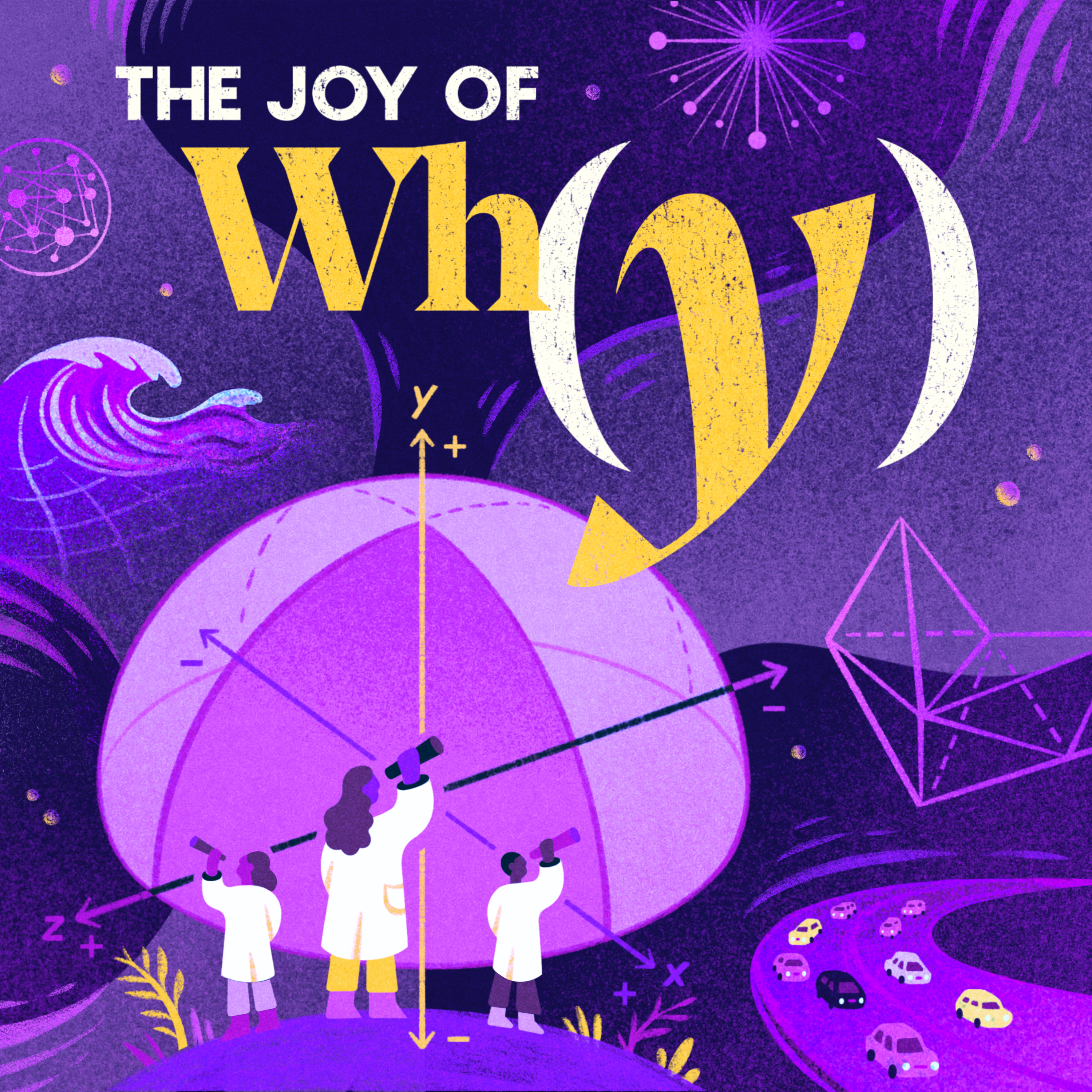
What Is the Positive Grassmannian and Why Does It Show Up Everywhere?
What links certain mathematical models of traffic flow, shallow-water waves, and quantum particle scattering? The surprising answer lies in a corner of the algebraic combinatorics world that goes by the name of positive Grassmannian. In simple terms, the positive Grassmannian is a shape that classifies other shapes. Remarkably, pieces of the positive Grassmannian can be reassembled in for
What’s the Future of Gene Editing?
One of the most surprising and remarkable discoveries in recent scientific history has been CRISPR. Short for Clustered Regularly Interspaced Short Palindromic Repeats, CRISPR is a form of immune system that evolved in bacteria more than a billion years ago to defend against persistent viral threats. Under attack, bacteria can snip a small fragment of a virus’s DNA, store it in the CRISPR
More Conversations, Complex Questions, and Bold Ideas in Season Five of ‘The Joy of Why’
What is the future of gene editing with CRISPR? Has AI changed mathematics forever? Will we find other civilizations in the universe? What if we’ve been wrong about dark energy all along? These are just a few of the big, bold questions we’ll be exploring in the new season of The Joy of Why.Mathematician Steven Strogatz and physicist Janna Levin are back as your hosts for these and other c
Do Beautiful Birds Have an Evolutionary Advantage?
Birds are not merely descendants of dinosaurs — they are dinosaurs. For Yale evolutionary biologist and ornithologist Richard Prum, birds have been a lifelong passion and a window into some of evolution’s most intriguing mysteries.In a wide-ranging conversation with co-host Janna Levin, Prum traces the deep evolutionary origins of feathers, which he argues first emerged not for flight but
How Can Math Protect Our Data?
Every time data travels — from smartphones to the cloud, or across the vacuum of space — it relies on a silent but vigilant guardian in the form of error-correcting codes. These codes, baked into nearly every digital system, are designed to detect and repair any errors that noise, interference or cosmic rays might inflict.In this episode of The Joy of Why, Stanford computer scientist Mary
Why Did The Universe Begin?
Most cosmologists agree that our universe had a beginning. But the finer details about the Big Bang remain a mystery. A history of everything would explain all, or so theoretical physicists hoped. In his final years, Stephen Hawking working with Thomas Hertog proposed a striking idea: The laws of physics were not precisely determined before the Big Bang; they evolved as the universe evolv

How Can Regional Models Advance Climate Science?
Climate models have changed the way we view the world. While effective, these models are imperfect, and scientists are constantly looking at ways to improve their accuracy and predictability.MIT professor Elfatih Eltahir has spent decades developing complex models to understand how climate change affects vulnerable regions like the Nile Basin and Singapore. In this episode of The Joy of W
How Does Graph Theory Shape Our World?
Born in the 18th century when Leonhard Euler solved the puzzle of the seven bridges of Königsberg, graph theory has become a foundational tool in mathematics. It studies relationships through nodes (vertices) and the links (edges) that connect them, transforming the complexity of systems — from friendship networks to airline routes — into elegant abstractions that reveal underlying struct
Does Form Really Shape Function?
What links a Möbius strip, brain folds and termite mounds? The answer is Harvard University’s L. Mahadevan, whose career has been devoted to using mathematics and physics to explore the form and function of common phenomena.Mahadevan, or Maha to his friends and colleagues, has long been fascinated by questions one wouldn’t normally ask — from the equilibrium shape of inert objects like a
Will We Ever Prove String Theory?
For decades, string theory has been hailed as the leading candidate for the theory of everything in our universe. Yet despite its mathematical elegance, the theory still lacks empirical evidence.One of its most intriguing, yet vexing, implications is that if all matter and forces are composed of vibrations of tiny strands of energy, then this allows for a vast landscape of possible univer
How Did Geometry Create Modern Physics?
Geometry is one of the oldest disciplines in human history, yet the worlds it can describe extend far beyond its original use. What began thousands of years ago as a way to measure land and build pyramids was given rigor by Euclid in ancient Greece, became applied to curves and surfaces in the 19th century, and eventually helped Einstein understand the universe.Yang-Hui He sees geometry a
Will AI Ever Understand Language Like Humans?
Large language models (LLMs) are becoming increasingly more impressive at creating human-like text and answering questions, but whether they can understand the meaning of the words they generate is a hotly debated issue. A big challenge is that LLMs are black boxes; they can make predictions and decisions on the order of words, but they cannot communicate the reasons for doing so.Ellie Pa
Can Quantum Gravity Be Created in the Lab?
Quantum gravity is one of the biggest unresolved and challenging problems in physics, as it seeks to reconcile quantum mechanics, which governs the microscopic world, and general relativity, which describes the macroscopic world of gravity and space-time. Efforts to understand quantum gravity have been focused almost entirely at the theoretical level, but Monika Schleier-Smith at Stanford

What Is the True Promise of Quantum Computing?
Quantum computing promises unprecedented speed, but in practice, it’s proven remarkably difficult to find important questions that quantum machines can solve faster than classical ones. One of the most notable demonstrations of this came from Ewin Tang who rose to prominence in the field as a teenager. When quantum algorithms had in principle cracked the so-called recommendation problem,
How Did Multicellular Life Evolve?
At first, life on Earth was simple. Cells existed, functioned and reproduced as free-living individuals. But then, something remarkable happened. Some cells joined forces, working together instead of being alone. This transition, known as multicellularity, was a pivotal event in the history of life on Earth. Multicellularity enabled greater biological complexity, which sparked an extraord

S4 Preview: More Big Questions and No Sasquatches
How did complex life evolve? Where did space-time come from? Will computers ever understand language like we do? How did geometry create modern physics? These are just a few of the big and bold questions that we’ll be exploring in the latest season of Quanta’s interview podcast, “The Joy of Why,” starting March 20, and released every other Thursday.As ever, we will be talking to researche
How Will We Know We’re Not Alone?
We have identified thousands of planets just in our neighborhood in the Milky Way, mostly from the way they impact their host stars. Basic calculations suggest that there are countless more across the galaxy, and that billions of them could potentially support life. But what kind of life they host, and how we would be able to detect the presence of those biological processes from Earth, r
How Is Cell Death Essential to Life?
Death might seem like a pure loss, the disappearance of what makes a living thing distinct from everything else on our planet. But zoom in closer, to the cellular level, and death takes on a different, more nuanced meaning. There is a challenge in simply defining what makes an individual cell alive or dead. Scientists today are working to understand the various ways and reasons that cells
What Can Birdsong Teach Us About Human Language?
It’s fair to say that enjoyment of a podcast would be severely limited without the human capacity to create and understand speech. That capacity has often been cited as a defining characteristic of our species, and one that sets us apart in the long history of life on Earth. Yet we know that other species communicate in complex ways. Studies of the neurological foundations of language sug
How Is AI Changing the Science of Prediction?
Scientists routinely build quantitative models — of, say, the weather or an epidemic — and then use them to make predictions, which they can then test against the real thing. This work can reveal how well we understand complex phenomena, and also dictate where research should go next. In recent years, the remarkable successes of “black box” systems such as large language models suggest th

Why Is It So Hard to Define a Species?
The “species” category is almost certainly the best known of all the taxonomic classifications that biologists use to organize life’s vast diversity. It’s a linchpin of both conservation policy and evolutionary theory, though in practice biologists have struggled to find a definition that works across the natural world. In this episode, Kevin de Queiroz, a zoologist and evolutionary biolo

How Can Math Help Beat Cancer?
When we think about medicine’s war on cancer, treatments such as surgery, radiation and chemotherapy spring to mind first. Now there is another potential weapon for defeating tumors: statistics and mathematical models that can optimize the selection, combination or timing of treatment. Building and feeding these models requires accounting for the complexity of the body, and recognizing th

What Can Cave Life Tell Us About Alien Ecosystems?
If instruments do someday detect evidence of life beyond Earth, whether it’s in this solar system or in the farther reaches of space, astrobiologists want to be ready. One of the best ways to learn how alien life might function can be to study the organisms called extremophiles, which live in incredibly challenging environments on or in the Earth. In this episode, Penelope Boston, a micro

From Sidedoor — Cosmic Journey I: "Stellar Buffoonery"
As a treat to our listeners, we are posting a full episode of Sidedoor, a podcast that explores the treasures in the Smithsonian's vaults. Subscribe to Sidedoor from Smithsonian wherever you listen to podcasts!Black holes could unlock the mysteries of creation and live at the heart of nearly every galaxy. But these invisible balls of extremely dense matter have never been fully understood
Can Thermodynamics Go Quantum?
The principles of thermodynamics are cornerstones of our understanding of physics. But they were discovered in the era of steam-driven technology, long before anyone dreamed of quantum mechanics. In this episode, theoretical physicist Nicole Yunger Halpern talks to host Steven Strogatz about how physicists today are reinterpreting concepts such as work, energy and information for a quantu
Do We Need a New Theory of Gravity?
Observations of the cosmos suggest that unseen sources of gravity — dark matter — tug at the stars in galaxies, while another mysterious force — dark energy — drives the universe to expand at an ever-increasing rate. The evidence for both of them, however, hinges on assumptions that gravity works the same way at all scales. What if that’s not true? In this episode, theoretical physicist C
Are Robots About to Level Up?
Within just a few years, artificial intelligence systems that sometimes seem to display almost human characteristics have gone from science fiction to apps on your phone. But there’s another AI-influenced frontier that is developing rapidly and remains untamed: robotics. Can the technologies that have helped computers get smarter now bring similar improvements to the robots that will work

How Does Math Keep Our Secrets?
Can you keep a secret? Modern techniques for maintaining the confidentiality of information are based on mathematical problems that are inherently too difficult for anyone to solve without the right hints. Yet what does that mean when quantum computers capable of solving many problems astronomically faster are on the horizon? In this episode, host Janna Levin talks with computer scientist
Will AI Ever Have Common Sense?
Common sense rules our world. This fundamental, sometimes trivial knowledge is inherent to how humans interpret language. Yet, some of these simple human truths are so obvious that they're rarely put into words. And without the data of common sense to train on, large language models such as ChatGPT have bizarre, often humorous blind spots.Yejin Choi, professor and the chair of computer sc

What Can Tiling Patterns Teach Us?
In the tiling of wallpaper and bathroom floors, collective repeated patterns often emerge. Mathematicians have long tried to find a tiling shape that never repeats in this way. In 2023, they lauded an unexpected amateur victor. That discovery of the elusive aperiodic monotile propelled the field into new dimensions. The study of tessellation is much more than a fun thought exercise: Pecul
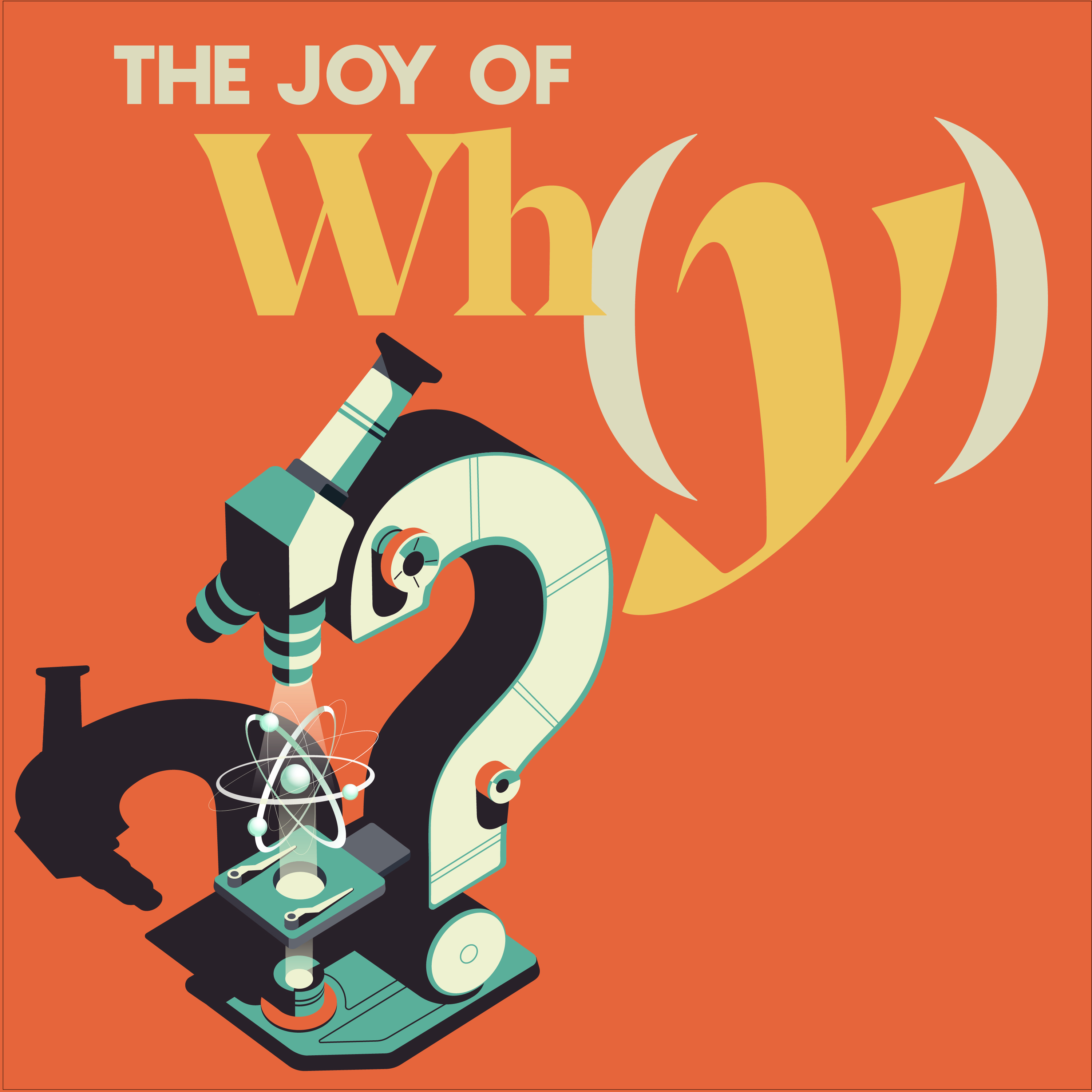
How Is Science Even Possible?
The universe seems like it should be unfathomably complex. How then is science able to crack fundamental questions about nature and life? Scientists and philosophers alike have often commented on the “unreasonable” success of mathematics at describing the universe. That success has helped science probe some profound mysteries — but as the physicist Nigel Goldenfeld points out, it also hel

Can Psychedelics Improve Mental Health?
During traumatic periods and their aftermath, our brains can fall into habitual ways of thinking that may be helpful in the short run but become maladaptive years later. For the brain to readjust to new situations later in life, it needs to be restored to the malleable state it was in when the habits first formed. That is exactly what Gül Dölen, a neuroscientist and psychiatric researcher
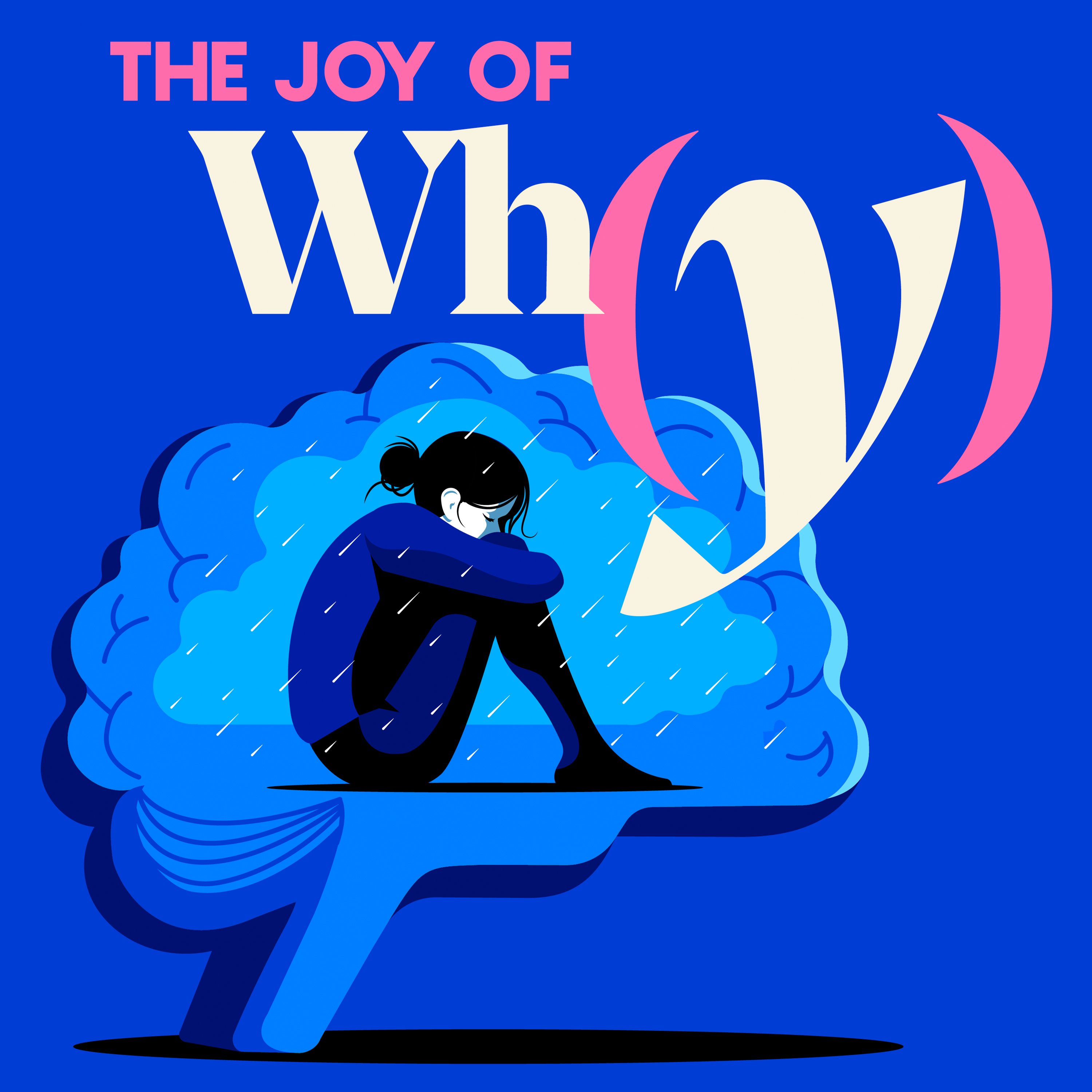
What Happens in the Brain to Cause Depression?
For decades, the best drug therapies for treating depression, like SSRIs, have been based on the idea that depressed brains don’t have enough of the neurotransmitter serotonin. Yet for almost as long, it’s been clear that simplistic theory is wrong. Recent research into the true causes of depression is finding clues in other neurotransmitters and the realization that the brain is much mor

Will Better Superconductors Transform the World?
If superconductors — materials that conduct electricity without any resistance — worked at temperatures and pressures close to what we would consider normal, they would be world-changing. They could dramatically amplify power grids, levitate high-speed trains and enable more affordable medical technologies. For more than a century, physicists have tinkered with different compounds and env

What Does Milk Do for Babies?
Milk is more than just a food for babies. Breast milk has evolved to deliver thousands of diverse molecules including growth factors, hormones and antibodies, as well as microbes.
Elizabeth Johnson, a molecular nutritionist at Cornell University, studies the effects of infants’ diet on the gut microbiome. These studies could hold clues to hard questions in public health for children and
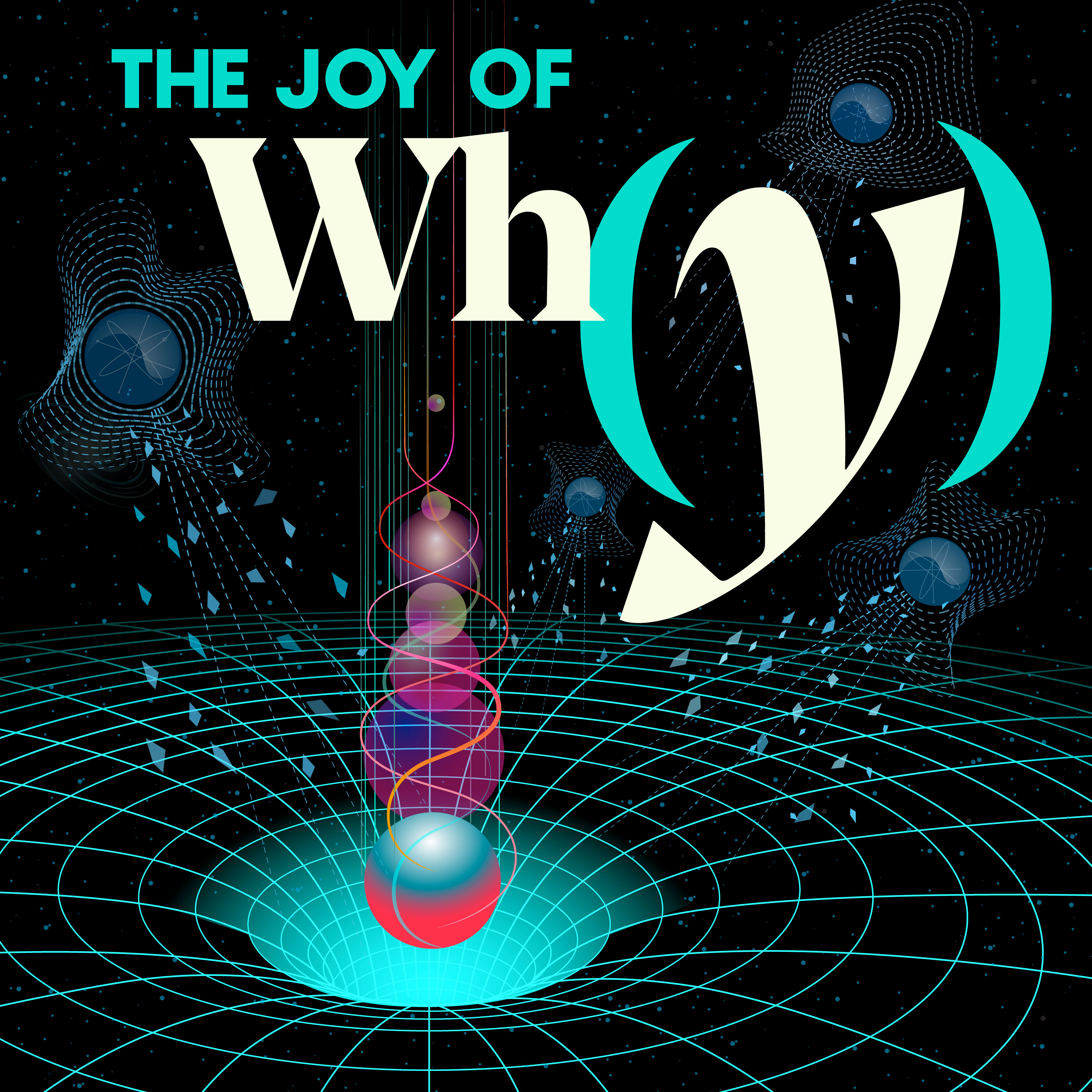
Can Information Escape a Black Hole?
Nothing escapes a black hole… or does it? In the 1970s, Stephen Hawking described a subtle process by which black holes can “evaporate,” with some particles evading gravitational oblivion. This phenomenon, now dubbed “Hawking radiation,” seems inherently at odds with general relativity, but it gets weirder still: If particles can escape, do they preserve some information about the matter

How Is Flocking Like Computing?
Birds flock. Locusts swarm. Fish school. In these chaotic assemblies, order somehow emerges. Collective behaviors differ in their details from one species to another, but they largely adhere to principles of collective motion that physicists have worked out over centuries. Now, using technologies that only recently became available, researchers have been able to study these patterns of co

What Is Quantum Teleportation?
Quantum teleportation isn’t just science fiction; it’s entirely real and happening in laboratories today. But teleporting quantum particles and information is a far cry from beaming people through space. In some ways, it’s even more astonishing. John Preskill, a theoretical physicist at the California Institute of Technology, is one of the leading theoreticians of quantum computing and in

What Is the Nature of Time?
Time seems linear to us: We remember the past, experience the present and predict the future, moving consecutively from one moment to the next. But why is it that way, and could time ultimately be a kind of illusion? In this episode, the Nobel Prize-winning physicist Frank Wilczek speaks with host Steven Strogatz about the many “arrows” of time and why most of them seem irreversible, the

How Did Altruism Evolve?
We often talk about evolution as the survival of the fittest. But if it is, then where did the widespread (and widely admired) impulse to help others even at great cost to ourselves come from? In this episode, host Janna Levin speaks with Stephanie Preston, a professor of psychology and head of the Ecological Neuroscience Lab at the University of Michigan, about the evolutionary, neurolog
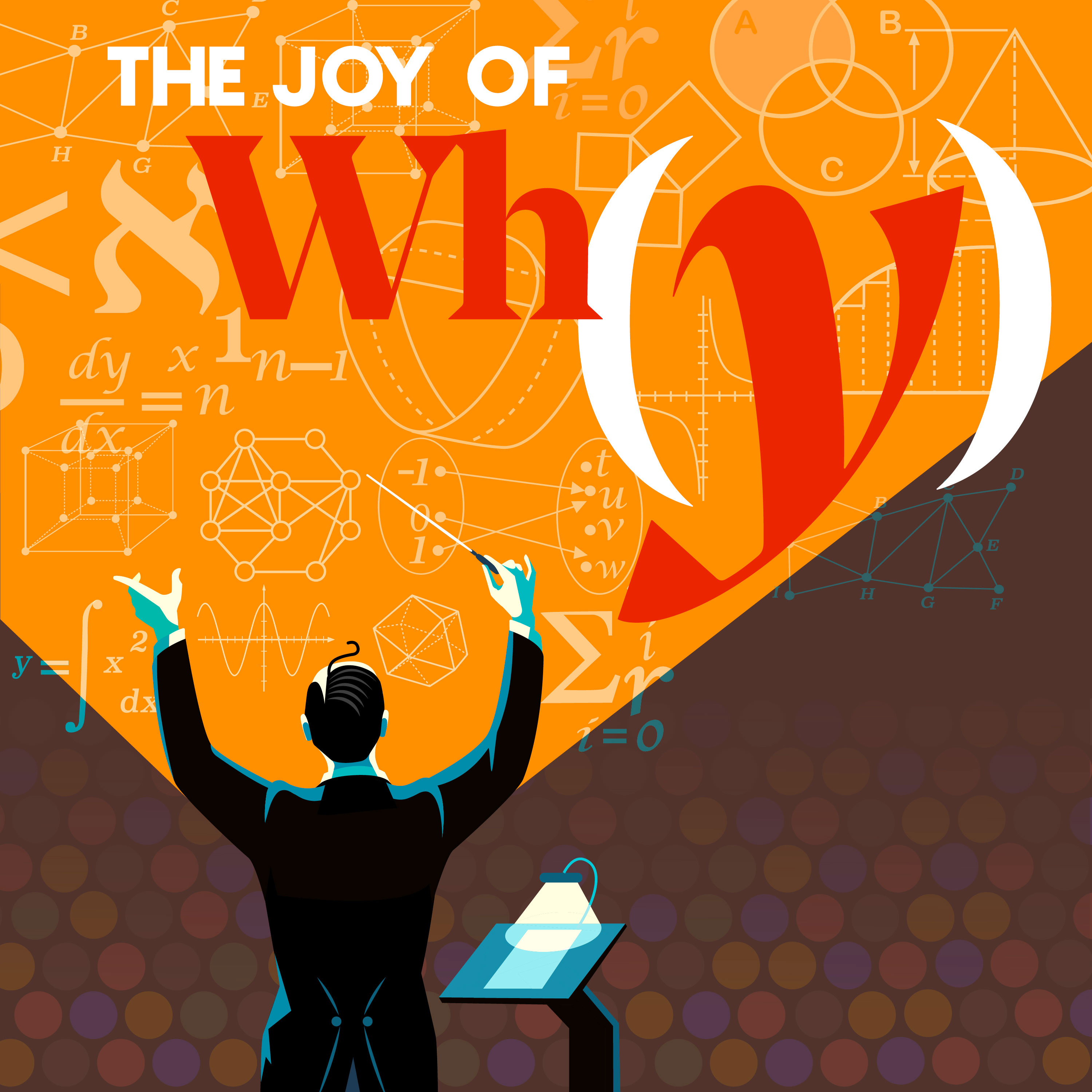
What Makes for ‘Good’ Math?
We tend to think of mathematics as purely logical, but the teaching of math, its usefulness and its workings are packed with nuance. So what is “good” mathematics? In 2007, the mathematician Terence Tao wrote an essay for the “Bulletin of the American Mathematical Society” that sought to answer this question. Today, as the recipient of a Fields Medal, a Breakthrough Prize in Mathematics a

S4 Preview: More Big Questions and No Sasquatches
How did complex life evolve? Where did space-time come from? Will computers ever understand language like we do? How did geometry create modern physics? These are just a few of the big and bold questions that we’ll be exploring in the latest season of Quanta’s interview podcast, “The Joy of Why,” starting March 20, and released every other Thursday.As ever, we will be talking to researche

Trailer: The Joy of Why Season 3
Tune in to the new season of ‘The Joy of Why,’ a podcast from Quanta Magazine and PRX. This season, new co-host cosmologist Janna Levin and mathematician Steven Strogatz will be joined by guests including Terence Tao, the mathematician and Fields Medalist, and Frank Wilczek, the Nobel Prize-winning physicist. New episodes premiere every other Thursday.
Does Nothingness Exist?
Even empty space bubbles with energy, according to quantum mechanics — and that fact affects almost every facet of physical reality. The theoretical physicist Isabel Garcia Garcia explains to Steven Strogatz why it’s so important in modern physics to understand what a true vacuum is.
The post Does Nothingness Exist? first appeared on Quanta Magazine

Can Math and Physics Save an Arrhythmic Heart?
Abnormal waves of electrical activity can cause a heart’s muscle cells to beat out of sync. In this episode, Flavio Fenton, an expert in cardiac dynamics, talks with Steve Strogatz about ways to treat heart arrhythmias without resorting to painful defibrillators.
The post Can Math and Physics Save an Arrhythmic Heart? first appeared on Quanta Magazine
What Can Jellyfish Teach Us About Fluid Dynamics?
Jellyfish and other aquatic creatures embody solutions to diverse problems in engineering, medicine and mathematics. John Dabiri, a fluid dynamics expert, talks with Steven Strogatz about what jellyfish can teach us about going with the flow.
The post What Can Jellyfish Teach Us About Fluid Dynamics? first appeared on Quanta Magazine
What Causes Giant Rogue Waves?
Wave-science researcher Ton van den Bremer and Steven Strogatz discuss how rogue waves can form in relatively calm seas and whether their threat can be predicted.
The post What Causes Giant Rogue Waves? first appeared on Quanta Magazine
What Is the Nature of Consciousness?
Consciousness, our experience of being in the world, is one of the mind’s greatest mysteries, but as the neuroscientist Anil Seth explains to Steven Strogatz, research is making progress in understanding this elusive phenomenon.
The post What Is the Nature of Consciousness? first appeared on Quanta Magazine
Are There Reasons to Believe in a Multiverse?
Several areas of physics suggest reasons to think that unobservable universes with different natural laws could lie beyond ours. The theoretical physicist David Kaplan talks with Steven Strogatz about the mysteries that a multiverse would solve.
The post Are There Reasons to Believe in a Multiverse? first appeared on Quanta Magazine
Is Perpetual Motion Possible at the Quantum Level?
A new phase of matter called a “time crystal” plays with our expectations of thermodynamics. The physicist Vedika Khemani talks with Steven Strogatz about its surprising quantum behavior.
The post Is Perpetual Motion Possible at the Quantum Level? first appeared on Quanta Magazine
How Can Some Infinities Be Bigger Than Others?
All infinities go on forever, so how is it possible for some infinities to be larger than others? The mathematician Justin Moore discusses the mysteries of infinity with Steven Strogatz.
The post How Can Some Infinities Be Bigger Than Others? first appeared on Quanta Magazine
What Has the Pandemic Taught Us About Vaccines?
Should Covid-19 vaccines be judged by how well they prevent disease or how well they prevent death? Anna Durbin, a public health expert and vaccine researcher, talks with Steven Strogatz about the science behind vaccines.
The post What Has the Pandemic Taught Us About Vaccines? first appeared on Quanta Magazine
Is There Math Beyond the Equal Sign?
Can mathematics handle things that are essentially the same without being exactly equal? Category theorist Eugenia Cheng and host Steven Strogatz discuss the power and pleasures of abstraction.
The post Is There Math Beyond the Equal Sign? first appeared on Quanta Magazine
Can We Program Our Cells?
By genetically instructing cells to perform tasks that they wouldn't in nature, synthetic biologists can learn deep secrets about how life works. Steven Strogatz discusses the potential of this young field with researcher Michael Elowitz.
How Will the Universe End?
"The Joy of Why" is a podcast about curiosity and the pursuit of knowledge from Quanta Magazine. The acclaimed mathematician and author Steven Strogatz interviews leading researchers about the great scientific and mathematical questions of our time.
The Joy of Asking About Infinity, Jellyfish and the End of the Universe
As The Joy of Why podcast returns for a second season, producer Polly Stryker and host Steven Strogatz invite listeners to join them and their brilliant new guests on another voyage of discovery.
Why and How Do We Dream?
Dreams are subjective and fleeting, but laboratories have developed ways of getting into the minds of people while they are dreaming. In this episode, Steven Strogatz speaks with sleep researcher Antonio Zadra about how new experimental methods have changed our understanding of dreams.
What Is Quantum Field Theory and Why Is It Incomplete?
Quantum field theory may be the most successful scientific theory of all time, but there's reason to think it's missing something. Steven Strogatz speaks with theoretical physicist David Tong about this enigmatic theory.
Why Do We Get Old, and Can Aging Be Reversed?
Everybody gets older, but not everyone ages in the same way. In this episode, Steven Strogatz speaks with Judith Campisi and Dena Dubal, two biomedical researchers who study the causes and outcomes of aging, to understand how age works - and what scientists know about postponing or even reversing the aging process.
How Do Mathematicians Know Their Proofs Are Correct?
Just as scientists test hypotheses, mathematicians prove or disprove conjectures. But what makes a proof stronger than a guess? What does evidence look like in the world of mathematics? Hear Melanie Matchett Wood, professor of mathematics at Harvard University, explain how probability helps to guide number theorists toward certainty.

Can Computers Be Mathematicians?
Artificial intelligence has bested humans at problem-solving tasks including games like chess and Go. Is mathematics research next? Steven Strogatz speaks with Kevin Buzzard, professor of pure mathematics at Imperial College London, to learn about the ongoing multidisciplinary effort to translate math into language that computers understand.
What Is Life?
Without a good definition of life, how do we look for it on alien planets? Steven Strogatz speaks with Robert Hazen, a mineralogist and astrobiologist, and Sheref Mansy, a chemist, to learn more.
How Could Life Evolve From Cyanide?
How did life arise on Earth? It's one of the greatest and most ancient mysteries in all of science - and the clues to solving it are all around us. Steven Strogatz speaks with Jack Szostak, a Nobel Prize-winning biologist, and Betül Kaçar, a paleogeneticist and astrobiologist, to explore our best understanding of how we all got here.
Will the James Webb Space Telescope Reveal Another Earth?
With the December 2021 launch of the James Webb Space Telescope, one of the most expensive and ambitious scientific initiatives ever attempted commenced operations. Now that the telescope has been successfully deployed in its unique position in space, its advanced instruments will be able to gather data on questions that scientists once could only dream of answering. Is there life on othe
Where Do Space, Time and Gravity Come From?
Einstein's description of gravity as a curvature in space-time doesn't easily mesh with a universe made up of quantum wavefunctions. Theoretical physicist Sean Carroll (of the "Mindscape" podcast) tells Steven Strogatz about the mind-bending implications of the quest for quantum gravity.
Why Is Inflammation a Dangerous Necessity?
We've heard a lot about the immune system during the COVID-19 pandemic, but of course our immune system fights off much more than the coronavirus. And while the immune system protects us brilliantly from countless pathogens every day, sometimes it can also attack our own bodies, causing harmful and even deadly inflammation. In this episode, host Steven Strogatz speaks with Shruti Naik, an
Untangling Why Knots Are Important
Everyone knows what a knot is. But they have special significance in math and science because their properties can help unlock hidden secrets like the biochemistry of DNA or the geometry of three-dimensional spaces. In this episode, Steven Strogatz explores the mysteries of knots with the mathematicians Colin Adams and Lisa Piccirillo.
Why Do We Die Without Sleep?
Why do we need sleep? In the search for answers, scientists have uncovered more thought-provoking mysteries central to what sleep is, how it evolved and the benefits that it provides. In this episode, the mathematician and science communicator Steven Strogatz speaks with Dragana Rogulja, an assistant professor of neurobiology at Harvard Medical School who recently discovered how sleep dep

Trailer: The Joy of Why
An introduction to the new Quanta Magazine podcast The Joy of Why, in which noted mathematician and author Steven Strogatz talks with experts about some of the greatest scientific questions of all time.
Recommended

Deadline: White House

Crickets Corner

History of the Earthquake and Fire in San Francisco

Fox news

K-Drama Obsessed Mamas | Beyond “Just One More Episode!”

True Crime Classics

The Healer Revolution

Becoming: HER with Nikki Spoelstra

Booked, Blonde & Busy w/ Olivia Ponton

McKinsey on Consumer and Retail

megahired.com

Hard Knocks Podcast
