Machine Learning Street Talk (MLST)
Machine Learning Street Talk (MLST) features in-depth conversations with leading figures in artificial intelligence, cognitive science, neuroscience, and philosophy of mind. The show covers current affairs in AI with rigorous analysis, aiming to cut through hype and explore diverse intellectual perspectives. Hosted by Tim Scarfe, Ph.D., with regular contributions from MIT Ph.D. Keith Duggar.
Episodes
How Physical AI Learns Across Language, Video and Action — Ming-Yu Liu
The car making a left turn at the start of this episode was never filmed. Cosmos 3 generated it. Ming-Yu Liu, who leads the Cosmos research at NVIDIA, explains how one model can describe a video, generate one, and produce robot actions.He walks Tim through the architecture. A vision language model reasons one token at a time; its weights then initialise a bidirectional diffusion generator for vide
Speech Recognition Is Not a Solved Problem — Pavan Muddireddy
Pavankumar Reddy Muddireddy leads audio research at Mistral AI. He joins Tim Scarfe for a deep technical tour of Voxtral — and explains why the frontier of deployed voice is still a cascade of specialised models rather than one end-to-end system.IN PARTNERSHIP WITH MISTRAL AI:---This episode was produced in partnership with Mistral AI.Mistral AI: https://mistral.ai/---The conversation opens on arc

How Replication Could Teach Machines What Good Science Looks Like — Edward Hughes
Can a machine learn the judgement that separates a plausible-looking result from a faithful experiment? Edward Hughes, Chief Scientist and co-founder of Inherent, joins Tim Scarfe to argue that creativity is not optimisation, and that the missing capability in AI is choosing which questions are worth asking.SPONSOR:---Cyber Fund built the Monastery to help founders ship products that were impossib
AI 2040: Plan A report - Daniel Kokotajlo & Thomas Larsen
Could slowing AI development make superintelligence safer? Daniel Kokotajlo and Thomas Larsen of the AI Futures Project join Tim Scarfe to examine AI 2040: Plan A, a proposal to buy time before AI exceeds human control.SPONSOR:---Cyber Fund built the Monastery to help founders ship products that were impossible a year ago.Apply now: https://cyber.fund---After revisiting AI 2027 and the limits of f
Designing How AI Grows — Tom McGrath
Tom McGrath is co-founder and Chief Scientist at Goodfire, and a former Google DeepMind researcher. He joins Tim Scarfe to ask what neural networks actually learn, whether their internal representations converge on structures in the world, and whether interpretability can extract new scientific knowledge rather than merely explain model outputs.Beginning with AlphaZero and learned modularity, the
Stealing Reasoning Traces from Proprietary LLM APIs — Ilia Shumailov & Alexander Panfilov
Tim Scarfe speaks with Ilia Shumailov and Alexander Panfilov about their paper, Stealing Reasoning Traces from Proprietary LLM APIs.The core bug sounds deceptively simple: providers return encrypted reasoning state so conversations can be resumed or forked. But those blobs can be replayed across users and sibling models. A smaller model can ask the provider to decrypt the trace, then repeat the hi

Every Exponential Ends — Silicon Valley Forgot — Adam Becker
Astrophysicist Adam Becker, author of "What Is Real?", joins Tim Scarfe to take apart the futures Silicon Valley keeps selling: the 2045 singularity, mind uploading, Mars colonies, and the AI apocalypse. His new book *More Everything Forever* argues these ideas are hugely influential, mostly evidence-free, and bankrolled by tech billionaires who need a story in which growth never ends.Be

AI Is Learning at the Wrong Level of Abstraction — Matthieu Wyart
This episode is sponsored by Notion. Learn more about Notion's Developer Platform today at https://notion.com/mlstWhy can deep networks discover abstractions that shallow models miss? Statistical physicist Matthieu Wyart joins Tim Scarfe to argue that the answer lies in the hidden hierarchy of data. Language and images are built from parts within parts; depth lets a network recover those coars
How Researchers Test AI for Hidden Goals — Apollo Research
Can an AI do the right thing for the wrong reason? Tim Scarfe speaks with Apollo Research’s Alexander Meinke, Axel Højmark and Jérémy Scheurer about Measuring Reward-Seeking via Contrastive Belief Updates, their new research with OpenAI.The panel asks how models infer what graders reward, why good behaviour can come from the wrong reason, and whether that difference can be measured. The conversati

Why a Nation Can't Outsource Its Frontier AI - Alistair Pullen (Cosine AI)
This episode is sponsored by Notion. Learn more about Notion's Developer Platform today at https://notion.com/mlstBritain's most capable coding model can't be exported, and that ban is the whole reason Cosine set out to build one from scratch. Alistair Pullen, CEO and co-founder of Cosine, sits down with Tim Scarfe to explain how a frontier system he calls Fable, locked behind US expor
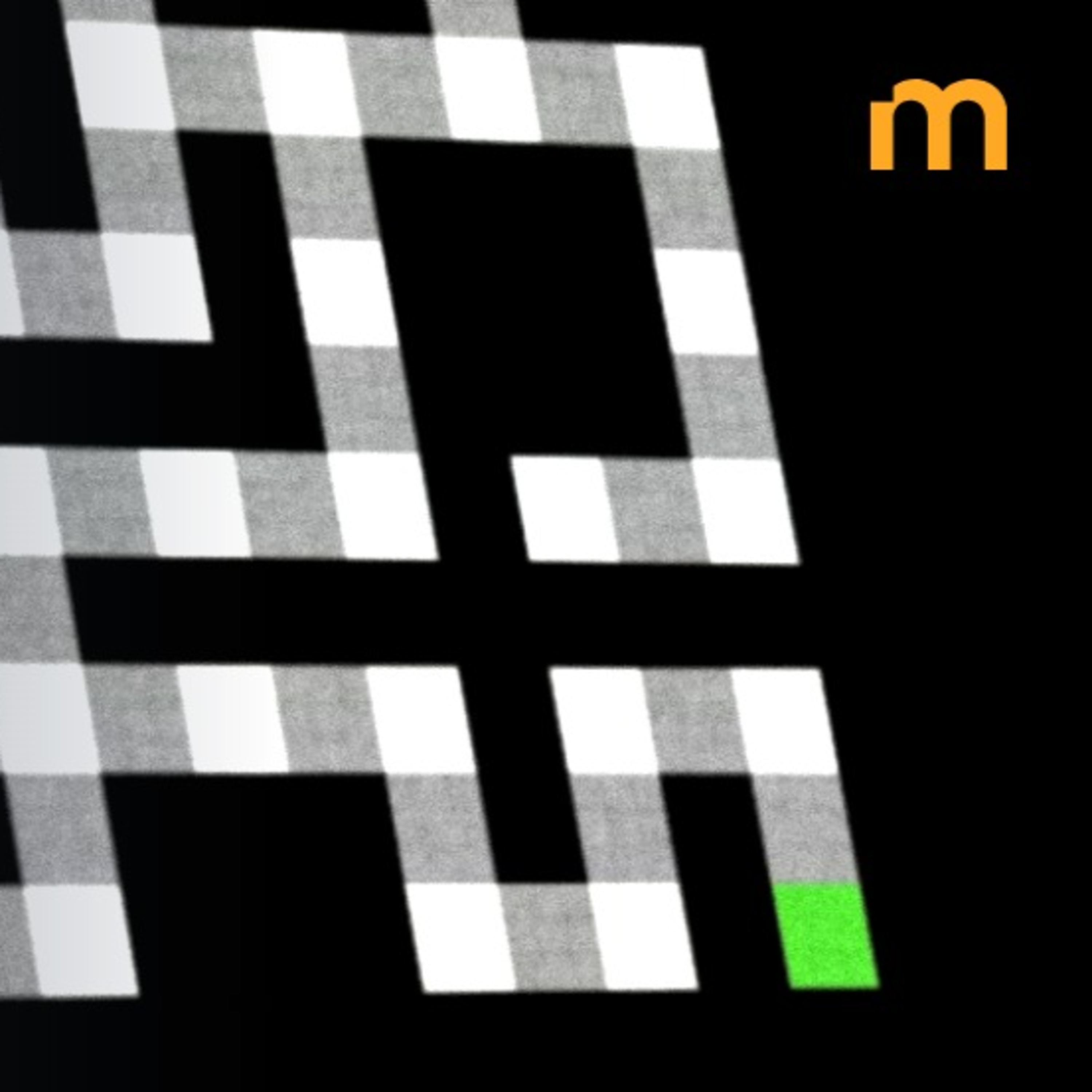
The Benchmark With No Instructions — ARC-AGI-3 (winning team!)
Tim Scarfe travels to Zurich to sit down with the Tufa Labs ARC-AGI-3 team — founder Benjamin Crouzier, with Jeroen Cottaar, Dries Smit, Stefano Viel and Michal Tesnar — to work out what their leaderboard-topping system does and what the benchmark is really testing.The cut opens on the games: a walkthrough of the Locksmith game, where you read the rules of an unfamiliar world straight from raw fra

The Thermodynamic AI Computing Chip - Thomas Ahle
Thomas Ahle wants Normal Computing to be the Lovable for chip design: type your intent, and a swarm of agents carries it from design through optimisation, formalisation and verification to tape-out. To get there, his team at wrote their own open-source Verilog simulator, 580,000 lines in 43 days, because commercial EDA verifiers run about $10,000 per core and there are no decent open-source compil

He won a Nobel here for AlphaFold. Then he left. - John Jumper
This episode is sponsored by Notion. Learn more about Notion's Developer Platform today at https://notion.com/mlstProtein folding stalled biology for fifty years. A sequence of amino acids dictates a three-dimensional shape, but reading that shape meant a year and roughly $100,000 of crystallography per structure. Then AlphaFold 2 won CASP14 so decisively the organizers called the problem esse
When AI Decides You're a Threat — Brad Carson
Brad Carson was the Army's General Counsel, served two terms in Congress and was Acting Under Secretary of Defense for Personnel and Readiness. He now heads Americans for Responsible Innovation, the AI-policy advocacy group he co-founded. Keith Duggar spends roughly eighty minutes pushing back.SPONSOR:---Cyber Fund built the Monastery to help founders ship products that were impossible a year ago.

Intelligence is collective, not artificial — Prof. Michael I. Jordan (UC Berkeley / Inria)
Michael I. Jordan, described by Science magazine as the most influential computer scientist alive, has never thought of himself as an AI researcher. In this conversation he explains why that distinction matters.SPONSOR:---Cyber Fund built the Monastery to help founders ship products that were impossible a year ago. Applications for Batch 1 are now open.Apply now: https://cyber.fund---Jordan traine
![The AI Models Smart Enough to Know They're Cheating — Beth Barnes & David Rein [METR]](https://d3t3ozftmdmh3i.cloudfront.net/staging/podcast_uploaded_episode/4981699/4981699-1777894865466-6073457253175.jpg)
The AI Models Smart Enough to Know They're Cheating — Beth Barnes & David Rein [METR]
Beth Barnes and David Rein on the one graph that ate the AI timelines discourse, and why the two people who built it are the most careful about how you read it.**SPONSOR**Prolific - Quality data. From real people. For faster breakthroughs.https://www.prolific.com/?utm_source=mlstInterview: https://youtu.be/cnxZZTl1tkk---Beth Barnes and David Rein from METR on the one graph that ate the AI timeline
When AI Discovers The Next Transformer - Robert Lange (Sakana)
Robert Lange, founding researcher at Sakana AI, joins Tim to discuss *Shinka Evolve* — a framework that combines LLMs with evolutionary algorithms to do open-ended program search. The core claim: systems like AlphaEvolve can optimize solutions to fixed problems, but real scientific progress requires co-evolving the problems themselves.GTC is coming, the premier AI conference, great opportunity to
"Vibe Coding is a Slot Machine" - Jeremy Howard
Dive into the realities of AI-assisted coding, the origins of modern fine-tuning, and the cognitive science behind machine learning with fast.ai founder Jeremy Howard. In this episode, we unpack why AI might be turning software engineering into a slot machine and how to maintain true technical intuition in the age of large language models.GTC is coming, the premier AI conference, great opportunity
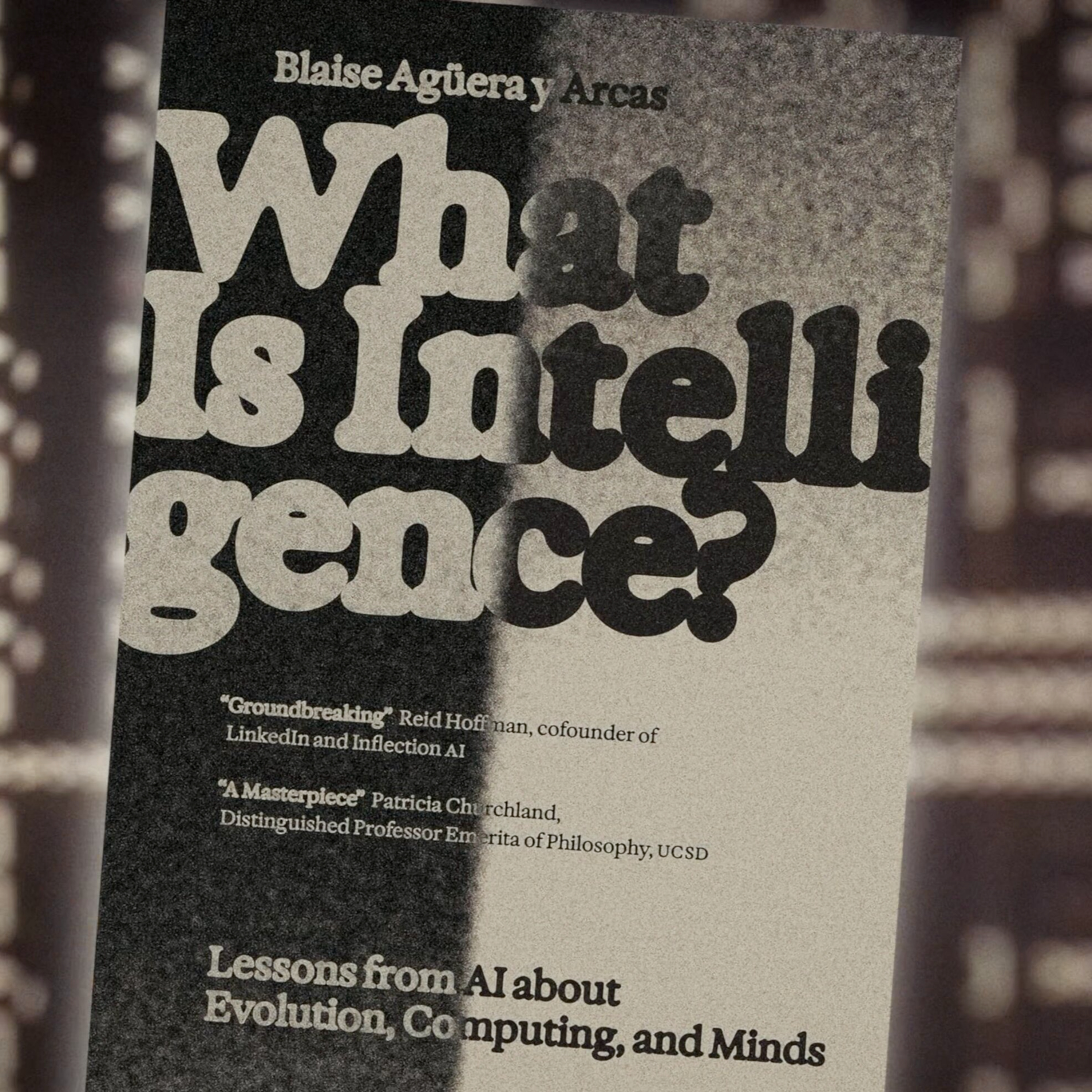
Evolution "Doesn't Need" Mutation - Blaise Agüera y Arcas
What if life itself is just a really sophisticated computer program that wrote itself into existence?Blaise Agüera y Arcas presenting at ALife 2025 — the most technically detailed public walkthrough of the ideas in his *What is Life?* and *What is Intelligence?* books that we've come across.He covers the BFF experiments (self-replicating programs emerging spontaneously from random noise), the
![VAEs Are Energy-Based Models? [Dr. Jeff Beck]](https://d3t3ozftmdmh3i.cloudfront.net/staging/podcast_uploaded_episode/4981699/4981699-1769335228067-f8b24f63a90ce.jpg)
VAEs Are Energy-Based Models? [Dr. Jeff Beck]
What makes something truly *intelligent?* Is a rock an agent? Could a perfect simulation of your brain actually *be* you? In this fascinating conversation, Dr. Jeff Beck takes us on a journey through the philosophical and technical foundations of agency, intelligence, and the future of AI.Jeff doesn't hold back on the big questions. He argues that from a purely mathematical perspective, there&
![Abstraction & Idealization: AI's Plato Problem [Mazviita Chirimuuta]](https://d3t3ozftmdmh3i.cloudfront.net/staging/podcast_uploaded_episode/4981699/4981699-1769164604861-4d213e7b7ad83.jpg)
Abstraction & Idealization: AI's Plato Problem [Mazviita Chirimuuta]
Professor Mazviita Chirimuuta joins us for a fascinating deep dive into the philosophy of neuroscience and what it really means to understand the mind.*What can neuroscience actually tell us about how the mind works?* In this thought-provoking conversation, we explore the hidden assumptions behind computational theories of the brain, the limits of scientific abstraction, and why the question of ma
![Why Every Brain Metaphor in History Has Been Wrong [SPECIAL EDITION]](https://d3t3ozftmdmh3i.cloudfront.net/staging/podcast_uploaded_episode/4981699/4981699-1769164243064-406a3829dadce.jpg)
Why Every Brain Metaphor in History Has Been Wrong [SPECIAL EDITION]
What if everything we think we know about the brain is just a really good metaphor that we forgot was a metaphor?This episode takes you on a journey through the history of scientific simplification, from a young Karl Friston watching wood lice in his garden to the bold claims that your mind is literally software running on biological hardware.We bring together some of the most brilliant minds we&#
![Bayesian Brain, Scientific Method, and Models [Dr. Jeff Beck]](https://d3t3ozftmdmh3i.cloudfront.net/staging/podcast_uploaded_episode/4981699/4981699-1767519058125-70e9deee2645.jpg)
Bayesian Brain, Scientific Method, and Models [Dr. Jeff Beck]
Dr. Jeff Beck, mathematician turned computational neuroscientist, joins us for a fascinating deep dive into why the future of AI might look less like ChatGPT and more like your own brain.**SPONSOR MESSAGES START**—Prolific - Quality data. From real people. For faster breakthroughs.https://www.prolific.com/?utm_source=mlst—**END***What if the key to building truly intelligent machines isn't bigger
![Your Brain is Running a Simulation Right Now [Max Bennett]](https://d3t3ozftmdmh3i.cloudfront.net/staging/podcast_uploaded_episode/4981699/4981699-1767079339335-a109222a5f86d.jpg)
Your Brain is Running a Simulation Right Now [Max Bennett]
Tim sits down with Max Bennett to explore how our brains evolved over 600 million years—and what that means for understanding both human intelligence and AI.Max isn't a neuroscientist by training. He's a tech entrepreneur who got curious, started reading, and ended up weaving together three fields that rarely talk to each other: comparative psychology (what different animals can actually d
![The 3 Laws of Knowledge [César Hidalgo]](https://d3t3ozftmdmh3i.cloudfront.net/staging/podcast_uploaded_episode/4981699/4981699-1766860551345-874e1b9b40007.jpg)
The 3 Laws of Knowledge [César Hidalgo]
César Hidalgo has spent years trying to answer a deceptively simple question: What is knowledge, and why is it so hard to move around?We all have this intuition that knowledge is just... information. Write it down in a book, upload it to GitHub, train an AI on it—done. But César argues that's completely wrong. Knowledge isn't a thing you can copy and paste. It's more like a living orga

"I Desperately Want To Live In The Matrix" - Dr. Mike Israetel
This is a lively, no-holds-barred debate about whether AI can truly be intelligent, conscious, or understand anything at all — and what happens when (or if) machines become smarter than us.Dr. Mike Israetel is a sports scientist, entrepreneur, and co-founder of RP Strength (a fitness company). He describes himself as a "dilettante" in AI but brings a fascinating outsider's perspectiv
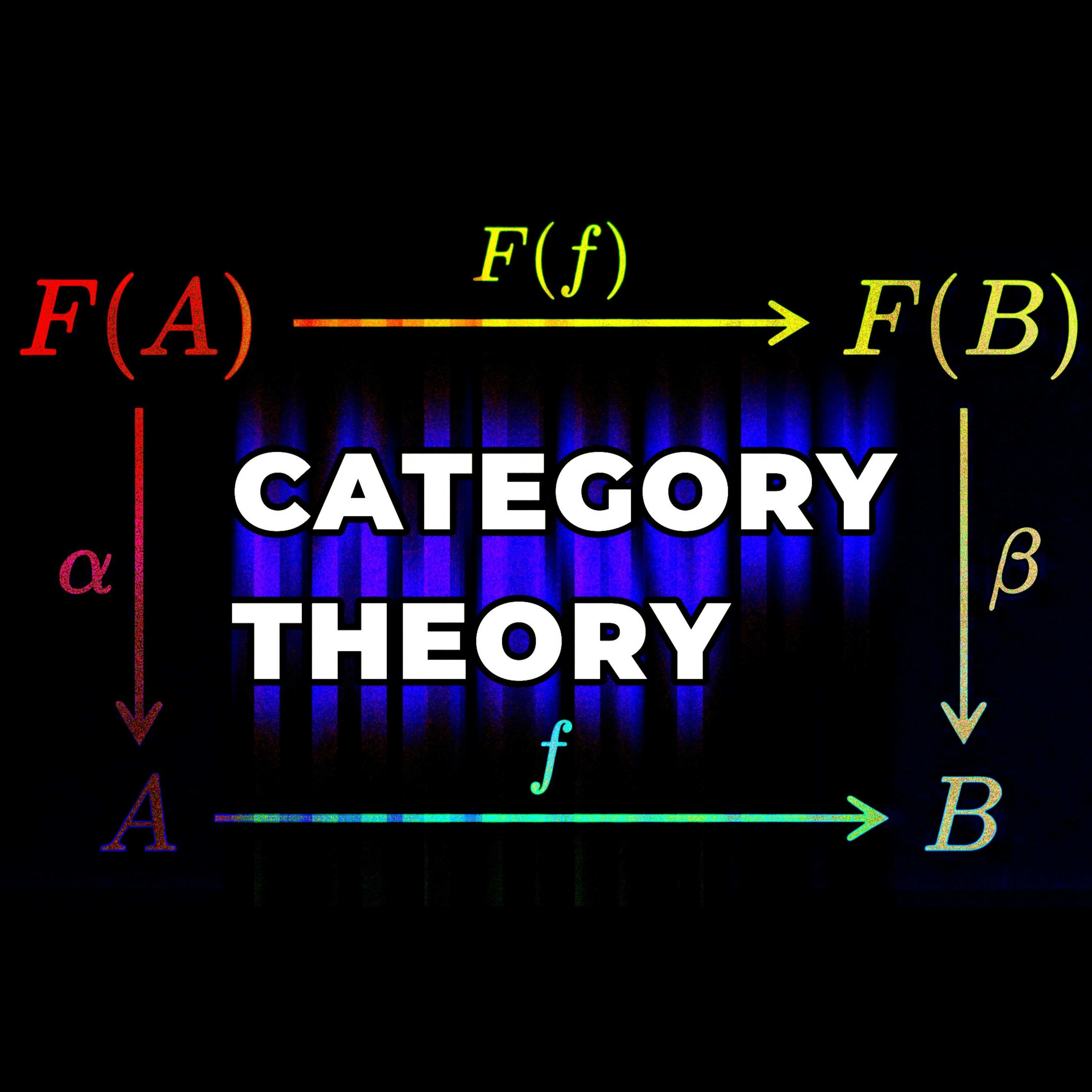
Making deep learning perform real algorithms with Category Theory (Andrew Dudzik, Petar Velichkovich, Taco Cohen, Bruno Gavranović, Paul Lessard)
We often think of Large Language Models (LLMs) as all-knowing, but as the team reveals, they still struggle with the logic of a second-grader. Why can’t ChatGPT reliably add large numbers? Why does it "hallucinate" the laws of physics? The answer lies in the architecture. This episode explores how *Category Theory* —an ultra-abstract branch of mathematics—could provide the "Periodic Table" for neu
![Are AI Benchmarks Telling The Full Story? [SPONSORED] (Andrew Gordon and Nora Petrova - Prolific)](https://d3t3ozftmdmh3i.cloudfront.net/staging/podcast_uploaded_episode/4981699/4981699-1766264087784-851fc964a7661.jpg)
Are AI Benchmarks Telling The Full Story? [SPONSORED] (Andrew Gordon and Nora Petrova - Prolific)
Is a car that wins a Formula 1 race the best choice for your morning commute? Probably not. In this sponsored deep dive with Prolific, we explore why the same logic applies to Artificial Intelligence. While models are currently shattering records on technical exams, they often fail the most important test of all: **the human experience.**Why High Benchmark Scores Don’t Mean Better AIJoining us are
![The Mathematical Foundations of Intelligence [Professor Yi Ma]](https://d3t3ozftmdmh3i.cloudfront.net/staging/podcast_uploaded_episode/4981699/4981699-1765664086120-8602b5bc645a1.jpg)
The Mathematical Foundations of Intelligence [Professor Yi Ma]
What if everything we think we know about AI understanding is wrong? Is compression the key to intelligence? Or is there something more—a leap from memorization to true abstraction? In this fascinating conversation, we sit down with **Professor Yi Ma**—world-renowned expert in deep learning, IEEE/ACM Fellow, and author of the groundbreaking new book *Learning Deep Representations of Data Distribut
Pedro Domingos: Tensor Logic Unifies AI Paradigms
Pedro Domingos, author of the bestselling book "The Master Algorithm," introduces his latest work: Tensor Logic - a new programming language he believes could become the fundamental language for artificial intelligence.Think of it like this: Physics found its language in calculus. Circuit design found its language in Boolean logic. Pedro argues that AI has been missing its language - unt
![He Co-Invented the Transformer. Now: Continuous Thought Machines - Llion Jones and Luke Darlow [Sakana AI]](https://d3t3ozftmdmh3i.cloudfront.net/staging/podcast_uploaded_episode/4981699/4981699-1763918480508-6b65ec4dfad2b.jpg)
He Co-Invented the Transformer. Now: Continuous Thought Machines - Llion Jones and Luke Darlow [Sakana AI]
The Transformer architecture (which powers ChatGPT and nearly all modern AI) might be trapping the industry in a localized rut, preventing us from finding true intelligent reasoning, according to the person who co-invented it. Llion Jones and Luke Darlow, key figures at the research lab Sakana AI, join the show to make this provocative argument, and also introduce new research which might lead the
![Why Humans Are Still Powering AI [Sponsored]](https://d3t3ozftmdmh3i.cloudfront.net/staging/podcast_uploaded_episode/4981699/4981699-1762130531151-b25593d2e6fc3.jpg)
Why Humans Are Still Powering AI [Sponsored]
Ever wonder where AI models actually get their "intelligence"? We reveal the dirty secret of Silicon Valley: behind every impressive AI system are thousands of real humans providing crucial data, feedback, and expertise.Guest: Phelim Bradley, CEO and Co-founder of ProlificPhelim Bradley runs Prolific, a platform that connects AI companies with verified human experts who help train and ev
![The Universal Hierarchy of Life - Prof. Chris Kempes [SFI]](https://d3t3ozftmdmh3i.cloudfront.net/staging/podcast_uploaded_episode/4981699/4981699-1761389525347-aa00a453b8ad9.jpg)
The Universal Hierarchy of Life - Prof. Chris Kempes [SFI]
"What is life?" - asks Chris Kempes, a professor at the Santa Fe Institute.Chris explains that scientists are moving beyond a purely Earth-based, biological view and are searching for a universal theory of life that could apply to anything, anywhere in the universe. He proposes that things we don't normally consider "alive"—like human culture, language, or even artificial i
Google Researcher Shows Life "Emerges From Code" - Blaise Agüera y Arcas
Blaise Agüera y Arcas explores some mind-bending ideas about what intelligence and life really are—and why they might be more similar than we think (filmed at ALIFE conference, 2025 - https://2025.alife.org/).Life and intelligence are both fundamentally computational (he says). From the very beginning, living things have been running programs. Your DNA? It's literally a computer program, and t
![The Secret Engine of AI - Prolific [Sponsored] (Sara Saab, Enzo Blindow)](https://d3t3ozftmdmh3i.cloudfront.net/staging/podcast_uploaded_episode/4981699/4981699-1760796298029-c4a7d8b4ae19c.jpg)
The Secret Engine of AI - Prolific [Sponsored] (Sara Saab, Enzo Blindow)
We sat down with Sara Saab (VP of Product at Prolific) and Enzo Blindow (VP of Data and AI at Prolific) to explore the critical role of human evaluation in AI development and the challenges of aligning AI systems with human values. Prolific is a human annotation and orchestration platform for AI used by many of the major AI labs. This is a sponsored show in partnership with Prolific. **SPONSOR MES
AI Agents Can Code 10,000 Lines of Hacking Tools In Seconds - Dr. Ilia Shumailov (ex-GDM)
Dr. Ilia Shumailov - Former DeepMind AI Security Researcher, now building security tools for AI agentsEver wondered what happens when AI agents start talking to each other—or worse, when they start breaking things? Ilia Shumailov spent years at DeepMind thinking about exactly these problems, and he's here to explain why securing AI is way harder than you think.**SPONSOR MESSAGES**—Check out no
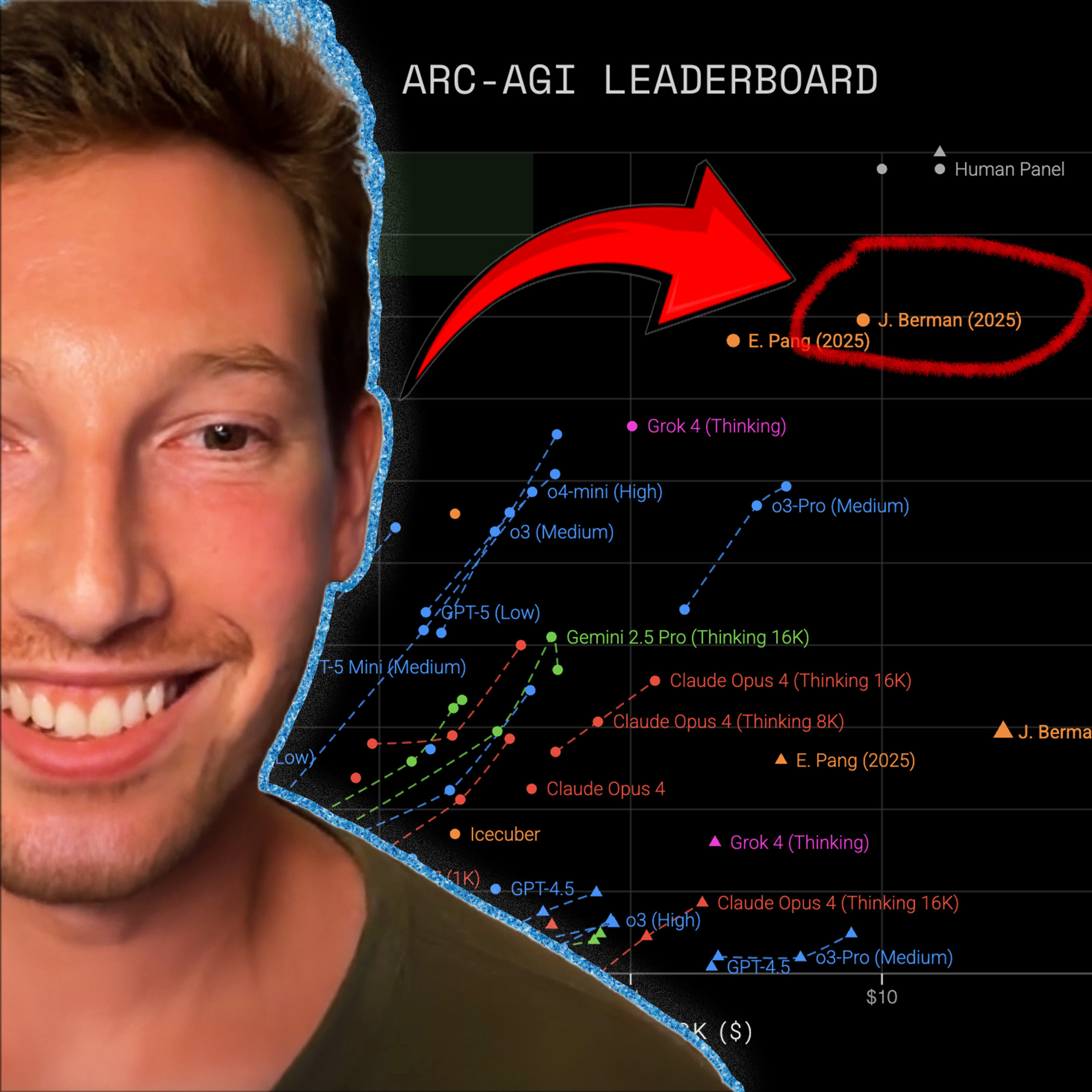
New top score on ARC-AGI-2-pub (29.4%) - Jeremy Berman
We need AI systems to synthesise new knowledge, not just compress the data they see. Jeremy Berman, is a research scientist at Reflection AI and recent winner of the ARC-AGI v2 public leaderboard.**SPONSOR MESSAGES**—Take the Prolific human data survey - https://www.prolific.com/humandatasurvey?utm_source=mlst and be the first to see the results and benchmark their practices against the wider comm
Deep Learning is Not So Mysterious or Different - Prof. Andrew Gordon Wilson (NYU)
Professor Andrew Wilson from NYU explains why many common-sense ideas in artificial intelligence might be wrong. For decades, the rule of thumb in machine learning has been to fear complexity. The thinking goes: if your model has too many parameters (is "too complex") for the amount of data you have, it will "overfit" by essentially memorizing the data instead of learning the u

Karl Friston - Why Intelligence Can't Get Too Large (Goldilocks principle)
In this episode, hosts Tim and Keith finally realize their long-held dream of sitting down with their hero, the brilliant neuroscientist Professor Karl Friston. The conversation is a fascinating and mind-bending journey into Professor Friston's life's work, the Free Energy Principle, and what it reveals about life, intelligence, and consciousness itself.**SPONSORS**Gemini CLI is an open-so
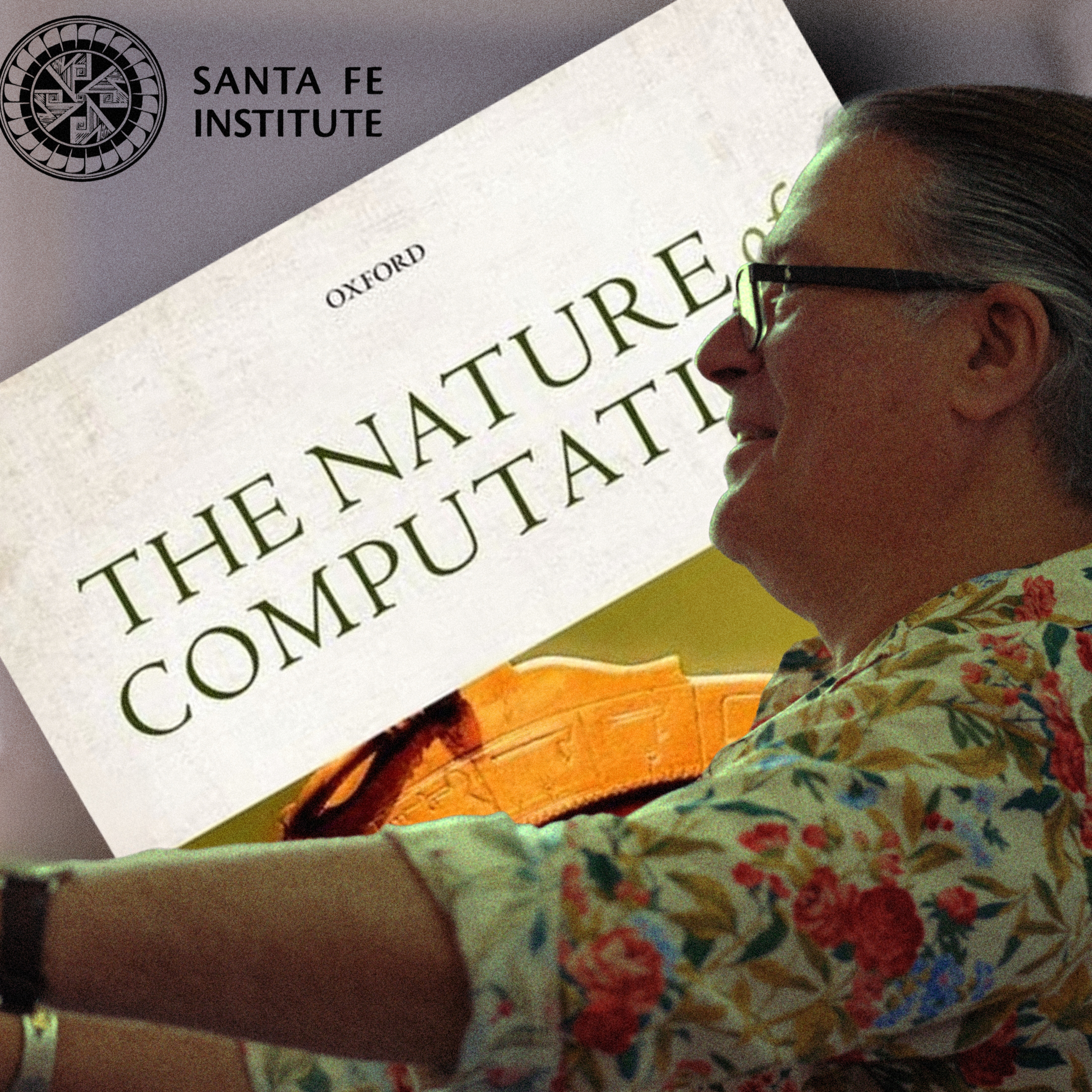
The Day AI Solves My Puzzles Is The Day I Worry (Prof. Cristopher Moore)
We are joined by Cristopher Moore, a professor at the Santa Fe Institute with a diverse background in physics, computer science, and machine learning.The conversation begins with Cristopher, who calls himself a "frog" explaining that he prefers to dive deep into specific, concrete problems rather than taking a high-level "bird's-eye view". They explore why current AI models
Michael Timothy Bennett: Defining Intelligence and AGI Approaches
Dr. Michael Timothy Bennett is a computer scientist who's deeply interested in understanding artificial intelligence, consciousness, and what it means to be alive. He's known for his provocative paper "What the F*** is Artificial Intelligence" which challenges conventional thinking about AI and intelligence.**SPONSOR MESSAGES***Prolific: Quality data. From real people. For faster

Superintelligence Strategy (Dan Hendrycks)
Deep dive with Dan Hendrycks, a leading AI safety researcher and co-author of the "Superintelligence Strategy" paper with former Google CEO Eric Schmidt and Scale AI CEO Alexandr Wang.*** SPONSOR MESSAGESGemini CLI is an open-source AI agent that brings the power of Gemini directly into your terminal - https://github.com/google-gemini/gemini-cliProlific: Quality data. From real people. F
![DeepMind Genie 3 [World Exclusive] (Jack Parker Holder, Shlomi Fruchter)](https://d3t3ozftmdmh3i.cloudfront.net/staging/podcast_uploaded_episode/4981699/4981699-1754404123587-11ae564331fec.jpg)
DeepMind Genie 3 [World Exclusive] (Jack Parker Holder, Shlomi Fruchter)
This episode features Shlomi Fuchter and Jack Parker Holder from Google DeepMind, who are unveiling a new AI called Genie 3. The host, Tim Scarfe, describes it as the most mind-blowing technology he has ever seen. We were invited to their offices to conduct the interview (not sponsored).Imagine you could create a video game world just by describing it. That's what Genie 3 does. It's an AI
Large Language Models and Emergence: A Complex Systems Perspective (Prof. David C. Krakauer)
Prof. David Krakauer, President of the Santa Fe Institute argues that we are fundamentally confusing knowledge with intelligence, especially when it comes to AI.He defines true intelligence as the ability to do more with less—to solve novel problems with limited information. This is contrasted with current AI models, which he describes as doing less with more; they require astounding amounts of da

Pushing compute to the limits of physics
Dr. Maxwell Ramstead grills Guillaume Verdon (AKA “Beff Jezos”) who's the founder of Thermodynamic computing startup Extropic.Guillaume shares his unique path – from dreaming about space travel as a kid to becoming a physicist, then working on quantum computing at Google, to developing a radically new form of computing hardware for machine learning. He explains how he hit roadblocks with tradi
The Fractured Entangled Representation Hypothesis (Kenneth Stanley, Akarsh Kumar)
Are the AI models you use today imposters?Please watch the intro video we did before this: https://www.youtube.com/watch?v=o1q6Hhz0MAgIn this episode, hosts Dr. Tim Scarfe and Dr. Duggar are joined by AI researcher Prof. Kenneth Stanley and MIT PhD student Akash Kumar to discuss their fascinating paper, "Questioning Representational Optimism in Deep Learning."Imagine you ask two people t
The Fractured Entangled Representation Hypothesis (Intro)
What if today's incredible AI is just a brilliant "impostor"? This episode features host Dr. Tim Scarfe in conversation with guests Prof. Kenneth Stanley (ex-OpenAI), Dr. Keith Duggar (MIT), and Arkash Kumar (MIT).While AI today produces amazing results on the surface, its internal understanding is a complete mess, described as "total spaghetti" [00:00:49]. This is because

Three Red Lines We're About to Cross Toward AGI (Daniel Kokotajlo, Gary Marcus, Dan Hendrycks)
What if the most powerful technology in human history is being built by people who openly admit they don't trust each other? In this explosive 2-hour debate, three AI experts pull back the curtain on the shocking psychology driving the race to Artificial General Intelligence—and why the people building it might be the biggest threat of all. Kokotajlo predicts AGI by 2028 based on compute scali
How AI Learned to Talk and What It Means - Prof. Christopher Summerfield
We interview Professor Christopher Summerfield from Oxford University about his new book "These Strange New Minds: How AI Learned to Talk and What It". AI learned to understand the world just by reading text - something scientists thought was impossible. You don't need to see a cat to know what one is; you can learn everything from words alone. This is "the most astonishing scie

"Blurring Reality" - Chai's Social AI Platform (SPONSORED)
"Blurring Reality" - Chai's Social AI Platform - sponsoredThis episode of MLST explores the groundbreaking work of Chai, a social AI platform that quietly built one of the world's largest AI companion ecosystems before ChatGPT's mainstream adoption. With over 10 million active users and just 13 engineers serving 2 trillion tokens per day, Chai discovered the massive appetite

Google AlphaEvolve - Discovering new science (exclusive interview)
Today GoogleDeepMind released AlphaEvolve: a Gemini coding agent for algorithm discovery. It beat the famous Strassen algorithm for matrix multiplication set 56 years ago. Google has been killing it recently. We had early access to the paper and interviewed the researchers behind the work.AlphaEvolve: A Gemini-powered coding agent for designing advanced algorithmshttps://deepmind.google/discover/b

Prof. Randall Balestriero - LLMs without pretraining and SSL
Randall Balestriero joins the show to discuss some counterintuitive findings in AI. He shares research showing that huge language models, even when started from scratch (randomly initialized) without massive pre-training, can learn specific tasks like sentiment analysis surprisingly well, train stably, and avoid severe overfitting, sometimes matching the performance of costly pre-trained models. T

How Machines Learn to Ignore the Noise (Kevin Ellis + Zenna Tavares)
Prof. Kevin Ellis and Dr. Zenna Tavares talk about making AI smarter, like humans. They want AI to learn from just a little bit of information by actively trying things out, not just by looking at tons of data.They discuss two main ways AI can "think": one way is like following specific rules or steps (like a computer program), and the other is more intuitive, like guessing based on patt

Eiso Kant (CTO poolside) - Superhuman Coding Is Coming!
Eiso Kant, CTO of poolside AI, discusses the company's approach to building frontier AI foundation models, particularly focused on software development. Their unique strategy is reinforcement learning from code execution feedback which is an important axis for scaling AI capabilities beyond just increasing model size or data volume. Kant predicts human-level AI in knowledge work could be achie

The Compendium - Connor Leahy and Gabriel Alfour
Connor Leahy and Gabriel Alfour, AI researchers from Conjecture and authors of "The Compendium," joinus for a critical discussion centered on Artificial Superintelligence (ASI) safety and governance. Drawing from their comprehensive analysis in "The Compendium," they articulate a stark warning about the existential risks inherent in uncontrolled AI development, framing it throu

ARC Prize v2 Launch! (Francois Chollet and Mike Knoop)
We are joined by Francois Chollet and Mike Knoop, to launch the new version of the ARC prize! In version 2, the challenges have been calibrated with humans such that at least 2 humans could solve each task in a reasonable task, but also adversarially selected so that frontier reasoning models can't solve them. The best LLMs today get negligible performance on this challenge. https://arcprize.

Test-Time Adaptation: the key to reasoning with DL (Mohamed Osman)
Mohamed Osman joins to discuss MindsAI's highest scoring entry to the ARC challenge 2024 and the paradigm of test-time fine-tuning. They explore how the team, now part of Tufa Labs in Zurich, achieved state-of-the-art results using a combination of pre-training techniques, a unique meta-learning strategy, and an ensemble voting mechanism. Mohamed emphasizes the importance of raw data input and

GSMSymbolic paper - Iman Mirzadeh (Apple)
Iman Mirzadeh from Apple, who recently published the GSM-Symbolic paper discusses the crucial distinction between intelligence and achievement in AI systems. He critiques current AI research methodologies, highlighting the limitations of Large Language Models (LLMs) in reasoning and knowledge representation. SPONSOR MESSAGES:***Tufa AI Labs is a brand new research lab in Zurich started by Benjamin

Reasoning, Robustness, and Human Feedback in AI - Max Bartolo (Cohere)
Dr. Max Bartolo from Cohere discusses machine learning model development, evaluation, and robustness. Key topics include model reasoning, the DynaBench platform for dynamic benchmarking, data-centric AI development, model training challenges, and the limitations of human feedback mechanisms. The conversation also covers technical aspects like influence functions, model quantization, and the PRISM

Tau Language: The Software Synthesis Future (sponsored)
This sponsored episode features mathematician Ohad Asor discussing logical approaches to AI, focusing on the limitations of machine learning and introducing the Tau language for software development and blockchain tech. Asor argues that machine learning cannot guarantee correctness. Tau allows logical specification of software requirements, automatically creating provably correct implementations w

John Palazza - Vice President of Global Sales @ CentML ( sponsored)
John Palazza from CentML joins us in this sponsored interview to discuss the critical importance of infrastructure optimization in the age of Large Language Models and Generative AI. We explore how enterprises can transition from the innovation phase to production and scale, highlighting the significance of efficient GPU utilization and cost management. The conversation covers the open-source vers

Transformers Need Glasses! - Federico Barbero
Federico Barbero (DeepMind/Oxford) is the lead author of "Transformers Need Glasses!". Have you ever wondered why LLMs struggle with seemingly simple tasks like counting or copying long strings of text? We break down the theoretical reasons behind these failures, revealing architectural bottlenecks and the challenges of maintaining information fidelity across extended contexts.Federico e

Sakana AI - Chris Lu, Robert Tjarko Lange, Cong Lu
We speak with Sakana AI, who are building nature-inspired methods that could fundamentally transform how we develop AI systems.The guests include Chris Lu, a researcher who recently completed his DPhil at Oxford University under Prof. Jakob Foerster's supervision, where he focused on meta-learning and multi-agent systems. Chris is the first author of the DiscoPOP paper, which demonstrates how

Clement Bonnet - Can Latent Program Networks Solve Abstract Reasoning?
Clement Bonnet discusses his novel approach to the ARC (Abstraction and Reasoning Corpus) challenge. Unlike approaches that rely on fine-tuning LLMs or generating samples at inference time, Clement's method encodes input-output pairs into a latent space, optimizes this representation with a search algorithm, and decodes outputs for new inputs. This end-to-end architecture uses a VAE loss, incl

Prof. Jakob Foerster - ImageNet Moment for Reinforcement Learning?
Prof. Jakob Foerster, a leading AI researcher at Oxford University and Meta, and Chris Lu, a researcher at OpenAI -- they explain how AI is moving beyond just mimicking human behaviour to creating truly intelligent agents that can learn and solve problems on their own. Foerster champions open-source AI for responsible, decentralised development. He addresses AI scaling, goal misalignment (Goodhart

Daniel Franzen & Jan Disselhoff - ARC Prize 2024 winners
Daniel Franzen and Jan Disselhoff, the "ARChitects" are the official winners of the ARC Prize 2024. Filmed at Tufa Labs in Zurich - they revealed how they achieved a remarkable 53.5% accuracy by creatively utilising large language models (LLMs) in new ways. Discover their innovative techniques, including depth-first search for token selection, test-time training, and a novel augmentation

Sepp Hochreiter - LSTM: The Comeback Story?
Sepp Hochreiter, the inventor of LSTM (Long Short-Term Memory) networks – a foundational technology in AI. Sepp discusses his journey, the origins of LSTM, and why he believes his latest work, XLSTM, could be the next big thing in AI, particularly for applications like robotics and industrial simulation. He also shares his controversial perspective on Large Language Models (LLMs) and why reasoning

Want to Understand Neural Networks? Think Elastic Origami! - Prof. Randall Balestriero
Professor Randall Balestriero joins us to discuss neural network geometry, spline theory, and emerging phenomena in deep learning, based on research presented at ICML. Topics include the delayed emergence of adversarial robustness in neural networks ("grokking"), geometric interpretations of neural networks via spline theory, and challenges in reconstruction learning. We also cover geome

Nicholas Carlini (Google DeepMind)
Nicholas Carlini from Google DeepMind offers his view of AI security, emergent LLM capabilities, and his groundbreaking model-stealing research. He reveals how LLMs can unexpectedly excel at tasks like chess and discusses the security pitfalls of LLM-generated code.
SPONSOR MESSAGES:
***
CentML offers competitive pricing for GenAI model deployment, with flexible options to suit a wide range of m

Subbarao Kambhampati - Do o1 models search?
Join Prof. Subbarao Kambhampati and host Tim Scarfe for a deep dive into OpenAI's O1 model and the future of AI reasoning systems.
* How O1 likely uses reinforcement learning similar to AlphaGo, with hidden reasoning tokens that users pay for but never see
* The evolution from traditional Large Language Models to more sophisticated reasoning systems
* The concept of "fractal intelligenc

How Do AI Models Actually Think? - Laura Ruis
Laura Ruis, a PhD student at University College London and researcher at Cohere, explains her groundbreaking research into how large language models (LLMs) perform reasoning tasks, the fundamental mechanisms underlying LLM reasoning capabilities, and whether these models primarily rely on retrieval or develop procedural knowledge.
SPONSOR MESSAGES:
***
CentML offers competitive pricing for GenAI

Jurgen Schmidhuber on Humans co-existing with AIs
Jürgen Schmidhuber, the father of generative AI, challenges current AI narratives, revealing that early deep learning work is in his opinion misattributed, where it actually originated in Ukraine and Japan. He discusses his early work on linear transformers and artificial curiosity which preceded modern developments, shares his expansive vision of AI colonising space, and explains his groundbreaki

Yoshua Bengio - Designing out Agency for Safe AI
Professor Yoshua Bengio is a pioneer in deep learning and Turing Award winner. Bengio talks about AI safety, why goal-seeking “agentic” AIs might be dangerous, and his vision for building powerful AI tools without giving them agency. Topics include reward tampering risks, instrumental convergence, global AI governance, and how non-agent AIs could revolutionize science and medicine while reducing e

Francois Chollet - ARC reflections - NeurIPS 2024
François Chollet discusses the outcomes of the ARC-AGI (Abstraction and Reasoning Corpus) Prize competition in 2024, where accuracy rose from 33% to 55.5% on a private evaluation set.
SPONSOR MESSAGES:
***
CentML offers competitive pricing for GenAI model deployment, with flexible options to suit a wide range of models, from small to large-scale deployments.
https://centml.ai/pricing/
Tufa AI L

Jeff Clune - Agent AI Needs Darwin
AI professor Jeff Clune ruminates on open-ended evolutionary algorithms—systems designed to generate novel and interesting outcomes forever. Drawing inspiration from nature’s boundless creativity, Clune and his collaborators aim to build “Darwin Complete” search spaces, where any computable environment can be simulated. By harnessing the power of large language models and reinforcement learning, t

Neel Nanda - Mechanistic Interpretability (Sparse Autoencoders)
Neel Nanda, a senior research scientist at Google DeepMind, leads their mechanistic interpretability team. In this extensive interview, he discusses his work trying to understand how neural networks function internally. At just 25 years old, Nanda has quickly become a prominent voice in AI research after completing his pure mathematics degree at Cambridge in 2020.
Nanda reckons that machine learn

Jonas Hübotter (ETH) - Test Time Inference
Jonas Hübotter, PhD student at ETH Zurich's Institute for Machine Learning, discusses his groundbreaking research on test-time computation and local learning. He demonstrates how smaller models can outperform larger ones by 30x through strategic test-time computation and introduces a novel paradigm combining inductive and transductive learning approaches.
Using Bayesian linear regression as a sur

How AI Could Be A Mathematician's Co-Pilot by 2026 (Prof. Swarat Chaudhuri)
Professor Swarat Chaudhuri from the University of Texas at Austin and visiting researcher at Google DeepMind discusses breakthroughs in AI reasoning, theorem proving, and mathematical discovery. Chaudhuri explains his groundbreaking work on COPRA (a GPT-based prover agent), shares insights on neurosymbolic approaches to AI.
Professor Swarat Chaudhuri:
https://www.cs.utexas.edu/~swarat/
SPONSOR M

Nora Belrose - AI Development, Safety, and Meaning
Nora Belrose, Head of Interpretability Research at EleutherAI, discusses critical challenges in AI safety and development. The conversation begins with her technical work on concept erasure in neural networks through LEACE (LEAst-squares Concept Erasure), while highlighting how neural networks' progression from simple to complex learning patterns could have important implications for AI safety.
M

Why Your GPUs are underutilised for AI - CentML CEO Explains
Prof. Gennady Pekhimenko (CEO of CentML, UofT) joins us in this *sponsored episode* to dive deep into AI system optimization and enterprise implementation. From NVIDIA's technical leadership model to the rise of open-source AI, Pekhimenko shares insights on bridging the gap between academic research and industrial applications. Learn about "dark silicon," GPU utilization challenges in ML workloads
Recommended

Jubal Phone Pranks from The Jubal Show

TopMusic Piano Podcast

CBS Evening News

The Daily

World News Tonight with David Muir

The Joe Rogan Experience
TED Talks Daily

English Vocabulary Help

Talk About Talk - Executive & Leadership Communication Skills

Learn English B1 with Daily News | English Listening Practice

Stand In The Circle

This Past Weekend w/ Theo Von
