Renaissance English History Podcast: A Show About the Tudors
Renaissance England was a bustling and exciting place...new religion! break with rome! wars with Scotland! And France! And Spain! The birth of the modern world! In this weekly podcast I'll explore one aspect of life in 16th century England that will give you a deeper understanding of this most exciting time.
Episodes

How Women Lost Their Magic (Medieval Charms to the Pendle Witches)
Long before anyone in England was hanged as a witch, ordinary women had a magic of their own. They wrapped parchment girdles covered in prayers around their bellies in labor. They borrowed holy relics from the parish like library books. They baked cakes in total silence on St Agnes’ Eve, hoping to dream of the man they’d marry. Nobody called them witches. It was just how you got through life.
In

I Stayed in a 700-Year-Old Coaching Inn Where Dickens (Maybe) Wrote Pickwick
This summer I travelled around the south of England staying in historic inns, and stop number three was the White Horse in Dorking, Surrey. There's been a building on this spot since at least 1278, when it belonged to the Knights Hospitaller, and it later became one of the big coaching inns on the road from London to Horsham.
We got there way too early to check in, so we played board games at Gam
Henry VIII's Playbook for Taking Over the Church
Henry VIII didn't dismantle the Church in England. He took it over, one step at a time, and the plan looks an awful lot like a hostile corporate takeover. Squeeze the leadership, take the board, cut off Rome, audit everything, find some dirt, close the small houses first, and then come for the big ones.
In this episode I walk through the whole playbook, from the 1531 fine on the clergy to the a
Melancholy, Mutton Candles and Banned Bells: How the Tudors Faced the Dark
By All Saints' Day in Tudor London, the sun was down by quarter past four. In the final episode of our autumn series, we find out how the Tudors got ready for the long dark, in their bodies, in their homes, and in their hearts.
We start with the health books. Sir Thomas Elyot warned that autumn was "dangerous to all ages, all natures, and all countries," and Andrew Boorde had a whole diet for mel
From Farm Servant to Queen: How Every Tudor Got Ready for Autumn
Every September, all of Tudor England was on the move. In episode 3 of our autumn series, we climb the social ladder one rung at a time, from a seventeen-year-old farm servant looking for next year's job all the way up to Queen Elizabeth watching sea gods row across a lake that was dug just for her.
On the way, we find out why quitting your job without a written testimonial could land you in pris

Thomas Tusser's Tudor To-Do List for Autumn (Written Entirely in Rhyme)
The harvest is in. Now what? In episode 2 of our autumn series, we head out into the Tudor village with the best guide I could possibly have found: Thomas Tusser, a former choirboy and court musician who walked away from court, became a Suffolk farmer, and wrote an entire farming manual in rhyme.
We crash a harvest home celebration spotted near Windsor by a German traveller in 1598, follow the
Why Tudor Tenants Brought Their Landlord a Goose (Michaelmas Explained)
September 29th was one of the biggest days of the Tudor year, and most of us have never heard of it. Michaelmas, the feast of St Michael and All Angels, was when rent came due, farm servants' contracts ran out, London chose its Lord Mayor, and the lawyers and students all headed back to town. It was also goose day, and the reason tenants turned up at the landlord's door with a goose under their ar

The Peasants' Revolt Was Crushed. So Why Did England Never Tax Like That Again?
The rebellion is over in three weeks. Wat Tyler is dead, the charters are revoked, John Ball is executed, and by every measure that historians usually use, the Peasants' Revolt failed completely. Except that the tax that started it was never levied again in the same way for a hundred and thirty two years.
The next general poll tax in England comes in 1513, under Henry VIII, and even then the go
The Day the Rebels Walked Into the Tower of London | Peasants' Revolt Part 3
In two weeks in June 1381, English peasants drove a Chief Justice out of Essex, took Rochester Castle, walked into Canterbury Cathedral, camped outside London, burned the richest palace in the country, and then walked into the Tower of London and beheaded the Archbishop of Canterbury. And a fourteen-year-old king rode out to meet them and said yes to everything they asked for.
This is Part 3 o
Where Did All the Women Go? The Tax That Started the Peasants' Revolt | Part 2
In 1377, England counted about 1,355,000 adults for a new poll tax. In 1381 it counted again and found about 896,000. There was no great plague, no famine and no invasion. So where did a third of the country go?
They were at home. Village after village sent in tax lists with far more men than women, because families had simply stopped telling the government their daughters, sisters and widowed mo
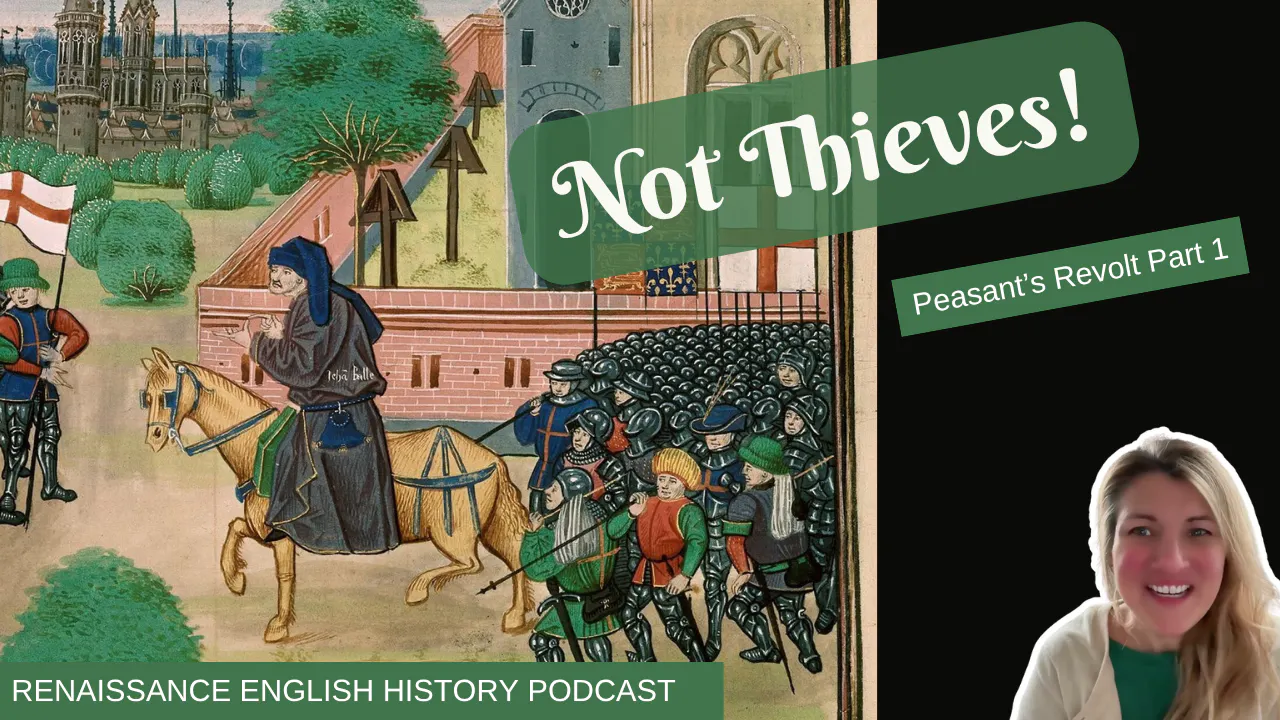
How Rain, Dead Cows and the Black Death Started the Peasants' Revolt
In June 1381, rebels broke into John of Gaunt's Savoy Palace, the wealthiest house in England. They smashed the gold plate, crushed the jewels with hammers and threw the silver in the Thames. According to one chronicler, when a man was caught stealing, his own side threw him into the fire.So how do ordinary villagers get to that point?
In Part 1 of a four-part series on the Peasants' Revolt, I g

What the Tudors Did When They Couldn't Control Anything
Every year in Tudor England, the weather warmed up and people wondered if this would be a plague year. On top of plague there was the sweating sickness, which could kill you between dinner and supper, plus a flu pandemic and years of failed harvests when bread prices tripled. So how did ordinary people live with that constant hum of "something terrible might happen"?
In this episode we go outbrea

The Monks Henry VIII Left Behind, Told in 200 Sonnets
What happens to your whole world when the king decides your faith is wrong? Richard Smith's new book, Beyond Where Words Can Go, follows two young Benedictine monks, a lord's youngest son and a foundling left on the monastery doorstep, through Henry VIII's dissolution of the monasteries and all the back and forth of the English Reformation. And it's told entirely in sonnets. Two hundred of them!
They Tried to Demolish Hampton Court. Then the Queen Died.
Learn more about your ad choices. Visit megaphone.fm/adchoices

Where Were You on 9/11? Walsingham in Paris, 1572
Twenty-five years ago today, I was at my desk in Soho, emailing my friends about Thanksgiving plans, when one of them told me to open Yahoo because something big was happening in New York. For the anniversary, I wanted to tell you where I was that day. Then I want to take you back to another morning that started out completely normal: Paris, August 1572.
The St. Bartholomew's Day Massacre began j

Henry VIII Lost at Cards to Anne Boleyn. It's in His Own Accounts.
In 1540, a printer in Venice published a beautiful, enormous book that let you tell your fortune with a deck of cards. The same year Henry VIII married Anne of Cleves, annulled it, and married Catherine Howard on the day Thomas Cromwell was executed.
So I went looking for the English version of that book. There isn't one. And working out why turned into a much better episode than the one I set ou

Murder at Crowhurst: A Tudor Cold Case
In August 1532 a charcoal burner named Robert Grame was murdered in a wood in Surrey. He worked alone, he carried a checkered board so he could count his money out there among the trees, and half the county seems to have known it.
What happened next is why we can still tell this story. The local justice of the peace, Sir John Gaynesford, was an old man who had no obligation to do any of this well
There's a Written Recipe for Henry VIII's Perfume
There is a written recipe for Henry VIII's perfume. It's in a 1608 book called A Closet for Ladies and Gentlewomen, and it's rosewater, sugar, musk, ambergris, and civet, boiled down softly for an entire day. I had no idea that existed until I sat down with Jen Siems of Immortal Perfumes, who has spent 14 years building fragrances out of archival research.
Jen is a self-taught perfumer and a form
The Rebellion That Started Because a Lawyer Paid a Bribe
In July 1549, a crowd in Norfolk showed up to tear down Robert Kett's fences. Instead of stopping them, he agreed with them, helped pull down his own hedges, and led them to Norwich. What followed was seven weeks of about 16,000 people running the county from a camp on Mousehold Heath, with a court, a supply system and a signed list of demands. It ended at the Battle of Dussindale on 27 August 154
What Things Actually Cost in Tudor England
Join me for Taste of TudorCon, a free online preview of this year's conference, on August 29th:
https://tudorcon.englandcast.com/tasteoftudorcon2026/
A skilled craftsman in early Tudor London earned sixpence for a day's work. I've been staring at that number for ages, because on its own it tells you nothing. Sixpence out of what? Buys what? Compared to whom?So I went digging, and it turns out if

The Tudors Were Obsessed With Troy (But Never Actually Read Homer)
I just watched Nolan's Odyssey and went down a rabbit hole: did the Tudors even know this story? Turns out, not the way you'd think.
For most of the dynasty, England's version of the Trojan War came from a completely different, largely invented medieval tradition, one that literally cut the gods out of the story. The real, translated Homer didn't arrive in English until the dynasty was basically
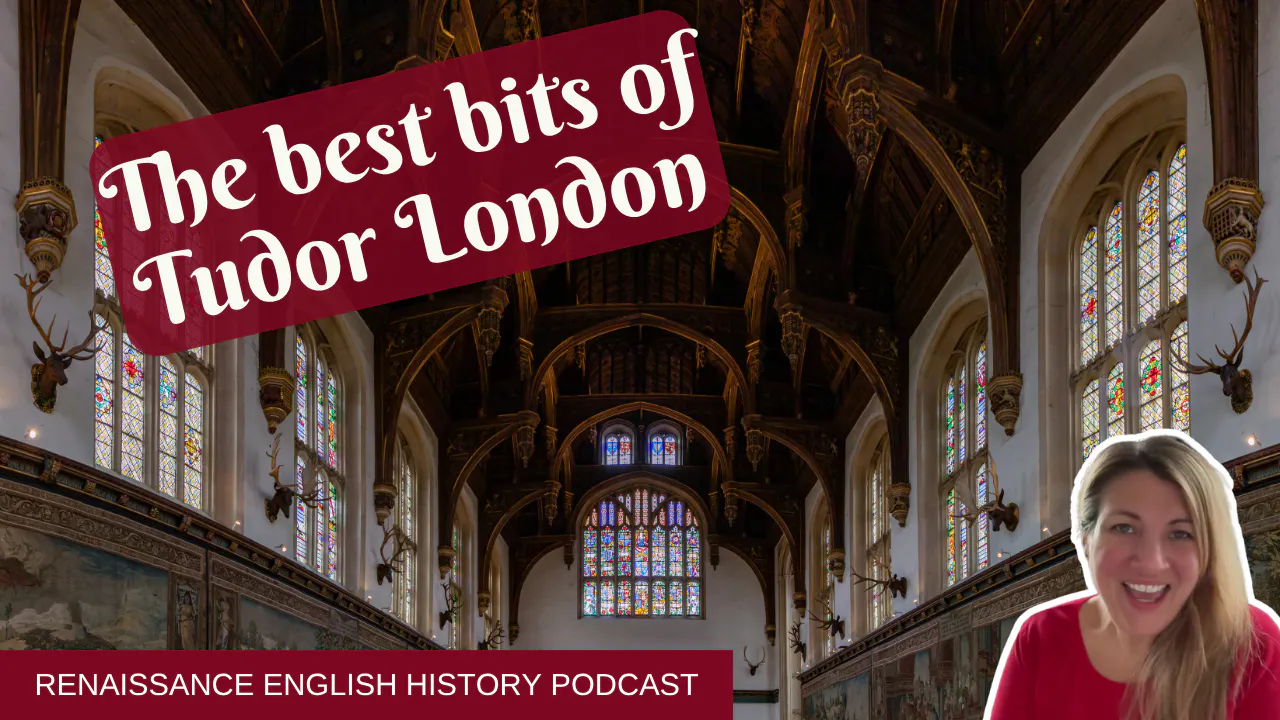
Two London Historians Show Me the Tudor City Everyone Walks Right Past
I got on a Zoom call with two Blue Badge guides from Context Travel, and by the end of it I had a list of about a dozen places in London I've never been and now desperately need to see.
Sean spent almost 30 years in financial services before deciding life was too short not to spend it obsessing over history and art instead.
Caroline taught history at a girls' school and specialized in Edward VI
I Stayed in a 600-Year-Old Inn Full of Secret Smuggling Tunnels
So I recently went to England to sleep in historic places. This is the first episode of a mini series I'm calling Heather Stays in Olde Inns, because England is full of medieval places to stay, and I wanted to stay in them. First stop: The Mermaid Inn in Rye.
The cellars here date back to 1156. The building you see today went up in 1420, after the French burned the whole town to the ground in
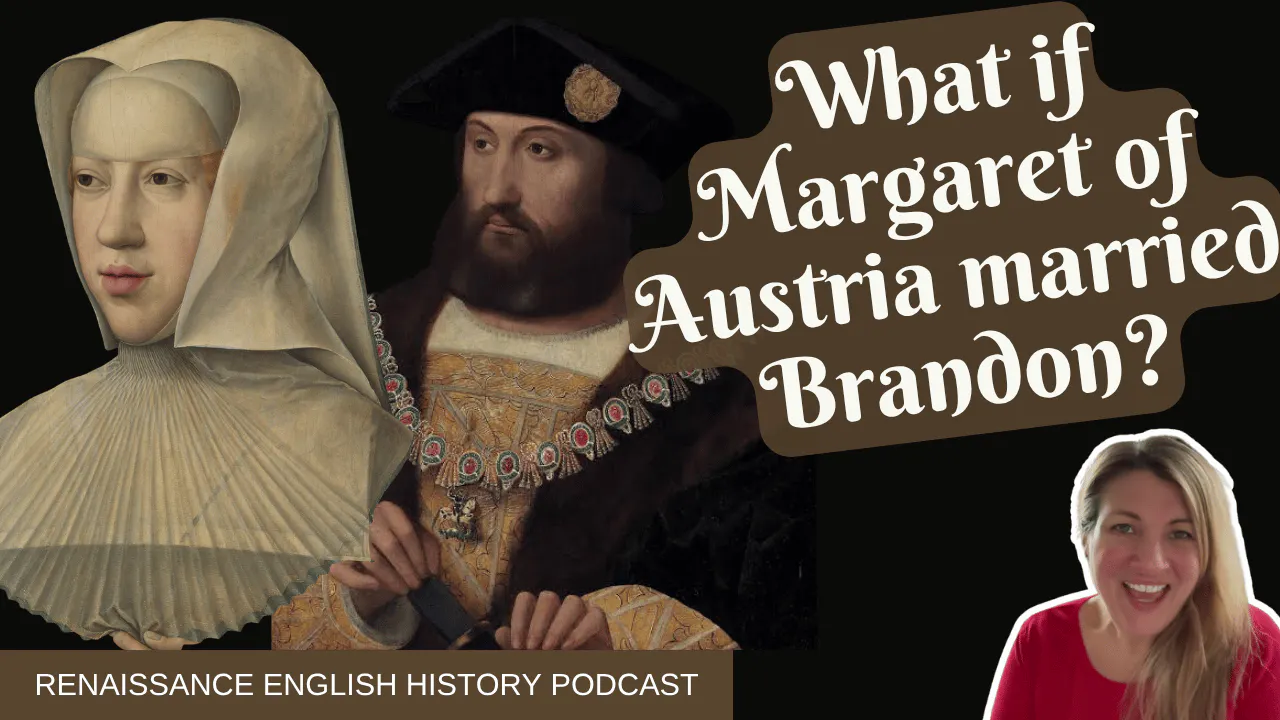
The Almost-Marriage That Could Have Erased Lady Jane Grey
In 1513, Charles Brandon knelt in front of Margaret of Austria, regent of the Netherlands, and lifted the ring right off her finger. Twice. The gossip reached all the way to her father, the Holy Roman Emperor, and for a minute, Henry VIII was actually pushing for his best friend to marry one of the most powerful women in Europe.It never happened. But what if it had?
In this episode I dig into th
Tracy Borman Makes Me Rethink EVERYTHING About the Boleyns
This conversation totally rearranged some things in my brain. I sat down with Tracy Borman, Chief Historian at Historic Royal Palaces, to talk about her new novel The House of Boleyn, and it flips the whole family on its head.
Thomas Boleyn, the guy we all love to hate as the scheming dad pimping out his daughters? Tracy did the research and found basically none of that. He comes across as actua
The Mistress Who Almost Made Henry VIII's Bastard Son His Heir
Okay so today's episode is a blast from the past, but stick with me because it's a good one. Back in 2016 I had James Bolton from the Queens of England Podcast on to talk about Bessie Blount, and it completely changed how I think about Henry VIII's love life.
Here's the thing everyone gets wrong: we've all heard "divorced, beheaded, died, divorced, beheaded, survived" a thousand times, but almost

The Secret That Changes Everything We Thought About "Bloody Mary"
I'm in the UK this week, so I dug into the archive and found this gem from way back when approximately six people were watching my channel. It's an interview with Melita Thomas of Tudor Times about her book The King's Pearl, and honestly, it wrecked what I thought I knew about Mary I.
We get into how Henry VIII was building Mary a whole fancy apartment at Whitehall years before Catherine Parr eve

How Do We Actually Know What Anne Boleyn Looked Like? Art Historian Roland Hui Breaks It Down (Tudor Summit Throwback)
This is a throwback from the very first Tudor Summit back in 2017, the little online conference that eventually grew into TudorCon. I'm digging through the archives while I'm traveling in the UK, and I found this one with art historian Roland Hui, and it's just as fascinating now as it was then.
Roland walks through the six wives one by one and it's honestly wild how much detective work goes into

How the Tudors Decided Who Deserved to Eat
In 1547, Parliament passed a law saying that if you refused to work, even for nothing but food, you could be branded and handed over as a slave for two years. Your children could be taken.
They repealed it in two years. Not because anyone softened toward the poor, but because barely anybody would enforce it.
This episode is about how England spent the sixteenth century building a welfare system

What If Elizabeth I Had Married Robert Dudley? (The Decision That Nearly Broke Her)
A woman is found at the bottom of a staircase in 1560. And the one person who benefits most from it is the Queen of England.
This week I'm digging into one of the wildest what-ifs in Tudor history. Amy Robsart, wife of Robert Dudley, dies suddenly at Cumnor Place, right when the rumors were already swirling that Dudley meant to get rid of her so he could marry Elizabeth I. The obstacle is gone. T

The Priest Hunter's Nightmare: Nicholas Owen and the Hiding Places No One Could Find
There is a Catholic saint whose actual job, canonized and everything, is patron of magic tricks. Escapologists. Illusionists. And he earned it the hard way: by spending nearly twenty years building hiding places so good that people still can't find them today, standing right next to them, with a guidebook in hand.
Nicholas Owen was a small, injured, entirely unremarkable-looking carpenter. He was

The Women Who Hid Priests in Their Walls
FREE ILLUMINATION WORKSHOP Royal Letters: How to Paint a Tudor Rose Initial, with illuminator Julia Bangert. Tuesday. Free, total beginners genuinely welcome, and if you can't make it live, register anyway and we'll send you the recording. https://page.co/kxj56n
Somebody is knocking on your door. You know who it is. And upstairs, folded into a hole in the wall behind your fireplace, is a man wh

The Priest Who Escaped the Tower of London
In 1588, a tall, well-dressed gentleman rode through Norfolk talking about hawks with anyone who'd listen. He had a gilt-handled rapier, excellent French, and impeccable manners. He also had a Mass kit hidden in his saddlebags and a hair shirt under his doublet, because he was a Jesuit priest in a country where that was a capital offense.
John Gerard spent seventeen years running an underground n

Henry VIII Got Six Tries. Could His Wives Get One?
Sign up for the weekly newsletter here: https://englandcast.com/newsletter-sign-up
Everyone knows Henry VIII's divorce saga. He wanted out, the Pope said no, he invented a new church. Problem solved, if you're the king.
But what about his wives? What about any Tudor woman trapped in a terrible marriage? Could she leave?
The answer is technically yes. There were legal mechanisms: annulment, form
Edward VI vs. The Dragon: A Protestant Boy King Who Tried to Rewrite England's Most Elite Knighthood
In 1552, England's teenage Protestant king decided that St. George, patron saint of England, had to go. Not from one town, or one church. From the statutes of the Order of the Garter itself, the most prestigious knighthood in the country, the one his grandfather had endowed with a jewel-encrusted gold statue and his father had basically built his entire personal brand around.
The manuscript still
Constable of the Tower, Then Its Prisoner: The Wild Life of Eleanor de Clare
Want to test the new Tudor Scrolls app? Email me at heather@englandcast.com.
She was the granddaughter of a king, married off at thirteen to settle a debt, and somehow ended up as the only woman to ever run the Tower of London. And then, a few months later, she was a prisoner inside the same walls she used to command.
But this isn't just one woman's unbelievable life. Eleanor had two sisters, a
The Forgotten Welfare State: How the Dissolution of Monasteries Devastated the Poor and Sick
Before Henry VIII, if you were sick, old, or starving in England, there was a place you could go. Monasteries ran almshouses, hospitals, free lodging for travelers, even schools for poor kids, all as a normal, unglamorous part of just existing. Then in about a decade, almost all of it was gone.
In this episode I dig into the side of the Dissolution of the Monasteries that usually gets skipped ov

What If Mary Queen of Scots Was Never Executed?
Mary, Queen of Scots was executed on February 8th, 1587, on the strength of a decoded letter and a forged postscript that Elizabeth's spymaster slipped into her own secret code. But what if that letter never got decoded at all?
In this episode I pull that one thread and follow it all the way out. No execution means no closure for Elizabeth, a murkier justification for the Spanish Armada, and a ge

The Invention of You: How the Renaissance Discovered the Self
📬 Free newsletter (Tudor news, vocab, treasures, behind the scenes): https://englandcast.com/newsletter-sign-up
We talk about the Renaissance as the time people rediscovered the ancient world. But they were also discovering themselves, for the first time.
For most of human history, nobody really knew what they looked like. Then a mirror, a chimney, a printing press, and a blank book arrived wi
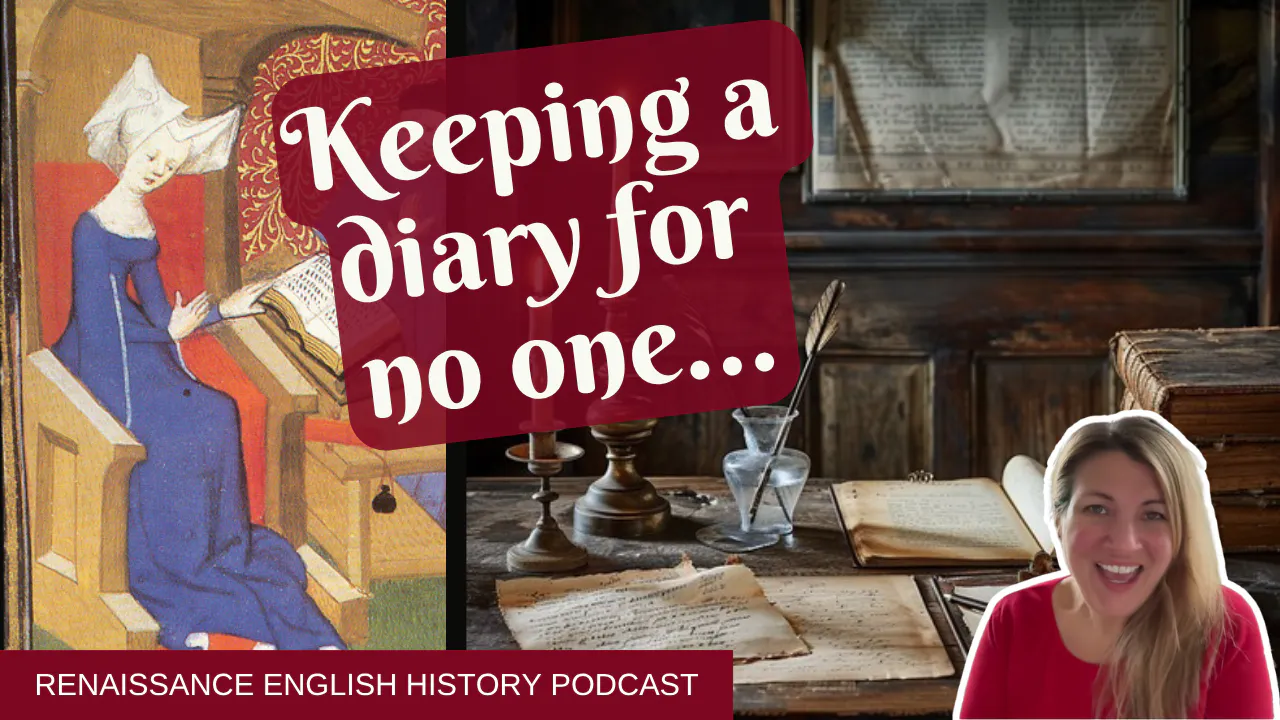
Before Samuel Pepys, There Was This Devon Farmer Buying Velvet Shoes
A Devon farmer records buying velvet shoes and 30 gold buttons. A London astrologer hides his affairs in Latin. Shakespeare puts a soliloquy on stage and an audience recognizes something true about themselves. Something was happening in late Tudor England, and it changed how human beings understood their inner lives forever. In this video we trace the invention of the personal diary, from medieval

Body for Body: The People Who Ran the Tower of London
Did you know the very first person ever imprisoned in the Tower of London also became the first person to escape from it? He got his guards drunk, abseiled out of a window on a rope smuggled in via a wine barrel, realized the rope was twenty feet too short, dropped anyway, and sailed to Normandy with his elderly mother. And the Constable responsible for him lost the job's hereditary rights immedia

The Emperor Who Dropped Mary Tudor For a Better Dowry (And Changed History Forever)
In 1525, Holy Roman Emperor Charles V broke off his engagement to the young Mary Tudor, daughter of Henry VIII and Catherine of Aragon, and married his cousin Isabella of Portugal instead. The reason? Isabella came with a dowry of 900,000 ducats, and Charles needed the money more than he needed the alliance.
That one financial decision may have changed everything.
In this alternate history, we a

The Black Tudors History Forgot
**Note - I gave Cattalena's death date wrong - it's 1625 and I said 1525! So sorry!!! ***
When I picture Tudor England, I used to picture... white people. Portraits. Ruffs. Henry VIII being grumpy. And then I read Miranda Kaufmann's book Black Tudors.
Because it turns out there were around 200 free Africans living in England during the Tudor period (probably more, but that's what we know for su

What If Tyndale Had Never Translated the Bible? The Man Who Invented English (and Died For It)
What if one man had never existed? William Tyndale was a scholar, a fugitive, and a martyr who died in 1536 strangled at the stake for committing what his government considered a capital crime: translating the Bible into English. But in doing it, he accidentally invented a huge chunk of the English language. "The powers that be." "Let there be light." "The salt of the earth." "Eat, drink, and be m
Answering the Internet's Most Googled Questions About the Tudors
Did the Tudors steal the throne? Did they brush their teeth? Did they smell? I typed "did the Tudors" into Google and answered every single autocomplete suggestion with actual history. Some answers are surprising, some are horrifying, and at least one involves people deliberately blackening their teeth to look rich. Tudor history is wild and I love it here.
Learn more about your ad choices. Visi
Did Tudors Actually Swim? (The Answer Is Weirder Than You Think)
Someone asked me this from their pool. They were floating around listening to the podcast and thought, "did the people I'm obsessed with ever do this?" And it sent me down a rabbit hole, because the answer is so much more complicated and class-loaded than I expected. In this episode we cover: Why Tudors avoided hot baths (and why that was actually logical given what they believed about disease) W
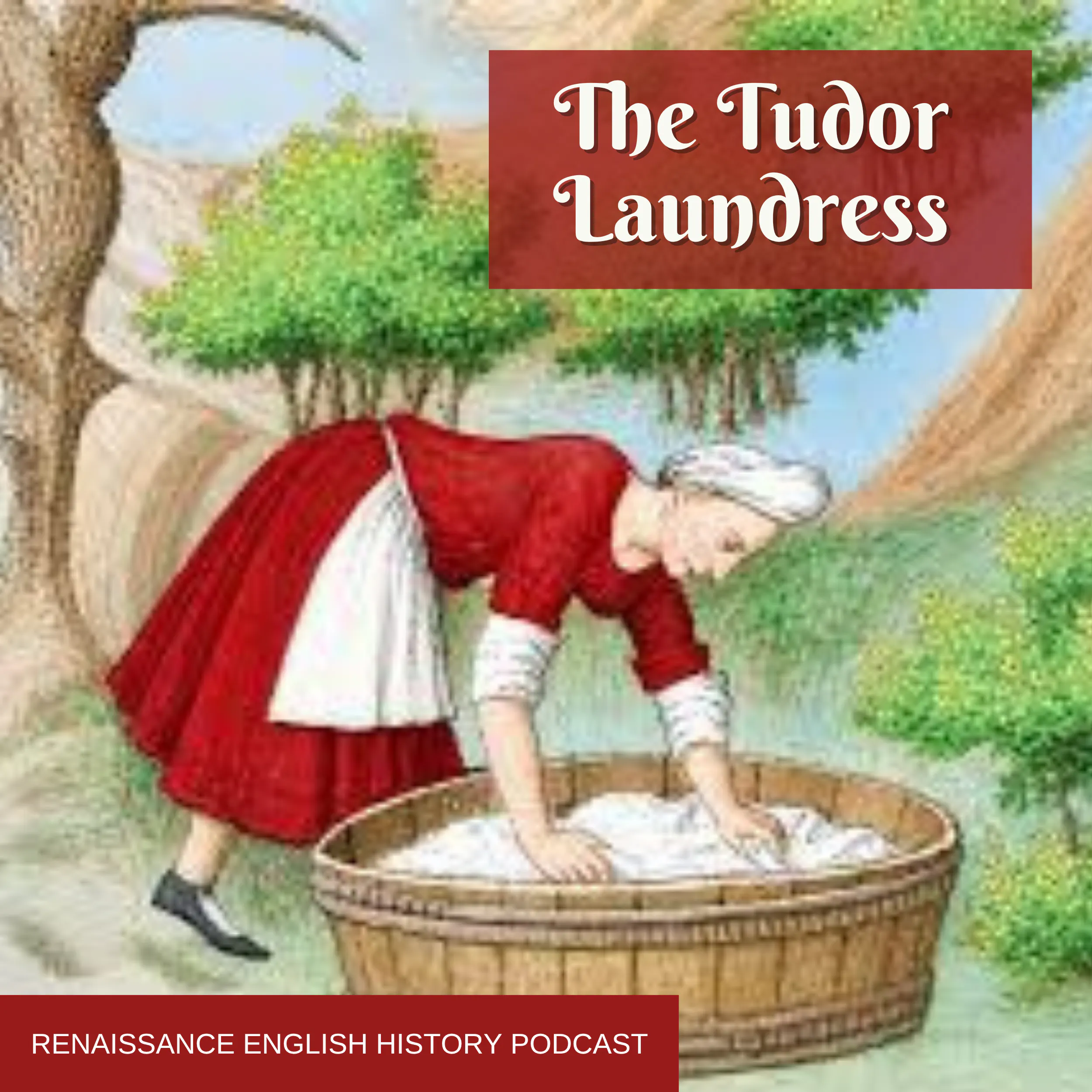
Tudor Laundresses: Three Very Different Lives Doing the Dirtiest Job at Court
What did it actually take to keep Tudor England clean? Before dawn, before the court woke up, before Henry VIII put on his famous doublet, someone was already up to her elbows in lye, urine, and other people's laundry. That someone was the Tudor laundress, and her story is one I have been wanting to tell for a long time.
In this episode we follow three very different women doing the same essentia

Medieval Women Couldn't Hold Power? Meet the Two Female Sheriffs Who Ran Entire Counties
Everything we think we know about women and power in the medieval world is missing a few key details. Like the fact that there were exactly two female sheriffs in medieval England, and that their lives were directly tangled together in the most dramatic way possible.
Nicholaa de la Haye held Lincoln Castle through multiple sieges, was appointed Sheriff of Lincolnshire by King John in one of his f
What If Thomas More Had Just Signed? (My Hair and I Discuss)
What if Thomas More had just signed the Oath of Supremacy? He could have. Plenty of people did. Cranmer signed it. Cromwell signed it. So why didn't More, and what would have changed if he had?
In this week's What If Thought Experiment, we're looking at one of the Tudor period's most interesting counterfactuals.
Henry VIII didn't need More's signature legally, he wanted it because More was the
Spinster: The Job Title That Became an Insult
Before it was an insult, "spinster" was a job title. It meant a woman who spins thread. It appeared in tax rolls, court records, and legal documents. It was an occupation. And then the economy collapsed, the guilds shut women out, and the word became something else entirely.
In this episode we're looking at the women who quite literally kept Tudor England running -- the spinners, weavers, and dye

The Tudor Women Who Controlled Access to the Queen (And Paid the Price)
You think office politics are bad? Imagine your entire career depending on whether the queen liked how you handed her a towel.Lady in waiting sounds like a decorative job. It wasn't. The women of the Tudor privy chamber controlled physical access to the most powerful person in England, and in Tudor political life, controlling the door meant controlling everything. A quiet word at the right moment,
The Tudor Legal Loophole That Gave Women Their Lives Back
The moment a Tudor woman got married, she legally ceased to exist. No property, no contracts, no rights - her entire legal identity absorbed into her husband's. But the moment he died? She got it all back. And some of these women knew exactly what that meant.
In this episode we're looking at three Tudor women who used widowhood as a strategy... whether they meant to or not. Bess of Hardwick turne

The Tudor Woman Who Ran the Household Pharmacy (And Accidentally Poisoned Everyone)
In early June in Tudor England, one woman was already up before sunrise. She had roughly four months to produce everything her household needed to survive the next twelve months. Medicine. Preserves. Cosmetics. Cleaning products. The entire household pharmacy. All of it, from scratch, while the plants were available.
She had no name in the history books. But without her, the household didn't make
She Told Two Kings No and Kept Her Castle (And They Had to Wait Until She Died)
In 1293, King Edward I finally got what he wanted: the Isle of Wight. He'd been trying to take it for decades. He had to wait until its owner, Isabella de Fortibus, was on her deathbed to get it. And even then, she made him pay for it.
Isabella de Fortibus was a 13th century countess who became one of the wealthiest people in England after a series of family tragedies left her controlling Devon,
Patriotism in Tudor England: How a Nation Learned to Love Itself
It's Memorial Day, and I've been thinking about patriotism -- where it comes from, why people feel it so strongly, and whether Tudor people felt anything like it at all.
The answer is more interesting than I expected. In 1485, when Henry VII takes the throne after the Battle of Bosworth Field, England is basically a collection of feudal relationships. Loyalty runs to your lord, your family, your

Plague, Prayer and Running Away: How Tudor Londoners Survived the Epidemics
London, summer 1563. The city sounds wrong. The market stalls have gaps. And then you notice the door across the street — a blue cross painted on it, and a man standing outside who wasn't there yesterday.
The plague is back.
Today we're going street level into the Tudor plague years. What it actually felt like to live in London when the epidemics hit, what ordinary people did to survive, and thr

Did Elizabeth I Actually Order Mary Queen of Scots' Execution?
Someone in the comments asked me to do a deep dive on whether Elizabeth I actually gave the order for Mary Queen of Scots' execution. And the closer I looked, the stranger it got.
Here's the surface version. Mary was Elizabeth's prisoner for nineteen years. Elizabeth kept refusing to sign the death warrant. Then one day she signed it. Then said she didn't mean it. Then threw her secretary William
She Never Said Her Mother's Name. But She Never Took Off the Ring.
Today is May 19th. On this day in 1536, Anne Boleyn was executed on Tower Green. And in a royal nursery somewhere in Hertfordshire, a two-year-old girl had no idea her mother had just been beheaded on her father's orders.That little girl grew up to be Elizabeth I. And she never - not once in more than four decades on the throne - spoke publicly about her mother.
We're looking at what happened to
What If Edward VI Had Backed Down? The Deathbed Decision That Changed England
Edward VI gets overlooked. He's usually just the boy between Henry and the interesting women. But here's what people miss: Edward didn't just die and leave a mess. He made choices. Theologically driven, politically sophisticated choices. From his deathbed. At fifteen.
This week's What If looks at the Devise for Succession, the document Edward drafted in his own hand that bypassed both his sisters
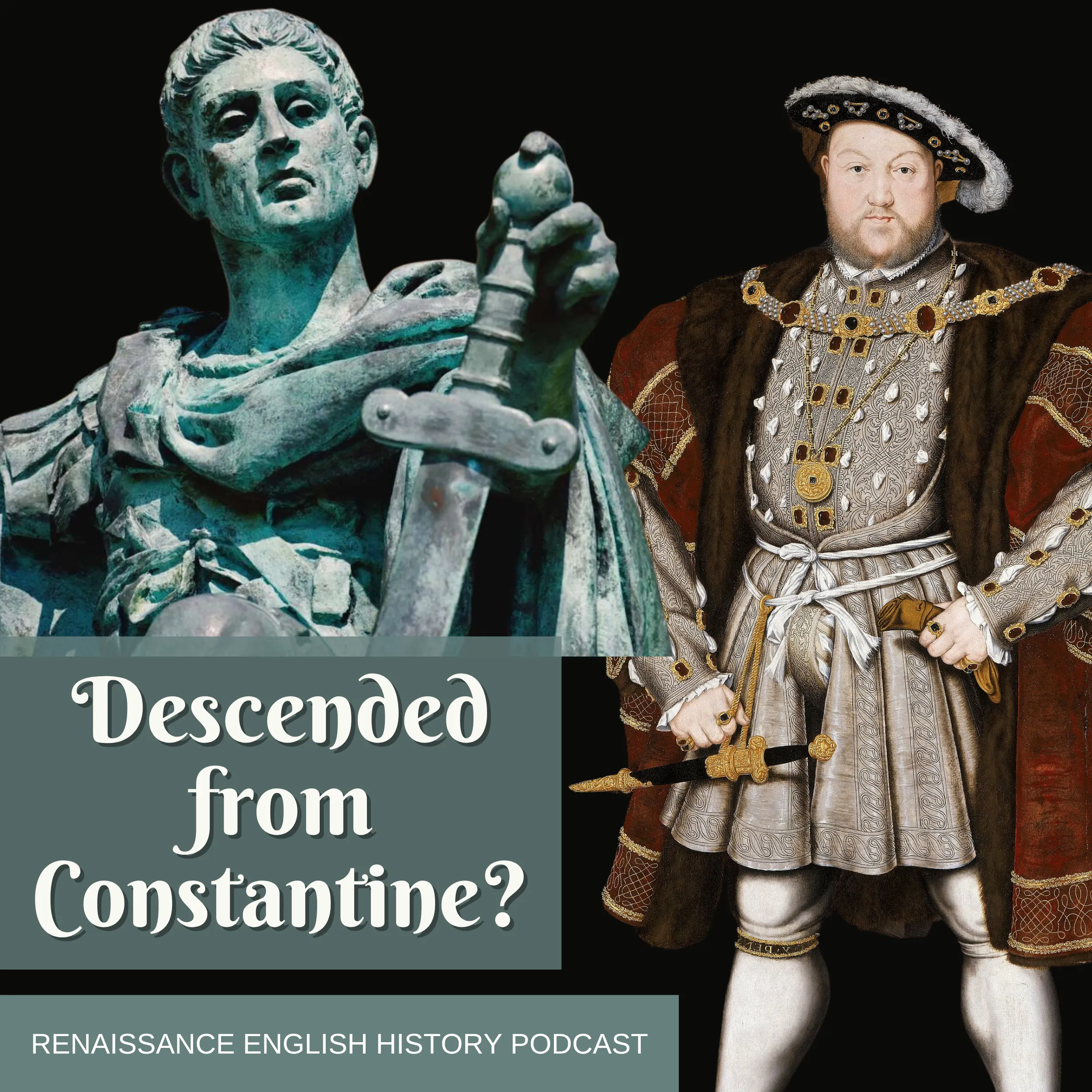
Henry VIII, Constantine, and the Art of the Very Confident Lie
Henry VIII wasn't content to just be King of England. He needed you to know he was descended from Constantine the Great, the Roman emperor who legalized Christianity and changed the course of Western history. And he had receipts. Made-up receipts, courtesy of a 12th century Welsh cleric named Geoffrey of Monmouth, but receipts nonetheless.
In this minicast, we look at where this claim came from,

1509: The Year Everyone Thought It Was All Beginning
In 1509, England went from a dying paranoid king to a golden coronation to a deadly plague in about eight months. This is a Year in the Life episode, where we slow down and live inside 1509, not just at court but in the guild halls and households of ordinary Londoners who had nowhere to run when the sweating sickness arrived while Henry VIII fled to Windsor. Thomas More wrote some of the most joyf
The Life of a Tudor Con Artist (They Had Job Titles)
In 1591, a Cambridge-educated writer named Robert Greene published a pamphlet exposing London's professional con artists. He named their roles, described their techniques, and basically wrote the world's first true crime series. The problem is that he was also personally acquainted with most of the criminals he was writing about.
Today we're spending 24 hours with a Tudor cony-catcher. A cony is
What If Anne Boleyn Had Lived? Cromwell's Three Choices and Where They Led
It's April 1536 and Thomas Cromwell has gone home sick. Except he's not sick. He's deciding what to do about Anne Boleyn.
In this What If episode, we play out three scenarios from that single moment of decision: what Cromwell actually chose and why it signed his own death warrant four years later, what happens if he removes Anne without killing her and she becomes a Protestant cause célèbre in ex

Henry VII's Impossible Choice: Execute an Innocent Man or Lose Everything
In 1499, Henry VII had two men in the Tower of London. One claimed to be his wife's long-lost brother. The other was an innocent young man who had been locked up since he was ten years old. And the King and Queen of Spain wouldn't send Catherine of Aragon to England until both of them were dead.
This is History as an Empathy Machine, a new thought experiment where we lay out the real options hist

Tudor Medicine and the Mind: Melancholy, Music, and What Help Actually Looked Like
What happened in Tudor England when someone's mind turned against them? There was no therapist, no diagnosis, no prescription. But there was a whole system, and it was more coherent than you'd expect.
We dig into the four humors as a complete theory of the mind, Timothy Bright's 1586 Treatise of Melancholie (the first English book on mental illness), music as formally prescribed medical treatment
What If Lady Jane Grey Had Refused the Crown?
Jane Grey wasn't just a pawn. She was a fierce Protestant intellectual who made a real choice when the crown landed at her feet in 1553. What if she'd said no? We explore what Mary's reign might have looked like without a Protestant figurehead to rally around, whether Wyatt's Rebellion would even have happened, and why the answer has less to do with Jane's courage than you might think.
Sign up fo
The Dairymaid: Tudor England's Most Underestimated Woman
Someone left a comment asking about Tudor dairymaids, and I went down a rabbit hole I did not expect. The dairymaid looks like a background character in Tudor history. She is absolutely not.
We're covering her daily work, the surprising economic independence the dairy gave women in a world designed to give them none, and why the phrase "as smooth as a milkmaid's skin" is actually encoding centuri

How Did Tudors Survive Without Coffee? (The Answer Is Weirder Than You Think)
You've probably heard that Tudor people never drank water, that ale was the default drink for everyone including children, because the water would kill you. It's in pretty much every Tudor history book from the last thirty years. And it turns out it's a lot more complicated than that.
In this episode we dig into where the "nobody drank water" story actually comes from, why the sources historians
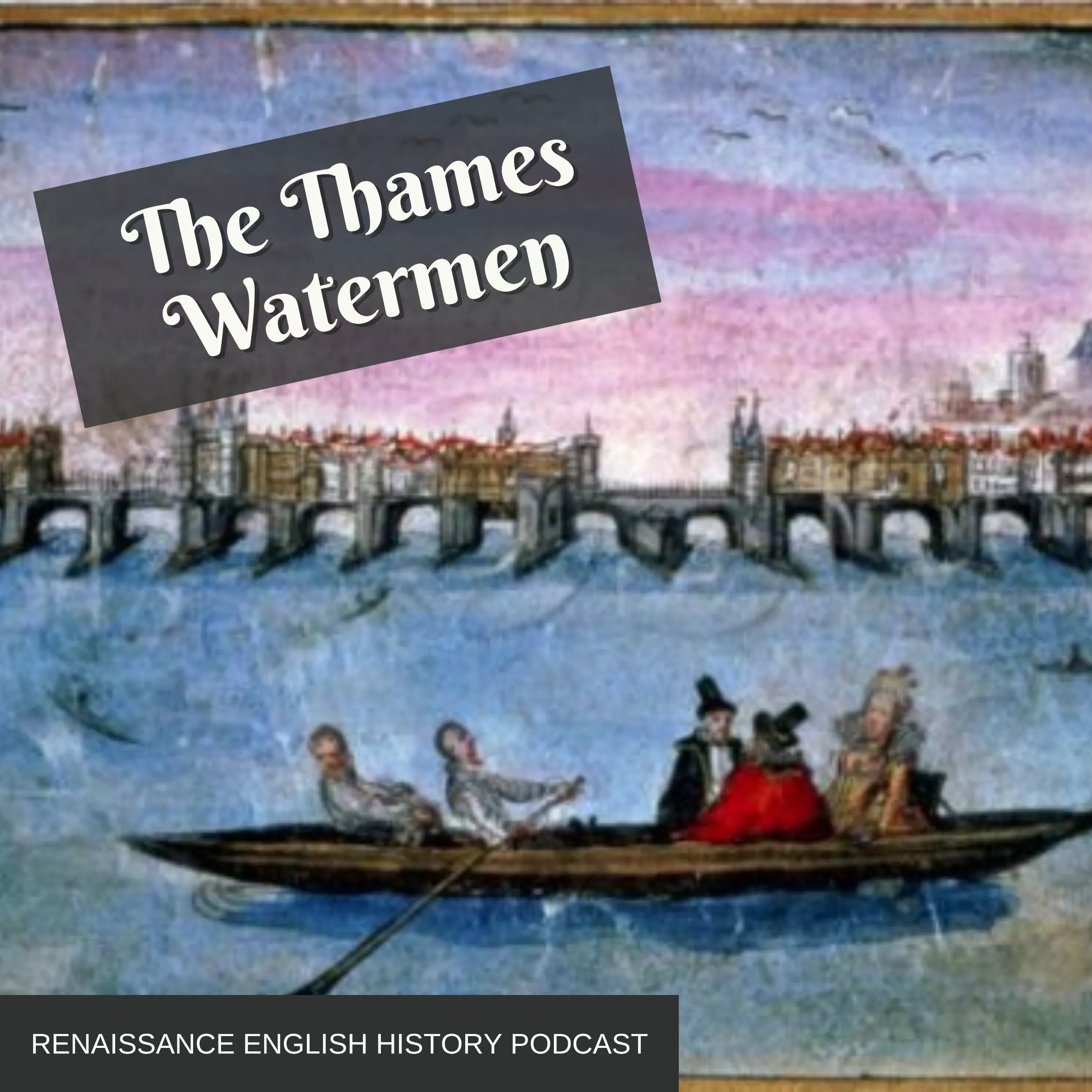
The Tudor Uber Driver Who Floated Tudor London
Before bridges, before coaches, before passable roads, if you needed to get anywhere in Tudor London you needed him. The Thames waterman was licensed, badged, opinionated, and completely indispensable.
In this episode we spend 24 hours on the river: shooting London Bridge, ferrying Shakespeare's audience to the South Bank, and watching the coaches arrive and take everything away.
Plus: John Tayl
The Most Important Woman in Tudor England You've Never Heard Of
Before hospitals, painkillers, or germ theory, the Tudor midwife was the most powerful person in the room. Licensed by the Bishop, sworn to secrecy, she outranked duchesses, performed sacraments no other woman was allowed to touch, and knew every secret in the neighborhood.
Learn more about your ad choices. Visit megaphone.fm/adchoices

What If Mary Queen of Scots Had Run? A Tudor Thought Experiment
Scotland in the 1560s was chaotic even by Tudor standards. In this thought experiment episode, we ask: what if Mary Queen of Scots had fled to France in 1567 instead of marrying Bothwell? We walk through the real history, then imagine how one different decision might have changed the Catholic plots against Elizabeth, the Spanish Armada, and the entire trajectory of the British monarchy. Plus: come
The Medieval Women Who Ran Businesses, Won Lawsuits, and Refused to Be Pushed Out
History says medieval women were powerless. Some of them knew exactly where the power was and went and got it.
In this episode I'm looking at four women who built careers, won lawsuits, and left things behind that still exist today, all inside a legal system that was stacked against them. Katherine Fenkyll ran one of the most active cloth businesses in Tudor London for thirty years, negotiated wi

Why Tudor England Refused to Eat Tomatoes For 200 Years
The story of how a respected Elizabethan botanist looked at a tomato, applied perfectly logical medical reasoning, and concluded that English people shouldn't eat one, and why it took two hundred years for anyone to prove him wrong.
Learn more about your ad choices. Visit megaphone.fm/adchoices
What It Was Actually Like to Work in Henry VIII's Kitchen
Henry VIII's kitchens at Hampton Court occupied 55 rooms, employed 200 men, and burned six tons of wood every single day. This episode spends 24 hours inside that operation, from the scullions lighting fires before dawn to the leftover food going to the poor at the end of the day. We cover the kitchen hierarchy, the staggering food quantities, the spit boy and his very specific idea of a holiday,
In Tudor England, Your Dreams Were Everyone's Business
In Tudor England, a dream wasn't private. It was medical evidence, potential divine communication, and possibly a message from Satan. This video explores the three frameworks Tudor people used to understand their dreams, and the story of Elizabeth Barton, the Holy Maid of Kent, whose visions made her famous across England and then got her executed in 1534.
Learn more about your ad choices. Visit m

They Hung Babies On Walls: A Day Inside the Tudor Royal Nursery
The Tudor royal nursery wasn't a cozy domestic space. It was a department of state, with its own hierarchy, its own politics, and sworn oaths of loyalty just to rock a cradle. This week we're going inside it: the Lady Mistress running the show, the wet nurses who gave up their families and their freedom to feed someone else's baby, the swaddling operation that occasionally involved hanging an infa
She Tested It. They Ignored It. The Women Who Invented Knowledge Before Science Had a Name.
In the late 1400s, two women were doing something radical: generating knowledge and insisting it counted. Margery Kempe was building an evidence base for her divine visions. Caterina Sforza was annotating her alchemical recipes with "proven and certain." They never met, but they were solving the same problem. One manuscript was found in a ping-pong cupboard in 1934. The other is still missing.
Lea
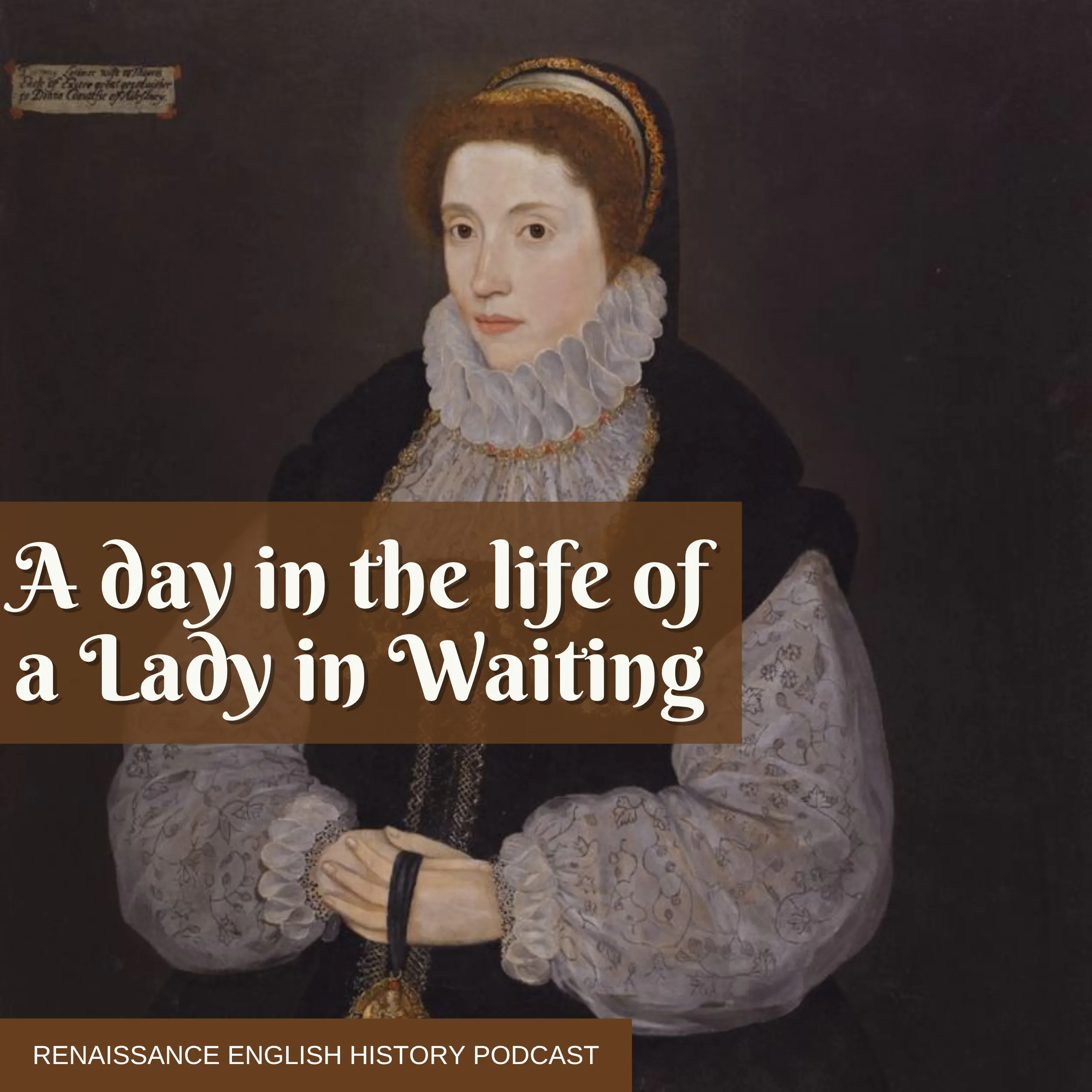
24 Hours in the Life of a Tudor Lady in Waiting (She Asked for Gambling Money. Her Mom Said Practice Your Lute.)
What did a Tudor lady in waiting actually do all day? We're spending 24 hours with Anne Basset at Greenwich Palace in 1538, hour by hour from 5am to midnight. Anne served five queens across two decades and survived all of it, which was not guaranteed. We know the details of her life because her mother wrote constantly from Calais asking whether the smocks fit, reminding her to practice her lute in

Did the Tudors DO April Fools?
It's April 1st, and I'm not going to trick you. Instead, let's ask a genuine question: did the Tudors even DO April Fools' Day?
The answer is no, not really. But what they did instead is so much more interesting. We dig into the murky origins of April Fools' Day (the most popular origin story is probably itself a myth, which is perfect), the Tudor tradition of licensed misrule, and the story of W

Three Queens Who Refused to Behave (And Why History Punished Them For It)
History has a word for queens who had opinions and refused to be managed. Today we're looking at three of them across three centuries - Eleanor of Aquitaine, Empress Matilda, and Isabella of France - and asking whether "scandalous" means what history wants us to think it means.
Eleanor governed, went on crusade, backed her sons against her husband, and got locked in a tower for sixteen years. Hen
Recommended

The Daily

World News Tonight with David Muir

English Vocabulary Help

The Joe Rogan Experience

TED Talks Daily

English with Olivia | Slow Conversations & Vocabulary

Talk About Talk - Executive & Leadership Communication Skills

Learn English B1 with Daily News | English Listening Practice
Stand In The Circle

SLOW ENGLISH PODCAST (A1-A2) With Subtitles | Daily Videos | English With Us Podcast

Learn English A2 with Daily News | Simple English Listening Practice

Bad Friends
