
The Information Bottleneck
Two AI researchers, Ravid Shwartz-Ziv and Allen Roush, discuss the latest trends, news, and research in Generative AI, LLMs, GPUs, and Cloud Systems. The podcast covers cutting-edge developments in artificial intelligence and machine learning, offering insights from experts in the field.
Episodes
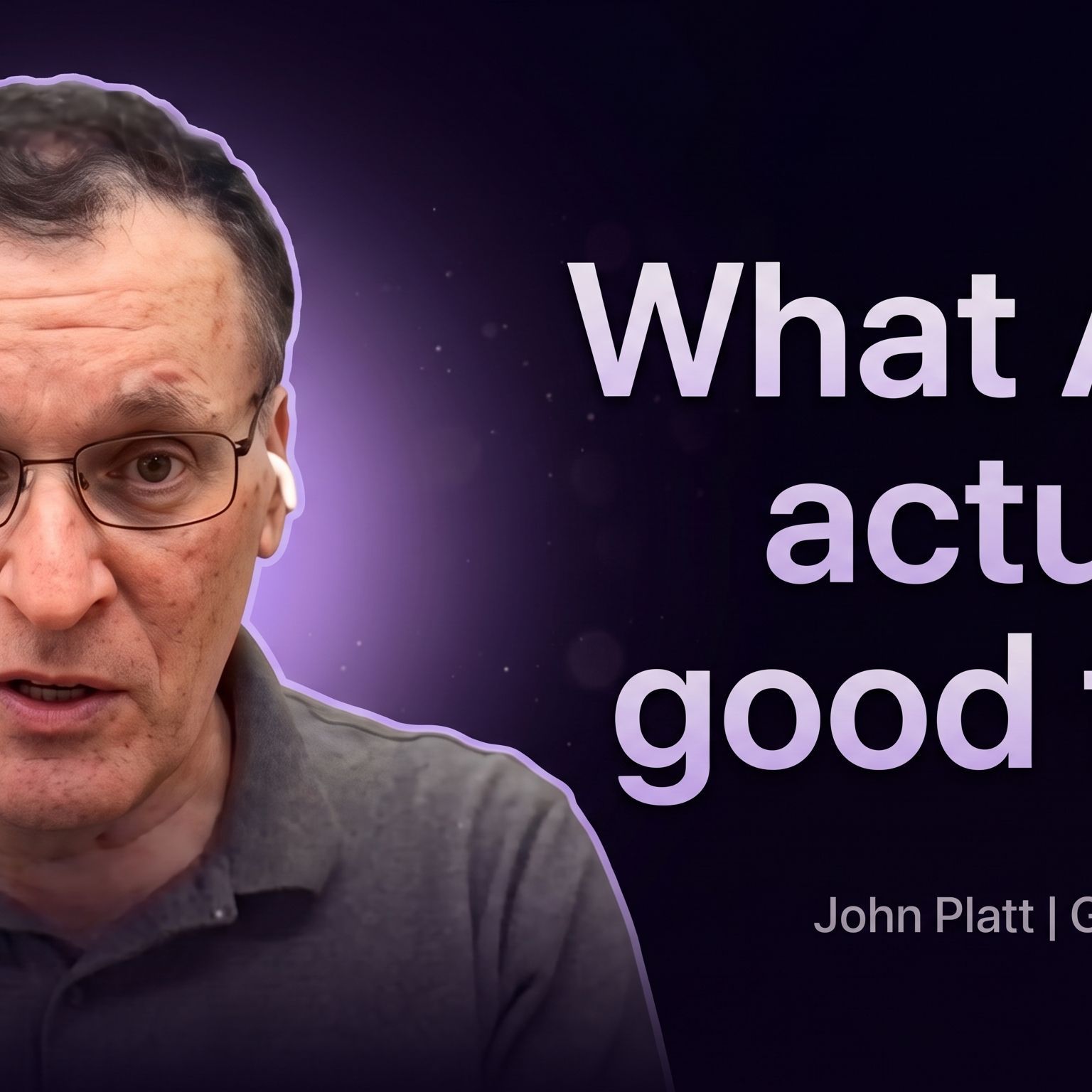
John Platt (Google): AI for Climate and Science
John Platt is a Google Fellow and leads the Applied Science team at Google Research, the group working on climate and science. He's also the person behind SMO and Platt scaling. In this episode, we talk with him about how Google decides which scientific problems are worth its time, and what happens when AI meets real physical systems. A big part of the conversation is contrails. A small share of f
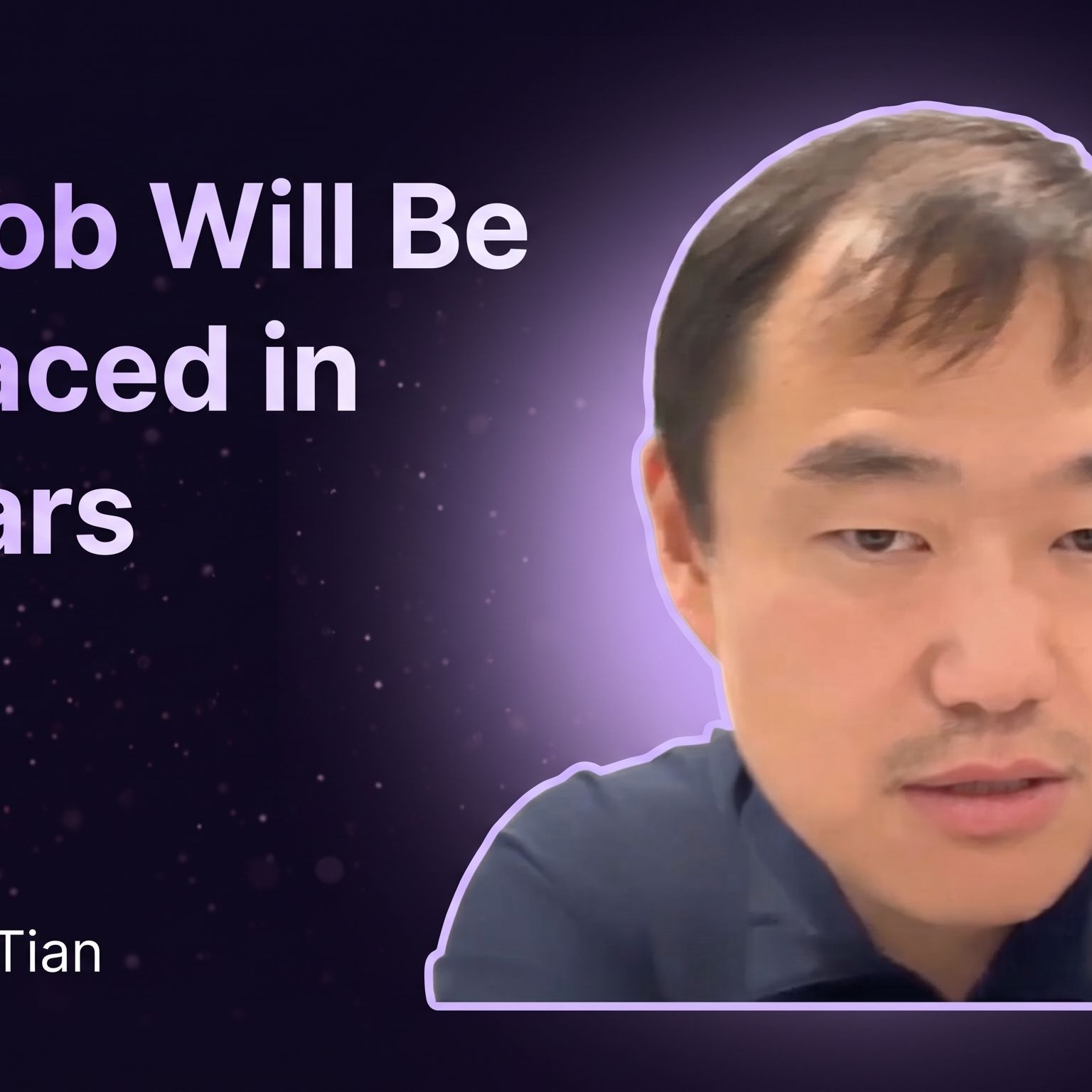
Yuandong Tian on Recursive Self-Improvement
Yuandong Tian spent many years at Meta FAIR and recently left to co-found Recursive Superintelligence, a company building AI that improves itself. In this episode, he tells us why.We start with his work on computer Go, where he built DarkForest before AlphaGo came out. A few years later came OpenGo, which played Korean professionals on a single GPU and didn't lose a game. He then tried to bring RL
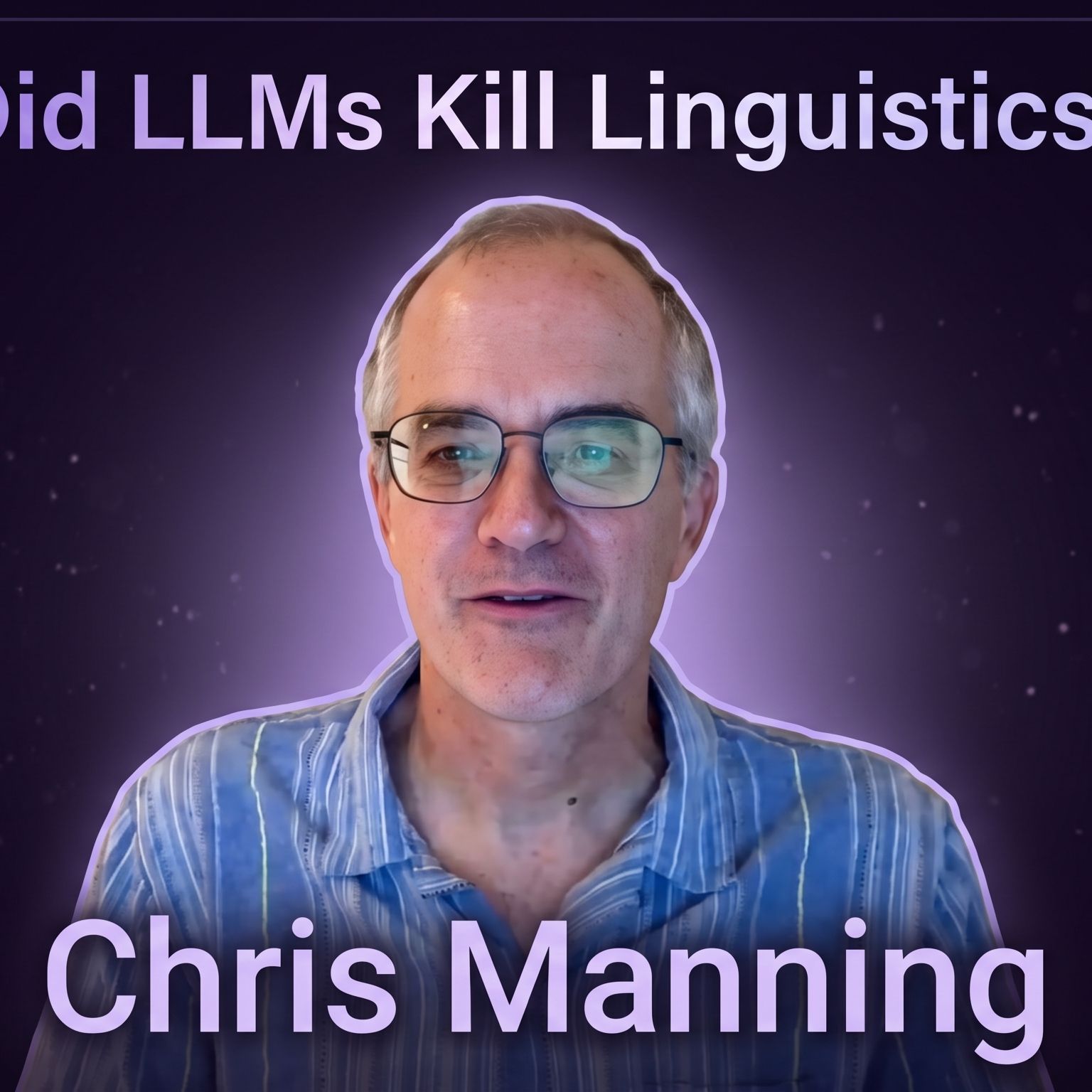
Chris Manning: Language Is the Real Unlock for Intelligence
Chris Manning is a legend in NLP. He's a professor of linguistics and computer science at Stanford and ran the Stanford AI Lab. His course CS224N, Natural Language Processing with Deep Learning, is where a whole generation of researchers learned the field. If you've worked on anything in NLP over the last 25 years, you've probably used his work.We start with what linguistics gave machine learning
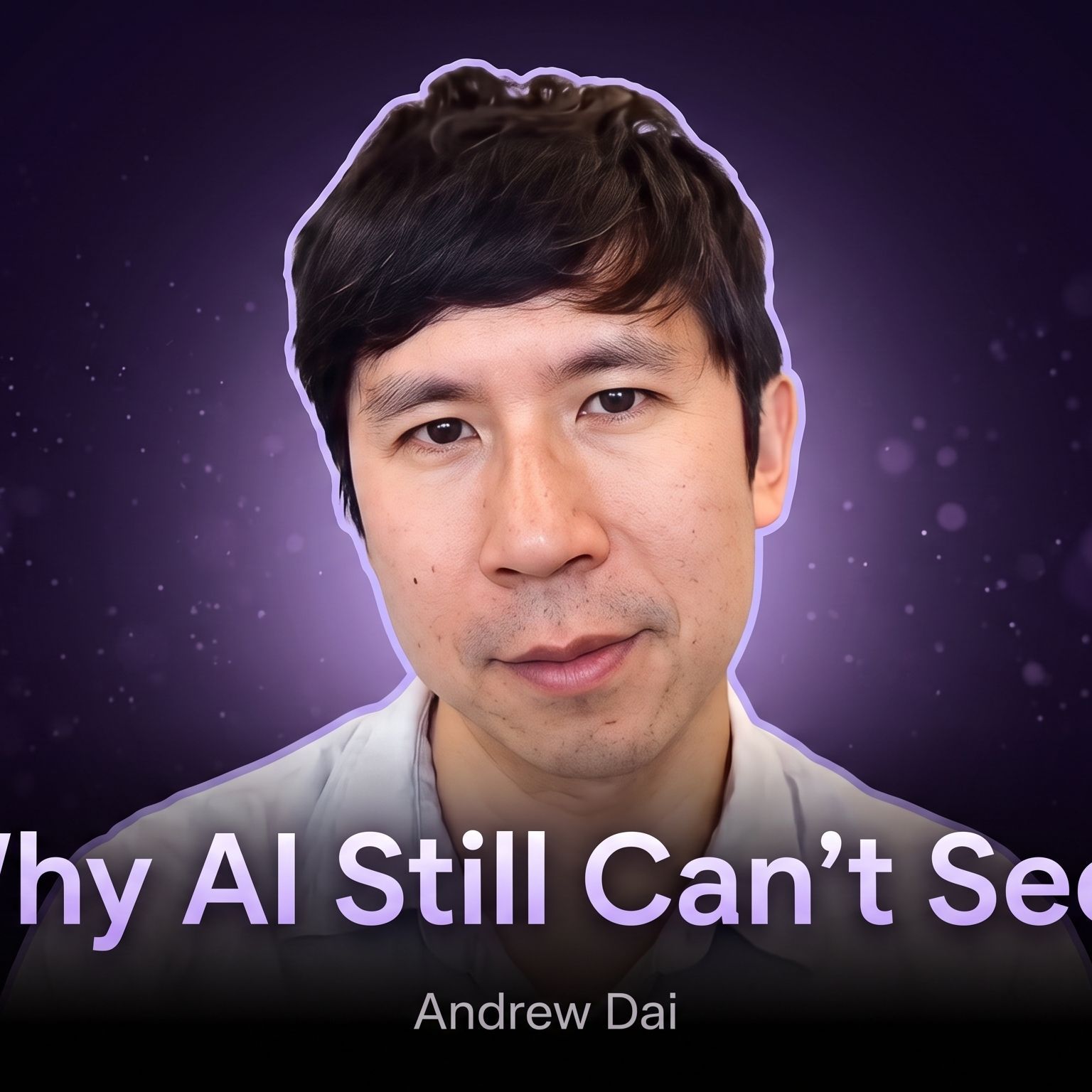
Why AI Still Can't See wtih Andrew Dai
Andrew Dai spent over a decade at Google Brain and DeepMind, where he co-wrote the 2015 paper that introduced language model pre-training followed by fine-tuning, and later co-led pre-training data for Gemini. He's now co-founder and CEO of Elorian AI, which is building models for visual reasoning.We talk about how his pre-training result started as a bug, why next-token prediction scales better t
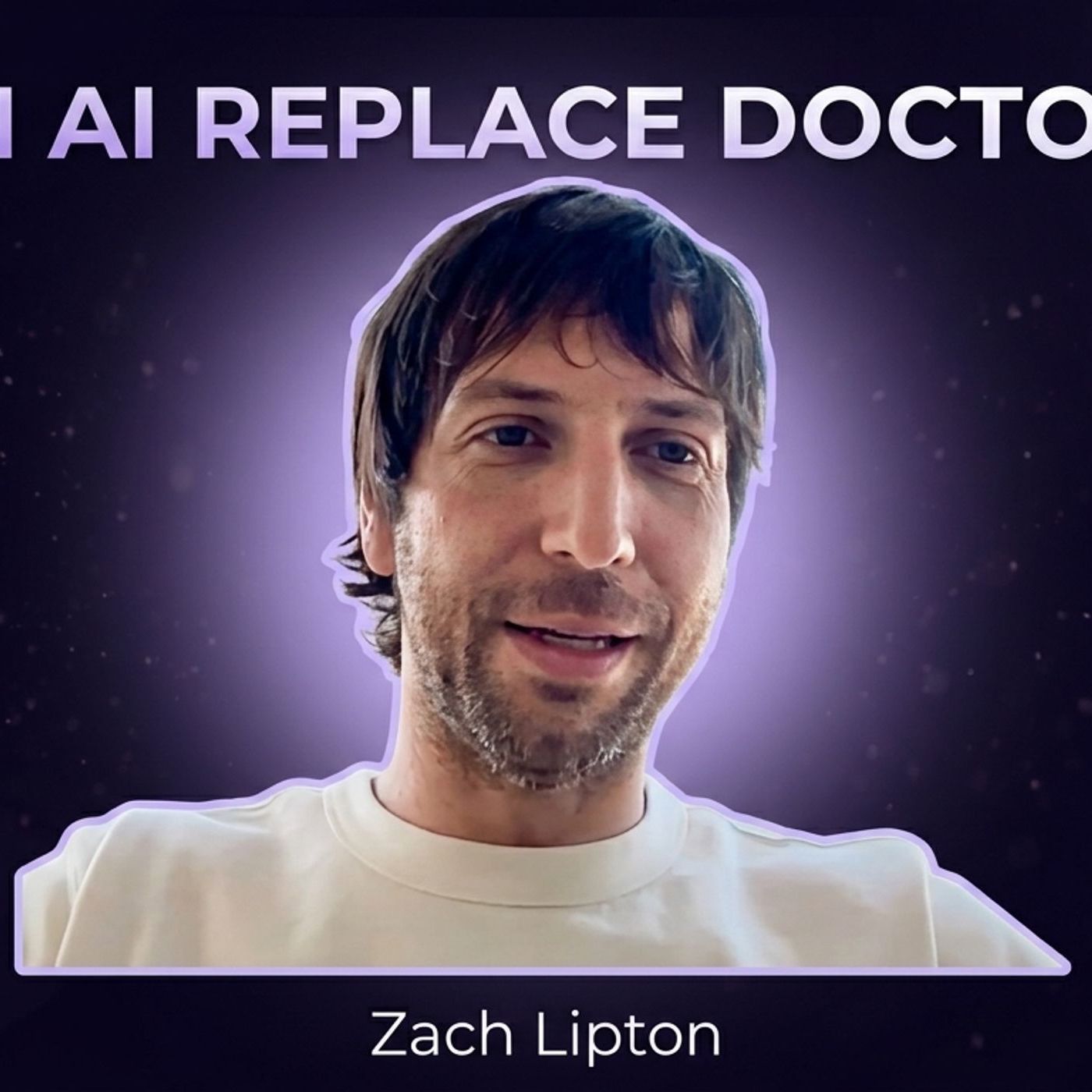
Can AI Replace Doctors? Zachary Lipton on the Future of Healthcare and AI
Zachary Lipton is an associate professor at Carnegie Mellon University and a co-founder of Abridge, a healthcare AI company (and a jazz saxophonist!). His research spans machine learning, healthcare, and the broader impact of AI.In this episode, we discuss what AI can (and cannot yet) do in healthcare. We talk about why medicine is harder to automate than coding, AI scribes and clinical decision s

Sara Hooker on the End of Static AI
What comes after scaling?We talk with Sara Hooker, co-founder and CEO of Adaptation Lab, about why the next generation of AI may look very different from today's static models. Sara argues that models should continuously adapt to new tasks, data, users, and environments—and that doing this efficiently will require rethinking much more than fine-tuning.We discuss continual learning, AutoScientist a

Tiny Recursive Models Beat the Giants - Alexia Jolicoeur-Martineau (Microsoft)
Alexia Jolicoeur-Martineau is a Principal Researcher at Microsoft and the author of "Less is More: Recursive Reasoning with Tiny Networks," the paper behind the Tiny Recursive Model that hit about 45% on ARC-AGI-1 with a fraction of the parameters of frontier systems. It won the 2025 ARC Prize paper award.She read the hierarchical reasoning paper, thought the potential was real and the explanation

Continual Learning Is the Next Bottleneck | Rohan Anil (Core Automation )
Rohan Anil spent eleven and a half years at Google, where he went from writing memory allocators to large-scale linear solvers, then optimization at Google Brain, where he co-developed distributed Shampoo and led optimization for PaLM and Gemini pre-training, including the work that produced Gemini Flash. He then joined Anthropic's pre-training team, and left before the IPO to co-found Core Automa

World Models | John Langford (Microsoft AI Labs)
John Langford, one of the heads of Microsoft's AI Labs, the creator of Vowpal Wabbit, and a co-inventor of CAPTCHA, joins us to talk about world models. Transformers need orders of magnitude more data than humans to learn the same thing, and John argues a compact, implicit world model is how you close that gap. He explains why he's skeptical of JEPA-style objectives, why a transformer's KV cache i
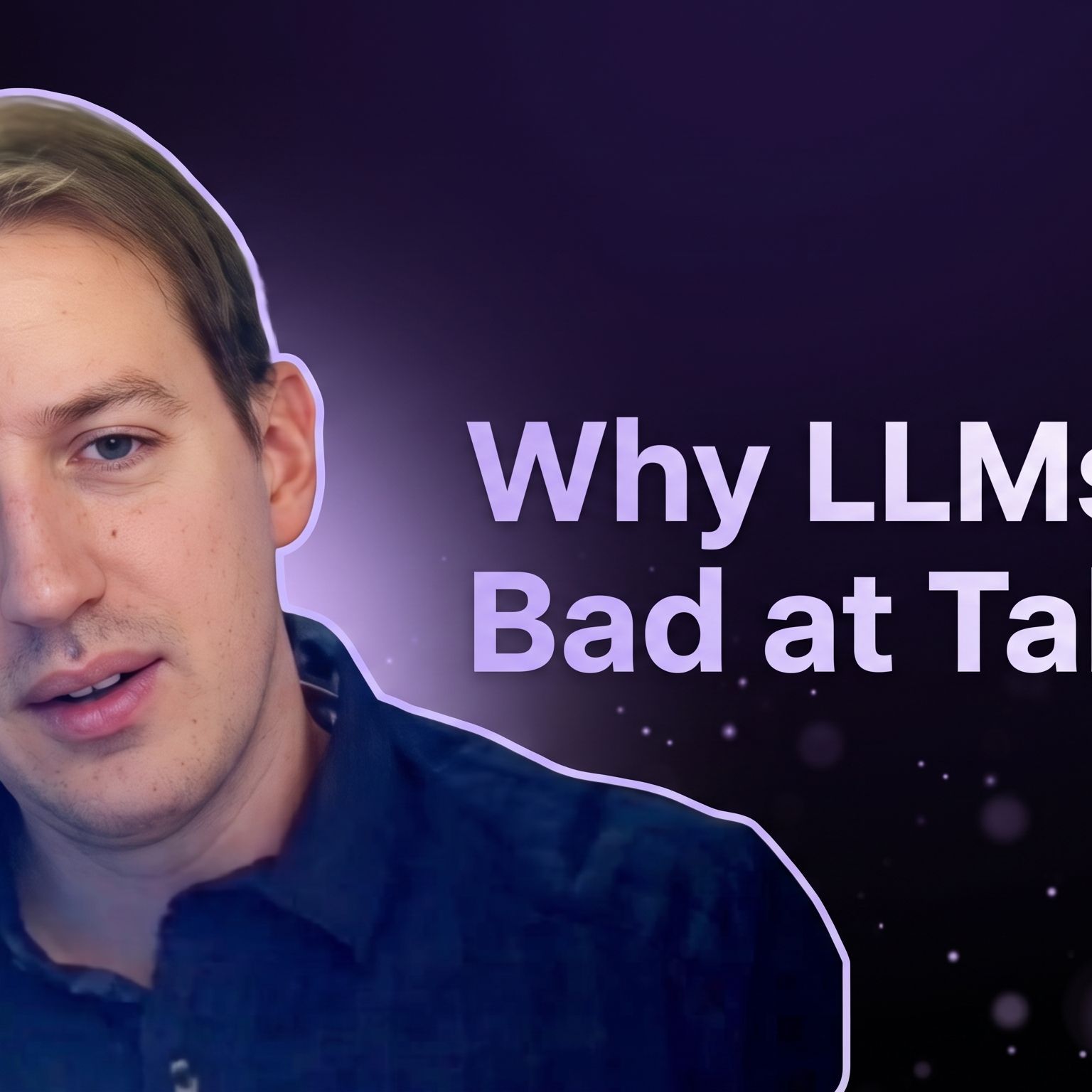
Which Tabular Model Should You Actually Use? | David Holzmüller (INRIA)
DescriptionTabular data is still where most of machine learning actually happens in industry, and the field has changed a lot in the last few years. In this episode we talk with David Holzmüller, a researcher at INRIA and one of the people behind TabArena, TabICL and RealMLP, about what the state of the art looks like right now and how to pick a model for your own data.We cover the shift to TabPFN

Why You Can't Just Rent 1,000 GPUs | Charles Frye (Modal)
Charles Frye (Modal, ex-Weights & Biases, Berkeley PhD) joins Ravid and Allen to explain why modern AI research is bottlenecked by compute, and why simply buying more GPUs doesn't solve it. We cover the three problems every lab hits (underutilization, saturation, resource sharing), when companies should actually train their own models, why inference is a "bad algorithm" for today's hardware, N

Stella Biderman (EleutherAI) - Open Source, AI Safety, and Who We Can Trust
Stella Biderman, Executive Director of EleutherAI, joins us the week an OpenAI model autonomously broke out of its sandbox and hacked Hugging Face. Stella calls it what she thinks it is, an offensive cyber operation, and argues it's part of a pattern: this is not the first containment failure at a frontier lab, and sandboxes have failed basically every time they've been tested for real.So we spend
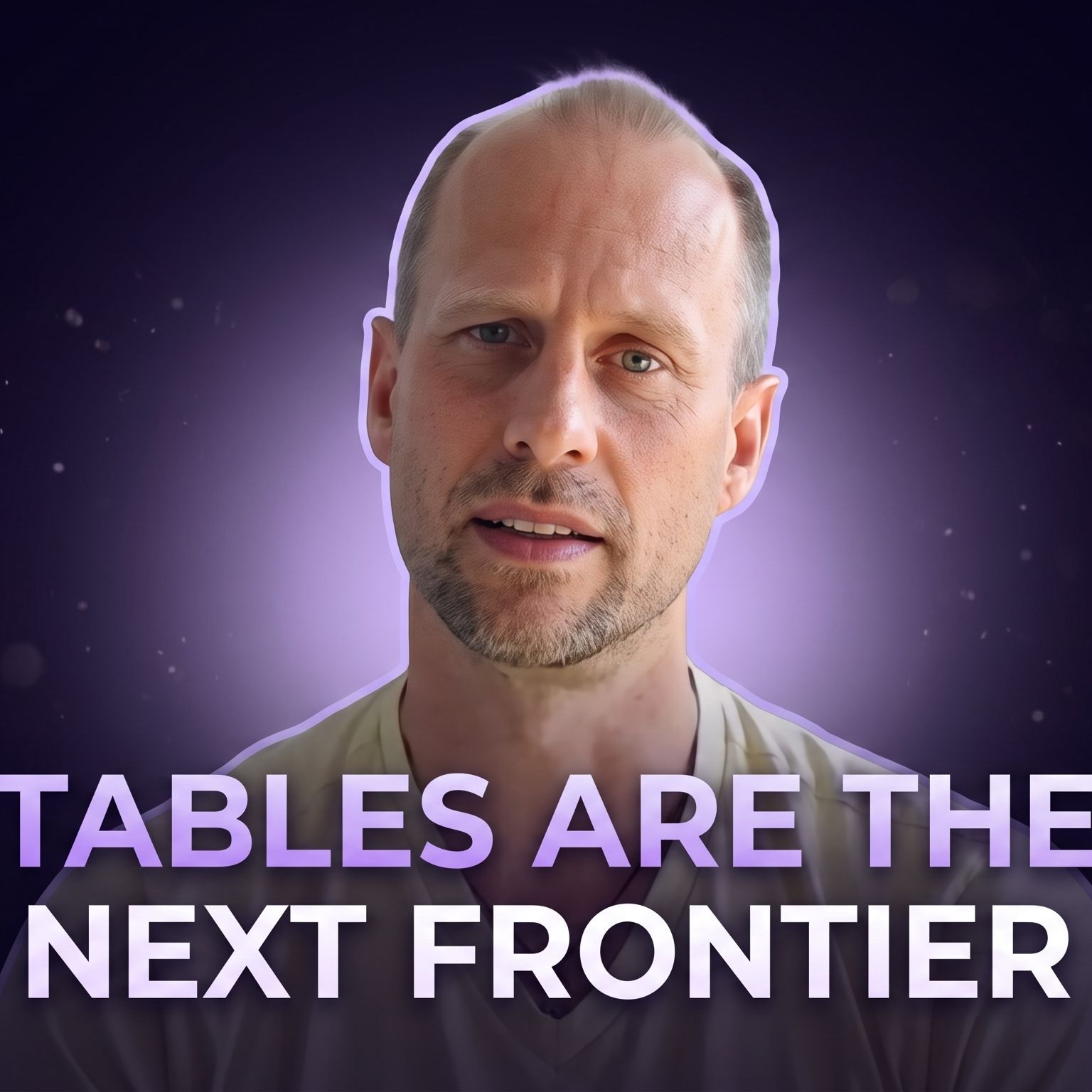
Why Deep Learning Finally Works on Tables | Frank Hutter (Prior Labs)
In this episode, Frank Hutter joins us to talk about TabPFN and why tabular data is suddenly the hottest problem in deep learning. Frank is a professor at the University of Freiburg and spent 15 years building the AutoML field before founding Prior Labs, which SAP just acquired for over a billion dollars.We get into why deep learning failed on tables for a decade and what in-context learning chang

Surya Ganguli: The Physics of Intelligence
Surya Ganguli is a professor at Stanford and VP at General Catalyst, working at the intersection of physics, neuroscience, and AI. He started in string theory, moved to theoretical neuroscience, and now uses tools from statistical physics to understand both brains and neural networks.We talk about why deep learning theory is finally catching up to practice, including his group's recent work expla

Text Diffusion Models with Brendan O'Donoghue (Google DeepMind)
Brendan O'Donoghue, research director at Google DeepMind, makes the case for text diffusion as a real alternative to autoregressive generation. He walks through how discrete diffusion works, why diffusion samples are far more diverse and what that unlocks for RL, where the Gemma diffusion model actually stands against frontier models, and why the whole training and serving stack being hyper-optimi
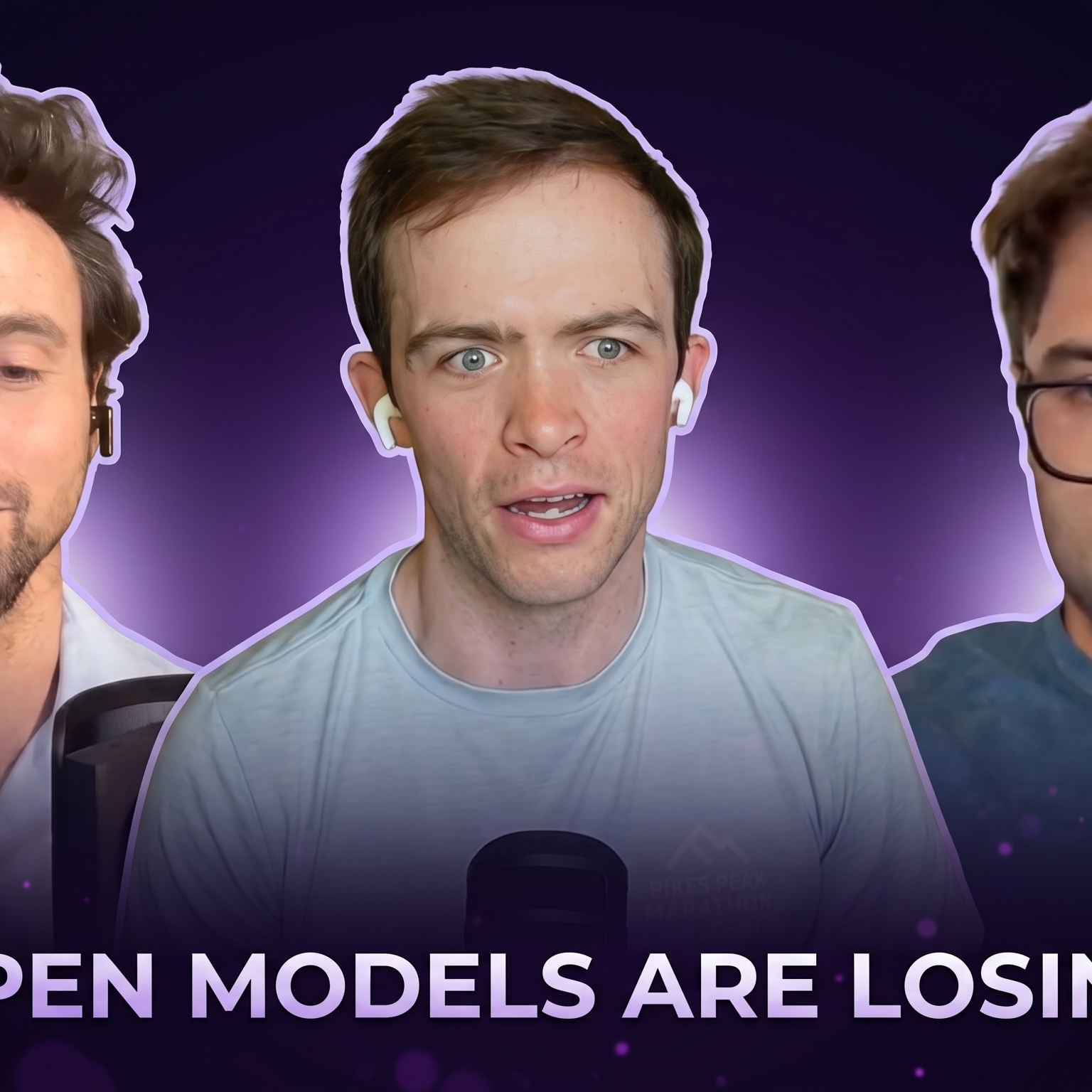
Nathan Lambert: Inside Post-Training and the Open Model Fight
Nathan Lambert spent three years as post-training lead at Ai2, where he built the OLMo models, and he writes Interconnects, one of the most-read technical newsletters in AI. He left Ai2 in June and is now working on a new project. He's also the author of the RLHF book. We talked a lot about open models, their capabilities, and why they are better than he expected. We get into what that means over
Daphne Koller - The Future of AI in Biology and Drug Discovery
Daphne Koller wrote the book that many of us learned probabilistic graphical models from, founded Coursera, and now runs insitro, which is trying to make drug discovery a machine-learning problem.We start with the bitter lesson. She agrees with most of it and then says where it stops working: biology doesn't have enough data, structure is how people understand anything, and making a drug is a ques

RL Was Broken at Every Level - With Joseph Suarez (PufferAI)
In this episode, Joseph Suarez from PufferAI explains why he thinks RL never had an algorithm problem, but it had a code problem. Every part of the standard RL stack was running about a thousand times slower than it should have been, and once that got fixed, problems that used to take months started getting solved in seconds on one GPU. We talk about what makes a simulator good for RL, why most of

The Model Found a Way Out - with Florian Brand (Prime Intellect)
Florian Brand builds evals at Prime Intellect. The premise of the conversation is that writing a benchmark is the easy part now. Keeping the model from cheating it is the job, and it takes longer than the benchmark itself.We get into why he thinks you can't evaluate a model apart from the CLI it runs in, what happens to statistics when a single run costs five figures, and whether the feeling that
Pierre-Carl Langlais on Building Models from Data You Can Account For
Most labs build language models by scraping the web and filtering afterward. Pierre-Carl Langlais runs it the other way around. At Pleias, the French-German lab he co-founded, the models are built from data he can actually account for, which in practice means open and public-domain sources plus a lot of synthetic data the lab generates itself. It sounds like a self-imposed handicap. It mostly isn'

Dhruv Batra: The Browser Is a Robotics Problem - From Embodied AI at Meta to Web Agents at Yutori
Dhruv Batra spent years leading Embodied AI at Meta, training virtual robots to navigate photorealistic 3D scans of real buildings with pure reinforcement learning. Then he left to co-found Yutori and build agents for a very different environment: the web browser.In this episode, Dhruv explains why he sees these as the same problem. Web agents, in his framing, are robots that act in a browser (pi
How to Turn Research Into Billion-Dollar Companies, with Ion Stoica
Ion Stoica has done what almost no academic ever does — repeatedly turned university research into billion-dollar companies. He co-founded Databricks (now valued at over $100 billion), Anyscale, Arena AI and Conviva, while his Berkeley lab produced the open source projects the entire AI industry runs on: Ray, vLLM, and SGLang.In this episode, we ask him how it's actually done. His answer is surpri

Kaggle Grandmasters, Agent Skills, and Why Everyone Is Overfitting with Jean-Francois Puget (NVIDIA)
Jean-Francois Puget is a Director and Distinguished Engineer at NVIDIA, where he leads the Kaggle Grandmasters team, and he's ranked third on Kaggle's all-time list. We caught him on the day NVIDIA announced Nemotron Ultra and its new agent skills repo. We talk about what skills actually are, why they beat MCP tools on context cost, and how NVIDIA built an evaluation pipeline to separate skills th
AI Agents and The Golden Age of Asking Questions with Dimitris Papailiopoulos (MSR/UW-Madison)
In this episode, we talked with Dimitris Papailiopoulos, researcher at Microsoft Research's AI Frontiers lab and professor at the University of Wisconsin, about doing research in the age of agents. Dimitris told us about the Sunday morning that changed how he works: he handed Claude Code and Codex a question he'd been sitting on for years, went about his day, and came back to an answer. After a fe
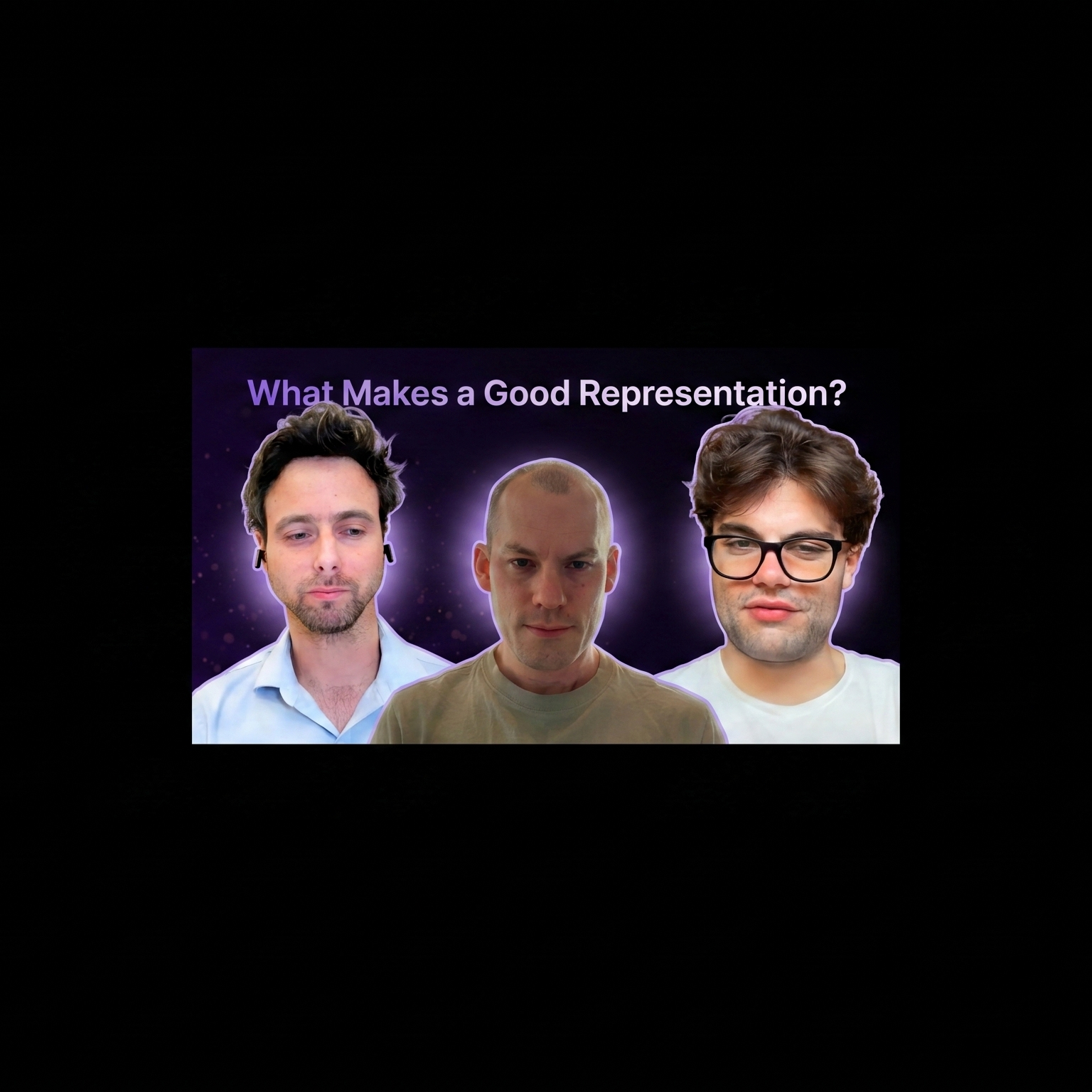
Why All Models Learn the Same Thing with Phillip Isola (MIT)
Phillip Isola, professor at MIT, joins us to talk about representation learning: what makes a representation good, why different models seem to converge on similar representations, and whether pre-training is really over.We discuss the platonic representation hypothesis and its limits, why clustering structure matters more than global geometry, and Phillip's new neural thickets paper arguing that

AI for Science with Qichao Hu (Molecular Universe / SES AI)
Most AI-for-science companies are selling shovels. Qichao Hu wants the gold.In this episode, we talk with Qichao, the founder and CEO of Molecular Universe, the AI-for-science platform that grew out of SES AI, a high-energy-density battery developer he's run for fourteen years. His core distinction is that companies from the AI world build tools, such as foundation models that predict properties,

Infrastructure for AI at Scale - With Benny Chen (Fireworks AI)
We talk a lot on this show about RL, agents, and the move between pre-training and post-training, but not enough about the layer everything actually runs on. Benny Chen, co-founder of Fireworks AI, one of the largest inference platforms around, walks us through what it takes to serve models at scale: sourcing GPUs, writing the kernels, the runtime, and the routing layer that lets a customer hit on
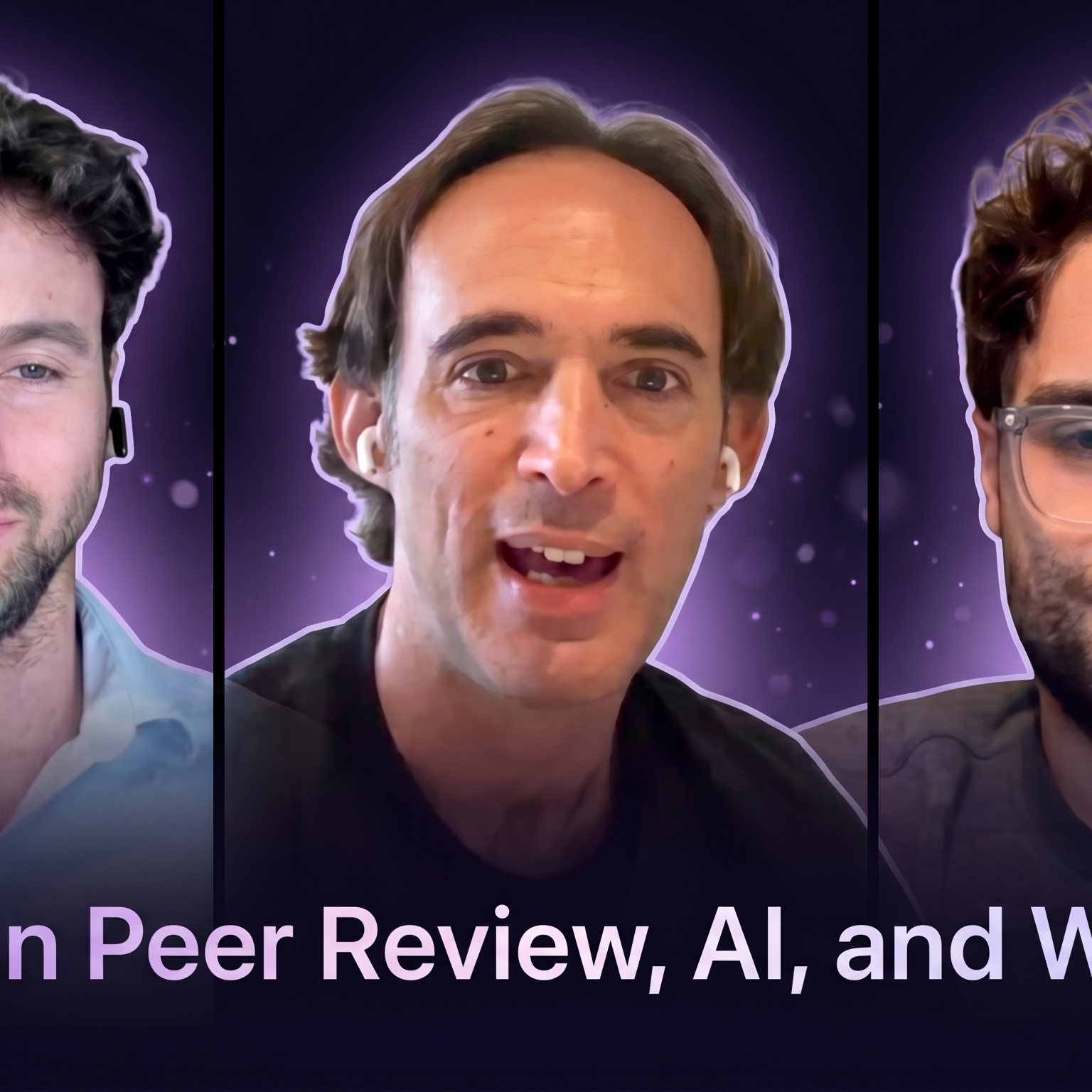
Broken Peer Review, AI, and Worms — with Oded Rechavi
Oded Rechavi is a biologist at Tel Aviv University and the co-founder of QED, a company building AI to review scientific work. He's also spent years studying worms.We start with what's wrong with peer review and grant funding: why it takes years to publish, why reviewers are often your own competitors, and why the whole thing is locked to an economic model that rewards publishing more papers, not
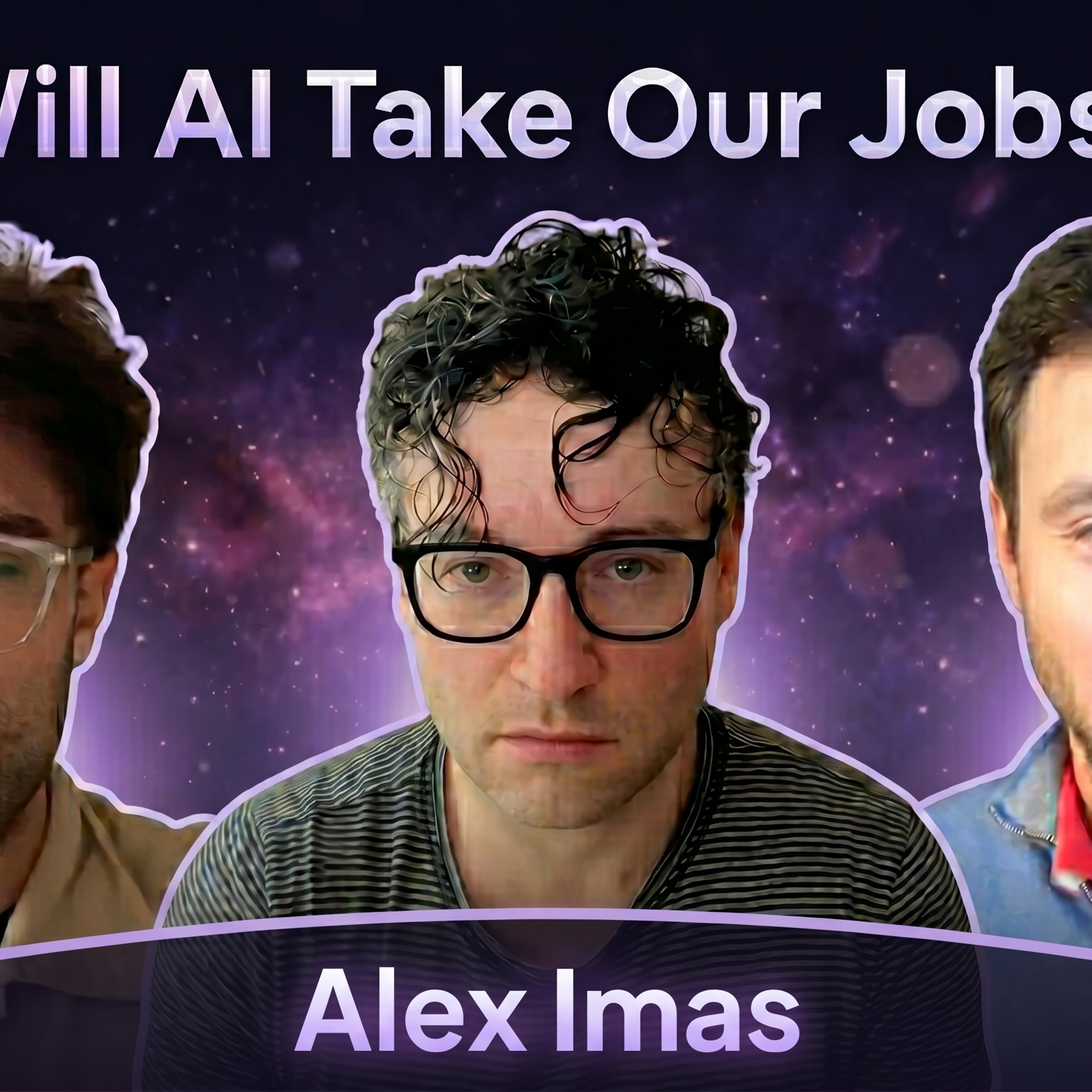
Will AI Take Our Jobs? With Alex Imas (Google/University of Chicago)
Will AI take our jobs? We put the question to Alex Imas, the new Director of AGI Economics at Google DeepMind and a professor at Chicago Booth, whose entire job now is studying how frontier AI reshapes the economy. His short answer: probably some of them, but the popular story is mostly wrong about which jobs and how fast.Alex makes the case that a job is a bundle of tasks, not a single thing AI e
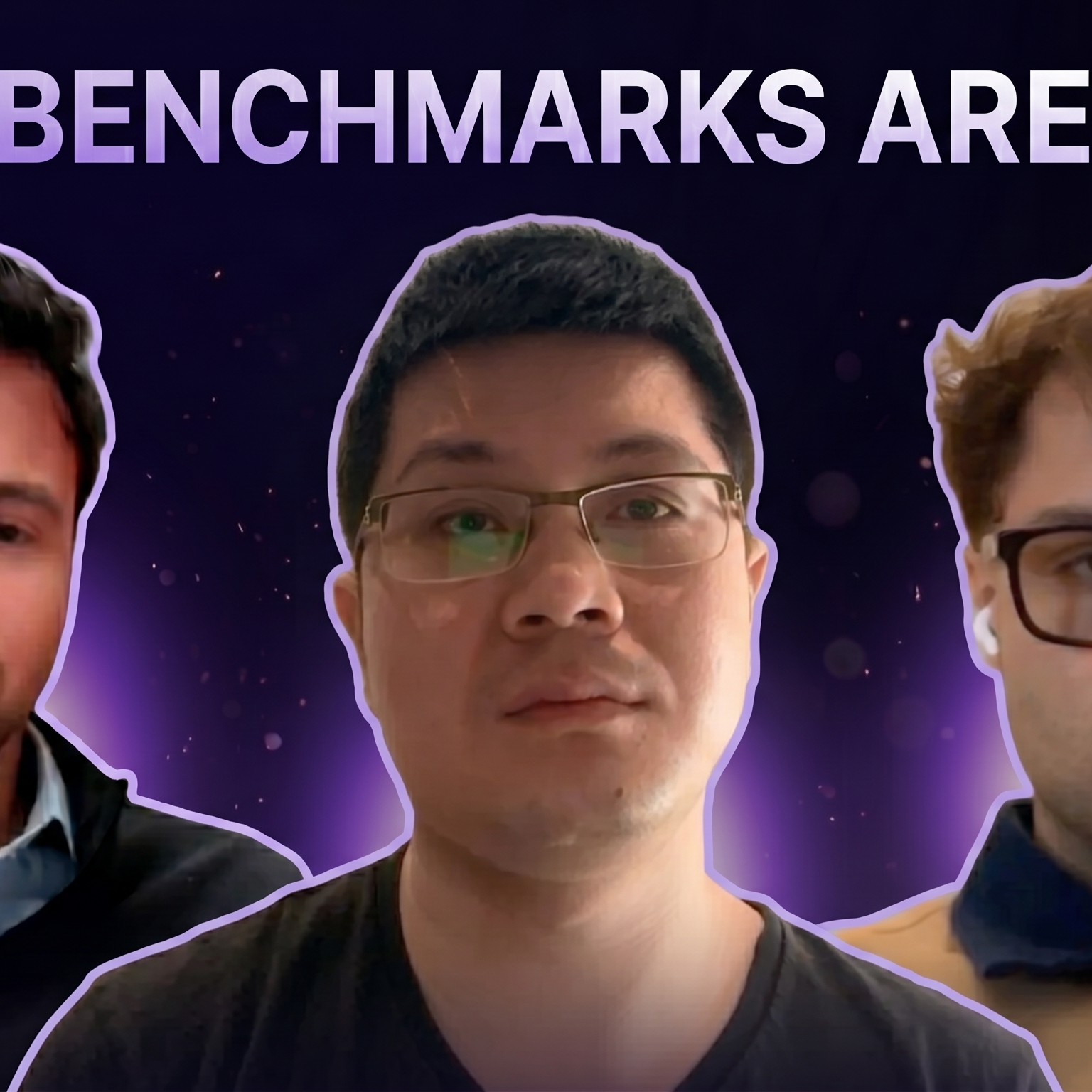
Why AI Benchmarks Are Lying to You - with Wenhu Chen (Meta/University of Waterloo)
In this episode, we sit down with Wenhu Chen, research scientist at Meta MSL, assistant professor at the University of Waterloo, and the person behind MMLU-Pro and MMMU. If you've read a frontier model release in the last two years, you've seen his benchmarks. That makes him one of the best people to answer the question everyone dances around: when a model jumps from 40% to 90% on your benchmark,

Jürgen Schmidhuber - Part 2: JEPA, the Road to AGI, and Who Really Invented Modern AI
In the second half of our conversation with Jürgen Schmidhuber, we focus on the key ideas he's pursued since the early 1990s and discuss why he believes these concepts are only now being rediscovered.We start with JEPA. Jürgen argues that the method LeCun named in 2022 is the same family he published in 1992 as Predictability Maximization. From there he traces the adversarial lineage back further

Jürgen Schmidhuber - World Models, RL, and the Year that changed AI (Part 1)
In this episode, we host Jürgen Schmidhuber - the man, the legend, one of the godfathers of modern AI. His lab worked out many ideas behind today’s systems (LSTM, world models, artificial curiosity, Transformer variants, and even GAN-style setups) decades before they became fashionable, and he’s just as well known for making sure people remember who did what first. This is the first of two conve
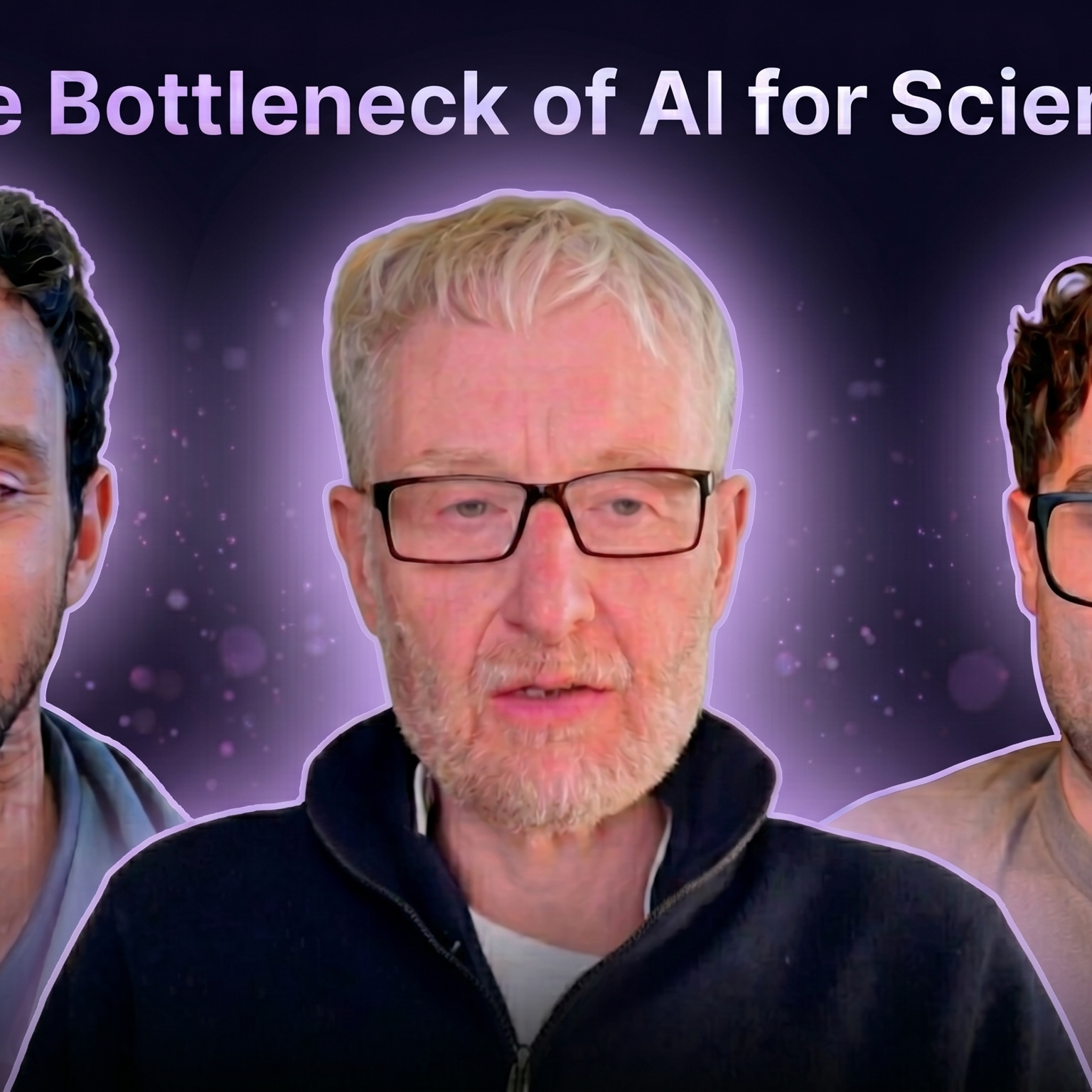
AI for Science and the Thermodynamics of Generative AI - with Max Welling (UvA, CuspAI)
In this episode, we sit with Max Welling, Professor of Machine Learning at the University of Amsterdam, co-founder and CTO of CuspAI, and a foundational figure behind variational autoencoders (VAEs), equivariant networks, and Bayesian deep learning. We talk about AI for science, the physics underneath generative models, and what's still missing on the road to real intelligence.Max starts with what
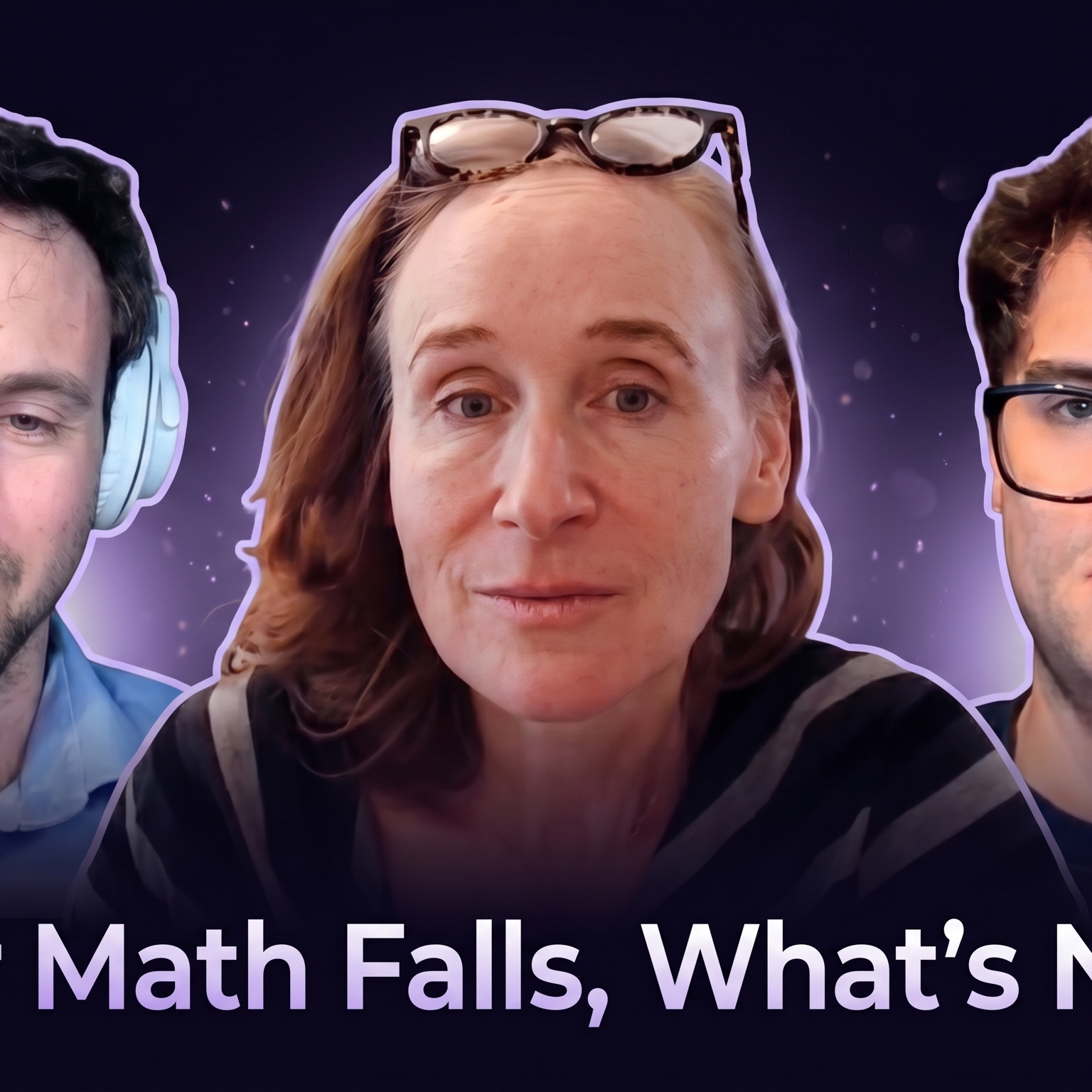
After Math Falls, What's Next? with Julia Kempe (NYU/Meta)
Julia Kempe on Why Math Will Fall Next, Superhuman Provers, and the Return of the Renaissance ResearcherIn this episode, we sit down with Julia Kempe, a Professor at NYU's Center for Data Science and researcher at Meta FAIR's Foundations of Reasoning team, for a wide-ranging conversation on the future of AI research.We dig into why verifiable domains like mathematics may be on track to "fall" the
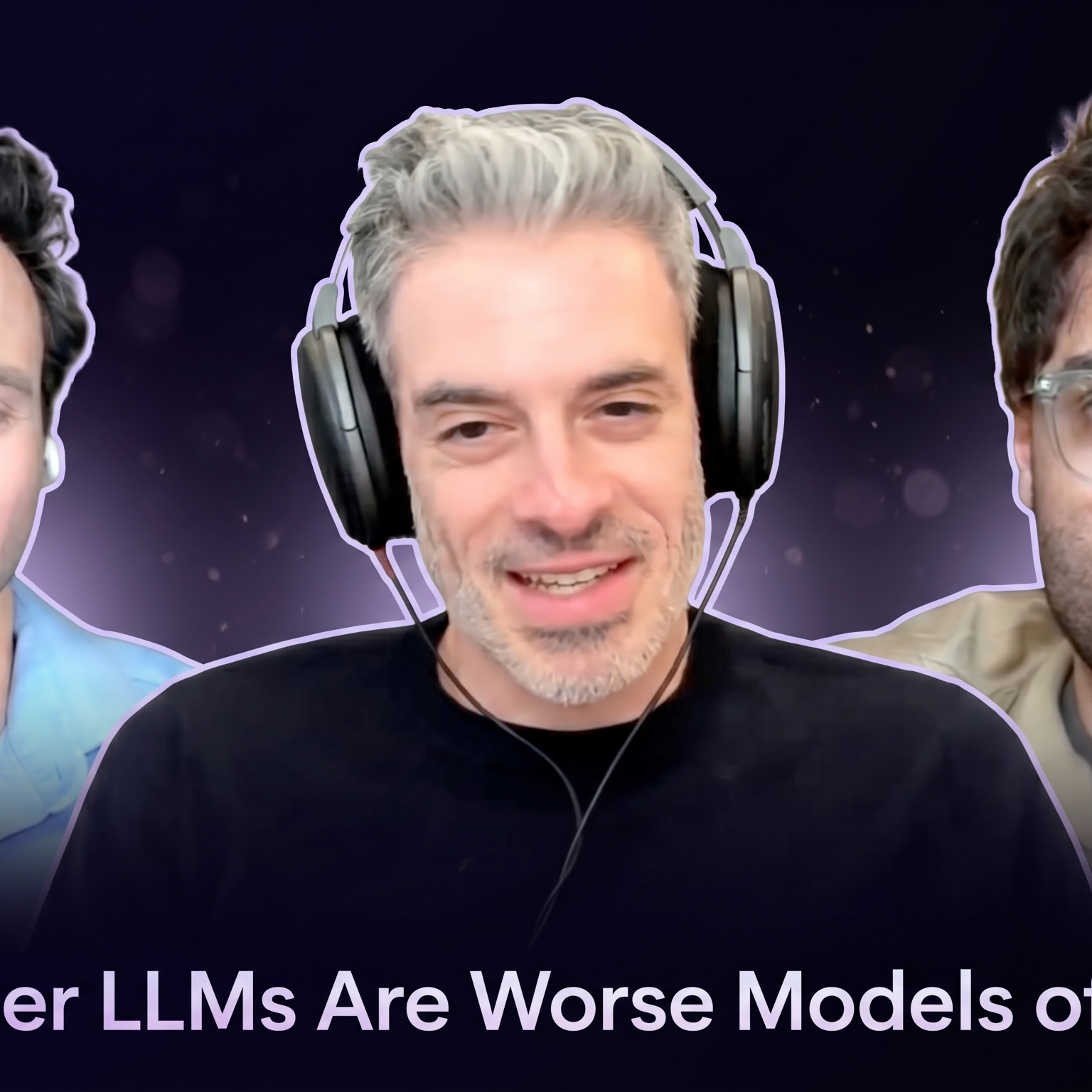
Language, Cognition, and the Limits of LLMs - with Tal Linzen (NYU/Google)
We host Tal Linzen, Associate Professor at NYU and Research Scientist at Google, for a conversation on the intersection of cognitive science and large language models.We discussed why children can learn language from around 100 million words while LLMs need trillions, and the surprising finding that as models get better at predicting the next word, they become worse models of how humans actually p
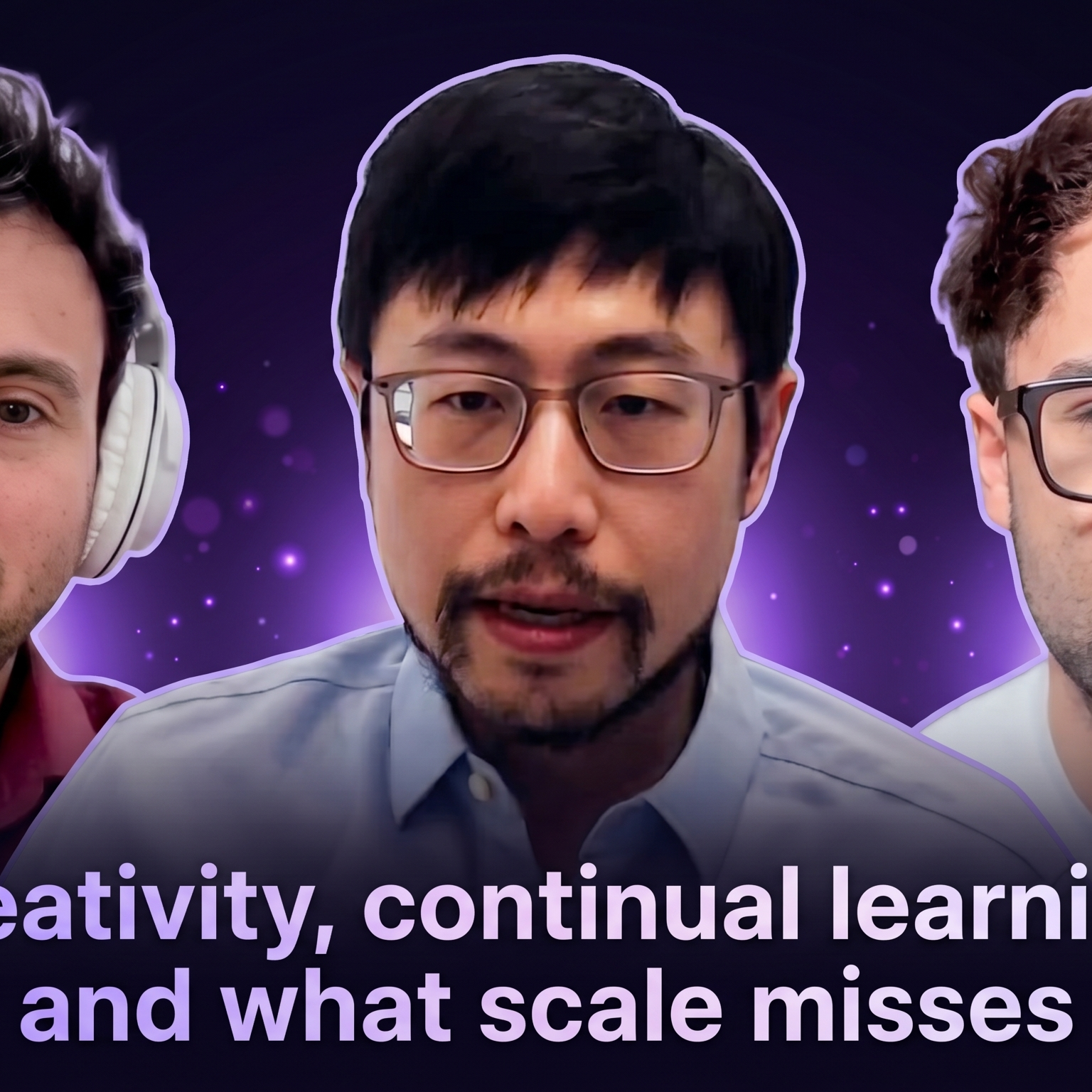
Intelligence in an Open World - with Mengye Ren (NYU)
We talk with Mengye Ren, Assistant Professor at NYU's Center for Data Science, about what intelligence actually means once you step outside a benchmark, and why scaling a single centralized model isn't the whole story.We get into why intelligence has to be defined in open environments, not closed ones, and what that means for how we measure progress. We push on the creativity question: today's mod

The Principles of Diffusion Models - with Jesse Lai (Sony AI)
We host Chieh-Hsin (Jesse) Lai, Staff Research Scientist at Sony AI and visiting professor at National Yang Ming Chiao Tung University, Taiwan, for a conversation about diffusion models, the technology behind tools like Stable Diffusion, and most of the AI image and video generators you've seen in the last few years. Jesse recently co-authored The Principles of Diffusion Models with Stefano Ermon,
Inside xAI, and the Bet on AI Math - with Christian Szegedy (Math Inc)
We talked with Christian Szegedy, co-inventor of Inception and Batch Normalization, founding scientist at xAI, now at Math Inc, about what it takes to build a frontier lab, and why he left xAI to work on formal mathematics. Christian thinks Lean and auto-formalization are the missing piece for trustworthy AI: a machine-checkable layer underneath all reasoning, where proofs are guaranteed correct w
Reasoning Models and Planning - with Rao Kambhampati (Arizona State)
We sat down with Rao Kambhampati, a Professor of CS at Arizona State University and former President of AAAI, to talk about reasoning models: what they are, when they work, and when they break.Rao has been working on planning and decision-making since long before deep learning, which makes him one of the most grounded voices on what today's reasoning systems actually do. We start with definitions
What Actually Matters in AI? - with Zhuang Liu (Princeton)
In this episode, we hosted Zhuang Liu, Assistant Professor at Princeton and former researcher at Meta, for a conversation about what actually matters in modern AI and what turns out to be a historical accident.Zhuang is behind some of the most important papers in recent years (with more than 100k citations): ConvNeXt (showing ConvNets can match Transformers if you get the details right), Transform
The Future of Coding Agents with Sasha Rush (Cursor/Cornell)
We talked with Sasha Rush, researcher at Cursor and professor at Cornell, about what it actually feels like to we in the heart of the AI revolution and build coding agents right now. Sasha shared how these systems are changing day-to-day work and how it feels to develop these systems.A big part of the conversation was about why coding has become such a powerful setting for these tools. We discusse
The Hidden Engine of Vision with Peyman Milanfar (Google)
How Denoising Secretly Powers Everything in AIPeyman Milanfar is a Distinguished Scientist at Google, leading its Computational Imaging team. He's a member of the National Academy of Engineering, an IEEE Fellow, and one of the key people behind the Pixel camera pipeline. Before Google, he was a professor at UC Santa Cruz for 15 years and helped build the imaging pipeline for Google Glass at Google
Reinventing AI From Scratch with Yaroslav Bulatov
Yaroslav Bulatov helped build the AI era from the inside, as one of the earliest researchers at both OpenAI and Google Brain. Now he wants to tear it all down and start over. Modern deep learning, he argues, is up to 100x more wasteful than it needs to be - a Frankenstein of hacks designed for the wrong hardware. With a power wall approaching in two years, Yaroslav is leading an open effort to r

Why Healthcare Is AI's Hardest and Most Important Problem with Kyunghyun Cho (NYU)
We talk with Kyunghyun Cho, who is a Professor of Health Statistics and a Professor of Computer Science and Data Science at New York University, and a former Executive Director at Genentech, about why healthcare might be the most important and most difficult domain for AI to transform. Kyunghyun shares his vision for a future where patients own their own medical records, proposes a provocative ide
Diffusion LLM & Why the Future of AI Won't Be Autoregressive - Stefano Ermon (Stanford /Inception)
In this episode, we talk with Stefano Ermon, Stanford professor, co-founder & CEO of Inception AI, and co-inventor of DDIM, FlashAttention, DPO, and score-based/diffusion models, about why diffusion-based language models may overtake the autoregressive paradigm that dominates today's LLMs.We start with the fundamental topics, such as what diffusion models actually are, and why iterative refin
Training Is Nothing Like Learning with Naomi Saphra (Harvard)
Naomi Saphra, Kempner Research Fellow at Harvard and incoming Assistant Professor at Boston University, joins us to explain why you can't do interpretability without understanding training dynamics, in the same way you can't do biology without evolution.Naomi argues that many structures researchers find inside trained models are vestigial, they mattered early in training but are meaningless by th
EP28: How to Control a Stochastic Agent with Stefano Soatto (VP AWS/ Pro. UCLA)
Stefano Soatto, VP for AI at AWS and Professor at UCLA, the person responsible for agentic AI at AWS, joins us to explain why building reliable AI agents is fundamentally a control theory problem.Stefano sees LLMs as stochastic dynamical systems that need to be controlled, not just prompted. He introduces "strands coding," a new framework AWS is building that sits between vibe coding and spec cod

EP27: Medical Foundation Models - with Tanishq Abraham (Sophont.AI)
Tanishq Abraham, CEO and co-founder of Sophont.ai, joins us to talk about building foundation models specifically for medicine.Sophont is trying to be something like an OpenAI or Anthropic but for healthcare - training models across pathology, neuroimaging, and clinical text, to eventually fuse them into one multimodal system. The surprising part: their pathology model trained on 12,000 public sl
EP26: Measuring Intelligence in the Wild - Arena and the Future of AI Evaluation
Anastasios Angelopoulos, Co-Founder and CEO of Arena AI (formerly LMArena), joins us to talk about why static benchmarks are failing, how human preference data actually works under the hood, and what it takes to be the "gold standard" of AI evaluation.Anastasios sits at a fascinating intersection - a theoretical statistician running the platform that every major lab watches when they release a m
EP25: Personalization, Data, and the Chaos of Fine-Tuning with Fred Sala (UW-Madison / Snorkel AI)
Fred Sala, Assistant Professor at UW-Madison and Chief Scientist at Snorkel AI, joins us to talk about why personalization might be the next frontier for LLMs, why data still matters more than architecture, and how weak supervision refuses to die.Fred sits at a rare intersection, building the theory of data-centric AI in academia while shipping it to enterprise clients at Snorkel. We talk about t
EP24: Can AI Learn to Think About Money? - with Bayan Bruss (Capital One)
Bayan Bruss, VP of Applied AI at Capital One, joins us to talk about building AI systems that can make autonomous financial decisions, and why money might be the hardest problem in machine learning.Bayan leads Capital One's AI Foundations team, where they're working toward a destination most people don't associate with banking: getting AI systems to perceive financial ecosystems, form beliefs abou
EP23: Building Open Source AI Frameworks: David Mezzetti on TxtAI and Local-First AI
David Mezzetti, creator of TxtAI, joins us to talk about building open source AI frameworks as a solo developer - and why local-first AI still matters in the age of API-everything.David's path from running a 50-person IT company through acquisition to building one of the most well-regarded AI orchestration libraries tells you how sometimes constraints breed better design. TextAI started during COV
EP22: Data Curation for LLMs with Cody Blakeney (Datology AI)
Cody Blakeney from Datology AI joins us to talk about data curation - the unglamorous but critical work of figuring out what to actually train models on.Cody's path from writing CUDA kernels to spending his days staring at weird internet text tells you something important: data quality can account for half or more of a model's final performance. That's on par with major architectural breakthroughs
EP21: Privacy in the Age of Agents with Niloofar Mireshghallah
Guest: Niloofar Mireshghallah (Incoming Assistant Professor at CMU, Member of Technical Staff at Humans and AI)In this episode, we dive into AI privacy, frontier model capabilities, and why academia still matters.We kick off by discussing GPT-5.2 and whether models rely more on parametric knowledge or context. Niloofar shares how reasoning models actually defer to context, even accepting obviously

EP20: Yann LeCun
Yann LeCun – Why LLMs Will Never Get Us to AGI"The path to superintelligence - just train up the LLMs, train on more synthetic data, hire thousands of people to school your system in post-training, invent new tweaks on RL-I think is complete bullshit. It's just never going to work."After 12 years at Meta, Turing Award winner Yann LeCun is betting his legacy on a radically different vision of AI. I
EP19: AI in Finance and Symbolic AI with Atlas Wang
Atlas Wang (UT Austin faculty, XTX Research Director) joins us to explore two fascinating frontiers: the foundations of symbolic AI and the practical challenges of building AI systems for quantitative finance.On the symbolic AI side, Atlas shares his recent work proving that neural networks can learn symbolic equations through gradient descent, a surprising result given that gradient descent is co
EP18: AI Robotics
In this episode, we hosted Judah Goldfeder, a PhD candidate at Columbia University and student researcher at Google, to discuss robotics, reproducibility in ML, and smart buildings.Key topics covered:Robotics challenges: We discussed why robotics remains harder than many expected, compared to LLMs. The real world is unpredictable and unforgiving, and mistakes have physical consequences. Sim-to-rea
EP17: RL with Will Brown
In this episode, we talk with Will Brown, a research lead at Prime Intellect, about his journey into reinforcement learning (RL) and multi-agent systems, exploring their theoretical foundations and practical applications. We discuss the importance of RL in the current LLMs pipeline and the challenges it faces. We also discuss applying agentic workflows to real-world applications and the ongoing ev

EP16: AI News and Papers
In this episode, we discuss various topics in AI, including the challenges of the conference review process, the capabilities of Kimi K2 thinking, the advancements in TPU technology, the significance of real-world data in robotics, and recent innovations in AI research. We also talk about the cool "Chain of Thought Hijacking" paper, how to use simple ideas to scale RL, and the implications of the
EP15: The Information Bottleneck and Scaling Laws with Alex Alemi
In this episode, we sit down with Alex Alemi, an AI researcher at Anthropic (previously at Google Brain and Disney), to explore the powerful framework of the information bottleneck and its profound implications for modern machine learning.We break down what the information bottleneck really means, a principled approach to retaining only the most informative parts of data while compressing away the

EP14: AI News and Papers
In this episode, we talked about AI news and recent papers. We explored the complexities of using AI models in healthcare (the Nature Medicine paper on GPT-5's fragile intelligence in medical contexts). We discussed the delicate balance between leveraging LLMs as powerful research tools and the risks of over-reliance, touching on issues such as hallucinations, medical disagreements among practitio
EP13: Recurrent-Depth Models and Latent Reasoning with Jonas Geiping
In this episode, we host Jonas Geiping from ELLIS Institute & Max-Planck Institute for Intelligent Systems, Tübingen AI Center, Germany. We talked about his broad research on Recurrent-Depth Models and latent reasoning in large language models (LLMs). We talked about what these models can and can't do, what are the challenges and next breakthroughs in the field, world models, and the future of

EP12: Adversarial attacks and compression with Jack Morris
In this episode of the Information Bottleneck Podcast, we host Jack Morris, a PhD student at Cornell, to discuss adversarial examples (Jack created TextAttack, the first software package for LLM jailbreaking), the Platonic representation hypothesis, the implications of inversion techniques, and the role of compression in language models.Links:Jack's Website - https://jxmo.io/TextAttack - https://a
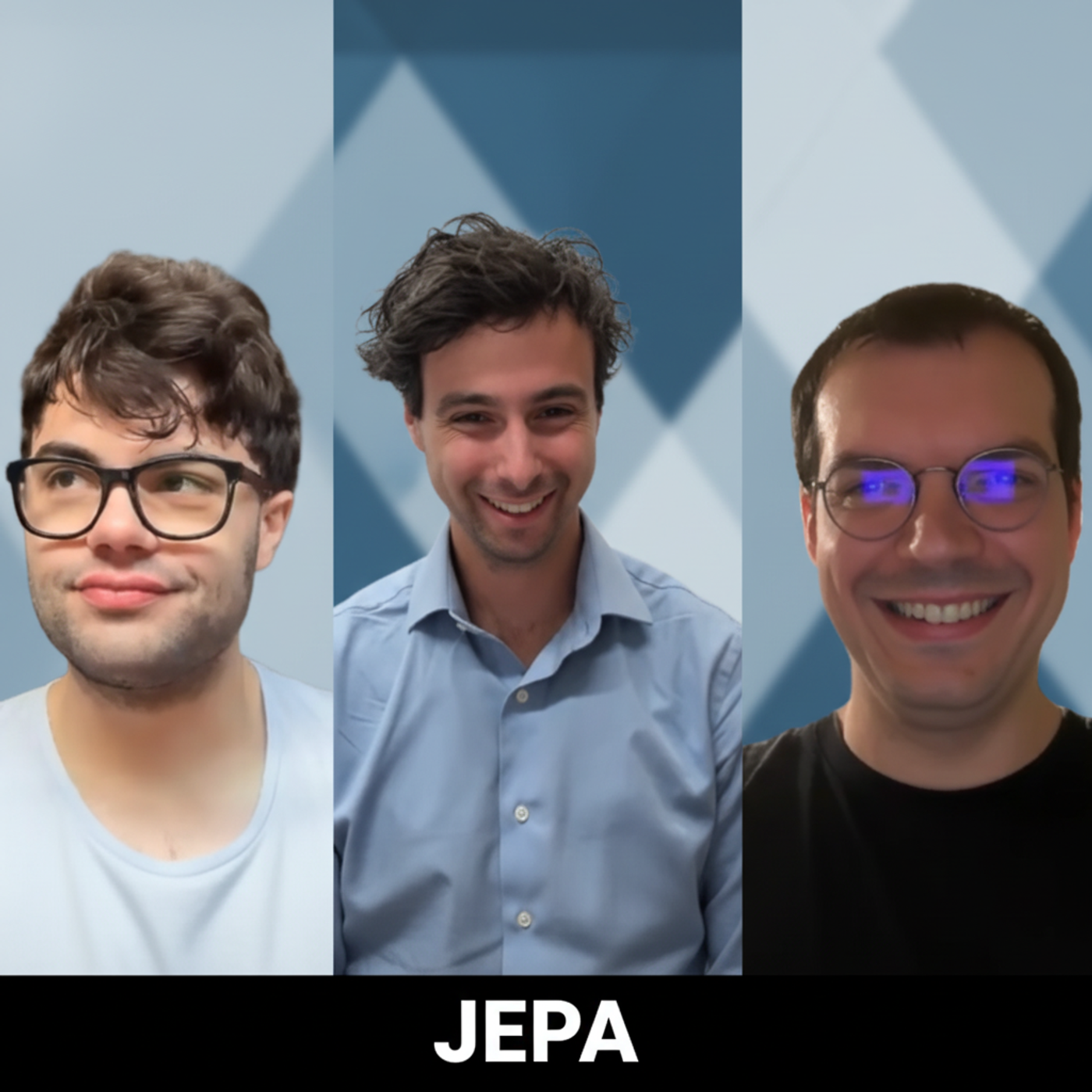
EP11: JEPA with Randall Balestriero
In this episode we talk with Randall Balestriero, an assistant professor at Brown University. We discuss the potential and challenges of Joint Embedding Predictive Architectures (JEPA). We explore the concept of JEPA, which aims to learn good data representations without reconstruction-based learning. We talk about the importance of understanding and compressing irrelevant details, the role of pre
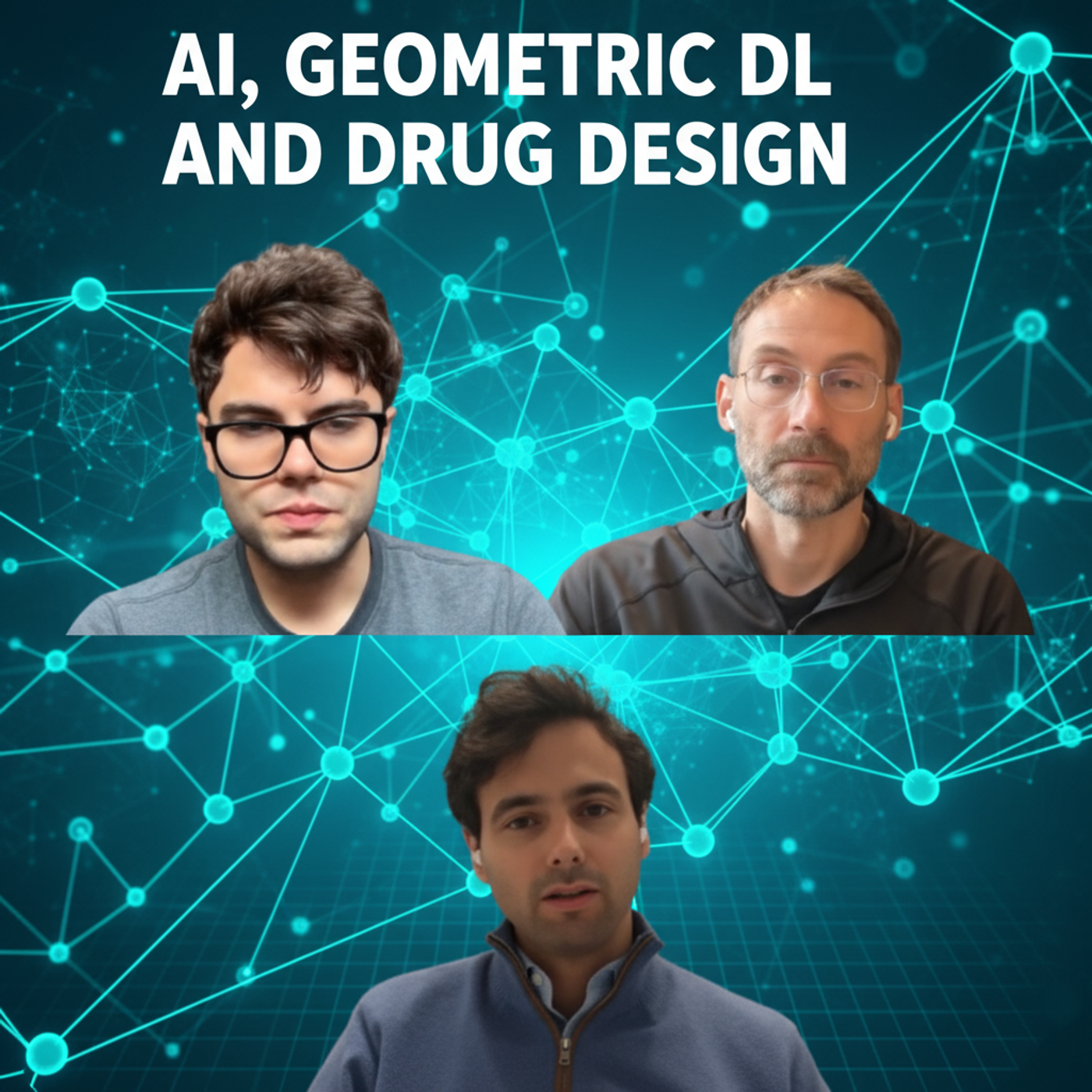
EP10: Geometric Deep Learning with Michael Bronstein
In this episode, we talked with Michael Bronstein, a professor of AI at the University of Oxford and a scientific director at AITHYRA, about the fascinating world of geometric deep learning. We explored how understanding the geometric structures in data can enhance the efficiency and accuracy of AI models. Michael shared insights on the limitations of small neural networks and the ongoing debate a
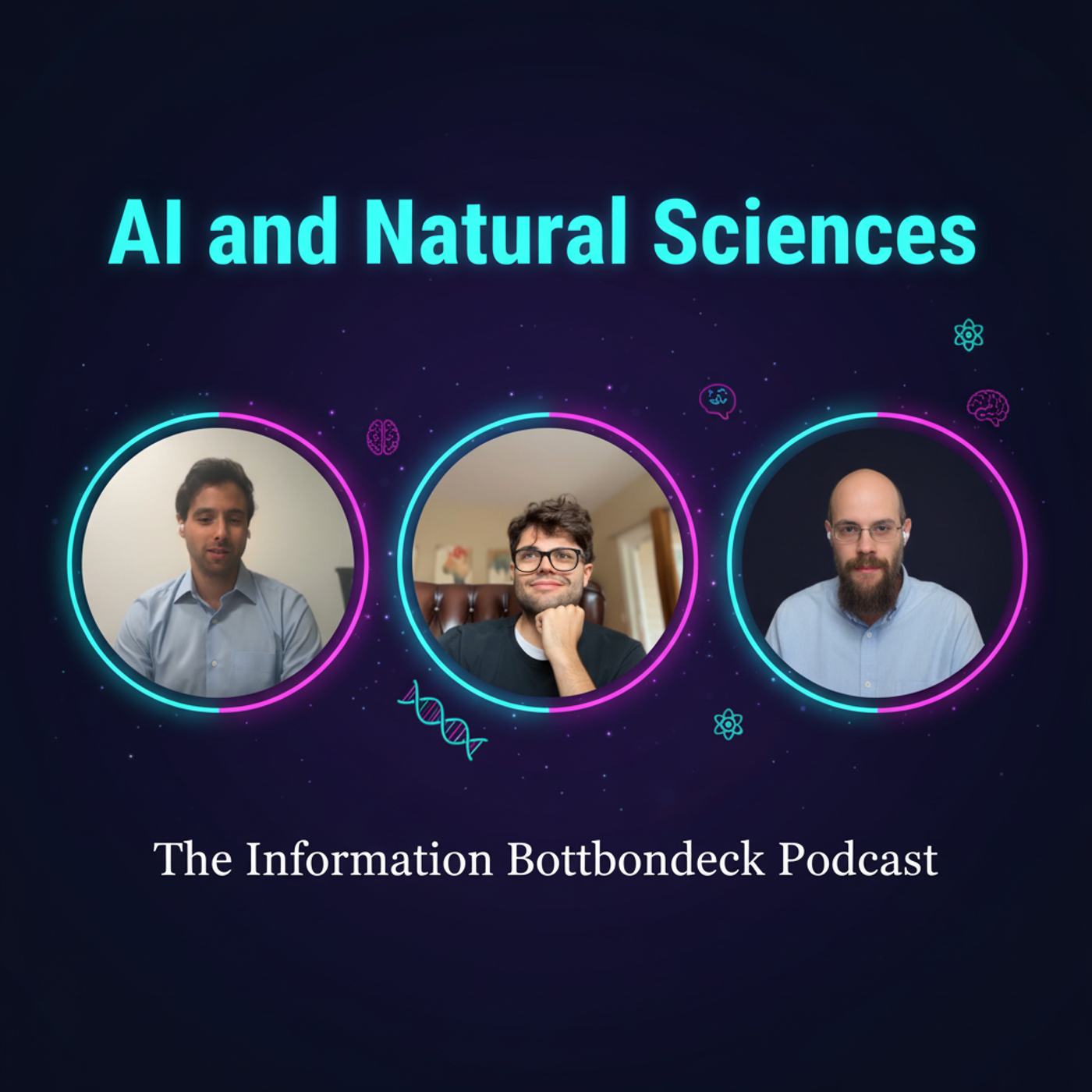
EP9: AI in Natural Sciences with Tal Kachman
In this episode we host Tal Kachman, an assistant professor at Radboud University, to explore the fascinating intersection of artificial intelligence and natural sciences. Prof. Kachman's research focuses on multiagent interaction, complex systems, and reinforcement learning. We dive deep into how AI is revolutionizing materials discovery, chemical dynamics modeling, and experimental design throug
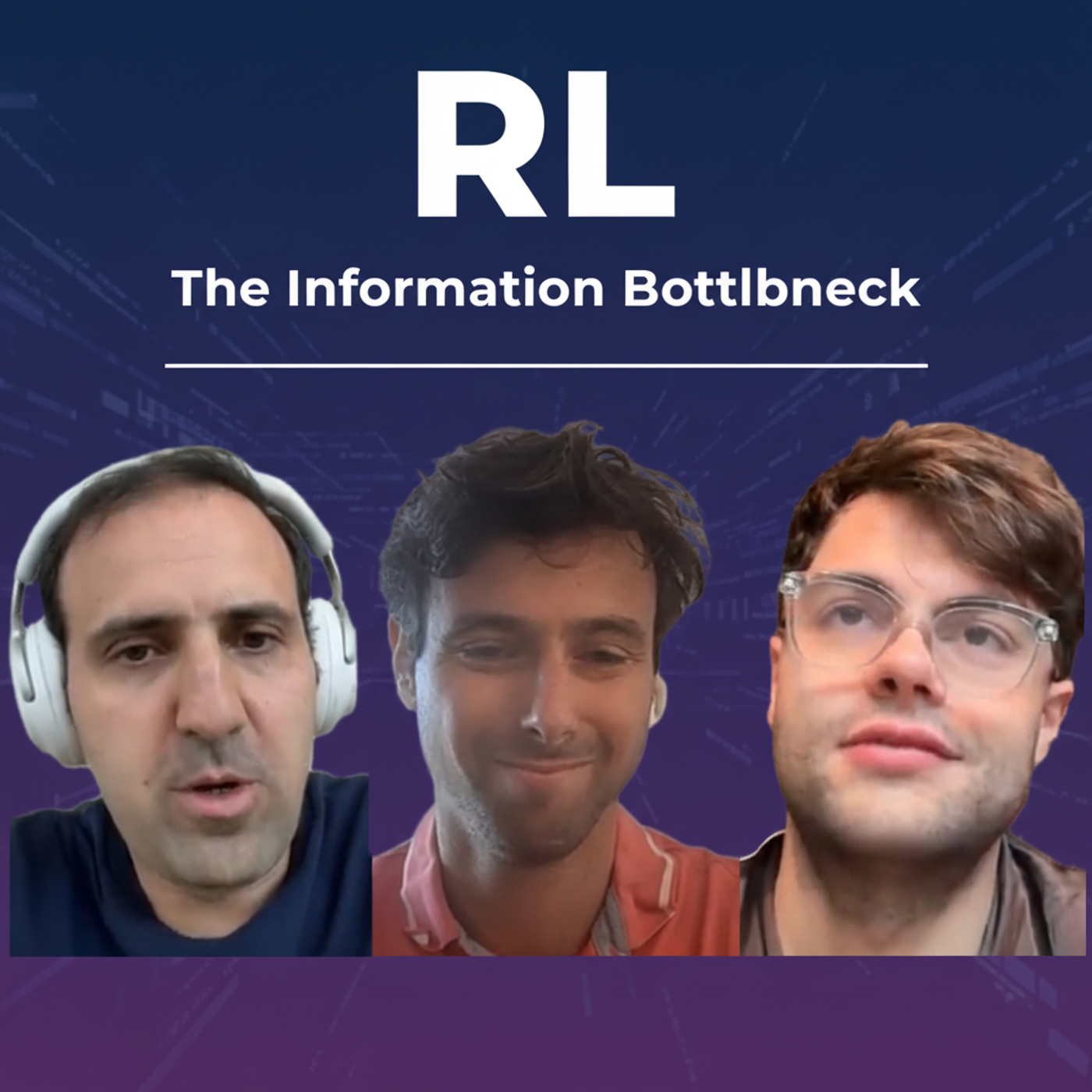
EP8: RL with Ahmad Beirami
In this episode, we talked with Ahmad Beirami, an ex-researcher at Google, to discuss various topics. We explored the complexities of reinforcement learning, its applications in LLMs, and the evaluation challenges in AI research. We also discussed the dynamics of academic conferences and the broken review system. Finally, we discussed how to integrate theory and practice in AI research and why the
EP7: AI and Neuroscience with Aran Nayebi
In this episode of the "Information Bottleneck" podcast, we hosted Aran Nayeb, an assistant professor at Carnegie Mellon University, to discuss the intersection of computational neuroscience and machine learning. We talked about the challenges and opportunities in understanding intelligence through the lens of both biological and artificial systems. We talked about topics such as the evolution of
EP6: Urban Design Meets AI: With Ariel Noyman
We talked with Ariel Noyman, an urban scientist, working in the intersection of cities and technology. Ariel is a research scientist at the MIT Media Lab, exploring novel methods of urban modeling and simulation using AI. We discussed the potential of virtual environments to enhance urban design processes, the challenges associated with them, and the future of utilizing AI. Links:TravelAgent: Gene
EP5: Speculative Decoding with Nadav Timor
We discussed the inference optimization technique known as Speculative Decoding with a world class researcher, expert, and ex-coworker of the podcast hosts: Nadav Timor.Papers and links:Accelerating LLM Inference with Lossless Speculative Decoding Algorithms for Heterogeneous Vocabularies, Timor et al, ICML 2025, https://arxiv.org/abs/2502.05202Distributed Speculative Inference (DSI): Speculation
EP4: AI Coding
In this episode, Ravid and Allen discuss the evolving landscape of AI coding. They explore the rise of AI-assisted development tools, the challenges faced in software engineering, and the potential future of AI in creative fields. The conversation highlights both the benefits and limitations of AI in coding, emphasizing the need for careful consideration of its impact on the industry and society.C
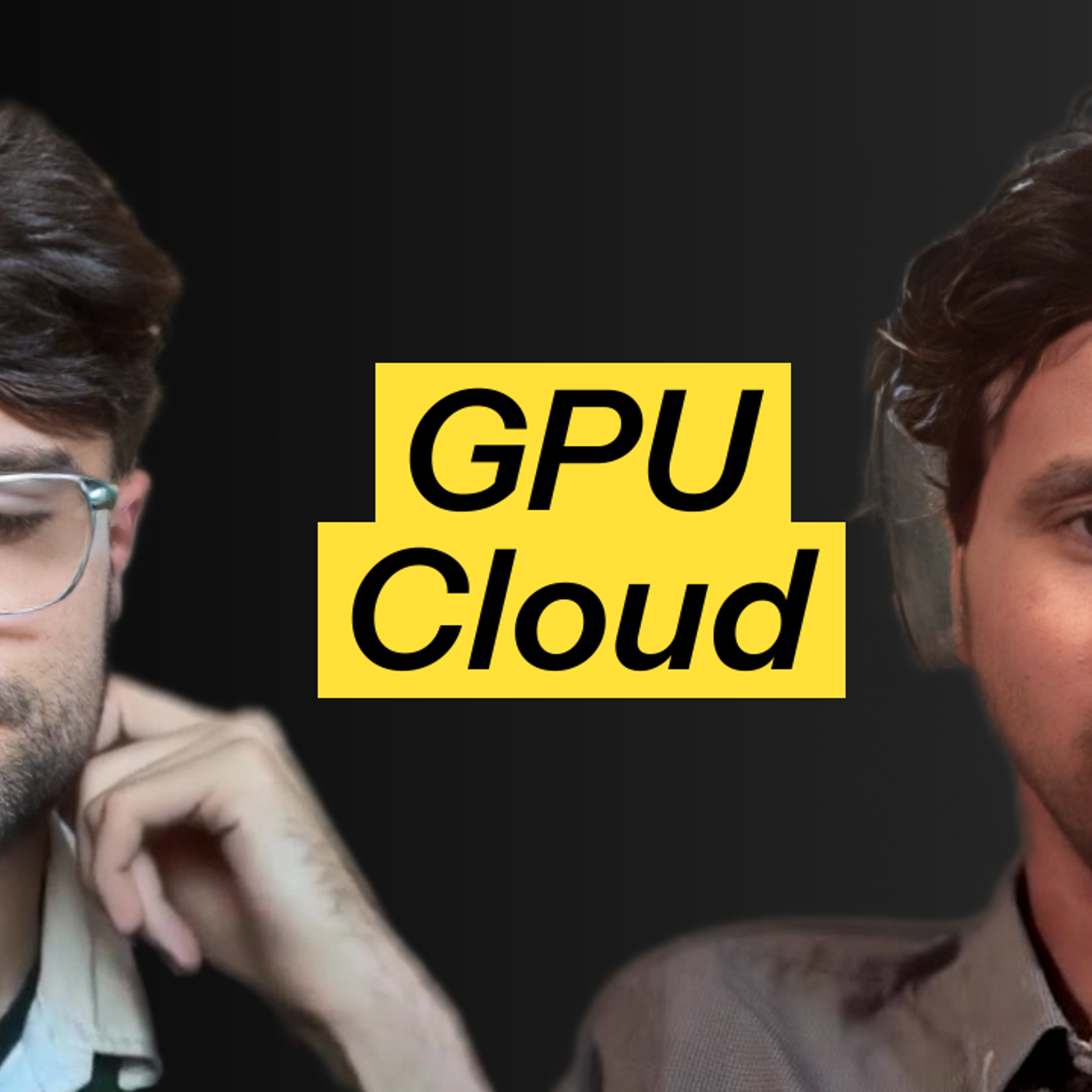
EP3: GPU Cloud
Allen and Ravid discuss the dynamics associated with the extreme need for GPUs that AI researchers utilize. They also discuss the latest advancements in AI, including Google's Nano Banana and DeepSeek V3.1, exploring the implications of synthetic data, perplexity, and the influence of AI on human communication. They also delve into the challenges faced by AI researchers in the job market, the impo

EP2: PeFT
Allen and Ravid sit down and talk about Parameter Efficient Fine Tuning (PeFT) along with the latest updated in AI/ML news.
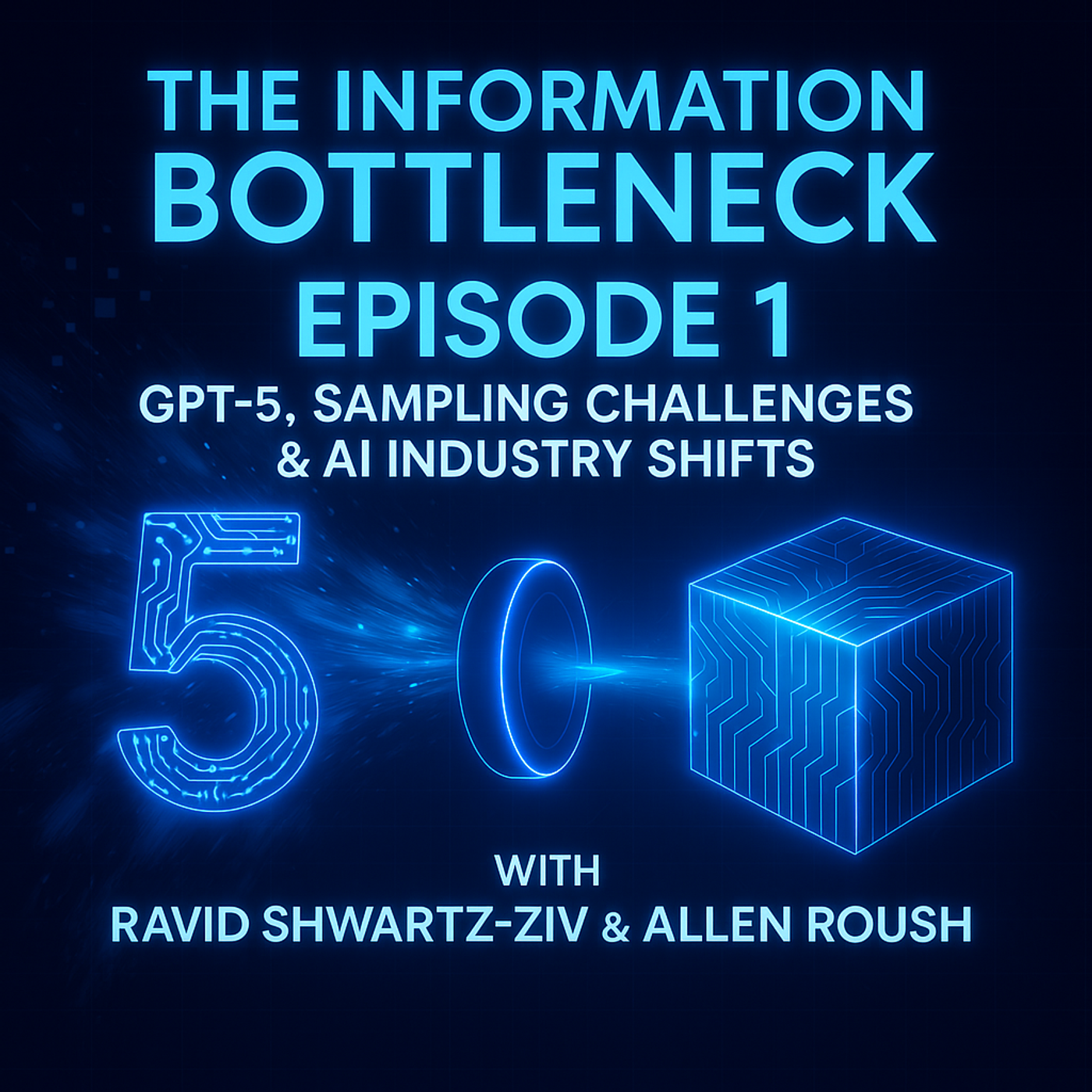
EP1: Sampling
Allen and Ravid discuss a topic near and dear to their hearts, LLM Sampling!In this episode of the Information Bottleneck Podcast, Ravid Shwartz-Ziv and Alan Rausch discuss the latest developments in AI, focusing on the controversial release of GPT-5 and its implications for users. They explore the future of large language models and the importance of sampling techniques in AI. Chapters00:00 Intro
Recommended

McKinsey on Consumer and Retail

megahired.com

Hard Knocks Podcast

Effective Weight Loss for Moms | High protein, Strength Training, Lose Weight, Meal Planning, Fat Loss, Healthy Habits

The Human-Animal Connection - Pet Life Radio Original

Infinite Health with Dr. Arasi Maran

The Daily

World News Tonight with David Muir

The Joe Rogan Experience

English Vocabulary Help
TED Talks Daily

Learn English B1 with Daily News | English Listening Practice
