The Future of Everything
Host Russ Altman, a professor at Stanford, explores cutting-edge science and engineering breakthroughs. Each episode features conversations with experts on topics like AI, health, and renewable energy. The podcast also examines the ethical implications of new technologies, providing a balanced perspective on how they will impact society.
Episodes
Best of: The future of neuroscience
Hi everyone, we had big news out of Stanford this week: Karl Deisseroth has won the 2026 Nobel Prize in Physiology or Medicine for discoveries leading to optogenetics, a technique that makes it possible to switch individual nerve cells on or off in the living brain. To celebrate, we're re-releasing a live conversation Russ had with Karl a few years ago. He's both a bioengineer and a practicing psy
The future of emotions
Clinical psychologist James Gross is fascinated by what emotions are, and he champions emotional literacy – a deeper understanding of what makes each of us tick. In his research, Gross explores his “favorite topic,” emotion regulation, through the cognitive strategy of reappraisal to shift how we perceive and deal with unhelpful emotions. He talks about the Synergistic Mindsets intervention he co-
Best of: The future of the innovation economy
About a year ago, the Future of Everything team was in New York taping a special episode on the innovation economy in front of a live audience, and today we're re-releasing it. We sat down with computer scientist Fei-Fei Li and economists Susan Athey and Neale Mahoney to dig into how AI is reshaping creativity, jobs, education, and public policy, and where it might take us next. It's a wide-rangin
Special episode: Think Fast, Talk Smart
Hi everyone, it's your host Russ. As summer winds down and everyone heads into a new season, I wanted to share something a little different. Recently, I sat down with Matt Abrahams, host of the podcast Think Fast, Talk Smart and a lecturer at Stanford's Graduate School of Business. We traded seats and I took the guest chair while Matt interviewed me about the future of communication in the age of
The future of gut health
Microbiologist Justin Sonnenburg wants you to know that you – and all humans, really – are not alone. Inside each of us live uncountable bacteria without whom we could not survive. Nowhere is this symbiosis more vital, Sonnenburg says, than in the digestive tract – the gut – where trillions of bacterial collaborators help digest the foods that nourish us. Sonnenburg studies what makes this complex

Best of: The future of language learning
As kids head back to school this month, we're re-releasing a conversation with cognitive scientist Michael Frank on the future of language learning. Michael studies the similarities and differences in how children and AI systems learn language. He’s working to understand what accounts for the “data gap” between how efficiently children learn language from relatively little input, compared to how m
The future of cities
Jackelyn Hwang is an expert on the social dynamics of cities. In one line of research, she combines AI and Google Street View to measure quality-of-life factors – such as trash, blight, new construction, and the pace of recovery from climate disasters – to analyze gentrification, racial equity, and overall resident well-being. Her work has shown, for instance, that predominantly Black neighborhood
Best of: The future of addiction
Today, we're re-releasing my conversation with psychiatrist Anna Lembke on the future of addiction. Whether its substances, screens, or work itself, addiction in some form touches nearly all of our lives either directly or through someone we care about. Anna breaks down the dopamine mechanisms behind addiction of all kinds, from opioids to social media to, in her own case, romance novels, and shar
The future of neuroimaging
Psychologist Russ Poldrack is a mind reader of sorts, but not in the traditional sense of the word. Instead, he makes movies of blood flow in the brain using functional MRI to draw insights into the function of specific regions of the brain to decipher how they control behavior. In one example, Poldrack has shown how people with obsessive-compulsive disorder have enhanced “salience networks” that
The future of clinical bioethics
Prior to becoming an anesthesiologist, Alyssa Burgart trained in bioethics. She now counts herself among a growing number of certified clinical bioethicists who help doctors, nurses, patients, and their families handle ethically complex medical decisions at the bedside. Bioethicists are critical to care, Burgart argues, helping patients facing difficult choices to clarify personal values and weigh
Best of: The future of AI and the law
These days, AI is everywhere, and it’s increasingly hard to separate the gains from the slop. With that in mind, we're re-releasing my conversation with Stanford Law professor Daniel Ho on the future of AI and the law. When we look for applications where AI can deliver measurable benefit, the legal profession stands out, both for its potential gains in efficiency and equity, and for how much is at
The future of menopause
Dr. Karen Adams, obstetrician/gynecologist and Farwell Family Director of the Stanford Program in Menopause and Healthy Aging, studies menopause and, perhaps more importantly, perimenopause – the critical years preceding it. During this time, hormone-related symptoms like mood instability, sleep disruption, hot flashes, and joint pain can be severe even though periods continue. Adams explains that
The future of Parkinson’s disease
Biochemist Suzanne Pfeffer is an expert on the molecular roots of Parkinson’s disease. Her work focuses on mutated proteins linked to Parkinson’s risk. She’s discovered, for instance, that drugs inhibiting one of the proteins can help neurons regrow primary cilia and stave off cell death, reversing disease progression. Since similar drugs are in clinical trials, her findings bring great hope for p
The future of AI and the legal field
Law professor Julian Nyarko has drawn attention for his studies using large language models to investigate and improve legal education and explore AI’s biases. He hopes AI can become a reliable, always-on legal learning and assistance tool to lower costs and expand access to legal services. In one recent study, he asked a group of law professors to evaluate written answers to student questions. Th
Best of: The future of wildfire management
In the western United States and Canada, this time of year is the beginning of peak wildfire season, a reality that's become impossible to ignore. In light of this, we're re-releasing my conversation with energy and climate policy expert Michael Wara on the future of wildfire management. Michael walks us through how we got here, why fires are burning bigger and more frequently, and what a smarter,
The future of storytelling for health
“Stories … are powerful tools that can help us make sense of our lives,” says physician-scientist Maya Adam. She now combines visual storytelling and health education to create animations that go beyond the barriers of language and culture to convey important health messages. The subject matter ranges from vaccine acceptance and addiction to mental health and nutrition. These emotionally engagi
Best of: The future of exercise
The World Cup is here, and while we watch some of the world's greatest athletes competing on a global stage, it's fascinating to consider what effect this intense activity may have on the human body. With that in mind, we're re-releasing our conversation with Stanford biochemist Jonathan Long on the future of exercise. Jonathan studies the chemistry of what happens inside your body when you move,
The Future of Retinal Implants
Professor of ophthalmology Daniel Palanker is a physicist who has combined his skills in optics and electronics to create PRIMA – the Photovoltaic Retinal Implant. Inserted beneath the retina, it restores vision to patients blinded by retinal degeneration, allowing them to read and write – and with the next-generation software, to recognize faces. PRIMA’s photovoltaic pixels act like tiny solar pa
The future of ultrafast materials and devices
Engineer Aaron Lindenberg is an expert in the ways atoms and electrons move through materials. He uses X-ray “flash photography” to make movies of atoms moving at ultrafast speeds to predict the fundamental limits of electronics in future consumer devices, solar cells, and AI chips. He estimates we are “many orders of magnitude away” from the physical limits of both speed and energy efficiency in
Best of: The future of computer-aided education
Commencement season is here and, as many students are closing one chapter and stepping into the next, it's a nice moment to ask: what did learning really look like for these students, and how might it change for the next generation? With those questions in mind, we’re re-releasing a conversation with Computer Science Professor Chris Piech on the future of computer-aided education. Chris studies ho
The future of farming
Food security expert David Lobell is immersed in the data of agriculture. He uses satellite imagery, yield data, and advanced computational modeling to analyze the roughly 500 million farms worldwide to increase productivity and ensure global food security – now and in the future. Though food is often taken for granted, feeding a hungry world is our greatest environmental challenge, he says. Lobel
The future of fungi
Fungi are “nature’s biological recycling machines,” says guest Vayu Hill-Maini, a former chef turned bioengineer. That is, they take waste and turn it into good things. Hill-Maini now melds his scientific and culinary skills to create new foods, but also medicines, faux leather, pigments and other valuable products from mushrooms and molds. He uses CRISPR gene editing technology to “domesticate” t
The future of influencers
In the dotcom era, communication professor Angèle Christin embedded herself in newsrooms, where she witnessed how audience metrics tilted journalism toward viral content over in-depth reporting. Christin now researches the influencer economy and how content creators monetize their production by any of three means – brand sponsorships, engagement-based payments from social media platforms, and dire
Best of: The future of the universe
Earlier this year, we got to witness the incredible launch and return of Artemis II, a NASA mission meant to lay the groundwork for a future lunar landing. Among the many accomplishments of the Artemis II mission, the crew successfully gathered real-time observations of the Moon that will contribute to our increased understanding of the cosmos. If you were inspired the same way we were, we thought
The future of cell-free biotechnology
Michael Jewett is a pioneer of cell-free biotechnology. Instead of using living microbes as factories, he uses their internal molecular machinery to make valuable proteins, medicines, diagnostics, and other chemicals. Jewett recently used the technique for vaccine production in an approach that could produce up to 150,000 doses from one liter. He believes cell-free biotech could democratize the pr
The future of education
Education researcher Susanna Loeb studies the broad spectrum of learning experience, including ways to recruit and retain expert teachers, how to optimize classrooms, and the impact of technology on learning. She says pandemic-inspired innovations in tutoring have led to greater student engagement and improved learning outcomes. And on the growing influence of AI in education, Loeb counts herself
The future of networking technology
Computer scientist Keith Winstein is an expert in how computers communicate. Computer networks create what he calls shared fictions – abstract realities, like a website or a Zoom call, that exist only because the computers on either end agree to act as if they are real. Unfortunately, today’s networks lack a shared notion of a “computation,” which hurts market efficiency in cloud computing and fru
Best of: The future of plant chemistry
April is Earth Month, and in appreciation of the plant life all around us, we’re re-running a conversation we had with Beth Sattely last year on the future of plant chemistry. Beth reminds us that plants are more than food or pretty things to look at — they have the potential to help us fight climate change or even cancer. We hope you’ll take another listen and join us in learning more about how p
The future of learning
Candace Thille is an authority in learning science, educational technology, and AI-enabled learning environments. She is closing the two-way gap between the science of learning research and the hands-on practice of instruction to help students learn better. Timely and targeted feedback with the opportunity to apply that feedback is critical to learning, Thille says, and this is an area where AI su
The future of fashion and dress codes
Legal expert Richard Ford studies the intersection of dress codes and the law. Clothing and hairstyles communicate power, identity, and social status, he says. Legal restrictions on dress stretch at least to the Middle Ages when “sumptuary laws” stipulated what one could wear by rank. Today, written rules have given way to unwritten codes that are in many ways more powerful culturally. Fashion is
The future of vaccines
Epidemiologist Yvonne “Bonnie” Maldonado is an expert in vaccine research and public health. Look back centuries, and the story is always the same, she says: Death rates from viruses have plummeted, especially in children and the elderly. And yet, millions of children die each year from vaccine-preventable diseases. Vaccines need a return of public confidence, and that starts with better messaging

Best of: The future of sleep
For many of us, this coming weekend marks the start of Daylight Saving Time, when we “spring forward” and move our clocks ahead by an hour. While the extra evening daylight can be one of the joys of the summer months, the time change has been known to disrupt our sleep.
Last year we sat down with neurobiologist Jamie Zeitzer, a leading expert on sleep, to talk about practical strategies for getti
The future of coronary heart disease
Heart disease should be treated just like cancer, says guest Mike McConnell, an author and expert in preventive cardiology at Stanford: Detect and stage early, then treat aggressively. In his practice, McConnell focuses on using low-dose CT imaging for detecting early coronary artery disease. He also helped pioneer the use of AI to infer cardiovascular risk from retinal scans. Such non-invasive, c
The future of eating disorders
Psychiatrist Jennifer Derenne specializes in eating disorders. Most eating disorders begin in adolescence, but they can appear much earlier – or later – in life, too. To begin healing, Derenne works with an interdisciplinary team to first stabilize and renourish her patients and uses evidence-based psychotherapy that incorporates strong family involvement. Recent clinical studies are exploring the
Best of: The future of allergies
Spring is right around the corner and as the weather changes and things begin to bloom, that also means the onset of allergy season. Last fall, we sat down with Tina Sindher who shared that while allergies may be affecting more people worldwide, prevention is playing catch up. If you’re someone or know someone who lives with environmental or food allergies, we hope you’ll tune into this episode to
The future of entrepreneurship
Chuck Eesley, a professor of management science and engineering, studies entrepreneurship across diverse contexts – from refugee entrepreneurs in Uganda to semiconductor startups navigating U.S.-China economic policy. His research on recent export controls revealed a counterintuitive outcome: Rather than solely strengthening U.S. semiconductor innovation, these policies accelerated Chinese investm
The future of substance abuse in youth
Developmental psychologist Bonnie Halpern-Felsher specializes in teenage health-related decision-making, especially in their use of tobacco, alcohol, cannabis, and other substances. Young people, she says, value immediate social benefits over long-term risks. In response, she supports bans on flavored nicotine products and has developed nationally and internationally used evidence-based substance
Best of: The future of depression care
As 2026 gets underway we know that many take time around this new beginning to improve not only their physical, but also their mental health. With that in mind, we’re rerunning an episode with Leanne Williams on the future of depression care. Leanne is an expert on clinical depression and is working on new ways to more precisely diagnose depression in order to develop more effective treatment. For
The future of ADHD
Pediatrician Yair Bannett studies and treats ADHD in preschool-age children. His interests stem from watching too many families struggle to understand their child’s behavior. He now focuses on improving frontline care using artificial intelligence to analyze electronic health records. One recent study explored whether doctors are making appropriate non-drug interventions before choosing to medicat
The future of alcohol
Physician-scientist Randall Stafford studies the effects of alcohol use on population health – the true health impact, he emphasizes. Stafford explains how early research suggested that drinking is beneficial – or at least not bad – for people. That mindset produced decades of wishful thinking based on inconsistent science driven by social, emotional, and industry forces. The small cardiovascular
Best of: The future of motivation
We're here to wish you a very happy New Year! We hope you’re ringing in the new year in good health and looking forward to what’s ahead in 2026. As people are setting goals and making resolutions, we’re re-running an episode today on the future of motivation. Last year, we sat down with Szu-chi Huang, an expert in motivation. She explained how science is changing our understanding of goal-setting
Happy New Year From The Future of Everything
Hi everyone, it’s your host, Russ. As we celebrate another holiday season and round out the year, I want to take a moment to say thank you for listening. This show started out over 8 years ago as an experiment and has not only grown to become a passion project, but also an archive of the impactful work my colleagues across Stanford dedicate their lives to. In a time when the sheer volume of inform
Best of: The future of AI coaching
We hope you’re enjoying the holiday season with family, friends, and loved ones. We’ll be releasing new episodes again in the new year – in the meantime, today, we’re re-running a fascinating episode on The future of AI coaching. The past few years have seen an incredible boom in AI and one of our colleagues, James Landay, a professor in Computer Science, thinks that when it comes to AI and educat
The future of lipids in evolution
Microbes are awesome, says biologist Paula Welander. They have shaped Earth’s chemistry and its environment over billions of years, including oxygenating the planet to make it habitable for larger life forms. In turn, microbes have been shaped by that very same environment, evolving as the climate has evolved, she says. Welander now studies the lipid membranes of ancient microbes, which can endure
The future of neurodegeneration
Molecular biologist Judith Frydman studies the nuances of protein folding and how defects in the process lead to neurodegenerative diseases. Her team studies protein folding in human cells and in model organisms, like yeast and worms, to understand the molecular events that precipitate harmful protein defects in humans. In one example, Frydman’s team explored how aging affects the creation and the
The future of ribosomes
Maria Barna is an authority on ribosomes – “life’s most ancient and spectacular molecular machines.” Ribosomes make proteins in the body. There can be a thousand different types of ribosomes in a single cell, she says, each with a specific job to do. But sometimes things go awry and ribosomes get “hijacked,” leading to disease. Barna studies these “diabolical” variations to find new therapies to t
Best of: How to take waste out of wastewater
In October, chemical engineer Will Tarpeh was awarded a 2025 MacArthur “Genius Grant” in recognition of his pioneering work to turn wastewater into a source of valuable materials. Will envisions a future in which the concept of wastewater is obsolete, thanks to advances in recycling. A couple of years ago, we sat down to talk with him about this work, and we hope you’ll take another listen today t
The future of digital markets
Gabriel Weintraub studies how digital markets evolve. In that regard, he says platforms like Amazon, Uber, and Airbnb have already disrupted multiple verticals through their use of data and digital technologies. Now, they face both the opportunity and the challenge of leveraging AI to further transform markets, while doing so in a responsible and accountable way. Weintraub is also applying these i
The future of immunotherapy
Biochemist Lingyin Li survived breast cancer at just 30 and now works to harness the human immune system to fight cancers that have long evaded treatment. T cells, she says, are powerful cancer killers, but they can be oblivious. She and her lab colleagues have discovered a masking enzyme that squelches the immune system’s “danger signals” and are now developing drugs to block that enzyme. She lik
The future of emerging technologies
On our 300th episode, Stanford Hoover Institution Director and former U.S. Secretary of State Condoleezza Rice talks about her return to Stanford after years in government and the impact she sees rapidly advancing technologies having on democracy and public policy. She says the future demands greater collaboration among industry, academia, and government to ensure promising fields like quantum com
The countdown to our 300th episode
Tune in on Friday, November 7th to listen to our 300th episode with a very special guest.
Connect With Us:Episode Transcripts >>> The Future of Everything WebsiteConnect with Russ >>> Threads / Bluesky / MastodonConnect with School of Engineering >>>Twitter/X / Instagram / LinkedIn / Facebook Hosted by Simplecast, an AdsWizz company. See pcm.adswizz.com for information a
Best of: The future of transparent tissue
About a year ago, a research team at Stanford Engineering led by Guosong Hong published a paper about their work to use a common food dye to make mouse skin transparent. Their findings made a big splash and have the potential to provide a range of benefits in health care. You can imagine that if we have the ability to see what’s going on under the skin without having to cut into it, or use radiati
The future of wound healing
Clinician-scientist Jill Helms is an expert on healing. Until about age 30, people heal easily, she says, but later on, not so well. Regenerative medicine suggests avenues for improvement, she promises. Her research focuses on understanding the physical and molecular processes of healing to design better therapies. One approach awakens “sleeper” stem cells to aid healing, a new drug in trial regen
The future of topical vaccines
Bioengineer Michael Fischbach studies alternative vaccine delivery methods, like self-administered creams with no needles, health professionals, or side effects. He teases a day when vaccines that don’t make you feel bad come in the mail in ketchup-style packets. Such innovations would greatly improve vaccine uptake, especially in developing countries, and speed global response to novel viruses. I
Best of: The future of extreme climate events
As fall arrives, many regions experience dramatic weather shifts—think early frosts, storms, or unusual temperature swings. Last year, we sat down with Noah Diffenbaugh, an expert on climate change. We discussed the fact that extreme weather is becoming more frequent. Noah pointed out that there are still things we can do to mitigate the impacts of severe weather. We hope you’ll take another liste
The future of the built environment
Rishee Jain is an engineer and an expert in the built environment – the manmade structures of modern life. The future, Jain says, will be a place where everyone has a safe, comfortable place to live and work, and the built environment adapts in real time to our needs. Jain is now exploring cool roofs that reflect heat to lower indoor temperatures and improve occupants’ well-being. We once believed
The future of the innovation economy
In a special Future of Everything podcast episode recorded live before a studio audience in New York, host Russ Altman talks to three authorities on the innovation economy. His guests – Fei-Fei Li, professor of computer science and co-director of the Stanford Institute for Human-Centered AI (HAI); Susan Athey, professor and authority on the economics of technology; and Neale Mahoney, Trione Direct
Best of: The future of ultrafast electronics
About a year ago we released an episode on the future of ultrafast electronics and it quickly became one of our most popular episodes on YouTube. We’re excited to re-share it with you today. Physicist Matthias Kling walks us through his study of photons and the things science can do with ultrafast pulses of x-rays. The knowledge he’s gaining could reshape fields like materials science, artificial
The future of allergies
Allergist Tina Sindher acknowledges that allergies may be affecting more people worldwide, influenced by a combination of factors such as environmental changes, modern lifestyles, urbanization, and evolving dietary habits. Prevention is playing catch-up, and promising new strategies include earlier food introduction than was popular only a few years ago. On the treatment front, hopes are rising fo
The future of bone health
Endocrinologist Joy Wu says that osteoporosis can affect more than half of women and a quarter of men over 50 – often without symptoms until a fracture changes everything, leading to a loss of mobility and independence. Wu explains why bones weaken with age and how to strengthen them through exercise and smart medicine. Her lab is exploring innovative drugs and turning skin cells into new bone-for
Best of: The future of reading
It’s still summer, but many children and teachers are back in school or preparing to return to the classroom. About a year ago, we sat down with Rebecca Silverman, a professor of education, to discuss the complex process of learning how to read. Professor Silverman unpacks the challenges of decoding and comprehension, two things that are vital for reading instruction to be successful. Whether you’
The future of inequality
Sociologist David Grusky argues that all the usual debilitating debates about inequality can be sidestepped if we focus on the worst forms – those rooted in cronyism, racism, and nepotism – that everyone can agree are nothing more than a pernicious transfer of income or wealth from the powerless to the powerful. To fight this “worst form” of inequality, Grusky shows how powerful interventions can
The future of cancer neuroscience
Neurologist Michelle Monje studies the close relationship between cancer and the nervous system, particularly in an aggressive brain cancer that often strikes in childhood. Her research shows that the cancer cells are electrically integrated into the brain itself and these connections actually help the cancer to grow. Monje and collaborators have now developed an immunotherapy that has shown great
Best of: The future of coastal erosion
It’s summertime, and for many of us that means a recreational trip to the beach or coast. Worldwide, billions of people live year-round near a coastline, and these settings can be responsible for everything from buffering storms and preventing sea-level rise to fishing, flourishing tourism, and trade. For all these reasons, the acceleration of coastal erosion is an important topic to understand. A
The future of plant chemistry
Chemical engineer Beth Sattely studies the intricate chemistry of plant life. Plants are more than food, she says: They are living chemical factories churning out molecules that help plants do everything from adapting to climate change to fighting infections – or even producing valuable new cancer drugs. Lately, Sattely’s lab is working on ways to make crops more resilient to engineer more sustain

The future of parent-child bonding
Biologist Lauren O’Connell studies poisonous frogs, but not just the toxins that make them dangerous. She also studies the neuroscience of their complex parenting. She’s learned that tadpoles recognize their mothers by smell and do a “begging dance” when hungry, and that the frogs produce a protein that protects them from their own poisonous chemistry. That protein could help treat overdoses in h
Best of: How the grid is becoming more human-centric
We’re in the midst of summer and we know that power outages can happen more frequently during this season due to higher temperatures and an increased demand for electricity. A couple years ago we sat down with Ram Rajagopal, an expert in the future of electrical power. He shared a few ways our existing system of massive power plants is slowly but surely giving way to a much leaner, decentralized s
The future of AI and the law
Law professor Daniel Ho says that the law is ripe for AI innovation, but a lot is at stake. Naive application of AI can lead to rampant hallucinations in over 80 percent of legal queries, so much research remains to be done in the field. Ho tells how California counties recently used AI to find and redact racist property covenants from their laws—a task predicted to take years, reduced to days. AI

The future of hoarding disorder
Psychiatrist Carolyn Rodriguez studies hoarding disorder and says that all of us have attachments to our possessions. But for many, these attachments can disrupt daily life and even pose health risks. For those with loved ones who struggle with hoarding disorder, she says treatments exist, including cognitive behavioral therapy (CBT). Lately, she’s been studying how virtual reality can augment CBT
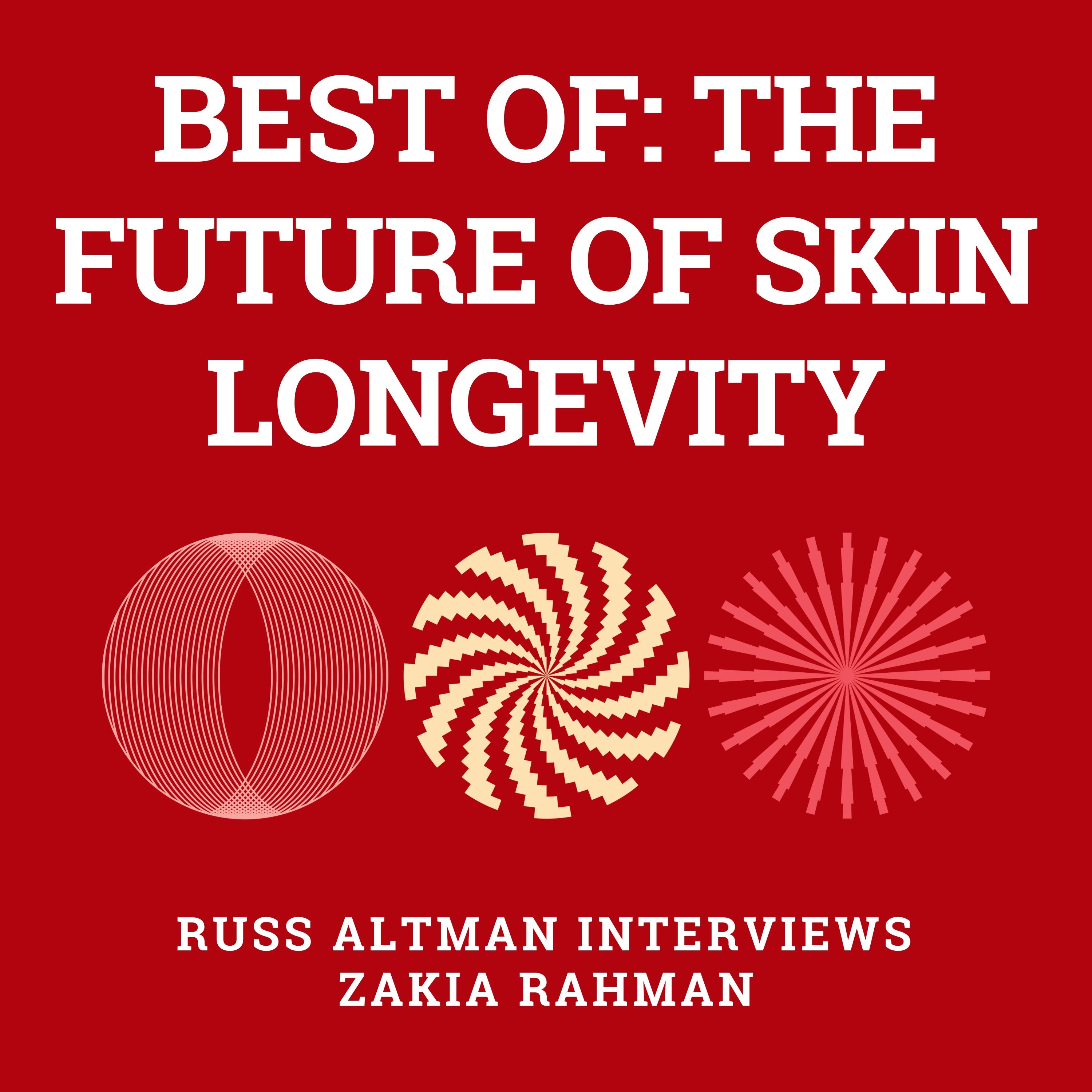
Best of: The future of skin longevity
Summer is in full swing and we hope you are enjoying it with family and friends. As we spend more time outdoors, it’s an opportune moment to revisit a conversation we had with Zakia Rahman, a dermatologist who shared a number of helpful measures we can take to care for our skin. She reminds us that skincare is about more than vanity — it’s about vitality. We hope you’ll tune in again and enjoy.Hav

The future of food security
Guest Lisa Goldman Rosas is an authority on public health who says that food insecurity goes deeper than hunger and can lead to chronic diabetes, heart disease, and even anxiety and depression. Rosas champions a concept she calls “nutrition security,” which focuses on food’s health value over mere calories. She discusses her work with “Recipe4Health,” an Alameda County-led program that issues prod

The future of motivation
Everyone has goals — some are monumental, others modest — but every goal matters. Join guest Szu-chi Huang, an expert in sustaining enthusiasm for individuals, customers, and employees across global corporations and organizations, as she delves into the science of motivation. Discover how the gap between where you are and where you want to be is bridged by a dynamic blend of psychology, sociology,

Best of: Training the next generation of entrepreneurs
It’s graduation season here at Stanford and students are getting ready to collect their diplomas and take their education out into the real world. A couple years ago, we sat down with Tina Seelig, a professor in our Management Science and Engineering department who’s done a lot of research on how we can teach skills including imagination, creativity, innovation, and entrepreneurship — all things t

The future of learning to read
Jason Yeatman is an expert in the neurobiology of literacy whose lab is fostering a virtuous research cycle between academia and school communities, aligning scientific inquiry with real-world needs of students, parents, and educators. His lab has developed ROAR – the Rapid Online Assessment of Reading—a gamified, web-based dyslexia screening tool. ROAR provides fast, precise, and scalable assessm

The future of sleep
Neurobiologist Jamie Zeitzer is an expert on sleep – or, more accurately, an expert on why so many can’t sleep. He notes that, ironically, it’s often anxiety about sleep that prevents good sleep. In short, we lose sleep over lost sleep. Wearables and other tools can help but only to a point, and medications do not induce natural sleep. Instead, he counsels consistent routines, less stimulation at

The future of geriatric care
Deborah Kado is a geriatrician who believes her field is misunderstood. Her interest in the science of aging began with a childhood encounter in a nursing home but recently resulted in intriguing work in which Kado linked microbes in the gut to vitamin D metabolism and poor sleep. Kado refuses to blame aging alone for health problems, advocating for better care regardless of age. It’s never too la

Best of: The future of educational technology
It's teacher appreciation week and along with schools across the country, we here at The Future of Everything want to send out a heartfelt thank you to the teachers who make a difference every day in the lives of our children and in society as a whole. In light of this, we’re re-running an education related episode, and more specifically one on the future of educational technology with the Dean of

The future of children’s health
Lisa Patel is a pediatrician and an expert in environmental health who says that pollution is taking an increasing toll on children’s health. Pollution from wildfires, fossil fuels, and plastics can cause asthma, pneumonia, and risks dementia in the long-term. But, she says, all hope is not lost. Solutions range from DIY air filters to choosing induction stoves over gas, cutting down on meat consu

The future of wildfire management
Michael Wara is a lawyer and an expert in wildfire policy who says that solutions are out there, but face financial, political, and cultural resistance. What’s needed, he says, are “whole-of-society” approaches that raise wildfire risk to the community level. In this regard, the devastation in Los Angeles in 2025 could provide the spark needed for smarter communication, better policies, and renewe

The future of pediatric development and disability
Physician and psychologist Heidi Feldman is a pioneer in the field of developmental behavioral pediatrics who says that the world’s understanding of childhood disability is changing and so too are the ways we approach it. Where once institutionalization was common, today we find integrative, family-centered approaches, charting a more humane, hopeful path forward. For example, for children born pr
Recommended

Effective Weight Loss for Moms | High protein, Strength Training, Lose Weight, Meal Planning, Fat Loss, Healthy Habits

The Human-Animal Connection - Pet Life Radio Original
Infinite Health with Dr. Arasi Maran
The Daily
World News Tonight with David Muir

English Vocabulary Help
The Joe Rogan Experience
TED Talks Daily

Learn English B1 with Daily News | English Listening Practice
Talk About Talk - Executive & Leadership Communication Skills

English with Olivia | Slow Conversations & Vocabulary
Stand In The Circle
