
Chinese Language Convo Club - Casual Chinese Speaking Practice
For intermediate to advanced Chinese learners who want real-world Mandarin they can actually use—with dialogues, cultural insights, and fun conversations. As a long-time student of Chinese, I’m joined by Vicky Zhang, my friend and seasoned Chinese teacher. Alongside us, we’ll sometimes feature a guest or two. Language learning is a collaborative journey, and we invite anyone with something to contribute to join us along the way. Our goal is to speak Chinese better and our approach is fun, casual, and informative. New lessons bi-weekly.
Episodes
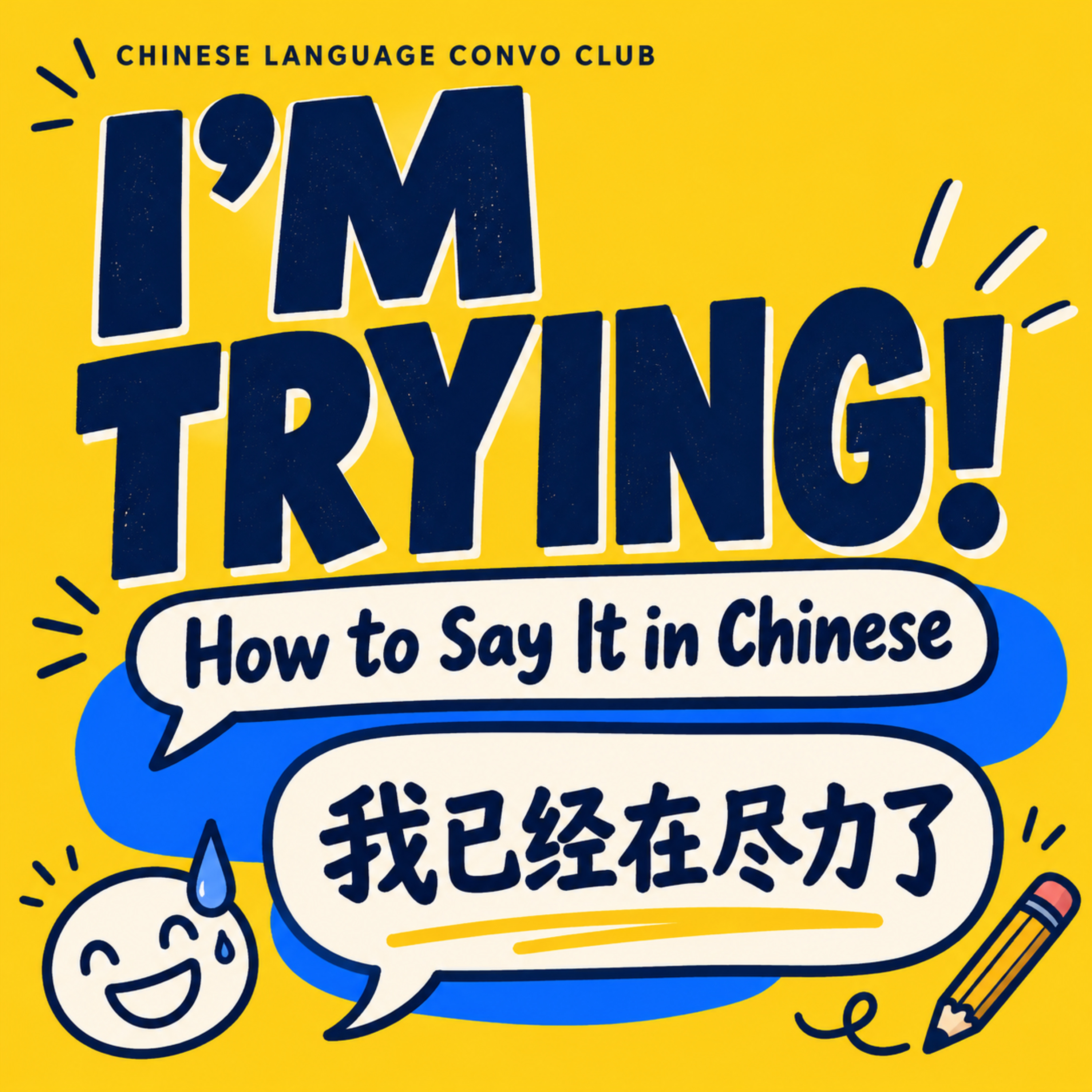
How to "Try" (Or Not!!): Expressing Effort & Intentions in Chinese
Trying to learn Chinese? Trying to go to bed earlier? Or trying to explain that you really didn’t mean to upset someone? 😅 Vicky and I explore how to say “I’ll try,” “I’m doing my best,” and “I didn’t mean to” in everyday Mandarin. With relatable examples, a mini role-play, and a few laughs about good intentions and stubborn habits, we unpack 试着, 尽量, 努力, and 尽力—because not every “try” means the sa

How to Turn Chinese Input into Speaking: A Lesson w/ Maayot 怎么把中文输入变成口语?跟 Maayot 上一堂课
What does a Maayot Chinese lesson look like?In this special episode of Chinese Language Convo Club, I am joined by Yunyun, a Chinese teacher from Maayot, for a hands-on Chinese lesson that takes us from input to output.Using the saying 不要把鸡蛋放在一个篮子里 — “Don’t put all your eggs in one basket”, Yunyun walks me through Maayot’s learning approach: listening, understanding vocabulary in context, translat

Are You Overthinking Again? 又开始内耗了?
Ever replay a conversation in your head and wonder, “Did I say something wrong?” Or send someone a message, get no reply, and immediately start imagining the worst?There’s a very Chinese word for that kind of mental spiraling: 内耗 (nèihào).In this episode of Chinese Language Convo Club, Lindi and Vicky explore how 内耗 went from meaning “internal consumption” or “internal friction” to describing the

I’m Supposed to Be Where?! 我约重了!
Ever looked at your calendar and realized you’re supposed to be in two places at the same time? 😬In this minisode, Lindi and Vicky talk about what happens when you accidentally double-book yourself—and the natural Chinese expressions you can use to explain it.Learn how to say “I double-booked myself” (我约重了), talk about schedule conflicts (时间冲突了), explain that you’ve packed your schedule too full,
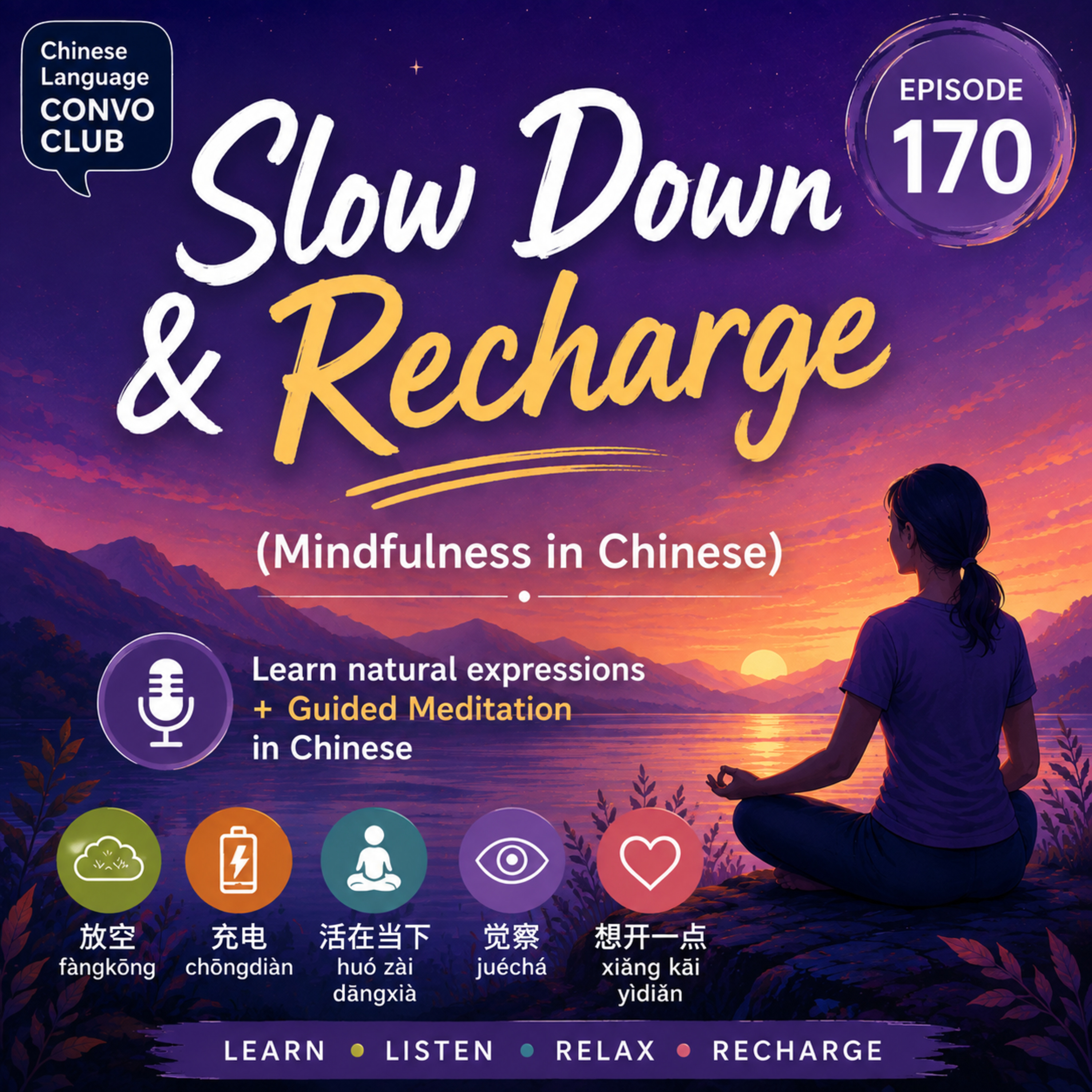
Slow Down & Recharge: Mindfulness in Chinese | 放空 · 充电 · 活在当下
Need a moment to slow down and recharge — while practicing your Chinese?In this episode of Chinese Language Convo Club, Lindi is joined by returning guest Kapa to explore natural Chinese expressions connected to mindfulness, relaxation, awareness, and being present.We unpack useful expressions like 放空 (fàngkōng), 充电 (chōngdiàn), 活在当下 (huó zài dāngxià), 觉察 (juéchá), and 想开一点 (xiǎng kāi yìdiǎn), wit

What Is Emotional Value?! 情绪价值 ⭐⭐⭐⭐⭐
One phrase has taken Chinese social media by storm: 情绪价值 (qíngxù jiàzhí). But what does it actually mean?In this episode of Chinese Convo Club, Vicky and I explore one of today's most popular Chinese buzzwords through natural conversation, real-life examples, and interactive pronunciation practice.You'll learn how native speakers use 情绪价值 in relationships, friendships, the workplace, and everyday

🎙️ 回头见! A Quick Podcast Update
Just a quick hello to let you know what to expect over the next few weeks!Vicky and I are taking a brief summer break while we're both traveling, but this is only a pause—not a goodbye. We'll be back soon with more real conversations to help you sound more natural in Mandarin.In the meantime, thank you for learning with us. We appreciate every download, every review, and every one of you who's joi

健身小白 (Fitness Newbie) Real Chinese for the Gym 💪
Ever walked into a gym and had no idea what anything was called? In this rebroadcast, Vicky and I explore useful Chinese vocabulary for fitness beginners, from treadmills and elliptical machines to stretching, warming up, and sticking to it.You'll learn practical words and phrases like:✅ 健身教练 (personal trainer)✅ 健身小白 (fitness newbie)✅ 器械 (gym equipment)✅ 有氧运动 (cardio exercise)✅ 热身 (warm up)✅ 拉

Speak More Naturally: Replacing 很好 in Everyday Chinese
Do you say 很好 (hěn hǎo) every time someone asks for your opinion?In this episode of Chinese Language Convo Club, we show you how native Chinese speakers describe movies, weather, and people using more natural and expressive vocabulary.You'll learn useful words and phrases including:✅ 精彩 (exciting, wonderful)✅ 紧凑 (well-paced, tightly structured)✅ 到位 (spot-on, perfectly done)✅ 明媚 (bright and sun

5 Ways to Forgive in Chinese: From "It's Fine" to "I Need Time"
In Chinese, when someone says “sorry,” the most common response is “没关系 (it’s okay).”But in real life, different situations call for different responses.In this episode, we’ll walk you through the different levels of forgiveness—from small mistakes to more serious situations—and teach you natural, real-life expressions you can actually use.You’ll learn how to:show understandingexpress your feeling

Beyond 没关系: Responding to Apologies Naturally in Chinese
If someone says 对不起… what do you say back?“没关系” is easy. But what if it’s not fine?What if you want to sound more sincere… or more honest?In this episode, we explore the language of forgiveness in Chinese — from holding a grudge (怨恨) to truly letting go (释怀).Through a relatable, real-life dialogue, you’ll learn how to:Express forgiveness with depthShow grace and understandingTalk about regret, ref

Earth Day Chinese 🌍..Talk About the Environment Naturally (Not Like a Textbook!)
Want to talk about the environment in Chinese without sounding like a textbook? 🌱In this Earth Day special episode of Chinese Convo Club, we teach you real-life Chinese vocabulary and natural speaking patterns to discuss environmental protection, sustainability, and daily habits—the way native speakers actually talk.You’ll learn:Practical vocabulary like 环保 (environmental protection), 一次性用品 (dispo

How to Say “No” in Chinese (Without Actually Saying No 😏)
Ever felt stuck when you needed to say “no” in Chinese… but didn’t want to sound rude?In this episode of Convo Club, we break down one of the trickiest real-life communication skills: how to politely refuse in Chinese—without ever actually saying “no.”You’ll learn:Common “soft no” phrases like 我再看看吧 and 下次吧The hidden meanings behind phrases like 我考虑一下 (hint: it’s often a NO 👀)How to tell the di

“上头” Doesn’t Mean What You Think… (4 Real-Life Uses Explained!)
Have you ever heard someone say “上头” (shàngtóu) and wondered what it means?In this episode, we break down one of the most commonly used (and confusing!) slang expressions in Chinese. From describing an addictive song to talking about getting tipsy, referring to your boss, or even just meaning “on top of something” — this word does it all.We start with a fun, natural dialogue about a super catchy s

“It’s Way Too Early!”: The Chinese Idiom 八字还没一撇 (Intermediate)
In this episode, we explore a very common and natural Chinese expression: “八字还没一撇 (bā zì hái méi yī piě).”Literally, it means “the character ‘eight’ hasn’t even had its first stroke yet.”Native speakers use it to describe situations where something hasn’t even started or taken shape yet, but people are already talking about it.In this episode you'll learn:• The real meaning of 八字还没一撇• When Chi

Gen Z Chinese Workplace Slang: 5 Buzzwords Everyone Uses (Upper Intermediate)
What do 牛马 (corporate workhorse), 内卷 (involution), and 躺平 (lie flat) really mean in today’s China?In this episode, we break down 5 viral Chinese buzzwords that reflect Gen Z workplace stress, competition culture, and emotional burnout. You’ll learn real-life example sentences, pronunciation practice, and cultural insights to help you understand modern Chinese conversations.If you're learning M

Chinese New Year Explained: Real Traditions, Real Mandarin (除夕 & 大年初一)
What really happens during Chinese New Year — beyond the fireworks and red envelopes? 🧧In this episode, we walk you through Chinese New Year’s Eve (除夕) and New Year’s Day (大年初一) as they’re actually celebrated in everyday life. You’ll learn essential real-world Mandarin, common traditions, and the cultural logic behind things like family reunions, staying up late, greeting elders, and why nobody sw

3 Chinese Love Words You Must Know: 暧昧, 约会 & 表白
In this episode of Chinese Language Convo Club, we delve into three essential Chinese love words that come up again and again in real-life dating conversations: 暧昧 (ambiguous feelings), 约会 (going on dates), and 表白 (confessing your feelings).With Valentine’s Day around the corner, Vicky and I break down how romantic relationships typically unfold in Chinese dating culture, and how it differs from W

Cheers in Chinese: How to Toast, Sip, or Politely Say No
What does “干杯” really mean—and do you actually have to finish your drink? In this episode, we explore Chinese drinking culture, from casual dinners with friends to formal business banquets. You’ll learn key toasting phrases, pronunciation tips, and polite ways to decline alcohol—without losing face.“干杯”一定要喝完吗?敬酒时为什么杯子要放低?这一集我们通过生活化对话,带你了解中文里的喝酒文化、正式与非正式的敬酒礼仪,以及各种得体又自然的“不喝酒”说法。Gānbēi” yídìng yào hē

资深吃货! Learn Festive Chinese Food Slang for the Holidays
We'll be back in a few weeks to bring you more fun lessons on Chinese language and culture, but in the meantime, celebrate the holidays and boost your Chinese vocabulary in this quick five-minute bilingual episode! 🥟✨ Learn how to describe a true foodie (资深吃货), talk about a big holiday feast (大餐), and even say you’ve eaten to your limit (吃到嗓子哑了). Perfect for learners who love language, culture
What NOT to Give: Chinese Gift Taboos (Upper Intermediate)
Think gift-giving is easy? Not always — especially in Chinese culture 😅In this episode, we talk about Chinese gift-giving taboos and the surprising reasons why things like clocks, shoes and other seemingly normal items, can send the wrong message.With funny examples, natural dialogues, and pronunciation practice, you’ll learn Chinese while picking up real cultural tips you can actually use. Learn
小确幸: A Way To Find Joy in Stressful Times (Intermediate)
Feeling stressed or overwhelmed? In this episode, we talk about the popular Mandarin phrase 小确幸 (xiǎo què xìng) — the Chinese concept of “small but certain happiness” that has become a modern lifestyle mindset across Asia.You’ll learn:• The meaning and origin of 小确幸• Why it became so influential in Chinese culture• How to use 小确幸 naturally in real Mandarin conversations• Practical examples of ever
Starbucks Bearista Frenzy: 饥饿营销? + Giveaway!
In today’s episode, we’re doing something a little different—we’re going to explore a trending topic: the viral Starbucks Bearista Bear cup. Why did it sell out instantly? Why were some stores given only one or two? And what’s the Chinese term for “Manufactured Scarcity”—a marketing strategy that exists in both English and Chinese?You’ll learn key vocabulary like 饥饿营销 (jī’è yíngxiāo) plus hear a s
😏 How to “Fake It Till You Make It” in Chinese — 蒙混过关 Méng Hùn Guò Guān (Upper Intermediate)
Ever tried to bluff your way through an exam, a project, or even a date? In this episode, we dive into the hilarious (and slightly sneaky) Chinese idiom 蒙混过关, which literally means “to muddle through a checkpoint.” We’ll chat about this useful expression, when it’s risky, and how Chinese people use it in daily life.🎧 Learn Mandarin through real examples, personal stories, and our usual dose of lau

空无一人的巷子(The Deserted Alley): Learn Chinese with a Ghost Story + Mini Quiz
Practice your Mandarin with a chilling Chinese ghost story 空无一人的巷子! Learn spooky new words like 纸钱 (zhǐqián) “ghost money,” 低语 (dīyǔ) “whisper,” and 门缝 (ménfèng) “crack of a door” as you follow 小王 (Xiǎo Wáng) through a deserted alley late at night.🎧 Listen for comprehension, build vocabulary, and test yourself with our mini-quiz at the end! Perfect for intermediate learners who love stories, cultu

How to Use 离不开 (lí bù kāi): The Chinese Phrase for ‘Can’t Live Without’
In this episode, we explore the Chinese phrase 离不开 (lí bù kāi) — which means “can’t live without.” Learn how native speakers use it to express dependence, habits, and deep connections. We’ll break it down with clear examples, a short dialogue, and pronunciation practice to help you sound more natural when speaking Mandarin. Examples: 1. 他离不开咖啡,每天都要喝。 Tā lí bù kāi kāfēi, měitiān dōu yào hē.
露馅儿 Explained: When Your Secret Slips Out in Chinese
In this episode, we dive into the Chinese slang phrase 露馅儿 (lòu xiànr) — literally “the filling is showing.” Learn how native speakers use it to describe moments when secrets slip out, someone accidentally reveals too much, or a cover-up fails. We’ll share clear examples, cultural context, and easy practice sentences so you can start using 露馅儿 naturally in conversation.在这一集节目里,我们要聊一聊中文俚语“露馅儿 (lòu
Chinese "Back-to-School" Slang: The Phrase "神兽归笼" (Upper Intermediate)
It’s that time of year again — back to school season! In this episode, we dive into the popular Chinese expression 神兽归笼 (“the mythical beasts return to their cages”), a humorous way parents describe sending kids back to school after summer break. You’ll learn how this phrase is used in daily conversation and pick up practical Mandarin expressions to talk about the social aspect of this time of yea

Pumpkin Spice Latte: The Fall Favorite Explained in Chinese | Mandarin Learning Podcast (Pre Intermediate)
Fall means Pumpkin Spice Latte season! ☕🍂 In this episode, we dive into the phenomenon of the PSL while teaching you how to order it in Mandarin Chinese. Learn essential café vocabulary, practice real-life dialogues, and discover how seasonal drinks are talked about in Chinese. Perfect for language learners who love coffee and culture.顾客:你好,我要一杯南瓜香料拿铁。Gùkè: Nǐ hǎo, wǒ yao yì bēi nánguā xiāngliào n
Don’t Shoot Yourself in the Foot… in Chinese😅
When Your Own Actions Come Back to Bite You — Mandarin StyleWant to sound more natural in Mandarin? Learn the Chinese idiom that can mean not only making the kind of mistakes that hurt yourself, but also when your plans to harm someone else backfire. 小李:听说老赵匿名举报同事偷懒。Xiǎo Lǐ: Tīng shuō Lǎo Zhào nìmíng jǔbào tóngshì tōulǎn.Xiao Li: I heard Old Zhao anonymously reported a coworker for slacking off.小王
不得已 - How to Say "I Had No Choice" in Mandarin (Intermediate)
不得已:"不得已" is typically used to express that an action or decision was made out of necessity rather than desire, usually because of circumstances that leave no alternative. It's often used in situations where one is reluctantly forced to make a choice.小明: 你怎么突然辞职了?不是说好要坚持下去的吗?(Xiǎo Míng): Nǐ zěnme túrán cí zhí le? Bù shì shuō hǎo yào jiānchí xiàqù de ma?小李: 其实我也很不想辞职,可是公司最近的变化让我不得已做出了
Video: New York Impressions (全中文)
In our most recent short video, Vicky takes us to explore some of the highlights of New York City. Come along with us as we take in the sights of The Big Apple, all in Chinese.
见怪不怪 - What It Really Means in Daily Life(Upper Intermediate Chinese Idiom)
"见怪不怪" (Upper Intermediate)—a dialogue about adapting to unusual phenomena, such as colleagues wearing slippers in the office. Includes example sentences for practice.Dialogue:A:你看,那个新同事居然在办公室里穿拖鞋!(A: Nǐ kàn, nàgè xīn tóngshì jūrán zài bàngōngshì lǐ chuān tuōxié! )A: Look, the new guy is wearing slippers in the office!B:哎,见怪不怪了,现在很多人工作时都喜欢随意些。(B: Āi, jiàn guài bù guàile, xiànzài hěnduō rén gōngzuò
偏偏: Unexpected Situations in Mandarin - Usage and Examples
Dialogue: #1小明 (Xiǎo Míng): 今天我准备去跑步,天气很好。(Jīntiān wǒ zhǔnbèi qù pǎobù, tiānqì hěn hǎo.)小丽 (Xiǎo Lì): 可是偏偏下雨了,真不巧。(Kěshì piānpiān xiàyǔle, zhēn bù qiǎo.)小明 (Xiǎo Míng): 我也没想到,真是的!(Wǒ yě méi xiǎngdào, zhēn shì de!)小丽 (Xiǎo Lì): 偏偏遇到这种情况,真是倒霉。(Piānpiān yù dào zhè zhǒng qíngkuàng, zhēn shì dǎoméi.)The expression 偏偏 is used to express something happening contrary to what was expected, often with a sen
Language Learning Secrets (Upper Intermediate)
This week, my friend Giacobbe joins me all way the from Bangkok, Thailand to discuss practical ways to master a new language. A great lesson for anyone needing a little inspiration to persevere on your language learning journey while hopefully getting a few fresh ideas. Btw, this is my first attempt at speaking only Chinese so please forgive the potential roughness of this episode (I did cheat her
They’re Beefing! Mandarin Slang for Fights & Feuds (Beginner)
In this week's minisode, Vicky and I have some beef with each other. How exactly would you say that in Chinese? Listen in to find out :)
Listening/Speech Training: Chef Wang & Online Cooking Video
Chef Wang Makes Steamed Buns with Shrimp:哈喽,大家好,我是王刚。本期视频为大家带来一道特色菜: 馒头炸虾球。首先,我们把大虾去头,从背部切开,去掉虾线和虾壳,然后加入食用盐和柠檬汁,将虾肉腌制十分钟。下一步,我们准备一个白馒头,将馒头切成大小均匀的小粒备用,然后将腌制好的大虾先粘上淀粉,然后再裹上蛋液,最后再均匀的裹上馒头粒,再用手轻轻的压紧。锅中油温烧至六成热的时候下入馒头虾,开中小火炸至五分钟,将虾炸至金黄酥脆的时候倒出备用。然后锅中加入适量的番茄酱,翻炒均匀之后加入白糖两勺,再加入少许白醋,然后加入适量的水淀粉,收紧汤汁,最后加入炸好的虾球下锅翻炒均匀即可。一道非常美味的馒头炸虾球就制作完成。Hā lóu, dàjiā hǎo, wǒ shì WángGāng. Běn qi(1) shìpín wei(4) dàjiā dài lái yī
Online Cooking Video (Upper Intermediate)
甲:你在吃什么?真让人眼馋啊! Nǐ zài chī shénme? Zhēn ràng rén yǎnchán a!Person A: What are you eating? It really makes my mouth water!乙:是我自己做的馒头炸虾球。第一次做的,结果还不错。Shì wǒ zìjǐ zuò de mántou zhà xiā qiú. Dì yī cì zuò de, jiéguǒ hái búcuò.Person B: It’s mantou fried shrimp balls that I made myself. It’s my first time making them, and they turned out pretty good.甲:是吗?你怎么知道怎么做这个?用了什么配料?: Shì ma? Nǐ zěnme zhīdào zěnme
From Screen to Stove - Mandarin Inspired By a Cooking Video (Advanced)
We watch a Chinese cooking video and try to follow along—spoiler: it’s harder than it looks! Learn tasty new vocabulary, hear real kitchen phrases in Mandarin, and pick up expressions you can use next time you cook (or pretend to).Brought to you by YouTube's Chef Wang. 食用 Edible, to use for food腌制 Marinate均匀 Uniform, evenly 粒 (量词)Small piece, pieces备用 For Future Use粘 To Glue, to stick (if it’s
吃一堑长一智: How to Say "Learn From Your Mistakes" in Chinese(Intermediate)
Mistakes happen — but in Chinese, there’s a perfect phrase for turning failures into wisdom: “吃一堑长一智.” Join us as we break down its meaning, share real-life examples, and show you how to use this saying naturally in conversation.A: 你上次被骗的事还记得吗?Nǐ shàng cì bèi piàn de shì hái jì de ma?Do you remember the time you got scammed?B: 当然记得!吃一堑长一智嘛。那次之后,我可长记性了。Dāng rán jì de! Chī yī qiàn zhǎng yī zhì ma. N
Short Video: 巴塞罗那圣家族大教堂
Vicky is back and very shortly we'll be making some new podcast episodes. Until then we'd like to share with you some of the places Vicky went to during her trip, one of which was Barcelona, Spain. In this video, she is showing us the views at the Sagrada Family Basilica, one of Spain's most iconic buildings. To view on YouTube, copy/paste the link below: https://youtube.com/shorts/J8k
Listening/Speech Training: Restaurant Review & What a Rip-Off!
Restaurant Review:今天来打卡的这家金春禧,专做经典传统鲁菜,走进大厅就可以看到明亮的落地窗,窗外可以看到大海,海景的座位都是需要提前预定的,水饺是这里的特色,口味种类也很多,各种海鲜馅料,都是当天调制,现包现煮,糖醋鱼是特色,酸甜的汤汁,肉质细腻,蟹黄干捞粉丝煲也特别入味,喜欢吃鲁菜的朋友可以去试一下.Jīntiān lái dǎkǎ de zhè jiā JīnChūnXǐ, zhuān zuò jīngdiǎn chuántǒng lǔ cài. Zǒu jìn dàtīng jiù kěyǐ kàn dào míngliàng de luòdìchuāng, chuāngwài kěyǐ kàn dào dàhǎi. Hǎijǐng de zuòwèi dōu shì xūyào tíqián yùdìng de. Shuǐjiǎo shì zhèlǐ de tès
What a Rip-Off! Real Chinese Restaurant Review — Complaints, Disappointment & Drama (Pre Intermediate)
Join me and my good friend and guest host Kapa Zhao, as we talk about what a restaurant review might say if the dishes don’t quite live up to one’s expectations.Vocabulary: 正宗 ( zhèngzōng)– Authentic 特意(tèyì) - For a special purpose, specially 枣庄辣子鸡(zǎozhuāng làzǐ jī)– Zao Zhuang Spicy Chicken 新疆大盘鸡(xīnjiāng dàpán jī) – XinJiang Big Plate Chicken 竟然(jìngrán) – To go so far as to, to have the
Short Video: 在金春禧点菜 (全中文)
To watch this video on Youtube, follow the link below:https://youtu.be/DKDNrLaL3Sg几周前,我和我的朋友Max看了一篇关于金春禧的好评。下周,我的好朋友Kapa Zhao和我将讨论一篇负面评论,这篇评论是由一位没有得到他所期望的客户写的。与此同时,Vicky也去了一趟青岛,亲自去参观了这家历史悠久的餐厅,决定自己做出判断。你怎么看呢?根据我们的第一次评论和你看到的内容,如果你有机会到青岛,中国,你会考虑去这家餐厅吗?Jǐ zhōu qián, wǒ hé wǒ de péngyǒu Max kànle yī piān guānyú Jīnchūn Xǐ de hǎo pínglùn. Xià zhōu, wǒ de hǎo péngyǒu Kapa Zhao hé wǒ jiāng tǎolùn yī piān
Minisode:幸灾乐祸 (Intermediate)
幸灾乐祸 (Xìng zāi lè huò) Lindi: 你听说了吗?小李失业了。(Nǐ tīng shuōle ma? Xiǎo lǐ shīyèle.) Have you heard? Xiao Li lost his job.Vicky: 是啊,我知道。其实我觉得他有点活该。(Shì a, wǒ zhīdào. Qíshí wǒ juédé tā yǒudiǎn huógāi.) Yes I know. Actually I think he deserves it.Lindi: 你怎么会这么说?(Nǐ zěnme huì zhème shuō?) How can you say that? Vicky: 他总是看别人不顺眼,现在轮到他了,幸灾乐祸嘛。(Tā zǒng shì kàn biérén bù shùnyǎn, xiànzài lún dào tāle, xìngzāil
Restaurant Review Breakdown: Real Mandarin from a Chinese Foodie (Upper Intermediate)
In this episode, we take a real review we found on a Chinese website and break it down word by word—so you can learn how to describe food, setting and atmosphere, like a native speaker.Join my friend and Chinese teacher Max, as she walks us through a this review written about a restaurant in QingDao called Jin Chun Xi. Vocab: 1. 鲁菜 – Shandong Cuisine2. 落地窗 – Floor to ceiling windows3. 馅料 – Fillin
How To Talk About 小资情调 — Lifestyle, Taste & ‘Bourgeois Chic' in Mandarin (Upper Intermediate)
What does it mean when someone says a place or person is “小资”? In this episode, we break down this nuanced phrase and explore how it’s used to describe a certain type of urban, cultured lifestyle—sometimes elegant, sometimes a little pretentious. Perfect for learners looking to understand modern Mandarin culture and tone.对话:Vicky – 我昨天晚上去了一家新的酒吧,很有小资情调。(Wǒ zuótiān wǎnshàng qùle yījiā xīn de jiǔbā,

Listening/Speech Training:Frozen Video Call & Tips for Online Meetings
Frozen Video Call:小明: 你今天干什么了?。。。(Xiǎomíng: Nǐ jīntiān gān shén me le?) What did you do today?小丽。。。。。小明:嘿。。你能听得见我吗?(Hēi.. Nǐ néng tīng dé jiàn wǒ ma?) Hey..Can you hear me? 小丽: 。。嗯。我现在能听见了,但是你的画面卡住了。(Xiǎo lì:Ǹg. Wǒ xiànzài néng tīngjiànle, dànshì nǐ de huàmiàn kǎ zhùle.) Uhh..I can hear you now, but your picture is frozen.小明: 哦,不好意思。可能是网络问题吧。恐怕我这边也有点卡。(Ó, bù hǎoyìsi. Kěnéng shì wǎngluò wèntí ba. K
Rebroadcast: Tips for Better Zoom Meetings in Mandarin (Upper Intermediate)
我们今天讨论一下关于怎么样更好的开视频会议,能吸引人们来参加视频会议的时候,多一些讨论并且提出问题.Today we will be talking about how to have more interactive online meetings - a rebroadcast of a favorite episode Vicky and I recorded early on.If you like this one, pls check out The Zoom Meeting Disaster, which delves a bit deeper into what can go wrong when online meetings get hacked.Email us at: chineseconvoclub@gmail.comWebsite: https://apextu
Minisode: Caught Off Guard (Intermediate)
措手不及小李:你听说了吗?公司要裁员!(Xiǎo Lǐ: Nǐ tīng shuōle ma? Gōngsī yào cáiyuán!) Have you heard? The company’s about to go through lay-offs.小张:真的?我完全措手不及!(Xiǎo Zhāng: Zhēn de? Wǒ wánquán cuòshǒubùjí! )Really? I was totally unaware!小李:是啊,昨天还正常开会,今天就来了这个消息。(Shì a, zuótiān hái zhèngcháng kāihuì, jīntiān jiù láile zhège xiāoxī.) Yes, just yesterday we had our meeting as usual, but today got the news.小张:我们得赶紧准备,找新
Frozen Video Call (Pre Intermediate)
*There was a small mistake which I didn't catch until after posting this episode. We had changed the script from 你的画面停住了 to 你的画面卡住了, the difference being along the lines of .."your video (or picture) has stopped" v/s "your picture is frozen". Both can be used in Chinese, but we liked 卡住了 a bit better. We reached out to our voice actors and had them re-record this small part in the dialogue and pro
A Winter Walk on the Beach
We are taking some time away for the holidays, but have a few things to share in the interim. In this short video, Vicky takes us with her on a winter's day walk on the beach near Qing Dao.
这是一个温暖的冬日的午后。
让我们一起去青岛的海边走一走,
看一看沙滩上有没有人。
大家都在做一些什么呢?
Zhè shì yīgè wēnnuǎn de dōngrì de wǔhòu.
Ràng wǒmen yīqǐ qù qīngdǎo dì hǎibiān zǒu yī zǒu,
kàn yī kàn shātān shàng yǒu méiyǒu rén.
Dàjiā dōu zài zuò yīx
新年快乐!
Come exploring as Vicky takes us on a walk along the charming and historic street known as Silver Fish Lane. We'll see historic old homes, a few shops and cafes, and get a brief glimpse of the lives of QingDao's past fishermen in the Silver Fish Museum.
We will be returning soon with new podcast episodes.
Below is the video transcript including PinYin:
To watch our video on YouTube, please follo
Happy Holidays from Qing Dao
Wishing all of you a safe and Happy Holidays! Vicky is in China for the holidays and sharing with us some videos of her adventures in Qing Dao. We're taking this time to regroup and plan future episodes, but will be back again soon. Until then please enjoy our short videos. We'll see you again in the new year!
To view on YouTube: https://youtu.be/2_IXUydR0l0
The transcript for this video is below:
Minisode: Expressing Disbelief (Intermediate)
A:你昨天为什么没来上课?
Nǐ zuótiān wèishéme méi lái shàngkè?
Why didn’t you come to class yesterday?
B:我感冒了。。头很疼。
Wǒ gǎnmàole.. Tóu hěn téng.
I caught a cold..my head hurts
A:那你怎么不告诉老师呢?
Nà nǐ zěnme bù gàosù lǎoshī ne?
Why didn’t you tell the teacher?
B:我怕老师会说我不认真。
Wǒ pà lǎoshī huì shuō wǒ bù rènzhēn.
I was afraid the teacher would say I’m slacking off.
A:如果是因为你生
Minisode: 说话不经过大脑 (Intermediate)
If like so many of us, you happen to have a bad case of "foot in the mouth" disease, then this short episode is for you :) Enjoy!
A: 今天的面试怎么样?(Jīntiān de miànshì zěnme yàng? How did the interview go today?
B:哎。。别提了。。我总是说话不经大脑。有不小心把面试 官给得罪了。估计没希望了。。
(Āi.. Biétíle.. Wǒ zǒng shì shuōhuà bù jīng dànǎo. Yǒu bù xiǎoxīn bǎ miànshì guān gěi dé zuìle. Gūjì méi xīwàngle.. )
Ugh...Don’t ask...I always tal

Listening/Speech Training: Election & Gratitude
A: 你看了昨天的竞选辩论吗?这次美国的选举是特朗普对·哈里斯。你打算选哪个?
(Nǐ kànle zuótiān de jìngxuǎn biànlùn ma? Zhè cì měiguó de xuǎnjǔ shì tè lǎng pǔ duì·hālǐ sī. Nǐ dǎsuàn xuǎn nǎge?) Did you watch yesterday's debate? This US election is going to be Trump vs. Harris. Which one are you going to vote for?
B: 是啊,真有意思。你觉得谁更有可能赢?(Shì a, zhēn yǒuyìsi. Nǐ juédé shéi gèng yǒu kěnéng yíng?)
Yeah, that's really interesting. Who do yo
Gratitude (Upper Intermediate)
1. 情感 – emotion, feeling
2. 珍惜 – to treasure, value, or cherish
3. 给予 – to give, render, offer
4. 度过难关- to get through difficult times
5. 关爱 – love and care
6. 感激 – to feel grateful, be thankful, feel endebted
7. 增进 – to enhance
8. 人际关系 – interpersonal relationships
9. 心灵 – heart, soul, spirit
10. 充实 – fulfilling, rich, substantial
11. 时常 – often, frequently
12. 传递 – to pass something on, to trans
Minisode: Lemons into Lemonade (Intermediate)
变坏为力:
A: 你听说过他们的新项目吗?
B:听说了,一开始好像遇到了很多问题。
A: 对,但他们最后想办法变害为利,把困难变成了发展的机会。Yes, but they eventually figured out a way to make those issues work in their favor.
B: 真了不起!这就是面对挑战时应有的态度。
That's amazing! That's the attitude we should all have when faced with challenges.
化危机为机遇:
A:今天怎么样啊?
How are you today?
B:别提了。刚刚失业,性情不好。
Don't ask..I just lost my job. I'm in a bad mood.
A:那不是正好的吗?你不是一直想开你自己的甜品店吗?
Listening/Speech Training: Something Lost & The Haunted Elevator
有个人在公司接到一个电话,对方只说了一句话:你家里丢东西了。(yǒu gèrén zài gōngsī jiē dào yīgè diànhuà, duìfāng zhǐ shuōle yījù huà: Nǐ jiālǐ diū dōngxīle.)
A man received a call at work, the person
on the other end saying only one thing:
“Something at your home is missing”.
这个人回家以后翻箱倒柜,找了半天,身份证、银行卡、手机、钱包……什么都没少。(
Zhège rén huí jiā yǐhòu fānxiāngdǎoguì, zhǎole bàntiān,
shēnfèn zhèng, yínháng kǎ, shǒujī, qiánbāo……shénme dōu mé
Election! (Intermediate)
竞选辩论– political debate 选举– election 支持者– supporter or supporters 政策– policy, or policies 吸引– to attract, draw, fascinate 当选– to be elected 选民– Voter, or voters 摇摆州– Swing States 积极– positive (in this context) can also mean“proactive”A:你看了昨天的竞选辩论吗?这次美国的选举是特朗普对·哈里斯。你打算选哪个?(Nǐ kànle zuótiān de jìngxuǎn biànlùn ma? Zhè cì měiguó de xuǎnjǔ shì tè lǎng pǔ duì·hālǐ sī. Nǐ dǎsuàn xuǎn nǎge?)Did
Ghost Story: The Haunted Elevator (Intermediate)
某人(mǒu rén) - Someone, a certain person宿舍(sù shè) - Dormitory按(àn) - To press (a button)电梯(diàn tī) - Elevator幸运地(xìng yùn de) - Fortunately, luckily一下子(yī xià zi) - All of a sudden, immediately空无一人(kōng wú yī rén) - Completely empty, not a single person马上(mǎ shàng) - Immediately, right away升(shēng) - To ascend, to rise突然(tū rán) - Suddenly探头探脑(tàn tóu tàn nǎo) - To peek around cautious
Minisode: To Trip Someone Up/Get In The Way (Intermediate)
绊住脚: 1. To Trip Someone 2. To Get In The Way, Hold Someone Back
第一个对话:
A:你怎么了,看起来很慌张?(Nǐ zěnme le, kàn qǐlái hěn huāngzhāng?) What's wrong? You look so flustered.
B:我刚才在街上走,突然有根绳子绊住脚了!(Wǒ
gāngcái zài jiē shàng zǒu, túrán yǒu gēn shéngzi bàn zhù
jiǎole!) I was just walking down the street and tripped on a rope!)
A: 哎呀,真危险!(Āiyā, zhēn wéixiǎn!) Oh, that's dangerous!
B: 是啊,差点摔倒。(Shì a, chàdiǎn shuāi
🎃Ghost Story: Something Lost...(Elementary)
丢东西– Something Lost...Vocabulary: 1. 对方– The other party, or person2.翻箱倒柜– to rummage through boxes and cupboards, 3.怀疑– to doubt, to suspect,4. 恶作剧-a prank, practical joke, mischief, 5.阴森森– spooky, gruesome, ghastly, gloomyStory:有个人在公司接到一个电话,对方只说了一句话:你家里丢东西了.(Yǒugèrén zài gōngsī jiē dào yīgè diànhuà, duìfāng zhǐshuōle yījù huà: Nǐ jiālǐ diū dōngxīle.)这个人回家以后翻箱倒柜,找了半天,身份证、银行卡、手机、钱包……什么都没少。(
Short Film: Something Lost
This is a preview of our latest podcast episode, Something Lost, which will be available October 13th at 7:00pm.
To hear a full explanation behind of the vocabulary and Chinese grammar points, stay tuned...
Minisode: 伸手不见五指。。。
Has it ever been so dark you couldn't see anything at all, not even your own hand in front of your face? In Chinese there's a very similar expression. In the spirit of Halloween,
let's get a bit dark for this minisode, and upgrade our Chinese from 太暗了 to 暗得伸手不见五指吧!
伸手不见五指 (Shēnshǒu bùjiàn wǔzhǐ)
Can't see your hand in front of your face
Vicky's Translation:
所以你在上海的时候,曾经去到过一个很有意思的咖啡馆。这个咖啡馆的名字很有意思

Listening/Speech Training: The Benefits of Coffee & Green Tea
The Benefits of Drinking Coffee
大部分人喝咖啡是为了让自己保持精力旺盛。但其实,有些人喝咖啡是为了健身能有更好的效果。
不少健身的人每天会喝多杯咖啡。这是因为咖啡因可以提高人体无氧运动的能力,可以让身体更快速进入运动状态。这种改变对普通人而言可能作用不大,但对于健身狂热者而言,喝咖啡可以让他们的健身效率大大提高。
不过,除了健身的人,医生不建议普通人为了其他的目的尝试一天内喝多杯咖啡。人体消耗咖啡因的速度有限。普通人喝一杯咖啡摄入的咖啡因大概率到第二天早上还没有被消耗掉。
Dà bùfèn rén hēkāfēi shì wèile ràng zìjǐ bǎochí jīnglì wàngshèng. Dàn qíshí, yǒuxiē rén hē kāfēi shì wèile jiànshēn néng yǒugèng hǎo de xiàoguǒ
The Health Benefits of Green Tea (Pre Intermediate)
The Benefits of Green Tea
Vocabulary:
1. 好处(Benefit)
2. 有益(To Be Good For)
3. 抗氧化物(antioxidants)
4. 预防(Prevent)
5. 老化(aging)
6. 加速(speed up)
7. 新陈代谢(metabolism)
8. 心脏(the heart)
9.降低(to Lower)
10. 胆固醇(Cholesterol)
Dialogue:
A: 你知道喝绿茶有好处吗?
(Nǐ zhīdào hē lǜchá yǒu hǎochù ma?)
A:Do you know that drinking green tea has some (health) benefits?
B: 当然知道!绿茶对健康有益。
(Dāngrán zhīdào! Lǜchá duì ji

It's So 高大上! - Talking About Fancy Stuff in Mandarin (Pre Intermediate)
高大上 — Say “Fancy” in ChineseLearn how to use 高大上 (gāodàshàng) to describe anything fancy — from restaurants to cars to outfits. Quick, fun, and full of real-life examples you can use today.Vicky: 你听说那个新开的餐厅了吗?Lindi: 听说了,怎么了?Vicky: 听说那家餐厅的装修很高大上!Lindi: 真的吗?高大上是什么意思?Vicky: 就是很豪华、很有档次的意思。Lindi: 哦,明白了。那我一定要去看看!Vicky: 对啊,别忘了提前预订哦! 1. 这家酒店很高大上。我们可以去试一下。(This restaurant is pretty fancy. We can go try i

Coffee's Surprising Benefit (Upper Intermediate)
As a coffee lover and very part-time fitness enthusiast, I found this article on working out and caffeine consumption to be particularly interesting. 希望你们喜欢!
Thanks to Maayot.com for providing the article for today's episode :)
https://www.maayot.com/
For one-to-one and group lessons in Chinese, go to:
https://apextutoring.org/
1. 旺盛 – Vigorous, Exuberant
2. 咖啡因 - Caffeine
3. 人体 – The Human Bo

Listening/Speech Training: The Joy Of Learning & If There's Anything I Can Do (Elementary)
1. The Joy of Learning: 学习的乐趣
学习是一件很有趣的事。很多人一提到用心学习,就觉得这是没有可能的,因为他们认为学习是一件不是很有趣的事情。其实当你找到你喜欢的学科之后,你就会开始认为学习是有趣的了。
在学习上,遇到简单的问题会觉得是一种复习,遇到困难的问题时,会觉得是一种挑战。
Xuéxí shì yī jiàn hěn yǒuqù de shì. Hěnduō rén yī tí dào yòngxīn xuéxí, jiù juédé zhè shì méiyǒu kěnéng de, yīnwèi tāmen rènwéi xuéxí shì yī jiàn bùshì hěn yǒuqù de shìqíng. Qíshí dāng nǐ zhǎodào nǐ xǐhuān de xuékē zhīhòu, nǐ jiù huì kāishǐ rèn

If There's Anything I Can Do (Elementary)
This week we discuss offering to help out. I liked this dialogue from Maayot.com because of the useful phrase at the end which is a great one to know in any language: "If there's anything I can do, please let me know". Join us as we discuss this and other useful Chinese words and expressions.
Vicky and I also have a website! For one-on-one Chinese lessons, small group classes and more, come check

Minisode: I Wonder... (Elementary)
我很好奇他怎么没来。。I wonder why he didn’t come..
好奇 - Curious
奇怪,他怎么没来?。。Strange, why didn’t he come?
我很好奇答案是什么。。I wonder what the answer is..
我很好奇发生了什么。。。I wonder what happened
我好奇你用中文怎么说?.. I wonder how you say that in Chinese.
我还以为是谁带来这些饼干,原来是你啊! I was wondering who brought those cookies, so it was you!
我以为今天要下雨,原来是一个大晴天。 I thought it was going to rain today, but it turned out to be a bright, s

The Joy Of Learning (Elementary)
Join us this week for a beginner Chinese lesson about The Joy of Learning, something as language learners, I believe we can all relate to.
Thanks again to Maayot for being our sponsor for this episode as well as providing the article for today's lesson. For daily, bite-sized stories sent to your inbox, follow the link right here: www.maayot.com
Vocabulary:
1. 学习 (xuéxí) To Study, To Learn
2.有趣

Minisode: Punching In (Pre-Intermediate)
Lindi: 听说你刚刚去了华盛顿。玩儿得怎么样?(Tīng shuō nǐ gānggāng qùle HuáShèngDùn. Wán er dé zěnme yàng?)
I heard you just went to Washington D.C. How was your trip?
Vicky: 啊,是的,是的,我们这个周末去了一趟华盛顿。。很不错。以前去华盛顿都是去白宫这些旅游景点打卡,可是这一次我们去的是一些居民区,感觉特别不一样啊。(A, shì de, shì de, wǒmen zhège zhōumò qùle yī tàng huáshèngdùn.. Hěn bùcuò. Yǐqián qù huáshèngdùn dōu shì qù báigōng zhèxiē lǚyóu jǐngdiǎn dǎkǎ, kěshì zhè yīcì wǒmen qù

Listening/Speech Training: Fitness Newbie & Dieting Misconceptions (Upper Intermediate)
Fitness Newbie
1. 女性:锻炼。。。锻炼腿部。。。。腹部。。。腿部和腹部。。。。锻炼腿部和腹部。。。。。主要。。主要是锻炼腿部和腹部。。。。。 小白。。。健身小白。。。。 但我是健身小白。。。。。 主要是锻炼腿部和腹部,但我是健身小白。。。。。。。。。。。。。。。。
男性: 你想锻炼哪个部位?。。。。。。。。。。
女性: 主要是锻炼腿部和腹部,但我是健身小白。
2. 男性: 我们这里。。。有很多。。。有很多器械。。。。我们这里有很多器械。。。。。可以。。。可以帮你。。。。。达到目标。。。可以帮你达到目标。。。。。。我们这里有很多器械可以帮你达到目标。。。。。。。。。。。。。。。。。。。
女性:你可以给我一些具体建议吗?。。。。。。。。。。。
男性:当然!我们这里有很多器械可以帮你达到目标。
3. 男性:这是。。。有氧运动区。。。。这是有氧运动区。。。。。有跑

Dieting Misconceptions (Upper Intermediate)
Weight Loss Misconceptions, and Unhelpful Habits
Thanks to Maayot for sponsoring today's episode! Please visit Maayot.com to improve Chinese reading comprehension and more.
Website: https://www.maayot.com
减肥 – to lose weight
误区 – a misconception, a persistent mistaken idea
饮食 – food and drink, diet – as in what one normally eats
情绪 – morale, feeling, mood, state of mind
影响 – influence, effect (n

So Cliche (Intermediate)
Lindi: 诶? 听说昨天我们这儿有一个名人演讲。你去听了吗?(Éi? Tīng shuō zuótiān wǒmen zhè'er yǒu yīgè míngrén yǎnjiǎng. Nǐ qù tīngle ma?)
Hey I heard a well-known speaker came here to give a speech yesterday. Did you go?
Vicky: 哎。。。我去了。别提了。你什么也没错过。都是一些陈词滥调。没什么意思. (Āi... Wǒ qùle. Biétíle. Nǐ shénme yě méi cuòguò. Dōu shì yīxiē chéncílàndiào. Méishénme yìsi.)
Ah...I went. Don't ask. You didn't miss anything. It was just th

Fitness Newbie (Intermediate)
Are you into fitness, or do you aspire to do it more often and fall short? Either way, you're not alone. Join us as we talk about exercise basics, being a novice, and more.
A big thank you to today's sponsor, Maayot.com.
I often use Maayot as a way of staying up to date on current stories in China, while getting in some daily Mandarin practice.
Please follow the link to learn more: https://www

Listening/Speech Training: Setting Up A Smart Phone & Cell Phone Savvy (Intermediate)
Setting Up A Smart Phone:
老奶奶: 我刚买了一部新手机,但有一些功能不太懂。你能帮我设置一下吗?(Wǒ gāng mǎile yī bù xīn shǒujī, dàn, yǒu yīxiē gōngnéng bù tài dǒng. Nǐ néng bāng wǒ shèzhì yīxià ma)
小洋: 当然可以!你先开机,然后选择语言和地区,接下来选择手动设置。下一步,加入你的Wi-Fi。之后,你就可以根据它的提示一步一步进行操作。比如说,设置面部识别、密码解锁等等,最后选择想下载的App。这样就设置完了。(Dāngrán kěyǐ! Nǐ xiān kāijī, ránhòu xuǎnzé yǔyán hé dìqū, jiē xiàlái xuǎnzé shǒudòng shèzhì. Xià yībù, jiārù nǐ de Wi-Fi. Zh
Recommended

Talk About Talk - Executive & Leadership Communication Skills

English with Olivia | Slow Conversations & Vocabulary

Stand In The Circle

SLOW ENGLISH PODCAST (A1-A2) With Subtitles | Daily Videos | English With Us Podcast

Learn English A2 with Daily News | Simple English Listening Practice

پلی لیست | PlayList

Conspiracy Files with Paige Carter

Bad Friends

Learn 50 English Phrases While You Sleep | Everyday English Phrases & Vocabulary

This Past Weekend w/ Theo Von

Dateline NBC

Back to the 80s Radio
