
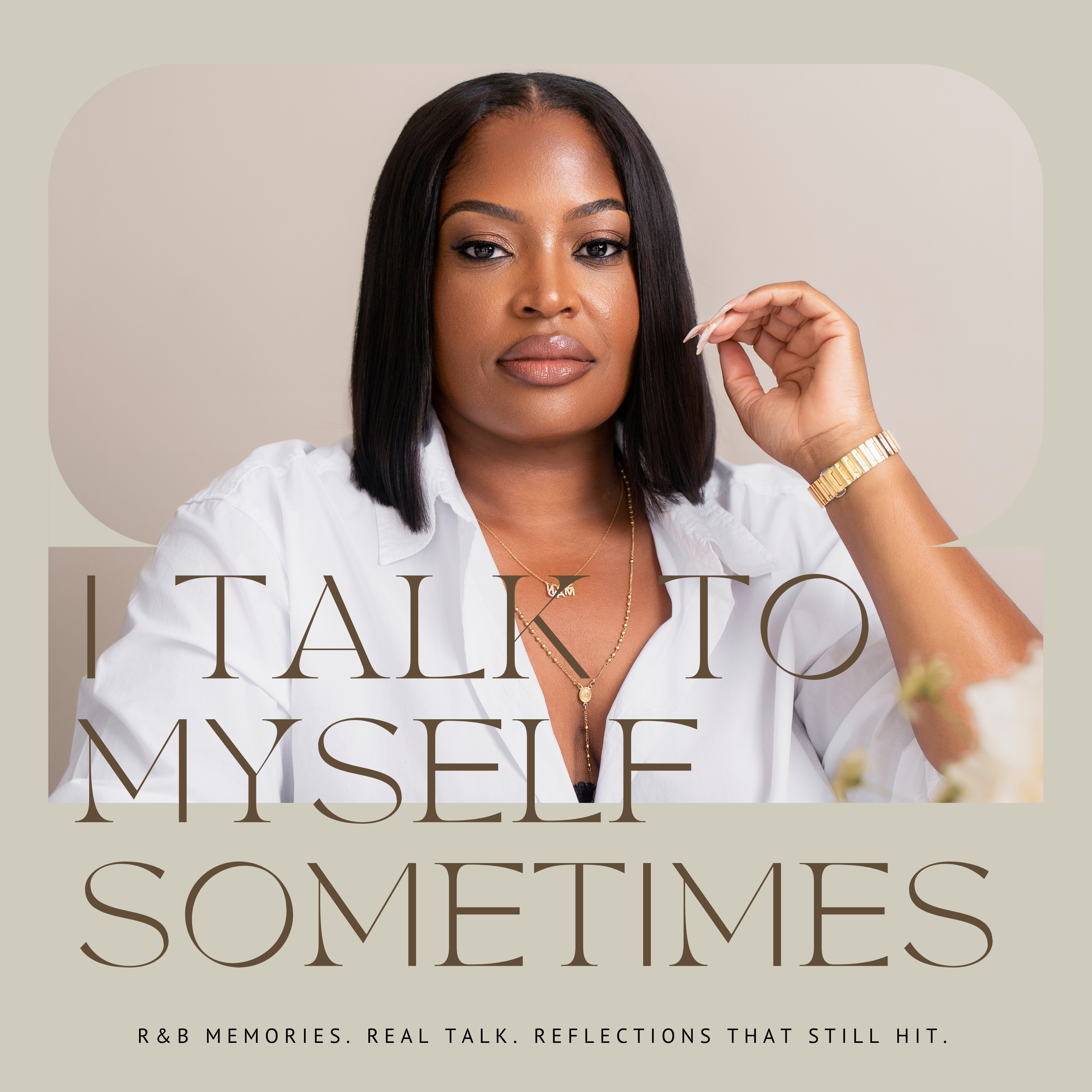
I Talk To Myself Sometimes
I Talk To Myself Sometimes is a podcast where host Antoinette Arrington reflects on her life experiences, using 90s music as a nostalgic backdrop. Each episode revisits songs from that era to explore themes of love, heartbreak, and personal growth. The show offers intimate, unfiltered conversations that encourage listeners to reflect, laugh, and heal. It's designed for those who grew up on 90s R&B and hip-hop and enjoy processing life out loud.
Episodes
Next’s “Too Close”: When Your Body Says Yes But Your Mouth Says Maybe
Next’s “Too Close” dropped in 1997, and if you’ve ever been caught between desire and boundaries on a dance floor, you know this song. This playful R&B hit captured the friction between physical arousal and public appropriateness—but it also revealed something deeper about mixed signals, unclear communication, and the difference between naming what you feel and saying what you actually want. In th
Heavy D’s “Is It Good to You”: When Asking Becomes the Power Move
Heavy D & The Boyz’s “Is It Good to You” dropped in 1991, and if you’ve ever realized that the best intimacy happens when someone actually cares enough to ask if you’re enjoying it, you know this song. This confident new jack swing classic captured something we don’t talk about enough: that asking “is it good to you” isn’t insecurity—it’s power. In this episode of *I Talk To Myself Sometimes*, Ant
Donell Jones’s “Where I Wanna Be”: When Leaving Isn’t the Same as Loving
Donell Jones’s “Where I Wanna Be” dropped in 1999, and if you’ve ever been left by someone who said they loved you too much to cheat on you, you know this song. This confessional R&B hit captured something we don’t talk about enough: how self-awareness can be weaponized, how leaving someone “to avoid hurting them worse” is still choosing yourself, and how “I need time” often means “I’m already gon
Carl Thomas’s “Emotional”: When Vulnerability Sounds Like Strength
Carl Thomas’s “Emotional” dropped in 2000, and if you’ve ever had to walk away from something you still loved because staying was costing you too much, you know this song. This raw R&B ballad captured something rare: a man admitting he’s breaking, feeling everything, and still making the hard choice to leave. In this episode of *I Talk To Myself Sometimes*, Antoinette Arrington explores how this c
Aaliyah’s “Rock The Boat”: When Desire Sounds Like Trust
Aaliyah’s “Rock The Boat” dropped in 2001, and if you’ve ever experienced intimacy where you felt safe enough to ask for exactly what you wanted, you know this song. This sensual R&B classic captured something rare: desire without urgency, pleasure as collaboration, and the kind of trust that allows you to be both vulnerable and direct. In this episode of *I Talk To Myself Sometimes*, Antoinette A
Case & Joe’s “Faded Pictures”: When You’re Loved But Never Chosen
Case & Joe’s “Faded Pictures” dropped in 1998, and if you’ve ever loved someone who was still mourning someone else, you know this song. This bittersweet R&B ballad captured the unique heartbreak of being present with someone who’s emotionally absent—watching them flip through old memories, waiting for them to see you, wondering why your love isn’t enough to pull them back. In this episode of *I T
Boyz II Men’s “Never Go Away”: When Intensity Isn’t the Same as Devotion
Boyz II Men’s “Never Go Away” dropped in 2000, and if you’ve ever been someone’s whole world—or tried to be—you know this song. This tender R&B ballad captured the kind of intensity we thought was devotion: the breathless declarations, the promises of forever, the feeling that love means needing someone so completely you can’t imagine surviving without them. In this episode of *I Talk To Myself So
Erykah Badu’s “Next Lifetime”: When Right Person, Wrong Time Wasn’t Just an Excuse
Erykah Badu’s “Next Lifetime” dropped in 1997, and if you’ve ever felt something real and had to walk away because the timing wasn’t right, you know this song. This wistful neo-soul classic captured the emotional maturity it takes to honor connection without acting on it, the clarity that comes from understanding that wanting someone and being available for them aren’t the same thing, and the wisd
Jodeci’s “Forever My Lady”: When Wanting Someone Felt Like Knowing Them
Jodeci’s “Forever My Lady” dropped in 1991, and if you’ve ever mistaken intensity for permanence, you know this song. This intimate 90s R&B classic captured the kind of desire that feels all-consuming—the pull toward someone so strong it seems like it has to mean forever. In this episode of *I Talk To Myself Sometimes*, Antoinette Arrington explores how this sensual hit reveals the difference betw
Intro’s “Come Inside”: When Lust Grew Up and Asked for More
Intro’s “Come Inside” dropped in 1993, and if you’ve ever confused intensity with intimacy, you know this song. This intimate 90s R&B classic captured the kind of desire that feels all-consuming… the electric pull of teenage lust versus the complex reality of adult arousal that asks whether good sex equals emotional investment. In this episode of *I Talk To Myself Sometimes*, Antoinette Arrington
Ideal’s “Get Gone”: The Power of Saying Enough
Ideal’s “Get Gone” dropped in 1999, and if you’ve ever reached the point where enough was finally enough, you know this song. This bold 90s R&B hit captured the kind of clarity it takes to walk away without apology—the moment when self-preservation becomes non-negotiable. In this episode of *I Talk To Myself Sometimes*, Antoinette Arrington explores how this liberating classic reveals the power of
TLC’s “Red Light Special”: When Chemistry Was Never the Problem
TLC’s “Red Light Special” dropped in 1995, and if you’ve ever been drawn to someone who wasn’t meant to stay, you know this song. This sensual 90s R&B classic captured the kind of chemistry that feels magnetic—the pull toward someone that’s undeniable, even when everything else isn’t quite right. In this episode of *I Talk To Myself Sometimes*, Antoinette Arrington explores how this intimate hit r
Deborah Cox & R.L.‘s “We Can’t Be Friends”: When Honesty Means Letting Go
Deborah Cox and R.L.‘s “We Can’t Be Friends” dropped in 1998, and if you’ve ever had to let someone go—not out of anger, but out of honesty—you know this song. This unflinching 90s R&B duet captures the kind of emotional clarity it takes to admit that some connections can’t exist in the gray area of friendship. In this episode of *I Talk To Myself Sometimes*, Antoinette Arrington explores how this
Monica’s “Why I Love You So Much”: How Teenage Devotion Sounds 20 Years Later
Monica’s “Why I Love You So Much” dropped in 1995, and if you were there, you remember. This tender 90s R&B ballad captured the kind of devotion that felt absolute—unguarded, all-encompassing, innocent. In this episode of *I Talk To Myself Sometimes*, Antoinette Arrington explores how this nostalgic classic reveals the beauty and vulnerability of loving someone before you fully know yourself, the
Dru Hill’s “Tell Me”: Honesty, Desire, and the Performance of Vulnerability
In this episode of I Talk To Myself Sometimes, we revisit Dru Hill’s debut single “Tell Me” (1996) — a soulful plea that blurs the line between desire and vulnerability. Through a modern lens, this episode unpacks how 90s R&B men often used sensuality as their safest language for expressing emotional need.
Tony! Toni! Toné!’s “Anniversary”: Devotion, Discipline, and the Art of Sustained Love
In this reflective episode of I Talk To Myself Sometimes, we revisit Tony! Toni! Toné!’s timeless classic “Anniversary” (1993) — a slow, soulful celebration of commitment and emotional maturity. Through themes of devotion, intention, and partnership, this episode explores what it truly takes to sustain love beyond infatuation.
SWV’s “Rain”: Emotional Intimacy and the Courage to Receive
In this introspective episode of I Talk To Myself Sometimes, we revisit SWV’s “Rain” (1997) — a slow, soulful classic that redefined emotional vulnerability in 90s R&B. Through themes of trust, openness, and feminine resilience, this reflection explores how love and healing often arrive when we finally stop resisting and allow ourselves to be seen.
Faith Evans’ “Soon As I Get Home”: The Weight of Waiting and the Cost of Devotion
In this reflective episode of I Talk To Myself Sometimes, we revisit Faith Evans’ “Soon As I Get Home” (1995) — a timeless R&B ballad that explores loyalty, longing, and the emotional toll of waiting for reciprocity in love. Through the lens of emotional healing and Black women’s experiences with devotion, this episode unpacks how waiting can transform from tenderness into quiet exhaustion — and w
Bell Biv DeVoe — “Poison” : The Fear Behind the Swagger
In this episode of I Talk To Myself Sometimes, we revisit Bell Biv DeVoe’s 1990 hit “Poison” — a masterclass in swagger that masked a deeper cultural unease. Through a reflective lens, we explore how early ’90s R&B turned masculine insecurity into rhythm, redefining attraction, control, and fear in the process.
Hi-Five — “I Like the Way (The Kissing Game)” (1990): The First Language of Affection
In this nostalgic episode of I Talk To Myself Sometimes, we revisit Hi-Five’s 1990 hit “I Like the Way (The Kissing Game)” — a sweet reminder of when love was simple, tender, and uncalculated. Through a reflective lens, we explore how early ‘90s R&B taught a generation of Black youth the language of affection before expectation, and how innocence shaped our understanding of connection.
Case ft. Foxy Brown & Mary J. Blige — “Touch Me, Tease Me”: The Power of Surrender and Control
In this episode of I Talk To Myself Sometimes, we revisit Case, Foxy Brown, and Mary J. Blige’s 1996 R&B classic, “Touch Me, Tease Me.”Through the lens of sensual power and emotional autonomy, this reflection explores how Black women in the mid-’90s redefined desire — not as submission, but as self-command.A confessional look at feminine allure, boundaries, and the quiet revolution of reclaiming a
Mary J. Blige’s “My Life”: Healing, Honesty, and the Labor of Becoming Whole
In this episode of I Talk To Myself Sometimes, Antoinette reflects on Mary J. Blige’s 1994 album My Life — an anthem of healing, honesty, and self-restoration. Through a deeply personal lens, she explores how Mary gave a generation of Black women permission to be transparent in their struggle while redefining what it meant to grow, forgive, and rebuild in real time.
Boyz II Men’s “End of the Road”: Closure, Surrender, and the Sound of Letting Go
In this episode of I Talk To Myself Sometimes, Antoinette revisits Boyz II Men’s 1992 ballad “End of the Road” — a defining R&B anthem about heartbreak, closure, and emotional release. Through intimate storytelling, she unpacks how the song taught an entire generation to process endings, mourn love without bitterness, and find the quiet courage to let go.
Janet Jackson’s “Any Time, Any Place”: Desire, Autonomy, and the Freedom to Feel
In this episode of I Talk To Myself Sometimes, Antoinette explores Janet Jackson’s 1994 classic “Any Time, Any Place” — a song that redefined sensuality through self-possession and emotional depth. This reflection dives into how Janet used softness as power, transformed vulnerability into agency, and taught a generation of women that intimacy begins with self-acceptance.
Jodeci’s “Cry For You”: Masculinity, Heartbreak, and Emotional Unraveling
In this episode of I Talk To Myself Sometimes, Antoinette revisits Jodeci’s 1993 classic “Cry For You” — a seminal track that normalized masculine vulnerability in R&B. Through reflective and confessional storytelling, she explores how openly expressed heartbreak shaped the way men and women understood sincerity, emotional honesty, and relational transparency, both then and now.
Total ft. The Notorious B.I.G.’s “Can’t You See”: The Power of Self-Assurance
This episode of I Talk To Myself Sometimes reflects on Total ft. The Notorious B.I.G.’s “Can’t You See” (1995) — a timeless R&B anthem of feminine strength, allure, and emotional agency. Through reflective storytelling, we explore how this mid-’90s hit became a soundtrack for Black women claiming desirability on their own terms, redefining what empowerment and presence could feel like in love, att
Joe’s “All The Things (Your Man Won’t Do)” (1996): Seduction Disguised as Sensitivity
This reflective episode of I Talk To Myself Sometimes revisits Joe’s “All The Things (Your Man Won’t Do)” (1996) — a sensual 90s R&B classic that blurred the line between emotional availability and performance. Through an intimate lens, we explore how young Black men of that era often expressed vulnerability through seduction, and what that taught us about love, awareness, and the emotional evolut
Janet Jackson’s “That’s the Way Love Goes”: Presence & the Art of Soft Seduction
In this episode of I Talk To Myself Sometimes, Antoinette revisits Janet Jackson’s 1993 masterpiece “That’s the Way Love Goes.” Through a soft, confessional lens, she explores how Janet redefined sensuality for an entire generation — shifting it from performance to presence, from spectacle to ease. This reflection dives into the art of soft seduction, feminine self-possession, and the evolution of
Brandy’s “I Wanna Be Down”: Emotional Labor and the (true) Cost of Caring Too Much
Released in 1994, “I Wanna Be Down” by Brandy carried the sweetness of young affection — that earnest desire to connect, to care, and to be seen as enough.But listening now, there’s something deeper beneath the smooth rhythm and calm confidence: the quiet emotional labor of wanting to support someone who doesn’t yet know how to support themselves.In this episode of I Talk to Myself Sometimes, we e
Shai’s “If I Ever Fall in Love”: The Sound of Pure Intention
Released in 1992, “If I Ever Fall in Love” by Shai captured the simplicity and sincerity of early ‘90s R&B — when harmony and honesty were enough to make a song unforgettable.In this episode of I Talk to Myself Sometimes, we revisit what made this song so timeless: its pure expression of desire before ego, status, or performance got in the way. It’s a reflection on what it meant to love with inten
Soul For Real’s “Candy Rain” : Nostalgia, Innocence and the Sweetness of Young Love
When “Candy Rain” by Soul For Real dropped in 1994, it felt like sunlight in sound—pure, tender, and full of promise. It was a time when love still felt simple, when admiration didn’t need to be analyzed, and when innocence made us bold enough to sing our feelings out loud.In this episode of I Talk To Myself Sometimes, Antoinette Arrington revisits the boyish sincerity of “Candy Rain” and explores
TLC’s “Creep”: Liberation, Desire, and Emotional Intelligence
When TLC dropped “Creep” in 1994, the world heard silk pajamas, brass horns, and quiet rebellion. But underneath the beat was something deeper — a story about agency, emotional neglect, and the complicated ways women respond when love stops feeling safe.In this episode of I Talk To Myself Sometimes, Antoinette Arrington revisits TLC’s Grammy-winning anthem through the lens of emotional intelligenc
Usher’s “Nice & Slow”: Lessons We Took Too Literally
1998. Usher’s “Nice & Slow” taught teenage boys about charm, flirtation, and the language of desire.In this episode, Antoinette Arrington revisits the song with a confessional lens, reflecting on how early ideas about love and intimacy have shaped men and women differently into their 40s.This episode explores the lingering effects of youthful fantasies, emotional growth disparities, and the ways t
Maxwell’s “Ascension”: Adoration, Presence, and Emotional Depth
1996. Maxwell’s “Ascension” gave listeners a masterclass in reverence, presence, and emotional care.In this episode, Antoinette Arrington reflects on how Maxwell exhibited the ability to cherish and honor a woman — and how that mindfulness shaped his own mind, body, and spirit. She also explores why many men in their 40s still struggle with this form of emotional expression, often believing it con
Mary J. Blige’s “Real Love”: The Freedom We Were Searching For
1992. Mary J. Blige gave us “Real Love” — an anthem that felt like power but carried a quiet plea for peace.In this episode, Antoinette Arrington reflects on the layers beneath the beat: the longing to be set free through love, and the realization that freedom is something only we can give ourselves.This reflection explores moving from dependency to self-recognition, from hope to liberation, and t
“You Make Me Wanna” — Usher (1997): The Gray Area Between Desire and Truth
When Usher dropped “You Make Me Wanna” in 1997, it felt like a smooth confession — a man caught between two loves. But years later, it reads like a deeper story about temptation, self-awareness, and the moments when curiosity exposes what comfort conceals.In this episode of I Talk To Myself Sometimes, Antoinette Arrington unpacks the gray area between attraction and alignment — and how sometimes,
“Don’t Walk Away” — Jade (1992): When Letting Go Sounds Like Love
When Jade released “Don’t Walk Away” in 1992, it sounded like heartbreak. But years later, it feels like clarity — a woman finding her voice between connection and self-worth.In this episode of I Talk To Myself Sometimes, Antoinette Arrington reflects on the moment between asking someone to stay and realizing peace often begins with release. Because love doesn’t always mean holding on — sometimes,
“Come & Talk to Me” — Jodeci (Remix): The Courage to Be Seen
There was a time when asking someone to talk felt like the most intimate act of all. Jodeci’s “Come & Talk to Me (Remix)” captured that moment — when interest met intention, and connection felt both tender and bold. In this episode of I Talk To Myself Sometimes, Antoinette Arrington unpacks the quiet power of vulnerability — and how the courage to approach, listen, and be seen still defines the tr
“Beauty” — Dru Hill (1998): Admiration, Restraint, and the Evolution of Longing
1998. Dru Hill released “Beauty” — a song that taught us how admiration can be tender, restrained, and profoundly intimate. In this episode of I Talk To Myself Sometimes, Antoinette Arrington dissects the emotions behind the melody: the quiet recognition of love from afar, the suspended space between yearning and access, and the self-reflection that comes with time. “Beauty” isn’t just about someo
Lauryn Hill’s “Ex-Factor”: The Love That Was Never Ours to Keep
When Lauryn Hill released “Ex-Factor” in 1998, we thought it was about heartbreak — about loving someone who wouldn’t love you back the same way.But time has shown us the truth beneath the melody:This song wasn’t just about loss, it was about forbidden love.It was the sound of loving someone who belonged elsewhere — of wanting a love that was never fully yours.In this episode of I Talk To Myself S
Mary J. Blige’s “I Can Love You”: When You Stop Competing to Be Chosen
When Mary J. Blige released “I Can Love You” in 1997, it became an anthem for women who loved hard and stood loyal — even when they weren’t the one being chosen.But time changes how we hear things.In this episode of I Talk To Myself Sometimes, Antoinette revisits Mary’s soulful confession and reflects on what happens when love turns into competition.It’s a conversation about worth, comparison, and
Mint Condition’s “Pretty Brown Eyes”: Lessons in Soft Accountability
Before there was the phrase “soft life,” there was “Pretty Brown Eyes.”Mint Condition didn’t just sing about heartbreak — they gave us a masterclass in emotional honesty and growth through melody.In this episode of I Talk To Myself Sometimes, Antoinette revisits “Breakin’ My Heart (Pretty Brown Eyes)” and explores how this classic 90s slow jam evolved from a song about desire into a reflection on
Groove Theory’s “Tell Me”: When Clarity Becomes Chemistry
Before situationships had a name, Groove Theory gave us “Tell Me.”It was more than a 90s slow jam — it was emotional maturity in disguise.In this episode of I Talk To Myself Sometimes, Antoinette revisits “Tell Me” and breaks down how this smooth groove evolved from a song about attraction to a quiet manifesto on communication, boundaries, and self-worth.In this episode you’ll hear: • How Amel Lar
SWV’s “Weak”: When Love Feels Like Surrender
When SWV released “Weak” in 1992, it became the anthem for every girl who ever lost her composure in the presence of someone who made her heart skip.But underneath its sweet harmonies and flawless runs, “Weak” is a confession — an emotional unraveling of what it feels like to give in to love, to lose your cool, and to risk your balance for something that feels bigger than logic.In this episode of
112’s “Cupid”: The Difference Between Being Loved and Being Believed
When 112 sang “Cupid”, they gave us a love song wrapped in pleading and promise — a tune about wanting to be believed, wanted, and held accountable to the truth of someone’s words. This episode of I Talk To Myself Sometimes sits with that tension: the place between a declaration and the proof that follows.We’ll break the song down line by line and listen for the ways “Cupid” taught a generation to
Aaliyah’s One In A Million: The Blueprint for Effortless Confidence and Unspoken Power
When Aaliyah released “One In A Million” in 1996, it didn’t sound like anything else. It was sleek, futuristic, and sensual without ever being loud about it.Timbaland’s beats hit like heartbeats, Missy’s pen told a love story that felt new, and Aaliyah’s voice — soft, assured, untouchable — redefined what feminine power could sound like.Back then, it was the soundtrack to every teenage crush and q
D’Angelo’s Lady: Soft Love, Safe Love, and the Gaze That Sees You
When D’Angelo released “Lady” in 1995, it felt like an instant classic — smooth, soulful, and intimate in a way that made every woman want to be the one he was singing about. Back then, it was just a vibe — that neo-soul groove that felt like slow dancing under a streetlight.But now, as a 40-something woman hearing it again, “Lady” hits on a whole different frequency. It’s not just about romance —
Tevin Campbell’s I’m Ready: The Softness, the Surrender, and the Safety We Craved
When Tevin Campbell sang “I’m Ready to love you forever…”, some of us were too young to even know what that kind of readiness meant. It was 1993 — we were teens feeling butterflies, not the weight of real commitment.But now, listening in our 40s, “I’m Ready” sounds like something deeper — an anthem for emotional availability, softness, and learning how to trust love again after heartbreak.In this
SWV’s Right Here: The Sound of Soft Confidence and Black Girl Freedom
When SWV dropped “Right Here (Human Nature Mix)” in 1993, it was everything — that perfect blend of nostalgia and newness. The Michael Jackson sample wrapped their harmonies in something familiar yet completely their own.Back then, it felt like pure magic — the soundtrack to braids, roller skating, first crushes, and Saturday mornings cleaning the house with the radio turned all the way up.But now
Recommended

زن بودن

Medicine with Meaning

Yours Truly Johnny Dollar Collection

Take Back Your Health®

CBS Radio Mystery Theater | Old Time Radio

Solved Murders - True Crime Stories

紐約鳥|New York Aperture

The Swerve Podcast: Obscure Topics | Conspiracy Theories

The Bread and Banter Podcast

The Church of What's Happening Now: The New Testament

Busted Open

Deadline: White House
