Subject to Change
I talk to the world's best historians and let them tell the stories. And the stories are wonderful! (And occasionally I change the subject and talk about films, philosophy or whatever!).
Episodes

Jonathan Clements on the fall of the Ming - (pt 2 of 2) - The Knight of the National Name
In part 2 of the story the hero finally arrives. Coxinga. Loyal subject of the Ming emperor or disobedient child? Coxinga is the son of Nicholas Iquan who made the journey from outlaw trader/pirate to Ming admiral. Iquan must have bitterly regretted his decision to give Coxinga the education of a Confucian scholar. While the rest of the family weighs how to deal with the invading Manchus in a thor

Jonathan Clements on the fall of the Ming (pt 1 of 2) - death by a thousand haircuts
Jonathan Clements is back to talk about Coxinga and the Fall of the Ming Dynasty, a tale so convoluted that its hero only gets born at the end of episode one! What happened in 17th century China for the Manchu invaders to just roll on in and take over? Includes thoughts on the benefits of spattering yourself in mud and risking tetanus, Manchu purges likened to "playing whack-a-mole with human

The Odyssey - No sex, terrible food
Armand D'Angour (Professor of Classics at Oxford University and Fellow of Jesus College) gives his take on Chrisopher Nolan's Odyssey and (more to the point) talks about the poem and the poet. Along the way we talk about Emily Wilson's blistering review (which is where the title of this episode comes from). And Armand gives some readings from the poem including this gem of a transla

The U-Boat Stink
At the start of WW2 the U-Boat threat gave the British sleepless nights. But even during the Happy Time (of which there were two) when ships were being sunk at a terrific rate the German effort was too little, too late. And then the war in the Atlantic turned against them and their casualties soared and successes became rarer. Roger Moorhouse has written a terrific book discussing all this (and mu

Lucy Hughes-Hallett on Gabriele D’Annunzio: Poet, Lover, Monster
This one is about Gabriele D'Annunzio. Italian poet, born in 1863 . . . I can already sense your attention drifting. But hang in there! A more lurid description would be that he is the poet who seduced over a thousand women. It is still puzzling exactly what women saw in him. As one bewildered woman said:"I have just met D'Annunzio. Can this be the man the great Duse loved? He is sm

Crimea (part 3): The Nazis, Stalin and the bitter end
Professor Donald Rayfield picks up Crimea’s story in spring 1942, when Germany turns south for the Black Sea and oil. Some Tartars can't imagine anyone worse than Stalin. Some can't imagine anyone worse than Hitler. Tragically, they are both right though in different ways.Donald explains the realities of the German occupation, from the early “orderly” phase to the arrival of SS units who
Crimea (part 2): from the Golden Horde to Catherine the Great
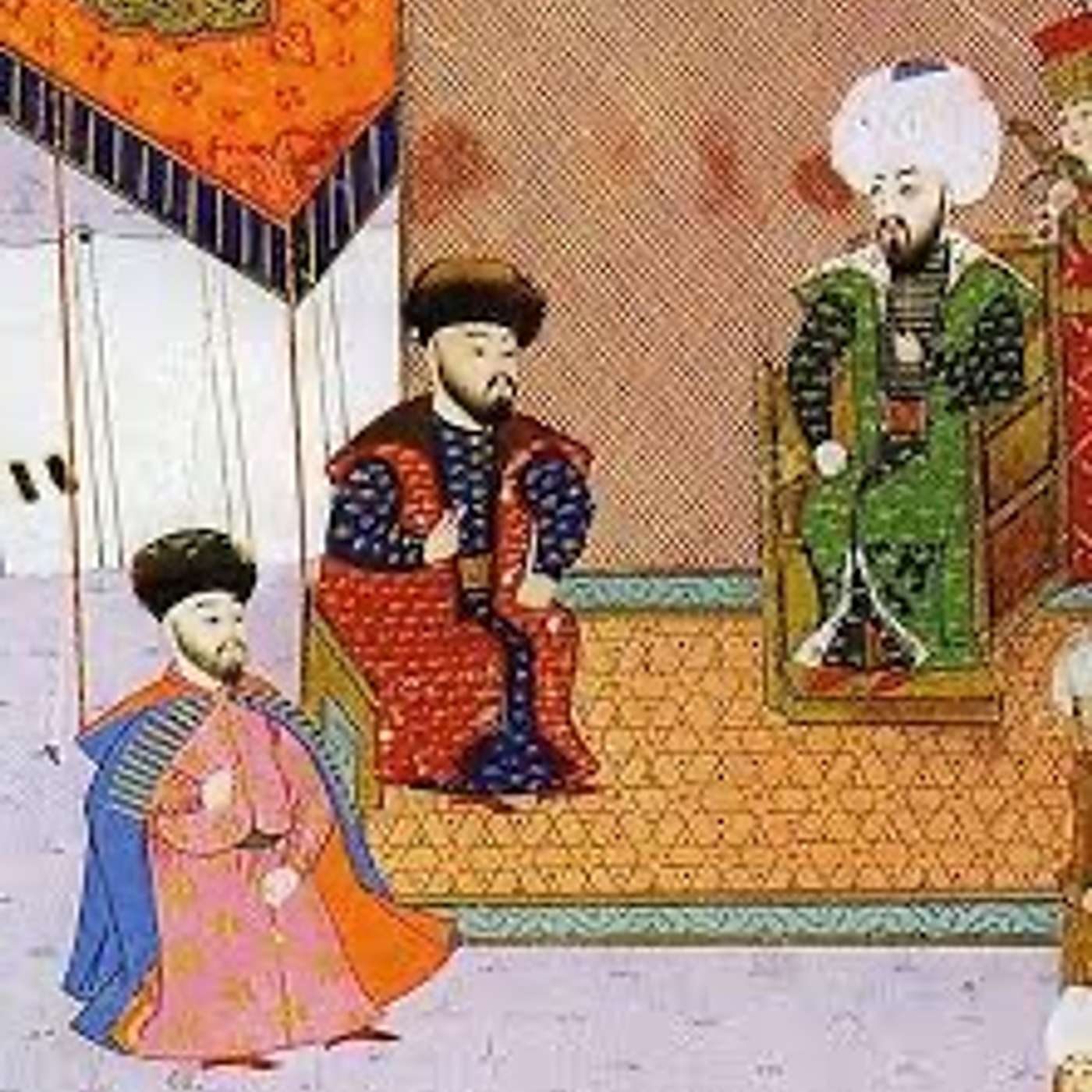
Donald Rayfield returns for the second of three episodes on Crimea — this time taking the long view, from the Mongol Golden Horde to Catherine the Great's annexation and the early Soviet period.At its height the Crimean Khanate was a sophisticated and surprisingly humane state. It was also, as Rayfield puts it, the self-appointed freeholder of the former Mongol empire — and it collected its r

POWs of the Crimean War
The subject today comes out of the Crimean war (1853-1856).I talked to Professor Donald Rayfield, Emeritus Professor of Russian and Georgian history at Queen Mary University of London, about the war itself and in particular what happened to those taken prisoner. Surprisingly life could be pretty good!

The Return of the Emperor (Justinian II - part 2)
Part 1 of the podcast told the sad story of how some shocking misjudgements on the part of Justinian saw him dragged to the Hippodrome where a man with a pair of pliers cut off his nose, cut out his tongue.But in a misjudgement every bit as big as Justinian’s instead of putting him in a sack and throwing him in the Bosphorus his successor exiles him to the Crimea. I mean everyone knows you can&apo

Mutilated and exiled (the Emperor Justinian II - part 1)
Justinian II becomes emperor at sixteen. Even allowing for the hostility of our sources the reign is not all plain sailing.I'm joined by Professor David Parnell to work through the first half of one of Byzantium's most extraordinary reigns. Part one takes us from his accession to the moment the city loses patience and terminates the reign violently. David and I are left scratching our he
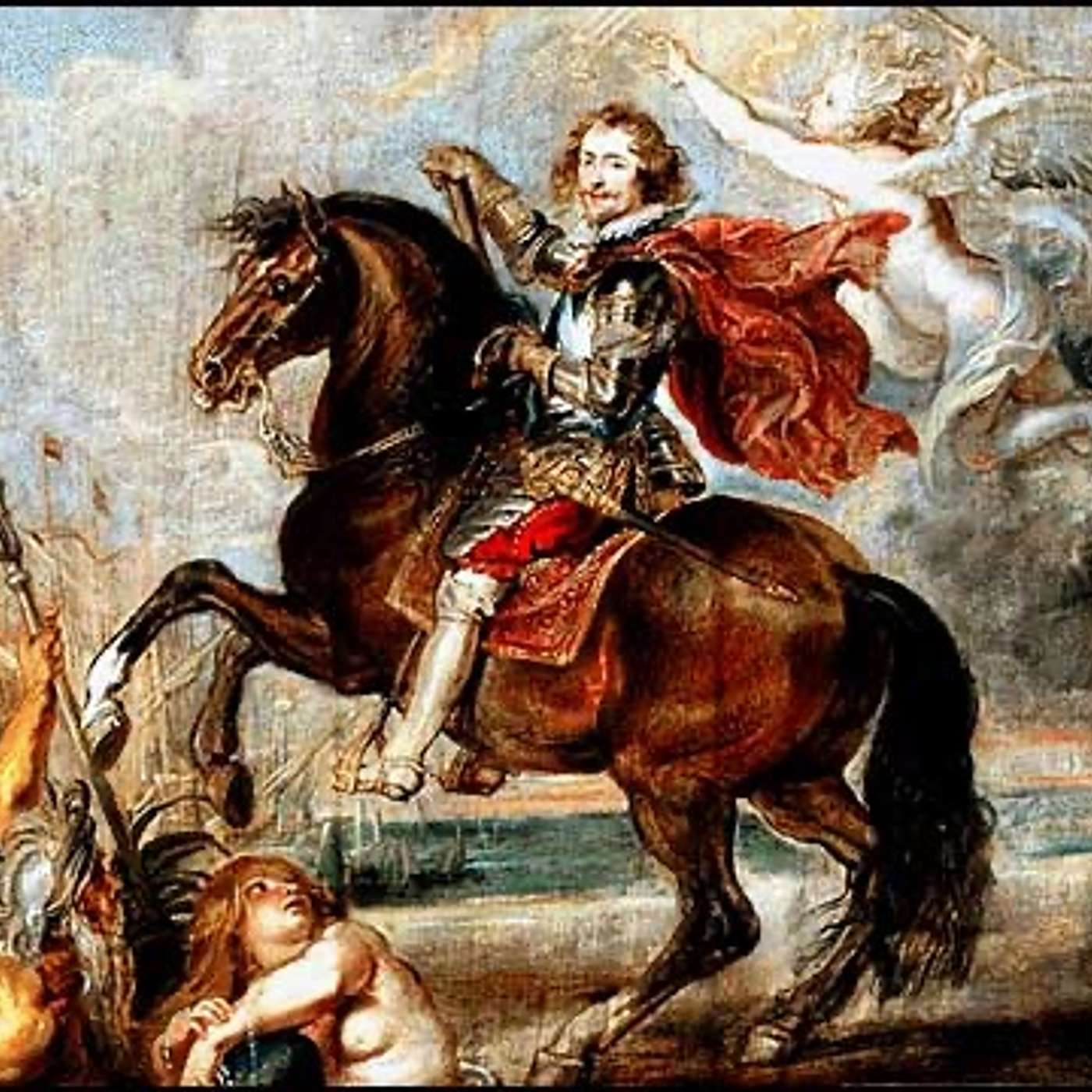
Buckingham: the most hated man in England
You don't have to be young and beautiful to get ahead in Stuart England but it really doesn't hurt. The is the story of 'gorgeous George' - that is to say George Villiers (later Duke of Buckingham) who in his early 20's became the favourite of James I of England (VI of Scotland). Despite his willingness to promote based on good looks, James I comes out of this rather well.

YEAR ZERO: Jonathan Clements on the First Emperor of China
Jonathan Clements returns to talk about his book on the First Emperor of China and the man who was sent to kill him: facts and fictions in Zhang Yimou’s movie Hero (2002), the evil mirror-universe version of Confucianism, an impossibly well-endowed “eunuch”, the construction of the Terracotta Army, the politics of archaeology, and how to spent a slave labour dividend. And what to do when you had t
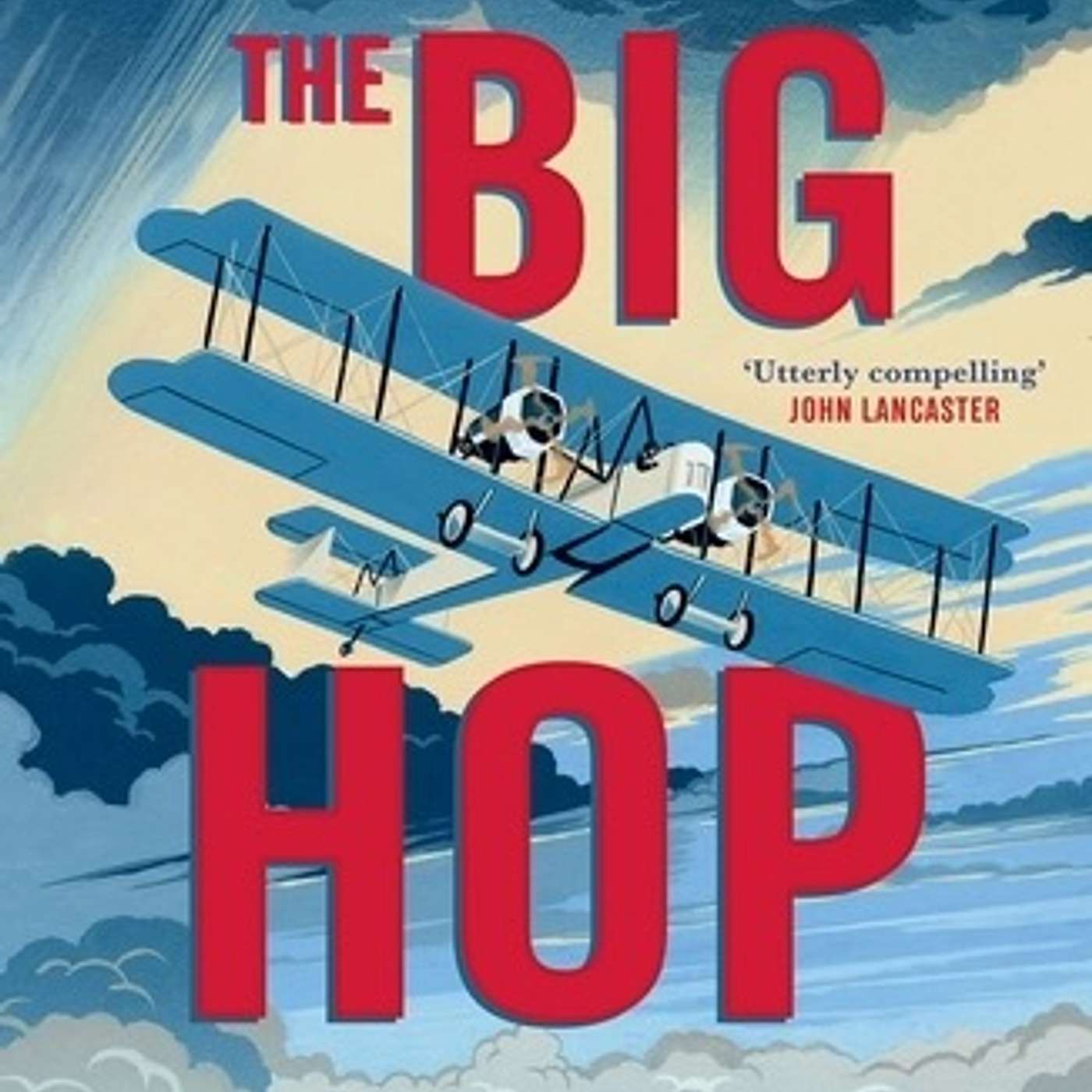
The Big Hop of 1919
It is astonishing to me that we went from the first powered flight of a few hundred feet in 1903 to attempting to fly the Atlantic in 1919. The Daily Mail had offered a prize of £10,000 to cross the Atlantic. The pilots called it the Big Hop. Nowadays we think nothing of it but back then they had open cockpits, primitive navigation tools, unreliable weather forecasting and many other problems. Thi
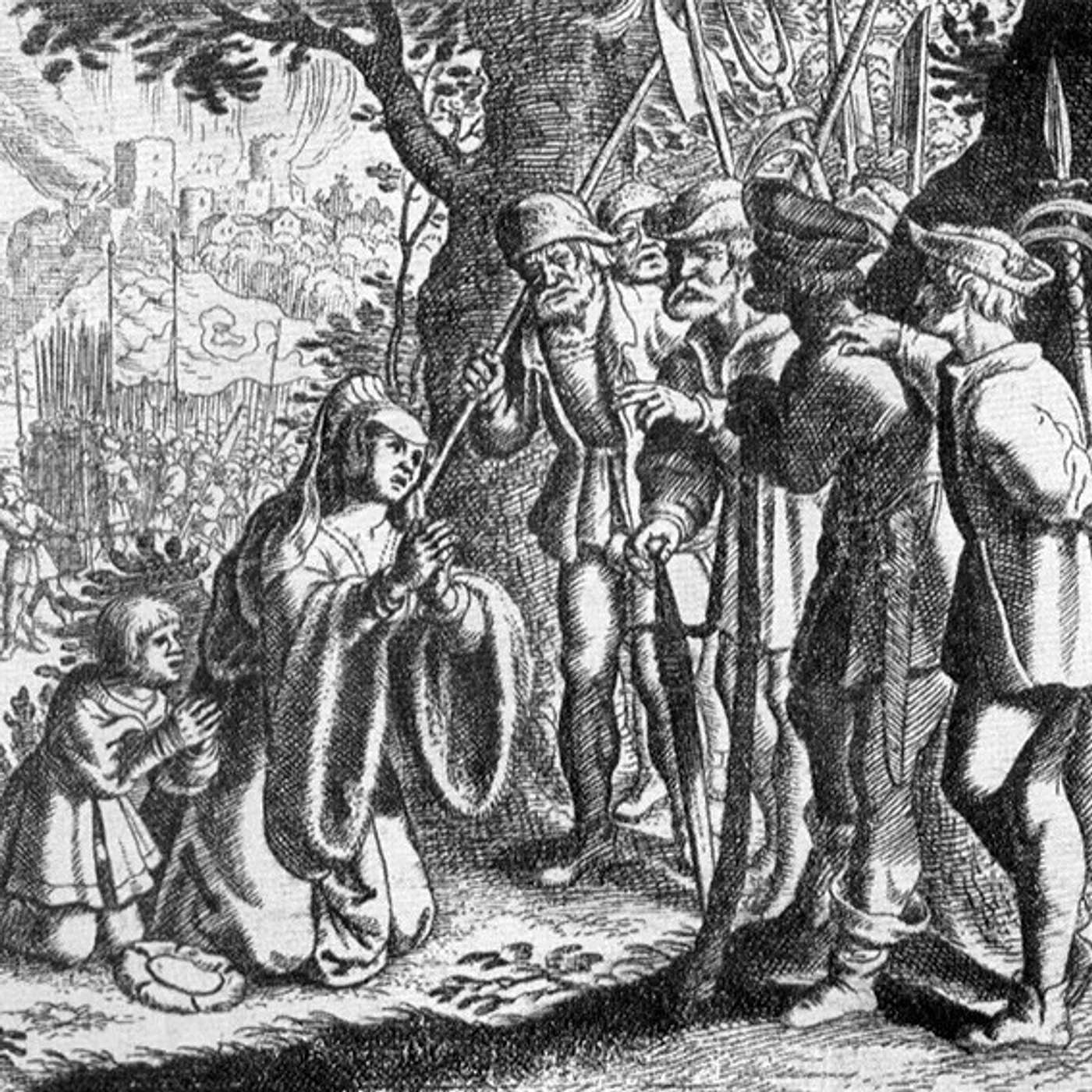
Martin Luther, serfdom and the German Peasants’ War
Lyndal Roper, Regius Professor of History at Oxford University is on excellent form to talk me through the German Peasant's War of 1524-25. Things I learned:- take Martin Luther seriously (but not literally)- monasteries feed the poor and needy (particularly when they are armed and extremely determined)- the scale of the revolt was off the charts, nothing like it until the French Revolution-

World War I: The surprising victory of 1918
Today the thing we find mysterious is why WWI lasted as long as it did. Why continue a pointless slaughter. Comparisions with the war in Ukraine suggest an answer!My guess is is Professor David Stevenson and for him the mystery is not why it lasted so long but why it ended when it did.For the German public is was particularly mysterious. Just a few months before the Armistice Germany was all conqu

Ed West on 1066 and all that
Ed West is a journalist and massively popular substacker - do check out his substack The Wrong Side of History. But he has a sideline in history so I got him on the show to talk about 1066 and the battle of Hastings. Ed is on top form so please join us as he talks about:- why Harold should have listened to his Mum- Harald Hadrada's absolute last poem- what made the Norman's so very hard

Edward I - a Great and Terrible King
A six-foot-two prince who loved tournaments, outfoxed a revolution, and nearly died on crusade returns to build castles that still dominate the Welsh coast and to bend Scotland to his will until Robert the Bruce strikes back. We follow Edward I’s path from a devoted crusader to the architect of a more centralised, harder-edged medieval state, where finance, logistics, and image mattered as much as

Empress Wu Zetian and the Age of Female Rule
“With the heart of a serpent and the nature of a wolf, she gathered sycophants to her cause and brought destruction to the just. She slew her sister, butchered her brothers, killed her prince, and poisoned her mother. She is hated by men and gods alike.”Jonathan Clements came back on to talk about his book on Wu Zetian (623–705), the only woman ever to rule China in her own name. Rising from lowly

Edward Shawcross on Napoleon III Part 2: The Power of Lust
As promised in part 1 we started the podcast by talking about some of Napoleon III’s many mistresses. Women like Harriet Howard, the Brighton bootmaker’s daughter, Virginia de Castiglione, sent by the Italians to seduce and spy on him (and welcomed with open arms!), Marguerite Bellanger and Louise de Mercy-Argenteau. His wife hated his infidelities but at least in the case of Louise she took comf

Edward Shawcross on Napoleon III Part 1: The Lust for Power
From exiled prince to emperor, Napoleon III's rise to power reads like a political thriller too wild to be true. Edward Shawcross tells the story of Napoleon Bonaparte's nephew, a man who attempted not one but two comically failed coups before finally succeeding in becoming Emperor of France.This episode explores Louis-Napoleon's bizarre childhood as the imperial nephew raised in Sw

From Eunuchs to Corsairs: The World of Islamic Slavery
Fourteen centuries of enslavement, from the Prophet Muhammad's day to modern Mauritania. Justin Marozzi's fascinating book "Captives and Companions" has as its subject the complex history of slavery across the Islamic world, challenging simplistic narratives and revealing uncomfortable truths about power, race, and religion.Our conversation touched on how Islam didn't inv

The Tokyo Tribunal: War Crimes, Justice, and Geopolitics
This episode looks at the courtroom drama that helped to shape Asia after World War II with Princeton University's Gary Bass. Far more than a simple account of justice served, the Tokyo War Crimes Tribunal represents a fascinating intersection of international law, power politics, and competing visions of history that continues to reverberate through East Asian relations today.The tribunal tr

The Pilgrimage of Grace: When England Fought the Reformation
When 50,000 northerners marched under their banners in 1536, England witnessed its largest rebellion since the Peasants' Revolt. The Pilgrimage of Grace wasn't just a protest - it threatened to undo the English Reformation completely and return the kingdom to Rome.Professor Peter Marshall, the renowned Tudor historian, tells the story of this extraordinary episode where religious devotio

Byzantium and the First Crusade
The ever excellent Professor David Parnell (of Belisarius and Antonina fame) came on to talk about the First Crusade. And given his interest in the Eastern Roman Empire we spent a lot of time talking about it from that angle. When Emperor Alexius I found his thousand-year-old empire crumbling under Turkish advances in the late 11th century, he asked the West for help. He got more than he could ha

Shattered Jewels - Japan's Path to War (3 and final)
What makes a nation launch an attack it cannot hope to win? Admiral Yamamoto, who planned the Pearl Harbor attack, warned Japan's leadership they would have only six months before America would mobilize its entire continent to destroy them. He was right, but his warning was ignored.The episode starts with a discussion about the controversial Yasukuni Shrine and museum, where we gain insight i

Manchuria to Pearl Harbor: Japan's Path to War (2)
How did Japan become embroiled in one of history's deadliest conflicts? The answer lies not in December 1941, but decades earlier. Jonathan Clements returns to unravel the forces that propelled Japan down a path to war with the world's greatest industrial power.Following Japan's victory in the First Sino-Japanese War, the country emerged with new confidence only to face the humiliat

An Alien Game: Japan's Path to War (1)
The transformation of Japan from hermit kingdom to imperial power happened with breathtaking speed. When American Commodore Perry's "black ships" steamed into Tokyo Bay in the 1850s, they shattered Japan's 250-year isolation with technology that seemed to come "from 200 years in the future." This technological gap created a constitutional crisis that would ultimately

How England Nearly Conquered France & Why They Failed
The Hundred Years' War shaped medieval Europe's political landscape for over a century—but what really caused this epic conflict between England and France? In this illuminating conversation, former UK Supreme Court Justice and acclaimed medieval historian Lord Jonathan Sumption cuts through myths and misconceptions to reveal the war's true origins.Contrary to popular belief, the wa

Imperial Twilight: How Trade, Tea, and Opium Led to War
The story of the Opium War is one of history's most consequential yet widely misunderstood conflicts. Professor Stephen Platt joined me to unravel the fascinating web of events that led Britain and China into a collision that would reshape Asia and the global balance of power for centuries to come.Far from being a simple tale of drug dealers backed by imperial force, Stephen reveals cultural

Suleiman's curse - with Christopher de Bellaigue
I spoke to Christopher before about his book the Lion House. That was part 1 of a trilogy on the life of Suleiman the Magnificent. Christopher is back to talk about part 2: The Golden Throne - the Curse of a King.From the intricate power dynamics of the Ottoman court to bloody naval battles in the Mediterranean, "The Golden Throne" recreates the world of Suleiman the Magnificent at the h

Anton Howes on Salt (and on much, much more!)
Anton Howes writes the brilliant Age of Invention substack. We were supposed to talk about the history of salt and its powerful impact on people and states. We certainly did talk about that but also a lot more!- history's efflorescences- Henry VIII's ruthless tax grabs- The feebleness of England (until suddenly . . .)- Rebel space colonies- The Spanish and English Armadas- Lot's wic

Tiberius - a good emperor, a broken man
In this episode Professor Ed Watts and I look at the brilliant career and sad life of the Emperor Tiberius. We try to understand how this most capable and intelligent man came to be seen by history as one of the most monstrous of the Roman emperors.In researching for the podcast I came across a really stirring defence of Tiberius in the shape of a monograph by Norman Douglas. On looking into who N

Christ's Samurai with Jonathan Clements - part 2
This is part 2 of my podcast with Jonathan Clements on Japan's Christian century. In this episode we get on to the rebellion itself. Sensitive listeners may want to brace themselves!

Christ's Samurai with Jonathan Clements - part 1
A two part podcast on Japan's Christian century. Jonathan Clements wrote a brilliant book called Christ's Samurai about the Shimabara rebellion of 1638. We cover the story in two parts - this is part 1 and tells of the early successes and later disasters of the efforts to bring christianity to Japan. Part 2 will cover the story of the rebellion itself.

In the Kingdom of Ice - with Hampton Sides
Hampton Sides loves to tell stories of people fighting against impossible odds.The story of the Jeannette's voyage is right in that vein. His book is called In the Kingdom of Ice and the subtitle sums it up - the Grand and Terrible Polar Voyage of the USS Jeannette.Look forward to hearing about US naval officer George de Long's polar expedition of 1879, including:a rich and eccentric new

Spring Heeled Jack - with Mike Dash
Spring Heeled Jack was an uncatchable villain from Victorian times. His speciality was attacking young women, raking their faces and clothes with metal claws and sometimes breathing fire in their faces. We have good evidence for his existence with newspaper reports and police and courts involved. But the more historian Mike Dash peels away the layers the harder it becomes to be sure of anything. A

Giles Milton on Nathaniel’s Nutmeg
The 'spice wars' between the Dutch and the English in the 1600's were quite something. Giles Milton told the story in his remarkable book Nathaniel's Nutmeg. What I hadn't realised until reading this was how feeble and disorganised the English were compared to their competitors. And the Dutch in particular were as ruthless as they were capable.Visits to the court of Ivan t

Rebel Island - Jonathan Clements on the history of Taiwan - part 2
We are back with Jonathan Clements for part 2 of our podcast on the history of Taiwan. In this episode we start with the remarkable story of Taiwan's 50 years as a colony of Japan. And Jonathan then takes the story through the White Terror up to the current day.And to remind you:Rebel IslandJonathan's blog

Rebel Island - Jonathan Clements on the history of Taiwan - part 1
Jonathan Clements has written a number of histories of East Asia. His latest, Rebel Island, is a history of Taiwan from the earliest times up to today. If you have any interest in the history of the region this book is an absolute must read. And while it is a serious and meticulously researched history it is also genuinely gripping with 'Blimey! I didn't know that!' moments on every

The 4th Crusade and the final fall of the Roman Empire - with Ed Watts
Delighted to have Professor Ed Watts back on the show. This time he is talking about the 4th Crusade which turned into one of history's great catastrophes. People give many possible dates for the fall of the Roman Empire and Ed argues persuasively for 1204 when the crusade reaches its heartbreaking climax.

In Sulla's shadow - Ed Watts reappraises Caesar
Professor Ed Watts is a reliably brilliant guest on the show. In this episode he looks at Sulla's career and the blight the cast on the Roman Republic. Ed argues that it is impossible to understand any the great characters - Caesar, Cicero, Cato, Pompey and so on - without understanding the scarring effect of Sulla's rule. In Ed's view Caesar emerges from all this as a man with terr

A bishop hanged in Dublin
I can't remember enjoying a story more than Peter Marshall's Mother Leakey and the Bishop. The way Peter tells the story is absolutely brilliant with walk on parts from some very famous characters. At heart though it is a ghost story and the story of how an Anglican Bishop came to be hanged for the crime of sodomy in Dublin in the winter of 1640. Peter is one of the leading historians o

Kaldellis on Byzantium - part 2
We cover the miserable tale of the 4th crusade, the Latin Empire and Anthony gives advice on how to write a Byzantium based historical novel. We had fun with this one and I hope you enjoy it.

Anthony Kaldellis on Byzantium (Part 1)
If you have any interest at all in Byzantium or in the Roman Empire generally I think you should really enjoy this episode. Professor Kaldellis is one of the leading scholars on Byzantium (East Rome?) and his book The New Roman Empire - A History of Byzantium takes you all the way from the founding of Constantinople to its fall to the Ottoman Turks in the 15th century, more than a thousand years l

Hampton Sides - the last voyage of Captain Cook
Hampton has been on the podcast before and if you haven't yet found his books of narrative history I urge you to seek them out. Absolutely thrilling stories but told with real historical skill. Today we talked about Captain Cook's last voyage which ended in 1779. Hampton's book is called The Wide Wide Sea and he pays attention to all parts of the story - Cook was very much only a pa

The Sin Eater
I am a huge fan of Mike Dash's books. We have talked about Batavia's Graveyard and Tulipomania in past episodes. But Mike also has a fascination for weird semi folkloric stories and in this episode he unearths the truth about that remarkable creature, the Sin Eater.

Ed West - From the Romans to Alfred the Great
Most people know Ed West for his journalism and in particular for his substack The Wrong Side of History. If you haven't found that yet then check it out - it is one of the best things of its kind out there. But Ed also writes book and in particular a series of short introductions to various periods of English history. If (like me) you sometimes find you need a good overview of something befo

John McWhorter and Scott Sumner - talking movies
I am a huge fan of John McWhorter and have come to have great respect for Scott Sumner's knowledge and judgement when it comes to movies. It was a real pleasure to get them together to chat about favourite movies, directors and genres.

Dikötter on Dictators
Frank Dikötter returns to the show to talk about dictators and in particular how they use the cult of personality to crush friends and enemies alike. HIs book on dictators is an elightening tour of some of the worst men of the 20th century - horribly enjoyable!

The Lives of East Germans - Katja Hoyer
If, like me, your idea of East Germany is dominated by spy movies and and you think that perhaps it was nothing more than a open air prison with the Stasi round every corner then Katja Hoyer's remarkable book Beyond the Wall is an ideal corrective. Katja blends personal tales (some happy and some utterly tragic) with an analysis of the wider geopolitical scene. Above all it is fantastically r

Britons never will be slaves?
Giles Milton is one of my favourite authors producing narrative history today. The stories he tells are just jaw dropping. We talked about his book White Gold which tells the stories of Thomas Pellow who was seized and taken off into slavery in 1714. Looming large in the story is the remarkable Moulay Ismail, ruler of Morroco at the time. He makes his entrance on his chariot pulled by some of his

Italy, a ruin - part 2 of the Adventures of Belisarius and Antonina
David Parnell and I wrap up the story of Belisarius and Antonina. We are now on to the liberation of Italy and by the end I felt the Romans there might have preferred to have been left alone. It is a huge subject and we couldn't do more than give an overview. If you want more David's book is terrific. We are very lucky with our sources for this period which allow us to know so much abou

Constantinople shows its teeth - part 1 of the Adventures of Belisarius and Antonina
David Parnell has a wonderful new book out called Belisarius and Antonina. This is the story of a real husband and wife partnership. Belisarius was perhaps the greatest Roman general of the 6th century and his wife Antonina accompanied him and was intimately involved in his campaigns. I really enjoyed speaking to David about the twists and turns of the story. Hearing about the Nika riots was a par

Mao's China with Frank Dikötter
Frank Dikötter is the author of a series of brilliant and harrowing books about communist China. He is not only a prize winning historian of post war China but a highly engaging speaker. He talked about China from the time of the communist takeover after WWII all the way up to and beyond the death of Mao. The regime was responsible for the deaths of tens of millions and Frank does a great service

David Grann on HMS Wager: shipwreck, mutiny and murder!
This is the story of Anson's voyage around the world in the 1740's. In particular it is about the ship the Wager and the crew's incredible bravery, endurance and ingenuity in appalling conditions. And it is about shipwreck, murder and mutiny.David Grann's book tells the story brilliantly. You will never want to get on a boat again!

Sharp and Sumner: 6 Japanese movies
Jasper Sharp is probably the UK's leading expert on Japanese film and he joined me on the show today with Scott Sumner. Scott has a famous economics blog that has a side line in movie reviews. The pair of them were on really good form discussing a list of six movies that Jasper came up with. I think that even people unfamiliar with Japanese film should have fun!The films we discussed were:Equ

McWhorter and Holland - On dinosaurs
John McWhorter and Tom Holland are a perfect pairing. They are absolutely delightful company both with a dry sense of humour. I was keen to bring them together because I learned they share a love a dinosaurs. Absolute fanatics it turns out. I got the sense they really enjoyed chatting to each other and I hope you will enjoy listening. An interest in dinosaurs helps but is not required!

Acre 1291 - the final showdown
Roger Crowley is one on the best (if not the best) narrative historians of the Middle Ages. Here is on great form talking about the Siege of Acre in 1291. The Crusaders have been pushed back and back with Acre the last meaningful holdout. They are up against the formidable Mamluks led by Sultan Khalil. Can they hold out? Roger's book The Accursed Tower (like all his books to be honest!) is a

The Salem Witch trials with Stacy Schiff
Stacy Schiff is one of America's most acclaimed historians and biographers. Her book The Witches is a detailed, almost forensic, history of the Salem witch trials on 1692. She very kindly came on the podcast to talk about it and she is every bit as good a storyteller in person as you would imagine from reading the book. I found her book and our conversation really quite troubling in what it s

Suleiman the Magnificent with Christopher de Bellaigue
Christopher de Bellaigue's book The Lion House is a brilliant history of the first part of Suleiman the Magnificent's reign. I love history and I can't remember loving a history book more that this one. As I say in the podcast, I think it is an unabashed masterpiece and such a pleasure to read. Christopher tells the story in particular of two men at the court of Suleiman and their s
Slavery in the Mediterranean in the Middle Ages
Professor David Abulafia's wonderful book The Great Sea covers so many topics. Today we talked about slavery. Until recently I hadn't been aware of the sheer scale of the enterprise. Slavers from the Barbary ports raided as far north as the coasts of England and Ireland. In the east the Mongols brought slaves to the Black Sea ports where they were taken by Italian merchants past Constant

Talking movies with Scott Sumner
Scott Sumner is an economist with a well known and much quoted blog. But it is the bit of the blog that he devotes to movies that interests me. He watches a ton of films and then does a thumbnail review and rating. For example:For example here is his review of The Bad Sleep Well: The first time I’d seen this Kurosawa film, and I’d say it’s his most underrated effort. Loosely based on Hamlet, but y

The war against Antony and Cleopatra
I have always found the war Octavian fought against Antony and Cleopatra hard to understand. How did Antony find himself losing without even fighting a proper battle given all his experience as a general and commanding an army equal to or stronger than his opponent's? Barry Strauss explains the campaign brilliantly.You can find his book The War that made the Roman Empire here. Highly recommen

Anna Keay on the Restless Republic (Britain after the death of Charles I)
Anna Keay's book The Restless Republic is just brilliant. It covers the period following the execution of Charles I when Britain became a republic. It is fascinating to see how the period (and the characters) mix revolutionary ideas with deep traditionalism. Anna approaches the subject by telling the stories of a number of people - men, women, powerful and powerless - who illuminate the times

The Death of Alexander pt 2 (Perdicass and the crocodiles)
Following on from last week in this episode things reach boiling point. Marriage alliances are discarded, invasions undertaken D day style, brutal battles are fought as Perdicass marches to destroy Ptolemy. All this and possibly one of the most audacious and consequential heists in all of recorded history. And crocodiles, lots of crocodiles.

The Death of Alexander Pt 1 - Chaos unfolds
Tristan Hughes has writen a brilliant book about the years immediately following the Death of Alexander the Great. As Tristan says, history didn't just stop at Alexander's death and start again when Rome takes on Carthage. And in fact this period is one of the most fascinating and eventful in ancient history. It is also one of the most confusing and I hope this podcast is both entertaini

Gladiator - the movie, the history!
Really thrilled to have Bret Devereaux and Ed Watts on the podcast together. We looked at Gladiator as a film (two thumbs up!) and also unpicking some of the history. Ranging far and wide we covered the battle scenes, gladiators, the role of an emperor and lots, lots more. Ed argues that Commodus was doing okay until stabbed in the back by his sister and Bret gives a masterclass in how not to name

A nuclear exchange
I chatted to Battleship Bean and John Schilling about nuclear war. We discussed the wonderful Dr Strangleove and tried to unpick some of the realities of a nuclear war. How powerful are modern weapons? Would they knock out electrical systems world wide? Would such a war result in nuclear winter?A book I mentioned in the podcast and which I recommend (though Bean is not a fan) is Command and Cont

The Last Emperor of Mexico - part 2
What happens when a Habsburg prince abandons European luxury to rule a bankrupt, divided Mexico? Emperor Maximilian's journey from triumph to tragedy reveals the human cost of imperial ambition and misguided honor.After their triumphant entry into Mexico City, Maximilian and Carlotta faced the monumental task of governing a nation torn by civil war. Despite liberal reforms that surprised his

The Last Emperor of Mexico - part 1
Karl Marx called it 'one of the most monstrous enterprises in the annals of international history'. This seems unfair to the young Hapsburg royals who travel to Mexico in 1864 to become its emperor and empress. Highly liberal by the standards of the day and with the best of intentions they will face a terrible struggle to rule and (ultimately) to try to survive. Edward Shawcross has writ

Tulip mania - 1630's Holland goes wild
In the Dutch Republic of the 1630's trading in tulips went mad with bulbs and even parts of a bulb changing hands for astronomical prices. Historian Mike Dash traces the extraordinary story from its beginnings centuries before up to and beyond the inevitable crash. I can't recommend Mike and his books enough. Hard core history and a fantastically accessible reading style. His book Tulipo

A new world order - the Arab invasions of the 7th century
James Howard - Johnston returns to talk about the astonishing upending of the world order that happened just a few years after the death of Muhammad. The Persian empire destroyed and the Roman Empire reduced to a Byzantine rump. It is a long episode and slightly scholarly but I honestly don't think you can understand the world we live in today without some understanding of these extraordinary

Firepower with Paul Lockhart
Paul Lockhart is brilliant on the history of guns (and firepower more widely). He is interested not just in the weapons themselves but how they changed the nature of the nation state itself. Once gunpowder is introduced everything changes. Warfare increasingly becomes something only a powerful state can really afford and a Darwinian competition starts to unfold from the 1500's onwards. Liste

Mortal Republic with Edward Watts
Ed Watts is one of the most engaging writers and speakers on Roman history I have talked to. In this podcast we talk about the fall of the Republic - why and how it happened and who was most to blame. The podcast picks up the themes of his excellent book Mortal Republic which is highly, highly recommended.

The Korean War - the battle of the Chosin Reservoir
In October 1950 the Americans are racing to the Yalu river, trying to bring the war in Korea to a decisive close. Unknown to them a huge Chinese army has been sent to oppose them and the forces meet at the Chosin Reservoir. Both sides have to fight not only each other but the appalling cold as the Chinese try to surround and annihilate the Americans.Hampton Sides' book On Desperate Ground is

The Silver Way
Everyone has heard of the Silk Road but this is The Silver Way. It is the story of the Manilla galleons, massive ships that sailed annually for 250 years from 1565 to 1815. Silver from Spanish South America in exchange for Chinese goods with the exchange taking place in Manilla in the Philippines. It was the first true globalisation linking the economies of China and Europe. Our discussion range

The Last Great Siege - Constantinople 1453
The story of the siege of Constantinople in 1453 is a rich one. Roger Crowley tells the story absolutely brilliantly here. So many fascinating (and at times heartbreaking) stories within the bigger story. A city with an unbroken history of over a thousand years faces its deadliest enemy.And don't miss Roger's book on the subject. Narrative history at its finest.

Rome against Persia - their final battle
In the year 617 the Roman Empire stands on the brink of extinction. In the West the empire is long gone. And now the Persians have conquered much of what is left and have arrived outside Constantinople where the emperor Heraclius is reduced to begging to be allowed to keep his throne. The Persians turn down the deal, the war continues and Heraclius leads a desperate counter attack. James Howard-Jo

Poggio Bracciolini - an Indiana Jones from the 15th century
Stephen Greenblatt wrote a fascinating book The Swerve about the rediscovery in 1417 of a work of philosophy from antiquity. The Nature of Things was written by Lucretius a few years before the birth of Christ. It provides an account of the world profoundly at odds with religion - atomism and epicureanism. Stephen's thesis is that over time the implications of this work changed the course of

Pearl Hart - the Wild West's most notorious woman bandit
In 1889 a woman calling herself Pearl Hart holds up a stagecoach in Arizona. In this episode John Boessenecker talks about Pearl Hart and his book Wildcat. Pearl's life from poverty to prostitution to stage coach robbing and prison sounds miserable. But the woman herself was beautiful, smart, full of life and hard not to admire. In fact the whole family and in particular her sister Katie led