AirSpace
AirSpace is a podcast from the National Air and Space Museum that explores the connections between aviation, space, and everyday life. Twice a month, hosts discuss stories from aviation and space history, news, and culture, drawing links to movies, music, travel, and more. The show aims to make aerospace accessible and interesting to all listeners, whether they are aviation enthusiasts or casual fans.
Episodes
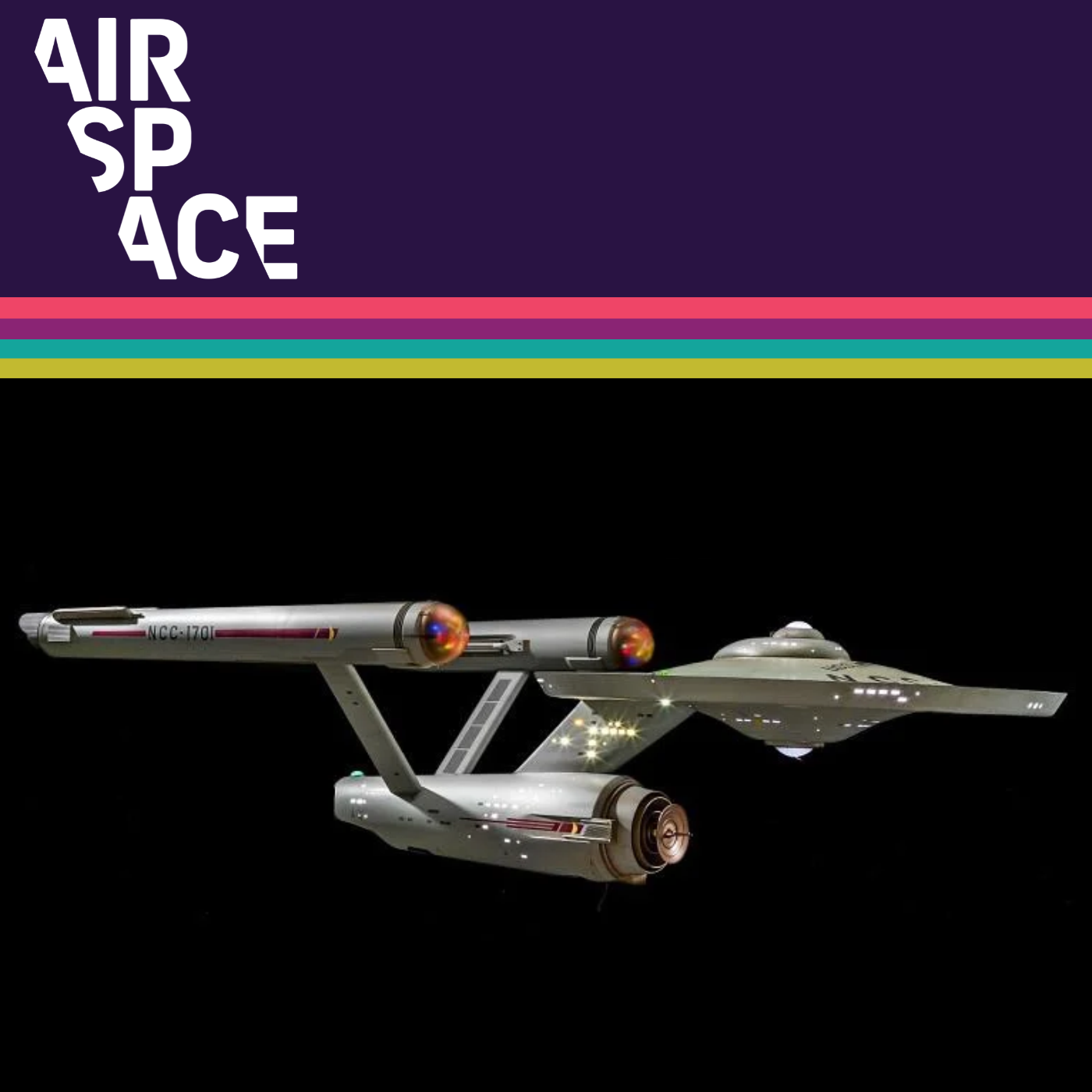
Star Trek at 60: AirSpace Live!
Star Trek: The Original Series only aired for three seasons (1966 to 1969), but it launched a fanbase that transformed pop culture. Trek fans pioneered letter-writing campaigns, cosplay, and modern fan conventions. They reshaped the franchise, fan culture, and even real science on Planet Earth. To celebrate the 60th anniversary of Star Trek, we hosted a live taping of AirSpace at the Muse
AirSpace Bonus! Escape this Podcast: Star Search
We’ll be back with new AirSpace episodes on October 8th. In the meantime, here’s something a little different. AirSpace co-hosts Matt and Emily recently guest-starred on Escape This Podcast, where they played through a custom audio escape room. Listen to find out if a geologist and a museum curator have what it takes to escape a spacecraft filled with an unusual amount of puzzles…Speaking

AirSpace Revisited: Me and the Sky
In honor of the 25th anniversary of the September 11th attacks, we're looking back on our 2020 episode about the Broadway musical Come From Away.If you’re a Broadway fan, you’ve likely heard about Come From Away—the Tony-award-winning smash-hit musical with a story firmly rooted in generations of aviation history. On September 11, 2001, 38 commercial airliners were diverted out of US air
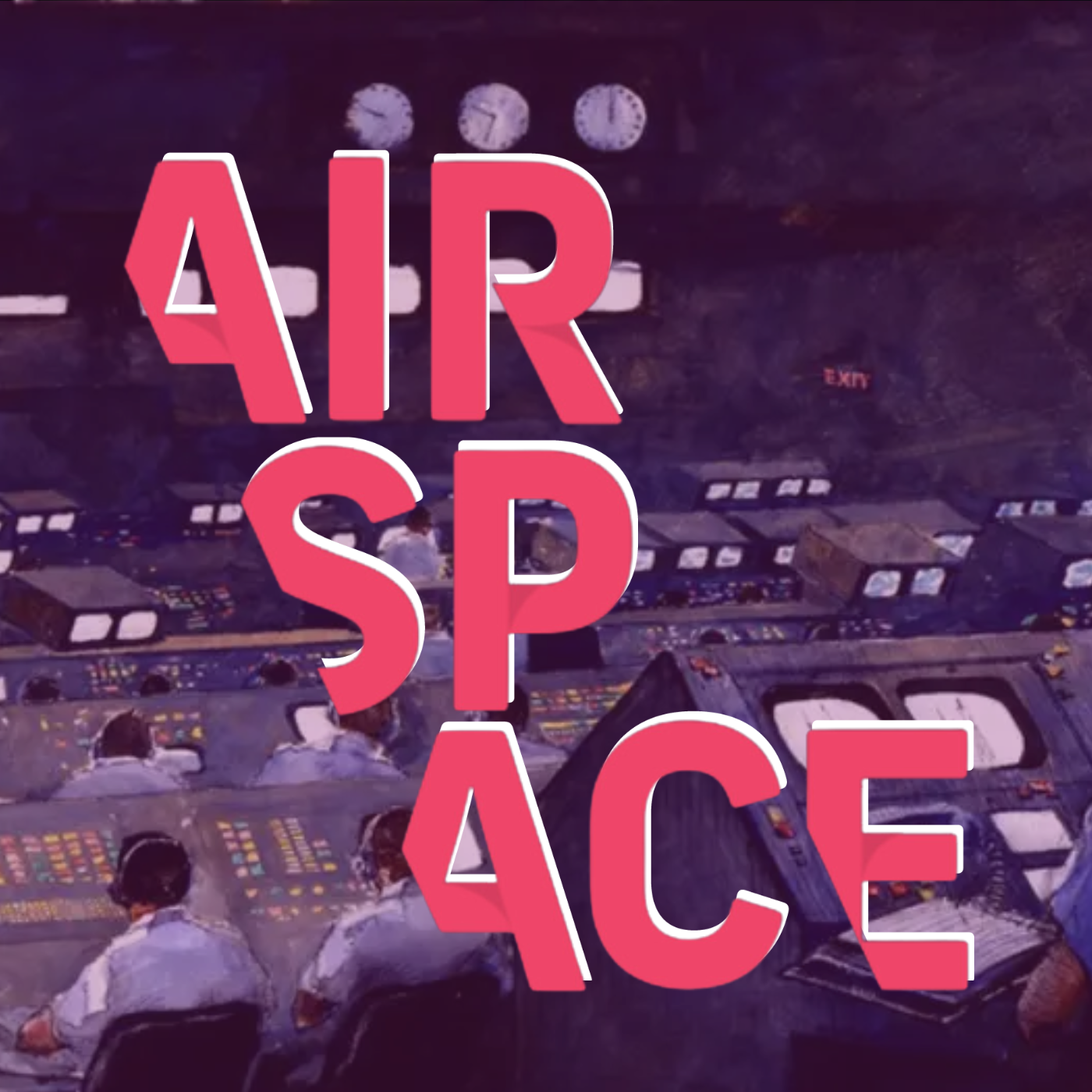
AirSpace Revisited: Art Decade
The National Air and Space Museum's newly renovated building in Washington D.C. includes a beautiful new art gallery to showcase the museum's extensive collection of art, much of which came from the NASA Art Program. This week, we're revisiting a classic AirSpace episode all about that program and its connection to the Museum. The NASA Art Program was organized beginning in the 1960s, whe
50 Years: Onward and Upward
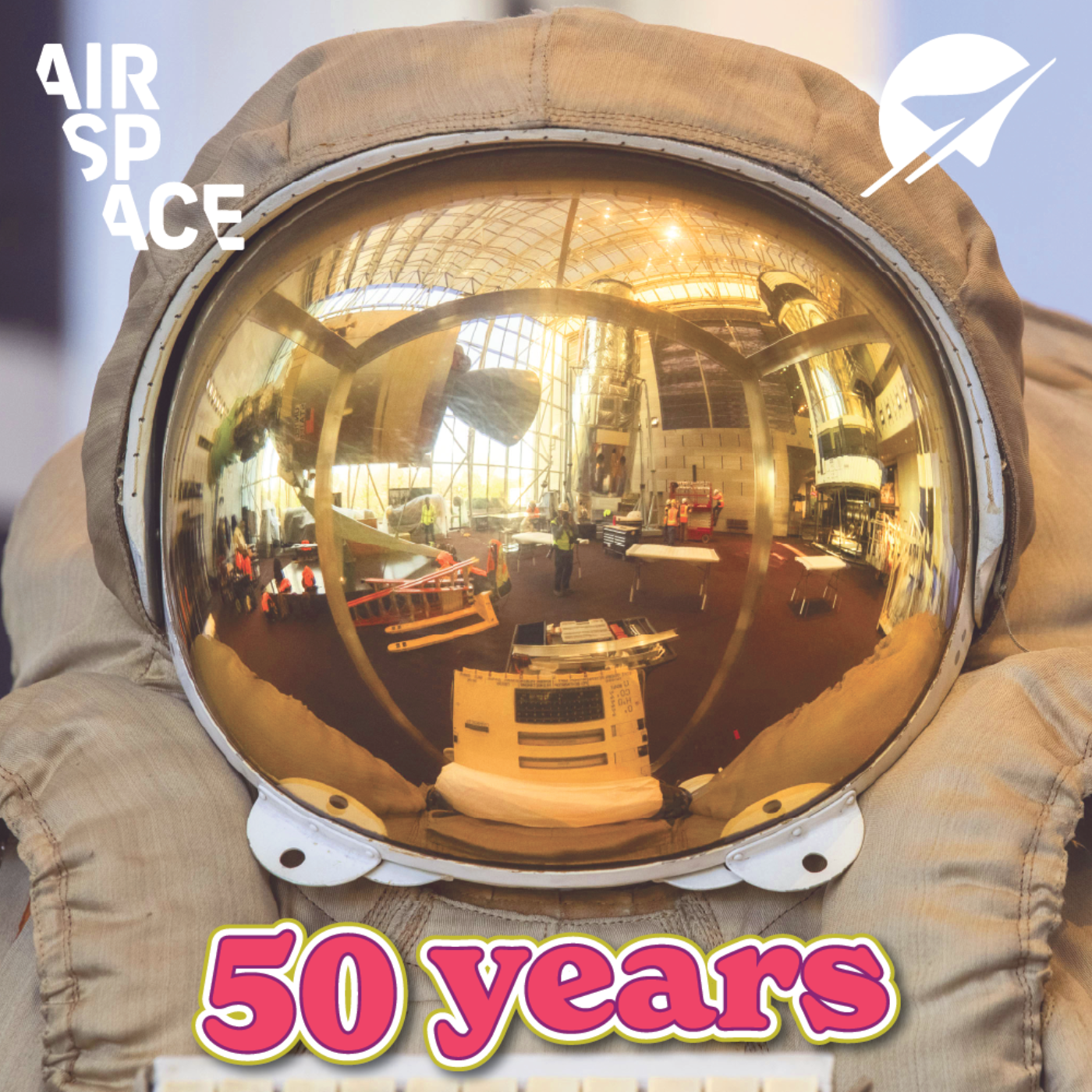
If you haven’t been to the National Air and Space Museum in D.C. for a while, you may notice a few things have changed…actually, just about everything in the building, including the building itself, has been completely overhauled. What started as some exterior renovation more than a decade ago became a complete reimagining of our iconic museum. Every exhibit space has been redesigned with
50 Years: New Ideas
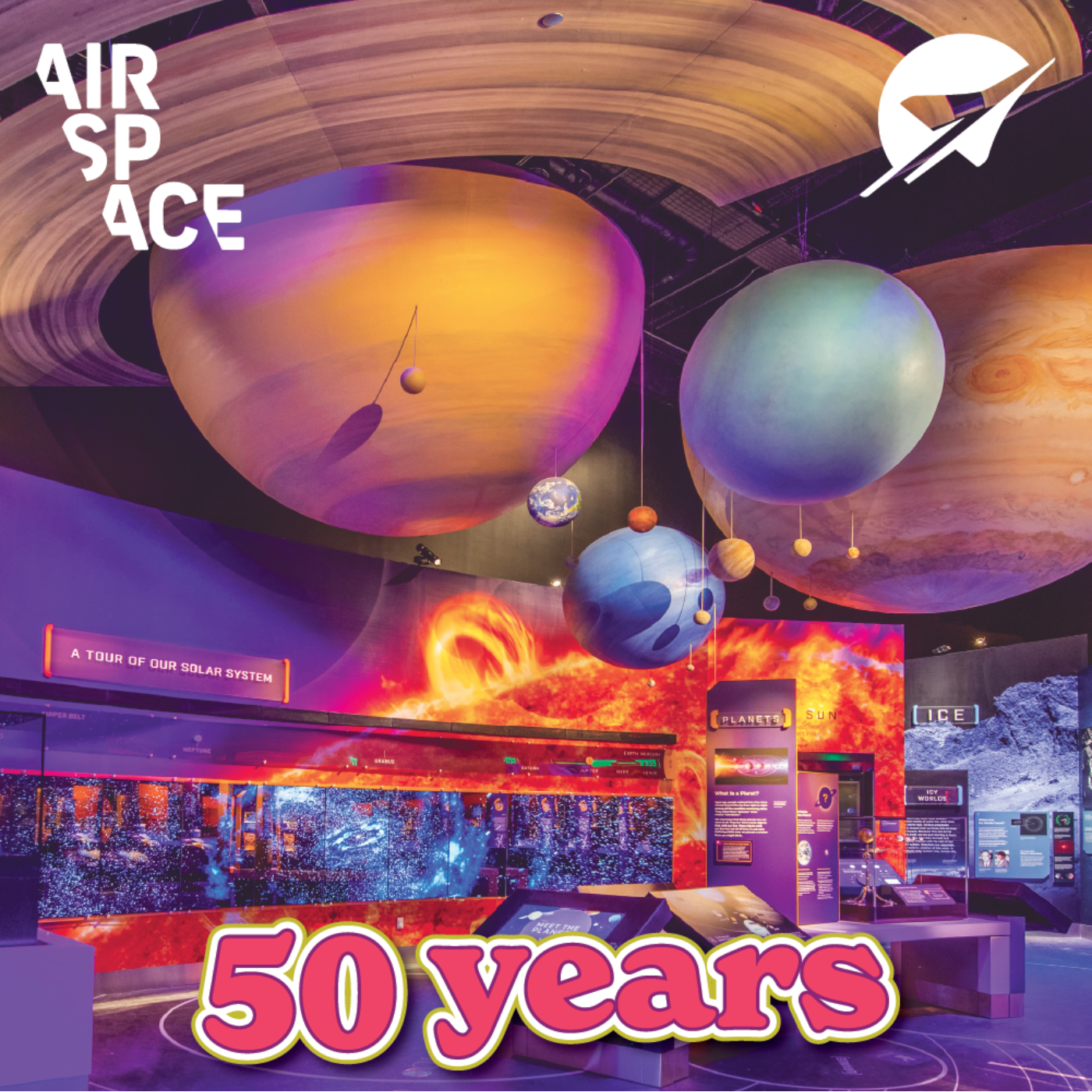
As the National Air and Space Museum built its collection and its identity, it also needed to find its footing as a place for science and research. In the third episode of our four-part limited series “50 Years of Air + Space,” we’re exploring the history of scholarship at the Museum. We’ll dive into early debates over what type of research this new Museum would do and what type of academ
50 Years: Origins
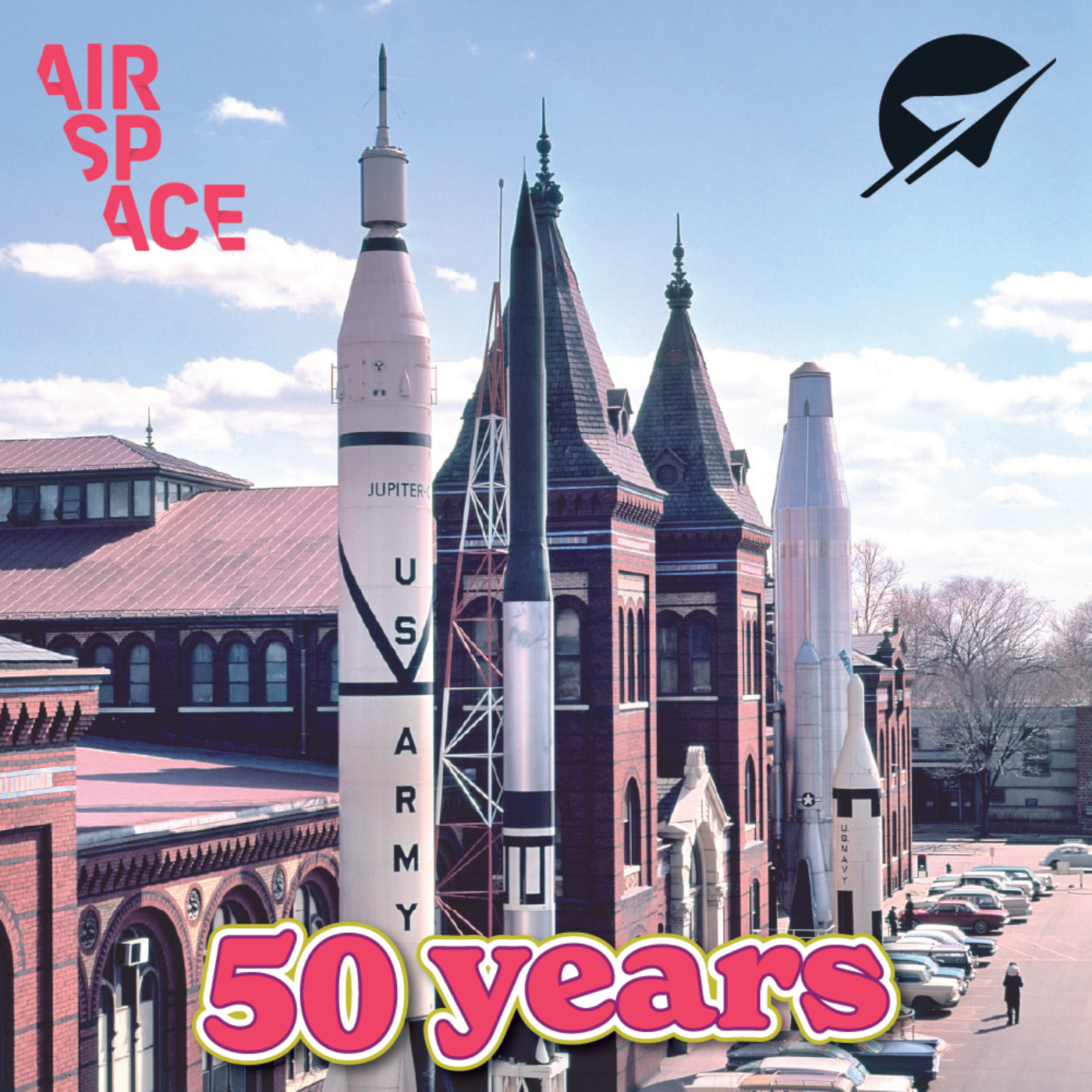
The National Air and Space Museum’s building in downtown Washington DC just turned 50 years old, but the Museum’s story began long before the ribbon-cutting in 1976. In this episode, we’re continuing our four-part limited series “50 Years of Air + Space” by going back in time for the Museum’s origin story. We’ll explore early aerospace connections and artifacts at the Smithsonian and the
50 Years: Opening Day
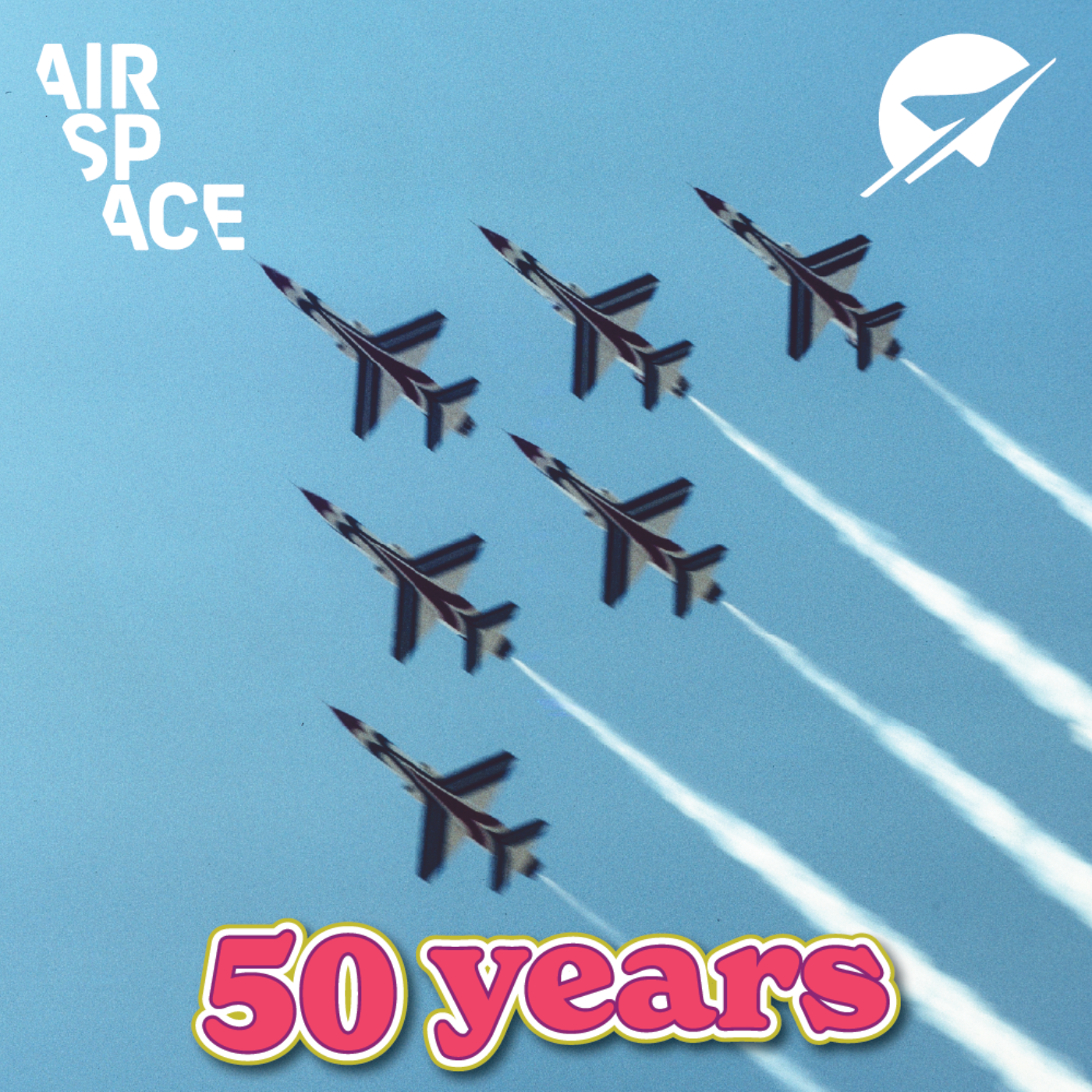
On July 1, 1976, the National Air and Space Museum opened its doors to the public. It was an unforgettable debut for an iconic building, complete with a flyover from the Air Force’s Thunderbirds, speeches from President Gerald Ford (and a certain Apollo astronaut), and a ribbon-cutting triggered by a signal from a spacecraft on its way to Mars. There was nothing quite like the National Ai
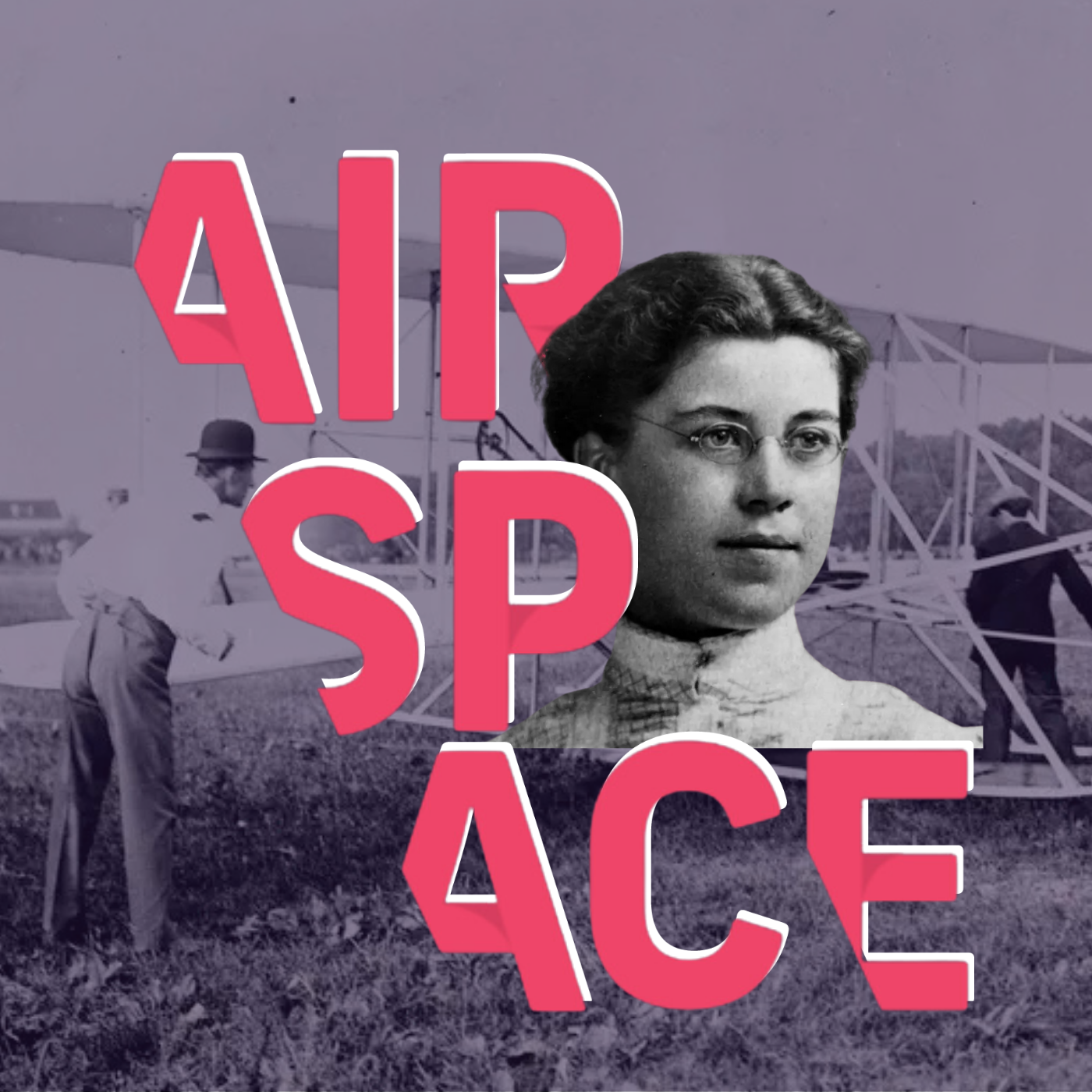
AirSpace Bonus! Sidedoor: The Wright Sister
We'll be back soon with new episodes of AirSpace! In the mean time, here's a treat from our friends at Sidedoor.Orville and Wilbur Wright have been immortalized as the men who opened the skies to human flight. But could they have achieved such great heights without the wind beneath their wings—their sister? Katharine Wright was her brothers' biggest champion, official spokesperson, closes
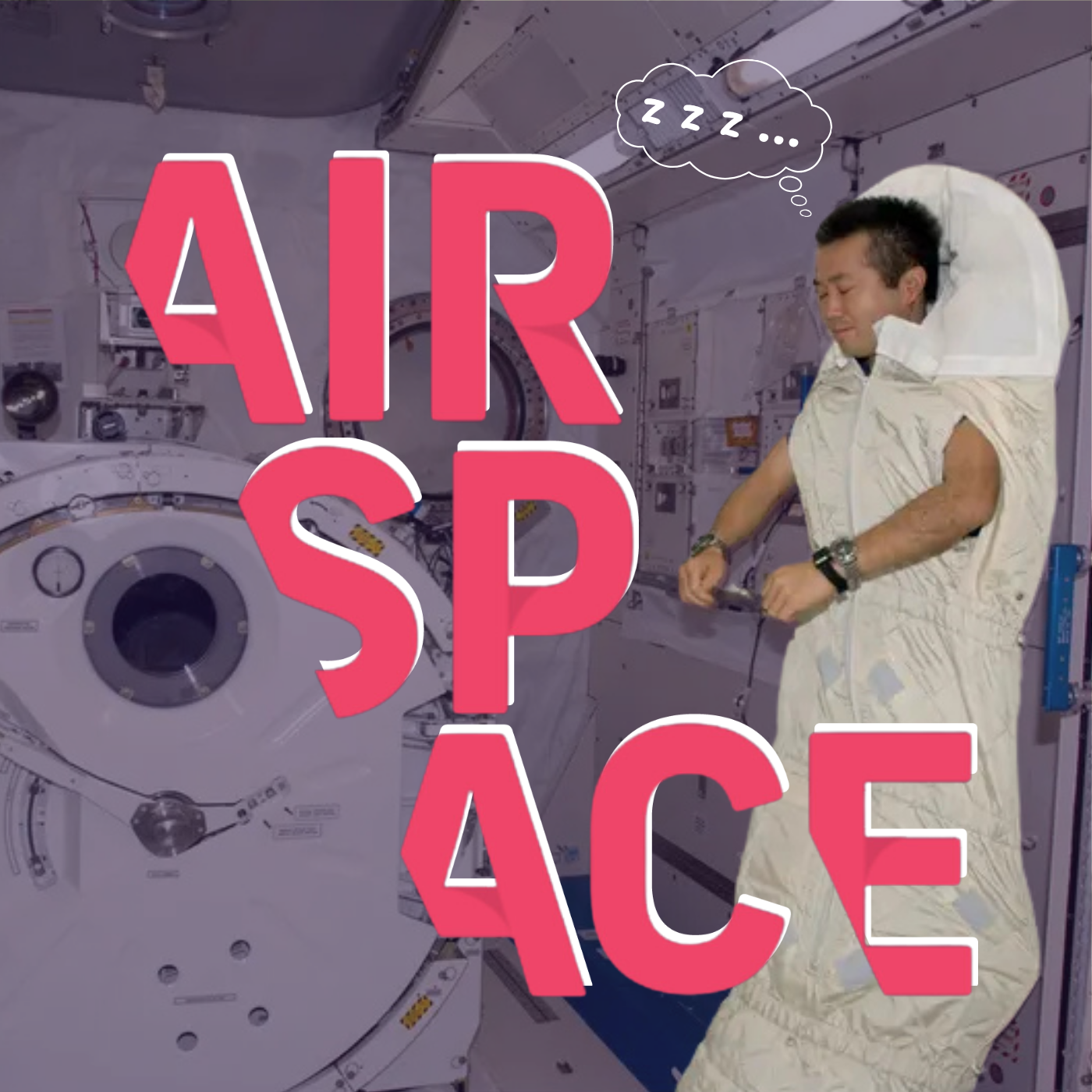
AirSpace Revisited: How Do You Sleep?
One of the most commonly asked questions about living and working in space is where and how the astronauts sleep. Watching the astronauts set up their sleeping arrangements on the recent Artemis II mission around the moon got us thinking about this topic again, so we're revisiting a favorite episode from 2022. Sleeping in space goes back almost as far as there have been people in space (s
Whirly-Girl #13
In the late 1940s and early 1950s, helicopters were creating quite a buzz. After limited use during World War II, manufacturers ramped up production and enthusiasm for vertical flight soared. Although the dream of “a helicopter in every garage” never quite materialized, more civilian pilots earned their helicopter ratings. One of them was Jean Ross Howard, who became the 13th woman in the
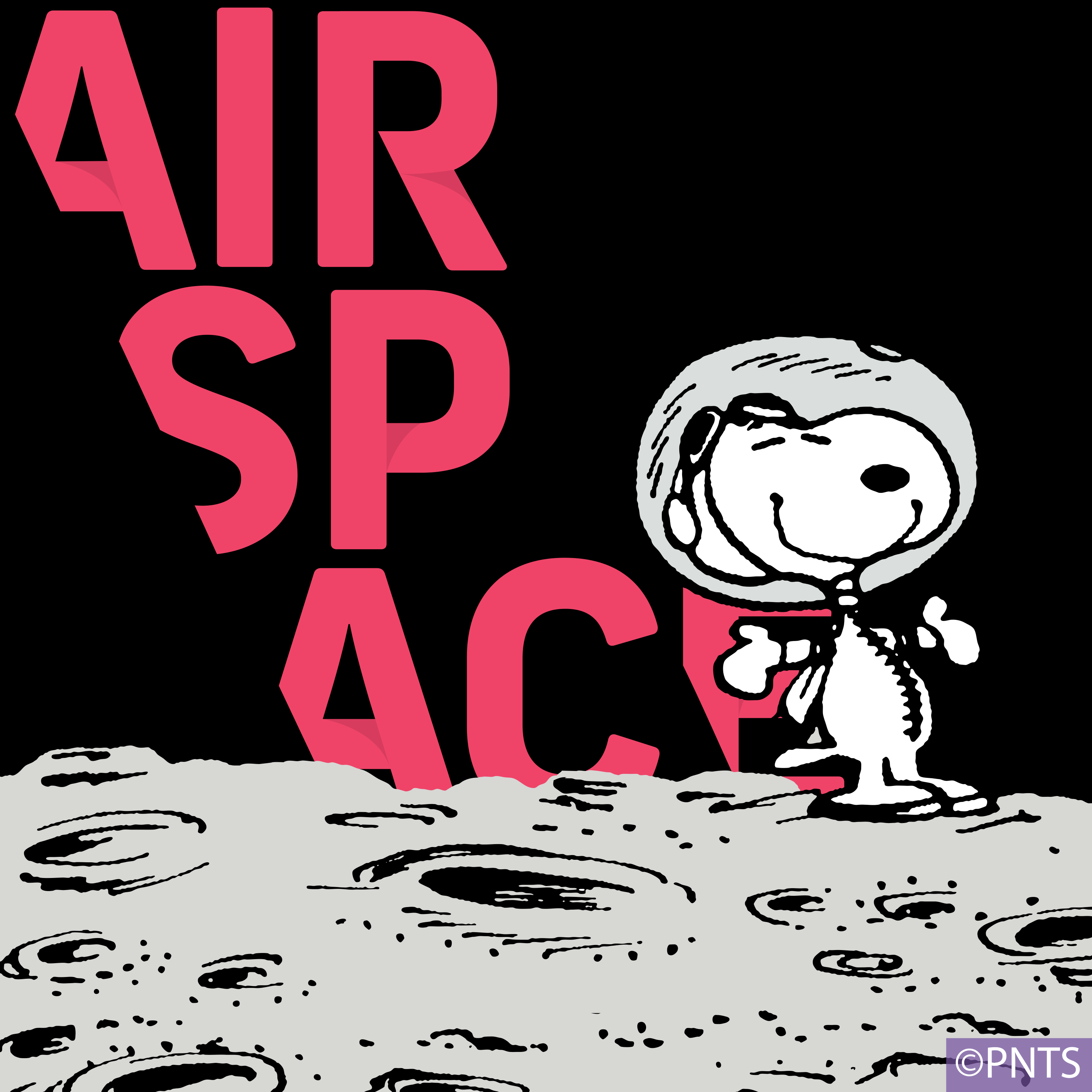
Snoopy in the Sky
IT'S A BIRD! IT'S A PLANE! IT'S A . . . DOGHOUSE? Throughout Charles Schulz's Peanuts stories, Snoopy has used his incomparable imagination to go on iconic aviation and space adventures. He's transformed himself into a World War I flying ace, a charter pilot, an astronaut, and even a helicopter. Today on AirSpace, we learn how Charlie Brown's best friend Snoopy became a bona fide aerospac
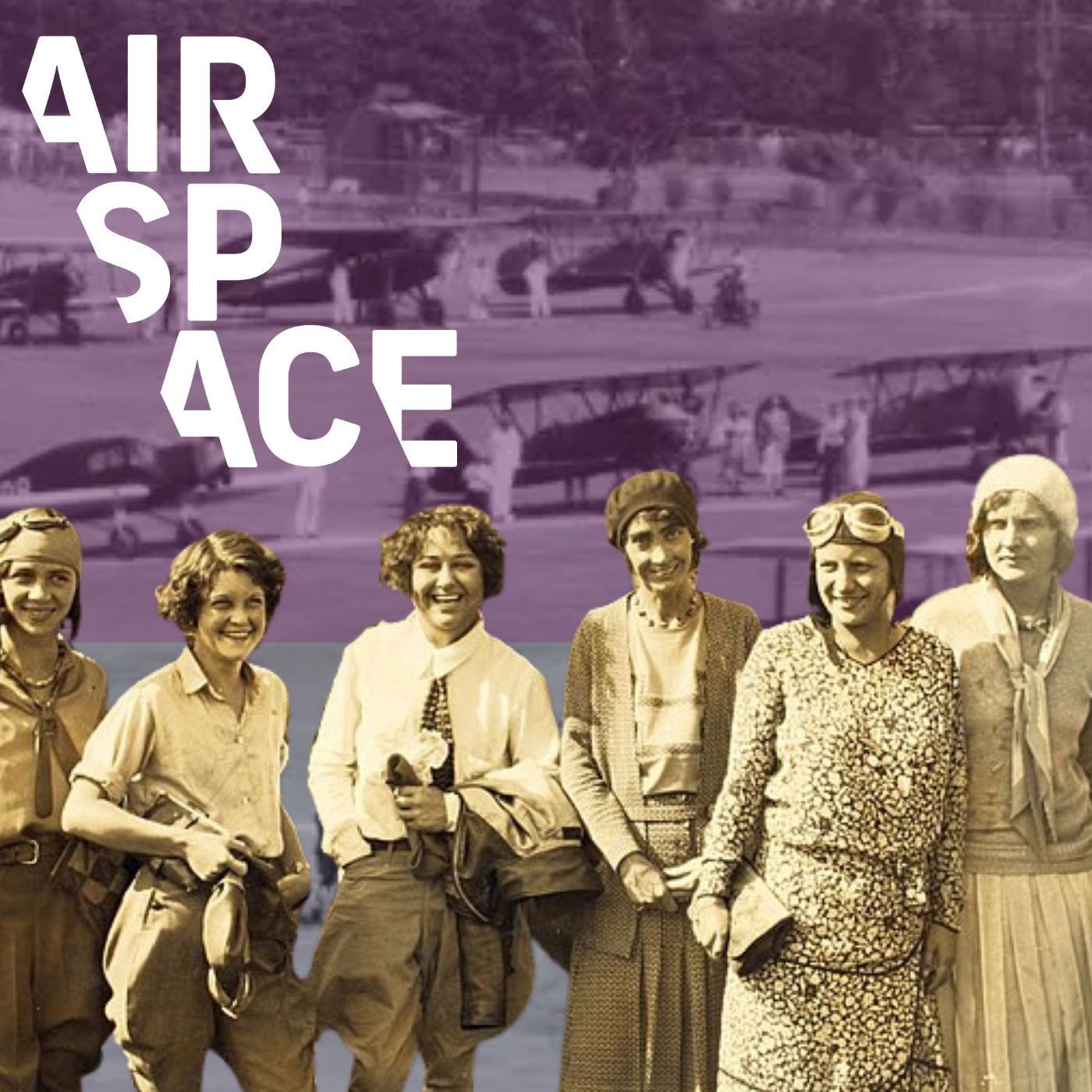
GO, SPEED RACERS! The 1929 Women's Air Derby
SPEED . . . SKILL . . . SABOTAGE? In August 1929, twenty pilots took off from Santa Monica in a historic and thrilling air race. The all-female lineup—including big names like Amelia Earhart, Pancho Barnes, and Louise Thaden—hopped from city to city across the U.S. on their way to the finish line in Cleveland. Though it was dismissed by some at the time as the "Powder Puff Derby," the Wom
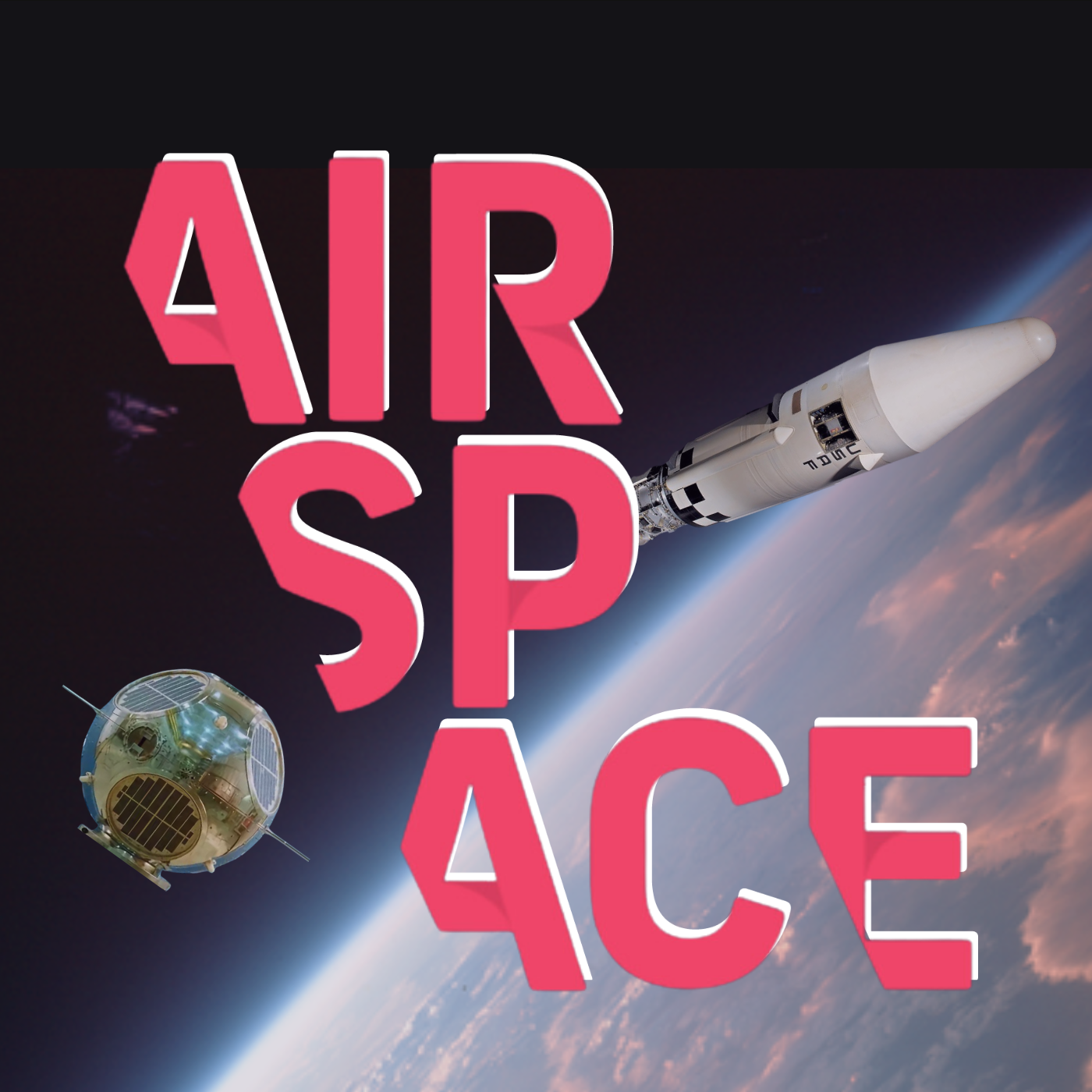
A Tale of Two Satellites
In the Cold War, space was a new and critical frontier for intelligence. Many early satellites were spy satellites (although they did a bit of science, too). In this episode, we learn about two early U.S. spy satellite programs, GRAB and CORONA. We learn what motivated these programs, why they were so important to future satellite development, and how to recover film capsules mid-air usin
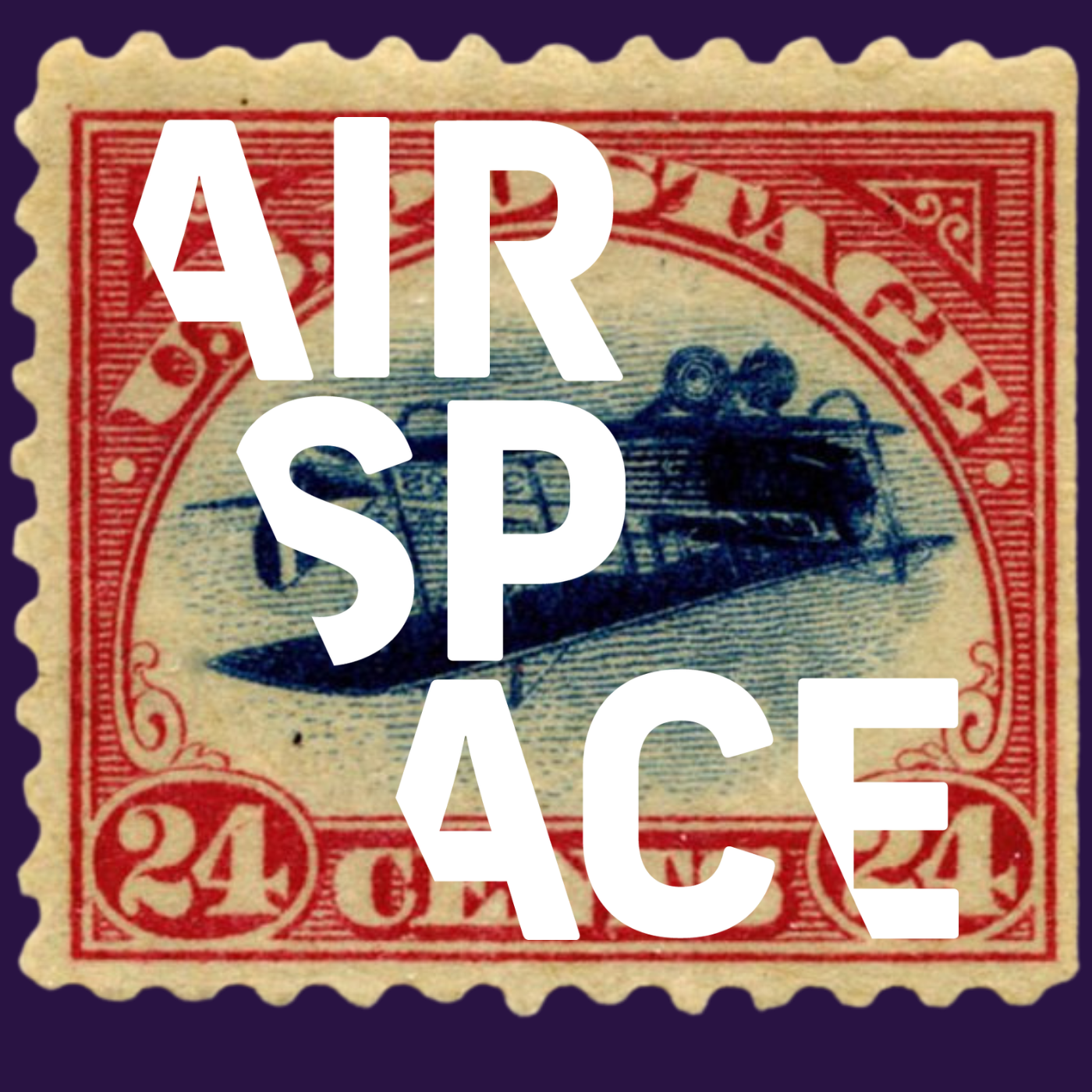
Scandalous
Today on AirSpace: the scandal of the century! Matt and Emily are joined by friend of the show and Museum curator Bob van der Linden to learn all the twists and turns of the Air Mail Crisis of 1934.The controversy centered on one question: who should fly the mail? Conflicts between brand-new commercial airlines, Congress, and the Roosevelt administration reached a boiling point that led t
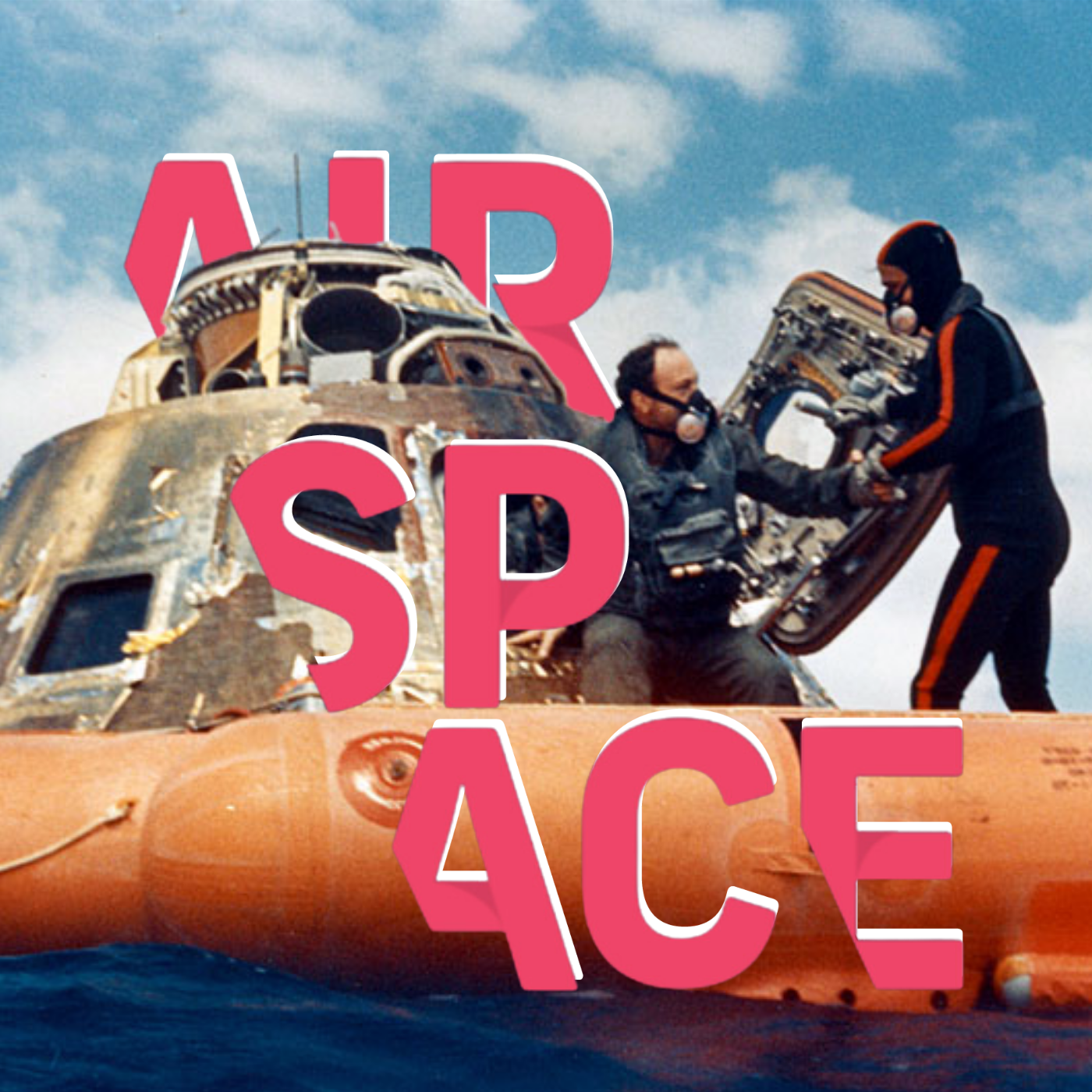
Kings of the Capsule
July 24th, 1969. After their historic mission to the Moon’s surface and back, there was one final step in the Apollo 11 mission: splashdown. As the command module floated (gracefully, we are sure) in the Pacific Ocean, a team of elite Navy divers known as Frogmen swam up to help the astronauts safely and securely onto a helicopter that would take them to the USS Hornet. Today on AirSpace,
Gone to the Dogs
Unfortunately, there are still more humans than dogs in the average airport terminal. Still, it’s not uncommon to see dogs as you run to catch your flight. Some dogs, like humans, are just travelers passing through. But others, increasingly, are at the airport to take care of business. Today on AirSpace: it’s Canine Career Day! We discuss the surprisingly wide variety of airport dog jobs,

AirSpace Live! Cooking in Space
Space travel is hungry work. Humans have spent nearly six decades experimenting with different ways to feed astronauts (with mixed reviews). As astronauts live and work in space on longer missions further from home, a new generation of chefs and food scientists is thinking outside the box (and can, and tube, and pouch). What if space travelers had kitchens complete with appliances and pan
Movie Mini: Arrival
Science fiction heroes aren't usually humanities professors, but Arrival (2016) is the exception to that rule. Amy Adams stars as Dr. Louise Banks, who may be the only person on Earth who can figure out what a pair of mysterious aliens are trying to say. Today on AirSpace, Matt and Emily discuss the film, its source material (Ted Chiang's novella Story of Your Life), linguistics, non-lin
Miasma of Incandescent Plasma
Twinkle, twinkle, little star, how we wonder . . . well, where to even begin? How do stars form from gas and dust? Why do some stars go supernova? And what the heck is the "main sequence?" We brought in one of the Museum's astronomy educators for a stellar conversation about the birth, life, and death of stars. There's plenty to learn, and even more to wonder about, today on AirSpace. Tha
The Journey of a Suitcase
Have you ever wondered what happens to your checked bag once you've handed it over to the airline? Us too! We took a field trip to Dulles Airport to visit our friends at United Airlines and find out. Today on AirSpace, follow a suitcase on its journey from check-in through TSA, airline sorting, handling on the aircraft, and back to you on the baggage carousel. Thanks to our guest in this
Eye of the Hurricane
SEEKING: full time aviators slash weather enthusiasts for unique opportunity. SCHEDULE: hurricane season. WORK SITE: Lakeland, FL; Biloxi, MS; and the eye of a hurricane. Members of the Air Force and NOAA Corps spend months each year flying back and forth through hurricanes collecting information vital to weather prediction. On the Season 11 premiere of AirSpace, we talk to three of them
AirSpace Bonus! There's More to That: Auroras
AirSpace will be back with Season 11 very soon. In the meantime we thought y'all would enjoy this episode from the Smithsonian Magazine's podcast, There's More to That: Why Auroras Are Suddenly Everywhere All at Once.For millennia, auroras have both enchanted and haunted human beings. Ancient lore is filled with myths attempting to explain what caused the celestial phenomenon. More recent
Home Front: Anything-to-Anywhere
The Women's Airforce Service Pilots (WASP) are relatively well-known in the U.S. today (to hear more about their story, see our previous episode), but they weren't the only women who flew planes in World War II. A small group of Americans joined pilots from 25 other countries in England's Air Transport Auxiliary, where they ferried hundreds of thousands of planes across the British Isles.
Home Front: Eyes on the Coast
Just off the coast of the United States, a menace lurked in the water. German U-boats were a very real problem for merchant vessels and war ships during World War II. With all available military airplanes and pilots needed on the front lines, and the Coast Guard mostly lacking aviation assets, the U.S. needed to get creative. Enter: the brand new Civil Air Patrol. This entirely civilian e
Home Front: 50,000 Planes
In 1940, President Franklin Delano Roosevelt broadcast a new goal in one of his famous Fireside Chats: he wanted to see 50,000 planes a year built in the United States. Up until that point, the U.S. had built just over 30,000 military planes . . . total. 50,000 seemed like an impossible goal. But with war looming, "Rosie" rolled up her sleeves and said "We can do it!" And she did. Million
Home Front: Students of the Air
In 1937, there were fewer than 20,000 licensed pilots in the United States. The Civilian Pilot Training Program increased that number to more than 400,000 in less than five years. With national "airmindedness" as their goal in the run-up to World War II, the US government created the program to train students (10% of whom could be women) on the ground and in the air at colleges and univer
AirSpace Revisited: Fly Girl
The Women's Airforce Service Pilots were a huge part of civilian aviation during WWII. Ahead of our new limited series, Home Front, we've brought back our season four episode. Episodes of Home Front start August 14th.On this episode of AirSpace we’re spotlighting the heroic service and enduring legacy of the Women Airforce Service Pilots, or WASP. More than 1,000 of these fearless women f
AirSpace Revisited: Dancing on the Ceiling
In just a few weeks, five brand new galleries are opening in the museum down on the mall, including galleries where we are once again hanging some (really big) things from the ceiling. We're revisiting this season eight behind-the-scenes episode to remind you just how they get up there. AirSpace is looking up! (We know, we know, we're usually looking up what with the air and the space-nes
AirSpace Book Club: Milky Way
AirSpacers are watchers of movies, but we are also readers of books. In our inaugural Book Club we're reading The Milky Way: An Autobiography of Our Galaxy by Dr. Moiya McTier. This book is a non-fiction romp through the Milky Way's life (and future death) told from its perspective. How does the Milky Way feel about consuming other galaxies? Does watching us humans get boring? Can a galax
The Future is Here
If you've been to visit us on the National Mall in the last several years you may have noticed that we've been under construction. Which is very exciting! But even more exciting is some of that construction is done! On July 28, we're welcoming visitors into five brand new galleries. But you, lovely AirSpace listener, get a little bit of a sneak peek. A behind the scenes look at Futures in
The Irrepressible Pancho Barnes
Pancho Barnes was larger than life. Born at the turn of the century, she spent the next 75 years defying every societal norm she found stuffy, boring or just plain stupid. She rode horses and then flew planes in the movies. She raced airplanes and briefly held the women's airspeed record. She owned a notorious inn/restaurant/club/hotel/airport in the desert near what would become Edwards
AirSpace x Sidedoor: Space Jamz
If you were curating a mixtape that might be heard by aliens billions of years from now, but definitely would be seen by your fellow Earthlings, what would you put on it? In 1977, two Voyager spacecraft launched from Cape Canaveral on a journey that would take them out to our outer solar system and beyond. Affixed to the side of these two planetary explorers was the Voyager Golden Record.
Bats!
Bats are the only mammals that truly fly. And the way they do it is very different from other flying things. The way they fly has only recently been understood and there are still questions. Scientist and engineers are trying to use what they do know to create bat-inspired flying machines, but things like bats self-cambering stretching wings skin, skeleton muscles and tiny hair sensors ar
Scoop There It Is
There are a lot of different aircraft that fight wildfires, from Host Matt's favorite Sky Crane helicopter to giant cargo jets that dump tons of fire retardant. But today we're taking about a truly unique, purpose-built firefighting airplane: the Super Scooper. This plane skims the surface of a body of water, collects a shocking amount through tiny scoop ports, flies off, and dumps it on
Space Race: The Prequel (Part Two)
If you haven't listened already, go back and check out Part One. When you hear 'space race' you probably (correctly) think about the 1960s Soviet Union v. U.S. race to put an astronaut on the Moon. But a few hundred years before, the space race was all about Venus. About twice every century we here on Earth get to see Venus pass in the front of the Sun. Back the 18th and 19th centuries, t
Space Race: The Prequel (Part One)
When you hear 'space race' you probably (correctly) think about the 1960s Soviet Union v. U.S. race to put an astronaut on the Moon. But a few hundred years before, the space race was all about Venus. Twice every century or so we here on Earth get to see Venus pass in front of the Sun (with proper eye protection. Don't stare at the Sun, kids.) Back in the 18th and 19th centuries, this was
Crater Dating
The oldest Earth rocks we have are 4.3 billion years old, and samples we've brought back from the Moon are even older. But what does that have to do with craters on Mars? When the Apollo missions brought back samples, those rocks let us confirm the age of parts of our lunar bestie for the first time. Now, scientific models use data from those samples to extrapolate the age of other geolog
Hypatia Mars
Right now there are seven women on Mars... kind of. The women of Hypatia Mars started out as a small group of friends from Catalonia who wanted to work together tp advance space science and women in STEM. Today they're on their second analog mission at the Mars Desert Research Station in Utah, testing systems and equipment, doing multidisciplinary research, and continuously working to rea
From Flight to Floor
We want to hear from you! Fill out our listener survey at s.si.edu/airspace2025All the military aircraft and some of the civilian ones in our collections have to be demilitarized before they go on display or into storage. This process, usually called demilling, means taking anything out that might leak, corrode, explode or give away military secrets.Thanks to our guest in this episode:Dr.
The Science Never Stops
We want to hear from you! Fill out our listener survey at s.si.edu/airspace2025Our museum collection, like a lot of other museums' collections, can be a working collection. That means that scientist come to do air or space research using objects in the museum. Sometimes it's as simple as an engineer coming after hours to look a little closer at a plane or spacecraft so they can better und
AirSpace Revisited: The Ninety-Nines
In the lead up to Season 10 we're reviving some of our favorite episodes. Today we bring you Emily's favorite, The Ninety-Nines. It took a certain amount of pure grit to be a pilot in the early days of aviation – and even more for the women who had to defy convention just to get up in the air. And if you’re thinking the only aviatrix was Amelia Earhart – think again. She was just one of
AirSpace Revisited: Smoke from a Distant Fire
In the lead up to Season 10 we're reviving some of our favorite episodes. Today we bring you Matt's favorite, Smoke from a Distant Fire.Wildfire season is getting longer, according to the US Forest Service, making firefighting a bigger, more vital operation each year. In this episode, Emily, Matt, and Nick take a look at how the pros fight wildfires with everything from large water-carryi
QueerSpace In Memoriam: Saxophones on the Moon
We were devastated when we heard of Nikki Giovanni's passing earlier this week. Her poetry evokes life on Earth and in the universe in such a beautiful, thoughtful and inclusive way. We are in the process of sharing our favorite episodes from the past and felt it was fitting to bring you back our QueerSpace episode featuring Nikki among other futurist artists. When researching QueerSpace
Meet Your AirSpacers
Hey Y'all! Since we've made it to season 10 (!!!) we thought we'd take the opportunity to re-introduce ourselves. In this episode you can hear a little more about Hosts Matt and Emily as well as a little bit about the rest of the team behind your favorite pod (we hope).We reference a lot of past episodes, here's some links for your listening pleasure:AirSpace, Live at South by SouthwestRo
AirSpace Bonus! The Air Up There: Airplane Facts with Max
While we get Season 10 ready we're bringing you this episode from our friends at the Federal Aviation Administration's Podcast, The Air Up There.Find our transcript here.Did you know that airplanes have two black boxes and they are actually orange? Or that airplanes have closets? Or that one of the tools used to fix an airplane’s auxiliary power unit is referred to as a fishing rod? In th
AirSpace Revisited: Journey to the Past
As we wait for season TEN (!!!) we're looking back on this season six favorite.Every day, satellites orbit Earth taking pictures. These images are used for everything from intelligence to weather prediction and even today’s topic – archaeology. When you hear the term “space archaeology” you might envision a khaki-clad astronaut excavating the Moon. But these space archaeologists are actua
AirSpace Bonus! Voting From a Station Far Far Away
Have you ever wondered how astronauts on the ISS or elsewhere in space vote? It turns out there's a whole Texas law about it. We'll tell you exactly how to cast a ballot from 250 miles up in orbit on AirSpace.Thanks to our guest in this episode:Katherine Schaur - NASA Near Space NetworkFind the transcript here.Sign up here for the monthly AirSpace newsletter
Defying Gravity
I don't think we're in Kansas anymore! There are so many things that fly in Oz, from broomsticks to monkeys to bubbles. With the Wicked movie coming out this November, we thought we'd look back on all things flight in the land of Oz and tell you all about how those effects were made for the screen and the stage. Thanks to our guest in this episode:Ryan Lintelman - Entertainment Curator, S
Flak-Bait, Ooh Ha Ha!
During WWII one plane survived more missions than any other in Europe. Named 'Flak-Bait,' this medium bomber was saved from the scrap heap after the war and immediately donated to the Smithsonian. However, public display and outdated restoration techniques have taken a toll on the plane. We're taking you inside our restoration hanger to learn all about how the Museum's conservators are re
Movie Mini: Contact
What if there are intelligent lifeforms elsewhere in the universe? And what if all we need to do to find them is to listen to the right radio frequency at the right time? That's what the scientists of SETI (Search for Extraterrestrial Intelligence) have been working on for decades. And that research got the Hollywood Glow-Up back in 1997 with Contact, starring Jodie Foster as SETI researc
Birds of a Feather
It's a bird? It's a plane? Its a guy pretending to be a bird?? We have a very odd aircraft in the collection. It's an ultralight. Small, highly maneuverable and based off the wings hang gliders use to jump off mountains, this particular ultralight was used to help birds migrate. And it starred in the movie in the '90s! When we heard that we were like, say more please. Thanks to our guest
Limited Edition
Back in the 'Golden Age' of air travel in the 50s, 60s and 70s going on a trip in an airplane was an event. On those flights you would often get a little souvenir of your air travel; a deck of cards, a little toy, a trading card, captain's wings and a hat for your little tyke. It was a way for you to show off to your friends and for the airline to keep themselves top of mind for your next
Lasso the Moon
Over six missions, the Apollo astronauts collected and brought back 842 pounds of Lunar samples. Most of those Moon rocks were put aside for science, but some were earmarked for things like touch rocks (like we have at NASM) or educational disks (which you might have seen if you had a particularly cool science teacher growing up) and to countries and states as diplomatic gifts. But who de
AirSpace Bonus! My Mom the Rocket Scientist
Our conversation with Jack Black and his brother Neil Siegal about their Mother, Judith Love Cohen was too good just to give you just the taste from the end of our Star Search episode. Here's the extended producers cut with everything from Jack's birth story, to being an engineer in the 70s, to Judy's 2nd career as a book publisher.Thanks to Jack Black and Neil Siegal for sharing their me
Star Search
There are a lot of air and space celebrities; pilots, astronauts, engineers, etc etc. But there's another category of celebrities that are famous for other things but also have surprising ties to air or space. Today we're talking about three of those; a famous tv chef who also helped create a shark repellant for aviators and spacecraft, an actor from Hollywood's golden years who invented
X-Ray Vision
When the Chandra X-Ray Observatory launched 25 years ago, it showed us our universe in a whole new light (literally). From the remnants of exploded stars to Jupiter's auroras, Chandra has shown us so many beautiful and scientifically important sights. Even after a quarter decade this unique telescope is still giving us new data about black holes and whirling neutron stars and all the thin
Welcome to Roswell
The city of Roswell, New Mexico is kind of in the middle of nowhere. Out in the dessert west of Texas, this small oasis in the dessert was first home to indigenous peoples, then cowboys, ranching and farming and then the military before becoming the crash site of a possible UFO in 1947. That story took on a life of it's own and by the time the Army came out with an official explaination i
Let's Talk About Sex
Sci-fi is full of giant ships full of humanity living and dying and reaching out to new places far far away. Usually, these are called generations ships. And they rely on well, generations. But today in science-fact there's so much more about reproducing in space that we don't know than the small amount that we do. And as we get closer to commercial space travel that might include honeymo
Tiny Jumper
Georgia "Tiny" Broadwick was 15 years old when she first jumped out of a hot air balloon with a parachute in 1908. Over the next 14 years she would make over 1,000 jumps, first out of balloons and then as the first woman to jump from an airplane. Her talent and skill was sought after by the Army in WWI when they first started training their balloon and airplane pilots to use parachutes as
The Suicide Squad
In the 1930s, rocketry was basically a joke among the scientific establishment in the U, but that didn't stop a rag tag group out of Pasadena from trying to build rockets. That group would first be known as The Suicide Squad (for all the dangerous experiments they conducted on campus) and later as the Jet Propulsion Laboratory. Over its first decade, the JPL story includes funding challen
Bonus! This is Love: Tau = 10.8
AirSpace will be back in two weeks with brand new epsiodes. In the meantime, enjoy this episode from our friends at the podcast, This is Love.
When twin rovers named Spirit and Opportunity landed on Mars twenty years ago, they were only supposed to last 90 Martian days. But years passed, they were still alive, and engineers kept taking care of them. “I remember telling myself, ‘Please do
Bonus! Space Marathon
While we get Season Nine ready for you, we turned to our friends at Sidedoor to bring you a story of running and running and running and running…in Space! We’ll let them take it from here:
Until the 1970s, women were barred from competing in U.S. marathons because of the belief that the "violent movements" of running would wreak havoc on their reproductive system, "thus defeating a woman
AirSpace Revisited - With a Little Help From My Friends
You’ll have new AirSpace episodes soon, but since they may have found Amelia Earhart’s plane(!!!) we thought we’d revisit our episode on her and Eleanor Roosevelt’s somewhat unlikely friendship.
On a spring evening in 1933, Amelia Earhart took first lady Eleanor Roosevelt on a joyride. Imagine two women—dressed for dinner at the White House (white gloves and all)—stealing away from 1600
When the Sun Went Out
As we look forward to the upcoming total solar eclipse over North America, AirSpace is looking back in time to a much much older eclipse. In 1142 a total solar eclipse with much the same path as the one coming up April 8. It was also the sign in the sky the Seneca needed to join the Haudenosaunee Confederacy, a representative democracy that would govern six tribes below Lakes Erie and Ont
Leap Day Bonus: Accounting for the Ish
Did you know that it takes the Earth 365-ish days to orbit the sun? It’s that ‘ish’ that makes February 29 a thing every four years. We talk to one of the Museum’s astronomy educators to get the low down on Leap Day.
Thanks to Astronomy Educator Shauna Brandt Edson for joining Emily for this episode.
Sign up here for the monthly AirSpace newsletter
AirSpace is made possible by the gene
Liberation through Exploration
Afrofuturism is a cultural movement that explores the possibilities of Black futures and pasts and presents through art, literature, music, film and pop culture. And a lot of Afrofuturism has a lot of space in it. Today we're talking about Afrofuturist space and Afronauts and walking through the Afrofuturism exhibit by our friends at the National Museum of African American History and Cul
Love at First Flight
Hollywood is in love with airports and airplanes and we are too! How many rom-coms can you name where the meet cute, the almost meet, the epic chase or the long distance relationships happens thanks to a terminal or twist of fate seat assignment? We can name at least six. And if we missed your favorite, drop us a comment on Instagram or Twitter!
Thanks to our guest in this episode:
Scot
Video Killed the Radio Star
From when it started in 1981, MTV used an iconic neon scribbled astronaut as its channel ID for years. And even today the award you get when you win a VMA is a statuette of an Apollo era astronaut, but why is MTV obsessed with the Moonman? And why do we have two of those statuettes in our collection? We're digging into the history of cable's giant leap, today on AirSpace
Thanks to our gu
Eye from Above
Hurricanes are a fact of life in the Caribbean but in 2017, the season was so bad that it changed everything for the people of Puerto Rico. Only two weeks after another major hurricane, Maria barreled into the island bringing more than 200 mile per hour winds, rain and flooding. In the aftermath, the Coast Guard with their helicopters are crucial to search and rescue, aid drops and survey
31,500 Miles
In January 1942 a B-314 flying boat operated by Pan American World Airways landed in New York after making arguably the first around the world flight by a commercial airliner. But when they set out from San Francisco in 1941, they never intended to hold that record. Trapped in the Pacific by the Japanese attack on Pearl Harbor, Captain Bob Ford and his crew were forced to return home flyi
These Are the Droids We're Working With
In a lot of political and financial circles space exploration is often talked about in terms of human space exploration VERSUS robotic space travel. But most scientists and engineers who work on space missions think this question is better answered with a yes, and. We're diving into the pros, cons and uses of both human and robotic space exploration today on AirSpace.
We’re joined by Dr
Don't Rain on my Parade
Today is a very special day, parade day of course! The Macy's Thanksgiving Day Parade has been a holiday staple for almost 100 years, and the balloons have been a part of it for nearly as long. We got the download on these helium-filled works of art that aren't all that different from the hot-air cousins.
Thanks to our guest on this episode:
Kathleen Wright, Director of Production Oper
You're on Your Own, Kid
Space is dangerous. And as long as we've been sending people into space, we've also been thinking about what we can do to make sure they're prepared for it, and make sure they will come home again. The main way that manifests is in training astronauts before they go up, and contingency planning on how to rescue them if something goes awry.
We’re joined by Dr. Emily A. Margolis, Curator o
End of an Air-a
When the Boeing 747 first came out it revolutionized the already revolutionary Jet Age. Able to carry more than twice as many passengers as it's predecessors, the 747 was initally designed for cargo. Boeing thought it would be quickly outstripped by the U.S.'s SST. But when the 'American Concorde' was scrapped in favor of breathable air and no sonic booms over major cities (see our episod
Vast and Beckoning Seas
Europa Clipper is soon to be on its was to the outer solar system to study one of Jupiter's most interesting moons. In addition to the really awesome science it will do ('sniffing' gases with a mass spectrometer to find out what they're made of?!? How cool is that??), the spacecraft will carry a "message in a bottle" etched with your names and a poem by U.S. Poet Laureate Ada Limón. Icy m
Dancing on the Ceiling
AirSpace is looking up! (We know, we know, we're usually looking up what with the air and the space-ness of our podcast) But today we're exploring how we hang really big, priceless artifacts from the ceiling in the museum. We asked two friends whose jobs are to do just that to talk to us about just what it takes to put airliners, spacecraft, X-wings and more up on the ceiling.
Thanks to
AirSpace Revisited - It's a Barbie World and We're All Living in It
We’re extending our Hot Barbie Summer by looking back on this gem from season seven.
When Barbie first became an astronaut in 1965, she was more than a decade ahead of NASA sending a woman to space. Since then, there have been several versions of astronaut Barbie — from a spangly 80s doll to one who had a jumpsuit just like the one they give you at Space Camp. Today, astronaut Barbie act
AeroEspacial: Making Space Bustelo
From the moment it hit theaters in 1977, Star Wars has been adopted and adapted by many groups. In the past several years an explosion of Star Wars movies, shows, and books have brought more diversity into the universe than ever before. In these recent releases, Latino actors and storylines have taken center stage. We're jumping in to the past and present of Latino representation in the S
AeroEspacial: Haciendo Bustelo Espacial
Desde que llegó a los cines en 1977, la Guerra de las galaxias ha sido adoptada y adaptada por muchos grupos. En los últimos años, una explosión de películas, series y libros de la Guerra de las galaxias ha aportado más diversidad que nunca al universo. En estos lanzamientos recientes, los actores y las historias latinas han tomado protagonismo. En este episodio de AeroEspacial, nos adent
Recommended
The Swerve Podcast: Obscure Topics | Conspiracy Theories

The Bread and Banter Podcast

The Church of What's Happening Now: The New Testament

Busted Open

Deadline: White House

Crickets Corner
History of the Earthquake and Fire in San Francisco

Fox news

K-Drama Obsessed Mamas | Beyond “Just One More Episode!”

True Crime Classics

The Healer Revolution

Becoming: HER with Nikki Spoelstra
