
Dr. Roy Casagranda Podcast
The Dr. Roy Casagranda Podcast is dedicated to unerasing the erased peoples of the world. Too often, history is written by the powerful, leaving entire communities, cultures, and truths out of the dominant narrative. This show seeks to tell those stories. Through these conversations, Dr. Roy digs for the truth, weeds out misinformation, and challenges conventional wisdom. The conversations span politics, world history, philosophy, and culture, always with an eye toward justice and a deeper understanding of where we've been, where we are, and where we are heading.
Episodes

Genocide & Dreams: Iraq
Iraq’s modern history is often told through war and geopolitics, but far less often through memory, trauma, and survival. In this lecture, Dr. Roy explores Iraq through the intertwined lenses of genocide, imperial ambition, and the fragile dreams that persist in the aftermath of destruction. Dr. Roy traces how repeated foreign interventions, authoritarian rule, and ethnic targeting reshaped Iraqi

Activism in the US: Yesterday, Today, and Tomorrow
Activism has shaped the United States at every stage of its history, but not always in the ways we remember. In this lecture, Dr. Roy traces the evolution of American activism from labor movements and civil rights struggles to modern protest culture, examining how power actually responds to pressure. Dr. Roy explores when activism succeeds, when it fails, and why moral clarity alone has never been

Cyrus The Great
Cyrus the Great ruled at a rare moment when empires could have chosen domination or cooperation. In this lecture, Dr. Roy traces the rise of the Persian Empire under Cyrus, exploring how conquest, restraint, and an unprecedented vision of tolerance reshaped the ancient world. Dr. Roy examines how Cyrus combined military brilliance with ethical governance, creating the first known model of an empir

Khalid ibn al-Walid: Profile of a Warrior
Khalid ibn al-Walid was one of the most formidable military commanders in history, operating at the precise moment when the Roman and Persian empires were exhausted, fragile, and unprepared for what came next. In this lecture, Dr. Roy Casagranda traces Khalid’s rise from opponent of early Islam to its most decisive general, placing his campaigns within the broader collapse of late antiquity. Dr. R

The Most Serene Republic of Venice
Venice was not founded in a moment, but across centuries of collapse, migration, and improvisation. In this lecture, Dr. Roy traces how the fall of the Western Roman Empire, repeated invasions, and the strange geography of the Venetian Lagoon produced one of the most durable republics in human history. Dr. Roy explores how refugees, merchants, and sailors gradually built a civilization in an impos
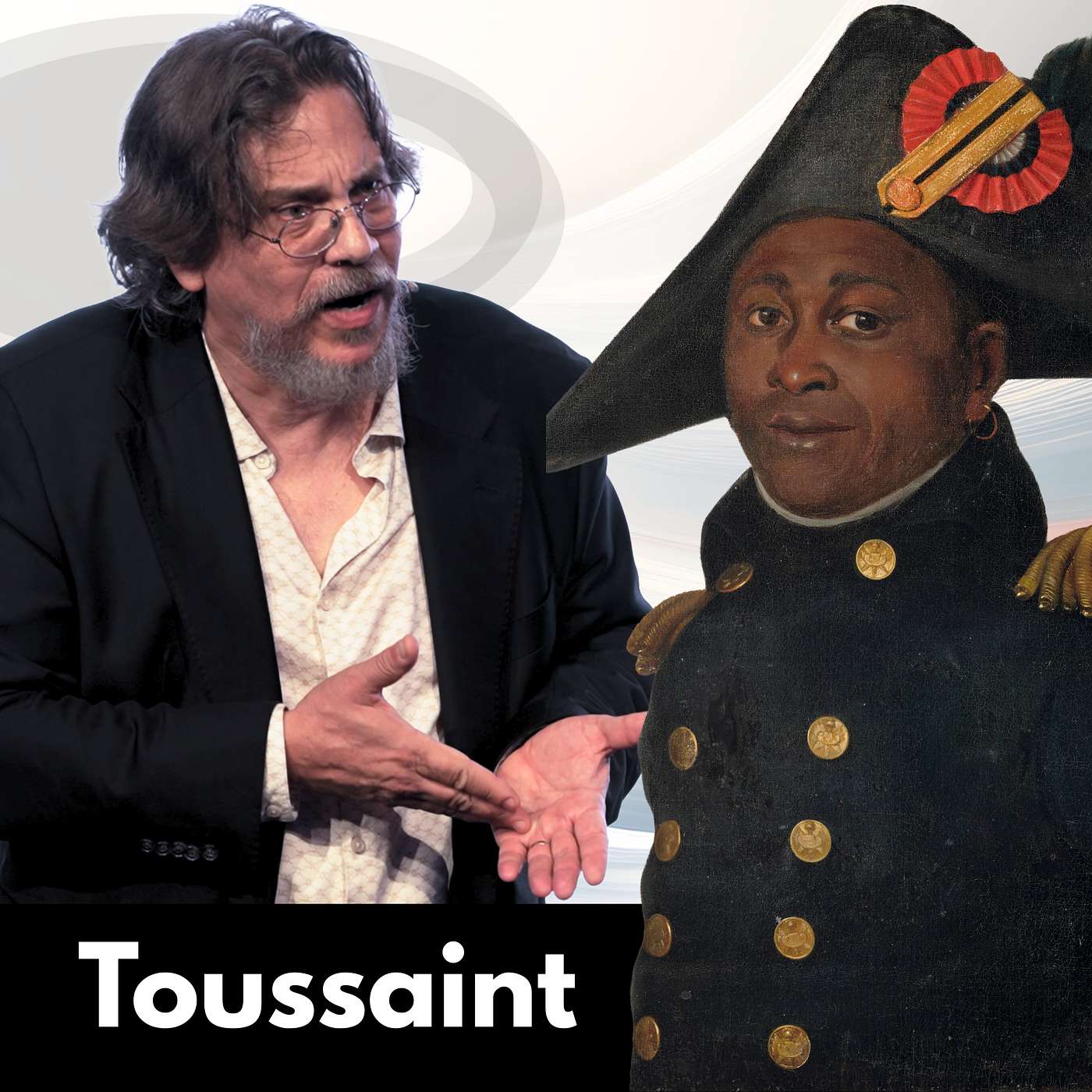
Grace and Tolerance in History: Toussaint
The Haitian Revolution was the most radical and unlikely uprising in the modern world. In this episode, Dr. Roy Casagranda traces the rise of Toussaint Louverture and the extraordinary transformation of Saint-Domingue from the richest slave colony on earth to a revolutionary force that challenged Europe’s greatest empires. Dr. Roy explores the brutality of the slave system, the brilliance of Touss

The Islamic Golden Age
Most histories of the Islamic Golden Age focus on its discoveries. But in this episode, Dr. Roy goes further back, tracing the long arc of Western civilization from ancient Egypt and Mesopotamia to Greece, Rome, Persia, and the rise of Islam. He reveals how one Persian emperor’s decision to build a library, one Arab army’s humility in conquest, and one political revolution in Baghdad created the p

Deconstructing Racism and Sexism in the Envisagement of Western Civilization
Racism and sexism didn’t emerge naturally or accidentally. In this episode, Dr. Roy explains how Western societies constructed rigid hierarchies of gender and race, often in contrast to more egalitarian cultures in the ancient world. He examines how Greek philosophers like Aristotle shaped Western ideas about rationality and superiority, how the Roman Empire institutionalised patriarchy, how Chris

Masculinity
What does it mean to be a man? Dr. Roy takes listeners on a journey from the evolution of early humans to the social expectations placed on men today. Along the way, he explains how sexual reproduction shaped our species, why diverse personalities are essential, and how patriarchal systems emerged from warfare and historical accident, not biological destiny. He contrasts ancient egalitarian societ

The Arab Spring and Its Long Shadow
Note: This is a visual-heavy episode. You can watch the lecture here.The Arab Spring began in December 2010 when Tunisian street vendor Mohamed Bouazizi’s desperate protest against corruption sparked uprisings that swept across North Africa and the Middle East. Dr. Roy explores how these revolts evolved from Egypt’s mass protests to Syria’s devastating civil war, and why many of the revolutions fa

The Origins of the Syrian Crisis
The Syrian Civil War didn’t begin in 2011; it began centuries earlier. Dr. Roy explores how the legacy of empire, the carving up of the Middle East after World War I, and repeated Western interference destabilized Syria and Iraq long before the Arab Spring. Along the way, Dr. Roy connects the dots between the fall of the Ottoman Empire, the Sykes-Picot Agreement, the CIA’s 1949 coup in Damascus, t

How Islam Saved Western Civilization
Western civilization didn’t vanish when Rome fell - it moved east. Dr. Roy explores how the libraries of Persia, Egypt, and Baghdad became the true heirs of the ancient world. From the Great Library of Alexandria to the Academy of Gundishapur, from Persian mathematicians to Arab engineers, this episode traces how Islamic civilization safeguarded humanity’s collective knowledge through centuries of

A Brief Overview of the U.S. Presidency
What exactly is the job of the U.S. president? Dr. Roy traces the presidency from its constitutional origins through major turning points in U.S. history, exploring how each era redefined executive authority. He discusses the balance between leadership and restraint, the rise of presidential power through war and crisis, and how charisma, fear, and media have transformed the office into a symbol o

World War II: Part X - Warsaw Ghetto Uprising
*Listener discretion advised:This episode contains descriptions of violence, genocide, and other traumatic historical events that may be disturbing to some listeners. Please use discretion and take care of yourself while listening. The Warsaw Ghetto Uprising was not just a fight for survival; it was a moral stand against annihilation. In April 1943, Jewish resistance fighters in Nazi-occupied Pola

World War II: Part 2 - Interwar Chaos
When World War I ended, the fighting didn’t. Dr. Roy traces how a defeated Germany, shattered empires, and vengeful allies created the perfect storm for World War II. From the breakup of Austria-Hungary and the birth of the Weimar Republic to the hyperinflation crisis, communist revolutions, and Mussolini’s rise to power, this lecture explores how desperation, nationalism, and fear paved the road

World War II: Part 1 - World War I
World War II didn’t appear out of nowhere. Dr. Roy begins by going back to the 18th and 19th centuries, explaining how the rise of the British Empire, the exploitation of India, the discovery of oil, and the unification of Germany set the stage for catastrophe. Along the way, he explores how nationalism spread through Europe, how industrialization and imperialism changed the global order, and why

Modern Ideologies
Ideologies are powerful tools, but also deeply flawed. Dr. Roy explains how the human brain processes fear and emotion, why leaders exploit hatred and fear to gain power, and more. From Napoleon’s use of nationalism, to socialism’s fight against capitalist exploitation, to the rise of liberalism and its sub-ideologies, Dr. Roy traces the evolution of modern politics. He also covers communism’s rev

Who Are the Apache?
The Apache were more than fierce warriors; they were farmers, traders, and innovators who created a vibrant culture rooted in ceremony, kinship, and respect. Dr. Roy traces their migration into the American Southwest, their clashes with Spanish, Mexican, and U.S. armies, and the devastating genocides they endured. From their matrilineal traditions to their legendary leaders like Geronimo and Cochi

Who Was Muhammad II Fatih?
The fall of Constantinople in 1453 marked the end of the Roman Empire after more than 2,000 years and the rise of the Ottomans as a dominant global power. Dr. Roy explores the centuries of turmoil that led to this moment: Mongol invasions, the Black Death, fractured kingdoms, and shifting alliances. With vivid detail, he traces Mehmed II's relentless campaign, the innovations of siege warfare

Decoding Systems
Language isn’t just communication; it’s power. Drawing on insights from Malcolm X, George Orwell, and political history, Roy unpacks how misused words blur meaning and control our thinking. He then decodes the difference between countries, states, provinces, and nations, and why these distinctions matter for understanding politics, legitimacy, and sovereignty. Takeaways:Why Malcolm X studied the d

Leaders Who Shaped the Future
Why does leadership matter, and how do small decisions ripple across the future? Dr. Roy begins with the hidden dangers of implicit bias, from medicine to global politics, before diving into the story of Theodore Roosevelt. From cowboy adventurer to America’s youngest president, Roosevelt’s choices reshaped U.S. foreign policy, transformed the presidency, and continue to influence what leadership

The 1,000-year Legacy of Ibn Sina
Known as the “Father of Modern Medicine,” Ibn Sina was a Persian polymath whose writings transformed science, philosophy, and ethics. In this episode, Roy traces the turbulent world Ibn Sina lived in, the intellectual traditions that shaped him, and the groundbreaking discoveries that continue to impact our lives today.Takeaways:The political and cultural backdrop of Ibn Sina’s time, including the
Introducing the Dr. Roy Casagranda Podcast
History is never just the past. It’s the stories and people we choose to remember, and the ones we choose to erase.Welcome to the Dr. Roy Casagranda Podcast: a space where history, politics, and culture are woven together to reveal the threads that connect us all. Dr. Roy believes everything we do as a species is linked: past to present, present to future, one culture to another. In this podcast,
Recommended

English with Olivia | Slow Conversations & Vocabulary
Stand In The Circle

SLOW ENGLISH PODCAST (A1-A2) With Subtitles | Daily Videos | English With Us Podcast

Learn English A2 with Daily News | Simple English Listening Practice

پلی لیست | PlayList

Conspiracy Files with Paige Carter

Bad Friends

Learn 50 English Phrases While You Sleep | Everyday English Phrases & Vocabulary
This Past Weekend w/ Theo Von

Dateline NBC

Back to the 80s Radio

Crime Stories with Nancy Grace
