Her Half of History
Her Half of History tells the stories of extraordinary women in history, including queens, slaves, spies, scientists, artists, wives, mothers, and more. It also explores the lives of ordinary women, covering what they wore, how they did housework, how they worked, and how they played. The podcast aims to reveal what women were doing while men were writing standard history books.
Episodes
On This Day in 1871: Great Fire of Chicago Begins in Mrs. O'Leary's Barn
On October 8, 1871, a fire broke out in Kate O'Leary's barn. It quickly got out of hand and became the Great Fire of Chicago.
Vote for me in the Signal Awards! It's free, and I'd really appreciate it. Go to https://vote.signalaward.com/PublicVoting#/2026/shows/genre/history to vote.
I am currently on research break preparing Series 17: Women Together. This is a special bonus episode from the
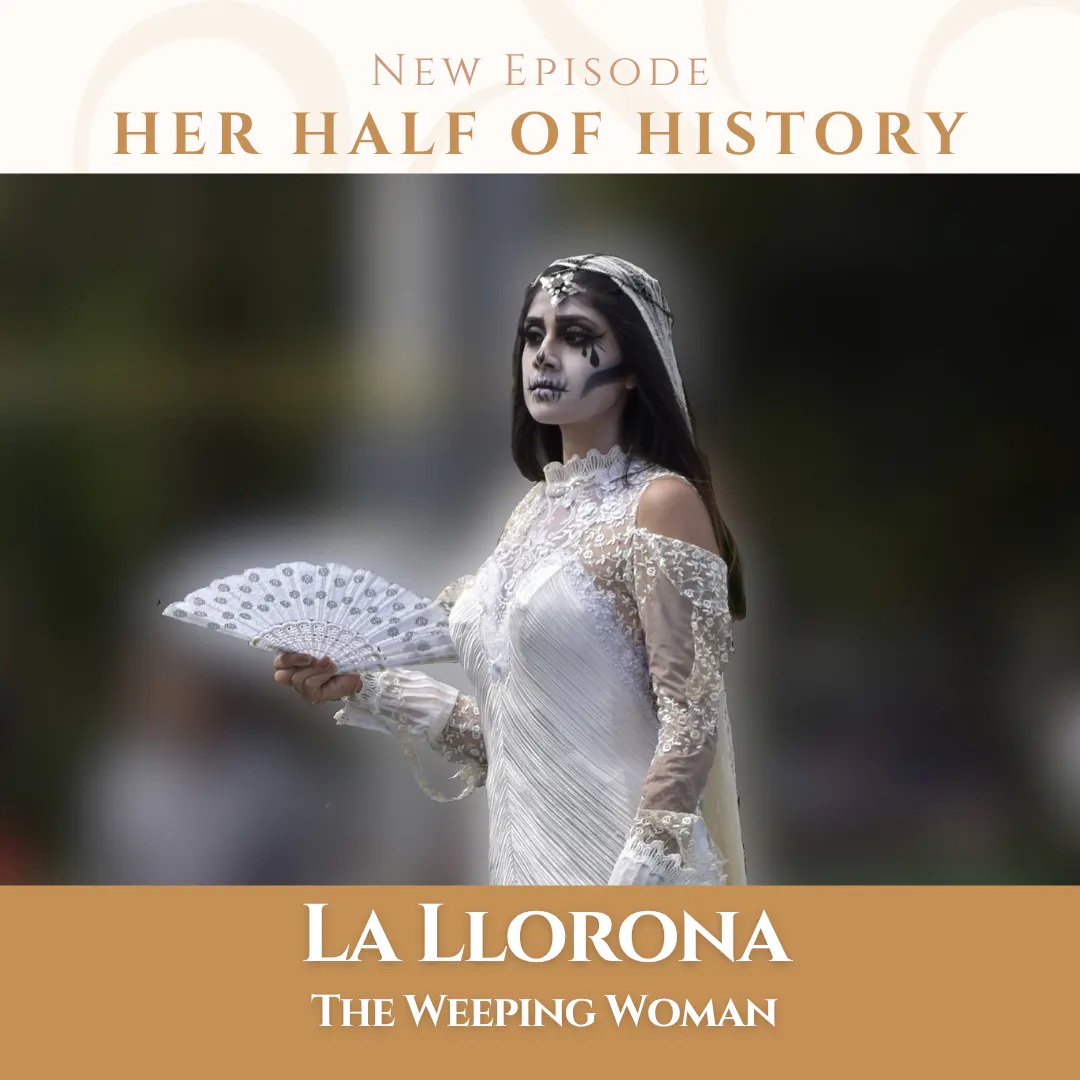
La Llorona, the Weeping Woman
This year's Halloween episode is about La Llorona, the tale of a ghostly woman weeping for her children. It's told all over Latin America, and while it doesn't have a historical basis in fact (as far as we know), it still says a lot about history, from Aztecs to Spaniards to what it has meant to be a woman.
Visit the website (herhalfofhistory.com) for sources, transcripts, and pictures.
On This Day in 1942: Lise de Baissac Begins Her Spy Mission
On September 24, 1942, Lise de Baissac parachuted into Nazi-occupied France. She was a spy, sent by Great Britain, to cause disruption behind enemy lines.
I am currently on research break preparing Series 17: Women Together. This is a special bonus episode from the On This Day in Women's History newsletter.
There are two ways to sign up for the newsletter:
Patreon (https://www.pat
On This Day in 1849: Harriet Tubman Runs Away
Bonus episode from the newsletter On This Day in Women's History!
On September 17, 1849, Harriet Tubman made her break for freedom. She ran away from her enslaver in Maryland, making for the Pennsylvania line and the free North. Though this attempt failed, she was learning the way and the skills. Within weeks, she would try again and succeed, and soon she would begin her quest to free her family
The Topic of Series 17 Will Be ...
Series 16 on the First Woman has closed out and the vote on the topic of Series 17 is in. It will be ... Women Together.
I’m currently researching episodes on Vestal Virgins,
medieval nuns, female soldiers in Africa, the women’s march on Versailles, the 1848 Seneca Falls Convention, and many more. Basically, if it’s something women did together, I’m considering it.
As per usual, I need a bit

Aretha Franklin, First Woman in the Rock & Roll Hall of Fame (ep. 16.24)
Aretha Franklin was the Queen of Soul, and one of the most remarkable singers of the 20th century. At various points in her life she sang
gospel, jazz, blues, R&B, pop, rock and roll, folk, Broadway, and even opera classics. She also managed to sustain her career for six decades. It's hard for anyone to compete with that.
This episode contains very short clips of two of Aretha's songs. I believe
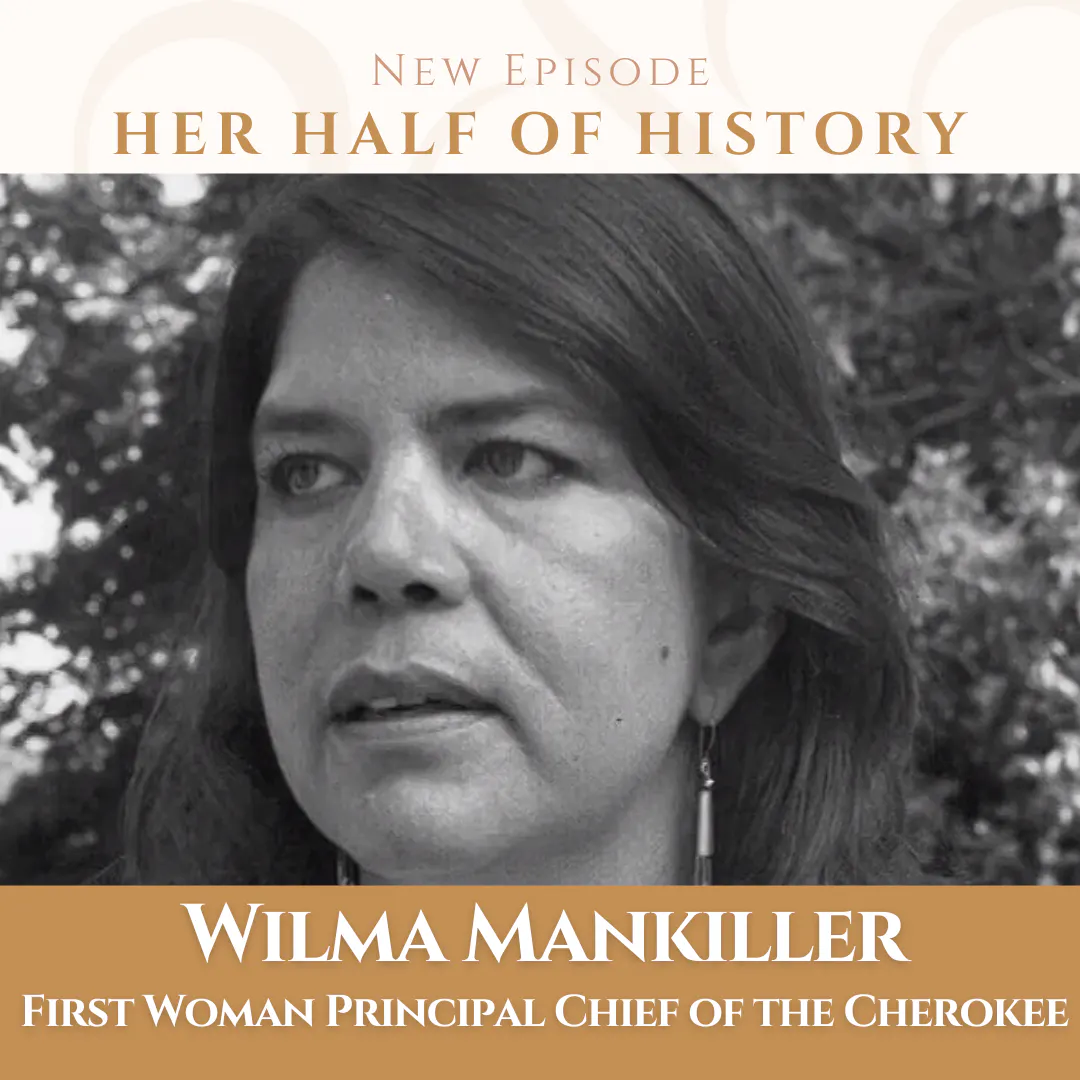
Wilma Mankiller, First Woman Chief of the Cherokee Nation (ep. 16.23)
The indigenous people of North America had many powerful women through the ages, but in many cases, we have lost their stories. One story we have not lost is that of Wilma Mankiller, who served as Principal Chief of the Cherokee Nation from 1985 to 1995. No one was more surprised by that than the girl she once was. Times change and hers is a story of perseverance.
It's voting time! Please let m
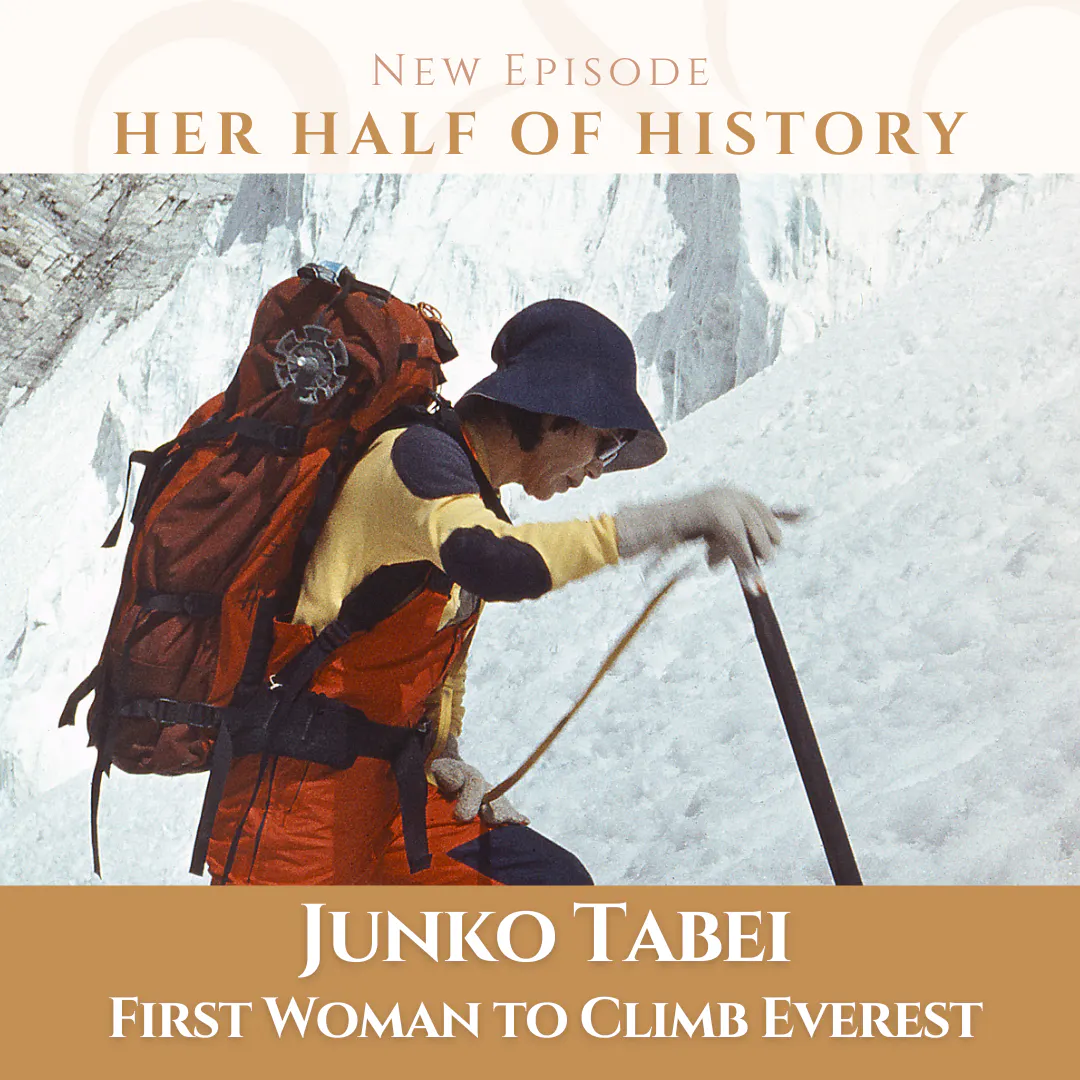
Junko Tabei, First Woman to Climb Everest (ep. 16.22)
In 1975, Junko Tabei was part of an all-female, all-Japanese team climbing the world's highest mountain. It was touch and go there for a while, but she made: the first woman at the summit of Everest.
It's voting time! Please let me know what you want to hear about in series 17. You can vote on the website (herhalfofhistory.com), which is also where you will find sources, transcripts,
On This Day in 1967: Two Women, Two Grizzlies, and Changes in Wildlife Policies
Bonus episode from the newsletter On This Day in Women's History!
On August 12-13, 1967, Glacier National Park had a double tragedy: two 19-year-old girls were hiking in separate groups in separate parts of the park. Both were attacked by grizzly bears. For Julie and Michele, the results were deadly. But for other people and bears, the tragedy had more positive consequences. As a result of this n

Valentina Tereshkova, First Woman in Space (ep. 16.21)
In the race for space, the Soviets won all of the opening rounds, including the race to put the first woman in orbit. Her name was Valentina Tereshkova, and while we are clear on her success out there, the exact details are a whole lot less clear.
It is time to vote for the topic of Series 17! Please visit the website (herhalfofhistory.com) to vote, and also look at sources, transcript

Sirimavo Bandaranaike, First Woman Elected as Head of Government (ep. 16.20)
Many women have served as the head of government for their respected countries. But usually that's because they were part of a royal family, and they inherited the office. Getting elected to the top job is an entirely different matter. The first woman to do that was Sirimavo Bandaranaike of Sri Lanka. She won the elections for prime minister in 1960.
Visit the website (herhalfofhistory

Regina Jonas, First Woman Rabbi (ep. 16.19)
Most of the world's great religions have reserved most of the authority for men. This was certainly true of Judaism, but in the early 20th century, Regina Jonas was trained and ordained to serve her people as a rabbi. She continued to do so for all of her short life, even during the Holocaust.
Visit the website (herhalfofhistory.com) for sources, transcripts, and pictures.
Sign up for
On This Day in 1918: The Romanovs Awake for the Last Time
Bonus episode from the newsletter On This Day in Women's History!
In the evening of July 16, 1918, the Romanov family went to
bed as usual in Ipatiev House, where they were being held under house arrest. But they were awoken in the middle of the night, ostensibly so they could be moved to a safer location. The former Tsar Nikolai and the former Tsarina Alexandra went downstairs to the cellar with

Amelia Earhart, First Woman to Fly Over Oceans (ep. 16.18)
Amelia Earhart was famous as the first woman to fly across the Atlantic (first as a passenger, second as a pilot). She was also the first person to fly from Hawaii to California, as well as any number of other piloting firsts. Sadly, her last grand adventure didn't end in success.
Visit the website (herhalfofhistory.com) for sources, transcripts, and pictures.
Sign up for the newslett
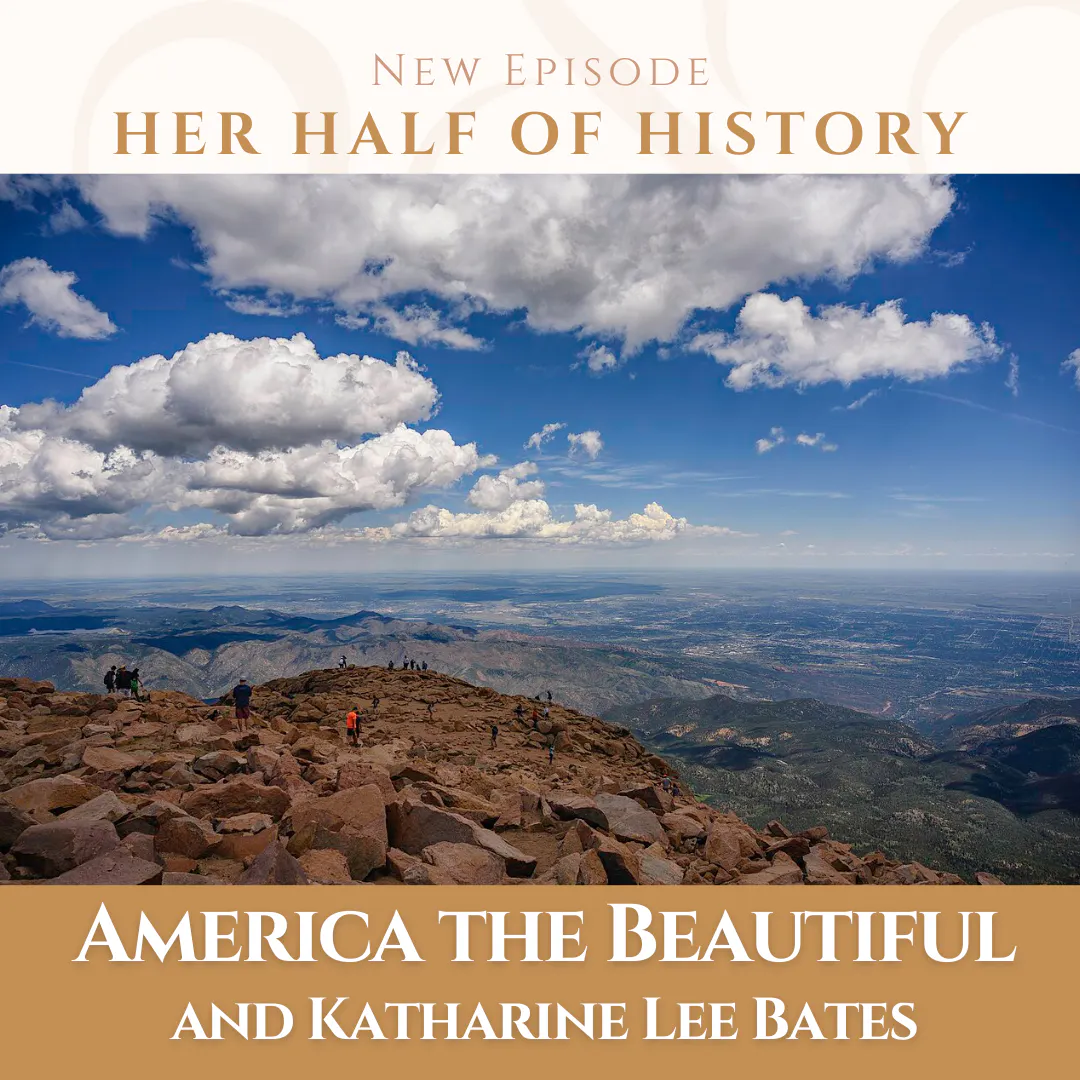
America the Beautiful and Katharine Lee Bates
The words of "America the Beautiful" were written by Katharine Lee Bates after a trip from Massachusetts to Colorado and up to the top of Pike's Peak. This is the story of how they were written and how they became so popular. It's a holiday bonus episode to celebrate the 250th birthday of the United States of America.
Visit the website (herhalfofhistory.com) for sources, transcripts,
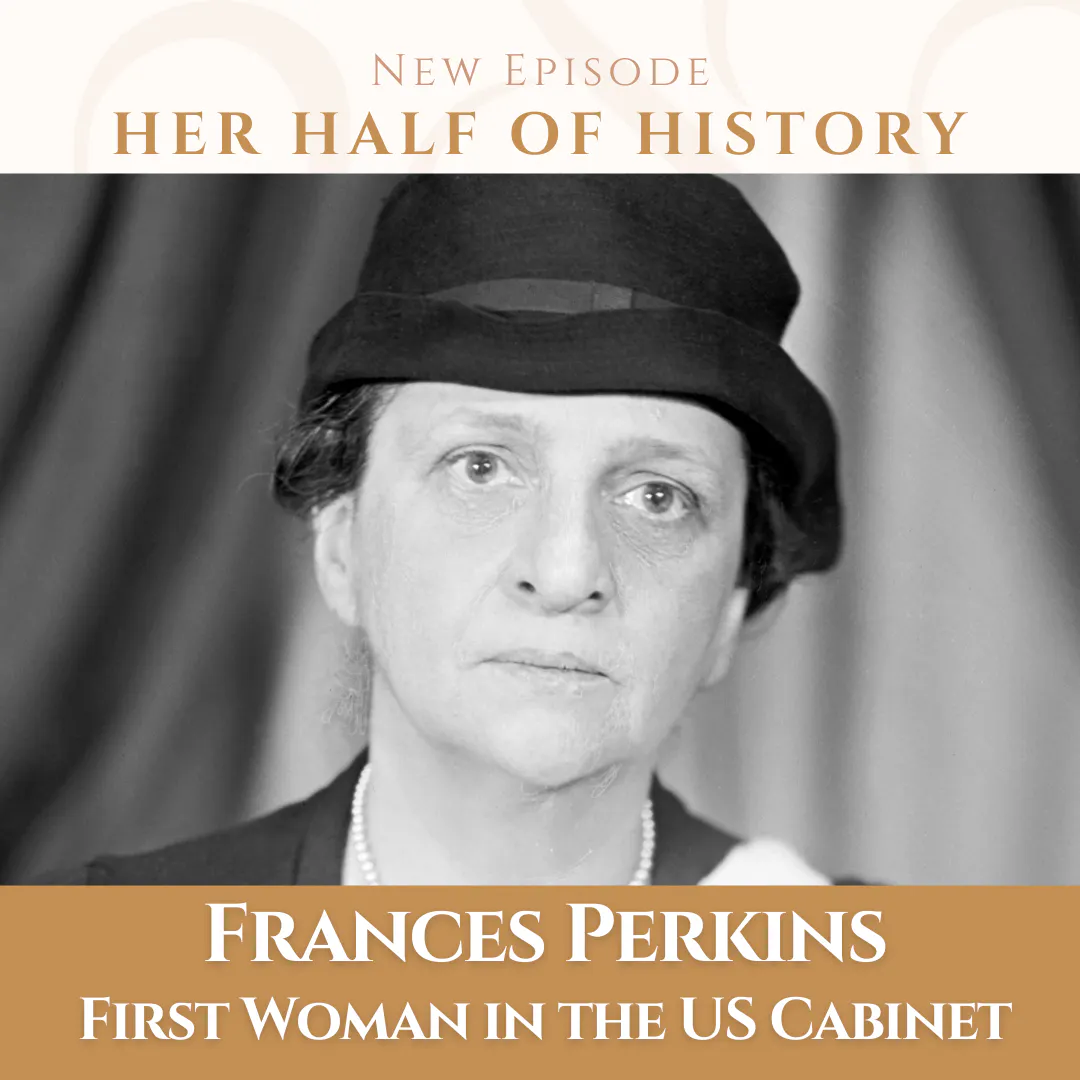
Frances Perkins, First Woman in the US Cabinet (ep. 16.17)
Traditional histories give President Franklin Delano Roosevelt a lot of credit for guiding the United States out of the Great Depression. But his best move may have been appointing the first woman ever to join a presidential cabinet. As Secretary of Labor, Frances Perkins won victories on public works for increased employment, 8 hour work days, minimum wage, Social Security, workplace safety stand

Nancy Astor, First Woman in Parliament (ep. 16.16)
The first woman to serve in UK's Parliament was a surprise to everyone, and most of all herself. Nancy Astor was born American, and of course she was a woman. But when her husband couldn't stand for election after all, the Conservative party needed a quick substitute. Who better than his wife? And she stayed for years.
Visit the website (herhalfofhistory.com) for sources, transcripts,

On This Day in 1509: Catherine of Aragon Marries Henry VIII
Bonus episode from the newsletter On This Day in Women's History!
On June 11, 1509, Catherine of Aragon married Henry VIII. It was her second marriage and his first. No one guessed how many weddings he had in his future...
There are two ways to sign up for the newsletter:
Patreon (https://www.patreon.com/user?u=83998235)
Substack (https://bit.ly/4wpOe5h)
Either way, the story
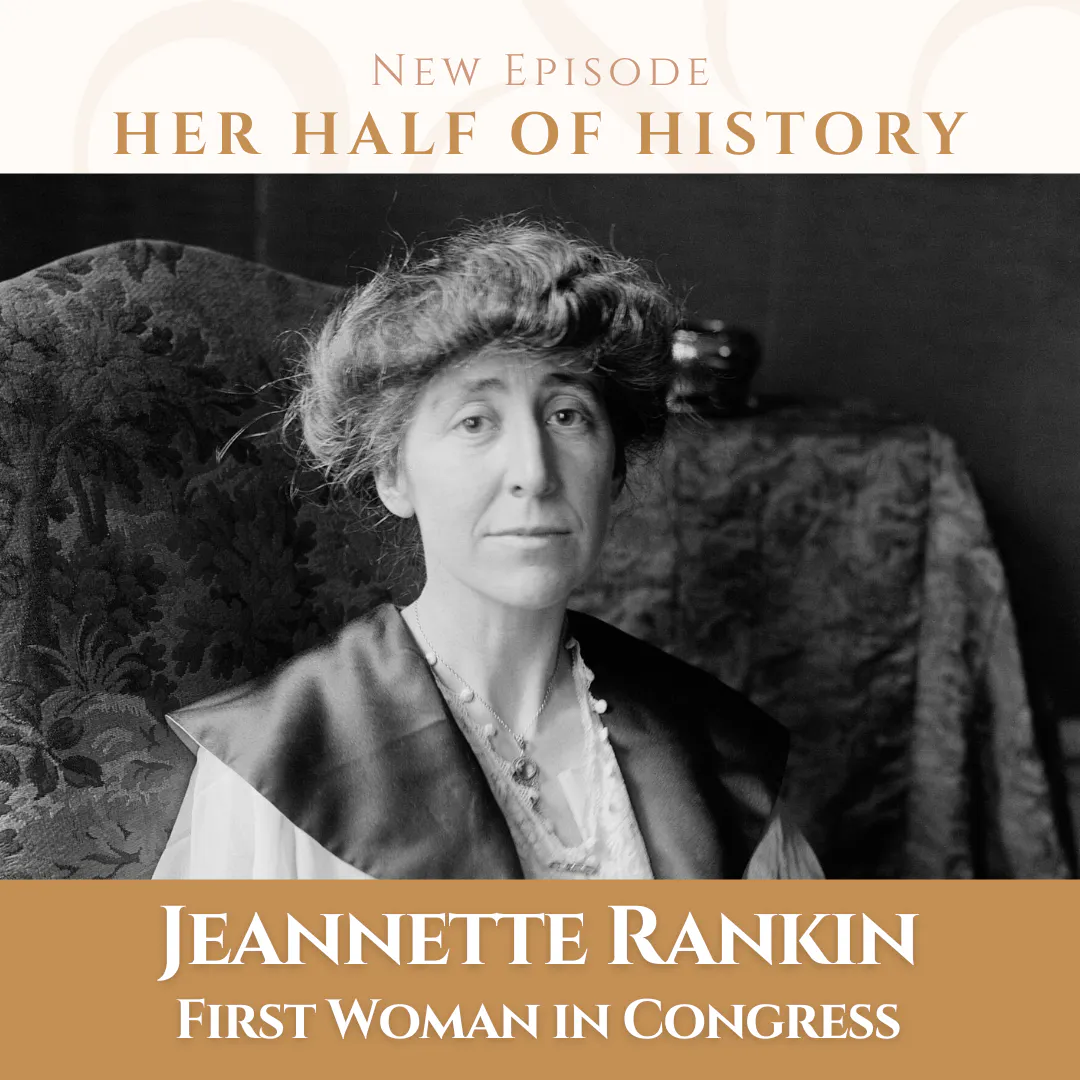
Jeannette Rankin, First Woman in Congress (ep. 16.15)
The House of Representatives had its first woman voting before women were even allowed to vote on a national scale. Jeannette Rankin was elected by the state of Montana in 1916 and again in 1940. She was also firm in her pacifist convictions: she was one of 40 Representatives to vote no on entering World War I and she was absolutely alone in voting no on entering World War II.
Visit the w

Olympic Champions: The First Women (ep. 16.14)
The ancient Olympics didn't allow women to compete, or even watch. However, there are a few ancillary ways that women participated: as horse owners and in the Heraean games.
The modern Olympics made a half-hearted attempt to ban women too, but we snuck in as early as the year 1900. Helen de Pourtales, Charlotte Cooper, and Margaret Abbott were athletes who won that year. It has only grown since t

Marie Curie, First Woman to Win a Nobel Prize (ep. 16.13)
Marie Curie was the first woman to win a Nobel Prize, the first person to win two Nobel Prizes, and the first person to win Nobels in two separate disciplines. She continues to inspire women in science even today.
Visit the website (herhalfofhistory.com) for sources, transcripts, and pictures.
Sign up for the newsletter On This Day in Women's History, available on Patreon or Substack. T

On This Day in 1643: Anne of Austria Takes France
Introducing the brand new newsletter On This Day in Women's History! Every Monday I'll be writing about what a historical woman did on that day in history, such as:
On May 14, 1643, Anne of Austria took control of France after her husband's death, even though his will forbade exactly that. Listen to find out how.
There are two ways to sign up for the newsletter:
Patreon (https://www.

Madam CJ Walker, First Female Self-Made Millionaire (ep. 16.12)
Plenty of women have been rich. Most of them inherited their
wealth. Plenty of women have earned money, even in antiquity, but without leaving us detailed records about how much. Madam CJ Walker is different. She made a lot of money, we know exactly how much, and she didn’t inherit any of it.
Visit the website (herhalfofhistory.com) for sources, transcripts, and pictures.
This show su

Ada Lovelace, First Computer Programmer (ep. 16.11)
Ada Lovelace wrote the world's first computer program before computers existed. Her friend, Charles Babbage, was inventing an Analytical Thinking Machine, even if he all he had at the moment was a small demo model. Ada thought through what such a machine could do for humanity. Her ideas were grand and far-reaching, and in one case, extremely detailed: she published a paper on exactly how to use su

Caroline Herschel, First Female Professional Scientist (ep. 16.10)
Caroline Herschel and her brother William are sometimes called the discoverers of the universe. In the 18th century, they observed and catalogued the heavens. They were not the first astronomers, but they started with catalogues of hundreds of stars and expanded it into thousands. Caroline in particular was famous as a discoverer of comets. Along the way she was the first woman to have a scientifi

Jeanne Baret, First Woman to Circumnavigate the Globe (ep. 16.9)
Jeanne Baret circumnavigated the globe by disguising herself as a man and working as a servant on a French scientific mission. Along the way, she collected and preserved an incredible array of botanic specimens, many of whom are named after ... the man she was working for.
Visit the website (herhalfofhistory.com) for sources, transcripts, and pictures.
This show survives on the support o

Anne Marshall and Margaret Hughes, First Women on the English Stage (ep. 16.8)
Shakespeare wrote every word of his plays with the firm
expectation that the female parts would be acted by men or boys. No female was allowed to act in a public theater. That would be shockingly indecent.
In England, that expectation was dashed in a 1660 production of Othello. We know for sure that Desdemona was played by a woman. We're just not sure which woman it was. This episode explains how

Remember the Ladies Says Abigail Adams
Abigail Adams was the wife of American founding father John Adams. In 1776, she asked him to "remember the ladies" in the new code of laws for a new country. So much is relatively well known, but much less well known is his response. Listen for the full exchange.
Visit the website (herhalfofhistory.com) for sources, transcripts, and pictures.
This show survives on the support of listene

Elena Cornaro Piscopia, First Woman with a University Degree (ep. 16.7)
The earliest universities only admitted men. Occasionally a woman was allowed to attend, but not to graduate. The first woman to buck that trend was Elena Cornaro Piscopia. But that didn't mean it was any easier for those who came after her. The battle for women's education had only just begun.
Visit the website (herhalfofhistory.com) for sources, transcripts, and pictures.
This show su

Annie Londonderry, First Woman to Cycle Round the World (ep. 16.f)
Annie Londonderry was the first international female sports star. But an unlikely one. When she decided to bicycle around the world, she did not yet know how to ride a bicycle. But her trip was a media sensation because she was even better at self-promotion than she was at bicycling.
Visit the website (herhalfofhistory.com) for sources, transcripts, and pictures.
This show survives on the

Elisabeth Thible, First Woman to Take Flight (ep. 16.e)
Humanity dreamed of flight for a very long time, but the reality of it was mostly failure. The first woman to truly fly went up in a hot air balloon in 1784.
Visit the website (herhalfofhistory.com) for sources, transcripts, and pictures.
This show survives on the support of listeners like you. Support the show on my Patreon page (https://www.patreon.com/user?u=83998235) for ad-free
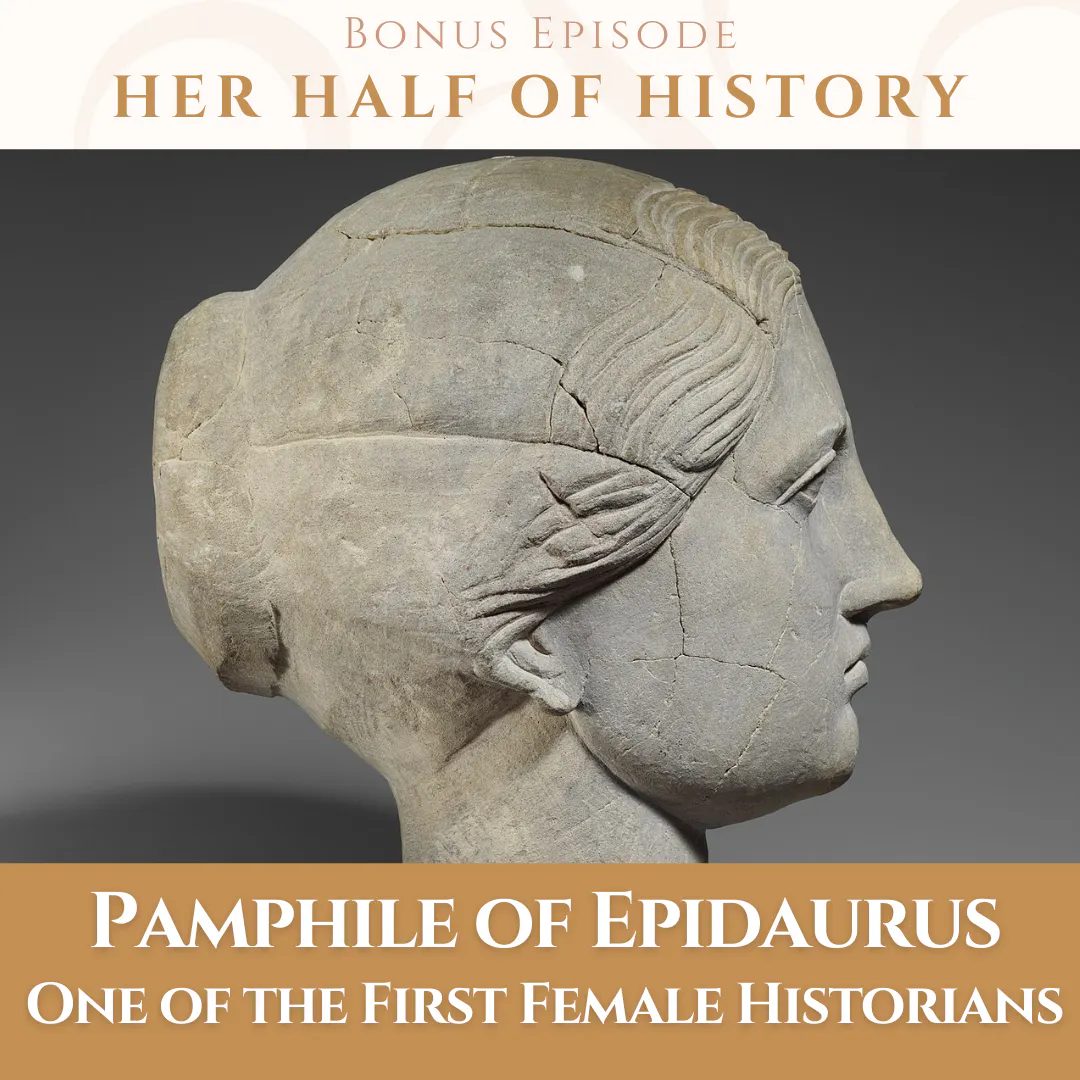
Pamphile of Epidaurus, One of the First Female Historians (ep. 16.d)
The Greeks invented history in the West, and to my very great surprise there was actually one female Greek historian. Pamphile of Epidaurus's work was still read and well-regarded 800 years after her death. Sadly, we lost it at some point after that.
Visit the website (herhalfofhistory.com) for sources, transcripts, and pictures.
This is a special bonus episode normally available only to

Anna Komnene, One of the First Female Historians (ep. 16.6)
Anna Komnene is not the absolute first female historian, but she's pretty close. Plus, she wrote a full length book which still exists if you care to read it today. She also lived through the First Crusade, not to mention centuries of slander.
It's Women's History Month! If you support the show during March 2026, you'll be entered into a prize drawing for Her Half of History merch. See below for
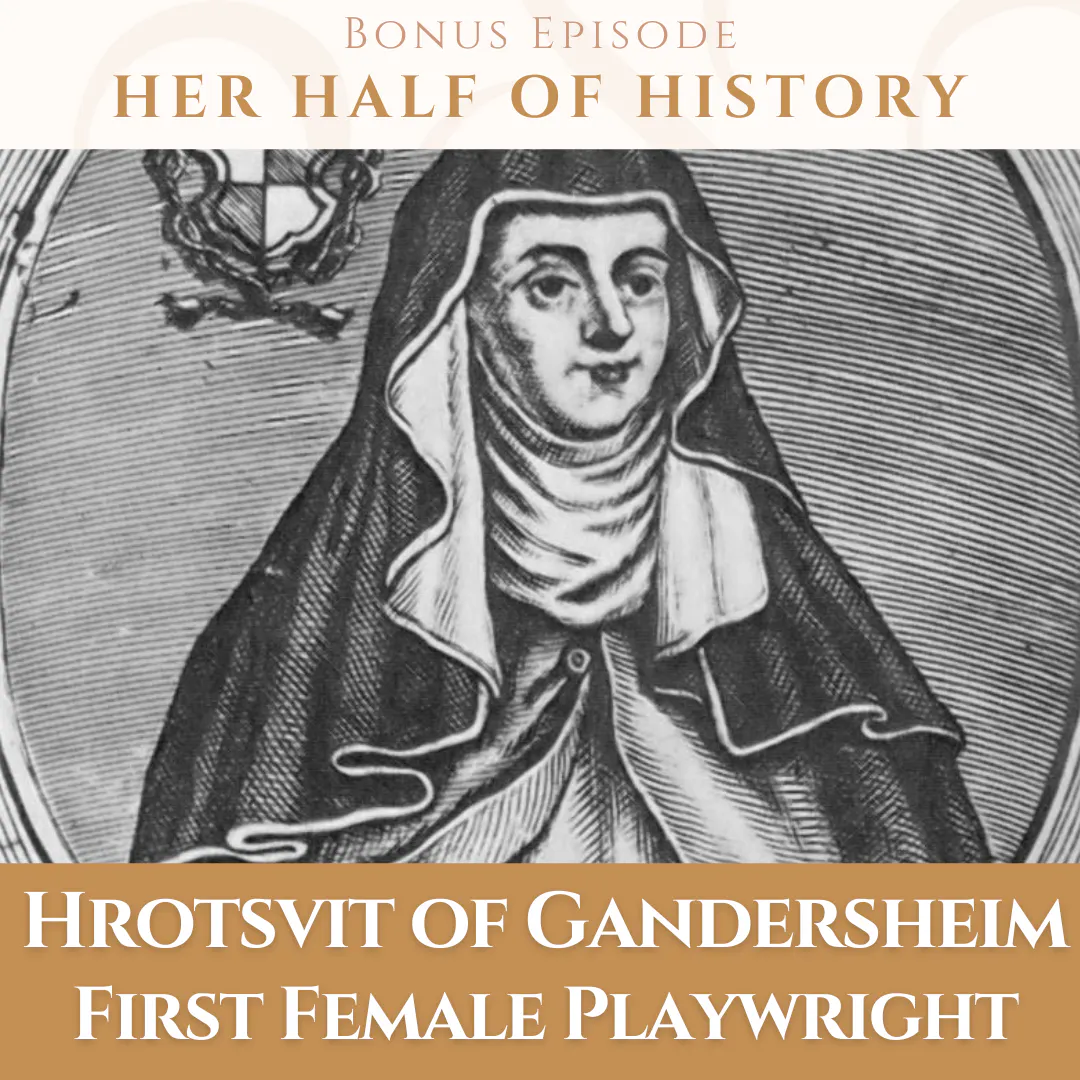
Hrotsvit of Gandersheim, First Female Playwright (ep. 16.c)
In the 10th century Hrotsvit of Gandersheim was seriously annoyed with the classic Roman playwrights she studied at school. They were all male, and she thought some of their depictions of women were unacceptable. She responded by becoming the first female playwright in the historical record.
This is a bonus episode of the type that is usually available only to Patreon subscribers, but it's Wome

Murasaki Shikibu, First (Great) Novelist (ep. 16.5)
The Tale of Genji is often listed as the world's first novel, but there are naysayers. Is it a novel? Is it the first? That's highly contentious, but whatever you decide, Lady Murasaki Shikibu wrote this classic a very long time ago, and it is a masterpiece.
Visit the website (herhalfofhistory.com) for sources, transcripts, and pictures.
It's Women's History Month! I'm running bonus episod

Why We Will Always Need Women's History Month
It's March and I'm celebrating with free-to-everyone bonus episodes all month, starting with this one on why women's history will always been important.
I'm also holding a drawing where a listener like you can win free Her Half of History merch. There are four ways to get entered into the drawing:
Sign up as a supporter on my Patreon page (https://www.patreon.com/user?u=83998235).

Gudrid Thorbjarnardottir, First European Woman in the Americas (ep. 16.4)
Today's episode is in response to a question from a listener. Peter asked me who was the first non-native woman to reach the Americas?
Gudrid Thorbjarnardottir was an Icelandic settler, transatlantic traveler, mother, pilgrim, and possibly the most well-traveled woman of the Viking Age.
Visit the website (herhalfofhistory.com) for sources, transcripts, and pictures.
This show survives

Fu Hao, First Female Military Leader (ep. 16.3)
Fu Hao married a king, gave birth multiple times, and also commanded troops in battle. (Why not?) Living around 1200 BCE in China, she is the first recorded female military leader in history.
Visit the website (herhalfofhistory.com) for sources, transcripts, and pictures.
This show survives on the on the support of listeners like you. Support the show on my Patreon page (https://ww
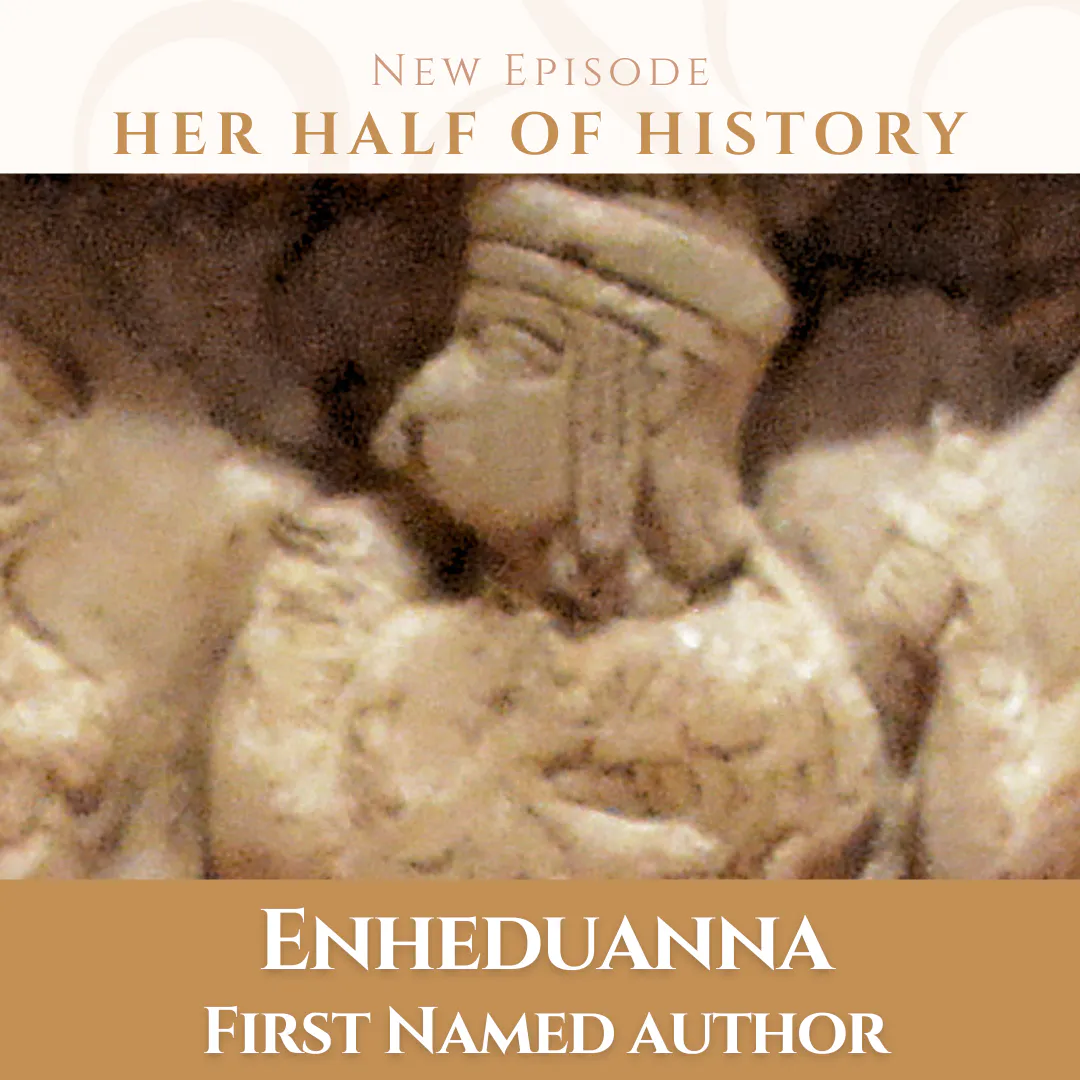
Enheduanna, First Named Author (ep. 16.2)
The first named author in history was Enheduanna, daughter of Sargon, conqueror of Sumeria. Her poems have been called the world's first bestsellers. But she's also been accused of not really writing them.
Visit the website (herhalfofhistory.com) for sources, transcripts, and pictures.
This show survives on the on the support of listeners like you. Support the show on my Patreon page

Neithhotep, First Named Woman in History (ep. 16.1)
Many religions and cultures have an answer to Who was the first woman?
But the records of those answers were all written thousands of years after any such women lived. For historians, the more answerable question is Who was the first woman named in a record written during or close to her own lifetime?
Neithhotep was a queen in Egypt's very first dynasty. Not much is known about her for certain,

Childbirth, Literacy, Sources, the State of the World, and Other Listener Questions
Her Half of History turns 5 years old this month! In celebration, I'm taking questions from listeners and they range from the oldest account of childbirth to the reason I started a podcast in the first place.
In this episode you will can hear the voices of some of my fellow history podcasters. Please check out their shows for more great history:
Civics and Coffee
The History Fix Podcast
Woman the Gatherer (and Also the Hunter)
Early anthropologists and archaeologists told us that in foraging societies, women gathered and men hunted. More recent research suggests that women did hunt, but the debate will go on about how much.
Visit the website (herhalfofhistory.com) for sources, transcripts, and pictures.
This show survives on the on the support of listeners like you. Support the show on my Patreon page (h
Got Questions? (and the voters' choice for Series 16)
Please send me your questions for the Q&A episode to celebrate my 5-year podcast anniversary! There's a spot to do it on
the website (herhalfofhistory.com). If you include contact details, there's a drawing for some free swag for you.
Also, the votes are in, and the topic of Series 15 is: The First Woman Who. That will start in January.
Visit the website (herhalfofhistory.c

The Mothers of Invention (ep. 15.18)
They say necessity is the mother of invention, but I'm not convinced. Throughout this series on inventions, I noticed that almost all of the inventions I covered clustered in the second half of the 19th century, in a time period known as the Second Industrial Revolution. This episode is a retrospective on some of the factors that made that time period see the invention of more society-changing inv

The Sewing Machine (ep. 15.17)
Sewing is at least 45,000 years ago, and it was known in nearly every culture on earth, but for millennia it was all done by hand. There are multiple claimants for the inventor of the first sewing machine, but the one who emerged with the US patent was Elias Howe. Unfortunately, his machine didn't really work. This episode tells the story of how that got fixed and how it impacted women.
Visit the
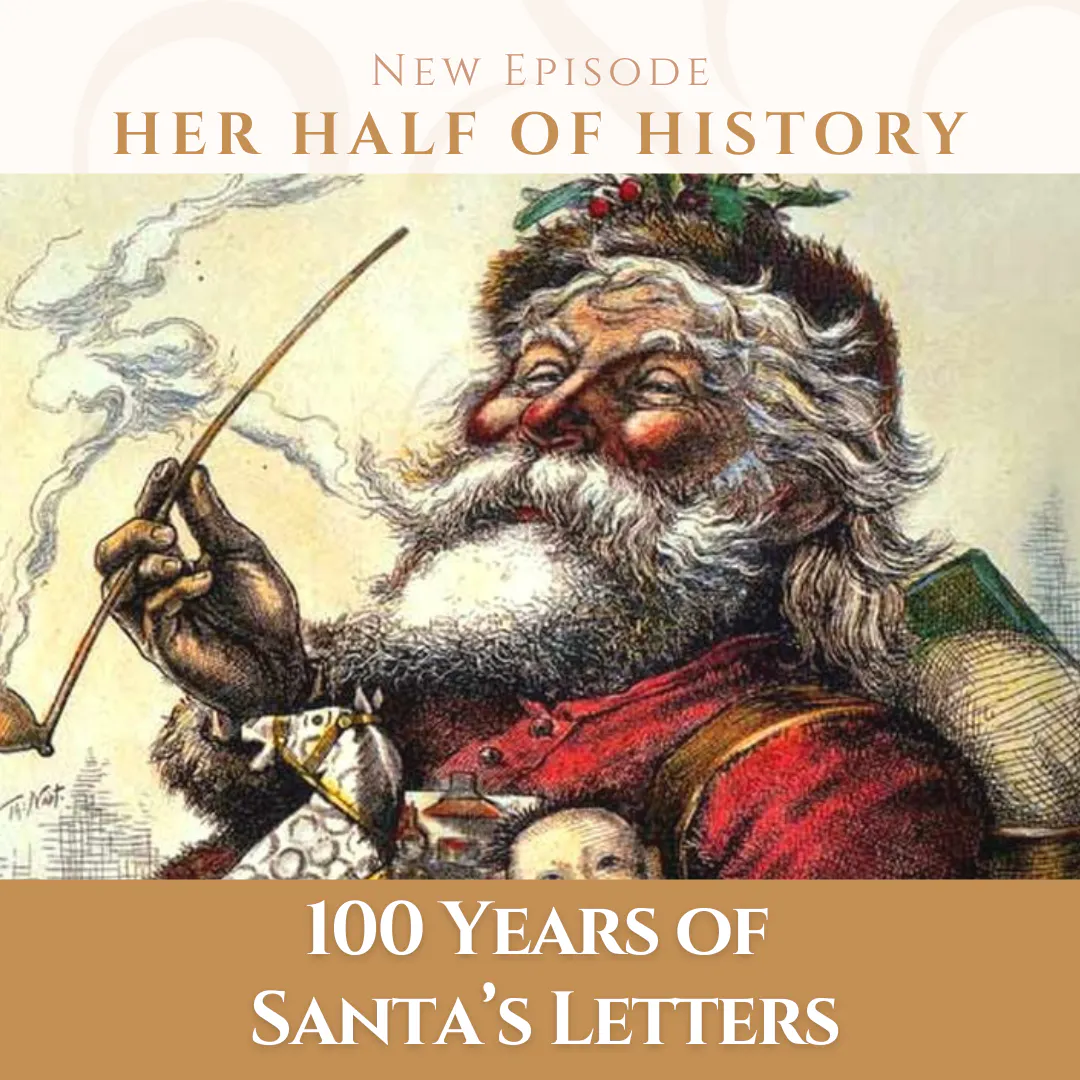
100 Years of Santa's Letters
Santa gets more mail every year than any other person on earth, but the earliest letters that I know of were not to him. They were from him. Later on, it became more normal to write to him and ask for what you were hoping to get for Christmas. This episode covers a sampling of letters from the 1850s to the 1950s, and then finishes off with the story behind one of the most famous lines in American

Some Like It Cold: A History of Your Fridge (ep. 15.16, rebroadcast)
Most historical women lived and cooked in an era when cold storage meant something like the root cellar or down the well. The ability to keep food at a constant temperature radically changed our relationship with food, both before it arrives in our homes and afterwards.
Visit the website (herhalfofhistory.com) for sources, transcripts, and pictures.
Support the show on my Patreon page for bo
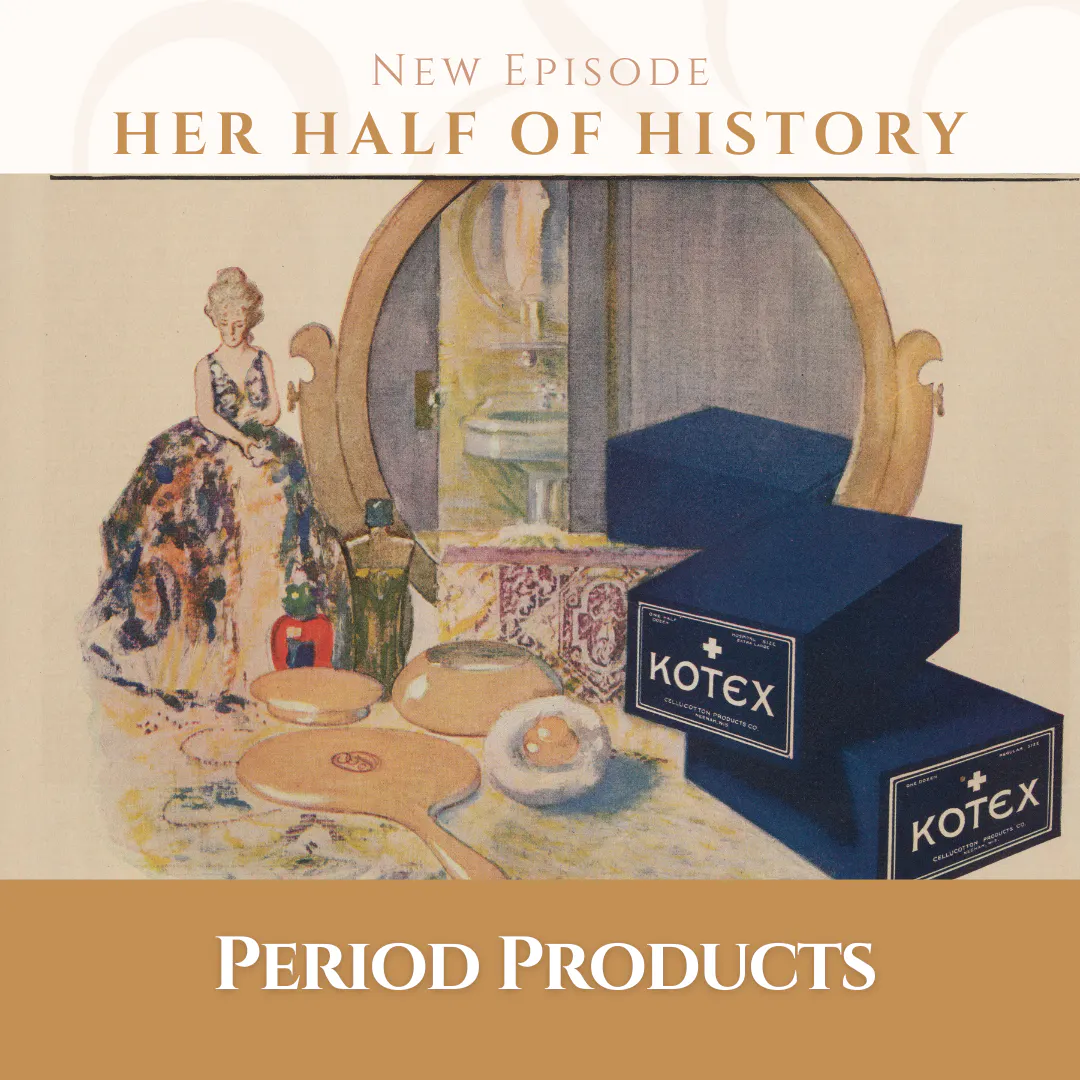
Period Products (ep. 15.15)
Early details are scarce, but women have been managing periods for millennia, using everything from free bleeding to tampons to sanitary napkins.
Visit the website (herhalfofhistory.com) for sources, transcripts, and pictures.
Support the show on my Patreon page for bonus episodes, polls, and a general feeling of self-satisfaction. Or make a one-time donation on Buy Me a Coffee.
J
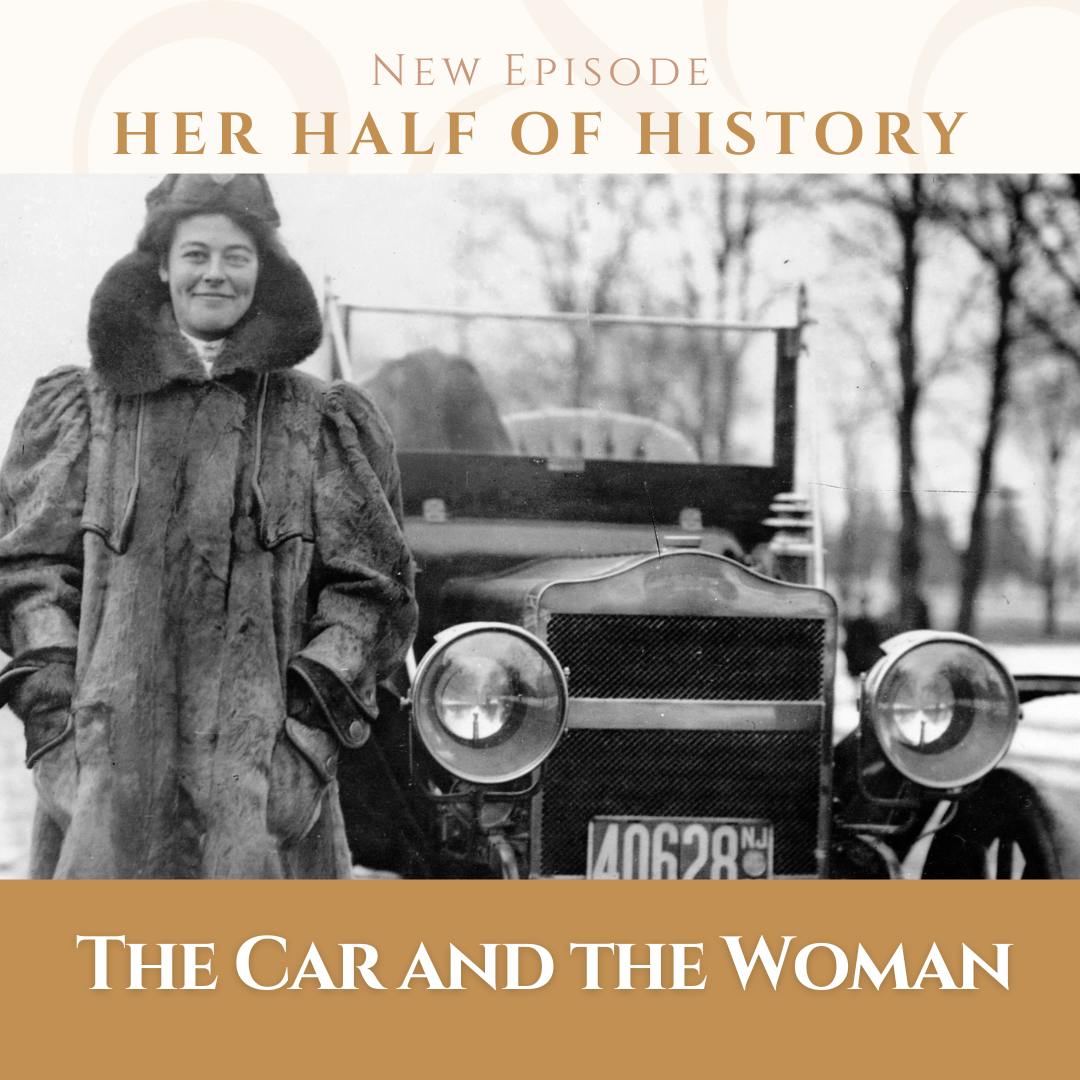
The Car and the Woman (ep. 15.14)
Women may not have invented the car, but a woman took the first road trip in one (Bertha Benz) and a woman was the first victim of one (Mary Ward). And when cars came in big time they changed life dramatically for women in particular.
Visit the website (herhalfofhistory.com) for sources, transcripts, and pictures.
Support the show on my Patreon page for bonus episodes, polls, and a general

November Giving Poll (plus send me your questions!)
It's a bye-week for the podcast, but I have two big announcements!
First, November is a month for gratitude, and Her Half of History is donating half of all revenue this month to the nonprofit of your choice. Please visit the website (herhalfofhistory.com) to vote.
For double the voting power. Visit my Patreon page (https://bit.ly/4nEb6Zu) and vote there too. You don't have to be a supporter to
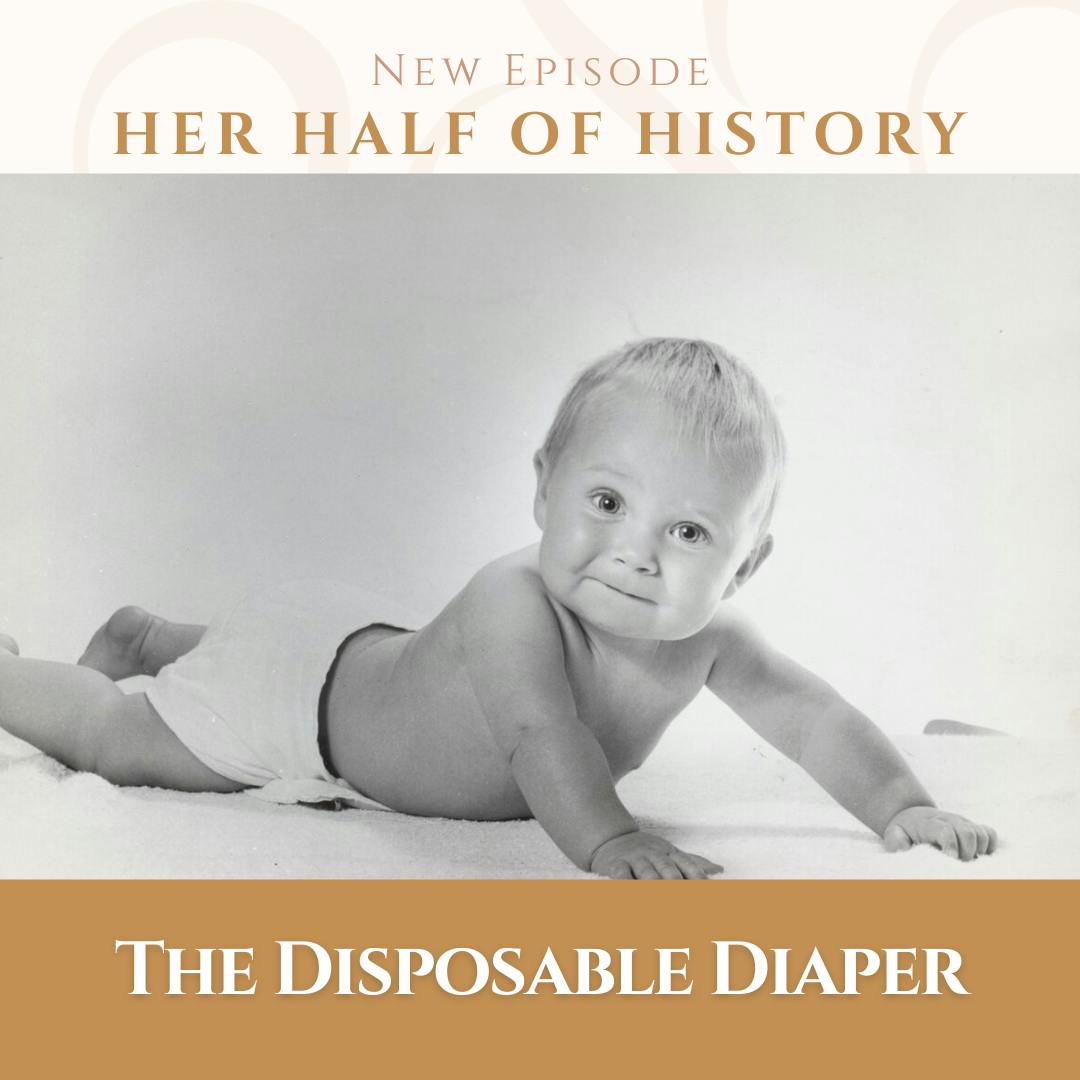
The Disposable Diaper (ep. 15.13)
Diaper duty isn't the funnest part of parenting. But imagine what it was like when there was no such thing as a disposable, and you were also on laundry duty...
The disposable diaper was a miracle to many women.
Visit the website (herhalfofhistory.com) for sources, transcripts, and pictures.
Support the show on my Patreon page for bonus episodes, polls, and a general feeling of self-sat

Let There Be Light: A History of Flipping the Switch (ep. 15.12) (rebroadcast)
Artificial lighting is an invention that has become so ubiquitous in the developed world that many of us barely notice when we use it. But it
wasn’t always this way. Many a historical woman noticed big time every day. This episode tells the story from prehistorical oil lamps, to candles, to flipping a switch.
Visit the website (herhalfofhistory.com) for sources, transcripts, and pictures.
Supp

Aqua Tofana (or how to poison your husband) (ep. 15.11)
It's spooky season and this is my third annual Halloween episode! It's the story of Aqua Tofana, a colorless, odorless, tasteless, and utterly deadly poison invented by a network of female poisoners in 17th century Italy.
The music is from The Four Seasons by Antonio Vivaldi, recorded by The Wichita State University Chamber Players with John Harrison on Violin and Robert Turizziani and as Conduc
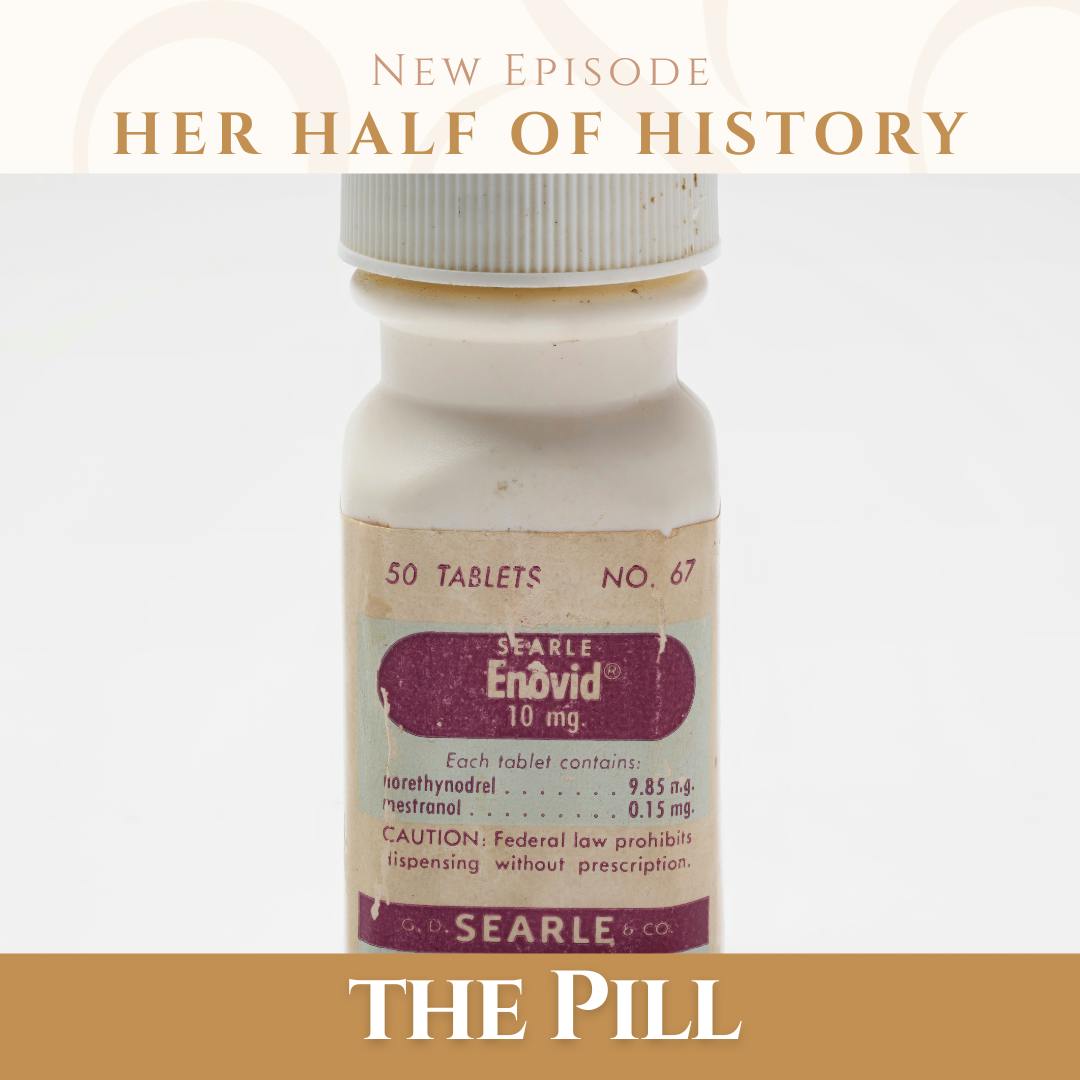
The Pill (ep. 15.10)
Quite possibly no invention in modern history has done more to change women's lives than the pill so important it can just be called: The Pill. Safe, reliable, relatively easy birth control was a game changer for many (but not all) women.
Visit the website (herhalfofhistory.com) for sources, transcripts, and pictures.
Support the show on my Patreon page for bonus episodes, polls, and a gen

Birth Control Before the Pill (ep. 15.9)
The ancient world recorded many means of contraception, some of them reasonable, and some of them bizarre. Many records only say that prostitutes do this well, and do not give the means at all. Records start to get better in the 19th century, but access was limited depending on what part of the world you lived in. In the early 20th century, many activists campaigned for better alternatives and in
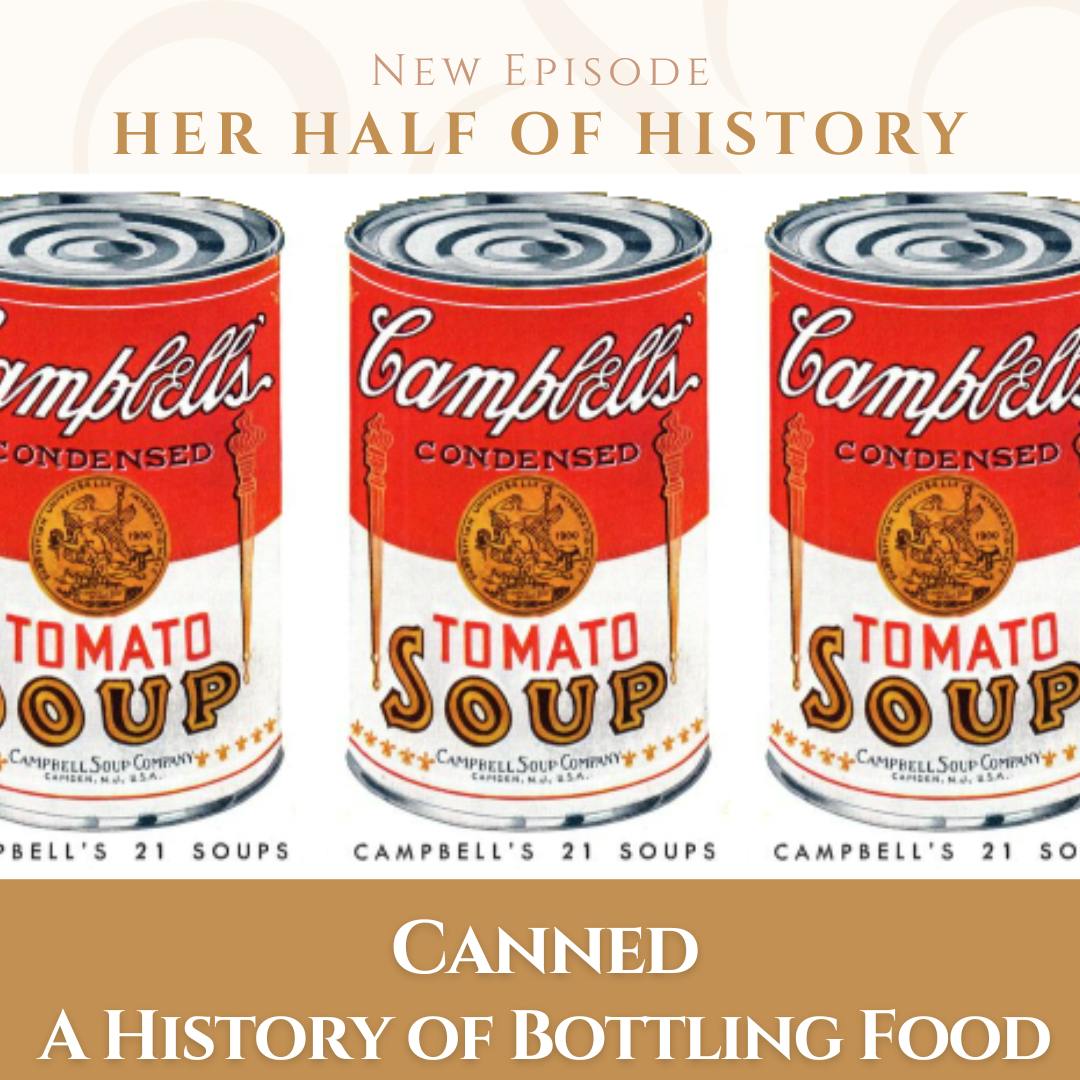
Canned: A History of Bottling Food (ep. 15.8)
The problem of what to cook for dinner has been with women for millennia, but for most women in history, the options were limited by modern standards. They ate fresh, local ,and minimally processed. Not because they were healthy and environmentally conscious, but because they had no other ingredients available.
Canned goods were invented for the military, not for housewives. But after a great dea
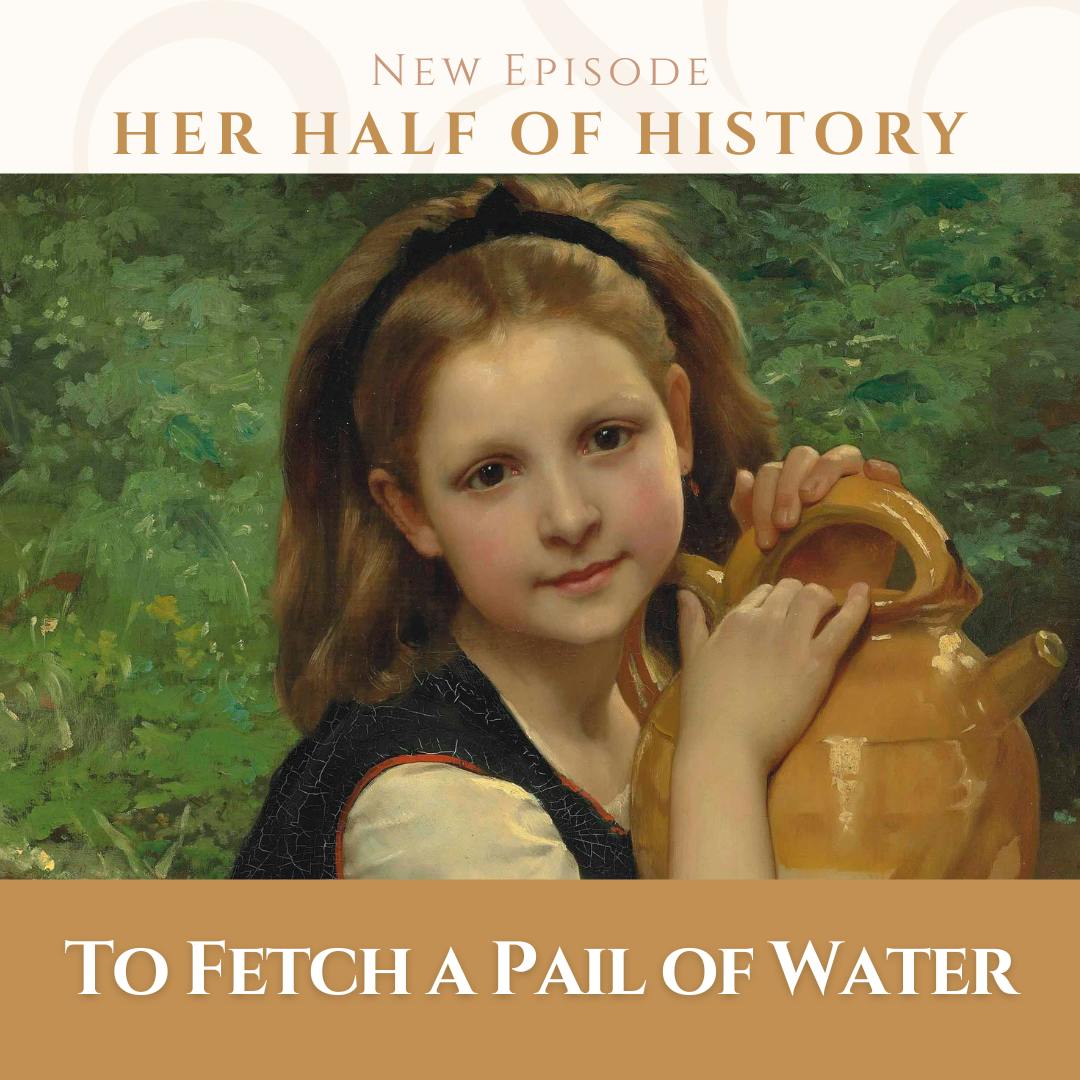
To Fetch a Pail of Water (a history of women carrying it) (ep. 15.7)
Historically, women carred an awful lot of water. It was so commonplace that it rarely gets mentioned in the historical record, so the details are scarce. But the search for water sparked invention 10500 years ago when the oldest wells were dug and has continued to inspire countless inventions ever since.
Visit the website (herhalfofhistory.com) for sources, transcripts, and pictures.
This s
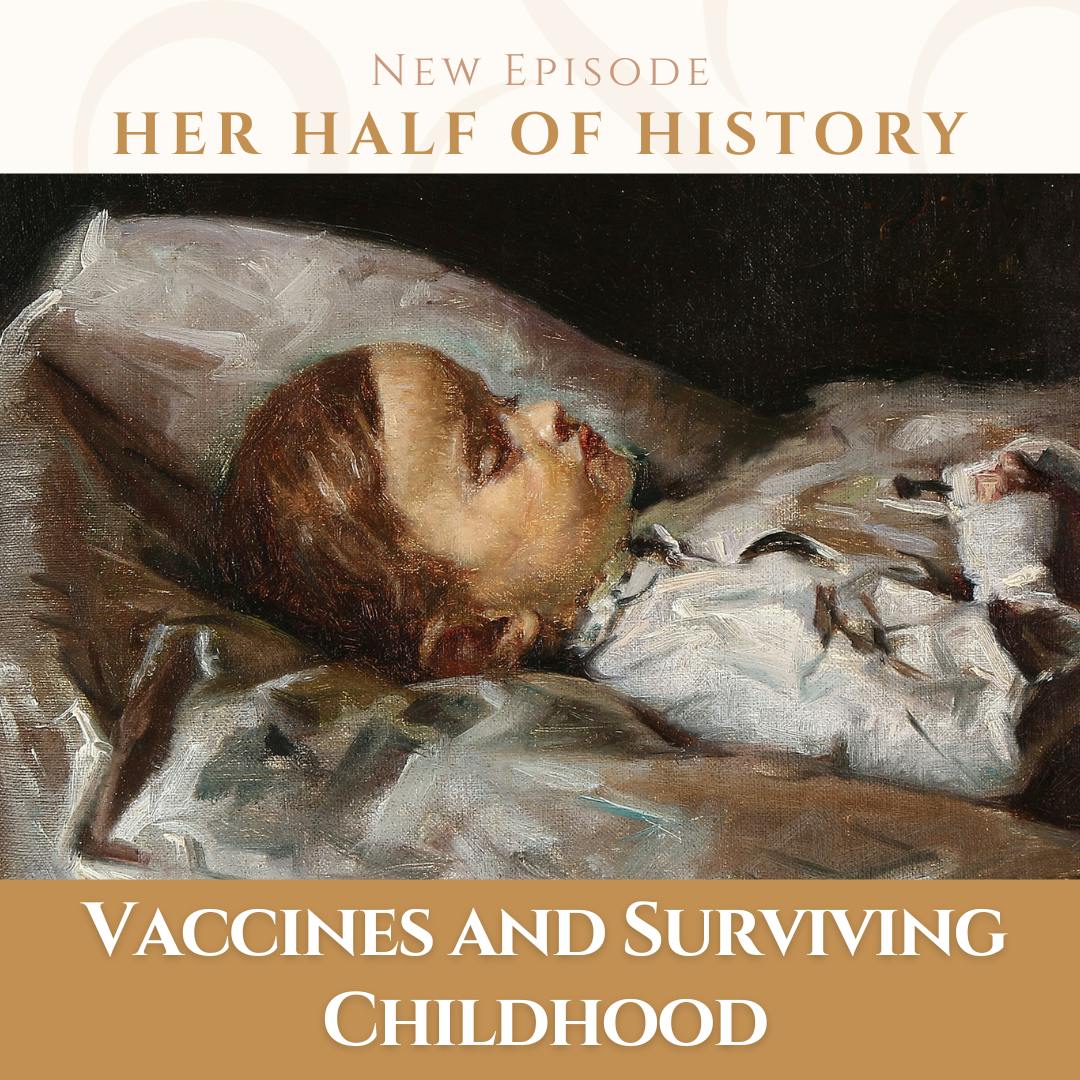
Vaccines and Surviving Childhood (ep. 15.6)
Until the very recent past, your chances of surviving childhood were iffy. Your chances of losing one or more of your own children were high. The invention of vaccines dramatically improved children's health, but getting there was a challenge for both scientists and policy makers. Vaccine hesitancy is nothing new. The fact that so many of us have never experienced any of the major diseases ranks a
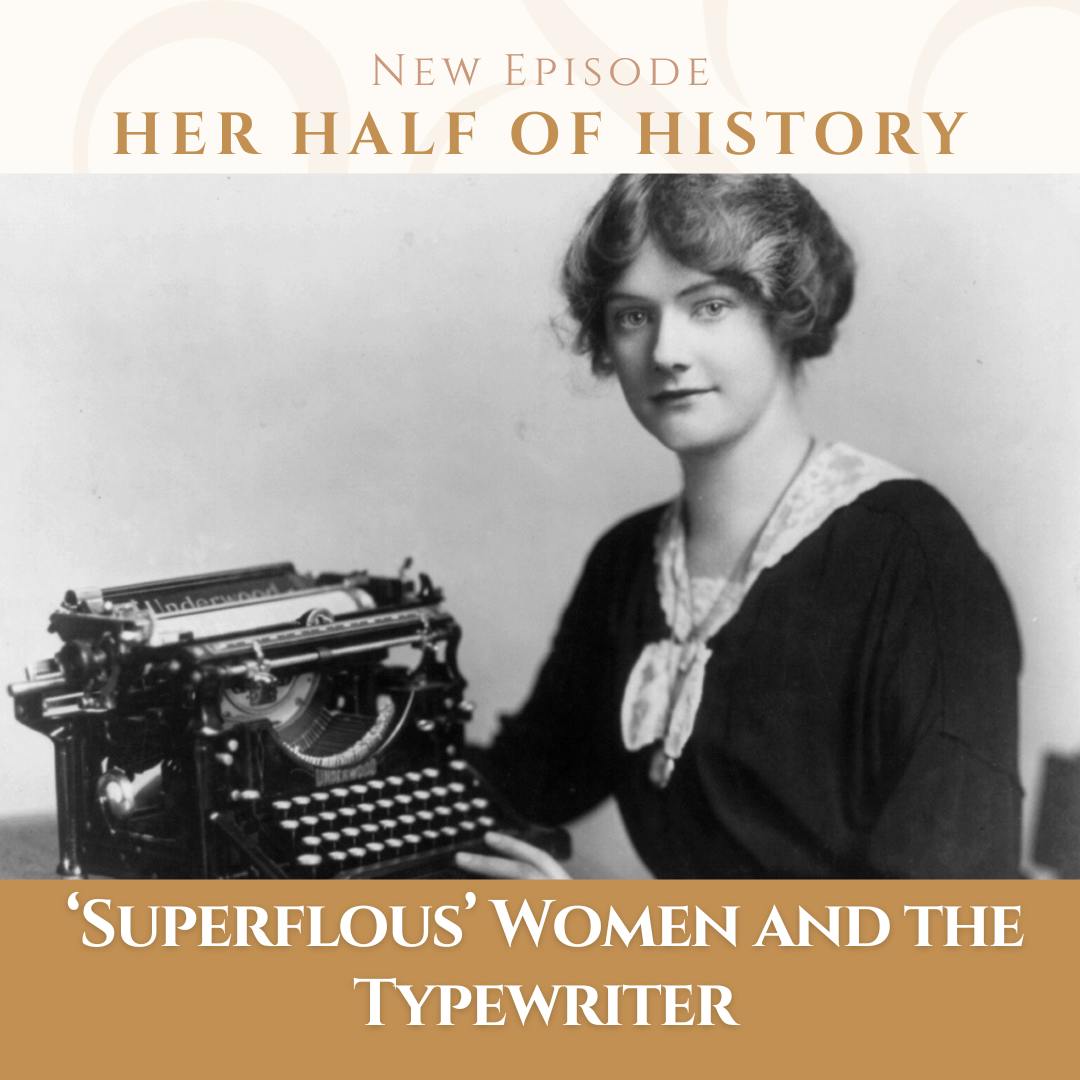
"Superfluous" Women and the Typewriter (ep. 15.5)
Over the 19th century, a larger middle-class and better educational opportunities meant that many women had the necessary skills to work in an office. But somehow they never got the job. Instead, they were told they were "superfluous" and "redundant" if they did not get married. The typewriter was the machine that got women in the office door.
Visit the website (herhalfofhistory.com) for sources,
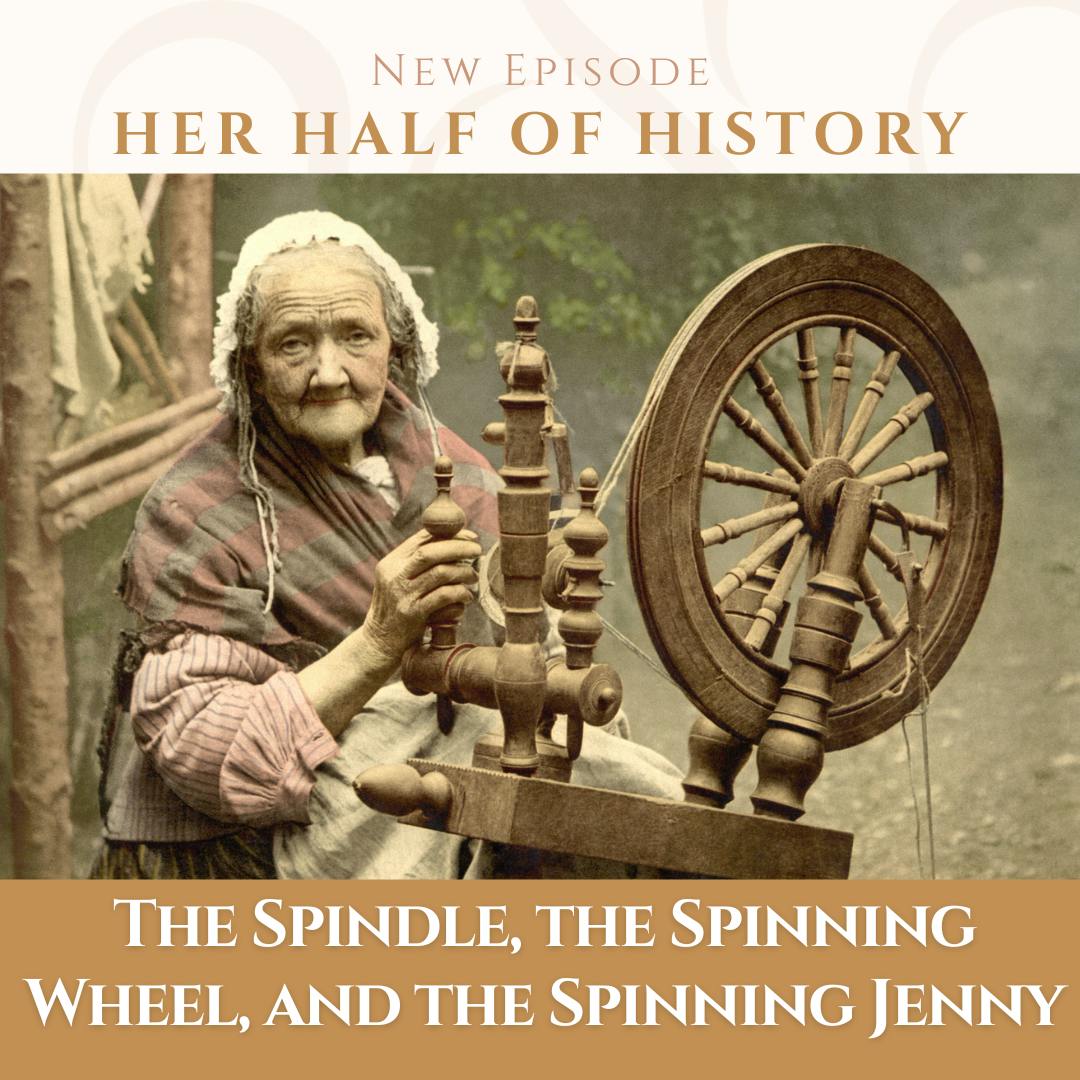
The Spindle, the Spinning Wheel, and the Spinning Jenny (ep. 15.4)
The four biggest natural fibers are wool, cotton, flax, and silk, but none of them naturally come long, continuous, or strong. To make any textile at all, the fibers have to be twisted into thread or yarn by a process called spinning. Historical women all over the world had this as their primary assignment, and it was unbelievably time consuming. Right up until machines could do it better. Then th

Doctors, Washed Hands, and Death in Childbirth (ep. 15.3)
For centuries, one of the biggest causes of maternal death was puerperal fever or postpartum infection. Doctors proposed many theories and many remedies, but they were totally unprepared to accept the truth: doctors were spreading the infection themselves. And all they needed to do was some solid hand washing between each patient.
The feature image is by Rasheedhrasheed, CC BY-SA 4.0 , via Wiki
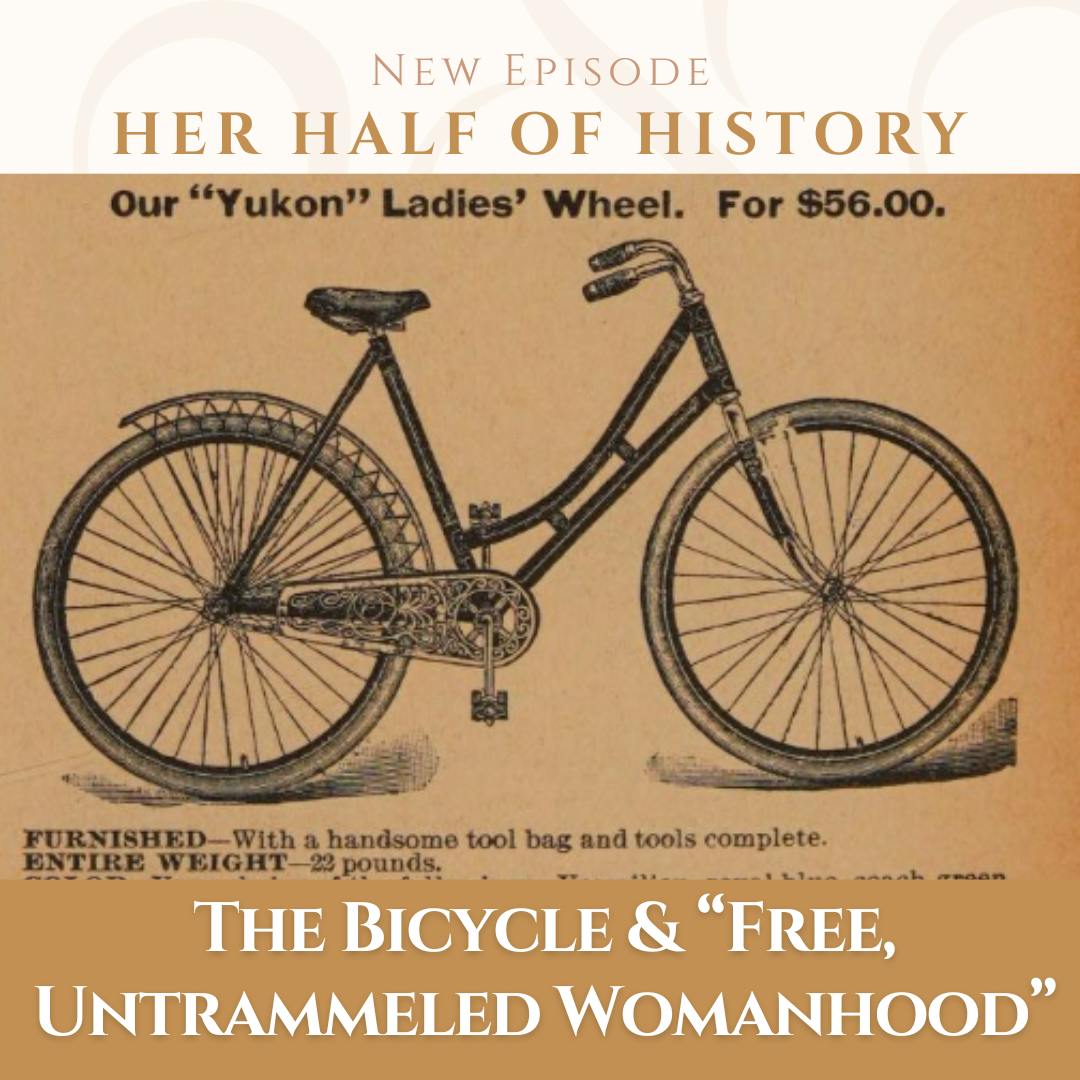
The Bicycle and “Free Untrammeled Womanhood” (ep. 15.2)
Susan B Anthony was in her seventies by the time the bicycle was widely available to women, but she admired it all the same and said “a girl never looks so independent, so much as if she felt as good as a boy, as on her wheel." She was, in Susan’s words, “the picture of free, untrammeled womanhood.”
Anthony meant that quite literally because until the 1890s, most women did not have the freedom t
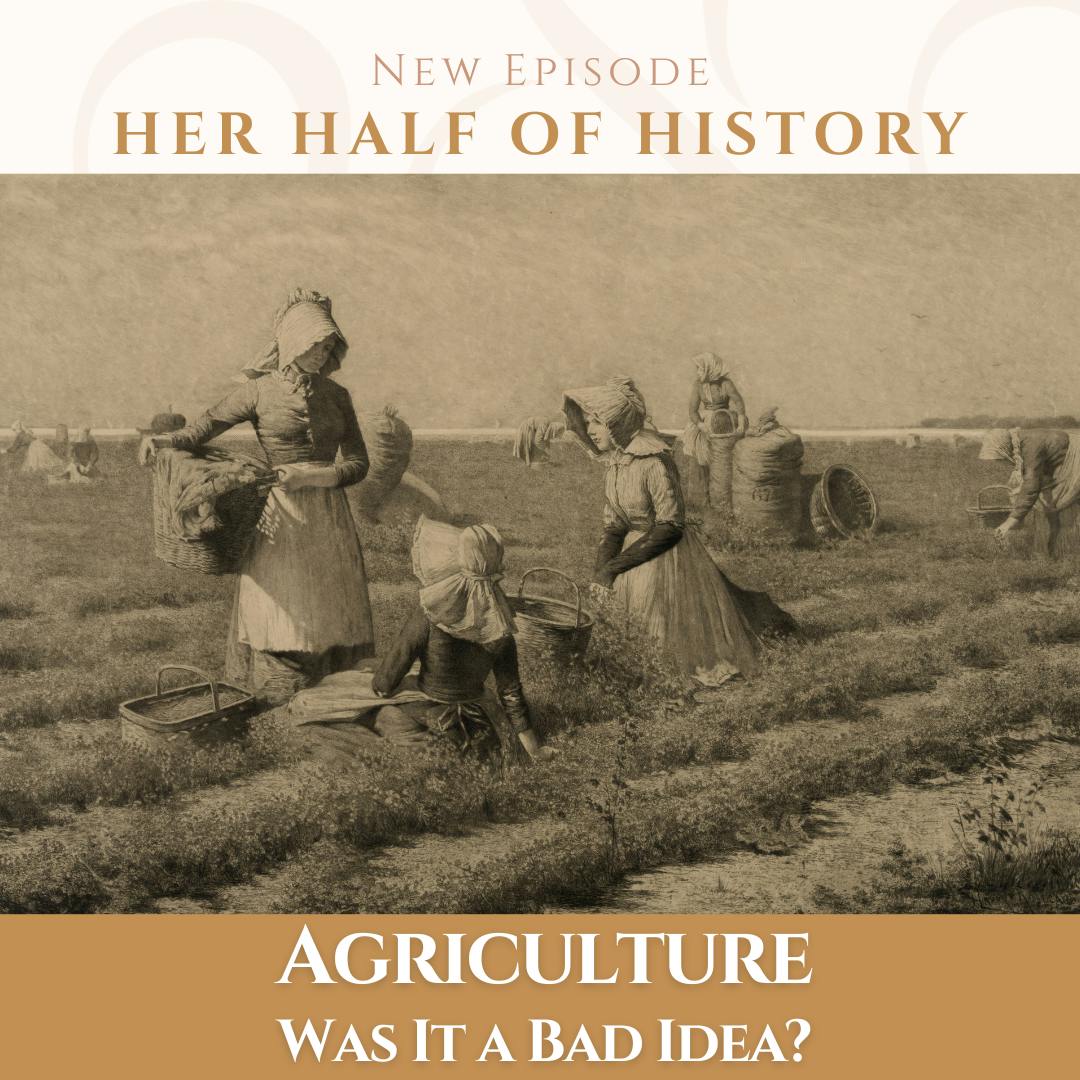
Agriculture: Was It a Bad Idea? (ep. 15.1)
I'm starting this new series on Inventions that Changed Women's Lives at the very beginning—so early that it predates written history. In this episode, I dive into the origins of agriculture and ask the (possibly) surprising question: Was it actually a bad idea?
For many women, life as a hunter-gatherer may have been easier, freer, and more equal than what came after. But it's true that sources a
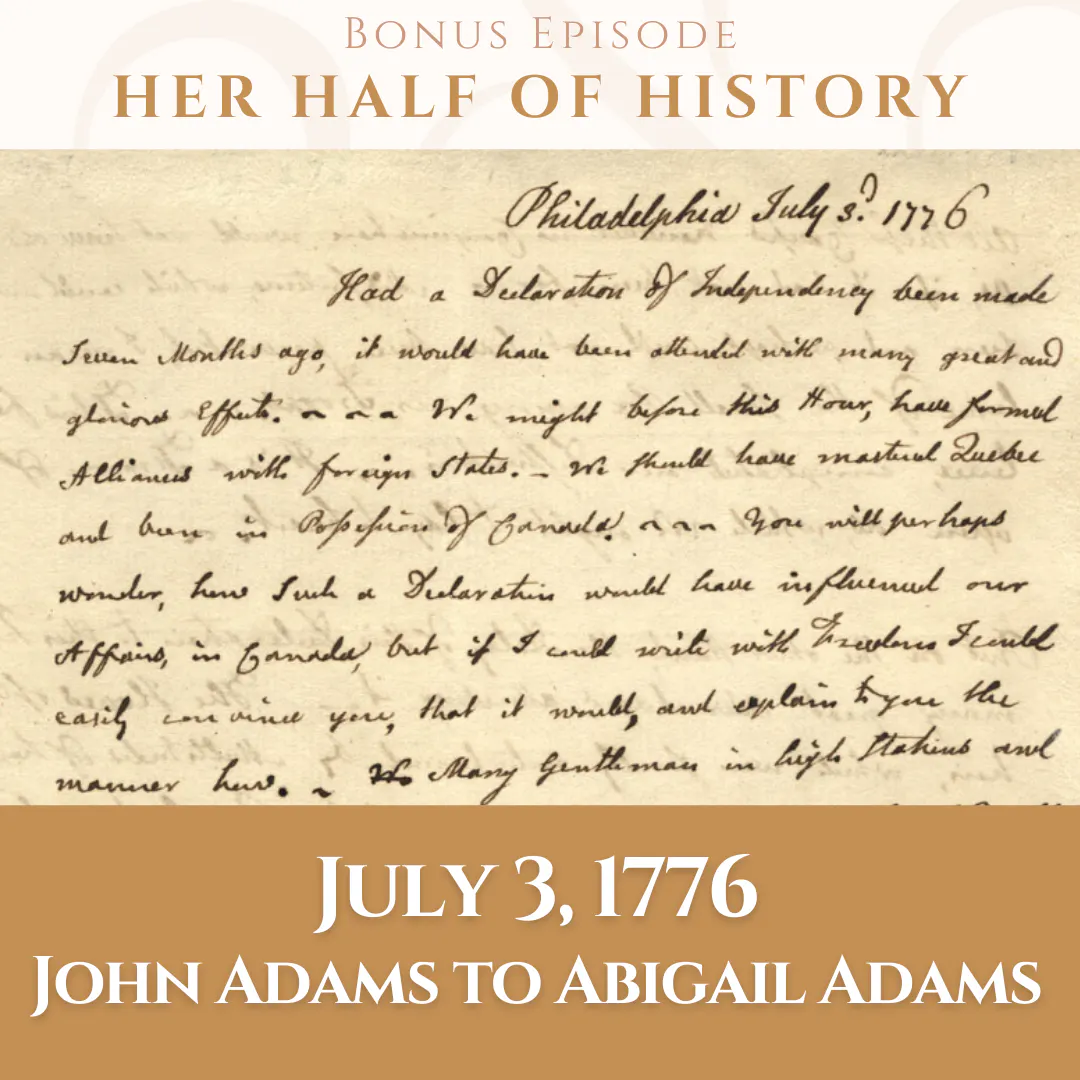
July 3, 1776, John Adams to Abigail Adams (bonus episode)
The United States is gearing up for the Fourth of July, Independence Day. But in 1776, it was by no means certain that anyone would celebrate this day, or who would celebrate, or which day they would celebrate. John Adams wrote the news of the day to his wife Abigail Adams, and he was very dispirited about Canada. Also, he was dead wrong about which day we would celebrate.
I am currently on resea
The Topic of Series 15 Will Be ...
The polls are closed! In this episode, I'm giving you the results of the Women Podcasters Awards and the topic of my next series to start later in the summer. (Hint, it's all good news!)
Visit the website (herhalfofhistory.com) for sources, transcripts, and pictures.
This show survives on the support of listeners like you. Support the show on my Patreon page for ad-free episodes, bonus episodes,
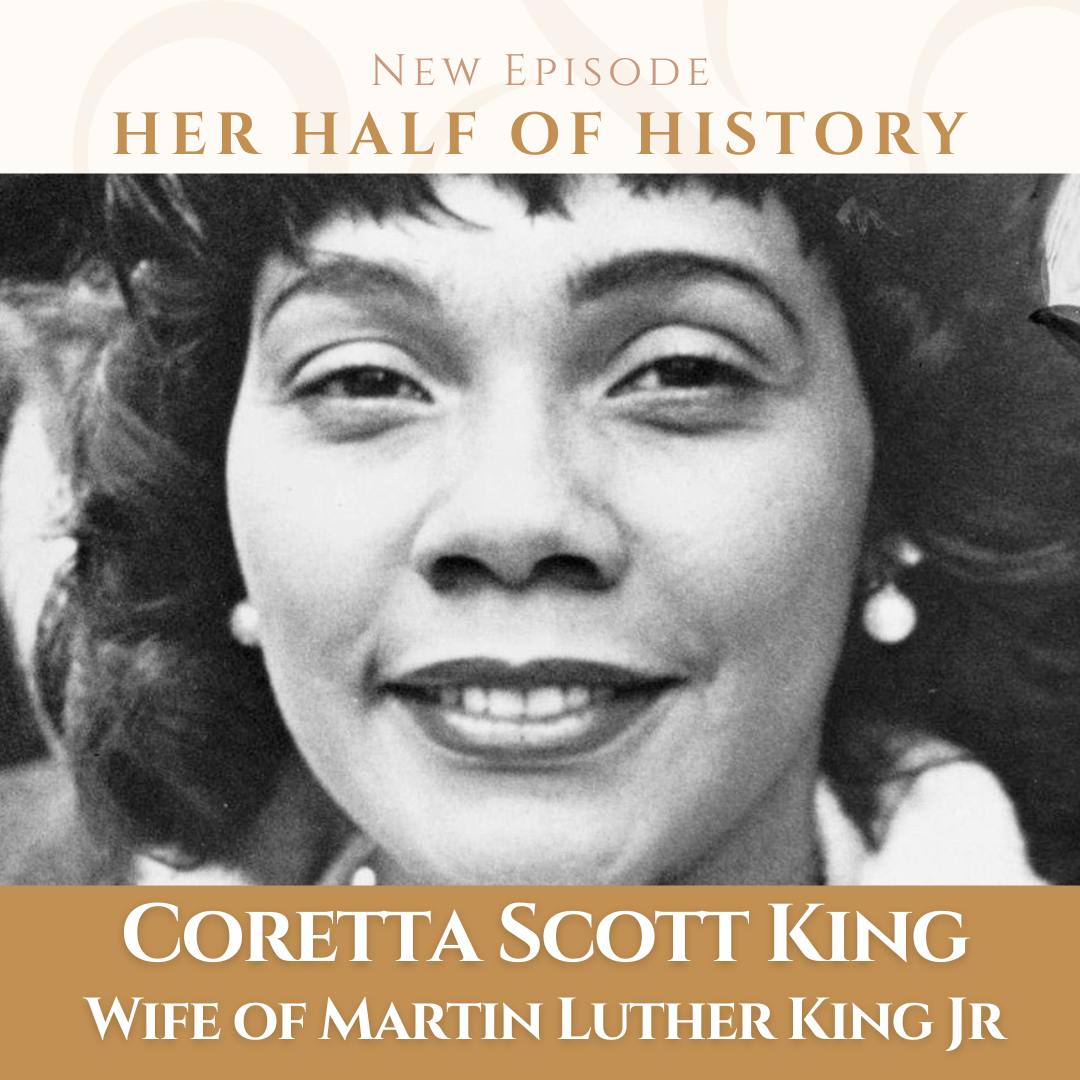
Coretta Scott King, Wife of Martin Luther King, Jr (ep. 14.21)
In the United States, Martin Luther King, Jr., gets a holiday partly because he challenged Americans to live up to their own ideals and extend freedom and equality to people of all races. Partly because he delivered this challenge peacefully, with no violence. Partly because he paid for this cause with his life. And partly because he had a great wife, who stood by him. Coretta Scott King was also

Jiang Qing, Wife of Chairman Mao (ep. 14.20)
Jiang Qing spent part of her life as an actress, part of it as an almost invisible housewife, part of it as a powerful leader in the Cultural Revolution, and part of it in jail taking the blame for actions that Mao certainly knew about and may have given orders for. Madame Mao is now notorious as the White-Boned Demon, and certainly she deserves some blame. But just how much blame she deserves is
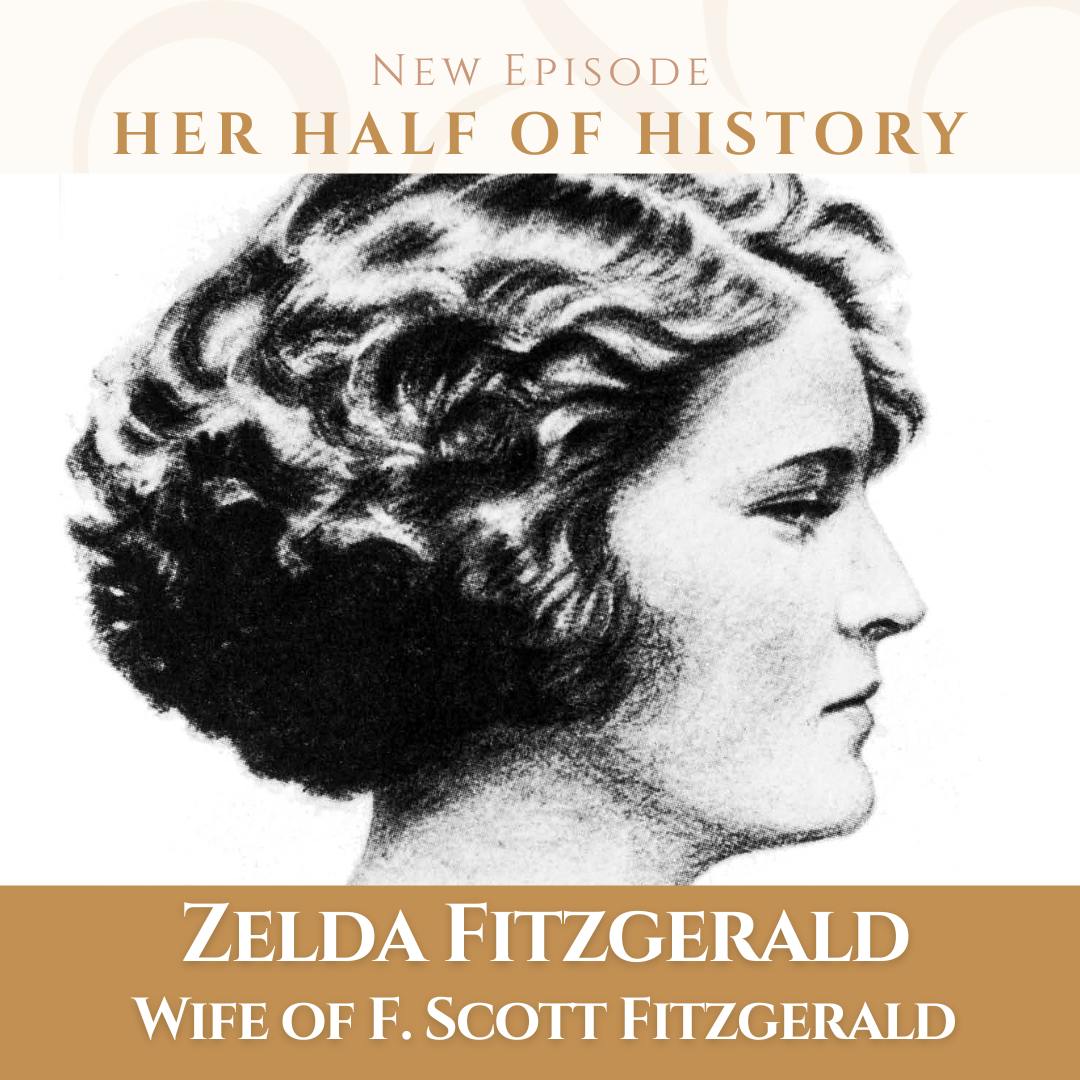
Zelda Fitzgerald, Wife of F. Scott Fitzgerald (ep. 14.19)
Zelda Fitzgerald basically defined the iconic image of a flapper from America's Jazz Age. She was immortalized in fiction by her husband, F. Scott Fitzgerald, who is (debatably) the great American novelist. Sadly, the way he portrayed the sadness behind the glitter and glitz was all too real as well. Zelda was beautiful, witty, charming, and talented, but mental illness, alcohol, financial worries
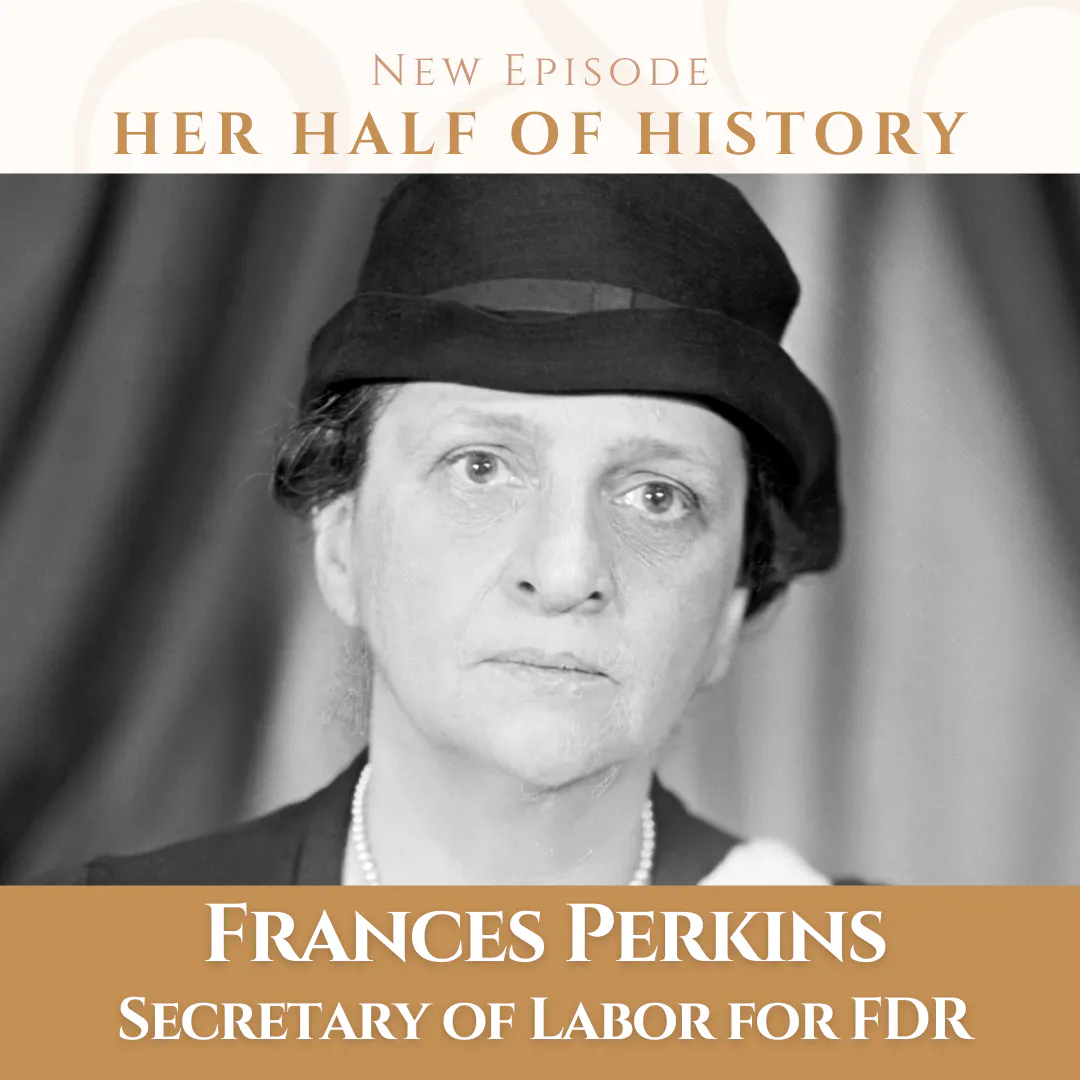
Frances Perkins, Secretary of Labor for FDR (ep. 14.18)
Traditional histories give President Franklin Delano Roosevelt a lot of credit for guiding the United States out of the Great Depression. But his best move may have been appointing the first woman ever to join a presidential cabinet. As Secretary of Labor, Frances Perkins won victories on public works for increased employment, 8 hour work days, minimum wage, Social Security, workplace safety stand
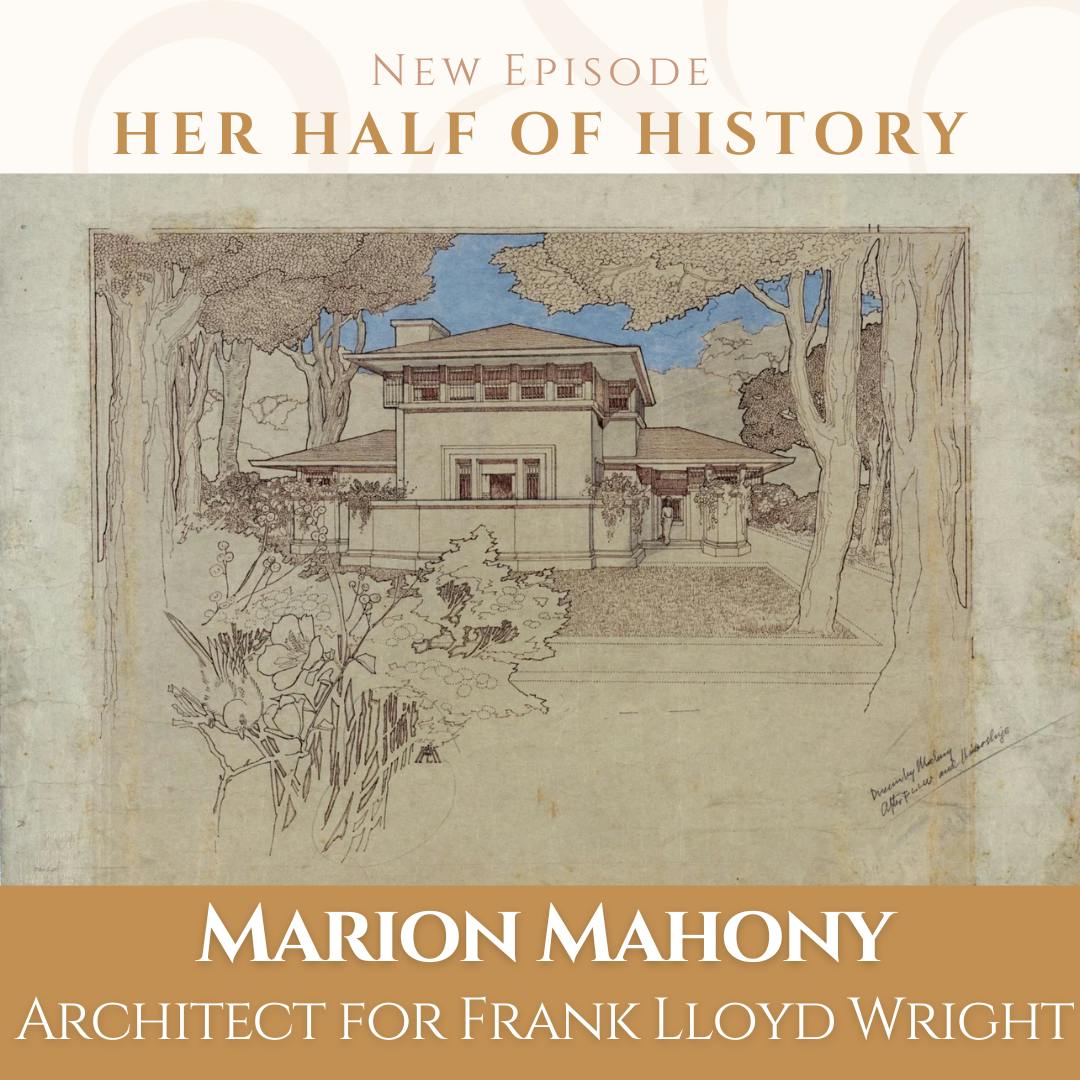
Marion Mahony, Architect for Frank Lloyd Wright (ep. 14.17)
Frank Lloyd Wright is among the most famous architects of all time, but the drawings which made him famous weren't necessarily drawn by him. Marion Mahony had more qualifications than he did and ultimately believed that he had stolen her work. Nevertheless, she had a successful career as an architect, mainly in Australia.
Please vote for me in the Women Podcasters Awards! (https://bit.ly/43gK8
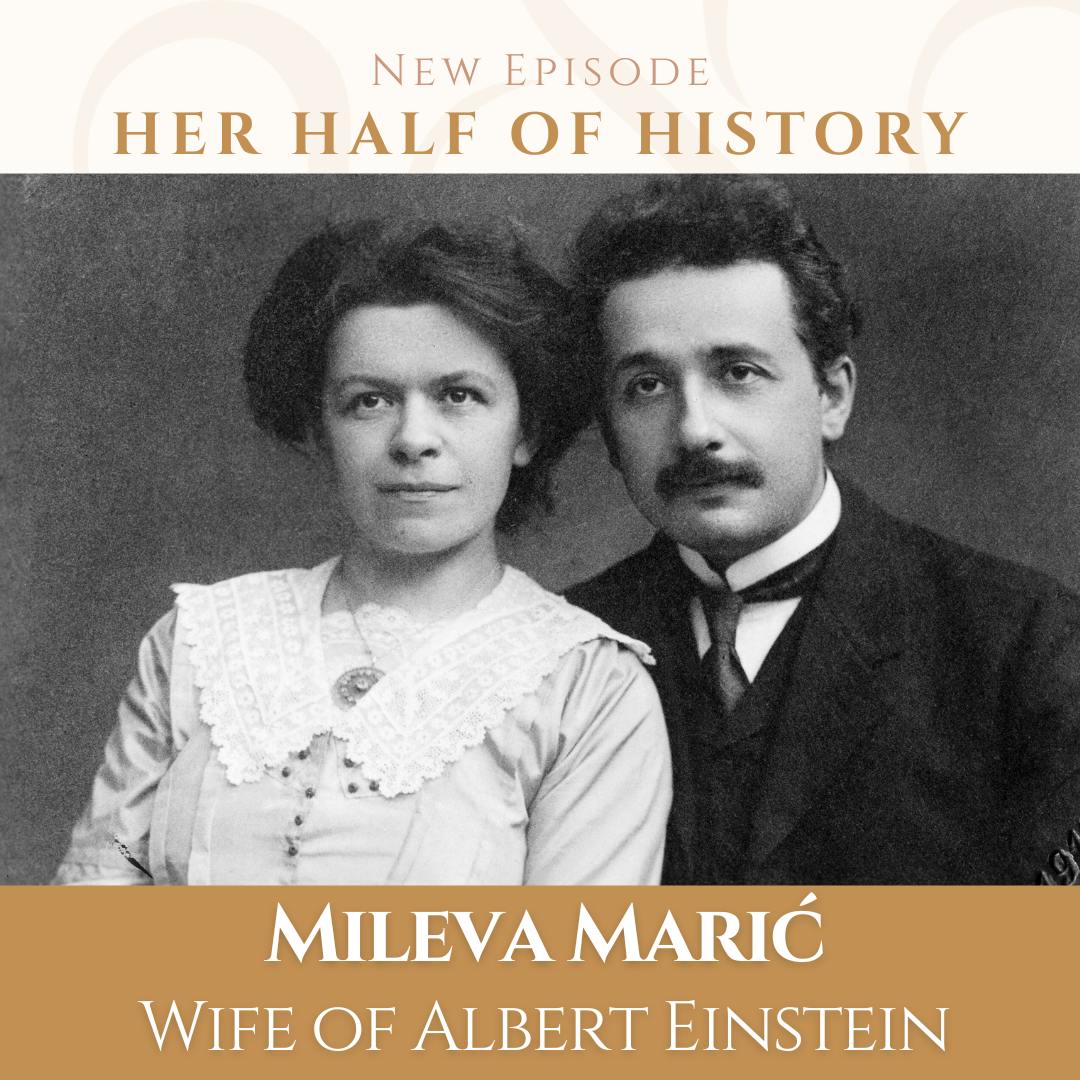
Mileva Marić, Einstein's First Wife (ep. 14.16)
Einstein met his first wife in college, where they were both studying math and physics. How much Mileva contributed to his groundbreaking papers is regularly debated. This episode explains what we know, and what we (sadly) don't know about her efforts.
Please vote for me in the Women Podcasters Awards! I'm in the History category.
Visit the website (herhalfofhistory.com) for sources, transcr
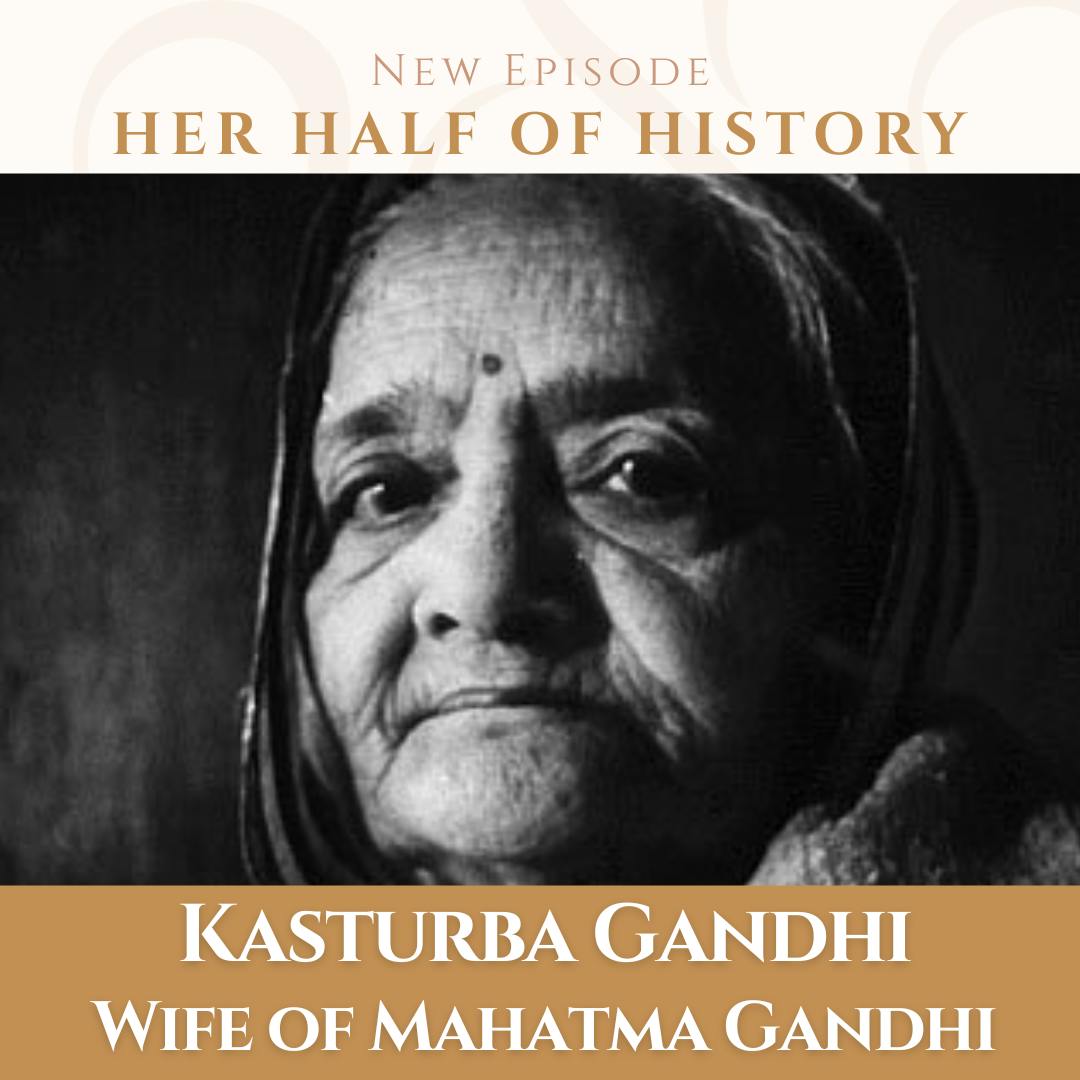
Kasturba Gandhi, Wife of Mahatma Gandhi (ep. 14.15)
Gandhi is among the most documented figures of the 20th century. Most of these sources reveal astonishingly little about his wife Kasturba. But he actually credited her with teaching him the principles of nonviolent resistance. This episode tells the story of her transformation from an ordinary Hindu girl to a woman leading protests against the British Empire.
Visit the website (herhalfofhistory.
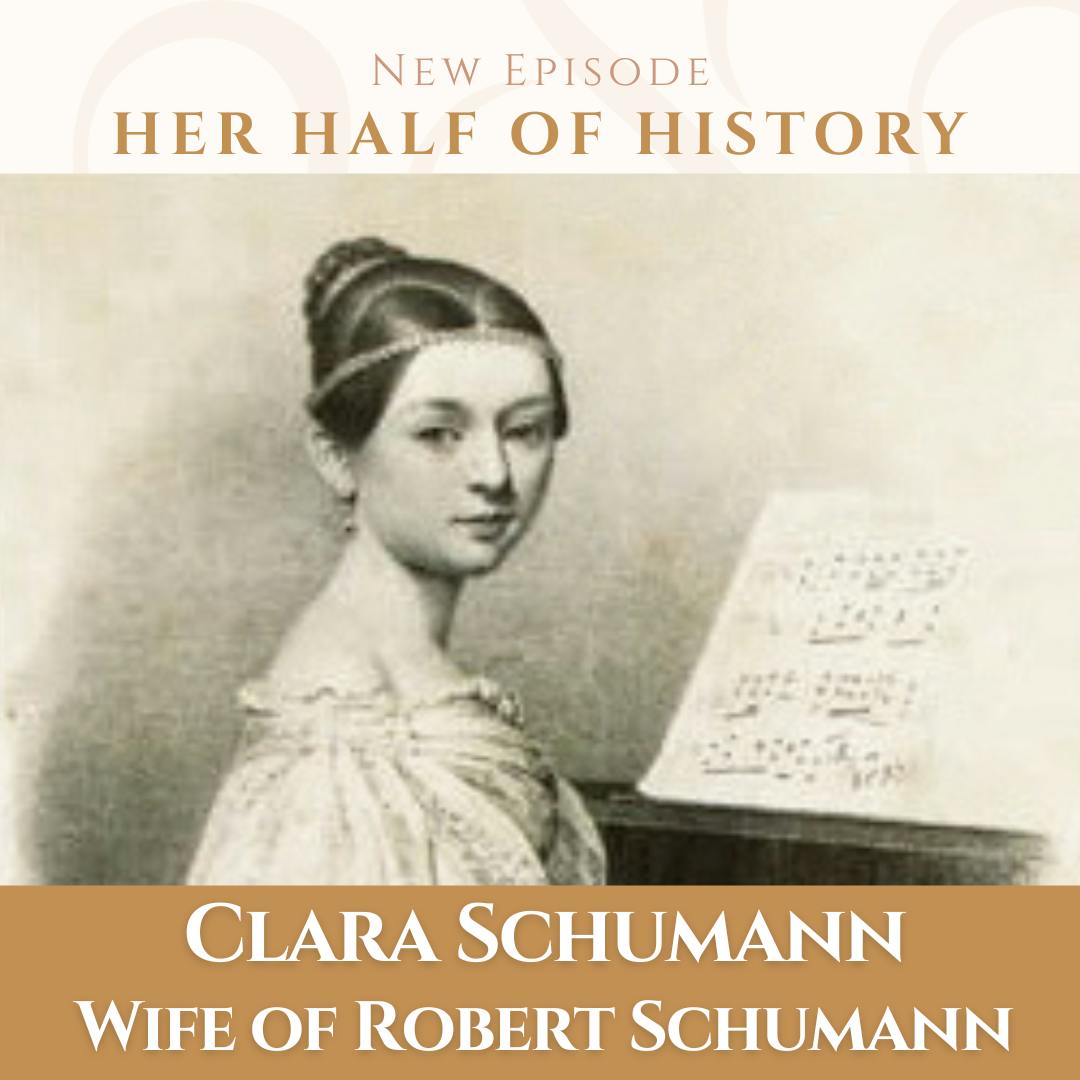
Clara Schumann, Wife of Robert Schumann (ep. 14.14)
Robert Schumann is a big name in classical music. However, in his own lifetime, Robert Schumann wasn't “the” Schumann. His wife was the famous one. Clara Schumann was an internationally known virtuoso who delighted audiences for 60 years, including the periods before, during, and after her eight pregnancies, Robert's illness, and eventual death.
Visit the website (herhalfofhistory.com) for source
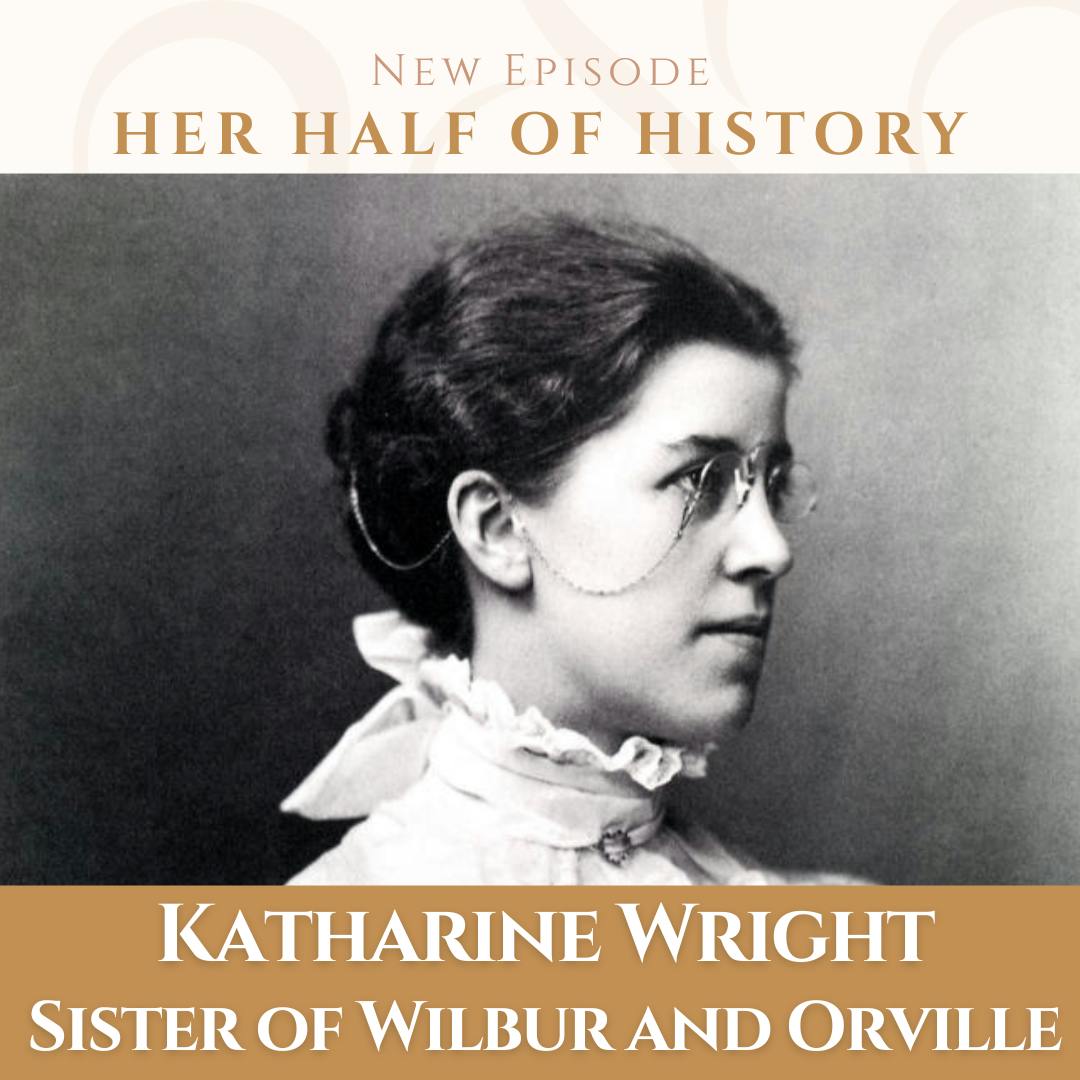
Katharine Wright, Sister of Wilbur and Orville Wright (ep. 14.13)
The Wright brothers invented the world's first powered flying machine. Sure, they were geniuses, but even geniuses need a little help. Their sister Katharine managed the bicycle business, managed the media, managed the public, and more than pulled her weight in the family.
Visit the website (herhalfofhistory.com) for sources, transcripts, and pictures.
Support the show on my Patreon page for bonu
And the winner is ... (plus announcements)
It's a bye-week for the podcast, but I am announcing the winner of the gift certificate giveaway for Women's History Month, 2025. Many thanks to everyone who participated!
Come back next week for regular content and the story of Katharine Wright, sister of Wilbur and Orville Wright.
Learn more about your ad choices. Visit megaphone.fm/adchoices
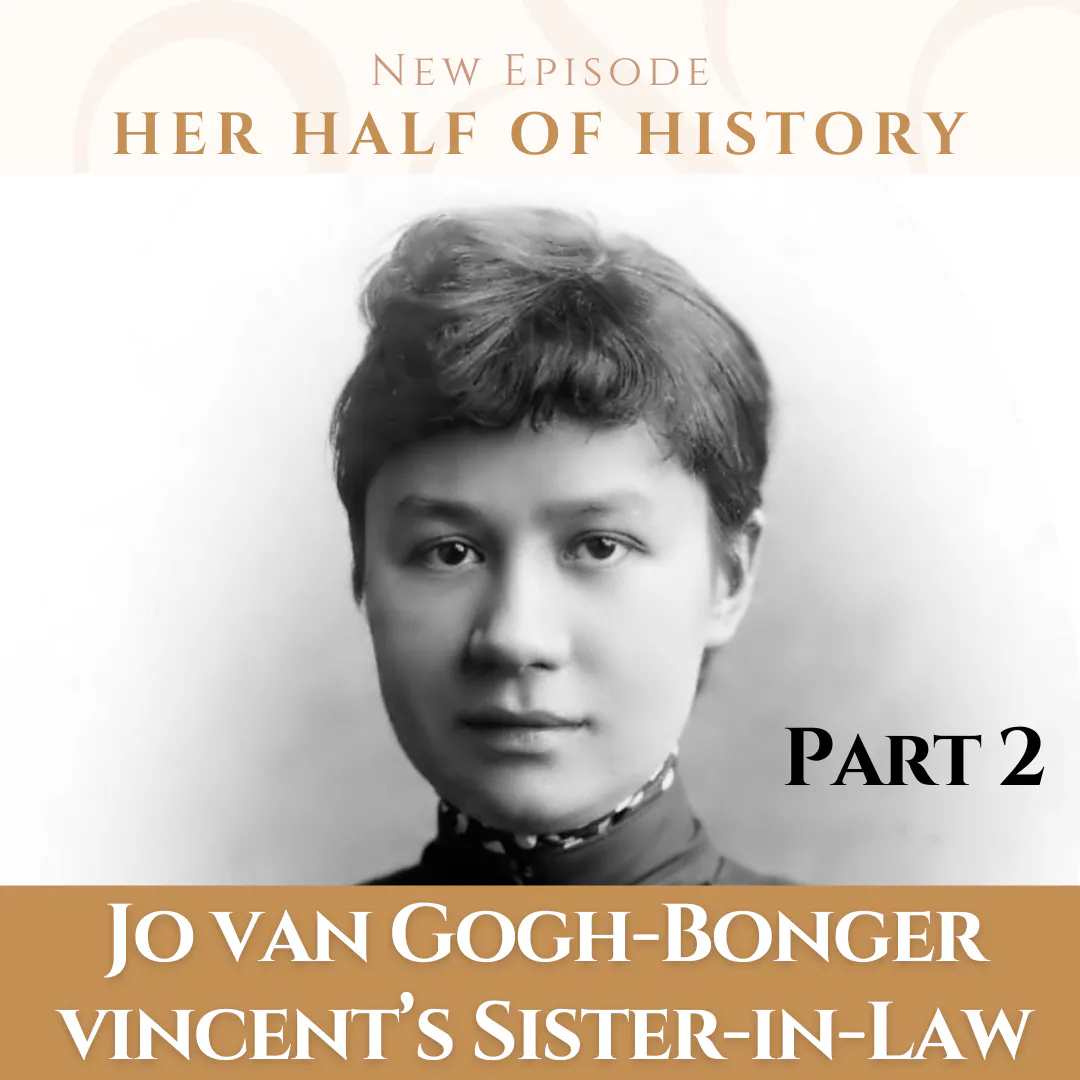
Jo van Gogh-Bonger, Vincent's Sister-in-Law (part 2) (ep. 14.12)
When her husband died, Jo was left with a small child, no job, not much money, and a lot of canvases that weren't worth very much. It was the effort of a lifetime, but Jo transformed van Gogh's artwork from something few people wanted to an international sensation.
If you're listening before the end of March, 2025 there's still time to get in on the Women's History Month Giveaway. Take a look at
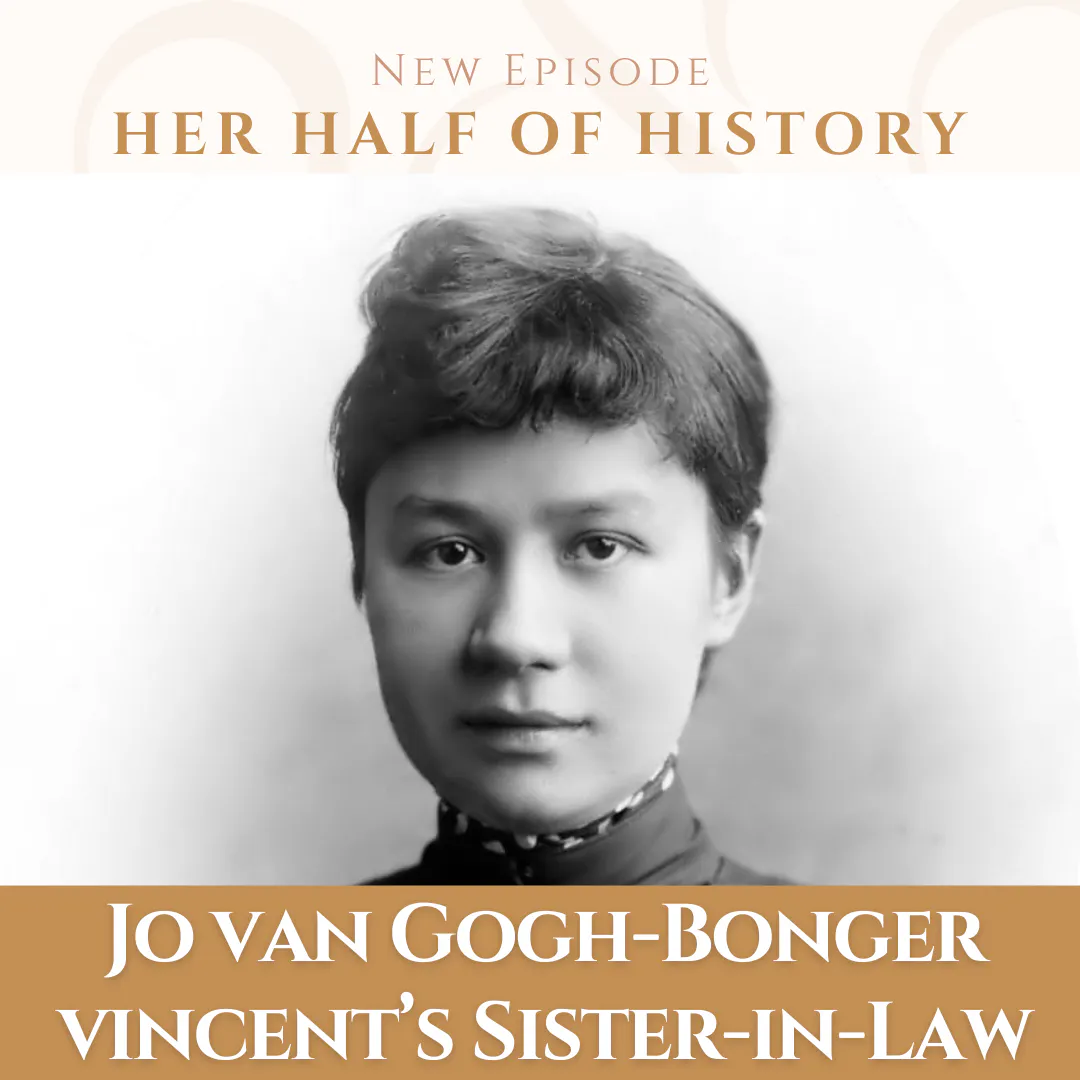
Jo van Gogh-Bonger, Vincent's Sister-in-Law (part 1) (ep. 14.11)
Vincent van Gogh is one of history's best known artists, but he wasn't during his own lifetime. His rise to fame came slowly through the efforts of the woman who inherited the vast majority of his paintings. Jo van Gogh-Bonger was a Dutch girl who considered herself not very well educated about art, and yet she managed to weave her way through the art world and bring us Vincent's exquisite beauty.
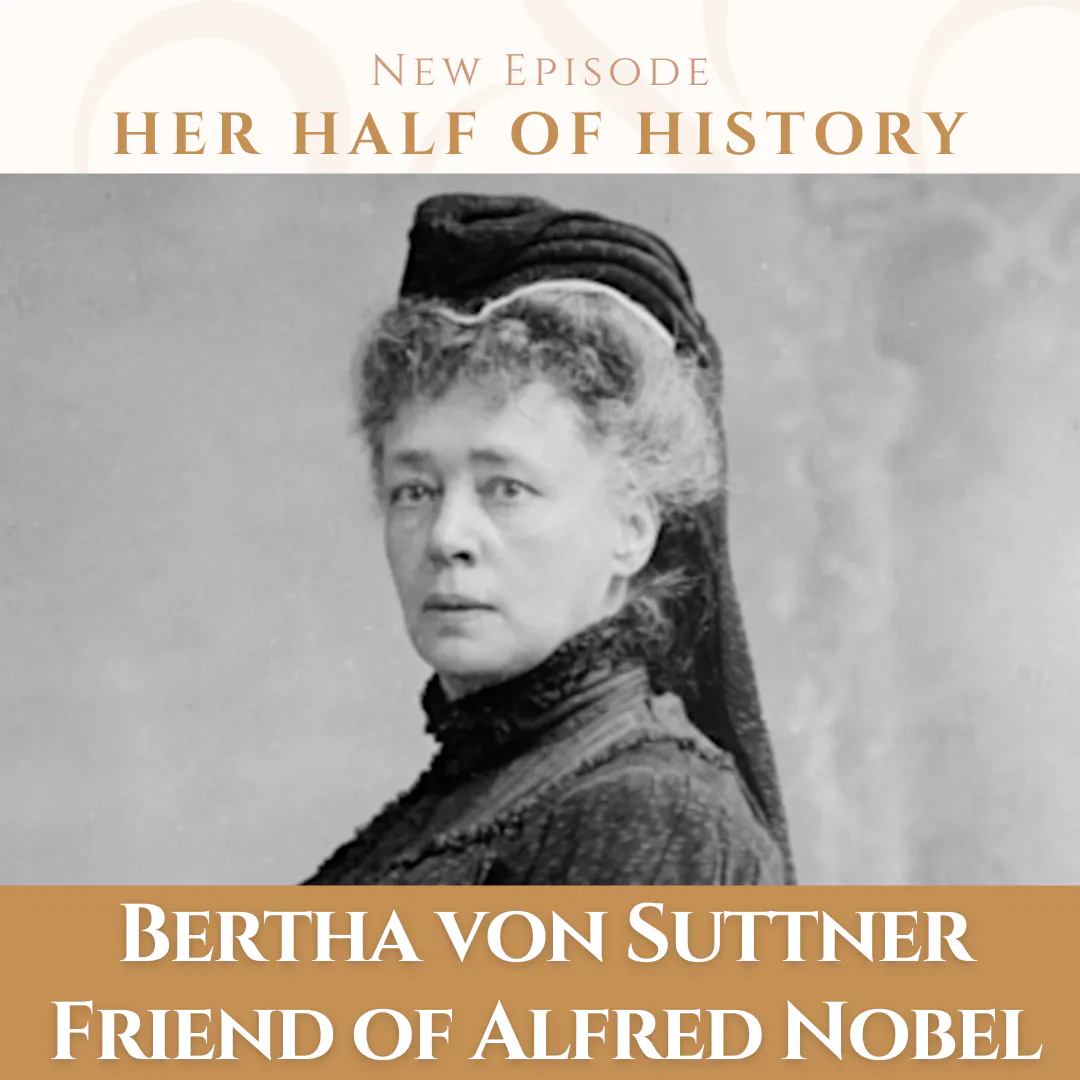
Bertha von Suttner, Friend of Alfred Nobel (ep. 14.10)
Alfred Nobel's original plans for his famous prize included physics, chemistry, medicine, and literature. But not peace. He thought the peace movement was ridiculous, a bunch of dreamers with no workable plan. But his friend Bertha von Suttner was the most famous person in the peace movement, and she played a big role in changing his mind.
To celebrate Women's History Month, please support the sh
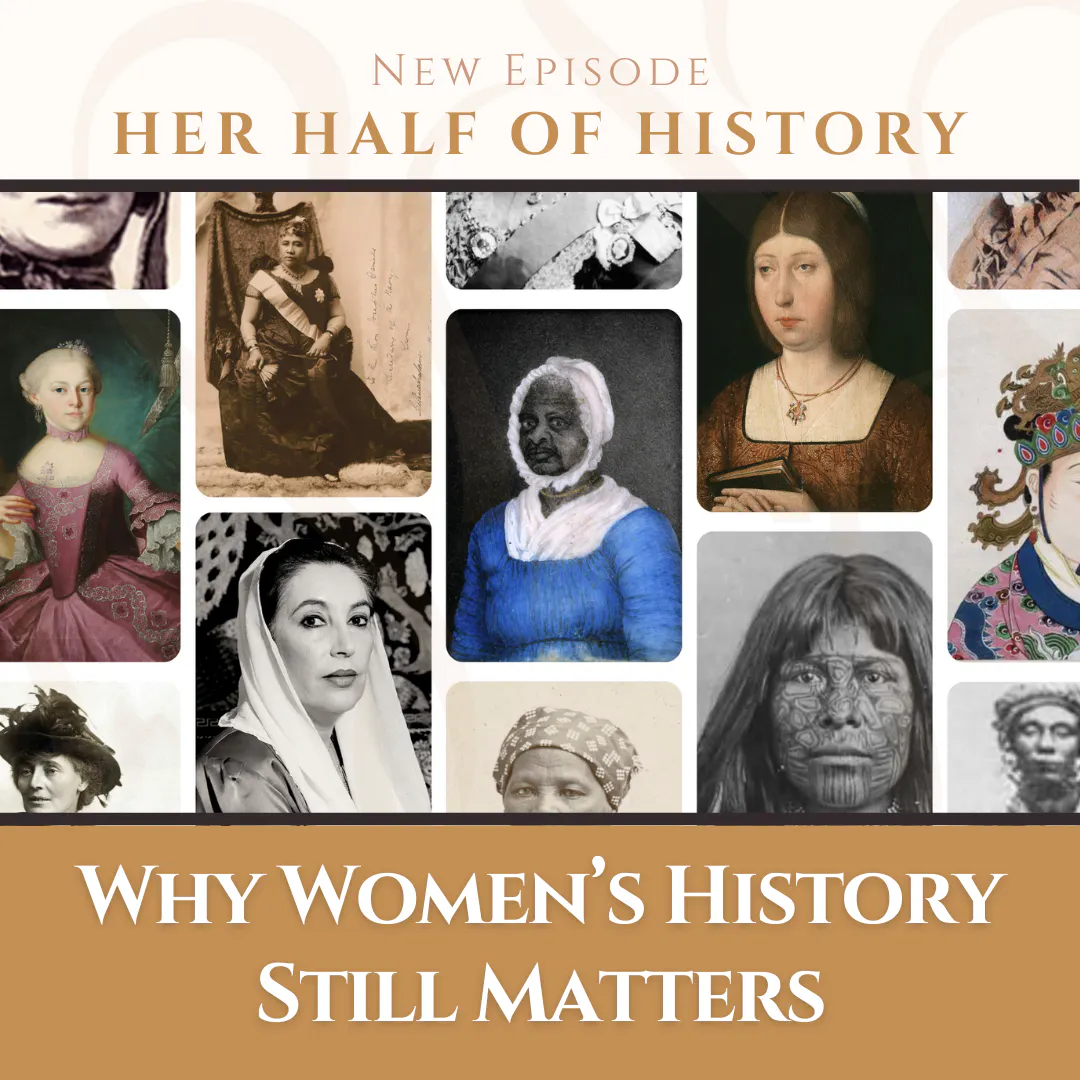
Why Women's History Still Matters
March has been Women's History Month for decades! But this year, some government agencies and corporations have thrown its existence into doubt. Today's episode is a break from my usual. It's an opinion-editorial on why I think we still need women's history. Badly.
This originally appeared in the St. Louis Post-Dispatch on March 1, 2025.
To celebrate Women's History Month, please support the sho
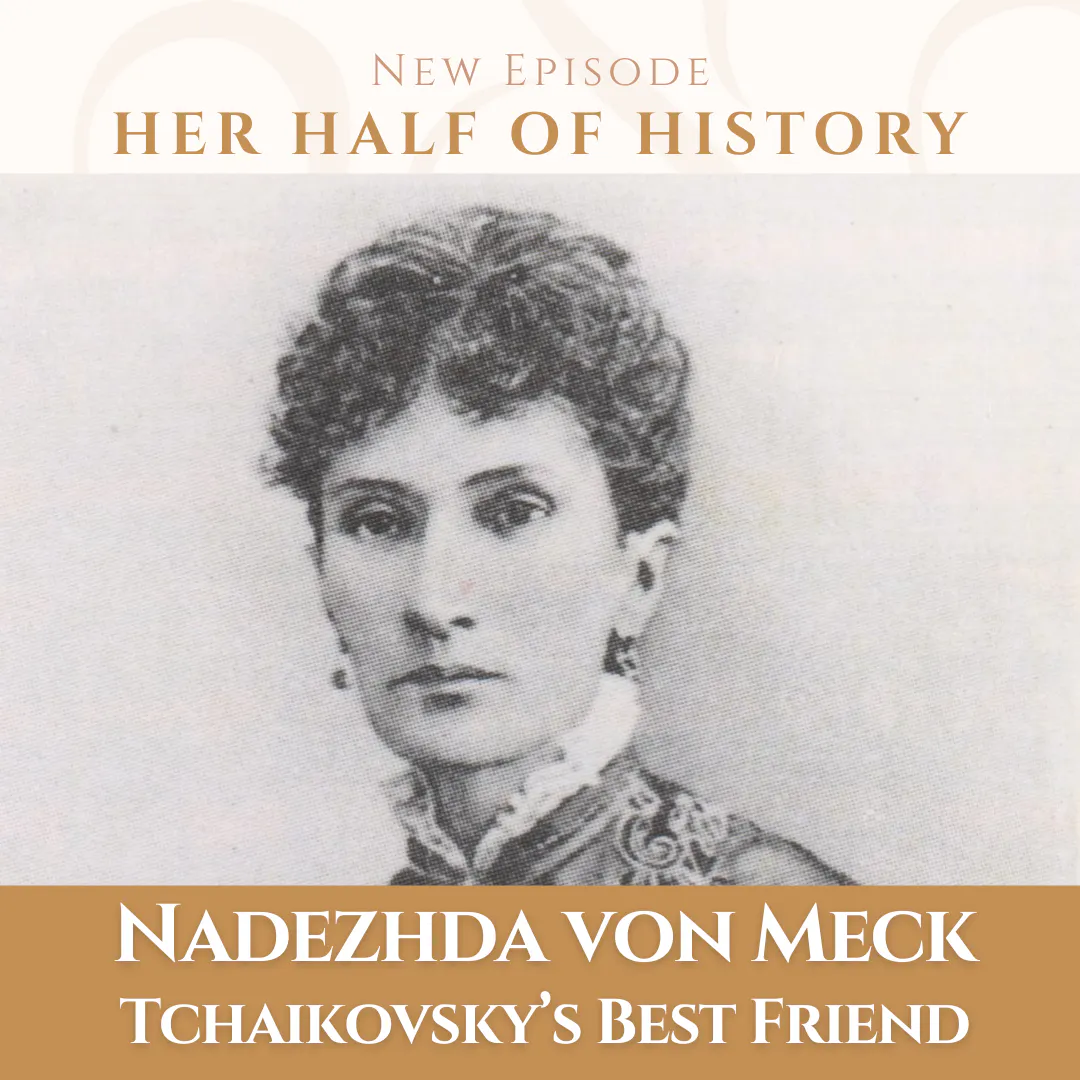
Nadezhda von Meck, Tchaikovsky's Best Friend (ep. 14.9)
Pyotr Ilyich Tchaikovsky wrote the music for the Nutcracker, the Romeo and Juliet Fantasy-Overture, Swan Lake, Sleeping Beauty, multiple symphonies, several operas, and more. He is among the most popular composers of the 19th century. But as usual he didn't do it alone.
He and his friend Nadezhda von Meck had a 13-year correspondence of 1200 letters. They shared (almost) everything with each oth
Recommended

World News Tonight with David Muir
English Vocabulary Help

The Joe Rogan Experience
TED Talks Daily

Learn English B1 with Daily News | English Listening Practice
Talk About Talk - Executive & Leadership Communication Skills
English with Olivia | Slow Conversations & Vocabulary
Stand In The Circle
SLOW ENGLISH PODCAST (A1-A2) With Subtitles | Daily Videos | English With Us Podcast

Learn English A2 with Daily News | Simple English Listening Practice

پلی لیست | PlayList
Conspiracy Files with Paige Carter
