
Radio Atlantic
Radio Atlantic is a podcast from The Atlantic magazine that brings the publication's ideas-driven approach to audio. The show aims to 'road test' big ideas shaping news and culture through conversations and debates with insightful thinkers and writers. It seeks to complicate simplistic views, cut through noise with personal narratives, and help listeners make up their own minds. The podcast intends to bring order to chaotic national conversations and encourage purposeful thinking.
Episodes

Musk, Bezos, and the New Space Race
Who really controls America’s next era in space: NASA or two billionaire rivals? It might be some combination of the three. On this episode of Radio Atlantic, Adam Harris talks with Atlantic staff writer Josh Tyrangiel about SpaceX’s dominance in satellite launches, Blue Origin’s struggle to catch up, and why the moon is now the key battleground for Elon Musk and Jeff Bezos.
- - -
Get more from
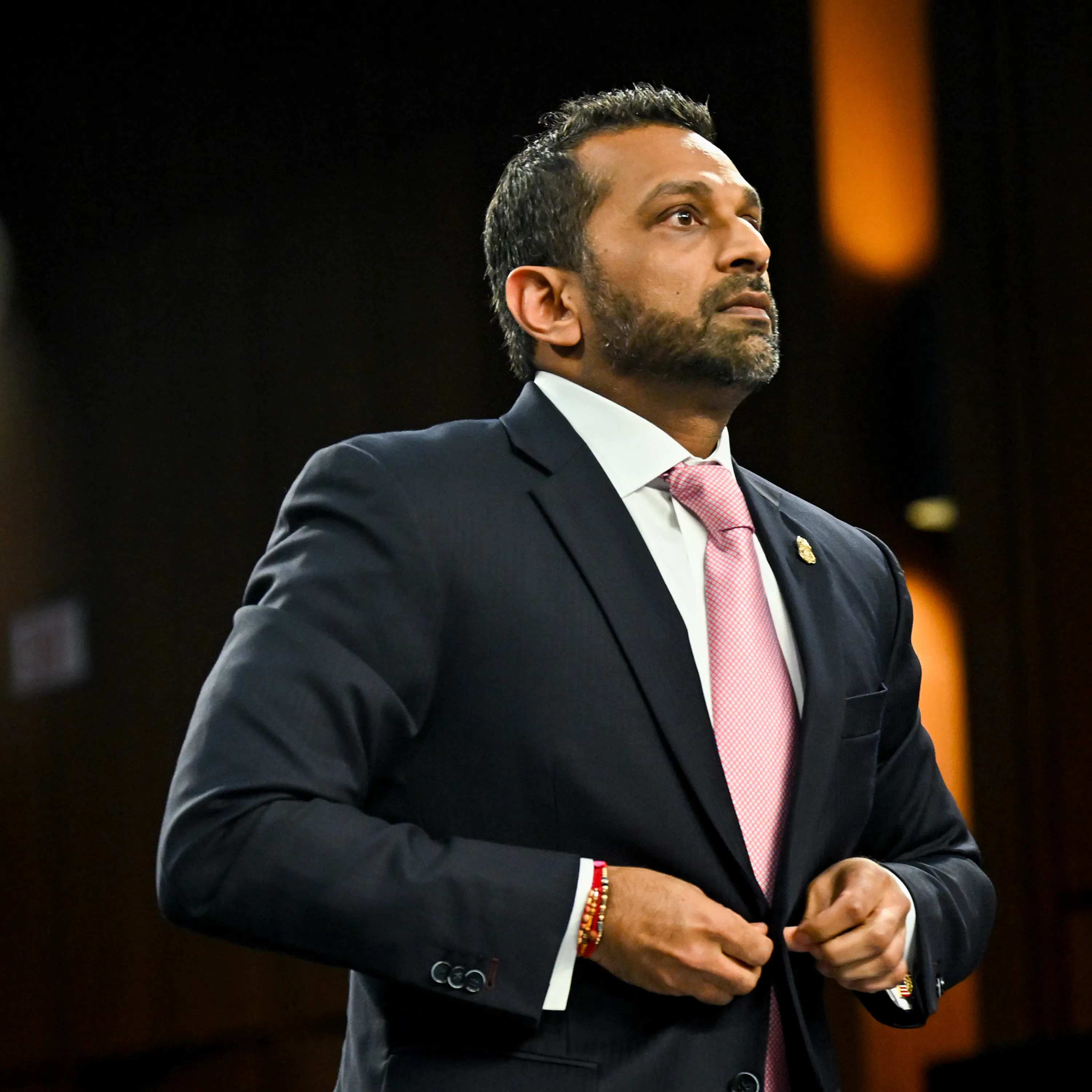
How Far Is Kash Patel Willing to Go for Trump?
The Atlantic staff writer Sarah Fitzpatrick discusses her recent story, “Is There Anything Kash Patel Won’t Do for Trump Before the Midterms?” She explains what agents and other sources are telling her about how the mission of the FBI has changed, how resources have been diverted to exploration of long-debunked election-conspiracy theories, and what most worries them about this moment. The FBI has

The 2026 Midterms Must-Watch List
During this nail-biting midterm season, tight Congressional races are popping up all over the map. Most immediate, what happens in November could shift the balance of power in Washington. But if Democrats can pull off upsets in some of these tough-to-win races, the repercussions could reverberate into 2028 and beyond. “Radio Atlantic” host Adam Harris sits down with the Atlantic staff writers Russ

Min Jin Lee’s Underdog Morality
The world has waited almost a decade for a new novel by Min Jin Lee. In 2017, she published the best-selling historical epic “Pachinko,” which became a National Book Award finalist and was named one of The New York Times’ 100 best books of the 21st century. Her new book, “American Hagwon,” is out this week, and at its center is a close examination of the pressure and promise of education. Lee join

Republicans Are Running From Trump. Will It Work?
As some Republicans back away from President Trump over Iran, diesel prices, and affordability, something unusual is happening: Trump is not getting mad at them. Is this what his lame-duck status will look like, or is Trump just a savvier political actor now? And will all the electoral-map-shifting help one side over the other, or just make voters mad? The Atlantic staff writers Toluse Olorunnipa

Egypt Warned Israel Before October 7
Less than two weeks before the October 7 attack, Egypt’s top spy flew to Israel with a warning about Gaza. In this special episode of Radio Atlantic, host Adam Harris talks to the Atlantic staff writer Vivian Salama about her reporting.
- - -
Get more from your favorite Atlantic voices when you subscribe. You’ll enjoy unlimited access to Pulitzer-winning journalism, from clear-eyed analysis and

What the 'Godfather of AI' Thinks Humanity Should Do
Since he left Google in 2023, Geoffrey Hinton, a Nobel laureate commonly known as the “Godfather of AI,” pops up in the press now and again to issue dire warnings, for example, that there is a 10 to 20 percent chance that artificial intelligence could lead to the extinction of humanity. Hinton explains what exactly alarmed him about the Hugging Face incident and discusses what we can do, right now

Trump Battles Against an Economy of His Making
Chinese President Xi Jinping is coming to Washington this week amid a rapidly shifting global order. Entrenched wars, raging oil markets, and AI regulation will hang over the proceedings, as both the United States and China face economic headwinds. President Trump will also be huddling this week with world leaders at the United Nations General Assembly. “Radio Atlantic” host Adam Harris talks with

The Dark Side of Meditation
A psychologist wanted to conduct a study showing the benefits of meditation. But the results—and some of her own unsettling experiences—turned everything she thought she knew about the practice upside down.
Read Olga Khazan’s story “The Dark Side of Mindfulness.”
- - -
Get more from your favorite Atlantic voices when you subscribe. You’ll enjoy unlimited access to Pulitzer-winning journalism, f

‘The Canadians Have Had Enough of This Nonsense’
President Trump insisted last week that Canada is “dying to make a deal” on tariffs with the United States. But dealmaking hasn’t been working out well for him lately. And even though many of AI’s chief architects are warning that something needs to be done about the technology, Trump doesn’t seem concerned about making any sort of deal on that front, either.
Radio Atlantic host Adam Harris

Sarah Longwell's Playbook for Defeating MAGA
Despite his message at the first-ever Republican midterm convention this week, President Trump’s brand is weak. His approval rating is hanging at about 35 percent, and even die-hard MAGA Republicans are frustrated by his war with Iran, gas prices, and tariffs.
There’s an opportunity here for Democrats. The question is whether they’ll be able to seize it. Sarah Longwell is the publisher of “

How the Government Wastes Our Time
Long DMV lines, endless tax forms, and paperwork-heavy safety-net programs aren’t just annoyances—they’re “time taxes,” the administrative burdens that waste people’s time and can keep eligible families from getting help.
On this episode of “Radio Atlantic,” Atlantic staff writer Annie Lowrey tells host Adam Harris that these burdens are often harsher for people with less social status and have l

Creating the Perfect Female Monster
The breakout crime drama “Furious,” which had its series finale this week, centers around a female serial killer who is exacting revenge on the men who abused her. We talk with the Atlantic staff writer Sophie Gilbert about what the show reveals about society in the post-MeToo era, and with the show’s creator, Liz Meriwether, about what it means to humanize a psychopath.
- - -
Get more fro

Trump’s Economy Goes to the Polls
Midterm elections are almost always referendums on the policies of the party in power; President Trump is hoping that Republicans steer into the skid. Last week, my colleagues reported that the president—dogged by the war in Iran, the trade war with Canada, and an economy that has Americans dipping into their savings for groceries and daily expenses—hopes that Republicans seeking to win reelection

Bill Gates on the Dangers of AI
Bill Gates has generally been an AI optimist. Three years ago, he wrote that AI had downsides, but the risks were “manageable.” This week, Gates wrote a new memo, headlined: “The Turbulent AI Era Is Here. The Choices We Make Now Are Critical.”
He joins the show to raise the alarm about the dangers he sees in artificial intelligence—economic upheaval, social unrest, cyberattacks, bioterroris

Where Do America’s Colleges Go From Here?
This back-to-school season, higher education finds itself at a crossroads. Amid rising costs, pressures from the Trump administration over admissions and ideological diversity, and AI, a debate is raging about what college is actually for.
Radio Atlantic host Adam Harris speaks with Jack Stripling of The Chronicle of Higher Education about new challenges that colleges and universities are f

Secrets of a Jeopardy Champion
What does it take to win Jeopardy? Drew Goins—an Atlantic staff writer, a Jeopardy champion, and the creator of The Atlantic’s new trivia game, Rabbithole—shares his secrets on winning at Jeopardy and cultivating a very particular brand of curiosity.
- - -
Get more from your favorite Atlantic voices when you subscribe. You’ll enjoy unlimited access to Pulitzer-winning journalism, from clea
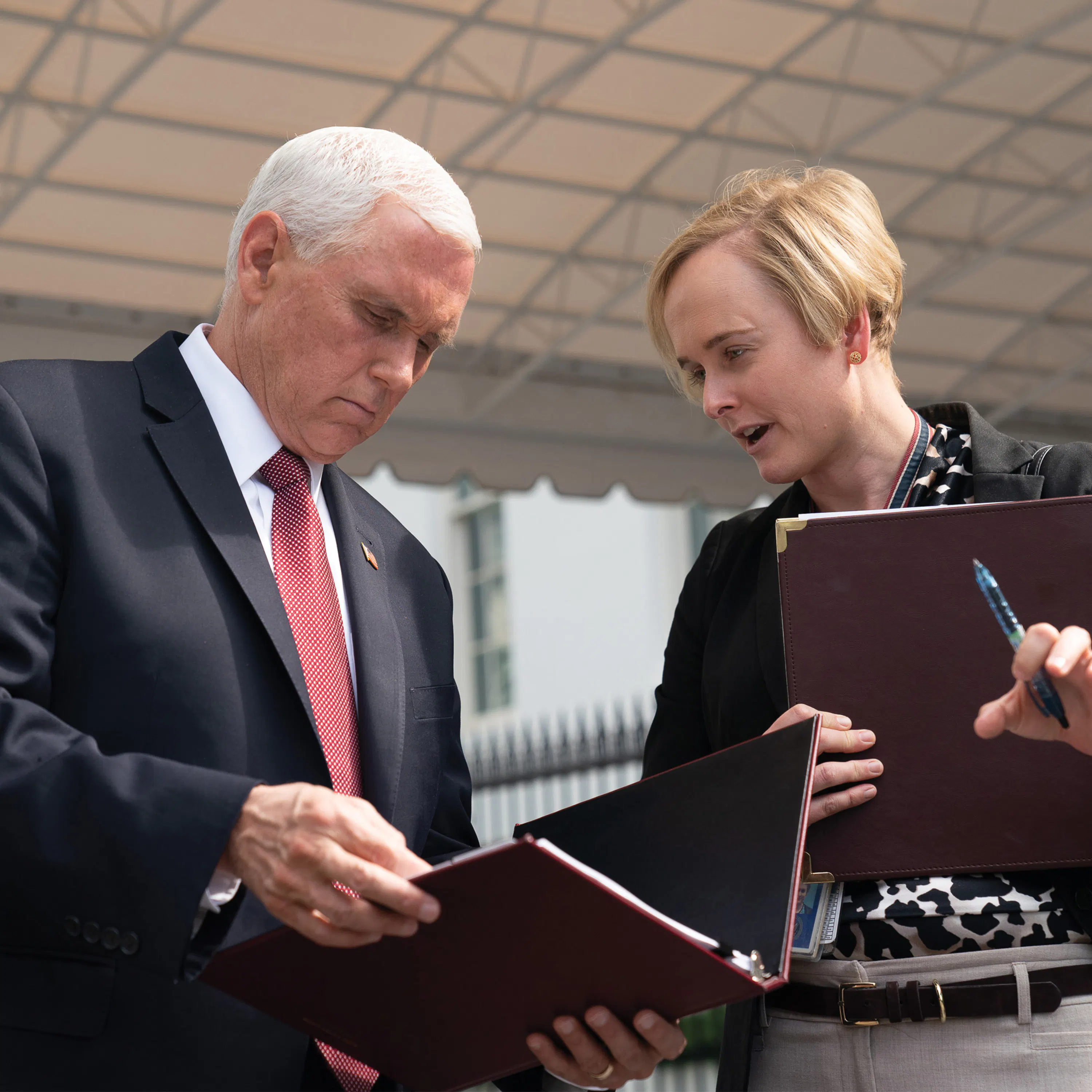
The Trump Administration Wanted Her Expertise, Just Not Her
In 2013, Julia Curlee became the first CIA officer to transition openly and keep serving the agency.She felt more effective at her job living as the person she always believed she was—and years ago she wrote about her experience under a pseudonym in The Atlantic. Her performance proved her effectiveness: She became the daily intelligence briefer for Vice President Pence during the first Trump admi
Longing for a Time Before Smartphones
Gen Z has romanticized the technology of the ’90s—or the era’s lack of it. Young long for a time when people were looking at each other instead of their phones. But could that nostalgia for a smartphone-free society actually help guide the future?
That’s one of the driving questions from the latest season of How to Touch Grass, co-hosted by Julie Beck and Natalie Brennan. This week on Radio Atla
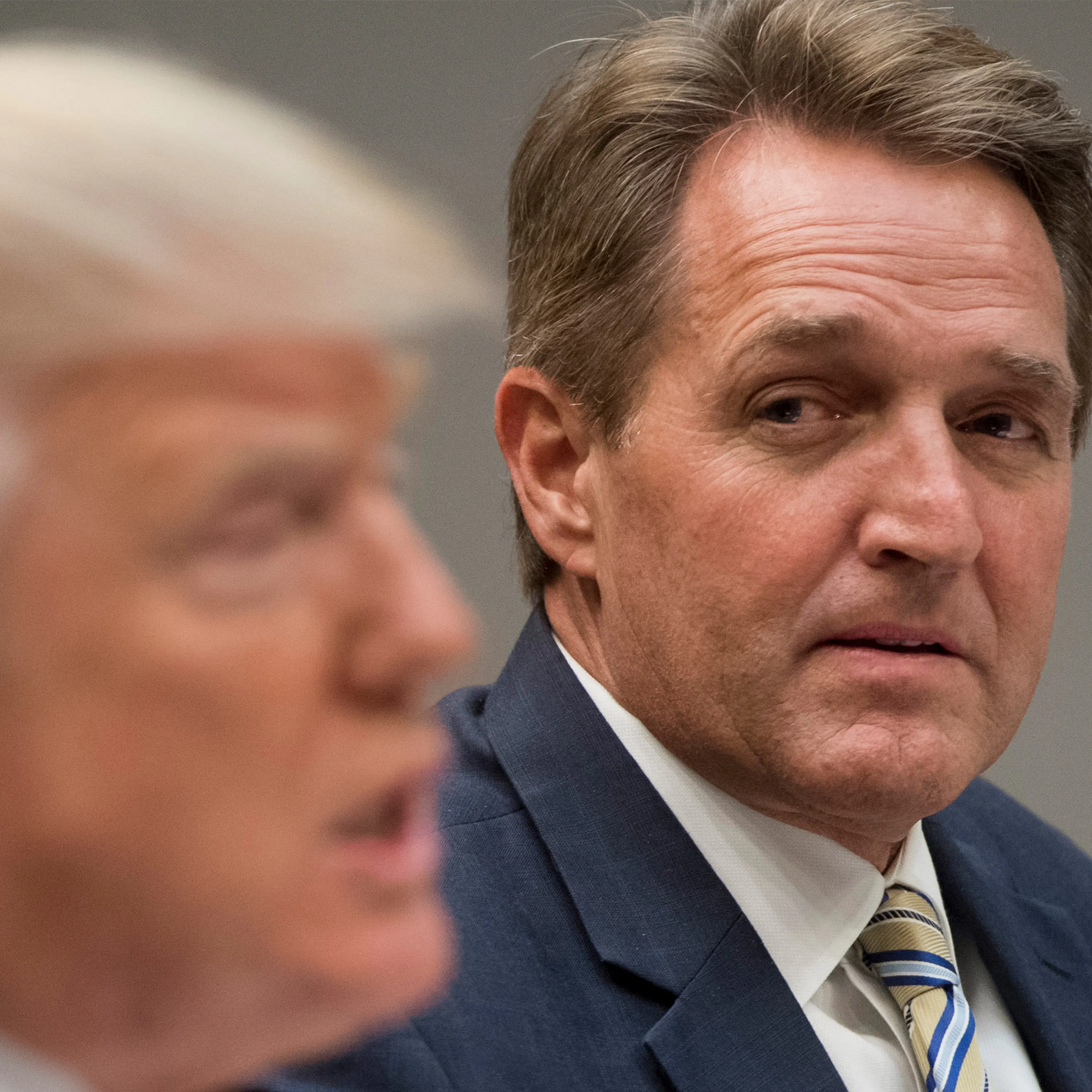
Never Trump, Still a Republican
Radio Atlantic host Adam Harris speaks with former Republican U.S. Senator and former U.S. Ambassador Jeff Flake about his recent endorsement of Democratic Senator Jon Ossoff in the Georgia Senate race and why character in politics still matters.
---
Get more from your favorite Atlantic voices when you subscribe. You’ll enjoy unlimited access to Pulitzer-winning journalism, from clear-eyed analy

The Death of Romance
We’ve entered the era of the great romance slump. Fewer people are moving in together and getting married, and a shrinking number of young adults say they have experience in a committed relationship—all this despite people saying that they want to find love. So why aren’t they getting it? The Atlantic’s staff writer Faith Hill explains what’s driving the romance decline and reports on life inside
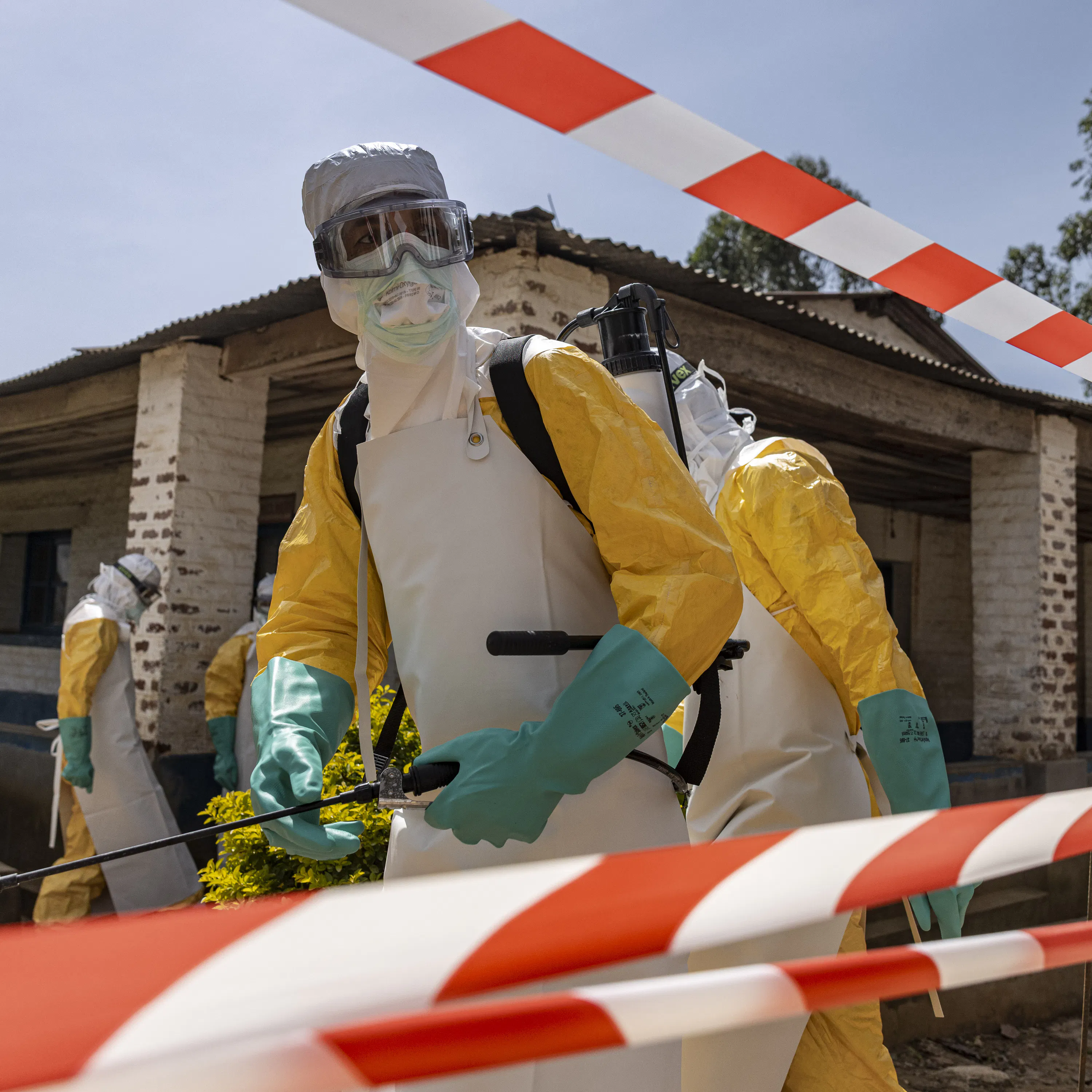
What ‘America First’ Means for Global Health
Ebola is ravaging the eastern region of the Democratic Republic of the Congo, in what may soon become the worst outbreak of the disease ever recorded. This particularly deadly strain is spreading amid a weakened global-health infrastructure, including the Trump administration’s cuts to USAID.
---
Get more from your favorite Atlantic voices when you subscribe. You’ll enjoy unlim

The Town That Wants a Data Center Next Door
Opposition to data-center construction is the bipartisan issue of the moment—70 percent of Americans are against construction in their communities. Recently, New York passed the country’s first statewide data-center-construction moratorium. Maine was supposed to have been the first.
For this week’s episode of Radio Atlantic, the reporter Ethan Brooks traveled to Maine to understand why one tiny t
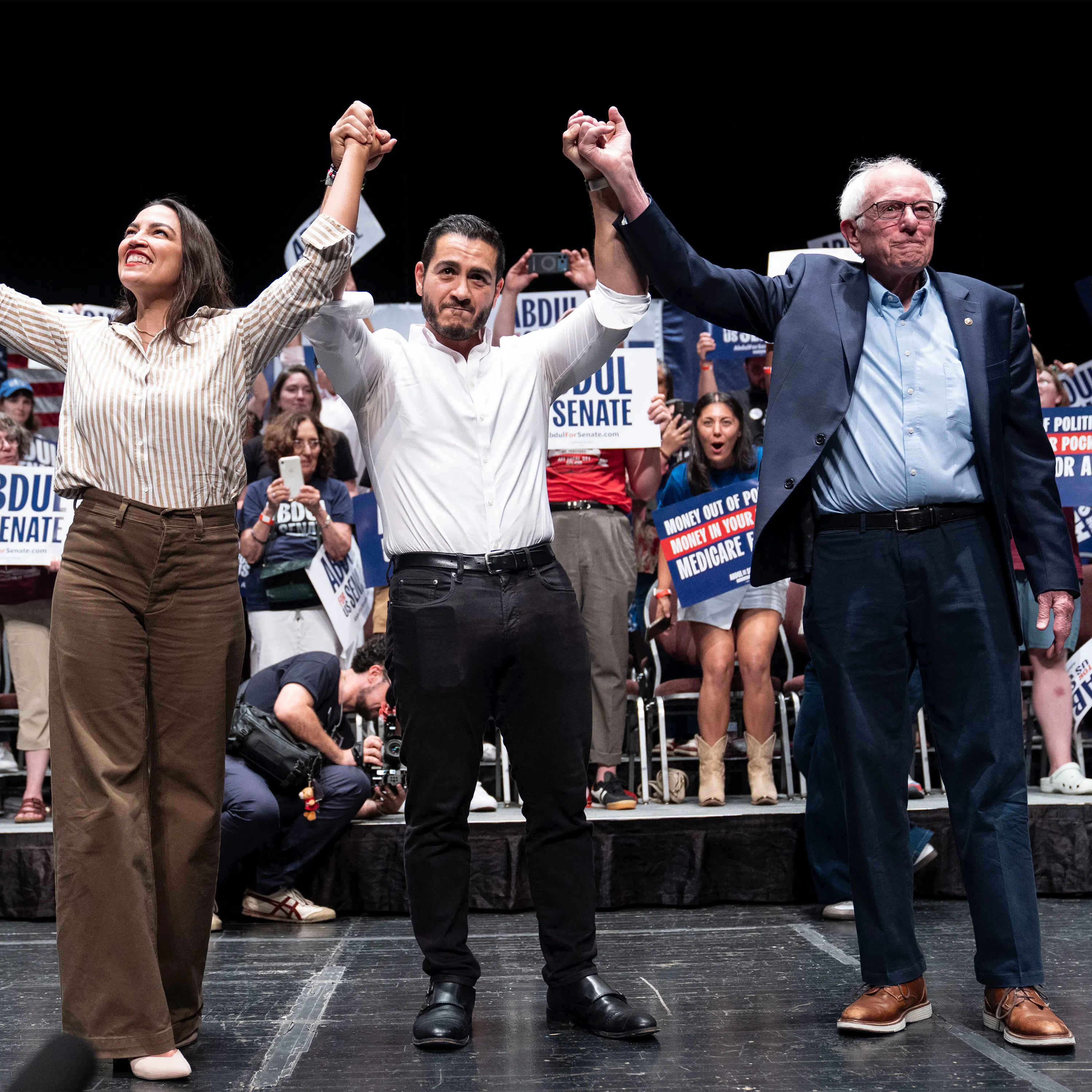
Can a Progressive Win a Purple State?
Nationwide attention and endorsements are flooding into Michigan as voters get ready to pick their Senate candidates Aug. 4. Why is everybody from President Trump to Bernie Sanders so interested? The path to win the Senate runs straight through this purple state, and that has Democrats battling over whether the progressive candidate Abdul El-Sayed or the more centrist U.S. Representative Haley Ste

Is the Age of Reading Over?
People may be reading now more than ever (emails, texts, social-media posts). But fewer and fewer people are reading actual books. The Atlantic’s staff writer Rose Horowitch, who wrote the August cover story, “The End of Reading Is Here,” explains what might be lost in a “postliterate” age—and it’s a lot more than books.
- - -
Get more from your favorite Atlantic voices when you subscribe. You’l

What We Know About the Recent ICE Killings
The fatal shootings of two men in Texas and Maine by immigration officers have put the Department of Homeland Security back under renewed scrutiny.
Host Hanna Rosin is joined by Atlantic staff writer Nick Miroff to discuss the recent killings and what role traffic stops played in them.
---
Get more from your favorite Atlantic voices when you subscribe. You’ll enjoy unlimited access

The Election Deniers Are in Charge Now
Today’s episode is a dispatch from Georgia, where election skeptics run elections. Lately, the president has gone into an election frenzy, trying to spread the idea that elections are rife with fraud. He seems to be laying the groundwork for the argument that if Republicans lose the midterms, it can be only because someone cheated. The place to truly advance the idea that elections can’t be truste

The War Trump Can't Control
Though President Trump has said he would not enter any “forever wars,” America seems to find itself headed toward one. With the latest cease-fire “over,” is there a way out of the conflict with Iran?
Host Adam Harris is joined by Tom Nichols and Nancy Youssef, who cover the military and diplomacy for The Atlantic, to discuss the conflict that is beginning to feel more like a permanent condi

Another Fatal ICE Shooting
This week saw the first fatal ICE shooting since Minnesota. In Houston, an ICE officer shot and killed Lorenzo Salgado Araujo.
It’s been six months since the deaths of Renee Good and Alex Pretti, and the federal government hasn’t properly investigated either one. And it has stood in the way of state agents trying to find out what happened—failing, for example, to give state investigators access t

The Black Patriots Pushing for a Better American Future
The military has historically been a powerful force for integration in America—even as its top ranks have been slow to reflect the racial makeup of the country.
Host Adam Harris speaks with the Atlantic staff writer Clint Smith, who wrote in the July issue of the magazine about what it means that the gradual, visible racial progress in the military is being degraded as Black officers are pushe

American History as Rorschach Test
The Florida Department of Education recently announced an alternative to the Advanced Placement history course that it described in a press release as “free from ideological bias or indoctrination.” For its new curriculum, Florida recommends one textbook: Land of Hope: An Invitation to the Great American Story, by Wilfred McClay. As American patriotism plummets, McClay partly blames history class,

Trump’s Battle for Washington
The drama around the algal bloom in the Reflecting Pool may seem like a shallow issue. But it’s part of a much broader pattern as President Trump tries to “beautify” Washington, D.C., and cement his legacy. Host Adam Harris talks to the Atlantic staff writer David Graham about Trump’s attempts to remake the city physically, culturally, and politically.
Get more from your favorite Atlantic voices

How the World Cup Explains the World
In his classic book How Soccer Explains the World, the Atlantic staff writer Franklin Foer theorized that the sport was a mirror of the world, particularly in its shift from tribalism to interdependence. More than two decades after the book came out, the world is different in many ways, but he says the title still holds true.
Foer joins to discuss the World Cup. Who he’s excited to watch. How th

What Will Happen to Birthright Citizenship?
The Supreme Court will soon decide whether the Trump administration’s executive order limiting who can be born an American is constitutional, and whether “all persons born or naturalized in the United States”—save for those who are here under unique circumstances, such as children of foreign dignitaries—are citizens of the union. This week on Radio Atlantic, Adam Harris is joined by Atlantic staff

Live: Nancy Pelosi on the Midterms
Throughout her career, Nancy Pelosi has known how to get things done: whipping up votes, negotiating bills, and, in what is probably her crowning achievement, pushing through the Affordable Care Act as speaker of the House. At the end of her current term, she plans to retire, after nearly 40 years in Congress.
Hanna Rosin recently sat down with Pelosi at the Cascade PBS Ideas Festival, in Seattle

When Both Parties Try to Out-Macho Each Other
The MAGA movement has fully embraced masculinism, which The Atlantic’s staff writer Helen Lewis defines in her cover story this month as “a movement to fight back against the advances of feminism and reassert the primacy of men.” Democrats have a more complicated relationship with it. After the last presidential election, when Donald Trump made inroads with young men, even those of color, some Dem

Is the GOP Starting to Defy Trump?
For most of his second term, Donald Trump has successfully conveyed the message that defiance is not an option. Republicans who ignored that message generally wound up out of office, so they largely toed the line. Lately, though, that seems to be changing.
Republicans recently pushed back against the president’s proposed “Anti-Weaponization Fund,” and the administration ultimately scrapped it. T

Is Cuba Next?
Not long after U.S. commandos swiftly extracted Venezuelan President Nicolás Maduro and flew him to the United States, Donald Trump set his sights on the next target: Cuba.
Some administration officials seem interested in Cuba’s nickel and cobalt deposits. Secretary of State Marco Rubio shares the dream of many Cuban exiles for regime change on the island. Although, from the Cuban perspective, t

Higher Education’s Identity Crisis
Universities tried to be all things to all people. That model may not be working anymore.
Adam Harris is joined by Ian Bogost, Atlantic contributing writer and a professor at Washington University in St. Louis, to discuss the state of higher education.
On campuses across the country, students are graduating into a job market with questions on their mind. What kind of career is stable in 2026? Wi

The Gerrymandering Wars
There is an ongoing battle for House seats. And it’s playing out not so much in elections but in congressional maps. The Atlantic staff writers Russell Berman, who’s been covering the redistricting wars for the past several months, and Vann R. Newkirk II, who’s long followed the Voting Rights Act (and now its demise), explain how this new era of tit-for-tat gerrymandering is different than ever be

The Tragedy of the Tradwife
The author Caro Claire Burke discusses her debut novel, Yesteryear, about a tradwife influencer suddenly transported back to 1855 and faced with the harsh realities of actual pioneer life. The book is a No. 1 New York Times best seller, and its film rights have already been sold and Anne Hathaway is attached to star.
Seen one way, the tradwife is just a social-media trend, sometimes soothing to
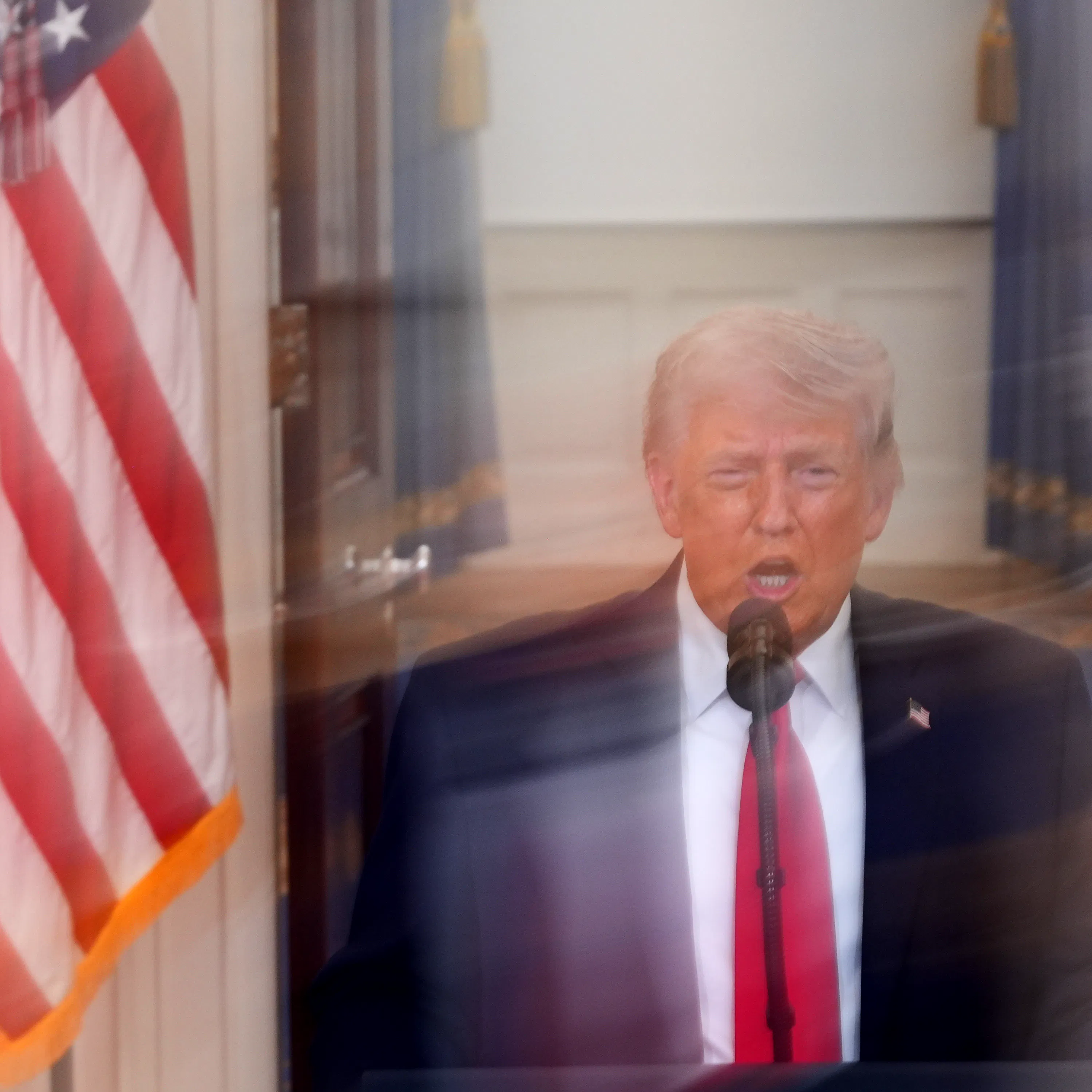
The 'Great Man' Presidency
Alexander the Great. Julius Caesar. Napoleon Bonaparte. Donald Trump
The Atlantic staff writers Ashley Parker and Michael Scherer reported this week on the president privately comparing himself to the three norm-defying, world-historical figures highlighted in the work of the German philosopher Georg Wilhelm Friedrich Hegel.
The president has also sought to make his mark across seemingly every

Kash Patel's FBI
Last week, The Atlantic published a story about how FBI Director Kash Patel’s colleagues are alarmed by what they describe as erratic behavior and excessive drinking. Sources told staff writer Sarah Fitzpatrick that, on multiple occasions, members of his security detail had trouble waking Patel because he was seemingly intoxicated.
Patel called the story a “lie” and earlier this week sued The At

If Hungary Can Do It
Whatever happens next in Hungary, Viktor Orbán’s stunning downfall contains obvious warnings for MAGA and Donald Trump: Propaganda has its limits. Concerns about affordability are real. True democracy can reassert itself in a single election. Reality can bend only so far.
The Hungarian journalist Veronika Munk of the news outlet Denník N shares her view from the streets of Budapest. And the Atla
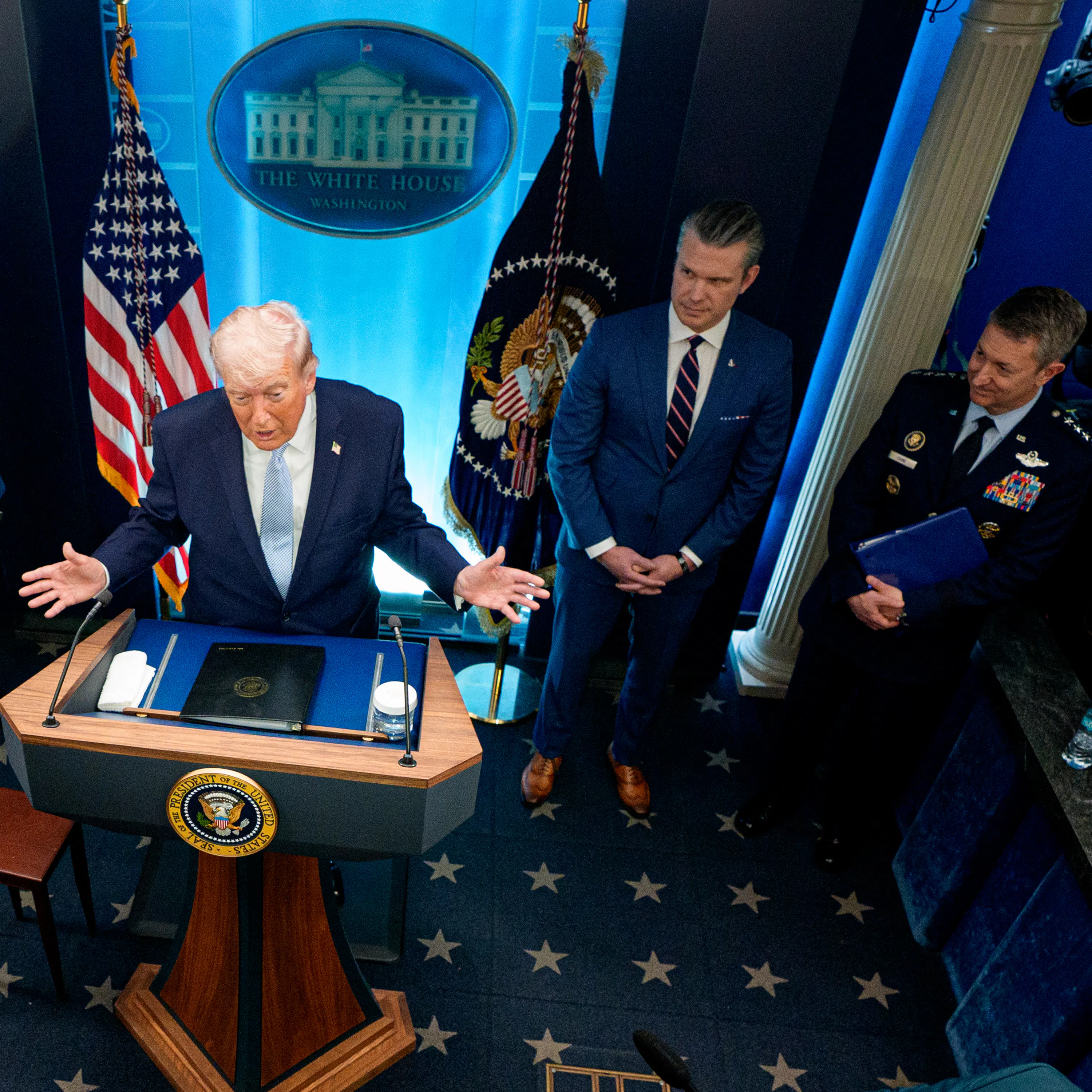
Trump Is Wishcasting Victory in Iran
Last weekend, on Easter Sunday, President Trump wrote in a post on Truth Social: “Open the Fuckin’ Strait, you crazy bastards, or you’ll be living in Hell - JUST WATCH!”
On Tuesday, he posted again: “A whole civilization will die tonight, never to be brought back again.”
Hours later—after ongoing talks, and condemnation by world leaders and American lawmakers from both parties—the United States
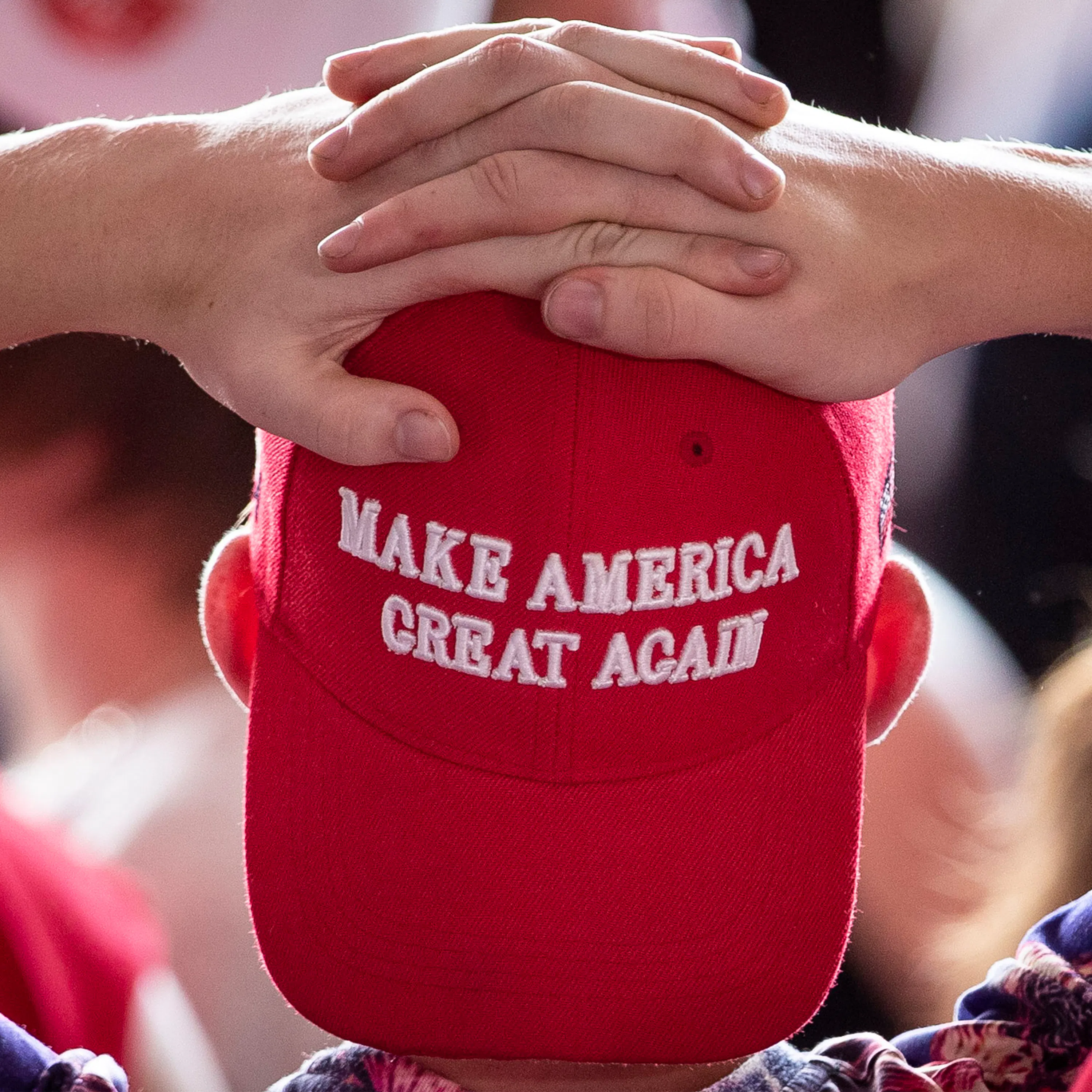
The Manosphere Feels Betrayed
The manosphere helped Donald Trump win the 2024 election. Now that he’s started a war with Iran and failed to keep some core campaign promises, the coalition cemented by podcast bros and Austin-area commentators is starting to crack. The Atlantic staff writer Elaine Godfrey has been tracking the political shifts among a small but influential group of manosphere podcasters.
Get more from your
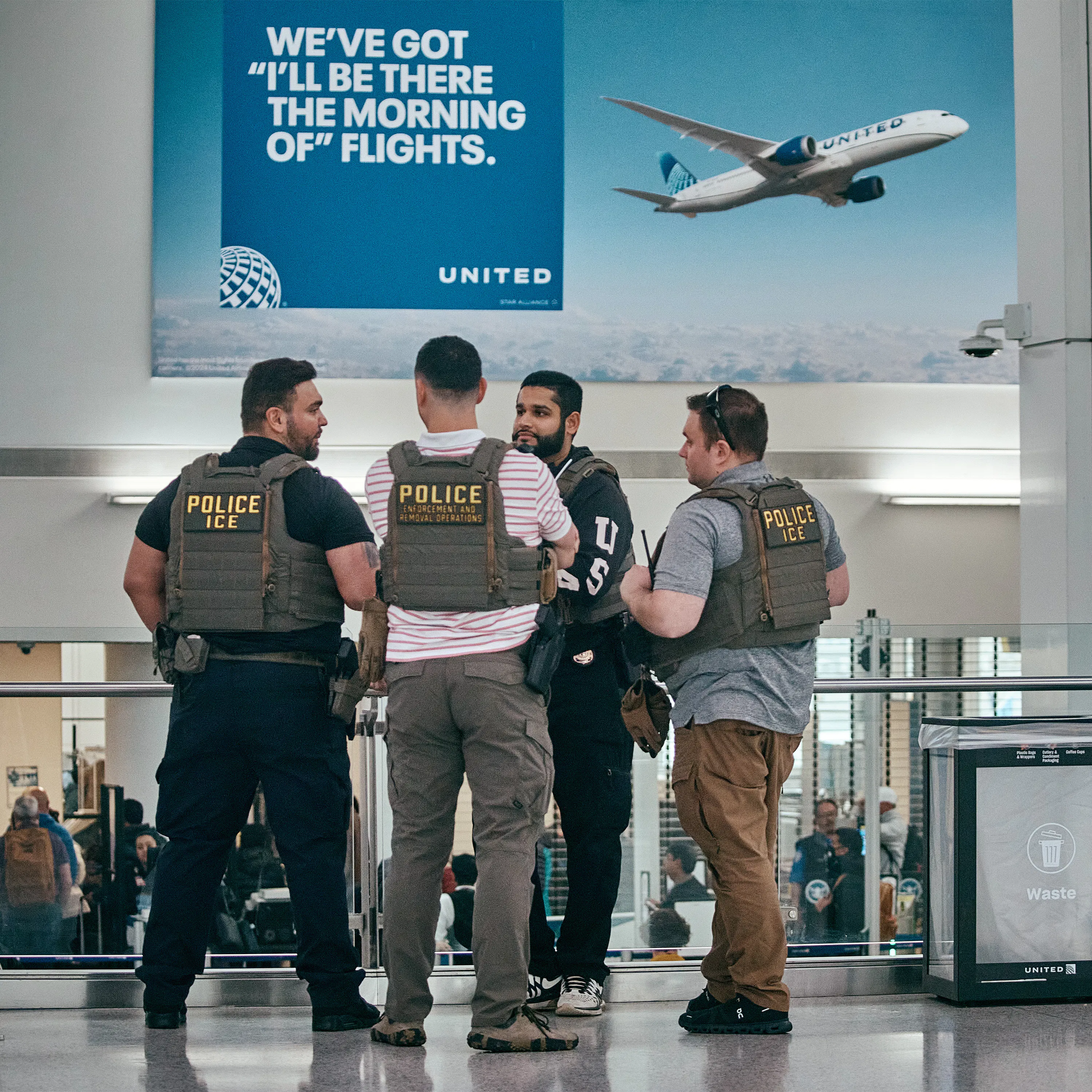
The Department of Homeland Security Theater
ICE at airports. TSA lines out the door. And a new boss at DHS amid its funding shutdown.
After the deaths on the streets of Minneapolis, after the theatrics of Greg Bovino, after the drama of Kristi Noem, ICE may be entering a new era. Markwayne Mullin was confirmed as the new DHS head, having struck a softer tone than his predecessor during hearings. He told senators that he would stop the prac

Trump Is Kicking the Economy While It’s Down
Iran is blocking oil tankers from passing through the Strait of Hormuz. Consumers around the world are already seeing higher gas prices as a result, but the global oil supply affects so much more than just prices at the pump. Soon, shoppers could see higher prices on food, clothes, e-commerce, and everything in between. The Atlantic staff writer Rogé Karma explains that a healthy economy could pro

A Year as a Degenerate Sports Gambler
Gambling is ever-present in America these days. After the Supreme Court opened the floodgates to legalized sports gambling, Americans went from legally betting $4.9 billion on sports in 2017 to at least $160 billion last year.
When the Atlantic staff writer McKay Coppins wanted to do a story about sports gambling, he and his editor thought, Why not try it himself? He had never really gambled befo
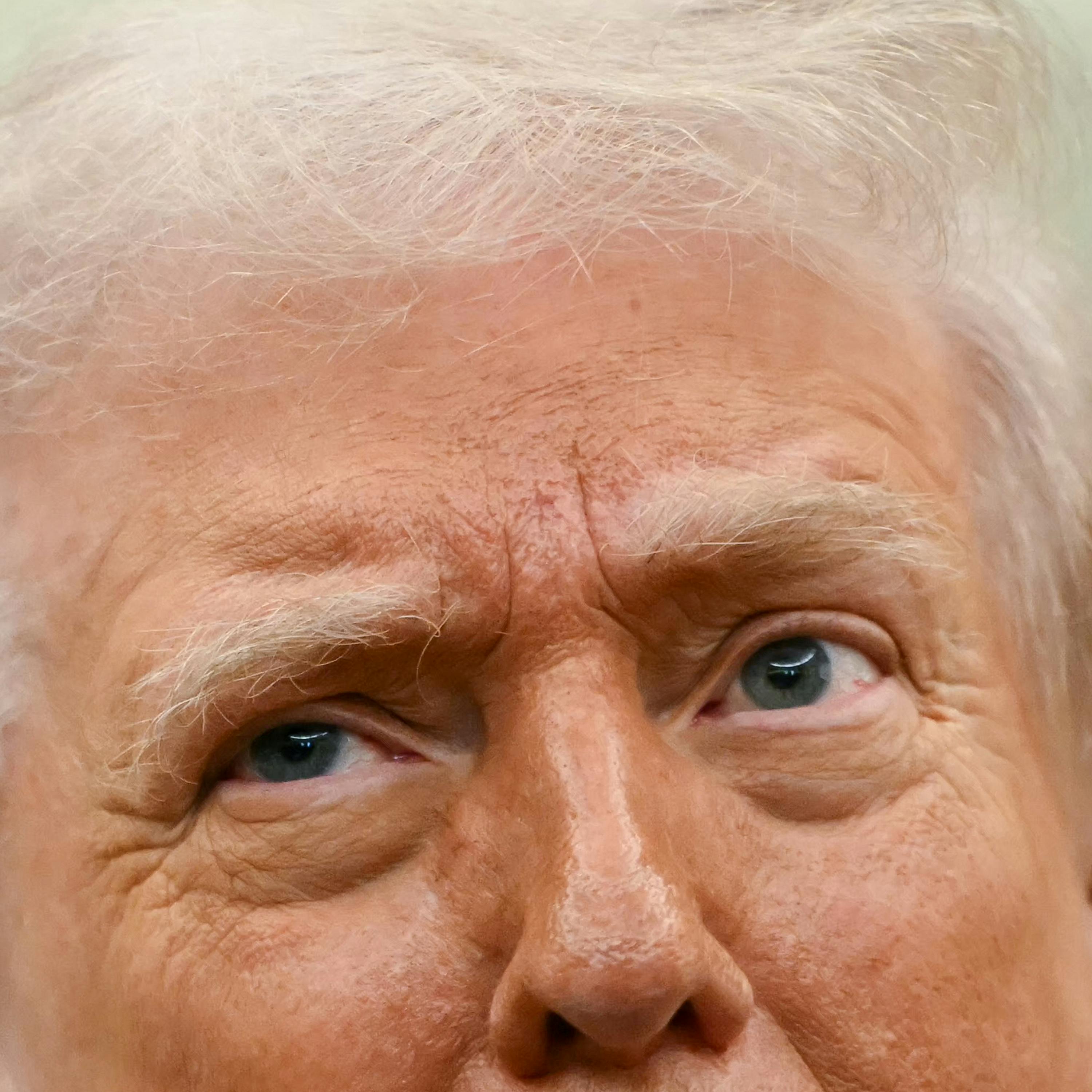
A War Begun on Instinct
The president is trusting his gut, not Congress.
The Atlantic staff writer Missy Ryan covers national security and has spent years reporting on American wars in the Middle East. She helps sift through the changing explanations for why the administration says it took America to war with Iran.
And Senator Jeanne Shaheen, ranking member of the Foreign Relations Committee, shares how she thinks Demo
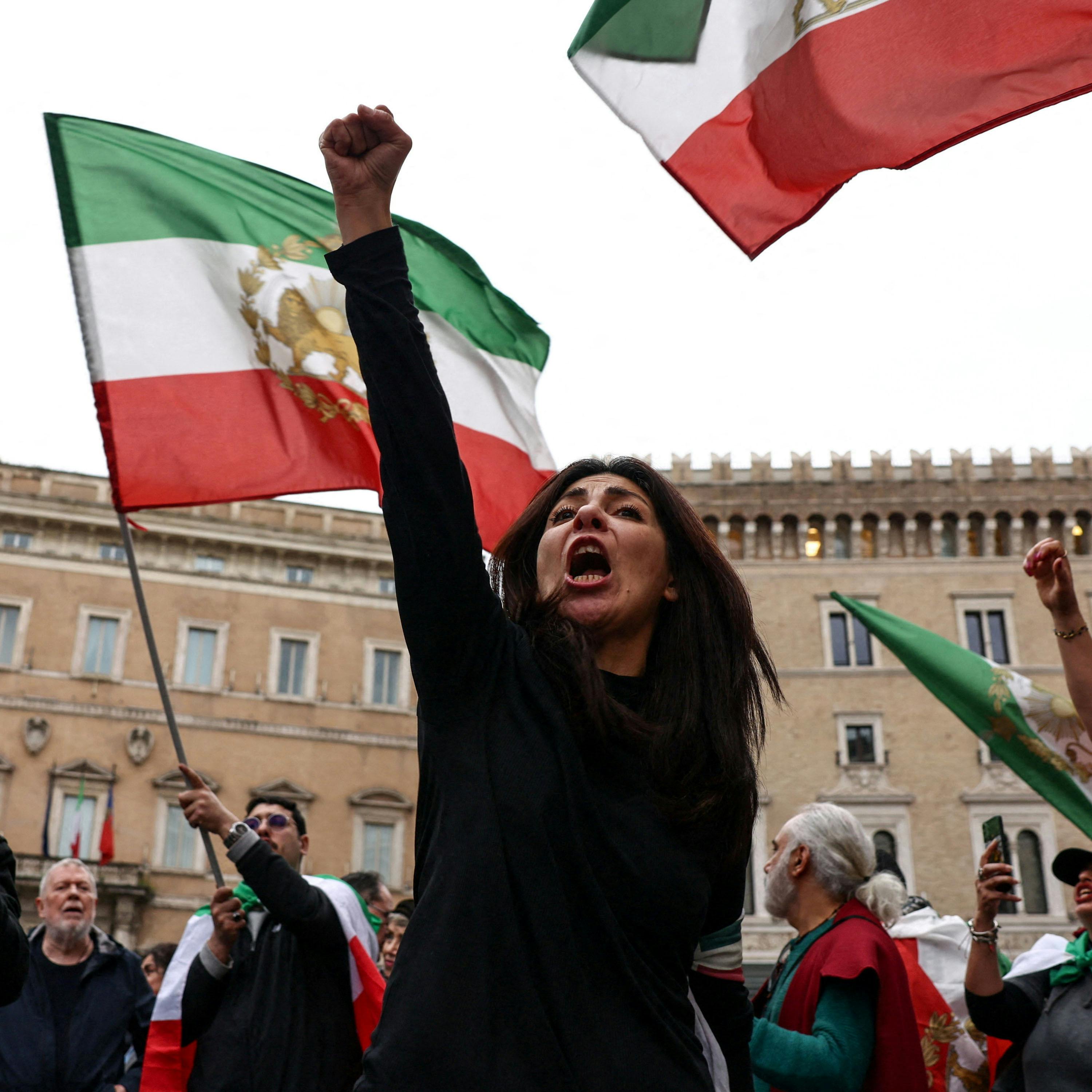
After Khamenei, What Now?
President Trump claimed victory after American strikes killed Ali Khamenei, the supreme leader of Iran who had terrorized his own citizens and people all over the world for decades. But what the fall of Khamenei means for the people of Iran going forward is not yet clear.
We talk to Arash Azizi, an Iranian writer and contributor to The Atlantic, about how Iranians view the strike and what the rea
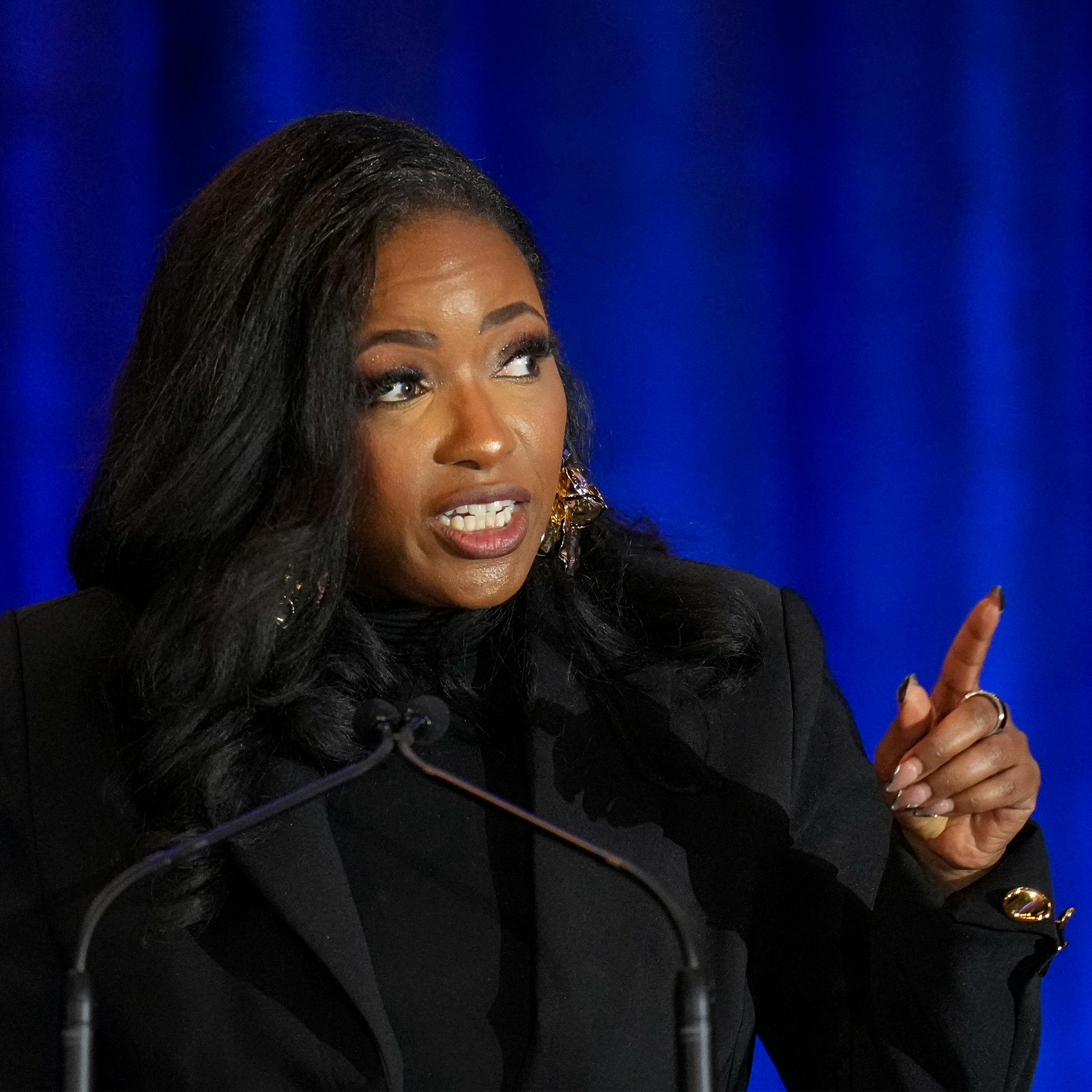
What Can the Texas Primary Tell Us About Democrats?
This week, the Atlantic staff writer Elaine Godfrey was covering a campaign rally in Texas when she was ushered out. Elaine has been covering national politics for years, and has been turned away before—but that usually happens only at Trump rallies.This time, she was turned away by the staff of a Democrat running in the Texas Senate primary. The Atlantic’s Adam Harris talks with Godfrey about her
Why Pick a Fight With Iran Now?
President Trump has given plenty of signals recently that he is prepared to take military action against Iran. The exact reasoning, however, is less obvious. The Atlantic staff writers Nancy Youssef and Tom Nichols explain what’s next for the United States and Iran, and how Pentagon officials might be planning for another conflict in the Middle East.
---
Get more from your favorite Atlantic voic
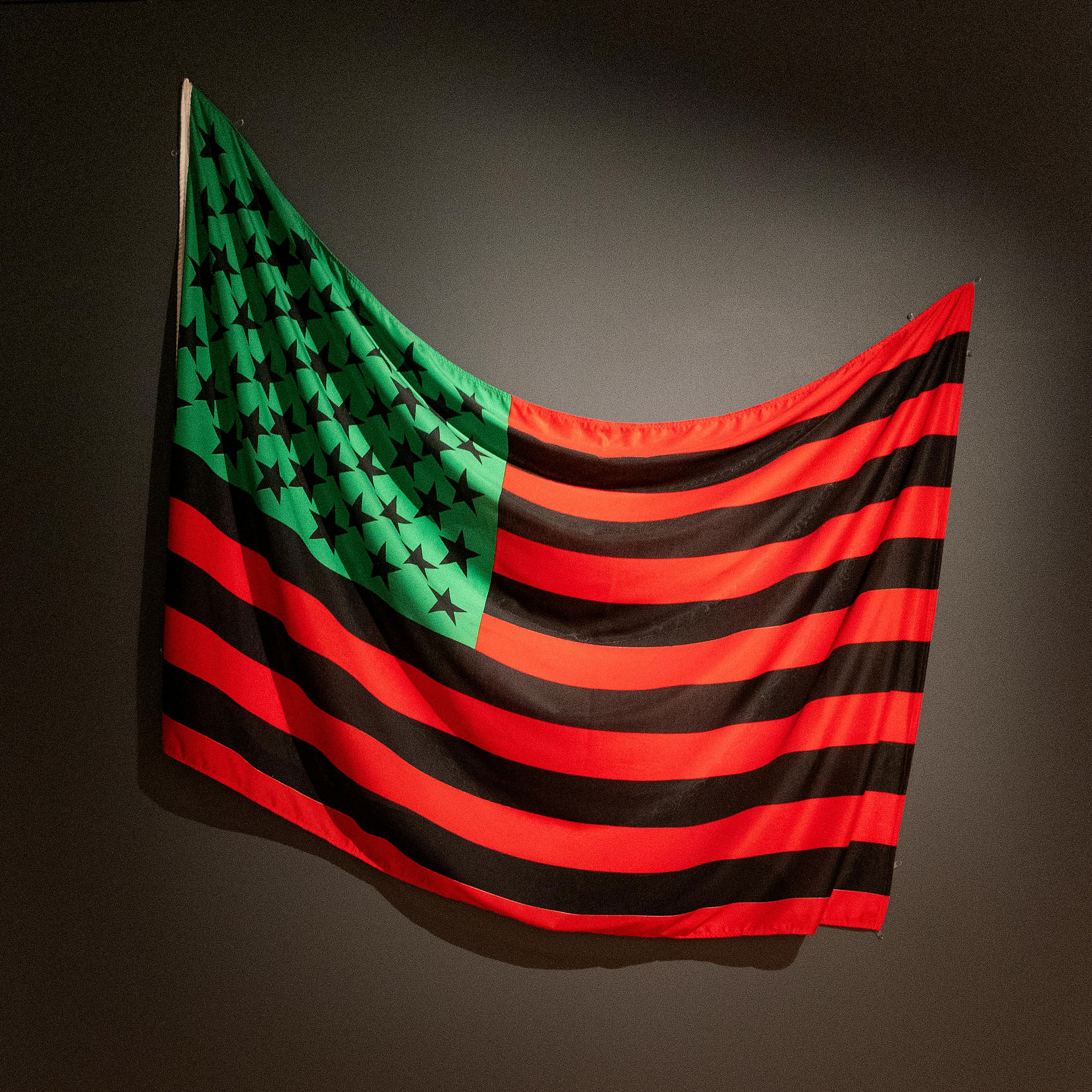
Black History Month Is Different This Year
The Trump administration is trying to sanitize U.S. history by removing mentions of slavery on historic monuments, scrubbing words such as “oppression” from government websites, and obscuring the legacy of Black American heroes. Last summer, the president personally criticized the Smithsonian for focusing too much on “how bad slavery was.”
The Atlantic’s Clint Smith and Adam Harris argue that if

Iran Wants Him Arrested. He's Going Back Anyway.
The writer-director Jafar Panahi’s new film, It Was Just an Accident, is the second Iranian film ever nominated for multiple Oscars. Panahi is in the United States for the awards season, but soon after, he plans to return to Iran, where he may well be arrested.
His co-writer on the film was recently jailed after signing a letter objecting to the deadly crackdown on protests in Iran. Panahi, who

The Meaning of 'Melania'
The Melania movie is pitched as a documentary following the first lady of the United States in the lead-up to her husband’s second inauguration. But it’s missing all the hallmarks of a journalistic, biographical film. What you get instead is a series of aphorisms that clang loudly against the reality being shaped by Donald Trump. And of course, shot after shot of $1,000 shoes, gold decorations, an

How Jeff Bezos Broke The Washington Post
In a dismal morning Zoom call on Wednesday, The Washington Post’s executive editor, Matt Murray, announced that they were laying off roughly a third of its already diminished staff.
We talk to Joshua Benton, the founder of and a senior writer at the Nieman Journalism Lab at Harvard University, about how the Post reached this point, the loss to journalism, and how Jeff Bezos is uniquely responsibl

Tim Walz Fears a Fort Sumter Moment in Minneapolis
The Minnesota governor warns of a national unraveling and shares the view from his state.
“ The way you win this is through nonviolence, that you cannot do violence,” Governor Tim Walz told the Atlantic staff writer Isaac Stanley-Becker in Minneapolis on Wednesday. “And I know my constituents are mad at me for saying that. They’re shooting us. They’re killing us. They’re beating us. They’re taki

Another Death in Minneapolis
A second American was shot and killed by federal agents. The Atlantic staff writer Adam Serwer joins from Minneapolis to describe what he’s seen there in recent days, describing it as a form of activism America’s not seen since the 1960s—perhaps even earlier.
Serwer spent last week in Minneapolis talking to protesters. “They know that ICE has the guns. They know that if ICE kills them, this fed

The Discarded
Last year, there was a mass exodus of federal workers: Some were pushed out, while others left on their own. All in all, more than 300,000 Americans left government jobs. The Atlantic staff writer Franklin Foer spent months talking to dozens of them, finding out who they were, what they did, and ultimately what, as a country, we may have lost.
Read Foer’s full story: “The Purged.”
---
Get more

Do ICE Officers Have 'Immunity'?
Tensions are high in Minneapolis this week. The Trump administration is sending more federal agents. Protesters are calling for justice for the killing of an unarmed citizen. But what could actually happen legally? Especially when the Department of Justice seems more interested in trying to open a criminal investigation into the victim’s wife than the ICE officer who pulled the trigger?
We talk t

'Aren't We Supposed to Be the Good Guys Here?'
President Donald Trump likely won’t listen to this podcast, but Senator Mark Kelly of Arizona has a warning for him: Any attempt to take Greenland using military force will probably go down as the biggest mistake made by a president in all of U.S. history.
In this conversation with Kelly, we discuss the impact of the censure letter against him sent by Defense Secretary Pete Hegseth, the legality

Is the U.S. Running Venezuela or Not?
After the Venezuelan leader Nicolás Maduro and his wife were captured by U.S. forces over the weekend, President Donald Trump announced that America would now “run” Venezuela. Staff writers Vivian Salama and Michael Scherer break down what might happen next—and what Trump told The Atlantic the day after the capture.
---
Get more from your favorite Atlantic voices when you subscribe. You’ll enjoy

No Easy Fix | An Update on Evan
In July, we published a series of stories about San Francisco’s attempt to address a crisis unfolding on the city’s streets. We followed Evan, who had been homeless for years, as he sought an escape from the addiction that was threatening his life. Four months later, we check in on how he’s doing.
Get more from your favorite Atlantic voices when you subscribe. You’ll enjoy unlimited access to P

Netflix vs. Paramount
It was a great year for Warner Bros. Discovery: Two of its movies (One Battle After Another and Sinners) are front-runners for the Academy Award for Best Picture, and it had a string of critical hits and box-office successes with Superman, Weapons, and A Minecraft Movie. But despite those wins, the media conglomerate—which also owns HBO and CNN—found itself up for auction with two aggressive bidde

ISIS Never Really Went Away
More than a decade after its peak, the Islamic State has changed, but it isn’t defeated. This past weekend, the jihadist group reemerged in connection with two disparate acts of violence thousands of miles apart.
Two U.S. soldiers and a civilian interpreter were killed in Syria by a man the Pentagon says is affiliated with ISIS. A day later, at Bondi Beach in Sydney, Australia, two men opened fi

He's Undocumented. She's Not.
A young Chicago couple—one is an undocumented immigrant from Poland, and the other is a U.S. citizen—face a choice: stay in the place they’ve called home—or give up on the place that doesn’t seem to want them anymore.
---
Get more from your favorite Atlantic voices when you subscribe. You’ll enjoy unlimited access to Pulitzer-winning journalism, from clear-eyed analysis and insight on breaking n

Is This the End of Kids on Social Media?
Australia is about to become the first country in the world to ban kids under 16 from having social-media accounts. Other countries have attempted partial restrictions, but Australia’s Online Safety Amendment is the first real ban, and it comes with heavy fines for social-media companies that fail to comply. In this episode, we hear from the woman in charge of enforcing the policy, the teens who w

How Alison Roman Does Thanksgiving
In Alison Roman’s newest cookbook, “Something From Nothing,” her pantry is her primary inspiration. In this live conversation, we talk with Roman about her family Thanksgiving, why she makes her own baby food, and why simple really is better. We also discuss food trends, and what life is like for her as a solo creator. Then, we put the cookbook’s philosophy of simplicity to the test with an onstag

When Border Patrol Comes to Town
When the Trump administration promised a mass deportation campaign they initially relied on Immigration and Customs Enforcement.
Disappointed with ICE’s pace and tactics, the White House turned to the Border Patrol for more sweeping, military-style enforcement. Commander-at-large Gregory Bovino has brought his green-uniformed agents (and his film crew) to Los Angeles, Chicago, now North Carolina

What If AI Is a Bubble?
The money keeps coming. Global spending on artificial intelligence is projected to hit $375 billion this year. In 2026, the figure is supposed to approach half a trillion dollars.
The sums invested already are so staggering that the United States is beginning to look like an “Nvidia-state,” where the tech boom is fueling a great majority of economic growth. But lately, tech watchers have started
Will 2026 Be a Fair Fight?
Go ahead, Democrats. Enjoy your victory parties. But after that, brace yourselves, because Republicans may not be playing by the same rules a year from now. Since President Donald Trump took office for his second term—indeed, since his loss in 2020—he has shown his willingness to subvert the rules of free and fair elections. In various ways, he’s used his power to intimidate potential opponents, D

Strike First, Explain Never
So far, the U.S. has blown up 14 boats in the Caribbean and the Pacific, killing at least 57 people. In the two months since the strikes began, the administration has consistently offered the same explanation: The U.S. has a fentanyl overdose problem, and these boats are a source of that drug. The federal government has stuck to that line despite the Drug Enforcement Administration and Department

18 Minutes From Nuclear Annihilation
In Kathryn Bigelow’s new movie, A House of Dynamite, the clock is ticking. The film’s fictional president of the United States has less than 20 minutes and very little information to decide whether or not to retaliate against a nuclear missile, launched at the United States, from an unknown source. As with Bigelow’s other war movies, the story is disturbingly plausible. During the Cold War, the li

If the Voting Rights Act Falls
This week, the Supreme Court heard oral arguments about the last remaining section of the Voting Rights Act, a civil rights law designed to ensure that states could not get in the way of nonwhite citizens voting.
We talk to Stacey Abrams, voting rights activist and former candidate for Georgia governor, and Atlantic staff writer Vann Newkirk about the case and a world without the Voting Rights

Saudi Arabia Gets the Last Laugh
The Riyadh Comedy Festival in Saudi Arabia concludes this week, but the outrage (from comedians who didn’t go) and self-justification (from comedians who did) continues. The festival is one small piece of Crown Prince Mohammed bin Salman’s grand vision to remake the kingdom for the 21st century and simultaneously draw global attention away from human-rights violations like the 2018 murder of journ

Weaponizing the Justice Department
President Donald Trump is using the Department of Justice to try to punish his political enemies. How much can the president bend the DOJ, an institution built on norms and ethics, to his will before it breaks? In this episode, we talk to the Atlantic staff writer Quinta Jurecic, who covers legal issues, and Benjamin Wittes, editor in chief of Lawfare, about who the Trump administration might targ

An American Education | 2. Testing Teachers for 'Wokeness'
Hanna Rosin sits down with Oklahoma State Superintendent Ryan Walters to ask him about a purity test for teachers and a nearly scandalous incident that happened days before the interview. And two Oklahoma high-school teachers take very different paths.
This is the second episode of a two-part series from Radio Atlantic. (This episode has been updated from a previously published version to include
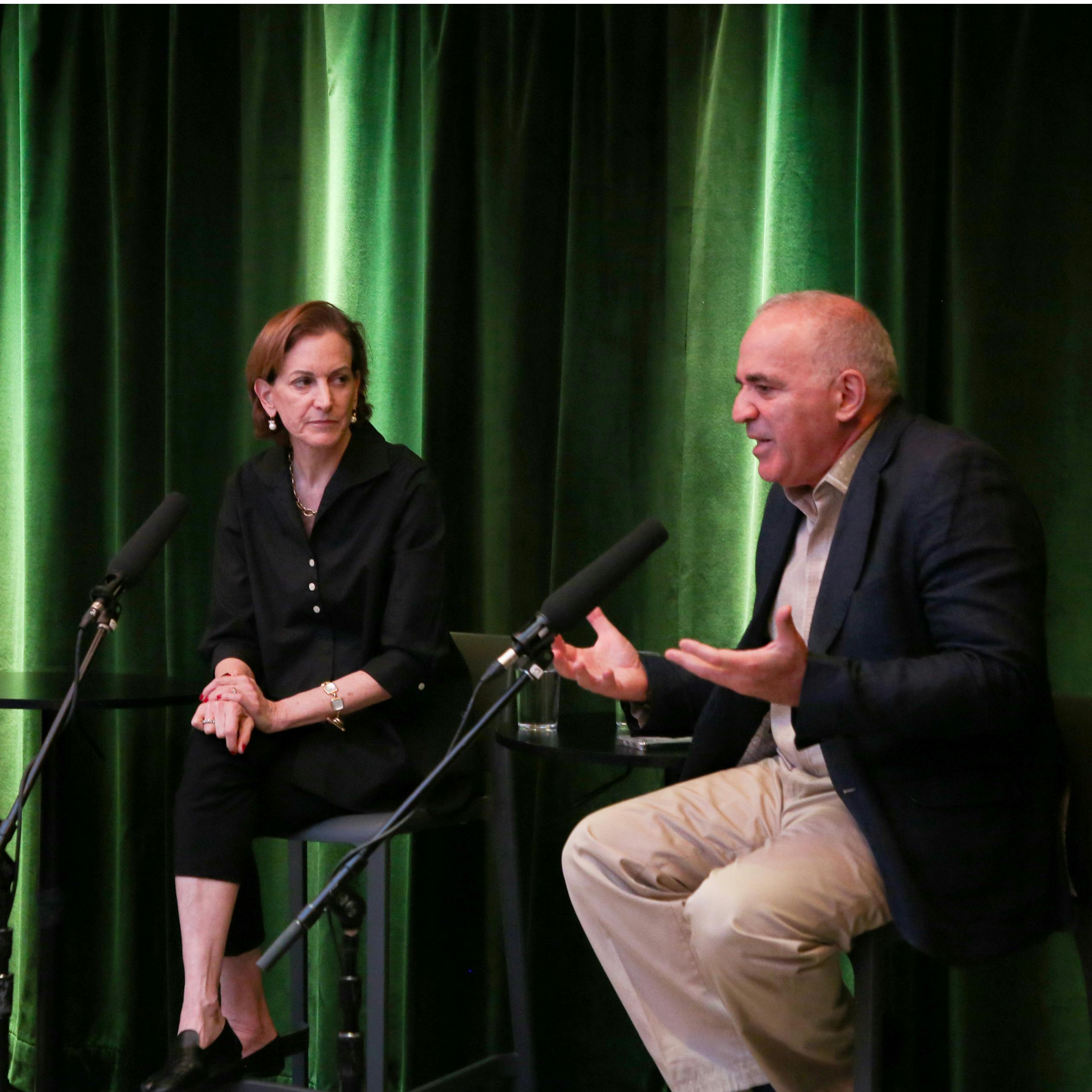
Live from The Atlantic Festival: ‘2026 Is the Battlefield’
A live conversation about authoritarian forces in America with Anne Applebaum, an Atlantic staff writer, and Garry Kasparov, the former world chess champion and a lifelong democracy activist.
Speaking about the upcoming midterms, Kasparov says: “If Democrats do not retake the House, 2028 will be a formality.”
Get more from your favorite Atlantic voices when you subscribe. You’ll enjoy unlimited

David Letterman on the Threats to Late-Night Hosts
Yesterday, Jimmy Kimmel’s late-night show was suspended indefinitely. It’s a shocking moment for free speech, given the order in which events unfolded. Earlier that day, FCC Chair Brendan Carr had suggested on a conservative podcast that ABC and its affiliates consider taking steps against Kimmel, saying, “We can do this the easy way or the hard way.”
As it so happened, the late-night legend Davi
Recommended

Booked, Blonde & Busy w/ Olivia Ponton

McKinsey on Consumer and Retail

megahired.com

Hard Knocks Podcast

Effective Weight Loss for Moms | High protein, Strength Training, Lose Weight, Meal Planning, Fat Loss, Healthy Habits

The Human-Animal Connection - Pet Life Radio Original

Infinite Health with Dr. Arasi Maran

The Daily

World News Tonight with David Muir
The Joe Rogan Experience

English Vocabulary Help

TED Talks Daily
