
Visionary: How William Blake Changed the World
A series of podcasts on the life, work, and reception of William Blake, exploring his impact on literature, the visual arts, music and more.
Episodes
Imagination and the pregnant mind in William Blake's cosmogony
In his early prophetic works, William Blake presents his own creation myth, which reinterprets Genesis and critically examines contemporary medical discourse on generation and birth.In this talk Annalise Volpone explores a specific trope that emerges from Blake's depiction of imagination and (artistic) creation: partus mentis, the parturition of the mind. Annalisa Volpone is an Associate Professo
A Guide to William Blake's The Four Zoas
Begun some time around 1797, Vala or The Four Zoas is William Blake's great unfinished masterpiece, an attempt to provide a complete mythology of Blake's universe of characters, Urizen, Los, Orc, Vala and many more. The poem has fascinated and perplexed readers ever since and, in this episode of Visionary, Professor Jason Whittaker is joined by Dr Annise Rogers who has worked in detail on Blake's

Mirror Writing and Designing in William Blake's Illuminated Books
In 1789, Blake developed the relief etching technique which he described as "a method of Printing which combines the Painter and the Poet," allowing him to simultaneously write and design on copper plates for his illuminated books. This process required Blake to write and design in reverse, leading him to develop his command of retrography. Consequently, what appears "forwards" on the printed page

William Blake and New Age Music
Blake famously begins Milton: A Poem with the call to "Rouze up, O Young Men of the New Age!" That phrase has been connected to the "New Age" movement in the 1960s and 1970s, and Blake has long been recognized as an important influence on the poets and visual artists of that time, but it could be argued however, that it was a cohort of musicians that best manifested his vision for art during this

William Blake, Gregory Bateson and David Lynch: Audiovisual Approaches to Blake Scholarship
Jacob Smith discusses parts of his book, Bateson's Alphabet: The ABCs of Gregory Bateson's Ecology of Mind. Bateson began his academic career as an anthropologist in the 1930s, collaborated with Margaret Mead on groundbreaking anthropological research utilizing photography and motion pictures, and participated in the founding conferences on cybernetics. After parting ways with Mead, Bateson embark

Bob Dylan and William Blake
Blakean song titles such as 'Gates of Eden' (1965) and 'Every Grain of Sand' (1981) have ensured that Blake's influence on Dylan has long been taken for granted by fans, music writers and literary scholars - but how much Blake did Dylan actually know? In this podcast, Luke Walker that Dylan does indeed owe a deep and complex debt of influence to Blake, although it is a subject on which Dylan himse

Yeats, Blake and Mysticism
In this episode of Visionary, Jason Whittaker is joined by the scholar Jodie Marley, whose work includes a study of W. B. Yeats's reception of Blake in mystical circles of the late nineteenth and early twentieth century. In this wide-ranging discussion, they look at how Blake was adopted as a mystic and occultist, as well as the important work done by Yeats and his colleague Edwin John Ellis to ed

Barry Miles on Allen Ginsberg's Blake Recordings
Biographer of the Beats and co-founder of the counter-culture newspaper, International Times, Barry Miles joins Camila Oliveira in conversation about how, through Zapple Records which he set up with John Lennon and Paul McCartney, he came to record Allen Ginsberg's settings of the poetry of William Blake's Songs of Innocence and of Experience. In this fascinating discussion, he also reminisces as
Blakean Spirituals: William Blake, Bob Dylan, and Race
James Keery and Steve Clark begin with a discussion of the 'song' performed by 'Tambourine Man', which is often regarded as an invitation to Blakean 'immortal moments'. If 'the Ruins of Time build Mansions in Eternity', in Dylan these have become 'foggy ruins of time', trading posts on a 'windy beach', where black captives may be 'silhouetted by the sea'. It is also performed within the 'love and

William Blake and the Surrealists
With its exploration of the unconscious via the dreamscapes of artists such as Max Ernst, Yves Tanguy and Salvador Dali, and a rejection of the kind of excessive rationalism that had boxed European countries into the horrors of the First World War, it would seem that Surrealism and William Blake were a match made in heaven - or a marriage made in hell. In this episode, Jason Whittaker explores som
William Blake's Visionary Physics
Roger Whitson explores the ways in which Donald Ault and Bruno Latour can provide us with insights into Blake's experiments in visionary physics. This podcast explores the relations between science, art and aesthetics, not only the representation of science in art and photography, but also what the philosopher Latour calls the presentation or arrangement of facts.
William Blake's Visions
Blake scholar David Worrall discusses his latest book, William Blake's Visions, which explores the ways in which what Blake referred to as his visions can be attributed to verifiable perceptual phenomena including visual hallucinations (some probably derived from migraine aura), and auditory and visual hallucinations derived from several types of synaesthesia. None of Blake's conditions were patho
William Blake at BARS 2024
Sharon Choe is joined by other Blake scholars - Hannah McAuliffe, Jodie Marley, Jake Elliott and Annise rogers - to discuss the range of talks and papers on William Blake at 2024 British Association of Romanticism Studies conference and consider some of the futures for Blake studies.
Dark Angels: William Blake and Ridley Scott
William Blake has long been one of the many influences on the style and visuals of director Ridley Scott, most notably in his 2012 Alien: Prometheus, but also other films such as Blade Runner, Legend and Hannibal. In this podcast, Jason Whittaker explores how Ridley has used Blake, with particular emphasis on the Romantic artist's re-reading of Milton's Paradise Lost, which shaped Scott's vision o
William Blake's Guide on How to be a Visionary
When most people think of William Blake, one of the first words they use is visionary. In this podcast, Jason Whittaker explores what that means in relation to Blake, and also how the Romantic artist gave a practical guide in The Marriage of Heaven and Hell on how to become a visionary poet.
The Left Hand Path: William Blake, Aleister Crowley and Austin Osman Spare
William Blake has been claimed by a number of esoteric and even occult thinkers and practitioners. At the end of his life, he was as much known for his series of Visionary Heads - apparitions of spirits and historical figures - and this made him attractive to later spiritualists in the Victorian era. In this podcast, Jason Whittaker explores how Blake was invoked by two more radical practitioners

Mapping Hell: Alasdair Gray and William Blake
Often hailed as "the Scottish William Blake", Alasdair Gray's love of both the graphic arts and written word does indeed owe much to his admiration for the Romantic poet and engraver. In this talk, originally delivered as part of the Global Blake In Conversation series, Jason Whittaker explores some of the connections between Gray's mythic work and that of Blake, especially in his first novel, Lan
William Blake's Samson - Milton, the Bible and Orc
In this episode, Annise Rogers looks at the development of the figure of Samson in Blake's early collection, Poetical Sketches, exploring the connections to John Milton's Samson Agonistes, the violent and disturbing allusions to this hero in the Bible, and how he may have served as an early prototype of Orc and, later, the giant Albion.
There's Lots of Blake in Finnegans Wake: James Joyce's Adaptation of Jerusalem
Critics have long noted the influence of William Blake on James Joyce's final novel, Finnegans Wake. What has been understudied, however, is the way Joyce extends Blake's subversive transformation of the epic tradition in his long poems, especially Jerusalem. While Ulysses is typically regarded as Joyce's major engagement with epic literature, Matthew Leporati argues in this podcast that Finnegans
Till We Have Built Jerusalem: Billy Bragg on William Blake
Billy Bragg in conversation with Jason Whittaker on the influence of Blake on his life, music and politics, looking also at questions of the hymn Jerusalem and Englishness. This is taken from a recording originally made for The Blake Society in 2022.
Viral Blake - how Blake's Auguries of Innocence spread across media
In this episode, Mike Goode considers the ways in which William Blake's famous invocation, "To see a world in a grain of sand" has become a viral meme jumping across different media formats, from poetry anthologies to popular TV shows and even computer viruses. This podcast is adapted from a talk originally made to the Global Blake conference in 2022.
William Blake's The First Book of Urizen
In this episode of Visionary: How William Blake changed the world, Jason Whittaker is joined by Sharon Choe, Annise Rogers, and Hannah McAuliffe to discuss one of the darkest works ever created by Blake - The First Book of Urizen. Pubished in 1794, this illuminated book is a satire on the the Book of Genesis that shows a horrific vision of material creation, human sexuality and the body.

William Blake and Angela Carter
In this episode of Visionary: How William Blake changed the world, Jason Whittaker considers the ways in which Blake influenced the writer Angela Carter, in particular her science fiction satire, The Passion of New Eve, a retelling of Milton a Poem and a scathing critique of Blake's ideas of gender and sexuality.
William Blake and J.G. Ballard
In this episode of Visionary: How William Blake changed the world, Jason Whittaker considers the ways in which the SF author J.G. Ballard rewrote Blake's Milton a Poem in his fantastical novel, The Unlimited Dream Company.

William Blake's Universe at the Fitzwilliam Museum
In this episode of Visionary: How William Blake Changed the World, Jason Whittaker, Sharon Choe and Annise Rogers review the exhibition William Blake's Universe on display in early 2024 at the Fitzwilliam Museum, Cambridge, considering some of the highlights of the exhibition and how it seeks to link Blake to contemporary European artists.
Jerusalem: From Blake to Parry
This episode of Visionary: How William Blake Changed the World, traces the history of his famous poem beginning with the lines "And did those feet", better known as the hymn Jerusalem. It begins with the circumstances of Blake's composition after his trial for sedition in Felpham, before exploring how the poem was set to music by Sir Hubert Parry during the First World War.
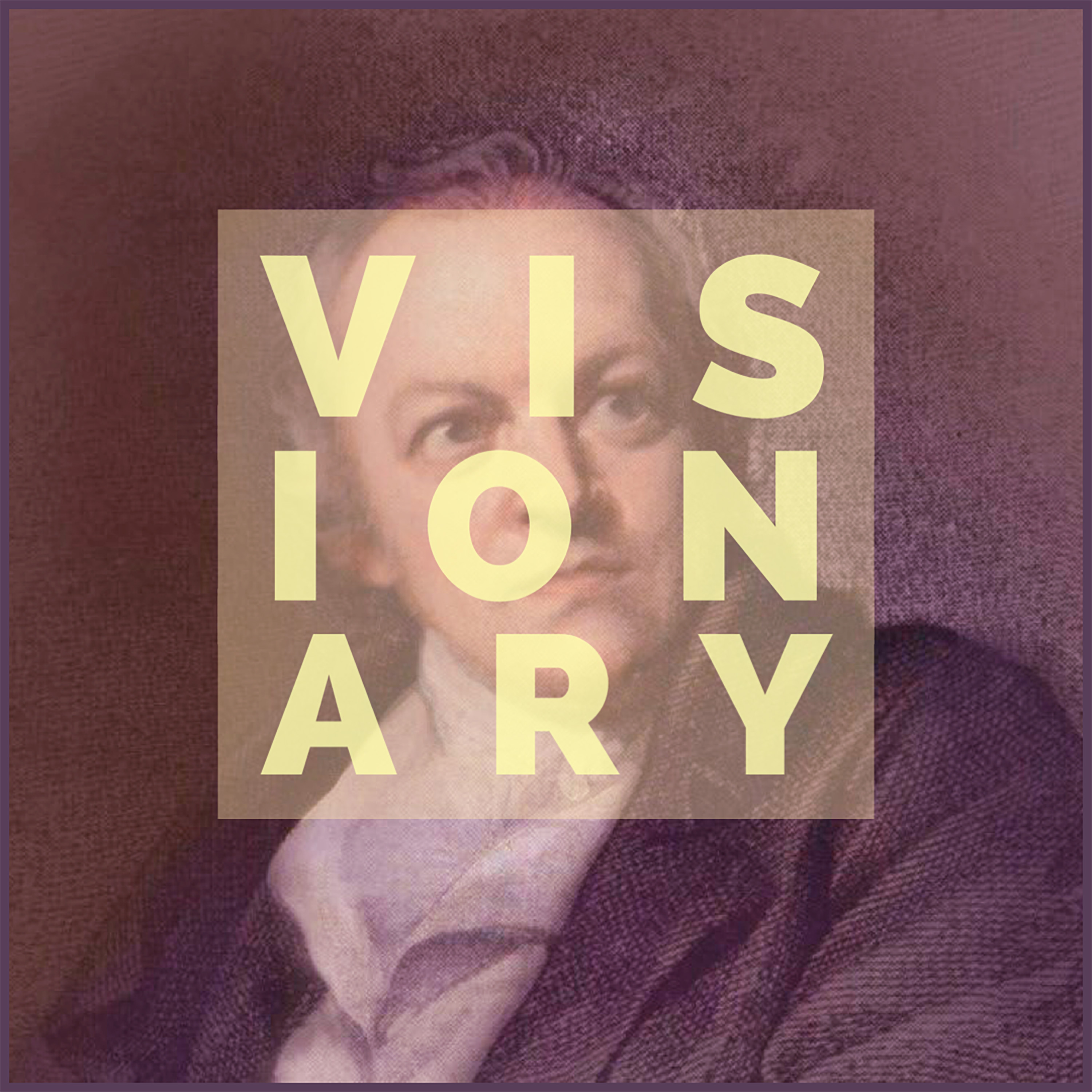
Blake and Tolkien's Mythmaking
In their various ways, William Blake and J. R. R. Tolkien are two of the most important creators of imaginary worlds in literary history, having inspired generations of writers and artists to devise their own myths and legends. In this podcast, Jason Whittaker is joined by Sharon Choe, William Sherwood and Annise Rogers to discuss the ways in which Blake and Tolkien shared a fascination with the m

William Blake and the Idea of the Body
In this podcast, Hannah McAuliffe, Jon Mee, and Sharon Choe (Centre for Eighteenth Century Studies, University of York) discuss William Blake's changing conception of the body. The podcast considers Blake's visual and poetic depictions of the body and how he uses the body as a metaphor both in his work and for his work. The episode covers Blake's education and early work, his prophetic poetry, his
Recommended

The Human-Animal Connection - Pet Life Radio Original

The Daily
World News Tonight with David Muir

English Vocabulary Help
The Joe Rogan Experience
TED Talks Daily

Learn English B1 with Daily News | English Listening Practice

Talk About Talk - Executive & Leadership Communication Skills
English with Olivia | Slow Conversations & Vocabulary
Stand In The Circle
SLOW ENGLISH PODCAST (A1-A2) With Subtitles | Daily Videos | English With Us Podcast

Learn English A2 with Daily News | Simple English Listening Practice
