Grammar Girl: For Writers and Language Lovers.
Grammar Girl provides short, friendly tips to improve your writing and feed your love of the English language. Whether English is your first language or your second language, these grammar, punctuation, style, and business tips will make you a better and more successful writer. The podcast is a five-time winner of Best Education Podcast in the Podcast Awards. It is a Quick and Dirty Tips podcast.
Episodes
Why does 'Here comes he' sound so wrong?
1228. This week, we look at why "Here comes the bride" sounds right but "Here comes he" sounds wrong. Then we have an update on Zipf's law: after whales and dolphins, researchers may have found it in birdsong too.The "here comes he" segment was written by Ray Belli, a longtime podcaster, musician, and language writer. You can find him at WordsforGranted.libsyn.com
Famous quotes we've been getting wrong, from Robert Frost to 'Don't mess with Texas,' with Eli Burnstein
1227. This week, we talk to Eli Burnstein, author of "Phrased & Confused." We look at why Robert Frost's "road less traveled" wasn't really less traveled, and why the other half of Stewart Brand's "information wants to be free" will make you think about it differently. Then we look at why "Hell is other people" isn't about crowds and how
Is it 'try and' or 'try to'? What does an epilogue do?
1226. This week, we look at why so many people say "try and" instead of "try to," including why it may be the older form, why it turns up more in speech than in writing, and why it bothers Americans more than Brits. Then we look at what an epilogue actually does, whether one can belong to a single essay in a collection, and how it differs from an afterword, a postscript, and a
'Rizz,' 'lost in the sauce,' and Dictionary.com's newest words, with Steve Johnson
1225. This week, we talk to lexicographer Steve Johnson from Dictionary.com. We look at how slang like "no cap" and "throw hands" works its way up from a separate slang dictionary, why one lexicographer fought against adding "rizz," and where "lost in the sauce" comes from. Then we look at what "overprompting" says about how we talk to AI, why food
Why are ships called 'she'?
1224. This week, we look at why English speakers call ships "she," even when the ship is named Henry. Then we have a follow-up on "maxxing" from two listeners, including its roots in 1990s gaming and a cameo in the "Fresh Prince of Bel Air" theme song.The ships segment was written by Karen Lunde. Find her on igofirst.org.A hearty thank-you to our Keepers of the Commas
What's in a word? Mapping America's regional vocabulary and the Linguistic Atlas Project, with Allison Burkette
1223. This week, Valerie Fridland steps in for Mignon and sits down with linguist Allison Burkette of the Linguistic Atlas Project at the University of Kentucky. They look at what "lightwood" and "chifforobe" reveal about landscape and colonial contact, how "kindling" gave us "Kindle" and "Tinder," and the 380-plus recorded terms for cornbread. Then they look at why words rarely truly "die," even
How often do you use 'the'? Meet Zipf's law
1222. This week, we look at Zipf's law, a pattern that shapes how often you use your most common words, and why SETI researchers think it could help identify alien communication.Save the date for Grammarpalooza — The Game Show: Thursday, September 24 at 5 p.m. PT / 8 p.m. ET.A hearty thank-you to our Keepers of the Commas and one Immortal on Patreon. We appreciate your support!Larry RosenblumM
Min-maxxing, looksmaxxing, and Nixon-maxxing, with Roger Kreuz
1221. This week, we talk to Roger Kreuz, associate dean at the University of Memphis, about the "maxxing" craze. We look at how it started with min-maxxing in 1990s gaming culture, how looksmaxxing spread from the manosphere, and why it isn't quite a suffix. Then we look at what that second X is doing, why "Nixon-maxxing" might be peak maxxing, and why a brand picking up your slang usually kills i
Why do pirates say 'Arr'? Is it 'none is' or 'none are'?
1220. This week, in honor of Talk Like a Pirate Day, we look at the history of eight pirate words, and then we look at whether the right pairing is "none is" or "none are."Save the date for Grammarpalooza — The Game Show: Thursday, September 24 at 5 p.m. PT / 8 p.m. ET.A hearty thank-you to our Keepers of the Commas and one Immortal on Patreon. We appreciate your support!Larry RosenblumMahala Russ
Stray Russian words and made-up style rules, with Daniel Heuman and Chris Ryder
1219. This week, we talk to Daniel Heuman and Chris Ryder from Intelligent Editing about the errors hiding in AI writing that looks flawless. We look at why it invents its own rules when you ask for Chicago or AP style, why it goes wrong in the middle of a document rather than at the ends, and why an AI that over-edits is harder to clean up than one that under-edits.Find Daniel and Chris on Linked
Who's a good boy? The science behind 'dog voice.' Is it 'bated breath' or 'baited breath'?
1218. This week, we look at "dog-directed speech" — the high-pitched, sing-songy register people love to use with dogs — and what the research says about whether dogs actually like it. Then we look at why it's "bated breath" and not "baited breath," and how Shakespeare used the phrase in "The Merchant of Venice." Plus, we have a familect about "spicy water."The dog segment was by Karen Lunde, a ca
How we got from no spaces between words to the interrobang, with Florence Hazrat
1217. This week, we talk to Florence Hazrat, author of "On the Mark," about how punctuation evolved over 2,000 years. We look at why ancient Greek and Roman writing had no spaces between words, how a librarian in Alexandria introduced the first marks to help readers, and why the Renaissance brought a burst of new punctuation that then mostly stopped. Then we look at why a period can make a short t
Why do so many last names sound like jobs?
1216. In honor of Labor Day, we look at occupational surnames — why Baker, Cooper, and Fletcher sound like jobs, and why Wainwright, Chandler, and Fuller were jobs too, even though they don't sound like it anymore. We also look at how names like Webster and Baxter preserve an Old English suffix for women's work.The jobs segment was by Karen Lunde, a career writer and editor. She writes I'll Go Fir
Explosions, chemistry, and dictionary 'spite,' with Kory Stamper
1215. This week, we talk to Kory Stamper about why color science is surprisingly dangerous. We look at the literal chemical explosions at DuPont dye labs and the bitter rivalry between Webster’s Third and the American Heritage Dictionary. Then, we look at Kory's top three book recommendations for fellow color nerds. This bonus discussion originally aired for Grammarpaloozians in April. To hear the
It's Greek to me: Why is the language of 'The Odyssey' shorthand for all that we don’t understand?
1214. This week, we look at why we say, "It's all Greek to me" when we don't understand something. We trace the phrase from medieval monks who couldn't read Greek manuscripts to Shakespeare's "Julius Caesar," and look at how other languages, like Czech, German, and Cantonese, express the same idea of incomprehension.The Greek segment was written by Valerie Fridland, a professor of linguistics at t
Sarah L. Kaufman on the shared rhythm of dance, critical writing, and finding better verbs
1213. Pulitzer-Prize-winning dance critic Sarah L. Kaufman goes deeper into her journey from the "Washington Post" copy desk to the world of professional dance criticism. We look at how writing about an art form is the ultimate exercise in verb selection, why our brains physically react to words like "meander" or "zigzag," and how to find the "zing" in your writing by juxtaposing unusual adverbs w
What 'kith and kin' and 'beck and call' have in common
1212. This week, we look at fossil words — old words like "kith," "beck," and "hue" that survive only inside phrases like "kith and kin," "beck and call," and "hue and cry." We also look at listener follow-ups about the game "huckle buckle beanstalk" and the "Nimrod" mascot of Watersmeet, Michigan, plus a familect about "lawn motors" and "underbrellas."The fossil words segment was by Karen Lunde,
Word wagons and bobbasheelys: Life at DARE, with Joan Houston Hall
1211. Today, we look at the behind-the-scenes history of the Dictionary of American Regional English with Joan Houston Hall. We look at her personal journey into linguistics, the "word wagons" that traveled the country to collect oral histories, and the fascinating origins of regional words like "scrid" and "bobbasheely." Finally, Joan shares her top three book recommendations for fellow word love
Why does 'shh' mean the same thing in so many languages, and what's 'broad' about daylight?
1210. This week, we look at why the sound "shh" means "be quiet" in so many different languages, and we trace the phrase "broad daylight" back to Old English to find out why it shows up so often in crime stories.The "Shh" segment was by Karen Lunde, a career writer and editor. She writes I'll Go First, a newsletter where she shares her story, then hands you a writing prompt and a metaphorical pen.
How comics are made, with Glenn Fleishman
1209. Glenn Fleishman discusses the mechanical journey of a comic strip, from the cartoonist’s ink to the final newspaper page. We look at why drawing close to size helped “Calvin and Hobbes” creator Bill Watterson save money, and how a political resignation in 1973 led to a week of "Doonesbury" strips that never officially ran. This episode originally ran back in February for the Grammarpaloozian
Why does the U.S. have so many regional accents?
1208. This week, linguist Valerie Fridland explains why the U.S. has so many regional accents — tracing New England, Mid-Atlantic, Southern, and Western speech back to where their first settlers came from, and how we can still hear "founder effects" in the way we talk today.Valerie Fridland is a professor of linguistics at the University of Nevada in Reno and author of "Why We Talk Funny: The Real
Why "golly" and "gosh" are going the way of the dinosaur, with Sali Tagliamonte
1207. This week, we look at the hidden linguistic history of Ontario with Sali Tagliamonte. We look at why euphemisms like "golly" and "gosh" are going the way of the dinosaur, the surprising connection between Northern Ontario and the Southern U.S., and how Canadian words like "gas bar" and "Muskoka chair" finally made it into the Oxford English Dictionary. This episode ran for Grammarpaloozians
The secret language of gamers. Plus, why ducks don't ‘duck’ from danger
1206. This week, we look at the secret language of video gamers — including why getting "nerfed" is a bad thing and what it means to "rage quit" — and we answer a listener's question about whether the bird "duck" or the verb "duck" came first and whether real ducks actually duck for cover.The duck segment was by Karen Lunde, a career writer and editor [who spent nine years as a video game journali
'Writing for AI' and the flaws of AI detectors, with Sean Goedecke
1205. In the bonus discussion this week, we continue discussing AI em dashes with Sean Goedecke, software engineer for GitHub. We talk about why AI detectors are often unreliable and how they can disproportionately flag non-native English speakers. We also look at the controversial idea of "writing for AI" to ensure your ideas are represented in future machine learning models. This episode ran for
Shark Week: 6 sayings from pop culture
1204. This week, in honor of Shark Week, we look at six fun shark sayings from pop culture, including "jumping the shark," "voodoo shark," and more. The shark segment was written by Samantha Enslen, who runs Dragonfly Editorial. You can find her at dragonflyeditorial.com.🔗 Join the Grammar Girl Patreon.🔗 Share your familect recording in Speakpipe or by leaving a voicemail
Decoding the Chinese character paradox, with Dr. Charles Kemp
1203. In this bonus discussion with Dr. Charles Kemp, we look at why the Chinese writing system has actually become visually more complex over thousands of years. Dr. Kemp explains how his team used "perimetric complexity" to measure characters and why the need for distinctiveness in a growing vocabulary overrides the natural drive for simplicity. This episode ran for Grammarpaloozians in January
Isn't it ironic? Plus, the man behind the guillotine
1202. This week, we look at the tricky question of what makes something ironic, including situational irony, verbal irony, and "skunked" words, with help from psychologist and author Roger Kreuz. Then, for Bastille Day, we look at how the guillotine got its name (ironically) from a man who actually opposed the death penalty.The "ironic" segment was by Roger Kreuz, associate dean and professor of p
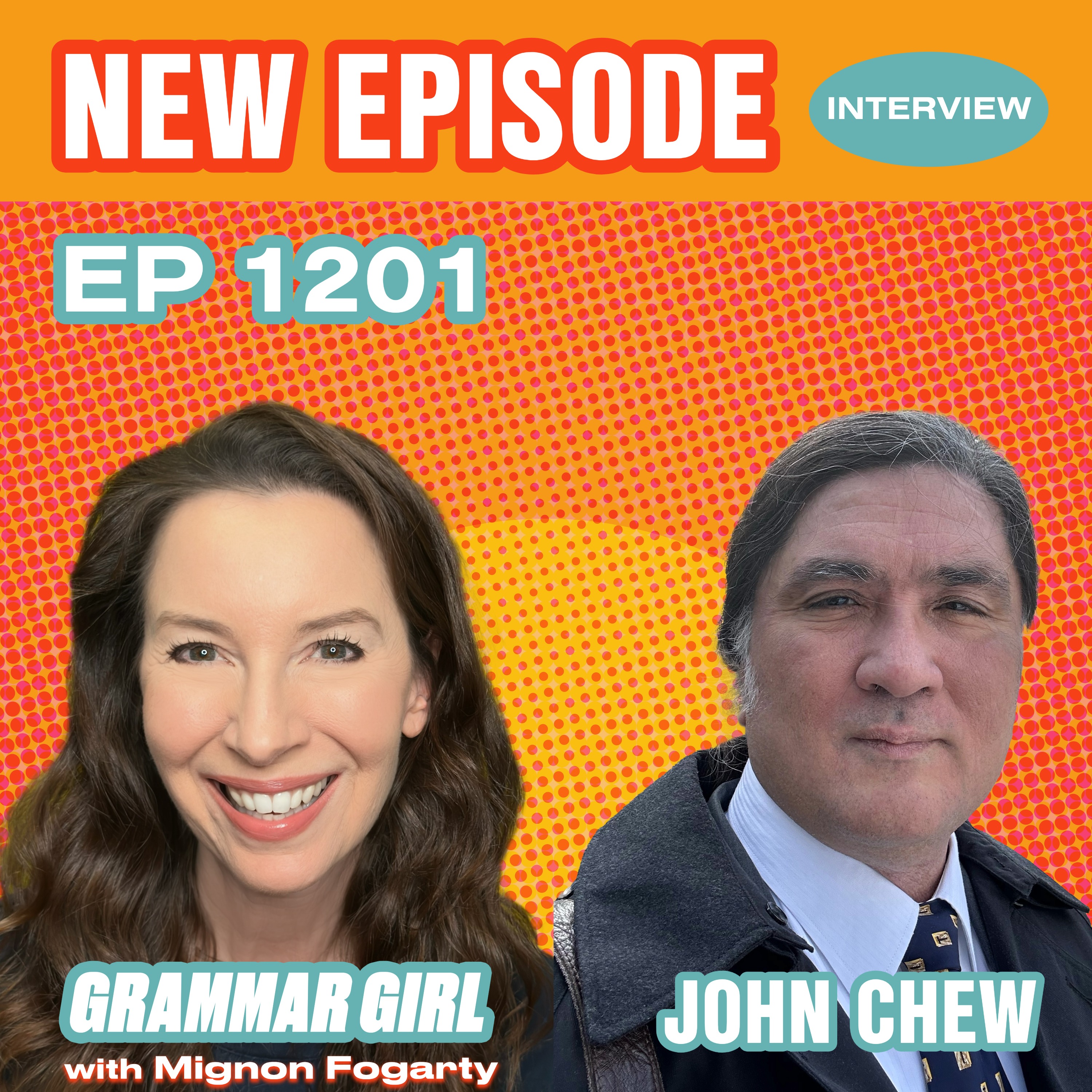
Saving Canadian lexicography, with John Chew
1201. In this bonus discussion from January, we look at why Canada has been without a current homegrown dictionary for twenty years and how John Chew is leading the charge to fix it. We look at how John got the job and the unique challenges of funding a dictionary in a bilingual country. John also shares how his aphantasia — the inability to visualize imagery — actually makes him a better data org
Snowclones: fill-in-the-blank phrases we can’t stop remixing. Plus, is it 'RBIs' or 'RBI'?
1200. This week, we look at snowclones like “X is the new Y,” including where the name came from and why we find them so satisfying. Then, we look at how to make abbreviations like “RBI” plural, including questions about apostrophes, single letters, and periods.The snowclones segment was written by Karen Lunde. Find her on igofirst.org.🔗 Join the Grammar Girl Patreon.🔗 Share your familec
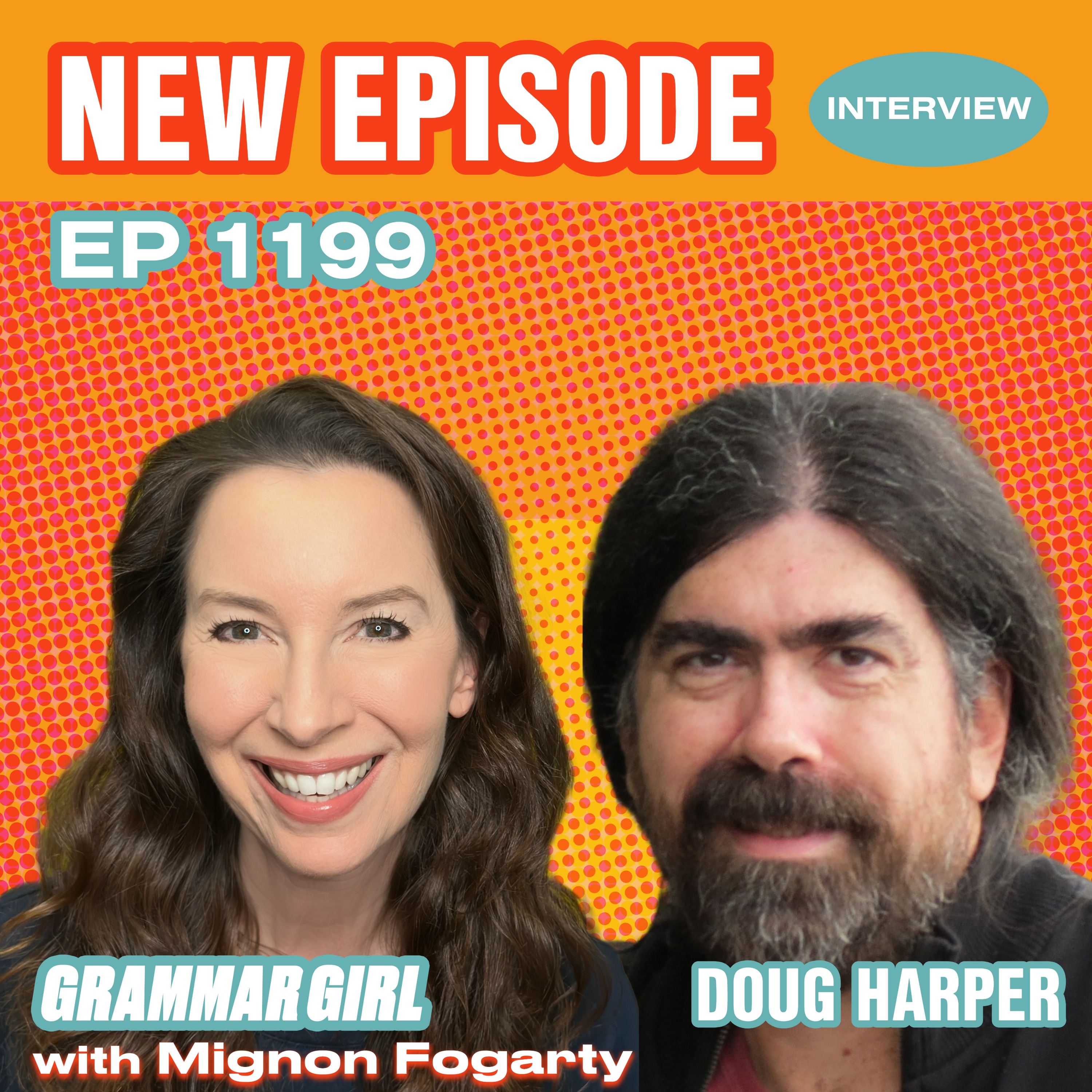
Building a beloved resource for word lovers, with Doug Harper
1199. In this bonus episode first released to Grammarpaloozians in January, we look at what it means to turn a "channeled obsession" into a resource used by millions of language fans. Doug Harper shares how he built Etymonline as a solo act, fueled by late-night shifts and "ink in his blood." We also look at the "Nimrod" mystery — from a biblical king to a Bugs Bunny insult — and the obsessive sid
How to answer the question 'What's your book about?'
1198. This week, we look at how to answer the question every author dreads: "So, what's your book about?" with workplace communications coach Joel Schwartzberg. We look at the difference between describing a book and selling it, how nonfiction authors can craft point-driven responses, and how fiction writers can distill their stories into a compelling pitch.Joel Schwartzberg is a workplace communi
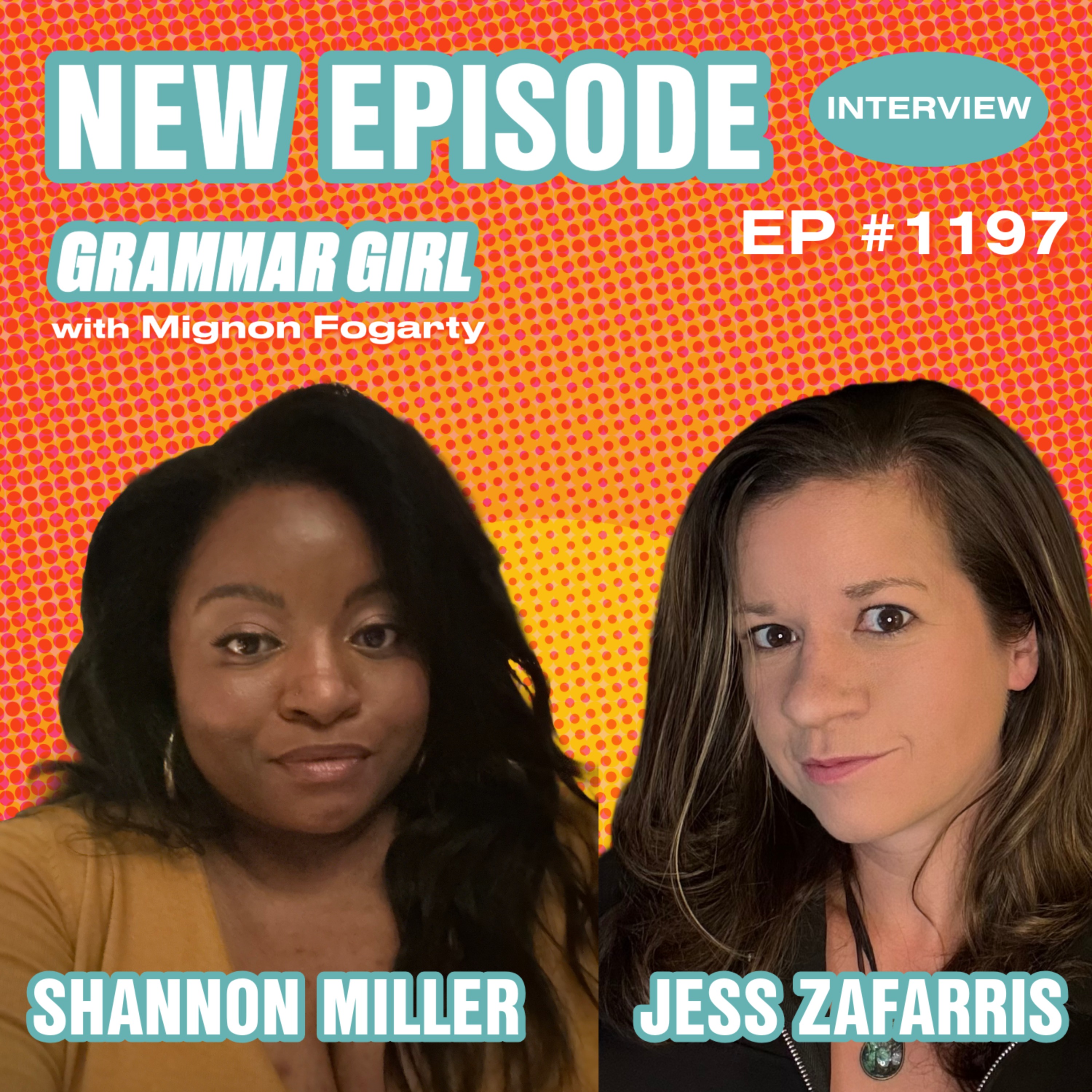
Fossil words, eponyms, and a miscellany of weird facts, with Jess Zafarris and Shannon Miller
1197. This week, guest host Valerie Fridland steps in for Mignon and talks to Jess Zafarris and Shannon Miller about their new book, "A Miscellany of Weird and Wonderful Facts for Curious Humans." They look at fossil words, eponyms, and the surprising origin of the word "electric." They also look at mountweazels, the medieval roots of modern romance, and why emoji has nothing to do with emotion.&n
Why 'love' means 'zero' in tennis
1196. This week, we look at why "love" means "zero" in tennis, from egg-shaped zeros to playing for the love of the game, and how the sport's quirky 15-30-40 scoring system came to be. 🔗 Join the Grammar Girl Patreon.🔗 Share your familect recording in Speakpipe or by leaving a voicemail at 833-214-GIRL (833-214-4475)🔗 Watch my LinkedIn Learning writing courses.🔗&
Tomi Adeyemi: The writing life
874. With her book "Children of Blood and Bone" spending 120 weeks on the New York Times bestseller list, Tomi Adeyemi knows what it takes to write a great book. Listen in on my conversation with this charming writer about her thoughts on the writing life and the craft of storytelling.Encore Episode: This episode originally aired in May of 2022. We also discuss a writing masterclass Tomi was offer
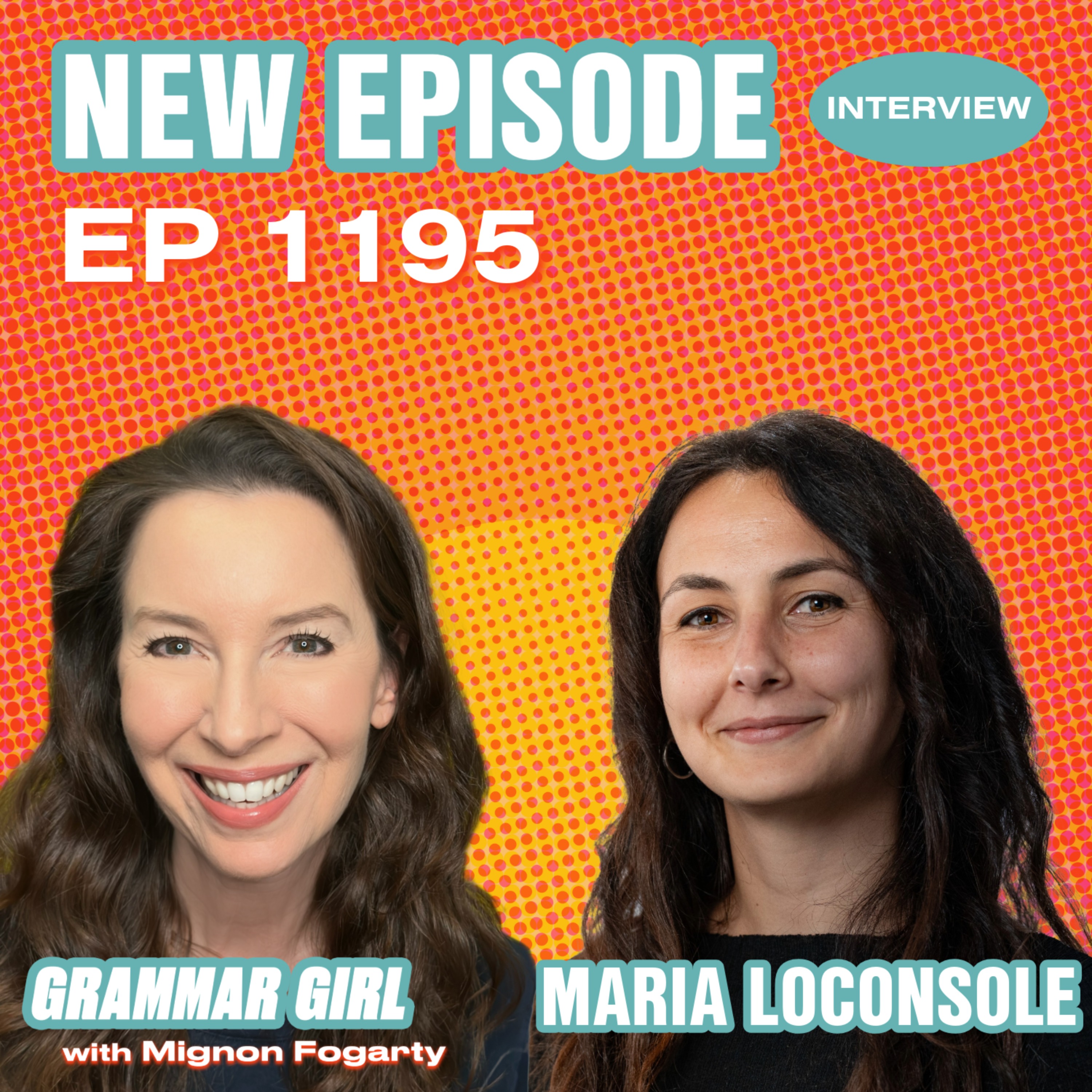
The bouba-kiki effect in baby chicks, with Dr. Maria Loconsole
1195. This week, we talk to Dr. Maria Loconsole from the University of Padua about her research into the bouba-kiki effect, the near-universal tendency to associate round shapes with "bouba" sounds and spiky shapes with "kiki" sounds. We look at what her experiments with newly hatched chicks reveal about whether this association predates language entirely. "Matching sounds to shapes: Evidence
The secret code of weather forecasts
1194. This week, we look at weather forecast terminology, including why "mostly sunny" and "partly cloudy" aren't the same thing, what "oktas" are, and how terms like "breezy," "scattered," and "likely" are officially standardized by the National Weather Service — even if your favorite TV meteorologists adds their own spin.🔗 Join the Grammar Girl Patreon.🔗 Share your familect recording i
Randall Munroe of xkcd: Language chat and weird bee laws.
898. Randall Munroe joined me back in October 2022 to talk about his language-themed xkcd cartoons, his simple-language project Up Goer V, his biggest pet peeve, his favorite words, and his new book "What If? 2." But I have to confess that my favorite part was his tidbits about the bee laws.Encore Episode: This episode originally aired in October of 2022. This summer, I'm bringing back a few fan f
What it really takes to translate Shakespeare, with Daniel Hahn
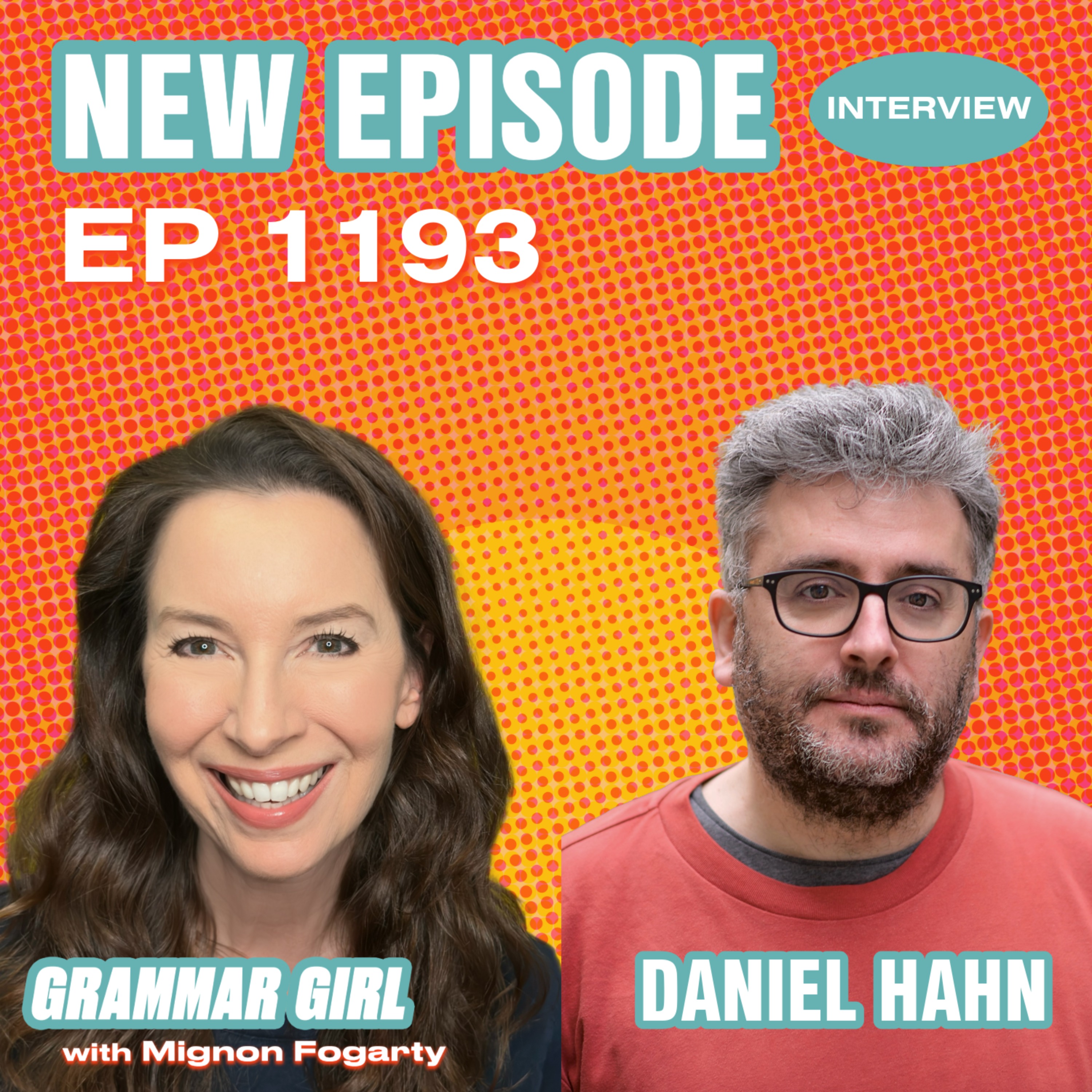
1193. Today, we talk to award-winning translator Daniel Hahn, author of "If This Be Magic," about what it really takes to translate Shakespeare, starting with the philosophical paradox at the heart of all translation: changing every single word while changing nothing at all. We look at the special challenges Shakespeare poses, including preserving rhyme and meter in languages that work completely
How to get started as a freelance writer
1192. How do you get your first writing jobs when you don’t have much experience? Grammar Girl shares stories from her own early career and offers advice on finding a niche, spotting opportunities, making industry connections, timing your outreach, and building a reputation as a reliable hire. Expert advice for navigating life after graduation — for new grads and the people cheering them on.
The case for language clarity, with Iva Cheung
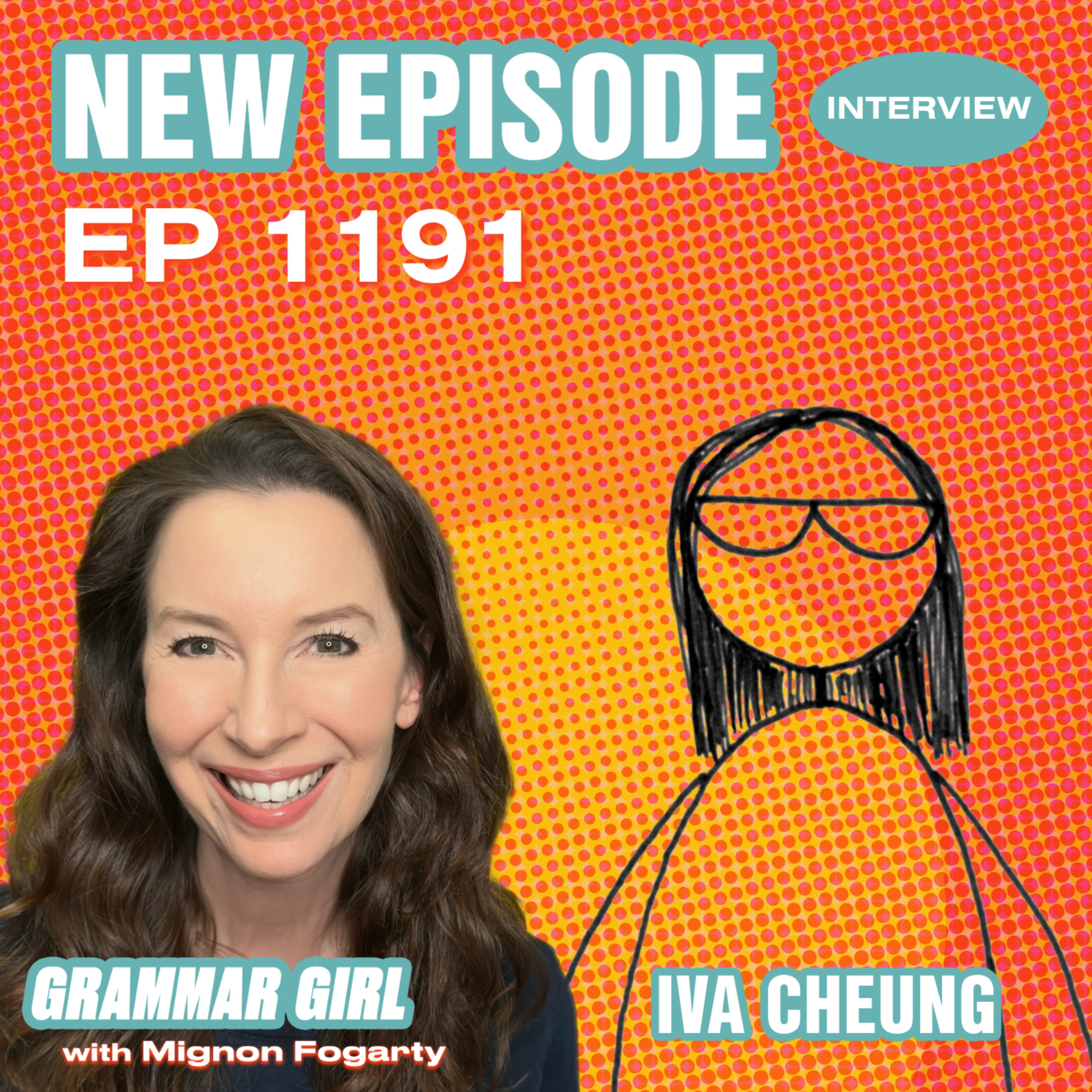
1191. This week, we talk to Iva Cheung, a plain language expert and editor who has helped shape Canada's accessibility standards. We look at what plain language actually means (it's more than just short words and simple sentences) and why it matters for healthcare, legal rights, and everyday communication. Then we explore cognitive load theory, the expertise reversal effect, and why user testing i
Does Yoda speak 'real' English? Is it 'a real trouper' or 'a real trooper'?
1190. This week, we look at what makes Yoda's English special, and we look at the difference between “trooper” and “trouper,” including whether singular “troop” may be short for “trooper” and why “a real trouper” is the traditional spelling. 🔗 Join the Grammar Girl Patreon.🔗 Share your familect recording in Speakpipe or by leaving a voicemail at 833-214-GIRL (833-214-4475)
Everyone has a story to tell, and why your memoir matters, with Grant Faulkner
1189. This week, we talk to Grant Faulkner, co-founder of Memoir Nation and former executive director of NaNoWriMo, about what makes writing a memoir different from writing fiction. We look at why memory is more story than recording, how trauma fragments the way people use language and narrative structure, and why you don't need an extraordinary life to write a compelling memoir. Grant also explai
How ‘bee’s knees’ became high praise, and why do recipes sound so bossy?
1188. This week, we look at how “the bee's knees” went from meaning something tiny to the cheeriest slang of the 1920s — and why it outlasted the cat's pajamas and the clam's overshoes. Then, we look at why recipes boss you around with phrases like “fold in cheese” and how cookbook language evolved from chatty medieval notes into clipped, no-nonsense commands.The "recipe" segment was by Karen Lund
Why your topic isn't a point (and how to fix it), with Joel Schwartzberg
1187. Today, we talk to workplace communications coach and author Joel Schwartzberg about how to clearly and effectively get to the point, and he outlines how his clients use AI as a communication tool without losing their authentic voice. Joel Schwartzberg's website.🔗 Join the Grammar Girl Patreon.🔗 Share your familect recording in Speakpipe or by leaving a voicemail at 8
How many people is a 'troop'? Why spelling bees are called 'bees.'
1186. This week, we look at why the word "troops" is surprisingly ambiguous and what style guides say about using it to refer to individual service members. Then, we look at why spelling bees are called "bees" and explore fun bee-related phrases like "a bee in your bonnet," "make a beeline," and "put the bee on someone." 🔗 Join the Grammar Girl Patreon.🔗 Share your familect recordin
The hidden logic of English spelling, with Colin Gorrie
1185. Today, we look at why English spelling is secretly optimized for readers. Colin Gorrie, linguist and creator of the Dead Language Society newsletter, shared the real history of silent letters, why medieval scribes weren't bothered by inconsistent spelling, and how the printing press and social ambition drove standardization. We also look at the surprisingly dramatic origin of "went" — a past
How the Crusades gave us 'lingua franca.' 'That' or 'who' for animals? Doot doot doot
1184. This week, we look at the history of lingua francas, from the original mix of Italian, French, Spanish, Arabic, and Turkish used during the Crusades to today's global English. Plus, we look at whether it's wrong to use "who" for animals, "that" instead of "who" for people, and "whose" for inanimate objects.The lingua franca segment was written by Alexandra Aikhenvald, a Professor and Austral
Meeting the new editor, with AP Stylebook's Anna Jo Bratton
1183. This week, we talk to Anna Jo Bratton about leading the committee that decides the rules for the "journalism bible." We look at how the team "pressure-tests" new rules and why the process isn't a democracy. Then we look at major updates for 2026, including the new AI chapter and the decision to make "healthcare" one word. 58th Edition of the Associated Press Stylebook, out May 27Join my
Decoding the colon: AP vs. MLA style. Plus, words with no known origin.
1182. This week, we solve the mystery of the colon: when do you actually need to capitalize the next word? We compare AP, Chicago, and MLA styles to give you a clear answer. Then, we look at common words with surprisingly "shadowy" histories — from the sudden appearance of the word "dog" to the apocryphal origin of "quiz."The words with no origins segment was written by Karen Lunde. Find her on ig
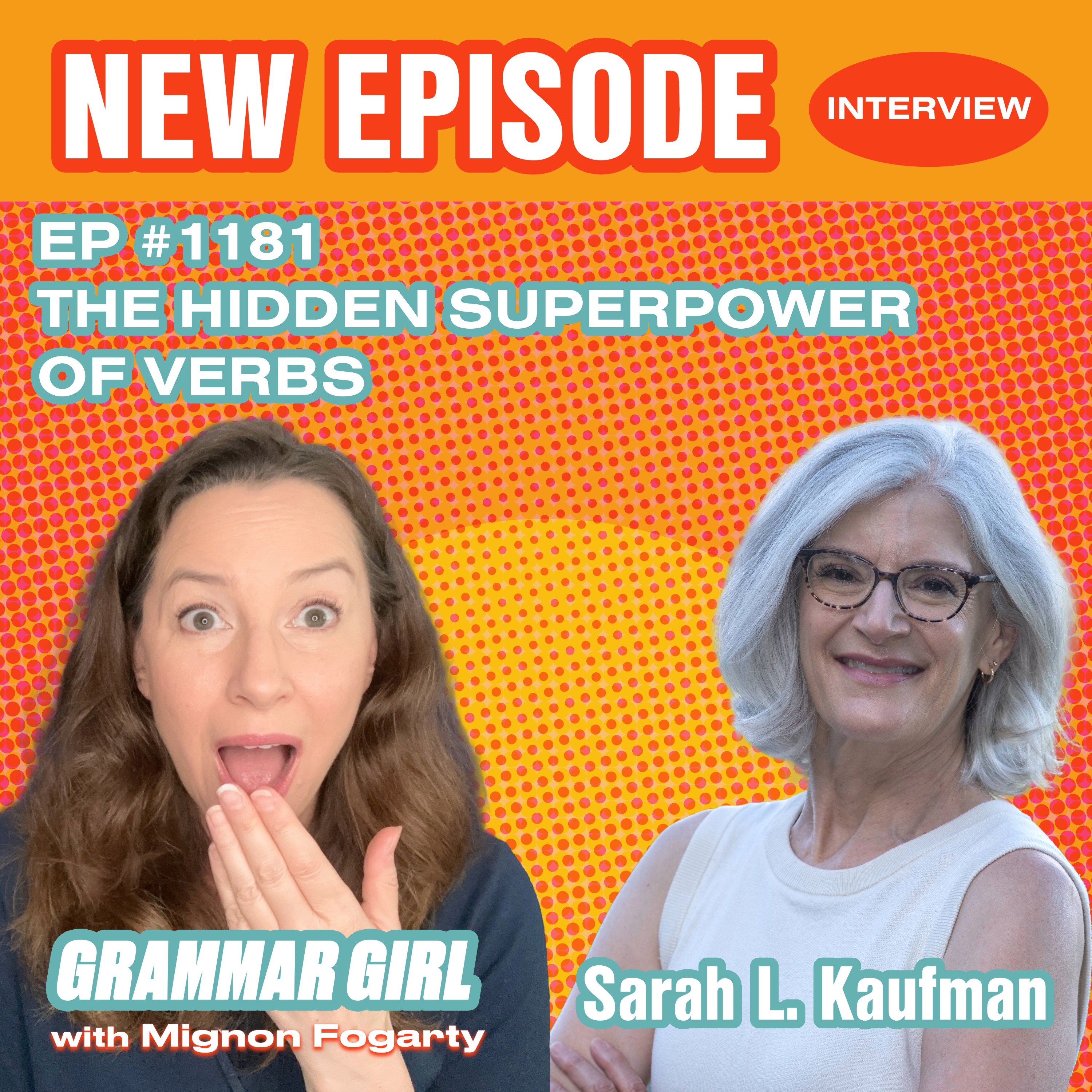
The hidden superpower of verbs, with Sarah L. Kaufman
1181. This week, we talk to Sarah L. Kaufman about verbs. We look at why English is a "manner verb" superpower and why babies often learn prepositions before actions. Then, we look at how choosing strong, dynamic verbs can actually save lives during a disaster and how specific words like "smash" can physically alter a witness's memory.Find Sarah L. Kaufman at sarahlkaufman.comGet Sarah’s books, “V
Why English creates so many words spelled the same. Why we say 'ye olde' instead of 'the old.'
1180. Why does "Ye Olde Shoppe" look old-fashioned? This week, we look at the vanished letters of English — thorn, eth, and yogh — and at why English has so many words that are spelled the same but have different meanings, such as "compact" (an agreement) and "compact" (to press together). The homographs segment was written by Samantha Enslen who runs Dragonfly Editorial. You can find her at

'Why We Talk Funny.' The reasons behind our accents, with Valerie Fridland
1179. This week, we talk to Valerie Fridland, a linguist and professor who grew up in Memphis surrounded by Southern accents and now researches the history and social power of speech. We look at her new book, "Why We Talk Funny: The Real Story Behind Our Accents," which explores the history of how American speech developed and how colonial settlement patterns shaped regional identities. Then we lo
Should you start a sentence with 'hopefully'? Why we might not recognize alien language.
1178. Do you cringe when someone says "Hopefully, he'll pass the test"? This week, we look at why "hopefully" as a sentence adverb has been controversial for decades, even though the Associated Press accepted it in 2012, and it's been common since the 1930s. Then, we look at xenolinguistics — the study of alien languages — asking what human languages have in common and why (and how) alien language
Inside the life of a curator (and the myth of white gloves), with John Overholt.
1177. This week, we look at behind-the-scenes of being a curator at Harvard's Houghton Library with John Overholt. We look at why 18th-century paper is surprisingly tough, how John managed the high-stakes transport of a George Washington book, and why curators actually prefer bare hands over white gloves. This bonus discussion originally ran for Grammarpaloozians back in January.Find John Overholt
Why 'stressed' spelled backwards reveals a delicious truth. 'Me' versus 'myself'
1176. This week, we look at mind-bending words, including "semordnilap" (which spells "palindromes" backwards), "pentasyllabic" (which has five syllables), and "hyphenated" (which is not hyphenated). Then, we tackle how to use "me" and "myself" (with an aside for "hisself," "meself," and more fun dialect words).The "palindrome" segment was by Karen Lunde, a career writer and former Quick & Dir
Losing clients to AI, and how to gain them back, with Suzanne Bowness
1175. In this bonus segment, which originally aired last October for Grammarpaloozians, we look at how AI is disrupting the freelance writing industry with author Suzanne Bowness. She shares her strategy for experimenting with different AI tools and the importance of being "conversant" in them for clients. We also look at the challenge of losing clients to AI but gaining new ones who were dissatis
What the way we pronounce Iran says about us. Odorous or malodorous? When smell words stink.
1174. This week, we look at why we pronounce "Iran" and "Iraq" differently and what those pronunciations reveal about our political beliefs. Then, we look at the "smelly" words that confuse people, including "odorous," which started out meaning "fragrant" but now mostly describes bad smells.The "Iran" segment was written by Valerie Fridland, a professor of linguistics at the University of Nevada i
The 3,000 hidden colors of the dictionary, with Kory Stamper
1173. This week, we talk to former Merriam-Webster editor Kory Stamper to discuss her new book, "True Color." We look at the obsessive, "dictionary-ese" world of color definitions, looking at why the dictionary includes over 3,000 color names like "begonia" and "fiesta," and why the experts once insisted that "gray" and "grey" were actually two different colors.Find Kory Stamper at KoryStamper.com
Denim: Secret place names hiding in plain sight. Why the principal is more than your pal.
1172. This week, we look at "toponyms" — words named after places — and you'll discover the hidden place names in denim, jeans, sherry, cantaloupe, and more. Then, we break down "principal" versus "principle," with memory tricks so you'll never forget the difference again.The "toponyms" segment was written by Karen Lunde, a longtime writer and editor turned web designer and marketing mentor.
The crossword puzzle's role in World War II and the fight against Nazism.
1171. In the bonus segment that aired for Grammarpaloozians in November, we look at the early history of crossword puzzles and their surprising political uses. Natan Last explains how the “New York Times” crossword, which premiered during World War II, was used to boost morale and support the Allied war effort. We also look at the cultural frenzy of "crossworditis" in the 1920s and why libraries b
Feghoots: Groan-worthy story puns. How your brain stores words.
1170. This week, we look at "feghoots," the pun-based stories popularized by writers like Isaac Asimov, and why they are designed to make you roll your eyes. Then, we look at how your brain stores words and the lightning-fast way it retrieves them during a normal conversation.🔗 Join the Grammar Girl Patreon.🔗 Share your familect recording in Speakpipe or by leaving a voicemail
The ‘Tale of Two Dictionaries,’ with Peter Sokolowski
1169. In this bonus segment, originally released in November, we look at Peter Sokolowski's "Tale of Two Dictionaries," tracing the word "dictionary" back to a 16th-century Latin work by a monk named Calepino. We look at how this original source led to the first monolingual dictionaries in both English and French, all within a year of each other.Find Peter on BlueSky.🔗 Join the Grammar Girl Patreo
Why leprechauns are shoemakers. The March equinox versus the vernal equinox.
1168. This week, we look at the word "leprechaun" and its surprisingly wild origin story involving shoemaking, ancient Rome, and wolf-men. Then we look at the word "equinox": its Chaucer connection, the newer word "equilux," and why the first point of Aries is actually in Pisces now (and headed for Aquarius).🔗 Join the Grammar Girl Patreon.🔗 Share your familect recording in Speakpipe or by leaving
'Mini' and 'factoid' don't mean what you think, with Jess Zafarris
1167. In this bonus segment that originally ran for Grammarpaloozians last October, we look at the surprising true origins of words that often fool people. We explore why "miniature" originally referred to a red color and not a size; the true, non-factual meaning of "factoid"; and how "hello" only became a common greeting because of the telephone. We also examine the indirect eponym behind the wor
Is the Academy Awards singular or plural? Writing about time.
1166. This week, we look the grammar of the Academy Awards and how to avoid an "illogical plot twist" in your sentences. Then, we look at common time-related redundancies like "period of time," the proper way to use "a.m." and "p.m.," and why the abbreviation UTC doesn't actually match its name. The Academy Awards segment was written by Jim Norrena.🔗 Join the Grammar Girl Patreon.🔗 Share your fami
Mapping the American Tongue: The Dictionary of American Regional English (DARE), with Joan Houston Hall
1165. Today, we talk with Joan Houston Hall to look at the monumental task of documenting how Americans speak. We look at the Dictionary of American Regional English (DARE), exploring the unique folk words that survive outside of standard dictionaries and how "word wagons" traveled the country to map the "egg turners," "pogonips," and "oncers" that define our regional identities."Dictionary of Ame
The history of the octothorpe. Sir Fragalot and sentence fragments. Dribzle.
1164. This week, we look at the origin of the octothorpe — also known as the pound sign or hashtag — and why it has so many different names. Then, we look at sentence fragments and the secret of "Sir Fragalot" to help you avoid common writing mistakes.A video of the man who invented snurfing.Free writing course on LinkedIn Learning. (Happy National Grammar Day!)The octothorpe segment was written b
How 'be like' took over the world, with Sali Tagliamonte
1163. This week, we look at what it’s like to be a "language detective" with Sali Tagliamonte and how she used her own teenagers as a research lab. We look at a 25-year study on how the phrase "be like" became a permanent fixture of English, why the word "very" is suddenly making a comeback with younger generations, and what happens to our language when we spend all day talking to AI.Sali Tagliamo
Why 'Tonka' sounds big and 'bitty' sounds small. Why you CAN start a sentence with 'because.'
1162. This week, we look at why some names just "feel right" while others don't and how vowels like "ee" create associations with smallness and sweetness while back vowels like "ah" sound bigger and more serious. Then, we look at dependent clauses and when it's OK to start a sentence with "because."The baby names segment was written by Valerie Fridland. 🔗 Join the Grammar Girl Patreon.🔗 Share your
WHY WE USE ALL CAPS TO SHOUT, with Glenn Fleishman
1161. Today, we look at the history of writing in all-uppercase letters. Tech historian Glenn Fleishman explains how capitals transitioned from a sign of importance to a convention for shouting. Plus, we discuss his research tracking the association between yelling and capital letters back to 1856 and why early newspapers used all capitals to make tiny type seem larger.Glenn Fleishman's website.🔗
Battle of the moguls. 'Awhile' versus 'a while.' Crittador.
1160. This week, we look at why "mogul" means both a ski bump and a powerful person. Then, we tackle when to use "awhile" versus "a while," with a trick to help you remember.🔗 Join the Grammar Girl Patreon.🔗 Share your familect recording in Speakpipe or by leaving a voicemail at 833-214-GIRL (833-214-4475)🔗 Watch my LinkedIn Learning writing courses.🔗 Subscribe to the newsletter.🔗 Take our adverti
Writing for ‘civic clarity’ (plus, the power of short sentences), with Roy Peter Clark
1159. This week, we look at "civic clarity" with writing instructor Roy Peter Clark in a newly edited version of our 2020 conversation. We look at the ethical code of clear communication and why "civic clarity" is more important now than ever. We also discuss the strategy of "writing short" for social media and how to navigate the difficult process of cutting a draft to find your focus.Poynter Ins
How bored tourists invented an Olympic sport. Centigrade or Celsius? Piqua
1158. This week, we go full Winter Olympics, tracing the origin of "ski," "luge," "toboggan," and more. Then, we look at why we say "Celsius" instead of "centigrade."🔗 Join the Grammar Girl Patreon.🔗 Share your familect recording in Speakpipe or by leaving a voicemail at 833-214-GIRL (833-214-4475)🔗 Watch my LinkedIn Learning writing courses.🔗 Subscribe to the newsletter.🔗 Take our advertising sur
Why AI loves em dashes, with Sean Goedecke
1157. This week, we look at AI em dashes with Sean Goedecke, software engineer for GitHub. We talk about why artificial intelligence models frequently use em dashes and words like "delve," and how training on public domain books from the late 1800s may have influenced these patterns. We also look at the role of human feedback in shaping "AI style."www.SeanGoedecke.com🔗 Join the Grammar Girl Patreo
Why 'forte' has three pronunciations. What is 'playing the dozens'? Ornish
1156. This week, we look at the pronunciation chaos surrounding "forte" and "pianoforte," from the French fencing term meaning "strong point" to the Italian musical direction meaning "loud." Then, we look at "playing the dozens" — the African American insult game with a mysterious origin.🔗 Join the Grammar Girl Patreon.🔗 Share your familect recording in Speakpipe or by leaving a voicemail at 833-2
How can there be hundreds of words for snow? with Dr. Charles Kemp
1155. This week, we look at whether it’s actually true that Inuit languages have hundreds of words for snow with Dr. Charles Kemp. We look at how researchers used a database of 18 million volumes to find out how our environment shapes our vocabulary using the Nida-Conklin principle. We also look at a surprising finding about words for rain being abundant in non-rainy regions.CharlesKemp.com🔗 Join
Scarecrows and other 'cutthroat' compounds. Reading versus listening. Squirrel Hill Tunnel.
1154. This week, we look at "headless" nouns like "scarecrow," "pickpocket," and "breakfast." We look at why these "cutthroat compounds" break the normal rules of English grammar. Then, we look at the science of reading versus listening, including how our brains process text differently from audio and why multitasking can affect your comprehension.🔗 Join the Grammar Girl Patreon.🔗 Share your famil
Scrabble strategy and tournament culture, with John Chew
1153. This week, we look at the high-stakes world of Scrabble tournaments with John Chew, head of the North American Scrabble Players Association. We look at the strict etiquette of the tile bag, why professional players count tiles, and how the official word list is managed for competitive play.NASPA website🔗 Join the Grammar Girl Patreon.🔗 Share your familect recording in Speakpipe or by leaving
What is a baker’s dozen? Making O-words plural. Wrong pew.
1152. This week, we look at what a baker's dozen is and why it's actually 13. We also look at other "dozen" phrases, like "devil's dozen" and "banker's dozen." Finally, we tackle the inconsistency of making words that end in O plural, from "tomatoes" to "rodeos."🔗 Share your familect recording in Speakpipe or by leaving a voicemail at 833-214-GIRL (833-214-4475)🔗 Join Grammarpalooza at Patreon.🔗 W
Building the Online Etymology Dictionary, with Doug Harper
1151. This week, we look at the deep history of words with Doug Harper, creator of Etymonline. We look at the "gravitational" link between digging a grave and having a grave problem, the surprising 1839 origin of "OK," and why some of our favorite word stories are actually "folk etymologies" designed as jokes.Etymonline.comVisit our YouTube channel to see the video version of this episode. 🔗 Share
Recommended
Talk About Talk - Executive & Leadership Communication Skills
English with Olivia | Slow Conversations & Vocabulary
Stand In The Circle
SLOW ENGLISH PODCAST (A1-A2) With Subtitles | Daily Videos | English With Us Podcast
Learn English A2 with Daily News | Simple English Listening Practice

پلی لیست | PlayList
Conspiracy Files with Paige Carter
Bad Friends

Learn 50 English Phrases While You Sleep | Everyday English Phrases & Vocabulary
This Past Weekend w/ Theo Von
Dateline NBC
Back to the 80s Radio
