
NASA's Curious Universe
NASA's Curious Universe is an official NASA podcast that explores mind-blowing science and space adventures. Hosted by Padi Boyd and Jacob Pinter, it features interviews with astronauts, scientists, and engineers. Listeners can learn about the wild and wonderful universe we share, from space exploration to aeronautics. The podcast is available at nasa.gov/podcasts.
Episodes

Encore: Welcome to the Dark Side
Normal matter—the kind that makes up our home planet and everything we can see—adds up to just five percent of the known universe. The other 95 percent is dark matter and dark energy. NASA’s Nancy Grace Roman Space Telescope will settle essential questions about this dark side, especially dark energy, one of the biggest mysteries in all of science. In this encore presentation, hear how NASA astrop

Roman Series: Liftoff!
NASA’s Nancy Grace Roman Space Telescope is in space, taking its first steps to explore the cosmos. Relive Roman’s launch—and the emotion that goes along with the roar of a rocket—with NASA experts who worked on the telescope for years. Plus, learn what happens next and when to expect Roman’s first images.
Learn more about the Nancy Grace Roman Space Telescope at nasa.gov/roman.
Roman Series: Why NASA’s Roman Space Telescope Will Make Unexpected Discoveries
Take a deep dive into the science of NASA’s Nancy Grace Roman Space Telescope with Julie McEnery, Roman's senior project scientist. Learn why Roman’s survey data will be so detailed that they could cover a 4K screen the size of dozens of city blocks and why Julie says she doesn’t hope Roman changes our understanding of the universe—she knows it will.
A video version of this episode is avai
Roman Series: The Technology Inside NASA’s Newest Space Telescope
What makes NASA’s Nancy Grace Roman Space Telescope a powerful tool with an unprecedented wide view of the cosmos? NASA engineers who designed, built, and tested Roman pop the hood to explain the unique technology inside. Go inside the huge NASA clean room where Roman was built, and get an up-close look at the testing campaign that ensures Roman will succeed in the cold, inhospitable conditions of
Roman Series: Jupiters Around Other Suns
NASA’s Nancy Grace Roman Space Telescope is on a quest to discover planets outside our solar system. NASA scientists Bertrand Mennesson and Vanessa Bailey explain how Roman’s wide view will spot as many as 100,000 new exoplanets in a galactic census that will change how we understand planetary system formation. And we’ll learn about an experimental camera that will allow scientists to ta
Roman Series: NASA’s New View of the Dark Universe
Meet NASA’s newest space telescope: Roman. With similar resolution to Hubble but a field of view 100 times larger, the Nancy Grace Roman Space Telescope will settle essential questions in astronomy. NASA scientists Josh Schlieder and Alina Kiessling explain how that wide view will help us understand dark energy, one of the most puzzling mysteries in space. We’ll also meet Nancy Grace Roman, who jo

Launching Soon: NASA’s Roman Space Telescope
NASA is about to launch the Nancy Grace Roman Space Telescope, which will change the way we see the universe and settle essential questions about some of the biggest mysteries out there. In a new limited series, Curious Universe takes you behind the scenes with NASA scientists and engineers who made Roman a reality—no Ph.D. required.
Learn more about the Roman Space Telescope at nasa.gov/roman
There’s More Space in Your Life Than You Think
In its mission to explore the unknown in air and space, NASA ends up inventing a lot of new things. Then, the agency “spins off” those inventions to companies that produce products to make our lives easier and safer here on Earth. From memory foam mattresses and cordless power tools to wireless headphones and dating apps, NASA Technology is all aro
Meet the Artemis III Crew
Meet the astronauts who will fly on Artemis III: Commander Randy Bresnik, Pilot Luca Parmitano, and Mission Specialists Frank Rubio and Andre Douglas. In this special presentation of Houston We Have a Podcast, the Artemis III astronauts discuss their backgrounds and training ahead of them to prepare for one of the most complex human spaceflight missions in history.
For more information about Arte
Catching Up With Perseverance on Mars
NASA’s robotic explorers are looking for signs of ancient life on Mars. In its five years and counting on the surface of the Red Planet, the Perseverance rover has collected dozens of rock samples, including tantalizing features that could be signs of past life. Scientists want to keep studying Mars. That’s why NASA plans to send a fleet of next-generation helicopter drones and—one day—astronauts.

Bonus: Behind the Scenes of Artemis II with NASA Experts
In this bonus episode, go behind the scenes of key moments from Artemis II with NASA experts who made them possible. Engineers who launched the rocket describe the hours-long process that led to a successful liftoff. The leader of the closeout crew recalls his sendoff message as the astronauts were sealed inside their spacecraft. And the Artemis II lunar science lead—aka “Science Lady” in some vir

Update: Artemis II Crew Comes Home
NASA’s Artemis II astronauts are back home. Hear reactions from the Artemis II crew—Reid Wiseman, Victor Glover, Christina Koch, and Jeremy Hansen—as they returned to Earth.
For more information about Artemis II, visit nasa.gov/artemis-ii

Update: Artemis II Crew Flies Around the Moon
NASA’s Artemis II mission has flown around the Moon, and its four astronauts traveled farther from Earth than anyone in history. Relive this historic mission through the astronauts’ own words, including their scientific descriptions of the Moon’s surface, as well as the role of “space plumber” troubleshooting the toilet and the astronauts’ unifying message for humanity.
For Artemis II news, visi

Artemis II: How NASA’s Moon Mission Returns to Earth
Liftoff! NASA’s Artemis II mission launched on April 1, 2026, carrying four Moonbound astronauts. After an approximately 10-day mission, Artemis II ends with a splash. Lili Villarreal, the recovery and landing director for Artemis II, leads the team that will bring home the astronauts and their spacecraft. She describes the recovery playbook, which includes many contingency plans, and the rehearsa
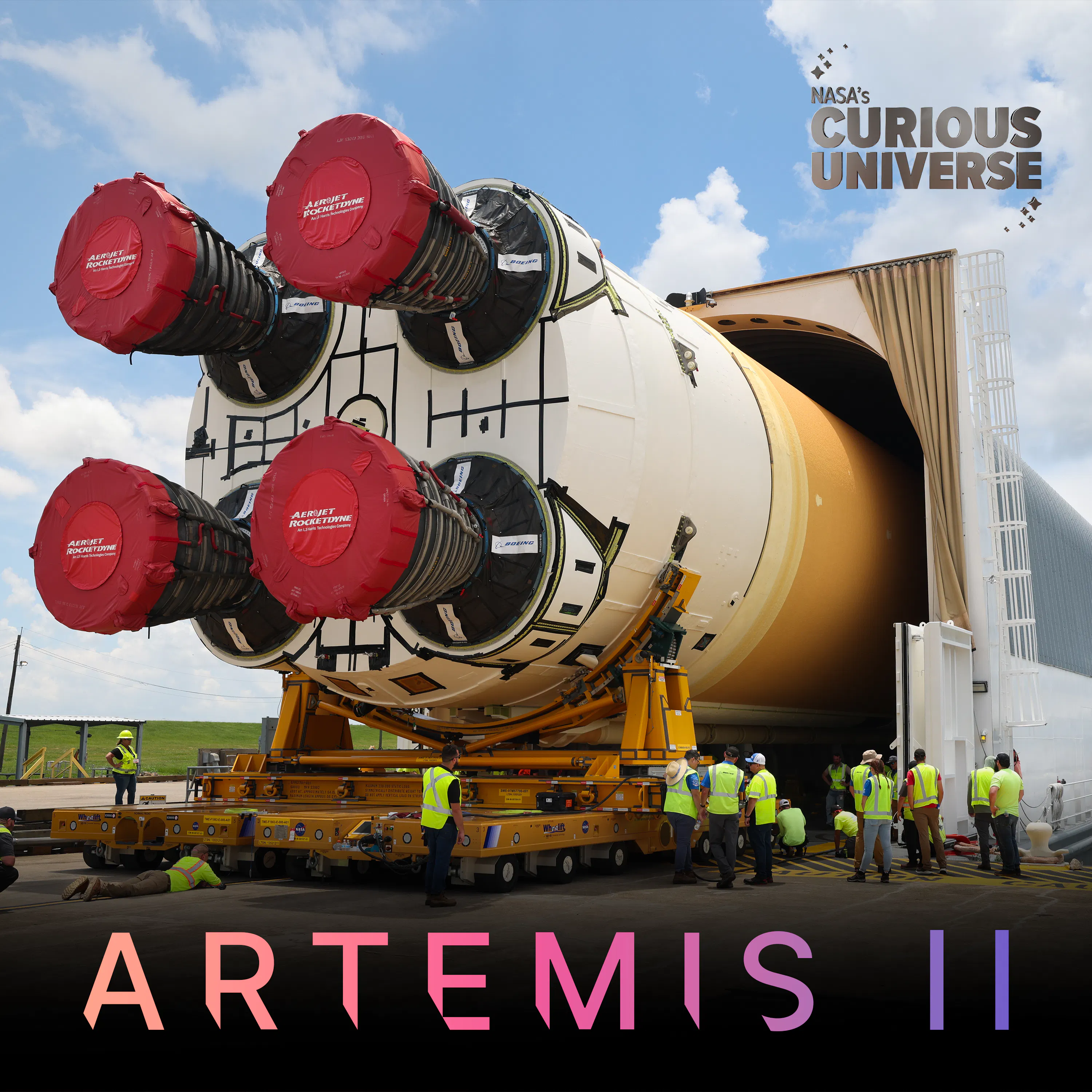
Artemis II: The Ground Teams Powering NASA's Moon Mission
Behind NASA’s Artemis II mission and the astronauts who will fly around the Moon, teams on the ground are essential. Explore some of the epic equipment that makes Artemis II possible—the mobile launcher, crawler-transporter, and NASA’s barge Pegasus—and meet a few of the many specialists who act as the shoulders lifting astronauts into space.
For Artemis II news and the latest launch inform

Artemis II: How NASA Will Study the Moon—And the Astronauts Going There
During Artemis II, four astronauts will see the lunar surface as few humans have—and possibly, parts of the Moon’s far side that no one has seen before. Learn what lunar science questions NASA hopes to answer through the astronauts' eyes with lunar geologist Kelsey Young. And those astronauts will also be subjects of science. Jancy McPhee, associate chief scientist of NASA’s Human Research Program
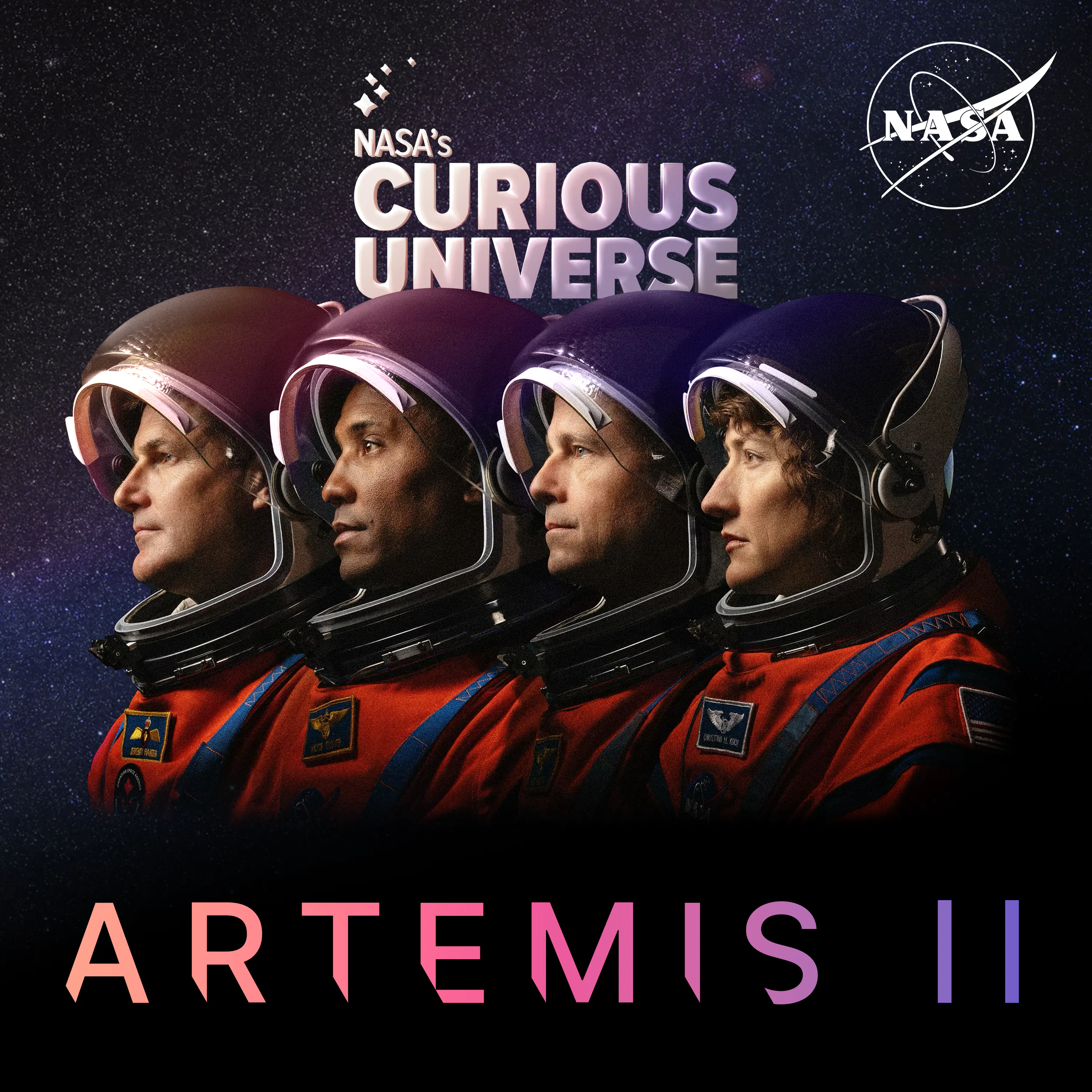
Artemis II: Inside NASA’s New Ride to the Moon
During Artemis II, humans will fly Orion—NASA’s next-generation spaceship designed to take us to the Moon and beyond—for the first time. Tour Orion with Branelle Rodriguez, the vehicle manager for Artemis II, to hear about the support systems that keep astronauts alive and how exactly you use the bathroom en route to the Moon. Then, pop the hood of NASA’s most powerful rocket, the Space Launch Sys

Artemis II: What NASA Learned From Launching Artemis I
In 2022, NASA launched Artemis I, an uncrewed test flight of the rocket and spacecraft that will send humans to the Moon. Go inside Firing Room 1—the nerve center for Artemis launches—and hear from the engineers who launched Artemis I, including the intricate procedures they developed just to fuel the rocket correctly. Now NASA is preparing to launch Artemis II—and to send humans around the Moon.

Artemis II: Meet the Moonbound Astronauts
This year, four NASA astronauts will fly around the Moon and back for the first time since the Apollo program. Their mission is called Artemis II. It’s a key test flight that will set the stage for humans to land on the lunar South Pole for the first time and set up a long-term presence there. In this episode, meet your intrepid Artemis II crew: commander Reid Wiseman, pilot Victor Glover and miss
Launching Soon: Artemis II
This year, four NASA astronauts are flying around the Moon and back—and Curious Universe is bringing you along for the ride. The mission is called Artemis II. It’s a key test flight that will set the stage for future missions to land on the lunar South Pole for the first time and set up a long-term presence there. In this limited series, get to know your Artemis II astronaut crew, go behind the sc
Cosmic Dawn with Nobel Laureate John Mather
The James Webb Space Telescope is doing something astronomers dreamed about for decades: peering into our universe’s early past, a period known as cosmic dawn. A new NASA documentary—also called Cosmic Dawn—chronicles the inside story of Webb’s design, construction, and launch. John Mather, who won the 2006 Nobel Prize for Physics, proposed the telescope and led its science team for decades. In th
Encore: A Day In Space
Have you ever dreamed of spending a day in space? Humans have lived aboard the International Space Station for 25 years—or more than 9,000 consecutive days. In this episode originally published in 2021, experience a day in the life of astronauts Shane Kimbrough, Megan McArthur, and Thomas Pesquet living and working on the International Space Station.
How Webb Illuminates Stars’ Cloudy Origins
In the space between stars, dark clouds of gas, dust, and ice mingle in a chemical laboratory unlike any on Earth. Ewine van Dishoeck, an astronomer who studies molecules in space and who helped develop an instrument aboard NASA’s James Webb Space Telescope, explains how Webb is revealing new details about the formation of stars and planets. This research could help unlock a key question about Ear
What Webb Is Teaching Us About Our Solar System
NASA’s James Webb Space Telescope is hard at work answering our biggest questions about the birth of our universe and faraway galaxies. But some astronomers are pointing its powerful eyes much closer to home. In this episode, Caltech astronomer Katherine de Kleer explains how Webb is rewriting our understanding of objects within our solar system–from space rocks in the asteroid belt to the icy and
Webb's Exoplanet Research Sounds Like Sci-Fi—But It's Real
Some exoplanets—like a gas giant with rain made of glass and 5,000-mile-per-hour winds—sound like worlds dreamed up by a science fiction writer. But they’re real. From light-years away, scientists can uncover details about planets orbiting distant stars and even ask whether some exoplanets could support life. Néstor Espinoza, an astronomer at the Space Telescope Science Institute, explains how NAS
Why Webb's Earliest Galaxies Are Blowing Scientists' Minds
With the James Webb Space Telescope, we are seeing the early universe like never before. Webb produces beautiful images and detailed scientific data that leave astronomers in awe. In this episode, Mic Bagley, a NASA scientist on the Webb team, guides us through new discoveries made possible by Webb. Mic tells the story of a remarkable galaxy discovered in the early days of Webb’s science mission a
How Lying In Bed For 60 Days Helps Astronauts
In space, microgravity changes the body. Body fluids shift from the legs toward the head, the back of our eyes flatten, we lose muscle strength, our bones lose some of their density, and even the amount of blood pumped by the heart with each beat drops. To learn more about how microgravity affects the human body and develop new ways to help astronauts stay healthy, scientists are asking dozens of

Earth Series: What's Next for NASA Earth Science
NASA has a record of Earth observations going back more than 50 years. What might be in store for the next 50 years? In this finale of our Earth series, we hear from two scientists helping to chart the course of NASA Earth science. There are still many unanswered questions about our home planet. As the only planet that we know to have life, studying Earth is also crucial as NASA searches for other

Earth Series: Monitoring the Air We Breathe
Take a deep breath, and you’re inhaling oxygen from Earth’s atmosphere. Take a walk outside, and the atmosphere is shielding you from harmful radiation. NASA research provides crucial data to understand air quality and the intricate processes happening in the sky above us. In this episode, hear the inside story of NASA’s research into the ozone layer. Left unchecked, our reliance on ozone-depletin

Earth Series: From Space to Your Plate
Earth has an incredibly varied and ever-changing landscape—jagged mountains, arid deserts, lush rainforests, rolling wheat fields. Before NASA came on the scene, no one was keeping a systematic eye on the ground from above. NASA scientist Brad Doorn explains how one long-running satellite program collects the data farmers need to grow the crops that feed the world.

Earth Series: The Ocean, Now in Full Color
Life all over the planet—even far from the coasts—depends on the oceans. A pair of NASA satellites, PACE and SWOT, is giving us a fresh look at Earth’s water. PACE tracks color changes driven by tiny plankton, which give us a big-picture view of ocean life. By measuring sea level height from space, SWOT shows ocean currents and other features in new detail. NASA scientists Cecile Rousseaux, Kelsey

Earth Series: How NASA Sees Our Blue Marble
NASA is an exploration agency, and one of our missions is to know our home. In the 1960s, NASA astronauts orbiting the Moon captured a revelatory view of Earth. Today, NASA explores our home planet with a fleet of dozens of spacecraft. In this episode–the first in a miniseries all about Earth–we take in the view from space with Karen St. Germain, the director of NASA’s Earth Science Division.
Welcome to Earth
There’s one planet NASA studies more than any other: Earth. With our unique vantage point from space, NASA collects information about our home in ways nobody else can. In this podcast miniseries, celebrate our home planet by learning how NASA studies Earth—including unique views of ocean color and sea level, land data that help farmers improve crop production, and researching our atmosphere from t
Curious Universe Live: Art and Science with Astronaut Matthew Dominick
NASA has a long history of bringing together science, engineering and art. Space exploration is a human endeavor—one that requires creativity. In this special live episode, NASA astronaut Matthew Dominick and comedian and musician Reggie Watts talk flow states, aircraft ejector seats and more. Plus, a new NASA tool that lets you make music from iconic Hubble Space Telescope imagery.
Inside the Team That Keeps Hubble Flying
When it launched in 1990, NASA expected the Hubble Space Telescope to last for about 15 years. Thirty-five years later, Hubble is still showing us the universe as no other telescope can. Go behind the scenes with Morgan Van Arsdall, deputy operations manager for Hubble, on an audio tour of Hubble’s control center. Morgan’s team keeps Hubble operating smoothly, and when something goes wrong, they s
How NASA Found the Ingredients For Life on an Asteroid
How did life begin? It’s one of science’s biggest questions, but it’s impossible to answer on Earth, where ancient clues have been buried by the planet’s shifting surface. Instead, scientists are looking beyond our own planet, to asteroids like Bennu, a distant fragment of a lost world. In 2023, NASA’s OSIRIS-REx spacecraft collected a sample of Bennu’s surface and brought it back to Earth. Ever s
Why the Moon’s Icy South Pole is a Hot Target for NASA
The Moon’s South Pole is a bizarre landscape. Mountain ridges glow in perpetual sunlight while deep craters freeze in billion-year-old shade. Yet hidden in the depths of those shadowed craters, under temperatures almost three times colder than the frostiest day in Antarctica, lurks something familiar–water ice. In the future, that ice could sustain human explorers or be broken apart into hydrogen
The Mind-Bending Math Inside Black Holes
Black holes are mysterious, far away, and can bend the fabric of reality itself—but we're learning more about them all the time. Ronald Gamble, a NASA theoretical astrophysicist, uses math, computer coding, and a dash of creativity to peer inside some of the universe's most extreme objects. We'll explore what it would feel like to get pulled into a black hole and what people get wrong about black
How Open Science and AI Are Advancing Hurricane Research
As climate change drives more frequent and intense tropical cyclones and hurricanes, coastal communities desperately need better tools to predict how bad storms will be and when and where they’ll strike—and to assess the damage afterward. From the air and in space, NASA and NOAA collect critical data as storms roll in. But what happens next? Fly directly into the eye of the storm with daring hurri

Europa Clipper's Voyage to Jupiter's Ocean Moon
As NASA’s Europa Clipper spacecraft leaves Earth, it carries a message: we, too, are made of water. Europa—one of Jupiter’s moons—is a top candidate to support life, thanks to its ocean of liquid, salty water capped by a layer of ice. Lynnae Quick-Henderson, a planetary scientist at NASA, explains how Clipper will search Europa for the building blocks of life. The mission is also a message in a bo
An Asteroid by Any Other Name With Special Guest Latif Nasser
The idea of an asteroid from outer space crashing into Earth has captured the imaginations of science fiction directors for decades. But here at NASA, we take potentially hazardous near-Earth objects seriously. We have a planetary defense office that plans for every scenario—we’ve even practiced nudging an asteroid off course with spacecraft. But there are tens of thousands of objects in near-Eart

Sun Series: Bonus: Dispatches from the Path of Totality
On April 8, 2024, North America experienced its last total solar eclipse until the 2040s. As the Moon’s shadow fell across the U.S., NASA sent Curious Universe producers out into the field across the path of totality to talk to space nerds and eclipse scientists. In this special bonus episode of our Sun Series, we’ll relive the special day together.

Sun Series: Soaring Toward the Sun
For the first time, a NASA spacecraft is flying through the Sun's atmosphere. Nour Raouafi, project scientist for Parker Solar Probe, explains why the Sun's corona is the source of one of the biggest mysteries in all of space science. So, what does it take to build a probe that can touch the Sun—including surviving temperatures of 2,500 degrees Fahrenheit and barreling through sudden eruptions of

Sun Series: What is Space Weather?
From Earth, the Sun can seem steady and predictable. But when you look at our star close up, there’s a lot going on. Go behind the scenes with NASA’s Moon to Mars Space Weather Analysis Office, a team monitoring space weather—eruptions of radiation and plasma from the Sun that can wreak havoc on spacecraft and pose dangers to astronauts. We’ll also revisit the most powerful geomagnetic storm on re
Sun Series: Minisode! Countdown to Total Solar Eclipse 2024
It’s time. On April 8, 2024, millions of people across North America will see a total solar eclipse. Get the most out of totality with this special bonus episode. Listen up for safety tips, learn how to make your own pinhole projector to safely view the eclipse and learn how anyone—including you!—can contribute to NASA research through citizen science. And if you’re not in the path of totality, wa

Sun Series: You (Yes, You!) Can Help NASA Study the Sun
How often do you think about your nearest star? Though it may not seem like it from here on Earth, our trusty Sun is a place of mystery. Take a good look at its influence on our planet – through the otherworldly experience of eclipse, maybe, or the aurora – and you might get "sucked" in... to a citizen science project, that is. Join NASA Sun scientists like Liz Macdonald and volunteers like Hanjie

Sun Series: How to Experience a Total Solar Eclipse
On April 8, 2024, the Moon will pass in front of the Sun, casting a shadow across Mexico, the United States, and Canada. Total solar eclipses have fascinated human beings for thousands of years. Watching the Moon eclipse the Sun is a surreal, multi-sensory experience that you’re not likely to forget. But Eclipses also offer unique opportunities for NASA to study the relationship between our star a

Sun Series: The Sun, Our Star
The Sun is our closest star. Billions of years ago, it shaped the formation of our home planet and the beginning of life on Earth. Today, it provides the heat and energy that powers our civilization, but it can also disrupt our technology and spacecraft through explosive outbursts of radiation. Join NASA Sun scientist Joe Westlake on a journey from the surface of Earth to the Sun’s core to learn h

Here Comes the Sun Series
Meet the Sun. Even if you think you know our star, our new mini series from NASA’s Curious Universe will show you why Sun science is heating up in 2024—and why NASA experts have so much more to discover. Get ready for the hair-raising experience of a total solar eclipse, and learn how anyone can pitch in through citizen science. See the vibrant and sometimes chaotic close-up details of the Sun, an

Planet Hunting with Host Padi Boyd
In this special episode, we turn the tables and put host Padi Boyd in the interview seat. Padi shares stories from her time with NASA’s groundbreaking Kepler mission, which showed us many more exoplanets—planets orbiting other stars—than we had previously discovered. She also tells us about her dream astronomical dinner companion and her go-to karaoke song. Plus, we'll wrap up another season of wi

A Year in Mars Dune Alpha
To prepare for the day when humans travel to Mars, NASA is conducting a one-year experiment in a Mars simulation environment. So what’s it like to spend a year in CHAPEA, the Crew Health and Performance Exploration Analog? In this season finale episode, travel through the airlock with voice recordings made by the four-person crew, including what it feels like—and smells like—inside their realistic

Exploring the Early Universe with Webb
The James Webb Space Telescope promised to show us “baby pictures” of the universe. Now in its second year of science, Webb is fulfilling that promise—and more. NASA scientists Jane Rigby, Taylor Hutchison, and Gerónimo Villanueva explain how they use Webb to peer back to the earliest stages of the universe and examine stunning plumes of water in our own solar system. NASA's Curious Universe is an

Special Delivery from Outer Space
On September 24, 2023, a capsule from space parachuted down into the Utah desert. Tucked inside it were 4.5-billion-year-old bits of rock and dust from a faraway asteroid named Bennu collected by the OSIRIS-REx spacecraft. These pristine space rocks, which contain carbon and other building blocks of life, could rewrite scientists’ understanding of our solar system. In this episode, sit in mission

Tiny but Mighty
What do air pollution, thunder clouds and climate change have in common? Aerosols! These tiny particles, generated by everything from desert dust storms to car exhaust, play a huge role in our atmosphere, affecting our health when we breathe them in and even changing the weather. Globally, they play an even bigger role, changing how much sunlight gets through to Earth’s surface and heating or cool

How You (Yes, You!) Can Do Science With NASA
Anyone can participate in the process of NASA science and engineering through what we call citizen science, regardless of your citizenship. You might have heard it called “participatory science” or “community science.” It all means that thousands of people around the world are helping the professionals make discoveries about our planet, our solar system, and our universe at large, through these pr

Hum of the Sun
What does space sound like? It’s a question that has fascinated composers and scientists alike throughout history. Through a process called data sonification, heliophysicists are using NASA satellites like audio recorders to listen to the electromagnetic symphony our Sun plays, and making new discoveries along the way. NASA's Curious Universe is an official NASA podcast. Discover more adventures w

Welcome to the Dark Side
Normal matter—the kind that makes up our home planet and everything we can see—adds up to just five percent of the known universe. The other 95 percent is dark matter and dark energy, a tag team that ranks among the biggest mysteries in all of science. NASA astrophysicists Jason Rhodes and Ami Choi explain how we study this dark side and why it’s making scientists reconsider what we think we know

Introducing Season Six
In season six, meet researchers who are using sounds from the Sun to unlock new details about our star, explore the “dark side” of the universe with scientists who study dark matter and dark energy, and get a behind-the-scenes look at the first NASA mission to deliver an asteroid sample to Earth. A new episode drops every Tuesday. NASA's Curious Universe is an official NASA podcast. Discover more

To the Stars with Jessica Watkins
In this special season five finale episode, join NASA astronaut Jessica Watkins, self-proclaimed “rock nerd” on a journey to the stars.

Suiting up for Space
Spacesuits are more than just garments – in the airless vacuum of space or on the freezing surface of the moon, they keep astronauts alive. Explore how NASA engineers like Amy Ross and Paromita Mitra have contributed to the development of the next generation of spacesuits.

Field Notes: Nhulunbuy, Australia
Tropical rainforests, snowy mountain peaks, even the Australian outback – NASA experts travel to a wide range of environments right here on Earth to better understand our universe. Miles Hatfield, NASA heliophysics science writer, recaps a recent reporting trip to cover a sounding rocket launch in Australia’s remote Northern Territories.

How to Build A Spacecraft
Spacecraft go through a lot - exploring dangerous worlds across the cold expanse of space. Not to mention the chaos of a launch! So how do we build a mission that can take on dangerous environments and the harrowing trip to reach them? Explore the world of mission-building with scientists from Venus’ DAVINCI mission.

Stargazers Welcome
The night sky isn’t just for experts, it belongs to all of us! And we here at NASA love to encourage people to go out and take a look. Amateur astronomer Kevin Hartnett, Hubble Social Media Lead Elizabeth Tammi, and the Astronomical Society of Greenbelt take us on a tour of the stars and share how you can join from your own backyard.

Wildfires from Space
Wherever you live on Earth, wildfires touch your life. Explore how NASA scientist Doug Morton and Canadian firefighter-turned-researcher Josh Johnston use satellites to track the changing landscape of wildfires from space.

The Invisible World of Gravitational Waves
Information about the universe is all around us. But there’s more than meets the eye! Gravitational waves are the invisible ripples in spacetime caused by supermassive interstellar activity. Join astrophysicists Ira Thorpe and Judy Racusin on an exploration of how NASA studies these unseen bends in time and space.

Defending the Planet from Asteroids
Our solar system contains millions of asteroids, orbiting our sun and rocketing through the night sky! Join scientists Kelly Fast, Tom Statler, and Davide Farnocchia as we discover what we can learn from these building blocks of the universe, and how NASA would respond if one were ever headed our way.

Introducing Season Five
In season five, join us as we fight wildfires, defend the Earth from asteroids, and explore the invisible world of gravitational waves! New episodes every Tuesday.

Bonus: Happy Holidays from NASA!
Before we return with season five in 2023, celebrate the holidays with us! Join Goddard news chief Rob Garner, NASA social media lead Stephanie L. Smith, and astronaut Shannon Walker on this special, holiday-themed bonus episode.

Webb’s First Images
On July 12, 2022, a fundamentally new era of exploring our universe begins. This special season finale episode features an overview of the James Webb Space Telescope’s first detailed cosmic images. Learn what this historic moment means from astronomer Michelle Thaller.

Field Notes: Astronaut Shannon Walker
From dusty deserts to icy mountain tops, NASA experts visit incredible places along their career path. But what about our explorers who take their work off the Earth? Join astronaut Shannon Walker on a look back at her excursions into space.

Up & Away with Sounding Rockets
Explore sounding rockets, and the experiments they take to the skies, with space physicist Alexa Halford and sounding rocket program assistant chief Cathy Hesh.

The Search For Life: Are We Alone?
Are we alone in the universe? It's a question studied in science fiction, but also by teams here at NASA. Join us as we search for signs of life outside of Earth with scientists Aki Roberge, Ravi Kopparapu, and Shawn Domagal-Goldman.

How to Grow Plants in Space
As humanity sets its sights on longer-term life in space, we’re going to need ways to sustain ourselves. That’s where plants come into play! Take a tour of Kennedy Space Center’s lush Plant Processing Area with Ray Wheeler, Ralph Fritsche, and Gioia Massa - the scientists studying how to grow food in space!

Going Supersonic!
When a plane flies faster than the speed of sound, you get a sonic boom! But what if we could change those physics? Join NASA test pilot Nils Larson and aerospace engineer Lori Ozoroski to hear how we’re flying faster than the speed of sound, and making that supersonic flight quieter, too.

Earth’s Weather Watchers
Planets throughout the universe are full of fascinating weather, including Earth! Hear how NASA and NOAA work together to predict, monitor, and respond to Earth’s ever-changing weather. Explore Earth’s weather with Dalia Kirschbaum, Marangelly Fuentes, and Dan Lindsey.

Mysteries of the Moon
The Moon is our constant cosmic companion and the only planetary body outside of Earth where humans have set foot. As we prepare to head back to the Moon with the Artemis program, let's take a look at what we know about this wonderful and mysterious natural satellite.

Introducing Season Four
In season four, explore the lifesaving systems of space suits, break through the sound barrier, and search for life among the stars. First-time space explorers welcome.

Bonus: Still Curious?
At NASA, we are driven by curiosity, and we know you are too! Join us as we hear from our previous episode experts about what they’re interested in and answer some questions from listeners like you. What are you still curious about?

Webb Space Telescope: Go for Launch with ESA Expert
After years of preparation and anticipation, it’s time to send the world’s most powerful telescope to space. Ariane 5 rocket expert Rudi Albat (ESA) takes you through launch day and describes why the launcher that will carry Webb to its final destination is one of a kind.

Webb Space Telescope: The Global Village
A scientist from Italy who studies baby stars. A Californian spacecraft refrigeration pioneer. A Dominican-American engineer who saw space as her refuge from a tough life at home. Meet three people who represent a small slice of the thousands who have worked on Webb worldwide.
Recommended

World News Tonight with David Muir

The Joe Rogan Experience

English Vocabulary Help

TED Talks Daily

Learn English B1 with Daily News | English Listening Practice

Talk About Talk - Executive & Leadership Communication Skills

English with Olivia | Slow Conversations & Vocabulary

Stand In The Circle

SLOW ENGLISH PODCAST (A1-A2) With Subtitles | Daily Videos | English With Us Podcast

Learn English A2 with Daily News | Simple English Listening Practice

پلی لیست | PlayList

Conspiracy Files with Paige Carter
