Freakonomics Radio
Freakonomics co-author Stephen J. Dubner uncovers the hidden side of everything. Why is it safer to fly in an airplane than drive a car? How do we decide whom to marry? Why is the media so full of bad news? Also: things you never knew you wanted to know about wolves, bananas, pollution, search engines, and the quirks of human behavior.
Episodes
690. It’s Show Business, Baby!
Podcasting started as a niche-nerd pursuit. Now it’s a $9 billion industry. Is that a lot? The strange economics of this thing we do. SOURCES:Jim Bankoff, chairman and C.E.O. of Vox Media.Ben Davis, head of digital at WME.Will Page, former chief economist at Spotify and author of Pivot.Jenna Weiss-Berman, head of Paper Kite Audio and executive producer of Good Hang with Amy Poehler.Jeanine Wr
689. Here’s Why Your Hamburger Just Got So Pricey
An economist calls America’s beef industry a “miracle.” An antitrust scholar calls it “broken.” Maybe they’re both right? SOURCES:Austin Frerick, agriculture antitrust expert, fellow at Yale University, author of Barons: Money, Power, and the Corruption of America's Food Industry.Robert Hodgen, C.E.O. of King Ranch.Roger Horowitz, food historian, director of the Center for the History of Busi
688. When Is a Bet Not a Bet?
That’s the question at the heart of a battle between Kalshi and state gambling regulators. As prediction markets boom, there are other questions, too — about insider trading, market manipulation, and whether the public has turned against them. (Part two of a two-part series.) SOURCES:Gary Gensler, former chair of the S.E.C. and the C.F.T.C.Robin Hanson, professor of economics at George
687. Are Prediction Markets the Best Forecasting Tool Ever — or Just Another Casino?
The promise is that they can beat the experts at predicting inflation, elections, and FDA approvals. But right now, roughly 90 percent of the action is sports. Is this a future we want to bet on? Stephen Dubner speaks with, among others, the C.E.O. of Kalshi. (Part one of a two-part series.) SOURCES:Robin Hanson, professor of economics at George Mason University.Nicole Kagan, head of research
How to Be a Double Unicorn, with John Urschel | Better in Person
He was thriving in the N.F.L., but then he decided to focus on mathematics — a subject he now teaches at M.I.T. John walks Stephen Dubner through the whole story, teaches him some blocking techniques, and explains why some infinities are bigger than others. If you'd like to see the video version of Better in Person, you can watch it on YouTube or Apple Podcasts. Hosted by Simplecast, an AdsWi
686. Why Is It So Hard to Find an NFL Quarterback?
For decades, teams have tried (and mostly failed) to predict which college quarterbacks will thrive in the pros. Is the science finally catching up? Stephen Dubner speaks with a scout, a psychologist, a data warrior, and a Hall of Fame quarterback who nobody wanted. SOURCES:Scott Goldman, sports psychologist, owner of the Athletic Intelligence Quotient.Dan Hatman, director of scou
Amazon Was Supposed to Kill the Bookstore. James Daunt Had Other Plans | Better in Person
He started with one small shop in London. He has since resuscitated both Barnes & Noble and Waterstones. He tells Stephen Dubner exactly how he does it. If you'd like to see the video version of Better in Person, you can watch it on YouTube or Apple Podcasts. Hosted by Simplecast, an AdsWizz company. See pcm.adswizz.com for information about our collection and use of personal data for adv
685. How to Survive the A.I. Shock
Gina Raimondo, a former commerce secretary and governor, thinks A.I. will create plenty of jobs in the long run. She also thinks a poorly managed transition could tear the country apart. So she came up with a plan. SOURCES:Gina Raimondo, co-chair and C.E.O. of RAISE US. RESOURCES:"What Makes New Work Different from More Work?," by David Autor, Caroline Chin, Anna Salomons, and Brya
How to Run an Institution in an Anti-Institution Era | Better in Person
Anne Pasternak (Brooklyn Museum) and Michael Roth (Wesleyan University) tell Stephen Dubner how they keep the peace in the middle of a culture war.
If you'd like to see the video version of Better in Person, you can watch it on YouTube or Apple Podcasts. Hosted by Simplecast, an AdsWizz company. See pcm.adswizz.com for information about our collection and use of personal data for advertisin
How to Return Stolen Art (Update)
Museums are purging their collections of looted treasures. Can they also get something in return? And what does it mean to be a museum in the 21st century? (Part 3 of an updated series originally published in 2023.)
SOURCES:
Patricia Allan, museum consultant, former curator of world cultures for the Glasgow Museums.
Andrea Bayer, deputy director for collections and administratio
“I Trust Almost Anyone More Than Myself” | Better in Person
The Pulitzer Prize-winning novelist Jennifer Egan talks about confidence, luck, and why it takes 35 drafts to get to the finish line.
If you'd like to see the video version of Better in Person, you can watch it on YouTube or Apple Podcasts. Hosted by Simplecast, an AdsWizz company. See pcm.adswizz.com for information about our collection and use of personal data for advertising.
Is a Museum Just a Trophy Case? (Update)
The world’s great museums are full of art and artifacts that were plundered during an era when plunder was the norm. Now there’s a push to return these works to their rightful owners. Sounds simple, right? It's not. (Part 2 of an updated series originally published in 2023.)
SOURCES:
Matthew Bogdanos, assistant district attorney in the Manhattan District Attorney’s Office and chief of t
Meet Warren Zanes, the Author and Rocker Behind the Springsteen Movie | Better in Person
When he joined the Del Fuegos, his big brother’s band, all Warren knew how to play was a record player. Things went great for a while — and then it all fell apart. So how did he wind up writing definitive books on Springsteen and Tom Petty?
If you'd like to see the video version of Better in Person, you can watch it on YouTube or Apple Podcasts. Hosted by Simplecast, an AdsWizz company. See pcm.a
The Case of the $4 Million Gold Coffin (Update)
How did a freshly looted Egyptian antiquity end up in the Metropolitan Museum of Art? Why did it take Kim Kardashian to crack the case? And how much of what you see in any museum is stolen? (Part 1 of “Stealing Art Is Easy. Giving It Back Is Hard,” first published in 2023.)
SOURCES:
Andrea Bayer, deputy director of collections and administration at the Metropolitan Museum of Art.
Mat
What if Being a Stranger Is Actually Your Superpower? | Better in Person
Angela Buchdahl was the first Asian American to be ordained as a rabbi, and now she is among the most influential rabbis in the world. She and Stephen Dubner talk about boundary-crossing, the aftermath of October 7, and whether you can be a good Jew without believing in God.
If you'd like to see the video version of Better in Person, you can watch it on YouTube or Apple Podcasts. Hosted by Simp
684. He Helped Clean Up the Last Crash. Does He See Another One Coming?
Former S.E.C. chair Gary Gensler has had a front-row seat to numerous financial booms and busts. How does he feel about America’s massive bet on A.I.? “Something has to give.”
SOURCES:
Gary Gensler, professor of the practice of global economics, management, and finance at M.I.T.
RESOURCES:
This Time Is Different: Eight Centuries of Financial Folly, by Carmen Reinhart and K
Does it Take a Twisted Mind to Write Twisted Stories? | Better In Person
Harlan Coben doesn’t think so. The mega-best-selling author talks suburbia, impostor syndrome, and what he learned from his college friend David Foster Wallace.
If you'd like to see the video version of Better in Person, you can watch it on YouTube or Apple Podcasts. Hosted by Simplecast, an AdsWizz company. See pcm.adswizz.com for information about our collection and use of personal data for adve
683. In the New Space Race, Who Makes the Rules?
Governments started the space age. Now, billionaires and private firms are reinventing it. Guest host Steve Levitt explores what the past can teach us about a high-stakes future. (Part two of a two-part series.)
SOURCES:
Blaise Agüera y Arcas, vice president and fellow at Google, C.T.O. of technology and society.
Rosanna Hoffman, head of space law, policy, and sustainability at the U
How Gary Gulman Turned Depression Into Comedy Gold | Better in Person
Gary and Stephen talk about creativity, recovery, getting fired, and holding grudges. They also get outside and play basketball, which is a big part of how Gary stays well.
If you'd like to see the video version of Better in Person, watch it on YouTube or Apple Podcasts. Hosted by Simplecast, an AdsWizz company. See pcm.adswizz.com for information about our collection and use of personal data fo
682. Should A.I. Move to Space?
At first it sounds ridiculous. But it might be inevitable. Guest host Steve Levitt talks to a team that hopes to push A.I. infrastructure off the planet. Part one of a two-part series.)
SOURCES:
Blaise Agüera y Arcas, vice president and fellow at Google, C.T.O. of technology and society.
Travis Beals, senior director of product management at Google, Project Suncatcher lead.
Will Ma
Why Cooking is Caregiving, with Chef Hillary Sterling | Better in Person
Hillary Sterling was a Brooklyn kid raised on cream cheese sandwiches and canned potatoes. So how did she become one of New York City's best chefs? The Ci Siamo executive chef explains on the second episode of Better in Person.
If you'd like to see the video version of Better in Person, watch it on YouTube or Apple Podcasts. Hosted by Simplecast, an AdsWizz company. See pcm.adswizz.com for infor
Are You Really Allergic to Penicillin? (Update)
Like tens of millions of people, Stephen Dubner thought he had a penicillin allergy. Like the vast majority, he didn’t. This misdiagnosis costs billions of dollars and causes serious health problems, so why hasn’t it been fixed? We find out in this update of a 2025 episode.
SOURCES:
Kimberly Blumenthal, allergist-immunologist and researcher at the Mayo Clinic.
Theresa MacPhail, assoc
How a Great Architect Thinks, with Bjarke Ingels | Better in Person
Is the oxymoron really “the secret sauce to everything”? That’s the case Ingels makes in this debut episode of our new video show Better in Person, filmed in Stephen Dubner’s living room.
If you'd like to see the video version of Better in Person, watch it on YouTube or Apple Podcasts. Hosted by Simplecast, an AdsWizz company. See pcm.adswizz.com for information about our collection and use of p
681. How to Host a Talk Show, with Dick Cavett
Stephen Dubner had an idea for a new project. So he drove to Connecticut and knocked on the door of the master. Dubner’s new TV talk show Better in Person launches July 14 on the Freakonomics YouTube channel.
SOURCES:
Dick Cavett, writer, former talk show host.
RESOURCES:
Eye on Cavett, by Dick Cavett and Christopher Porterfield (1983).
Cavett, by Dick Cavett and Christ
680. Can Universities Win Back Our Trust?
Dartmouth president Sian Beilock, a psychologist by training, made her name studying why people choke. Now she’s applying those insights to one of the most scrutinized jobs in America. No pressure!
SOURCES:
Sian Beilock, president of Dartmouth College.
RESOURCES:
"Growing share of Americans say the U.S. higher education system is headed in the wrong direction," by Kim Park
679. Why Does Vanderbilt Keep Winning?
It’s a hard time to run a university: public trust is low, political pressure is high, and finances are fragile. But Daniel Diermeier, who trained as a political scientist, has Vanderbilt humming. How? He says the key is choosing magnets over wedges.
SOURCES:
Daniel Diermeier, chancellor of Vanderbilt University.
RESOURCES:
"Higher Ed’s New Crisis Managers," by Lee Gardner
The World Is (Still) Drowning in Sludge
Insurance forms that make no sense. Subscriptions that can’t be cancelled. A never-ending blizzard of automated notifications. In this update of a 2025 episode, Stephen Dubner discovers where all this sludge comes from — and how much it’s costing us.
SOURCES:
Benjamin Handel, professor of economics at UC Berkeley.
Neale Mahoney, professor of economics at Stanford University.
Richar
678. Who Gets to Choose a “Good Death”?
New York is the latest state to legalize medical aid in dying. Stephen Dubner speaks with the governor who signed the law, a Nobel Prize-winning economist, a death doula — and an ethicist who thinks the very idea is wrong.
SOURCES:
Kathy Hochul, governor of New York.
Suzanne O'Brien, death doula, founder of Doulagivers Institute.
Al Roth, economist at Stanford University.
Danie
677. Can Backgammon Save Us from Ourselves?
It brings strangers together. It teaches probability, strategy, and emotional control. It has even helped N.F.L. teams win the Super Bowl. Stephen Dubner explores why this ancient game is having a renaissance. (Part two of a series, “We Are All Gamers Now.”)
SOURCES:
Remington Davenport, founder of NYC Backgammon Club.
Frank Frigo, game strategy expert & two-time world backgammon ch
This Is Your Brain on Pollution (Update)
As the Trump administration rolls back environmental regulations, we revisit a 2022 episode that explored the hidden cost of an invisible threat: air pollution.
SOURCES:
Angela Duckworth, psychologist at the University of Pennsylvania.
Michael Greenstone, economist at the University of Chicago, director of the Energy Policy Institute, co-director of the Climate Impact Lab.
Stephan
676. Has America Lost the Plot?
Another war in the Middle East. A retreat from the international order. A presidency built on self-dealing and arbitrary power. It’s enough to make you think the U.S. is in a steep decline — but Fareed Zakaria thinks otherwise.
SOURCES:
Fareed Zakaria, journalist and author.
RESOURCES:
"Iran is an imperial trap. America walked right in." by Fareed Zakaria (The Washington P
The Vanishing Mr. Feynman (Update)
In his final years, Richard Feynman's curiosity took him to some surprising places. We hear from his companions on the trips he took — and one he wasn’t able to. (Part three of a three-part series originally published in 2024.)
SOURCES:
Alan Alda, actor and screenwriter.
Barbara Berg, friend of Richard Feynman.
Helen Czerski, physicist and oceanographer at University College Lond
The Brilliant Mr. Feynman (Update)
What happens when an existentially depressed and recently widowed young physicist from Queens gets a fresh start in California? We follow Richard Feynman out west, to explore his long and extremely fruitful second act. (Part two of a three-part series originally published in 2024.)
SOURCES:
Seamus Blackley, video game designer and creator of the Xbox.
Carl Feynman, computer scientist
The Curious Mr. Feynman (Update)
From the Manhattan Project to the Challenger investigation, the physicist Richard Feynman loved to shoot down what he called “lousy ideas.” Today, the world is awash in lousy ideas — so maybe it’s time to get some more Feynman in our lives? (Part one of a three-part series originally published in 2024.)
SOURCES:
Helen Czerski, physicist and oceanographer at University College London.
675. Has the New York Times Become a Games Company?
Not exactly. But their runaway success with games like Wordle says something bigger about the way we live now. (Part one of a series, “We Are All Gamers Now.”)
SOURCES:
Alex Hardiman, chief product officer at The New York Times.
Jonathan Knight, S.V.P. and general manager for New York Times Games.
Eric Zimmerman, game designer, professor of game design at the N.Y.U. Game Center.
674. How Does a Composer Feel After the World Premiere?
Great. Then depressed. Then great again. Stephen Dubner gets the full story from David Lang; we also hear from some fans, and the New York Philharmonic’s president. The math and the aftermath of wealth of nations. (Part two of a series.)
SOURCES:
David Lang, composer and professor at the Yale School of Music.
Matías Tarnopolsky, president and C.E.O. of the New York Philharmonic.
Was Adam Smith Really a Right-Winger? (Update)
Economists and politicians have turned him into a mascot for free-market ideology. Some on the left say the right has badly misread him. In this updated replay of a 2022 episode, we hold a very Smithy tug of war.
SOURCES:
Eamonn Butler, co-founder and director of the Adam Smith Institute.
Glory Liu, a political scientist and Adam Smith scholar at Georgetown University.
Mariana Mazz
673. What Is Money?
That’s what the Pulitzer Prize-winning composer David Lang wanted to learn. So he turned Adam Smith’s The Wealth of Nations into an oratorio. We tag along as Lang’s piece heads toward its world premiere with the New York Philharmonic. (Part one of a two-part series.)
SOURCES:
Fleur Barron, opera singer and mezzo-soprano.
David Lang, composer and professor at the Yale School of Music.
672. What Makes Judy Faulkner Run?
Epic Systems manages the electronic health records for hundreds of millions of people. This makes Faulkner a healthcare heavyweight and one of the most successful female entrepreneurs in history. So why haven’t we ever heard much from her? Stephen Dubner travels to Verona, Wisc., to explore the Faulknerverse.
SOURCES:
Judy Faulkner, C.E.O. and founder of Epic Systems.
Seth Howard, exe
Why Does Everyone Hate Rats? (Update)
New York City’s mayor called them “public enemy number one.” History books say they caused the Black Death — although recent scientific evidence disputes that claim. In an updated episode from 2025, we ask: Is the rat a scapegoat? And what does our rat hatred say about us?
SOURCES:
Bethany Brookshire, author of Pests: How Humans Create Animal Villains.
Kathy Corradi, senior vice presi
671. Why Has There Been So Little Progress on Alzheimer’s Disease?
One possibility: a leading hypothesis pursued by researchers (and funders) was built on science that now appears to be fraudulent. Stephen Dubner speaks with the scientist and the journalist who blew the whistle.
SOURCES:
Charles Piller, investigative journalist for Science, author of Doctored.
Matthew Schrag, associate professor of neurology at Vanderbilt University Medical Center.
670. Beeconomics 101
How do beekeepers make a living? Why is there so much honey fraud? And why did billions of bees suddenly disappear? To find out, guest host Steve Levitt activates his hive mind.
SOURCES:
Alex Sapoznik, historian, reader in late medieval history at King’s College London.
Chris Hiatt, past president of the American Honey Producers Association, owner of Hiatt Honey Company.
Michael Ro
Ten Myths About the U.S. Tax System (Update)
Nearly everything that politicians say about taxes is at least half a lie. They are also dishonest when it comes to the national debt. In this update of an episode from 2025, Stephen Dubner finds one of the few people in Washington who is willing to tell the truth — and it’s even worse than you think.
SOURCES:
Jessica Riedl, budget and tax fellow at the Brookings Institution.
RES
669. Why Is 95 Percent of the World’s Bourbon Made in Kentucky?
Is it tradition … or protectionism? And what happens when the bourbon boom turns into a glut?
SOURCES:
Andrew Muhammad, agricultural economist at the University of Tennessee.
Brad Patrick, executive in residence and lecturer at the University of Kentucky Gatton College of Business and Economics, bourbon fellow at the James B. Beam Institute for Kentucky Spirits.
Danny Kahn, master
668. Do Taylor Swift and Bad Bunny Have Blood on Their Hands?
As one researcher told us: “We’ve engineered a world where the most distracting device ever made is also the one we use to listen to music in the car." A new study tries to measure the cost.
SOURCES:
Bapu Jena, economist, physician, and professor at Harvard Medical School.
Chris Worsham, pulmonary and critical-care physician at Mass General Hospital, health-policy and public-health re
In a Driverless World, Who Loses and Who Wins?
In blue cities across the country, unions and politicians want to ban self-driving cars. In this episode from the Search Engine podcast, PJ Vogt visits Boston to sort the facts from the propaganda. (Part two of a two-part series.)
SOURCES:
Carl Richardson, ADA coordinator for the Massachusetts State House, president of the Guide Dog Users of Massachusetts.
Gabriela Coletta Zapata, Bos
Are Human Drivers Finally Obsolete?
How a secret project at Google led to driverless cars on American roads.
Freakonomics Radio shares a story from our friends at Search Engine. (Part one of a two-part series.)
SOURCES:
Alex Davies, author of Driven: The Race To Create the Autonomous Car.
Chris Urmson, co-founder and C.E.O. of Aurora.
Don Burnette, founder and C.E.O. of Kodiak AI.
PJ Vogt, reporter, writer, and h
667. Here’s Why You Are Constantly Fighting Off Scammers
A ruthless (and ruthlessly efficient) industry is using digital tools to supercharge one of the world’s oldest behaviors. We look at how the industry works, and ask the scam-fighters what they’re doing about it.
SOURCES:
Kati Daffan, former assistant director at the Federal Trade Commission's Division of Marketing Practices.
Marti DeLiema, assistant professor of social work at the Uni
666. This Is How Progress Happens
Economists don’t usually talk about “culture.” But Joel Mokyr argues that it’s the engine of innovation — and the Nobel Prize committee agreed. Stephen Dubner sits down for a thousand-year conversation (including advice!) with the new Nobel laureate.
SOURCES:
Joel Mokyr, economic historian at Northwestern University.
RESOURCES:
Two Paths to Prosperity: Culture and Instituti
The Most Powerful People You’ve Never Heard Of (Update)
Just beneath the surface of the global economy, there is a hidden layer of dealmakers for whom war, chaos, and sanctions can be a great business opportunity. In this updated episode from 2025, journalists Javier Blas and Jack Farchy help us shine a light on the shadowy realm of commodity traders.
SOURCES:
Javier Blas, opinion columnist at Bloomberg News.
Jack Farchy, energy and commod
665. Werner Herzog Isn’t Afraid ...
... of bad reviews, meager financing, or artificial intelligence. But he is worried that the world is full of sloppy thinkers who mistake facts for the truth.
SOURCES:
Werner Herzog, writer, filmmaker, and actor.
RESOURCES:
The Future of Truth, by Werner Herzog (2025).
Every Man for Himself and God Against All: A Memoir, by Werner Herzog (2023).
EXTRAS:
"Wh
664. Are Thousands of Medical Cures Hiding in Plain Sight?
Existing drugs can sometimes be repurposed to treat rare diseases. But making that match can be hard — and the financial incentives are weak. Guest host Steve Levitt tries to solve the puzzle.
SOURCES:
Chris Snyder, professor of economics at Dartmouth College.
David Fajgenbaum, co-founder and president of Every Cure, physician-scientist at the University of Pennsylvania.
Heather St
All You Need Is Nudge (Update)
When Richard Thaler first published Nudge, the world was just starting to believe in his brand of behavioral economics. In this 2021 episode, we ask: How has nudge theory held up in the face of a global financial meltdown, a pandemic, and other existential crises? SOURCES:Richard Thaler, professor of economics at the University of Chicago. RESOURCES:Nudge: The Final Edition, by Richard Thaler and
663. Is Weed a Performance-Enhancing Drug?
The science says no, at least not in the athletic sense. But the psychic benefits can be large — just ask former N.F.L. star Ricky Williams. He says athletes should consider cannabis a healing drug, not a party drug. Even the N.F.L. is starting to agree. (Part two of a two-part series.) SOURCES:Angela Bryan, professor, associate chair for faculty development in the department of psychology and neu
662. If You’re Not Cheating, You’re Not Trying
In sports, the rules are meant to be sacrosanct. But when it comes to performance-enhancing drugs, the slope is super-slippery. (Part one of a two-part series.) SOURCES:April Henning, associate professor of international sport management at Heriot-Watt University in Edinburgh, Scotland.Aron D'Souza, founder of the Enhanced Games.Floyd Landis, former professional cyclist, founder of Floyd's of Lead
Why Don’t Running Backs Get Paid Anymore? (Update)
They used to be the N.F.L.’s biggest stars, with paychecks to match. Now their salaries are near the bottom, and their careers are shorter than ever. In this updated episode from 2025, we speak with an analytics guru, an agent, an economist, and some former running backs to understand why. SOURCES:Brian Burke, sports data scientist at ESPN.Roland Fryer, professor of economics at Harvard University
661. Can A.I. Save Your Life?
For 50 years, the healthcare industry has been trying (and failing) to harness the power of artificial intelligence. It may finally be ready for prime time. What will this mean for human doctors — and the rest of us? (Part four of “The Freakonomics Radio Guide to Getting Better.”) SOURCES:Bob Wachter, professor, chair of the department of medicine at the University of California, San Francisco.Pie
660. The Wellness Industry Is Gigantic — and Mostly Wrong
Zeke Emanuel (a physician, medical ethicist, and policy wonk) has some different ideas for how to lead a healthy and meaningful life. It starts with ice cream. (Part three of “The Freakonomics Radio Guide to Getting Better.”) SOURCES:Zeke Emanuel, oncologist, bioethicist, professor at the University of Pennsylvania. RESOURCES:Eat Your Ice Cream: Six Simple Rules for a Long and Healthy Life, by Zek
Steve Levitt Quits His Podcast, Joins Ours
After five years, Levitt is ending People I (Mostly) Admire, and will start hosting the occasional Freakonomics Radio episode. We couldn’t be happier. SOURCES:Steve Levitt, co-author of Freakonomics and host of People I (Mostly) Admire. RESOURCES:"How to Help Kids Succeed," by People I (Mostly) Admire (2025)."Feeling Sound and Hearing Color," by People I (Mostly) Admire (2024)."Richard Dawkins on
659. Can Marty Makary Fix the F.D.A.?
It regulates 20 percent of the U.S. economy, and its commissioner has an aggressive agenda — faster drug approvals, healthier food, cures for diabetes and cancer. How much can he deliver? (Part two of “The Freakonomics Radio Guide to Getting Better.”) SOURCES:Marty Makary, commissioner of the Food and Drug Administration. RESOURCES:"Clinical Trials Affected by Research Grant Terminations at the Na
658. This Is Your Brain on Supplements
We all want to stay sharp, and forestall the cognitive effects of aging. But do brain supplements actually work? Are they safe? And why doesn’t the F.D.A. even know what’s in them? (Part one of “The Freakonomics Radio Guide to Getting Better.”) SOURCES:Marty Makary, commissioner of the Food and Drug Administration.Peter Attia, physician, author, and host of The Peter Attia Drive.Pieter Cohen, asso
Are Personal Finance Gurus Giving You Bad Advice? (Update)
One Yale economist certainly thinks so. But even if he’s right, are economists any better? We find out, in this update of a 2022 episode. SOURCES:James Choi, professor of finance at the Yale School of Management.Morgan Housel, personal finance author and partner at the Collaborative Fund. RESOURCES:The Art of Spending Money: Simple Choices for a Richer Life, by Morgan Housel (2025).“Popular Person
Are You Ready for a Fresh Start? (Update)
Behavioral scientists have been exploring whether a psychological reset can lead to lasting change. In this update of a 2021 episode, we survey evidence from the London Underground, Major League Baseball, and New Year’s resolutions to look at accidental fresh starts, forced fresh starts, fresh starts that backfire — and the ones that succeed. SOURCES:Katy Milkman, professor at the Wharton School.
Are the Rich Really Less Generous Than the Poor? (Update)
A series of academic studies suggest that the wealthy are, to put it bluntly, selfish jerks. It’s an easy narrative to embrace — but is it true? As part of GiveDirectly’s “Pods Fight Poverty” campaign, we revisit a 2017 episode. SOURCES:Jim Andreoni, professor of economics at the University of California, San Diego.Nikos Nikiforakis, professor of economics at New York University in Abu Dhabi.Paul
657. Whose “Messiah” Is It Anyway?
All sorts of people have put their mark on Messiah, and it has been a hit for nearly 300 years. How can a single piece of music thrive in so many settings? You could say it’s because Handel really knew how to write a banger. (Part three of “Making Messiah.”) SOURCES:Charles King, political scientist at Georgetown University.Jane Glover, classical music scholar, conductor.Katharine Hogg, musicologi

Who Pays for “Messiah”?
In the 18th century, Handel relied on royal patronage. Today, it’s donors like Gary Parr who keep the music playing. In this bonus episode of our “Making Messiah” series, Parr breaks down the economics of the New York Philharmonic. SOURCES:Gary Parr, senior managing director and on the management committee at Apollo, philanthropist. RESOURCES:"A Notoriously Jinxed Concert Hall Is Reborn, Again," b
656. How Handel Got His Mojo Back
When he wrote Messiah (in 24 days), Handel was past his prime and nearly broke. One night in Dublin changed all that. (Part two of “Making Messiah.”) SOURCES:Charles King, political scientist at Georgetown University.Chris Scobie, curator of music, manuscripts, and archives at the British Library.Ellen Harris, musicologist and professor emeritus at MIT.Mark Risinger, teacher at St. Bernard's Schoo
655. “The Greatest Piece of Participatory Art Ever Created”
Why does an 18th-century Christian oratorio lend such comfort to our own turbulent times? Stephen Dubner sets out for Dublin to tell the story of George Frideric Handel’s Messiah. (Part one of “Making Messiah.”) SOURCES:Charles King, political scientist at Georgetown University.Katrine Nyland Sørensen, Danish broadcaster, host of Handel's Messiah - The Advent Calendar.Mark Risinger, teacher at St.
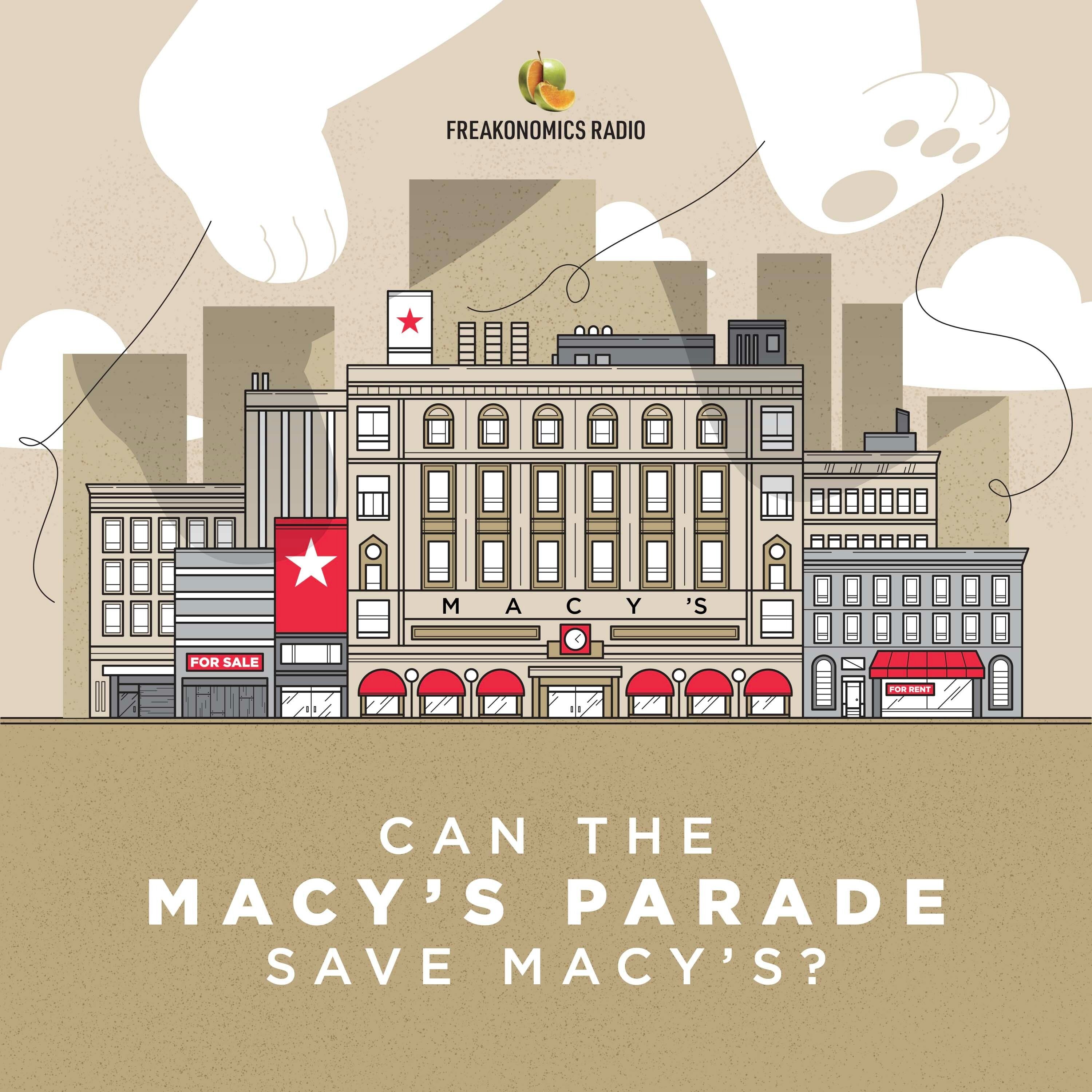
Dying Is Easy. Retail Is Hard. (Update)
Macy’s wants to recapture its glorious past. The author of the Wimpy Kid books wants to rebuild his dilapidated hometown. We just want to listen in. (Part two of a two-part series, first published in 2024) SOURCES:Mark Cohen, former professor and director of retail studies at Columbia Business School.Will Coss, vice president and executive producer of Macy’s Studios.Jeff Kinney, author, cartoonist
Is Macy’s Thanksgiving Parade Its Most Valuable Asset? (Update)
The iconic department store calls the parade its “gift to the nation.” With 30 million TV viewers, it’s also a big moneymaker — at least we think it is: when it comes to parade economics, Macy’s is famously tight-lipped. In this 2024 episode, we try to loosen them up. (Part one of a two-part series.) SOURCES:John Cheney, carpenter at Macy’s Studios.Will Coss, vice president and executive producer
654. Is the Public Ready for Private Equity?
A Trump executive order is giving retail investors more access to private markets. Is that a golden opportunity — or fool’s gold? SOURCES:Elisabeth de Fontenay, professor of law at Duke University.Steven Kaplan, professor of entrepreneurship and finance at the University of Chicago. RESOURCES:"Democratizing Access to Alternative Assets for 401(k) Investors," (The White House, 2025)."The (Heterogen
653. Does Horse Racing Have a Future?
Thoroughbred auction prices keep setting records. But tracks are closing, gambling revenues are falling, and the sport is increasingly reliant on subsidies. Is that the kind of long shot anybody wants? (Part three of a series, “The Horse Is Us.”) SOURCES:Anne Archer Hinkle, owner and director of Hinkle Farms.Cormac Breathnach, senior director of sales operations at Keeneland.Emily Plant, thoroughb
What Happens When You Turn 20
The world has changed a good bit since Freakonomics was first published. In this live anniversary episode, Stephen Dubner tells Geoff Bennett of PBS NewsHour everything he has learned since then. Happy birthday, Freakonomics. SOURCES:Geoff Bennett, co-anchor and co-managing editor of PBS News Hour. RESOURCES:Freakonomics Twentieth Anniversary Edition: A Rogue Economist Explores the Hidden Side of
652. Inside the Horse-Industrial Complex
How does Kentucky keep itself atop the thoroughbred industry? Is a champion stallion really worth $200,000 per date? And how many hands can one jockey have? (Part two of a series, “The Horse Is Us.”) SOURCES:Emily Plant, thoroughbred researcher and statistician.Jill Stowe, professor of economics at the University of Kentucky.Mark Taylor, president of Taylor Made Farm.Oscar Gonzales, vice chair of
651. The Ultimate Dance Partner
For most of human history, horsepower made the world go. Then came the machines. So why are there still seven million horses in America? (Part one of a series, “The Horse Is Us.”) SOURCES:Ann N. Greene, historian of 19th century America, retired professor at the University of Pennsylvania.Constance Hunter, chief economist at the Economist Intelligence Unit.Elizabeth Bortuzzo, professional horse ri
Are Two C.E.O.s Better Than One? (Update)
Spotify, Oracle, and Comcast have each recently announced they’re going with co-C.E.O.s. In this 2023 episode, we dig into the research and hear firsthand stories of triumph and disaster. Also: lessons from computer programmers, Simon and Garfunkel, and bears versus alligators. SOURCES:Jim Balsillie, retired chairman and co-C.E.O. of Research In Motion.Mike Cannon-Brookes, co-founder and C.E.O.
650. The Doctor Won’t See You Now
The U.S. has a physician shortage, created in part by a century-old reform that shut down bad medical schools. But why haven’t we filled the gap? Why are some physicians so unhappy? And which is worse: a bad doctor or no doctor at all? SOURCES:Karen Clay, professor of economics and public policy at Carnegie Mellon University.Rochelle Walensky, physician-scientist and former director of the CDC. RE
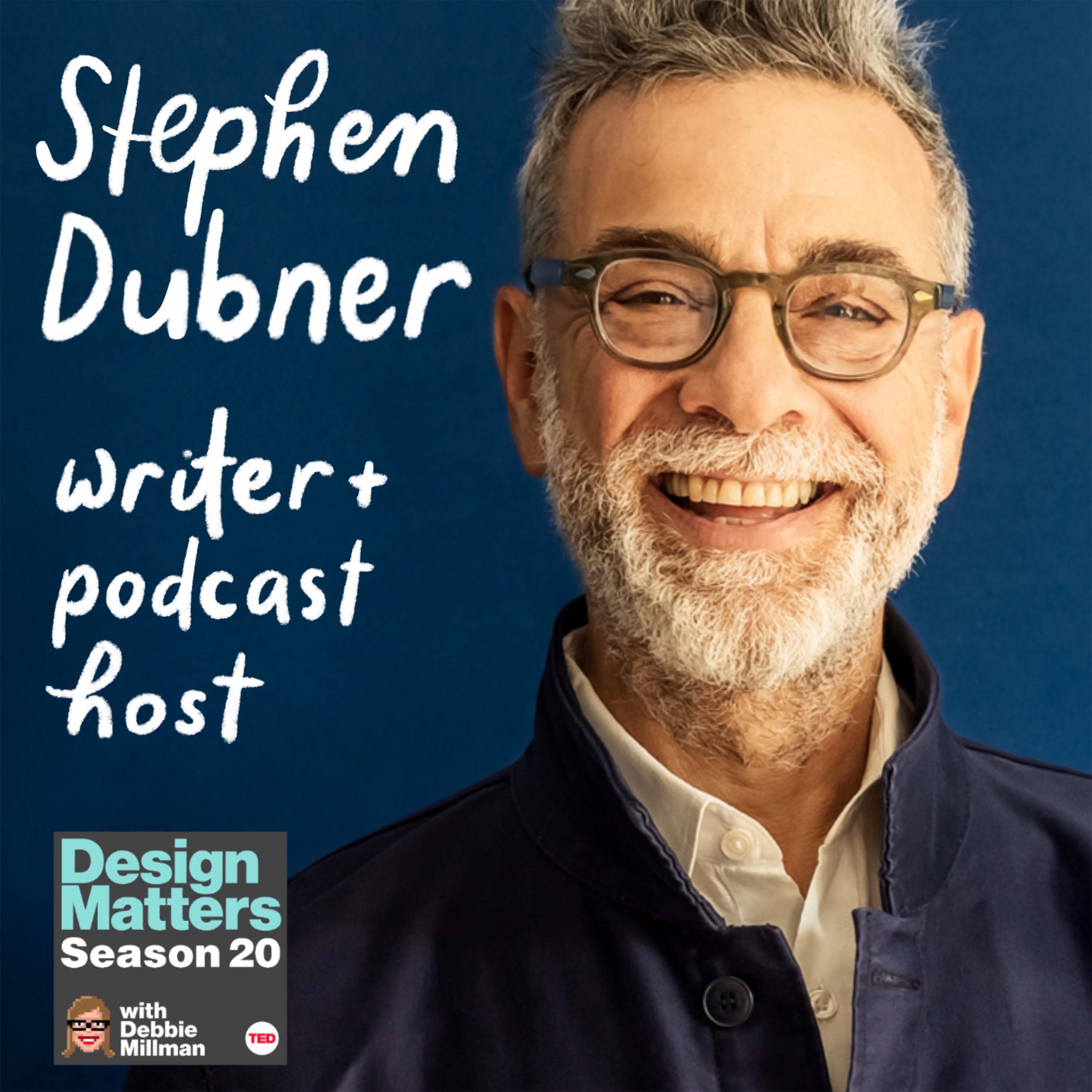
A Question-Asker Becomes a Question-Answerer
For the 20th anniversary of Freakonomics, Debbie Millman of Design Matters interviews Stephen Dubner about his upbringing, his writing career, and why it's important to “swing your swing.” Plus: a sneak peek at a new project. SOURCES:Debbie Millman, writer and host of Design Matters with Debbie Millman. RESOURCES:"Stephen J. Dubner," by Design Matters with Debbie Millman (2025).Turbulent Souls: A
How Can We Break Our Addiction to Contempt? (Update)
Arthur Brooks, an economist and former head of the American Enterprise Institute, believes that there is only one remedy for our political polarization: love. In this 2021 episode, we ask if Brooks is a fool for thinking this — and if perhaps you are his kind of fool? SOURCES:Arthur Brooks, professor of public and nonprofit leadership at Harvard University. RESOURCES:“Vital Statistics on Congress,
649. Should Ohio State (and Michigan, and Clemson) Join the N.F.L.?
Soccer leagues around the world use a promotion-and-relegation system to reward the best teams and punish the worst. We ask whether American sports fans would enjoy a similar system. (Part two of a two-part series.) SOURCES:Domonique Foxworth, sports analyst and former N.F.L. player.Stefan Szymanski, professor of sport management at the University of Michigan.Victor Matheson, professor of economic
Recommended

The Bread and Banter Podcast

The Church of What's Happening Now: The New Testament
Busted Open
Deadline: White House

Crickets Corner
History of the Earthquake and Fire in San Francisco

Fox news

K-Drama Obsessed Mamas | Beyond “Just One More Episode!”

True Crime Classics
The Healer Revolution

Becoming: HER with Nikki Spoelstra
Booked, Blonde & Busy w/ Olivia Ponton
