
Tides of History
Tides of History, hosted by Patrick Wyman, PhD, explores how the past shapes our present world. Each episode examines historical events and forces that define borders, beliefs, economies, and daily life. From Wondery, the podcast aims to help listeners understand the origins of modern society. Audible subscribers can access ad-free episodes.
Episodes

Listen Now: Audible True Crime – Ghost Story
Audible True Crime is a dedicated podcast feed where we bring you the best podcasts in true crime, with episodes dropping every single week. Just in time for spooky season, we’re releasing a show called Ghost Story, a series about a hidden family secret, unexplainable events and jaw-dropping coincidences. Tristan Redman doesn’t believe in ghosts. But weird things happened in his
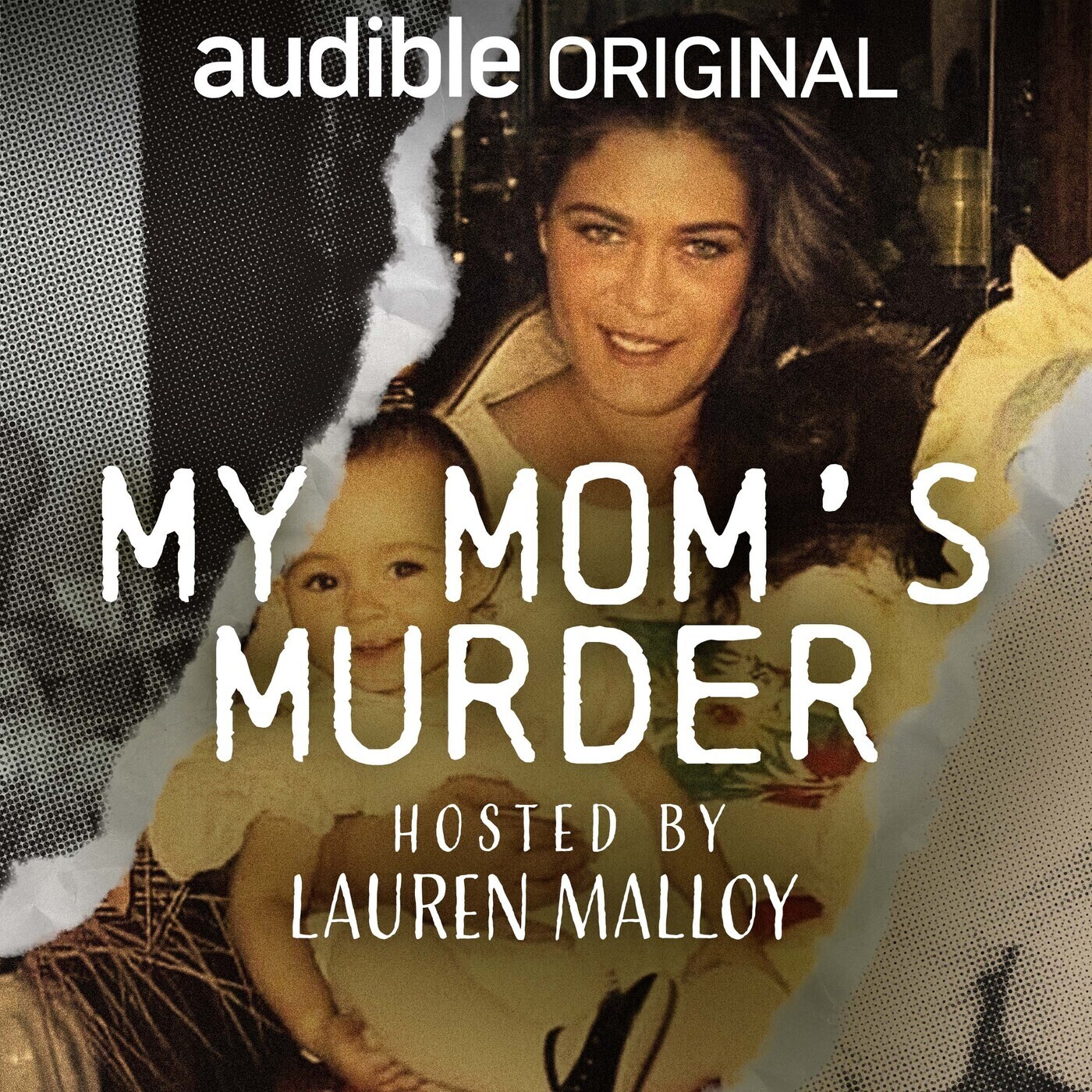
Listen Now: My Mom’s Murder
Lauren Malloy was a baby when her mother, Lori, was murdered in East Providence, Rhode Island. For thirty years, no one told her. Everyone said Lori died of natural causes. Then a stranger sent Lauren a message — and the lie collapsed. Now Lauren is investigating her own mother’s murder. She’s recorded hundreds of hours of interviews with law enforcement, family, childhood friends, and pe
The End
At long last, we've reached the end of Tides of History, and I can't thank you all enough for coming along on this long journey. We end with a series of vignettes set throughout the long ages we've covered, from the Paleolithic up to early modernity. If you want to stay in touch, be sure to follow my new podcast, Past Lives, and read my new book, Lost Worlds. Be well, friends!Patrick has
Lewis and Clark, the Corps of Discovery, and Writing Collective History: Interview with Author Craig Fehrman
Author Craig Fehrman's new book on Lewis and Clark, This Vast Enterprise, is one of the best things I've read in years. We discuss the richness of our understanding of the expedition and how that allows us to understand it, and the world of the early 19th century, from many different points of view. Buy the book: bit.ly/tvecfbPatrick has a brand-new history show! It’s called Past Lives, a
Lost Worlds Audiobook Chapter: "The World As It Was"
Patrick's new book Lost Worlds: How Humans Tried, Failed, Succeeded, and Built Our World comes out May 5th! Check out a free preview of the first chapter of the audiobook, "The World As It Was," and learn about the Clovis people and reindeer hunters in Europe at the end of the last Ice Age. Preorder in hardcopy, ebook, or audiobook (read by Patrick) here: https://bit.ly/PWLostWorlds. Patr
What I've Learned From Tides of History
Does history repeat itself? Not really, but that's not the reason it's worth studying: Our past is nothing more or less than the collective record of our species' achievements and failures, and it contains a variety of lessons, few of them easy and straightforward. In this episode, we explore how history helps us in the present, and how it doesn't. Patrick has a brand-new history sho
Gladiators and the Roman Psyche: Interview with Dr. Harry Sidebottom
Gladiators are one of the most instantly recognizable yet alien aspects of Roman society, and Dr. Harry Sidebottom's new book - Those Who Are About to Die - offers a cutting-edge view of these fascinating entertainers based on the most recent research. We discuss what recent research has revealed about their lives, why the Romans were so intrigued by them, and why they matter today.Patric
Babylon, a City for the Ages: Interview with Professor Lloyd Llewelyn-Jones
The city of Babylon has appeared in our episodes time and again over the past several years: as the center of empires, a victim of vicious conquest, a wealthy center of economic innovation, and even the place where Alexander the Great drew his last breath. Professor Lloyd Llewelyn-Jones joins me to discuss his new, comprehensive, and fascinating new book on Babylon's long and engaging his
Popular History and Academic History
Academic history and popular history are very different things, but what is their purpose? And how should we, as people who like and consume history, understand and use them?Patrick launched a brand-new history show! It’s called Past Lives, and every episode explores the life of a real person who lived in the past. Subscribe now: https://bit.ly/PWPLAAnd don't forget, you can still Get The
Migration in Human History
If we want to understand how and why the human story has unfolded in the way it has, then we have to understand migration: large numbers of people moving long distances. It's a surprisingly difficult topic to understand, but in the past couple of decades, we've developed better ideas and more tools for making sense of migration, past and present. Follow along for an overview of the topic,
The Last Mailbag!
It's time for one last mailbag! I cover everything from which historical figure would be the best Poster on social media to how ancient authors collected their letters for publication to how making Tides has shaped my interests in the past.Patrick launched a brand-new history show! It’s called Past Lives, and every episode explores the life of a real person who lived in the past. Subscrib
Ancient DNA and the Future of the Past
The ability to recover ancient DNA from archaeological remains is one of the greatest scientific innovations of our time, but how has it impacted archaeology and ancient history? And where is the study of ancient DNA going? We explore in this week's episode.Patrick launched a brand-new history show! It’s called Past Lives, and every episode explores the life of a real person who lived in
A Voyage Through the Mediterranean at the Fall of Carthage
What did the Mediterranean look like at the moment of Rome's triumph in 146 BC? Join me as we go on one final trip around the wine-dark sea, checking in with each major region and seeing how they changed as Roman armies triumphed everywhere from Iberia to Anatolia.Patrick launched a brand-new history show! It’s called Past Lives, and every episode explores the life of a real person who li
What is the Atlantic World? Interview with Professor Keith Pluymers
he Atlantic World is one of the major concepts in academic history, a way of linking together all the various places around the fringes of the great ocean during a time of extraordinary change, the early modern period. Professor Keith Pluymers joins me once more to discuss the Atlantic World and how the concept is useful to us in trying to make sense of a massively important time in human
The Life of Publius Afer (Rome, 200 BC)
The best way to understand the impact slavery had on a person's life is to follow their journey through the institution, but the ancient world provides few examples that we can use. Instead, we have to assemble a composite character from bits and pieces. We'll call him Publius, and watch him as he's abducted, enslaved, and lives out his life in a new, Roman, world.Patrick launched a brand
Ancient Slaveries
Slavery was foundational to ancient societies, but it was never a single thing: The experiences of the enslaved varied dramatically depending on when and where they lived, who owned them, and most of all, the jobs they had to do. Slavery was never good, but there were better and worse versions, and in this episode, we'll explore some of the variation that shaped the lives of enslaved peop
Past Lives: Saint Patrick, Slavery, and the Fall of the Roman Empire
Check out Patrick's new show, Past Lives! You can listen on your platform of choice through the links here, and be sure to subscribe to the Patreon for tons of bonus content - Q and As, interviews with fantastic historians, and much more.Saint Patrick is one of the most famous individuals who lived in the late Roman Empire, but long before he became the apostle of the Irish, he was a Roma
Mailbag!
It's been quite a while since I've answered listener questions, so here are a bunch on everything from the best depictions of siege warfare in movies to the pre-Indo-European languages of Europe.Patrick launched a brand-new history show! It’s called Past Lives, and every episode explores the life of a real person who lived in the past. Subscribe now: https://bit.ly/PWPLAAnd don't forget,
Recent Discoveries in the Ancient Americas: Professor Shane Miller Returns
Every year, new archaeological discoveries claim to rewrite what we think we knew about the ancient Americas, but how much can we trust the initial reports we see? Professor Shane Miller, now of the University of Alabama, joins me again to place the White Sands footprints and other key sites in their proper context.Patrick launched a brand-new history show! It’s called Past Lives, and eve
Doing Business in Mid-Republican Rome
The rise of the Roman Republic was built on conquest and war, but also on the massively expanding economy of Italy as a whole and Rome in particular. What was it like to live through that, and what did an expanding economy actually mean?Patrick launched a brand-new history show! It’s called Past Lives, and every episode explores the life of a real person who lived in the past. Subscribe n
Interview with Professor Tom Birkett on "Runes: A Concise History"
Runic writing carries connotations of magic and fantasy, but it was a widespread, useful, and long-lasting system of writing. Professor Tom Birkett has written a fantastic overview of runic writing that returns it to the real time and place in which it existed - Runes: A Concise History.Patrick launched a brand-new history show! It’s called Past Lives, and every episode explores the life
How Alexander the Great's Soldiers Spent Their Money
Let's imagine a Macedonian soldier during the time of Alexander the Great. How did this man, whom we'll call Red Cleitus, spend the vast amounts of coin he plundered and earned as he and his comrades fought their way across Asia?Patrick launched a brand-new history show! It’s called Past Lives, and every episode explores the life of a real person who lived in the past. Subscribe now: http
Two Murders at the Dawn of History (Lost Worlds Audiobook Preview)
Patrick's new book, Lost Worlds: How Humans Tried, Failed, Succeeded, and Built Our World, launches May 5th, 2026! Check out this audiobook preview chapter on two murders around 5,300 years ago, hear about everything we can learn from Otzi the Iceman in the Alps and Gebelein Man in Egypt, and be sure to preorder the book in your medium of choice through the link here: https://bit.ly/PWLos
Past Lives: Nanaya'ila'i and the Bleeding Edge of the Assyrian Empire
Check out a scripted episode of Patrick's new show, Past Lives!Nearly 2,700 years ago, a woman and her daughter were ripped away from their homes in what is now Iran by the soldiers of the Assyrian Empire. Nanaya'ila'i was one of thousands upon thousands of people to experience the violence that accompanied conquest, but she's one of the very few whose name we know and life we can reconst
The Economic Life of Megakles, Farmer of Classical Athens
We've talked about how rich classical Athens was, but what did that mean for an average person living at the time? In this episode, we follow the life of a composite character, an Athenian citizen farmer named Megakles, to see how the economic developments of the classical age shaped daily life in Athens.Patrick launched a brand-new history show on December 3rd! It’s called Past Lives, an
Doing History through Movies: Interview with Dr. Jason Herbert
Like many of you, I first fell in love with history through the movies. Dr. Jason Herbert hosted a podcast called Historians at the Movies, now retitled Reckoning with Jason Herbert, that focuses on films depicting the past and what historians think about them. We have a delightful conversation about some of our favorite history movies, what makes them good or bad, and what we can learn f
Listen to Patrick's New History Podcast, Past Lives
Patrick has a new history podcast, Past Lives! It's all about the experiences of real, everyday people throughout the human past, people just like you. Listen to the first full episode, "On Historical Storytelling," right here, and then go subscribe to the Past Lives feed on Apple Podcasts, Spotify, or your podcast platform of choice.Past Lives is an independent production supported throu
Why Was Classical Athens So Rich?
Ancient Greece was rich compared to other ancient societies, and Athens was the richest place of all within ancient Greece. But why? The answer lies not just in the silver lodes of Attica or access to the sea; it was about democracy, law, and institutions, which made people feel safe doing business in Athens.Patrick is launching a brand-new history show on December 3rd! It’s called Past L
Patrick's New History Show, Past Lives, Launches December 3rd!
From Patrick Wyman (host of Fall of Rome and Tides of History) comes Past Lives, a brand new podcast! Every week, we’ll focus on the lived experiences of real people from the past, bringing their stories to life.The first season of Past Lives is available December 3rd! Be sure to subscribe to the feed now (https://podcasts.apple.com/gb/podcast/past-lives/id1852618120) so you get our first
Why the Hundred Years War Actually Lasted Two Hundred Years: Interview with Professor Michael Livingston
The Hundred Years War was the defining conflict of the Middle Ages, but today's guest - Professor Michael Livingston of the Citadel - argues that it actually lasted for 200 years. That's just one problem with the way we've learned about the Hundred Years War, and Livingston's new book, entitled Bloody Crowns: A New History of the Hundred Years War, is a fantastic corrective.Patrick is lau
The Phoenicians, the Greeks, and the Iron Age Mediterranean
As the Bronze Age gave way to the Iron Age, the economy of the Mediterranean shifted dramatically. It expanded to encompass the entire sea for the first time, everywhere from the Levant to Iberia, and laid the foundations for what would eventually become the Roman Empire.Patrick's new book - Lost Worlds: The Rise and Fall of Human Societies from the Ice Age to the Bronze Age - is now avai
Love, War, and Diplomacy in the Late Bronze Age: Interview with Professor Eric Cline
Professor Eric Cline, author of the outstanding book 1177 BC: The Year Civilization Collapsed, returns to the show to discuss his new book: Love, War, and Diplomacy: The Discovery of the Amarna Letters and the Bronze Age World They Revealed. We talk about the dynamics of Bronze Age states, how such an extraordinary treasure trove of texts was discovered and translated, and what we can kno
Building the Pyramids and the Valley of the Kings
Millions of people called ancient Egypt home, and the vast majority of them weren't kings or high priests; they were humble farmers and laborers making their living from the rich black soil surrounding the Nile. That extraordinary land produced so much surplus grain that thousands upon thousands of people could be spared from agricultural labor and put to work building some of the most st
The Story of Carbon Dioxide is the Story of Everything: Interview with Journalist Peter Brannen
Carbon dioxide is central to the story of Earth from its beginning more than 4 billion years ago all the way up to the present. Peter Brannen joins me to discuss his new book - The Story of CO2 Is the Story of Everything: How Carbon Dioxide Made Our World - an extraordinarily long-term view of the planet's past and future, and why our current path is so unprecedented.Patrick's book is now
Living and Working in Imperial Babylonia
We don't usually think of the Neo-Babylonian Empire as one of the economic powerhouses of the ancient world, but this short-lived state actually oversaw one of the most stunning periods of economic growth anywhere before the Industrial Revolution.Patrick's book is now available! Get The Verge: Reformation, Renaissance, and Forty Years that Shook the World in hardcopy, ebook, or audiobook
The Ancient Economy from Assyria to Augustus
What was the ancient economy? Can we even speak of such a singular thing? Today, I introduce the next block of episodes on Tides, an in-depth examination of the cutting edge of knowledge on the ancient economy in the first millennium BC.Patrick's book is now available! Get The Verge: Reformation, Renaissance, and Forty Years that Shook the World in hardcopy, ebook, or audiobook (read by P
Interview with Dr. Owen Rees (Book, The Far Edges of the Known World releases 9/30/25)
The ancient world was a lot bigger than Greece and Rome. Dr. Owen Rees joins me to discuss his new book on this broader conception of antiquity - The Far Edges of the Known World - and we traverse the globe from Africa to Vietnam to the Black Sea, tracking the contours of a stranger, more diverse, and far more interesting world than we ever knew existed. Buy The Far Edges of the Known Wor
Thucydides, the Greatest Historian of All Time: Interview with Robin Waterfield and Professor Polly Low
Thucydides is perhaps the greatest historian to ever live, a man whose work on the Peloponnesian War has been read, digested, and debated for more than 2400 years. Robin Waterfield and Professor Polly Low have produced a wonderful new translation of Thucydides, and we dicuss the historian, his life and times, and why his history has exercised so much influence for so long. Buy The History
The Celts Invade Greece
The Celts invaded Greece in 280-279 BC, an entirely unforeseen breakthrough of a nearly unknown people into the mainstream of the Hellenistic world. Tens of thousands of Celts poured through the passes of the Balkans, killed a Macedonian king in battle, and ravaged huge swathes of the heart of the Greek world. How and why did this happenPatrick's book is now available! Get The Verge: Refo
Alexander's Successors and the Danube Frontier
While Alexander the Great's successors were fighting over control of his empire, Celtic-speaking migrants were moving east along the Danube River, mostly unseen and unnoticed by the Greeks to their south. The Macedonian kings should've been paying more attention, because soon, those Celts would launch one of the largest invasions of Greece in recorded history.Patrick's book is now availab
The First Cities North of the Alps: Interview with Professor Manuel Fernandez-Götz
The European Iron Age is known almost solely through archaeology, and the material record of the period is still showing us fascinating new aspects of ancient life. Professor Manuel Fernandez-Götz of Oxford joins me to talk about his incredible research on the Iron Age and the first cities to ever appear north of the Alps.Patrick's book is now available! Get The Verge: Reformation, Renais
The Celts of the East and the Iron Age Balkans
We're most familiar with the Celts of the west, the people who eventually fought Julius Caesar in Gaul and left their languages along the Atlantic fringe. Yet thanks to mass migrations to the east, the Celtic world also extended all the way to the Black Sea. Today, we'll try to understand the world these Celtic migrants found in the Balkans, full of barely remembered ancient peoples who l
Rome's Deadliest Enemies: The Gauls of Italy
When we think of Rome's most dangerous foes, our attention usually turns to Hannibal and his ilk, but it was really the Gauls of northern Italy who troubled Romans the most, and for the longest period. Who were they, and what made them such a consistent threat to the safety of the Roman Republic?Patrick's book is now available! Get The Verge: Reformation, Renaissance, and Forty Years that
Celts and the European Iron Age
We have long thought of the Celts (or Gauls) as the antithesis of the ""civilized"" cultures of the Mediterranean, but new research shows that they were building cities and states at the same time as cities like Rome and Athens were becoming the places we know today.Patrick's book is now available! Get The Verge: Reformation, Renaissance, and Forty Years that Shook the World in hardcopy,
The Forgotten Power-Broker of the Roman Republic: Interview with Professor Douglas Boin
Most people today remember the Roman aristocratic woman Clodia as the target of one of Cicero's nastiest works, but Douglas Boin has written a wonderful new book - Clodia of Rome - that recovers just how central she was to the political networks of the late Roman Republic. Clodia was a woman in a world of men and a truly principled reformer, and exploring her story tells us an extraordina
How the Horse Changed the World: Interview with Author David Chaffetz
David Chaffetz, author of the recent and truly outstanding book Raiders, Rulers, and Traders: The Horse and the Rise of Empires, joins Tides to talk about the long and intertwined history of horses and people in Central Asia and beyond. The trade in horses, not silks and spices, was the true connective tissue joining together the ancient and medieval worlds.Patrick's book is now available
Why Did Rome Win?
Why did Rome win? It's a simple question, but the answer is anything but. To figure it out, we have to look not only at what made Rome special but also at its adversaries. Only then can we understand how, in such a short time, the Republic conquered the entire Mediterranean, a feat that had never been accomplished before and never would be again. Patrick's book is now available! Get The V
Guerrilla Warfare and Insurgency in the American Civil War: Interview with Professor Andrew Fialka
We usually think of the American Civil War as a conflict fought between massive armies at famous battlefields like Gettysburg, but that's not really accurate: Much of the war was actually made up of guerrilla attacks, insurgencies, and the kind of violence between neighbors that wouldn't be out of place in seminars on the US in Iraq and Afghanistan. Professor Andrew Fialka joins me to dis
Encore: Jakob Fugger: The Richest Man Who Ever Lived?
At the end of the fifteenth century, the center of European banking suddenly swung from its birthplace in Italy to south Germany. The key figure in that transition was Jakob Fugger of Augsburg, maybe the richest man who ever lived.Patrick's book is now available! Get The Verge: Reformation, Renaissance, and Forty Years that Shook the World in hardcopy, ebook, or audiobook (read by Patrick
Encore: The Rise and Fall of the Medici Bank
The Medici name still carries echoes of power and labyrinthine politics. But the Medici got their start as bankers, and built a financial empire that spanned fifteenth-century Europe. Popes, kings, and merchants all did business with the Medici, and the family's power over Florence grew out of its fiscal wizardry - at least until it all fell apart.Patrick's book is now available! Get The
The Roman Conquest of the Hellenistic World
For most of its history, Rome barely bothered with the Greek east. Then, quite suddenly, Rome exploded onto the scene, laying low the two most powerful Hellenistic warrior-kings of the past century. Within ten years, Rome became the undisputed hegemonic power of the Mediterranean world. How did that happen, and why?Patrick's book is now available! Get The Verge: Reformation, Renaissance,
Who was Thomas More? Interview with Dr. Joanne Paul
Thomas More is one of the most fascinating figures of the 16th century: saint, persecutor of Protestants, government official, martyr. But who was he, really? Dr. Joanne Paul has written a wonderful new biography of More, entitled Thomas More: A Life, which explores his origins and the world that shaped him. She joins Tides to discuss More, how the tumultuous England of his youth shaped h
Rome Enters the Hellenistic World
For most of its history, the Roman Republic had little to do with the Greek East. That changed at the end of the third century BC. As the war against Hannibal reached its conclusion, momentous things were happening in the eastern Mediterranean, as the system of great powers that had defined the Hellenistic world for a century collapsed almost overnight. Now, Rome would have to make a deci
War and the Hellenistic World
The Hellenistic world stretched from Sicily to India and encompassed tens of millions of people for centuries, as new kingdoms sprang up, new ways of life emerged, and the distant edges of that world were brought together by trade and migration. Yet the Hellenistic world never escaped its violent roots, and more than any other phenomenon, war defined it for the entirety of its existence.P
On Ancient History and Our Shared Heritage: Interview with Professor Walter Scheidel
Why does ancient history matter? Stanford's Professor Walter Scheidel returns to Tides to discuss his new book, What is Ancient History?, and provides an answer: The distant past is nothing more or less than the collective heritage we all, as a species, share.Patrick's book is now available! Get The Verge: Reformation, Renaissance, and Forty Years that Shook the World in hardcopy, ebook,
The Final Defeat of Hannibal Barca
More than any other individual, Hannibal defined the Second Punic War. But after his crushing victory at Cannae, Hannibal never again came so close to finishing off Rome. At Zama, in 202 BC, he finally met his match on the battlefield: Scipio Africanus.Patrick's book is now available! Get The Verge: Reformation, Renaissance, and Forty Years that Shook the World in hardcopy, ebook, or audi
Why Was Carthage Such a Threat to Rome? Interview with Dr. Bret Devereaux, Part 2
Dr. Bret Devereaux returns to the show to discuss why, exactly, Carthage was such a threat to the Roman Republic. The answer lies in the fact that more than any other state in the ancient world, Carthage most closely resembled Rome.Patrick's book is now available! Get The Verge: Reformation, Renaissance, and Forty Years that Shook the World in hardcopy, ebook, or audiobook (read by Patric
The Rise of Scipio Africanus and the War in Iberia
Most of Rome's generals were competent but not outstanding, which was more than enough for a power with Rome's structural advantages. Yet the Second Punic War did produce one extraordinary military leader for Rome: Scipio Africanus, a scion of one of the city's most illustrious families. Today, we follow his rise, how it reflected Rome's aristocratic culture of leadership, and the impact
Why Didn't Cannae Win the War for Hannibal?
Cannae was a crushing victory for Hannibal, but it didn't win the war for him. Why? The answer lies in the nature of the Roman political system, which prioritized resilience, manpower, and the diffusion of authority.Patrick's book is now available! Get The Verge: Reformation, Renaissance, and Forty Years that Shook the World in hardcopy, ebook, or audiobook (read by Patrick) here: https:/
Experiencing the Battle of Cannae
The Battle of Cannae was the worst defeat Rome ever suffered, and one of the worst battlefield losses in history. What was it like to be there? We explore the battle from the perspective of a common Roman soldier and try to make sense of the unexplainable.Patrick's book is now available! Get The Verge: Reformation, Renaissance, and Forty Years that Shook the World in hardcopy, ebook, or a
Combining Ancient DNA and History: Interview with Dr. Pontus Skoglund
Ancient DNA has completely reshaped our understanding of prehistory, but what does it offer for periods when we actually have historical texts? Dr. Pontus Skoglund, one of the world's leading aDNA researchers, joins me to talk about his recent study of Iron Age and Medieval Europe, and how genomics can reveal new things even about periods we think we know well.Patrick's book is now availa
Hannibal Invades Italy
Hannibal accomplished a great deal during his long and illustrious life, but no feat has captured the imagination more than his crossing of the Alps. In the teeth of an Alpine fall, Hannibal took tens of thousands of men, horses, and even several dozen elephants into the peaks, then descended on Italy and brought destruction to the heart of Roman territory.Patrick's book is now available!
The Carthaginian Conquest of Iberia
The disastrous ending of the First Punic War could have destroyed Carthage for good, and it nearly did. But one man had a plan for how to bring Carthage back to prosperity and power: Hamilcar Barca, the father of Hannibal, who took an army to Iberia to build a new Carthaginian empire.Patrick's book is now available! Get The Verge: Reformation, Renaissance, and Forty Years that Shook the W
Rome, Carthage, and the Punic Wars: Interview with Dr. Bret Devereaux
Dr. Bret Devereaux is one of the world's leading experts on the military history of Rome and on the Punic Wars. We discuss Rome's advantages, what made the Republic so formidable, and why it was able to accomplish so much in such a short period.Patrick's book is now available! Get The Verge: Reformation, Renaissance, and Forty Years that Shook the World in hardcopy, ebook, or audiobook (r
Rome in the Middle Republic
A century of expansion and conquest in Italy transformed Rome from a minor spot on the Tiber to the hegemonic power in the peninsula, but what did that actually mean for the Republic and the city itself?Patrick's book is now available! Get The Verge: Reformation, Renaissance, and Forty Years that Shook the World in hardcopy, ebook, or audiobook (read by Patrick) here: https://bit.ly/PWver
The First Punic War
The First Punic War put Rome on the map as a major power in the Mediterranean. For 23 grueling years, the war between Rome and Carthage dragged on and on, causing immense destruction and tens of thousands of deaths, but in the end the Republic emerged victorious.Patrick's book is now available! Get The Verge: Reformation, Renaissance, and Forty Years that Shook the World in hardcopy, eboo
How and Why Rome and Carthage Went to War in 264 BC
There was no particularly pressing reason for Rome and Carthage to go to war in 264 BC over the small city of Messana, but one small incident nevertheless sparked a conflict that lasted for 23 years and caused untold devastation. Why did this happen? Was war between the two great powers actually inevitable?Patrick's book is now available! Get The Verge: Reformation, Renaissance, and Forty
Rebroadcast: Peasants' Rebellions and Resistance
The medieval world relied on peasants. They grew the food, maintained the buildings, produced the craft goods, and made up the vast bulk of the population. But they were never particularly happy with their place in society, and rebellions, revolts, and quieter forms of resistance were ubiquitous.Patrick's book is now available! Get The Verge: Reformation, Renaissance, and Forty Years that
Soldiers and Labor Markets in the Hellenistic World: Interview with Dr. Charlotte van Regenmortel
The decades after the death of Alexander the Great saw a massive increase in the scale and intensity of warfare over an area stretching from Italy to Afghanistan. Dr. Charlotte van Regenmortel joins me to talk about the enormous economic impact of that warfare, and how it created a concept of wage labor that transformed the economies of the Hellenistic world and beyond.Patrick's book is n
Interview: Professor Lyndal Roper on the German Peasants' War
The German Peasants' War was the largest popular revolt in Europe before the French Revolution, but it's largely been forgotten. Why? Professor Lyndal Roper of the University of Oxford joins me to discuss her absolutely outstanding new book, Summer of Fire and Blood, and we discuss peasants, resistance, and the heady days of the early Reformation. Buy her book!Patrick's book is now availa
The Defeat of Pyrrhus and the Road to the Punic Wars
Pyrrhus of Epirus won costly but clear victories over the Romans in their first battlefield meetings, but couldn't win the war. Rome's dogged determination eventually won the war for them and placed them on the path to seemingly inevitable conflict with Carthage.Patrick's book is now available! Get The Verge: Reformation, Renaissance, and Forty Years that Shook the World in hardcopy, eboo
Duels, Violence, and Conflict in Early Modern Europe: Interview with Professor Stuart Carroll
Early modern Europe was a violent place, full of duels, bloody encounters, and decades-long feuds. In many ways, it was more fractious and dangerous than it had been during the Middle Ages. Professor Stuart Carroll is an expert on the social and cultural aspects of violence in that age, and we chat about murder, conflict resolution, and how people made peace in an unsettled time.Patrick's
The Pyrrhic War
By 281 BC, Rome controlled much of Italy, but the city was still a minor player on the larger Mediterranean scene. That changed when King Pyrrhus of Epirus crossed the Adriatic with a powerful army of Macedonian pikemen and war elephants, setting in motion the toughest war the Romans had ever fought.Patrick's book is now available! Get The Verge: Reformation, Renaissance, and Forty Years
King Pyrrhus of Epirus and a New Age of Mediterranean Politics
While the Punic Wars mark the stage of Roman history with which most people are familiar, Rome's entrance onto the stage of Mediterranean power politics actually came a decade earlier, with a bloody, grinding war against the Hellenistic king Pyrrhus of Epirus.Patrick's book is now available! Get The Verge: Reformation, Renaissance, and Forty Years that Shook the World in hardcopy, ebook,
The Tyrants of Syracuse and the Wars with Carthage
As the fourth century drew to a close, Rome wasn't the only rising power in the central Mediterranean; Syracuse and Carthage were battling for dominance in Sicily and beyond, fighting devastating wars of ever-increasing scale that led directly to the eventual conflicts we know as the Punic Wars.Patrick's book is now available! Get The Verge: Reformation, Renaissance, and Forty Years that
Excavating a Scythian Royal Burial Mound: Interview with Dr. Gino Caspari
Dr. Gino Caspari returns to discuss the extraordinary finds at his most recent excavation of an early (maybe the earliest) Scythian royal burial mound in Siberia! We discuss horse sacrifice, state formation, the earliest Scythians, and the trials of excavating in one of the more remote places on the planet.Patrick's book is now available! Get The Verge: Reformation, Renaissance, and Forty
What If: Alexander the Great had Died at the Granicus River?
How would history look different if Alexander the Great had died in 334 BC? Would Macedonia still have conquered most of Asia?Patrick's book is now available! Get The Verge: Reformation, Renaissance, and Forty Years that Shook the World in hardcopy, ebook, or audiobook (read by Patrick) here: https://bit.ly/PWverge. And check out Patrick's new podcast The Pursuit of Dadliness! It’s all ab
The Birth of the Carthaginian Empire
Carthage spent most of the fifth century BC building up its economy, but in the aftermath of the disastrous Athenian expedition to Sicily, the Carthaginians decided that the time was ripe to create a new Mediterranean empire.Patrick's book is now available! Get The Verge: Reformation, Renaissance, and Forty Years that Shook the World in hardcopy, ebook, or audiobook (read by Patrick) here
The Fall of the Carolingian Empire: Interview with Dr. David Perry
Much of what we take for granted about the European Middle Ages was a product of the Carolingian dynasty, particularly its most notable member, Charlemagne. But before long, the empire Charlemagne built splintered, thanks to the ambitions of his grandsons. Dr. David Perry is co-author, along with Professor Matthew Gabriele, of the new book Oathbreakers, which is a wonderful and informativ
The End of the Age of the Successors
By the 280s BC, only a few of the men who had ridden the length and breadth of Asia with Alexander were still alive, and the world they had spent decades fighting to make was ready to be born: the Hellenistic world.Patrick's book is now available! Get The Verge: Reformation, Renaissance, and Forty Years that Shook the World in hardcopy, ebook, or audiobook (read by Patrick) here: https://
Recommended
Busted Open

Deadline: White House

Crickets Corner
History of the Earthquake and Fire in San Francisco

Fox news

K-Drama Obsessed Mamas | Beyond “Just One More Episode!”

True Crime Classics

The Healer Revolution

Becoming: HER with Nikki Spoelstra
Booked, Blonde & Busy w/ Olivia Ponton

McKinsey on Consumer and Retail

megahired.com
