Carry the Two
Carry the Two is a curiosity-driven podcast that explores the hidden mathematical and statistical gears that turn the world. Each episode uses stories to reveal how mathematical research drives everything from bee swarm decision-making to textual analysis of policy documents. Hosted by Sadie Witkowski and Ian Martin, the show offers unique perspectives from mathematics and statistics. Audio production is by Tyler Damme with music from Blue Dot Sessions.
Episodes
Mathematics & AI Episode 3: Feng Fu
Hosts Sadie Witkowski and Ian Martin return for this season of Carry the Two, where we are exploring the intersection of AI and mathematical research. In this episode, we are joined by Dartmouth professor Feng Fu about his work in evolutionary game theory.
Find our transcript here: Google Doc, or at imsi.institute
Make sure to check out more about Feng
Mathematics & AI Episode 2: Saptarshi Pal
Hosts Sadie Witkowski and Ian Martin return for this season of Carry the Two, where we are exploring the intersection of AI and mathematical research. In this episode, we are joined by postdoctoral researcher Saptarshi Pal, who explains how he uses game theory to study social behavior in large language models.
Find our transcript here: Google Doc
Make s
Mathematics & AI Episode 1: Jeremy Avigad
Welcome to a new season of Carry the Two, the podcast about how math and statistics impact the world around us from the Institute for Mathematical and Statistical Innovation.Hosts Sadie Witkowski and Ian Martin return for this season of Carry the Two, where we are exploring the intersection of AI and mathematical research. To kick off the new season, w
Mathematics & Gambling Episode 6: Online Gambling
Welcome to Carry the Two, the podcast about how math and statistics impact the world around us from the Institute for Mathematical and Statistical Innovation. In this season of Carry the Two we are going to be examining how math and stats intersect with the world of gambling. This episode is all about online gambling sites use of sign up bonuses and bet
Mathematics & Gambling Episode 5: Yet More Sports Betting
Welcome to Carry the Two, the podcast about how math and statistics impact the world around us from the Institute for Mathematical and Statistical Innovation. In this season of Carry the Two we are going to be examining how math and stats intersect with the world of gambling. This episode is all about sports prop bets and parlays. Hosts Sam Hansen and S
Mathematics & Gambling Episode 4: Sports Betting
Welcome to Carry the Two, the podcast about how math and statistics impact the world around us from the Institute for Mathematical and Statistical Innovation. In this season of Carry the Two we are going to be examining how math and stats intersect with the world of gambling. This episode is all about the sports bets of over/under, spreads, and moneylin
Mathematics & Gambling Episode 3: Even More Casino Games
Welcome to Carry the Two, the podcast about how math and statistics impact the world around us from the Institute for Mathematical and Statistical Innovation. In this season of Carry the Two we are going to be examining how math and stats intersect with the world of gambling. This episode is all about craps, blackjack, and poker. Hosts Sam Hansen and Sa
Mathematics & Gambling Episode 2: Casino Games
Welcome to Carry the Two, the podcast about how math and statistics impact the world around us from the Institute for Mathematical and Statistical Innovation. In this season of Carry the Two we are going to be examining how math and stats intersect with the world of gambling. This episode is all about casino slot machines and roulette. Hosts Sam Hansen
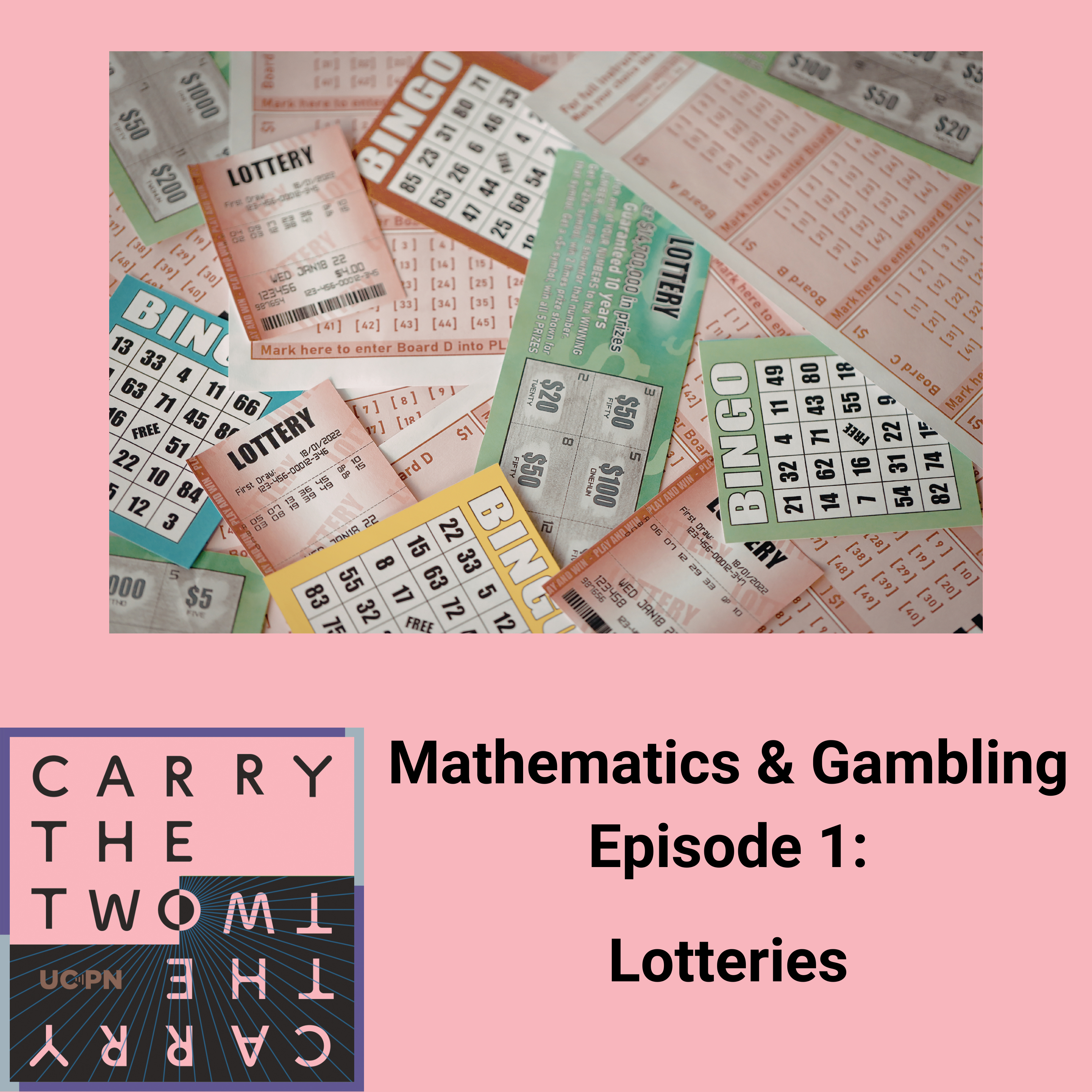
Mathematics & Gambling Episode 1: Lotteries
Welcome to Carry the Two, the podcast about how math and statistics impact the world around us from the Institute for Mathematical and Statistical Innovation. In this season of Carry the Two we are going to be examining how math and stats intersect with the world of gambling. This episode is all about Lotteries. Hosts Sam Hansen and Sadie Witkowski are
Emerging Technologies Episode 6: Digital Twins
Welcome to Carry the Two, the podcast about how math and statistics impact the world around us from the Institute for Mathematical and Statistical Innovation. In this season of Carry the Two we are going to be examining how math and stats is helping scientists, engineers, and industry develop new and emerging technologies. This episode is all about Digi
Emerging Technologies Episode 5: Computation Imaging
Welcome to Carry the Two, the podcast about how math and statistics impact the world around us from the Institute for Mathematical and Statistical Innovation. In this season of Carry the Two we are going to be examining how math and stats is helping scientists, engineers, and industry develop new and emerging technologies. This episode is all about Comp
Emerging Technologies Episode 4: Materials Science
Welcome to Carry the Two, the podcast about how math and statistics impact the world around us from the Institute for Mathematical and Statistical Innovation. In this season of Carry the Two we are going to be examining how math and stats is helping scientists, engineers, and industry develop new and emerging technologies. Our first episode is all about
Emerging Technologies Episode 3: Fusion Energy
Welcome to Carry the Two, the podcast about how math and statistics impact the world around us from the Institute for Mathematical and Statistical Innovation. In this season of Carry the Two we are going to be examining how math and stats is helping scientists, engineers, and industry develop new and emerging technologies. Our third episode is all about
Emerging Technologies Episode 2: Computation Medicine
Welcome to Carry the Two, the podcast about how math and statistics impact the world around us from the Institute for Mathematical and Statistical Innovation. In this season of Carry the Two we are going to be examining how math and stats is helping scientists, engineers, and industry develop new and emerging technologies. Our first episode is all about
Emerging Technologies Episode 1: Quantum Information Science
Welcome to Carry the Two, the podcast about how math and statistics impact the world around us from the Institute for Mathematical and Statistical Innovation. In this season of Carry the Two we are going to be examining how math and stats is helping scientists, engineers, and industry develop new and emerging technologies. Our first episode is all about
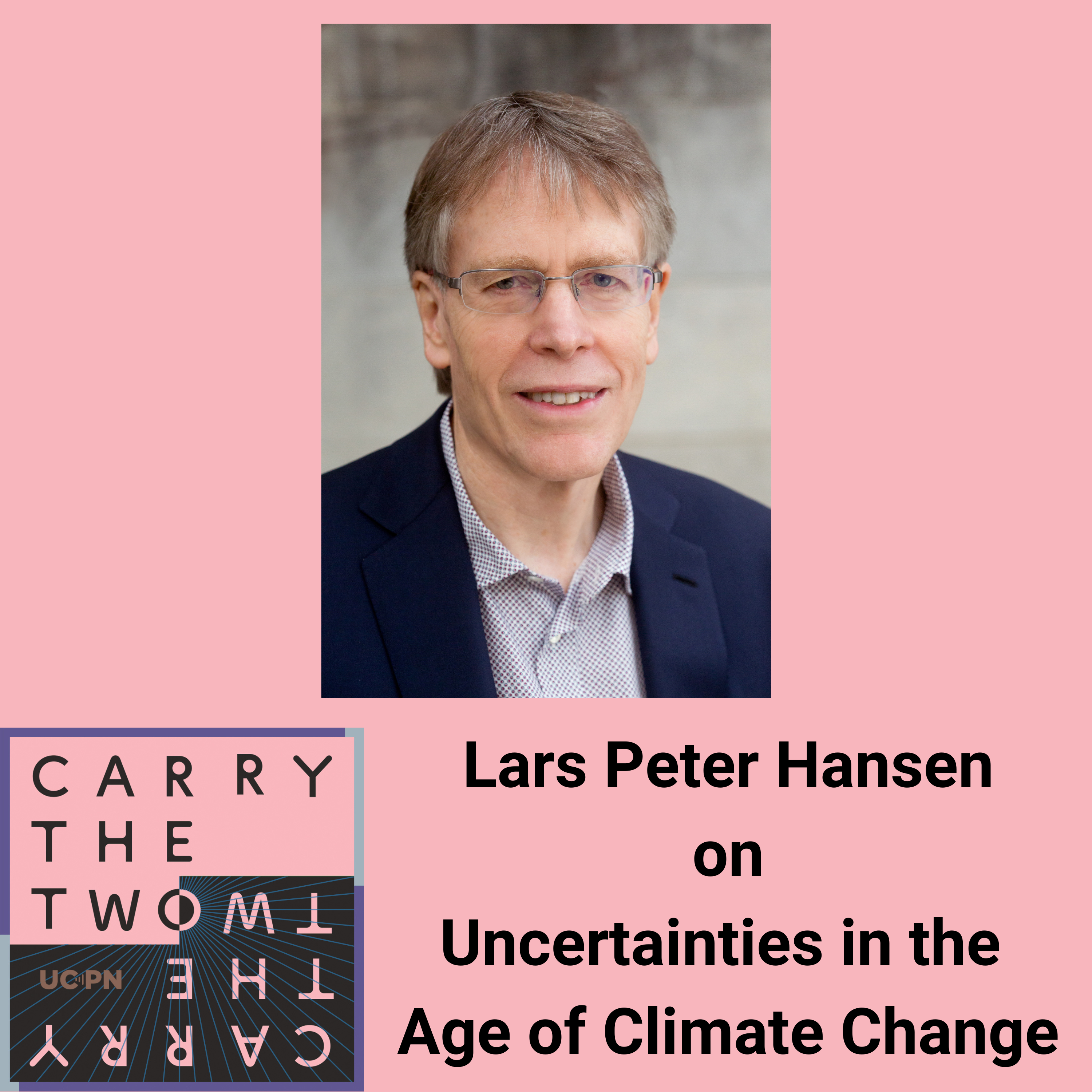
Lars Peter Hansen on Uncertainties in the Age of Climate Change
Welcome to Carry the Two, the podcast about how math and statistics impact the world around us from the Institute for Mathematical and Statistical Innovation. While we’re in between our more in-depth seasons, we like to bring you something a little different in mini-season format. And for this mini season, we are going to highlight some of the amazing r
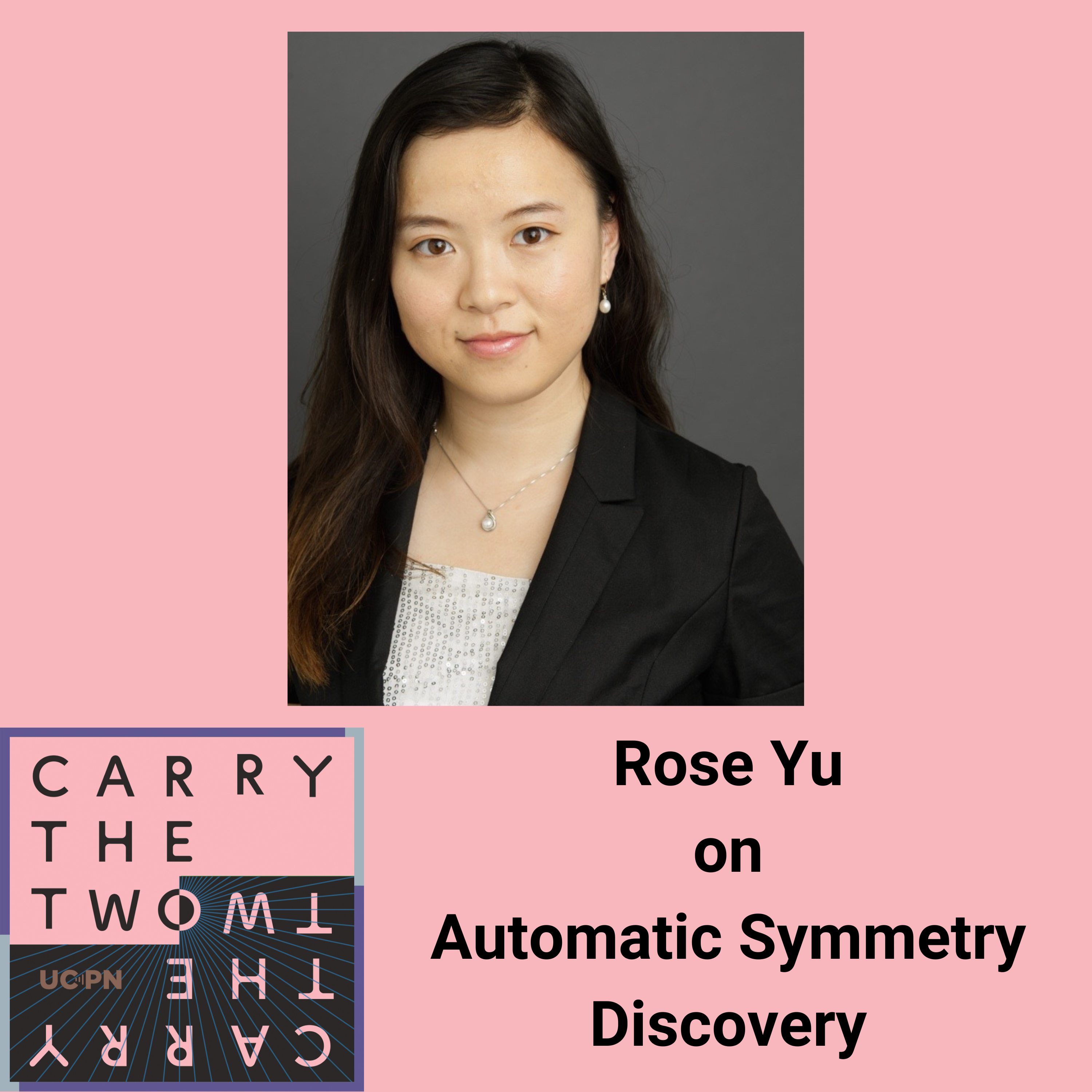
Rose Yu on Automatic Symmetry Discovery
Welcome to Carry the Two, the podcast about how math and statistics impact the world around us from the Institute for Mathematical and Statistical Innovation. While we’re in between our more in-depth seasons, we like to bring you something a little different in mini-season format. And for this mini season, we are going to highlight some of the amazing r
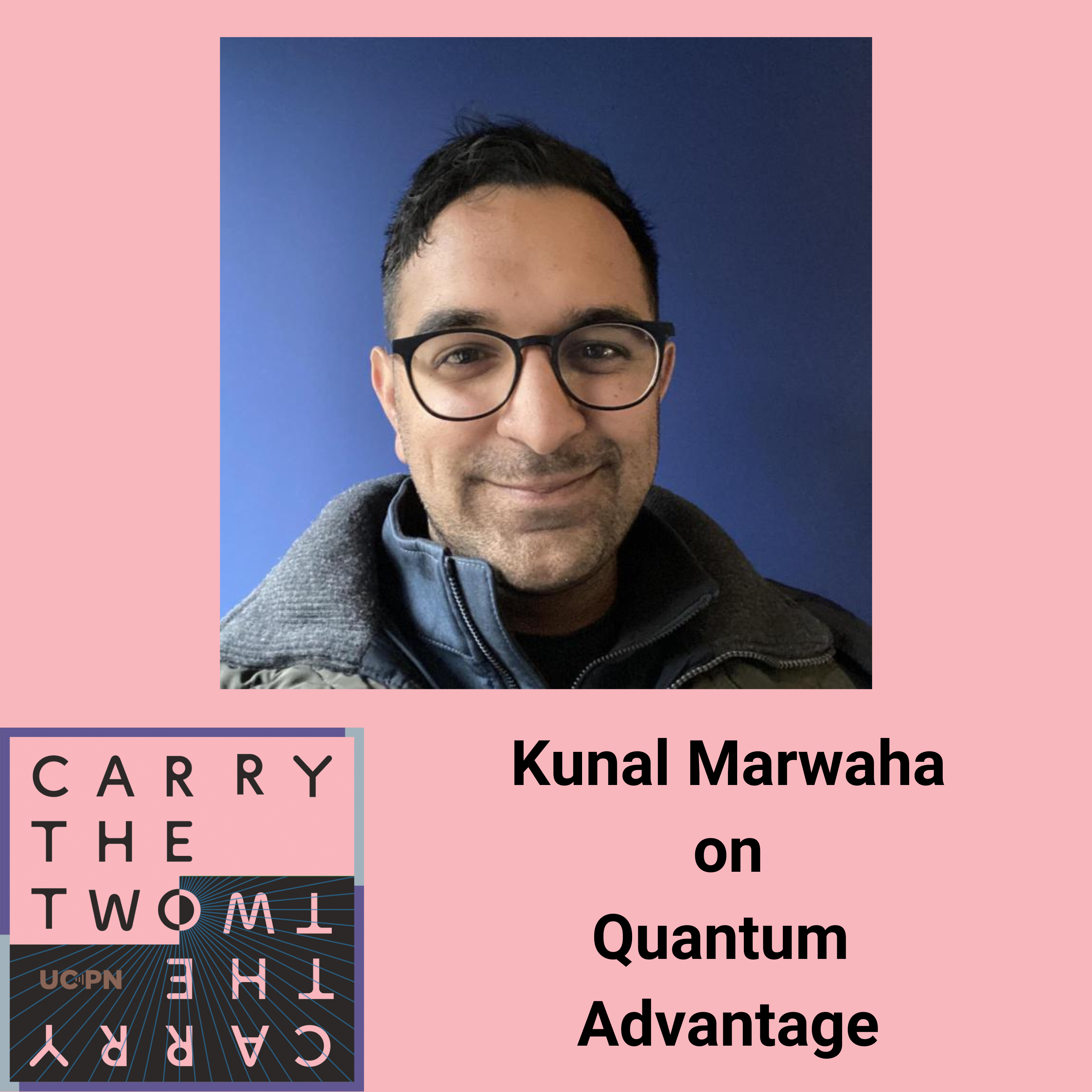
Kunal Marwaha on Quantum Advantage
Welcome to Carry the Two, the podcast about how math and statistics impact the world around us from the Institute for Mathematical and Statistical Innovation. While we’re in between our more in-depth seasons, we like to bring you something a little different in mini-season format. And for this mini season, we are going to highlight some of the amazing r
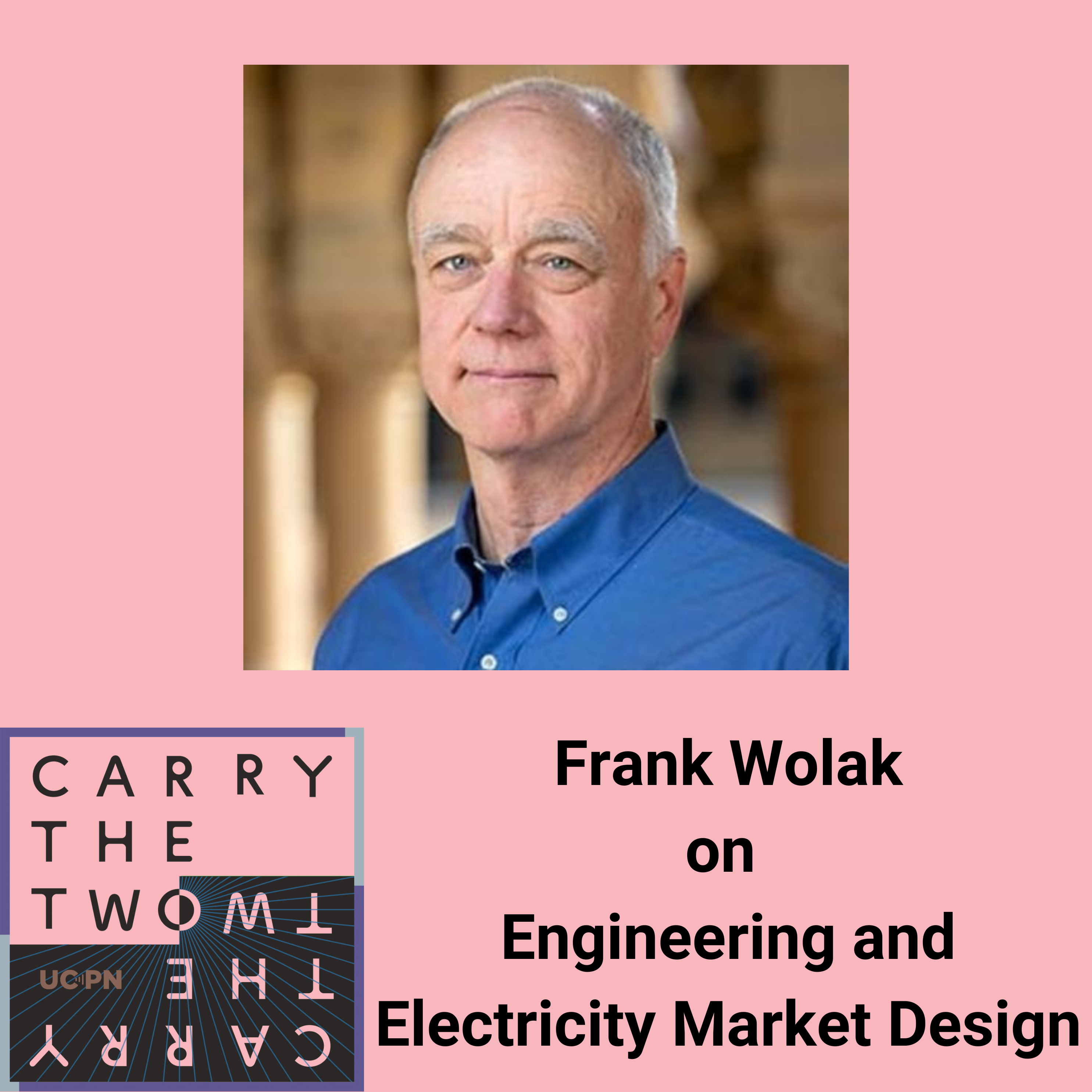
Frank Wolak on Engineering and Electricity Market Design
Welcome to Carry the Two, the podcast about how math and statistics impact the world around us from the Institute for Mathematical and Statistical Innovation. While we’re in between our more in-depth seasons, we like to bring you something a little different in mini-season format. And for this mini season, we are going to highlight some of the amazing r
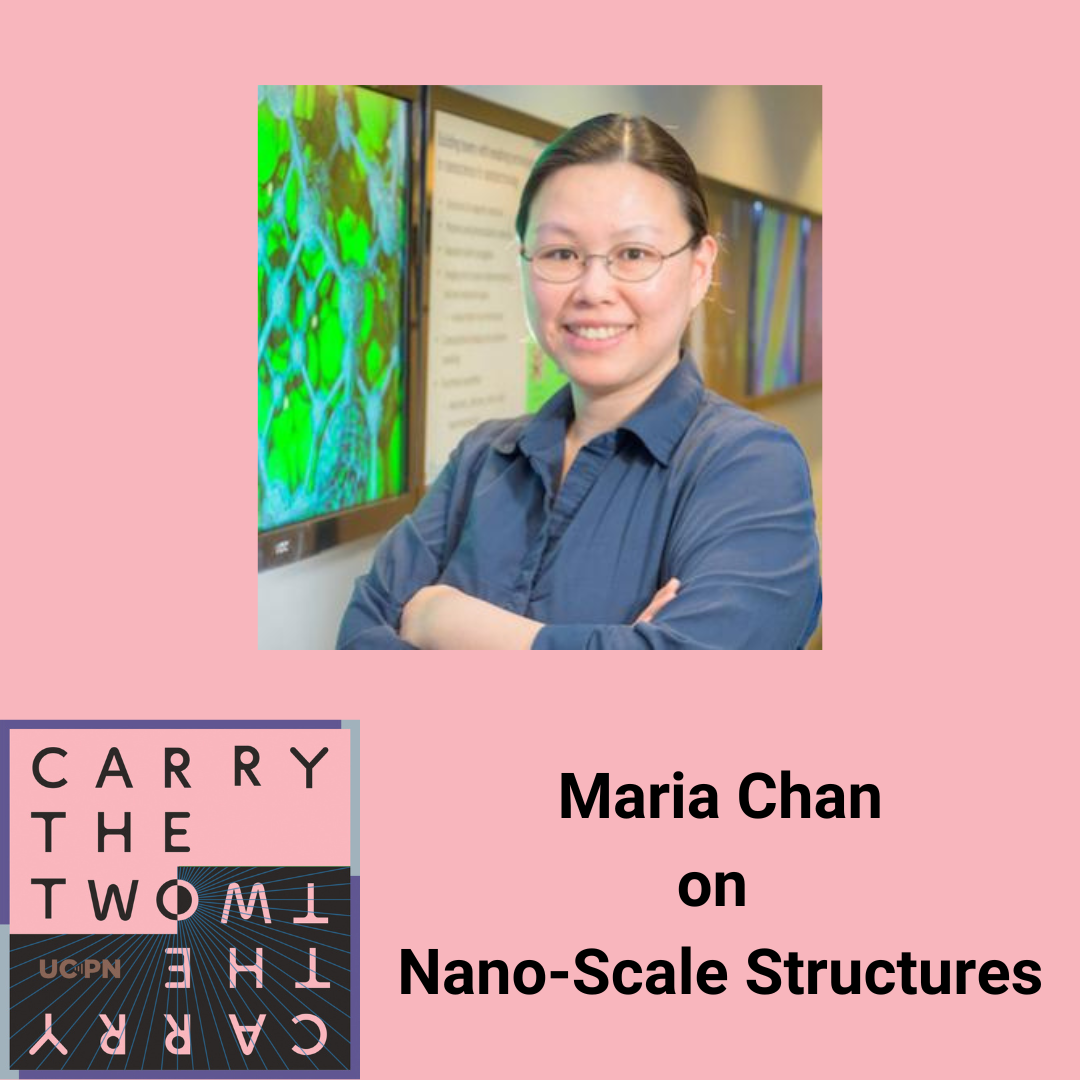
Maria Chan on ML for Material Structures
Welcome to Carry the Two, the podcast about how math and statistics impact the world around us from the Institute for Mathematical and Statistical Innovation. While we’re in between our more in-depth seasons, we like to bring you something a little different in mini-season format. And for this mini season, we are going to highlight some of the amazing r
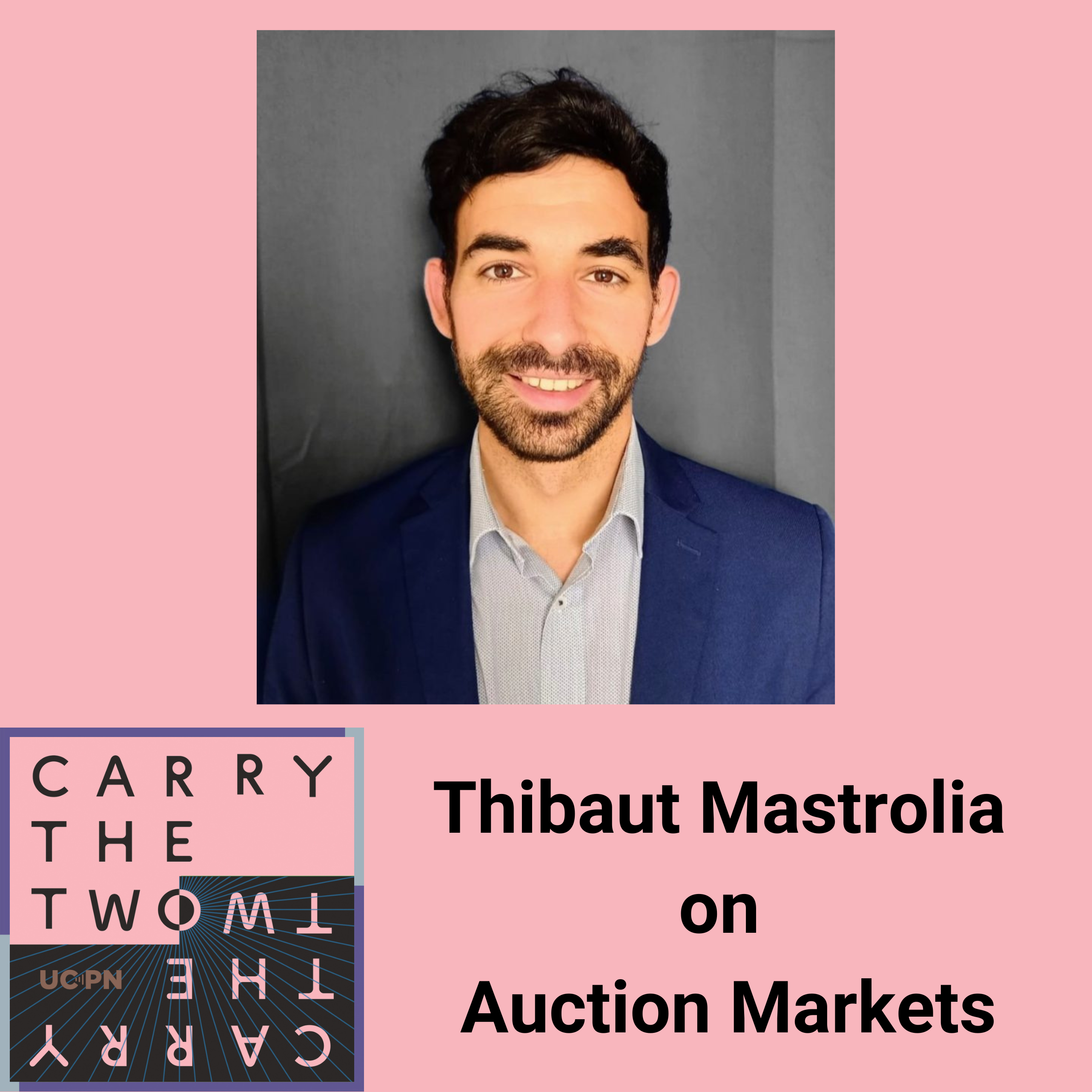
Thibaut Mastrolia on Auction Markets
Welcome to Carry the Two, the podcast about how math and statistics impact the world around us from the Institute for Mathematical and Statistical Innovation. While we’re in between our more in-depth seasons, we like to bring you something a little different in mini-season format. And for this mini season, we are going to highlight some of the amazing r
Mathematics & Polling
We in the United States are deep in the middle of a major national election, and over half of the world’s population also have elections in 2024. This is why Carry the Two is going to focus on the intersection of mathematics and democracy for our new season.
In this, the sixth and final episode of our mathematics and democracy season, we dig into bot
Political Numbers & Statistics
We in the United States are deep in the middle of a major national election, and over half of the world’s population also have elections in 2024. This is why Carry the Two is going to focus on the intersection of mathematics and democracy for our new season.
In this episode, the fifth episode of our mathematics and democracy season, we dig into polit
Mathematics & Political Geography
In this episode, the fourth episode of our mathematics and democracy season, we dig into two stories about the intersection of political geography and mathematics. The first story comes from Ranthony Clark and is about her work with the Metric Geometry and Gerrymandering Group around identifying communities of interest, with a focus on her in Ohio along
Mathematics & Political Coalitions
We in the United States are deep in the middle of a major national election, and over half of the world’s population also have elections in 2024. This is why Carry the Two is going to focus on the intersection of mathematics and democracy for our new season.
In this, the third episode of our mathematics and democracy season, we speak to Andrea Mock,
Mathematics & Representation
We in the United States are deep in the middle of a major national election, and over half of the world’s population also have elections in 2024. This is why Carry the Two is going to focus on the intersection of mathematics and democracy for our new season.
In this episode, the second episode of our mathematics and democracy season, we speak again w
Mathematics and Voting
IMSI is very proud to announce that Carry the Two is back and with a new co-host, IMSI’s new Director of Communications and Engagement Sam Hansen!
We in the United States are deep in the middle of a major national election, and over half of the world’s population also have elections in 2024. This is why Carry the Two is going to focus on the intersec
Carry the Two Farewell (for now)
Find our transcript here: LINK
Follow more of IMSI’s work: www.IMSI.institute, (twitter) @IMSI_institute, (mastodon) https://sciencemastodon.com/@IMSI, (instagram) IMSI.institute
Follow Sadie Witkowski: https://www.sadiewit.com/, @SadieWit
This episode was audio engineered by Tyler Damme.
Music by Blue Dot Sessions.
The Institute
Caitlin Parrish and Allyson Ettinger on AI & the WGA Strike
In this classic episode, we explore how GPT-3, a free online natural language processing artificial intelligence by Open AI, does and doesn’t work. Make sure to stick around until the end for an update on how AI is a core demand between the Writers Guild of America and the Alliance of Motion Picture and Television Producers.
GPT-3 takes advantage of
Jamie Barty on Visual Effects in Television
Were you impressed by the underwater scenes in Avatar 2? Have you spent hours trying to figure out how they built the ice wall in Game of Thrones? Everything from big effects like these to smaller hidden visual effects like creating a skyline for an indoor set fall under the purview of visual effects. In this episode of Carry the Two, we get a behind-th
Tara Kerin on The Last of Us
Could a fungus really wipe out the majority of humans, as shown in the HBO (Max) series The Last of Us? How realistic is the show’s portrayal of epidemiology? Guest and project scientist at UCLA, Tara Kerin explores these questions and how statistics are a core tool in her field of research.
Find our transcript here: LINK
Curious to learn more? Check ou
Robert Rosner and Paul Wilson on Oppenheimer
The world, and the US in particular, have a complicated history with nuclear fission. Splitting atoms led to both the development of nuclear energy and weapons with catastrophic power. In the film Oppenheimer, director Christopher Nolan explores these issues.
Here we expand this examination to the seminal work done in the Midwest. In this episode of
Kevin Grazier on Orbital Dynamics in Foundation
If you’ve seen the first season of Apple TV’s Foundation, you probably noticed how heavily the show relies on ideas based in mathematics and statistics. However, while the idea of a field of research called psycho-history seems far-fetched, some of the show's scenes are much closer to reality than you might realize.
In this episode, we hear from plan
Summer Hiatus
We're taking a short break to prepare for our next series of episodes, looking at mathematics and statistics in Hollywood. So stay tuned!
Find our transcript here: LINK
Follow more of IMSI’s work: www.IMSI.institute, (twitter) @IMSI_institute, (instagram) IMSI.institute
Music by Blue Dot Sessions.
The Institute for Mathematical and Statistic
Dan Cooley on the Colorado Fire Season
Predicting weather is already a difficult statistical challenge, but it becomes even more complex when trying to predict rare weather events. Dan Cooley, a professor in the statistics department at Colorado State University, uses extreme value analysis to model these rare events. In today’s episode, we ask Dan how his work can help explain the changing
Angel Hsu on Urbanization and Climate Change
Researchers become interested in their fields through all sorts of unique paths. Today’s guest, Angel Hsu of University of North Carolina Chapel Hill, came to climate research from a public policy background. She uses her work to help inform local communities how policy decisions affect different groups’ risk to extreme heat and the heat island effect.
Matt Huber on Modeling Paleoclimates
Today we speak with a non-mathematician who uses mathematical tools to understand our planet’s past climates and what they might be able to tell us about our future. Matt Huber, from Purdue University, tells us how the paleoclimate had sudden, rapid shifts in the climate that our current climate models aren’t good at predicting. So, if we’re on the prec
Kristie Ebi on Climate Change & Global Health
Turn on the news during the spring and you’ll hear how seasonal allergies are being made worse by climate change. But it turns out the seasonal sniffles are some of the smallest health consequences of our rapidly shifting climate. Droughts and floods don’t just damage the local ecosystem, they also have real, measurable effects on human health. In this
Jane Baldwin on Modeling Climate Change Hazards
We are continuing our collaboration between Carry the Two and the American Geophysical Union’s Third Pod from the Sun with another episode!
Jane Baldwin’s research centers issues of equity when it comes to understanding climate change’s impact on the global population. In this episode, we hear how Jane gets clever with data sources to better understa
Maike Sonnewald on Modeling Oceanic Currents
Welcome to the first episode of Carry the Two’s collaboration with the American Geophysical Union’s Third Pod from the Sun!
In this episode, we get our feet wet with physical oceanographer, Maike Sonnewald. Maike explains how the ocean currents interplay with our warming atmosphere and what that means for our climate. Using machine learning to build
Kathryn Leonard and Axel Carlier on Crowdsourcing for Math Research
We’re still celebrating Mathematical and Statistical Awareness Month here at Carry the Two. This time, we’re taking a look at how anyone can get involved with research and help move mathematics (or statistics) forward. We explore the differences between citizen science, community science, and crowd sourcing and how one group of researchers used an inter
Benson Farb on Math and Mentorship
Happy Mathematical and Statistical Awareness Month! To celebrate, hosts Sadie and Ian decided to take a peek behind the curtain and see what it is that pure mathematicians do all day. This episode follows a conversation with University of Chicago Math Professor Benson Farb as he explains how he approaches mentoring future mathematicians and what got him
Spring Hiatus
We're taking a short break to prepare for the rest of Season 2 and our collaboration with AGU’s Third Pod from the Sun. So stay tuned!
Find our transcript here: LINK
Follow more of IMSI’s work: www.IMSI.institute, (twitter) @IMSI_institute, (instagram) IMSI.institute
This episode was audio engineered by Tyler Damme.
Music by Blue Dot Session
Jude Higdon on Small Town Policing
We have another guest host this episode, with Jude Higdon. Jude is the Chief Information Officer at Bennington College and co-founder of the QSIDE Institute. Jude led the charge during IMSI’s Research Collaboration Workshop that was aimed at addressing small town policing.
Using the road map laid out by the Small Town Policing Accountability (SToPA)
Carrie Diaz Eaton on Community-Driven Data Science
Joining the helm as cohost, Bates Professor Carrie Diaz Eaton leads this week’s exploration of how to build a data science tool, not just for local activists, but with them. We begin with how the partnership between the environmental justice leadership program Nuevas Voces and Carrie’s team of interdisciplinary math researchers first met. Then, we hear
Heather Zheng on Privacy and AI
What if you had a way to upload as many selfies as you wanted to instagram or facebook, and still protect yourself from facial recognition software? Turns out, that’s not a pipe dream! In fact, the SAND Lab (Security, Algorithms,Networking and Data) at the University of Chicago is developing all sorts of tools and techniques to help us protect our digit
Allyson Ettinger on GPT-3
How can a teacher know if a student actually wrote their book report, or if a computer did it? Are AI writers coming for journalists’ jobs? What does it mean when a language processing model can write its own computer code upon request? These are all questions currently sparked by GPT-3, a free online natural language processing artificial intelligence
Tandy Warnow on Evolutionary Trees
Darwin first proposed evolution as a way that species change and diverge to fill niches in their environment. This observation led to the first, rudimentary species trees, showing ancestors and descendants across genetic lineages.
But this work is far from settled. As we continue to collect more and richer data sets from species, whether they be plants,
Mike Menzel on NASA's JWST Launch
Imagine trying to unfold 5 layered, thin metallic sheets, each the size of a tennis court without tearing or snagging the material. Now imagine doing it in the vacuum of space, at a distance much farther than the moon, and that a multimillion dollar project relies on your success. That provides a bit of perspective for the massive undertaking that was t
Winter Hiatus
We're taking a short break to prepare for the new year and season 2. So stay tuned!
Find our transcript here: LINK
Follow more of IMSI’s work: www.IMSI.institute, (twitter) @IMSI_institute, (instagram) IMSI.institute
This episode was audio engineered by Tyler Damme.
Music by Blue Dot Sessions.
The Institute for Mathematical and Statistica
Tiffany Christian on City-Friendly Animal Species
Our last episode featuring Statistician-in-Residence Tiffany Christian (at least for now), dives into sampling methods. How can we track animal populations, especially those who share our urban environment with us? Ecologists and statisticians have found methods to track everything from coyotes to Canadian geese and can see how their populations are cha
Tiffany Christian on Wetland Monitoring
Wetlands like the marshes located just outside the city of New Orleans, LA are often overlooked, but these ecosystems provide many vital services. Wetlands, like all ecosystems, are under threat by climate change and particularly the increased tropical storms and hurricanes that tear across our coasts. So how can we monitor vast areas of wetlands to che
Moon Duchin on Voting & Electoral Districts
If you live in the United States, have you already voted? If not, go vote!
The bedrock of American democracy is the idea of citizens voting for candidates to represent their interests. However, determining how to cluster voters into districts has always been a fraught topic, particularly when it comes to ensuring that minorities have representation. How
Tiffany Christian on Invasive Species
Typical invasive species that pop to mind tend to be large animals like the common carp in the Mississippi River, or species obviously detrimental to their non-native habitat like zebra mussels in the Great Lakes. But what about smaller species that are difficult to spot and that are located in remote areas of the country? It turns out, researchers can
Tiffany Christian on the Heat Island Effect
Have you noticed how summer days seem so much hotter in the city center as compared to the burbs or out in the country? Part of this is due to the “heat island effect,” where heat absorbing materials like concrete and asphalt make areas that are less green feel much hotter. As it turns out, even in big cities, not all neighborhoods are equally affected…
Wilson Cunningham on Math, Baseball, and the Cubs
For this episode, host Sadie Witkowski goes a bit off-script. Sadie is joined by sports reporter Jon Zaghloul to interview rookie Cubs pitcher and applied math University of Chicago undergraduate Wilson Cunningham. This conversation ranges from interests in mathematics and statistics to applying those statistics to baseball.
Find our transcript here: LI
Mini Season Announcement
We're taking a short break to prepare our mini season, as well as start working on season 2. So stay tuned!
Find our transcript here: LINK
Follow more of IMSI’s work: www.IMSI.institute, (twitter) @IMSI_institute, (instagram) IMSI.institute
This episode was audio engineered by Tyler Damme.
Music by Blue Dot Sessions.
Ben Reuveni on Statistical Learning
Even if you don’t think you’re good at math, it turns out that our brains are basically little statistical machines. Learning a new language, whether as a baby or as an adult attempting to become bilingual, means recognizing the underlying statistical patterns within language. Don’t believe us? Take it from the researchers at Duolingo!
We’re roundin
Sharon Di on Autonomous Vehicles
Self-driving cars evoke an image of perfectly synchronized traffic moving through streets as all the vehicles coordinate with each other. Of course, this is a future vision and not the current state of autonomous vehicles. But the process of going from a few self-driving cars to a fully automated grid will be a slow process.
Sharon Di, traffic engineer
Richard Smith on 100-year-floods
Some rare weather events, like the 100-year-flood, are confusingly named. This is because 100 years refers to a statistical probability and not a guaranteed rate. That, combined with our changing climate, means predicting future weather events can be difficult. Thankfully, we have statistical tools to help us with this problem!
Sadie and Ian speak with
Merouane Debbah on 5G
5G technologies have long been the subject of concerns and conspiracy theories, especially because many 5G towers rolled out around the same time as the start of the COVID19 pandemic. This episode’s guest, Merouane Debbah, has heard all sorts of stories because of his research. Merouane uses math to study wireless communication and how to improve cell p
Dario Bauso on Honeybees
Welcome to the second episode of Carry the Two! We’re the show for people who enjoy discovering hidden elements that impact our lives in the most unexpected ways.
In this episode, Ian and Sadie talk about how honeybees decide on new hive locations when they outgrow their current home. With the help of mathematician Dario Bauso, they learn how researcher
Carrie Diaz Eaton on Equity in Policy Documents
Welcome to the very first episode of Carry the Two! We’re the show for people who enjoy discovering hidden elements that impact our lives in the most unexpected ways, and today we’re taking a look at how Carrie Diaz Eaton and colleagues use the tool set of mathematics to reflect on STEM (science, technology, engineering, & mathematics) policy docume
Introducing: Carry the Two
Check out our new mathematics and statistics podcast, Carry the Two, coming out on June 21st.
Recommended

Take Back Your Health®

CBS Radio Mystery Theater | Old Time Radio

Solved Murders - True Crime Stories
紐約鳥|New York Aperture
The Swerve Podcast: Obscure Topics | Conspiracy Theories

The Bread and Banter Podcast
The Church of What's Happening Now: The New Testament
Busted Open
Deadline: White House
Crickets Corner
History of the Earthquake and Fire in San Francisco

Fox news
