
3 Takeaways™
3 Takeaways features insights from the world’s best thinkers, business leaders, writers, politicians, scientists and other newsmakers. Each episode ends with 3 key takeaways to help you understand the world in new ways that can benefit your life and career. Hosted by Lynn Thoman. It is a global top 1% podcast.
Episodes

Greenland, Russia, and The Cold War for the Arctic (#323)
As Arctic ice melts, the struggle for the frozen north is beginning to resemble a new Cold War.Russian submarine activity is rising. China is mapping the seabed and expanding its icebreaker fleet. And Greenland sits at the center of a growing contest over shipping routes, critical minerals, energy, and missiles.Heather Conley, a senior fellow at the American Enterprise Institute and one of America

How a 500 Year Old Map Still Distorts Our World (#322)
The world map we grew up with makes Greenland and Africa look the same size. The problem? Africa is actually an astonishing 14 times larger.The even larger problem? There's no such thing as an accurate map. They all distort how we see the world. Jay Foreman and Mark Cooper-Jones are comedians, writers, and YouTubers with millions of followers where they are better known as Map Men. Their new

America, War, and the Myths We Still Believe (#321)
What if one of the things Americans believe most deeply about America simply isn’t true?Americans have a powerful story about who they are and why America acts when it does.Historian Robert Kagan, a senior fellow at the Brookings Institution, says America's own history tells a very different story.He discusses:● The biggest myth Americans believe about their own country● What American history

Artificial Intimacy: Who We Become When We Talk to Machines (#320)
What if AI becomes easier to talk to than another person?And what happens to us when it does?MIT professor Sherry Turkle has spent decades studying what technology does to the way we think, work, and love. Now she says there are two parts of our lives we should never let AI into.She discusses:Why ordinary conversation has started to feel like workThe surprising reason people may prefer talking to

Mark Cuban: What Everyone Is Getting Wrong About AI (#319)
Mark Cuban told people that television would eventually be delivered over the internet. Everybody thought he was an idiot.Now, Cuban is making another prediction that runs counter to what we all believe, but this time it's about A.I.Few people have made as many big bets across as many industries as Mark Cuban. The billionaire entrepreneur and investor has built businesses in technology and me

Can Anyone Stop a President From Starting a War? (#318)
What if the president can act before Congress has time to stop him?As former U.S. Secretary of Homeland Security, former General Counsel of the Department of Defense, and a member of the National Security Council, Jeh Johnson has advised presidents on war, terrorism, cyber threats, and some of the country’s most consequential national security decisions.He has seen what happens when the pressure t

Angela Duckworth: Grit Isn't Enough (#317)
What if trying harder is sometimes exactly the wrong thing to do?Angela Duckworth, University of Pennsylvania psychologist, MacArthur Fellow, and author of the #1 New York Times bestseller Grit, has spent years studying achievement. In her new book, Situated, she explores why perseverance alone isn't enough.She discusses:How Angela and her husband nearly “gritted” their way out of their marri

Why Doing the “Right Thing” Can Make Everything Worse (#316)
What can we do when doing the morally “right” thing produces worse outcomes?And what if some of society’s strongest moral instincts are preventing us from solving problems we all agree are terrible?Alvin Roth is a Stanford professor and Nobel Prize-winning economist whose work has helped redesign real-world systems, including kidney exchanges and the way doctors are matched with hospitals. His new

The Hidden Weakness in America's AI Lead (#315)
Could America build the world’s best AI and still lose the AI race?What if the biggest threat to America’s lead isn’t China’s technology, but our own fear of using it?Katrina Mulligan is Head of National Security Partnerships at OpenAI and previously served in senior roles at the Department of Defense, National Security Council, and Department of Justice. Few people have seen both Washington and f

Your Brain Is Hiding the Truth From You (#314)
What if your brain isn’t showing you the world as it truly is?Journalist, professor, and author of "A World Appears: A Journey into Consciousness" Michael Pollan explores one of the deepest questions of all: why do we experience anything in the first place? He discusses:What consciousness actually isWhy the brain predicts reality instead of simply taking it inHow perception may be a kind

Putin’s Real Enemy Isn’t Ukraine (#313)
Why would the world’s largest country risk everything to destroy a smaller neighbor?What is it about Ukraine that poses a greater threat to Vladimir Putin than any army?Pulitzer Prize-winning historian and The Atlantic writer Anne Applebaum has spent decades studying Russia, Ukraine, and authoritarian regimes. She argues that the war is being fought over far more than territory and that the outcom

The Wild True Stories Behind History's Greatest Art Thefts (#312)
How does someone steal the Mona Lisa from the Louvre and simply walk away? And how did an even more brazen crew rob the same museum in broad daylight last year with just a cherry picker and some power tools?The real stories are stranger than Hollywood and best-selling author Noah Charney knows them all. One of the world’s leading experts on art crime, he has advised museums, governments, and law e

Alphabet (Google) Chairman John Hennessy on The Future of AI, Human Intelligence, and Leadership (#311)
Artificial intelligence could change almost everything.John Hennessy thinks we're still asking the wrong questions.As Chairman of Alphabet and one of the pioneers of modern computing, Hennessy has helped shape some of the biggest technology revolutions of the past half century. He explains what today's AI can - and can’t - actually do, what would qualify as artificial general intelligenc

How Charisma Really Works (#310)
Why do some people instantly draw us in?Olivia Fox Cabane reveals that charisma is not a gift. It is a skill - and most of us misunderstand what creates it.In this episode, you’ll learn:The three qualities that make someone charismaticWhy introverts can be highly magneticHow people judge you before you speakWhy presence matters more than performanceThe surprising link between confidence and self-c

Beyond Silicon Valley: Where the Next Breakthroughs Will Come From (#309)
Everyone knows where the last generation of great technology companies came from.The more interesting question is where the next generation will.Mehran Gul spent years studying the world's most successful innovation hubs to understand why some places repeatedly create breakthrough companies while others never quite do.He shares surprising insights about China's rise, Silicon Valley'
The Psychology of Influence with Robert Cialdini (#308)
Dr. Robert Cialdini, author of Influence - 5 million copies sold, and one of the most important books Warren Buffett says he's ever read - has spent decades studying why people say yes. He reveals the psychological forces shaping our decisions, why tiny changes can dramatically influence outcomes, and how the most effective communicators get people to yes without anyone feeling pushed. Once y

Mark Cuban: The Hidden Companies Controlling Healthcare, the Future of AI, and Why Not Me? (Part 2) (#307)
Most people think healthcare is broken by accident.Mark Cuban says it isn't.In part two of our conversation, he explains the hidden companies who really control healthcare, where AI is headed, and the biggest opportunities most people are missing.He also shares the advice he gives young people, the three “superpowers” he believes matter more than talent, network, or money, and the one questio

Mark Cuban: The NBA Thought It Was in the Basketball Business. It Was Wrong. (Part 1 of 2) (#306)
The NBA thought it was selling basketball.Mark Cuban thought it was selling something else.That insight shaped how he has built companies, evaluated opportunities, and challenged entire industries.The lesson starts with basketball. It ends somewhere much bigger. He also shares the skill he values most in entrepreneurs, and how AI is changing the way ambitious people learn.

Once Upon a Stranger: Can Small Talk Lead to a Bigger Life? (#305)
What if those brief conversations - with a barista, a neighbor, or someone sitting next to us - matter far more than we realize?Gillian Sandstrom, a University of Sussex psychologist and author of Once Upon a Stranger, explores why we're so reluctant to talk to people we don't know, what happens when we do, and how seemingly small interactions can add up to a richer, happier, and more co

Former Secretary of Energy - Why Clean Energy Alone Won’t Keep the Lights On (#304)
The wind stops blowing. The sun goes down.What happens next?Former U.S. Secretary of Energy Ernest Moniz explains why the transition to clean energy may be far more complicated than most people realize.In one of the most clear-eyed conversations about our energy future, Moniz pulls back the curtain on what it will actually take to build energy that is clean, reliable, and affordable - and why some

The Religious Cult Behind North Korea’s Power (#303)
We think of North Korea as a communist dictatorship. But Jonathan Cheng, the Wall Street Journal’s China Bureau Chief and former Korea Bureau Chief, says that misses the real story.He argues North Korea functions more like a religion - complete with rituals, worship, and a ruling family treated like immortals. Once you hear it, you can’t unsee it.His new book is Korean Messiah.

Why America May Not Be Ready for the Wars of the Future (#302)
When people think about war, they picture missiles and mushroom clouds.But what if the greatest threats today are the ones most people never see coming?Christine Wormuth, former U.S. Secretary of the Army and current leader of the Nuclear Threat Initiative, explains why some of today’s biggest dangers are quieter, harder to detect, and easier to unleash than most people realize.

The Global Power Shift No One Is Talking About – And Who’s Driving It (#301)
Most people see the world as the U.S. vs. China.But the real power shift is happening elsewhere.Richard Fontaine, CEO of the Center for a New American Security and a former senior advisor at the National Security Council and the U.S. State Department, shows which countries are quietly shaping the next world order - and why the biggest power shifts are happening far from the spotlight.

AI, Inflation, and the Dollar: The Hidden Forces Shaping the Economy Right Now (#300)
Inflation, interest rates, AI, tariffs, the dollar…Most people treat them as separate stories but actually, they’re not.Former Council of Economic Advisers Chair Jason Furman explains how these forces are all connected - and why most people are missing the bigger picture.What’s really driving inflation, why the dollar’s power may be slipping, and why the biggest risk isn’t what most people are wat

Did Apple Accidentally Help Build China’s Manufacturing Empire? (#299)
“We trained a whole country.”It sounds like an exaggeration.It’s not - according to Patrick McGee, author of Apple in China.So what actually happened in China?

Cleveland Clinic CEO: The Future of Medicine Is Already Here (#298)
Dr. Tom Mihaljevic, CEO of Cleveland Clinic and a leading heart surgeon, explains how medicine is already changing in ways most people don’t see.He has spent his career performing complex heart surgeries and now leads one of the world’s top hospitals.A conversation about what’s changing in care and what it means for patients right now.

The Hidden Iran Risk No One Is Talking About (#297)
Iran briefly showed it could choke off a waterway carrying nearly a fifth of the world’s oil.That’s the visible threat.The real risk may be something else entirely.Former Deputy National Security Advisor and U.S. Special Representative to Iran Elliott Abrams breaks down where Iran's strategy backfired, whether those in power in Tehran can hold on, and why the most dangerous consequence could
Scientists May Soon Design Entirely New Life Forms (#296)
We’re entering a world where life itself could become programmable.What if creating new forms of life becomes as simple as writing code? Geneticist Adrian Woolfson explains how close we are — and why the consequences could be extraordinary.--------------------------Exciting news!We’ve been nominated for a Webby Award—one of the top honors in podcasts. If you enjoy the show, you can vote for 3 Tak

After the War: 3 Surprising Truths About the Middle East - with Ambassador Dan Kurtzer (#295)
Is the war with Iran actually a turning point for the Middle East?Dan Kurtzer - former U.S. Ambassador to Israel and Egypt, advisor to presidents, peace negotiator and Princeton professor - has seen these moments up close, when expectations surge - and the outcome looks nothing like the promise.His unfiltered take on Iran - and what actually changes after a war like this.--------------------------

Former Tesla president on The 5 Step Algorithm Behind Tesla, SpaceX, and Radical Innovation (#294)
Love him or hate him, Elon Musk has upended entire industries - from cars to rockets - by doing things differently.Jon McNeill, former president of Tesla, reveals the thinking behind Tesla and SpaceX that drives radical innovation - and shows how anyone can apply it.He also offers a rare glimpse into how Elon Musk operates close up. --------------------------Exciting news!We’ve been nominated for

The Quiet War: How Countries Fight Without Firing a Shot (#293)
A few paragraphs from Washington once stopped oil tankers in their tracks halfway around the world - no navy, no missiles. Eddie Fishman, who helped design and implement U.S. sanctions and economic warfare policies, explains how these quiet battles shape global power. If countries can inflict real damage without firing a shot, what does power look like in this new kind of war - and how vulnerable

The Hidden Plastic Inside Us (And Why It’s Rising Fast) (#292)
Scientists are finding tiny fragments of plastic inside the human body - including the brain.Dr. Matthew Campen of the University of New Mexico explains how they get there - and why the biggest source may surprise you.

Government by Deal: What Happens When Everything Becomes Negotiable? (#291)
The government feels louder and faster than ever: executive actions, constant disruption, everything happening at once. But Yuval Levin of the American Enterprise Institute argues that all this motion may be masking something deeper. He explains why durable change comes from laws passed by Congress - not one-off deals- and why the shift from rule-making to deal-making could shape the future in une

Why Quantum Computing Changes What’s Possible with Princeton Dean of Engineering Andrew Houck (#290)
The rules of quantum physics aren’t just strange - they’re usable. Particles can exist in multiple states at once. Observation can reshape reality. Now, scientists are turning those quirks into machines that could solve problems today’s computers simply can’t touch.Princeton Engineering Dean Andrew Houck breaks down what quantum computing really is, what it can (and can’t yet) do, and why it could
Six Ways the Constitution Keeps Leaders in Check with Cass Sunstein (#289)
The Constitution isn’t just a statement of ideals. It’s a framework for power - built to divide authority so that no single institution can fully control the law.But that design has a consequence: it slows decisions and complicates action. Is that inefficiency a weakness - or the very mechanism that protects liberty?Drawing on his experience at the center of federal rule-making, Harvard Law School
The Winner’s Curse: Why “Winning” Often Means You Just Lost with Nobel Laureate Richard Thaler (#288)
We all love the thrill of winning - the house, the promotion, the deal. But as Nobel laureate Richard Thaler explains, some of our biggest “wins” are actually the moments we set ourselves up to lose. Thaler breaks down why we overbid, overpay, and talk ourselves into choices we regret. And he shares simple tricks to help you catch yourself before you make a mistake you can’t undo.

The American Dream is Now a Coin Flip: Here's Why and What We Can Do (#287)
The American Dream promises that hard work leads to a better life. But for many children today, that promise depends less on effort and more on where they grow up.Raj Chetty, a Harvard professor and the founder of Opportunity Insights, has spent years following millions of lives to understand what truly drives economic mobility. His findings challenge long-held assumptions about opportunity in Ame

Why Innocent People Plead Guilty (#286)
Federal Judge Jed Rakoff has spent decades inside the justice system - as a prosecutor, a defense attorney, and now a judge. In this conversation, he challenges how we think justice works and explains why outcomes often have little to do with guilt or innocence.

The Surprising Science of Why We Laugh (#285)
We think laughter is a response to something funny.A joke. A punchline. A light moment.But listen closely to real conversations, and laughter shows up in places that are far more important than we realize - and often when nothing is funny at all.Neuroscientist Sophie Scott CBE reveals what laughter really signals, how it works, and why it quietly shapes our relationships, our hierarchies, and our

A Smarter, More Hopeful Future of Work - If We Get Artificial Intelligence Right (#284)
Elon Musk and Geoffrey Hinton warn of an AI-driven job apocalypse.MIT’s David Autor, one of the world’s leading thinkers on how technology reshapes work, says the real danger lies somewhere else.The biggest risk of AI isn’t mass unemployment - it’s whether human skills and expertise will still matter.David explains how AI could expand middle-class opportunity by lowering barriers to high-value wor

Presidential Power: How It Grows and What Comes Next (#283)
Jack Goldsmith, who once ran the Justice Department office that advises presidents on what they can and can’t legally do, takes on some of the hardest questions about the limits of the president’s power — from changing the government to the use of military force abroad, including the invasion of Venezuela.Drawing on his experience inside the executive branch, he looks at why the limits on presiden

Why Most New Year’s Resolutions Fail by March - and the Science of What Actually Works (#282)
Most people quit their New Year's resolutions by March. The reason why might surprise you.University of Chicago professor Ayelet Fishbach has spent decades studying why we fail at goals. Her finding: willpower is overrated. What matters is something entirely different.In this episode, Fishbach reveals what actually separates those who succeed from those who quit and the strategies that make g

Highlights of 2025 (#281)
Some insights change how you see the world.From the White House to the frontiers of AI drug discovery, we’ve gathered the most powerful moments from a year of extraordinary conversations. This 2025 highlights episode brings you the thinkers and leaders who challenged assumptions, revealed hidden patterns, and reframed the biggest questions of our time. - Mark Buchanan (Physicist): The hidden patte

Dr. David Agus on The Hopeful Science of a Longer, Healthier Life (#280)
Dr. David Agus, Professor of Medicine and Engineering at the University of Southern California and Founding CEO of the Ellison Medical Institute, treats presidents, CEOs and cultural icons and has spent decades studying one question: What determines how long and well we live?His answer is hopeful: Only 4% is genetic. The other 96% is under your control.In this episode, he reveals why elephants rar
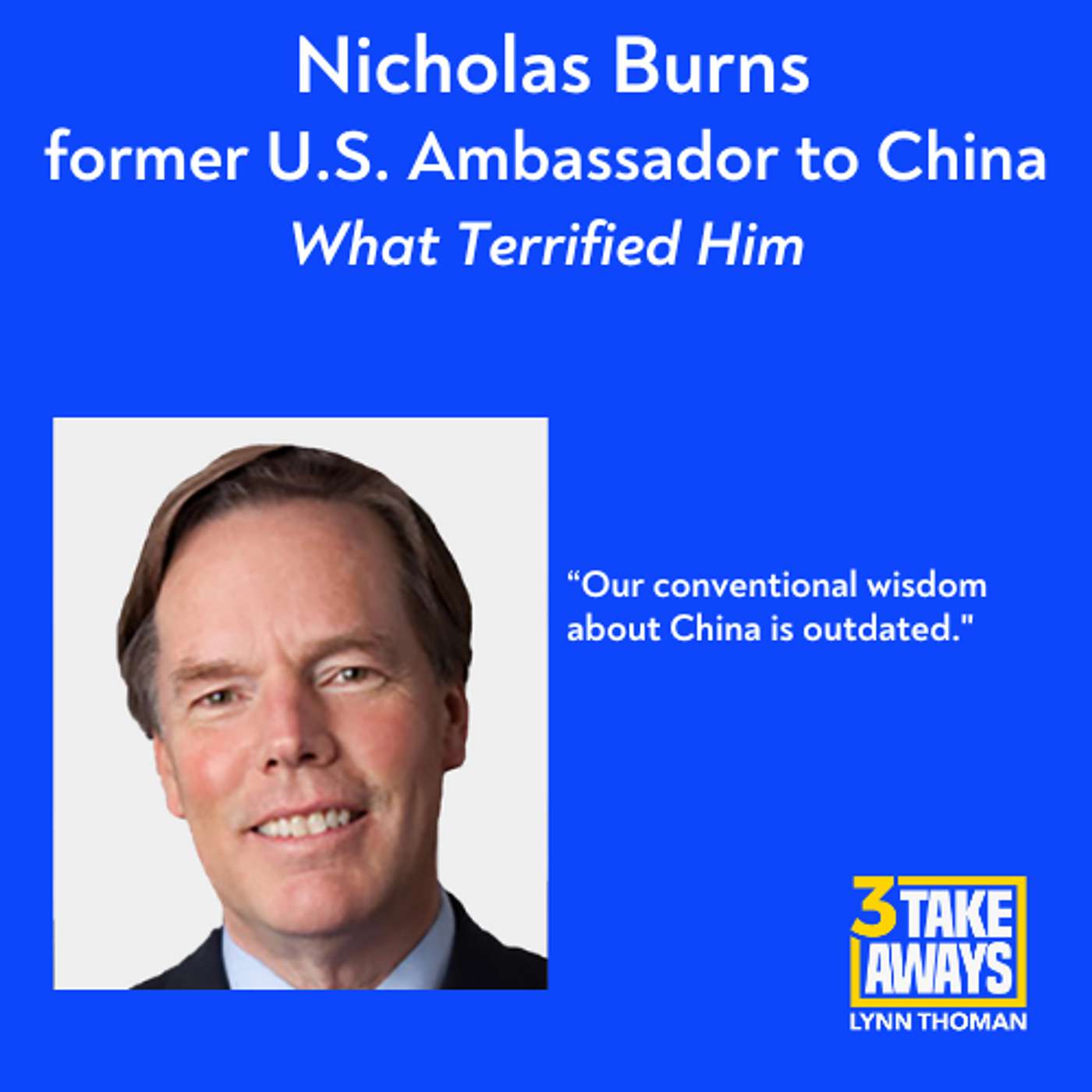
What US Ambassador to China Nick Burns Saw That Terrified Him (#279)
Nicholas Burns spent 2021 to 2025 in Beijing as US Ambassador to China, witnessing up close the forces shaping the world's most dangerous rivalry.Sitting across from Xi Jinping and living in China, he saw firsthand how dangerously close the world is to a crisis. Some of it genuinely terrified him.Our conventional wisdom about China? Outdated. And dangerously wrong.In this episode, he reveals

Three Science-Backed Changes That Will Help You Sleep Better - Starting Tonight (#278)
Sleep shapes your mood, memory, immune system, and long-term health, yet most of us aren’t getting enough. Harvard Medical School and Mass General Brigham sleep scientist Dr. Elizabeth Klerman shares the three easiest science-backed changes proven to improve your sleep tonight, plus the myths that make things worse. If you’re struggling to fall asleep, waking at 3 a.m., or dragging through the da

What Happened When My Daughter Was Born Looking White - And I Wasn’t (#277)
In a Paris hospital delivery room, Thomas Chatterton Williams, writer for The Atlantic and author of Self-Portrait in Black and White, held his newborn daughter for the first time. Blonde hair. Blue eyes. And in that instant, everything he thought he knew about race shattered.Thomas lives the questions about race and identity that most of us only debate. The son of a Black father who grew up under

The Thermostat in Your Brain: Pushing Past Your Limits with Nick Thompson (#276)
What if fatigue, fear, and even failure aren’t real limits, but signals from the brain trying to protect us?Nick Thompson, CEO of The Atlantic and former Editor-in-Chief of Wired reveals the surprising psychology behind fatigue, focus, and fear and how our biggest limits often come from within.Nick isn’t just one of the most thoughtful leaders in media, he’s also a record-breaking ultramarathoner

The Surprising Science of Why Life Gets Better with Age with Stanford’s Laura Carstensen (#275)
We’re told youth is life’s peak — but what if that story is wrong?Stanford psychologist Laura Carstensen reveals how time itself reshapes what we value and how we find meaning. Her research offers profound lessons for living well at every age — and for finding more meaning in the moments we have. It’s a conversation that will change how you think about time, happiness, and life itself.

The Genetic Revolution Has Begun - George Church on What Comes Next (#274)
We’ve entered a new age. Where nature once took a million years to make a few genetic changes, scientists can now make billions in an afternoon — and even imagine adapting humans for life beyond Earth.George Church, a Harvard geneticist, pioneer of the Human Genome Project, and founder of more than 50 biotech companies, helped lay the foundation for CRISPR, personal genomics, and even de-extinctio

Your Brain, For Sale: The Hidden Ways AI Can Manipulate You with Cass Sunstein (#273)
AI doesn’t just predict our behavior — it can shape it.Cass Sunstein, Harvard professor and co-author of Nudge, reveals how artificial intelligence uses classic tools of manipulation — from scarcity and social proof to fear and pleasure — to steer what we buy, believe, and even feel.Its influence is so seamless, we may not even notice it.The battle for the future isn’t for our data — it’s for our

What Putin Really Wants — with Former U.S. Ambassador to Russia Michael McFaul (#272)
When Vladimir Putin first rose to power, few expected him to become the world’s most confrontational autocrat. Former U.S. Ambassador to Russia Michael McFaul, who has studied and worked with Putin for decades, explains what changed — and why. From paranoia about democracy to the drive to rebuild Russia’s sphere of influence, McFaul shows how personal power and national destiny became one and the

Our Dollar, Your Problem: How U.S. Power Shapes — and Shakes — the World (#271)
The dollar has been one of America’s most powerful weapons and a major source of global influence, in ways few fully realize. It doesn’t just shape trade and finance; it also gives the U.S. a unique window into the world’s financial flows. But what if that power is beginning to slip? Harvard’s Ken Rogoff examines the mounting pressures that could threaten the dollar’s supremacy — and reveals how a

The Surprising Truth About Grief, Loss and Resilience (#270)
Grief and trauma are part of being human, yet most of us have little idea what to expect. We picture them as overwhelming, endless, and all-consuming. But what if that story is wrong? Columbia professor George Bonanno reveals a surprising truth about how people actually cope — and it may change the way you think about loss.

AI Will Transform the World—But Who Decides How? (#269)
Artificial intelligence isn’t just another invention — it may be humanity’s first non-biological species. Craig Mundie, former Microsoft Chief Research and Strategy Officer and co-author of Genesis with Henry Kissinger and Eric Schmidt, explores what happens as AI begins to make decisions once made by humans.Who decides what AI should do? Who makes it obey? And what if it doesn’t?The stakes? Nothi

Why 199 of 200 Projects Fail: The Iron Law That Dooms Even the Smartest Ideas (#268)
What do kitchen renovations, Olympic Games, and nuclear power plants have in common? Most of them fail — spectacularly. World-renowned expert Bent Flyvbjerg explains why 199 out of 200 big projects go over budget, over time, and under expectations — and what the rare successful ones do differently. From Pixar films to the Empire State Building, learn the principles that separate disasters from tri

David Brooks: Why America’s Decline Story Is 75% Bonkers (#267)
Populists on the right and left say globalization gutted America’s middle class. David Brooks says that story is “75% bonkers.” In this episode, he reveals what’s myth, what’s true, and the deeper crisis shaping our politics today.

3 Habits That Separate Great Communicators from Everyone Else (#266)
Why do some people seem to effortlessly connect — while the rest of us stumble through awkward small talk or tense conversations? The secret isn’t charisma or confidence — it’s a few learnable habits that anyone can practice. Pulitzer Prize–winning journalist Charles Duhigg explains what separates great communicators from everyone else — and how to start practicing those skills today.
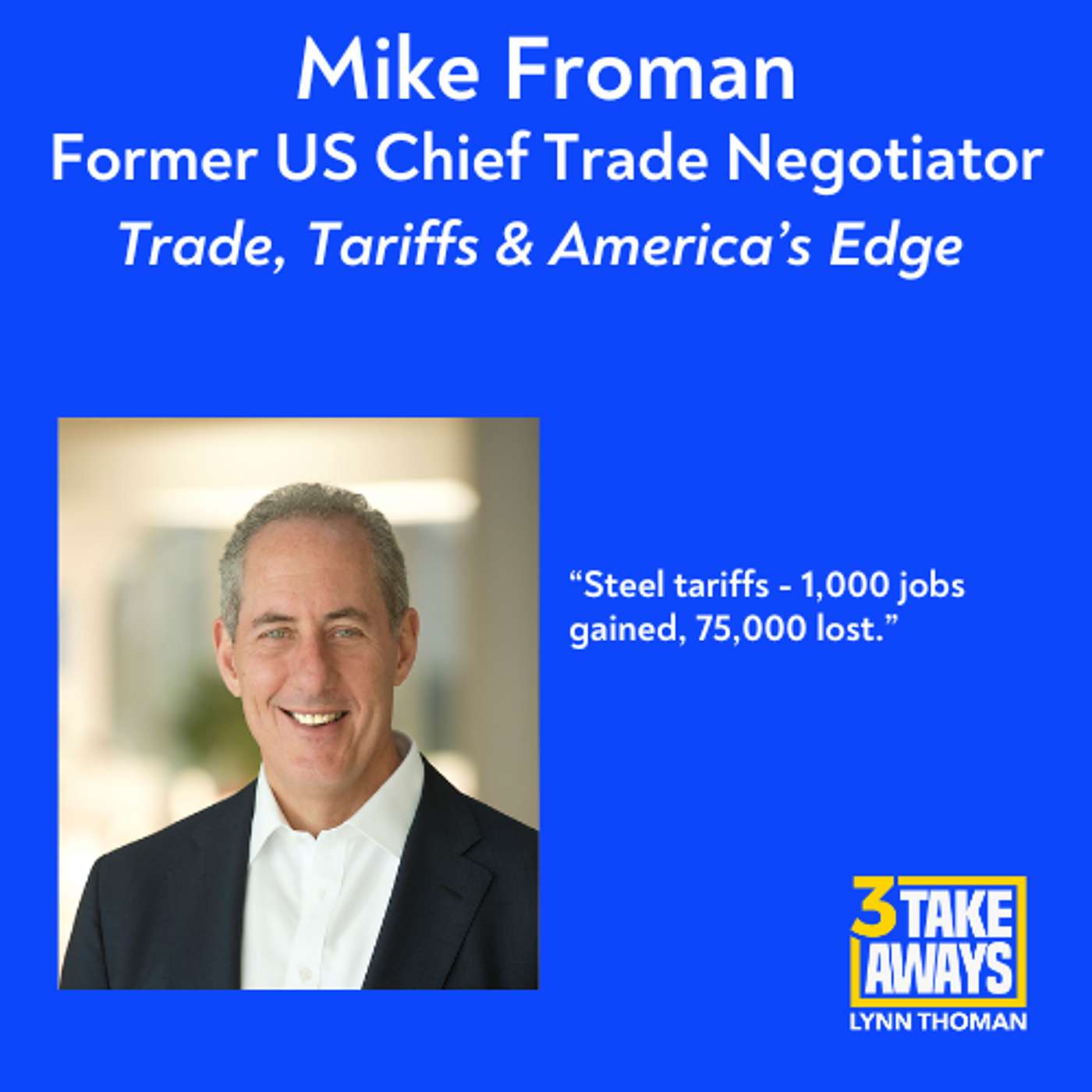
America’s Edge: More Barriers or More Innovation? (#265)
Every country wants strong industries and good jobs. But do tariffs actually deliver? Few people have been closer to the frontlines of global trade, tariffs, and innovation than America’s former chief trade negotiator Mike Froman. He takes us inside the myths, the hidden costs, and the bigger choices ahead. The question: what will truly define America’s edge in the global economy?

Space: The Invisible Infrastructure Behind Modern Life — And Its Growing Risks (#264)
Space may look empty, but it’s crowded, fragile, and under threat. Former Congresswoman Jane Harman and Lieutenant General (Ret.) Nina Armagno — former U.S. Space Force Director of Staff who oversaw missile warning, satellite operations, and space launches — reveal how satellites quietly keep the world running, and how quickly it could all go dark. Imagine waking up to no internet, no GPS, and no

Inside the Hook Model: Secrets Companies Use to Keep You Scrolling and How To Break Free (#263)
Variable rewards once powered slot machines; now they’re inside your pocket. Behavior-design expert Nir Eyal shows how modern apps turned casino psychology into daily routine. He unpacks the psychological levers hidden in everyday products.Hear the science and the clever design tricks that turn a few minutes into far more time than you intended.If knowledge is power, this episode hands you the swi

Zanny Minton Beddoes on America, China, and a World in Flux (#262)
The global order that brought decades of peace and prosperity is coming apart. The Economist’s Editor-in-Chief Zanny Minton Beddoes takes us inside the world’s power centers, where America is both admired and doubted — and China’s influence is on the rise. She reveals how shifting alliances and economic rivalries are rewriting the balance of power — with consequences that will touch us all.

No Way Out with Former Chair of the Council of Economic Advisers Greg Mankiw (#261)
Imagine owing over $100,000—not for a home or college, but simply for being an American.That’s each citizen’s share of the nearly $40 trillion U.S. national debt—and it’s climbing fast. The government now spends more on interest than on Medicare or defense. Former Council of Economic Advisers Chair Greg Mankiw explains why this path is unsustainable and what it will take to fix it.He lays out five

From Bits to Brains: How AI Sees, Talks, and Learns (#260)
How does AI go from predicting the next word to powering robots that navigate the real world?Princeton computer science professor Sanjeev Arora explains how today’s models learn, adapt, and even teach themselves.From chatbots to multimodal machines that process text, images, and video, you’ll learn how it all works—and where it’s headed next.This conversation will change how you think about intell

Hype vs. Reality: Crypto and Stablecoins (#259)
Crypto runs on stablecoins — and they’re far less stable than they sound.Bloomberg investigative journalist Zeke Faux followed the money behind the scenes. What he uncovered will change the way you see digital money — and the trust it’s built on.Listen to understand the hidden forces shaping the future of money.
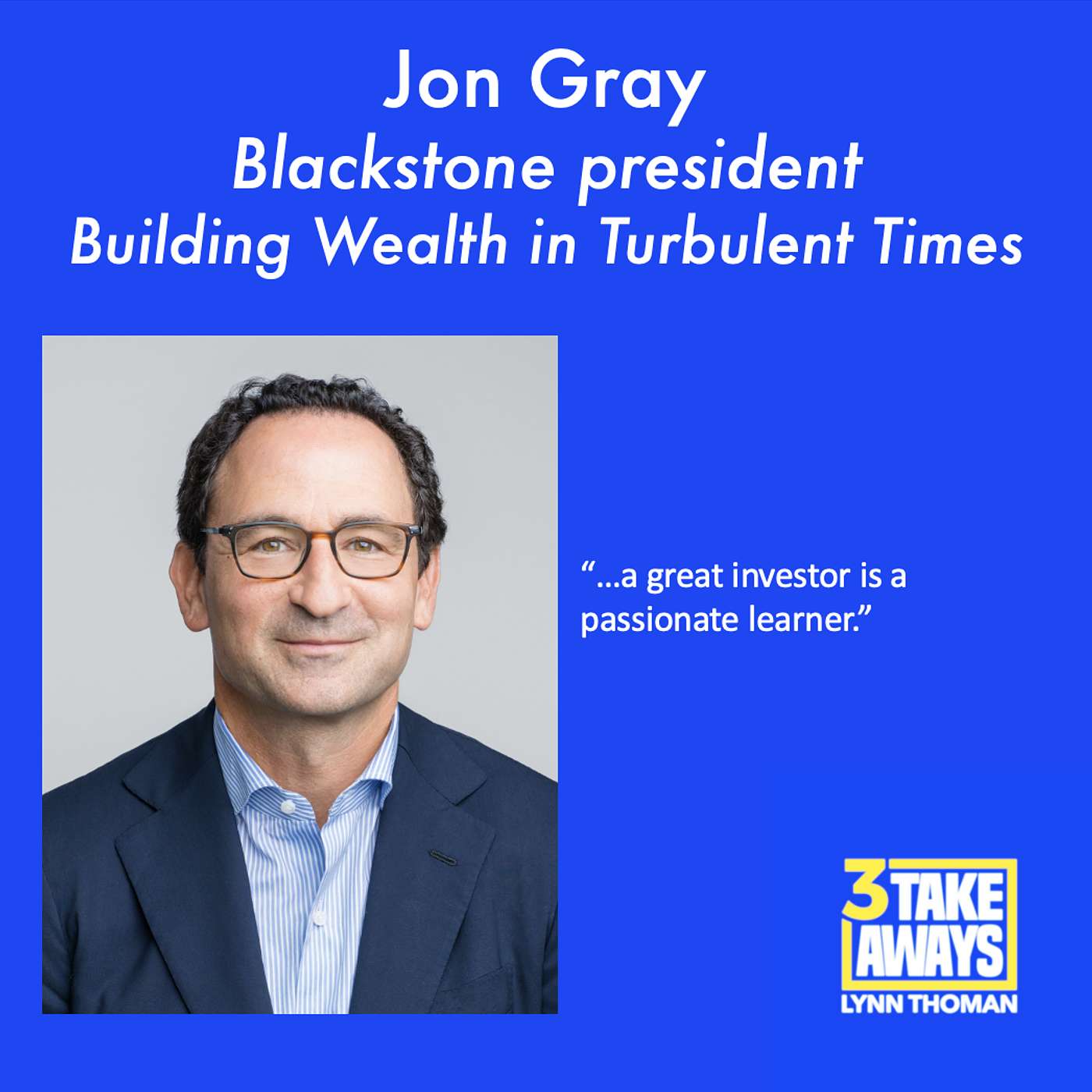
The Long Game: How to Build Wealth in Turbulent Times with Blackstone President Jon Gray (#258)
How do the savviest investors navigate today’s uncertainty? Jon Gray, President of Blackstone, one of the world’s most successful asset management firms, shares the timeless principles that helped grow the firm from under $1B to over $1T in assets. He reveals how to spot great businesses, invest with conviction, and think decades ahead. This episode is a masterclass in building lasting wealth—espe
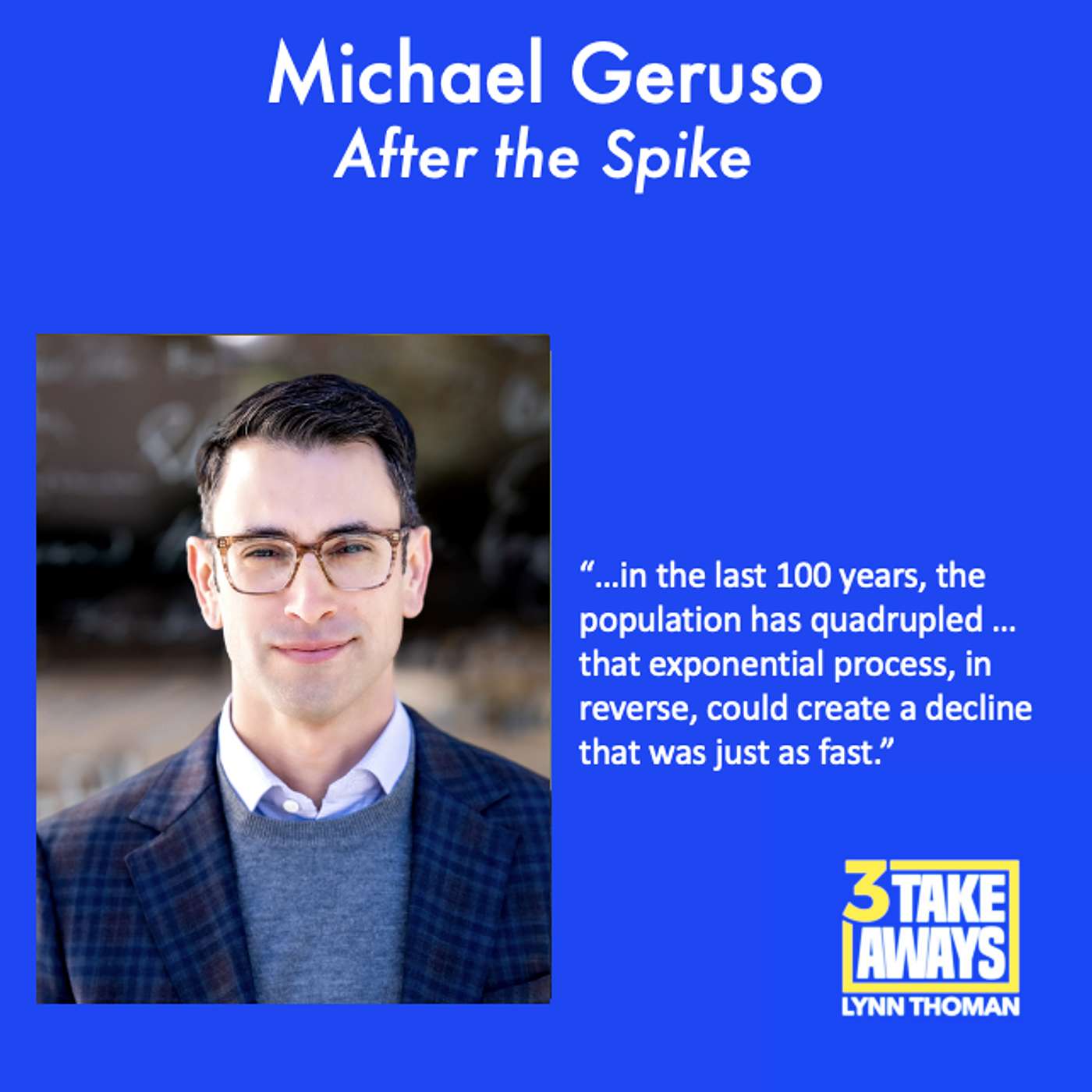
Goodbye Baby Boom — Hello Population Bust: How a 60% Drop Could Change Everything (#257)
Global birth rates are collapsing—sometimes to half the level needed to keep populations stable. UT-Austin’s Michael Geruso explains how that trend could shrink the world’s population from eight billion to three billion in just three generations. He unpacks the silent drivers behind falling fertility, why cash incentives rarely work, and what disappearing people mean for innovation, cities, pensio

The Knowledge Illusion: How Overconfidence Shapes Our Lives (#256)
We’ve landed on the moon and built global networks—yet most of us don’t understand how a toilet works. Cognitive scientist Philip Fernbach explores the paradox of human intelligence: our success depends on shared knowledge, not personal depth. But that creates an illusion—we think we know far more than we do. How does this illusion quietly shape our politics, beliefs and risks and is it time we al

The Surprising Science Behind Falling—and Staying—in Love (#255)
Love isn’t just a feeling—it’s a science. Arthur Aron, the psychologist behind the 36 questions that went viral, shares what really makes people fall and stay in love. You’ll hear why new experiences matter, how to deepen intimacy, and what most couples get wrong.Whether you’re looking to strengthen a relationship, connect more deeply with friends, or understand human bonding, this is a conversati

Former National Security Advisor Jake Sullivan on What Xi and Putin Are Really Like Behind Closed Doors (#254)
Jake Sullivan spent four years at the highest level of U.S. foreign policy—sitting across the table from Vladimir Putin, Xi Jinping, and leading the national response to crises like Ukraine, Taiwan, cyberattacks, and AI risks.He shares a rare look behind the scenes of global power, including: what intelligence gets wrong (and why); how AI, drones & disinformation are reshaping war; why the U.S

Editing Life Itself: A Conversation with David Liu, the Scientist Who’s Rewriting DNA and the Future (#253)
What if we could rewrite the code of life—just like editing a Word doc?Gene-editing pioneer David Liu takes us behind the scenes of the revolutionary tools transforming medicine. He’s the Harvard scientist who invented base editing—a breakthrough that lets scientists fix a single DNA letter to correct genetic disease at its root.This is science fiction come to life—and it's happening now. He

This Is Your Brain on Beauty — And It's Powerful (#252)
What if music, color, scent, and art could actually change your brain? Science now shows they do.Join Susan Magsamen, Executive Director of the International Arts + Mind Lab at Johns Hopkins, as she explores how art and beauty impact our brains and well-being. From the transformative power of music to the subtle magic of sensory environments, she reveals how simple aesthetic moments can boost your

Why America’s Poorest State Is Richer Than France (#251)
Mississippi is richer than France. No, really. The poorest U.S. state now has a higher GDP per person than France, the U.K., Italy, and Spain. How did that happen? Don’t miss this eye-opening episode with George Mason University's Tyler Cowen.

The U.S. Alone Can’t Compete with China. Here’s What Absolutely Can. (#250)
China is on the march, is very determined, and has some significant advantages over the U.S. What are they and how should we respond? Two esteemed China experts, former U.S. Deputy Secretary of State Kurt Campbell and National Security Council Deputy Senior Director for China Rush Doshi, say the key is to counter China’s enormous scale by finding common cause with allies. Listen, and learn a lot.

The 50% Enigma: Why Trump’s Vote Mirrors the Past (#249)
As the dust settles on the 2024 presidential election, now is an excellent time to take a fresh, clear-eyed look at what really happened. Join us as Larry Bartels, political scientist extraordinaire and Co-Director of Vanderbilt University's Center for the Study of Democratic Institutions, explains why Trump’s win was not unusual and the roles played by the economy, loyalty to the political p

Swipe, Tap, Ghost: The New Rules of Human Connection (#248)
What if your phone is quietly changing your brain—and your relationships? The brilliant Christine Rosen explores how digital life is reshaping everything from childhood to public discourse, often in ways we barely notice. With insight and urgency, she challenges the assumptions driving our always-online world. This conversation will make you see your screen—and our society—differently.

Your Brain’s Being Hijacked: The Hidden Psychology Behind Everyday Decisions (#247)
Ever wondered why we sometimes act irrationally, even when it’s not in our best interest? Ori Brafman has, and his answers are enlightening. Here, he talks about the hidden forces and human emotions that make us act irrationally, how pre-dispositions and labeling people can lead to irrationality, how we can become more rational, and more.

How Your DNA Interacts With the World Around You (#246)
Are we shaped by our genes or by our environment? For centuries, this question has fueled one of science's most enduring debates. But the truth is more shocking—and more fascinating—than either side ever imagined. Princeton professor Dalton Conley reveals why we need to abandon the idea of "nature vs. nurture" and embrace a radically new understanding of human development.

Don’t Believe the Doom: American Workers Are Moving Up (#245)
Is today's economy delivering for American workers? According to Georgetown University professor Michael Strain, the answer is absolutely “yes,” despite populist rhetoric… and there’s convincing data to back that up. Why is the American Dream in doubt? How can it be strengthened? Listen to this inspiring conversation for answers.

Why China Builds High Speed Rail - And The U.S. Can’t Build A Tunnel (#244)
All across America, critical government infrastructure projects — building EV charger stations, expanding broadband, building rail tunnels — are stalled or abandoned. According to trail-blazing government reformer Philip Howard, powerlessness to get things done has become a defining feature of America. Listen and learn why, and how things can change.
Recommended
Crickets Corner

History of the Earthquake and Fire in San Francisco

Fox news

K-Drama Obsessed Mamas | Beyond “Just One More Episode!”

True Crime Classics
The Healer Revolution

Becoming: HER with Nikki Spoelstra

Booked, Blonde & Busy w/ Olivia Ponton

McKinsey on Consumer and Retail

megahired.com

Hard Knocks Podcast

Effective Weight Loss for Moms | High protein, Strength Training, Lose Weight, Meal Planning, Fat Loss, Healthy Habits
