
The Partially Examined Life Philosophy Podcast
The Partially Examined Life is a philosophy podcast hosted by a group of friends who once pursued academic philosophy but chose different paths. Each episode focuses on a short philosophical text, which they discuss with a mix of insight and humor. The show is accessible to listeners without a philosophy background. The podcast also features episodes from other shows by the hosts, covering topics like music, improv, and literature.
Episodes
Ep. 398: Donald Davidson on Mind vs. Body (Part Two)
Continuing on Consciousness Explained (Ch. 5, 12). We talk about appearance vs. judgment and whether Dennett's denial of this distinction makes sense or just holds for very short time-scales, as in the phi-phenomenon experiment. Does the rejection of appearances and rejection of the concept of qualia undermine the very thing Dennett is trying to describe? Get more at partiallyexaminedlife.com. Vis
PEL Presents PvI#123: Brain Spritzing w/ Bill Arnett and Jenny Hansen
Future co-host philosophy Jenny joins past co-host improviser Bill along with the usual Mark and Jenny for some tag-team mud swimming, hot takes about The Odyssey, and discussion and play about Bill's return to school, Maslow's hierarchy, gamified syllabi, some math stuff, and academic dishonesty. Hear more at philosophyimprov.com. Support the podcast and listen ad-free at patreon.com/philosophyim
PEL Presents Closereads: Peirce's New Categories (Part One)
How shall we break down the universe into basic types of things? Peirce has an idiosyncratic way of thinking about this problem and coming up with his division, revolving around the steps and presuppositions involved in predicating something. Read along with us. You can choose to watch this on video. Subscribe to Closereads at patreon.com/closereadsphilosophy; follow us there via the free tier to
Ep. 399: Dan Dennett's Model of Mind (Part One for Supporters)
On Daniel C. Dennett's Consciousness Explained (Ch. 1, 5), featuring guest Mark, Seth, Dylan, and guest Chris Heath. What is the mind? Dennett puts forth his "multiple drafts" model against the centralization that he characterizes as the "Cartesian Theater." Dennett claims that there is no central place in the brain, or (more controversally) no central processing center in experience, that receive
Ep. 398: Donald Davidson on Mind vs. Body (Part One)
On "Mental Events" (1970) and "Actions, Reasons, and Causes" (1963), w/ guest Chris Heath. When we talk about mental events (e.g. desires) causing physical occurrences (an action to obtain what is desired), are we giving a causal picture in the scientific sense, which would rule out free will? Or are reason-giving and causality just different language games? Get more at partiallyexaminedlife.com.

PMP#228: Spielberg's Alien Fetish
We discuss the various films Steven Spielberg has released about alien encounters: Close Encounters of the Third Kind (1977), E.T. The Extra Terrestrial (1982), War of the Worlds (2005), and our inciting film, Disclosure Day. Featuring Mark, Lawrence, Sarahlyn, and Al. How is the new film as "mature Spielberg"? Is it as fun as the older films? Is it too heavy handed? Do the older films hold up? Wo
Ep. 397: Federalist Papers LIVE (Part Two)
We now have a free-form discussion in light of what was raised in part one about the Federalist Papers and Frederick Douglass' Fourth of July Speech: What should we do about the problems identified? Is the system broken beyond repair? Was it built with fatal flaws in it? Is it just working as normal, and the pendulum will inevitably swing away from madness as the system reasserts itself? We then o
PEL Presents NEM#258: Dan Montgomery: Direct Communication
Dan was Ben Vaughn's sound-man and released his first solo album of Americana rock in 2004. We discuss "Busted" from his eighth album (produced by Vaughn), the just Dan-and-his guitar effort Dispatches from the Desert, then "Beaumont" from Cast-Iron Songs and Torch Ballads (2023), "Favorite Color" from Rosetta, Please (A Love Story) (2006). End song: "Lookin' for a Fight" also from the new album.
PEL Presents PvI#122: Hello from Iran w/ AmirAli Maleki
AmirAli is a philosophy researcher in Iran who tries to make Islamic philosophy speak to and with the West. We hear about doing philosophy in the "Islamic Republic of Iran," life during wartime, the relationship between play and philosophy, Islamic philosophy in Arabic vs. Persian, Amanah ("sacred trust"), philosophy as empathy, plus the Dream Police and fun with imperialism. Hear more at philosop

Announcement: Mark's "Key Ideas in the Philosophy of Mind" Fall 2026 Class
Enrollment is now open for our new online class. It will be nine 75 min sessions, running from late Aug. to mid Dec., starting with Aristotle and Descartes but then spending the rest of the time on the most influential texts in this area since 1950: Alan Turing, Thomas Nagel, David Chalmers, John Searle, Hilary Putnam, etc. We're offering sections to fit the various time zones and work schedules:
Ep. 397: Federalist Papers LIVE (Part One)
To celebrate our nation's 250th birthday, we gathered in front of a lovely audience near Madison WI to discuss Federalist Papers 70, 78, 39, 54, 10 by Alexander Hamilton and James Madison from 1787-1788, Anti-Federalist Papers 78-80 (aka Brutus 11 and 15), and Frederick Douglass' Fourth of July Speech (1852). Is the American experiment working out as planned? We talk about the Founders' arguments
PEL Presents PMP#227: The Odyssey: Epic Film
We discuss the already over-discussed Christopher Nolan adaptation of Homer's classic poem. Mark, Lawrence, Sarahlyn and Al discuss their cinema-going experiences, Ludwig Göransson's soundtrack, choices re. the book-to-film transition, the various performances, the Emily Wilson connection, and more. Get more at prettymuchpop.com. Get an ad-free experience, plus bonus talking for nearly every episo
PEL Presents NEM#257: Josh Joplin Doesn't Look Back… Until Now
With his roots in folk, Josh released three rock albums in the '90s before his big hit "Camera One," from Useful Music (2001), which is getting a Silver Anniversary rework/reissue. (The intro music for this episode is the new version.) He has released seven more albums since then. We discuss "Goodbye Berlin" from GpYr (2025), "History of I Do" from Figure Drawing (2023), "Juniper" from Boxing Nos
Ep. 396: Peirce on Knowledge (Part Two)
Continuing on "Questions Concerning Certain Faculties Claimed for Man" and "Some Consequences of Four Incapacities." We talk about inference, the self, introspection, willing, the limits on what kinds of terms can have meaning, and more. Get more at partiallyexaminedlife.com. Visit partiallyexaminedlife.com/support to get ad-free episodes and tons of bonus discussion. Sponsor: Every self-made pers
PEL Presents Closereads: Galen Strawson on Panpsychism (Part One)
On "Realistic Monism: Why Physicalism Entails Panpsychism" (2008). Strawson argues that physicalism should not just be taken as matter in motion. Instead, the physical is a broader category that includes not just chairs and molecules, but also "my experience of red." Yet he's not trying to say that experiences are just brain states; they clearly include qualia (what it's like to experience red). A

PEL Presents PMP#226 Toy Story Played Out
In light of Toy Story 5, the gang (Mark, Lawrence, Sarahlyn and Al) consider the Pixar franchise that started in 1995. We consider the premise whereby your toys are loyal slaves that come to life whenever unobserved, the critique of screen-play in the new film, the use of nostalgia in the films, the repetition and/or escalation throughout the series, the horror-adjacency of living dolls, the emoti
Galen Strawson on Panpsychism (Part One)
On "Realistic Monism: Why Physicalism Entails Panpsychism" (2008). Strawson argues that physicalism should not just be taken as matter in motion. Instead, the physical is a broader category that includes not just chairs and molecules, but also "my experience of red." Yet he's not trying to say that experiences are just brain states; they clearly include qualia (what it's like to experience red). A
Ep. 396: Peirce on Knowledge (Part One)
On 1868 essays by Charles Sanders Peirce: "Questions Concerning Certain Faculties Claimed for Man" and "Some Consequences of Four Incapacities." Do we know when knowledge is intuitive? Is there any such thing as intuitive knowledge? Do we directly experience the self or anything introspective, or do we just infer facts about ourselves from external perspectives? Peirce provides counter-intuitive r
PEL Presents PvI#121: Meat Suit Dolls w/ Maddie Mutations
The LA-based clown, multimedia performance artist, and doll stylist (see maddiemutations.com) joins Mary and Mark to talk about her Doll Court show, clown types and the role of the fool, failing on stage, cities as women, silly villains, and more. Will Carol overcome her anxiety to go into the big meeting? Will Maddie keep all the nice dolls to herself? What should the demands of the LA doll union
PEL Presents NEM#256: Bruce Soord (Pineapple Thief): Heartbreaking Prog by Ear
Bruce started as guitarist for the '90s for Vulgar Unicorn and started Pineapple Thief as a solo project in 1999, though it quickly became a full band. He's released 16 studio albums with Pineapple Thief and four solo albums. More at brucesoord.com and pineapplethief.com. We discuss "Pillars" from Ghosts in the Park (his 2026 solo album) and some Pineapple Thief tracks: the title track from It Lea
Ep. 396: Peirce on Knowledge (Part Two for Supporters)
Continuing on "Questions Concerning Certain Faculties Claimed for Man" and "Some Consequences of Four Incapacities." We talk about inference, the self, introspection, willing, the limits on what kinds of terms can have meaning, and more.
Ep. 395: C.S. Lewis Argues for Christianity (Part Two)
Continuing on Mere Christianity (1952). We discuss his take on the problem of evil, how happiness is impossible without Christ, our potential to evolve from bios (biological nature) vs. zoe (spiritual nature), sexual morality, pride, and more. Get more at partiallyexaminedlife.com. Visit partiallyexaminedlife.com/support to get ad-free episodes and tons of bonus discussion. Sponsors: Every self-ma
PEL Presents Closereads: Hegel on Faith vs. The Enlightenment (aka PEL#394 pt. 3)
PEL Presents PMP#225: Survivor the Constant (with Wes!)
Survivor has remained a top-rated show since its debut in 2000, and some of us (Sarahlyn and our guest Wes Alwan) have stuck with it throughout, Mark just watched when it came out and had to catch up, and some of us (Lawrence and Al) had not previously been on board at all. We talk through the evolution of the show, from torture exhibitionism to now lore-drenched soap-operatic beach games. Is this
Hegel on Faith vs. The Enlightenment
On Hegel's Phenomenology of Spirit, sec. 551-559, which are sections assigned for but not actually covered on The Partially Examined Life ep. 394. We get more info on how The Enlightenment supposedly mischaracterizes faith, but also how faith sees The Enlightenment and what Hegel considers to be good points coming out of The Enlightenment's critique. Learn more about your ad choices. Visit megapho
Ep. 395: C.S. Lewis Argues for Christianity (Part One)
On Mere Christianity (1952), where Lewis presents the moral argument for the existence of God and present Christianity as uniquely solving the human conundrum that our moral phenomenology presents, i.e. that the moral law is real in us yet we can never fulfill it. Once you're on board with that reasoning, faith is a matter of sticking to your realization even though Christianity's moral rules are
PEL Presents PvI#120: Mark and Mary in the Struggle Club
Your wise and authoritative hosts explore forms of respectful address, what counts as good philosophy, the holodeck full-contact Fantasy Island experience, status in economic transactions, Trek not War, default improv scenarios, fear of playfulness, philosophy or improv as education vs. doing philosophy or improv, and more. Hear more at philosophyimprov.com. Support the podcast and listen ad-free
Ep. 394: Hegel on Faith vs. The Enlightenment (Part Two)
We conclude our treatment for the moment of the Spirit section of Hegel's Phenomenology of Spirit, sec. 527-73. Hegel's diagnosis: The Enlightenment and faith only seem to be in conflict because they are two sides of "pure consciousness," i.e. thought as a retreat from the actual world. So yes, if you see faith as mere belief, as a thought about some unprovable matter of fact, that is not going to
PEL Presents NEM#255: Michael Timmins (Cowboy Junkies): Mellow But Energized
Michael is the songwriter and guitarist for the Canadian band Cowboy Junkies (featuring two of his siblings and a childhood friend), with whom he's released 20+ studio albums and several live albums since 1989. We discuss "Throw a Match" from Such Ferocious Beauty (2023), "He Will Call You Baby" from More Acoustic Junk (2025), remade from One Soul Now (2004), and "Rock and Bird" from The Caution H
PEL Presents PMP#224: Fantasy Novels Galore
Mark and Al share their mutual interest in fantasy novels. Is "high fantasy" fundamentally different than what enjoyed as kids? Did Peter Jackson's Lord of the Rings and HBO's Game of Thrones show us that these big books are adaptable, or were they exceptions? We're anticipating the upcoming Mistborn/Cosmere adaptations, as we're both into Brandon Sanderson. We also talk about The Wheel of Time, R
Ep. 394: Hegel on Faith vs. The Enlightenment (Part One)
On Hegel's Phenomenology of Spirit (1807), sec. 527-73, i.e. "Faith and Pure Insight" and "The Struggle of Enlightenment with Superstition." Picking up where we left off in this book, an intangible part of us ("pure consciousness") escapes the attempts of culture to define us. This spiritual part has two sides: pure insight, which is the destructive critical faculty popularized by The Enlightenmen
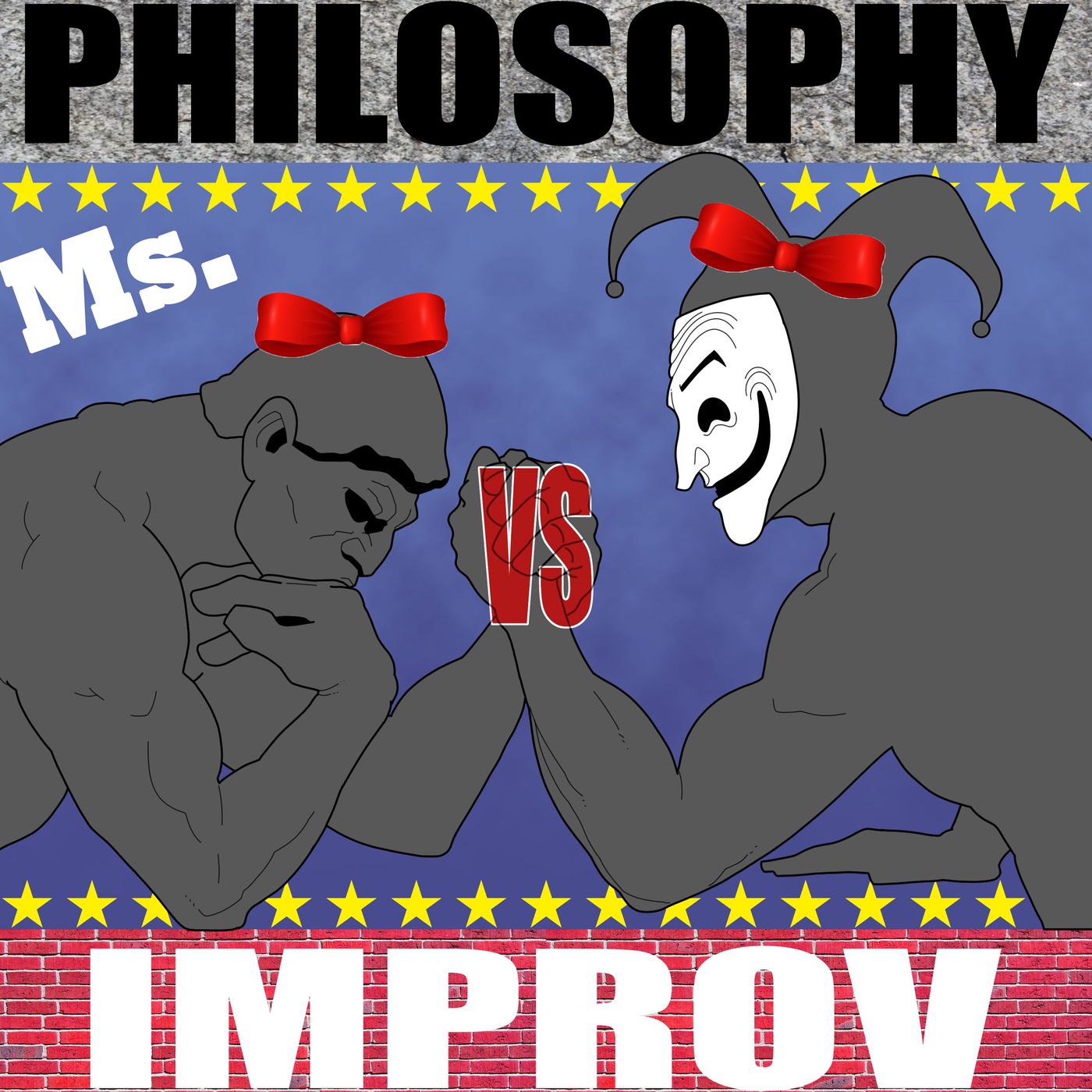
PEL Presents PvI#119: Ms. Philosophy vs. Improv w/ Mary and Jenny
What would PvI be with zero masculine energy? This episode features your usual co-host Mary Hynes and our frequent guest Jennifer Hansen (philosopher at St. Lawrence University). They chat about being hot in a hostile world, interacting with AI, fighting with parrots, and they act out scenes involving the f*cks store and the actress who is too perfect. Hear more at philosophyimprov.com. Support th
Ep. 394: Hegel on Faith vs. The Enlightenment (Part Two for Supporters)
We conclude our treatment for the moment of the Spirit section of Hegel's Phenomenology of Spirit, sec. 527-73. Hegel's diagnosis: The Enlightenment and faith only seem to be in conflict because they are two sides of "pure consciousness," i.e. thought as a retreat from the actual world. So yes, if you see faith as mere belief, as a thought about some unprovable matter of fact, that is not going to
Ep. 393: Kant vs. Hegel (Part Two)
Concluding our treatment of Ch. 2 of Hegel's Faith and Knowledge (1802). Hegel wants to connect various ideas in Kant: The idea of an "intuitive, achetypal intellect" which we have to refer to in explaining biology, the synthesizing imagination that makes experience possible, and the unknown agency that makes things-in-themselves suitable for processing by our knowledge faculties and vice versa. F
PEL Presents NEM#254: Teddy Thompson Gets Off the Sofa
The golden-voiced son on Richard and Linda is more tied to '50s/'60s rock and country than he his to his parents' folk influences, and he's recorded ten albums of tuneful, straightforward but highly idiosyncratic rock and country tunes since 2000. We discuss "Come Back" (and listen at the end to "So This Is Heartache") from Never Be the Same (2026), "Move At Speed" from Heartbreaker Please (2020),

PEL Presents PMP#223: What Is Star Wars Now?
In light of The Mandalorian and Grogu (and the Disney+ Darth Maul cartoon), we (Mark, Lawrence, Sarahlyn, and Al) check back in with Star Wars. Is it now "just another franchise"? Does the movie meet expectations? What's the right volume of Star Wars media? Are the cartoons good? What variety of creators and genres is there room for? Should anyone bother with the books and comics? Get more at pret
Ep. 393: Kant vs. Hegel (Part One)
Continuing on Ch. 2 of Hegel's Faith and Knowledge (1802) , plus some of the material being critiqued from Kant's Critique of Judgment (1790), chiefly sec. 76 and 77. Kant's third critique is not just about beauty but about apprehending nature, and he claims that as humans, we can only understand natural objects by seeing them as purposive (i.e. teleologically): An organism has a healthy state tha
PEL Presents PvI#118: Aphoristically w/ Andrea Roccella
Mark and Mary are joined by Andrea, an Italian teacher with a broad performing background who's written a book of philosophical, poetic aphorisms called Think Town: self-help reflections and directives about fear, ego, happiness, etc. There's a long history of aphorisms in philosophy, and philosophy invented the self-help genre, but how does philosophy work given the lack of argumentation? We expl
PEL Presents Closereads: Horkheimer and Adorno on The Odyssey (Part One)
We read part of The Dialectic of Enlightenment (1944), specifically the parts about Homer's epic as an allegory for the merely apparent triumph of modernism (capitalism, instrumental reason) over myth (savagery, magical thinking). Subscribe to Closereads (and get a link to this text to read along) at patreon.com/closereadsphilosophy; follow us there via the free tier to part two and many other epi
Ep. 392: Early Hegel Elevates Reason (Part Two)
Continuing on Faith and Knowledge (1802), Ch. 1 and 2. We start off by discussing how beauty might give us a window into things-in-themselves according to the Romantics, who were in part following Kant's lead. Also, what version of the ontological argument for the existence of God does Hegel believe? We try to figure out what Hegel is praising in Kant's positing of synthetic a priori claims, and y
NEM#253: Synth-Scaper Richard Barbieri (Japan, Porcupine Tree)
Richard played with art-rock band Japan from 1975 through their five albums, then continued to collaborate with members of that group, releasing several increasingly atmospheric albums as Jansen-Barbieri, Jansen-Barbieri-Karn, Rain Tree Crow, et al. He joined Porcupine Tree in 1995 and has played on their 20+ albums, and began putting out ambient solo releases in 2004 (perhaps seven albums' worth
PEL Presents PMP#222: Lordlings of the Flies
In light of the new, well-acted and well-shot BBC/Netflix adaptation, we discuss William Golding's 1954 novel Lord of the Flies and its previous (1963, 1991) adaptations. Featuring Mark, Lawrence, Sarahlyn and Al. What do we think of the updates made for this retelling? Its pacing? Its repeated close-up shots of kids' silent faces? Is this per usual obviously inferior to the novel, or does it actu
Ep. 392: Early Hegel Elevates Reason (Part One)
On Faith and Knowledge (1802), Ch. 1 and 2. Famously, Kant critiqued Reason to effectively forbid theology and metaphysics, and a young G.W.F. Hegel was not happy about that. He argues against the reduction of Reason to merely applying to the realm of experience, which makes religion merely a subjective, insubstantial matter. Hegel thought he could do better. Get more at partiallyexaminedlife.com.
PREMIUM-Ep. 391: Habermas Defends Modernity (Part Three)
Your four hosts review the critiques of modernity, try to figure out where Kant fits in, and then discuss Habermas' characterization of Nietzsche's anti-Enlightenment project. If you're not hearing the full version of this part of the discussion, sign up via one of the options described at partiallyexaminedlife.com/support.
PEL Presents PvI#117: Mark and Mary in the Triboobal Aftermath
We are REELING from our REDACTED episode, and so we talk about the lessons we learned from that and start thinking about what it is to be out of one's comfort zone: how do fear and ego issues interact? Is playfulness a lack of professionalism? Are both arrogance and humility products of fear? Plus, cutting-edge surgery reality shows, Schrödinger's hostile cat and Dr. Brenda's sentient food sample
Horkheimer & Adorno on The Odyssey (Part One)
We read part of The Dialectic of Enlightenment (1944), specifically the parts about Homer's epic as an allegory for the merely apparent triumph of modernism (capitalism, instrumental reason) over myth (savagery, magical thinking). Homer is odd for H&A because even stylistically, the epics present a mixture of cultures: They glorify violence, but their form is very ordered, and their very popul
Ep. 391: Habermas Defends Modernity (Part Two)
Continuing on on The Philosophical Discourse of Modernity, Ch. 1, 2, and 5 with guest John Ganz. We further discuss Habermas' characterizations of Hegel's take on modernity and eventually get to Adorno and Horkheimer, whose dismissals of modernity Habermas thinks go too far. Get more at partiallyexaminedlife.com. Visit partiallyexaminedlife.com/support to get ad-free episodes and tons of bonus dis

PEL Presents PMP#221: Streep Does Prada
We discuss the career of Meryl Streep in light of The Devil Wears Prada 2, insofar as we (Mark, Lawrence, Sarahlyn, and Al) have a hold of it; she's been in over 65 films! Is she really the best actor on the planet? Did Prada need a sequel? We all brought in our own experiences with her catalog, touching on Sophie's Choice, Kramer vs. Kramer, A Cry in the Dark, Adaptation, The Iron Lady, Death Bec
Ep. 391: Habermas Defends Modernity (Part One)
On Jürgen Habermas' The Philosophical Discourse of Modernity (1985), featuring guest John Ganz. Habermas defines modernity as Enlightenment ideals, discusses what's wrong with them (subjectivity), how Hegel argues constructively that a social element needs to be added this this, and how many other critics (e.g. Adorno, Nietzsche, and Foucault) instead argue more destructively against Enlightenmen
PEL Presents NEM#252: Folk Legend Tom Paxton
Tom was an integral member of the Greenwich Village early '60s folk scene (playing originals regularly before Bob Dylan did). His tunes have been covered by Dylan, Pete Seeger, Joan Baez, Johnny Cash, Willie Nelson, Dolly Parton, Harry Belafonte, and many others. He received a lifetime achievement Grammy in 2009. We talk about "Rebel Gal" from Together Again (2026) (a collaborative album with John
Ep. 390: Diderot Debates a Cynic (Part Two)
Continuing on Rameau's Nephew, getting further into Rameau's philosophy and practices and trying to figure out what this anti-hero can tell us about ethics, given that he displays the virtue of being candid about his own vices. We talk about "trade idioms" (unethical practices that we consider normal), education, and music. How does this reading relate to Hegel (who quotes it directly)? Get more a
Lionel Trilling on Sincerity (Part One)
On Ch. 2 "The Honest Soul and the Disintegrated Consciousness" in Sincerity and Authenticity (1972). This chapter focuses on a reading of Diderot's Rameau's Nephew and what Hegel made of it in the Phenomenology, so it's essentially for us a second opinion re. what we've been talking about on The Partially Examined Life. Read along with us. Watch this as unedited video. To get future parts, subscri
Ep. 390: Diderot Debates a Cynic (Part One)
On Denis Diderot's Rameau's Nephew, a dialogue written in the 1760s. Is virtue necessary for happiness, or in the real world, is vice necessary to get by? Diderot's character Rameau argues the latter: that philosophical morality is problematic, and our imperative is prudence, which in Rameau's case involves a lot of clownish deception and (ironically) truth-telling. Get more at partiallyexaminedli

PEL Presents PMP#220: Peaky Blinders: Gangs of Birmingham
We discuss Steven Knight's six-seasons-and-a-movie historical crime show Peaky Blinders, featuring Mark, Lawrence, Sarahlyn, and Al. Does the show live up to its initial excellence? It's got a great emotional premise (post-WWI PTSD), and there's a ridiculous amount of gravitas among the cast, but do the heists undermine this heft? It's OK if you haven't seen the show; we hold off on spoilers for q
PEL Presents NEM#251: Dr. Alan Williams (Birdsong at Morning)
Alan released two albums with folk-rock band Knots and Crosses in the early 90s, put out one solo album, then became a recording engineer and earned a PhD in ethnomusicology. He released three albums between 2010-2019 fronting Birdsong at Morning and put out two more solo albums. We discuss "Just Like Water" (and listen at the end to "Somewhere There's a Train") from Floating on the Dreamline (202
Ep. 389: Hegel on Wealth and Power (Part Two)
Concluding on "Culture and its Realm of Actuality," in Hegel's Phenomenology via sections 519-526. We get into some of the ironic psychology here: In giving loyalty to the king, the nobles actually boost themselves qua givers. They should be grateful to the king to get wealth back from him, but being dependent on the king makes them resentful. The result is duplicitous people resenting those they
PEL Presents PvI#116: Full Bird Mode w/ BJ Lange
BJ is an LA improviser/actor/TV host (who teaches wounded warriors among others), and he chats with Mark and Mary about migratory patterns, TV shows that date you, how to draw in students, the realness of birds, and playing unsafe characters. Scenes include a forced-Fargo college experience, improv class on the roof, spying on birds, and keyboard warriors. Plus Marge and Larry. Hear more at philos

PEL Presents PMP#219: Weir-ed Sci Fi: Hail Mary and The Martian
We discuss the hard sci-fi film Project Hail Mary, which along with The Martian (2015) was based on a novel by Andy Weir and adapted by Drew Goddard. Mark, Lawrence, Sarahlyn and Al consider how hard we actually like our sci-fi, the directors of these films (by Lord/Miller and Ridley Scott respectively), how the books got adapted, Weir's other work (Artemis, some webcomics, etc.), and more. How do
Ep. 389: Hegel on Wealth and Power (Part One)
Continuing on Hegel's Phenomenology, "Spirit" chapter, now up to sections 511-526, which finishes off the sub-section of "Self-Alienated Spirit" called "Culture and its Realm of Actuality." Whereas in our last discussion, obeying the state (public power) ran counter to hoarding wealth (private power), at this stage, the two converge, because the state gets concentrated in a single monarch who both
PEL Presents NEM#250: Bill Pritchard the Tourist
Bill is a singer/songwriter who recorded five albums of catchy tunes between 1989 and 1991, then retired but came back a vengeance in 2014. He's now just released his 13th album, Haunted, and we talk about "Perpetual Tourist" and listen at the end to the title track from that, "Trentham" from A Trip to the Coast (2014) and "Pigalle on a Tuesday is Charming" from Parce Que (1988). Intro: "Tommy &am
PEL Presents Closereads: Kierkegaard on Subjective Knowledge
On an excerpt from Soren Kierkegaard's Concluding Unscientific Postscript (1846) that critiques Hegel's idea of logic (dialectic) and then argues for his own conception of "truth as subjectivity." Subscribe to Closereads (and get a link to this text to read along) at patreon.com/closereadsphilosophy; follow us there via the free tier to part two and many other episodes like this one ad free, or pa
Galen Strawson Against Narrativity (Part One)
On "Against Narrativity" (2004), where Galen (son of P.F.) argues that the prevalent philosophical and cultural camp is wrong. This objectionable camp (the Narratives) says that we understand our lives by telling ourselves a story about ourselves. Moreover, this is how we make meaning out of our lives, and how we thus behave ethically, taking responsibility for our past and future: how we have int
Ep. 388: Hegel on Culture (Part Two)
Continuing on the "Spirit" chapter (more specifically. "Culture and its realm of actuality") in Hegel's Phenomenology, now covering sec. 490-510. How exactly does the process of acculturation work? Get more at partiallyexaminedlife.com. Visit partiallyexaminedlife.com/support to get ad-free episodes and tons of bonus discussion. Sponsors: Visit functionhealth.com/PEL to get the data you need to ta
PEL Presents PvI#115: Mary and Mark Astro-Logically
In this pitched, high-stakes battle, your hosts have it out about astrological biases, doing offensive accents, letting go of control in an improv scene, and group-based restrictions on who you feel you date. Does Jesus have time to appear on your toast? Are all TV characters robots in a shared robot universe? Are zodiac signs based on serial killer characteristics? How does Pluto FEEL about not b

PEL Presents: PMP#218: All the "Scream"-ing
We talk about the Scream meta-slasher film franchise, from the original Wes Craven /Kevin Williamson 1996 debut starring Neve Campbell, and Courtney Cox to the new one (#7), still with three out of four of those participants (Wes Craven being dead). Is the self-reflection about the horror genre in these films actually elevating, or just a permission structure to enjoy the base pleasure of seeing p
Ep. 388: Hegel on Culture (Part One)
Continuing on Hegel's Phenomenology, "Spirit" chapter, now up to sections 484-510, which is the first part of "Self-Alienated Spirit. Culture." In Hegel's ongoing semi-mythical story about the development of the modern self and society, we're now at a point where people are "bare persons," legally recognized but not distinguished from each other. We thicken these thin selves using cultural content
PEL Presents NEM#249: Kavus Torabi Now Leads Gong
Kavus began in dual-guitar London math-rock bands in the '90s, joined The Cardiacs for their final lineup. His band Knifeworld released the first of its four albums in 2009, he released solo albums in 2020 and 2024, and since 2014 he has released six albums with legacy prog-rock band Gong. He has also released four studio albums with electronica band The Utopia Strong since 2019. We discuss "Stars
Ep. 387: Hegel on Law (Part Two)
Continuing on on sec. 469-483 of Hegel's Phenomenology, finishing the analysis of Antigone and bringing in Oedipus to say why the conflict between types of law is both criminal and destined. We then turn to the aftermath: a society alienated from law but with legally recognized self-conscious individuals. Get more at partiallyexaminedlife.com. Visit partiallyexaminedlife.com/support to get ad-free
PEL Presents PvI#114: Earning Crazy Town w/ Jenny Hansen
St. Lawrence philosophy prof Jennifer L. Hansen, one of the most frequent guest on Mark's podcasts and expert in feminist philosophy, here hits it off with our new host Mary. We act out vegan jerky time, snacktime at the all-girls clubhouse, and two gals getting pulled over by a cop. Does the "come debate me" style of philosophy include unnecessarily masculine tropes? How does this Charlie Kirk mo

PEL Presents PMP#217: Mel Brooks' Old Comedy
In light of Judd Apatow's HBO documentary The 99-Year-Old Man, we discuss the films of Mel Brooks, which were to varying degrees formative on us (i.e. Mark, Lawrence, Sarahlyn, and Al). Get more at prettymuchpop.com. Get an ad-free experience, plus bonus talking for nearly every episode at patreon.com/prettymuchpop. Sponsors: Get started with Claude AI at claude.ai/pmp. Visit squarespace.com/PRETT
Ep. 387: Hegel on Law (Part One)
Continuing on Hegel's Phenomenology, "Spirit" chapter, now up to sections 464-483, which are under the sub-headings "Ethical Action. Human and Divine Knowledge. Guilt and Destiny" and "Legal Status." After anticipating it in last episode, we get Hegel's allegorical analysis of Antigone as a clash between two types of law that cooperate in a harmonious society. With this clash, both fail, leaving
PREMIUM-Ep. 386: Hegel on Society (Part Three)
On sec. 451-463 of Hegel's Phenomenology of Spirit. We get into more detail on these passages about the way the two types of law (human and divine) interact, as well as how these play out in family roles and the responsibility to bury the dead. If you're not hearing the full version of this part of the discussion, sign up via one of the options described at partiallyexaminedlife.com/support.
PEL Presents NEM#248: Lande Hekt: Lucky to Be Indie
Lande started in the 2010's in the British punk-pop group Muncie Girls, with six releases (mostly EPs), and began her solo career in 2019. We discuss "Coming Home" (and listen at the end to the title track) from her fourth solo album Lucky Now (2026), "80 Days of Rain" from Going to Hell (2011), and "Learn In School" by Muncie Girls from From Caplan to Belsize (2016). Intro: "Gay Space Cadets" fro
Kierkegaard on Knowledge (Part Two)
Continuing on Concluding Unscientific Postscript, now beginning the section called "Subjective Truth, Inwardness; Truth Is Subjectivity." K. slowly unravels his thoughts on why objective thought as Hegel (or anyone else) conceives of it is inhuman: We are persons changing over time, trying to know a world that is changing over time, so knowledge claims must not avoid mention of the position of the
Ep. 386: Hegel on Society (Part Two)
Continuing on the "Spirit" section of The Phenomenology of Spirit, giving a sort of social metaphysics, wherein the ethical life of a society is analyzed into two complementary types of law, human (explicit laws but also customs) and what Hegel calls "divine" (a subconscious ethical sense represented by the home and women). Get more at partiallyexaminedlife.com. Visit partiallyexaminedlife.com/sup
PEL Presents PvI#113: Mary and Mark Pick Their Battles
What is it worth raising an objection over, and how hard do you fight? We hear (and act out) Mary's roommate-searching trauma, plus Mary for President, curiosity about bellicose Twitter, respect vs. reverence, rationality and religion, dealing with QAnon believers, family Thanksgiving, giving someone else a name, vegetarianism, and the angel of philosophy. Hear more at philosophyimprov.com. Suppor
Kierkegaard on Knowledge (Part One)
On an excerpt from Soren Kierkegaard's Concluding Unscientific Postscript (1846) that critiques Hegel's idea of logic (dialectic) and then argues for his own conception of "truth as subjectivity." In this first part, he's mostly focusing on Hegel. First (along with the rest of the world), K. denies Hegel's idea that logic is equivalent to physics (or biology, or any other analysis of what actually

PEL Presents PMP#216: Oscars So Black?
In light of the now-completed black history month and the upcoming Oscars, we consider the "Oscars So White" issue that was a hot topic about a decade ago. We all tried to watch some of the Oscar-nominated films by black creators, like Twelve Years a Slave, Moonlight, Judas and the Black Messiah, Boyz in Da Hood, et al. What makes for a critically lauded drama in this genre? Does a film have to ha
Ep. 386: Hegel on Society (Part One)
On. G.W.F. Hegel's The Phenomenology of Spirit (1807), sec. 438-463. What constitutes society? We're beginning a multi-episode arc here on the "Spirit" chapter of the book, so we learn what Spirit actually is and how it relates to individuals. We also talk about the two layers of law that make up society and how these can be in or out of harmony. Get more at partiallyexaminedlife.com. Visit parti
Ep. 385: Guest Graham Harman on Object vs. Continuum (Part Two)
In our continuing Q&A with Graham, we engage him about Kantian Things-In-Themselves, complex things (that if divided, must be cut at the joints) vs. mere heaps, fact ontology, natural kinds, fictional objects, why philosophy is not knowledge, and philosophical style. Get more at partiallyexaminedlife.com. Visit partiallyexaminedlife.com/support to get ad-free episodes and tons of bonus discuss
Recommended

Not Too Sensitive - Empowering Highly Sensitive People (HSPs) To Own Their Sensitivity

Mother Daughter Relationship Show

Skin Deep MDs with Dr. Mamina Turegano, Dr. Lindsey Zubritsky and Dr. Jenny Liu

girl talk 🎧🫧

Booked, Blonde & Busy w/ Olivia Ponton

LOVE SOMEONE with Delilah

Classical Christian Education

Veritas Vox - The Voice of Classical Christian Education

Enjoy Teaching Again | Elementary, Teacher Burnout, Student Behavior, SEL, Classroom Management

Entrepreneur Kids Legacy Show - Family Motivation, Business Boss Babies, Inspirational Speakers and Healthy fun food

McKinsey on Consumer and Retail

megahired.com
