
Scene on Radio
Scene on Radio is a Peabody-nominated podcast that explores big questions about society and history. Produced by the Kenan Institute for Ethics at Duke University and hosted by John Biewen, it has covered topics such as white supremacy, patriarchy, democracy, climate crisis, and a coup in Wilmington, North Carolina. The show is distributed by PRX.
Episodes
Guest Episode: Question Everything
When it comes to using AI in the creation of "journalism," just how far could things go? We're sharing a fresh episode from the excellent podcast, Question Everything. In Scene on Radio's latest season, we looked at the news media in crisis and some of the ways the work of journalists can get corrupted. In this episode of Question Everything, reporter Zach St, Louis got a tip about a stra
S8 E9: The News, Bonus Q&A
Co-hosts John Biewen and Chenjerai Kumanyika respond to questions sent in by listeners in response to Scene on Radio Season 8: The News. Questions about AI and propaganda, journalistic bias, America's plummeting press freedom ranking, about whether we got it wrong about the media's coverage of Trump -- and about pathways to a better news and information system. Music by Brian Blade and t
Guest Episode: Occupy! An Unfinished Uprising
We're sharing an episode from a new series: Occupy! An Unfinished Uprising, from Future Hindsight.In 2011, in the wake of the financial crisis and Great Recession stemming from Wall Street wheeling and dealing gone bad, protesters gathered in lower Manhattan to take a stand. The movement quickly spread across the U.S. and beyond, inspiring hundreds of occupations and a new generation of a

Guest Episode: The Battle for Free Speech
We're sharing an episode from another series we think will be of interest to our listeners -- one that's closely related to our Season 8 series, The News: The Battle for Free Speech. As the United States marks its 250th anniversary this year, our most basic freedom — the freedom of speech — is under attack. This immersive series takes you on a journey to look at the threats to free speech

First America: It Happened Here
The American Revolution wasn’t just a fight for liberty. It was also a sprawling conflict with Indigenous nations over who would control North America. To stake its claim, the United States was willing to commit genocide. This is episode 3 of First America, a new show about how America’s current moment is 250 years in the making. Indigenous author and host Rebecca Nagle talks to Maggie Bl

First America: Playing Indian
We’re back with Episode 2 of First America, a new show by Indigenous author Rebecca Nagle about how the United States really came to be and how we got to today’s present moment. Rebecca and historian Phil Deloria (Dakota descent) head to Boston to try to understand Americans’ obsession with playing Indian. In the early republic, pretending to be Indian symbolized freedom and helped the co

First America: "Merciless Indian Savages"
We're sharing the first of three episodes from a new series we think our listeners will want to hear. Americans have been told our Revolution was fought over taxation and representation. But the last entry of the Declaration focuses on the founders' contempt for the “merciless Indian savages.” How does a whole country miss a key point of its own founding document? That's the question at t
S8 E8: Making Media Democratic
This season we've explored how the news media are failing the American people and our democracy. In this concluding episode, we look at solutions -- how to help good journalism survive, and how we might imagine a better, more democratic media system. By John Biewen, with co-host Chenjerai Kumanyika. Interviews with Les High and Victor Pickard. Story editor: Diane Hodson. Assistant Produce

S8 E7: Can We Blame the Media For THIS?
Many people in the United States and around the world view the rise of Donald Trump and his MAGA movement as a grave crisis. At the same time, most Americans are angry with the news media. What role did the media play in making a President Trump possible? By John Biewen, with co-host Chenjerai Kumanyika. Interviews with Nicole Hemmer, Dan Froomkin, Michael Tomasky, and others.Story editor
S8 E6: What Could Have Been
Ever thought about whether America's overwhelmingly corporate, for-profit news system is working as it should? It didn't have to be this way. In the 20th century, reformers fought for a more democratic and more accountable news media in the United States. They won victories, including the creation of the nation's public broadcasting system. What happened next? By John Biewen, with co-host
S8 E5: Follow the Money
The early history of the news in Europe and the U.S. offers surprising lessons about the best traditions of journalism, and about the news we need in our own time of crisis. By John Biewen, with co-host Chenjerai Kumanyika. Interviews with Pascal Verhoest, Rachael King, Joseph Adelman, and Victor Pickard. Story editor: Diane Hodson. Assistant Producer, Arlene Arevalo. Fact-checking by Ann
S8 E4: What About Us
Scene on Radio requests and receives an independent analysis of its own journalistic biases. We then return the favor, examining the examiner. The exercise leads to fresh insights into the muddled ways people often think about bias.By John Biewen, with co-host Chenjerai Kumanyika. Interview with Vanessa Otero.Story editor: Diane Hodson. Assistant Producer, Arlene Arevalo. Fact-checking by
S8 E3: About that Liberal Media
For generations, many on the political right have claimed that major news media in the U.S. have a pronounced liberal bias. Is it true? And why does it matter? We take a fresh look. By John Biewen with co-host Chenjerai Kumanyika. Interviews with Michael Massing, Peter Beinart, and William Youmans. Story editor: Diane Hodson. Assistant Producer, Arlene Arevalo. Fact-checking by Anna Pujol
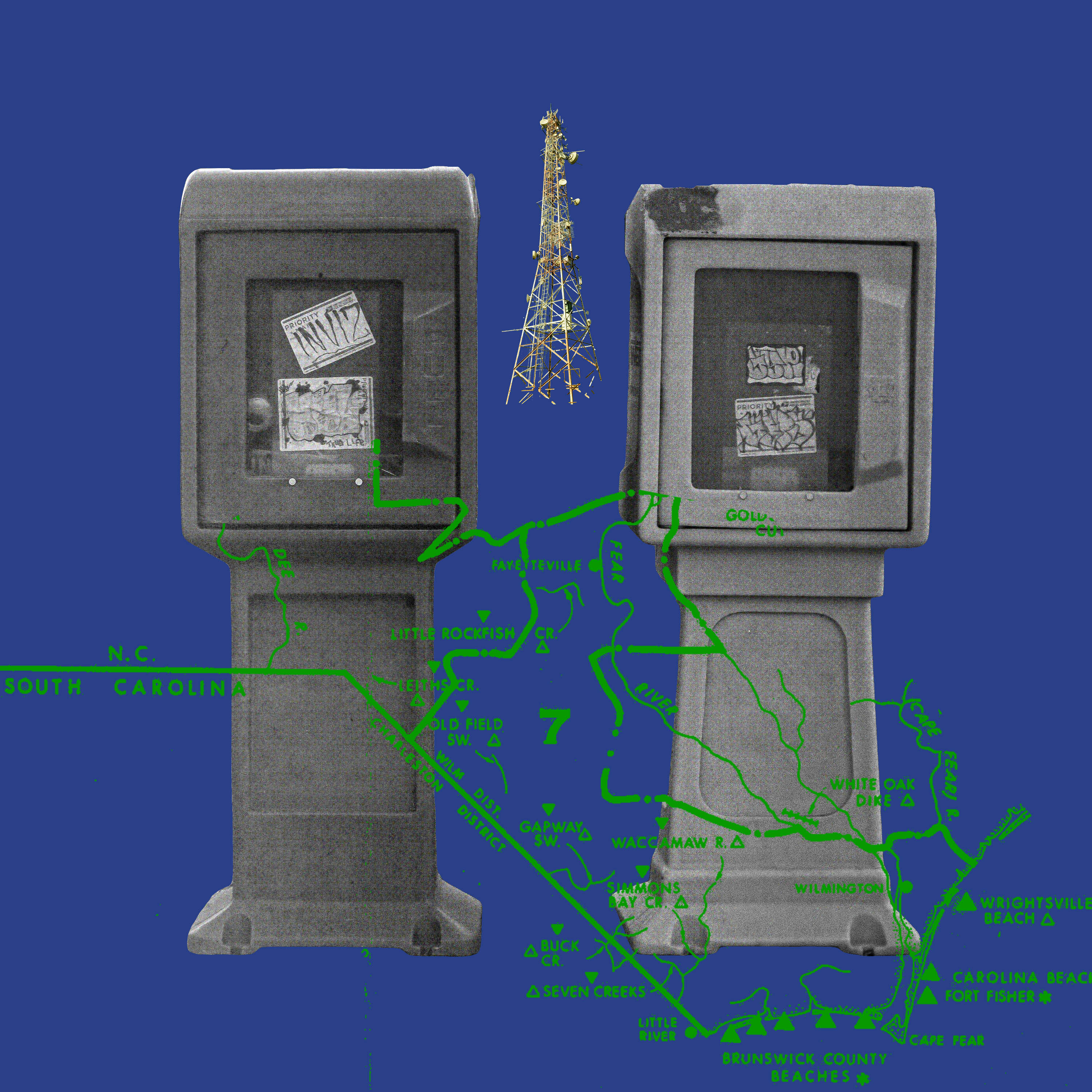
S8 E2: When the News Dies
Many people know that the journalism industry is struggling financially, especially at the local level. But the disastrous depths of that crisis, and its impact on communities and American democracy, are not as well understood. We visit a news desert in southeastern North Carolina. By John Biewen with co-host Chenjerai Kumanyika. Interviews: Penny Muse Abernathy, Mark DeLap, Angelica Das,
S8 E1: The Myth of the Echo Chamber
Americans have access to a flood of news, and yet we're in a deep information crisis. What's really wrong with the news media? Is it what we think it is? And what about news consumers? Most of us don't trust the media, but can we trust ourselves? By John Biewen with co-host Chenjerai Kumanyika. Interviews: Ethan Jordan, Dannagal Young, and others. Story editor: Diane Hodson. Assistant Pro
Introducing Scene on Radio: The News
Everybody's mad at the media. And Americans seem helpless to solve our problems, in large part because we have no shared narrative and few shared facts. A well informed citizenry we are not.In Scene on Radio's 8th season, producer and host John Biewen and returning co-host Chenjerai Kumanyika will examine the deep crises facing American journalism, how things got this way, and what it mig
Guest Episode: Drilled: Carbon Cowboys
We're happy to share this episode from award-winning climate journalist Amy Westervelt, co-host of Scene on Radio's 5th season: The Repair. Amy returns with a new season of Drilled, her podcast about the deception, disinformation, and power structures keeping real climate solutions out of reach. Drilled: Carbon Cowboys exposes how Midwest Republican corn ethanol mogul Bruce Rastetter sold

Historical Maturity and Cowardice: Keeping ScOR #15
Host John Biewen reads an essay from his newsletter, Keeping ScOR. After a visit to his hometown, Mankato, Minnesota -- the subject of the Scene on Radio episode, "Little War on the Prairie" -- John reflects on the changes there and America's latest assault on history. Music by goodnight, Lucas. To read see the Keeping ScOR newsletter archive or subscribe to receive it, go here: https://b

Voices of Hiroshima
A rebroadcast of a Scene on Radio episode, eighty years after the United States dropped an atomic bomb on the Japanese city of Hiroshima. The word “Hiroshima” may bring to mind a black-and-white image of a mushroom cloud. It’s easy to forget that it’s an actual city with a million people and a popular baseball team. What did the cataclysm of 1945 mean in the place where it happened, to t

Making Ignorance Sacred Again: Keeping ScOR #7
Host John Biewen reads an essay from his newsletter, Keeping ScOR. Reflections on the Trump Administration's attempt to wrangle control of the national story and how it's told. Will this attack on factual history succeed? Music by goodnight, Lucas. To read see the Keeping ScOR newsletter archive or subscribe to receive it, go here: https://buttondown.com/KeepingScOR#subscribe-formThe vid
The New Old Racism: Keeping ScOR#4
Host John Biewen teases Season 8 and reads an installment from his new newsletter, Keeping ScOR. Eight years after our "Seeing White" series, whiteness is still a helluva drug -- and a powerful tool for Trump 2.0. Music by goodnight, Lucas
Learn about your ad choices: dovetail.prx.org/ad-choices
Bonus: Michael Kliën and the Body Politic
Michael Kliën wants to help bring about profound change in the world, but not through the usual means. An Austrian-born Dance professor at Duke University, Kliën is a leading social choreographer. He sets up experiments involving people moving amongst each other -- wordlessly -- in pursuit of new ways of being and the "soul democratic." By Scene on Radio host and producer John Biewen. Mus
S7 E13: CAPITALISM Bonus, Live at Motorco
With our Capitalism season and the election behind us, now what? Can we find hope and a way forward? In a live show taped December 5, 2024, at Motorco Music Hall in Durham, North Carolina, Season 7 co-hosts John Biewen and Ellen McGirt are joined by journalism professor, podcast maker, and two-time Scene on Radio co-host Chenjerai Kumanyika. They discuss how to move toward a more democrat
Post-election '24 All-Star Special
Host John Biewen is joined by Celeste Headlee, Chenjerai Kumanyika, Ellen McGirt, and Amy Westervelt, co-hosts of Scene on Radio's full-length seasons -- Seeing White, MEN, The Land That Never Has Been Yet, The Repair, and Capitalism -- for a free-wheeling conversation about the 2024 U.S. election of Donald J. Trump and what it all means. Scene on Radio comes from the Kenan Institute for
S7 E12: Reimagined Economies
In our season finale, we visit with people on two continents who are turning core structures of capitalism on their heads – or, at least, sideways. By John Biewen with co-host Ellen McGirt. Interviews with John Fullerton, Ander Etxeberria, Deseree Fontenot, Corrina Gould, Regan Pritzker, Dana Kawaoka-Chen, Mateo Nube, and Marjorie Kelly. Story editor: Loretta Williams. Music by Michelle
S7 E11: Better Capitalism?
In the first of two episodes looking at responses to capitalism’s failings, we explore reforms aimed at making the current economic system more humane, fair, effective, and sustainable. By John Biewen with co-host Ellen McGirt. Interviews with Lutz Schwenke, Jordi Llatje i Espinal, Marjorie Kelly, Oren Cass, Jayati Ghosh, John Fullerton, and Rick Alexander. Story editor: Loretta Williams.
S7 E10: The Extracted
A visit to West Africa and Western Europe to look at the cocoa trade. Did the colonial side of early capitalism – Western countries getting rich at the expense of poorer nations – ever change, or does it continue today? Reported by Ugochi Anyaka-Oluigbo and written by Ugochi and Loretta Williams, with co-hosts John Biewen and Ellen McGirt. Story editor: Loretta Williams. Mixed by John Bie
S7 E9: At the Tipping Point
In 1972, a team of young scientists at MIT published a study exploring what would happen to human civilization if people kept pursuing endless economic growth on a finite planet. They weren’t just disbelieved, they were ridiculed. The story of Donella Meadows and The Limits to Growth.Reported and produced by Katy Shields and Vegard Beyer, with co-hosts John Biewen and Ellen McGirt. Story
S7 E8: The People's Pushback
S7 E8: The People’s Pushback Over several decades, a growing number of people in the United States and elsewhere – especially younger people – have turned against capitalism. The reasons are not mysterious. Reported by Lewis Raven Wallace and produced by John Biewen, with co-host Ellen McGirt. Interviews with Esteban Kelly, Josh Bivens, Malaika Jibali, and Evan Caldwell. Story editor: Lor
S7 E7: Gilded Age 2.0
S7 E7: Gilded Age 2.0After 40 years of neoliberalism, most Americans of every political stripe agree that the economy is “rigged” in favor of corporations and the wealthy. But we may not know the half of it. By John Biewen, with co-host Ellen McGirt. Interviews with Nancy MacLean, Edward Balleisen, Brad DeLong, Marjorie Kelly, and Oren Cass. Story editor: Loretta Williams. Music by Michel
S7 E6: Thirty Glorious Years
How the balance of power shifted, for a time, in the decades after World War II, and led to a better kind of capitalism – if you think prosperity being broadly shared is a good thing. By John Biewen, with co-host Ellen McGirt. Interviews with Eric Rauchway and Brad DeLong. Thanks to the Studs Terkel Archive at WFMT. Story editor: Loretta Williams. Music by Michelle Osis, Lilli Haydn, Chri
S7 E5: A New Thing in Human History
An age of invention and mass production, propelled by a new mechanism – the corporate research lab – leads to a surge in material wealth like the world has never seen. How does a new nation, the United States, overtake its parent as the leader of the surging capitalist order? And what does it all mean in the lives of ordinary people? By John Biewen, with co-host Ellen McGirt. Interviews w
S7 E4: Invisible Hand Guy?
Economic change happens in a cultural context. We trace the tectonic shifts in the Western mind that made capitalism thinkable – in part through a look at two Enlightenment thinkers: Baruch Spinoza and Adam Smith. (The real Smith, not the one held up as the patron saint of unfettered capitalism.)By John Biewen, with co-host Ellen McGirt. Interviews with Kate Rigby, Glory Liu, Steven Nadle
S7 E3: Ships, Swords, and Fences
From the voyages of Columbus and Vasco da Gama to colonial conquest and the Atlantic Slave Trade, to the privatization of land in western Europe: humanity’s turn toward the capitalist world we live in now.By John Biewen, with co-host Ellen McGirt. Interviews with Jayati Ghosh, Jason Hickel, Jessica Moody, Charisse Burden-Stelly, Silvia Federici, and Eleanor Janega. Story editor: Loretta W
S7 E2: BC: Before Capitalism
To fully grasp capitalism, it helps to understand the system it replaced – and the most meaningful differences between feudalism and capitalism. We visit the British Isles of the Middle Ages. By John Biewen, with co-host Ellen McGirt. Interviews with Karen Dempsey, Ben Jervis, and Eleanor Janega. Story editor: Loretta Williams. Music by Michelle Osis, Lilli Haydn, Chris Westlake, Alex Sy
S7 E1: Market Failure
Introduction to our 7th season: Capitalism. The world’s dominant economic system is on trial as it hasn’t been for at least half a century. Millions, young people especially, now see capitalism as the problem, not the solution. Others fear throwing out the baby with the bathwater. By John Biewen, with co-host Ellen McGirt. Interviews with John Fullerton, Cassandra Brooks and Charlene Broo
Season 7 Trailer: Capitalism
Welcome to Season 7: Capitalism. The world's dominant economic system is on trial as it hasn't been for at least half a century. This season tells the story of capitalism -- how people with power built and shaped it over time. We'll also explore what to do now that many people see capitalism as the problem, not the solution. Produced by host/producer John Biewen with co-host Ellen McGirt
Bonus: Long Shadow, In Guns We Trust
As we get ready to launch our Season 7, a bonus episode from another podcast we think our listeners will want to hear: Long Shadow. Episode 1 of its newest season, In Guns We Trust, with host Garrett Graff.Mass shootings have plagued the U.S. for generations. But in 1999, when shots rang out in a suburban Denver school, it was different. What changed? Everything.
Learn about your ad choi
S6 E5: A Way Forward
What would it take, and what would it even mean, to heal from a wound like the Wilmington massacre and coup of 1898 — or from centuries of white supremacist violence, disenfranchisement, and theft? An exploration of that question with community members in Wilmington, and experts on restorative justice and reparations.
By Michael A. Betts, II and John Biewen. Interviews with Bertha Boykin
S6 E4: The Forgetting
After the massacre and coup of November 10, 1898, white supremacists in North Carolina soon finished the job of disenfranchising Black citizens and instituting Jim Crow segregation. They also took control of the narrative. A new propaganda campaign, the one after the fact, succeeded for a century – even as several Black writers tried to tell the truth about 1898 and left breadcrumbs for f
S6 E3: A Day of Blood
On November 1898, North Carolina Democrats won a sweeping victory at the polls – confirming the success of their campaign based on white supremacy, intimidation, and fraud. But in Wilmington, the state’s largest city, white supremacist leaders were not satisfied. This episode tells what happened on November 10, 1898, in Wilmington: a massacre of Black men, and the only successful coup d'e
S6 E2: Crying "Negro Rule"
By 1898, two decades after the end of Reconstruction, white elites, backed by violent terror groups, have installed Jim Crow across most of the South. North Carolina, led by its largest city, Wilmington, is different. A Fusion coalition, made up of mostly-Black Republicans and mostly-White members of the Populist Party, controls the city and state governments. White supremacist Democrats
S6 E1: What Was Lost
This series tells the story of the only successful coup d’etat in U.S. history, and the white supremacist massacre that went with it. It happened in Wilmington, North Carolina in November 1898. But before we get to that story, we explore the surprising world of Wilmington in the 19th century – the world that the massacre and coup violently destroyed.By Michael A. Betts, II, and John Biewe
Season 6 Trailer: Echoes of a Coup
Introduction to Season 6, a series co-produced by Michael A. Betts II and Scene on Radio producer and host John Biewen, with story editor Loretta Williams. Music by Kevin MacLeod, Okaya, and Lucas Biewen. Echoes of a Coup is a project of America’s Hallowed Ground and Scene on Radio, from the Kenan Institute for Ethics at Duke University.
Learn about your ad choices: dovetail.prx.org/ad-c
"The Excess of Democracy": Rebroadcast
In the summer of 1787, fifty-five men got together in Philadelphia to write a new Constitution for the United States, replacing the new nation’s original blueprint, the Articles of Confederation. But why, exactly? What problems were the framers trying to solve? Was the Constitution designed to advance democracy, or to rein it in? And how can the answers to those questions inform our crise
White Affirmative Action: Rebroadcast
When it comes to U.S. government programs and support designed to benefit particular racial groups, history is clear. White folks have received most of the handouts. Part of our summer mini-season of rebroadcasts.
By John Biewen, with Deena Hayes-Greene of the Racial Equity Institute and Season 2 series collaborator Chenjerai Kumanyika.
Learn about your ad choices: dovetail.prx.org/ad-c
Losing Ground: Rebroadcast
The next in our summer mini-season of rebroadcasts: For Eddie Wise, owning a hog farm was a lifelong dream. In middle age, he and his wife, Dorothy, finally got a farm of their own. But they say that over the next twenty-five years, the U.S. government discriminated against them because they were Black, and finally drove them off the land. Their story, by John Biewen, was produced in coll
Bonus: Introducing Hot Take
In this bonus episode we share a recent installment from Hot Take, the climate podcast co-hosted by Amy Westervelt (co-host/reporter for our Season 5 series on climate, The Repair) and writer Mary Annaïse Heglar. They talk with their guest, author and New York Times writer David Wallace-Wells, about the lessons we can learn from Covid-19, the parallels between pandemic response and climat
Himpathy: Rebroadcast
Several years after Janey was sexually assaulted by her former boyfriend, Mathew, she told some of her closest friends, and her mother, what Mathew had done. Janey was so troubled by her loved ones’ responses that she went back to them years later to record conversations about it all. In this episode: Janey’s story, and philosopher Kate Manne, who coined the term “himpathy” in her 2017 bo
Things I'm Afraid to Say: Rebroadcast
A refugee from war in Eastern Europe. An NYC-born survivor who grew up poor, Black, Muslim, and gay. And how one, and her music, saved the other. By Aleks Basic, featuring Laila Nur. Part of our summer mini-season of rebroadcasts. Editing by Shea Shackelford and host John Biewen.
Learn about your ad choices: dovetail.prx.org/ad-choices
Prince and Philando and Futures Untold: Rebroadcast
How to grieve when the deaths come so quickly? How, as a Black mother in America, to protect your child’s innocence and hope? An audio essay by Stacia Brown. The first in a summer mini-season of rebroadcasts. Editing by Shea Shackelford and host John Biewen. Music by Prince, Eme Dm, One World One Nation, Blu & Exile, Otwin, and goodnight Lucas.
Learn about your ad choices: dovetail.p
S5 E11: Change Everything
In our Season 5 finale: What’s the cultural transformation we need to make — in the West, and the U.S. in particular — to live in good health with the rest of the natural world and with each other? Episode 11 of The Repair, our series on the climate emergency.
Researched and produced by John Biewen, with co-host Amy Westervelt. Script editor, Cheryl Devall. Interviews with Dirk Philipsen
S5 E10: The Power Structure, Not the Energy Source
The first of two concluding episodes in Season 5, in which we focus on solutions. In Part 10 of The Repair, we look at the actions and policies that people need to push for —now — to avoid the most catastrophic effects of climate change.
Reported by Amy Westervelt. Script editor, Cheryl Devall. Production and mix by John Biewen. Interviews with Kate Marvel, Ken Caldeira, Julian Brave Noi
S5 E9: Pachamama
In several countries around the world, including Ecuador, New Zealand, and the U.S., some people are trying to protect the planet using a legal concept called “rights of nature” – infusing the law with Indigenous understandings of Mother Earth. Part 9 of The Repair, our series on the climate emergency.
Reported by Amy Westervelt and Polyglot Barbershop. Script editor, Cheryl Devall. Prod
S5 E8: Last Orders
Among the wealthy, industrialized Western countries that created the climate crisis, Scotland is one of the leaders in pivoting away from fossil fuels – or promising to. Just how quickly will Scots be willing to cut off the flow – of oil, and money? Part 8 of The Repair, our series on the climate emergency.
Reported and written by Victoria McArthur, with additional writing and script edi
S5 E7: Deluges and Dreams
The climate crisis is not new to Bangladesh. For decades, global warming has exacerbated storms and flooding and turned many thousands of people into refugees in their own country. Yet, even though Bangladeshis did almost nothing to create the crisis, some are trying to be part of the solution.
Reported by Tareq Ahmed, with recording and production help from Tareek Muhammad and Muhammad
S5 E6: "We Don't Have the Power to Fight It"
Earth’s changing climate is already displacing millions of people, worsening tension and conflict, and sometimes violence – for example, between farmers and traditional nomadic herders in Nigeria. Part 6 of The Repair, our series on the climate emergency.
Reported by Ugochi Anyaka-Oluigbo, with reporting and production assistance from Nchetachi Chukwuaja and Tim Cuttings Agber. The serie
Bonus Episode: Manchin on the Hill, and Introducing Drilled
Co-hosts John Biewen and Amy Westervelt discuss the U.S. Congress’s effort to pass its first major climate bill ever, and Senator Joe Manchin’s move to block a key measure seemingly on behalf of the fossil fuel industry. And an episode of Drilled, Amy Westervelt’s true crime podcast about the climate crisis.
Learn about your ad choices: dovetail.prx.org/ad-choices
S5 E5: Jakarta, the Sinking Capital
Southeast Asia is especially vulnerable to storms, rising oceans, and other climate effects—though countries in the region did very little to create the crisis. In Indonesia, among other climate-related challenges, the capital city is sinking into the sea. Part 5 of our series, The Repair, on the climate emergency.
Reported by Nita Roshita, with recording and production help from Hilman
S5 E4: Up to Heaven and Down to Hell
Why has the United States played such an outsized role in the creation of the climate crisis? As a settler nation, the U.S. emerged from the colonizing, capitalist West, but what did America and its cultural peculiarities bring to the party? Part 4 of our series, The Repair, on the climate emergency.
Researched and written by this season’s co-host, Amy Westervelt, produced and mixed by h
S5 E3: "Managing" Nature
If the Enlightenment was so great, why was it not a course correction? In fact, did cultural values that took hold in the West in this period speed up our race toward ecological suicide? Part 3 of our series, The Repair, on the climate crisis.
By season co-host Amy Westervelt, with host and producer John Biewen. Interviews with Devin Vartija, Darren Dochuk, Melissa Aronczyk, and Amber Ka
S5 E2: To the Victor
How western Europe really broke bad in its understanding of humanity’s place in the natural world, from the Crusades to capitalism. Part 2 of our series, The Repair, on the climate crisis.
By host and producer John Biewen, with co-host Amy Westervelt. Interviews with Charisse Burden-Stelly, Kate Rigby, Enrique Salmón, and David Pecusa.
The series editor is Cheryl Devall. Music by Lili H
S5 E1: In the Beginning
Part 1 of our series on the climate emergency. How did we drive ourselves into the ecological ditch? And, crucially, who is this ‘we’? Our story starts with … Genesis.
By host and producer John Biewen, with co-host Amy Westervelt. Interviews with David Pecusa, Bina Nir, and Kate Rigby.
The series editor is Cheryl Devall. Music by Lili Haydn, Kim Carroll, Chris Westlake, Alex Weston, a
Season 5 Trailer: The Repair
This season will explore the cultural roots of our current ecological emergency, and the deep changes Western society will need to make to save the Earth and our species. Through interviews with historians and other experts, The Repair will trace the evolution of the West’s colonizing, extractive culture, and how we in the rich Global North drove humanity into the ecological ditch. We’ll
REBROADCAST: S4 E8 The Second Redemption
This special re-broadcast of a Season 4 episode is in response to the attack on the U.S. Capitol by Trump supporters. A look at the right-wing counterrevolution in the face of expanding democracy in America: It started long before Donald Trump.
By host and producer John Biewen, with series collaborator Chenjerai Kumanyika. Interviews with Nancy MacLean, Wendy Brown, and Rhon Manigault-Br
BONUS EPISODE: Election 2020
What does the 2020 election in the United States tell us, or remind us, about the state of democracy in America? A follow-up to our Season 4 series on democracy, The Land That Never Has Been Yet. Host and producer John Biewen talks with series collaborator Chenjerai Kumanyika.
Editor, Loretta Williams. Music by Algiers, Eric Neveux, and Lucas Biewen. Music consulting and production help
Hearing Hiroshima (Rebroadcast)
The word “Hiroshima” may bring to mind a black-and-white image of a mushroom cloud. It’s easy to forget that it’s an actual city with a million people and a popular baseball team. In 1995, John Biewen visited the city to speak with survivors and to ask: What did the world’s first atomic bombing mean in the place where it happened?
Hearing Hiroshima is a production of Minnesota Public Ra
S4 E12: More Democracy
What will it take to make the United States a more fully-functioning democracy, and how can we, as citizens, bring about that change?
By host and producer John Biewen, with series collaborator Chenjerai Kumanyika. Interviews with Michael Waldman, Jennifer Cohn, and Sanford Levinson.
The series editor is Loretta Williams. Music by Algiers, John Erik Kaada, Eric Neveux, and Lucas Biewen.
S4 E11: More Truth
How well do the news media serve us as citizens, and what role does the notion of “objective,” or “neutral,” journalism play in the failings of American democracy?
Story reported by Lewis Raven Wallace, with host/producer John Biewen and collaborator Chenjerai Kumanyika. Interviews with David Mindich, Nikole Hannah-Jones, and Kevin Young.
The series editor is Loretta Williams. *The View
S4 E10: Schooled for Democracy
In most American schools, children *hear about* democracy, but don’t get to *practice* it. What would a more engaged brand of civics education look like?
Story reported by Ben James, with host John Biewen and collaborator Chenjerai Kumanyika. Interviews with Arielle Jennings, Hilary Moss, and Nikole Hannah-Jones.
The series editor is Loretta Williams. Music by the Summer Street Brass Ba
S4 E9: American Empire
“America” and “empire.” Do those words go together? If so, what kind of imperialism does the U.S. practice, and how has American empire changed over time?
By host and producer John Biewen, with series collaborator Chenjerai Kumanyika. Interviews with Nikhil Singh and Daniel Immerwahr.
The series editor is Loretta Williams. Music by Algiers, John Erik Kaada, Eric Neveux, and
Lucas Biew
S4 E8: The Second Redemption
The conservative, neoliberal counterrevolution in the face of expanding democracy in America: It started long before Donald Trump. Even before Ronald Reagan and his like-minded counterpart across the Atlantic, Margaret Thatcher.
By host and producer John Biewen, with series collaborator Chenjerai Kumanyika. Interviews with Nancy MacLean, Wendy Brown, and Rhon Manigault-Bryant.
The s
S4 E7: Freedom Summer
In the summer of 1964, about a thousand young Americans, black and white, came together in Mississippi to place themselves in the path of white supremacist power and violence. They issued a bold pro-democracy challenge to the nation and the Democratic Party.
Produced by John Biewen, with series collaborator Chenjerai Kumanyika. Interviews with John Lewis, Bob Moses, Unita Blackwell, Hol
Bonus Episode: Pandemic America
In this special episode, host John Biewen and series collaborator Chenjerai Kumanyika discuss
the coronavirus pandemic and how the crisis, and the nation’s response to it, echo themes we’re exploring in our Season 4 series on democracy in the United States.
The season’s editor is Loretta Williams. Music by Lucas Biewen and Eric Neveux.
Photo: Durham, North Carolina, mayor Steve Schewe
S4 E6: A New Deal
The Great Depression presented a crisis not only for the U.S. economy, but for American democracy. President Franklin Roosevelt wanted to save the nation’s system of government, and its economic system, while reforming both. What did the New Deal achieve, and not achieve?
Reported and produced by John Biewen, with series collaborator Chenjerai Kumanyika. Interviews with Eric Rauchway an
S4 E5: Feminism in Black and White
People fighting for more democracy in the United States often have to struggle against sexism and racism. In fact, those two struggles are often inseparable—certainly from the perspective of black
women and some other women of color.
Reported and produced by host John Biewen, with Season 3 co-host Celeste Headlee and Season 4 collaborator Chenjerai Kumanyika. Interviews with Glenda Gilmo
S4 E4: The Second Revolution
After the Civil War, a surprising coalition tried to remake the United States into a real multiracial democracy for the first time. Reconstruction, as the effort was called, brought dramatic change to America. For a while.
Reported and produced by John Biewen, with series collaborator Chenjerai Kumanyika. The series script editor is Loretta Williams. Interviews with Victoria Smalls, Bre
S4 E3: The Cotton Empire
In the decades after America’s founding and the establishment of the Constitution, did the nation get better, more just, more democratic? Or did it double down on violent conquest and exploitation?
Reported, produced, written, and mixed by John Biewen, with series collaborator Chenjerai Kumanyika. The series editor is Loretta Williams. Interviews with Robin Alario, Edward Baptist, Kida
S4 E2: "The Excess of Democracy"
In the summer of 1787, fifty-five men got together in Philadelphia to write a new Constitution for the United States, replacing the new nation’s original blueprint, the Articles of Confederation. But why, exactly? What problems were the framers trying to solve? Was the Constitution designed to advance democracy, or to rein it in?
By producer/host John Biewen with series collaborator Chen
S4 E1: Rich Man's Revolt
In the American Revolution, the men who revolted were among the wealthiest and most comfortable people in the colonies. What kind of revolution was it, anyway? Was it about a desire to establish democracy—or something else?
By producer/host John Biewen with series collaborator Chenjerai Kumanyika. Interviews with Davy Arch, Barbara Duncan, Rob Shenk, and Woody Holton. Edited by Loretta W
Recommended

Fantasy Flex

زن بودن

Medicine with Meaning
Yours Truly Johnny Dollar Collection

Take Back Your Health®
CBS Radio Mystery Theater | Old Time Radio
Solved Murders - True Crime Stories

紐約鳥|New York Aperture
The Swerve Podcast: Obscure Topics | Conspiracy Theories

The Bread and Banter Podcast
The Church of What's Happening Now: The New Testament
Busted Open
