Stanford Psychology Podcast
The student-led Stanford Psychology Podcast invites leading psychologists to discuss their latest work. Hosted by Eric Neumann, Anjie Cao, and others, each episode explores new findings in psychological science and their real-world applications. The podcast aims to make psychology accessible and engaging for everyday listeners.
Episodes

185 - Brian Knutson: What Neuroscience Reveals About Our Decisions
This week, Katia Kriakova has a conversation with Brian Knutson, a professor of psychology and neuroscience at Stanford University. In this episode, we explore the neuroscience of decision-making, how brain activity can predict behavior and relapse in addiction, and why our choices don’t always align with how we want to live.Brian Knutson’s LinkedIn: https://www.linkedin.com/in/brian-knutson-8b877

184 - Tamar Schapiro: What Philosophy Can(not) Tell us About Children, Adults, and the Root of All Evil
In this week’s episode, Julie and Adani chat with Tamar Schapiro, professor of philosophy at MIT! Tamar is interested in a wide range of things, from what it means to make good decisions in everyday life to ethical theory and the history of ethics (especially Kant and the British Moralists). We discussed Tamar’s work on why we treat children differently from adults, dig into whether and how reacti

183 - William Damon: How to Live a Purposeful Life
This week, Katia Kriakova has a conversation with William Damon, a professor at Stanford University. He is one of the world's leading researchers on human development across the lifespan and has pioneered the scientific study of purpose in life. In this conversation, we explore how we can make our own lives more purposeful and expand purpose beyond ourselves.William Damon’s book on purpose: T

182 - Bill Burnett: How to Design a Meaningful Life
This week, Katia has a conversation with Bill Burnett, an adjunct professor at Stanford University. He is the co-founder of Stanford's Life Design Lab and also the co-author of Designing Your Life and How to Live a Meaningful Life. In this conversation, Bill shares how we can live in alignment with our values and compass, how prototyping can help us embrace uncertainty, and how to design a l

181 - Nomisha Kurian: Critical Hope for the Future of Children & AI
Adani chats with Nomisha Kurian, Assistant Professor in Education Studies at the University of Warwick, Associate Fellow at the University of Cambridge’s Leverhulme Centre for the Future of Intelligence, and Associate at the University of Edinburgh’s Centre for Research in Digital Education. Nomisha has been at the forefront of research on children’s safety and well-being, elucidating what it mean

180 - Andrew Lampinen: Translating Cognitive Psychology to AI
In this episode, Elizabeth chats with Dr. Andrew Lampinen as a part of our Alumni in Industry series. Andrew is currently a Member of Technical Staff at Anthropic. Prior to joining Anthropic, he worked as a Staff Research Scientist at Google DeepMind, and before that he earned his PhD here at Stanford and researched how humans are able to learn new things rapidly. His work bridges cognitive scienc

179 - Cynthia Osborne: Translating Evidence Into Early Childhood Policy
Adani chats with Cynthia Osborne, Professor at Vanderbilt University and Executive Director of the Prenatal-to-3 Policy Impact Center. Prof. Osborne’s work focuses on translating developmental science into effective, evidence-based policies for families and young children in the U.S. We discuss what the field of Early Childhood Policy entails, the ongoing work that Prof. Osborne and the Impact Cen

178 - Julia Nolte: Why We Avoid Difficult Decisions
This week, Enna chats with Dr. Julia Nolte, Assistant Professor of Economic Psychology at Tilburg University. Julia’s research examines how information management, risk perception, and decision-making change across adulthood. She is particularly interested in what keeps people, especially older adults, from making well-informed and high-quality decisions, and how we can better support people in ma

177 - Alison Gopnik: How Can Understanding Childhood Help Us Build Better AI? (REAIR)
In this re-air (but more timely than ever!) episode from 2021, Anjie chats with Alison Gopnik, Professor at the Department of Psychology and Affiliate Professor at Department of Philosophy at UC Berkeley. Alison is not only a great cognitive scientist and philosopher who has made many groundbreaking contributions to the field, but also a great science communicator. Alison authored multiple bestsel

176 - Elizabeth Bonawitz: How to Have Fun While Studying How Children Learn so Much From so Little
Adani chats with Elizabeth Bonawitz, Professor of Learning Sciences at Harvard Graduate School of Education. Elizabeth’s work focuses on basic theories of learning with the broader goal of informing educational practice. She uses computational, behavioral, and neural methods to study a broad variety of things within cognitive development, from children’s curiosity and belief revision to their expl

175 - Nicholas Epley: A Little More Social
Nick Epley is the John Templeton Keller Distinguished Service Professor of Behavioral Science at the University of Chicago's Booth School of Business. He studies social cognition—how thinking people think about other thinking people—to understand why smart people so routinely misunderstand each other. Nick is one of the “World’s Best 40 under 40 Business School Professors” by Poets and Quants

174 - Amit Goldenberg: Collective Emotions and Social Media (REAIR)
In this reair episode from 2023, Eric chats with Amit Goldenberg, Assistant Professor of Business Administration at Harvard Business School. Amit studies emotions in social interactions, for example in political contexts and on social media. He was a journalist and author before becoming an academic.In this episode, Eric and Amit talk about how emotions operate in groups. Do crowds easily go “mad”

173 - Juliana Schroeder: Mistakenly Seeking Solitude (REAIR)
In this reair episode, Eric chats with Juliana Schroeder, Associate Professor in the Management of Organizations at Berkeley Haas. She studies how people think about the minds of other people, and how they are often wrong trying to understand what others are up to. Her work has been discussed in outlets ranging from Vice to The Atlantic and Forbes.Eric and Juliana review her exciting recent work o

172 - Julia Chatain: Embodied Learning and Educational Technology in Mathematics and Beyond (REAIR)
Adani chats with Dr. Julia Chatain, Senior Scientist at the Singapore-ETH Centre of ETH Zürich. Julia is a computer scientist and learning scientist responsible for building a new research program, “Future Embodied Learning Technologies” (FELT), focusing on exploring AI-powered embodied learning interventions to support low-progress learners and learners with special needs, both at the cognitive a

171 - Casey Kenyon Brown: Can Your Relationships Make You Depressed? (REAIR)
This week, Enna chats with Dr. Casey Kenyon Brown, Professor at Georgetown University in the Department of Psychology and the Interdisciplinary Program in Neuroscience. She has received numerous honors and awards, including the prestigious Pathway to Independence Award from the National Institute on Aging and the Rising Star Award from the Association for Psychological Science.Casey’s research exa

170 - Marginalia Episode: Erica Bailey on Authenticity (REAIR)
Marginalia Episodes are in collaboration with Marginalia Science! Marginalia Science is a community committed to promoting the work of scholars who are traditionally underrepresented in academia. In each Marginalia Episode, we feature a guest who has been featured in the Marginalia Science Monthly Newsletter.In this re-air episode from 2025, Enna chats with Professor Erica Bailey at UC Berkeley Ha

169 - Tamar Kushnir: The Power of Imagination
Adani chats with Tamar Kushnir, Professor of Psychology and Neuroscience at Duke University. Tamar’s research spans pretty much everything you can imagine: Cognitive development, causal learning, social cognition, moral cognition, cultural psychology, free will, imagination, counterfactual thinking, self-control, and more! In this conversation, we discuss Tamar’s fascinating review on imagination

168 - Robin Dunbar: How Many People Can You Be Friends With? (REAIR)
In this re-air episode from 2022, Eric chats with Robin Dunbar, Emeritus Professor of Evolutionary Psychology at Oxford. Robin has famously studied the evolution of the human brain, arguing that our brain developed to understand the complex social world we have created for ourselves. Most know him for “Dunbar’s number,” or the limit to the number of individuals we can maintain stable relationships
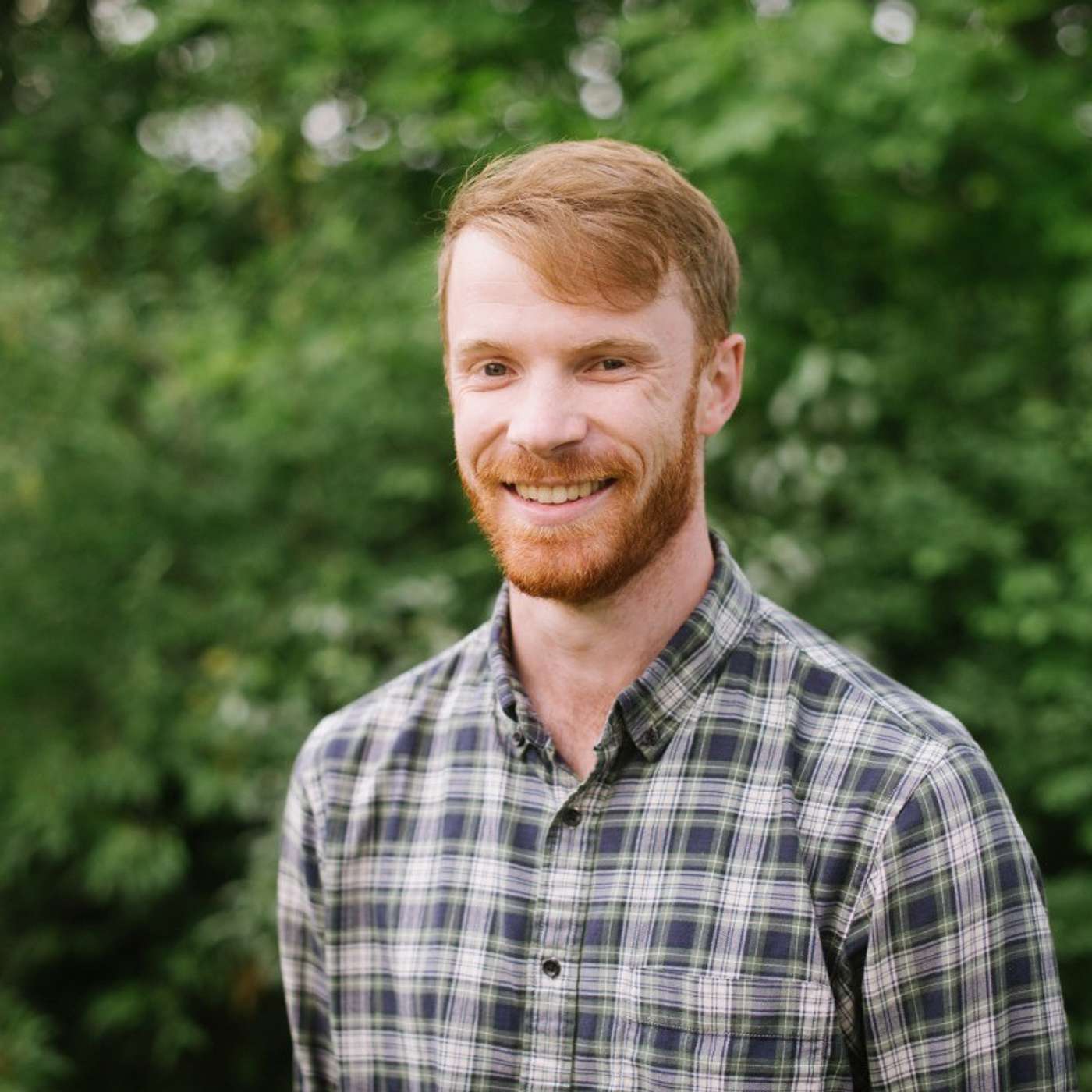
167 - Nicky Sullivan: Bridging the Gap Between Academic Research and Real-World Impact
Anjie chats with Dr. Nicky Sullivan, senior researcher at Impact Justice, a national non-profit innovation and research center focused on transforming the U.S. criminal justice system. Dr. Sullivan received his PhD from Stanford Psychology Department in 2024. During his PhD, he studied parents' and children's beliefs about race and racial inequality. In this episode, Nicky shares his jou

166 - Steve Rathje: The Psychology of Virality
Su chats with Dr. Steve Rathje. Dr. Rathje is an incoming Assistant Professor of Human-Computer Interaction in the School of Computer Science at Carnegie Mellon University. He is an NSF and AXA postdoctoral fellow at New York University. Steve’s work centers on the psychology of technology. He studies how core psychological phenomena like polarization, intergroup conflict, the spread of informatio

165 – Ying Wong: From Cultural Psychology to Global Business
Anjie chats with Dr. Ying Wong, founder and CEO of B.peachy and former cultural psychologist. Ying received her PhD in Psychology from Stanford in 2007, where she studied shame and guilt through a cultural lens. After academia, she built an impressive career across global business, and she now is the founder and CEO of B.peachy, a company dedicated to menstrual care.In this episode, Anjie and Ying

164 - Susan Engel: Do We Become Less Curious As We Grow Older?
Adani chats with Dr. Susan Engel, a Senior Lecturer and Senior Faculty Fellow in Psychology at Williams College. Susan’s research spans many areas, including the development of curiosity and invention, children’s ideas, the impact of college, and school reform. In this conversation, we discuss Susan’s seminal research on children's curiosity, how curiosity develops into adulthood, and her lat

163 - Roger Levy: The Science of Language in the Era of AI
Su chats with Dr. Roger Levy. Dr. Levy is a Professor in the Department of Brain and Cognitive Sciences at MIT, where he directs the Computational Psycholinguistics Laboratory. His research focuses on theoretical and applied questions in the processing and acquisition of natural language. His work furthers our understanding of the cognitive underpinning of language processing and acquisition, comb

162 - Adam Benforado: How prioritizing kids benefits us all
In today’s episode, Adani chats with Adam Benforado, a lawyer, writer, and professor at Drexel University’s Kline School of Law. Adam’s research, teaching, and advocacy are focused on children’s rights and criminal justice, and he brings insights from the mind sciences—most notably cognitive psychology—to law and legal theory. In this conversation, Adam tells us about his latest book, A Minor Revo

161 - Yuan Chang (YC) Leong: Emotional arousal & dynamic brain connectivity
Su chats with Dr. Yuan Chang (YC) Leong. YC is an Assistant Professor of Psychology at the University of Chicago. He is the director of Computational Affective and Social Neuroscience Lab, which is a part of the Department of Psychology, a member of the Institute of Mind and Biology and the Neuroscience Institute, and an affiliate of the Data Science Institute. His research explores the neural and

160 - Jennifer Hu: From Human Minds to Artificial Minds
Su chats with Dr. Jennifer Hu. Jenn is an Assistant Professor of Cognitive Science and Computer Science at Johns Hopkins University, directing the Group for Language and Intelligence. Her research examines the computational principles that underlie human language, and how language and cognition might be achieved by artificial models. In her work to answer these questions, she combines cognitive sc
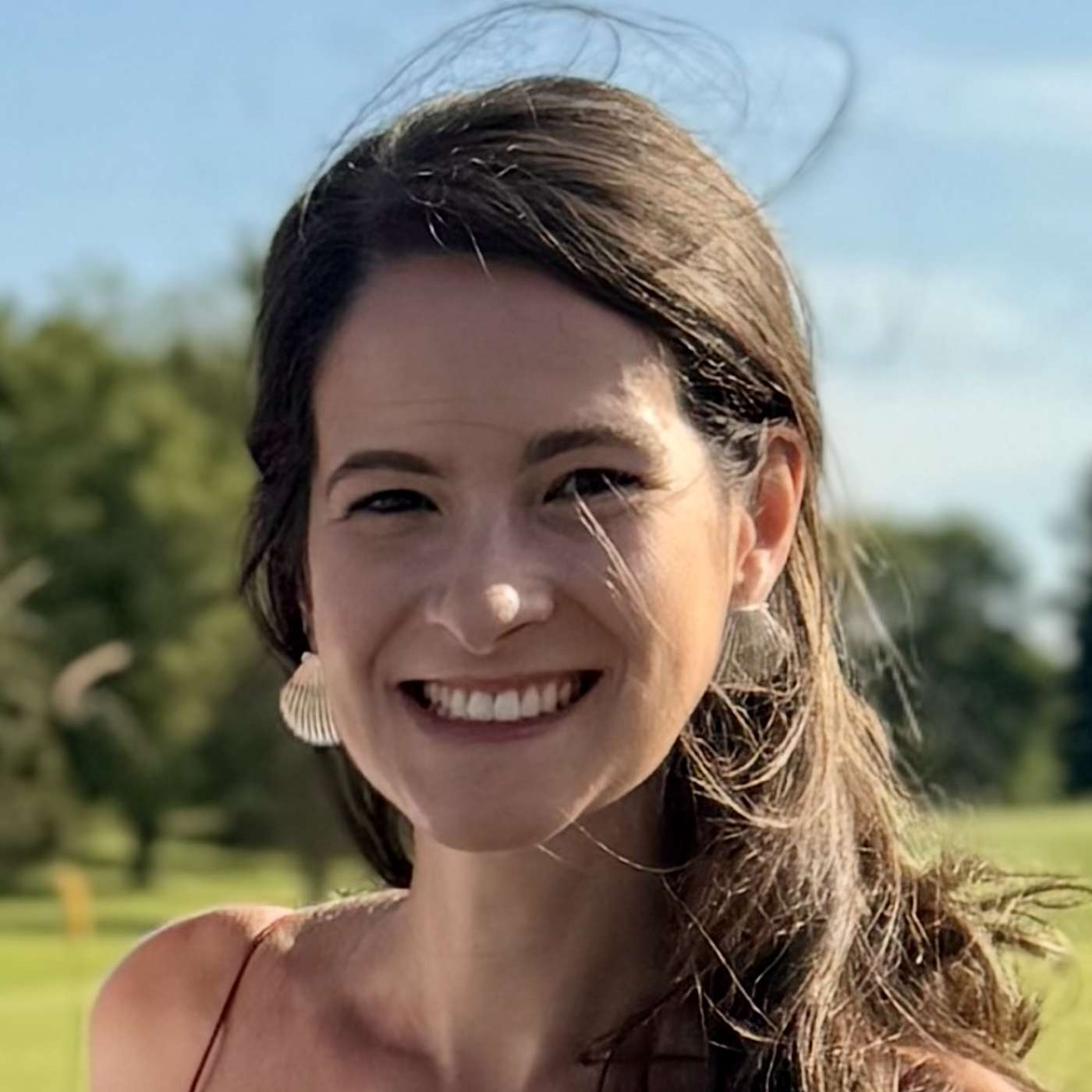
159 - Dawn Finzi: From Vision Neuroscience to ML Engineering (Psychologist in the Wild Series)
Elizabeth chats with Dr. Dawn Finzi, a Machine Learning engineer on the Perception team at Zoox, and a recent alumni of our very own Stanford’s Department of Psychology, as a part of our new Psychologist in the Wild series. During her PhD, Dawn studied the functional organization of the human visual system, focusing on both the structural underpinnings and the overarching computational goals. In t

158 - David Almeida: Can Stress Be Good For You?
Jane chats with Dr. David Almeida, a Professor of Human Development and Family Studies at Penn State. He is the Principal Investigator of the National Study of Daily Experiences (NSDE), the largest longitudinal diary study of daily experiences and health in the United States. Dr. Almeida’s work examines how daily experiences of stress are associated with health and well-being. In this episode, Ja

157 - Diyi Yang: Socially Aware Large Language Models
In this episode, Su chats with Diyi Yang, an assistant professor in the Computer Science Department at Stanford University, affiliated with the Stanford NLP Group, Stanford Human Computer Interaction Group, Stanford AI Lab, and Stanford Human-Centered Artificial Intelligence. She is also leading the Social and Language Technologies Lab, where they study Socially Aware Natural Language Processing.

156 - Katy Milkman: The Art and Science of Lasting Behavior Change
This week, Misha chats with Katy Milkman, the James G. Dinan Professor at The Wharton School of the University of Pennsylvania. A Fellow of the Association for Psychological Science and former president of the Society for Judgment and Decision Making, her research explores how insights from economics and psychology can be harnessed to change consequential behaviors for good. Her work, published in

155 - Julian Jara Ettinger: How we understand other minds
This week, Misha chats with Julian Jara-Ettinger, Associate Professor of Psychology and Computer Science at Yale University. Julian directs the Computational Social Cognition Lab, which aims to reveal the fundamental representations and computations that make complex human social behavior possible. His work combines computational modeling, developmental studies, and cross-cultural research to buil

154 - Judith Fan: The wonders of playing with blocks (REAIR)
In this re-air episode from summer 2021 (one of our first!), Anjie chats with Judy Fan, Assistant Professor of Psychology at Stanford University. Judy’s research is at the intersection of computational neuroscience, cognitive science, and artificial intelligence. In this episode, she discusses a new line of research in her lab exploring how people learn about objects by trying to build them from s

153 - Mike North: Too old, too young—Is ageism the last acceptable bias?
This week, Enna chats with Dr. Mike North, Associate Professor of Management and Organizations, at NYU Stern School of Business and founding director of the AGE Initiative. Mike’s research focuses on the challenges and opportunities of today’s multigenerational workforce. His work has shaped public conversations on aging and has been featured in major media outlets including The New York Times, Th

152 - Laura Schulz: The journey of becoming a cognitive scientist and what babies and children have taught us about their cognition (REAIR)
Bella chats with professor Laura Schulz.Laura is a Professor of Cognitive Sciences in the Brain and Cognitive Sciences Department at MIT. She is also the director and principal investigator of the Early Childhood Cognition Lab. Laura’s research focuses on understanding the infrastructure of human cognition and how it’s constructed during early childhood. For example, Laura and her lab study childr

151 - Robert Hawkins: Language, Collaboration, and Social Reasoning
This week, Misha chats with Robert Hawkins, Assistant Professor of Linguistics at Stanford University. Robert directs the Social Interaction Lab where he studies the cognitive mechanisms that enable human communication and collaboration. His interdisciplinary work combines interactive experiments with computational models to uncover how people flexibly coordinate with one another.In this episode,

150 - Kendrick Kay: Large-scale fMRI Datasets and What to Consider
In this episode, Elizabeth chats with Dr. Kendrick Kay, an Associate Professor in Radiology at University of Minnesota, Twin Cities. He directs the Computational Visual Neuroscience Laboratory, and aims to understand brain function by combining cognitive neuroscience, functional MRI methods, and computational neuroscience. In this episode, Kendrick shares his work on the groundbreaking Natural Sce

149 - Jenna Wells: How Micro-Moments of Connection Shape Health and Happiness
This week, Enna chats with Dr. Jenna Wells, a professor in the Department of Psychology at Cornell University. Jenna’s research examines how emotion in close relationships contributes to mental and physical health over the life course, with a focus on late life. She is particularly interested in positive interpersonal processes and their associations with long-term health and well-being in individ

148 - Dorsa Amir: How Culture Shapes Cognition
Anjie chats with Dr. Dorsa Amir, an Assistant Professor of Psychology and Neuroscience at Duke University. She directs the Mind and Culture Lab, where she studies how culture shapes the developing mind. In this episode, Dorsa shares her papers that probe the many ways cultural environments can influence cognitive processes. She outlines a new framework proposing four possible “pathways” by which c

147 - Geoff Hinton & Jay McClelland: Two AI Pioneers in Conversation
Eric chats with 2024 Nobel Laureate Geoffrey Hinton and Stanford Professor Jay McClelland, two pioneers who have spent nearly half a century laying the groundwork for modern-day AI, advancing research on neural networks long before it captured the world's imagination.In fact, their early work faced significant skepticism from the scientific community - an experience they candidly discuss in t

146 - Alex Shaw: The Price of Neutrality
This week, Misha chats with Dr. Alex Shaw, Associate Professor at the University of Chicago's Department of Psychology. His research explores how children and adults navigate the complex world of social behavior, with a particular focus on morality, fairness, and social judgments.In this episode, Dr. Shaw discusses his fascinating research on why attempts to stay neutral in moral and politica

145 - Marginalia Episode: Erica Bailey on Authenticity
Marginalia Episode is a collaboration between the Stanford Psychology Podcast and Marginalia Science. Marginalia Science is a community committed to promoting work of scholars who are traditionally underrepresented in academia. Their mission really resonated with our values at the Stanford Psychology Podcast.In each Marginalia Episode, we feature a guest who has been featured in the Marginalia Sci

144 - Sandra Matz: AI, Social Media, And Data Privacy
Eric chats with Sandra Matz, Associate Professor of Business at Columbia Business School. Sandra is a renowned computational social scientist, using AI and big data to study human behavior and preferences. Sandra was named as one of the Poets & Quants 40 under 40 Business School Professors in 2021.In this episode, Eric and Sandra discuss Sandra’s new book “Mindmasters” on how companies and aca

143 - Casey Kenyon Brown: Can Your Relationships Make You Depressed?
This week, Enna chats with Dr. Casey Kenyon Brown, Professor at Georgetown University in the Department of Psychology and the Interdisciplinary Program in Neuroscience. She has received numerous honors and awards, including the prestigious Pathway to Independence Award from the National Institute on Aging and the Rising Star Award from the Association for Psychological Science.Casey’s research exa

142 - Meet the Hosts: Kate Petrova
Adani chats with Kate Petrova, one of the first hosts of the Stanford Psychology Podcast and a fourth-year Ph.D. student in psychology at Stanford University. In this special episode from our Meet the Host series, Kate shares her journey into research and science communication, and how she grappled with the ups and downs of graduate school! She also discusses the value and challenges of interdisci

141 - Michael Schwalbe and Geoff Cohen: When Politics Trumps Truths
Anjie chats with Dr. Michael Schwalbe and Dr. Geoff Cohen. Michael is a postdoctoral fellow at Stanford University, from which he also received his PhD in social psychology. Geoff is a Professor of Psychology and the James G. March Professor of Organizational Studies in Education and Business at Stanford University. His research examines the processes that shape people’s sense of belonging and sel

140 - Julia Chatain: Embodied Learning and Educational Technology in Mathematics and Beyond
Adani chats with Dr. Julia Chatain, Senior Scientist at the Singapore-ETH Centre of ETH Zürich. Julia is a computer scientist and learning scientist responsible for building a new research program, “Future Embodied Learning Technologies” (FELT), focusing on exploring AI-powered embodied learning interventions to support low-progress learners and learners with special needs, both at the cognitive a

139 - Susan Carey: Becoming a Cognitive Scientist
Anjie chats with Dr. Susan Carey. Susan is an Emeritus Professor of Psychology at Harvard University and one of the most influential figures in the field of developmental psychology. Her groundbreaking research focuses on conceptual change and how knowledge systems develop throughout childhood. Susan has received numerous prestigious awards, including the William James Fellow Award from the Associ

138 - Hal Hershfield: Connecting with Your Future Self for a Better Tomorrow
This week, Enna chats with Dr. Hal Hershfield, Professor of Marketing, Behavioral Decision Making, and Psychology at UCLA Anderson School of Management. In 2017, Hal was recognized as a 40 under 40 best business school professor. This year, he was voted as faculty of the year by MBA students at UCLA. Hal studies how thinking about time transforms the emotions and alters the judgments and decisions

137 - Kelsey Lucca: Unpacking the Development of Exploration and Exploitation
Anjie chats with Dr. Kelsey Lucca. Kelsey is an Assistant Professor in the Department of Psychology at Arizona State University. She directs the Emerging Minds Lab, where she leads her team to investigate cognitive development during infancy and early childhood, with a focus on the development of curiosity, social cognition, communication, and problem solving. In this episode, Kelsey chats about o

136 - Meet the Hosts: Bella Fascendini
Anjie chats with Bella Fascendini, a long time host of the Stanford Psychology Podcast and an incoming Ph.D. student in psychology at Princeton University. In this special episode from our Meet the Host series, Bella shares her journey into cognitive science and science communication, offering valuable tips for those considering graduate school or pursuing science communication. She also discusses

135 - Jake Quilty-Dunn: The Language of Thought Hypothesis in Cognitive Science
Joseph chats with Prof. Jake Quilty-Dunn, Assistant Professor of Philosophy at the Department of Philosophy and the Center for Cognitive Science Rutgers University. Prof. Quilty-Dunn works primarily in philosophy of mind and cognitive science. Much of his research concerns distinctions between kinds of mental representations (such as iconic and discursive formats), mental processes (such as infere

134 - Lisa Damour: Inside Out 2 and the Science Of Teenage Emotions
Joseph and Dr. Lisa Damour discuss the portrayal of teenage emotions in Pixar's "Inside Out 2", with a focus on anxiety. Dr. Damour, who consulted for the film as a clinical psychologist, shares her experience, the teenage emotions explored in the film, how scientific insights are integrated into the story, and the societal issues it addresses.Dr Damour is the author of three New Yo

133 - Nicholas Shea: Concepts in Humans, Animals and Machines
Joseph chats with Prof. Nicholas Shea, Professor of Philosophy at the Institute of Philosophy, University of London and associate member of the Faculty of Philosophy, University of Oxford. Prof. Shea is an interdisciplinary philosopher of mind and cognitive science, and has published work on mental representation, inheritance systems, consciousness, AI, and the metaphysics of mind. In this episode

132 - Nilam Ram: Learning from The Human Screenome Project
Anjie chats with Dr. Nilam Ram. Nilam is a Professor of Communications & Psychology at Stanford University, and he studies how short-term changes develop across the life span and how longitudinal study designs contribute to the generation of new knowledge. Nilam is developing a variety of study paradigms that use recent developments in data science and the intensive data streams arriving from

131 - Johannes Eichstaedt: Is Social Media to Blame for Mental Illness? (REAIR)
Anjie chats with Dr. Johannes Eichstaedt, an Assistant Professor in Psychology, and the Shriram Faculty Fellow at the Institute for Human-Centered Artificial Intelligence at Stanford University. Johannes directs the Computational Psychology and Well-Being lab. His research focuses on using social media (Facebook, Twitter, Reddit, …) to measure the psychological states of large populations and ind

130 - Laura Gwilliams: The Needles that Unraveled the Brain’s Language and What We Can Learn from Them
Anjie chats with Dr. Laura Gwilliams. Laura is an assistant professor at Stanford University, jointly appointed between Stanford Psychology, Wu Tsai Neurosciences Institute and Stanford Data Science. Her work is focused on understanding the neural representations and operations that give rise to speech comprehension in the human brain. In this episode, Laura introduces her recent paper titled” La

129 - Paul van Lange: Trust, Cooperation, And Climate Change (REAIR)
Eric chats with Paul van Lange, Professor of Psychology at the Free University of Amsterdam and Distinguished Research Fellow at Oxford. He is well known for his vast work on trust, cooperation, and morality, applying these themes to everything from Covid to climate change. He has published multiple handbooks and edited volumes on these topics.In this chat, Eric and Paul talk about the psychologic

128 – Halie Olson: How our Brains Care About our Personal Interests
In this episode, Adani chats with Dr. Halie Olson! Halie is a postdoctoral researcher at MIT’s Department of Brain and Cognitive Sciences. Her research explores how early life experiences and environments impact brain development, particularly in the context of language, and what this means for children’s outcomes.Halie talks about the intriguing backstory and results of her recent pre-print paper

127 - Guilherme Lichand: Remote Learning Repercussions
Anjie chats with Dr. Guilherme Lichand. Guilherme is an assistant professor at the Graduate School of Education at Stanford University, and a co-Director at the Stanford Lemann Center. His research interest explores the sources of education inequities in the global south, and in interventions with the potential to overturn them. In this episode, Guilherme talks about his recent paper titled “The L

126 - Michele Gelfand: Culture and Conflict
Eric chats with Michele Gelfand, Professor of Organizational Behavior at the Stanford Graduate School of Business. Michele’s culture lab studies the strength of cultural norms, negotiation, conflict, revenge, forgiveness, and diversity, drawing on many different disciplines. Michele is world-renowned for her work on how some cultures have stronger enforcement of norms (tight cultures), while other

125 - Marginalia Episode: Cristina Salvador on Cultural Psychology in Latin America
Marginalia Episode is a collaboration between Stanford Psychology Podcast and Marginalia Science, a community committed to including, integrating, advocating for, and promoting members who are not typically promoted by the status quo in academia. In each Marginalia Episode, we feature a guest who has been featured in the Marginalia Science Monthly Newsletter. In this episode, Anjie chats with Dr.

124 - Oriel FeldmanHall: Punishment, Forgiveness, and Predicting Emotions
This week, Rachel chats with Oriel FeldmanHall, Professor of Cognitive, Linguistics, and Psychological Sciences at Brown University. Oriel's lab leverages methods from behavioral economics, social psychology, and neuroscience to explore the neural bases of social behavior, and the role of emotion in shaping social interactions. She has won numerous awards, including the Cognitive Neuroscienc

123 - Jacqueline Gottlieb: Are You Curious About Curiosity?
This week, Julia chats with Jacqueline Gottlieb, Professor of Neuroscience in the Kavli Institute for Brain Science and the Mortimer B. Zuckerman Institute for Mind, Brain, and Behavior at Columbia University in New York. Since joining the Columbia Faculty in 2001, she has spearheaded pioneering research on the neural mechanisms of attention and curiosity, using computational modeling combined wit

122 - Michal Kosinski: Studying Theory of Mind and Reasoning in LLMs.
Xi Jia chats with Dr. Michal Kosinski, an Associate Professor of Organizational Behavior at Stanford University's Graduate School of Business. Michal's research interests recently encompass both human and artificial cognition. Currently, his work centers on examining the psychological processes in Large Language Models (LLMs), and leveraging Artificial Intelligence (AI), Machine Learning

121 - Joshua Hartshorne: Does a Similar Native Tongue Speed Up English Learning for Kids?
Anjie chats with Dr. Joshua Hartshorne, an assistant professor of psychology at Boston College where he directs the Language Learning Laboratory. He studies language learning from a variety of aspects, including but not limited to: bootstrapping language acquisition, relationship between language and commonsense, as well as the critical periods in learning new languages. In this episode, they chat

120 - Steve Fleming and Nadine Dijkstra: Distinguishing Imagination from Reality
This week, Julia chats with two guests from University College London, Professor Steve Fleming and Dr. Nadine Dijkstra. Professor Fleming is the Wellcome Trust/Royal Society Sir Henry Dale Fellow at the Department of Experimental Psychology and Principal Investigator at the Wellcome Centre for Human Neuroimaging where he leads the Metacognition Group. He has received numerous awards for his work,

119 - Bryan Brown: Virtual Reality for Science Education
Anjie chats with Dr. Bryan Brown. Bryan is a professor of teacher education at the Graduate School of Education at Stanford University. His research interest explores the relationship between student identity, discourse, classroom culture, and academic achievement in science education. In this episode, we chat about his recent work on adopting VR – Virtual Reality in the classroom. The title of th

118 - Josh Jackson: Morality, Culture, and Social Media
Eric chats with Joshua Jackson, newly minted Assistant Professor of Behavioral Science at University of Chicago’s Booth School of Business. In his research, Josh studies how culture co-evolves with psychology. He is interested in how culture has shaped the mind throughout human history, and how it continues to shape human futures. He regularly publishes in the field’s best journals with innovative

117 - Sho Tsuji: A blueprint for modeling how babies acquire language
Anjie chats with Dr. Sho Tsuji, an Assistant Professor at the University of Tokyo where she directs the IRCN baby lab. Her core research interests involve understanding how babies acquire language efficiently. In this episode, we chat about her recent work on approaching this question from a computational perspective, a paper titled “SCALa: A blueprint for computational models of language acquisit

116 - George Mashour: How Psychedelics Can Shed Light on Consciousness
This week, Julia chats with George Mashour, the Robert B. Sweet Professor and Chair of the Department of Anesthesiology at the University of Michigan. Professor Mashour was the founding director of the University of Michigan Center for Consciousness Science and the Michigan Psychedelic Center. In this episode, Julia and Professor Mashour discuss the reinvigorated study of psychedelics and the ligh

115 - Matt Abrahams: Think Faster, Talk Smarter
Eric chats with Matt Abrahams, leading expert in the field of communication and lecturer at Stanford University’s Graduate School of Business. Matt is a highly sought-after keynote speaker and communications consultant. He has helped numerous presenters prepare for high-stakes talks, including Nobel Prize award presentations, and appearances at TED and the World Economic Forum. His online talks ga

114 REAIR SUMMER - Gillian Sandstrom: Talking to Strangers
Welcome to Week 8 aka the LAST WEEK of our REAIR SUMMER! From this week till September 21st, we will be revisiting some of our favorite episodes around topics related to personal development and self-improvement!Kate chats with Gillian Sandstrom, a Senior Lecturer in the Psychology of Kindness at the University of Sussex and the Director of the Sussex Centre for Research on Kindness. Gillian’s wor

113 REAIR SUMMER - Jon Jachimowicz: Should You Follow Your Passion?
Welcome to Week 7 of our REAIR SUMMER! From this week till September 21st, we will be revisiting some of our favorite episodes around topics related to personal development and self-improvement!Eric chats with Jon Jachimowicz, Assistant Professor of Organizational Behavior at Harvard Business School. Jon studies people’s passion for work, specifically how people can pursue, fall out of, and mainta

112 REAIR SUMMER - Dacher Keltner: The Science of Awe
Welcome to Week 6 of our REAIR SUMMER! From this week till September 21st, we will be revisiting some of our favorite episodes around topics related to personal development and self-improvement!Eric chats with Dacher Keltner, Professor of Psychology at UC Berkeley and Co-Director of the Greater Good Science Center. Dacher has worked on many topics such as compassion, power, and social class. He ha

111 REAIR SUMMER - Jay Van Bavel: The Power of Us
Welcome to Week 5 of our REAIR SUMMER! From this week till September 21st, we will be revisiting some of our favorite episodes around topics related to personal development and self-improvement!Joseph chats with Dr. Jay Van Bavel, an Associate Professor of Psychology and Neural Science at the New York University. His research examines how collective concerns namely group identities, moral values,

110 REAIR SUMMER - James Gross: Building Emotion Regulation Skills During the Pandemic and Beyond
Welcome to Week 4 of our REAIR SUMMER! From this week till September 21st, we will be revisiting some of our favorite episodes around topics related to personal development and self-improvement!Kate chats with James Gross, Professor of Psychology at Stanford University and the director of the Stanford Psychophysiology Lab. His work focuses on emotions: What they are, how they unfold over time, and

109 REAIR SUMMER - Juliana Schroeder: Mistakenly Seeking Solitude
Welcome to Week 3 of our REAIR SUMMER! From this week till September 21st, we will be revisiting some of our favorite episodes around topics related to personal development and self-improvement!Eric chats with Juliana Schroeder, Associate Professor in the Management of Organizations at Berkeley Haas. She studies how people think about the minds of other people, and how they are often wrong trying

108 REAIR SUMMER - Abigail Marsh: Surprising Predictors of Everyday Kindness
Welcome to Week 2 of our REAIR SUMMER! From this week till September 21st, we will be revisiting some of our favorite episodes around topics related to personal development and self-improvement! Eric chats with Abigail Marsh, Professor of Psychology and Neuroscience at Georgetown. Her work has focused on phenomena as diverse as empathy, altruism, aggression, and psychopathy. In 2017, Abby publish

107 REAIR SUMMER - Josh Greene: Cooperation, Charity, and Effective Giving
Welcome to Week 1 of our REAIR SUMMER! From this week till September 21st, we will be revisiting some of our favorite episodes around topics related to personal development and self-improvement! This week, we revisit the conversation between Eric and Josh Greene, Professor of Psychology at Harvard. Josh is a leading researcher of moral judgment and is the author of Moral Tribes. Several graduating

106 - Amit Goldenberg: Collective Emotions and Social Media
Eric chats with Amit Goldenberg, Assistant Professor of Business Administration at Harvard Business School. Amit studies emotions in social interactions, for example in political contexts and on social media. He was a journalist and author before becoming an academic.In this episode, Eric and Amit talk about how emotions operate in groups. Do crowds easily go “mad”? What emotions spread faster in
Recommended

Busted Open

Deadline: White House
Crickets Corner

History of the Earthquake and Fire in San Francisco

Fox news

K-Drama Obsessed Mamas | Beyond “Just One More Episode!”

True Crime Classics

The Healer Revolution

Becoming: HER with Nikki Spoelstra

Booked, Blonde & Busy w/ Olivia Ponton

McKinsey on Consumer and Retail

megahired.com
