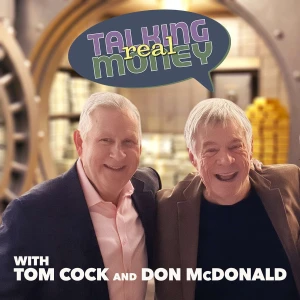
Talking Real Money - Investing Talk
Financial talk radio veteran Don McDonald and former host of Serious Money on PBS Tom Cock join forces to talk about real money issues. In each episode, they solve real money problems, dole out real investing (not speculating) advice, and really explain the financial issues that affect all of us. Plus, it's actually fun! Talking Real Money is a podcast designed to provide the real help we all need to enjoy a really great future.
Episodes

Ep. 1999: IRA Mistakes You Can’t Undo
Some IRA mistakes cannot simply be reversed. Don and Tom explain the traps around non-spouse beneficiary transfers, the one-rollover-per-year rule, 72(t) plans, the same-property rollover rule, outdated beneficiaries, qualified charitable distributions, missed RMDs, and portfolio drift.Then Mike from Salt Lake City asks how aggressively he should convert a traditional IRA to Roth before Social Sec

Ep. 1998: The S&P 500 or the Whole World?
Don and Tom compare the S&P 500 with total-market and globally diversified investing, explain the danger of home bias, and show why owning more of the world can reduce concentration risk. Then they answer questions about Roth conversions, bond-fund losses, CD ladders, and matching a risk score to a stock-bond allocation.00:00 Oktoberfest musical intro01:23 S&P 500 versus the whole market04

Ep. 1997: The Lemmings Didn’t Jump
Don and Tom use Disney’s infamous lemming myth to explain investor herd behavior, recency bias, and the danger of chasing whatever has recently been hot. Then they answer questions about simplifying a diversified portfolio, evaluating a long-held annuity, and why “Bank on Yourself” whole-life strategies create more problems than they solve.00:00 The lemming film clip00:56 The lemmings didn’t jump0

Ep. 1996: Growth, Value, and When to Retire
Don tackles listener questions about growth versus value stocks, choosing the right time to retire, Medicaid and estate-planning concerns, the problems with infinite-banking whole-life policies, when annuities may make sense, and how mutual-fund distributions affect share prices.00:00 Zeuhll musical intro01:08 Friday Q&A begins03:51 Growth stocks versus value stocks07:43 Choosing the right mon

Ep. 1995: The Homeownership Trade-Off
Is a home always a great investment? Don and Tom compare buying with renting, explain why leverage can make home returns look better than they are, and lay out when owning makes sense. Then they answer listener questions about one-fund versus multi-fund portfolios, disciplined rebalancing, and whether delaying Social Security still pays when a spouse is waiting for a benefit increase.0:34 The Amer

Ep. 1994: The $31,000 Advice Bill
Don and Tom unpack what financial advice should cost after a retired couple discovers they’re paying $31,000 a year. They compare fee-only, fee-based, and commission models, explain how hidden fund expenses compound the damage, and show why every advisor should disclose the full all-in cost.Listener questions cover the Avantis balanced fund, building retirement income from a total-return portfolio

Ep. 1993: The High-Yield Trapdoor
Covered-call ETFs trade away upside for income and still carry market risk. They also discuss TSP Roth conversions, an Avantis balanced fund, a possible X Money cash offer, and other media projects.Questions? Comments? Click!

Ep. 1992: The Enemy Is Us
The biggest drag on an investment portfolio may be the investor. Don and Tom examine the behavior gap—the difference between what investments earn and what people actually keep after fear, greed, overconfidence, and badly timed decisions take their toll. They explain why market timing so often means selling after prices fall and returning only after the recovery is obvious. Missing even a handful

Ep. 1991: Seven Questions, Clear Answers
Seven listeners bring seven practical money decisions, and Don moves through them without the usual detours. He compares ETFs with mutual funds, untangles realistic stock returns and retirement withdrawal rates, and explains where a short-term bond fund may fit.Then he tackles the tax tail on an expensive legacy fund, why reverse-mortgage proceeds should stay safe, the real job of emergency saving

Ep. 1990: Luck Isn’t Skill
One lucky streak can feel like investing genius—but anecdotes are not evidence. Don and Tom examine leveraged ETFs such as TQQQ, the brutal losses leverage can magnify, and why surviving a good run does not prove a strategy is sound. They answer a federal employee’s question about the TSP C, S, and I funds, explaining why a favorable 2003–2025 backtest cannot tell us what comes next and why divers

Ep. 1989: Two Clocks, One Plan
Retirement planning becomes a two-clock problem when spouses are a decade or more apart in age. Don and Tom explain why one household may need to fund two timelines—and why healthcare, Social Security timing, survivor taxes, and account ownership deserve extra attention. The older, higher-earning spouse may need to delay Social Security to age 70 to protect the younger survivor. A strong plan also

Ep. 1988: The Guarantee Mirage
Don and Tom examine the promises behind fixed, indexed, and immediate annuities—and why the word ‘guaranteed’ deserves closer scrutiny. They explain how insurers invest policyholder money, what state guaranty pools actually cover, and why complexity can hide both cost and risk. Listener questions cover when to claim Social Security, how delaying benefits can protect a surviving spouse, the interac

Ep. 1987: The Fee Machine
Higher fees do not buy higher returns. Don and Tom unpack the fee-to-risk/reward ratio, show how fund costs compound against investors, and compare low-cost index funds with expensive active funds, hedge funds, and private equity.Then they answer listener questions about converting Vanguard mutual funds to ETFs without triggering taxes, leaving a home to a stepson while preserving the step-up in b

Ep. 1986: Six Questions, Straight Answers
Six listener questions drive this Friday edition, starting with whether a pre-retirement car purchase belongs on a 401(k) withdrawal. Don explains why preserving tax-deferred growth usually matters more than trying to micromanage one year's tax bracket. The conversation moves through realistic return assumptions, global diversification, and the cleanest way to donate appreciated stock. Don al

Ep. 1985: The Just-Right Path
Retirement planning gets dangerous when people drift toward either extreme. Don and Tom unpack a survey in which savers wildly overestimate the nest egg they need, yet also assume they can safely withdraw 10% a year. The better answer is a portfolio and spending plan built for the actual person.They turn to the mechanics of retirement income: whether to take IRA distributions monthly or annually,

Ep. 1984: Before the Bear Arrives
Winter comes for markets, too. Don and Tom ask the useful question before the next bear market arrives: will your portfolio—and your nerves—be ready? They revisit painful declines, concentrated bets, and why a plan matters most when selling feels irresistible. They explain how rebalancing, a sensible mix of stocks and bonds, and tax-loss harvesting can help investors respond with discipline. Your

Ep. 1983: Coast FI’s Missing Passengers
Coast FI promises that if you save enough early, your retirement money can coast the rest of the way. Don and Tom run the numbers and find the missing passengers: inflation, Social Security, uncertain returns, and the messy surprises of real life.They like aggressive early saving, but not treating a projection as a guarantee—or abandoning a valuable saving habit and employer match. The listener qu

Ep. 1982: The Price of Excitement
Exciting investments often arrive wrapped in a great story—and hide a much bigger risk. Don and Tom revisit Financial Physics Rule 10, explain the price of chasing sizzle, and separate investing from speculation.Then they answer whether quarterly advisor check-ins are reasonable and why a sound portfolio should not require constant tinkering. They close with a conservative IRA allocation question
Ep. 1981: Money Questions, Sorted
Friday’s listener questions cover the kind of decisions that sound simple until the details arrive. Don weighs the ease of Vanguard’s total bond fund against building a Treasury ladder, and explains why convenience can be a perfectly sensible investment feature.Then it’s overseas: how much international stock exposure belongs in a diversified portfolio, and why no single U.S./international split i

Ep. 1980: Don’t Crack the Nest Egg
Americans’ 401(k) balances are hitting records—but nearly one in five workers has an outstanding plan loan. Don and Tom explain why a properly sized emergency fund should protect retirement savings from life’s inevitable surprises.They also show why TLT and other long-term Treasury funds are not cash substitutes: when rates move, long-duration bonds can swing like stocks. A diversified bond alloca

Ep. 1979: Bonds Help You Sleep
Bond prices are falling as long-term rates rise, but that doesn't mean bonds have failed. Don and Tom explain why bond prices and yields move in opposite directions, why a normal yield curve can look painful, and why the real job of bonds is stability—not stock-like returns.They compare broad intermediate-term bond funds with Treasuries, including the state-tax advantage of VGIT for some inve

Ep. 1978: Garbage In, Money Out
Financial advice is everywhere, but useful investing guidance is strangely hard to find. Don and Tom sort through the stock-picking headlines, social-media hype, and finfluencers who turn excitement and fear into clicks.Then Randy sends an annuity sales presentation that makes some very large claims. The guys examine the unsupported numbers, the misleading comparisons, and why a prospectus matters

Ep. 1977: The Confusion-to-Risk Ratio
If an investment takes longer than a minute to explain, the confusion may be doing the selling. Don and Tom examine the confusion-to-risk ratio through structured notes, CDOs, variable annuities, equity-index annuities, leverage, hidden tradeoffs, and the costly products that prosper when buyers stop asking simple questions. Then they tackle tax-gain harvesting for a child, Massachusetts municipal

Ep. 1976: Questions Behind the Numbers
Retirement questions rarely have one-number answers. Don works through a couple’s ambitious retirement goal after a late start, a new retiree’s urge to attack a 7% mortgage with Roth money, and the tax-smart sale of expensive mutual funds. He also explains why target-date funds can improve real-world results, clarifies the rules for new Trump accounts, and shows how spending from a brokerage accou

Ep. 1975: Put the Brakes on Buy Now
The best portfolio cannot help much if every spare dollar disappears at checkout. Don and Tom debate practical ways to slow impulse purchases, automate saving, and build better money habits—without banning the things that make life enjoyable. A live listener call turns to TIAA and 403(b) costs, diversification, and where stocks and bonds belong across Roth and traditional accounts. Then they discu

Ep. 1974: Who Watches the Insurers?
Who is looking out for insurance customers—and who is paying the people who set the standards? Don and Tom examine insurance-industry incentives, questions about the NAIC’s funding and transparency, and why consumers should ask about commissions and costs. Then a listener challenges their take on rising equity glide paths and sequence-of-returns risk. They revisit the competing research and the ro

Ep. 1973: One Size Fits Nobody
Target-date funds promise a simple glide path from growth to safety—but people with the same retirement date can have completely different needs. Don and Tom compare Vanguard, Fidelity, and BlackRock funds, examine costs and stock-bond mixes, and explain why simple does not mean specific. Then they revisit decades of failed crash predictions from Rich Dad, Poor Dad author Robert Kiyosaki.Want more

Ep. 1972: Your Questions, No Detours
Should retirement spending pass through a Roth? Can a nonprofit offer a 401(k) with ETFs? Does active management really win overseas? Don works through a packed listener-question episode covering Roth conversions, retirement-plan rollovers, SPIVA versus Morningstar, Treasuries and CDs, dividend reinvestment in retirement, and whether a variable universal life policy still earns its keep.Want more

Ep. 1971: Trust, But Verify
A CFP mark reflects meaningful education, but it does not guarantee clean disciplinary history, fee-only advice, or an unwavering fiduciary relationship. Don and Tom examine the gap between reassuring credentials and the disclosures investors may find through FINRA BrokerCheck and SEC adviser records.They explain what investors should verify before hiring anyone: compensation, dual registration, p

Ep. 1970: The 11% Trapdoor
An 11.15% coupon sounds irresistible—until you read the trapdoors. Don and Tom unpack a listener’s BNP Paribas auto-callable structured note and ask the question Wall Street hopes nobody asks: what actually has to happen before you get paid?The answer includes contingent coupons, the worst-performing of three indexes, a five-year lockup, bank credit risk, and a cliff where a 41% market loss can be

Ep. 1969: Stay Calm
Dimensional Fund Advisors founder David Booth joins Don and Tom to explain why better investing begins with accepting uncertainty instead of pretending to predict it. They discuss staying calm through frightening markets, controlling what investors can control, and why missing a rebound can permanently damage a plan.Booth also traces the evidence behind factor investing—market, size, value, and pr

Ep. 1968: No Reward Without Risk
Risk and reward are inseparable, even when an investment pitch makes the danger hard to see. Don and Tom explain why higher expected returns require accepting uncertainty, why recent gains do not erase future losses, and why products promising market-like returns without market risk deserve skepticism.Then they answer listener questions about market odds, taxes, Chime, and finding truly fiduciary

Ep. 1967: Find the Robot
It’s Friday Q&A—with a small experiment. Don slips one AI-generated voice among the listener questions and challenges you to identify the robot, with his complete two-book library hanging in the balance.The financial questions are thoroughly human: where to keep a future car fund, whether an $11,000 Roth-conversion program earns its fee, when children can fund Roth IRAs, and what happens when

Ep. 1966: The Casino Next Door
Robinhood says it wants to be everything to investors—but its fastest-growing attractions look a lot like a casino. Don and Tom examine prediction markets, options, crypto, payment for order flow, and the uneasy fit between fiduciary advice and a brightly lit door to speculation.They explain why gamification and enormous transfer bonuses can be especially dangerous for inexperienced investors. If

Ep. 1965: The Market Hasn’t Sung Yet
The market’s long winning streak has investors wondering whether a crash is waiting in the wings. Don and Tom look at the S&P 500’s run, the lost decade that followed the 1990s boom, and why international diversification changed that outcome dramatically.They also explain why market timing asks the impossible: missing the worst days sounds wonderful, but missing the best days can be devastatin

Ep. 1964: The Year of the Stock Picker. Again.
Wall Street has declared yet another “year of the stock picker.” Don and Tom examine Morningstar and SPIVA data showing how few active large-cap funds beat their benchmarks—and why high fees, trading costs, taxes, short horizons, and fierce competition keep the odds tilted toward low-cost diversification.Then Greg asks where stocks and bonds belong while he begins Roth conversions. The discussion

Ep. 1963: Yesterday’s News, Today’s Price
Rule Seven of Financial Physics says there is no new news: by the time public information reaches you, the market has already reacted.Don and Tom explain why neither headlines nor illegal insider tips offer ordinary investors a durable edge, why fast trading and miracle systems disappoint, and why accepting market returns is the saner path.Then they compare JAAA with BND, help a student balance FA

Ep. 1962: The Jester’s Portfolio
Friday’s question pile ranges from the safest bond fund around to the harder question of what retirement is actually for. Don sorts through the choices with his usual preference for simple, sturdy answers.He weighs the TSP G Fund against BND, checks the bona fides of Raisin and The College Investor, and argues that leaving work makes sense only when something better is waiting on the other side.Th

Ep. 1961: Smart Enough to Know Better
Being great at running a company does not make anyone a market oracle. Don and Tom unpack the money regrets of successful CEOs—and the costly confidence that often follows success.They draw the line between business skill and investment skill, explain why financial literacy matters, and make the case for diversification over hindsight, stock-picking games, and concentrated bets.Then they turn to l

Ep. 1960: Who Calls the Financial Plays?
Could a nation of steadier 401(k) investors make markets calmer—or will algorithms, options, and meme-stock behavior keep the ride bumpy? Tom and Roxy weigh the forces pulling volatility in both directions.Next, an almost-80-year-old with a $4 million portfolio asks who should coordinate the inheritance plan. The answer is a team effort, with the financial advisor calling the plays and the CPA and

Ep. 1959: Bond. Very Long Bond.
AI’s appetite for data centers is sending tech giants to the bond market—and some of that debt will still be around in 2075. Don and Tom look at the scale of the borrowing and why a tempting yield deserves a closer look.They separate coupon rate from yield to maturity, explain senior unsecured debt, and show how brutally interest-rate-sensitive a 50-year bond can be. The verdict: these bonds may b

Ep. 1958: Nobody Knows Nothing
Why is financial forecasting so persuasive when its track record is so poor? Don and Tom open the Book of Financial Physics to Law No. 6—“Nobody Knows Nothing”—and explain why stock pickers, market timers, and highly paid pundits cannot reliably tell you what comes next.Then they answer listener questions about permanent life insurance and deferred income annuities, trusted contacts and two-factor

Ep. 1957: RMDs Without the Fire Sale
Required minimum distributions don’t have to trigger a fire sale. Don explains how an in-kind transfer can move an investment from an IRA to a brokerage account while preserving the holding and resetting its cost basis.Then it’s back to school: a cut-off Coverdell question, the unusual strength of the TSP G Fund, and a surprisingly useful 4% money market account that can behave a lot like checking

Ep. 1956: The House Takes a Cut
Wall Street can promise dazzling returns, but private equity’s fees, illiquidity, and tax drag may leave investors with far less than the headline number. Don and Tom unpack research showing how ordinary index funds and municipal bonds can deliver comparable after-tax results with much less risk.Then a startling poll claims many Americans believe stocks only help the richest—and that gambling may

Ep. 1955: The $315K Fork
Fresh from passing the CFP exam, Roxy Butner joins Tom to work through a classic retirement fork: take the richer lifetime teacher pension, or accept a $315,000 lump sum and invest it. The math matters, but so do longevity, survivor benefits, liquidity, investing temperament, and the temptation to spend the pile.Next comes a clever tax-payment question: can IRA withholding replace quarterly estima

Ep. 1954: Retirement Radish?
Just when you thought America had invented every possible retirement account, along comes the Radish. Don and Tom dig into the proposed employer-funded savings plan, the man who helped create the 401(k), and whether workers really need another tax-advantaged vegetable in an already crowded garden.The practical answer is simpler: start saving now. A Roth IRA and one broad global stock ETF can do mo

Ep. 1953: Worst Case, Ready
Financial Physics rule five asks the uncomfortable question every investor should answer: what is the worst that could happen? Don and Tom revisit leverage in 1929, the crashes of 2000, 2008, and 2020, and the practical defenses that keep a bad market from becoming a ruined plan.Then the questions turn to retirement planning: managing IRMAA while considering Roth conversions, weighing long-term-ca

Ep. 1952: Five Questions, No Magic
Don opens with a spirited defense of AI as a creative tool—especially when it makes ideas possible that would otherwise be too expensive or time-consuming. Technology changes the jobs around us, but learning to direct it responsibly can expand what one person can make.Then it’s on to listener questions: how charitable giving from a retirement account might work better through an IRA and qualified

Ep. 1951: Chargeback to the Future
Chargebacks were built to protect consumers from stolen cards and crooked merchants. Now they’re increasingly used when a subscription surprises someone, a restaurant disappoints, or buyer’s remorse sets in. Don and Tom sort real fraud from “friendly fraud”—and explain why the first call should usually go to the merchant, not the bank.They also look at confusing statement names, recurring subscrip

Ep. 1950: Three Funds, One Risk Dial
VT, DFAW, and AVGE all promise global diversification—but they take different roads to get there. Don and Tom compare cost, holdings, factor tilts, and the extra risk behind higher expected returns, then explain why the “best” one-fund solution depends on how much risk you actually need.Then a listener asks why advisors build portfolios with many funds when one might do. The answer runs through ta

Ep. 1949: Money by the Decades
From your 20s to your 60s, the priorities change—but the basic job doesn’t. Don and Tom walk through emergency savings, Roth IRAs, 401(k) matches, rebalancing, retirement planning, Social Security, Medicare, and estate planning, decade by decade.Then Mary calls with a smart Roth-conversion puzzle. They weigh whose IRA to convert, how much to move without wasting a low tax bracket, the age-59½ pena

Ep. 1948: Gravity Loses, Eventually
Rule Four of Financial Fysics says everything eventually rises—not every stock, not every year, but human productivity and global economic output over time. Don and Tom explain why buying the broad market is ownership in thousands of businesses, not a trip to the casino, and why international diversification matters when nobody knows which country will lead the next century.Then Kenneth asks wheth

Ep. 1947: Another Day of Q and A
Can 21 funds deliver useful global diversification—or mostly camouflage overlap, cost, and complexity? Don opens the Friday Q&A by giving one listener a sharper set of questions to take back to an advisor, including what each fund actually contributes and what would be lost by owning fewer.The questions then move from portfolio architecture to retirement reality. A listener learns why RMDs and

Ep. 1946: The Index Ate Their Homework
Active fund managers have a new explanation for years of underperformance: index funds have made their old job harder. Don and Tom examine that award-winning excuse, revisit how indexing reshaped the business, and return to the stubborn arithmetic—when active management charges more, matching the market still means losing to it after fees.Listener questions widen the lens. A UK investor wants to m

Ep. 1945: The Big Question Pile
Listener questions take over the studio as Don and Tom work through a very big pile without sacrificing any more forests than necessary. The quick tour runs from life insurance in retirement to the seductive yield on floating-rate bank-loan ETFs—and why extra income usually comes with extra risk.Then a live call turns asset allocation into an actual retirement plan: how a couple can move from 90/1

Ep. 1944: Bubble Trouble?
AI stocks are booming, valuations are stretched, and capital spending is surging. Does that add up to a bubble—or just another story investors cannot reliably time? Tom and Don walk through Fidelity’s warning signs without pretending anyone can ring a bell at the top.The practical conclusion is less exciting and more useful: stay diversified, keep realistic expectations, include the fixed income y

Ep. 1943: Fluctuation Is the Feature
Markets fluctuate. That sounds obvious—until a favorite stock climbs for years and investors start treating gravity as optional. Tom and Don revisit Financial Physics and the essential difference between a temporary market decline and permanent single-company damage.The cure is not predicting the next dip. It is connecting the return you need with the volatility you can tolerate, then owning thous

Ep. 1942: Brakes, Balance & $5 Million
Bonds are supposed to be the brakes in a portfolio—but should those brakes be BND, a shorter-term fund, CDs, or a Treasury ladder? Don explains why duration, yield stability, and personal comfort make the answer more nuanced than one ticker.The Friday questions keep coming: pairing AVGE with VT, moving $5 million from real estate into a retirement portfolio, understanding an emerging-markets fund

Ep. 1941: Robot Advisor, Human Judgment
AI can crunch a portfolio, harvest losses, and explain an investment concept in seconds. But can it stop a nervous investor from selling at exactly the wrong moment—or understand the life behind the spreadsheet?Tom and Don test the robot-advisor promise, even asking ChatGPT to weigh in. The verdict is a useful division of labor: let technology handle repeatable mechanics, while human judgment, fid

Ep. 1940: Kid Money, Sorted
A quarter in the piggy bank has grown into a maze of UTMAs, 529s, custodial Roth IRAs, and the new child investment accounts. Tom and Don sort the options by what the money is actually for—and who keeps control.The 529 emerges as the flexible favorite, especially with its education uses and limited Roth rollover. Then the conversation turns to concentrated factor ETFs, the familiar Bitcoin argumen

Ep. 1939: Chasing Returns, Catching Losses
Chasing performance feels like the easiest way to make money—but buying what has already gone up often means arriving late and leaving with less.In this episode of Talking Real Money, Tom and Don examine the “behavior gap”: the difference between an investment’s return and what investors actually earn after buying high, selling low, and chasing the latest market story. They explain why disciplined

Ep. 1938: Less Means Paying More
The episode covers market bubbles, diversification, Social Security timing, and retirMarkets aren’t mysterious—they’re driven by one of the oldest economic principles there is.In this episode of Talking Real Money, Tom and Don explain why supply and demand can send prices soaring in the short run… and why disciplined investors should usually ignore the excitement.You’ll also hear practical answers

Ep. 1937: Q&A Overload
This week Don tackles seven excellent listener questions covering everything from credit cards and emerging markets to covered-call ETFs, annuities, retirement buckets, and whether investors should worry about new additions to stock indexes.00:51 Summer surge in listener questions01:15 LitReading success and thanks02:01 Are credit cards really evil?05:09 Emerging markets inside international funds

Ep. 1936: Overdone Models?
What exactly is a model portfolio—and should you trust one with your retirement?Tom and Don explain why professionally designed model portfolios can improve consistency and reduce advisor bias, but also why investors should be wary as firms like Morningstar begin adding private equity, private credit, and other alternative investments to traditional portfolios.00:12 What is a model portfolio?02:11

Ep. 1935: Information Overload
Can keeping up with financial news actually make you a better investor—or just make you more confident about making bad decisions? Don and Tom dig into research on how markets react to news, why investors tend to overreact to splashy stories and underreact to boring numbers, and whether sophisticated traders can actually exploit those inefficiencies. Then, a caller nearing retirement asks how to b

Ep. 1934: Old Dad, Young Kid?
Having a child later in life can change far more than your sleep schedule. It can completely rewrite your retirement plan.Don and Tom explore the financial realities of becoming a parent in your late 40s or 50s, from college savings and life insurance to delayed retirement and the temptation to sacrifice your own financial future for your children. Tom brings some very personal experience to the c

Ep. 1933: Three Ways to Wealth
Money Monday has arrived, and Don kicks off a new weekly series based on his book Financial Fysics. The first “law” may surprise you: according to Don, every dollar ever earned comes from just three sources—luck, theft, or work. He and Tom debate where investing belongs, why entrepreneurship remains one of the best paths to wealth, and how much luck really contributes to financial success.Then the

Ep. 1932: Question Onslaught
Tom’s on vacation, but the listener questions are not. In this packed Q&A episode, Don tackles one of the most common retirement dilemmas: if your Social Security and annuity income already cover your expenses, do you still need a traditional emergency fund?From there, the questions keep coming. Don weighs in on what to do with “lazy money” earning only 3%, whether a MYGA is really a better de

Ep. 1931: Tom Tests Don
In what may be our last quiz, ever, Tom turns the tables and puts Don in the hot seat with a Wall Street Journal high-school personal finance quiz—covering the Magnificent Seven, Roth IRAs, TIPS, efficient markets, yield curves, market risk, and dollar-cost averaging. Don does reasonably well, but not without protesting a dubious “debt avalanche” question and getting tangled up in a couple of acco

Ep. 1930: The Right Withdrawal Rate?
Tom and Don tackle one of retirement’s hardest questions: how much can you safely spend from your portfolio without blowing up the rest of your life? They walk through the familiar 4% rule, flexible withdrawal strategies, why a flat 10% withdrawal is usually fantasyland, and why the “right” spending rate depends heavily on your age, timeline, and tolerance for adjusting in bad markets. They also a

Ep. 1929: Mom (Dad) and Money
As parents age, money can get more complicated—bill paying, account access, healthcare decisions, investment management, and eventually the possibility that someone else may need to step in. In this episode, Don and Tom walk through how families can start that conversation before a crisis hits. They cover when to begin talking, what adult children should know about accounts and spending, why durab

Ep. 1928: It's Very Volatile!
Don and Tom take on the latest crypto hype cycle, arguing that Bitcoin remains speculation—not a reliable store of wealth—and that putting crypto inside retirement accounts is especially dangerous. They discuss a new self-directed IRA crypto platform, the risks of private equity and alternative assets in retirement plans, and why “get rich quickly” pitches should set off alarm bells.Then they answ

Ep. 1927: Clickbait Investing
Don and Tom take apart a clickbait Kiplinger piece touting the “five top buy-and-hold investments to manage market volatility,” arguing that the list is a random grab-bag of recent winners rather than a coherent portfolio. They explain why the suggested mix—VOO, VXUS, a healthcare sector ETF, Apple stock, and gold—does little to reduce volatility and instead layers on concentration risk, sector be

Ep. 1926: Another Money Quiz
Can Tom beat the average American on a personal finance quiz?Don puts Tom in the hot seat with eight questions drawn from a financial literacy quiz developed by researchers at Stanford University and TIAA. The topics range from earning, budgeting, inflation, investing, debt, insurance, and risk to evaluating investment advice. Along the way, there’s plenty of good-natured ribbing, a debate over co

Ep. 1925: You Can't Beat 'Em
Don and Tom tackle the blurry line between free speech and market manipulation after the conviction of prominent short seller Andrew Left. They debate whether financial influencers should be allowed to profit from public stock recommendations, discuss why members of Congress continue trading individual stocks despite widespread public opposition, and explain why ordinary investors should avoid try

Ep. 1924: Cash Can Be Trash
Are you keeping too much money in cash because you’re waiting for the “right time” to invest? In this episode, Tom and Don explain why market timing has historically been one of the costliest investing mistakes—and why even the worstinvestment timing has dramatically outperformed sitting on the sidelines.They also answer listener questions about immediate annuities, I Bonds, portfolio allocation,

Ep. 1923: Q&A Big Day
This week’s Friday Q&A is packed with six listener questions covering some of the biggest financial decisions people face before and during retirement. Topics include whether actively managed bond funds are worth the extra cost, how the new senior tax deduction may affect Roth conversions, whether a 24-year-old should keep a whole life insurance policy, financial planning before marriage, the

Ep. 1922: You Only Live Once
Why do so many retirees struggle to spend money they’ve spent decades saving? Don and Tom explore the psychology behind retirement spending, including the fear of running out of money, the reluctance to touch principal, and how guaranteed income sources like Social Security, pensions, and even simple immediate annuities can make retirees more comfortable enjoying their wealth. They discuss practic

Ep. 1921: They're Back...
Tom welcomes legendary investor educator and longtime friend Paul Merriman for a wide-ranging conversation about the evolution of indexing, the proposed changes to the S&P 500, and why investors should understand both the strengths and limitations of traditional index funds. Paul explains why firms like Dimensional Fund Advisors and Avantis Investors use a more flexible, evidence-based approac

Ep. 1920: Summer Travel Tips
Tom welcomes consumer advocate and longtime journalist Herb Weisbaum to discuss the surprisingly expensive and increasingly chaotic summer travel season. Herb explains why airfare and travel costs remain elevated, why airline prices may not fall even if fuel costs eventually decline, and how travelers can save money through flexibility, airline perks, and smart planning. The conversation also expl
Recommended

Yours Truly Johnny Dollar Collection

Take Back Your Health®

CBS Radio Mystery Theater | Old Time Radio

Solved Murders - True Crime Stories

紐約鳥|New York Aperture

The Swerve Podcast: Obscure Topics | Conspiracy Theories

The Bread and Banter Podcast

The Church of What's Happening Now: The New Testament

Busted Open

Deadline: White House

Crickets Corner

History of the Earthquake and Fire in San Francisco
