
Savvy Psychologist
Savvy Psychologist is a podcast that explores emotional health and mental well-being. Hosted by Dr. Judy Ho, a trained psychologist, it delves into the reasons behind complex emotions, offers advice on building better relationships, and guides listeners toward self-understanding. The show aims to help people lead healthier emotional lives through expert insights and practical tips.
Episodes
Why do I feel lonely even when my life is full?
573. You have a full life. People who love you. A calendar that barely has room to breathe. And somehow, underneath all of it, you still feel alone. Today Dr. Judy Ho unpacks the loneliness that nobody talks about — the kind that lives inside a full life — why it happens, what it's actually doing to your body, and three simple, evidence-based things you can start doing today to feel genuinely more
Have you always been "a lot"? You might be a highly sensitive person
572. If you were ever told you were too sensitive, too intense, or that you feel things too much — this episode is for you. The Highly Sensitive Person trait affects 15–30% of the population, shows up in over 100 animal species, and has measurable differences on brain scans. It is not a flaw. This week Dr. Judy Ho breaks down what HSP actually is, what makes the HSP brain genuinely different, the
What the Lindsay Clancy trial gets wrong about postpartum psychosis — and what every parent needs to know
571. The trial of Lindsay Clancy — the Massachusetts mother who allegedly strangled her three young children and says she was in the grip of postpartum psychosis — has reopened a conversation the public has been getting wrong for years. Baby blues, postpartum depression, and postpartum psychosis are three completely different conditions. Only one is a psychiatric emergency. This week Dr. Judy Ho e
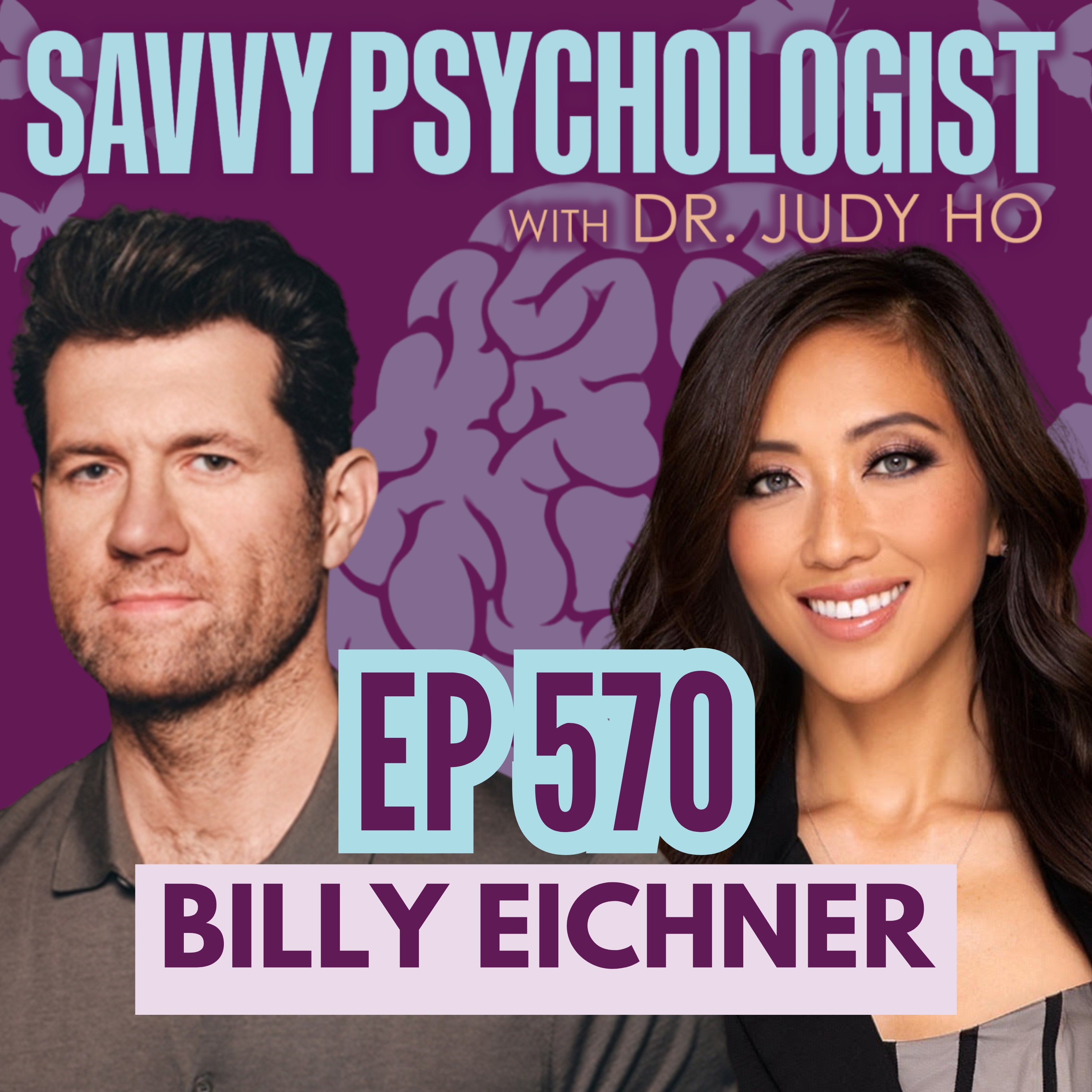
Billy Eichner on how to be fearless without trauma or shame
570. People constantly tell Billy Eichner he's fearless, and they always want to know how he does it. In Savvy Psychologist's first-ever interview episode, Dr. Judy Ho sits down with the comedian behind "Billy on the Street" and "Parks and Recreation" to trace that boldness back to its source, and it isn't the one you'd expect. There's a stubborn myth that artists have to suffer to be great, but B
Why you stay up way too late even when you’re exhausted: The psychology of revenge bedtime procrastination
569. It's midnight. You're exhausted. You have to be up in six hours. And you are absolutely not going to bed yet. Sound familiar? There's a name for it — and it's not laziness. Revenge bedtime procrastination is what happens when your brain decides that staying up is the only way to get something back after a day that felt completely out of your control. This week Dr. Judy Ho breaks down the psyc

Why do certain people leave you completely drained?
568. You know that feeling. Five minutes with a certain person and you need a three-hour nap. You leave the conversation and realize you've given everything while receiving nothing. Energy vampires are real — and the science behind why they drain you is more interesting than the term suggests. This week Dr. Judy Ho unpacks the psychology of emotionally depleting relationships: what's actually happ
Why your inner critic is so loud (and three ways to change that)
567. There’s a voice in your head that has opinions about everything you do — and most of them are unkind. It replays your mistakes. It pre-edits your ideas before you even say them. It tells you that you’re too much, not enough, or both at once. This week Dr. Judy Ho unpacks the inner critic: where it comes from, why it’s louder for some people than others, what the neuroscience says about why it

Imposter Syndrome: why the most competent people doubt themselves most
566. You got the promotion, the degree, the recognition — and still you're waiting for someone to figure out you don't actually belong there. That feeling has a name, a neuroscience, and — surprisingly — a silver lining. This week Dr. Judy Ho unpacks imposter syndrome: why even the most confident people feel it, where it shows up beyond the workplace, how it presents differently across genders, an
Adult ADHD: Why so many people are diagnosed late and what actually helps
565. You've always been this way. You've just gotten better at hiding it. Adult ADHD is one of the most underdiagnosed and misunderstood conditions in mental health — particularly in women, high-achievers, and anyone who learned to compensate before anyone noticed. This week, Dr. Judy Ho cuts through the myths, explains how adult ADHD differs from the childhood version, clarifies what the diagnost
Which attachment style is running your life? The self-talk that gives it away
564. You already know attachment styles exist. But do you know what yours sounds like? In this episode, Dr. Judy Ho goes beyond the quiz results and into the actual self-talk running beneath the surface — the quiet inner monologue that drives your relationship patterns, your emotional reactions, and the way you see yourself. Drawing from her book The New Rules of Attachment, Dr. Judy introduces fo
What true crime gets wrong about psychopathy — and what you actually need to know
563. True crime has made 'psychopath' one of the most recognized — and most misunderstood — words in popular culture. This week, Dr. Judy Ho brings her forensic psychology lens to what psychopathy actually is, the critical distinctions between psychopathy, sociopathy, and antisocial personality disorder, why psychopaths may be hiding in plain sight in corporate boardrooms, and what neuroscientist
You're fine. you're succeeding. you're exhausted. The psychology of high-functioning anxiety
562. You're hitting your goals. You're showing up. You're making it look easy. And you haven't had a full night's sleep in months. High-functioning anxiety is one of the most common — and most invisible — experiences in modern adult life. This week, Dr. Judy Ho unpacks what it actually is (and what it isn't), why the people who have it are often the last to get help, and three evidence-based tools
The psychology of slow living: Why slowing down is actually good for your brain
561. People are baking sourdough, taking up needlepoint, going on phone-free walks, and joining knitting circles — and experts say it's one of the healthiest things they could be doing. This week, Dr. Judy Ho unpacks the neuroscience behind the slow living trend: why tactile, analog hobbies are a clinically meaningful antidote to urgency culture and digital burnout, what 'flow state' actually is a

Daddy issues are real: The psychology of father wounds and how they shape us
560. 'Daddy issues' gets thrown around as a punchline — but the psychology underneath it is serious, well-researched, and affects people of every gender. This Father's Day week, Dr. Judy Ho reclaims the term and unpacks what paternal attachment wounds actually are, how they shape adult relationships and self-worth across all genders, what 'good enough' fathering looks like neurologically, and thre

Life after graduation: The psychology of failure to launch — and how to actually get unstuck
559. The diploma is in hand. Now what? For millions of new graduates — and the parents watching from the sidelines — what comes next isn't a launch. It's a stall. This week, Dr. Judy Ho unpacks the psychology of 'failure to launch': what it actually is, why it's happening more than ever, and why the answer isn't pressure or tough love — it's understanding what's really getting in the way. Plus: pr

The comparison trap: Why your brain ranks everything — and how to make it stop
559. You scroll past a photo of someone's vacation, someone's promotion, someone's body — and something in you quietly deflates. That's not weakness. That's your brain doing exactly what it evolved to do. This week, Dr. Judy Ho breaks down the neuroscience of social comparison — why we do it, why social media has made it exponentially harder to resist, and three evidence-based tools to break the r
Stressflation: What economic anxiety does to your brain — and what to do about it
557. Financial stress isn't just about money — it's rewiring your brain. A new term is capturing what 83% of Americans are living right now: stressflation. This week, Dr. Judy Ho breaks down the neuroscience of economic anxiety, why financial stress makes you literally less capable of solving the problem, and three evidence-based tools for protecting your mental health when the economic climate fe
You keep calling everyone a narcissist: What it means vs. just being toxic
556. "Narcissist" has become one of the most overused words in pop psychology — applied to anyone selfish, difficult, or emotionally unavailable. This week, Dr. Judy Ho brings her clinical and forensic lens to provide a science-backed take on narcissism. We look at what it actually is, what it isn't, what it looks like in real life and in legal settings, and what to do if you think you're dealing

What Bieberchella teaches us about our own views on healing
555. When Justin Bieber confronted his past on the Coachella 2026 stage, it did more than just go viral—it acted as a mirror for our own needs. This week, Dr. Judy Ho explores what our reactions to "healing moments" reveal about our own complex emotions. We get into the science-backed difference between a public performance and private progress, offering actionable insights into building emotional
Why you can't stop people-pleasing (and it's not because you're too nice)
554. This week, Dr. Ho reveals that people-pleasing isn't a personality trait—it’s a survival strategy. If you constantly say "yes" while feeling a quiet sense of self-betrayal, you’re likely stuck in the fawn response, a nervous system reflex designed to keep you safe by keeping others happy.Dr. Judy breaks down:Kindness vs. Compulsion: Why true generosity feels good, but people-pleasing feels li
Why you keep getting in your own way: A guide to stopping self-sabotage
553. Ever wonder why you stall out just when things are going well? It’s not laziness—it’s your brain’s ancient survival system misfiring. This week, neuropsychologist Dr. Judy Ho breaks down the science of self-sabotage.You’ll learn:The L.I.F.E. Factors: The four core reasons we hold ourselves back.The 6 Thought Triggers: How to spot the mental shortcuts that lead to "misfires."3 Practical Tools:

Is this all there is? Turning your existential dread into a clear path forward
552. Have you ever felt a sudden wave of dread and wondered, "Is this it?" If you’re wrestling with big questions about your purpose, you aren’t broken—you’re experiencing a universal part of being human.In this episode, Dr. Judy Ho explains that existential anxiety isn't a malfunction; it's a message from your brain to pay attention to your life. Whether you are navigating a quarter-life crisis,

Passing the baton: Introducing our newest host, Dr. Judy Ho
551. In this special "passing of the baton" episode, founding host Dr. Ellen Hendriksen welcomes the newest voice of Savvy Psychologist, Dr. Judy Ho. Dr. Ho is a triple board-certified clinical and forensic neuropsychologist, a tenured professor at Pepperdine University, and the author of "Stop Self-Sabotage" and "The New Rules of Attachment".Together, they dive into the fascinating world of foren

Meet Dr. Judy Ho | Official Trailer
Meet Dr. Judy Ho, your new host of Savvy Psychologist!A clinical and forensic neuropsychologist, tenured professor, and published author, Dr. Ho brings an evidence-based, judgment-free approach to everyday mental health, pop culture, and true crime through a forensic psychology lens.First episode drops on Tuesday!!! Follow or subscribe now so you don't miss the premiere!Watch the official trailer

5 Psychological secrets of adulting (Reissue)
242. Whether your graduation is coming up this spring or twenty years behind you, we all have moments when we wonder if we’re cut out for this adulthood thing. This week, based on the questions of many college seniors over many graduations, Savvy Psychologist Dr. Ellen Hendriksen brings you the 5 biggest gems in the psychological crown of adulting.Find a transcript at QuickandDirtyTips.com.Fi
How to stop feeling inadequate (Reissue)
300. Every human feels inadequate sometimes. Whether the whispers of “You’re not good enough” come from someone in your life or from inside your own head, these seven tips will help you feel more self-assured.Find Dr. Jade Wu here.Have a mental health question? Email us at psychologist@quickanddirtytips.comFind Savvy Psychologist on Facebook and Twitter, or subscribe to the&nbs
How to make friends as an adult (Reissue)
Almost everybody struggles with it. But no one talks about it. What is it? How to discreetly sniff your own armpits in public? How not to buy the free sample after you just ate three of them? Not quite; it’s the mysterious process of making friends as an adult. This week, in a twist on the usual episode, Savvy Psychologist Dr. Ellen Hendriksen presents an audio excerpt from her debut book, How to
5 Signs you're too self-critical (Reissue)
218. Are you harder on yourself than 40-grit sandpaper? Do you feel like you’re falling short, no matter how high you’ve climbed? Are you tough as nails on yourself, but soft as mashed potatoes with others? Welcome to the esteemed yet insecure club of the highly self-critical.Find a transcript at QuickandDirtyTips.com.Find Dr. Ellen Hendriksen on Substack.Have a mental health question? Email us at
How to be happy when the world makes you depressed (Reissue)
228. Hold on to your handbasket! Every day, the headlines push our buttons of alarm, despair, and fury all at once. What’s a thinking, feeling human to do, besides invest in a Hunger Games-style bow and arrow? This week, in an episode that originally ran in January 2019, Dr. Ellen Hendriksen offers 4 tips to be happy in a world that can feel like a Mad Max chase through the headlines. As true toda
What to do (and not do) when you feel insecure (Reissue)
192. Whatever you call it—self-doubt, insecurity, inadequacy—it’s a universal phenomenon. We can all relate to feeling as insecure as a newly-launched cryptocurrency. Luckily, there is lots we can do. This week, Savvy Psychologist Dr. Ellen Hendriksen covers how to feel better about yourself in the moment (plus what NOT to do). Find a transcript here. Find Dr. Ellen Hendriksen on Substack.Have a m
How to beat winter blues and Seasonal Affective Disorder (SAD) (Reissue)
9. When all that’s left of the fa-la-las is rock-hard fruitcake, the winter blahs creep up, settle in, and hang around until spring. In this episode from the very early days of the podcast (2014!), Dr. Ellen Hendriksen offers 8 tips to deal with the blahs and their more serious cousin, Seasonal Affective Disorder. This classic feels as timely as ever. We hope you enjoy!Find Dr. Ellen Hendriksen on
The science behind 5 classic happiness clichés (Reissue)
200. In this fan-favorite episode from 2018, Dr. Ellen Hendriksen celebrates her 200th episode by giving us a much-needed makeover using five pieces of classic happiness advice.Find Dr. Ellen Hendriksen on Substack.Have a mental health question? Email us at psychologist@quickanddirtytips.com Find Savvy Psychologist on Facebook and Twitter, or subscribe to the newsletter for more psychology tips.Sa
How to talk with someone intimidating
550. Continuing our two-part series on speaking up at work, this week's episode tackles how to talk with someone intimidating—a boss, professor, or anyone who makes your adrenaline spike. You’ll learn how to recognize dominance signals, mentally humanize scary people, use your own body language to project calm confidence, and prepare for tough conversations without overpreparing. Regardless of you
How to speak up in a meeting
549. Meetings are everywhere—from work and faculty meetings to HOAs and book clubs. But speaking up can feel intimidating, especially if you struggle with social anxiety, perfectionism, or power dynamics. In this episode, we unpack why staying silent feels safer and why it rarely feels good afterward. Then we walk through six practical, low-pressure strategies to help you participate without needi
How to deal with the midlife crisis (Reissue)
113. This week, Savvy Psychologist Dr. Ellen Hendriksen channels her best Talking Heads and asks, on behalf of every middle-aged adult: "How did I get here?" Plus, Dr. Hendriksen explains why time seems to fly as we get older. Find Dr. Ellen Hendriksen on Substack.Find a transcript here.Have a mental health question? Email us at psychologist@quickanddirtytips.com.Find Savvy Psychologist on Faceboo
How to know you did a good job (without asking for approval)
548. In a culture of likes, reviews, and constant comparison, deciding if you’ve "done well" can feel impossible. This week, interim host Dr. Ellen Hendriksen unpacks the trap of tying your value to others’ approval. She explores when external evaluation works and when it emphatically fails. She also shares three simple questions to help you define success on your own terms.Find Dr. Ellen Hendriks
The sleep rules you don't actually need to follow
547. If you've ever followed every sleep rule in the book and still found yourself wide awake at 2 a.m., this episode is for you. Sleep psychologist Dr. Jade Wu looks at why sleep hygiene—like avoiding screens or caffeine—is a great foundation but won't actually fix a "cavity" like chronic insomnia. She looks at why rigid rule-following can create the very anxiety that keeps you awake. Hosted on A
Three truths about self-compassion that made me say, “Oh, now I get it!”
546. Self-compassion sounds simple—be kind to yourself—but for those of us with a loud inner critic, it can feel surprisingly hard to put into practice. This week, we’ll break down three truths that make self-compassion more doable and less fuzzy. If you’ve ever worried that self-compassion means lowering your standards, let this week’s episode (kindly) change your mind.Find Dr. Ellen Hendriksen o
How to quiet a racing mind: Three daytime habits for nighttime peace
545. Do you close your eyes only for your brain to start spinning with to-do lists and worries? In this episode, sleep psychologist Dr. Jade Wu looks at why your mind races at night. She looks at three common daytime saboteurs of nighttime peace and offers science-backed methods to help you finally quiet your mind and fall asleep.Find Dr. Jade Wu on her website.Find a transcript here. Have a menta
How to set boundaries when you’re anxious
544. Boundaries, like wide-leg sweatpants and quarter-zips, are trending—but setting them can feel anything but comfy, especially if you’re anxious. This week, we’ll talk about how to set boundaries kindly, handle pushback without folding, and avoid using boundaries as a wall that isolates you. By the end, you’ll see boundaries as practical, comfortable, and totally wearable—just like your favorit
How to nap without ruining your sleep: Finding the sweet spot
543. Napping isn't just for toddlers; it's a performance enhancer. In her first solo episode back, sleep psychologist Dr. Jade Wu looks at what short naps do for your declarative memory, emotional regulation, and physical speed. She looks at the science behind the afternoon slump and why a well-timed nap can provide a performance boost.Find Dr. Jade Wu on her website.Find a transcript here. Have a
How to resist the urge to optimize everything
542. If you’ve ever obsessed over your sleep score, treated self-help like homework, or tried to “maximize” a vacation, you know how easily optimization becomes its own exhausting job. Culture tells us to upgrade everything—habits, productivity, even our emotions—but at a certain point, trying to be our “best self” backfires. This week, instead of automatically optimizing your life, here are five
A blast from the past: Ellen Hendriksen and Jade Wu return
541. Today, we hear from two of our past hosts of the Savvy Psychologist. Dr. Ellen Hendriksen and Dr. Jade Wu. They will tell us what they’ve been up to and set the stage for exciting weeks ahead for the show. While we work to fill the seat of the amazing Dr. Monica Johnson, Drs. Hendriksen and Wu will deliver mental health wisdom you are used to. Today, they chat about the meaning of a psycholog
The power of being DUMB to build a good life
540. On her final episode, Dr. Monica Johnson shares a brain dump of quick and dirty tips to help listeners build a life worth living. She looks at the benefits of being DUMB—an acronym covering Decode/Disrupt patterns, Uncomfortable Engagement, Meaning-Making/Mastery, and Belonging.Find a transcript here. Savvy Psychologist is hosted by Dr. Monica Johnson. Have a mental health question? Email us
Structural dissociation: Understanding your personality's survival parts
539. Dissociation is a normal human experience, but when it's outside of normal limits, it can be dysregulating. In this episode, Dr. Monica Johnson and Alexandra Mejia look at the signs of structural dissociation, the importance of building a baseline of coping skills, and the need for trauma-informed, integrated therapy (like DBT and somatic work) for long-term healing.Learn more about Sasha at
How can you walk with grief instead of fighting it, with Hilary Bucell
538. Loss is inevitable, but grief is our emotional response to what is gone. In this episode, Dr. Monica Johnson and psychotherapist Hilary Bucell look at the differences between grief and depression and discuss various forms of loss, including ambiguous loss (like dementia or divorce) and disenfranchised grief (loss that society doesn't acknowledge).Learn more about Hilary Bucell at her practice
Seasonal Affective Disorder: How to manage the winter blues
537. You don't have to suffer through the winter months. In this episode, Dr. Monica Johnson looks at how to create a multi-faceted approach to wellness for SAD. She looks at the importance of regulating your sleep schedule, boosting natural light exposure, and using behavioral activation to combat the urge to withdraw and isolate yourself.Find a transcript here. Savvy Psychologist is hosted by Dr
How can you improve your sleep for better mental and physical health?
536. Sleep isn't a luxury; it's a foundational deposit in your "mental health bank." In this episode, Dr. Monica Johnson looks at why consistent sleep is essential for mood, memory, immunity, and heart health. She looks at the minimum recommended sleep amount and discusses the positive ripple effects of protecting your rest.Episodes related to this one: Hello Sleep #1: 4 biggest myths about sleepH
Deception and illness: Factitious disorder versus malingering
535. Deceptive behaviors around illness are often signs of deep, unmet emotional needs. In this episode, Dr. Monica Johnson looks at the severe medical and psychological costs of factitious disorder and malingering. She looks at how to recognize these patterns and discusses how specific therapies like CBT and DBT can help an individual build a life based on authenticity.Find a transcript here. Sav
The psychology of money: How your brain, history, and emotions influence your financial habits
534. Money isn't just about numbers; it's deeply emotional. In this episode, Dr. Monica Johnson looks at the psychology behind your financial habits, including the money scripts you absorbed in childhood and how your brain categorizes money. She looks at why you feel a certain way about spending, saving, and debt.Find a transcript here. Savvy Psychologist is hosted by Dr. Monica Johnson. Have a me
Understand the fight, flight, freeze, and fawn survival responses
533. Do you snap at your loved ones, shut down in meetings, or go to great lengths to please others? In this episode, Dr. Monica Johnson looks at the four survival responses: fight, flight, freeze, and fawn. She looks at how these deeply rooted biological reactions manifest in your daily life and offers strategies for understanding your nervous system's attempts to keep you safe.Find a transcript
How to deal with emotionally immature people
532. It's possible to have healthy, reciprocal relationships, even if you’re dealing with emotionally immature people. In this episode, Dr. Monica Johnson looks at how to reclaim your peace by understanding this dynamic. She looks at why your boundaries are essential and offers insights on how to disengage from unhealthy patterns so you can prioritize your well-being.Find a transcript here. Savvy
How a love triangle can build a better relationship
531. Have you ever wondered why some relationships last while others fizzle? In this episode, Dr. Johnson looks at Sternberg's Triangular Theory of Love to help you understand the dynamics of your relationships. She looks at the roles of emotional closeness, physical attraction, and long-term commitment, and how their presence or absence shapes different kinds of love.Find a full transcript here.
How to stop people pleasing and set better boundaries
530. Do you often find yourself agreeing to things you don't want to do? In this episode, we look at the deep psychological and cultural reasons behind people-pleasing, from social conditioning to the fear of rejection. We look at how this tendency can lead to burnout, resentment, and a loss of self-trust, and offer ways to understand why you might struggle to say "no.”Find a full transcript here.
How can you expand your window of tolerance for stress?
529. Do you find yourself easily overwhelmed or shut down by stress? In this episode, Dr. Monica Johnson looks at the window of tolerance, a key concept for understanding your nervous system's capacity to handle life's challenges. She looks at how past trauma and societal pressures, particularly for groups like Black women, can impact this window, and offers actionable strategies to expand it.Find
12 ways to cope with adult ADHD (Reissue)
Do you have adult ADHD, or suspect that you might? In this episode, we explore 12 techniques that can help improve executive skills that are affected by ADHD.This episode originally aired on July 15, 2022.Savvy Psychologist is hosted by Dr. Monica Johnson. A full transcript can be found here. Find Savvy Psychologist on Facebook and Twitter, or subscribe to the newsletter for more psychology tips.S
Navigating the grief of job loss: How to restructure and thrive
Losing a job often triggers unrecognized grief and a significant increase in stress and anxiety. In this episode, Dr. Monica Johnson looks at the emotional fallout of unemployment, from shock and anger to self-blame. She looks at how to navigate these feelings, reclaim your narrative, and establish a new routine that balances healing with proactive steps toward your next opportunity.Find a full tr
The transformative power of small talk
Do you struggle with small talk? This episode looks at why this everyday interaction is more important than you might think for mental health and relationships. We look at the benefits of small talk, including building social bonds and practicing communication skills, and offer actionable tips like the FORD framework and reflective listening to make it easier.Find a full transcript here. Savvy Psy
How do you heal your body image?
Body image is more than just appearance; it's about identity and self-worth. This episode looks at the four components of body image—perceptual, cognitive, affective, and behavioral—and explores how media, cultural standards, and personal experiences influence it for everyone, including women, men, and nonbinary individuals. We look at strategies for healing your body image.Find a full transcript
How to discuss politics without damaging your relationships
Political differences can strain even the closest relationships. This episode looks at why political issues now feel so personal, often tying into core values and identity. We look at how to navigate these tough conversations with family and friends, focusing on setting boundaries and maintaining connection without compromising your truth.Find a full transcript here. Savvy Psychologist is hosted b
Understanding premature ejaculation: causes, symptoms, and treatment
In this episode, we discuss premature ejaculation (PE). Dr. Johnson breaks down the DSM-5-TR definition, explores common causes and types, and offers mental health tips and treatment options for individuals navigating this experience.Transcript for this episodeSavvy Psychologist is hosted by Dr. Monica Johnson. Have a mental health question? Email us at psychologist@quickanddirtytips.com. Find Sav
What to do (and not do) when a relationship ends
Breakups are tough, but you don't have to navigate them alone. Join Dr. Monica Johnson as she shares psychological insights on why relationships end, what pitfalls to avoid, and how to authentically heal and rebuild your life after heartbreak. This episode will give you practical strategies for emotional well-being and reclaiming your identity post-relationship.Other episodes mentioned in this epi
How to start (and stick with!) hobbies for better mental health
Dr. Monica Johnson reveals the powerful psychology behind hobbies and how they are essential for boosting mental health, reducing stress, and fostering joy. Discover why engaging in leisure activities can improve brain function, build social connections, and aid in trauma recovery, even when life feels overwhelming.Transcript: https://savvy-psychologist.simplecast.com/episodes/how-to-start-and-sti
How 'Buy Now, Pay Later' companies use psychology to hook you
"Buy Now, Pay Later" (BNPL) can feel like a "treat yourself" pass, but it's not magic; it's psychology. This episode looks at why BNPL systems are so seductive, especially for those with financial instability or emotional trauma. We also look at actionable steps to manage BNPL use, such as identifying the emotions behind spending and addressing financial shame.Transcript: https://savvy-psychologis
Why making friends as an adult is so hard (and how to fix it)
Are you feeling lonely? Hear why making and keeping friends as an adult is harder than ever, and learn evidence-based strategies to build meaningful connections in a world that prioritizes productivity over people.Transcript: https://savvy-psychologist.simplecast.com/episodes/making-friends-as-adults/transcriptSavvy Psychologist is hosted by Dr. Monica Johnson. Have a mental health question? Emai
Understanding narcissism in relationships, with Dr. Khadijah Cyril
Dr. Monica Johnson is joined by Dr. Khadijah Cyril to discuss narcissistic personality disorder (NPD) and how it differs from typical harmful behaviors like lying and cheating. They explore the dynamics of relationships involving NPD, the influence of modern dating apps, and offer strategies for breaking free from unhealthy relationship cycles. Dr. Cyril emphasizes the complexity of diagnosing NPD
The downsides of dopamine (Reissue)
While dopamine is a vital part of our brain's functioning, an over-reliance on it can lead to various downsides affecting our mental and physical well-being.Transcript: https://savvy-psychologist.simplecast.com/episodes/the-downsides-of-dopamine-reissue/transcriptSavvy Psychologist is hosted by Dr. Monica Johnson. Have a mental health question? Email us at psychologist@quickanddirtytips.com or lea
Why your brain loves sports betting and how to stop
In this episode, Dr. Johnson gets into the psychological reasons why sports betting can be so enticing, exploring the mental traps and risk factors involved. It also provides practical strategies for individuals struggling with sports betting to regain control and find healthier coping mechanisms.Transcript: https://savvy-psychologist.simplecast.com/episodes/why-your-brain-loves-sports-betting-and
The post-vacation blues: understanding and overcoming the letdown
Ever feel down after coming back from vacation? You're not alone! In this episode, Dr. Monica Johnson dives into the science behind post-vacation sadness, exploring why that 'back to reality' feeling hits so hard. Transcript: https://savvy-psychologist.simplecast.com/episodes/the-post-vacation-blues-understanding-and-overcoming-the-letdown/transcriptHave a mental health question? Email us at psych
11 physical signs of a panic attack (Reissue)
How do you know when you’re having a panic attack? Today, we’re going over some of the physical signs of panic attacks and what to do if you frequently experience them.Transcript: https://savvy-psychologist.simplecast.com/episodes/11-physical-signs-of-a-panic-attack-reissue/transcriptHave a mental health question? Email us at psychologist@quickanddirtytips.com or leave a voicemail at 929-256-2191.
Communication tips for deepening relationships
Learn practical, evidence-based communication strategies to deepen your relationships and combat loneliness. Psychologist Dr. Monica Johnson shares tips for active listening, vulnerability, and building emotional intimacy.Savvy Psychologist is hosted by Dr. Monica Johnson. A transcript is available here: https://savvy-psychologist.simplecast.com/episodes/communication-tips-for-deepening-relationsh
What your low sex drive is trying to tell you
Sexual desire naturally ebbs and flows, but when it disappears for a while, it can leave you confused, disconnected, or worried. Monica unpacks the most common reasons for low libido—and how to talk about it with your partner without blame or shame.Savvy Psychologist is hosted by Dr. Monica Johnson. A transcript is available at Simplecast.Have a mental health question? Email us at psychologist@qui
What makes someone attractive? The psychology behind attraction
Is beauty really in the eye of the beholder — or the brain of the perceiver? This week, Monica explores the psychology of attraction, why we’re drawn to certain people, and how looks are only part of the equation.Savvy Psychologist is hosted by Dr. Monica Johnson. A transcript is available at Simplecast.Have a mental health question? Email us at psychologist@quickanddirtytips.com.Find Savvy Psycho
Oversharing: When can opening up go too far?
Oversharing can feel like connection in the moment and like regret afterward. In this episode, Monica unpacks the psychology behind why we say too much and how to create healthier boundaries around self-disclosure.Savvy Psychologist is hosted by Dr. Monica Johnson. A transcript is available at Simplecast.Have a mental health question? Email us at psychologist@quickanddirtytips.com.Find Savvy Psych
The truth about gaslighting: Emotional abuse, power, and control in relationships
Gaslighting isn’t just a trendy term, it’s a serious form of emotional abuse that can leave you doubting your reality. Monica Johnson breaks down what gaslighting really is, how to recognize its subtle tactics, and what steps you can take to protect your mental health. Savvy Psychologist is hosted by Dr. Monica Johnson. A transcript is available at Simplecast.Have a mental health question? Email u
Menopause and mental health: Why you're not losing your mind
Menopause isn’t just a physical transition, it’s an emotional and mental minefield. In this episode, Monica dives into how fluctuating hormones impact mood, anxiety, sleep, and memory, and offers practical, science-backed strategies to feel more like yourself again. Spoiler alert: you’re not going crazy, and yes, brain fog is real.Savvy Psychologist is hosted by Dr. Monica Johnson. A transcript is
Feeling mentally exhausted? How to manage cognitive load and stay focused
Feeling overwhelmed by work, life, and everything in between? Monica breaks down Cognitive Load Theory, a powerful framework that explains why your brain feels like it’s maxed out, and what to do about it. Savvy Psychologist is hosted by Dr. Monica Johnson. A transcript is available at Simplecast.Have a mental health question? Email us at psychologist@quickanddirtytips.com.Find Savvy Psychologist
Life coaching vs. therapy: Which one is right for you?
Confused about whether to see a therapist or a life coach? In this episode, Monica breaks down the key differences between these two professions, including training, scope of practice, and ethical responsibilities. Learn how to choose the right support for your needs.Savvy Psychologist is hosted by Dr. Monica Johnson. A transcript is available at Simplecast.Have a mental health question? Email us
Extreme thinking: Why our brains crave intensity over balance
Why do we love extremes, whether it’s thrill-seeking, viral controversies, or black-and-white thinking? Monica breaks down the psychology behind our attraction to intensity and how we can find balance in a world that rewards the extreme.Savvy Psychologist is hosted by Dr. Monica Johnson. A transcript is available at Simplecast.Have a mental health question? Email us at psychologist@quickanddirtyti
4 ways to hack your brain for happiness (Reissue)
Feeling overwhelmed by the world's chaos? While we can't fix everything, we can hack our brains to boost happiness. In this episode, Monica breaks down the DOSE method: dopamine, oxytocin, serotonin, and endorphins. Learn simple, science-backed ways to activate these "happiness hormones" and bring more joy into your daily life.Savvy Psychologist is hosted by Dr. Monica Johnson. A transcript is ava
Recommended

Back to the 80s Radio

The Swerve Podcast: Obscure Topics | Conspiracy Theories

The Bread and Banter Podcast

The Church of What's Happening Now: The New Testament

Crime Stories with Nancy Grace

Deadline: White House

این نقطه

TED Business

Dateline NBC

History of the Earthquake and Fire in San Francisco

Fox news

زن بودن
