The Stack Overflow Podcast
For over a decade, the Stack Overflow Podcast has explored what it means to be a developer and how software engineering is changing our world. Hosted by Ryan Donovan, it features conversations and guests that help understand how technology is made and where it's headed.
Episodes
Keep calm and call clone with Rust
Ryan sits down with Josh Triplett, member of the Rust Leadership Team at the Rust Project, to chat about how the borrow checker delivers compile-time memory safety without garbage collection overhead, why Rust consistently ranks as developers' most loved language by providing psychological safety for complex systems, and how strict compiler constraints make Rust an ideal target for AI cod
Taking a look under your agent’s hood
Ryan is joined by Yanbing Li, Chief Product Officer at Datadog, to talk about applying observability to non-deterministic AI agents, blurring the boundaries between software development and production workflows, and navigating emerging challenges in AI security and tokenomics.Episode notes: Datadog is an observability and security platform for cloud applications, providing real-time
Tales from the 2026 Developer Survey results
Ryan chats with Erin Yepis, Senior Analyst at Stack Overflow, about the results from this year’s Annual Developer Survey, including the overwhelming daily usage of AI coding assistants despite lingering developer trust issues, the critical role of well-organized documentation in providing verifiable context to mitigate AI hallucinations, and the evolving ways developers are shifting away
Constraints that make developers faster
Ryan chats with Julien Verlaguet, CEO at Skip Labs, about finding the balance between human tolerance and tooling constraints, the spectrum of typed programming languages, and building cost-effective tooling for AI agents.Episode notes: Skip Labs develops a programming language designed for reactive programming alongside specialized constraint-based tooling for AI agents. Connec
Your phone is AI’s newest hardware
Ryan sits down with Div Garg, CEO at AGI Inc., to talk about running AI agents entirely on mobile devices, optimizing models for edge computing chips, and building safety mechanisms into autonomous app interactions. Episode notes:AGI Inc. is a research lab building the world's best on-device models that allow AI to autonomously interact with millions of third-party mobile application
Professional skepticism is a dev’s best skill
Ryan chats with David Burns, Head of Developer Advocacy and Open Source at BrowserStack, about the value of professional skepticism in an AI-driven world, applying test-driven development to agentic engineering, and why fixing flaky tests comes down to managing application state.Episode notes:BrowserStack is a software testing platform where David heads up developer advocacy and the open
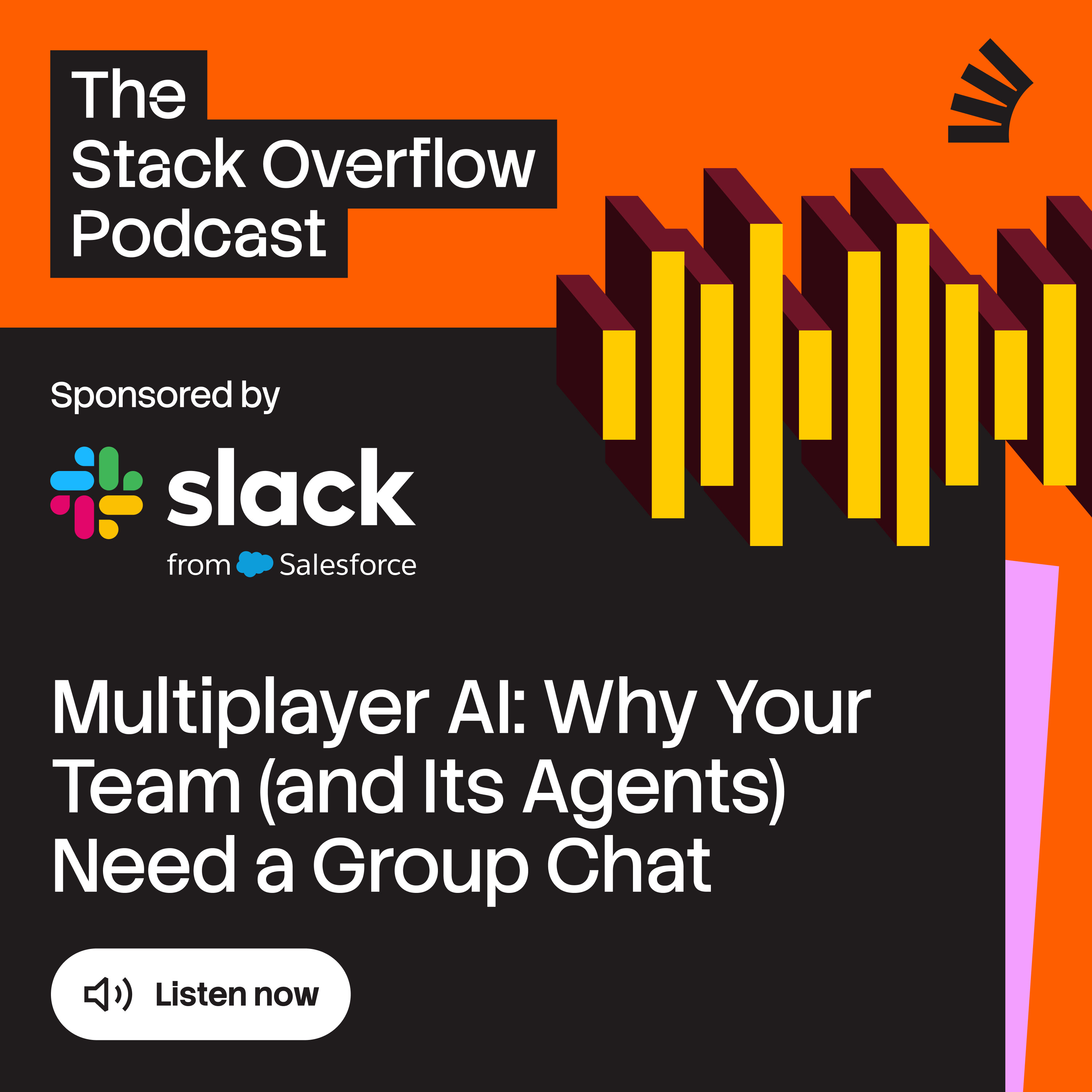
Multiplayer AI: Why your team (and its agents) need a group chat
SPONSORED BY SLACK BY SALESFORCEIn this episode, Ryan chats with the GM of Slack, Rob Seaman, about how their new Code Channels feature is bringing multiplayer AI to your team chats. They discuss how most interactions with coding agents become siloed context, why a party chat with devs and agents flattens writing code and code review into a single step, and why a Slack channel might be a
Haters think AI agents can't write GPU code? This'll ROCm
Ryan chats with Anush Elangovan, VP of Software at AMD, about ROCm's open-source unified toolchain for GPUs, how agentic AI is drastically lowering the barrier to entry for low-level hardware programming, and the rapid convergence of software and hardware development timelines.Episode notes: ROCm is AMD's unified, open-source software layer and toolchain that allows developers to pro
The AI magic words
Ryan sits down with Tim O'Reilly, founder and CEO at O'Reilly Media, to talk about the role of books as user interfaces to knowledge, the power of "magic words" to extract better outputs from AI, and why human taste is becoming highly valuable as knowledge becomes a commodity. Episode notes: O'Reilly Media is a technology transfer company that leverages books, online learning pl
AI, JD, and other letters of the law
Ryan chats with Kevin Frazier, director of the AI Innovation and Law program at the University of Texas School of Law, about the legal and social impacts of data centers, the realities of workforce disruption, and regulating AI for child safety using existing consumer protection laws.Episode notes:The AI Innovation and Law program at the University of Texas School of Law explores the comp
AI cybersecurity is a cat and mouse game
Ryan chats with Sam Curry, CSO at Zscaler, about where human intelligence sits in the new security landscape with AI, why shifting security protections closer to applications helps limit probes for vulnerabilities, and why building more resilient code infrastructure is the best way to address the vulnerabilities AI does discover.Episode notes:Zscaler is a cybersecurity company that provid
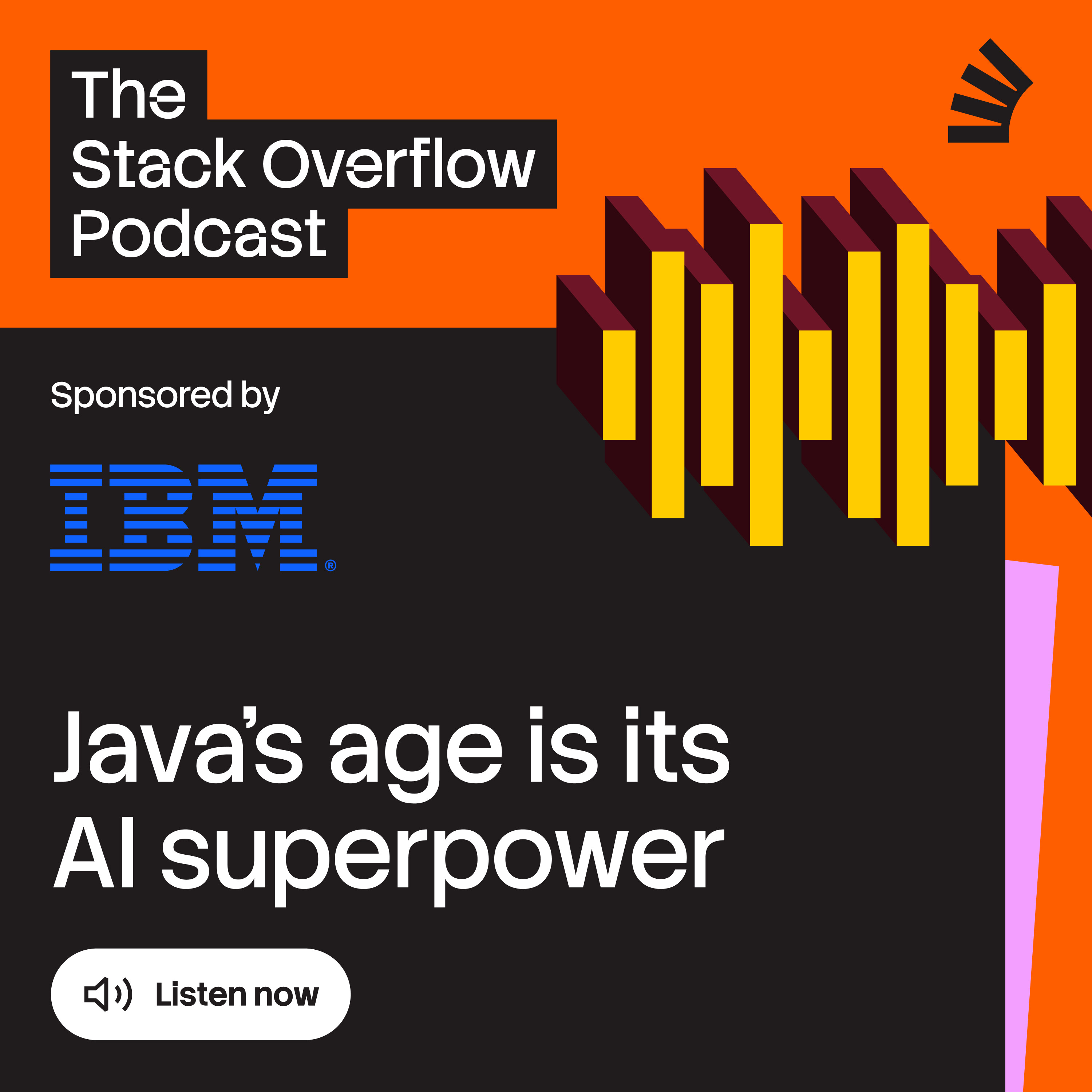
Java’s age is its AI superpower
SPONSORED BY IBMRyan welcomes Markus Eisele to the program to talk about why your coding agent should be writing Java. They talk about why the long history of Java both makes for a stable language and a source of training data for AI. On top of that, they discuss how agentic Java excels by working with powerful partners: a massive ecosystem of Java libraries and agentic harnesses. Tr
Scaling your money safely with AI
Episode notes: This episode with Paypal’s CTO Srini Venkatesan was recorded at the Ai4 conference. Listen to our other Ai4 conversation with Greg Jennings, VP of Engineering for AI Products at Anaconda, about building secure-by-default AI coding agents here. Connect with Srini on LinkedIn.See Privacy Policy at https://art19.com/privacy and California Privacy Notice at https
How to build a secure-by-default AI coding agent
Ryan chats with Greg Jennings, VP of Engineering for AI Products at Anaconda, about what it takes to build a secure-by-default AI coding agent, why prompts shouldn't be treated as strict security guardrails, and how Anaconda is using strategic acquisitions to secure the AI software supply chain.Episode notes:Anaconda is a foundational platform for Python data science and machine learning,
The good ol’ days of building Java
Ryan sits down with Tim Lindholm, an early contributor to the Java language at Sun Microsystems, to chat about what it was like building one of the most popular programming languages ever at its inception, why it was strategically important for the Java team to create a cross-platform ABI to compete with Windows NT, and how applets were initially just an interesting demo. Episode not
When you keep AI Lean, you keep AI correct
Ryan chats with Leo de Moura, Senior Principal Applied Scientist at AWS and the creator of the Lean language, about proving correctness in AI agents with the Lean language, how automated reasoning complements probabilistic AI models, and the use of AI for continuous code optimization.Episode notes:Lean is a functional programming language and proof assistant that allows developers to writ
Inside LinkedIn's cognitive memory agent for agentic personalization
Ryan is joined by Praveen Bodigutla, Principal AI Researcher at LinkedIn, to chat about the four-layer memory system his team built to give LinkedIn's hiring assistant a persistent, personalized state. Praveen explains why his team moved off GraphRAG in favor of a tree-structured memory for faster incremental updates and how they balance retrieval freshness, latency budgets, and access co
Get rid of your CAPTCHA, the future of the web is bots
From PHP to team lead of agents: rethinking judgment, review, and data with Google's Andi Gutmans (Part 1)
Andi Gutmans, head of Agentic Data Cloud at Google and co-creator of PHP, joins Leaders of Code to talk about why agentic development feels less like a break from the past and more like the next chapter of the same story. This is part one of a two-part conversation.In this episode, Eira May and Stack Overflow Director of Platform Engineering Peter O'Connor talk with Andi Gutmans about the
Building an agentic SDLC with a QA engineering mindset
Ryan welcomes Suneet Malhotra, Senior Manager of Test Engineering at Motorola Solutions, to chat about building end-to-end agentic SDLC pipelines using MCPs, using Cohen’s kappa to evaluate multiple LLMs-as-judges, and how you can improve requirements by shifting QA left through a specification enrichment stage immediately after the design phase.Episode notes:You can learn more about Sune
Solving integration woes with a hackathon
Ryan welcomes Meryll Blanchet, Director of Engineering for Adobe Brand Visibility, to chat about Adobe’s recent acquisition of Semrush, how Adobe Brand Visibility was born from Semrush’s AI visibility product and Adobe’s LLM Optimizer, and how Adobe used a three-day internal hackathon instead of a large-scale infrastructure integration to quickly deliver value to customers. Episode
Your tokenmaxxing is not valuemaxxing
Ryan is joined by Coder’s Rob Whiteley to chat about why tokenmaxxing isn’t proving real value and just triggering Goodhart’s Law, how release speed and PR merges can help you measure agentic outcomes with or without a human-in-the-loop, and what the democratization of skills means for junior developers and the talent pipeline. Episode notes:Coder is a self-hosted platform that lets
How to be fearlessly AI native
Ryan welcomes McLaren Stanley, Senior Principal Engineer for Amazon Stores, to discuss what it actually takes to make teams AI native, why agentic engineering is shifting code bottlenecks downstream to testing and deployment, and why robust validation is essential to build trust and enable “fearless commits.”Episode notes:You can learn more about how Amazon’s frontier teams became AI nati
Your MVP doesn’t need a Kubernetes cluster
Ryan welcomes Anurag Goel, CEO and co-founder of Render, to discuss why most startups shouldn’t start by managing their Kubernetes and cloud infrastructure. They discuss how frustration with spinning up nodes at Stripes led him to build a company, a future where your application itself may allocate its own compute, and why DevOps jobs aren’t going anywhere. Episode notesRender calls
What happens to the internet when robots act like humans?
Ryan welcomes WPEngine CTO Ramadass Prabakar to the show to chat about what happens—and what we should do—when agents start acting like humans online, how our internet is evolving to serve both human and agentic experiences from the same interface, and what we can do to differentiate and protect human actions online from malicious bot activity. Episode notes: WP Engine hosts and
You need reliable AI context for your site reliability
Ryan is joined by Asaf Savich, Komodor’s AI Engineering Group Manager, to discuss why modern reliability work requires navigating massive cross-service context, what good context engineering actually likes when AI is integrated into site reliability, and how the work of human SREs is shifting towards strategy and AI agent management.Episode notes: Komodor is an autonomous AI SRE plat
Partnerships can keep open source sustainable
Ryan welcomes VoidZero’s Evan You and Cloudflare’s Dane Knecht back to the show to discuss Cloudflare’s recent acquisition of VoidZero and what it means for JavaScript development, how partnerships like theirs can help open-source projects stay maintained and sustainably monetized, and how Cloudflare’s distributed systems are helping to improve developer experience in Vite and beyond.&nbs
The future of development is full-stack
Live from Snowflake Summit, Ryan talks with Snowflake’s Head of Developer Experience Umesh Unnikrishnan about the industry-wide shift from “vibe coding” for quick prototypes to agentic engineering for enterprise-ready software, how enterprises can scale governance with guardrails like human-in-the-loop approval and control layers that go beyond the underlying LLM, and why Umesh predicts a
Developers who move fast still need to do it together
At MS Build, Ryan is joined by Cassidy Williams, Senior Director of Developer Advocacy at GitHub and former Stack Overflow Podcast host, to discuss how agentic coding is shifting dev work towards higher-level strategy while increasing decision fatigue; why human taste, community feedback, and mentorship are becoming more essential than ever for developer careers; and the new GitHub Copilo
Your AI is only as responsible as you are
Recorded at Microsoft Build, Ryan welcomes Sarah Bird, Microsoft’s Chief Product Officer for Responsible AI, about how we can build and use AI responsibly with the NIST approach, why most irresponsible AI comes from experimentation without thought of impact, and how Microsoft is researching thoughtful human/AI workflow design to reduce unnecessary escalation. Episode notes: This
Building more than just an agent harness
Live from Microsoft Build, Ryan is joined by Jay Parikh, Microsoft’s VP of AI Core, for a conversation on what enterprises need to build, deploy, and run AI agents at scale with demonstrable ROI; how Microsoft built an end-to-end agent development system that goes past just the harness; and how you can evaluate for reliability and correctness in models that get more intelligent and autono
What's left for infrastructure-as-code after AI moves in?
SPONSORED BY IBMRyan is joined by Rosemary Wang, Developer Advocate at IBM, to explore what infrastructure as code looks like once AI starts writing and deploying it. They discuss why guardrails still lag adoption, breaks down what it means when “anyone can deploy,” and why deep systems knowledge still matters. Episode notes:Try out Bob, IBM’s coding agent that Rosemary talked about
Agent orchestration is so two-years ago
Ryan welcomes Saahil Jain, CTO of You.com, to discuss why building agents with a 2024 mindset is a mistake as modern models improve at long-horizon tasks, why heavy orchestration layers can hurt model performance more than help it, and why the 2026 competitive edge actually comes from information retrieval and unique data paired with end-to-end evaluation. Episode notes: You.com
The good, the bad, and the AI apps
Ryan welcomes Benny Chen, co-founder of Fireworks AI, to the show to explore what actually makes an AI application good or not, how to balance qualitative signals with quantitative metrics when evaluating AI, and how open-source eval protocols and community efforts are setting the standard for AI evaluation. Episode notes: Fireworks AI is a cloud platform designed for developers
How do you turn AI coding chaos into a repeatable playbook?
Vivek Raghunathan, SVP of engineering at Snowflake, joins Leaders of Code at Snowflake Summit to break down the five-stage framework his org used to go from "let chaos reign" to a repeatable, org-wide system for AI-assisted engineering.Vivek explains how Snowflake systematically rolled out coding agents across its engineering org — starting with unrestricted experimentation, then codifyin
Why intent prediction needs more than an LLM
Ryan sits down with Frank Portman, CTO at Yobi, to talk about why next-token prediction, though great for language, isn’t the right inductive bias for forecasting human behavior. They discuss how Yobi builds a “foundation model of behavior” using transformers and graph neural networks instead of chat-style LLMs, and what it takes to run millions of personalization decisions per second whi
Code isn’t the only thing causing your production failures
Ryan sits down with Anish Agarwal, CEO and co-founder of Traversal, to chat about why AI coding agents have made writing code easier but running it safely in production harder, why production failures are really caused by interactions between systems and not just the code itself, and how teams can troubleshoot more effectively when traditional observability tools are not enough for agenti
Oh the places you’ll go with spatial data
Ryan is joined by Jeffrey Hightower, VP of Places Data at Microsoft, and Amy Rose, CTO of the Overture Maps Foundation, to chat about their partnership in bringing spatial data to the next generation of Microsoft tools; how Overture’s 50 organization members are creating open, standardized, and interoperable global spatial data sets; and their solutions to the innate challenges of tryin
You don’t understand DNS like you think you do
Ryan welcomes Cricket Liu, DNS expert and Chief Evangelist at Infoblox, to the show to talk all things DNS. They cover the evolution of one of the oldest DNS server implementations, BIND, and what the future holds for protected DNS configurations; the realities of security threats like DDoS and DNS spoofing; and why outages often trace back to a lack of understanding of DNS’s fundamental
If context is king, architecture is the castle
Recorded live at the AI Agent Conference, Ryan sits down with Apollo GraphQL CEO Matt DeBerglis to discuss how enterprises can leverage GraphQL and MCP as a structured semantic architecture to feed clean data to autonomous agents, safeguard internal microservices against unprecedented "east-west" data exfiltration risks, and rein in skyrocketing token spend by explicitly querying only the
Developers are emotionally attached to their tools
Ryan welcomes Trisha Gee, a Java champion and developer productivity advocate, to explore how AI is transforming the role of IDEs and the broader developer experience; the relevance of traditional tools, muscle memory, the risks of hype; and how to adapt workflows for AI-driven development.Episode notes:Trisha Gee is a developer advocate and Java champion with over 20 years of software ex
When the cost of code approaches zero, what does engineering leadership look like?
On this episode of Leaders of Code, Eric Anderson, director of engineering at Intuit, joins Stack Overflow engineering director Ben Matthews to talk about what happens to software teams when AI makes code generation seemingly free.Eric explains how Intuit rolled out Claude Code across the entire organization, why PMs are now merging their own PRs, and what it means for engineering culture
Creating checkpoints by gaslighting a Postgres database
Ryan welcomes Bryan Clark, director of product for Lakebase at Databricks, to discuss what happens when AI agents become the primary creators and users of databases; why agents are “sloppy” about cleaning up infrastructure; and how database branching, scale-to-zero, and centralized access control can help teams keep up with agent-driven development.Episode notes:Databricks Lakebase is a P
Making the OWASP top ten in the vibe code era
Ryan welcomes back Tanya Janca, now part of the OWASP Top 10 team, to discuss what changed in the latest OWASP Top 10 release, how the list shifted from “outdated components” to a broader software supply chain focus, and why they added memory safety and vibe-coding as awareness items. Episode notes:The OWASP Top 10 for 2025 is the latest standard awareness document for developers and
What it takes to be a player in the international AI game
From the floor of HumanX, Ryan welcomes Songyee Yoon, managing partner at Principal Venture Partners (PVP), to chat about AI development outside the US, from the need to adapt models to local languages and culture to the challenges of the global supply-chain for things like semiconductors to how venture capital is looking at international AI companies. Episode notes: PVP support
The find out stage of AI is just supply chain and password protection
In this two-for-one special recorded at HumanX, Ryan is joined by Dataiku’s Florian Douetteau to chat about the governance, orchestration, and data requirements for serious agentic systems and 1Password’s Nancy Wang for a conversation on making agent swarms secure.Ryan first catches up with Dataiku co-founder and CEO Florian Douettea to chat serious agentic systems and why they require in
Do you have what it takes to run AI in production?
From the floor of HumanX, Ryan Donovan is joined by Peter Salanki, CTO and co-founder of CoreWeave, to chat about what it really takes to run AI in production; the growing importance of observability, utilization, and scheduling; and Peter’s advice for avoiding the trap of over-architecting too early. Episode note:CoreWeave is the AI-native platform cloud that’s purpose-built for AI,
Breaking your AI storage bottlenecks
Recorded at HumanX, Ryan sits down with Garima Kapoor and Anand Babu Periasamy, co-founders and co-CEOs of MinIO, to chat about eliminating the storage bottlenecks that leave GPUs underutilized, their partnership with NVIDIA on the new STX reference architecture, and why modern AI infrastructure is converging on S3-compatible object storage. Episode notes: MinIO delivers exascal
Pack your agentic stack in Slack
SPONSORED BY SLACK BY SALESFORCERyan welcomes Jaime DeLanghe, chief product officer at Slack, to chat about how they’re preparing to integrate everybody’s agents in their chat application. They chat about the similarities between bots and agents, managing the wealth of context available in enterprise chat, and how the best agent to agent protocols might be a DM. Episode notes:Get sta
Your fridge could be a threat to national security
On the floor of HumanX, Ryan is joined by Adam Meyers, Senior VP of Counter Adversary Operations at Crowdstrike, for a deep dive on their latest Global Threat Report that tracks over 281 adversaries across nation states, e-crime, and hacktivist organizations. They discuss the new wave of phishing attacks that target identity and use social engineering, how foreign bodies are exploiting s
Observability and human intuition in an AI world
In this two for one episode recorded at HumanX, Ryan is first joined by Christine Yen, CEO of Honeycomb, to discuss how AI compresses the software development lifecycle, making observability about capturing the right telemetry. Then, Spiros Xanthos, founder and CEO of Resolve AI, shares with us how AI coding increases code volume but decreases human intuition, making production operations
How Braze’s CTO is rethinking engineering for the agentic area
Jon Hyman, co-founder and CTO of Braze, joins Stack Overflow CPTO Jody Bailey on Leaders of Code to share how he's led the company's engineering organization over nearly 15 years of growth — and how they transformed into an AI-first team in just a few months.Jon explains some pivotal moments where his thinking shifted (watching his team ship an MCP server six weeks ahead of schedule will
Connecting the dots for accurate AI
At HumanX, Ryan is joined by Philip Rathle, CTO at Neo4j to discuss what knowledge context means for AI agents, how limitations like stale training data make the model-only approach to agents a bad fit for enterprise environments, and how Graph RAG raises the bar for accuracy and reduces context rot by combining vectors with a knowledge graph so agents are more targeted and connected.Epis
AI giveth and AI taketh CPU
Recorded on the floor of HumanX, Ryan is joined by AMD CTO Mark Papermaster to discuss AMD’s silicon strategy for AI borne of their long history of heterogeneous CPU/GPU computing, how chipmakers are dealing the wide range of AI workloads from training to inference, and the paradox of agents both eating up all the compute and helping AMD accelerate chip innovation. Episode notes:&nbs
What (un)exactly do you mean by semantic search?
Ryan welcomes Bryan O’Grady, Head of Field Research and Solutions Architecture at Qdrant, to discuss the differences between traditional text search engines powered by Lucene and modern vector databases, when vector search’s exact-match needs work for things like logs and security analytics and when semantic search works for user-facing discovery and non-exact results, and how Qdrant is g
Time is a construct but it can still break your software
Ryan welcomes Jason Williams, senior software engineer at Bloomberg and the creator of Rust-based JavaScript engine Boa, to the show to dive into why date and time handling in JavaScript is so difficult and how the Temporal proposal aims to fix it. They explore the current flaws and issues in JavaScript that make the Date object so hard to work with, how libraries like Moment.js helped bu
Your LLM issues are really data issues
Ryan welcomes Harsha Chintalapani, co-founder and CTO at Collate and co-creator of Open Metadata, to the show to discuss why AI and LLMs struggle with real-time, structured production data. They explore how schema changes, inconsistent definitions (like “customer”), and weak governance can break both your analytics and MLs, and what companies can do to get their data AI-ready, from metada
Lights, camera, open source!
Ryan is joined on the show by Cult.Repo producers Emma Tracey and Josiah Mcgarvie to discuss making documentaries about open-source software and the people behind the major technologies that uphold the internet. They explore why open-source projects and the people who maintain them are such interesting stories for audiences, how being outsiders has helped them tell these community stories
How to get multiple agents to play nice at scale
SPONSORED BY INTUITChase Roossin, group engineering manager, and Steven Kulesza, staff software engineer, from Intuit join the podcast to chat about what might be the hardest problem in engineering right now: getting multiple AI agents to work together in a complex system. They discuss how automated evals can make agent behaviors more predictable, agent swarms vs. one highly skilled agent
We still need developer communities
Ryan welcomes Mike Swift, co-founder and CEO of Major League Hacking, to the show to chat about the never-ending need for software developer communities and entry points into programming; MLH’s recent acquisition of DEV and how they’re creating a place for shared knowledge, building, and publishing; and why now is the best time to be both an artisan and a builder in a world with AI softwa
No country left behind with sovereign AI
Ryan welcomes Stephen Watt, distinguished engineer and VP of Red Hat’s Office of the CTO, to chat about digital sovereignty and sovereign AI. They explore major infrastructure constraints for things like power, cooling, and scarce hardware that cause the regional disparities we see in sovereign AI, plus why we need to extend Kubernetes and integrate PyTorch Stack not just for a sovereign
Who needs VCs when you have friends like these?
Ryan welcomes RunPod co-founder and CEO Zhen Lu to discuss circumventing VC money by going straight to your community for funding, how Zhen balances founder intuition with user feedback when the community is the one backing the project, and RunPod’s journey from basement servers to global infrastructure partnerships with a software-layer approach and data-first paradigm. Episode note
The messy truth of your AI strategies
Ryan welcomes Hema Raghavan, co-founder and head of engineering at Kumo.ai, to dive into all the messy stuff that comes with implementing AI, from pipeline sprawl to shadow AI. They discuss governance approaches like deploying models inside approved platforms and routing calls through monitored gateways, and how broken pipelines from complex feature-engineering motivated Kumo.ai’s approac
He designed C++ to solve your code problems
Ryan welcomes Bjarne Stroustrup, designer of C++ and professor at Columbia, to the show to dive into all things C++, from its history to where it's going today. They discuss its first emergence as a way to bridge high-level abstractions with low-level systems control, the criticisms some have around memory safety and null pointers (and how to solve these problems in your code), and why “m
Seizing the means of messenger production
Ryan sits down with Galen Wolfe-Pauly, CEO of Tlon, to chat about calm computing and how humans can take back ownership of their data and digital world. They discuss the early internet’s evolution from individual creativity into today’s internet that turns users into products, Galen’s takeaways from building a new network architecture that prioritizes user control, and why messenger appli
How can you test your code when you don’t know what’s in it?
Ryan hosts SmartBear’s VP of AI and Architecture Fitz Nowlan to explore how we’re moving away from old assumptions about software development, the challenges of testing MCP servers as LLM-driven agents introduce non-determinism that breaks tradition, and how data locality and data construction are becoming more valuable when source code is so easy to generate.Episode notes: SmartBear
Prevent agentic identity theft
Ryan is joined by Nancy Wang, CTO of 1Password, to discuss the security challenges local agents present, how enterprises can create robust governance of credentials through zero-knowledge architecture, and the implications of agent intent and misuse in a world where AI agents are becoming more and more integrated into everyday applications.Episode notes: 1Password keeps your credenti
Multi-stage attacks are the Final Fantasy bosses of security
Ryan welcomes Gee Rittenhouse, VP of Security at AWS, to the show to discuss the complexities of multi-stage attacks in cybersecurity and how these attacks unfold, the challenges in detecting them, and the evolving role of AI in both enhancing security and creating new vulnerabilities. Episode notes: AWS Security Hub is expanding to unify your cloud security options. Learn more
After all the hype, was 2025 really the year of AI agents?
Ryan is joined by Stefan Weitz, CEO and co-founder of the HumanX Conference, for a conversation on how AI has evolved in the last year. They discuss whether “the year of the agent” came to fruition, why companies are moving away from AGI, and the major blockers for AI adoption, from distrust in non-deterministic systems to enterprise data-readiness. Episode notes: HumanX 2026, o
Building a global engineering team (plus AI agents) with Netlify
In this episode of Leaders of Code, Stack Overflow’s Chief of Product and Technology, Jody Bailey, sits down with Dana Lawson, CTO at Netlify. Dana shares her insights on leading a lean, globally distributed engineering team that powers 5% of the internet. The conversation touches on the realities of remote work, the importance of maintaining a written culture, and why Dana believes AI an
Keeping the lights on for open source
Ryan sits down with Chainguard CEO Dan Lorenc to chat about how his team is keeping the foundation of the internet—open source projects—alive by forking archived but widely-used repos to provide security maintenance and dependency upgrades. They also discuss open source’s sustainability problems when it comes to funding, security, and maintainer burnout, and how trusted stewardship can re
Open source for awkward robots
Ryan is joined by Jan Liphardt, CEO and co-founder of OpenMind, to chat about the rapidly evolving world of humanoid robotics and what it means for humans, why OpenMind is building an open source operating system for robots that processes logic in natural language, and how putting Asimov’s Laws on the blockchain might be the key to robotics guardrails.Episode notes: OpenMind’s OM1 i
Even the chip makers are making LLMs
Ryan welcomes Kari Briski, NVIDIA’s VP of Generative AI Software for Enterprise, to the show to explore how a chip manufacturer got into the model development game. They discuss NVIDIA’s co-design feedback loop between model builders and hardware architects, share insights on precision model training and memory management systems, and take a look at the roadmap and development of NVIDIA’s
Building brains for bulldozers
Ryan chats with Kevin Peterson, CTO of Bedrock Robotics, about the evolution of self-driving technology and why robotics is now advancing; how real data is still relevant but simulation becomes essential for scale; and the future of robotics in addressing labor shortages and enhancing productivity.Episode notes:Bedrock Robotics creates technology that upgrades existing heavy equipment, en
AI-assisted coding needs more than vibes; it needs containers and sandboxes
SPONSORED BY DOCKERIn this sponsored episode, Ryan chats with Mark Cavage, President and COO of Docker, joins the show to dive into hardened containers and agent sandboxes. They discuss what it means for a container to be hardened, how agents are starting to look a lot like microservices, and where containers fit into agentic workflows now and in the future. Episode notesDocker Harde
No need for Ctrl+C when you have MCP
Ryan sits down with Member of the Technical Staff at Anthropic and Model Context Protocol co-creator David Soria Parra to talk the evolution of MCP from local-only to remote connectivity, how security and privacy fit into their work with OAuth2 for authentication and authorization, and how they’re keeping MCP completely open-source and widely available by moving it to the Linux Foundation
To live in an AI world, knowing is half the battle
Ryan welcomes Marcus Fontoura, technical fellow at Microsoft and author of Human Agency in the Digital World, to discuss the intersection of technology, society, and human dignity in a digital-first world. They chat about the non-determinism of social media algorithms, the need for balance between efficiency and human dignity in technology, and the role that trust plays in AI.Episode note
Dogfood so nutritious it’s building the future of SDLCs
Ryan welcomes Thibault Sottiaux, OpenAI’s engineering lead on Codex, to discuss how the Codex team dogfoods Codex to build Codex, what distinguishes an agentic coding tool from a chat-based code assistant, and why they’re focusing on a safe and secure agentic SDLC rather than just code generation.Episode notes: Codex CLI is a coding agent from OpenAI that runs locally on your compute
Even GenAI uses Wikipedia as a source
Ryan is joined by Philippe Saade, the AI project lead at Wikimedia Deutschland, to dive into the Wikidata Embedding Project and how their team vectorized 30 million of Wikidata’s 119 million entries for semantic search. They discuss how this project helped offload the burden that scraping was creating for their sites, what Wikimedia.DE is doing to maintain data integrity for their entries
Why Stack Overflow and Cloudflare launched a pay-per-crawl model
In this episode of Leaders of Code, Stack Overflow’s Janice Manningham and Josh Zhang sit down with Cloudflare VP Will Allen to discuss the innovative pay-per-crawl model co-launched by their organizations. They explore how the rise of AI has disrupted the traditional “open versus block” internet model, creating a need for platforms to protect their content and data from commercial exploi
Recommended

Learn English B1 with Daily News | English Listening Practice

Talk About Talk - Executive & Leadership Communication Skills

English with Olivia | Slow Conversations & Vocabulary

Stand In The Circle

SLOW ENGLISH PODCAST (A1-A2) With Subtitles | Daily Videos | English With Us Podcast

Learn English A2 with Daily News | Simple English Listening Practice

پلی لیست | PlayList

Conspiracy Files with Paige Carter

Bad Friends

Learn 50 English Phrases While You Sleep | Everyday English Phrases & Vocabulary

This Past Weekend w/ Theo Von

Dateline NBC
