Learning How to See with Brian McLaren
How do we transform and transcend our biases? From judgments made unconsciously to complacency in systemic evil, we must learn how to see if we are to learn how to transform. Center for Action and Contemplation faculty member Brian McLaren hosts this podcast series. Listen and discover how seeing is social, political, and contemplative.
Episodes
Genesis 12, Joshua 1 — Two Continents, Two Covenants
In today's episode, we look at the Genesis 12 story of Abraham, in contrast to that of Joshua. Hosts Brian McLaren, Randy Woodley, and Edith Woodley explore how Abram, as an immigrant, respects the customs and values of those around him, versus Joshua's conquering narrative. The three reflect on how the Bible can be used to justify harm, or harmony, focusing on the way in which Westerners coming t
Genesis 12 — When God Got It Right
In today's episode, we look at the Genesis 12 story of Abram’s call. Hosts Brian McLaren, Randy Woodley, and Edith Woodley explore what it means to be “blessed to be a blessing,” how generosity and hospitality can shape our identities, and how a strong sense of identity can become a gift to others rather than a reason for exclusion or domination.
The episode also asks us to consider our own
Genesis 11: 1-9 — Scattered on Purpose
In today's episode, we explore the story of the Tower of Babel and turn the usual reading of it upside down. Diverse languages, in this telling, are not the curse — the tower is.
In this conversation, Brian McLaren, Randy Woodley, and Edith Woodley talk about the cost of enforced sameness — from Native American boarding schools to the quiet pressure many people feel to hide what makes them
Genesis 6-9 — What The Flood Could Not Get
Thank you for joining us for today's episode of Learning How to See, hosted by Brian McLaren, with guest hosts Rev. Dr. Randy Woodley and Edith Woodley.
Today, Edith reads the Biblical flood story from Genesis 6–9. She then connects this flood story to the U.S. government’s Native American boarding school system — including her own family’s history at the Carlisle Indian Industrial Sc
Genesis 4 — Am I My Brother's Murderer
In today's episode, our hosts Brian McLaren, Randy Woodley, and Edith Woodley explore the story of Cain and Abel through a lens of Indigenous wisdom, considering the origins of human violence and the contrast between “earth people” and “empire people.” Together they reflect on harmony, balance, and the Biblical call to be our “brother’s keeper.”
Listen in as our hosts unpack Genesis 4
Genesis 1 — The Good Earth
Welcome to the 10th season of Learning How to See hosted by Brian McLaren and guest hosts Rev. Dr. Randy Woodley and Edith Woodley. In today's episode, our hosts examine Genesis 1 through the lens of Indigenous wisdom, contrasting “earth people” with “empire people.” “Earth people” understand themselves as part of an interconnected web of life and practice caring for the land. “Empire people,” ins
Coming Soon: Learning How to See The Bible
Season Ten begins September 10th!
This season on Learning How to See, host Brian McLaren and co-hosts Randy and Edith Woodley will focus on experiencing the Biblical text with a heart of seeking and curiosity. Brief readings from the book of Genesis will be followed by essays or stories with themes similar to that of the Biblical passages. The episodes will conclude with round-table conversations
Bonus: Listener Questions
Today Brian and Carmen address your questions including a deeper dive into Carmen's translation of Corinthians 13, what we mean when talk about love, and tips for knowing when to leave.
Resources:
Find the transcript for this episode here.
When Loving Means Letting Go with Jen Hatmaker
What do we do when life unravels in painful ways — like navigating an unexpected divorce?
On today's episode of Learning How to See, Carmen and Brian are joined by New York Times Bestselling author Jen Hatmaker. With great humor and authenticity, Jen takes us through the vulnerable experience of sharing her story, the transformation she went through after loss, and the spiritual power of startin
Loving When We're Not At Our Best with Parker Palmer
How can we see others, and ourselves, with love when anger, fear, depression, or division clouds our vision?
Today's episode of Learning How to See features an interview with Quaker elder Parker J. Palmer. Parker helps us explore how love can become a way of seeing, how we can navigate times of depression, and why listening to each other’s life stories may be our best antidote to polarization.
Learning How to Hold Space for Others with Cindy Lee
How can we de-Westernize spirituality and honor our full humanity within systems that often diminish it?
On this episode of Learning How to See, Dr. Cindy Lee, a spiritual director and author, joins hosts Brian McLaren and Carmen Acevedo Butcher for a conversation on de-Westernizing spirituality and holding space for the lived experience of others. Cindy shares how her work with BIPOC communities
Loving People Who Oppose Our Values with Cassidy Hall
How do we soften our hearts to those whose values are in stark contrast to our own? Can we safely love those who have even gone so far as to harm us?
On this episode of Learning How to See, Dr. Cassidy Hall, author of Queering Contemplation, poses these tough questions to our hosts Brian McLaren and Carmen Acevedo Butcher. Together, they explore how we can respond with integrity when our deepest
Loving As Hosts, Not Heroes with Becca Stevens
How can we open ourselves to being hosts in the world?
On this episode of Learning How To See, we hear from social entrepreneur Becca Stevens, founder of Thistle Farms, a nonprofit which provides sanctuary, employment, and hope for women survivors of trafficking, exploitation, and addiction. Becca invites us to see holiness in unlikely places — just like the thistle growing through cracks in the
Seeing Ourselves with Eyes of Love with Kaitlin Curtice
It can feel easy to offer compassion to others. But, why is it so hard to extend that same tenderness to ourselves?
In Season 9 of Learning How To See, we continue to learn how to see through the eyes of love. On this season premiere, author and storyteller Kaitlin Curtice joins our hosts Brian McLaren and Carmen Acevedo Butcher to explore Indigenous wisdom, the Potawatomi language, and daily ri
Coming Soon: Learning How to See Through Eyes of Love
On our ninth season of Learning How to See, Brian McLaren and guest co-host, Carmen Acevedo Butcher, continue to explore seeing through eyes of love. Through openhearted conversation, podcast guests share experiences in which their lens of love became more finely tuned. We also share embodied practices to help you expand your own capacity to see and act through love, especially during uncertain an

Bonus: Listener Questions
What if love could guide you through anger, injustice, and even the darkest memories?
In this episode, Brian McLaren and co-host Carmen Acevedo Butcher reflect on how love, honesty, and contemplative practice can transform even deep wounds. They also respond to a listener’s question: how do we love those who cause harm—especially in politics? Brian and Carmen explore the tension between righteou
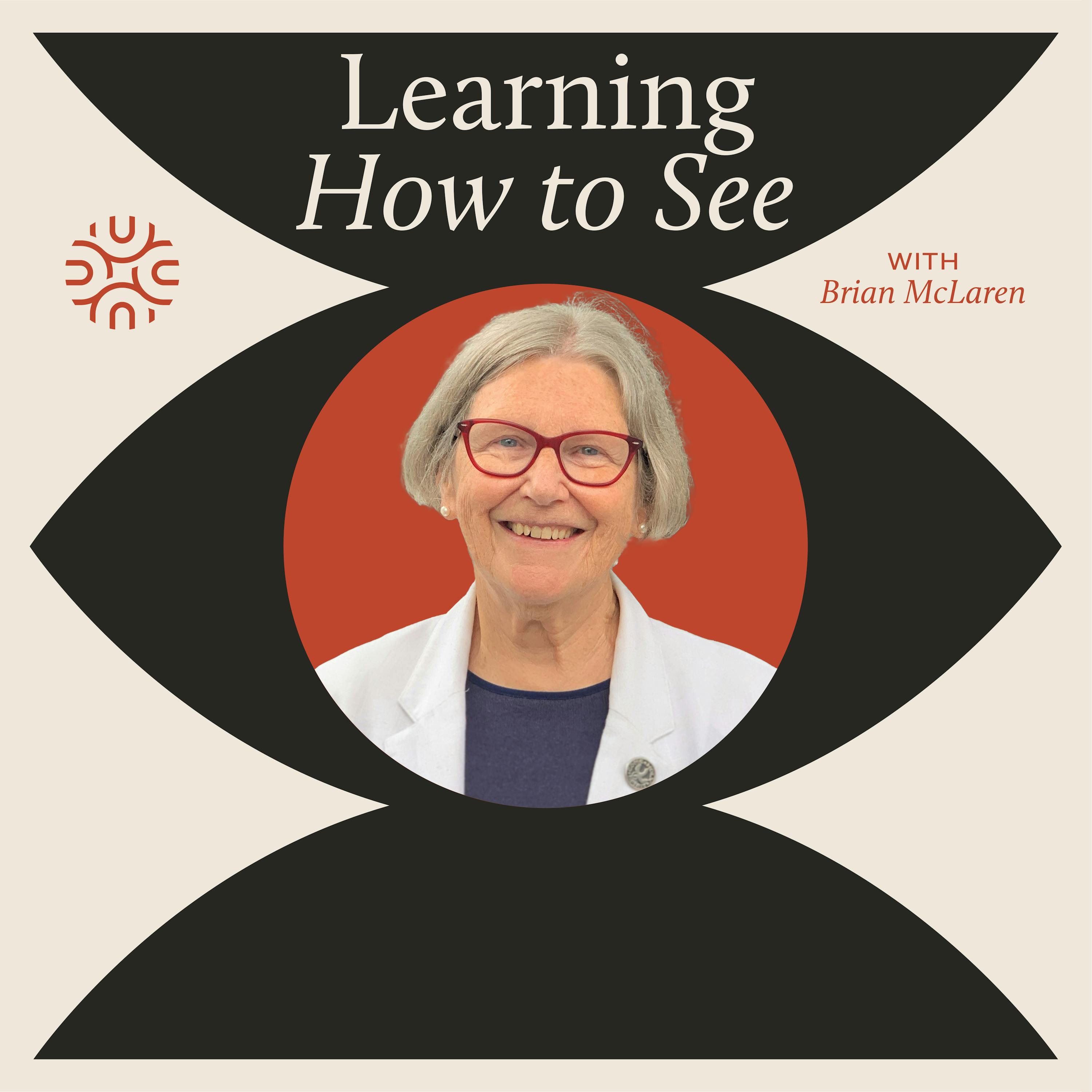
Seeing with the Help of a Soul-Optometrist with Sr. Simone Campbell
What would change if you could see with eyes of love—even in the face of cruelty, fear, and disagreement?
In this episode, Brian McLaren and co-host Carmen Acevedo Butcher sit down with renowned spiritual leader, legal advocate, and activist Sister Simone Campbell for a deeply honest conversation about love, justice, and compassion. They explore how contemplative practice grounds fierce activism,

Seeing Nonviolently with Rev. John Dear
What would change if you believed that active, creative non-violence was the deepest expression of love?
In this episode, Brian McLaren and co-host Carmen Acevedo Butcher welcome legendary peace activist, Catholic priest, and author Fr. John Dear for an unflinching conversation about the cost—and the healing power—of universal non-violence. Together they explore how language shapes our disciplesh
Seeing (and Dancing) in the Dark with Rev. Otis Moss III
How might your life change if you paused more often to unlearn what fear has taught you?
In this episode, hosts Brian McLaren and Carmen Acevedo Butcher are joined by Rev. Dr. Otis Moss III. Together, they explore what it means to live with vision in times of struggle—when the path is unclear, but the call to truth and love remains strong. Drawing from his book Dancing in the Darkness, Dr. Moss r

Seeing (and Loving) the Divine in The Everyday with Carrie Newcomer
How do ordinary moments become portals to the sacred?
On this episode of Learning How to See, Carrie Newcomer joins Brian and Carmen for a conversation-and-concert that explores “short-form empathy,” the contemplative power of music, and the everyday practice of seeing, and being seen, through eyes of love. Along the way Carrie performs two beloved songs, sharing the stories that shaped them,

Seeing the Humanity of Everyone (No Exceptions) with Fr. Rafael Garcia
What happens to your own humanity when you choose to truly see the humanity in others?
In this episode, Jesuit priest Father Rafael Garcia joins Brian McLaren and Carmen Acevedo Butcher to explore what it means to see through eyes of love—especially in a world that often teaches us to view immigrants, the incarcerated, and the marginalized with fear or indifference. Drawing from his work at the U

Seeing Grace-fully with Rev. Nadia Bolz Weber
What would change if you believed that grace was at the center of your life?
In this episode, Brian and Carmen are joined by longtime friend and public theologian Nadia Bolz-Weber for a conversation about the radical, healing power of grace—and how it reshapes our vision of ourselves, others, and the divine.
Connect with us:
Have a question you'd like Brian or Carmen to answer about this sea

Introducing Season 8 (and our new co-host!) with Carmen Acevedo Butcher and Brian McLaren
In this opening to Season 8, Learning How to See returns with understanding how to see with the eyes of love. On this season, Brian McLaren introduces his new co-host Dr. Carmen Acevedo Butcher—a scholar, translator, contemplative teacher, and birdwatching chocolate lover—and together, they launch the theme for this season: Seeing Through Eyes of Love.
This episode weaves together personal storyt
Seeing Nature as a Friend with Brian McLaren
Can we cultivate a relationship with the natural world which mirrors the care and concern we would offer a dear friend? How do you foster hope in the midst of an unruly world?
In this conversation, Brian McLaren is prompted by CAC Staff members Corey Wayne and Mike Petrow, to reflect on his journey from pastor to writer and public speaker. Brian discusses the interconnectedness of nature and spiri
Seeing Nature as a Visionary with Philip Clayton
How important is community in facing the climate crisis? What kinds of communities are helping you to live differently and find hope?
In this episode, we’re learning to see nature through the eyes of a visionary. For this conversation, Brian McLaren is joined by Philip Clayton to discuss the urgent need for a shift in mindset, the transformative power of community, and the vital role of faith in b
Seeing Nature as an Indigenous Person with Edith and Randy Woodley
How can you apply Indigenous values like harmony, respect, and accountability to your own life and community?
In this episode, we’re learning to see nature through the eyes of an Indigenous Person. For this conversation, Brian McLaren is joined by Randy and Edith Woodley to discuss the importance of rediscovering Indigenous values to create a more harmonious relationship with the Earth and all it
Seeing Nature as a Franciscan with Michele Dunne and Sister Joan Brown
What might it look like to live out a Franciscan vision of kinship in your daily life?
In this episode, we’re learning to see nature through the eyes of a Franciscan. For this conversation, Brian McLaren is joined by Sr. Joan Brown and Michelle Dunne to explore the essence of Franciscan values and their relevance in today's world. They discuss the importance of community and kinship, translatin
Seeing Nature as a Historian of Religions with Mary Evelyn Tucker
What story do you tell yourself about the interconnectedness of nature and culture?
In this episode, we’re learning to see nature through the lens of a historian of religions. Brian McLaren is joined in conversation by Mary Evelyn Tucker, a leading voice in the field of religion and ecology. Together, they discuss the importance of cultural history, the challenges of interreligious dialogue, and
Seeing Nature as a Mystic with Douglas E. Christie
What does it mean to grieve the crisis facing our planet?
In this episode, we’re learning to see nature through the lens of a mystic. Brian McLaren sits down with Douglas E. Christie to discuss his work in the emerging field of contemplative studies, its relevance to our current ecological crisis, and the importance of acknowledging and processing ecological grief. Together, they explore the hist
Seeing Nature as a Poet with Drew Jackson and Pádraig Ó Tuama
What is it about poetry that allows it to hold both beauty and disruption, and even inspire change?
In this episode, Brian McLaren explores the power of poetry to help us understand and grieve for the natural world while also appreciating its beauty. He talks with poets Pádraig Ó Tuama and Drew Jackson about the importance of seeing nature holistically, and how poetry can help us grapple with the
Seeing Nature as an Artist with Christy Berghoef and Thomas Jay Oord
How does nature inspire your sense of creativity?
On this episode, we’re looking at nature through the artistic lens, with Brian McLaren and two gifted photographers, Christy Berghoef and Thomas Jay Oord. The conversation explores the ways in which their individual experiences and practices of photography have deepened their understanding and appreciation of the natural world, as well as the power

Bonus: Seeing Nature as Nature With Felicia Murrell
How do you typically see your relationship with nature?
In this bonus episode, Brian interviews Felicia Murrell, author of And: The Restorative Power of Love in an Either/Or World. This conversation delves into the interconnectedness of humans and nature, exploring how a shift from domination to loving interaction can lead to a deeper understanding and appreciation of the natural world. Felicia Mu
Seeing Nature as a Gardener (Part 2) With Cassidy Steele Dale
How do you think our personal beliefs and values shape the way we see the world?
In this episode, as we continue to explore the theme of learning to see nature as a gardener, Brian explores the concept of worldviews with futurist Cassidy Steele Dale. They delve into the "Knight" and "Gardener" perspectives, examining how these contrasting ways of seeing the world impact our relationships, our fait

Seeing Nature as a Gardener (Part 1) With Brett McLaren and Rachel McLaren
What if the way we see nature could be the key to a more sustainable future?
In this two-part series, we're turning to see nature as a gardener. In this conversation, Brian speaks with two of his children, Brett and Rachel McLaren, about their love for nature and gardening. They discuss their childhood memories of exploring and appreciating the natural world, the joy and importance of gardening,
Seeing Nature as a Seeker With James White, Tony Jones, and Wes Granberg-Michaelson
How does time in nature benefit you?
In this episode, Brian is in conversation with James White, Tony Jones, and Wes Granberg-Michaelson exploring the experiences and perspectives of those who have awe-inspiring experiences with the transformative power of being in nature. Together, they reflect on the meaning of fishing and hunting, the connection to our ancestral roots, the contrast between the

Seeing Nature as a Doctor (Part 2) With Theresa Martella
How do you feel when you witness the destruction of creation?
In this episode, Brian interviews Teresa Martella, an environmental scientist and spiritual ecologist, about the interconnectedness of ecology and spirituality. Together they discuss the ecological crisis, climate change, and the deep grief that comes with witnessing the destruction of the natural world. Teresa shares her personal journ
Seeing Nature as a Doctor (Part 1) With Debra Rienstra and Melanie Griffin
How does the connection between nature and spirituality influence your understanding of the environment and the challenges that it faces?
In the next two-part series, we're exploring a new way of seeing nature, as a doctor -- but not in the traditional sense. Through conversations with academics, activists, scientists and spiritual directors, we're examining the issues facing our climate and as we

Seeing Nature as a Lover (Part 2) With Miriam Smith
What shapes the connection between your inner and outer landscapes?
On the second part of seeing nature like a lover, Brian interviews a non-profit leader in sustainable development, Miriam Smith. In this episode, Miriam shares her powerful story of growing up in Chad during a civil war. She discusses how these experiences shaped her perspective on life and instilled a deep passion for nature an

Seeing Nature as a Lover (Part 1) With Scott Smith
What can you do, big or small, to create a positive impact on the planet?
In this episode, Brian interviews Scott Smith, a retired wildlife ecologist, about his career in conservation and the importance of protecting the natural world. Scott shares his early love for nature and how it led him to become a wildlife ecologist. He discusses the work of conservation, including habitat preservation, spe

Seeing Nature as a Scientist (Part 2) With Susan J. Tweit
What sparks your sense of wonder in the natural world?
In this episode, we're continuing our exploration of learning how to see like a scientist with botanist and author Susan Tweit. Brian McLaren and Susan Tweit explore how a hike in the Badlands sparked Susan's passion for sharing nature's wonders. In this conversation, they explore the power of science and storytelling as a way of deepening ou

Seeing Nature as a Scientist (Part 1) With Paul Wallace
Can we look at nature with both wonder and a scientist's eye?
In this episode, we're learning how to see nature from the perspective of a scientist. In Part 1, Author and professor Paul Wallace joins Brian to explore the intersection of science and spirituality in the natural world. Together, they discuss the awe-inspiring scale of the universe, the contemplative nature of scientific inquiry, and
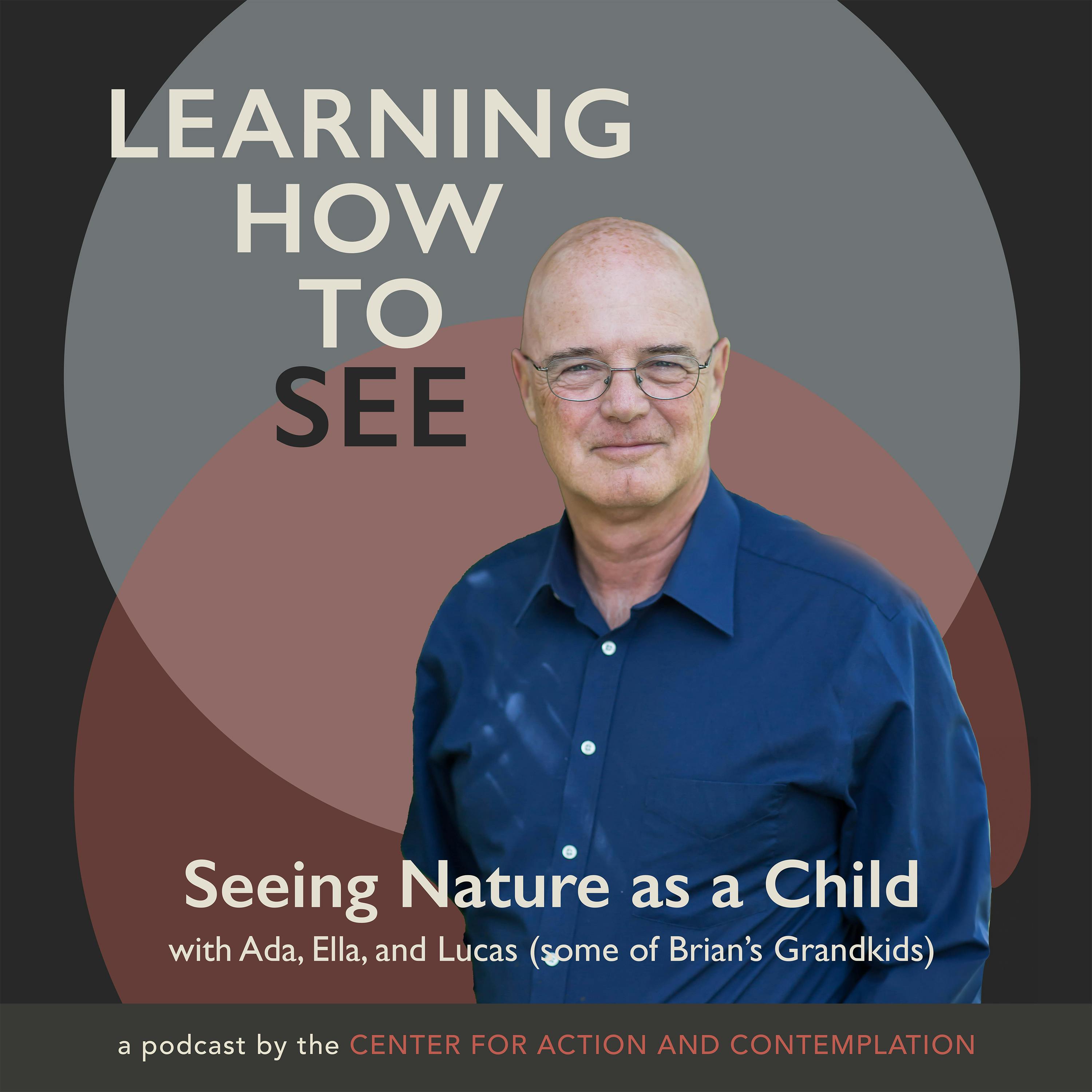
Seeing Nature as a Child (Wonder)
What can children teach us about loving nature?
In the first episode of season 6, three of Brian’s grandchildren — Ella, Ada, and Lucas — drop by to talk about how to take responsibility and care for the planet. In this conversation, we see the from the perspective of a child as three of Brian's grandchildren highlight the impact of climate change through a shared love of animals and emphasizing t

Introducing: Learning How to See "Nature"
Welcome to the sixth season of Learning How to See which focuses on learning how to see nature in a new way. In this season, we'll look at nature through the lens of a child, a scientist, a lover, a doctor, a seeker, and a gardener. The goal is to develop a deeper connection and appreciation for the natural world. We need to see every tree and stone, every bird and fish, every stream and prairie a

The Seventh Story
What if we could reimagine the future of storytelling?
In the last episode of Season 5 of Learning How to See, join in the conversation about how to create a new kind of space in which we can all participate in shifting our world towards greater Love and justice.
Resources:
The transcript for this episode can be found here.
To learn more about Gareth Higgins, click here.
To learn more about B
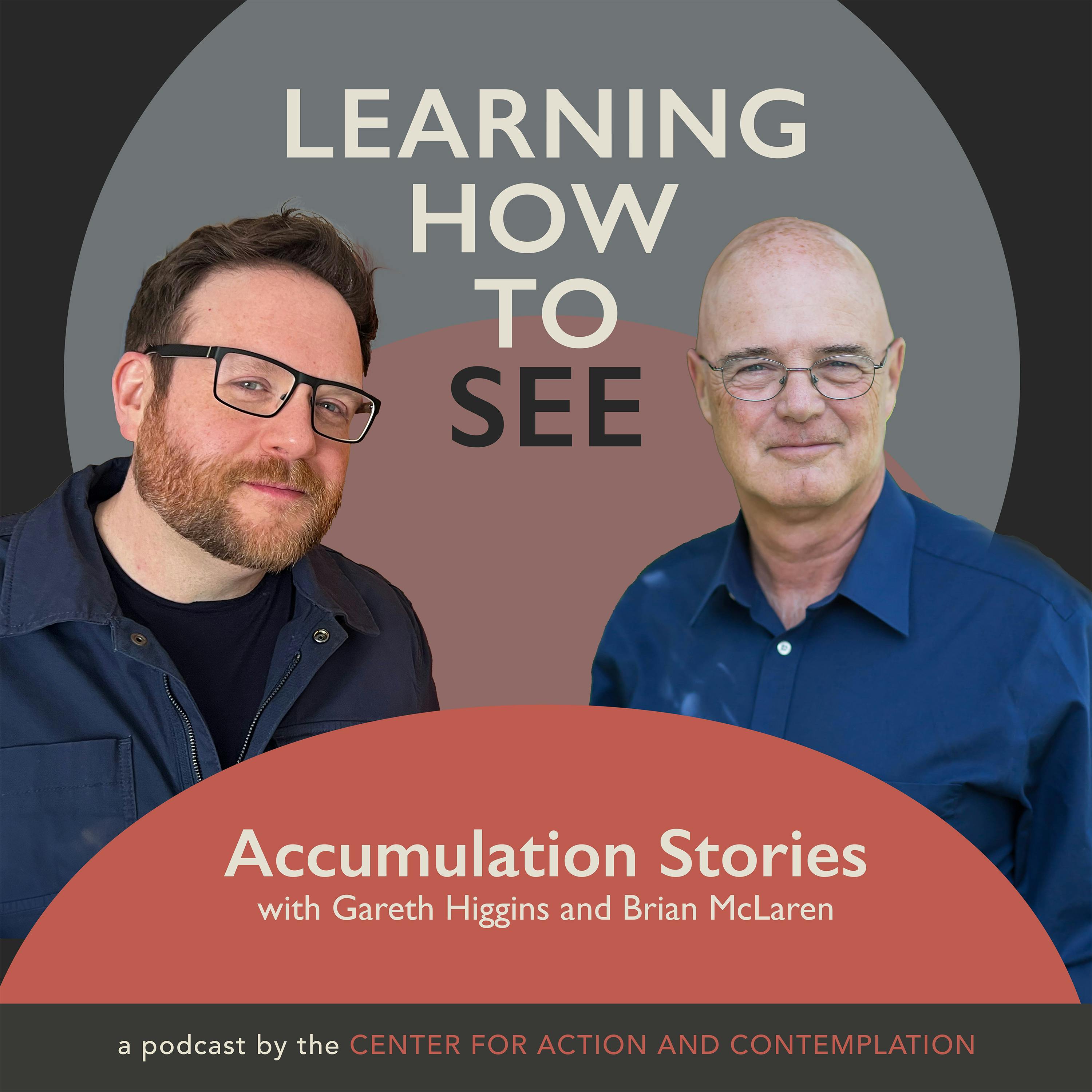
Accumulation Stories
How do you embrace the wisdom of letting go?
In this episode, Brian and Gareth explore the power of sharing to explore the Accumulation Story, a justification of our human need to hold onto things, people, and circumstances.
Gareth explains: “This is a story about money and fear. It's a story about being possessed by things rather than enjoying and sharing them. And it's a story nested within a b

Victimization Stories
How do you tell the story of a time you have been wronged or betrayed?
Many of us experience victimization. But when does "victim" become an outdated part of our identity? Brian McLaren offers us: “If victims allow themselves to take an offramp from their victimizing stories, they embrace another way to define their lives.”
We're continuing forward with powerful explorations of storytelling as

Isolation Stories
“To be fully in the world is to believe that we can love other people and places more than we fear them.” –Gareth Higgins
Have you convinced yourself that you are better off alone? Today we're exploring the dynamics of the Isolation Story — the belief that we can avoid pain by avoiding others. As Gareth Higgins explains, “While it may not be physically violent, the Isolation Story is more than h

Purification Stories
“Almost everybody who does evil has convinced themselves that they are doing good.” —Brian McLaren
Have you ever convinced yourself that an unloving act was justified? In this episode, we're asking ourselves the tough questions and peeling back the layers of the Purification Story — a narrative with complex dynamics that can lead us to harmful interactions with others and ourselves.
Resources:

Revolution Stories
“If you want a better world, tell a better story — especially one that centers justice without vengeance.” –Gareth Higgins
How do we tell stories that offer us the best chance of creating a more peaceful and loving reality? In this episode of Learning How to See, we're exploring stories of revolution. Although these tales often contain values of heroism and liberty, they are more likely to feed i

Domination Stories
“Stories shape our reality, whether they are true or not.” —Gareth Higgins
What if you told the story of your life differently? Explore the powerful influence of stories in shaping our experiences in the newest season of Learning How to See with Brian McLaren and Gareth Higgins.
In this episode, we explore the Domination Story, a way of understanding our world that distorts our relationships wit

An Introduction to Seven Stories
“Becoming conscious of the stories we’re telling can be lifesaving to individuals and entire cultures.”—Gareth Higgins
How do you recount life’s biggest triumphs and failures? What about your deepest loves and biggest betrayals? In this season, we'll be exploring the power of storytelling to help create a more just and loving world.
This season, Brian McLaren dives into conversation with the co-
Listener Questions: Navigating Faith Shifts in Marriage and Relationships
Have your spiritual views impacted your romantic relationships?
In the next episode of our listener questions series, Brian and the team examine how our faith often impacts our relationships. Together, they respond to listener questions from a variety of backgrounds and experiences to help the listeners understand how to navigate the challenges these situations can bring.
Today’s conversation sen
Listener Questions: Jesus and Theology
In this third episode of listener questions, Brian and the team respond to questions that came in centered around Jesus and theology. A listener writes, “I've been questioning the virgin birth and resurrection. As of now, I believe that Jesus was an amazing prophet who was so in touch with God’s spirit that he could do miracles, and his teachings were life changing. Would you let me know how you f
Listener Questions: Community
What does community look like when our faith shifts?
“If I support my grandson who is gay, what do I do with my Catholic faith?”
Brian, and the team from the Center for Action and Contemplation reflect on questions that came in around community.
Resources:
A transcript for this episode can be found here.
Listener Questions: Actions and Beliefs, and God's Intervention
The topic of questions related to this listener questions episode is on actions and beliefs, and if God intervenes.
Listeners wrote in with questions such as: “Does God intervene? Does Jesus heal? What am I doing when I pray for people? What precisely is the gospel? If I only had more faith, prayed the right prayer, and believed the Bible literally, maybe these awful things like the death of my yo

Stay Human
Who reminds you of who you really are—even during dark times? Jacqui and Barbara are back, together, to explore ways to stay human amid fear and uncertainty.
In this last episode exploring the chapters of 'How', these conversation partners explore the importance of humanity at the core of an authentic faith journey. Whether or not you continue to call yourself Christian—or a member of any other
Stay Loyal to Reality (feat. Barbara Brown Taylor)
What is your response when your faith tradition demands that you deny reality?
Barbara Brown Taylor is back to discuss the importance of embracing “what is” more than adhering to our beliefs. This episode is based on 27th chapter of Do I Stay Christian?, Stay Loyal to Reality.
Resources:
The transcript for this episode can be found here.
Renounce and Announce (feat. Jacqui Lewis)
How do you stand for what you believe without making others wrong?
In this episode, Rev. Jacqui Lewis joins Brian again to discuss how we can declare our beliefs with love—and why it is essential for the healing of our communities and our planet.
Resources:
The transcript for this episode can be found here.
Throughout this season, as questions or thoughts arise, we'd love to hear from you. You ca
Re-Consecrate Everything (feat. Barbara Brown Taylor)
How do you create harmony in your life?
Can Christianity inspire us to focus on what kind of human we want to be—instead of trying to prove we’re right?
In this episode, Barbara Brown Taylor returns to the show for a continuing conversation about the necessary and profound work of reconsecrating our lives—spiritually and ecologically. As Brian explains, “You can leave Christianity, but Christian
Find the Flow (feat. Jacqui Lewis)
What gets you into the flow?
Rev. Jacqui Lewis joins Brian again in conversation to envision a new way of living Christianity in this episode talking about the 24th chapter, Find the Flow.
Resources:
The transcript for this episode can be found here.
Throughout this season, as questions or thoughts arise, we'd love to hear from you. You can contact us by leaving a voicemail or emailing us at pod
Re-Wild (feat. Todd Wynward)
Where do we go to replenish our hearts?
On this season of Learning How to See, we're exploring ways to reframe our Christian identity so that it reflects our lived reality.
In this episode author, wilderness educator, and Mennonite organizer, Todd Wynward, offers his perspective that spending time in the wilderness—physically and spiritually— can fill our hearts and minds with new meaning.
Res
Start with the Heart (feat. Jacqui Lewis)
How do we remind ourselves that Love is the center of our lives?
As we continue this season, Brian and the guests offer guideposts for negotiating a new relationship to Christianity when we are ready to leave limiting beliefs behind. On this episode, Rev. Jacqui Lewis explains that living from a space of love is an active calling: “Love that comes from the heart demands justice. It insists on well
Include and Transcend (feat. Barbara Brown Taylor)
How have you experienced the grief of growth?
In this episode, Barbara Brown Taylor joins Brian for a stimulating conversation about the importance of emotional honesty on each step of our spiritual journey. As we outgrow religious ideas and practices, it’s tempting to bend the truth to make us comfortable—but that reaction slows the process of transformation.
Resources:
The transcript for this
An Introduction to Season 4
As we kick off a new season grappling with the 'how' answer of Do I Stay Christian?, Brian wanted to revisit the previous seasons that built up and connect to this very question. Joining Brian in conversation are Center for Action and Contemplation staff members Mike Petrow, Gigi Ross, and Dawson Allen. At the end of this season, we'll come back together to reflect and respond to what the listener
Season 4: Learning How to See: Christianity (How)
On this Season 4 of Learning How to See, we continue to grapple with the question "do I stay Christian?" In Season 3, we looked at the "yes" and the "no" answer to that question. This season, we're asking: if you do decide to stay Christian without accepting the harmful elements of the Christian faith -- how are you going to do it? Join Rev. Barbara Brown Taylor, Rev. Dr. Jacqui Lewis, and others
Christianity as a Road We Make By Walking
Could technology be key to deepening our faith experience? From the printing press to podcasts, the newest technology has been inviting people into faith conversations for centuries.
On this episode, Brian is joined by theologian and podcaster Tripp Fuller as we embrace walking towards a fresh and vibrant theology that is accessible to everyone. Tripp is a self-described “theology nerd,” and bring
Christianity as a Set of Insistent Questions
What if questions are God’s way of communicating? Could we learn to embrace asking questions as a spiritual practice?
For this episode, Brian McLaren invites two great wisdom teachers of our time, Dr. James Finley and Dr. Barbara Holmes into a conversation about the simple steps we can take to celebrate the sacredness of each moment. This conversation journeys into the heart of embracing mystery a
Christianity and the Cult of Innocence
What is the Christian Cult of Innocence and how does it limit our view of ourselves, God, and Christian wisdom? In this episode, Brian McLaren continues his journey of discovering wisdom and perspectives that can break Christianity open. In this conversation, Fr. Richard Rohr and Paul Swanson explore how embracing our flawed human nature can free us from limiting judgements that keep us and everyo
Christianity as Neighbor (Part 2)
Renowned civil rights leader and best-selling author Valarie Kaur joins Brian for this episode of Learning How to See. In this conversation, they help us see how learning about another faith tradition can help us see our own tradition in a different way.
Valarie Kaur is a renowned civil rights leader and celebrated prophetic voice "at the forefront of progressive change" (Center for American Progr
Christianity as Neighbor (Part 1)
Antisemitism, theology, empire—this week’s episode invites us to examine our histories and faith traditions with an honest lens. Explore a different perspective of Christianity with Rabbi Jill Jacobs, who discuss what is means to have Christianity as a neighbor.
Rabbi Jill Jacobs (she/her) is the CEO of T’ruah: The Rabbinic Call for Human Rights, an organization that trains and mobilizes more tha
Christianity, Race, and Politics
On the second episode of this season, Brian is joined by Lisa Sharon Harper and Gigi Ross exploring the many ways colonialism has injected racism into Christianity, politics, and the culture we live in. Utilizing theology, research, and drawing heavily from Lisa's work in her latest book Fortune, this episode offers a gripping examination of slavery’s lingering impact on the shadow of Christianity
Christianity is Many Things
What does “Christianity” mean to you? Do you see it as a force for good in the world? How much harm has it caused? Do you want to stay Christian? And if so, what kind—and how?
In this first episode from season three of Learning How to See, host Brian McLaren goes straight to the heart of these questions and more. Joined by scholar and historian of Christianity Diana Butler Bass, Ph.D., and CAC sta
Season 3: Learning How to See: Christianity (Yes and No)
On the third season of Learning How to See, Brian McLaren invites us to see and experience Christianity in new ways. Exploring sections from his new book Do I Stay Christian? Brian helps listeners at a spiritual crossroads to honestly examine their evolving faith.
Joined by guests Diana Butler Bass, Lisa Sharon Harper, Rabbi Jill Jacobs, Valerie Kaur, Richard Rohr, James Finley, Barbara Holmes,
Bonus: Begin Again from the Very Beginning
On this bonus episode, Brian, Gigi, Mike and Paul conclude the season in their reflections on the dynamics of suffering and the art of beginning again in order to learn how to see.
The prayers/intentions used in this season can be found here at the following links, depending on where you listen to podcasts: Apple | Spotify | RadioPublic | Stitcher
Resources:
The transcript for this episode can be
6: What Do You Want?
On this episode of Learning How to See, Brian, Gigi, Mike and Paul talk about the last two biases that look at the social-political dimensions of seeing:
Confidence Bias: We mistake confidence for competence, and we are all vulnerable to the lies of confident people. Our brains prefer a confident lie to a hesitant truth.
Conspiracy Bias: When we feel shame, we are vulnerable to stories that cast
5: Hate and Love
On this episode of Learning How to See, Brian, Gigi, Mike and Paul talk about the next two biases that look at the social-political dimensions of seeing:
Catastrophe Bias: Our brains notice sudden changes for the worse, but we easily miss slow and subtle changes over time. We think what is now normal always was and always will be. Our brains are wired for what feels normal.
Cash Bias: It is very
4: Boxes Inside Boxes
On this episode of Learning How to See, Brian, Gigi, Mike and Paul talk about the next two biases that look at the social-political dimensions of seeing:
Conservative/Liberal Bias: Conservatives and Liberals see the world differently. Liberals see through a “nurturing parent” window, and Conservatives see through a “strict father” window. Liberals value moral arguments based on justice and compas
3: Mountain Climbers
On this episode of Learning How to See, Brian, Gigi, Mike and Paul talk about the next two biases that look at the social-political dimensions of seeing:
Consciousness bias: A person’s level of consciousness makes seeing some things possible and others impossible. Our brains see from a location.
Competency bias: We are incompetent at knowing how incompetent or competent we are, so we may see les
2: Going Against the Flow
On this episode of Learning How to See, Brian, Gigi, Mike and Paul talk about the next three biases that look at the social dimensions of seeing:
Community bias: It is very hard to see something your group doesn’t want you to see. This is a form of social confirmation bias.
Complementarity bias: If people are nice to you, you’ll be open to what they see and have to say. If they aren’t nice to yo
1: The Big Ditch
On this introductory episode for Season 2 of Learning How to See, Brian, Gigi, Mike and Paul review the biases and talk about two biases that set the stage for all the others:
Confirmation Bias: the human brain welcomes information that confirms what it already thinks and resist information that disturbs or contradicts what it already thinks.
Complexity Bias: the human brain prefers a simple lie
Recommended
English with Olivia | Slow Conversations & Vocabulary
Stand In The Circle

SLOW ENGLISH PODCAST (A1-A2) With Subtitles | Daily Videos | English With Us Podcast

Learn English A2 with Daily News | Simple English Listening Practice

پلی لیست | PlayList

Conspiracy Files with Paige Carter

Bad Friends

Learn 50 English Phrases While You Sleep | Everyday English Phrases & Vocabulary
This Past Weekend w/ Theo Von
Dateline NBC

Back to the 80s Radio

Crime Stories with Nancy Grace
