
Holy Quran
This podcast features recitations of the Holy Quran by Sheikh Mishari Rashid. It provides a spiritual listening experience for those seeking to hear the Quran recited in Arabic.
Episodes
At-Takathur التكاثر "Rivalry, Competition"
At-Takāthur ( التكاثر, "Rivalry, Competition") is the 102nd chapter of the Qur'an, with 8 versesRegarding the timing and contextual background of the believed revelation (asbāb al-nuzūl), it is an earlier "Meccan surah", which means it is believed to have been revealed in Mecca, rather than later in Medina.Text, translation, and transliterationThe translation is the Saheeh

Al-Adiyat - The War Horses which run swiftly العاديات "The Courser, The Chargers"
Al-Adiyat or The War Horses which run swiftly[1] (Arabic: العاديات, al-ʿādiyāt, also known as "The Courser, The Chargers") is the 100th chapter (sūrah) of the Qur'an, with 11 āyāt or verses. Regarding the timing and contextual background of the revelation (asbāb al-nuzūl), it is an earlier "Meccan surah", which means it is believed to have been revealed in Mecca, rather tha

Al-Adiyat العاديات al-ʿādiyāt "The Courser, The Chargers"
Al-Adiyat or The War Horses which run swiftly[1] ( العاديات, al-ʿādiyāt, also known as "The Courser, The Chargers") is the 100th chapter of the Qur'an, with 11 āyāt or verses. Regarding the timing and contextual background of the revelation (asbāb al-nuzūl), it is an earlier "Meccan surah", which means it is believed to have been revealed in Mecca, rather than later in Medi

Al-Zalzalah الزلزلة, "The Quake"
Al-Zalzalah ( الزلزلة, al-zalzalah, meaning: "The Quake") is the 99th chapter (surah) of the Qur'an, composed of 8 ayat or verses. Although it is usually classified as a Medinan surah, the period during which the surah was revealed is not unanimously agreed upon by Qur'anic exegetes. Other Abrahamic religions also support the idea of punishment to the wrongdoers like in the Day o

Al-ʻAlaq العلق "The Clinging Thing" or "The Embryo"
Al-ʻAlaq (Arabic: العلق, al-ʻalaq, also known as "The Clinging Thing" or "The Embryo"[1]), is the 96th chapter of the Qur'an. It is composed of 19 verses. It is sometimes also known as Sūrat Iqrā (سورة إقرا, "Read")
Chapter 96 of the Qur'an is traditionally believed to have been Muhammad's first revelation. It is said that while Muhammad was on retreat in

At-Tīn التين "The Fig, The Figtree"
At-Tīn ( التين, "The Fig, The Figtree") is the ninety-fifth surah of the Qur'an, with 8 verses
Summary
1-4 Oaths that God created man "a most excellent fabric"
5-6 God has made all men vile except true believers
7-8 None may rightly deny the judgment-day[1]
This sura opens by mentioning the fig (the sura's namesake), the olive of Jerusalem, Mount Sinai, and "this

Al-Inshirāḥ الانشراح "Solace" or "Comfort" or ash-Sharḥ الشرح, "The Opening-Up of the Breast"
Al-Inshirāḥ ( الانشراح, "Solace" or "Comfort"), or ash-Sharḥ ( الشرح, "The Opening-Up of the Breast") [1] is the ninety-fourth chapter of the Qur'an, with eight or verses. Because of its subject matter, length, style, and placement in the Qur'an, this sura is often coupled with Surah ad-Dhuha (Sura 93). They are generally considered to have been revealed aroun

Al-Ḍuḥā الضحى "The Morning Hours", "Morning Bright", "The Early Hours"
Al-Ḍuḥā ( الضحى, "The Morning Hours", "Morning Bright", "The Early Hours") is the ninety-third chapter of the Qur'an, with 11 or verses. Qur'an 93 takes its name from Arabic its opening word, al-ḍuḥā, "the morning"
The chapter begins with oaths. It is often coupled with sura al-Inshirah, sometimes without the basmala between them.
It should be taken

Sūrat al-Layl الليل "The Night"
Sūrat al-Layl الليل "The Night" is the ninety-second sūrah (chapter) of the Qur'an, containing twenty-one āyāt (verses). This sūrah is one of the first ten to be revealed in Mecca. It contrasts two types of people, the charitable and the miserly, and describes each of their characteristics
Summary
1-4 Oaths by various natural objects
5-13 The obedient blessed and the covetous acc

Ash-Shams الشمس "The Sun"
Ash-Shams الشمس "The Sun" is the 91st surah of the Qur'an, with 15 ayat or verses. It opens with a series of solemn oaths sworn on various astronomical phenomena, the first of which, "by the sun", gives the sura its name, then on the human soul itself. It then describes the fate of Thamud, a formerly prosperous but now extinct Arab tribe. The prophet Saleh urged them to wor

Al-Balad البلد "The City"
Al-Balad البلد, "The City" is the 90th Surah or chapter of the Qur'an. It is composed of 20 verses
Summary
1-7 Man, though created in misery, yet boasts of his riches
8-16 Captives to be freed and the poor and orphan to be fed
17-20 Description of the companions of the right and left hand
The subject matter and style of Qur'anic chapter al balad resemble those of the earl

Al-Fajr الفجر "The Dawn", "Daybreak"
Al-Fajr (Arabic: الفجر, "The Dawn", "Daybreak") is the eighty-ninth chapter of the Quran, with 30 verses .[3] The sura describes destruction of disbelieving peoples: the Ancient Egyptians, the people of Iram of the Pillars, and Mada'in Saleh. It condemns those who love wealth and look with disdain upon the poor and orphans. Righteous people are promised Paradise – the final

Al-Ghāshiyah الغاشية "The Overwhelming", "The Pall"
Al-Ghāshiyah (Arabic: الغاشية, "The Overwhelming", "The Pall") is the 88th chapter (surah) of the Qur'an, with 26 ayat or verses. The surah's topics are Paradise, Hell and the miracle of the creation of all things by God.
This surah refers to three broad-ranging topics. First, God describes the difference between good and evil paths that an individual can take and the c

Al-Aʻlā الأعلى, lit. 'The Most High, Glory To Your Lord In The Highest'
Al-Aʻlā (Arabic: الأعلى, lit. 'The Most High, Glory To Your Lord In The Highest') is the eighty-seventh chapter (surah) of the Qur'an, with 19 ayat or verses.
Al-A'la describes the Islamic view of existence, the Oneness of Allah, and Divine revelation, additionally mentioning rewards and punishments. Mankind often hides things from each other and from themselves as well. The sura r

Al-Inshiqāq الانشقاق "The Sundering", "Splitting Open"
Al-Inshiqāq (Arabic: الانشقاق, "The Sundering", "Splitting Open") is the eighty-fourth chapter (surah) of the Qur'an, with 25 verses (āyāt). It mentions details of the Day of Judgment when, according to this chapter, everyone will receive reckoning over their deeds in this world.[2]
Summary
1-5 Signs of the Judgment Day
6-15 The books of the righteous and the wicked giv

Al-Muṭaffifīn Al-Tatlif المطففين "The Defrauders"
Al-Muṭaffifīn (المطففين, "The Defrauders") is the eighty-third surah of the Qur'an. It has 36 verses
Summary
The primary theme of this surah is Islamic eschatology or the hereafter, and the rhetoric addresses the following subjects is the discourse. The surah opens with a declaration of war and denunciation of those who use false weights and measures in the first six ayat.[1] The su

Al-Infitar الانفطار The Cleaving in Sunder
The Cleaving in Sunder [1] ( الانفطار, al-infiṭār, also known as "The Cleaving" and "Bursting Apart") is the 82nd sura of the Quran, with 19 ayat. The chapter is named 'Al-Infitar' because of the occurrence of the word 'unfatarat' in the first verse of this chapter. Infitar means 'split asunder': the word 'Unfatarat' is used in this chapter in or

At-Takwir التكوير, literally "The Turning Into a Sphere"
At-Takwīr (Arabic: التكوير, literally "The Turning Into a Sphere") is the eighty-first chapter (sura) of the Qur'an, with 29 verses (ayat). It tells about signs of the coming of the day of judgement. Some of these signs include the following:
(a) When the sun is covered in darkness (solar eclipse),
(b) When the stars fall,
(c) And when the mountains vanish (blown away),
(d) When the

Abasa عبس "He Frowned"
ʻAbasa (عبس, "He Frowned") is the 80th chapter of the Qur'an, with 42 verses
It is a Meccan sura
The Surah is so designated after the word `abasa with which it opens.[1]
Summary
1-11 Muhammad rebuked for frowning on a poor blind Muslim
12-15 The Quran written in honourable, exalted, and pure volumes
16-23 Man cursed for turning aside from his Creator
24-32 It is God who provid

An-Nāziʻāt النازعات "Those Who Pull Out"
An-Nāziʻāt (النازعات, "Those Who Pull Out", in reference to "the angels who tear out the souls of the wicked") is the seventy-ninth sura of the Qur'an, with 46 ayat. Its name derived from the word wan-nazi‘at with which it opens. The root (n-z-‘) roughly means "to yank out with great force",[2] although it can also mean "to yearn for" or "to yearn a

An-Naba' النبأ The News
An-Naba' or The News النبأ, an-nabaʼ also known as "The Tidings", "The Announcement" is the seventy-eighth chapter of the Quran, with forty verses
Summary
The first twenty verses discuss the wonders of the worldly creation (the earth, plants, the peace of night, the mountains and rain); the final twenty verses are about the eternal wonders and horrors of the next world, wi

Al-Mursalāt المرسلات "The Emissaries", "Winds Sent Forth"
Al-Mursalāt (المرسلات, "The Emissaries", "Winds Sent Forth") is the 77th chapter of the Quran, with 50 verses
The chapter takes its name from the word Al-Mursalāt in the first verse
Summary
1-7 Oath by the messengers of God that the judgment-day is inevitable
8-15 Woe on that day to those who accuse Muhammad of imposture
16-19 In former times infidels were destroyed for accusi

Al-Insan الإنسان "Human"
Al-Insan ("Human") (alternative names: al-Dahr, "Endless time", Hal Ata, "Has There Not come") is the 76th chapter of the Quran, with 31 verses
Recitation by Muhammad
A hadith narrated by Abu Hurayra said that Muhammad used to recite Al-Insan together with As-Sajdah (chapter 32 of the Quran) for the early morning prayer (fajr) every Friday
This report also appears in

Al-Qiyama القيامة "The Resurrection"
Al-Qiyama or Al-Qiyamah القيامة meaning "The Resurrection",[1] or "The Rising of the Dead", is the seventy-fifth chapter (sūrah) of the Quran, with 40 verses (ayah).[2]
1-4 God is able to raise the dead
5-11 Unbelievers may mock, but they shall be overtaken by the resurrection-day
12-15 Man shall be his own accuser on that day
16-19 Muhammad rebuked for anticipating Gabriel in

Al-Jinn الجن, “The Jinn”
Al-Jinn[1] (Arabic: الجن, “The Jinn”) is the 72nd chapter (sūrah) of the Quran with 28 verses (āyāt). The name as well as the topic of this chapter is jinn. Similar to angels, the jinn are beings invisible to the naked human eye. In the Quran, it is stated in that humans are created from the earth and jinn from smokeless fire.
Summary
1-2 Certain of the genii converted to Islam by hearing the Qur

Nuh نوح “Noah”
Nūḥ[1] ( نوح, “Noah”) is the seventy-first chapter (surah) of the Quran with 28 verses (ayat). It is about the Islamic prophet Nūḥ and his complaint about his people rejecting all warnings Allah gave them through Nuh. Nūḥ's themes include belief in Allah, signs of Allah (the Earth, Sun, Moon), and punishment for denying Allah's message
Summary
In Nuh, the seventy-first surah, the Quran re

Al-Haqqah الحاقة “The Reality” “The Inevitable Truth”
Al-Ḥāqqah الحاقة is the 69th chapter of the Qur'an with 52 verses. There are several English names under which the surah is known. These include “The Inevitable Hour”, “The Indubitable”, “The Inevitable Truth”, and “The Reality”. These titles are derived from alternate translations of al-Ḥāqqa, the word that appears in the first three ayat of the sura, each alluding to the main theme of the su

Al-Qalam القلم "The Pen"
The Pen (القلم, al-qalam) is the sixty-eighth chapter of the Qur'an with 52 verses
Quran:68 describes God's justice and the judgment day.
Three notable themes of this Surah are its response to the opponents' objections, warning and admonition to the disbelievers, and exhortation of patience to the Islamic prophet Muhammad.[1] Chronologically, this was the first appearance of any of the

At-Taḥrīm التحريم "Banning, Prohibition"
At-Taḥrīm (Arabic: التحريم, "Banning, Prohibition") is the 66th Surah or chapter of the Quran and contains 12 verses (ayah).[1] This Surah deals with questions regarding Muhammad's wives.[2][3]
The Surah's name is derived from the words lima tuharrimu of the first verse. This is not a title of its subject matter, but the name implies that it is the Surah in which the incident of

At-Talaq الطلاق "Divorce"
"Divorce" الطلاق, aṭ-talāq is the 65th chapter of the Qur'an with 12 verses
The main subject is about divorce
The surah also defines the time period of mourning (iddah) to be three menstruation periods. For pre-menarche girls and for post-menopause women - three months. In case of pregnancy, after the delivery of the child.[4]
After addressing the topic of divorce and a number of ot

At-Taghābun التغابن "Loss, Deprivation"
At-Taghābun "Loss, Deprivation" is the 64th surah of the Quran
The theme of this surah is an invitation to the Faith, obedience (to God) and the teaching of good morals, contrasting with the previous surah, Al-Munafiqun, which was concerned with hypocrisy and the lack of Iman
First four verses are addressed to all human-kind, verses 5-10 to those men who do not believe in the invitation

Al-Munafiqun المنافقون "The Hypocrites"
The chapter deals with the phenomenon of hypocrisy
It criticizes hypocrisy and condemns the hypocrites. It also exhorts the Believers to be sincere in their faith and make charity.[3] According to Muslim theologian, Javed Ahmad Ghamidi, the theme of Qur'an 63 is to inform the Muslims that the Hypocrites are absolute liars. Amin Ahsan Islahi elaborates that:
This surah is a supplement to Surah

Al-Jumuʿah الجمعة "Friday"
Al-Jumuʿah is the 62nd chapter of the Quran, with 11 verses
The chapter is named al-jumu`ah ("Friday") because it is the day of assembly, when the community abandons trade, transactions, and other diversions in favor of assembling to seek the all-encompassing truth and most beneficent and seek the "bounty of God" exclusively (Verse 9)
This is an Al-Musabbihat surah because it

As-Saff الصف Battle Array "The Ranks"
Battle Array الصف, aṣ-Ṣaff, aka "The Ranks" is the 61st chapter of the Quran, with 14 verses.
This sura is an Al-Musabbihat sura because it begins with the glorification of Allah.
1 All things in the universe praise God
2-4 Muslims exhorted to be faithful and to fight for Islam
5 This exhortation enforced by the example of Moses
6 Jesus foretells a Messenger named Ahmad
7-8 Jes

Al-Mumtaḥanah الممتحنة "the Surah which examines"
Al-Mumtaḥanah الممتحنة, translated "She That Is To Be Examined", "Examining Her") is the 60th chapter of the Quran, a Medinan sura with 13 verses
The first verse warns Muslims not to make alliance with the enemies of God.[1] Verses 4–6 provide Abraham as a model for this, as he distanced himself from the pagans of his own tribe, including his own father.[1][2] Verses 7 to 9 dec

Al-Hashr الحشر "The Exile"
Al-Hashr الحشر, "The Exile" is the 59th chapter of the Quran and has 24 verses
The chapter is named al-hashr because the word hashr, meaning 'exile' or 'banishment', appears in verse 2, describing the expulsion of Jewish Banu Nadir tribe from their settlements. The surah features 15 attributes of God in the last three verses
1 Everything in the universe praiseth God

Al-Ḥadīd الحديد
Al-Ḥadīd (English: Iron, Arabic الحديد) is the 57th chapter of the Quran with 29 verses
The chapter takes its name from that word which appears in the 25th verse
This is an Al-Musabbihat surah because it begins with the glorification of Allah.
Short summary
1-6 God ( Allah ) is omniscient and most powerful.
7-11 Muslims exhorted to give alms and help the Prophet's mission
12-14 The wis

Al-Waqi'a الواقعة
Al-Waqi'a الواقعة; "The Inevitable" or "The Event") is the 56 chapter of the Quran. Muslims believe it was revealed in Mecca (see Meccan surah), specifically around 7 years before the (622), the migration of Muhammad to Medina
The total number of verses in this surah is 96. It mainly discusses the afterlife according to Islam, and the different fates people will face in it

Ar-Rahman الرحمان
Ar-Rahman الرحمان
meaning: The Merciful is the 55th Chapter of the Qur'an, with 78 verses
The title of the surah, Ar-Rahman, appears in verse 1 and means "The Most Beneficent". The divine appellation "ar-Rahman" also appears in the opening formula which precedes every surah except Sura 9 ("In the Name of God, the Lord of Mercy, the Giver of Mercy"). English transl

Al-Qamar القمر
54th chapter of the Quran, with 55 verses
The Surah was revealed in Mecca. The opening verses refer to the splitting of the moon. "Qamar" (قمر), meaning "Moon" in Arabic, is also a common name among Muslims
Summary
1-2 The moon shall be split as a sign of the Judgement Day
3-5 Muhammad commanded to withdraw from the infidels
6 This verse talked about the prophecy where the

An-Najm النجم
An-Najm meaning: The Star is the 53rd chapter of the Quran, with 62 verses
The surah opens with the oath of the Divine One swearing by every one of the stars, as they descend and disappear beneath the horizon, that Muhammad is indeed God's awaited Messenger. It takes its name from chapter #1, which mentions "the stars" (najm). The surah confirms the divine source of the Prophet'

At-Tur الطور
At-Tur is the 52nd Surah of the Quran that has 49 verses and is in the 27th Juz. It is Makki and the 76th chapter revealed to the Holy Prophet (PBUH).
In the first verse, God swears by At-Tur (Mount Sinai), and hence the name of the Surah.
Mount Sinai is a holy place that is in Palestine. Prophet Moses (AS) talked to God and received the revelation in that mountain. The name At-Tur is mentioned te

Adh-Dhariyat الذاريات
Al-Dhariyat (الذاريات, adh-dhāriyāt; meaning: The Winnowing Winds or The Scatterers) is the 51st chapter of the Qur'an with 60 verses
It mentions Abraham, Noah, and the day of judgment, and reiterates the essential Quranic message.
Summary
1-6 Numerous oaths that the judgment will come
7-11 Oaths and curses relating to unbelievers
12-16 Doom of infidels and reward of true believers
17-19 The p

Qaf ق
Qaf (ق, the letter qāf), is the 50th chapter of the Qur'an with 45 verses
The name is taken from the single discrete Quranic "mysterious letter" qāf that opens the chapter. It is the beginning of the Hizb al-Mufassal, the seventh and the last portion (manzil). Concepts which "Qaf" deals with the Resurrection and the Day of Judgement
1 Q.[1] The letter qāf [2]
2-3 The un

Al-Hujurat الحُجُرات
Al-Hujurat ( الحُجُرات, meaning: The Chambers) is the 49th chapter of the Quran with 18 verses. The chapter contains etiquette and norms to be observed in the Muslim community, including the proper conduct towards the Islamic prophet, Muhammad, an injunction against acting on news without verification, a call for peace and reconciliation, as well as injunctions against defamation, suspicion, and

Al-Fath الفتح
Al-Fath meaning: "Victory" , "Triumph" is the 48th chapter of the Qur'an with 29 verses
The surah was revealed in Madinah in the sixth year of the Hijrah, on the occasion of the Treaty of Hudaybiyyah between the Muslim city-state of Madinah and Makkan polytheists. It mentions this victory, then criticizes the attitudes of the hypocrites, continues with further promises to the Muslims,

Muhammad محمد
"Chapter of Muhammad" is the 47th chapter of the Quran with 38 verses
The title is derived from the direct mentioning of the Islamic prophet Muhammad in 47:2.[2] It also has the name of Al-Qitāl (القتال), which translates to fighting due to the context of the sura.[3] This sura pertains to a specific conflict that arose from people prohibiting the acceptance and spread of Islam. It refers to
Al-Ahqaf الأحقاف
Al-Ahqaf (Arabic: الأحقاف, al-aḥqāf; meaning: "the sand dunes" or "the winding sand tracts") is the 46th chapter of the Qur'an with 35 verses. This is the seventh and last chapter starting with the Muqattaʿat letters Hāʼ Mīm. Regarding the timing and contextual background of the believed revelation (asbāb al-nuzūl)
The chapter covers various topics: It warns against those who reject the Quran, and
Al-Jathiyah الجاثية
The chapter starts with the Muqattaʿat Hāʼ Mīm, the sixth of seven Quranic chapters to do so. The following verses (2–15) discuss the "signs of God", such as the order in nature as well as its ability to serve humanity[6][7] The verses exhort mankind to reflect upon those signs and warn them of the punishment for those who turn away from God despite the signs[6][8]
Verse 16 talks about the C

Ad-Dukhan الدخان
Ad-Dukhān; الدخان, (meaning: Smoke) is the 44th chapter of the Quran with 59 verses
Verse 37 mentions the people of Tubba, interpreters explain that this refers to the people of Sheba
Regarding the timing and contextual background of the believed revelation it is an earlier "Meccan surah", which means it is believed to have been revealed in Mecca, rather than later in Medina
In t

Az-Zukhruf الزخرف
Az-Zukhruf ("Ornaments of Gold, Luxury") is the 43rd chapter It contains 89 verses
Named after the golden ornaments recognized in verse 35 and again in verse 53, this surah dates back to the Second Meccan Period before the Prophet Muhammad’s migration to Medina.
Ornaments of Gold is a Surah that acts as a reminder to believers that the goodness of God cannot be found within wealth and

Ash-Shura الشورى
Ash-Shūrā (الشورى, al shūrā, "Council, Consultation") is the 42nd chapter of the Qur'an (Q42) with 53 verses
Its title derives from the question of "shūrā" (consultation) referred to in Verse 38. The term appears only once in the Quranic text (at Q42:38). It has no pre-Quranic antecedent.
Regarding the timing and contextual background of the believed revelation (asbāb al-nuzūl),

Fussilat فصلت
Fuṣṣilat (Arabic: فصلت, fuṣṣilat "are distinctly explained" or "explained in detail"), also known as Sūrat Ḥā Mīm as-Sajdah (Arabic: سورة ﺣﻢ ﺍﻟﺴﺠﺪﺓ),is the 41st chapter of the Qur'an with 54 verses
Summary
1-3 The Quran declared to be given by inspiration
3-4 The people generally reject it
5 Muhammad only a man, yet a prophet
6-7 The woe of the wicked and the blessedness of the righteo

Al Mu'min المؤمن | Ghafir غافر
"The All-Forgiving", referring to God, also known as Al-Muʼmin (Arabic: المؤمن, ’al-mu’min; meaning: The Believer) is the 40th chapter of the Qur'an, with 85 verses. It takes its name from verse 28 which mentions a distinguished believer from among the clan of the Pharaoh who supported Moses, referring to him as a "believing man," hence al-Mu'min; The Believer. However, this surah is most often ca
Az-Zumar الزمر The Troops
Az-Zumar (Arabic: الزمر, ’az-zumar; meaning: "The Troops, The Throngs") is the 39th chapter of the Qur'an, the central religious text of Islam. It contains 75 verses
This surah derives its name from the Arabic word zumar (troops) that occurs in verses 71 and 73. Regarding the timing and contextual background of the believed to have been revealed in the mid-Maccan period when persecutions of the Mu

Sad ص The letter Ṣād
Sad (Arabic: ص, Ṣād; "The Letter Sad") is the 38th chapter of the Qur'an with 88 verses and 1 sajdah ۩ (38:24). Sad (ص) is the name of the eighteenth letter in the Arabic alphabet
According to the traditional Islamic narrative, Saad was sent to Muhammad by Allah while he was coping with rejection from his tribe, the Quraysh. It recounts stories of previous prophets, describes the splendors of heav
As-Saffat الصافات
As-Saffat (Arabic: الصافات, ’aṣ-ṣāffāt, meaning: Those who rank themselves in Order,[1] "Ranged in Row", "The Rangers") is the 37th chapter of the Qur'an with 182 verses. The name is derived from the word was saaffat with which the Surah begins
Period of Revelation
The subject matter and the style show that this Surah probably was sent down in the middle of the Makkan period, or perhaps in t

Ya-Sin يٰسٓ
Yā Sīn (also Yaseen; Arabic: يٰسٓ, yāsīn; the letters 'Yāʼ' and 'Sīn') is the 36th chapter of the Quran (sūrah). It has 83 verses. It is regarded an earlier "Meccan surah" Some scholars maintain that verse 12 is from the Medinan period.[3] While the surah begins in Juz' 22, most of it is in Juz' 23
The surah focuses on establishing the Qur'an as a divine source, and it warns of the fate of those w

Al-Fatir (فاطر) / Al-Mala’ikah (ﺍﻟملائكة)
Fatir (Arabic: فاطر, fāṭir; meaning: Originator), also known as Al-Mala’ikah (ﺍﻟملائكة, ’al-malā’ikah; meaning: "The Angels"),[2] is the 35th chapter of the Qur'an with 45 verses
Meccan surah
Summary
1-2 God praised as the Sovereign Creator
3 The Quraish exhorted to worship the true God
4 Muhammad told that it is no strange thing for a prophet to be called an impostor
5-6 God’s promises tru

Al-Saba
Saba’ (Arabic: سبأ, saba’; from the city called "Sheba") is the 34th chapter of the Qur'an with 54 verses. It discusses the lives of Solomon and David, a story about the people of Sheba, challenges and warnings against the disbelievers as well as the promises related to the Day of Judgment
Regarding the timing and contextual background of the believed revelation (asbāb al-nuzūl), it is an ea

Al-Ahzab
Al-Ahzab (Arabic: الأحزاب, al-aḥzāb;[1] meaning: the confederates,[2] or "the clans", "the coalition", or "the combined forces") is the 33rd chapter of the Quran with 73 verses. The sūrah takes its name from the mention of the parties (al-aḥzāb), or confederates (an alliance among the Quraysh and other tribes), who fought the Muslims at the Battle of the Trench (5/627), also known as the Battle o

As-Sajdah
As-sajdah (السجدة), is the 32nd chapter of the Quran with 30 verses
The name of the chapter has been translated as ۩ "Prostration" [1] or "Adoration".[2] and is taken from the fifteenth verse, which mentions those who "... fall prostrate and hymn the praise of their Lord"
Regarding the timing and contextual background of the believed revelation, it is an earlier "Meccan surah", which means it is b

Luqman (لقمان)
Luqman[1] (Arabic: لقمان, romanized: luqmān) is the 31st chapter of the Islamic holy book, the Qur'an. It is composed of 34 verses and takes its title from the mention of the sage Luqman and his advice to his son in verses 12–19. According to Islamic traditional chronology (asbāb al-nuzūl), it was revealed in the middle of Muhammad's Meccan period, and is thus usually classified as a Meccan

Ar-Rum
Ar-Rum (Arabic: الروم, ’ar-rūm meaning: The Romans) is the 30th chapter of the Quran. It consists of 60 verses. The term Rûm originated in the word "Romans" and in the time of Prophet Muhammad referred to the Byzantine Greeks (Eastern Roman Empire), hence the title is sometimes also translated as "The Greeks" or "The Byzantines"
The Surah provides information on how the cataclysmic Byzantin

Al-Ankabut
The Spider (Arabic: العنكبوت, al-‘ankabūt) is the 29th chapter of the Quran with 69 verses
Regarding the timing and contextual background of the believed revelation (asbab al-nuzul), it is an earlier "Meccan surah", which indicates a revelation in Mecca as opposed to Medina. Early Muslims were persecuted in Mecca where Muhammed was not a leader, and not persecuted in Medin

Al-Qasas
Al-Qasas (Arabic: القصص, ’al-qaṣaṣ; meaning: The Story) is the 28th chapter of the Qur'an with 88 verses
According to Ibn Kathir's commentary, the chapter takes its name from verse 25 in which the word Al-Qasas occurs. Lexically, qasas means to relate events in their proper sequence. Thus, from the viewpoint of the meaning too, this word can be a suitable title for this Surah, f

An-Naml النمل
An-Naml[1] (Arabic: النمل, romanized: ’an-naml, lit. 'The Ant [2][3]') is the 27th chapter of the Qur'an with 93 verses
Regarding the timing and contextual background of the supposed revelation (asbāb al-nuzūl), it is an earlier "Meccan surah", which means it is believed to have been revealed in Mecca, instead of later in Medina
Sura 27 tells stories of the prophets Musa (Moses), Sulayman (Solom

Ash-Shura الشورى
Ash-Shūrā (Arabic: الشورى, al shūrā, "Council, Consultation") is the 42nd chapter of the Qur'an (Q42) with 53 verses. Its title derives from the question of "shūrā" (consultation) referred to in Verse 38. The term appears only once in the Quranic text (at Q42:38). It has no pre-Quranic antecedent.[1] Regarding the timing and contextual background of the revelation (asbāb al-nuzūl), it is an earl

Al-Furqan
Al-Furqan (Arabic: الفرقان, ’al-furqān; meaning: The Criterion) is the 25th chapter of the Qur'an with 77 verses. The name Al-Furqan,[1] or "The Criterion" refers to the Qur'an itself as the decisive factor between good and evil.
The chapter emphasizes (25:68–70) that there is no sin, however great, that cannot be forgiven if sincerely repented, showing faith and working with righteou

An-Nur النور
An-Nur[1] (Arabic: النور, ’an-nūr; meaning: The Light) is the 24th chapter of the Quran with 64 verses
1 This chapter revealed from heaven
2-3 Law relating to fornication
4-5 Punishment for defaming virtuous women
6-10 Law relating to charge of adultery when made by a husband against his wife
11-20 Ayesha’s slanderers reproved, and their punishment
21 Believers warned against evil deeds

Al-Mu'minoon
Al-Mu’minun (Arabic: المؤمنون, ’al-mu’minūn; meaning: "The Believers") is the 23rd chapter of the Qur'an with 118 verses. Regarding the timing and contextual background of the supposed revelation (asbāb al-nuzūl), it is an earlier "Meccan surah", which means it is believed to have been revealed in Mecca, instead of later in Medina.
This surah deals with the fundamentals of faith (Aqidah), Tawheed

Al-Hajj
Al-Ḥajj[1] (Arabic: الحج, ’al-ḥaj; meaning: "The Pilgrimage", "The Hajj") is the 22nd chapter of the Quran with 78 verses. This surah takes its name from the 27th verse
Time of revelation
This surah contains the qualities of both the Makki and the Madani Surahs, the tafsirs have contrasted as to its time of disclosure, however, in the light of its style and subjects, it appears that first 2
Al-Anbiya
Al-Anbiyāʼ, properly pronounced: Al-Ambiyāʼ (Arabic: الْأَنْبِيَاء, "The Prophets") is the 21st chapter (sūrah) of the Quran with 112 verses (āyāt). Regarding the timing and contextual background of the supposed revelation (asbāb al-nuzūl), it is an earlier "Meccan surah", which means it is believed to have been revealed in Mecca, instead of later in Medina. Its principal subject matter is prophet

Ta-Ha
Ṭā Hā[1] (/ˈtɑːˈhɑː/; Arabic: طه) is the 20th chapter of the Qur'an with 135 verses. It is named "Ṭā Hā" because the chapter starts with the Arabic "mysterious letters": طه (Taha) which is believed one of the names of the prophet Muhammed. Luxenberg's perspective is that the letters Ta-Ha could mean "marvel" or "be amazed!" in Aramaic[2]
Regarding the timing and contextual background of the

Maryam
Maryam[1] (Arabic: مريم, "Mary") is the 19th chapter of the Qur'an with 98 verses. The 114 chapters in the Quran are roughly ordered by size. The Quranic chapter is named after Mary, mother of Jesus (Isa), and the Virgin Mary in Christian belief. It recounts the events leading up to the birth of Jesus, subject matter covered in Luke 1 of the Christian Bible. The text of the surah refers to many k

Al-Kahf الكهف
Al-Kahf[1] (Arabic: الكهف, "The Cave") is the 18th chapter of the Quran with 110 verses. Regarding the timing and contextual background of the revelation (asbāb al-nuzūl), it is an earlier "Meccan surah", which means it was revealed in Mecca, instead of Medina.
Q18:9-26 "People of the Cave"
Verses 9–26[2] of the chapter retells the Christian folktale of the "People of the Cave".[3] A few young b

Al-Isra
The Night Journey (Arabic: الإسراء, al-isrāʼ) is the 17th chapter of the Quran, with 111 verses. It is about Isra and the Children of Israel. This sura is part of a series Al-Musabbihat surahs because it begins with the glorification of Allah.
Regarding the timing and contextual background of the supposed revelation (asbāb al-nuzūl), it is an earlier "Meccan surah", which means it is believ
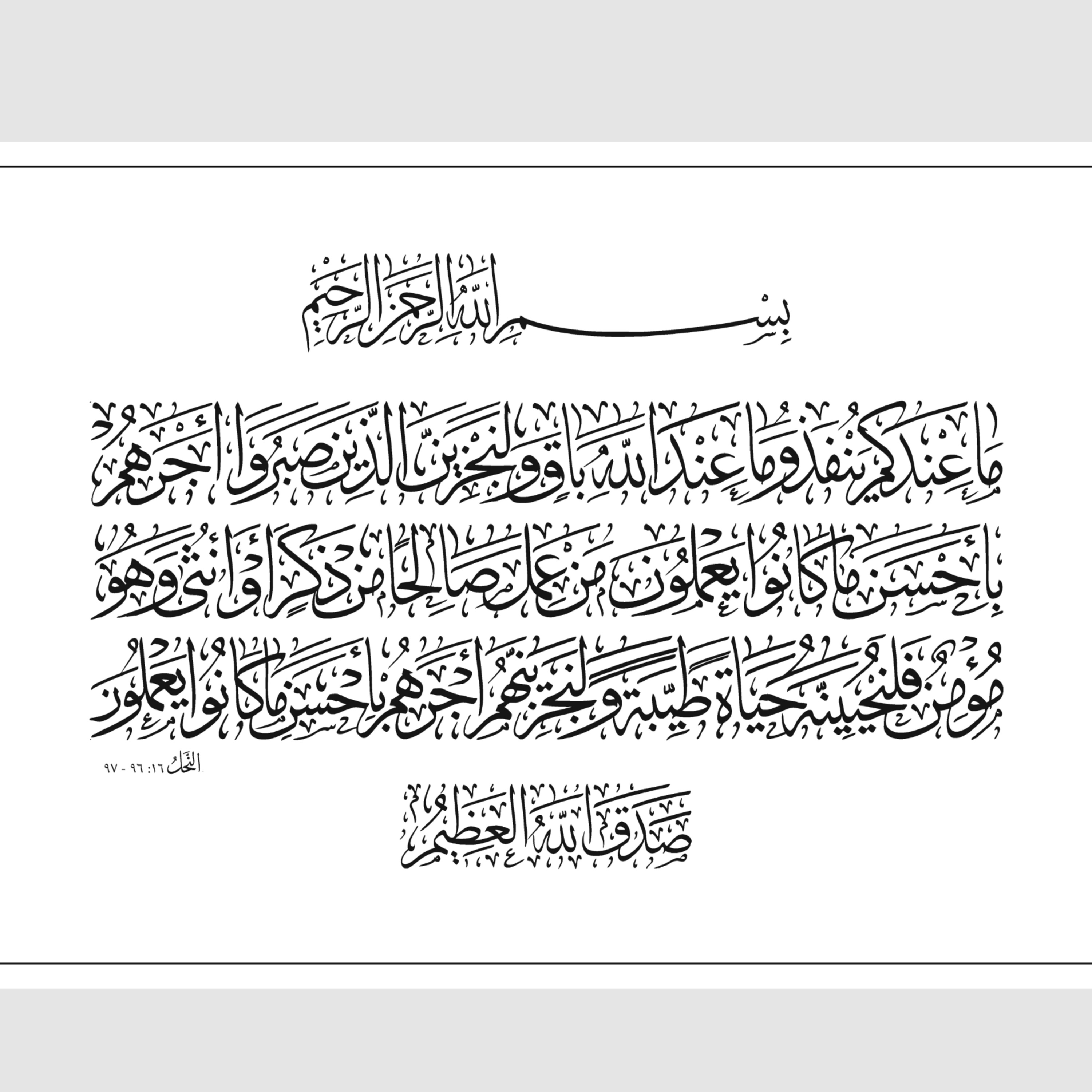
An-Nahl
The Bee [1] (Arabic: الْنَّحْل, an-naḥl,[2] aka "The Bees") is the 16th chapter of the Qur'an, with 128. It is named after honey bees mentioned in verse 68[Quran 16:68], and contains a comparison of the industry and adaptability of honey bees to the industry of man.[3] [4] Regarding the timing and contextual background of the revelation (asbāb al-nuzūl), it is an earlier "Meccan surah", which mean

Al-Hijr
Al-Ḥijr[1][2] (ِArabic: الْحِجْر, lit. 'The Stoneland') is the 15th Quranic chapter. It has 99 verses.
Regarding the timing and contextual background of the revelation (asbāb al-nuzūl), it is an earlier Meccan surah, believed to have been received by Prophet Muhammad shortly after chapter 12, Yusuf, during his last year in Mecca. Like other surahs of this period, it praises God. Parts of Q15:4-74

Ibrahim
Ibrāhīm [1] (Arabic: إبراهيم, "Abraham") is the 14th chapter of the Qur'an with 52 verses.
The surah emphasizes that only God knows what goes on inside a man's heart, implying we must accept each other's words in good faith.(14:38)[2]
Regarding the timing and contextual background of the revelation (asbāb al-nuzūl), it is an earlier "Meccan surah", which means it is believed to have been revealed
Recommended

Million Dollar Grit

Yours Truly Johnny Dollar Collection

Take Back Your Health®
CrossTalk

National Weather Service - FORT WALTON BEACH AND DESTIN FLORIDA FORECAST - by WARN

Back to the 80s Radio

Doctor Zhivago Slow Read

Apple News In Conversation

SLOW ENGLISH PODCAST (A1-A2) With Subtitles | Daily Videos | English With Us Podcast

Breaking News from Pod Save America

The Young and Called Podcast .

Jubal Phone Pranks from The Jubal Show
