Drinking From the Toilet: Real dogs, Real training
A behind-the-scenes look into the reality of dog training, behavior, teaching, and learning. The host, Hannah Branigan, shares honest experiences about working with dogs, acknowledging that it's not always easy. The podcast aims to keep things fun and real, offering a supportive space for dog trainers and enthusiasts.
Episodes

Protected Contact Isn't Just Management.
Protected contact gets filed under zoo training, the thing you do when your learner can eat you. Hannah used to think that way too, right up until she noticed she'd been quietly using barriers with dogs and horses for years and getting far more out of them than safety. In this solo episode she makes the case that a fence, an ex pen, or a PVC pole on the ground is a training accelerator, not a cons

The Matching Law: What It Is, What It Isn't, and Why It Matters | Hannah Branigan
Hannah follows up last episode's hot take on training speed with a deeper dive into the matching law, the behavioral principle that describes how learners allocate behavior in proportion to reinforcement schedules. She covers the original pigeon experiments, what decades of follow-up research have complicated, and how understanding this equation (without actually doing the math) can make you a mor

Is Positive Reinforcement Actually Slower? (A Hot Take, Revisited) | Hannah Branigan

Can you use a leash and still be force free? | Hannah Branigan
Somewhere on the internet, someone is arguing that using a leash means you aren't really a force-free trainer. In this solo episode, Hannah unpacks the difference between impact and intent, explains why force-free training is a set of values rather than a guarantee of perfection, and gets into the mechanics of how a leash can function as a neutral tactile cue trained entirely through positive rein

Training Faster Behaviors Without Frustration, Part 2 | Hannah Branigan
In this episode, we explore strategies to achieve faster and more precise behaviors in dog training. I discuss how clarity, timing, and reinforcement techniques can improve your dog's response times, reduce hesitation, and build confidence. Tune in for practical tips to keep your training sessions clean and effective. Key Points: - Clear communication prevents slow or hesitant behaviors in dogs. -

Training Faster Behaviors Without Frustration, Part 1 | Hannah Branigan
In this episode we discuss: Speed vs. Latency: Speed is how fast a behavior is completed from the time it starts. Latency is the response time, or the time elapsed between when the cue is perceived and when the behavior starts. Motivation: While motivation is essential, it is just one piece of the puzzle. Overemphasizing motivation can lead to frustration, which might not always yield the des

Avoiding Triggers and Situations | Hannah Branigan
In this episode, we discuss the practice of avoiding situations as part (or all) of a training plan. Often avoiding certain situations can be an important strategy, helping to prevent mistakes and reduce stress for both the dog and the handler. But it's usually not a long-term solution by itself and misconceptions about avoidance can result in teams getting stuck and unable to make progress. We al

What's Wrong with "Drilling"? | Hannah Branigan
In this episode we dig into the concept of drilling, and how it applies in dog training. It's pretty common for most of us to have an emotional response just to the term itself - for good reason! But is there any baby in this bathwater? Drilling is significant for skill acquisition in various contexts beyond dog training, our emotional responses to drilling are shaped by personal experiences and t

#183: Demand Barking, Part 3, with Kiki Yablon
In this episode, we discuss the history behind Kiki's master's thesis project, Signaled Differential Reinforcement of Other Behavior to Address Excessive Vocalization in Dogs, what gave her the idea - the case of the dog barking when guests are over, how training stay on a mat actually seems to have caused the problem, the new strategy - signalling that food will not be available when towel was hu

#182: Demand Barking, Part 2
In this episode, we discuss using concepts around stimulus control to stop demand barking before it stops, how cues create expectations of what reinforcement is available, using naturally occurring events that are already built into your routine to signal when reinforcement is available and when it is not, overly-simplified reminders of including good dog household management, which you already kn

#181: Demand Barking, Part 1
In this episode, we are talking about Demand Barking. This is a three-part series, at least for now. For the first two episodes, I'll be sharing my thoughts and what I've learned about working with dogs that "demand" bark. And then for the 3rd episode, we'll talk to a guest on the subject! In this episode, we discuss how barking isn't just one behavior, it's actually a lot of different behaviors t

#180: Building Food Drive and Nuanced Reinforcement with Ashlee Osborn
In this episode we discuss the importance of getting really, really good at working with reinforcement, how the topic of reinforcement and using it in training is FAR more nuanced than most trainers recognize, food is probably the most convenient reinforcement but it does require specific conditioning and strategies to use effectively in training, Ashlee's game, Clockwork - a fancy application of

#179: More Strategies to Reduce Errors
In the last episode, we talked about what errorless learning really means. And I shared a few strategies that might make it easier to apply in your training. Of course, the major benefit to using errorless learning concepts in your training is the outcome of behaviors with a cleaner learning history and less emotional baggage. Of course, we don't want attempts to avoid errors to mean we also avoid

#178: How to Apply Errorless Learning Principles in Practical Training Sessions
In his 1968 book, The Technology of Teaching, B.F. Skinner wrote: Errors are not a function of learning or vice-versa nor are they blamed on the learner. Errors are a function of poor analysis of behavior, a poorly designed shaping program, moving too fast from step to step in the program and the lack of the prerequisite behavior necessary for success in the program. - BF Skinner And that sounds g

#177: Dr. Clive Wynne Says Some Controversial Things About Dominance
In this episode, we discuss what is the ethological definition of dominance?, how does dominance show up in behavior?, how might dominance be relevant in dog training?, differences in dog-dog vs dog-human relationships, and does dominance require aggression or punishment? For full show notes, visit: www.hannahbranigan.dog/podcast/177 This podcast is supported by Patreon: www.patreon.com/DFTT

#176: Taking Short Cuts with Stimulus-Stimulus Pairing with Kiki Yablon
In this episode, we discuss what is stimulus-stimulus pairing and how it works?, what is a "classically conditioned recall" and why might we consider calling it something different, revisiting the differences and interplay between operant and classical conditioning, the difference between describing a procedure and describing a process, and lots and lots of examples of how to apply this concept in

#175: Over the Top - High Arousal in Dogs
In this episode, we discuss what is arousal?, how does arousal show up in our training?, how does arousal affect both people and dogs?, how arousal affects reinforcers, and "eating as behavior" and how to build functional food drive with a dog that won't eat. For full show notes and transcript, visit: www.hannahbranigan.dog/podcast/175 This podcast is supported by Control Unleashed Over the Top Wo

#174: Families with Dogs and Kids with Jennifer Shryock
In this episode, we discuss the most important thing for dog professionals to know about working with families, the importance of understanding developmental milestones, working with and setting expectations, finding ways for children to safely participate in training, and the importance of providing support to families and especially mothers. For full show notes and transcript, visit: www.hannahb

#173: Dealing with Problem Behaviors - Using Alternate Behaviors
In this episode, we discuss that the first step to dealing with a problem behavior is to identify the function, figuring out a plan to control access if possible and practical, if that reinforcer is not practical to work with, identifying a substitute reinforcer that is as close as possible to the original, choosing your alternate behavior, strategies if you are teaching the alternate behavior fro

#172: How to Tell That Your Classical Conditioning Plan is Working
When we pair two stimuli together as part of a classical conditioning training plan, it can sometimes be hard to determine when the association has been made between the old stimulus and the new stimulus… the "food" and the "bell", to draw from a popular example. In this episode, I answer a question submitted by a patron with some ideas on what to look for to determine if that association is stron

#171: Maintenance Mode
In this episode, we discuss, when you might outsource maintenance to the environment?, functional difference between intrinsic and extrinsic reinforcers in maintaining behaviors, how easy it is for behaviors to start slipping before we notice, one way to avoid or minimize that slippage is to design a rotation, start by grabbing some behaviors or exercises that matter to you, then give yourself a t

#170: How To Avoid Too Much Drilling
In this episode, we discuss tradeoffs when using systematic "drills" to isolate specific aspects of an exercise, drills help us isolate specific aspects of an exercise and give us the advantage of Deliberate Practice for expertise, what is meant by "fun"?, play and fun often introduce more variability as well as a dialogue, strategies to protect myself from myself, using "play sandwiches" to break

#169: Advocating For Your Dog with Erin Moore
In this episode, we discuss what inspired Erin's Tiktok, what advocating for our dogs even means, why does it matter?, what gets in the way?, how does trauma affect our ability to advocate?, what societal factors may be in play?, and how can we support ourselves and each other? For full show notes and transcript, visit: www.hannahbranigan.dog/podcast/169 This podcast is supported by Karen Pryor Cl

#168: Things That Are Saving My Life Right Now
In this episode, we discuss why everything is hard (just kidding, no answers here. Why IS everything so hard?); behaviors, routines, and material acquisitions that are helping take the edge off; behaviors that reduce my daily annoyance level and make it easier to enjoy my dogs (stationing/crating from a distance, putting their own collars on, picking up my ear buds when they fall, especially under

#167: What is Ethics About and Why Should We Care?
In this episode, we discuss what are "ethics" and why should we care?, can we answer the question "am I a good person?, how can we measure welfare?, the five freedoms/five domains of welfare, every animal has right to freedom from, hunger, thirst, discomfort/injury, and to express normal behavior, guidelines for beneficence: even if some good comes, can't outweigh the harm done to the group that w
#166: Why is Shaping So Hard?, Pt. 2
In this episode, we discuss why we often consider shaping to be an advanced technique, why I think it doesn't have to/shouldn't be that way, why I think how many of us first learned about shaping is contributing to the problem, how the expectations we have around shaping (based on how we were taught) might be getting in the way of doing good training, the two expectations that can get in the way:

#165: Why is Shaping So Hard?, Pt. 1
In this episode, we discuss why we often consider shaping to be an advanced technique, why I think it doesn't have to/shouldn't be that way, why I think how many of us first learned about shaping is contributing to the problem, how the expectations we have around shaping (based on how we were taught) might be getting in the way of doing good training, the two expectations that can get in the way:

#164: Play & Aggression with Karen London
In this episode, we discuss what could aggression possibly have to do with play?, the importance of engaging in play for behavioral wellness, what do we mean when we are talking about play in this context?, and how Karen incorporates play into her protocols when working with aggressive behavior. For full show notes, visit: www.hannahbranigan.dog/podcast/164 This podcast is supported by Voilà! Pets
#163: Is It Really R+ or Could It Actually Be R- (With a Cherry on Top)?
In this episode, we discuss, can we use a tactile cue like leash pressure to train in an R+ framework or is it still just R- that we put a treat on top of to make us feel better?, putting food in the picture doesn't necessarily make it positive reinforcement, so how can we tell what contingencies are really in play?, review what we mean by positive and negative reinforcement, an example of a situa

#162: Working with Compulsive Behaviors Pt 2, with Dr. Michaela Hempen
In this episode, we discuss a question from one of my favorite listeners about a stereotypic/compulsive tail chasing behavior in her dog, brainstorming steps one might take when unpacking a stereotypic (I'm practicing my language!) behavior problem, taking a baseline to help with staying objective about the training, identifying and testing possible variables that might be part of the antecedent,

#161: Working with Compulsive Behaviors Pt 1, with Dr. Michaela Hempen
In this episode, we discuss what are compulsive behaviors?, using the language of stereotypy vs compulsive to describe this category of behaviors, cribbing behavior in horses and the effects on welfare, and a case study of Blondie, including getting a baseline, changing the environment for training sessions, introducing new behaviors to expand her repertoire, the plan to integrate training into li
#160: Spring Clean up for Dog Trainers, Pt 3: The Things We Overlook
This week we are finishing up our Spring Cleaning series... you've already organized all your resources you've collected over the weekend, you've worked out a new better system for your planning and record keeping and this time you've got the magic one that will actually work. Now let's get to the training itself! Wouldn't it be cool if you kept your training clean all the time? Then there would b

#159: Mentorship with John Anthony Shahor
In this episode, we discuss what does mentorship mean?, what makes a good mentor?, what makes a good mentee?, how can you get the most out of a mentorship relationship?, and what is the most important thing to focus on to be a better mentor? For full show notes, visit: www.hannahbranigan.dog/podcast/159 This podcast is supported by Voilà! Pets: www.voilapets.com/?ref=DFTT For 10% off of your Voil

#158: Spring Clean up for Dog Trainers, Pt 2: Planning and Record Keeping
In this episode, we discuss getting a fresh start with your planning and record keeping, what gets in the way of being your best self, where to start when nothing is working for you, looking at switching systems a little differently - regularly switching systems IS a system!, identifying what is important to you in a record keeping system and what likely obstacles will get in your way, start with

#157: Rescuing RiffRaff, Pt 2: Placing a Dog With a Bite History with Gaby Boijsen
What kind of people adopt a dog with a bite history? This episode is the second in a 2-part special series following the journey of RiffRaff, a rescue dog with some seriously problematic behavior. In this episode, we discuss what was Gaby even thinking when she was working with this dog?, did she ever think about just giving up?, what kind of people would adopt a dog that bites?, and how did she a

#156: Rescuing RiffRaff, Pt 1: Fostering a Dog With Aggression with Gaby Boijsen
This episode is the first in a 2-part special series following the journey of RiffRaff, a rescue dog with a tendency toward violence. This sounds like a common story, but I assure you... RiffRaff's story does not end the way you think. No spoilers though! In this episode, we discuss what we know about RiffRaff's history and how he ended up with Gaby, identifying the triggers of RiffRaff's aggressi

#155: Spring Clean up for Dog Trainers, Pt 1: Organizing and Applying Your Hoard of Resources
This week we are starting a "spring cleaning" of sorts for our training with a decluttering and organizing theme, but I'm not going to talk about how to store all your platforms and treat pouches. It has come to my attention that the biggest pile in my dog training life that is desperate for some attention is made more of information rather than equipment. I'm talking about all the information tha

#154: Training Bloopers with Karen London
In this episode, we discuss some of our truly epic training bloopers, why Karen encourages us to think of them as "bloopers" instead of failures, the importance of normalizing bloopers and sharing them, thoughts on how to recover after an "incident, " and being kind to yourself. For full show notes, visit: hannahbranigan.dog/podcast/154/ This podcast is supported by Patreon: www.patreon.com/DFTT
#153: Tips for Raising Criteria Without Breaking Everything
In this episode, we discuss the power of starting your session conservatively, how being in a position to increase your criteria rapidly is better than being greedy and being forced to lower it, the importance of avoiding getting stuck on a plateau, how to save yourself if you've already done it, implementing an easy/hard/easy pattern in your session, using a reinforcement strategy that continues
#152: Reactive Behavior with Grisha Stewart
In this episode, we discuss why reactivity is such a big topic, why it's so hard, so common, and so important, how our own emotions and behavior play into the problem, what we can do to manage our emotional responses and do better training, how getting better with our training skills can make the world a better place... and isn't that why we are all here? I hope so. Because something has be done a
#151: How to Improve Your Timing
In this episode, we discuss why timing matters in dog training and why you cannot escape it, how it's really about processing time, reaction time does have a biological basis, so just like we do with dogs, make sure you are addressing your biological needs first, what we can do to reduce processing time, how to simplify decisions, creating predictability in the training session to make good timing
#150: How Not to Socialize Your Puppy
In this episode, we discuss what most people get wrong about socialization, which is worse - bad socialization or no socialization?, what is the solution?, and where should trainers focus with new puppy owners? For full show notes, visit: www.hannahbranigan.dog/podcast/150 This podcast is supported by Patreon: www.patreon.com/DFTT
#149: Memory as Behavior... What? with Stephanie Keesey-Phelan
In this episode we discuss what if we looked at memory as behavior? For full show notes, visit: www.hannahbranigan.dog/podcast/149 This podcast is supported by Behind the Scenes: hannahbranigan.dog/backstage-pass

#148: Episodic Memory with Marsha Penner
In this episode, we discuss a super nerdy deep dive into episodic memory and even more about memory and learning and brains. For full show notes, visit: www.hannahbranigan.dog/podcast/148 This podcast is supported by Patreon: www.patreon.com/DFTT

147: Nerdy Nail Trims & Enthusiastic Eye Drops with Laura Monaco Torelli
In this episode, we discuss clever splits for shaping husbandry behaviors, the importance of checking for human readiness, reinforcement strategies for husbandry, what even is husbandry, how important mechanics are, good training techniques for increasing criteria no matter what behavior you are training, and setting your dog up to volunteer for eye drops. For full show notes, visit: www.hannahbra

BONUS: I CU Are Stuck
Bonus episode! Here's a preview of my upcoming Conference Unleashed session with Leslie McDevitt, which we're calling "I CU Are Stuck." Conference Unleashed is taking place virtually on November 5-7. To hear Leslie and my full session, sign up for the conference here: www.cleanrun.com/product/conferen…erence/index.cfm For full bonus episode notes, visit: hannahbranigan.dog/podcast/bonus-i-cu-are-s

146: Sniffing and Marking
In this episode, we discuss handling **unwanted sniffing in training, the connection to sniffing and urine marking, how to teach sniffing on cue, using Premack's principle, and ways to split to engineer setups so that you can create a progression. For full show notes, visit: www.hannahbranigan.dog/podcast/146 This podcast is supported by Patreon: www.patreon.com/DFTT

#145: Getting Out of a Training Funk
It seems like so many of us are getting stuck in a funk with our training lately for one reason or another... or maybe for all the reasons at the same time. I don't know about you, but I keep thinking it has to get better at some point, but it seems like it keeps getting harder and harder, doesn't it? Still, unless we are going to give up entirely and sink into the swamps of sadness, we have to fi
#144: Pet Trainer Roundtable
In this episode, we discuss all kinds of topics related to working with pet owners and training life skills, the first behavior you teach a new team, the most important thing for a pet owner to learn, what do most pet owners get wrong about dog training, what's the deal with dog daycare and dog parks, how do you talk about reinforcement, what kind of language do you use with pet owners, bridging t

#143: Can You Reinforce Fear?
In this episode, we discuss can you reinforce fear?, have you heard that you shouldn't console your frightened dog, that might "reinforce" the fear? (That's kind of unempathetic, isn't it?), and the more progressive message to dog owners is that you can't reinforce fear, because fear is an emotion. But, for the true behavior nerds though, it might be fun to go a little deeper?, what is fear?, what

#142: Training Herding Skills with Claire Apple
In this episode, we discuss what reinforcers are in play in herding behavior, marking and rewarding the dog for the human's behavior, training skills out of context, the heretical use of food during herding, switching reinforcement, and behaviors you can train at home to prepare for your herding lesson (when you don't have sheep of your own). For full show notes, visit: www.hannahbranigan.dog/podc

#141: Learning and Memory in Dog Training with Marsha Penner
In this episode, we discuss what dog trainers need to know about memory, the fun mashup between neuroscience and behavior, how positive associations spread through neural networks, and wanting vs. liking. For full show notes, visit: www.hannahbranigan.dog/podcast/141 This podcast is supported by Patreon: www.patreon.com/DFTT

#140: Reinforcement for Gun Dogs
In this episode, we discuss what reinforcers are in play when training and working with hunting dogs, working with behaviors when the reinforcers might be hiding out in a bush where you can't control them, and strategies for breaking down critical distractions for gun dog training. For full show notes, visit: www.hannahbranigan.dog/podcast/140 This podcast is supported by Patreon: www.patreon.com
#139: Constructional Aggression Treatment
In this episode, we discuss what is Constructional Aggression Treatment, what makes it constructional, how this approach is different from other aggression treatment protocols, how CAT deals with the function of aggressive behavior, some common misconceptions trainers may have about CAT, changing emotional behaviors by changing contingencies, how CAT makes use of clicker training principles, and m

#138: Should Dog Training Be Regulated? with Bradley Phifer
In this episode, we discuss the process of certifying professional dog trainers, as the CCPDT sees it, the advantages of certification, where the CCPDT stands on regulation in the training industry, and why and what they are doing about it. For full show notes, visit: www.hannahbranigan.dog/podcast/138 This podcast is supported by Patreon: www.patreon.com/DFTT

#137: Do You Like to Watch? with Chirag Patel, Eva Bertilsson, and Emelie Johnson Vegh
In this episode, we discuss what is the value of having someone watch your training session, what is the value of watching someone else's training session, when watching a training session, what do you look for?, the difference in skills between doing a thing and talking about a thing, the challenge of being neutral when observing, improving your creativity as a trainer, and how to handle BEING wa
#136: How to Recover from a Bad Training Session
In this episode, we discuss bad training sessions can happen for a lot of reasons, be kind to yourself (beating yourself up won't help you do better training in the future), fault is the wrong thing to focus on (you are responsible for the training session, yes, but there is a difference between fault and responsibility), do you know what went wrong?, focus on principles and ABCs to avoid getting

#135: Helping Hypervigilant Dogs with Leslie McDevitt
In this episode, we discuss the difference between normal awareness and hypervigilance, how anxious dogs perceive their environment, how to play the Look at That game (LAT), the way environmental cues can transfer and how we can use that to our advantage, and Leslie's new twist on the original LAT game, which she calls LATTE. For full show notes, visit: www.hannahbranigan.dog/podcast/135 This pod

#134: Do You Have an Exit Strategy?
In this episode, we discuss how to signal the end of a training session, why it matters, how you end a training session matters as much as how you begin one, preventing practicing good behavior without reinforcement, reducing frustration by having clear cues for when reinforcement is available and when it isn't, what to do in the last moments leading up to the end of a session, and strategies for

#133: Data - Why Bother? with Eduardo Fernandez, Emelie Johnson Vegh, and Eva Bertilsson
In this episode, we discuss what we mean when we say "data," the whole point of recording any data at all, quantitative vs. qualitative, why any data is better than no data, dfferent kinds of information you might want to record, and ideas to include recording data in your routine without interrupting the flow of your training session. For full show notes, visit: www.hannahbranigan.dog/podcast/133
#132: Sensory Bias in Training with Carrie Davis
In this episode, we discuss how humans tend to be visually oriented, animals might respond more significantly to other senses, what variables might influence how an animal reacts to a prop or target, how to deconstruct what sensory elements might be associated with a response, and the importance of staying curious and questioning our "stories" whether they are right or not! **Note: I messed up in
#131: Living as a LIMA Being - Panel Discussion
In this episode, we discuss what is a LIMA being?, how did this project evolve?, why is it so hard to apply positive reinforcement principles to ourselves and other people?, and strategies for changing how your own behavior is reinforced. For full show notes, visit: www.hannahbranigan.dog/podcast/131 This podcast is supported by Patreon: www.patreon.com/DFTT

#130: Enrichment with Allie Bender & Emily Strong
In this episode, we discuss what "enrichment" is and why we should care, whether enrichment is part of training or whether training is part of enrichment, what we mean when we say "meeting the animal's needs," whether we can just get a checklist of things to do, why behavioral diversity matters, the importance of measuring outcome, categories of enrichment, and the importance of choice and agency.
#129: Treat Everyone Like a Dog with Karen London
In this episode, we discuss how we can apply dog training principles to interacting with humans, why people might think using R+ on people might be manipulative, breaking down skills for human learners just like we do for dogs, don't blow a reinforcement opportunity by using punishment, just because it took so long to get the behavior, and finding empathy for yourself and your human subjects. For
#128: Getting Behavior From No Behavior with Peter Amelia
In this episode, we discuss what your options are when starting from scratch trying to shape behavior, how you can get stuck when trying to shape behavior and your animal isn't offering much, considerations when making changes to the environment to get behavior started, changing the environment to stimulate new behavior, thinking about reinforcement beyond food, how to improve your observational s

#127: Should I Change My Cue?
In this episode, we discuss when to change a cue, just because a cue doesn't seem to be working does not mean it's the cue's fault, when it's a training or fluency issue, when the cue itself is actually broken, when it's too close to an existing cue, whether your cue is poisoned, and two options for changing cues if you need to. For full show notes, visit: www.hannahbranigan.dog/podcast/127 This

#126: Guide to Treats
In this episode, we discuss three possible treat categories - "snacks", enrichment/management, and treats for training, some basic principles for treats selection, how many treats it's ok to give a dog, how snacks matter, but they are different than training treats, what qualities make treats more or less effective for training, why mechanics, timing and delivery, matter more than the actual treat

#125: Behavioral Euthanasia with Dr. Chris Pachel
In this episode, we discuss who makes the decision - the vet, the trainer, or the pet owner; how behavioral euthanasia is an "active choice" rather than a default decision - there is no formula, and this isn't something that someone has to do because of a specific behavior pattern or problem, but rather an option that may be actively chosen due to safety or quality of life concerns that aren't abl
#125: Behavioral Euthanasia with Dr. Chris Pachel
In this episode, we discuss who makes the decision - the vet, the trainer, or the pet owner; how behavioral euthanasia is an "active choice" rather than a default decision - there is no formula, and this isn't something that someone has to do because of a specific behavior pattern or problem, but rather an option that may be actively chosen due to safety or quality of life concerns that aren't abl
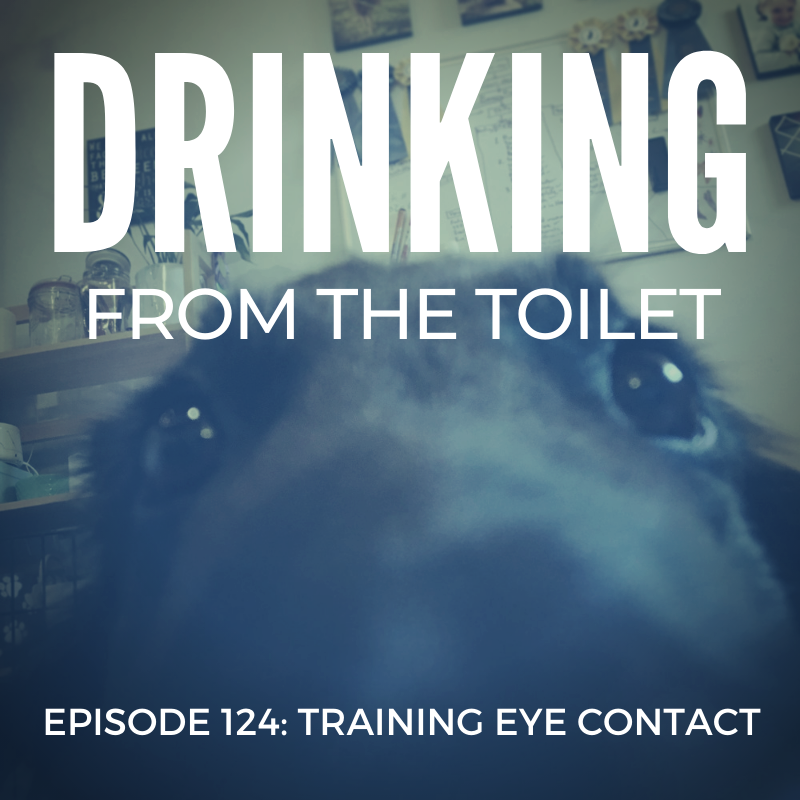
#124: Training Eye Contact
In this episode, we discuss why training eye contact is so fulfilling for humans, the other benefits of training eye contact as a behavior, whether dogs hate making eye contact, the drawbacks to training eye contact, how you can make sure your dog's behavior is "voluntary," situations where eye contact might be helpful, and how you can avoid training problems associated with too much eye contact t

#123: Herding Instinct with Ayoka Bubar
In this episode, we discuss what is so cool about herding, what kinds of dogs can do herding, what is herding instinct, are there things we can train at home to prepare for herding, and what kinds of reinforcers are relevant in herding. For full show notes, visit: www.hannahbranigan.dog/podcast/123 This podcast is supported by Patreon: www.patreon.com/DFTT
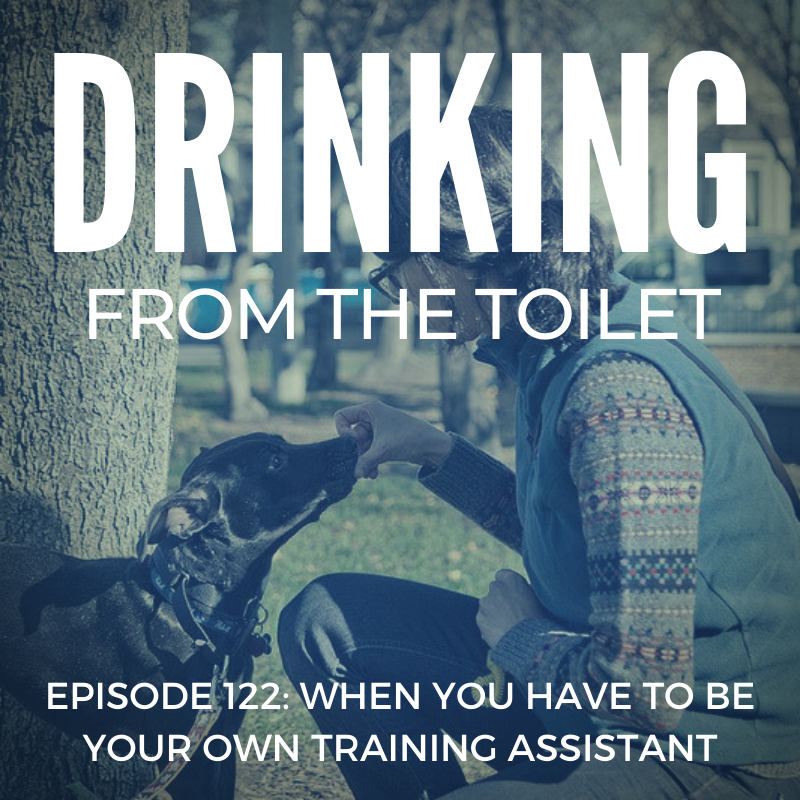
#122: When You Have to Be Your Own Training Assistant
In this episode, we discuss the challenges of training behaviors that require another person, using remote reinforcement strategies to give you a way to practice, a little zen bowl, the advantages of role-playing a judge, groomer, or vet with your own dog as an initial shaping step, and preventing a plateau by incorporating the Different Every Day game into these sessions. For full show notes, vis
#122: When You Have to Be Your Own Training Assistant
In this episode, we discuss the challenges of training behaviors that require another person, using remote reinforcement strategies to give you a way to practice, a little zen bowl, the advantages of role-playing a judge, groomer, or vet with your own dog as an initial shaping step, and preventing a plateau by incorporating the Different Every Day game into these sessions. For full show notes, vis

#121: Training Alone
In this episode we discuss what makes training alone so hard, obstacles and challenges, what is GOOD about training by yourself (it's not all doom and gloom!), some ideas for motivating yourself, tracking progress and staying on track. For full show notes, visit: www.hannahbranigan.dog/podcast/121 This podcast is supported by Patreon: www.patreon.com/DFTT

#120: Three Essential Skills for Living with a Reactive Dog with Leslie McDevitt
In this episode, we discuss what makes living with a reactive dog hard in addition to the top three skills that make life easier. While we're at it, we discuss how the pandemic brought about surprising changes, too! For full show notes, visit: www.hannahbranigan.dog/podcast/120 This podcast is supported by Patreon: https://www.patreon.com/DFTT

#119: Using stations in training sessions
In this episode, we talk about training stations and the multitude of ways to get geeky about laying down on a mat! For full show notes, visit: www.hannahbranigan.dog/podcast/119 This podcast is supported by Patreon: https://www.patreon.com/DFTT

#118: Reinforcing Diversity with Ken Ramirez
In this episode, we discuss why diversity matters, what we can do to promote inclusion in the industry, and how Ken's personal experience influences his thinking. For full show notes, visit: www.hannahbranigan.dog/podcast/118 This podcast is supported by Patreon: https://www.patreon.com/DFTT

#117: Geeking Out with Dr. Jesús Rosales-Ruiz
In this episode, we are geeking out with Dr. Jesús Rosales-Ruiz on shaping, Conditioned Emotional Responses, and more. For full show notes, visit: www.hannahbranigan.dog/podcast/117 This podcast is supported by Patreon: https://www.patreon.com/DFTT

#116: Fading a prompt or lure
In this episode, we discuss what a prompt and lure are, why you would want to fade a prompt (or not), options for techniques, and the number one thing to avoid. For full show notes, visit: www.hannahbranigan.dog/podcast/116 Support the show on Patreon! www.patreon.com/DFTT

#115: Different Perspectives - Panel Discussion
In this episode, we discuss getting started in dog training, small business ownership, the importance of role models, code-switching, why representation matters, implicit bias and human behavior, and easy actions you can take right now to help support BIPOC in the training industry. For full show notes, visit: www.hannahbranigan.dog/podcast/115 Support the show on Patreon! www.patreon.com/DFTT
Recommended

Stand In The Circle

SLOW ENGLISH PODCAST (A1-A2) With Subtitles | Daily Videos | English With Us Podcast

Learn English A2 with Daily News | Simple English Listening Practice

پلی لیست | PlayList

Conspiracy Files with Paige Carter
Bad Friends

Learn 50 English Phrases While You Sleep | Everyday English Phrases & Vocabulary
This Past Weekend w/ Theo Von

Dateline NBC

Back to the 80s Radio

Crime Stories with Nancy Grace

Bible Tea
