More Perfect
More Perfect is a podcast that examines the U.S. Supreme Court and its role in American life, exploring how the Court's decisions shape issues like religious freedom, artistic expression, reproductive rights, and democracy. The show humanizes the justices and their rulings, revealing the personal and political dramas behind landmark cases. It questions whether the Court can remain above the political fray in an increasingly partisan era.
Episodes
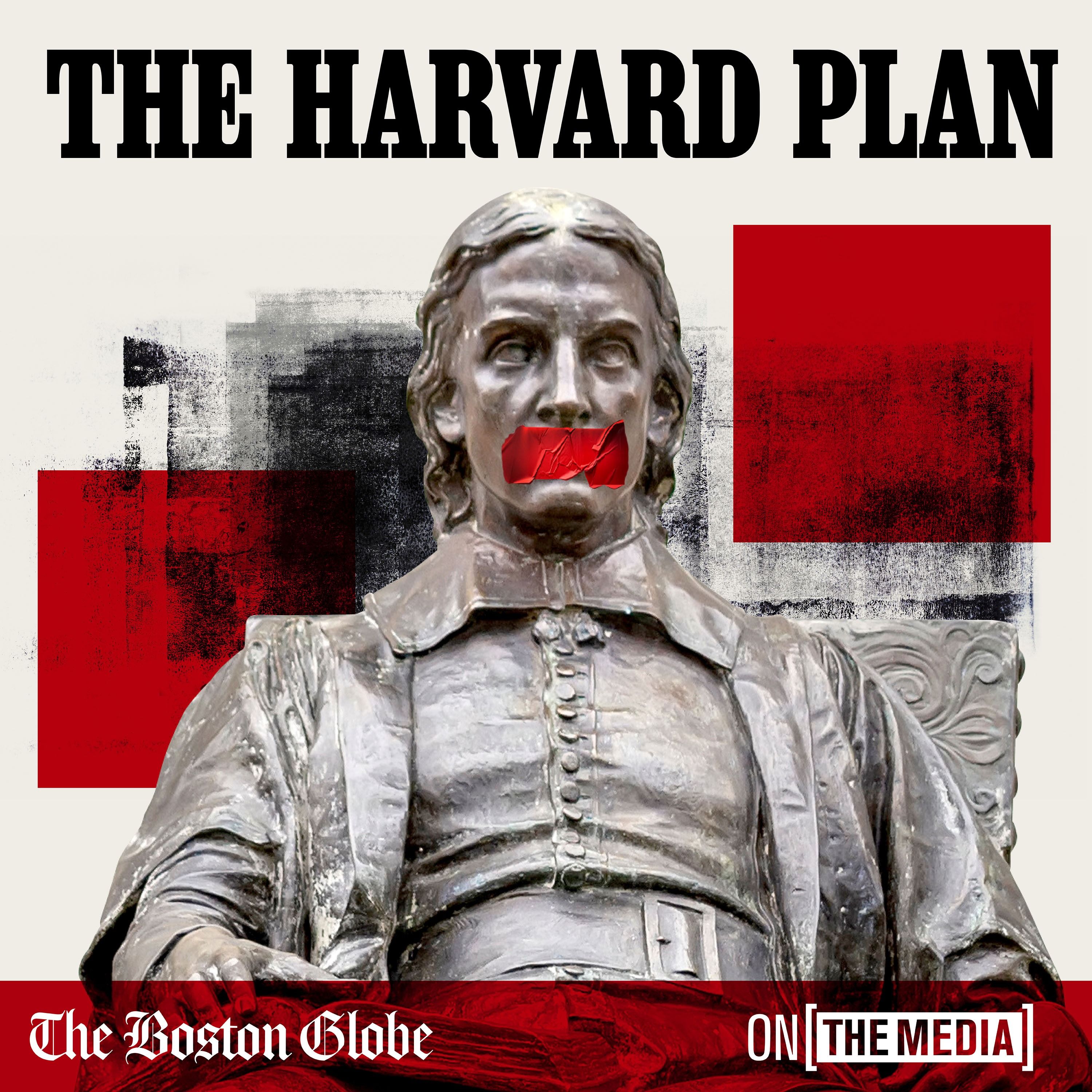
The Harvard Plan
Reporter Ilya Marritz—a longtime fan of More Perfect—drops in to share a new series he’s made with The Boston Globe and WNYC’s On the Media. The Harvard Plan investigates how the Trump administration’s pressure campaign is reshaping American universities through memorable characters, thorny moral and ethical questions, and high stakes. Preview the first episode here.The whole series is available t
No More Souters - Revisited
Justice David Souter has died. Souter was one of the most private, low-profile justices ever to have served on the Supreme Court. He rarely gave interviews or speeches. Yet his tenure was anything but low profile. Deemed a “home run” nominee by Republicans, Souter defied partisan expectations on the bench and ultimately ceded his seat to a Democratic president.As we reflect on his legacy, we want
Andy Warhol and the Art of Judging Art
The law protects creators' original work against copycats, but it also leaves the door open for some kinds of copying. When a photographer sues the Andy Warhol Foundation for using her work without permission, the justices struggle not to play art critics as they decide the case. More Perfect explores how this star-studded case offers a look at how this Court actually makes decisions.
Voices in th
The Original Anti-Vaxxer
In 1902, a Swedish-American pastor named Henning Jacobson refused to get the smallpox vaccine. This launched a chain of events leading to two landmark Supreme Court cases, in which the Court considered the balancing act between individual liberty over our bodies and the collective good.
A version of this story originally ran on The Experiment on March 21, 2021.
Voices in the episode include:
• Rev
Not Even Past: Dred Scott Reprise
Dred Scott v. Sandford is one of the most infamous cases in Supreme Court history: in 1857, an enslaved person named Dred Scott filed a suit for his freedom and lost. In his decision, Chief Justice Roger Brooke Taney wrote that Black men “had no rights which the white man was bound to respect.” One Civil War and more than a century later, the Taneys and the Scotts reunite at a Hilton in Missouri t
No More Souters
David Souter is one of the most private, low-profile justices ever to have served on the Supreme Court. He rarely gives interviews or speeches. Yet his tenure was anything but low profile. Deemed a “home run” nominee by Republicans, Souter defied partisan expectations on the bench and ultimately ceded his seat to a Democratic president.
In this episode, the story of how “No More Souters” became a
Off the Record, On the Stand
Recently, On the Media’s Micah Loewinger was called to testify in court. He had reported on militia groups who’d helped lead the January 6 attack on the Capitol. Now the government was using his work as evidence in a case against them. Micah wanted nothing to do with it — he worried that participating in the trial would signal to sources that he couldn’t be trusted, which would compromise his work
Adoptive Couple v. Baby Girl Reprise
Last week, the Supreme Court upheld the Indian Child Welfare Act in a case called Haaland v. Brackeen. The decision comes almost exactly 10 years after the Supreme Court ruled in Adoptive Couple v. Baby Girl, which planted the seed for last week’s big ruling. To mark the new landmark decision, More Perfect re-airs the Radiolab episode that tells the story of two families, a painful history, and a
Part 2: If Not Viability, Then What?
Now that the “viability line” in pregnancy — as defined by Roe v. Wade — is no longer federal law, lawmakers and lawyers are coming up with new frameworks for abortion access at a dizzying rate. In this second part of our series, More Perfect asks: what if abortion law wasn’t shaped by men at the Supreme Court, but instead by people who know what it’s like to be pregnant, to have abortions, and to
Part 1: The Viability Line
When the justices heard oral arguments in Dobbs v. Jackson Women’s Health Organization, the landmark abortion case, one word came up more than any other: viability. The viability line was at the core of Roe v. Wade, and it’s been entrenched in the abortion rights movement ever since. But no one seems to remember how this idea made its way into the abortion debate in the first place. This week on M
The Political Thicket Reprise
This week, we revisit one of the most important Supreme Court cases you’ve probably never heard of: Baker v. Carr, a redistricting case from the 1960s, which challenged the justices to consider what might happen if they stepped into the world of electoral politics. It’s a case so stressful that it pushed one justice to a nervous breakdown, put another justice in the hospital, brought a boiling feu
The Court’s Reporters
Unlike other branches of government, the Supreme Court operates with almost no oversight. No cameras are allowed in the courtroom, no binding code of ethics, and records of their activities are incredibly hard to get. So how do reporters uncover the activities of the nine most powerful judges in the country?
Live from the Logan Symposium on Investigative Reporting at UC Berkeley’s Graduate School
Clarence X
To many Americans, Clarence Thomas makes no sense. For more than 30 years on the Court, he seems to have been on a mission — to take away rights that benefit Black people. As a young man, though, Thomas listened to records of Malcolm X speeches on a loop and strongly identified with the tenets of Black Nationalism. This week on More Perfect, we dig into his writings and lectures, talk to scholars
The Supreme Court v. Peyote
More than 30 years ago, a Native American man named Al Smith was fired for ingesting peyote at a religious ceremony. When his battle made it to the Supreme Court, the decision set off a thorny debate over when religious people get to sidestep the law — a debate we’re still having today.
Voices in the episode include:
• Garrett Epps — University of Oregon Law School professor
• Ka’ila Farrell-Smith
The Preamble: Introducing More Perfect Season 4
To kick off the new season, host Julia Longoria returns to high school, where she first fell in love with the Supreme Court. She was a star on her high school’s nationally-ranked “Constitution team” (read: nerd Super Bowl). For Julia, the Court represented a place where two sides of an issue could be discussed and debated. A lot has changed since then — and public perception around the Court is po
More Perfect Is Coming Back
More Perfect has been dark for four years now. But next year, hosted by Julia Longoria, we're coming back!
The past few weeks have been historic, to say the least, in Supreme Court history. So in the meantime, we want to hear from you. What do you want to know right now about the Supreme Court? What are your questions, your worries, your fears?
Record a voice memo or write us a note and send it to
The Unfinished Amendments with Kevin Devine
In More Perfect's final episode of the season, listen to liner notes for two amendments that contemplate the still-unfinished status of our Constitution. "27" is an album that marks a particular point in our history: this moment when we have 27 Amendments to our Constitution. What will be the 28th?
Maybe it will address our nation's capital. The capital has been a bit of a Constitutional anomaly f
The Democracy Amendments with Stef Chura
This week, More Perfect takes a look at three amendments on the more obscure end of the spectrum. The 12th, 17th, and 20th Amendments made fine-tune adjustments to the way we pick our leaders. More Perfect is here to prove these three are more interesting than you think they are.
For starters, the 12th Amendment is the secret star of the hit musical "Hamilton." The Election of 1800 and the kerfuff
The Power Player Amendments with Devendra Banhart
The 25th and 26th Amendments — ratified in 1967 and 1971, respectively — are some of the newest additions to our founding document. However, they tackle some pretty basic questions: who gets to rule, and who gets to vote? If a president dies or is incapacitated, who takes over? And how old do you have to be in order to participate in American democracy?
In recent months, the 25th Amendment has swi
The Sleeper Amendments with Post Animal
On first read the 16th and 22nd Amendments are at best sleepers and at worst, stinkers. In a list of Constitutional hits like the right to free speech, the right to bear arms, and birthright citizenship, the amendments covering taxes and term limits tend to fall by the wayside. But in this episode of More Perfect we take these forgotten gems and make them shine.
The 16th Amendment sets up the inco
The Reconstruction Amendments with Kash Doll
Amendments 13, 14, and 15 are collectively known as the Reconstruction Amendments: they were passed as instructions to rebuild the country after the Civil War. They addressed slavery, citizenship, equality, and voting rights for Black people. This week, the More Perfect team explores the legacy of the amendments beyond the Civil War — the ways the promises of these amendments changed the country a
The 19th Amendment with Dolly Parton
Episode Four begins as all episodes should: with Dolly Parton. Parton wrote a song for us (!) about the 19th Amendment and women (finally) getting the right to vote.Also in this episode: Our siblings at Radiolab share a story with us that they did about how the 19th Amendment almost died on a hot summer night in Tennessee. The 19th Amendment was obviously a huge milestone for women in the United S
The Eccentric Amendments with The Kominas
The first eight amendments to the U.S. Constitution are literal, straightforward, and direct. But when we get to Amendments Nine, 10, and 11, things get hazy. These are some of the least literal amendments in the Constitution: they mean more than they say, and what they say is often extremely confusing. So in the third episode of the new More Perfect season, we take these three blurry amendments a
The Criminal Justice Amendments with Adia Victoria
The Fourth, Fifth, Sixth, Seventh and Eighth Amendments enshrine some of our most important civil liberties. They tell us about the rights we have when the government knocks on our door, including protections from "unreasonable searches and seizures," self-incrimination, "cruel and unusual punishments," and the right to "a speedy and public trial" — among others.
Episode Two looks at these amendme
The Gun Show Reprise
Last year in the wake of the attack in Las Vegas, reporter Sean Rameswaram took a deep dive into America's twisty, thorny, seemingly irreconcilable relationship with guns. It's a story about the Second Amendment, the Black Panthers, the NRA, and a guy named Dick Heller, who in 2008 brought the Second Amendment to the Supreme Court for the very first time.
The First Amendments with They Might Be Giants
Let's get started. If we're talking about the Amendments to the U.S. Constitution, it only feels right to start at the beginning. The First and Second Amendments are arguably the most ferociously contentious amendments of them all, and the Third Amendment is the underdog that everyone underestimates but (maybe) shouldn’t.
With that in mind, we dive into the poetic dream behind the First Amendment.
We've Got a Surprise For You
This fall, More Perfect is doing something brand new: We’re making an album!
It’s called 27: The Most Perfect Album. We’ve partnered with some of the best musicians in the world— artists like Dolly Parton, Kevin Morby, Devendra Banhart, Aisha Burns, and more — to create songs inspired by the 27 amendments to the U.S. Constitution.
Alongside the album, we’ll be launching SEASON THREE of our pod
American Pendulum Reprise
What happens when the Supreme Court, the highest court in the land, seems to get it wrong? Korematsu v. United States upheld President Franklin Roosevelt’s internment of American citizens during World War II based solely on their Japanese heritage, for the sake of national security. In this episode, we follow Fred Korematsu’s path to the Supreme Court, and we ask the question: if you can’t get jus
One Nation, Under Money
An unassuming string of 16 words tucked into the Constitution grants Congress extensive power to make laws that impact the entire nation. The Commerce Clause has allowed Congress to intervene in all kinds of situations — from penalizing one man for growing too much wheat on his farm, to enforcing the end of racial segregation nationwide. That is, if the federal government can make an economic case
Justice, Interrupted
The rules of oral argument at the Supreme Court are strict: when a justice speaks, the advocate has to shut up. But a law student noticed that the rules were getting broken again and again — by men. He and his professor set out to chart an epidemic of interruptions. If women can’t catch a break in the boardroom or the legislature (or at the MTV VMA’s), what’s it going to take to let them speak
The Architect
On this episode, we revisit Edward Blum, a self-described “legal entrepreneur” and former stockbroker who has become something of a Supreme Court matchmaker: he takes an issue, finds the perfect plaintiff, matches them with lawyers, and helps the case work its way to the highest court in the land. His target: laws that differentiate between people based on race — including ones that empower minori
Mr. Graham and the Reasonable Man
On a fall afternoon in 1984, Dethorne Graham ran into a convenience store for a bottle of orange juice. Minutes later he was unconscious, injured, and in police handcuffs. In this episode, we explore a case that sent two Charlotte lawyers on a quest for true objectivity, and changed the face of policing in the US.
Sex Appeal
“Equal protection of the laws” was granted to all persons by the 14th Amendment in 1868. But for nearly a century after that, women had a hard time convincing the courts that they should be allowed to be jurors, lawyers, and bartenders, just the same as men. A then-lawyer at the ACLU named Ruth Bader Ginsburg set out to convince an all-male Supreme Court to take sex discrimination seriously with a
The Hate Debate
Should you be able to say and do whatever you want online? And if not, who should police this? More Perfect hosts a debate about online hate speech, fake news and whether the First Amendment needs an update for the digital age.
Citizens United
Citizens United vs. Federal Election Commission is one of the most polarizing Supreme Court cases of all time. So what is it actually about, and why did the Justices decide the way they did? Justice Anthony Kennedy, often called the “most powerful man in America,” wrote the majority opinion in the case. In this episode, we examine Kennedy’s singular devotion to the First Amendment and look at how
Enemy of Mankind
Should the U.S. Supreme Court be the court of the world? In the 18th century, two feuding Frenchmen inspired a one-sentence law that helped launch American human rights litigation into the 20th century. The Alien Tort Statute allowed a Paraguayan woman to find justice for a terrible crime committed in her homeland. But as America reached further and further out into the world, the court was forced
The Heist
The Supreme Court may not have been conceptualized as a co-equal branch of the federal government, but it became one as a result of the political maneuvering of Chief Justice John Marshall. The fourth (and longest-serving) chief justice was "a great lover of power," according to historian Jill Lepore, but he was also a great lover of secrecy. Marshall believed, in order for the justices to confer
The Gun Show
For nearly 200 years of our nation’s history, the Second Amendment was an all-but-forgotten rule about the importance of militias. But in the 1960s and 70s, a movement emerged — led by Black Panthers and a recently-repositioned NRA — that insisted owning a firearm was the right of each and every American. So began a constitutional debate that only the Supreme Court could solve. That didn’t happen
Who’s Gerry and Why Is He So Bad at Drawing Maps?
“It is an invidious, undemocratic, and unconstitutional practice,” Justice John Paul Stevens said of gerrymandering in Vieth v. Jubelirer (2004). Politicians have been manipulating district lines to favor one party over another since the founding of our nation. But with a case starting today, Gill v. Whitford, the Supreme Court may be in a position to crack this historical nut once and for all.
Up
American Pendulum II
In this episode of More Perfect, how two families grapple with one terrible Supreme Court decision. Dred Scott v. Sandford is one of the most infamous cases in Supreme Court history: in 1857, a slave named Dred Scott filed a suit for his freedom and lost. In his decision, Chief Justice Roger Brooke Taney wrote that black men “had no rights which the white man was bound to respect.” One civil war
American Pendulum I
What happens when the Supreme Court, the highest court in the land, seems to get it wrong? Korematsu v. United States is a case that’s been widely denounced and discredited, but it still remains on the books. This is the case that upheld President Franklin Roosevelt’s internment of American citizens during World War II based solely on their Japanese heritage, for the sake of national security. In
We're Back
More Perfect, the show that takes you inside the United States Supreme Court, is back on October 2, 2017.
Sex, race, guns, executive orders: Season two has it all.
We'll see you in court.
Object Anyway
At the trial of James Batson in 1983, the prosecution eliminated all the black jurors from the jury pool. Batson objected, setting off a complicated discussion about jury selection that would make its way all the way up to the Supreme Court. On this episode of More Perfect, the Supreme Court ruling that was supposed to prevent race-based jury selection, but may have only made the problem worse.
Kittens Kick The Giggly Blue Robot All Summer
With the recent passing of Ruth Bader Ginsburg, there's been a lot of debate about how much power the Supreme Court should really have.
We think of the Supreme Court justices as all-powerful beings, issuing momentous rulings from on high. But they haven’t always been so, you know, supreme. On this episode, we go all the way back to the case that, in a lot of ways, started it all.
The Imperfect Plaintiffs
On this episode, we visit Edward Blum, a 64-year-old “legal entrepreneur” and former stockbroker who has become something of a Supreme Court matchmaker. He’s had remarkable success, with 6 cases heard before the Supreme Court, including that of Abigail Fisher. We also head to Houston, Texas, where in 1998, an unusual 911 call led to one of the most important LGBTQ rights decisions in the Supreme C
More Perfect presents: Adoptive Couple v. Baby Girl
On this episode, a three-year-old girl and the highest court in the land. From the Radiolab archives, Adoptive Couple v. Baby Girl is the story that inspired More Perfect's creation.
The Political Thicket
The question of how much power the Supreme Court should possess has divided justices over time. But the issue was perhaps never more hotly debated than in Baker v. Carr. On this episode of More Perfect, we talk about the case that pushed one Supreme Court justice to a nervous breakdown, brought a boiling feud to a head, put one justice in the hospital, and changed the course of the Supreme Court –
Cruel and Unusual
On the inaugural episode of More Perfect, we explore three little words embedded in the 8th Amendment of the U.S. Constitution: “cruel and unusual.” The Supreme Court has continually grappled with what these words mean, especially as they pertain to one of our most hot button issues as a country: the death penalty.
Coming Soon: More Perfect
How does an elite group of nine people shape everything from marriage and money, to safety and sex for an entire nation? From the producers of Radiolab, More Perfect dives into the rarefied world of the Supreme Court to explain how cases deliberated inside hallowed halls affect lives far away from the bench.