HomePodcastsThe Brand Strategy Podcast with Fexingo: Identity, Positioning, and Long-Term Brand Building
The Brand Strategy Podcast with Fexingo: Identity, Positioning, and Long-Term Brand Building
Fexingo50 EpisodesOct 16, 2026
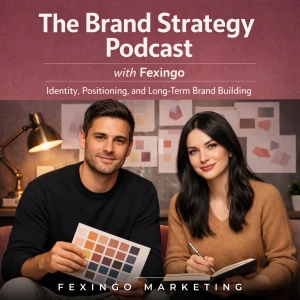
Lucas and Luna dissect the mechanics of brand longevity in this show, where every episode examines one real company's identity and positioning choices through the lens of publicly available financial and consumer data. They avoid marketing fluff, instead tracing how brands like Patagonia, Apple, or LEGO build equity over decades—looking at their visual systems, messaging frameworks, and market reactions to pivots. Lucas often draws from his background in journalism to fact-check claims, while Luna, sketching in her notebook, pushes back with counterexamples from retail or DTC failures. Together, they explore tensions like consistency vs. cultural adaptation, or differentiation vs. category norms. Each episode ends with a specific, actionable question for the listener.
Episodes
How Glossier Built a Beauty Empire on User ContentOct 16, 20269:17Glossier started with one question: who is actually buying the makeup? The answer was not the industry standard. Emily Weiss and her team built a brand by listening to readers of The Zoe Report. They turned comments into products. This episode explores how user-generated content became the core R&D department. We look at the specific mechanics of community-led growth. From early blog posts to glob
How Glossier Built a Beauty Empire on User ContentOct 11, 202610:57Glossier didn't just launch skincare; they launched a visual language. This episode explores how the brand turned its earliest customers into its primary marketing department by prioritizing user-generated content over polished studio photography. We look at the specific mechanics of their early Instagram strategy, the decision to feature real skin textures, and how that authenticity drove a valua
How Duolingo Built a Brand on Meme CultureOct 10, 20269:54Duolingo has transformed from a simple language learning app into one of the most recognizable and controversial brands on social media. In this episode, we examine how the company leveraged its green owl mascot to engage directly with internet culture, turning criticism and virality into massive user acquisition. We explore the strategic risks of anthropomorphizing a brand, the economics of organ
How Patagonia Monetized Its Own Anti-Growth MissionOct 9, 202612:28In 2022, the outdoor apparel brand Patagonia made a radical structural decision that redefined corporate responsibility. Founder Yvon Chouinard transferred ownership of the company to a trust and nonprofit dedicated to fighting climate change. This episode dissects how this move preserved brand equity while shifting profit distribution. We examine the financial mechanics behind the Earth Inc struc
How Lego Turned Failure Into A $6 Billion RenaissanceOct 8, 20268:16In this episode, Lucas and Luna dissect the late two-thousands crisis at Lego when it nearly went bankrupt. They explore how the company stripped away its chaotic expansion, returned to the core brick, and implemented a radical open-innovation model with fans. This strategic pivot didn't just save the brand; it created a new playbook for product-led growth and community co-creation that modern mar
How Patagonia Turned Anti-Growth Into a Profit MachineOct 7, 202610:25We explore how Patagonia’s radical decision to cap its own growth and sue the government over public lands created a moat of trust that competitors can’t replicate. By analyzing their 'Don't Buy This Jacket' campaign and their recent transfer of ownership to a conservation trust, we uncover the mechanics of anti-marketing. In an era where every brand screams for attention, Patagonia proves that re
How Patagonia Turned Anti-Growth Into a $3 Billion StrategyOct 6, 202610:25In October two thousand twenty-six, we look at how Yvon Chouinard’s radical decision to give away his company shifted the paradigm of corporate purpose. This episode explores the mechanics of Earth Inc, the specific financial structures that allow for perpetual environmental stewardship, and why this move was less about charity and more about securing long-term brand equity against regulatory risk
How Spotify Turned Data Into a Cultural PhenomenonOct 5, 202610:43Lucas and Luna explore how Spotify transformed from a music streaming utility into a dominant cultural force by weaponizing data for personal branding. They dissect the mechanics of Wrapped, analyzing why annual summary reports create higher engagement than daily playlists. The conversation covers the shift from algorithmic discovery to identity-driven sharing, the role of emotional resonance in v
How Patagonia Built a Trust-Driven Brand EconomyOct 4, 202612:56We dissect the counterintuitive business logic behind Patagonia’s decision to give away its company in trust. By examining their supply chain transparency, repair services, and anti-consumption messaging, we explore how building genuine trust creates pricing power and long-term equity. This episode moves beyond typical marketing tactics to look at structural brand alignment.
#Patagonia #BrandTrus
How Lego Turned Failure Into A $6 Billion RenaissanceOct 3, 20269:53In October of two thousand and twenty-six, we look back at the most audacious pivot in modern consumer history. In two thousand and eight, Lego was bleeding cash, facing bankruptcy, and had just fired its CEO. The solution wasn't a new toy, but a radical return to the core brick while simultaneously building a media empire around it. Lucas and Luna break down how Lego avoided extinction by killing
How Lego Mastered Category ExpansionOct 2, 20268:09Lucas and Luna explore how Lego moved beyond bricks to become a media empire, analyzing their strategic pivot in the mid-two-thousands. They dissect the specific risks of licensing deals with major film studios and why the recent shift toward original intellectual property matters for long-term brand equity. The conversation examines the balance between franchise dependency and creative autonomy,
How IKEA Mastered the Art of Frictionless BuyingOct 1, 202611:50We explore how IKEA turned the painful experience of furniture shopping into a competitive advantage through intentional design friction. In this episode, Lucas and Luna break down the specific mechanics of the store layout, the meatball strategy, and the flat-pack logistics that allowed the Swedish retailer to dominate global home furnishings. We examine why forcing customers to do the work actua
How Lego Turned Play Into A Profit MachineSep 30, 20268:27Lego nearly went bankrupt in the early two-thousands before executing one of the most dramatic turnarounds in consumer goods history. This episode dissects the specific strategic pivot that saved the company, focusing on how they moved from generic plastic expansion back to core bricks and licensed storytelling. We look at the role of co-creation with adult fans, the discipline of standardizing pa
How Duolingo Monetized Its Viral PersonalitySep 29, 20268:11Duolingo has transformed from a niche language-learning tool into a cultural phenomenon, largely thanks to its unapologetically chaotic brand voice. In this episode, we break down how the company leveraged its mascot, Duo the owl, to build massive organic reach on social media without spending millions on traditional advertising. We explore the strategic shift from utility-first marketing to perso
How Duolingo Turned Grammar Into a Global ObsessionSep 28, 202611:43Duolingo has become a cultural phenomenon, but its brand strategy is far more calculated than the cute owl suggests. In this episode, we break down how Duolingo leveraged gamification, dark patterns, and social media absurdity to build a global language-learning empire without traditional advertising. We explore the specific mechanics of their retention loops, the role of their mascot Duo in drivi
How Lego Mastered the Art of Brand LicensingSep 27, 20268:53Lucas and Luna dissect how Lego transformed from a near-bankrupt toy maker into a licensing juggernaut, generating over half its revenue from intellectual property deals. They explore the strategic pivot from product-centric growth to IP-centric expansion, analyzing the delicate balance between creative freedom and brand guardrails in partnerships with Disney, Warner Bros., and Universal. The epis
How Airbnb Turned Empty Rooms Into A Global PlatformSep 26, 20269:30We break down how Airbnb redefined the travel industry by solving the trust deficit in peer-to-peer sharing. From its early days of renting air mattresses to becoming a trillion-dollar platform, this episode explores the specific design and policy decisions that built global confidence. We look at the psychology of host-guest verification, the role of professional photography, and how the company
How Chobani Rebuilt Trust Through Radical TransparencySep 25, 20268:24In September 2026, the yogurt aisle remains a battlefield of claims, but Chobani’s recent pivot offers a masterclass in radical transparency. This episode dissects how the brand moved beyond vague wellness buzzwords to publish granular supply chain data, ingredient sourcing maps, and honest nutritional breakdowns. We explore why consumers are tired of greenwashing and how Chobani used radical hone
The Psychology of Pricing Power and Brand EquitySep 24, 202611:02We dive into the counterintuitive economics of why raising prices often strengthens a brand rather than alienating customers. Using Apple as our primary case study, we explore how premium pricing signals quality and builds long-term equity. We also look at the psychological threshold where price becomes a feature, not just a cost. This is episode two hundred of The Brand Strategy Podcast.
#BrandS
How Duolingo Turned Grammar Into a Global ObsessionSep 23, 202611:55We look at how Duolingo shifted from a utilitarian language app to a cultural phenomenon by leaning into the chaotic, meme-friendly persona of Duo the Owl. In this episode, we break down the specific marketing pivot that turned a functional utility into an entertainment brand, driving user retention and viral growth through unapologetic absurdity.
#Duolingo #BrandStrategy #MarketingTactics #Viral
How Patagonia Built a Trust-Driven Brand EconomySep 22, 202610:35We examine the structural mechanics behind Patagonia’s decision to transfer ownership to a trust dedicated to fighting climate change. This isn't just philanthropy; it's a radical re-engineering of corporate governance that aligns financial incentives with environmental mission. Lucas and Luna break down how this move protects long-term brand equity, influences consumer loyalty in an era of greenw
How Lululemon Built a Brand on CommunitySep 21, 20268:40We dissect the counter-intuitive marketing strategy behind one of the most valuable athletic brands, focusing on their pivot from direct-to-consumer dominance to wholesale expansion. We analyze how Lululemon leveraged ambassador programs and community-led growth to sustain high margins in a saturated market. This episode explores the specific mechanics of their retail experience design, including
How Chobani Built a Category Through Cultural AlignmentSep 20, 202610:05In this episode of The Brand Strategy Podcast, Lucas and Luna explore how Chobani transformed Greek yogurt from a niche health food into a mainstream cultural staple. We break down the specific marketing decisions behind its $1.3 billion acquisition by Hamilton Lane, the power of radical ingredient transparency, and how the brand leveraged social movements to build deep consumer loyalty without sa
How Glossier Proved Less Is More in BeautySep 19, 20268:53In this episode, we examine how Glossier transformed the beauty industry by shifting from product-first to community-first marketing. We explore their radical transparency, user-generated content strategies, and the decision to prioritize digital engagement over traditional retail expansion. Featuring insights on brand building, customer loyalty, and the power of listening to your audience in mode
How Monzo Built Trust Through Radical TransparencySep 18, 20269:43In this episode of The Brand Strategy Podcast, Lucas and Luna explore how Monzo transformed the banking industry by abandoning traditional secrecy in favor of radical transparency. We examine their unique approach to customer service, real-time notifications, and public roadmap updates that turned a fintech challenger into a household name. Discover how owning mistakes and sharing internal data bu
How Glossier Built a Brand on Radical TransparencySep 17, 202611:32Lucas and Luna dissect how Glossier turned its early blog readers into a global beauty empire through radical transparency. We explore the company’s decision to showcase real skin textures, its direct-to-consumer feedback loops, and the strategic pivot from community-driven product development to scaled retail partnerships. This episode examines the specific mechanics of user-generated content as
How Nike Built A Brand From The Inside OutSep 16, 202611:03Nike didn't start as a global empire; it began with Blue Ribbon Sports and a handshake deal with Bill Bowerman. This episode explores how internal culture, specifically the 'Coach's Club' philosophy, shaped external branding before social media existed. We examine the specific decision to cut ties with Reebok and focus on innovation over distribution, using the Air Jordan launch as a pivotal momen
How Lego Built a Global Brand RenaissanceSep 15, 202613:08Lucas and Luna explore how Lego survived its 2004 near-bankruptcy by abandoning diversification and returning to its core product. They examine the strategic pivot from a sprawling conglomerate of theme parks and video games back to the interlocking brick, focusing on the leadership decision to cut SKUs and reinvest in IP licensing like Star Wars. This episode analyzes the specific operational cha
How Starbucks Built A Global Brand From One CupSep 14, 20269:12We explore how Starbucks transformed a local Seattle coffee roaster into a global cultural icon by selling an experience rather than just caffeine. We break down the three pillars of their brand strategy: the third place concept, the partner-centric culture, and the sensory branding that defines their stores today. With specific examples from Howard Schultz’s early vision to current digital loyalt
How Red Bull Built a New CategorySep 13, 202610:05We explore the counterintuitive strategy behind Red Bull's dominance in energy drinks. Rather than competing on taste or price, Red Bull invested heavily in creating its own distribution channels and event rights to control brand perception. This episode breaks down how this approach allowed them to build a global empire from scratch, turning a functional beverage into a cultural lifestyle brand t
How Patagonia Proved Values Drive RevenueSep 12, 202610:03In this episode, Lucas and Luna examine how Patagonia’s radical alignment of corporate values with consumer behavior created a unique moat. They analyze the 'Earth is our only shareholder' transfer, the decision to refuse Black Friday sales, and how authenticity became their primary growth engine rather than a constraint. The conversation explores why most brands fail at value-driven marketing whi
How DuPont Built a Brand on Invisible InnovationSep 11, 20269:40In episode one hundred and eighty seven, we look at how DuPont transformed from a chemical manufacturer into a global brand powerhouse by mastering the art of invisible innovation. With products like Kevlar and Teflon, they didn't just sell chemicals; they sold safety and convenience. Lucas and Luna break down the specific strategy behind their corporate identity, how they managed public perceptio
How Lululemon Built a Brand on CommunitySep 10, 202610:47We examine how Lululemon transformed from a niche yoga retailer into a global apparel powerhouse by treating its stores as community hubs rather than transaction points. This episode breaks down the specific mechanics of their ambassador program, the deliberate choice to avoid traditional celebrity endorsements, and the data-driven approach to product iteration that kept them ahead of fast fashion
How Lego Turned Crisis Into a Global Brand RenaissanceSep 9, 20268:15Lucas and Luna dissect the precise strategic pivot that saved Lego from bankruptcy in the early two thousands. They explore how abandoning generic licensing and doubling down on the core brick system transformed a near-failing toy maker into a cultural icon. This episode examines the tension between short-term revenue and long-term brand equity, using Lego's return to profitability as a masterclas
How LVMH Masters Brand ArchitectureSep 8, 20268:36We dissect the complex brand architecture of LVMH, exploring how it manages over seventy luxury houses from Louis Vuitton to Bulgari without diluting their individual prestige. Lucas and Luna examine the 'house system' strategy, the tension between creative autonomy and corporate scale, and why this model works for ultra-luxury but might fail in other sectors. We look at specific examples of how h
How Lululemon Turned Yoga Pants Into A Cultural MovementSep 7, 202613:47Lululemon started as a niche yoga brand but grew into a billion-dollar empire by mastering community-led marketing and product innovation. Lucas and Luna explore how the company built its identity through ambassador programs, retail experience design, and a cult-like customer base that drives long-term loyalty. They examine the specific strategies that turned athletic wear into everyday fashion, o
How Leica Defied Digital DisruptionSep 6, 202610:58When digital cameras were eating the camera industry, Leica didn't fight the trend. Instead, they doubled down on mechanical precision and an impossible price point. This episode explores how a heritage brand turned a liability—cost—into its greatest asset by cultivating a cult following of photographers who value process over pixels. We look at the specific pricing strategy, the limited edition r
How Red Bull Created a New CategorySep 5, 202611:24We dissect the counterintuitive marketing engine behind Red Bull, focusing on how they turned a high-caffeine beverage into a media empire and an extreme sports juggernaut. Instead of relying on traditional advertising spend, Red Bull invested heavily in ownership of events and content production, effectively becoming a publishing company that happens to sell drinks. We explore the specific mechan
How Spotify Built a Brand on Data and PersonalizationSep 4, 20269:30We dive into how Spotify transformed from a music streaming utility into a cultural identity engine by leveraging its vast trove of user data. With over five hundred million monthly active users as of late summer two thousand twenty-six, the company’s strategy hinges on turning listening habits into personalized narratives like Wrapped. We examine the tension between hyper-personalization and priv
How Lululemon Built a Brand on CommunitySep 3, 20266:36Lululemon started as a niche yoga apparel company and grew into a global powerhouse by mastering community-led growth. This episode explores how the brand turned local store events into a powerful marketing engine, creating a loyal following that transcended product features. We examine the role of educator programs, experiential retail, and word-of-mouth strategies in building long-term brand equ
How IKEA Uses Furniture as a Cultural MirrorSep 2, 202612:51IKEA has sold over three billion flat-pack items since 1956, yet its success is rarely about the furniture itself. It is about the architecture of desire. We explore how IKEA uses spatial psychology, strategic price points, and the 'one-way' store layout to engineer impulse purchases that feel like personal discoveries. By examining the specific mechanics of their room displays and the 'impulse bu
How Patagonia Mastered The Art Of Saying No To GrowthSep 1, 202613:36Patagonia is famous for telling customers not to buy their jackets, but that anti-consumerist stunt was just the tip of the iceberg. In this episode, we dig into the company's radical decision in early twenty twenty four when founder Yvon Chouinard transferred ownership of the entire business to a trust dedicated to fighting climate change. We explore how this move wasn't just a PR gesture but a f
How Fjällräven Built a Brand on DurabilityAug 31, 20269:02In this episode of The Brand Strategy Podcast, Lucas and Luna explore how Fjällräven, the Swedish outdoor brand, built a global following on a foundation of durability, understated design, and a stubborn refusal to chase trends. They trace the brand's origins from a 1960s backpack invention to its iconic Kånken bag and the Fjällräven Classic trek, examining how a company can thrive by selling fewe
How Airbnb Built a Brand on BelongingAug 30, 20269:04In this episode of The Brand Strategy Podcast, Lucas and Luna explore how Airbnb built a global brand on the idea of belonging, not just accommodation. They trace the journey from the famous cereal boxes that funded the company to the 'Belong Anywhere' campaign and the 2014 rebrand that introduced the Bélo symbol. They discuss the challenges of maintaining trust after incidents like the 2011 host
How Patagonia's Worn Wear Program Redefined Brand LoyaltyAug 29, 20268:04In this episode of The Brand Strategy Podcast, Lucas and Luna explore how Patagonia's Worn Wear program has become a masterclass in brand loyalty by embracing repair and resale. They trace the program's evolution from a simple repair initiative to a full-fledged sustainability movement, examining how it aligns with Patagonia's mission and resonates with consumers. The hosts discuss the economic pa
How Patagonia Redefined Brand LoyaltyAug 28, 20267:03In this episode of The Brand Strategy Podcast, Lucas and Luna dig into the surprisingly strategic world of brand licensing and white-label partnerships. They use the example of a major outdoor retailer that quietly puts its name on gear made by established manufacturers — and why that's a smart play for consistency, not a cop-out. They explore how licensing lets brands extend their promise into ne
How Liquid Death Turned Water Into a Punk Rock BrandAug 27, 20268:17Liquid Death sold canned water by rejecting everything about the water aisle. In this episode, Lucas and Luna dig into the brand's anti-branding playbook — from its metal-band aesthetic to its irreverent social media voice — and what it teaches about category disruption. They unpack the psychology behind the taboo-breaking packaging, the role of humor in building a cult following, and how Liquid D
How The New York Times Grew a Cooking App into a BrandAug 26, 20267:54The New York Times Cooking app isn't just a recipe database; it's a masterclass in building a subscription-based brand extension. In this episode, Lucas and Luna explore how the Times leveraged its journalistic authority, a beloved recipe archive, and a community of home cooks to create a standalone product that strengthens the core news brand. They discuss the strategic decision to put the app be
How Glossier Built a Brand on Community FeedbackAug 25, 20268:45In this episode of The Brand Strategy Podcast, Lucas and Luna explore how Glossier turned customer feedback into a core brand strategy. From the early blog days to the product development of Boy Brow and Cloud Paint, they discuss how Glossier's community-first approach shaped its identity, fueled its growth, and created a loyal following. They also examine the challenges of scaling community-drive
How Costco Turns Membership Into Brand LoyaltyAug 24, 20268:20Costco doesn't advertise, yet it has one of the most loyal customer bases in retail. In this episode, Lucas and Luna explore how the membership model itself is the brand. They break down the psychology of the membership fee, the treasure hunt in-store, and how private labels like Kirkland Signal build trust. Learn how Costco's $60 membership feels like a sunk cost that pays off, and why the thrill
How LEGO Built a Brand on Adult Fans and NostalgiaAug 23, 20268:52In this episode of The Brand Strategy Podcast, Lucas and Luna explore how LEGO transformed from a struggling toy company in the early 2000s into a cultural powerhouse driven by adult fans. They unpack the strategic shift toward nostalgia and the AFOL (Adult Fan of LEGO) community, highlighting the iconic LEGO Ideas platform and the success of sets like the NASA Apollo Saturn V. The conversation to
How Harley-Davidson Built a Brand on RebellionAug 22, 20269:53In this episode of The Brand Strategy Podcast, Lucas and Luna explore how Harley-Davidson turned rebellion into a century-long brand identity. They unpack the company's use of scarcity, community, and the iconic bar-and-shield logo. Learn how Harley's shift to electric motorcycles, like the LiveWire, risks alienating its core riders, and what that means for the future of the brand. Tune in for a d
How Patagonia's Worn Wear Redefined Brand LoyaltyAug 21, 20266:07Patagonia's Worn Wear program has become a cornerstone of its brand, turning used gear into a loyalty engine. In this episode, Lucas and Luna explore how the program's repair-first philosophy, trade-in credits, and secondhand marketplace have built a community of repeat customers and reinforced the company's environmental mission. They discuss the program's evolution, its impact on consumer behavi
How Chobani Built a Brand on Love and Mass AffordabilityAug 20, 20269:35In this episode of The Brand Strategy Podcast, Lucas and Luna explore how Chobani transformed from a shuttered yoghurt plant in upstate New York into a cultural phenomenon by championing mass affluence, not mass premium. They unpack founder Hamdi Ulukaya's decision to pay employees a living wage, donate 10 percent of profits to charity, and hire refugees — all while keeping prices accessible. The
How The Ordinary Built a Brand on Radical TransparencyAug 19, 20269:25In this episode, Lucas and Luna dig into how The Ordinary, the skincare brand owned by Deciem, built a global following not with celebrity endorsements or glossy ads, but with a no-nonsense, ingredient-first approach that felt almost anti-marketing. They break down the brand's origin story, starting with founder Brandon Truaxe's early vision, the infamous 'cheap but effective' positioning, and how
How Duolingo's Owl Built a Brand Empire on ChaosAug 18, 20267:53In this episode, Lucas and Luna examine Duolingo's mascot, Duo the owl, and how a deliberately chaotic brand personality turned a language app into a cultural phenomenon. They break down the specifics: Duo's TikTok strategy, the 'passive-aggressive' notification design, and the surprising brand architecture that lets Duo break rules while the product stays trustworthy. They discuss what makes anti
How Glossier Built a Brand on Community FeedbackAug 17, 20269:00In this episode of The Brand Strategy Podcast, Lucas and Luna dig into the early days of Glossier, the beauty brand that turned customer feedback into its core brand engine. They trace how Emily Weiss's blog, Into The Gloss, became a listening lab, and how the brand's first product, Milky Jelly Cleanser, was shaped directly by reader comments. They explore the risks of building a brand on communit
How Patagonia's Worn Wear Redefined Brand LoyaltyAug 16, 20268:41Patagonia's Worn Wear program is more than a repair service—it's a strategic brand statement. In this episode, Lucas and Luna unpack how the outdoor apparel company turned sustainability into a loyalty engine, using specific numbers like the 2011 Black Friday 'Don't Buy This Jacket' ad and the impact of resale on customer retention. They discuss the tension between growth and durability, and why a
How Reddit Built a Brand on Authentic CommunityAug 15, 20268:01In this episode of The Brand Strategy Podcast, Lucas and Luna explore how Reddit transformed from a sprawling internet forum into a formidable brand defined by authentic community. They unpack the mechanics behind Reddit's rise: the karma system that incentivizes quality, the subreddit structure that enables niche ownership, and the company's deliberate shift from anonymity to accountability. With
How Liquid Death Built a Brand on Anti-BrandingAug 14, 202611:50Liquid Death turned canned water into a cultural phenomenon by mocking the very idea of branding. In this episode, Lucas and Luna dissect the strategy behind the anti-brand: how the company used irreverent humor, metal aesthetics, and a 'murder your thirst' tagline to stand out in a category as boring as bottled water. They explore the psychology of contrarian marketing, the role of viral content,
How Liquid Death Built a Brand on Anti-BrandingAug 13, 20269:15In this episode of The Brand Strategy Podcast, Lucas and Luna dissect how Liquid Death turned a canned water company into a cultural phenomenon by borrowing the visual language of heavy metal and energy drinks. They explore the psychology of anti-branding, the strategic use of humor and irreverence, and how the brand leveraged a shocking aesthetic to dominate social media and retail shelves. With
How Patagonia's Worn Wear Program Redefined Brand LoyaltyAug 12, 20268:20In this episode of The Brand Strategy Podcast, Lucas and Luna explore how Patagonia's Worn Wear program transformed the brand's relationship with its customers. They dive into the history of the program, its impact on brand loyalty, and why repair and resale are becoming essential pillars of modern brand strategy. Learn how Patagonia turned sustainability into a competitive advantage and what othe
Why Aesop Is More Than SkincareAug 11, 20266:54In this episode of The Brand Strategy Podcast, Lucas and Luna explore how Aesop built a global brand that feels more like a philosophy than a skincare line. They trace the brand's roots in Melbourne, from its first store designed to feel like a apothecary to its signature amber bottles that dominate bathroom shelves worldwide. Lucas breaks down the 'anti-marketing' approach: no celebrity endorseme
How Patagonia's Worn Wear Program Redefined Brand LoyaltyAug 10, 20266:38In this episode of The Brand Strategy Podcast, Lucas and Luna explore how Patagonia's Worn Wear program turned the outdoor apparel brand into a champion of circularity and customer loyalty. They break down the program's origins, from its 2011 grassroots experiment to its current status as a cornerstone of Patagonia's brand identity. The hosts discuss how Worn Wear's repair, resale, and trade-in in
How Patagonia Turned Activism Into Brand LoyaltyAug 9, 20269:43In this episode of The Brand Strategy Podcast, Lucas and Luna dig into how Patagonia turned environmental activism into the core of its brand identity, moving beyond greenwashing to build a loyal customer base. They trace the company's journey from its early 'Don't Buy This Jacket' campaign to the 2022 decision by founder Yvon Chouinard to transfer ownership to a trust and nonprofit, ensuring prof
How Oatly Turned Hate Comments Into Brand FuelAug 8, 20268:55In this episode, Lucas and Luna dissect Oatly's unconventional brand strategy, which transformed angry critics into the engine of its global growth. From the infamous 'It's like milk but made for humans' ads to its aggressive PR stunts, Oatly embraced controversy as a marketing asset. The hosts explore how the brand's 'anti-marketing' approach—rooted in a genuine mission to challenge the dairy ind
How Lego Built a Brand on Adult Fans and NostalgiaAug 7, 20267:37Lego has long been known as a children's toy, but in recent years the company has pivoted to court adult fans, known as AFOLs, who now account for a significant share of revenue. In this episode, Lucas and Luna explore how Lego transformed from a kids' toy brand into a lifestyle brand for adults, leveraging nostalgia, community, and sets designed specifically for grown-ups. They discuss the psycho
How Ferrari Built a Brand on Scarcity and SpeedAug 6, 20267:01Lucas and Luna unpack how Ferrari turned a racing team into one of the world's most valuable luxury brands. They trace the strategy from Enzo Ferrari's early refusal to sell road cars, to the deliberate production caps that keep demand feverish, to the recent IPO and the brand's careful extension into lifestyle and merchandise. Along the way, they discuss the role of waiting lists, the fear of dil
How Duolingo Built a Brand on Mascot ChaosAug 5, 20269:31In episode 150 of The Brand Strategy Podcast, Lucas and Luna explore how Duolingo turned a green owl mascot into one of the most recognizable and meme-worthy brand assets of the decade. They trace the origins of Duo, the company's early struggles with brand consistency, and the pivot to a chaotic, self-aware social media persona that resonates with Gen Z and millennials alike. With a mix of irreve
How Aesop Built a Brand on Apothecary MinimalismAug 4, 20268:14In this episode of The Brand Strategy Podcast, Lucas and Luna explore how Aesop, the skin-care brand known for its amber bottles and apothecary aesthetic, built a loyal following in an industry dominated by loud, celebrity-backed marketing. They trace Aesop's rise from a Melbourne salon in 1987 to a global brand with a carefully controlled retail experience. The conversation focuses on three key p
How Trader Joe's Built a Brand on Private LabelsAug 3, 20266:35In this episode of The Brand Strategy Podcast, Lucas and Luna explore how Trader Joe's turned private-label products into a beloved brand in its own right. They break down the story of Trader Joe's — from its humble origins in Pasadena to its cult-favorite status — and examine the specific tactics that make its store brands so successful: the unique product names, the curated selection, the 'fear
How LEGO Built an Innovation Engine for Brand GrowthAug 2, 20267:28In this episode, Lucas and Luna explore how LEGO turned a near-bankruptcy in 2003 into a brand innovation engine. They discuss the LEGO Ideas platform, the LEGO Masters TV show, and the company's approach to balancing heritage with new product lines like botanical sets. With insights from strategic reset under Jorgen Vig Knudstorp, they examine how LEGO listens to its adult fan community without l
How Canva Built a Brand on Democratized DesignAug 1, 20267:33In this episode of The Brand Strategy Podcast, Lucas and Luna explore the brand strategy behind Canva, the design platform that grew from a Perth startup to a global phenomenon valued at billions. They discuss how Canva shifted the narrative from professional-only design to a tool for everyone, emphasizing its 'empowerment' positioning, its approach to community building, and its visual identity t
How Blue Bottle Coffee Built a Brand on Minimalist CraftJul 30, 20267:28In 2002, James Freeman started selling coffee from a cart in Oakland with a simple mission: make the best cup possible. By 2026, Blue Bottle Coffee has over 100 cafes and was acquired by Nestlé for $700 million. This episode drills into how a brand built on obsessive craftsmanship, minimalist design, and sensory storytelling scaled without losing its artisanal soul. We explore the strategic decisi
How Toyota Built the Lexus Brand in SecretJul 30, 20267:25In July 2026, Lexus announced a new naming system for its first all-electric model, prompting a look back at the brand's 1989 launch. This episode explores the brand architecture decision that made Lexus a luxury powerhouse: Toyota's deliberate 'shadow brand' strategy. We unpack why Toyota chose to create an entirely separate brand from scratch instead of using a sub-badge, how they kept the paren
How One Color Became a Billion-Dollar Brand AssetJul 29, 20267:36Lucas and Luna dive into the strategic value of colour ownership in branding, using Tiffany & Co.'s iconic robin's-egg blue as the centerpiece. They explore how Tiffany trademarked its specific shade (Pantone 1837), the legal battles to protect it, and the emotional equity it carries—worth an estimated billions in brand recognition. Then they contrast with Coca-Cola red, UPS Brown, and the challen
How IKEA Builds a Brand on Democratic DesignJul 29, 20267:38This episode of The Brand Strategy Podcast unpacks how IKEA turned a simple bookcase into a global brand icon. Hosts Lucas and Luna explore the Swedish retailer's trademarked 'democratic design' philosophy — balancing form, function, quality, sustainability, and price — and how it shapes everything from flat-pack logistics to the famous meatball lunch. They discuss the Billy bookcase's 40-million-
The Hidden Strategy Behind Corporate Name ChangesJul 28, 20267:07When a company changes its name, it's rarely just about a new logo. This episode explores the strategic calculus behind major corporate rebrandings, using case studies like Facebook's pivot to Meta, Weight Watchers' shift to WW, and Philip Morris's transformation into Altria. We break down why companies abandon iconic names—to shed negative associations, signal a new direction, or broaden their sc
How Allbirds Built a Brand on Sustainable SimplicityJul 28, 20265:45In this episode, Lucas and Luna explore how Allbirds built a brand around merino wool and minimalist design, and what happened when they tried to expand into performance footwear and apparel. They break down the tension between brand clarity and growth, and how Allbirds is now re-narrowing its focus to recapture its original promise. A concrete case study in brand architecture and the risks of str
How Glossier Built a Brand on Community and Co-creationJul 28, 20265:50In this episode, we dive into how Glossier turned a beauty blog into a billion-dollar brand by making community co-creation its core strategy. From using Into the Gloss as a focus group to launching products based on reader feedback, Glossier blurred the line between brand and customer. We explore how Emily Weiss built a direct-to-consumer powerhouse that relied on trust, iteration, and a minimali