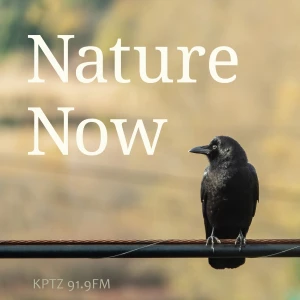
Nature Now
Nature Now presents eclectic Pacific Northwest-focused news, insights and observations about the natural world around us. Anything that grabs the attention of the Nature Now team can be heard on these episodes: birds and bees, flowers and trees, the weather and the stars – everything from microscopic Salish Sea plankton to ecosystem dynamics in a changing world. Every member of the Nature Now team is fascinated by the wonders of the natural world around us, is endlessly curious, hungry for new knowledge, and loves to share these passions with our listeners.
Episodes
Stewardship of the Salish Sea through the Beauty of Film and the Actions of Communities
Nan Evans talks with Florian Graner, marine scientist, renowned videographer, and community activist for the environment. Together they explore educating for greater understanding, inspiring people to care, and taking positive actions in the world of our changing oceans and coasts. (KPTZ airdate: October 7, 2026) Learn more:Florian Graner Sealife ProductionsBeneath the Salish Sea documentaryBl
From Bunkers to Bird Watching – Fort Flagler State Park
Jackie Canterbury talks with Deisy Bach, the new president of the Friends of Fort Flagler. Fort Flagler State Park encompasses 1,451 acres on Marrowstone Island. It is a remarkable place with a rich military history, diverse habitats, forests, shoreline, and opportunities for recreation and wildlife observation. We’ll learn more about Fort Flagler, the mission of the park, and the important wo
Survival of Kelp Forests in Our Changing World
Dive into the iconic kelp forests of our coastal oceans with host Nan Evans and oceanographer Dr. Ed Parnell. Ponder what makes them so critical to the health of marine ecosystems and so vulnerable to changes due to atmospheric and ocean warming. Did you know that kelp are among the fastest growing organisms on our planet - two feet per day, to heights of over 100 feet above the ocean floor. Y
Our Changing Coasts – Sea Level Change and Dam Removal
Nan Evans talks with Washington Sea Grant's Coastal Hazard Specialist, Dr. Ian Miller, about the intersections of coastal science, hazard and risk assessments, and planning for changes in our coastal ecosystems. Specific examples include visualizations for rising and falling sea levels in coastal Washington and the impacts that the removal of the Elwha dams had on the shoreline. (KPTZ airdate:
It's Learning, It's Fun, It's Solid Science... It's iNaturalist
Nan Evans and her guest Wendy Feltham explore fun and enriching ways to expand and enrich your nature observation experiences. iNaturalist is a free, non-profit, and community-powered forum where every observation tells a story. And every observation has the potential to advance research and scientific understanding of the natural world. (KPTZ airdate: August 5, 2026) Learn more:iNaturalistiNa
Our Seabirds As Sentinels
Jackie Canterbury speaks with Dr. Eric Wagner about his book, Seabirds as Sentinels. The Pacific coast — often called the "Blue Serengeti" — is a major center for seabird research. The central idea is that seabirds function as sentinels, or early-warning indicators, of changes in marine ecosystems. Because they depend on fish and other marine life for food, shifts in seabird behavior, breeding
Getting Rid of Noxious Weeds (Part 2)
Debaran Kelso talks with Sophie DeGroot, Noxious Weed Coordinator for Jefferson County, for the second part of our program on invasive weeds. We get down and dirty out in the field, focusing on how to remove a couple of our arch enemies, English ivy and holly, along with discussing removal strategies for other invasive species in our area (part 2 of a two-part program). (KPTZ airdate: July 15,
Getting Rid of Noxious Weeds (Part 1)
Tired of those pesky weeds?!? Debaran Kelso talks with Sophie DeGroot, Noxious Weed Coordinator for Jefferson County, about the problem of invasive plants and the role of the Noxious Weed Board in our county (part 1 of a two-part program). (KPTZ airdate: July 8, 2026) Learn more:Jefferson County Noxious Weed Control BoardWashington State Noxious Weed Control Board Nature Now is created by a de
Medical Care for Marine Mammals of the Salish Sea
Are you charmed by the antics of Harbor Seals? Awed by the power of California Sea Lions? Endeared by marine mammals in general? What happens when they are injured, sickened, or endangered by other health conditions? Nan Evans talks with Casey McLean, Executive Director of SR3, the only organization in the Pacific Northwest fully dedicated to the protection of the health and welfare of marine
Mysteries of the Deep Ocean (Part 3)
Imagine life in the very deep sea – eternal darkness, no plant photosynthesis to form the base of the food webs, water temperatures hovering around freezing, pressures 1000 times greater than at the surface. Yet complex and diverse ecosystems exist; weird and sometimes very large creatures float and swim; and around 80% of this world remains unexplored. Join Nan Evans and her guest, oceanograp
Fort Worden BioBlitz
A BioBlitz? What is that? Nan Evans talks with Kelsey Lang, Fort Worden State Park's Interpretive Specialist and Naturalist. Think about the importance of biodiversity in our own local park. And, see how communities and scientists have joined efforts across the world to learn more about ecosystems near and far. The 2026 BioBlitz at Fort Worden State Park is June 6 and 7. Come learn and have fu
Mysteries of the Deep Ocean (Part 2)
Imagine life in the very deep sea – eternal darkness, no plant photosynthesis to form the base of the food webs, water temperatures hovering around freezing, pressures 1000 times greater than at the surface. Yet complex and diverse ecosystems exist; weird and sometimes very large creatures float and swim; and around 80% of this world remains unexplored. Join Nan Evans and her guest, oceanograp
A Naturalist's Eye: Seeing the Hidden Lives of Native Bees
Jackie Canterbury recently explored honey bees and became familiar with their remarkable social behavior and complex colonies. Today, she turns to Washington's native bees with photographer and bee advocate Kris Ethington. Kris will share insights into the diversity of native bees and the intricate relationships that sustain them. Join us as we explore the fascinating world of Washington's nat
Wetland Delineation (Part 2)
Debaran Kelso continues her field exploration of our local Winona Wetland with wetland biologist Donna Frostholm, learning about digging soil pits and determining soil type, as well as learning about the other key features that define a wetland habitat type (part 2 of a two-part program). (KPTZ airdate: April 29, 2026) Learn more:Quimper Wildlife CorridorWhat Is A Wetland?Functions and values
Mysteries of the Deep Ocean (Part 1)
Imagine life in the very deep sea – eternal darkness, no plant photosynthesis to form the base of the food webs, water temperatures hovering around freezing, pressures 1000 times greater than at the surface. Yet complex and diverse ecosystems exist; weird and sometimes very large creatures float and swim; and around 80% of this world remains unexplored. Join Nan Evans and her guest, oceanograp
Wonders of the Deep Abyss
Imagine the deep ocean with Nan Evans and her guest, oceanographer and deep sea ecologist Dr. Christopher Kelley. What is life like in the deep ocean and how do scientists even explore those vast regions? (KPTZ airdate: November 4, 2020) Nature Now is created by a dedicated team of volunteers. If you enjoy this episode and can support the work that goes into making Nature Now, we invite you to
What The Wild Still Has To Teach Us
Jackie Canterbury talks with Kurt Hoelting about his new book, Apprentice to the Wild. Kurt's work asks a timely question: what might the wild still have to teach us? Today we reflect on his life from early encounters with wildness to his embrace of Zen practice. At a moment when many of us feel increasingly disconnected from nature, from country, even from ourselves, wildness is a poignant to
Nighttime Tide Pooling
Come with Nan Evans and Carolyn Woods, from the Port Townsend Marine Science Center, on an audio winter tide pooling trip at NIGHT. In the winter why are the really low tides at night and during the daytime in summer? Why can we see different animals at different tide levels? What might we see during a winter nighttime low tide that we wouldn't see during a summer low tide? Would an ultraviole
Wetland Delineation (Part 1)
Debaran Kelso speaks about the importance of wetlands with wetland biologist Donna Frostholm while they wander through the Winona Wetland just west of Port Townsend on a beautiful Spring afternoon (part 1 of a two-part program). (KPTZ airdate: March 25, 2026) We dedicate this program to our dear friend Dixie Llewellin, a tireless advocate for wetlands, and prairies, and all things of beauty.
Building Knowledge About Dungeness Crabs
Nan Evans talks with Emily Buckner from the Pacific Northwest Crab Research Group about research goals, collaboration, and challenges involved in studying Dungeness crab populations in the Salish Sea. (KPTZ airdate: March 18, 2026) Learn more:Pacific Northwest Crab Research GroupDungeness Crab 101Puget Sound Restoration FundMusic by Rick Bauer Nature Now is created by a dedicated team of volun
Birds and Bees: Brains and Behavior
We're taking a fascinating dive into the tiny yet complex worlds of bees and birds. On the surface, these creatures couldn't be more different — one flits through the air with delicate wings, the other buzzes industriously from flower to flower. But when it comes to brains and behavior, both are masters of their environments in surprising ways. Jackie Canterbury and beekeeper Colleen Ebken unc
Butterflies of Washington (Part 1)
Debaran Kelso speaks with Washington Butterfly Association members Regina Johnson and Dan Dunphy about our native butterflies (part 1 of a two-part program). (KPTZ airdate: February 11, 2026) Learn more:Washington Butterfly AssociationButterflies of the Pacific Northwest by Robert Michael Pyle and Caitlin C. LaBarPocket Guide to the Butterflies of Washington by Caitlin C. LaBarMystery sound re
The Relationship Between Salmon and Forests
Jackie Canterbury talks with Paul Koberstein, award-winning environmental journalist and the co-author of the book "Canopy of Titans: The Life and Times of the Great North American Temperate Rainforest", to weave together the relationship between salmon and our coastal temperate rainforest. The Pacific Northwest was built on the relationship between salmon and forests. The big takeaway: salmon
The Bluffs of North Beach
The bluffs of Fort Worden loom over any walks along North Beach. Lift your eyes away from the sea and up to the bluffs or across the waters. The geological stories of our area are laid out in front of you and on the horizon. Can you read or imagine those stories of deep past times and more recent glacial periods? Join Nan Evans as she talks with Tim Lawson, Port Townsend geologist, to explore
Protecting Quimper Lost Wilderness
Nan Evans talks with local naturalist Steve Grace about recent efforts to protect a very special old forest on the Quimper Peninsula. (KPTZ airdate: November 27, 2019) Nature Now is created by a dedicated team of volunteers. If you enjoy this episode and can support the work that goes into making Nature Now, we invite you to go to kptz.org/donate to make a contribution. Thank you for your supp
Quimper Lost Wilderness
Nan Evans talks with Steve Grace, a local author and marine science educator, about a "Lost Wilderness" he found on the Quimper Peninsula and efforts to protect this treasure. (KPTZ airdate: February 27, 2019) Nature Now is created by a dedicated team of volunteers. If you enjoy this episode and can support the work that goes into making Nature Now, we invite you to go to kptz.org/donate to ma
Acting Locally to Protect Special Places
How can we act locally to protect special forest habitats while providing for sustainable forest harvests and supporting our local communities and economies? A tough prospect. Nan Evans explores specific efforts here in Jefferson County, WA, to do just this. Guests are County Commissioner Heidi Eisenhour, and Malloree Weinheimer, owner of Chickadee Forestry. (KPTZ airdate: January 28, 2026) Le
James Swan, Pioneer Extraordinaire
This week we review the remarkable life of pioneer/explorer James Swan, who lived and worked and recorded extensively in our area from 1859 to 1900. Debaran Kelso speaks with James Swan scholar Steve Ricketts at Swan's burial site in the Laurel Grove Cemetery in Port Townsend, WA (KPTZ airdate: January 21, 2026) Learn more:Winter Brothers: A Season at the Edge of America by Ivan DoigSwan, Jame
Favorite Books of 2025
The hosts of Nature Now - Jackie Canterbury, Nan Evans, and Debaran Kelso - start the year by sharing their favorite books about natural history. The conversation roams from bees to wolves, research to poetry, and beautiful photographs to whimsical illustrations. Laugh with them, listen to the awe and amazement they share, and find a new favorite book to read. Happy New Year, listeners! (KPTZ
The Christmas Bird Count and Changes in Bird Distribution
Jackie Canterbury talks with Dr. Steve Hampton with the Rainshadow Bird Alliance, formerly Admiralty Audubon, about the oldest citizen science program of its kind, the Audubon Christmas Bird Count or CBC. The CBC began on Christmas Day 1900 as a way to count birds rather than shoot them as people began to become visibly concerned about declining bird populations. This year is the 126th year of
Canopy of Titans
Jackie Canterbury talks with Paul Koberstein, an award-winning environmental journalist and the co-author of the book "Canopy of Titans: The Life and Times of the Great North American Temperate Rainforest". Paul has explored many environmental issues through his career as a writer. Join us as we talk with Paul about the global importance of our own temperate rainforest ecosystem in the Pacific
I Was a Middle-Aged Wolfman
Debaran Kelso speaks with wolf biologist Jim Holyan. The adventures and heart-breaks of wolf reintroductions in Idaho are the subject of his recent book "I was a Middle-Aged Wolfman: Chasing Wolves in Idaho's Backcountry". (KPTZ airdate: December 10, 2025) Learn more:I was a Middle-Aged Wolfman: Chasing Wolves in Idaho's Backcountry by Jim HolyanSound recordings: BBC Nature Sound Effects Libra
Climbing Washington's Mountains
The stunning mountains of Western Washington draw many people who dream of reaching their summits. The views from these peaks can be breathtaking, but climbing them comes with significant challenges. Few know this better than Dave Rugh, who has spent decades climbing mountains. Join Jackie Canterbury as she talks with Dave about his experiences climbing in Washington State. (KPTZ airdate: Dece
Nurse Logs
Nurse logs, a common site in the forests of the Pacific Northwest, blur the distinction between life and death as they support not only the next generation of trees, but also a host of other plant and animal species. Learn more about nurse logs and what the Jefferson Land Trust is doing to give a hand to these incredibly significant ecological systems. Nan Evans talks to Carrie Clendaniel, Pre
Humpback Whale Aerial Acoustics
Debaran Kelso takes a deep dive into the world of whale sound with humpback whale expert Dr. Fred Sharpe, whose recent research has focused on aerial whale signals - the "blows", "wheezes", and "thrums" of everyday life. (KPTZ airdate: November 12, 2025) Learn more:HappywhaleMystery sound recording: Fred SharpeMusic by Rick Bauer Nature Now is created by a dedicated team of volunteers. If you
Birds in Winter
It's getting cold and rainy outside. We've gotten out our winter clothes and rain boots, checked that our home's furnace is working well, stocked up on comfort foods, and perhaps, planned a winter vacation to a warmer and sunnier place. As the seasons change, some birds migrate to warmer places. But, how do the birds that stay the winter survive? Listen as Nan Evans talks with Christie Lassen
Harbor Porpoises of the Salish Sea
What was that "pffit, pffit" sound? That small, triangular fin? A dolphin? But it doesn’t want to play in our boat's bow wake. Ah, it is a Harbor Porpoise, the smallest cetacean found in the Salish Sea. What do we know about them? Not very much it seems. Scientists are just learning more through direct, non-invasive observations of individuals. Join Nan Evans as she talks with Dr. Cindy Ellise
From Bam! to Burp! The Role of Carbon in Our World
Nature Now explores the world of science books for kids! Debaran Kelso speaks with celebrated author Melissa Stewart about her book From Bam! to Burp! A Carbon Atom's Never-Ending Journey Through Space and Time and YOU. (KPTZ airdate: October 1, 2025) Learn more:Melissa StewartFrom BAM! to BURP! A Carbon Atom's Never-Ending Journey through Space and Time and YOU Nature Now is created by a dedi
Honey Bees (Part 1)
We are all familiar with bees. Did you know that honey bee colonies are highly organized, complex, with a rigid caste system, and whose individuals depend on their societal organization to survive? Join Jackie Canterbury as she talks with Colleen Ebken, a beekeeper on Marrowstone Island (WA), about her bee colonies and the wonderful world of bees in general (part 1 of a two-part program). (KPT
Myths and Wonders of Mushrooms
Nan Evans talks with Port Townsend mushroom enthusiasts, Helen Kolff and Jessica Latourelle. They explore attitudes, myths, truths, and edibility of mushrooms. Did you know what we see are only the fruiting bodies of extensive mycelial networks? Or, that they are not plants and they perform critical ecosystem functions. And, why are some people fascinated with fungi? (KPTZ airdate: September 1
The Trees Are Speaking (Part 2)
Nan Evans talks with Lynda Mapes, longtime environmental reporter for The Seattle Times, about how culture, economics, and science have fundamentally changed how we use timber resources and perceive our relationship with forests. Much of the conversation is driven by Mapes’ most recent book, The Trees are Speaking: Dispaches from the Salmon Forest (part 2 of a two-part program). (KPTZ airdate:
The Trees Are Speaking (Part 1)
Nan Evans talks with Lynda Mapes, longtime environmental reporter for The Seattle Times, about how culture, economics, and science have fundamentally changed how we use timber resources and perceive our relationship with forests. Much of the conversation is driven by Mapes’ most recent book, The Trees are Speaking: Dispaches from the Salmon Forest (part 1 of a two-part program). (KPTZ airdate:
Pigeon Guillemots at the Hood Canal Bridge
Jackie Canterbury talks with Karin Ertl about the Salish Sea Guillemot Network and the Pigeon Guillemots that uniquely nest beneath the Hood Canal bridge. Pigeon Guillemot surveys began in 2004 on Whidbey Island, WA. As of 2024, surveys are taking place in 8 different regions with about 250 volunteers. (KPTZ airdate: August 13, 2025) Learn more:Salish Sea Guillemot NetworkPigeon Guillemot Surv
The Owls of Bainbridge Island (Part 2)
Debaran Kelso and field recorder Meg Amos continue the conversation with owl expert Jamie Acker in his backyard wildlife sanctuary, about his work studying owls near his home on Bainbridge Island, WA, for the past 25 years (part 2 of a two-part program). (KPTZ airdate: August 6, 2025) Bird sound recording courtesy of Cornell Lab of Ornithology | Macaulay LibraryMusic by Rick Bauer Nature Now i
The Owls of Bainbridge Island (Part 1)
Debaran Kelso and field recorder Meg Amos meet with guest Jamie Acker in his own backyard wildlife sanctuary, to speak about his work studying owls near his home on Bainbridge Island, WA, for the past 25 years (part 1 of a two-part program). (KPTZ airdate: July 16, 2025) Bird sound recording: Bob McGuire, ML187078, courtesy of Cornell Lab of Ornithology | Macaulay Library Nature Now is created
Marine Mammals of the Salish Sea
Marine mammals, especially the cetaceans, are a popular focus for wildlife viewing throughout the world. So, which species live here in the Salish Sea, and how are they doing? Jackie Canterbury speaks with wildlife biologist Dave Rugh. Local cetaceans include harbor porpoises, Dall's porpoises, Pacific white-sided dolphins, minke whales, gray whales, humpbacks, and killer whales. Other local m
Kul Kah Han Native Plant Garden
Debaran Kelso speaks with founder Linda Landkammer and naturalist Dr. Fred Sharpe out in the garden, celebrating the lovely Kul Kah Han Native Plant Garden in Chimacum, WA, on a gorgeous summer afternoon! (KPTZ airdate: June 11, 2025) Learn more:Kul Kah Han Native Plant GardenBird sound recording courtesy of Cornell Lab of Ornithology | Macaulay LibraryMusic by Rick Bauer Nature Now is created
The Wonders of Diversity
Nan Evans talks with Thor Hanson, biologist and author, to explore the wonders of biodiversity. Biodiversity is the variety of life on earth from genes and species to ecosystems. Biodiversity encompasses the interactions between all living things, animals (including humans), plants, fungi, microorganisms and the environments they inhabit and communities they create. Biodiversity has been attri
Connecting With Birds Through Photographs
Nan Evans talks with Port Townsend photographer Kerry Tremain about the beauty of his bird photography and the emotional connections we all have to birds once we open ourselves to honor that we humans co-evolved with birds. (KPTZ airdate: May 7, 2025) Learn more:Kerry Tremain PhotographyKerry Tremain's newsletter Wild ThingsBird sound recording: Jay McGowan, ML66621141, courtesy of Cornell Lab
Seabird Conservation (Part 2)
Debaran Kelso welcomes back guest Peter Harrison, this time joined by his wife Shirley Metz. Peter is a world-renowned seabird expert, artist, and conservationist, and Shirley is an avid adventurer and conservationist in her own right. This show highlights their remarkable joint conservation efforts (part 2 of a two-part program). (KPTZ airdate: April 23, 2025) Learn more:The Mouse-Free Marion
Whale Tales from Alaska
Whales of Alaska have been studied by NOAA scientists for many years. For a third of a century, Dave Rugh flew in small aircraft, stood on sea cliffs, rode various ships, and spent a lot of time on sea ice documenting the abundance of whales around Alaska. This included the enigmatic bowhead whale, belugas (which are white whales) in Cook Inlet near Anchorage, and gray whales which migrate fro
Birds and Their Feathers (Part 2)
Nan Evans and Christie Lassen are at it again in part two of "Birds and Their Feathers" as they explore such topics as: What is the impact of diet on feathers? How do feathers keep birds warm? And cool? How do feathers help birds fly? (part 2 of a two-part program). (Airdate: April 9, 2025) Learn more:Wild Birds Unlimited in Gardiner, WAFeathers: The Evolution of a Natural Miracle by Thor Hans
Seabird Conservation (Part 1)
Please join host Debaran Kelso as we welcome our special guest Peter Harrison. Peter is a world-renowned seabird expert, artist, and conservationist, and this week we will be speaking about writing and illustrating his beautiful new book Seabirds: The New Identification Guide. We end with exploring the world of the albatrosses, in anticipation of his upcoming public lecture sponsored by the Po
Our Favorite Books
Hosts Jackie Canterbury, Nan Evans, and Debaran Kelso get together to share their best reads and top "wish list" books to read in the coming year. As naturalists, the choices include some great natural history picks. But their eclectic tastes range across poetry, philosophy, history, personal reflections of authors, and art. Tune in to hear their conversation and to share in the fun they all h
Birds and Their Feathers (Part 1)
Envision a bird – any bird. What do you first notice? The feathers, of course. But, what do you really know about those beautiful and amazingly variable structures? Join Nan Evans and Christie Lassen to explore feather forms and structures, colors and patterns, and the incredible usefulness and functions of feathers (part 1 of a two-part program). (Airdate: March 19, 2025) Learn more:Wild Bird
Learning about Nature in the Democratic Classroom (Part 2)
Jackie Canterbury talks with Brittaney Drake about science visualization which is 'art in service of science' and how bird illustration is used to teach art and nature in her democratic classroom. Brittaney uses a variety of bird illustration tools including black ink, gouache watercolor, colored pencil, and digital illustration to teach bird illustration (part 2 of a two-part program). (Airda
Last Child in the Woods
Are we diminishing our lives of the senses? Nan Evans talks with special guest Richard Louv, author of many books examining the crucial connections between the natural world and human physical, mental, social and even cultural health. Richard Louv first developed the concept of a nature-deficit disorder in his 2005 book, Last Child in the Woods. You will be inspired to get yourself and those y
Washington’s Native Bees
Buzzz... Think of a bee. Do you see a honey bee gathering pollen and making honey in its hive? Is it native to the Western Hemisphere? No! Think of another bee. Do you see a bumble bee? Peraps a picture or a drawing? Think of another bee. Having problems? Do you know that there are over 600 native bee species in Washington? Nan Evans talks with Dr. Karen Wright from the Washington Department o
Learning about Nature in the Democratic Classroom (Part 1)
Jackie Canterbury talks with Brittaney Drake about her work at The Pearl Remote Democratic High School in Seattle, Washington where she teaches about nature using a visual arts curriculum. Her teaching style follows the fundamentals of Dr. Art Pearl who developed the Democratic classroom in Eugene, Oregon. He inspired the words Democracy and Education. "His message was about the primacy of de
Wildlife Research on the Olympic Peninsula
Join Debaran Kelso and guest wildlife biologist Betsy Howell of the US Forest Service, as they review recent wildlife research projects being conducted in the Olympic National Forest. (Airdate: January 15, 2025) Learn more:Betsy HowellWild Forest Home: Stories of Conservation in the Pacific Northwest by Betsy L. HowellThree Cool Ways USGS is Studying Bats in National Parks2022 Marmot Monitorin
Wildlife Conservation Essays
Host Debaran Kelso speaks with author Betsy Howell about her recently published book of essays, Wild Forest Home: Stories of Conservation in the Pacific Northwest. Betsy is a wildlife biologist with the U.S. Forest Service and has been on our program several times over the years speaking about her work on the Olympic National Forest, but this interview focuses on her personal experiences as a
Christmas Bird Count
Jackie Canterbury talks with Dr. Steve Hampton from the local Rainshadow Bird Alliance, formerly Admiralty Audubon, about the oldest citizen science program of its kind, the Audubon Christmas Bird Count or CBC. The CBC began on Christmas Day 1900 as a way to count birds rather than shoot them as people began to become visibly concerned about declining bird populations. The Port Townsend CBC oc
Backyard Wildlife Certifications
The bad news – losses of bird and wildlife populations, extinction of species, and destruction of habitats. The good news – find hope and empowerment in your own home through the Backyard Wildlife Certification Program. Join host Nan Evans and Christie Lassen, co-owner of Wild Birds Unlimited in Gardiner, as they explore both the good and the bad news. (Airdate: November 20, 2024) Learn more:N
The Parrot and The Igloo
Join us as we explore new perspectives on the critical topic of climate change! Host Debaran Kelso speaks with celebrated author David Lipsky on the subject of his latest book, The Parrot and the Igloo: Climate and the Science of Denial. (Airdate: November 13, 2024) Learn more:The Parrot and The Igloo by David LipskyBird sound recording: Robert Dobbs, ML200282711, courtesy of Cornell Lab of Or
Chickadee Forestry
Jackie Canterbury talks with Malloree Weinheimer, founder of Chickadee Forestry, a female owned and operated small business she started in 2018. Malloree works to find solutions in forest management to support the land and its people in a new and different way. Join Jackie as she talks with Malloree about Chickadee Forestry which serves Jefferson County and the greater Pacific Northwest. Mallo
Chimacum Ridge Community Forest (Part 2)
Community forestry? What is that? Find out as Nan Evans meets up with Jefferson Land Trust staff and advisors on Chimacum Ridge to explore what is happening there now that the Land Trust owns the property. (part 2 of a two-part program). (Airdate: October 23, 2024) Learn more:Chimacum Ridge ForestCommunity Forests: A path to prosperity and connectionCommunity forests in the Pacific Northwest N
Chimacum Ridge Community Forest (Part 1)
Community forestry? What is that? Find out as Nan Evans meets up with Jefferson Land Trust staff and advisors on Chimacum Ridge to explore what is happening there now that the Land Trust owns the property. (part 1 of a two-part program). (Airdate: October 9, 2024) Learn more:Chimacum Ridge ForestCommunity Forests: A path to prosperity and connectionCommunity forests in the Pacific Northwest Na
Learning Bird Songs by Ear (Part 1)
Join Nan Evans as she heads into a local forest with another Nature Now host, Jackie Canterbury. Jackie will help Nan and listeners learn to better identify birds by ear and understand some of their special behavior (part 1 of a two-part program). (Airdate: September 25, 2024) Learn more:Red CrossbillWinter WrenValley View ForestWhat The Robin KnowsBackyard Bird Chronicles Nature Now is create
Wildlife Tracking and Conservation (Part 1)
Host Debaran Kelso speaks with Scott Brinton, co-founder and executive director of the CedarRoot School, about tracking and its importance to wildlife conservation (part 1 of a two-part program). (Airdate: September 18, 2024) Learn more: CedarRoot SchoolPort Townsend’s Red-footed Booby Nature Now is created by a dedicated team of volunteers. If you enjoy this episode and want to support the wo
Baby Dungeness Crabs and Light Traps
Dungeness crabs are hugely important in the Pacific Northwest – commercially, recreationally, ecologically, and traditionally. Yet scientists and resource managers don't know how big the population is, how and why it varies over time, or how significant natural and human caused factors impact these populations. Join Nan Evans to explore how new and cooperative efforts (and some very simple tec
Wild Edible and Medicinal Plants (Part 2)
Join us as we continue on our field trip to explore the world of wild edible and medicinal plants! Debaran Kelso is invited to the wild gardens of herbalist Nancy Slick to speak about some of her favorite medicinal plants (part 2 of a two-part program). (Airdate: July 24, 2024) Nature Now is created by a dedicated team of volunteers. If you enjoy this episode and want to support the work that
Wild Edible and Medicinal Plants (Part 1)
Join us on a field trip to explore the world of wild edible and medicinal plants! Debaran Kelso is invited to the wild gardens of herbalist Nancy Slick to speak about some of her favorite medicinal plants (part 1 of a two-part program). (Airdate: July 10, 2024) Nature Now is created by a dedicated team of volunteers. If you enjoy this episode and want to support the work that goes into making
The Naturalist at Home
Nourish your curiosity about the natural world around us. Join Nan Evans as she talks with Kelly Brenner, Seattle author, artist and urban naturalist, about projects and experiments you can do around your home to explore the hidden worlds of life that share our spaces. (Airdate: June 26, 2024) Learn more:Kelly BrennerKelly's suggestions for a naturalist's field kitThe Naturalist at Home: Proje
Rare Pacific Rhododendron Forest
We're all familiar with Washington's state flower, the native Pacific Rhododendron. Did you know there is a classification for that ecosystem – it's called the Rhododendron forest. Remnants of the Rhododendron forest are on the Toandos Peninsula in Puget Sound and are technically part of a "globally imperiled plant association". This forest type has been confirmed by botanists with the Departm
Plankton Worlds (Part 2)
Nan Evans and Dr. Gretchen Rollwagen-Bollens continue to explore the weird world of plankton. Did you know some plankton can make water go bad? Cyanobacteria can produce a wide range of toxins poisoning waters and threatening humans and other animals (part 2 of a two-part program). (Airdate: May 29, 2024) Watch Dr. Stephen Bollens' and Dr. Gretchen Rollwagen-Bollens' lecture: The Mysterious Wo
Secretive Wetland Birds
Host Debaran Kelso delves into the amazing world of secretive wetland birds with guest Cindy Easterson from the Puget Sound Bird Observatory. She is program manager for the Regional Wetland Secretive Bird Monitoring Project and shares details on this grand new research effort in our region. (Airdate: May 22, 2024) Learn more:Puget Sound Bird ObservatoryThe Wetland Secretive Bird Monitoring pro
Snails of the Pacific Northwest (Part 2)
Nan Evans welcomes back Ric Brewer to continue their "snail tales" conversation with a discussion of the native snails and slugs of the Pacific Northwest. Our moist temperate climate is just right for these gastropods (that means "stomach-footed"). And, for a final conversational treat, consider eating snails (i.e., escargots) on your pizza or pasta (part 2 of a two-part program). (Airdate: Ma
The Nature of Teal Lake
During a 2-mile walk, host Jackie Canterbury talks with John Goldwood about the history and nature of Teal Lake near Port Ludlow. As a resident of Port Ludlow, John shares his knowledge about the history and complications of living at the interface between timber country and residential development. He engages us about the Teal Lake trail, the trail system in Port Ludlow, the surrounding fores
The Cougar Conundrum (Part 2)
Join host Debaran Kelso and puma specialist Dr. Mark Elbroch as they continue to explore both mountain lion ecology and how we might learn to share our world with this large successful predator (part 2 of a two-part program). (Airdate: April 24, 2024) Learn more about the Jefferson Land Trust's 2024 Conservation Breakfast. Learn more about Panthera's Olympic Cougar Project. Learn more about th
Plankton Worlds (Part 1)
Ancient bacteria, single cells and long strands of strange little plants, plus minute single-celled animals and weird fantastical animal larvae – these are the members of the Earth's massive and hugely important planktonic ecosystems. Come with Nan Evans as she talks with Dr. Gretchen Rollwagen-Bollens about this strange world and its significance to global ecology and human well being. Consid
Recommended

پلی لیست | PlayList
Conspiracy Files with Paige Carter

Bad Friends

Learn 50 English Phrases While You Sleep | Everyday English Phrases & Vocabulary
This Past Weekend w/ Theo Von
Dateline NBC

Back to the 80s Radio
Crime Stories with Nancy Grace

Bible Tea

این نقطه
TED Business
Dark Night Tales with Brian King
