Under the Cortex
Under the Cortex is the podcast of the Association for Psychological Science. It explores what science reveals about how we think, behave, and learn about the world around us. Each episode delves into psychological research and its implications for everyday life.
Episodes
How Our Brains Grasp Faces
From the earliest months of life, we rely on faces to help us navigate the world. They tell us who’s safe, who’s familiar, and whether they’re paying attention to us. But do our responses to faces develop gradually as our brains mature? Or are we born prewired to lock onto the human face. In this episode of Under the Cortex, cognitive scientists Rebecca Saxe of MIT and Heather Kosakowski of Harvar
The Cost of Efficiency: Exploring Doubling-Back Aversion
Why do we avoid retracing our steps—even when it helps us reach our goals faster? In this episode of Under the Cortex, host Özge Gürcanlı Fischer-Baum speaks with Kristine Cho and Clayton Critcher from the University of California, Berkeley about their latest research on doubling-back aversion: the tendency to resist more efficient paths if they require undoing prior effort.
Across four studies
Time Warped: How Repetition Distorts Our Sense of Duration
Why do familiar experiences sometimes feel like they happened longer ago than they actually did?
In this episode of Under the Cortex, host Özge Gürcanlı Fischer-Baum speaks with Brynn Sherman from the University of Pennsylvania about her recent study published in Psychological Science, the flagship journal of the Association for Psychological Science. Sherman's research uncovers a surprising illu
Two Maps in the Mind: How the Brain Stores What We Know About Others
How does your brain keep track of the people in your life—not just who they are, but where they are in relation to you and to each other?
In this episode of Under the Cortex, Özge Gürcanlı Fischer-Baum talks with Robert Chavez from the University of Oregon about his new findings published in Psychological Science, the flagship journal of the Association for Psychological Science. His research sho
Bridging Research and Editorial Vision: A Conversation with Arturo Hernandez
How do the roles of researcher and editor inform each other? What can this intersection tell us about the future of psychological science?
In this episode of Under the Cortex, Arturo Hernandez, Professor of Psychology at the University of Houston and editor for Perspectives on Psychological Science, joins host Özge Gürcanlı Fischer Baum to reflect on the dynamic relationship between scientific
Real-Time Research: How the Experience Sampling Method Is Changing Psychology
How do you design a study that captures human experience as it unfolds in real time? In this episode, Under the Cortex explores the Experience Sampling Method (ESM), a powerful approach for studying psychological processes. Host Özge Gürcanlı Fischer-Baum is joined by Jessica Fritz from Osnabruck University, and Marilyn Piccirillo from the Rutgers Addiction Research Center and Brain Health Institu
Why Do Emotions Hijack Our Decisions? The Neuroscience of Impulsivity
Why do some people struggle to control their actions when emotions run high? What happens in the brain when impulsive decisions take over? Why do some brains lose control under high arousal, while others stay composed?
In this episode of Under the Cortex, host Özge Gürcanlı Fischer-Baum speaks with Matthew V. Elliott from the University of California at Berkeley. Elliott’s study published in APS’
Beyond Words: Why TalkBank is Crucial for Spoken Language Research
Most linguistic datasets focus on written text, but what about the way we actually speak? TalkBank, the world’s largest open-access repository of spoken language, is helping researchers understand everything from child development to dementia, bilingualism, and even classroom learning.
In this episode of Under the Cortex, host Ozge Gurcanli Fischer Baum speaks with Brian MacWhinney from the Carne
Ensuring Research Validity: A Checklist for Stronger Science
Scientific credibility depends on valid research. But with growing concerns about replication failures and questionable research practices, how can scientists ensure their findings stand up to scrutiny?
In this episode, Under the Cortex explores the VALID checklist, a newly developed tool that helps researchers systematically assess the quality of their studies. Özge Gürcanlı Fischer Baum speaks
Young Minds, Smart Strategies: How Children Decide When to Use External Memory Aids
Do young children prefer to rely on their memory, or do they take the easier route and use external aids like lists and reminders? How do they decide when to put in the mental effort and when to lean on available tools?
In this episode of Under the Cortex, host Özge Gürcanlı Fischer Baum teams up with Zsuzsa Kaldy from the University of Massachusetts Boston. They discuss Kaldy’s study published i
Understanding Addiction: A General Liability or Unique Disorders?
Is there a single explanation that accounts for all addictive behaviors, or is the reality more complex? How can quantitative classification methods help uncover the nuances of substance dependence?
In this episode, APS's Özge Gürcanlı Fischer Baum speaks with Ashley Watts from Vanderbilt University about her recent research article in Clinical Psychological Science. They discuss how simple expla
Addressing Selection Bias in Disparities Research
Psychological research often focuses on disparities, but how do the populations studied impact the reliability of findings?
In this episode of Under the Cortex, Özge Gürcanlı Fischer Baum hosts Wen Wei Loh and Dongning Ren who recently published an article on this topic in APS’s journal Advances in Methods and Practices in Psychological Science. They discuss how non-representative samples can inf
Beyond Focus: How Attention Shapes Learning Differently for Children and Adults
Children often surprise us with the details they remember—sometimes even better than adults! But what if their ability to learn comes not from focus, but from a broader, less selective attention? This episode unpacks research showing that while adults learn best when paying attention, children (ages 7-9) absorb information just as well, even when it’s irrelevant to their task. Could this be the se
Dosage Dilemma: Unpacking Meditation App Science
Although meditation apps are gaining popularity, a clear link between usage dosage and intervention outcomes has yet to be established.
In this episode of Under the Cortex, host Özge Gürcanlı Fischer Baum teams up with Simon Goldberg from the University of Wisconsin to explore a critical question: “How does the “dosage” of meditation app use impact mental health outcomes? Drawing from a randomize
The Hidden Cost of Caregiving: Stress, Anxiety and Coping Mechanisms
As populations age, the need for informal caregivers is increasing. As individuals step up to provide care for loved ones in need, they face their own mental health challenges.
In this episode, Under the Cortex features Michael Kramer from the University of Zurich who recently published an article on this topic in APS’s journal Psychological Science. Özge Gürcanlı Fischer Baum starts the conversa
2024 in Review: 10 Most Popular Articles from APS Journals
How do the five love languages hold up to empirical research? How do psychological researchers feel about self-censorship? How does gender equality vary by country globally? Tune in to hear highlights from this year’s most popular research.
In this episode, APS's Özge Gürcanlı Fischer Baum and Hannah Brown take turns describing the most downloaded articles in 2024 from APS’s five major journals.
Building Bridges: Exploring Cooperation in Children
When children play, how do they develop the essential skill of cooperation? What methods do they use to solve complex problems while working in teams? How do they approach a threshold dilemma when their personal interests are at odds with the team’s objectives?
In this episode of Under the Cortex, host Özge Gürcanlı Fischer Baum speaks with Patricia Kanngiesser from the University of Plymouth. Ka
Heart Rates and Step Counts: A Novel Approach to Eating Disorder Care
What potential do everyday devices, like smartwatches, have in transforming the management and treatment of eating disorders?
In this episode, Under the Cortex explores how commonly used technology, such as heart rate monitors and step counters, can be used to understand binge-eating episodes. APS's Özge Gürcanlı Fischer Baum interviews Qinxin Shi from the University of Utah, whose research is
Midlife-Onset Alcohol Dependence: Causes and Consequences
What drives the onset of alcohol dependence in midlife? How does it present unique challenges, and what strategies can help when it disrupts the lives of individuals and their families?
In this episode of Under the Cortex, host Özge Gürcanlı Fischer Baum speaks with Lara Khalifeh and Leah Richmond-Rakerd from the University of Michigan, authors of a recent article in Clinical Psychological Scien
Too Many Connections? How Aging Impacts Memory and Recall
How does the brain’s memory function change as we grow older? What recent discoveries are helping us understand these changes better?
In this episode of Under the Cortex, Özge Gürcanlı Fischer Baum welcomes Karen Campbell of Brock University to discuss how aging impacts memory. Campbell shares insights from her recent study in APS’s journal Current Directions in Psychological Science, exploring t
Green Actions, Brighter Lives: Enhancing Well-Being Through Environmental Action
Can environmentally friendly actions boost personal well-being? Tune in to discover how a sustainable lifestyle offers profound benefits.
In this episode, APS's Özge Gürcanlı Fischer Baum speaks with Michael Prinzing from Baylor University. Prinzing shares findings from a recent research article published in Psychological Science, which highlights the link between well-being and climate action. T
A New Approach to Understanding Psychopathology: Insights from the HiTOP Model
Are traditional mental health diagnoses missing the bigger picture? How can a new model help us better understand and treat mental disorders? What does recent research say about how we categorize psychopathology in youth?
In this episode, APS's Özge Gürcanlı Fischer Baum interviews Miri Forbes of Macquarie University. Together, they address how traditional models like the Diagnostic and Statistic
Navigating Divisive Conversations: Why We Underestimate the Benefits
Why do we shy away from discussing divisive topics like politics and religion? Are our fears of negative reactions justified or off-base?
In this episode, APS's Özge Gürcanlı Fischer Baum speaks with Kristina Wald from the Wharton School at the University of Pennsylvania. Wald shares findings from a recent research article published in Psychological Science, which shows that people often under
Friendship and Diversity: A Path to Stronger Communities?
Why do we gravitate towards friends who share our background and identity? How does this affect our sense of community and well-being?
In this episode, APS's Özge Gürcanlı Fischer Baum speaks with Miguel Ramos from the University of Birmingham to discuss his recent study on social cohesion and well-being, published in Psychological Science. They dive into the concepts of homophily and heterophily
What Type of Templates Do We Use for Visual Processing? Caricatures Might Be the Answer
In this episode, Zekun Sun and Chaz Firestone from Johns Hopkins University join Under the Cortex to discuss their new paper in Psychological Science titled “Caricaturing Shapes in Visual Memory.” The conversation with APS’s Özge G. Fischer Baum reviews how our visual system uses templates and exaggerates the basic features of objects in memory. The authors describe a series of experiments that sh
The Integrity of Psychological Research: Uncovering Statistical Reporting Inconsistencies
Accurate reporting in psychological science is vital for ensuring reliable results. Are there statistical inconsistencies in scientific articles?
In this episode, APS's Özge Gürcanlı Fischer Baum speaks with Michele Nuijten from Tilburg University to examine how overlooked errors in statistical reporting can undermine the credibility of research findings. Together, they discuss Nuijten’s resea
The Benefits of Everyday Math for Kids
APS’s Özge Gürcanlı Fischer Baum chats with Melissa Libertus from University of Pittsburgh about her new article about interventions to increase math learning in children. They discuss various strategies parents can use to reinforce the development of math skills in everyday life like at the grocery store or using board games.
If you're interested in learning more about this research, visit psych
Racial Disparities in Drug Intervention: Culturally Inclusive Approaches
In this episode, APS’s Özge Gürcanlı Fischer Baum discusses culturally sensitive and inclusive treatments with experts William Stoops from the University of Kentucky Medical Center, along with his colleagues Jardin Dogan-Dixon and Danelle Stevens-Watkins from the University of Kentucky, Paris Wheeler from the University of Cincinnati, and Krystal Cunningham from Boston College.
Together, they ex
When Versus Whether: Gender Differences in Leadership
In contemporary society, there is a significant rise in the number of women assuming leadership positions compared to past generations. Nevertheless, this raises the question: Do these growing numbers equate to equal access to opportunities? What are the common gender disparities seen in professional environments?
APS’s Özge Gürcanlı Fischer Baum chats with Hannah Bowles from Harvard Business S
Tools to Bolster Executive Function Skills in Kids
In this episode, Philip Zelazo and Ellen Galinsky join Under the Cortex to discuss their new paper in Current Directions in Psychological Science titled “Fostering Executive-Function Skills and Promoting Far Transfer to Real-World Outcomes: The Importance of Life Skills and Civic Science.” The conversation with APS’s Özge G. Fischer Baum reviews the many ways executive functioning skills are used
Navigating Regret in Decision-Making
In this episode, Under the Cortex features William Ryan from UC Berkeley and Stephen Baum from Washington University in St. Louis who recently published an article on this topic in APS’s journal Psychological Science.
APS’s Özge Gürcanlı Fischer Baum chats with Ryan and Baum about their new article on how regret impacts risk taking and financial decision making. They also discuss what researchers
Is Everyone Out to Get Me? Paranoia in Social Interactions
In this episode, Under the Cortex hosts Michal Hajdúk from Comenius University Bratislava, Sohee Park from Vanderbilt University, and Amy Pinkham from The University of Texas, Dallas about their new paper in Clinical Psychological Science titled “Paranoia: From Passive Social-Threat Perception to Misattunement in Social Interaction.” The conversation with APS’s Özge G. Fischer-Baum starts with wha
Allergies or Sickness? Unraveling the Mystery of Concealing Infectious Diseases
What do you think when people stay quiet about infectious situations? Is it just a small white lie?
In this episode, Under the Cortex hosts Wilson Merrell to discuss his new paper in Psychological Science titled “When and Why People Conceal Infectious Disease.” The conversation with APS’s Özge G. Fischer Baum reviews what disease concealment looks like and the factors that contribute to when peop
Desire Dynamics: Navigating Intimacy and Attraction in Relationships
Many studies show that sexual attraction in long-term relationships decreases over time. Is this decline inevitable? Are we doomed to be not as into our partners as we were in the honeymoon period? Can we get too close to our partners?
APS’s Özge Gürcanlı Fischer Baum interviews relationship expert Amy Muise from York University to answer these questions. Muise’s recently published work in APS’s
Shaping Kinder Kids Through Parental Example
Children absorb much from their environments. Although the impact of parental conflicts and fights on children has been greatly studied, the impact of positivity has yet to fully be explored.
In this episode, Under the Cortex features Brian Don from the University of Auckland who recently published an article on this topic in APS’s journal Perspectives on Psychological Science.
APS’s Özge Gürcan
Parental Engagement Enhances Children’s Therapy Experience and Outcomes
Anxiety is common in children. What methods effectively alleviate their anxiety? How do parents influence the treatment process? Can parents positively affect the treatment outcomes?
In this episode, Under the Cortex features Wendy K. Silverman from Yale University School of Medicine and Jeremy W. Pettit from Florida International University who have recently published an article on this topic in

Twisted Tales: Unraveling the Surprising Benefits of Irony
Using irony is a common practice in everyday speech. What’s the main purpose of doing so? What skills are necessary to best understand irony?
In this episode, Under the Cortex features Penny Pexman from Western University. The conversation with Özge Gürcanlı Fischer Baum raises questions about the cognitive, social and emotional benefits of verbal irony. According to Pexman’s research published i

What Comes Next? The Joy of Anticipating Melodies
Are you passionate about music? As we explore new songs, part of the excitement comes from successfully predicting their outcomes, as suggested by scientific research.
In this episode of Under the Cortex, APS’s Özge Gürcanlı Fischer Baum hosts music researchers who delve into the rewarding experience of accurately predicting tunes. Nicholas Kathios and Psyche Loui from Northeastern University, al

Couples Who Laugh Together, Stay Together
Have you ever found yourself wondering if someone you're interested in feels the same way about you? If they laugh at your jokes, recent research suggests that it might be a sign that they're into you.
In this episode, Under the Cortex hosts Norman Li and Kenneth Tan from Singapore Management University about their new paper in Psychological Science titled “The role of humor production and percep

Community Engagement in Psychological Research
What are the important considerations that researchers should take when they work with underrepresented communities?
In this episode, Under the Cortex hosts Patricia Rodriguez Espinosa and Luz Garcini in follow up to their thought-provoking appearance in APS’s Science for Society Webinar, “Helping Underrepresented Populations Through Community-Oriented Research.” Dr. Rodriguez Espinosa, PhD., MPH

Information Avoidance in the Modern Age
In this episode, Under the Cortex hosts Jeremy Foust from Kent State University about his new paper in Perspectives on Psychological Science titled “Information Avoidance: Past Perspectives and Future Directions.” The conversation with APS’s Özge G. Fischer-Baum starts with defining information avoidance and then explores some of the factors that impact whether someone will choose to avoid inform
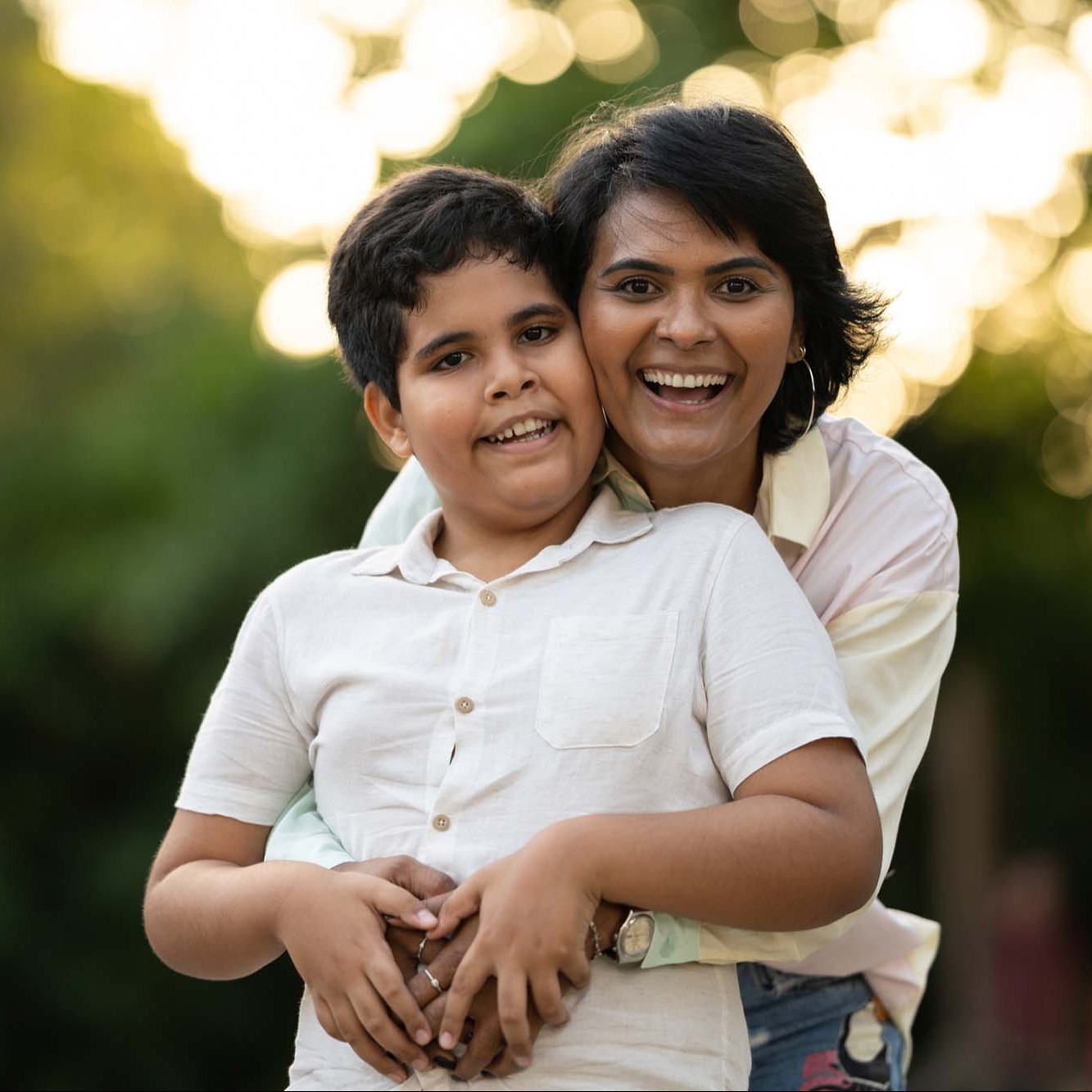
Linking Developmental Delays and Parenting Strategies With Inclusivity in Mind
How do parents adjust their behavior in the context of neurodiversity?
Under the Cortex features Alexandra Sullivan (University of California, San Francisco), a psychological scientist who studies the link between parenting and developmental delays. In this episode, Sullivan and APS’s Özge G. Fischer-Baum discuss parenting strategies with an inclusive approach.
Sullivan also recently published a

Is Our Early Attachment Our Destiny? Finding the Link Between Attachment Patterns and Personality Disorders
Attachment is a recent popular topic that has entered the public eye, but psychological researchers have been investigating attachment patterns for decades. What is the relationship between early attachment personality disorders? Is there an overlap?
APS’s journal Clinical Psychological Science features an article with a new perspective into how attachment style can be linked to personality d

Guilty as Charged: How We Contribute to Polarizing Content on Social Media
What goes viral social media and why? Do people value information-based content less favorably than misinformation? Why do we click more on polarizing content than neutral information?
In this episode, Under the Cortex hosts Dr. Steven Rathje from New York University. Rathje’s research explores what people think about social media content and what motivates their online behavior.
Rathje and AP

Getting Your Research Published: Insights on Academic Publishing with Simine Vazire
Under the Cortex biweekly hosts authors of peer-reviewed articles. In this week’s episode, we do things a little differently, take a step back, and explore what happens on the editorial side of scientific publishing.
Simine Vazire, the incoming Editor-in-Chief of APS’s journal Psychological Science, joined Özge Gürcanlı Fischer Baum to discuss her plans to further advance the practices of inclusi

Do Risky Drinkers Think Differently? Insights From Cognitive Experiments
What is risky drinking? What’s the cognitive profile of risky drinkers? If we know more about how risky drinkers think, is it easier to develop models for preventive measures?
APS’s Özge G. Fischer Baum approaches these questions with a cognitive lens in an interview with Elizabeth Goldfarb from Yale University. Fischer Baum and Goldfarb discuss how risky drinkers generalize and overgeneralize ca
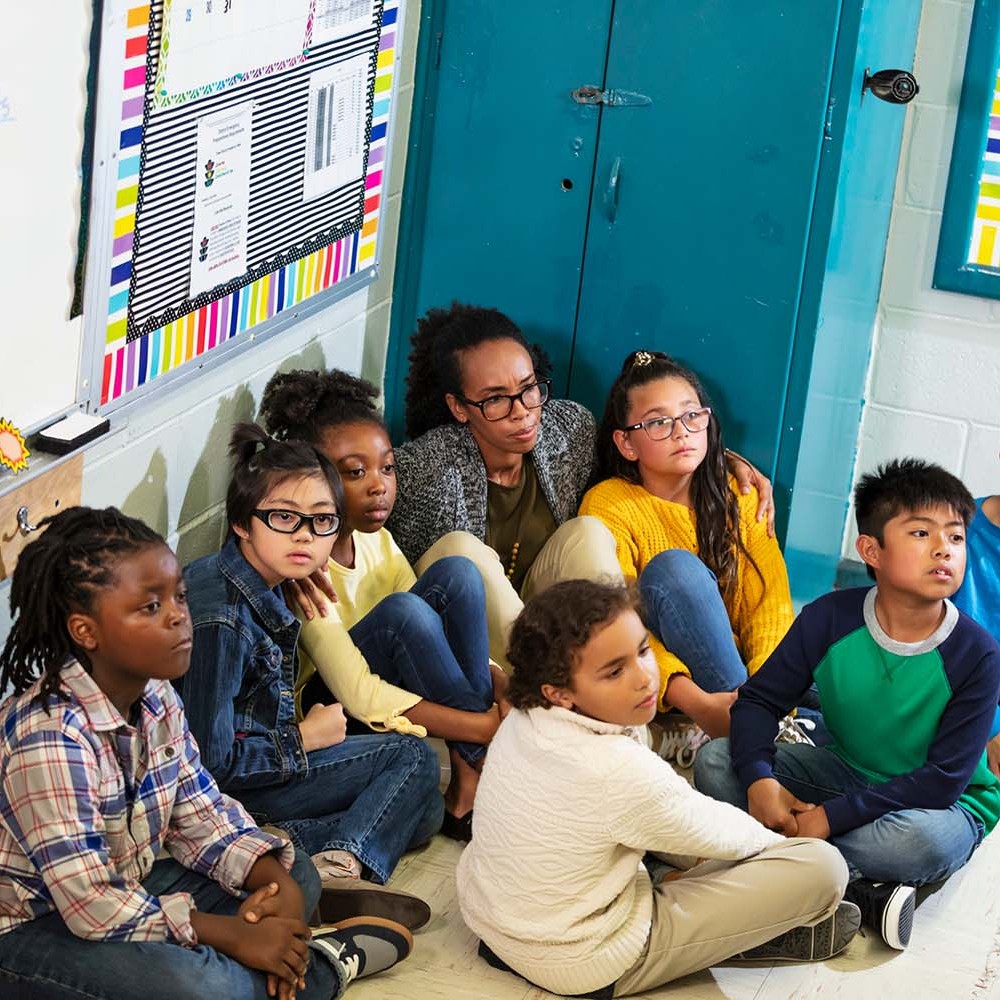
Do Lockdown Drills Create Anxiety? New Research Says No
How does gun violence affect the youth? What are the developmental outcomes of being exposed to gun violence? Do lockdown drills provide a solution, or do they further create anxiety for children?
In this episode, Under the Cortex hosts Dr. Amanda Nickerson, University at Buffalo, The State University of New York. She highlights the developmental pathways and risk factors for being exposed to gun

Cautionary Notes: The Science of Trigger Warnings
What is the logic behind using trigger warnings? Do they improve learning outcomes?
In this episode, Under the Cortex hosts Victoria Bridgland of Flinders University to explore her meta-analysis results on trigger warnings. Bridgland’s meta-analysis indicates that, contrary to popular belief, trigger warnings do not have a negative or positive effect on learning outcomes but do increase anticipa
Feeling Young at Heart Comes With Well-Being Benefits
Is it true that you are only as old as you feel? Is age really just a number? Is 40 the new 30?
In this episode, Under the Cortex hosts Markus Wettstein of Humboldt University of Berlin. Wettstein’s research explores the perception of subjective age in adulthood and gender, as well as generational differences in feeling young.
The conversation with APS’s Özge G. Fischer-Baum evolves into impli
The Tale of Two Cities: Water Access Influences Human Decision Making
Does our geographical location shape our thinking? Does water access have an effect on our decision-making habits? Do we choose to live in the moment because of environmental factors?
In this episode, Under the Cortex hosts Dr. Hamid Harati, The University of Queensland, and Thomas Talhelm,University of Chicago. Through their international collaboration, the two scholars explore how our ecologica
Loneliness Across the Globe: A Life-Span Approach
Did you know that loneliness is different from social isolation? Psychologists define loneliness as a subjective concept which is related to one’s own expectations.
In this episode, Under the Cortex hosts Samia Akther Khan, PhD candidate from King’s College London, whose research examines the feeling of loneliness across lifespan. The conversation with APS’s Özge G. Fischer-Baum focuses on the d

Wendy Wood: It’s Time We Trained Students for Diverse Careers in Psychological Science
Psychology PhDs have skills broadly relevant for teaching, industry, and government. They are integral to producing basic research and evidence-based solutions for policy and industry. Only about half of psychology PhDs are hired in academia, but psychology graduate training in the United States has largely retained the classic graduate training model of a direct path to an academic job. It's time
Best Of: Revisiting Episodes on the Myers-Briggs Test, the Grieving Brain, and More
At the height of the COVID-19 epidemic in 2020, the Association for Psychological Science joined countless other organizations around the world in turning to podcasts to share findings and conversations. The result is Under the Cortex, which now celebrates 100 episodes in which psychological scientists help us understand some of their most interesting and impactful new research. This special episo

Understanding Childhood Adversity Across Time and Cultures
Scientists usually expect childhood to be nurturing, safe, and characterized by high levels of caregiver investment. However, evidence from history, anthropology, and primatology can challenge this view. Throughout human evolution, children have faced threats and deprivation, at varied levels across space and time. And these varied levels of exposure to adversity—which over time were higher than i

Nobody’s Fool: How to Avoid Getting Taken In
How can our habits of thinking make us vulnerable to deception? What characteristics of information make it more likely to manipulate us? And how can we spot deception before it’s too late?
In this episode of Under the Cortex, Daniel Simons and Christopher Chabris join APS’s Ludmila Nunes to answer these questions and more, drawing from their brand new book: Nobody's Fool: Why We Get Taken In and

Carl Hart on Clinicians’ Bias Toward Drug Use
Pervasive misconceptions about and bias against drug use in the United States have led to clinical norms that pathologize any use of certain kinds of drugs. This bias has harmful consequences. For instance, conflating substance use with substance disorder is used to justify curtailing certain people’s rights, which has broad consequences. Treating drug use as a brain disease reveals clinician bi

Bringing Contexts In, Taking Racism Out: How to Improve Cognitive Psychology
Cognitive psychology studies universal processes such as memory, decision making, or emotions, for example. However, the theoretical, epistemological, and methodological assumptions that support the field’s longtime focus on studying “cognitive universals” might have resulted in a science of human cognition based on the performance and behavior of people who are predominantly White, English-speaki

Endless Love: You’ve Got Ideas About Consensual Nonmonogamy. They’re Probably Wrong
Consensually nonmonogamous relationships are defined by explicit mutual agreements to have multiple emotional, romantic, and/or sexual relationships. But is there really a type of person who engages in this type of relationship? And are these relationships actually lower in quality compared with monogamous relationships? Research has revealed several misconceptions about consensually nonmonogamous

Psychology’s Role in the Criminalization of Blackness
The mass incarceration of Black people in the United States is gaining attention as a public health crisis with extreme mental-health implications. Despite Black Americans making up just 13% of the general U.S. population, Black people constitute about 38% of people in prison or jail. What does this have to do with psychological science? Well, historical efforts to oppress and control Black people

Silver Linings in the Demographic Revolution
While we are fussing about the artificial-intelligence revolution, a demographic revolution may have much more radical consequences: There are more older people than ever in the world. In her last presidential column for the APS Observer, APS President Alison Gopnik, who studies learning and development at the University of California, Berkeley, writes about how psychological science may help us t
Industrialized Cheating in Academic Publishing: How to Fight “Paper Mills”
A growing problem in research and publishing involves “paper mills”: organizations that produce and sell fraudulent manuscripts that resemble legitimate research articles. This form of fraud affects the integrity of academic publishing, with repercussions for science as well as the general public. How can fake articles be detected? And how can paper mills be counteracted?
In this episode of Unde
Exploration vs. Exploitation: Adults Are Learning (Once Again) From Children
How do you balance innovation and implementation, possibility and practicality? How do you resolve the tension between the lure of the crazy new thing and the safe haven of the tried and true? In her latest presidential column for the APS Observer, APS President Alison Gopnik, who studies learning and development at the University of California, Berkeley, writes about what makes children bad at ac

Lived Experiences Can Be a Strength. So Why the Bias Against “Me-Search”?
Questions often emerge when researchers tend to engage in research on topics that are personally relevant for them. For example, when someone with depression also studies it, should they disclose their personal interest? How is this type of self-relevant research—“me-search,” as it’s popularly known— perceived by the academic and scientific community?
In a recent study published in Clinical Psy

Special Episode II: APS 2023 Spence Awardees on Sharing Minds, the Development of Learning, and Implicit Bias
The APS Janet Taylor Spence Award recognizes APS members who have made transformative early career contributions to psychological science.
Award recipients reflect the best of the many new and cutting edge ideas coming from of our most creative and promising investigators who together embody the future of psychological science.
The APS 2023 Janet Taylor Spence Award for Transformative Early Care
Special Episode I: APS 2023 Spence Awardees on Fresh Starts, Time Perception, and the Well-being of Black Families
Research contributions can be transformative in various ways, such as the establishment of new approaches or paradigms within a field of psychological science, or the development or advancement of boundary-crossing research.
The APS Janet Taylor Spence Award recognizes APS members who have made transformative early career contributions to psychological science.
The APS 2023 Janet Taylor Spence

Is Cheating Just a Symptom (and Not the Cause) of Declining Relationships?
Does infidelity predict an unhappy relationship? Or is it the other way around? Can a relationship recover after infidelity?
In a recent study published in Psychological Science, researchers found that relationship functioning starts to decline before infidelity happens and that, in most cases, well-being did not recover in the years following the infidelity. The lead author, Olga Stavrova, a res

Stop Oversimplifying Mental Health Diagnoses
Diagnoses often oversimplify complex mental health problems. How can researchers and practitioners avoid oversimplifications, improve research, and provide more effective and customized clinical practices?
A recent article published in Current Directions in Psychological Science presented the advantages of studying mental health problems as systems, not syndromes. The author, APS Fellow Eiko Frie

A Very Human Answer to One of AI’s Deepest Dilemmas
Imagine that we designed a fully intelligent, autonomous robot that acted on the world to accomplish its goals. How could we make sure that it would want the same things we do? In her latest presidential column for the APS Observer, APS President Alison Gopnik, who studies learning and development at the University of California, Berkeley, writes about how looking at caregivers who raise human chi

Top 10 Articles of 2022: Opinionated Fetuses! Cheating Spouses! And Much More
Do fetuses care about what their mothers eat? When do spouses cheat? Does the use of social media predict depression and anxiety? How can we understand and address older adults’ loneliness? Some of the top articles published in the APS journals in 2022 explored these questions and much more. In this conversation, Ludmila Nunes talks with Amy Drew, who heads up APS’s journals team, for a countdown

What You Know Changes What and How You See
Can what we know about an object change the way we see it? Or the way we feel about it? If so, could that be because different brain areas process different features of any given object, such as what we know about its uses?
In this episode of Under the Cortex, APS’s Ludmila Nunes speaks with Dick Dubbelde, a recent postdoc and adjunct professor of psychology and neuroscience at George Washington
Children, Creativity, and the Real Key to Intelligence
Human innovation will always be the essential complement to the cultural technologies we create, including artificial intelligence. In her latest presidential column for the APS Observer, APS President Alison Gopnik, who studies learning and development at the University of California, Berkeley, writes about how psychology, and especially child psychology, will play a crucial role in creating and

Failure and Flourishing
In the final discussion with social psychologist David Myers, a professor of psychology at Hope College in Michigan, APS’s Ludmila Nunes talks with him about the third section of his book, in which he applies his psychological insights to the larger world around us.
Listen to the previous episodes featuring David Myers and his latest book, How Do We Know Ourselves? Curiosities and Marvels of the

Why Is Everyone Else Having More Fun?
David Myers, a social psychologist and professor of psychology at Hope College in Michigan, joined us in the last episode to speak about his latest book, How Do We Know Ourselves? Curiosities and Marvels of the Human Mind. In this episode, he and APS’s Ludmila Nunes discuss the second section of the book, which focuses on who we are, and takes a closer look at a chapter called “Why is everyone els
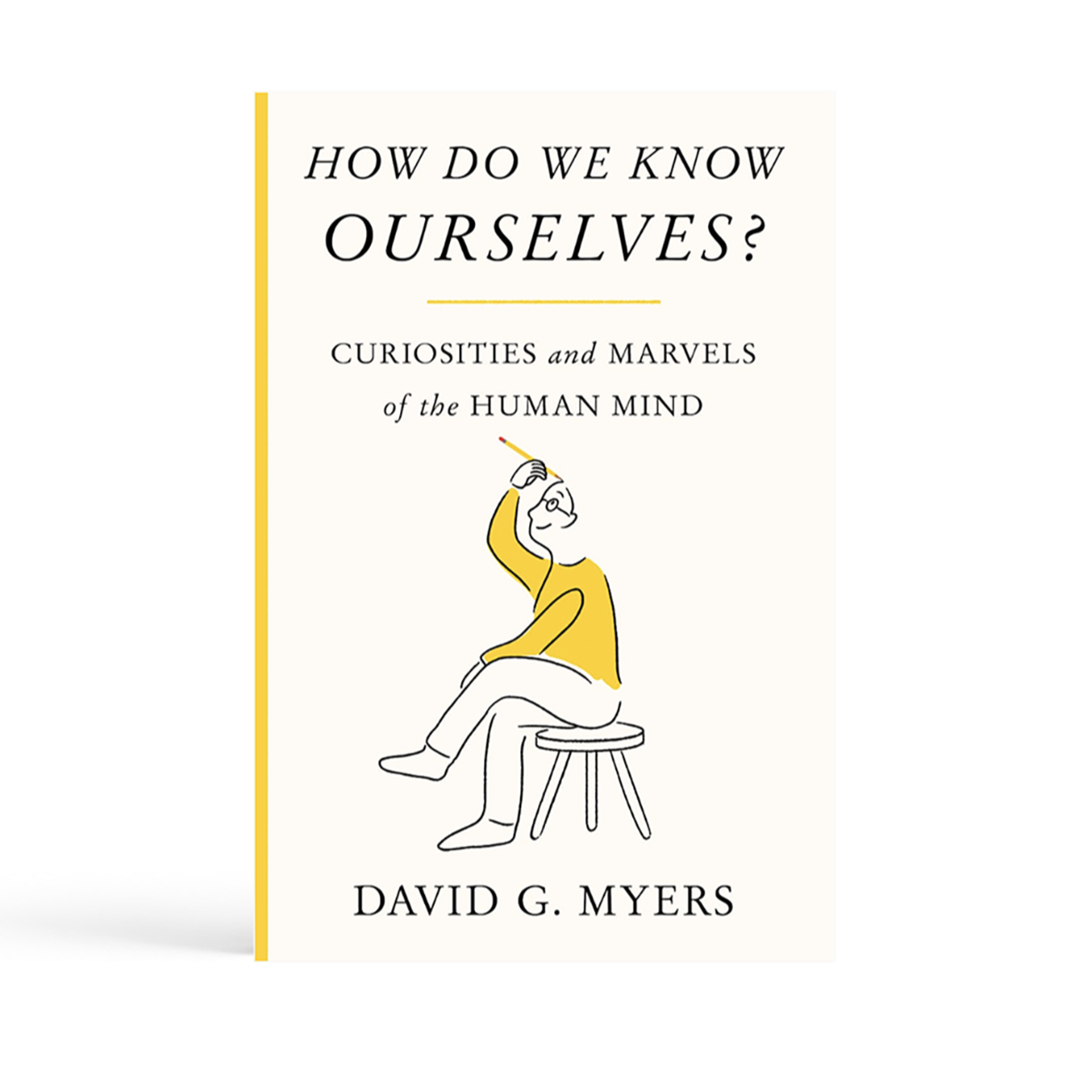
How Do We Know Ourselves?
Social psychologist David Myers, a professor of psychology at Hope College in Michigan, is the author of seventeen books, including psychology’s most widely read textbook. But he doesn’t write only textbooks. For the last several decades, he has translated findings from psychological science for the general public as well, in books on topics ranging from the scientific pursuit of happiness to the

What Music Does to Us
What is the relationship between music and autobiographical memories? Why do we like the music that we like? And what are the challenges that a psychological scientist studying music might face throughout their career?
Amy Belfi from the Missouri University of Science and Technology joined APS’s Ludmila Nunes to speak about her career as a neuroscientist studying music perception and cognitio

Exploration and Risk-Taking: Hallmarks of Adolescence That Increase Well-Being
Exploration is a fundamental human behavior. Exploring our environment can promote the acquisition of knowledge by exposing us to novelty. Adolescence is a prime time to explore, take risks, and learn, but why is exploration so enticing—and so rewarding—in the lives of teenagers and young adults?
The role of exploration and risk taking in sustaining adolescent well-being and establishing social
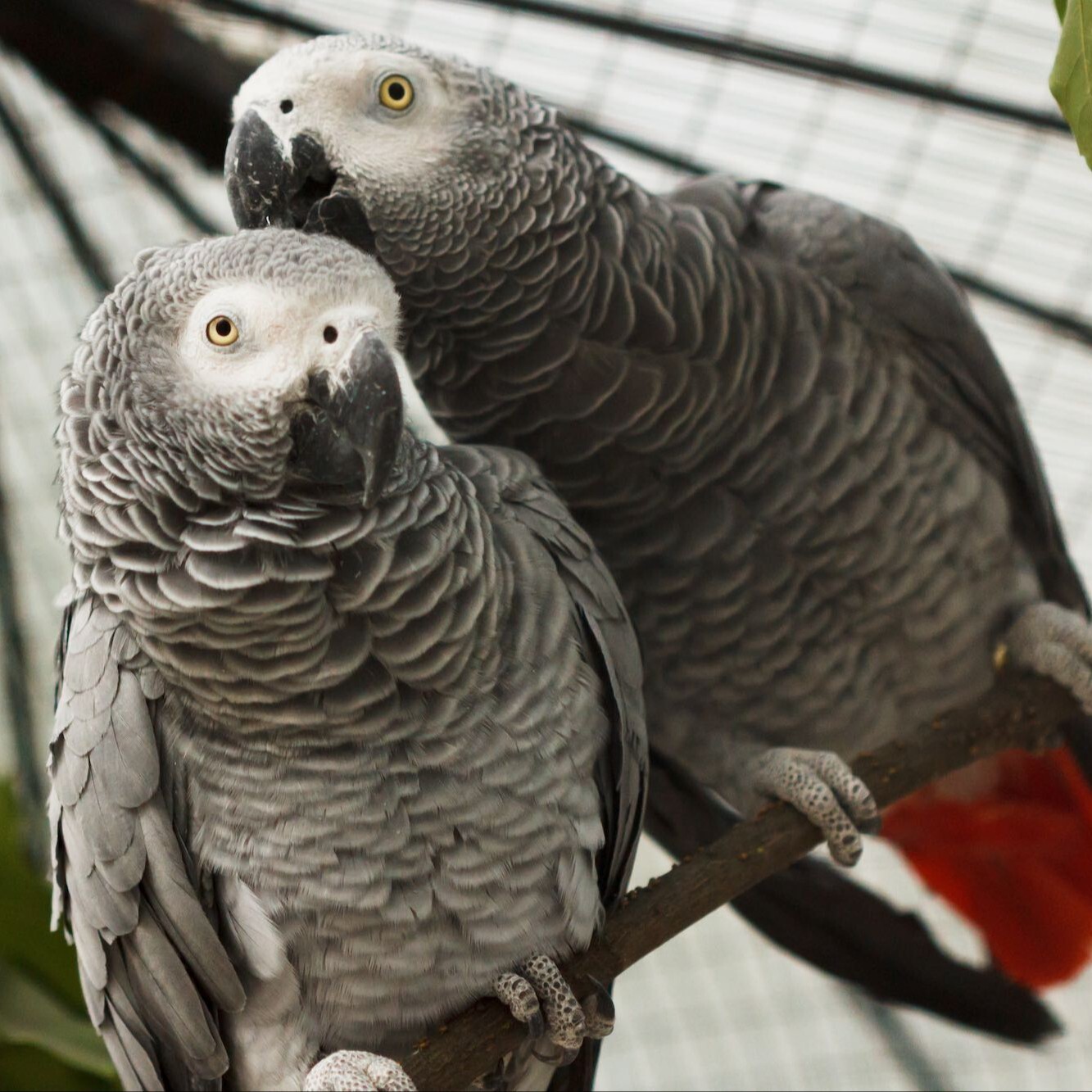
Talking With Birds: The Fascinating World of Avian Intelligence
Can birds be as intelligent as chimpanzees or dolphins? Can they communicate and use language like a child would? Can they even outsmart undergraduate students? A line of research started more than 40 years ago continues to reveal new findings about parrots’ intelligence and even their ability to use English speech to communicate with humans.
Irene Pepperberg, an APS Fellow and adjunct research

The September Collection: New Technology Can Be Scary, Why to Stop Worrying and Love the Eco-Apocalypse, and Much More
What determines how we feel about new technologies? Can an existential approach help us deal with apocalyptic fears about the climate crisis? And does having brothers or sisters influence our personality? New research in APS journals explores these questions and much more, including what makes a joke funny and how social support can prevent depression in breast-cancer survivors. In this episode of

Attitudes Improve for Sex and Race. Disability and Age? Not So Much
How did attitudes about race, sexuality, age, or disability change in the last decade or so? In the United States, it appears that bias decreased across all explicit attitudes, but implicit biases decreased only for certain attitudes, including sexuality and race. Moreover, biases have remained stable for variables such as age or disability. What can these patterns of change tell us about our soci

Self-Injury: Can the Internet Play a Positive Role?
Anywhere between 17% and 38% of adolescents and young adults engage in behaviors of nonsuicidal self-injury, defined as “the deliberate, self-inflicted damage of body tissue without suicidal intent.” These behaviors, which might include cutting, scratching, head-banging, and burning, sometimes help people cope with negative emotions or even serve to keep them from attempting actual suicide, but th