
Eye on AI Weekly Research Watch
Eye on AI Weekly Research Watch provides weekly, digestible podcast explainers of significant research papers in the field of artificial intelligence. Each episode breaks down complex AI research into accessible summaries for a broad audience. The podcast aims to keep listeners informed about the latest developments and breakthroughs in AI research.
Episodes

HazardWeaver: Scientific Route Selection for Hazard Analysis Agents
Natural hazard analysis requires choosing scientific methods that are both appropriate for an event and executable with available data and tools, and those choices may need revising as evidence emerges. HazardWeaver frames this as state-dependent route selection. A Hazard Knowledge Compiler extracts applicability conditions, a Hazard Capability Graph checks input–output compatibility betw

When a Correct Reward Is Not Enough: Diagnosing and Guiding PPO in an Analytically Solved Broker-Trader Game
Reinforcement learning is increasingly applied to financial control, so this paper uses an analytically solved continuous-time broker–trader game to diagnose PPO. A PPO agent replaces the broker and sets trading speed. With no uninformed flow it approaches the reference action, but with stochastic flow, PPO–FFNN and PPO–LSTM remain inaccurate even though supervised learning shows the acto

Low-Cost Video-Time Priors as a Strong Baseline for EEG-fNIRS Emotion Regression on Familiar Videos
Continuous emotion regression estimates a viewer's moment-to-moment valence and arousal while watching video. For familiar videos, the authors find that a simple prior based on which video is playing and the time within it is a strong, low-cost baseline. In subject-held-out tests it came within 0.05 MAE of EEG-fNIRS fusion on the internal evaluation and within 0.32 on the external one. Ga

Depth as Time in One-Step Generative Models
One-step generators compress multi-step diffusion into a single forward pass, raising the question of what happens to the denoising trajectory. The authors observe "depth as time": denoising unfolds across network layers and can be recovered by decoding intermediate layers with the model's own output head. The behavior depends on the training task; MeanFlow shows both denoising and renois

NeutronGym: Physics-Graded Neutron Instrument Design for LLM Agents
Instrument design tests whether language-model agents can apply physics rather than recall it. NeutronGym is an executable environment for neutron instrument design: agents build instruments through validating tools, McStas ray-traces them, and a graded ladder scores syntax, runtime, structure, and science without an LLM judge. Seven frontier models reproduce at most 7 of 16 published ins
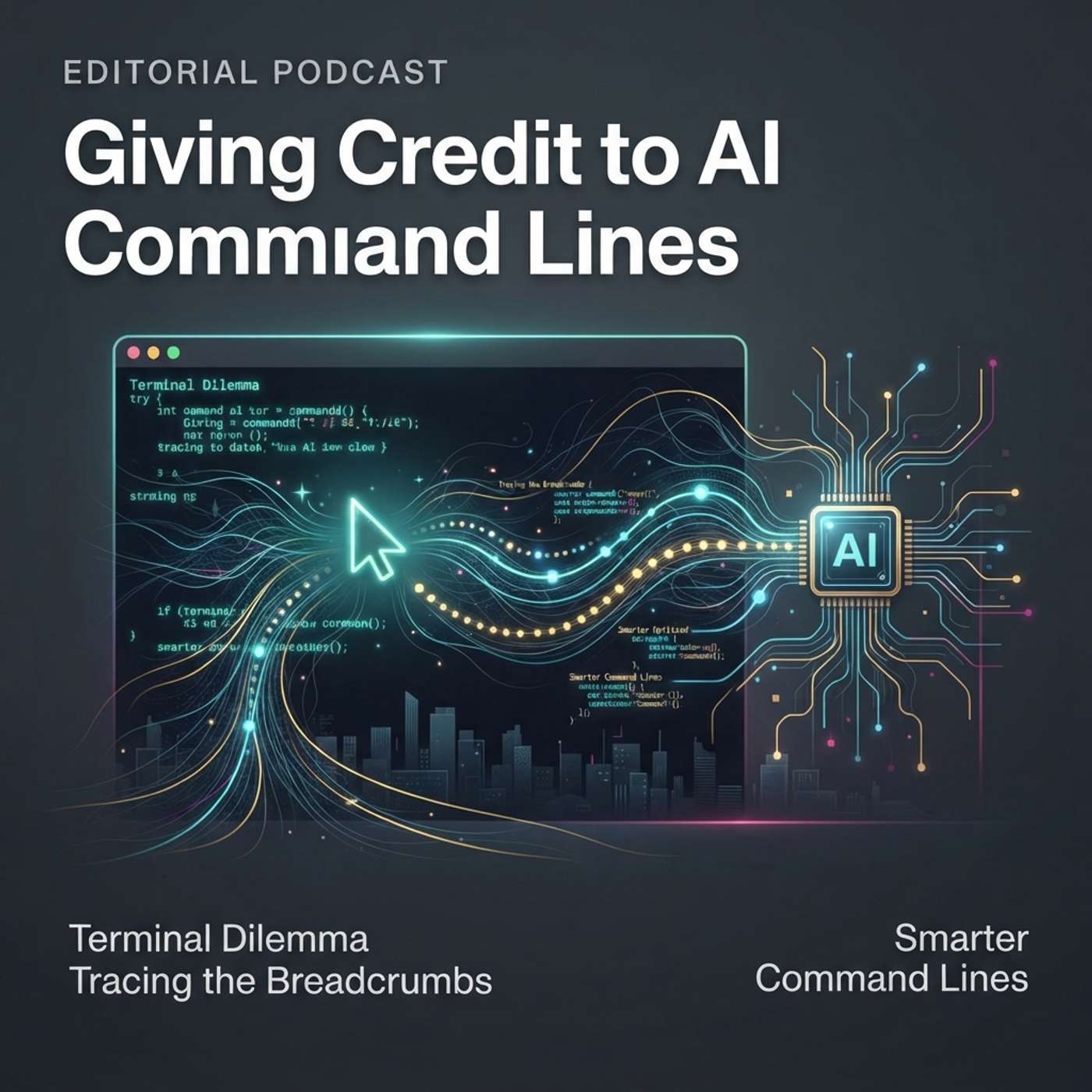
Credit Where It Matters: Dependency-Aware Policy Optimization for Terminal Agents
Terminal-using agents trained with reinforcement learning handle multi-step coding and debugging, but standard credit assignment ignores that later commands depend on earlier outputs, so training signals can land on irrelevant steps. DepGPO builds a command dependency graph from execution traces, traces backward from resources the task verifier inspects, and assigns credit to relevant wri
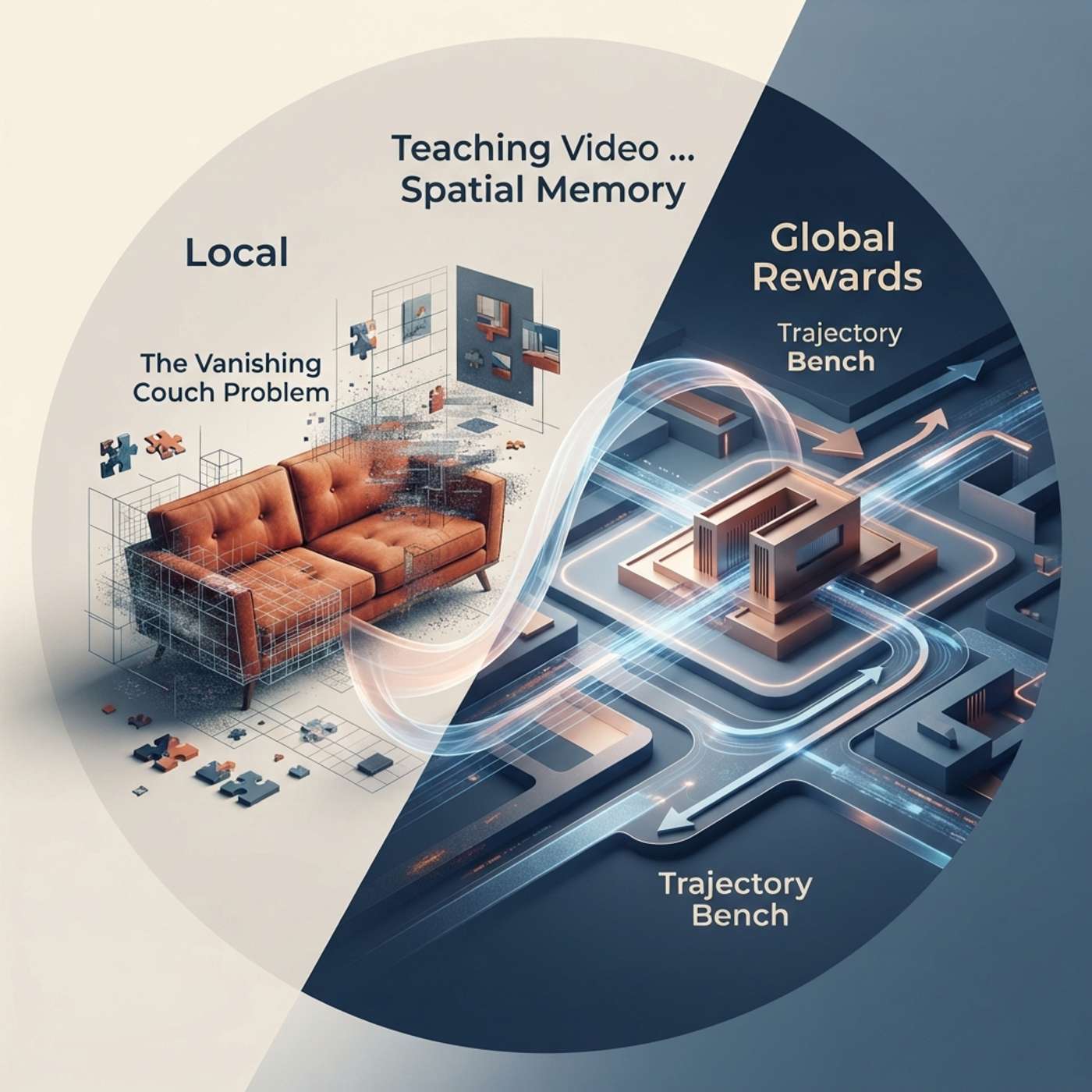
LoGo: Local-Global Rewards for Consistent Long-Horizon Video Generation
Camera-controlled video models struggle with 3D inconsistency over long horizons: objects vanish or scene structure shifts as the camera moves. Post-training with a single scalar reward gives poor credit assignment for these local errors. LoGo blends global rewards, which preserve camera following and video quality, with spatially localized rewards that give fine-grained feedback. Tested

Do Large Language Models Know Colombian Law? A Reliability Benchmark for the Colombian Legal System
LLMs are increasingly used in legal work, yet their reliability outside the United States is poorly documented. This expert-validated benchmark has 1,042 items across ten areas of law and three formats, and was used to test 15 models. Closed-question accuracy reaches 0.905, but free-text correctness never exceeds 0.45, and only about half of cited norms are correct. Models often sound res

On-Board Anomaly Detection for Efficient Marine Environmental Monitoring
Oil spills, algal blooms, and sediment floods harm marine ecosystems, and satellites could flag them early, but downlink bandwidth and onboard compute are limited. The authors propose a pipeline for multiand hyperspectral satellites: a self-supervised encoder compresses imagery into a compact latent space, and an anomaly detector flags deviations from normal sea patterns, compared against

MRVQ: One Resident Index for Dimension- and Rate-Elastic Vector Search
Dense-retrieval services must adapt embedding dimension and index bit rate as latency, quality, and memory budgets shift, but maintaining separate quantized indices for each setting is memory-hungry. Matryoshka Residual Vector Quantization (MRVQ) is a post-hoc quantizer for frozen embeddings whose single maximum-rate code can be truncated by dropping residual stages (lower rate) or embedd

Revisiting Input Time-frequency Representations in Multi-pitch Estimation for Vocal Ensembles
Estimating several simultaneous pitches in vocal ensembles is difficult because singers' ranges and harmonics overlap. Many models use harmonic constant-Q transform (HCQT) inputs for frequency-adaptive resolution, though feature extraction is expensive. The authors compare HCQT with a plain linear STFT and find the STFT performs better while cutting extraction cost substantially. Longer w
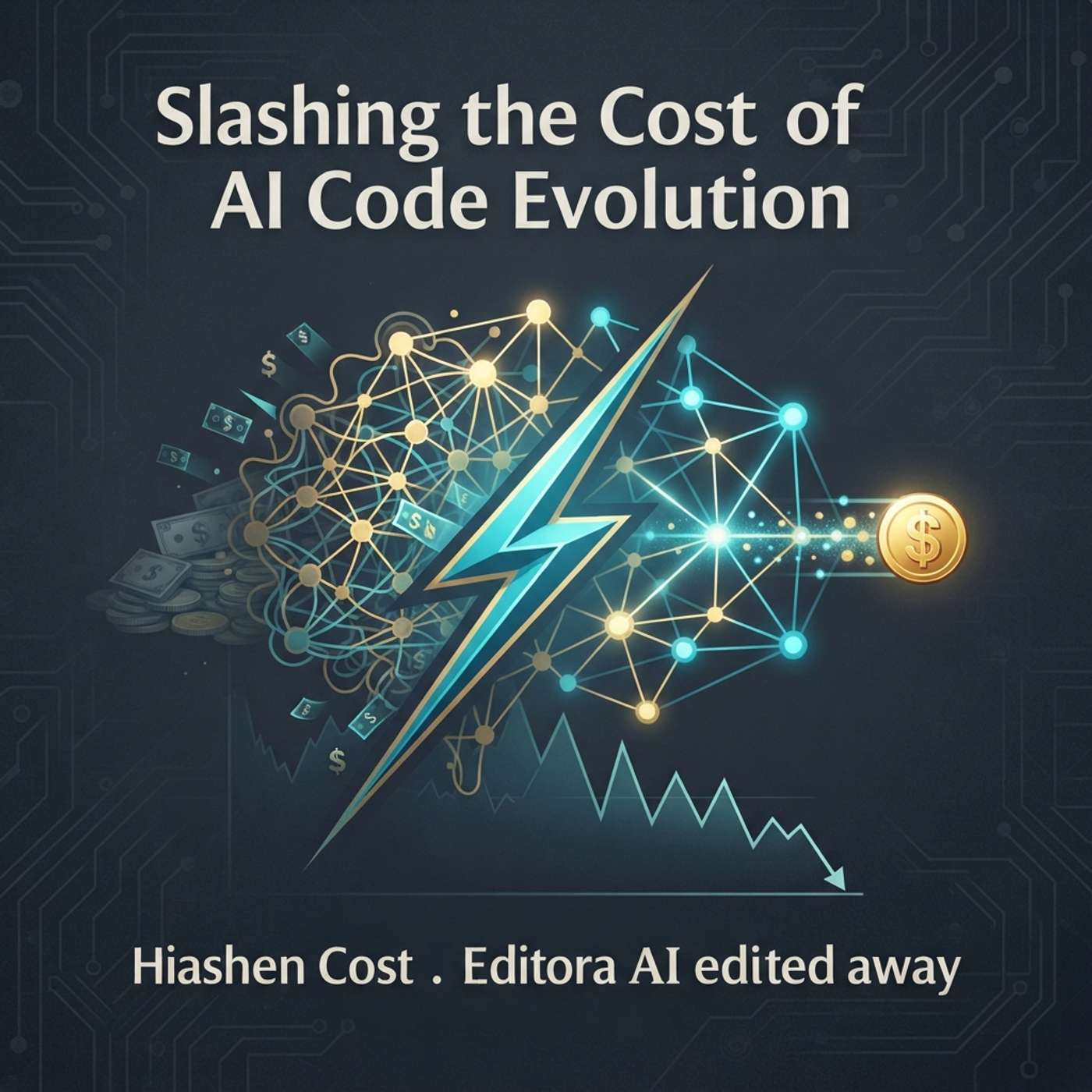
FrugalEvo: Towards Cost-Aware LLM-Guided Program Evolution
LLM-guided evolutionary methods like AlphaEvolve tackle hard optimization problems, but they are usually judged on gain per iteration rather than per dollar. FrugalEvo pairs a stronger, costlier LLM that proposes solution strategies with a cheaper one that implements and refines the code, plus a harness designed to maximize prompt-prefix cache reuse. The authors introduce BA-AUC to measur

Transcriptome-informed multi-modal AI for predicting neoadjuvant therapy response from breast cancer biopsies
Predicting whether breast cancer patients will respond to neoadjuvant therapy is hard because labeled clinical data is scarce. This two-stage model first learns to infer gene expression from histopathology images, trained on 8,742 patients across 32 cancer types, then predicts pathological complete response from inferred expression plus clinical variables. Evaluated on 1,412 patients acro

EyeRobot 2.0: Active Gaze for Precise Manipulation without Wrist Cameras
Wrist cameras are common in robot manipulation but get occluded and add hardware complexity. Inspired by human vision, EyeRobot 2.0 uses a single stereo camera that physically swivels two viewpoints to fixate on a 3D point, processing the image center foveally with more tokens. A gazeservoing policy and a target selector, trained with RL on real data, coordinate fixation, and gripper acti

What Should World Models Forget? Stratified Retention for Continual Adaptation
Continual learning normally treats forgetting as failure, but world models predict an environment that changes, so some old knowledge should be discarded. The authors argue for retention stratified by invariance timescale: invariants like physics and object permanence must never be revised, while instance-level facts should be updated quickly after change. Standard forgetting metrics can'

4DCodeBench: Benchmarking Agents on Inverse Graphics of Dynamic Scenes
Reconstructing dynamic scenes usually means producing meshes or point clouds, but 4DCodeBench asks agents to write executable graphics programs from video. Agents must abstract scene structure and dynamics, for example by implementing physical simulations of deformation, fluid flow, or fracture. The benchmark mixes real-world videos with synthetic scenes covering diverse phenomena. Evalua
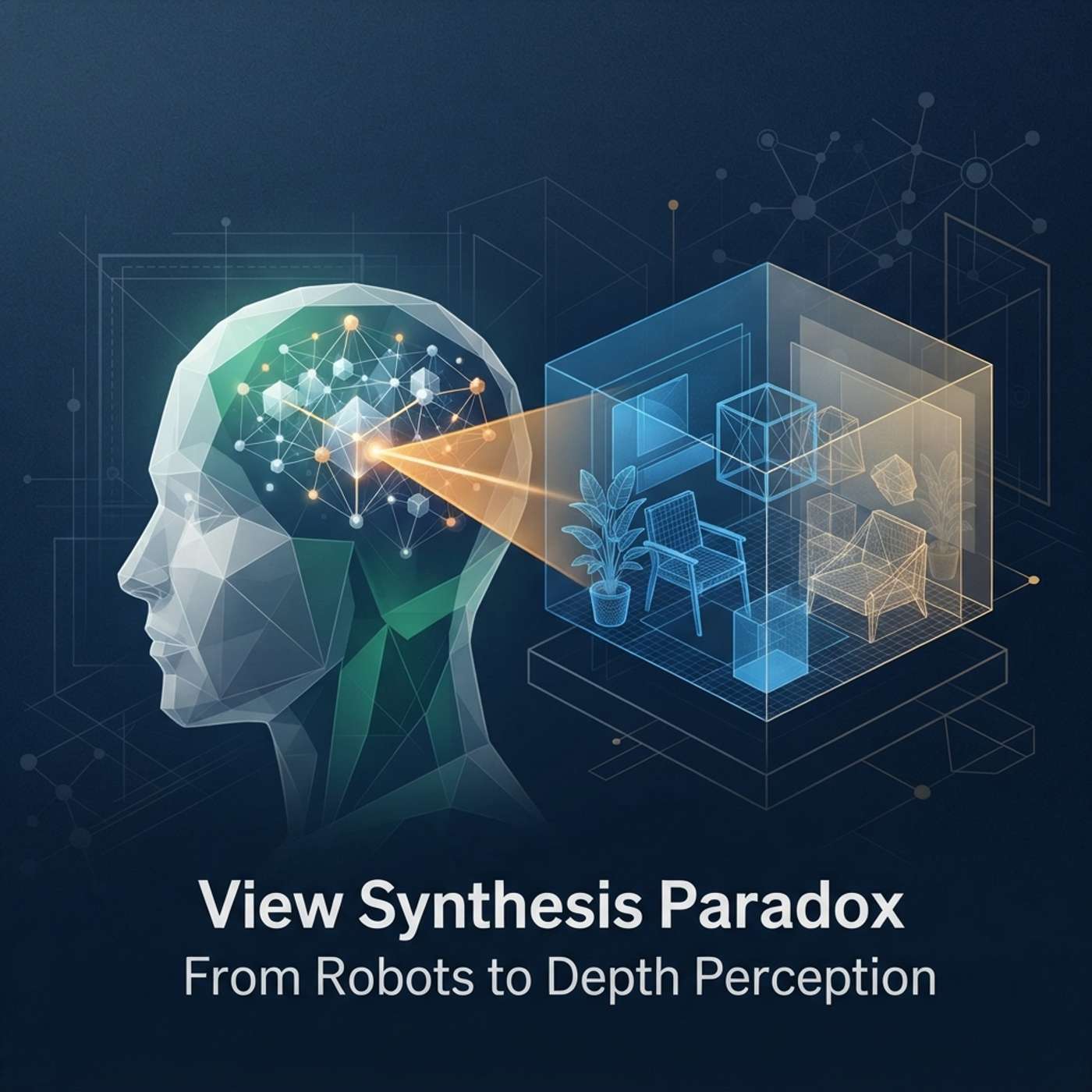
Less Decoder is More Encoder: Geometric Representation Learning from Novel View Synthesis
Novel view synthesis should teach models about 3D structure, yet encoderbased approaches produce weak representations. The authors blame two architectural choices: decoders that are too spatially expressive, which dilute the encoder's role, and pixel-space targets, which hinder feature learning. SNAP, a self-supervised transformer, uses a pose-conditioned local decoder and a latent-space

The Pain Axis: LLMs Represent Self-Directed Harm and Act on It
Across 25 open-weight models from 2B to 72B parameters, the authors find a linear direction that represents pain separately from fear, sadness and general negativity. It responds to harm aimed at the model itself, not to suffering by the user. Pushing activations along it produces expressions of worthlessness and failure. Steered and fine-tuned Qwen 2.5 models chose buttons that delete th

Kandinsky 6.0 Video: Foundation Models for Synchronized Video and Audio Generation
Kandinsky 6.0 Video generates 5-second clips with synchronized 44 kHz audio, including lip-sync, from text or an image, and upscales them to 1920x1080. It comes in two sizes, 3B (Lite) and 29B (Pro). A dual-stream CrossDiT links a pretrained video stream to a newly trained audio stream through bidirectional cross-attention. In side-by-side human evaluation the Pro model beats Kandinsky 5.

Truly Subquadratic 3SUM and Truly Subcubic APSP via Triangles in Sparse Lopsided Graphs
The authors give deterministic algorithms for 3SUM in O(n^1.9992) time and all-pairs shortest paths in O(n^2.9995) time, the first polynomial improvements over the textbook bounds for either problem. That refutes the 3SUM and APSP hypotheses. Through known reductions it also refutes several other conjectures, including Exact Triangle and Zero-Weight k-Clique. Every result comes from one n

Base Models Can Reason By Taking a Cue From Training Data
Forcing a base model to begin its answer with "Okay" lifts Olmo-3-7B on MATH-500 from 42% to 78%. "Alright," lifts Qwen3-14B from 72% to 87%. Fixed starting cues like these bring base models close to their RL-trained versions on math and coding. RL makes the cues more likely, and fixing them recovers much of RL's gain. The authors trace the effect to training data. By editing the data the

H-JEPA: End-to-End Learning of Hierarchical World Models for Visual Planning
On Visual AntMaze, a three-level hierarchy raised planning success from 18% to 73% while using less planner compute than a flat JEPA world model. H-JEPA trains a stack of action-conditioned JEPAs end to end, and each level predicts farther ahead in its own latent space. Planning runs top-down: the top level works toward the goal and hands subgoals to the level below. Higher levels drop fa

Anchoring Clinical Events in Time: UID-Preserving Multimodal Reconstruction and Source-Grounded Adjudication
Hospital discharge summaries often blur when things happened. This framework tags every event in the note with an ID and ties it back to timestamped rows in the patient's records. On 40 critical-care summaries, it recovered 43% more events and came close to clinician annotations. The team also built GAVEL, a model that judges competing timelines, and human reviewers upheld most of its cal

Embodied-BenchForge: A Closed-Loop Agentic Workflow for Embodied Benchmark Construction
Building benchmarks for robots and other embodied AI is slow, and an early mistake can quietly spoil the result. Embodied-BenchForge has agents build the benchmark, check each intermediate piece, and redo only the parts that fail. It produced six question-answering benchmarks and one interactive benchmark with 220 tasks.
Authors: Baoyang Jiang, Fengchun Zhang, Leyuan Wang, Haotian Li, Yi

Dynin-Robotics: Omnimodal Unified Diffusion Vision-Language-Action Model
One diffusion model treats language, camera views, goals and robot actions as the same kind of token. That lets it predict actions, the next view and the end state with a single model. Pretrained on about 1.33 million robot trajectories, it averaged 78.4% success on a real Franka arm across four conditions. A faster implementation cut action decoding time by up to 29 times.
Authors: Hoeu

Attention Quantization for Tabular Foundation Models
Tabular foundation models are served differently from chatbots, so the usual speedups don't carry over. Here the bottleneck is the attention calculation. Converting queries, keys and values to FP8 gave up to 1.7 times the speed with no meaningful accuracy loss on TabPFN-v3 and TabICLv2. The catch: quantization error on test rows has to match the training rows, or accuracy drops sharply.

Comfort by Construction: Adaptive, Comfort-Bounded Action Spaces for Learned Driving Policies
Driving policies trained in simulators can inflate their safety scores with sudden, jerky moves no passenger would accept. This paper redraws the set of allowed controls at every step so they stay inside comfort limits, which tighten as speed rises. On Waymo driving data, comfort violations stayed under 1% and the policy still navigated better than the baselines.
Authors: Anna Rothenhäus

MAxBench: A Multinomial Concept Recovery Benchmark
Research on steering language models mostly deals with yes-or-no concepts such as refusal. MAxBench tests concepts with many categories, such as animals or countries. Across 10 methods, 6 concepts and 4 models, affine subspaces worked best, largely because of better offsets. No method beat plain prompting.
Authors: Divya Appapogu, Freya Behrens, Yonatan Belinkov, Aaron Mueller
Paper: ht

MP-Bench: Evaluating Voice Agents as a Multiparty Conversation Participant
Voice agents are mostly tested in one-on-one conversation. MP-Bench tests them in groups. Across 12 agents, real-time systems scored 22% or less on comprehension and did no better than chance at knowing when to speak.
Authors: Yi-Jen Shih, Shih-Yun Shan Kuan, Guan-Ting Lin, Kai-Wei Chang, Siddhant Arora, Shu-wen Yang, Abdelrahman Mohamed, Shinji Watanabe, Hung-yi Lee, David Harwath
Pape

Autonomous Research for Open-Ended Problems: A Case Study on Telecom Ticket Retrieval
Can AI research agents handle a messy, open-ended industry problem? This study put them on telecom ticket retrieval. With little supervision they reached 90% of the best human result in 10 weeks instead of 10 months, at up to $200 a run. They were good at tuning but short on intuition, and the authors recommend pairing them with human researchers.
Authors: Junghyun Min, Huseyin Uzunaliog

Rethinking Heterogeneous System Disaggregation for Subquadratic Attention
Many frontier models now use cheaper, subquadratic attention. This paper argues inference hardware should be split around that. SQD runs the parts of decoding that grow with context on different chips from the parts that don't. On an 8xB200 test setup it raised tokens per joule by 31% to 56% on GLM 5.2, Nemotron 3 Ultra and Gemma 4 31B. A modeled Rubin plus LPX system showed up to 3.6 tim

How Good Are Frontier Models at Physics? Expert Re-Grading Reveals Broken Evaluations and Near-Saturation of Leading Benchmarks
Physics faculty and graduate students re-graded frontier model answers on six physics benchmarks. Most answers marked wrong turned out to reflect bad reference solutions, grading errors or unclear questions. After fixes, GPT-5.6-Sol rose from 47.3% to 78.7% on HLE-Physics and from 61.0% to 87.2% on CMT-Benchmark. The authors say these benchmarks understate what the models can do.
Authors

PhysBrain 1.5: From Vision-Language Models to Physical Foundation Models
An open 8B model that understands physical scenes, generates robot motion and predicts what happens next, all in one system.
Authors: DeepCybo Team, Yu Bin, Haipeng Cao, Zheng Chang, Kai Chen, et al., Zubin Zheng, Zishen Zhuang (54 authors)
Paper: https://arxiv.org/abs/2609.14973v1

Vidu S2: Real-Time Interactive, Editable, and Spatial Video Generation
Live video generation you can steer as it plays: interactive avatars and real-time editing of a video stream.
Authors: Jintao Zhang, Kai Jiang, Jintao Chen, Xu Wang, Deyuan Liu, et al., Fan Bao, Jianfei Chen, Jun Zhu (35 authors)
Paper: https://arxiv.org/abs/2609.11638v1

Dream-RSI: Recursive Self-Improvement through Evolving Worlds
Coding agents improve their own search strategies by replaying past discovery history instead of running costly new trials.
Authors: Tong Zheng, Xidong Wu, Zheng Zhang, Zhankui He, Chaoyi Zhang, Benjamin Coleman, Ruoqiao Wei, Di Bai, Haolin Liu, Rui Liu, Xue Wang, Yue Zhuan, Wang-Cheng Kang, Renkai Xiang, Heng Huang, Xinwu Cheng, Yunsong Guo
Paper: https://arxiv.org/abs/2609.14858v1

ZGCM-1: A Fully Open and Extremely Efficient Foundation Model for Math and Agentic Search
A fully open 7B model that pairs reasoning with tool use and claims results close to models many times its size on math and search tasks.
Authors: Jiyan He, Guang Liang, Hao Liu, Haoxiang Guan, Jinbo Sun, Junyi Guo, Wenjun Feng, Yantai Xie, Yifei Shen, Bin Shao, Chuyang Wei, Kai Chen, Kexin Zhou, Minghang Zhu, Shuxin Zheng, Tie-Yan Liu, Taine Zhao, Wenhui Zhu, Xueyin Xu, Xiaoqing Zhang,

Atria Dawn: The Dawn of Agentic Superintelligence
Shanghai AI Lab releases an open agent model for research and engineering work, plus a study of how 56 people worked with it while building it.
Authors: Honglin Guo, Tao Gui, Yicheng Chen, Guanting Dong, Qiming Ge, et al., Xuanjing Huang, Yu-Gang Jiang, Bowen Zhou (143 authors)
Paper: https://arxiv.org/abs/2609.15818v1

Why Fake Names Break AI Testing
No PUN Intended: Plausible Unknown Names for Person-Centred LLM Evaluation
arXiv: 2608.21206v1 — https://arxiv.org/abs/2608.21206v1
From Eye on AI Weekly Research Watch.

Fixing the Gaps in Health Data
Curriculum-Aware Interpolate-then-Refine: Learned Physiological Time-Series Imputation under Realistic Missingness
arXiv: 2608.21207v1 — https://arxiv.org/abs/2608.21207v1
From Eye on AI Weekly Research Watch.

When AI Software Agents Misunderstand Specifications
Specification Portability Across LLM Development Agents: Cross-Agent Compatibility in Specification-Driven Software Migration
arXiv: 2608.21208v1 — https://arxiv.org/abs/2608.21208v1
From Eye on AI Weekly Research Watch.

Teaching AI to Keep Your Personal Secrets
Personalized Privacy Control in LLMs via Attention Head Intervention
arXiv: 2608.21209v1 — https://arxiv.org/abs/2608.21209v1
From Eye on AI Weekly Research Watch.
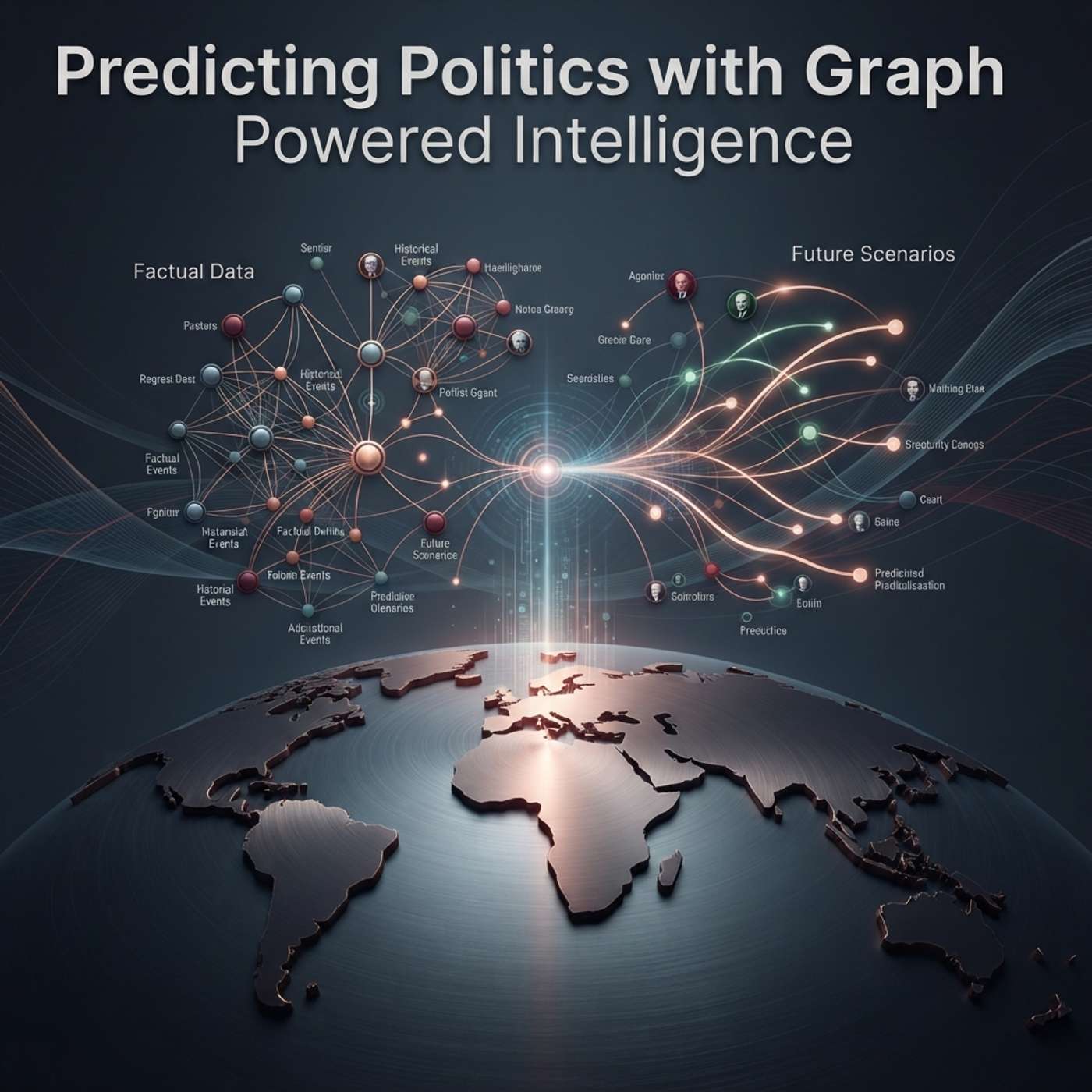
Predicting Politics with Graph Powered Intelligence
Enhancing LLMs in Predictive Political QA with Semi-Structured Data
arXiv: 2608.21218v1 — https://arxiv.org/abs/2608.21218v1
From Eye on AI Weekly Research Watch.

Taming Industrial AI Asset Chaos
Ontology-supported AI Model and Dataset Management
arXiv: 2608.21224v1 — https://arxiv.org/abs/2608.21224v1
From Eye on AI Weekly Research Watch.

When AI Memory Turns Against Us
Utility Under Attack: Agent Memory Poisoning and the Limits of Content Screening and Provenance Ranking
arXiv: 2608.21230v1 — https://arxiv.org/abs/2608.21230v1
From Eye on AI Weekly Research Watch.

Scaling Traveling Salesman Solvers on GPUs
Fine-Grain GPU Parallelization of the Generalized Partition Crossover for Large-Scale Traveling Salesman Problems
arXiv: 2608.21233v1 — https://arxiv.org/abs/2608.21233v1
From Eye on AI Weekly Research Watch.

Separating Signal From Noise in Recommendations
Adapting Knowledge Graphs for Behavior Denoising in Sequential Recommendation
arXiv: 2608.21243v1 — https://arxiv.org/abs/2608.21243v1
From Eye on AI Weekly Research Watch.

Fixing Broken Context in Long Documents
EnSI-RAG: Entity-Structure-Indexed Retrieval-Augmented Generation for Long-Document Question Answering
arXiv: 2608.21252v1 — https://arxiv.org/abs/2608.21252v1
From Eye on AI Weekly Research Watch.
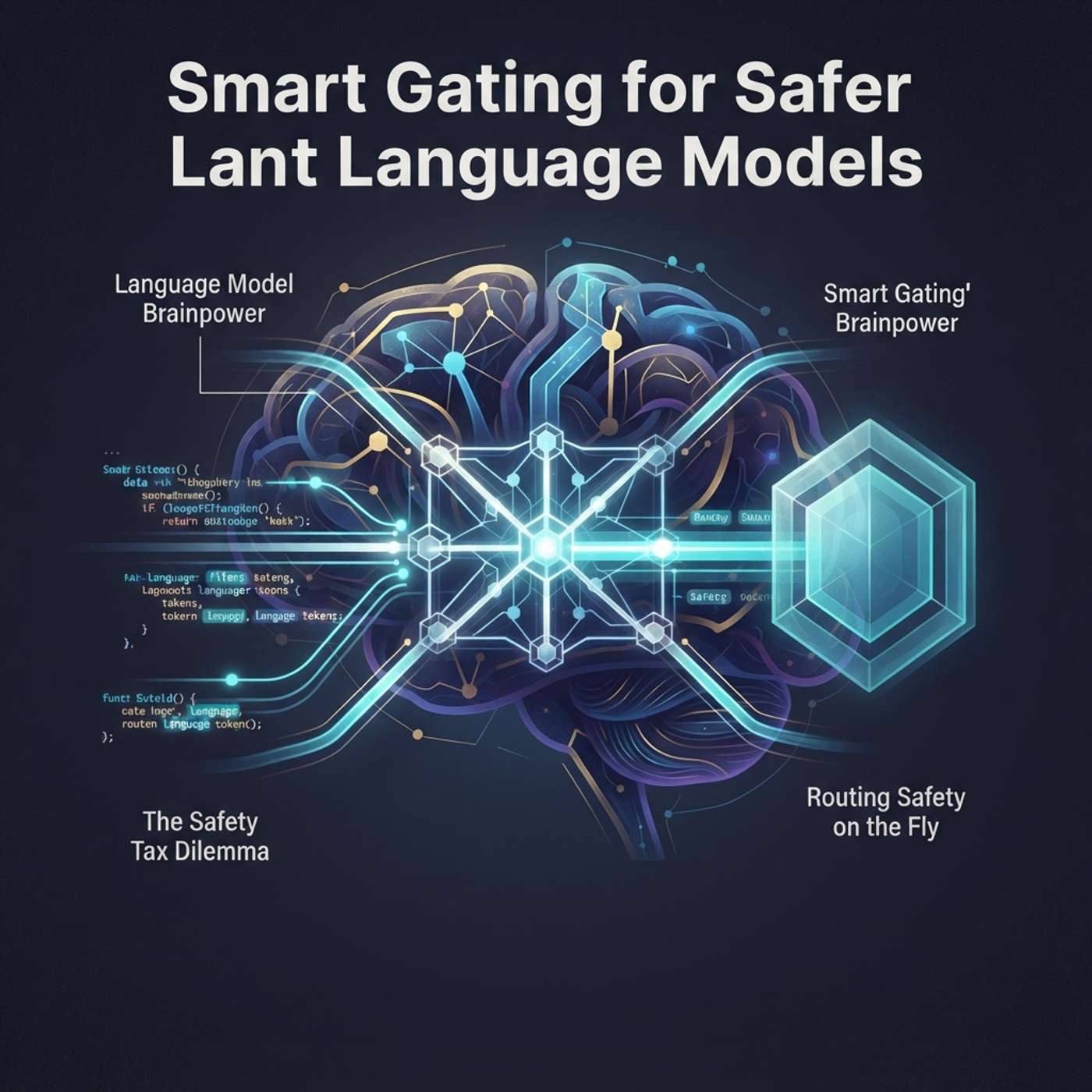
Smart Gating for Safer Language Models
CLEAR: Continuous Latent Adapter Routing for Utility-Preserving LLM Safety Alignment
arXiv: 2608.21278v1 — https://arxiv.org/abs/2608.21278v1
From Eye on AI Weekly Research Watch.
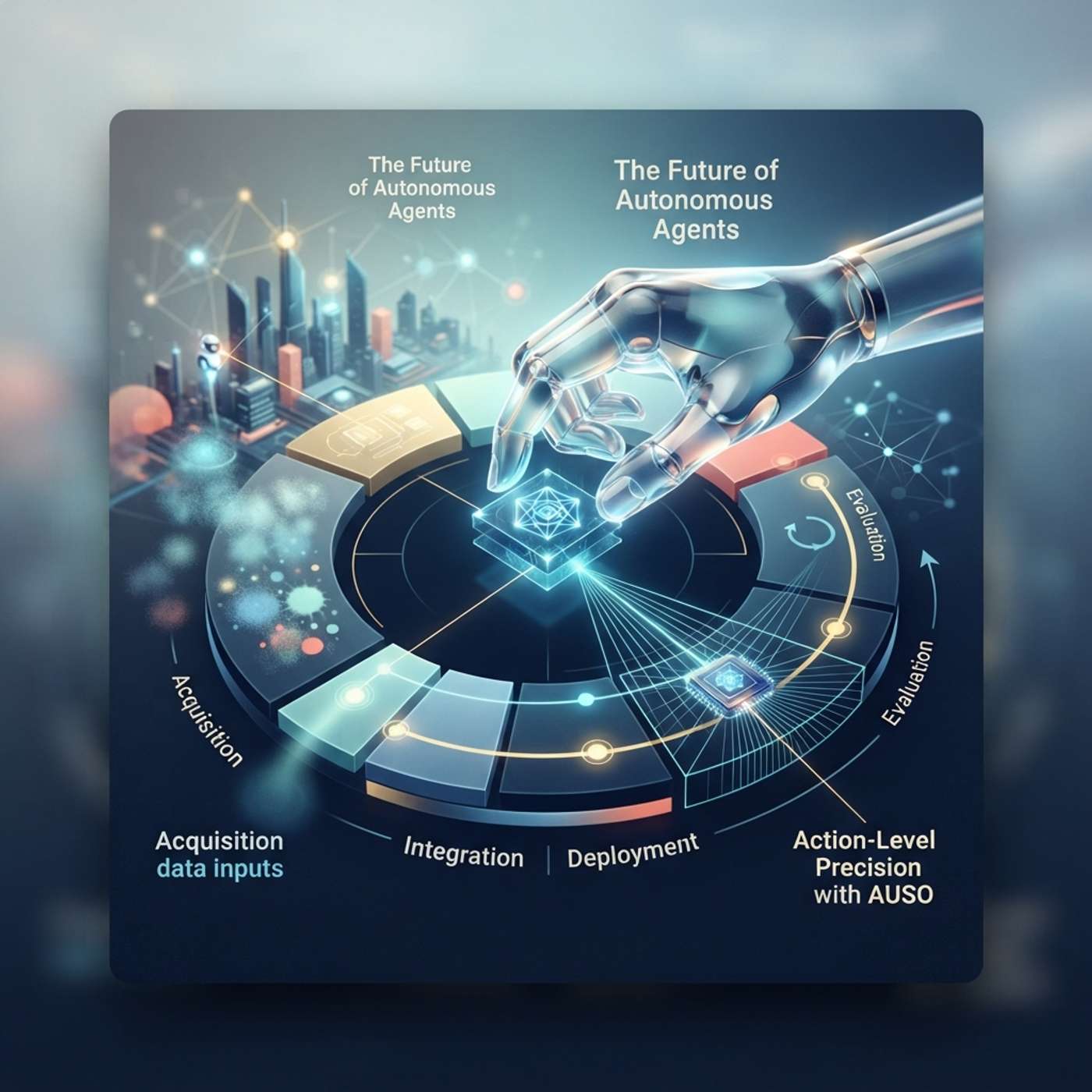
Teaching AI Agents When to Use Skills
AUSO: Action-Level Unified Skill Optimization from Internalization to Utilization
arXiv: 2608.21292v1 — https://arxiv.org/abs/2608.21292v1
From Eye on AI Weekly Research Watch.

Teaching Vision AI to Self Correct
Re3Cap: Retrieval-Guided Refinement for Image Captioning Enhancement via Reinforcement Learning
arXiv: 2608.21305v1 — https://arxiv.org/abs/2608.21305v1
From Eye on AI Weekly Research Watch.

When AI Fakes Your Regulatory Compliance
From Regulation to Implementation: A Critical Evaluation of LLM-Assisted Regulatory Compliance in Industry
arXiv: 2608.21317v1 — https://arxiv.org/abs/2608.21317v1
From Eye on AI Weekly Research Watch.

Mastering Continuous Route Planning for Robotics
Unified Branch-and-Bound Search for the Steiner Traveling Salesman Problem on Graphs of Convex Sets
arXiv: 2608.21319v1 — https://arxiv.org/abs/2608.21319v1
From Eye on AI Weekly Research Watch.
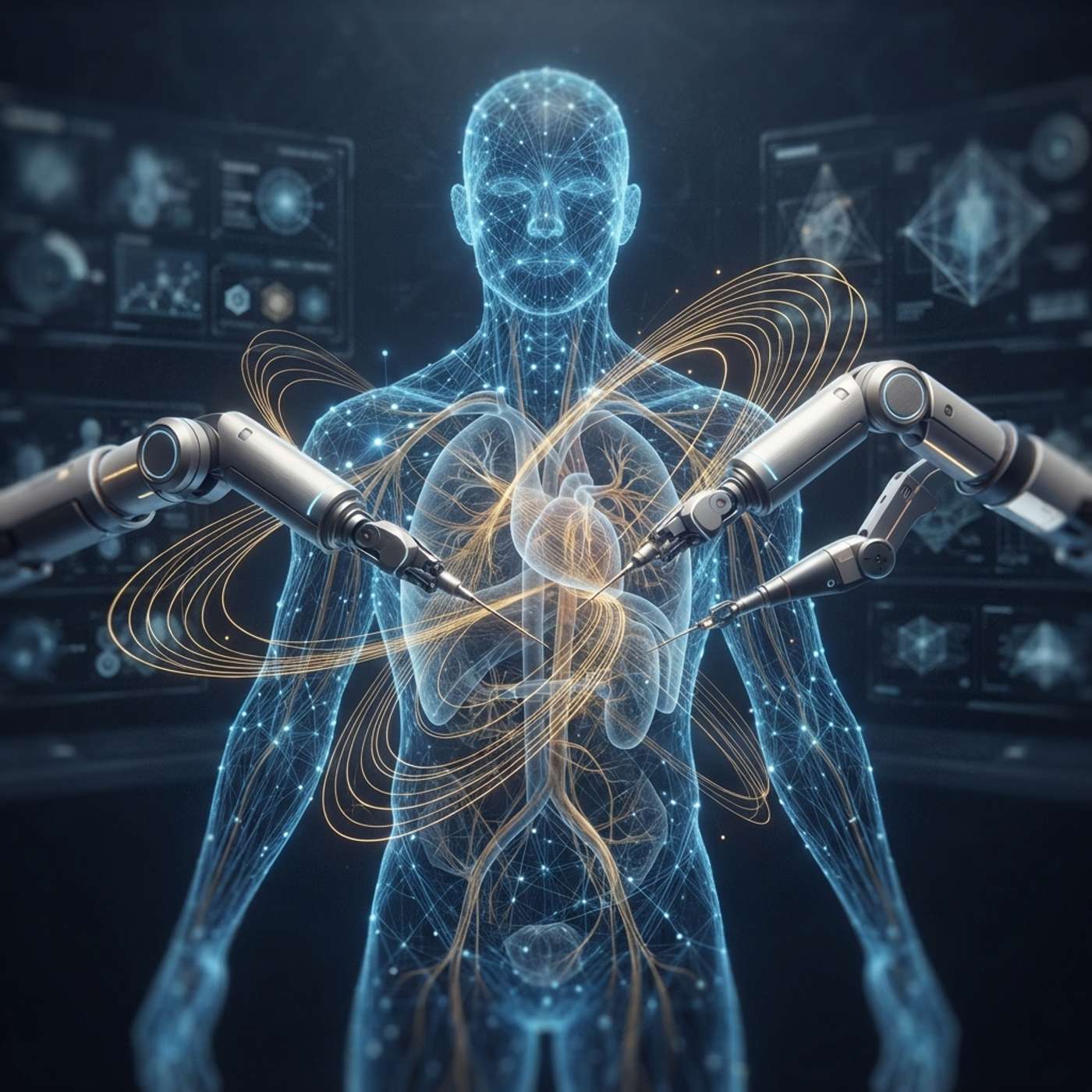
Teaching Artificial Intelligence Real Human Anatomy
Anatomy-Informed Neural Networks: Encoding Anatomic Priors in Loss and Architecture, with an SE(3) Formulation of Guidewire-Induced Aortoiliac Deformation
arXiv: 2608.21332v1 — https://arxiv.org/abs/2608.21332v1
From Eye on AI Weekly Research Watch.

Supercharging Real Time Voice Bias
TurboBias 2.0: Streaming Context-Biasing for Production-Efficient ASR Systems
arXiv: 2608.21343v1 — https://arxiv.org/abs/2608.21343v1
From Eye on AI Weekly Research Watch.

From AI Code to Verified Silicon
AI with Authority, from Application to Silicon
arXiv: 2608.21356v1 — https://arxiv.org/abs/2608.21356v1
From Eye on AI Weekly Research Watch.

Why AI Struggles With Lab Images
VIALS: A Benchmark for Visual Interpretation of Artifacts in the Life Sciences
arXiv: 2608.21357v1 — https://arxiv.org/abs/2608.21357v1
From Eye on AI Weekly Research Watch.

Accelerating Newton Method with One Solve
Primal Acceleration of Newton's Method
arXiv: 2608.21359v1 — https://arxiv.org/abs/2608.21359v1
From Eye on AI Weekly Research Watch.

Knowing When to Stop: Bayesian Optimal Stopping for LLM Evaluations
Authors: Toby D. Pilditch
Authors: Toby D. Pilditch
Paper: https://arxiv.org/abs/2608.14425v1

The Dynamics of Intelligence Explosions
As AI increasingly accelerates its own research and development, could this create a runaway feedback loop of self-improvement? This theoretical paper mathematically analyzes the conditions required for such an "intelligence explosion," showing that truly explosive, asymptotic growth is harder to achieve than prior economics-based models suggested, while identifying an underappreciated mi

PACE-Bench: Benchmarking Physics Adaptation via Code Evolution in Dynamic Environments
Self-improving AI agents are usually tested under fixed conditions, but real-world deployment demands adapting when the environment itself changes. PACE-Bench introduces 144 source-to-target adaptation challenges across six physics domains, forcing agents to iteratively rewrite working code when the underlying physics is mutated. Testing ten methods reveals that grounded, feedback-driven

Designing Compact Neural Architectures via Neuron Gating and Mixed Activation
Neural Architecture Search is powerful but expensive due to discrete, combinatorial design choices. This paper proposes continuous relaxations of neuron-level and activation-level decisions, enabling fully differentiable optimization across MLPs, CNNs, RNNs, and Transformers. Three resulting methods (NAS-NG, NAS-MA, NAS-NGMA) find highly compact architectures --- including a CNN with just

Wyvern: An Agentic Framework for Generating Grounded Multimodal Reports
As AI-generated content proliferates faster than anyone can verify it, ungrounded generative reports risk spreading unsupported claims. Wyvern addresses this with a multi-agent framework that produces technical reports combining text, images, and tables, all tied to supporting references, with a dedicated claims-revision stage to strengthen grounding. Human evaluators rated Wyvern's figur
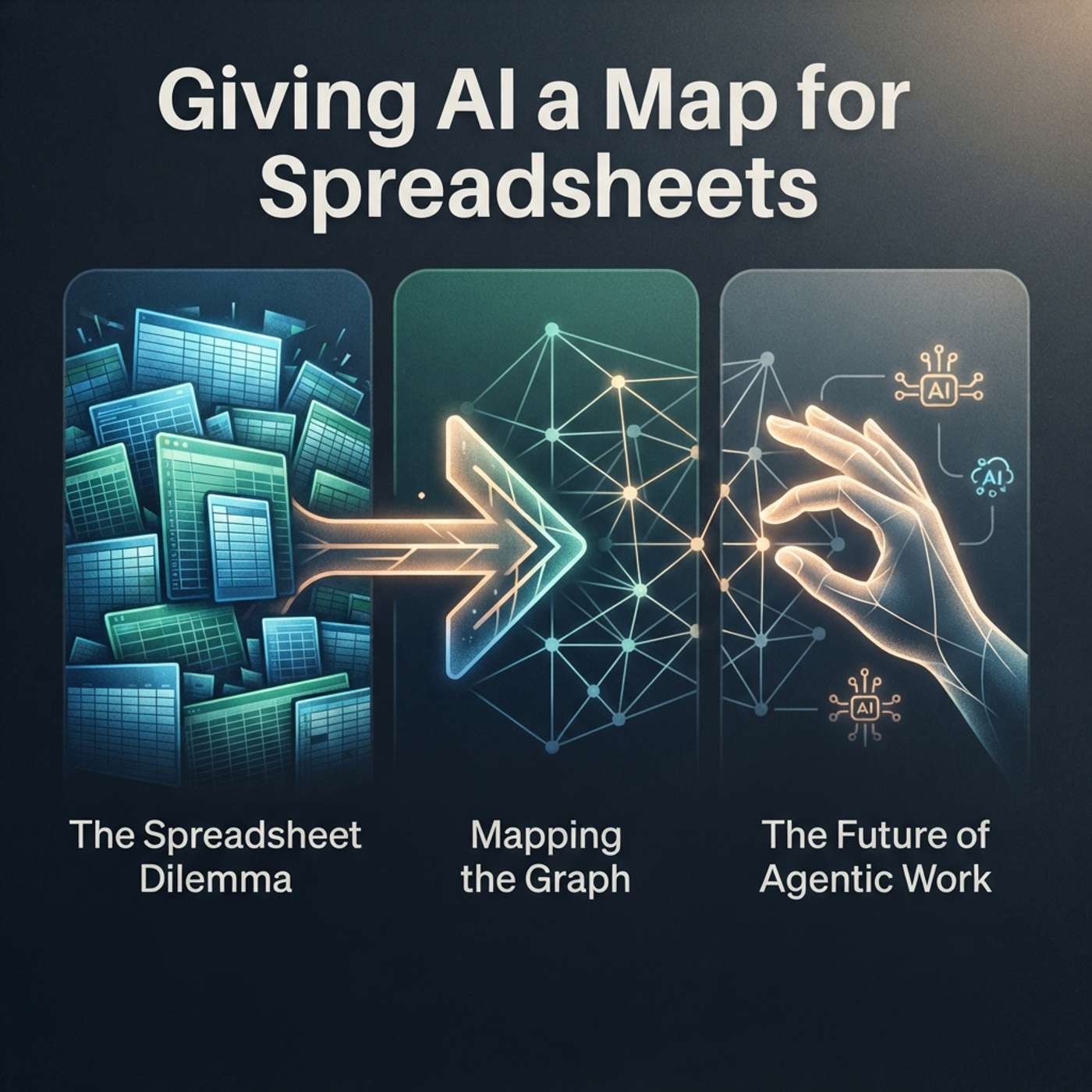
SheetCompass: Hierarchical Relation Graphs for Agentic Spreadsheet Reasoning
Spreadsheets pack in complex, spatial, and cross-referential structure that gets destroyed when LLMs flatten them into plain text, crippling automated analysis. SheetCompass instead builds explicit relation graphs capturing structural links within and across worksheets, paired with a memory system that keeps relevant context available to reasoning agents. This lets AI agents navigate spre

Shift Aware Transfer Learning with Adaptive Dual-Encoder Fusion for PM Forecasting in Data-Limited Environments
Forecasting air pollution (PM2.5) is hard where local sensor data is scarce, and naive transfer learning from data-rich regions can actually hurt performance due to domain mismatch. This study's dual-encoder framework pretrains on U.S. monitoring data, then adaptively fuses it with limited Taiwan-specific data, letting the source model adjust rather than freeze. The adapted model beat bas

LP-NAS: Linear Programming-based Neural Architecture Search
Automating neural network design (NAS) is powerful but computationally costly, and differentiable NAS methods like DARTS often converge slowly. LP-NAS reframes the architecture search as a linear programming problem, using gradient and Hessian information to compute better-informed update directions that improve generalization while preserving optimized parameters. Its two variants integr

Ensuring Safe Physical AI in Urban Mobility via Hazard-Informed Synthesized Envelopes
As robots increasingly share city streets and sidewalks with people, ensuring safety can't just be handled by isolated software modules --- it needs to span the whole system. This paper proposes hazard-informed safety envelopes that connect systematic hazard analysis to real-time runtime enforcement, unifying symbolic, spatial, and dynamic representations of the environment. The framework

Twin: Playing an Unknown Game with a Test-Time Digital Twin
Instead of hand-engineering a world model for each new task, this paper has a coding agent write executable world models on the fly, purely from observing an unfamiliar game. A "twin" simulation validates each hypothesis by requiring it to reproduce every past observation before acting, using mismatches to iteratively repair the model. Tested on ARC-AGI-3 games, Twin dramatically outperfo

Optimal Scheduling of Road Maintenance Jobs Considering Impact on Traffic Flows
Planning road maintenance at scale requires repeatedly simulating how traffic redistributes when capacity is reduced --- a process that's normally too computationally expensive to embed directly into scheduling optimization. This paper builds data-driven surrogate models that predict equilibrium traffic flows directly from origin-destination demand, bypassing expensive equilibrium solvers
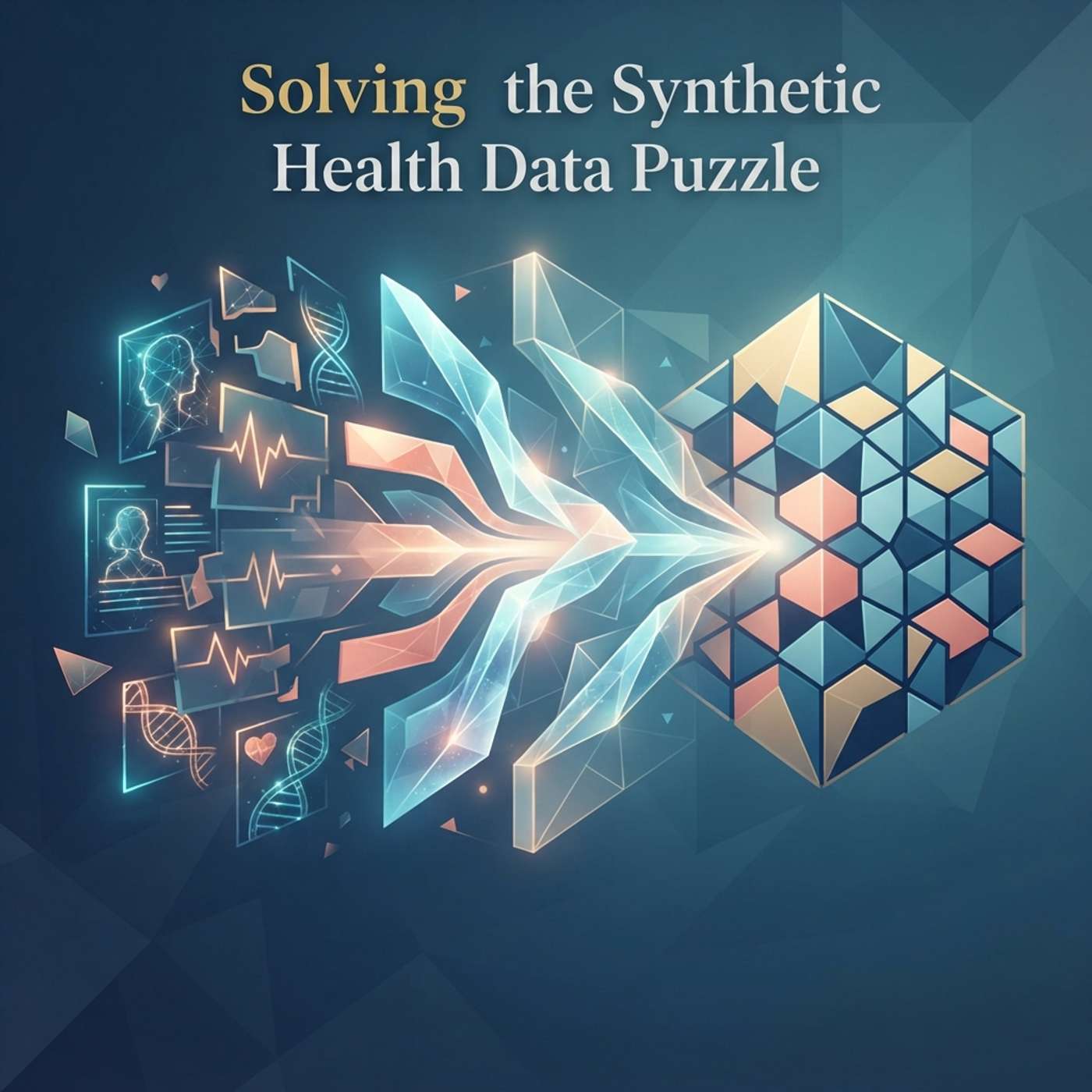
Generating Benchmark Health Data Using a Tabular Diffusion Transformer
Healthcare researchers often need synthetic data spanning multiple related but heterogeneous tables, yet most generative models only handle single tables. This paper's two-stage framework first standardizes diverse tables into common statistical summaries capturing distributions and correlations, then uses a diffusion transformer to generate new synthetic statistical tables, which are rec

Universal Thermodynamic Interatomic Potentials for Crystalline Materials
Discovering new materials computationally usually relies on ground-state energy calculations, ignoring temperature and pressure effects that determine real-world phase stability. This paper introduces TIP, which upgrades an interatomic potential model into a full thermodynamically consistent free energy model using automatic differentiation, letting a single calculation reveal phase trans
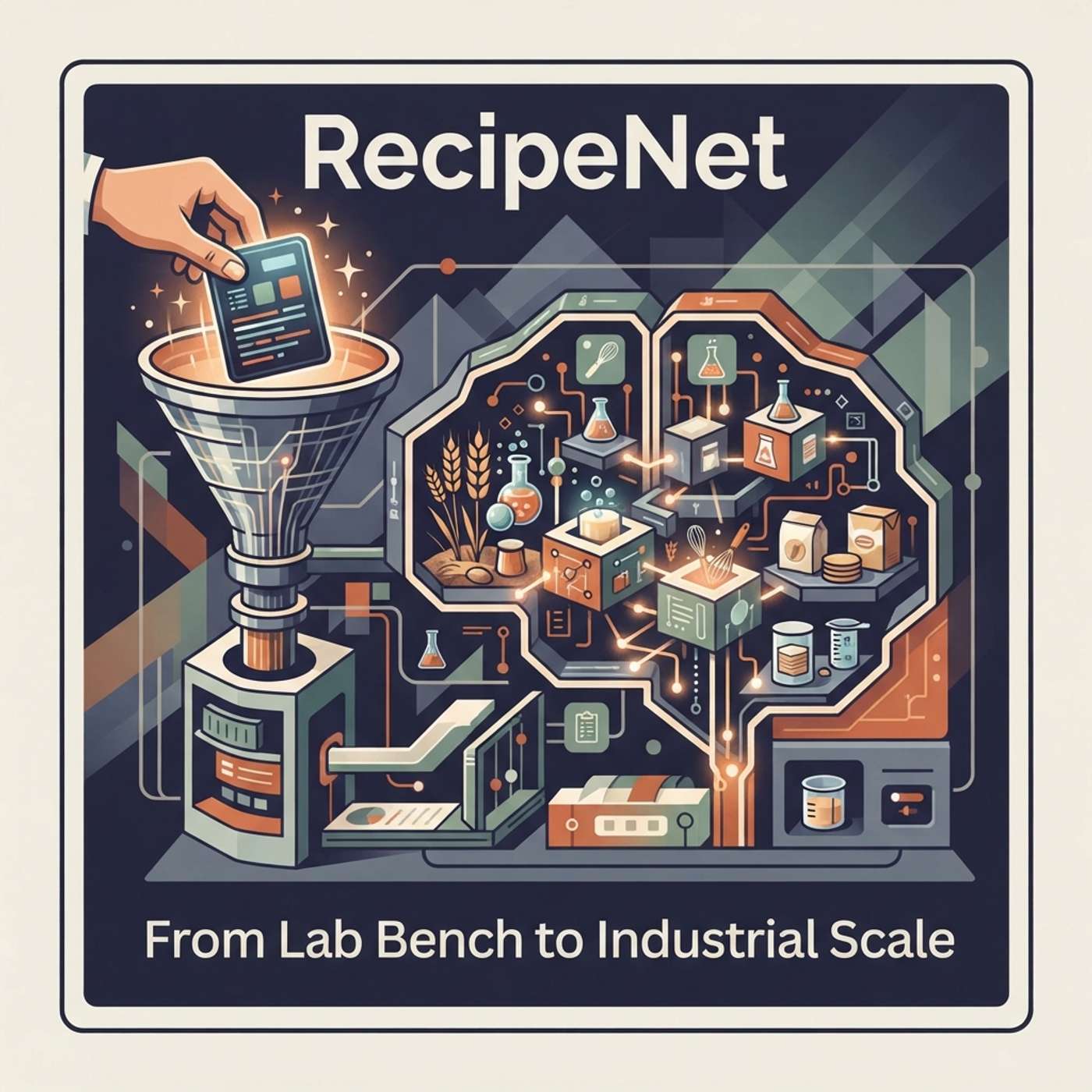
RecipeNet: A Hierarchical Transformer for Recipe Data
Many real-world processes --- chemical synthesis, drug formulation, manufacturing --- are naturally represented as ordered, structured steps rather than flat tables, yet most machine learning models flatten this structure and lose crucial dependencies. RecipeNet addresses this with a hierarchical Transformer that separately models relationships within each step and dependencies across the

Split the Labor: Separating Evidence Interpretation from Decision Aggregation
When LLMs are asked to synthesize conclusions from many sources, cramming everything into one prompt conflates two different jobs: understanding each piece of evidence and combining conclusions fairly. This paper identifies a subtle failure mode, "count-scale drift," where naive vote-counting shifts as more sources are added, and proposes separating interpretation from aggregation using a
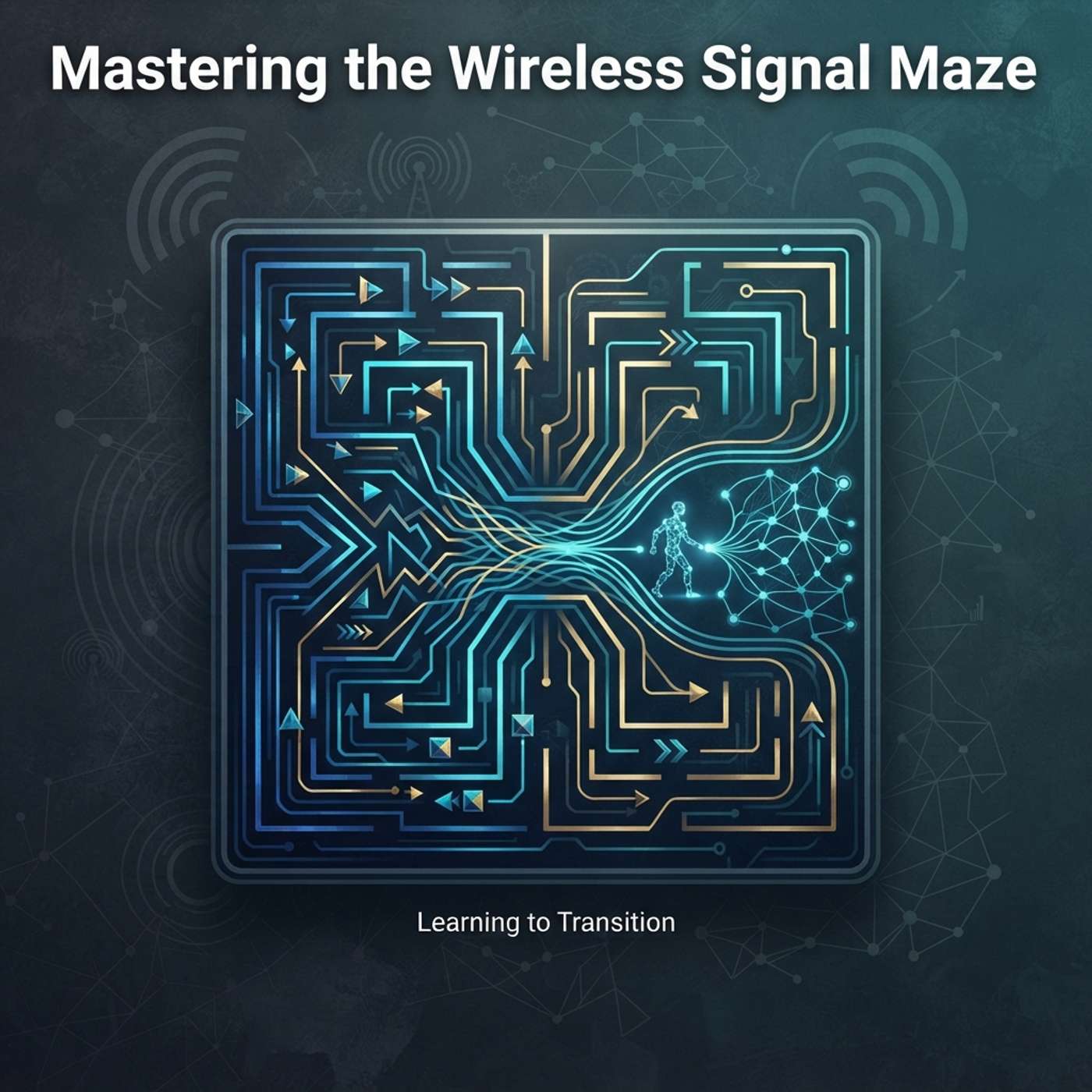
Learning-to-Transition for Large-scale and High-Order MIMO Detection
Modern wireless systems need to decode signals sent simultaneously from many antennas, a computationally brutal search problem especially at high signal orders. This paper reframes MIMO detection as a learned sequential decision process, using a Transformer to guide symbol-by-symbol search while producing reliable confidence scores for downstream error correction. A clever "hard-to-soft"

Participatory Moral AI Is Not Neutral: The Invisible Hand of Developers
Democratic AI alignment approaches poll people on moral dilemmas to train policies --- but this study shows the "neutral" aggregation process is shaped by hidden developer choices. Across studies involving kidney allocation, AI worker simulation, and deepfakes of the deceased, the researchers show that which features get voted on, who votes, and how questions are worded all systematically

Handover of In-Context Learning State Across Session Boundaries
When an LLM conversation exceeds context limits, restarts, or gets handed to another agent, someone must decide what information survives the transition. This paper formalizes that handover problem mathematically, distinguishing exact recovery from statistically sufficient preservation, and proposes a three-part memory record for decisions, summarized evidence, and irreplaceable raw obser

Marionette: Predicting World States, Rendering Geometry, Painting Appearance
Game world models that generate video directly often lose track of physical consistency over long sequences --- characters clip through walls or drift apart. Marionette fixes this by separating concerns: a neural model predicts explicit 3D skeletal states, a zero-parameter renderer handles geometry exactly, and video diffusion paints the final appearance. This structure lets developers im

Decoding the Past: An Uncertainty-Aware Deep Learning Framework for Sex Attribution in Prehistoric Hand Stencils
Archaeologists have long puzzled over who made Upper Paleolithic hand stencils, since no ground truth exists and prehistoric hands differ from modern ones. This paper tackles that uncertainty head-on with a deep learning pipeline that generates multiple silhouette interpretations per stencil, then runs them through two neural network ensembles trained on thousands of contemporary hand ima

FinRank: An Evidence-Grounded Benchmark for Financial Question Answering and Retrieval over SEC Filings
Financial question answering over SEC filings faces a subtle challenge: answers can be numerically correct yet grounded in wrong evidence, since similar facts recur across filing sections, time periods, and companies. FinRank introduces a benchmark of 1,185 expert-authored questions with gold evidence and curated hard negatives to specifically test provenance-sensitive retrieval. This is

GeoDistill-Refine: Silhouette-First Geometry Distillation for Annotation-Free Spacecraft Segmentation
Segmenting spacecraft in imagery typically requires manual annotation, but foundation segmentation models can generate pseudo-masks automatically, despite geometric inaccuracies that worsen during distillation. GeoDistill-Refine improves this by stabilizing teacher predictions through prompt fusion and refining a lightweight student network using silhouette, boundary, and shape-based obje

GeoBenchLLM: A Comprehensive Benchmark for Evaluating LLMs on Geo-Related Tasks
LLMs have typically been evaluated on geo-related tasks in narrow, homogeneous settings, obscuring how well they generalize across diverse geospatial and temporal challenges. GeoBenchLLM addresses this by combining twelve public datasets into a comprehensive benchmark covering varied geo-related tasks and domains. This is useful for researchers and developers building geospatial AI applic
Recommended

Fox news

K-Drama Obsessed Mamas | Beyond “Just One More Episode!”

True Crime Classics

The Healer Revolution

Becoming: HER with Nikki Spoelstra

Booked, Blonde & Busy w/ Olivia Ponton

McKinsey on Consumer and Retail

megahired.com

Hard Knocks Podcast

Effective Weight Loss for Moms | High protein, Strength Training, Lose Weight, Meal Planning, Fat Loss, Healthy Habits

The Human-Animal Connection - Pet Life Radio Original

Infinite Health with Dr. Arasi Maran
