Home
Podcasts
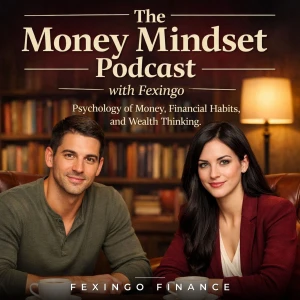
The Money Mindset Podcast with Fexingo: Psychology of Money, Financial Habits, and Wealth Thinking
The Money Mindset Podcast with Fexingo: Psychology of Money, Financial Habits, and Wealth Thinking
Money Mindset is the Fexingo show where Lucas and Luna strip the psychology away from personal finance and rebuild it as a set of deliberate habits. Each episode begins with a single financial behavior and traces its roots in evolutionary biology, social conditioning, and personal history. Lucas brings data on loss aversion and the endowment effect, while Luna pushes back with real-world cases. Together, they build a framework for noticing the story you tell yourself about money and deciding if that story is actually yours. This show is for listeners who have read personal-finance classics and still feel a gap between knowing and doing.
Episodes

How Status Anxiety Drives Financial Waste
In this episode of The Money Mindset Podcast, Lucas and Luna explore the concept of positional goods and how the desire for social status silently drains wealth. They examine why consumers pay premiums for branded sneakers, luxury cars, and exclusive memberships that offer little functional utility. Using behavioral economics research on Veblen effects and conspicuous consumption, the hosts break
How Loss Aversion Distorts Your Long Term Wealth
Lucas and Luna unpack the evolutionary roots of loss aversion, exploring why losing one hundred dollars feels twice as painful as gaining it. They examine Daniel Kahneman’s foundational research on prospect theory and apply these insights to modern portfolio management. Using specific examples from retirement planning and everyday spending, they demonstrate how the fear of short-term volatility ca
The Hidden Cost of Financial Clarity
Lucas and Luna explore how the pursuit of perfect financial information can paralyze decision-making. They examine the concept of analysis paralysis through the lens of everyday investing, discussing why having more data doesn't always lead to better outcomes. The conversation dives into specific examples of over-optimization in personal finance, from retirement account allocations to mortgage ref
How Your Bank Account Creates Social Status
We explore the hidden link between financial privacy and social standing, using a recent behavioral study on how people signal wealth through banking choices. Lucas and Luna discuss why keeping money in traditional banks might be a status play, not just a safety move, and how digital wallets are changing the signaling game.
#FinancePsychology #WealthSignaling #BankingPrivacy #SocialStatus #Financ
The Psychology of Money Illusions
In this episode, Lucas and Luna explore the 'illusion of control' in personal finance, focusing on how active management creates a false sense of security. They examine data from Vanguard showing that passive index funds often outperform actively managed portfolios over long horizons due to lower fees and reduced behavioral errors. The hosts discuss why checking your portfolio daily increases anxi
The Mental Accounting Trap in Personal Finance
We often treat money as if it lives in separate compartments—rent money, fun money, savings money—but behavioral economist Richard Thaler showed decades ago that dollars are fungible. In this episode, we explore how mental accounting leads to suboptimal financial decisions, from keeping high-interest debt while hoarding low-yield savings. Using the example of a homeowner with a thirty percent mort
The Paradox of Financial Freedom and the Trap of Optionality
Lucas and Luna explore the hidden cost of keeping too many doors open. Using the specific case of Ben Thompson’s 'strategic patience' in tech strategy, they examine how excessive optionality creates decision fatigue and erodes wealth. The episode dives into why saying yes to everything leads to achieving nothing, and how deliberate constraint can actually accelerate financial progress by reducing
The Hedonic Treadmill And Why Richer Feels Poorer
Why does earning more money often fail to increase long-term happiness? We explore the hedonic treadmill, a psychological concept where people quickly adapt to improved financial circumstances, returning to a baseline level of satisfaction. Using examples from Nobel laureate Daniel Kahneman’s research on income and emotional well-being, Lucas and Luna discuss why lifestyle inflation outpaces salar
How Your Bank Account Shapes Who You Are
We often think of our bank balances as mere numbers, but they actually function as psychological anchors that redefine our identity and risk tolerance. In this episode, we explore the concept of 'financial self-concept' by looking at how a sudden change in liquidity can alter behavior more than logic ever could. We examine the case of mid-career professionals who experience a windfall and the subt
The Compound Interest of Kindness
We often treat money as a zero-sum game, but behavioral economics suggests otherwise. In this episode, Lucas and Luna explore the 'warm glow' effect and how acts of generosity actually trigger neurological rewards that improve financial decision-making. We look at data from the University of Zurich showing that spending on others boosts happiness more than self-spending, even when the amount is sm
The Power of Pre-Decision Making in Finance
Most people think financial discipline is about willpower in the moment, but research suggests that’s a myth. In this episode, Lucas and Luna explore the concept of pre-decision making, also known as implementation intentions. We look at specific case studies where individuals successfully automated their wealth building by setting rules before they faced temptation, rather than trying to resist i
How The Endowment Effect Warps Your Wealth Decisions
Lucas and Luna explore why we overvalue what we already own, from a stubbornly held real estate asset to a stock portfolio that refuses to rebalance. They examine the endowment effect using a specific case study of a homeowner who refused to sell below market value because of emotional attachment. The hosts break down how this psychological bias leads to suboptimal financial outcomes and offer con
How Your Bank Account Shapes Who You Are
Lucas and Luna explore the psychological phenomenon of 'money scripts'—the deeply held, often unconscious beliefs about wealth that were formed in childhood. Using the specific case of the 'Money World' typology from financial psychologists Brad Klontz and Karl Klontz, they examine how four distinct narratives (Money as Evil, Money as Love, Money as Status, and Money as Safety) dictate adult finan
How Mental Accounting Skews Your Financial Decisions
We often treat money as if it has pockets, assigning different values to the same dollar depending on where it came from. This episode explores mental accounting, a cognitive bias that leads people to splurge with windfalls while remaining stingy with regular income. We look at how this behavior affects everyday budgeting and long-term wealth building, using concrete examples like tax refunds and
The Sunk Cost Fallacy In Your Retirement Plan
Most people hold onto underperforming assets not because of math, but because of psychology. Lucas and Luna explore the sunk cost fallacy in retirement planning, using a specific case of an employee who kept $200,000 in legacy company stock instead of diversifying. They break down why admitting a past financial mistake feels like losing twice, and offer a concrete framework for deciding when to cu
The Endowment Effect in Your Investment Portfolio
Lucas and Luna explore how the endowment effect distorts investment decisions, using a specific case of an investor holding onto underperforming assets due to emotional attachment. They discuss strategies to overcome this bias and make more rational financial choices, drawing on behavioral economics research and real-world examples from market trends as of September 28, 2026.
#EndowmentEffect #In
How Your Brain Rewires Wealth Perception
We explore the psychology of financial adaptation and why raising your income often fails to raise your happiness. Using the concept of hedonic adaptation, we examine how the brain normalizes new wealth levels, making it feel like baseline reality rather than a gain. Lucas breaks down the specific cognitive mechanisms that turn windfalls into routine expenses, while Luna challenges the idea that a
How Your Brain Lies About Money
We explore the specific psychological trap of 'hedonic adaptation' in personal finance. Most people assume that a raise or a bonus will permanently increase their happiness, but data shows our baseline quickly resets. We look at how this leads to lifestyle inflation and discuss the counter-intuitive strategy of treating windfalls as investments rather than spending power. This episode breaks down
How The Decoy Effect Shapes Your Investment Choices
Why do we pick the middle option in investment menus? Lucas and Luna explore how financial advisors and fund companies use decoy effects to steer capital toward higher-fee products. They break down a real-world example from mutual fund prospectuses, showing how adding a third, slightly worse choice makes the target fund look like the obvious winner. This isn't about manipulation, but about underst
How Default Bias Controls Your Financial Future
Most people think their financial outcomes are the result of active, deliberate choices. In reality, they are largely the product of default settings baked into payroll systems, retirement plans, and employer benefits. This episode explores how passive inertia shapes wealth more than any spreadsheet ever could. We look at the specific mechanics of opt-in versus opt-out retirement programs, using d
The Scarcity Tax How Poverty Traps Financial Decisions
We explore the scarcity mindset and how financial pressure narrows cognitive bandwidth, leading to decisions that worsen long-term stability. Using data from the seminal sugarcane farmer study in India, we examine why intelligent people make short-sighted choices when resources are tight. This episode breaks down the mental toll of constant money management and offers practical frameworks for rest
The Power of Paying Yourself First
Most people wait to save what is left after spending, but the math doesn't work that way. In this episode, we look at why paying yourself first changes your entire financial trajectory. We examine a specific case study where shifting just ten percent of income upfront creates more wealth than waiting until the end of the month. Lucas and Luna break down the behavioral friction that stops us from a
The Illusion of Financial Control
We spend thousands on apps to track every dollar, yet most people still feel financially out of control. In this episode, Lucas and Luna explore the concept of locus of control in personal finance. They examine why rigid budgeting often backfires by creating psychological reactance, and how shifting focus from granular expense tracking to structural income management can reduce decision fatigue. T
How Habit Loops Sabotage Your Budget
Most people blame willpower when their budget fails, but the real culprit is often the design of their daily routines. In this episode, Lucas and Luna dissect the 'habit loop' — the cue, routine, and reward cycle that drives automatic spending. Using the specific case of subscription fatigue and the neuroscience of dopamine-driven frictionless payments, they explore why your brain ignores your fin
How Your Brain Misprices Future Rewards
Most of us treat time like a flat line, but neuroscience shows our brains discount the future exponentially. In this episode, we examine why a dollar saved today feels infinitely more valuable than a dollar invested for ten years, and how hyperbolic discounting sabotages retirement planning. We look at specific behavioral patterns that make immediate gratification irresistible and discuss practica
How The Decoy Effect Skews Your Savings Choices
We explore the decoy effect, a behavioral economics phenomenon where adding a third, inferior option makes one of the original two choices look significantly more attractive. Using real-world examples from subscription tiers and investment funds, we show how this simple framing trick manipulates your perception of value. Lucas breaks down the math behind why the 'middle' option often wins not beca
The Endowment Effect And Your Car Purchase
We explore why you overvalue your current vehicle and how that bias inflates trade-in prices. Using a concrete example of a five thousand dollar gap between retail and wholesale values, Lucas and Luna break down the psychology behind holding onto depreciating assets. We look at how to separate emotional attachment from financial reality when it comes time to upgrade.
#EndowmentEffect #FinancialPs
How The Mental Cost of Saving Drives Poor Spending
We explore the hidden psychological friction that makes saving money feel painful while spending feels effortless, using the example of a typical middle-income household struggling to build an emergency fund despite having disposable income. Lucas and Luna dissect how financial friction creates decision fatigue, leading people to default to easy, high-interest debt rather than making hard but nece
The Invisible Tax of Financial Decision Fatigue
We spend thousands of hours optimizing our investment portfolios, yet we rarely account for the cognitive cost of making daily financial choices. In this episode, we explore how decision fatigue erodes wealth not through bad trades, but through exhausted willpower. We look at specific examples from behavioral economics, including the famous jam study and modern research on choice overload in retir
The Illusion of Frictionless Spending
We examine how the removal of physical payment friction fundamentally rewires consumer psychology, turning discrete financial decisions into a continuous, invisible stream. Using the example of Amazon Go and the broader adoption of one-click checkout models, we explore why 'zero friction' payments lead to higher basket sizes and reduced price sensitivity. The conversation breaks down the behaviora
How Your Brain Rationalizes Lifestyle Inflation
We explore the psychological trap of lifestyle inflation, also known as the hedonic treadmill. When income rises, our spending tends to rise with it, often eroding wealth-building potential before we even notice. Using the example of a mid-level manager’s decision to upgrade from a leased compact car to a luxury SUV, we break down how small, justifiable upgrades compound into significant financial
The Illusion of Financial Independence and Your Daily Choices
We explore the dangerous gap between financial independence as a destination and the daily habits that actually get you there. Using the example of high-income earners who remain one emergency away from disaster, we examine how lifestyle creep and status signaling erode net worth faster than market downturns ever could. Lucas breaks down the specific behavioral traps that keep wealthy people finan
The Hidden Cost of Financial Friction
We examine how decision fatigue and cognitive load silently erode wealth, using the specific case of high-friction retirement contribution processes at large firms. We explore why making money harder to save actually costs more in lost compound growth than any fee ever could, and how lowering barriers changes behavior.
#FexingoBusiness #BusinessPodcast #Finance #BehavioralEconomics #DecisionFatig
How The Status Quo Bias Keeps You Poor
We often think of financial progress as a series of bold moves—switching jobs, buying a house, starting a business. But for most people, the biggest barrier to wealth isn't lack of effort; it is the status quo bias. In this episode, we explore how the human brain defaults to inaction and why staying put feels safer than optimizing. We look at specific data on retirement account rollovers and credi
How The Endowment Effect Skews Your Home Equity Decisions
We examine the endowment effect and your home equity through the lens of a specific San Francisco neighborhood study. Lucas breaks down why owners overvalue their property by nearly twenty percent compared to renters, while Luna explores how this cognitive bias impacts retirement planning. We look at concrete data from recent market shifts to show how attachment to physical assets distorts financi
The Illusion of Compound Interest and Your Savings
We often treat compound interest as a magic wand, but in reality, it is a mathematical inevitability that only works if you survive the early years. This episode examines the 'hockey stick' curve of wealth building, using specific numbers to show why most people quit before the exponential phase begins. We look at how inflation erodes the real value of those early gains and why the first ten years
How The Sunk Cost Fallacy Traps Your Retirement Plan
We often think of sunk costs as wasted money on bad movies or unused gym memberships, but the real damage happens in retirement accounts. In this episode, we examine why holding onto underperforming assets—like a company stock you once worked for or a property that has gone down in value—feels psychologically safer than cutting losses. Lucas and Luna break down the specific cognitive bias that kee
The Endowment Effect and Your Home Equity
We explore the endowment effect, a cognitive bias where people overvalue assets simply because they own them. Using real estate as the primary case study, we discuss how homeowners often price their houses above market comparables due to emotional attachment and perceived improvements. We examine the data on days on market for overpriced homes versus competitively priced ones, offering practical s
The Endowment Effect and Your Home Equity
We explore the endowment effect, a cognitive bias where people value things more simply because they own them. Using real estate as our primary case study, we look at how homeowners overvalue their properties by an average of ten to fifteen percent above market comps. Lucas breaks down the psychological mechanism behind this attachment, while Luna examines the data on listing prices versus final s
How Your Brain Tricks You Into Chasing High Interest Rates
In this episode of The Money Mindset Podcast, Lucas and Luna explore the behavioral trap of chasing yield. We look at why investors often misinterpret high interest rates as free money rather than compensation for risk, using the recent struggles of Silicon Valley Bank and the broader banking sector in 2024 and 2025 as a case study. You will learn how the pursuit of slightly higher returns can lea
How Loss Aversion Distorts Your Investment Decisions
We explore how loss aversion warps your financial judgment, using the S&P 500 volatility of September 2026 as a case study. Lucas and Luna break down why losing ten thousand dollars feels twice as painful as gaining twenty thousand dollars feels good. They discuss the neuroscience behind this bias, why it leads to premature selling during dips, and practical frameworks for recognizing when fear is
How Mental Accounting Traps Us in Bad Financial Decisions
We explore why your brain treats money from different sources as having different values, a psychological bias known as mental accounting. Using the example of tax refund spending versus earned income, we examine how this leads to suboptimal financial choices. Lucas and Luna break down specific cases where separating funds creates artificial barriers to wealth building, and offer practical steps t
The Mental Accounting Trap of Paying Yourself First
We often think of saving as what is left over after spending, but behavioral finance shows that treating savings as a non-negotiable bill changes everything. In this episode, we explore the concept of mental accounting and how separating your wealth-building from your daily consumption prevents lifestyle inflation. Using the specific example of automatic payroll deductions versus manual transfers,
The True Cost of Your Subscription Stack
In this episode, Lucas and Luna explore a quiet financial leak: the average person now spends over $300 a month on subscription services, most of which they barely use. They dig into the psychology of recurring payments, the 'membership effect' that makes canceling feel like a loss, and the surprisingly low activation rates on streaming platforms. With a nod to the classic gym membership study, th
The Pain of Paying Why Cash Hurts More Than Credit
On this episode of The Money Mindset Podcast, Lucas and Luna explore the psychology of the 'pain of paying'—why handing over cash feels more painful than swiping a card, and how that invisible friction shapes our spending. They dig into a 2024 study from the Journal of Consumer Research that found people spend up to 30% more when using credit cards versus cash, and discuss the real-world implicati
Why Your Brain Treats an Inheritance as Found Money
In this episode of The Money Mindset Podcast, Lucas and Luna explore the psychology behind inherited wealth. Most people treat an inheritance as 'found money' — spending it more freely than earned income. But studies show that heirs often feel guilt, anxiety, and a sense of obligation, leading to either reckless spending or frozen indecision. The hosts discuss the 'sudden wealth syndrome,' the dan
Why Your Brain Treats a Side Hustle as Monopoly Money
In this episode, Lucas and Luna explore why we often treat income from a side hustle—like selling on Etsy or driving for a rideshare—as 'fun money' rather than real earnings. They dig into the psychology of mental accounting, looking at how the brain categorizes money from different sources, and why that can lead to overspending. They cite a 2019 study from the Journal of Consumer Research that fo
Why Your Brain Treats a Credit Card Reward as Free Money
Ever wonder why you'll drive across town to save ten dollars on a purchase, but you'll spend an extra fifty to earn points on your credit card? In this episode, Lucas and Luna dig into the psychology of credit card rewards—why our brains treat those points and miles as free money, even though we know the merchant fees and interest rates are baked into the system. They break down the actual numbers
Why Your Brain Treats a Monthly Subscription as a Sunk Cost
In this episode of The Money Mindset Podcast, Lucas and Luna explore the psychology of sunk costs in subscription services. Why do we keep paying for gym memberships we never use, streaming platforms we barely watch, or software we've forgotten about? The answer lies in a cognitive bias called the sunk cost fallacy, plus our aversion to loss and our tendency to mentally 'write off' recurring payme
Why Your Brain Treats a Subscription as a Recurring Payment
In this episode of The Money Mindset Podcast, Lucas and Luna explore why our brains treat subscription fees as invisible, recurring payments rather than conscious spending decisions. They break down the psychology behind subscription fatigue, the concept of 'payment decoupling,' and why the average subscriber overestimates their monthly spend by 40 percent. Using examples like gym memberships, str
Why Your Brain Treats a Discount as a Win
In this episode of The Money Mindset Podcast, Lucas and Luna explore the psychology behind discounts and why we often mistake a good deal for a smart financial decision. They dig into the concept of transactional utility — the thrill of saving money versus the actual value of what you're buying. Using the example of a 50-percent-off sale on an item you never needed, they explain how retailers expl
Why Your Brain Treats a Recurring Bill as Invisible
In this episode of The Money Mindset Podcast, Lucas and Luna explore the psychology behind recurring payments—why a $12.99 subscription barely registers while a $12.99 coffee purchase makes you wince. They unpack the concept of 'payment decoupling' and how subscription fatigue is reshaping consumer behavior. With a specific case study on how gym memberships exploit invisible billing, they offer pr
Why Your Brain Treats a Loan as a Lifeline
In this episode of The Money Mindset Podcast, Lucas and Luna explore the psychology behind why we perceive loans as lifelines during financial stress, even when they might not be the best option. With a focus on the 'debt as rescue' narrative, they dig into the concept of present bias and how it skews our decision-making, referencing real-world data on payday loan usage and the rise of 'buy now, p
Why Your Brain Treats a Subscription as a Membership
Lucas and Luna explore the psychology behind subscription fatigue and why we keep paying for services we barely use. They look at the 'membership effect' — how companies frame subscriptions as communities or identities rather than transactions. Using the example of a gym membership that goes unused, they discuss the sunk cost fallacy, the endowment effect, and the power of default renewal. They al
Why Your Brain Treats a Credit Limit as Spending Power
On this episode of The Money Mindset Podcast, Lucas and Luna dig into mental accounting and the 'credit limit effect' — the psychological trap that makes a higher credit limit feel like a raise in spending power. They break down how the brain anchors on the limit number, why a $10,000 limit feels like a $10,000 safety net, and how this affects everything from credit card debt to home equity lines.
The Friction That Makes Saving Automatic
Why do we stick with habits that require zero effort, yet struggle to save even when we know we should? In this episode of The Money Mindset Podcast, Lucas and Luna explore the psychology of friction and how small barriers—or their removal—shape our financial behavior. They dig into the story of a company that made saving effortless for its employees, cutting enrollment costs dramatically, and wha
How Your Brain Treats a High Salary as a Safety Net
In this episode of The Money Mindset Podcast, Lucas and Luna explore the psychology behind why a high salary often feels like a safety net, leading to riskier financial decisions. They discuss the concept of 'salary as insurance,' how it can distort your perception of risk, and why cash reserves matter more than income when it comes to true financial security. Tune in for a deep dive into mental a
Why Your Brain Treats a Subscription as a Necessity
In this episode of The Money Mindset Podcast, Lucas and Luna explore the psychology behind subscription fatigue. They discuss how the auto-renewal model exploits our cognitive biases, from the endowment effect to loss aversion, and why we hold onto subscriptions we rarely use. Using the example of a typical streaming bundle, they break down the mental accounting that makes a $15 monthly fee feel n
Why Your Brain Treats a Credit Card Balance as a Discount
In Episode 157 of The Money Mindset Podcast, Lucas and Luna explore why carrying a balance on your credit card feels like getting a discount, even though it costs more in interest. They dive into the psychology of mental accounting, the pain of paying, and why the brain confuses future interest payments with a present-day markdown. With a real-world example of a $1,000 purchase, they break down ho
Why Your Brain Treats a Windfall as a Spending Spree
Ever notice how a tax refund or a cash gift feels different from your regular paycheck? In this episode, Lucas and Luna explore the psychology of unexpected money—why we treat windfalls as 'fun money' even when we know better. They dive into a 2023 study from the Journal of Behavioral Finance that found people spend up to 40 percent more freely when money arrives as a single lump sum versus a payr
Why Your Brain Treats Home Equity as Free Money
In episode 155 of The Money Mindset Podcast, Lucas and Luna explore why we treat home equity as a free pot of money—and why that's more dangerous than it looks. Using the 2008 housing crisis, the 2020 refinancing boom, and the recent surge in home-equity lines of credit, they unpack the psychology of mental accounting, the 'house as a piggy bank' trap, and why a rising appraisal can feel like a pa
Why Your Brain Treats a Matching Contribution as Free Money
In episode 154 of The Money Mindset Podcast, Lucas and Luna dig into a financial illusion most of us fall for: the employer 401(k) match. They explain why the match feels like free money, why that feeling is dangerous, and what it actually costs you if you don't take full advantage. Using the example of a 5 percent match on a $70,000 salary, they show how skipping it can leave over $300,000 on the
Why Your Brain Treats a 401k Match as Free Money
In this episode of The Money Mindset Podcast, Lucas and Luna explore why the employer 401k match feels like free money — and why that feeling can quietly shape your savings behavior. They dig into the psychology of 'found money', the surprisingly low participation rates among workers who leave matching dollars on the table, and what behavioral economists call the 'default effect'. Using a concrete
How Mental Accounting Warps Your Investment Decisions
In this episode of The Money Mindset Podcast, Lucas and Luna explore mental accounting—the cognitive bias that makes us treat money differently depending on where it comes from or what it's labeled. They anchor the discussion with the classic 'house money effect' in gambling and investing, using vivid examples from casino behavior and stock market trades. The hosts discuss how investors often take
Why Your Brain Treats an Annual Fee as a One-Time Cost
In this episode of The Money Mindset Podcast, Lucas and Luna explore a subtle but pervasive money illusion: the way we mentally file annual fees as one-time costs while ignoring their recurring nature. Using the example of a premium travel credit card with a $550 annual fee, they break down how the brain anchors on the upfront number, dismisses the yearly renewal as a minor inconvenience, and over
Why Your Brain Treats a Savings Goal as a Punishment
In this episode of The Money Mindset Podcast, Lucas and Luna explore why framing savings as a 'goal' can backfire, turning disciplined saving into a chore that feels like punishment. They dig into the psychology behind goal-setting, referencing research on intrinsic versus extrinsic motivation, and share a powerful reframe: instead of focusing on the future payoff, attach meaning to the act of sav
Why Your Brain Treats Dollar-Cost Averaging as a Waste of Time
Lucas and Luna explore why dollar-cost averaging feels like a slow, boring way to invest, even though it's one of the most reliable strategies for long-term wealth. They examine the psychology behind our preference for lump-sum investing — the thrill of timing the market, the fear of missing out, and the illusion of control. Using historical examples and behavioral finance research, they unpack wh
Why Your Brain Treats a Subscription as a Necessity
In this episode of The Money Mindset Podcast, Lucas and Luna explore why so many of us sign up for subscriptions and then forget they exist. They look at the psychology of automatic renewals, the pain of a one-time payment versus a small monthly fee, and how companies design their signup flows to make the cost feel negligible. Using the example of a typical software-as-a-service product that costs
How Your Brain Treats an Inheritance as Found Money
In this episode of The Money Mindset Podcast, Lucas and Luna explore why inheriting money feels like 'found money' rather than earned wealth, and how that mental label can lead to very different spending and saving choices. Using the story of Sarah, a teacher who received a $150,000 inheritance from her aunt, they break down the psychology of windfalls, the 'house money' effect, and why even a mod
Why Your Brain Treats Side Hustle Income as Found Money
Episode 146 of The Money Mindset Podcast explores why side hustle income often feels like 'found money' — spending it freely instead of putting it to work. Lucas and Luna dig into the psychology of mental accounting, examine how separate income streams get tagged with looser rules, and discuss the practical implications for saving, investing, and financial planning. They reference real-world examp
Why Your Brain Treats a Budget as a Diet
In this episode, Lucas and Luna explore why financial budgets fail so often by comparing them to diets. They discuss the psychology of restriction, the 'cheat day' mentality, and how a flexible, values-based approach—like intuitive eating—can transform your relationship with money. Using real examples like the 50/30/20 rule and the envelope system, they explain why rigid plans trigger rebellion, a
Why Your Brain Treats a Big Purchase as a Reward
In this episode of The Money Mindset Podcast, Lucas and Luna explore the psychology behind why we treat large purchases as rewards, even when they strain our budgets. They dig into the concept of 'reward framing' — how our brains classify a splurge as a treat rather than a trade-off, and why that framing makes us more likely to overspend. Using the example of a $4,000 vacation booked right after a
Why Your Brain Treats a Salary as a Number
In this episode of The Money Mindset Podcast, Lucas and Luna explore the psychology of salary anchoring. They discuss how a single number—whether a starting offer or a headline figure—can warp our perception of a job's true value. Using the example of a friend who turned down a $20,000 raise because it wasn't the $30,000 she expected, they unpack the concept of anchoring bias. They also examine ho
Why Your Brain Treats a Pay Raise as a Spending Raise
In this episode of The Money Mindset Podcast, Lucas and Luna explore why a pay raise often feels like a license to spend more, a phenomenon called lifestyle creep. They discuss the psychology behind it, from hedonic adaptation to social comparison, and look at how a simple rule like the 50 percent rule can help you enjoy your raise while also securing your financial future. They also touch on the
Why Your Brain Treats a Raise as Spending Money
Lucas and Luna dive into the psychology of lifestyle creep—why a raise or promotion often leads to increased spending rather than higher savings. They discuss real-life examples, the hedonic treadmill, and a simple mental trick to break the cycle. If you've ever wondered why your savings rate stays flat even as your income grows, this episode offers a concrete perspective shift.
#LifestyleCreep #
Why Credit Card Rewards Feel Like Free Money
In this episode of The Money Mindset Podcast, Lucas and Luna explore the psychology behind credit card rewards and why our brains treat them as free money. Drawing on behavioral economics research by Richard Thaler, they explain 'payment decoupling' and 'mental accounting' tricks that lead us to overspend when earning points. A study from the Journal of Marketing Research found that rewards card u
Why Thematic ETFs Feel Exciting but Index Funds Feel Boring
Lucas and Luna explore why your brain treats a straightforward index fund as dull and a thematic ETF as thrilling, even when the data says the opposite. They break down the behavioral economics behind novelty, narrative, and the recency bias that makes 'boring' the winning strategy. Using the ARK Innovation ETF as a case study, they show how the excitement of a thematic fund can lead to bad timing
Why Rebalancing Your Portfolio Feels Like a Loss
Portfolio rebalancing is one of the most recommended moves in investing — and one of the hardest to actually do. In this episode, Lucas and Luna explore the psychological forces that make selling winners and buying losers feel so wrong. Drawing on behavioral finance research, they break down loss aversion, the endowment effect, and mental accounting, using a concrete example: an investor who let t
Why Your Brain Treats an Emergency Fund as a Spending Pool
In this episode of The Money Mindset Podcast, Lucas and Luna explore the mental accounting trap that turns your emergency fund into a tempting spending pool. Using the example of a couple who dipped into their $15,000 emergency savings for a car down payment, they unpack why our brains treat money labeled for emergencies as a separate, more flexible category. They cite behavioral economist Richard
Why Your Brain Treats a Minimum Payment as Good Enough
Episode 136 of The Money Mindset Podcast explores the psychology behind minimum credit card payments. Lucas and Luna unpack why our brains treat a minimum payment as a completed obligation, even when it barely covers interest. They use a concrete example: $5,000 in credit card debt at a typical 24% APR, paying only the minimum (2% of balance). That seemingly manageable monthly payment leads to ove
Recommended

English with Olivia | Slow Conversations & Vocabulary

Stand In The Circle

SLOW ENGLISH PODCAST (A1-A2) With Subtitles | Daily Videos | English With Us Podcast

Learn English A2 with Daily News | Simple English Listening Practice

پلی لیست | PlayList

Conspiracy Files with Paige Carter

Bad Friends

Learn 50 English Phrases While You Sleep | Everyday English Phrases & Vocabulary

This Past Weekend w/ Theo Von
Dateline NBC

Back to the 80s Radio

Crime Stories with Nancy Grace
