
The Marketing Behind Rapid Growth
The Marketing Behind Rapid Growth explores how the world's most successful technology companies use marketing to accelerate growth. Each episode breaks down a real business case to uncover the strategies, decisions, and market moves that helped companies build demand, acquire customers, strengthen their brands, and scale faster. Created and curated by Volodymyr Khomichenko, B2B Tech Marketing Strategist. Narrated using artificial intelligence. Based on publicly available information and intended for educational purposes only.
Episodes
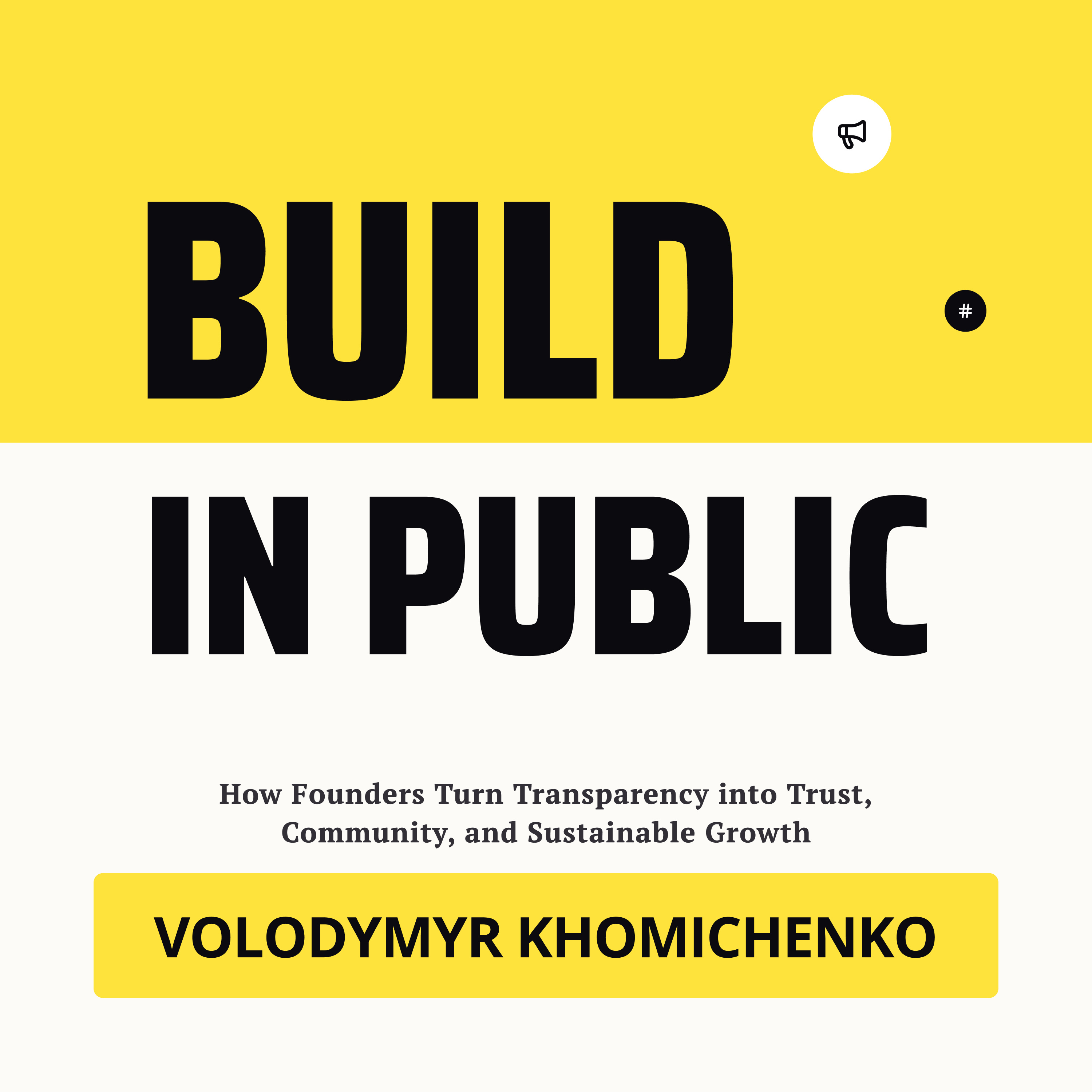
Build in Public - Free Audio Edition
About this audio editionThis is the free audio edition of Build in Public: How Founders Turn Transparency into Trust, Community, and Sustainable Growth by Volodymyr Khomichenko.This free audio edition runs for approximately one hour and forty minutes and contains roughly half of the complete book. It carries the core argument: the introduction, the full framework, and selected chapters exploring w

Clubhouse. How Engineered FOMO Fueled a Rise That Didn't Last
Clubhouse went from a tiny invite-only audio app to a multi-billion-dollar phenomenon in months, then lost most of its audience almost as fast. This episode examines how artificial scarcity, celebrity seeding, and status-driven marketing created explosive growth, why a product's infrastructure and everyday utility have to keep pace with the hype, and what the company's 2023 reset reveals a
Snap. How Ephemerality and Scarcity Defied a Giant
Snap turned down a $3 billion offer from Mark Zuckerberg and went on to prove that when software features can be copied overnight, durable growth comes from counter-positioning, manufactured scarcity, ecosystems, and control of the physical interface. This episode traces how Snap built a brand aura and a defensive moat that an incumbent with infinite resources could not replicate.About the podcast
Instagram. How Radical Subtraction Built an Empire
This episode traces Instagram's journey from a failing, feature-bloated check-in app called Burbn to a billion-dollar acquisition in under two years, revealing how a founding team's willingness to delete almost everything they had built — rather than add to it — became the foundation of one of the fastest product and marketing growth stories in tech history. The central insight: growth did
YouTube. How a Parasitic Pivot Fueled Explosive Growth
This episode traces YouTube's improbable rise from a failed video dating site to the default home for human memory online. It examines how a technical decision to eliminate friction, a parasitic distribution play on MySpace, and a carefully engineered founding myth combined to create one of the fastest product-market fits in internet history — and how, when success brought existential threats
Airbnb. How Unscalable Tactics Built a Sense of Belonging
This episode traces Airbnb's journey from a near-failed apartment-sharing experiment to a hundred-billion-dollar hospitality brand, revealing how a handful of deliberately "unscalable" decisions — professional photography done door to door, a Craigslist integration built to poach users, and a crisis-born pivot to founder-led leadership — became the company's most durable growth e
Lyft. How Narrative Marketing Fueled the Rideshare Wars
This episode explores how Lyft used story, symbolism, and community-driven branding to challenge a rival with ten times its capital. From a giant pink mustache to a mission-driven underdog identity, we unpack how Lyft turned a radical behavioral ask — get into a stranger's car — into a social movement, and what that reveals about the true function of brand in a commoditized market.About the po
Uber. How Marketing Flywheels Engineered Global Expansion
This episode explores how Uber transformed a frustrating night in Paris into a global mobility platform by treating marketing not as an afterthought, but as core infrastructure. It traces the company's evolution from a scrappy, cold-calling operation in San Francisco to a worldwide utility, revealing how localized "commando" teams, referral loops, and a ruthless focus on liquidity bu
Upwork. How Liquidity Flywheels Scaled the Future of Work
This episode traces how Upwork evolved from two scrappy, high-friction startups—oDesk and Elance—into a multibillion-dollar marketplace for global talent, revealing how a single decision to remove manual screening unlocked the liquidity needed to scale, how a merger born from mutual exhaustion in a keyword war became a masterstroke of marketing efficiency, and how the company repeatedly reinvented
Fiverr. How a $5 Gimmick Became a Global Marketplace
This episode traces Fiverr's journey from a laughed-at pitch for five-dollar digital services to a publicly traded, global marketplace serving millions of freelancers and businesses. The core insight: founder Micha Kaufman didn't just launch a cheap alternative to freelance staffing platforms — he productized human labor itself, turning services into standardized, purchasable "SKUs&qu
Envato. How Vertical Expansion Bootstrapped a Nine-Figure Exit
This episode traces Envato's eighteen-year journey from a ten-dollar sale in a Sydney basement to a US$245 million acquisition by Shutterstock, examining how founder Collis Ta'eed used marketing-driven liquidity, strategic vertical expansion into adjacent creative niches, and a content-to-commerce engine to build a profitable, venture-capital-free empire that outlasted the very technology
Teachable. The Anti-Marketplace That Built a Creator Empire
This episode explores how Teachable grew from a three-day hacked-together side project into a $250 million acquisition by choosing a radical strategic stance: build for the creator, and ignore everyone else. We trace Ankur Nagpal's journey from a painful lesson in platform risk to the invention of the "Every Dollar Model," a marketing framework that reverse-engineered growth targets
Kajabi. How Product Cannibalization Fueled a $2 Billion Flywheel
This episode traces Kajabi's journey from a PVC sprinkler toy built for a backyard birthday party to a $2 billion platform powering the creator economy. It examines how founder Kenny Rueter built demand before a single line of code existed, why he made the terrifying decision to destroy his own profitable product in 2015, and how a simple t-shirt turned paying customers into an army of unpaid
Thinkific. How Manual Work and Marketing Turned a $29 Course Into a Billion-Dollar Platform
This episode traces Thinkific's unlikely journey from a $29 LSAT prep course sold on a duct-taped WordPress site to a publicly traded learning commerce platform valued at over a billion dollars. It explores how founder Greg Smith and his team resisted the urge to scale prematurely, instead building courses by hand for years to understand what creators actually needed, and how a single value-fi
Plaid. How Developer-First Marketing Turned Bank Plumbing Into a Trusted Brand
This episode traces how Plaid, a company that started by literally scraping bank websites to move money data, became the invisible backbone of modern fintech — and walked away from a $5.3 billion acquisition to do it. It's a story about what happens when a company treats developers, not executives, as its real customers, and builds its marketing directly into the product experience rather than
Plaid. How Developer-First Marketing Turned Bank Plumbing Into a Trusted Brand
This episode traces how Plaid, a company that started by literally scraping bank websites to move money data, became the invisible backbone of modern fintech — and walked away from a $5.3 billion acquisition to do it. It's a story about what happens when a company treats developers, not executives, as its real customers, and builds its marketing directly into the product experience rather than
Lemon Squeezy. How a Bootstrap Mindset Built a Path to Acquisition
This episode traces the rise of Lemon Squeezy, a small team of creator-economy veterans who turned the unglamorous chaos of global tax compliance and digital sales into a seamless customer experience — and eventually into a nine-figure acquisition by Stripe. The core insight: in a crowded, mature market, the most durable competitive advantage isn't a feature list, it's how much friction an
Robinhood. How Viral Ingenuity Built a Financial Empire
This episode traces Robinhood's journey from a pre-launch waitlist with no product, no license, and no customers to a financial juggernaut with over $100 billion in assets under custody. It explores how founders Vladimir Tenev and Baiju Bhatt turned a regulatory constraint into a marketing masterstroke, how design became a growth engine, how a bold bet on self-clearing infrastructure nearly de
Klarna. How a Pink Rebrand Built a Global Fintech Moat
This episode traces Klarna's journey from a last-place startup pitch in Stockholm to a $15 billion global disruptor, exploring how a failed bid to out-engineer Stripe and Adyen forced a radical pivot toward consumer branding. It examines how a vibrant "Pink Moat," celebrity partnerships, and an aggressive embrace of AI transformed a bill-later payment tool into a challenger to the en
Wistia. How Twenty Years of Content Conviction Beat the Venture Playbook
This episode traces the twenty-year journey of Wistia, the video hosting company that reached its first 100,000 customers without a single salesperson. It examines how founders Chris Savage and Brendan Schwartz turned down a life-changing HBO contract, built a marketing engine out of pure education and trust, nearly lost their company's soul chasing "growth at all costs," and then st
Outreach. How Category Design Turned Outbound Sales Into a $4 Billion Category
This episode traces Outreach's improbable journey from a failing recruiting startup selling its office computers for scrap to a $4.4 billion "system of action" for enterprise sales teams. The central growth insight is that Outreach didn't win by building a better product than its rivals — it won by defining the category itself, owning the terminology sellers used every day, and a
6sense. How Listening to the Dark Funnel Built a $5 Billion Revenue Engine
This episode traces 6sense's journey from a big-data consulting insight at Cisco to a $5.2 billion "Revenue AI" platform, exploring how the company identified the hidden 97% of B2B buyers who never fill out a form, survived a near-fatal "black box" crisis, and ultimately used its own product to market itself—proving that when marketing becomes a live demonstration of what a
Clearbit. How Radical Simplicity Scaled to a $150M Exit
This episode traces Clearbit's journey from a five-API side project born out of one engineer's frustration at Stripe to a foundational layer of the modern B2B tech stack, acquired by HubSpot for $150 million. The core insight: Clearbit didn't just market its product — it used free, engineering-led tools to define the product itself, then had the discipline to walk away from 82% of its
SendGrid. How Community-Led Marketing Fueled a $3 Billion Ascent
This episode traces SendGrid's journey from a scrappy Techstars startup solving a boring but universal problem — email deliverability — to a $3 billion acquisition by Twilio. The core insight: SendGrid treated marketing as a form of product distribution rather than promotion, building trust through developer relations and education instead of cold calls, and then executed a bold second act by
MongoDB. How Guerilla Marketing Built a $30 Billion Data Moat
This episode traces MongoDB's journey from a side project born out of a failed platform bet to a $30 billion data infrastructure company, exploring how a "bottoms-up" developer marketing flywheel, a willingness to kill a beloved product, and a later professionalization of sales and marketing combined to build one of the most durable moats in modern software. The core insight: in deve
Elementor. How Community Turned a Plugin into a Global Platform
This episode traces Elementor's journey from a bootstrapped WordPress plugin built by two frustrated agency founders into a platform powering more than 13% of the web. It explores how a product-led growth strategy, paired with a marketing philosophy built on trust, transparency, and community empowerment, allowed a small Israeli startup to survive an existential platform threat, outgrow the &q
Hostinger. How Customer Obsession Became a Global Growth Engine
This episode traces Hostinger's journey from a scrappy, bootstrapped hosting experiment in Kaunas, Lithuania to a global, AI-first platform serving millions of users across 150 countries. At the center of the story is a simple but powerful idea: marketing isn't just about selling a product, it's about discovering what to build in the first place. Through relentless customer interviews,
Cloudways. How Educational Marketing Simplified the Cloud
This episode traces how Cloudways, a bootstrapped hosting startup out of Pakistan, turned a painful "3:00 AM problem" faced by digital agencies into a $350 million acquisition by DigitalOcean. The core insight: by treating marketing as a research function embedded in the agency community, Cloudways let customer pain — not internal roadmaps — dictate product development, turning agencies
SiteGround. How Marketing Maverickism Drove Product Innovation
This episode explores how a small bootstrapped team from a Sofia dorm room built SiteGround into a global hosting powerhouse — not by outspending giants on paid ads, but by using SEO as a discovery engine, turning customer support into an R&D pipeline, and staying independently owned long enough to bet on quality over quick exits. The core insight: marketing done right doesn't just sell a
The Browser Company. How Radical Transparency Built a $610 Million Story
This episode explores how The Browser Company of New York transformed a stagnant, twenty-year-old market into a $610 million acquisition story — not by out-engineering Chrome, but by out-trusting it. Through radical transparency, narrative-led marketing, and the painful decision to abandon their beloved product Arc for a new AI-native browser called Dia, founder Josh Miller and his team show what
Attio. How a 1,000-Day Gamble Redefined CRM
This episode traces how Attio's founders walked away from a profitable startup to spend nearly three years building an unproven CRM architecture from scratch, and how that patient bet on infrastructure was matched by an equally deliberate marketing strategy — one built on public building, influencer-driven distribution, and a product "magic moment" engineered to sell itself. The core
Airtable. How High-Signal Marketing Defined the No-Code Era
This episode traces Airtable's journey from a three-year stealth build to an $11.7 billion decacorn, examining how founder Howie Liu used strategic patience, "high-signal" marketing like San Francisco billboards, and a radical self-disruption to keep the company relevant through the generative AI wave. The core lesson: marketing built on trust and legitimacy can outperform lead gener
n8n. How Community Adoption Built the "Excel of AI"
This episode traces n8n's journey from a Hollywood pipeline technical director's side project to a $5.2 billion orchestration layer for the AI era, exploring how founder Jan Oberhauser solved the "80% wall" of no-code automation, pivoted the entire product at the height of its stability, and made the counterintuitive decision to abandon lead generation in favor of community-led a
Make.com. How an SEO Gamble Fueled a Global Rise
This episode traces the journey of Integromat, a bootstrapped Czech automation startup that spent four years building in silence before becoming a cult favorite in the no-code world, through its acquisition by Celonis and its bold, controversial rebrand into Make.com. It's a story about the tension between product obsession and brand ambition — and what happens when a company deliberately sacr
Midjourney. How Social Distribution Redefined Product-Led Growth
This episode explores how Midjourney built a $200 million annual revenue business with just eleven employees and zero venture capital, by turning image generation into a communal, social experience on Discord rather than a private tool. We examine the strategic decisions behind the company's growth: the choice to build on borrowed infrastructure, the deliberate optimization for beauty over pho
OpenAI. How Iterative Deployment Turned a Research Lab Into an Infrastructure Giant
This episode traces OpenAI's journey from a ten-person research lab with no product to a company serving hundreds of millions of weekly users and negotiating hundred-billion-dollar infrastructure deals. The core growth insight: OpenAI didn't win by building a perfect product and launching it once. It won by releasing early, letting the world adapt in public, and using mission-driven narrat
Dribbble. How Community Marketing Engineered a Marketplace
This episode traces Dribbble's fifteen-year journey from an invite-only side project for designers into a profitable, bootstrapped marketplace business. It examines how a manufactured-scarcity launch strategy, product-led SEO, and warehouse-driven email marketing built a loyal community—and how a controversial 2024 policy change, despite public backlash, ultimately proved that aligning marketi
Behance. How Unscalable Marketing Solved the Cold-Start Problem
This episode traces how Behance, founded by Scott Belsky, escaped the classic two-sided marketplace trap by trading scalable growth hacks for deliberately manual, high-touch marketing. From a failed focus group that redirected the entire product vision to a content strategy that hand-built the platform's first inventory of world-class work, Behance's story shows how empathy, disciplined fe
Product Hunt. How Community and Ritual Built a Launchpad
This episode traces how Ryan Hoover turned a half-hour email experiment into Product Hunt, the platform that became the internet's daily ritual for discovering new startups. The core insight: Product Hunt won not through engineering, but through a marketing-first playbook of validating demand before building, manufacturing exclusivity, and turning its own users—ambitious founders eager for an
Goodreads. How a Reading Community Became a Growth Engine
This episode explores how Goodreads grew from a niche book-cataloging site into the world's largest reading community and a $150 million acquisition target for Amazon. It examines the product decisions, viral mechanics, and community-driven marketing that fueled its rise, and the cautionary lessons that followed when growth outpaced investment in trust and safety.About the podcastThe voice you
Booking. How Performance Marketing Became the Product Itself
This episode traces how a small Dutch startup ignored the conventional wisdom of the early 2000s travel industry, built its entire product around performance marketing and conversion psychology, and grew into one of the most dominant forces in online travel. The core lesson: when marketing and product architecture become the same discipline, growth stops being a department and becomes the business
Pinterest. How Scarcity and Curation Engineered Its Growth
This episode traces Pinterest's journey from an ignored, nearly empty invite-only beta in 2009 to a visual-discovery platform with more than 600 million monthly users and a multibillion-dollar ad business. It explores how founder Ben Silbermann and his team used deliberate scarcity, hand-picked early communities, and an obsession with aesthetic quality to shape not just a product, but the cult
LinkedIn. How Built-In Distribution Solved the Cold-Start Problem
This episode explores how LinkedIn survived the treacherous early months after its 2003 launch by engineering distribution directly into its product rather than relying on traditional marketing. From address-book imports to search-indexed public profiles, LinkedIn turned every user into a recruiter and every profile into a billboard, solving the cold-start problem that kills most networked platfor
Twitter. How a 140-Character Limit Became a Growth Engine
This episode traces Twitter's journey from a failing podcasting startup to one of the world's most influential communication platforms, revealing how a technical constraint born from SMS limitations became its most powerful marketing asset. The core insight: Twitter's greatest growth engine wasn't an advertising budget, it was a product designed to be co-created by users and built
Webflow. How Conviction and Marketing Agility Built a Category
This episode traces Webflow's journey from a designer's frustration with hand-coding websites to a multi-billion-dollar Website Experience Platform, exploring how founder Vlad Magdalin's refusal to compromise on product vision — paired with an education-first marketing engine and an early pivot into answer-engine optimization — turned a steep learning curve and a near-fatal launch into
Riverside. How Broken Attribution Nearly Capped a Rocket Ship
This episode traces Riverside's journey from a scrappy remote-recording tool built by two brothers in Beersheba to an enterprise communications platform used by major media brands. The core insight: product-led growth got Riverside into the room, but it was a disciplined, revenue-first rebuild of its marketing and measurement systems that got it to scale—proving that the hardest growth problem
Gumroad. How Radical Transparency Rebuilt a Company From the Ashes
This episode traces Gumroad's improbable path from a near-collapse in 2015, complete with public layoffs and a founder running the company alone, to a profitable, no-full-time-employee business processing over $200 million in annual gross merchandise value. The core insight: when Sahil Lavingia gave up chasing venture-scale hypergrowth and instead built radical transparency, interoperability,
Patreon. How Escaping the Algorithm Powered Its Growth
This episode explores how Patreon transformed a musician's frustration with YouTube's broken economics into a multibillion-dollar platform built on recurring memberships rather than algorithmic reach. The core insight: instead of competing with tech giants for attention, Patreon became the financial infrastructure behind the creator economy—building deep product moats through APIs and paym
Medium. How Solving Distribution Became Its Growth Engine
This episode traces how Medium, founded by Evan Williams after Blogger and Twitter, grew to roughly 60 million monthly readers without buying advertising by building distribution directly into its product — and how a painful 2017 decision to abandon its advertising business model in favor of a subscription model realigned its incentives around quality over clicks. The core insight: the line betwee
Substack. How a Writer Network Became Its Own Marketing Engine Episode Description
This episode traces Substack's journey from a single frustrated essay to a platform hosting millions of paid subscriptions, and asks what made the growth durable rather than borrowed. The core insight: Substack tied its own success directly to the success of its writers, then built the product itself—through features like Recommendations—into a self-reinforcing marketing engine, proving that w
Kit. How a Near-Dead Side Project Became a Bootstrapped Creator Empire
This episode traces the transformation of Nathan Barry's email marketing startup from a stalled side project generating barely enough revenue to cover server costs into Kit, a bootstrapped company exceeding $40 million in annual recurring revenue. The core insight: product quality alone never wins a market — the founder's willingness to treat marketing and product as inseparable discipline
Behiiv. How a Morning Brew Engineer Took On Substack and Rebuilt Newsletter Infrastructure
This episode traces how Tyler Denk, a self-taught engineer who helped scale Morning Brew from a scrappy newsletter into a $75 million acquisition, spotted a gap in the creator economy and built beehiiv to fill it. It's a story about counter-positioning against a buzzier competitor, engineering virality directly into a product, and using radical founder transparency as a marketing engine — prov
Workday. How Product and Marketing Reshaped Enterprise Software
This episode traces how Workday turned a painful defeat into one of enterprise software's biggest success stories, building a cloud-native HR and finance platform on the principle of the "Power of One" and then pairing that architecture with bold, humanizing marketing that changed how the C-suite saw B2B software. The core insight: great product architecture only becomes a durable ad
Deel. How Content Authority and Brand Aura Powered Global Scale
This episode explores how Deel turned one of the least glamorous categories in B2B software, international payroll and compliance, into a $17 billion global infrastructure company in under seven years. We trace Deel's path from a scrappy Y Combinator project to an enterprise powerhouse, examining how the company used vertical integration, an unconventional acquisition playbook, and a marketing
Wise. How Transparency Became Both Product and Marketing
This episode traces Wise's journey from a personal money-saving hack between two friends in London to a publicly traded financial infrastructure company worth billions. It explores how the company turned honesty about hidden bank fees into a brand identity, built marketing directly into its product through programmatic SEO and free tools, and used counter-positioning to make its advantage near
Paddle. How a Failed Storefront Became a Payments Powerhouse
This episode traces Paddle's unlikely journey from a failed consumer software marketplace to a $1.4 billion Merchant of Record powerhouse trusted by companies like ServiceNow and Verizon. The core growth insight is one of adaptability: Paddle succeeded by abandoning its original vision when the data told a different story, by rebuilding its product and narrative to survive a painful move upmar
PayPal. How Viral Marketing and Product Agility Built an Empire
This episode traces PayPal's improbable rise from a struggling handheld-security startup to the payment backbone of eBay and, eventually, the modern internet. It explores how the company abandoned its original vision to chase an unintended market, engineered fraud prevention into a competitive moat, and pioneered a double-sided referral program that paid users in cash to ignite one of the earl
Buffer. How Content and Radical Transparency Built a Moat
This episode explores how Ahrefs, a bootstrapped SEO software company built by a Ukrainian developer with no venture capital and no sales team, grew to over $149 million in annual recurring revenue by treating marketing content as a direct extension of the product itself. The core insight is that in complex B2B markets, teaching and demonstrating a product inside high-intent content can replace mu
Ahrefs. How Product-Led Content Built a Bootstrapped SEO Giant
This episode explores how Ahrefs, a bootstrapped SEO software company built by a Ukrainian developer with no venture capital and no sales team, grew to over $149 million in annual recurring revenue by treating marketing content as a direct extension of the product itself. The core insight is that in complex B2B markets, teaching and demonstrating a product inside high-intent content can replace mu
PartnerStack. How a Failed Messaging App Became a $3 Billion Distribution Engine
This episode traces PartnerStack's unlikely path from a struggling nonprofit messaging app called Pod to one of the world's largest B2B partner networks, ultimately acquired by AppDirect in 2026. The core insight: when a team gave up on their software and paid attention to what was actually working — a scrappy affiliate referral program — they discovered that distribution itself could be t
Drift. How Category Creation Turned a Chatbot Into a Movement
This episode explores how Drift, co-founded by David Cancel and Elias Torres, entered the crowded live-chat market and won not by building a better product, but by naming a category. Through the "Forms Are Dead" campaign, ungated content, and a radical bet on authenticity over automation, Drift turned conversational marketing into a movement that reshaped how B2B companies think about bu
Intercom. How a Chat Bubble Became a $3.6 Billion AI Bet
This episode traces Intercom's journey from a scrappy internal messaging tool built by four Dublin engineers to its 2026 acquisition by Salesforce for roughly $3.6 billion. The core growth insight: Intercom repeatedly let honest customer feedback rewrite its marketing, its product, and eventually its entire business model — culminating in a willingness to cannibalize its own seat-based revenue
ActiveCampaign. How Product Focus and Community Powered Quiet Growth
This episode traces ActiveCampaign's unusual path from a $35 on-premise download built by a fine arts student in Chicago to a marketing-automation platform worth billions, exploring how a painful SaaS pivot, an obsession with an underserved SMB market, and a rejection of borrowed growth playbooks in favor of authentic community marketing combined to produce over a decade of quiet, compounding
Brevo. How Marketing Discipline Quietly Reshaped Its Product
This episode traces how a European email startup called Sendinblue transformed into Brevo, a profitable, hundred-million-dollar CRM platform, without ever losing sight of the small business owner it was built for. The core insight: Brevo didn't bolt marketing onto its product as an afterthought — it let the demands of self-serve acquisition, the economics of customer attention, and the realiti
Typeform. How Taste and Marketing Engineered Product Growth
This episode explores how two non-technical founders in Barcelona turned a client request for a bathroom-company lead form into Typeform, a company that redefined how the web collects data. The core insight is that Typeform's growth wasn't driven by outbound marketing but by design itself—taste became the differentiator, the product became the marketing channel, and marketing strategy repe
DocuSign. How Trust, Integration, and AI Built an Agreement Empire
This episode traces DocuSign's journey from a bundle of patents salvaged out of a failed e-signature startup to a multibillion-dollar infrastructure company reshaping how the world manages agreements. The central insight: DocuSign's growth never came from a single clever feature, but from a marketing strategy inseparable from product architecture — first winning trust through legal credibi
Miro. How Category Creation Turned a Whiteboard Into a Platform
This episode traces how Miro grew from a niche internal tool at a Russian design agency into a platform valued at $17.5 billion, used by the vast majority of the Fortune 100. The core insight isn't a pandemic tailwind story, it's a case study in how product design and marketing-led category creation can turn a simple utility into an enterprise necessity, showing how a rebrand, a community-
Mural. How Guided Structure Turned a Whiteboard Into a Platform
This episode traces how Mural, the visual collaboration company, grew from a frustrated game studio executive's whiteboard workaround into a multi-billion dollar enterprise platform. The core insight: a great product isn't enough on its own. Mural's growth came from two disciplined bets working together — designing a product that actively teaches people how to collaborate instead of ju
Dropbox. How a Referral Loop Replaced the Ad Budget
This episode traces Dropbox's growth from a shaky TechCrunch50 demo to a multibillion-dollar public company, focusing on the double-sided referral program that turned ordinary users into an unpaid sales force. It examines why paid search failed to create demand for a category customers didn't know they needed, how Dropbox engineered virality directly into its product experience, and how a
Asana. How the Work Graph Powers Its Agentic Bet
This episode traces Asana's journey from a scrappy internal fix for Facebook's coordination chaos to a publicly traded platform betting its future on human-agent teamwork. At the center of the story is a single architectural decision, the Work Graph, that shaped everything from product-led growth to enterprise sales to Asana's current push into AI teammates. The core lesson: when produ
ClickUp. How a Contrarian Bet on Convergence Paid Off
This episode traces ClickUp's rise from a bootstrapped house in Palo Alto to a $4 billion productivity platform, built on a bet that ran against the era's core startup wisdom: instead of doing one thing well, ClickUp tried to do everything, and turned that complexity into a growth engine. The core insight is that ClickUp never treated marketing, product, and sales as separate departments —
Stack Overflow. How an Audience Came Before the Product
This episode traces how Stack Overflow solved the hardest problem in platform economics — the cold start — not with a clever growth hack, but with years of earned trust. Before a single line of code was written, its founders had already built two of the most-read blogs in software. That audience became the seed community, the product architecture became an SEO engine, and the reputation system bec
Databricks. How Naming a Category Became a Growth Engine
This episode traces how Databricks went from a stalled open-source darling to a company valued in the hundreds of billions, not by out-engineering competitors, but by inventing a new category — the "data lakehouse" — and refusing to abandon that message even when the market pushed back. The core insight: in enterprise software, the companies that grow fastest aren't always the ones w
Okta. How Strategic Neutrality Built the Control Plane of Identity
This episode traces Okta's evolution from a systems-monitoring startup to "The World's Identity Company," examining how a deliberate bet on neutrality, rather than building a competing platform, became its defining competitive advantage. It explores the go-to-market reconstruction that turned a $812 million operating loss into hundreds of millions in profit, showing how specializ
Twilio. How Developer Trust Became Its Growth Engine
This episode traces how Twilio turned a single frustrating problem — the impossible cost and complexity of connecting software to phones — into a communications empire built almost entirely on developer trust. Rather than chasing executives with sales pitches, Twilio invested in helpfulness, documentation, and technical empathy as its core marketing strategy, only later building the enterprise-gra
Synthesia. How Utility Beat Novelty in AI Video
This episode unpacks how Synthesia, an AI video startup once famous for a celebrity-powered marketing stunt, walked away from the spotlight to build a $4 billion enterprise software business. The core insight: the most viral use case is rarely the most durable one, and marketing a powerful new technology means teaching people how to use it inside their everyday work, not just dazzling them with wh
Jasper. How Marketing Strategy Built an AI Unicorn From a Failed Startup
This episode traces how three founders turned a stalled, half-laid-off startup into Jasper, an AI writing platform that reached a $1.5 billion valuation by treating marketing not as a function that promotes the product, but as the force that designs it. From a pre-launch webinar that sold a product before it existed, to a pivot from prosumer virality to enterprise trust after ChatGPT upended the m
ElevenLabs. How a Voice Startup Engineered Its Own Virality
This episode traces how ElevenLabs went from a shared childhood frustration with badly dubbed Polish films to an $11 billion company crossing $500 million in annual recurring revenue in roughly four years. The core insight: the technical breakthrough of natural-sounding AI voice was only half the story. The real engine of growth was a deliberately engineered marketing and product strategy — one th
Descript. How the Backspace Key Replaced the Editing Timeline
This episode traces how Descript turned a single, almost absurdly simple idea — editing audio and video by editing a transcript — into a $550 million company. It explores the structural gap in the creator economy that Descript identified, the discipline behind its expansion into a full creation suite, and the marketing playbook that turned a clever interface into a category-defining business. The
Cursor. How Product-Led Growth Replaced the Marketing Budget
This episode traces how Cursor, an AI-native code editor built by four MIT graduates, went from a failed mechanical-engineering experiment to one of the fastest-scaling software companies in history — reaching $100 million in annual recurring revenue in roughly twelve months and eventually a $60 billion acquisition by SpaceX — almost entirely without a conventional marketing budget. The central in
Recommended

این نقطه
TED Business
Dark Night Tales with Brian King

Fantasy Flex

زن بودن

Medicine with Meaning

Yours Truly Johnny Dollar Collection

Take Back Your Health®

CBS Radio Mystery Theater | Old Time Radio

Solved Murders - True Crime Stories

紐約鳥|New York Aperture
The Swerve Podcast: Obscure Topics | Conspiracy Theories
