Inside the Criminal Mind with Retired FBI Profiler
A show where a Forensic Psychology Professor and a Retired FBI Profiler join together to better understand the criminal mind. The BSU, LLC uses evidence-based techniques and processes developed at the FBI's famed Behavioral Science Unit and Crisis Management Unit to improve behavioral intelligence and improve sway, influence, and decision making. Train your workforce in de-escalation through human profiling, learn the elicitation, solicitation, and consummation processes to improve your marketing, sales, and customer relation skills. Improve your company's business continuity plans and test your disaster recovery processes and prepare for the next crisis through an evidence-based business impact analysis.
Episodes
The Making of a Cartel Recruit: Profiling Vulnerability, Coercion, and Criminal Identity
What psychological characteristics make an adolescent vulnerable to recruitment by a violent criminal organization? In this episode of Profiler’s Dossier, we examine how investigators distinguish opportunistic offenders, coerced participants, and increasingly committed cartel members. Through the lenses of developmental psychology, behavioral conditioning, moral disengagement, and criminal investi
The Crew Cut Killer: Behavioral Patterns of a Suspected Serial Murderer
Three murders in Northern California raised disturbing questions about a possible serial offender. Investigators connected the crimes to Taylor Morris Teaford, a violent fugitive with a history of serious offenses. This episode examines victim selection, behavioral consistency, escalation, and the limitations of criminal profiling when investigators attempt to link separate homicides. The identifi
The Interview Room: Can Investigators Recognize Psychopathic Traits?
Criminal investigators sometimes encounter suspects who appear charming, cooperative, or emotionally detached. This episode examines how interviewers evaluate statements, inconsistencies, and behavior without relying on popular myths about psychopathy. Discover why corroborating evidence and structured investigative techniques matter more than intuition.
Organized vs. Disorganized Killers: Does the FBI Distinction Still Hold Up?
For decades, criminal profiling has taught investigators and students to distinguish between organized and disorganized killers based on what offenders leave behind at crime scenes. An organized offender supposedly plans carefully, controls the victim, conceals evidence, and appears socially competent, while a disorganized offender acts impulsively and leaves behind a chaotic scene. The distinctio
How Does a Profiler Read a Crime Scene? Behavior Versus Physical Evidence
crime scene contains more than fingerprints, DNA, and physical objects—it may also preserve traces of human decision-making. Profilers examine patterns of behavior to develop cautious hypotheses about an offender’s choices, priorities, and relationship to the victim. But behavioral evidence is fundamentally different from physical evidence, and understanding that distinction is essential to unders
Why Serial Killers Choose Certain Places: The Geography of Predatory Crime
Serial predators rarely choose locations completely at random. Where they hunt, encounter victims, commit crimes, and dispose of bodies can reflect familiarity, opportunity, transportation routes, victim availability, and the offender’s desire to avoid detection. This episode explores geographic profiling and how investigators use patterns across multiple crime scenes to better understand an offen
Twenty-Eight Fires and One Map: Finding an Arsonist’s Neighborhood
For months, someone was setting fires at occupied homes in Burnaby, British Columbia, leaving investigators with dozens of incidents but no identified suspect. With conventional investigative methods failing to produce a breakthrough, police turned to behavioral and geographic profiling to narrow the search. A map eventually pointed investigators toward a particular area, but the decisive lead cam
The Railway Killer: What Could a Psychologist See That Detectives Needed?
In 1980s Britain, investigators faced a disturbing series of sexual assaults and murders associated with railway stations across London and southeast England. Instead of asking only who the offender might be, psychological analysis introduced another question: What can the locations, sequence, and behavior of the crimes tell us about how this offender lives? The investigation of John Duffy became
When the Crime Scene Is Empty: What Behavior Reveals When Evidence Vanishes
In June 1973, seven-year-old Susan Jaeger vanished from her family’s tent at a Montana campground, leaving investigators with remarkably little physical evidence and no obvious suspect. The case became an important episode in the FBI’s emerging use of behavioral analysis, associated with early Behavioral Science Unit figures Howard Teten and Patrick Mullany. This episode asks a deceptively diffic
The Mask on Evelyn Street
Between 2014 and 2024 a masked man hunted women in a tight pocket of Tucker, Georgia—first in a garage on Christmas Eve, then at an apartment a mile away, then in a bound drive from machine to machine. The attacks sat in separate files until a July homicide arrest put a name on the DNA. The geography never wandered. The face never appeared. That combination is the whole case.
There Is No Job Called “FBI Profiler.” There Is a Long Queue Behind That Door.
You do not apply to the Behavioral Analysis Unit out of college. You become an FBI special agent, survive Quantico, work real cases for years, then compete for a small desk at NCAVC. The steps are public. The odds are not. Television skipped the decade in the middle.
Inside the Basement: How the FBI Learned to Listen to Monsters
Long before behavioral profiling was a fixture of crime fiction, two FBI agents began slipping tape recorders into maximum-security interview rooms to study violent repeat offenders. By listening closely to the recurring fantasies and rituals behind unsolved horrors, they mapped out how violence begins long before a physical crime takes place. Here is how John Douglas and Robert Ressler helped bui
Profiling Is Not Mind Reading. Jana Monroe Spent 850 Cases Proving It.
Jana Monroe was the first female FBI agent in the Behavioral Science Unit and consulted on roughly 850 homicides, including work connected to Jeffrey Dahmer and the Rogers family murders. In Hearts of Darkness and recent interviews, she describes profiling as crime-scene analysis and victimology used to shrink a suspect pool—not as psychic access to a killer’s inner life. That distinction still ma
He Agreed to Talk to the BAU. That Is Not the Same Thing as Understanding Him.
On April 8, 2026, Rex Heuermann pleaded guilty to strangling eight women whose remains were tied to the Gilgo Beach investigation and admitted an eighth killing he had not even been charged with. As part of the deal he agreed to sit with the FBI’s Behavioral Analysis Unit. That is a rare ending for a serial case, and it is also a trap if you treat the interview as the explanation.
Vigilante Justice What Really Drives People to Take the Law Into Their Own Hands
a look at vigilantism, Carlos and retired FBI profiler Andrew Bringuel dig into what actually motivates someone to bypass the justice system and act on their own. Using the PEPS model — personal, economic, power/political, and social motives — they break down real cases, including the Bernhard Goetz shooting, to separate the myth of the vigilante from the psychology behind it. The conversation als
HOW DOES THE ENVIRONMENTAL LANDSCAPE INFLUENCE CRIME
FBI PROFILER LOOKS AT THE SERIAL KILLER KNOWN AS THE DOODLER
WHERE DO PSYCHOPATHS TEND TO LIVE
FORMER FBI PROFILER AND DR. CARLOS ANALYZE MARILYN MONROE CONSPIRACIES
THE PSYCHOLOGY OF THE VIGILANTE WITH FBI PROFILER
SPECIAL FBI AGENT GUEST ON INTERROGATION
WE CHAT WITH FORMER FBI AGENT ON HUMAN TRAFFICKING
WE LOOK AT CRIMINAL MOTIVATIONS WITH THE PEPS MODEL
Who was the IRS bomber
THE CASE OF THE PIZZA BOMBER
FBI PROFILERS DISCUSSES THE NUANCES OF UNDERSTANDING THE LAW
DIFFERENCE BETWEEN CRIMES OF PASSION AND PREMEDITATED MURDER WITH FBI PROFILER
HOW DOES SOCIAL MEDIA CHANGE THE TERRORIST STRATEGY
WE DISCUSS DOMESTIC TERRORISM AND THEIR MOTIVATIONS
WE DISCUSS THE LATEST ON THE UNIVERSITY OF IDAHO MURDERS AND WE DISCUSS SERIAL KILLERS
I SPEAK WITH RETIRED FBI PROFILER ON THE SUSPECT ARRESTED FOR IDAHO MURDERS OF THE FOUR STUDENTS1
WE ANALYZE THE TIMOTHY MCVEIGH CASE
FBI PROFILER DISCUSSES PROFILING, CRIME IN THE NEWS AND MORE1
FBI PROFILER DISCUSSES THE FOUR MURDERS OF UNIVERSITY OF IDAHO STUDENTS3
FBI PROFILER DISCUSSES THE RECENT ELIZA FLETCHER KIDNAPPING
A Spy in Plain Sight The Inside Story of the FBI and Robert Hanssen—America's Most Damaging Russian2
RETIRED FBI PROFILER DISCUSSES UVALDE SCHOOL SHOOTER
HOW DOES THE ENVIRONMENTAL LANDSCAPE INFLUENCE CRIME
RETIRED PROFILER LOOKS AT THE GABY PETITO CASE2
FBI PROFILER ANALYZES THE LONG ISLAND SERIAL KILLER
FBI PROFILER ANALYZES THE ZODIAC KILLER
FBI PROFILER LOOKS AT THE SERIAL KILLER KNOWN AS THE DOODLER
FBI PROFILER DISCUSSES THE COMPLEXITY OF INVESTIGATING COLD CASES1
UNSOLVED MURDER OF LIBBY GERMAN AND ABBY WILLIAMS WITH FBI PROFILER1
FBI PROFILER DISCUSSES THE LAST TWO MASS SHOOTINGS 1
FBI PROFILER DISCUSSES THE RISE OF HOME INVASIONS
THE PSYCHOLOGY OF THE VIGILANTE WITH FBI PROFILER
A DISCUSSION ON PEDOPHILE VIGILANTES
WE DISCUSS THE ACTIVISTS THAT ATTEMPTED TO TAKEOVER A HOTEL IN WASHINGTON
WE DISCUSS THE TWO FBI AGENTS THAT WERE KILLED
WE DISCUSS CHILD TRAFFICKING AND THE LATEST RESCUE OPERATION
WE LOOK AT THE WHITE COLLAR CASE OF THE PEANUT CEO THAT WAS SENTENCED TO 20 YEAR
WE LOOK AT CRIMINAL MOTIVATIONS WITH THE PEPS MODEL
WE ANALYZE THE NASHVILLE BOMBING
We look at different versions of human trafficking with Former FBI Agent1
why do husbands kill theirs wives, we look at the Peterson and Watts cases
FORMER FBI PROFILER AND DR. CARLOS ANALYZE MARILYN MONROE CONSPIRACIES
The difference between federal and state law1
WE PROFILE THE GOLDEN STATE KILLER
Discussing the WHY of criminal behavior
We analyze the Boston bombing and the Tsaernev brothers
We discuss Jeffrey Epstein, Ghislaine Maxwell, human trafficking complex criminal drama
We look at the case of the Pizza bomber
We analyze the Timothy McVeigh case
how social media changed the landscape of terrorism
We discuss domestic terrorism and their motivations
Revisiting the Las Vegas Shooter Stephen Paddock
We analyze the case of the Kehoe Brothers and White Supremacy
Who was the IRS bomber
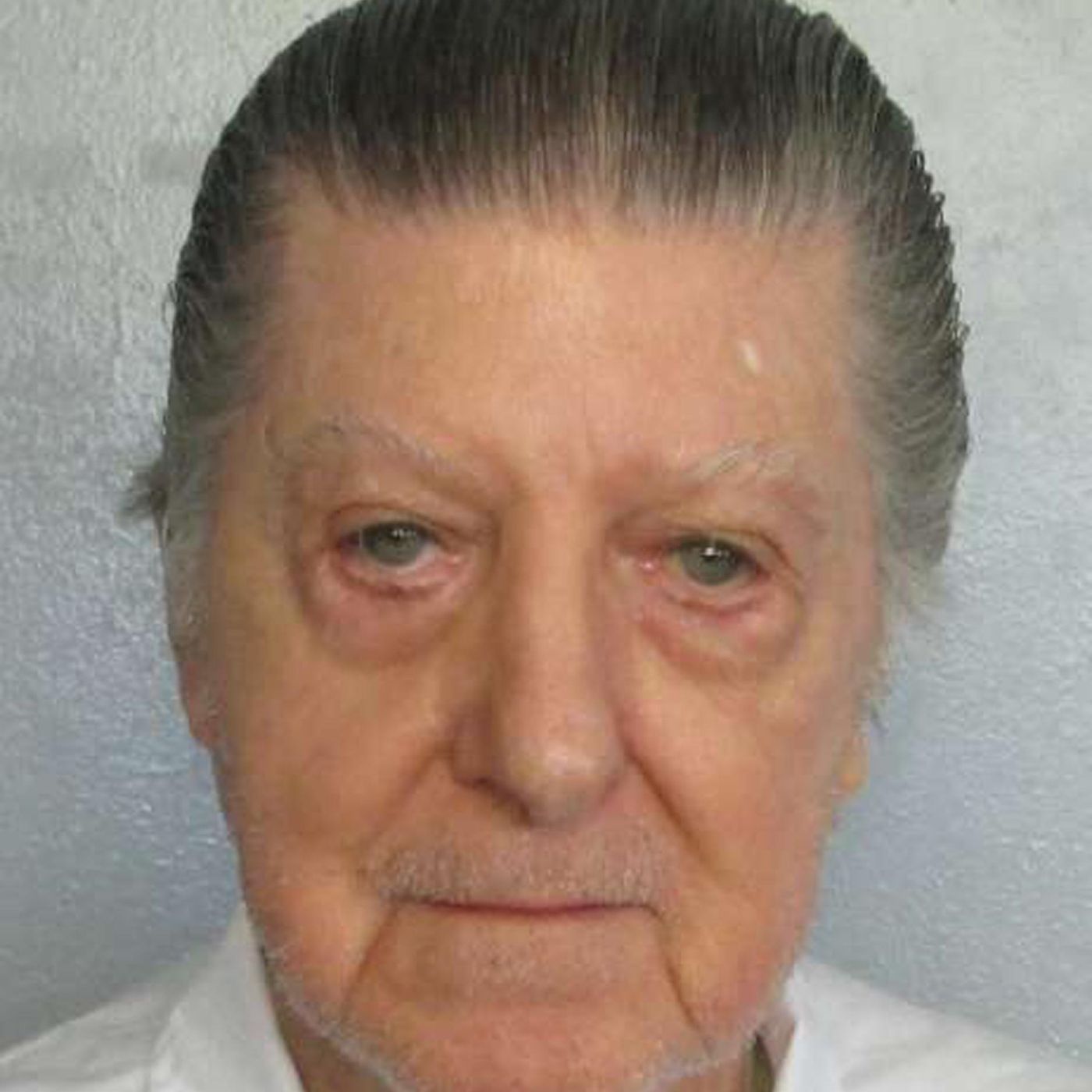
We psychoanalyze the case of the Package Bomber that killed a federal judge
How the environment effects criminal activity