To the Righthouse
Much as a Lighthouse warns of dangers and guides travellers towards safety, our Righthouse alerts to risks for human rights and points towards secure protection. Like the Lighthouse of literary fame, our Righthouse symbolises the difference between what is desirable and what is real, with multiple points of views in between, the longing for something both enlightening and difficult to reach: a destination, stability, a solution.
Episodes
S6.5 - Friend or Foe: Children and Young People and AI
The series concludes with a timely episode on the vital role of young people in AI governance. Joined by two guests representing youth initiatives from Pakistan and the USA, we explore lived experiences, bold ideas and practical approaches for making AI a force for opportunity, inclusion and human dignity.
S6.4 - University Teaching and Learning in an AI World
This episode takes listeners inside today’s AI-shaped university world. As our host and guest explore AI’s growing presence in teaching, learning and academic life, they open up crucial questions about creativity, writing, cognitive agency, digital competence and the future of our shared intellectual commons.
S6.3 - Regulate and Build: The EU's past, present and future in and with AI
This episode offers essential insights on the EU AI Act and what it means for the future of trustworthy AI. Our guests unpack the benefits and challenges of risk-based regulation, ethical guidelines, legal uncertainties and the dynamic relationship between innovation, regulation and human rights protection.
S6.2 - Is AI Causing or Reducing Global Inequalities?
The series continues with a powerful conversation on AI, access and global inequality. Focused on the so-called digital divide and responses emerging across the Global Majority world, this episode asks how AI can help create a more inclusive, participatory future aimed at reducing inequalities rather than deepening them.
S6.1 - ‘The People are the Superintelligence’: How AI affects political deliberation and democracy
The opening episode features Audrey Tang in an inspiring conversation on how digital technology can empower people, bridge divides and renew democracy. Moving from fragmentation to common ground, it invites us to imagine AI as a tool for strengthening civic knowledge and collective wisdom.
S5.5 - Empowering through remembrance
We conclude the series with a powerful episode on memorialization in Bosnia and Herzegovina.The conversation explores how memorialization itself becomes a form of justice — preserving victims’ humanity, amplifying survivors’ voices, resisting genocide denial, and sustaining collective memory when legal justice remains incomplete.It reflects on how remembrance can serve as both healing and resistan
S5.4 - Demanding justice
This episode explores how survivors and activists in Ireland are confronting institutional abuse through memorialization, legal action, education, and movement lawyering.By preserving truth, demanding accountability, and challenging state denial of human rights violations, survivors are transforming remembrance into resistance and advocacy into lasting change.The conversation highlights the power
S5.3 - Transforming experiences
This episode highlights how the Mukwege Foundation and its survivor-led Red Lineinitiative are advancing a holistic, rights-based response to conflict-relatedsexual violence.By combining legal accountability, prevention, and survivor-centered support, theinitiative works to restore dignity, empower survivors, and strengthen pathwaysto justice that go beyond the courtroom.The conversation explores
S5.2 - Connecting voices
The series continues with a powerful episode exploring the Quipu Project and its workamplifying the voices of Peruvian women affected by forced sterilizations.Through storytelling and listening, personal testimonies become acts of resistance — transforming individual experiences into collective memory, recognition, and a wider struggle for justice and dignity beyond victimhood.This episode reflect
S5.1 - Solidarity networks
What happens when surviving enforced disappearance becomes the spark for a global fight for justice?In the first episode of this series, Thomas Unger sits down with Ram Bhandari to explore how Ram’s experience of enforced disappearance in Nepal transformed into a lifelong commitment to human rights activism.From survivor-led solidarity networks to the growing crisis of impunity and shrinking civic
S.4.5-More-than-human rights: the music of nature and the nature of music
This episode of Sounds of Justice, the fourth series in the Global Campus “To the Righthouse” podcast programme, explores how listening to the sounds of the more-than-human world – from forests to fungi, from whales to waterways – can help us reimagine our relationship to the earth we inhabit. It looks at the role of music in Indigenous and Afro-descendant understandings of ecology and struggles f
s.4.4-Instruments of abuse: weaponizing music in human rights violations
This episode of the fourth series in the Global Campus “To the Righthouse” podcast programme explores how music has been used as an instrument of human rights abuse in different contexts, from torture and ill-treatment in US detention centers in Guantánamo to forced assimilation of Uyghurs in the Xinjiang Region in China. It also reveals how music can restore humanity and identity in the face of b
S.4.3-Soundscapes of resilience in India and Palestine
This episode of Sounds of Justice highlights two contexts where music has long voiced struggles for justice and human rights.From‘rebellious music gatherings’ spearheading the anti-caste movement in India to Palestinian songs of loss and resilience amid the rubble in Gaza, sonic strategies of resistance are helping to reclaim dignity, foster solidarity and spur accountability.* Rasika Ajotikaris a
S.4.2- Music and liberation politics in the African diaspora
Music has been central to how people of African descent – in the United States and across the diaspora – have imagined and demanded justice . From Paul Robeson and Nina Simone to the present, this episode of Sounds of Justice listens in on iconic anthems that have carried, shaped and mobilized movements for Black lives.* Shana L. Redmondis a multimodal writer-creator and scholar. She is the author
S.4.1 -Music and human rights: amplifying the resonances
The first episode of Sounds of Justice teases out the different dimensions of the relationship between music and human rights. The four guests, all co-editors of the Routledge Companion, explore what the language of music and the values of human rights have in common; and how music’s capacity to connect us to our common humanity while attuning us to difference can power ongoing struggles for justi

S3.8 - Reimagining governance
Politics and human rights or politics through human rights?
We conclude this series with a conversation with Anja Mihr* focusing on the difference between ‘politics and human rights’ on the one hand and ‘politics through human rights’ on the other. Join us as she discusses with Graham Finlay the following questions: How can we safeguard democracy, freedom and human rights from threats? What role c

S3.7 - Reimagining actors
On the relevance of meaningful participation of stakeholders in politics
One way to reimagine politics is to go through re-imagining the actual involvement of different actors. We talked about this with Gauri Van Gulik* who shared her insights with George Ulrich. Here are some of the questions you can expect to hear in the episode: How can we create spaces and resources in our communities for mean

S3.6 - Reimaging power
About the interplay between geopolitics and human rights
Current geopolitical tensions play a very relevant role in politics, but what is the role of human rights there? To answer some of the questions surrounding this highly debated issue, we invited Karim Bitar* and covered some additional points: What role do or should human rights play in current geopolitical tensions? How can political change
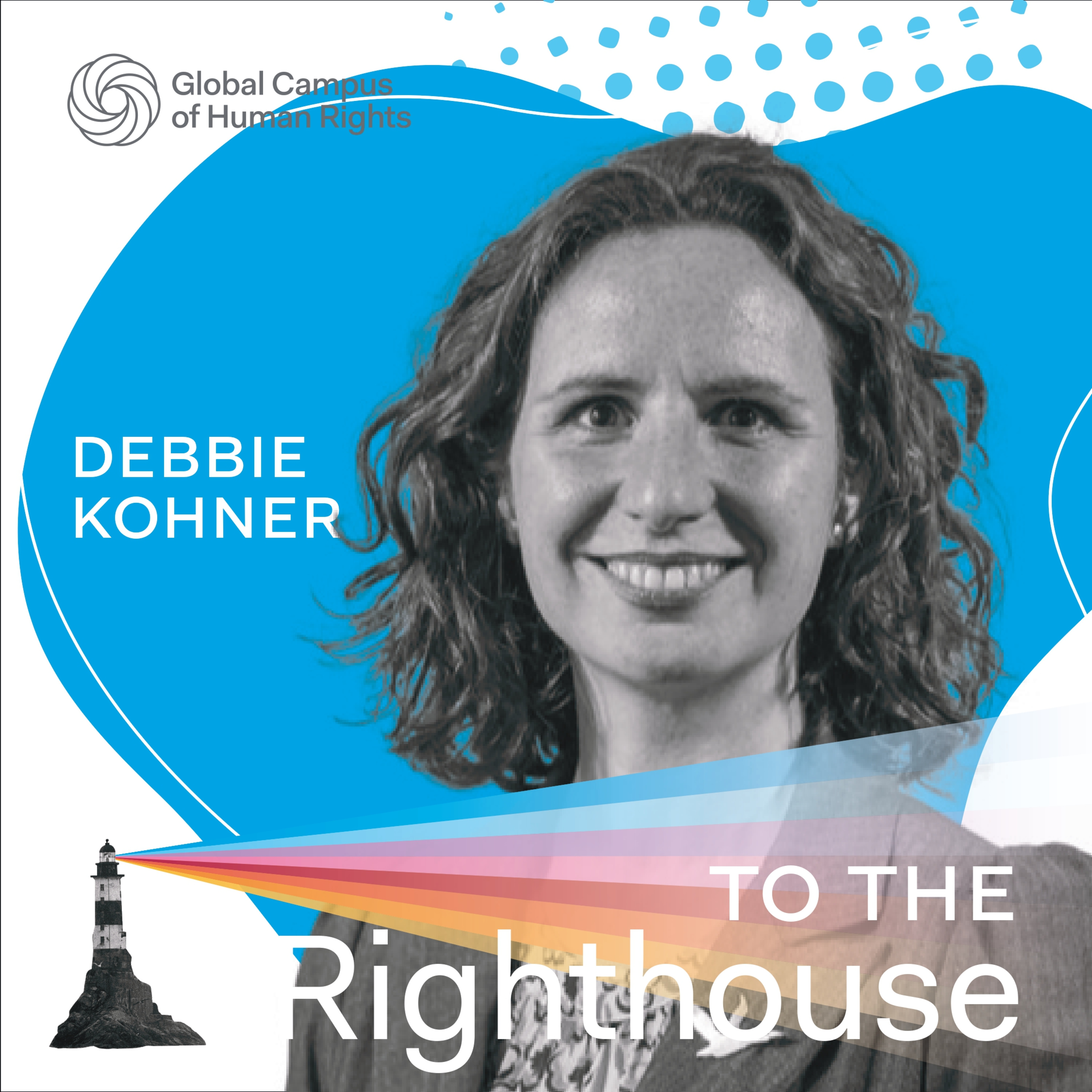
S3.5 - Reimagining influence
How can National Human Rights Institutions (NHRI) impact on politics?
We continue the series with a conversation about spheres of influence in politics. We do this together with Debbie Kohner* who talks about NHRI and their monitoring role in enabling rights-based politics. Some of the questions we asked: How can human rights monitoring influence new ways of thinking and doing politics? Are NHRIs

S3.4 - Reimagining spaces
The importance of making room for rights-based politics
In this episode, recorded during the FRA FORUM in Vienna, we focus on practicing human rights-based politics in institutional structures and spaces. Morten Kjaerum* brings in his professional and personal perspective to respond to the following questions: what space is there for human rights in politics? Are there new or regenerated ideas tha

S3.3 - Reimagining values
What about culture as politics?
Our guest in this episode is Alexandra Xanthaki*, UN Special Rapporteur on Cultural Rights. Based on her work and a series of reports that she has released, we asked her:
What role is there for culture and cultural rights in reimagining politics? Is culture politics? How can we safeguard the dignity and human rights of minorities and ‘under-represented’ groups in po

S3.2 - Reimagining leadership
On why leadership needs a long-term and rights-based view
One cannot talk about politics without discussing the characteristics of leadership. We asked Mary Robinson* her thoughts about a new approach suggested by her and The Elders: long-view leadership. Tune in to listen to her answers to the following questions: How are planetary crises transforming current politics? What instruments do world l

S3.1 - Reimagining politics through human rights
Introducing the theme of the series
Our co-hosts Graham Finlay and George Ulrich engage in a conversation that looks at why this is the time to re-imagine politics and why it is important to do so through the lens of human rights. Listen on as they engage with the following questions: are human rights political? Is politics based on human rights? Should it be? How can human rights shape a renewed

S2.5 - To hope for the future
A picture of the world we want to see
In conversation with Thomas Coombes
We conclude the series with a conversation about embracing hope. As a final reflection, we want to hope for the future and draw a picture of the world we want to see. We do this together with Thomas Coombes* who talks about why it helps to focus more on the human in order to achieve change and what a checklist of hope-base

S2.4 - To hope for the broken
The importance of hopefulness in creating justice
In conversation with Marina Shupac
In this episode, we focus on practicing hope and on good examples of aspiration, solidarity and resilience as opposed to negative feelings of suffering. Marina Shupac* brings in her professional and personal perspective to respond to the following questions: in what ways is hope a key for the empowerment of rights

S2.3 - To hope for the human
The power of telling a human story
In conversation with Andrew Leon Hanna
We want to continue our journey to better understand what it means to hope for the human, and to do so we will talk about the power of telling a human story. Our guest Andrew Leon Hanna* will answer some important questions: why is it important to use a common ground rather than divisive narratives? A human story rather tha

S2.2 - To hope for the better
The need to stress achievements (big and small)
In conversation with Mary Lawlor
In the face of the current backlash against human rights, we want to reflect on how to hope for the better and what we can learn from the need to stress achievements in our continuous human rights struggles. We discuss some key questions with Mary Lawlor*: what evidence is there that human rights work? How do we tal
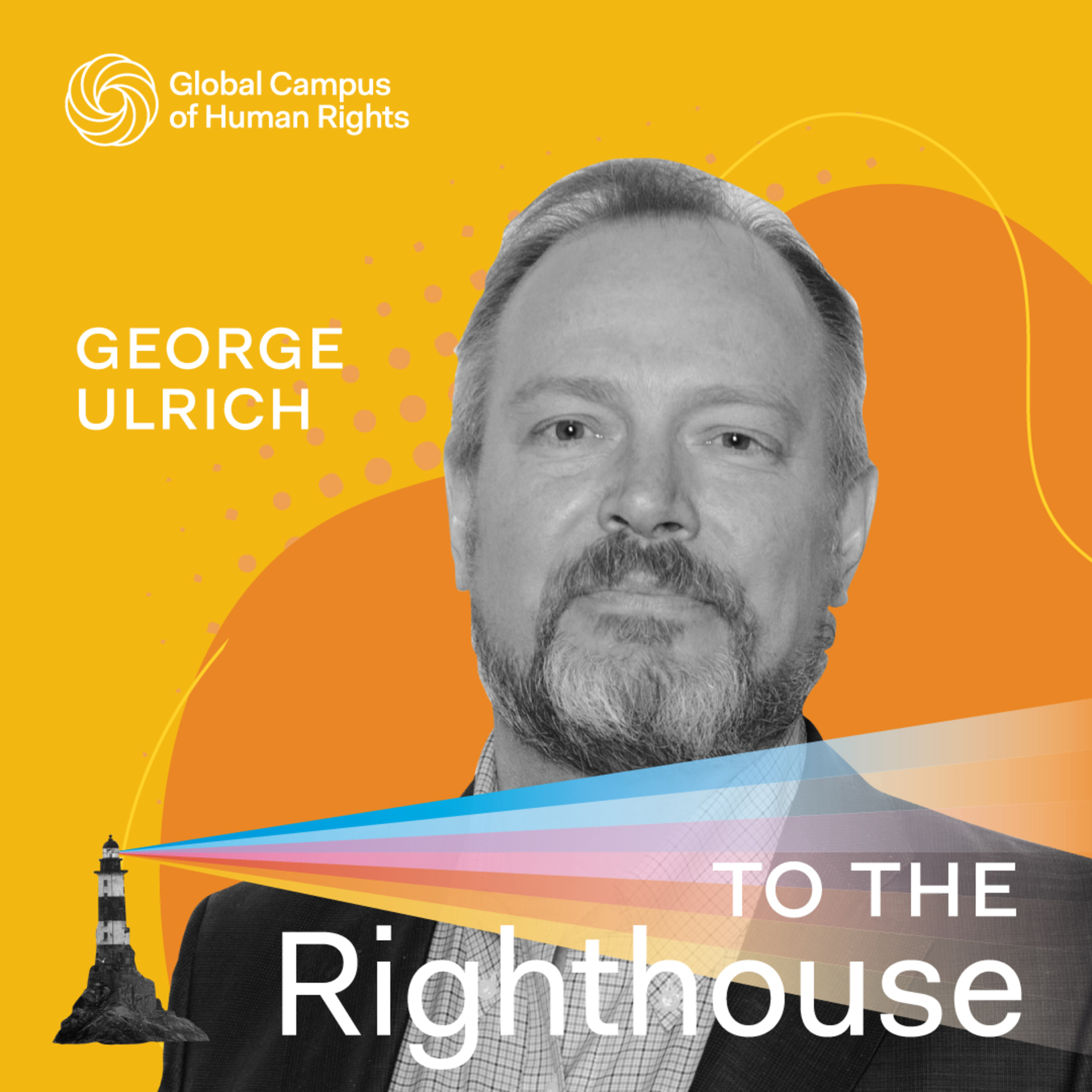
S2.1 - To hope or not to hope?
The importance of positive human rights narratives
In conversation with George Ulrich
In the first GC Podcast Series, we widely explained why talking with human rights sceptics is not only relevant but also conducive to increased motivation for further action. Still, an important question remained: how to improve a meaningful human rights discourse? George Ulrich* shares his thoughts and answers a

S1.5 - Unicorns, utopia and mockery
Are human rights real? How do they exist?
Ontological scepticism questions the very being of universal human rights. In its most explicit form, it asserts that human rights do not exist. As famously stated by the British moral philosopher Alasdair MacIntyre in response to the proclamation of rights belonging to all human beings merely on account of being human: ‘there are no such rights, and belie

S1.4 - Rhetoric, Rupture and Rights
Are human rights politically neutral? Does proliferation of human rights water down the very concept?
Expressions of political scepticism about human rights may involve an assessment both of how human rights claims feed into and affect political processes and, conversely, the role of politics in facilitating the realisation of human rights. Political sceptics contend that human rights claims are p

S1.3 - Negotiating tensions
Are human rights an unrealistic luxury?
Pragmatically-oriented expressions of human rights scepticism do not take issue with the concept of human rights as such. Rather, they question the relevance and efficacy of human rights in particular settings. They may acknowledge that human rights express a noble ideal to which one can aspire, but in current circumstances it is a luxury that society cannot

S1.2 - In small places close to home
Whose values? Whose experience? Are human rights inclusive?
Value-based objections to human rights are commonly stated with reference to culture and/or religion. They may further be linked with a claim that human rights are shaped by and express distinctly Western values.
The perception of a certain degree of incompatibility between human rights standards and prevailing cultural norms is widesprea

S1.1 - Clearly unclear
Human Rights under pressure: when, why and how to engage with sceptics?
In the current era of rising illiberalism and backlash against hard won human rights standards, there is a pressing need to stand firm, hold governments to their agreed international obligations and adopt a confrontational 'naming and shaming' approach to abuses and critics of Human Rights.
If this is a pertinent reaction in
Recommended
SLOW ENGLISH PODCAST (A1-A2) With Subtitles | Daily Videos | English With Us Podcast

Learn English A2 with Daily News | Simple English Listening Practice

پلی لیست | PlayList

Conspiracy Files with Paige Carter

Bad Friends

Learn 50 English Phrases While You Sleep | Everyday English Phrases & Vocabulary
This Past Weekend w/ Theo Von

Dateline NBC

Back to the 80s Radio

Crime Stories with Nancy Grace

Bible Tea

این نقطه
