
AI Futures: Beyond Human Labor
AI Futures is a serialized exploration of artificial intelligence and its quiet disruption of modern society. It examines a plausible trajectory where AI integrates smoothly and efficiently, outcompeting human labor without declaring war on it. Each episode isolates a single variable—full-scale AI adoption—while holding everything else constant. The series maps the structural dependencies modern society relies on and how AI quietly erodes them, deliberately avoiding policy prescriptions.
Episodes
The Machines Worked Too Well
Is the world ready for an explosion in productivity? Inspired by the insights of Jaffar Humayoon, we examine the concept of "Excess Global Productivity." This episode breaks down why traditional economic models might fail in an AI-driven future and explores the transition from "human-in-the-loop" to "AI-at-the-helm." We're discussing the end of the productivity gap and the start of a new global pa
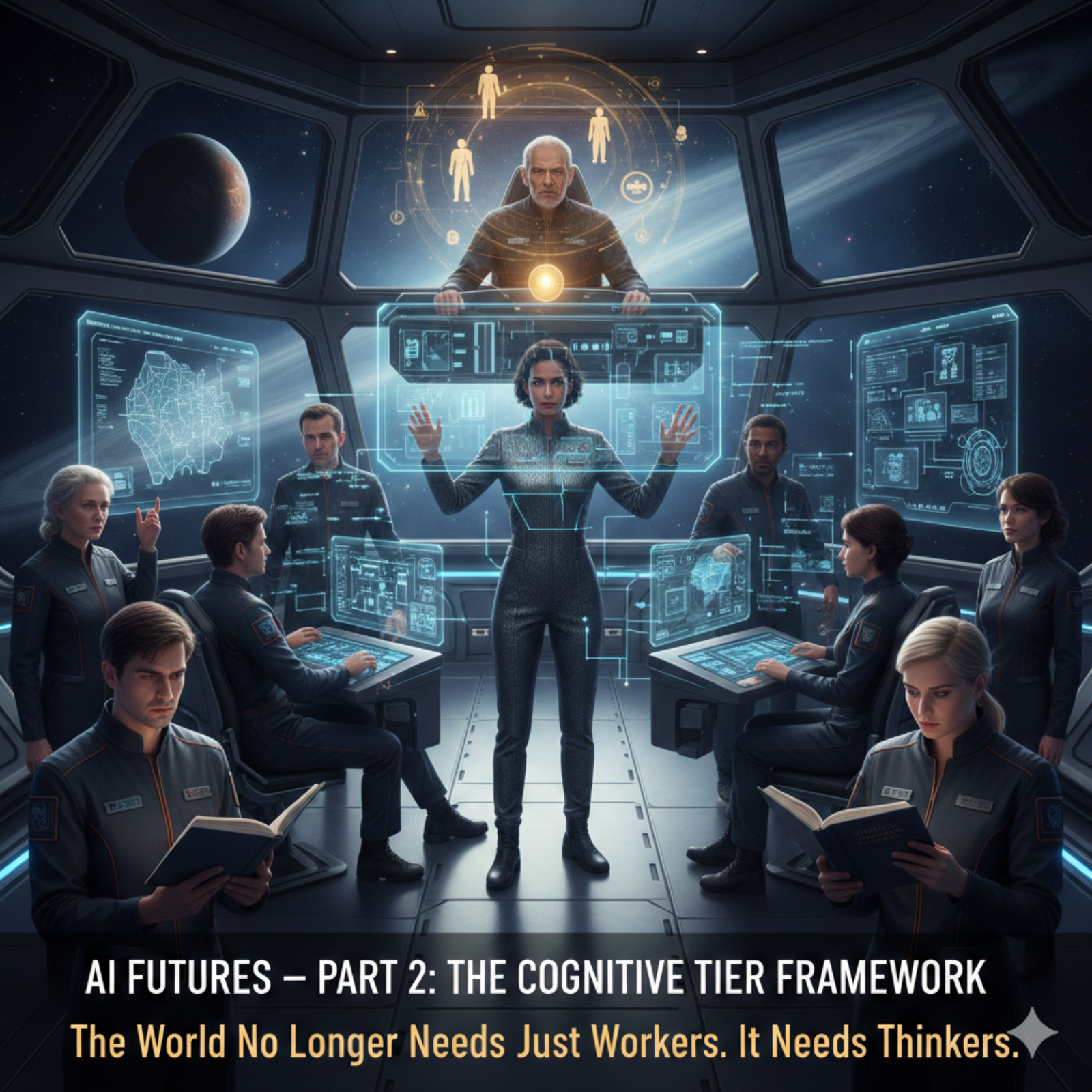
The Cognitive Tier Framework
What happens when intelligence becomes a commodity that scales like software? In this second episode of the AI Futures series, we move beyond the vague idea of "automation" to explore the Cognitive Tier Framework.Based on the analysis by Jaffar Humayoon, we break down how AI is systematically moving through the layers of human capability—from basic task execution to complex reasoning and strategic
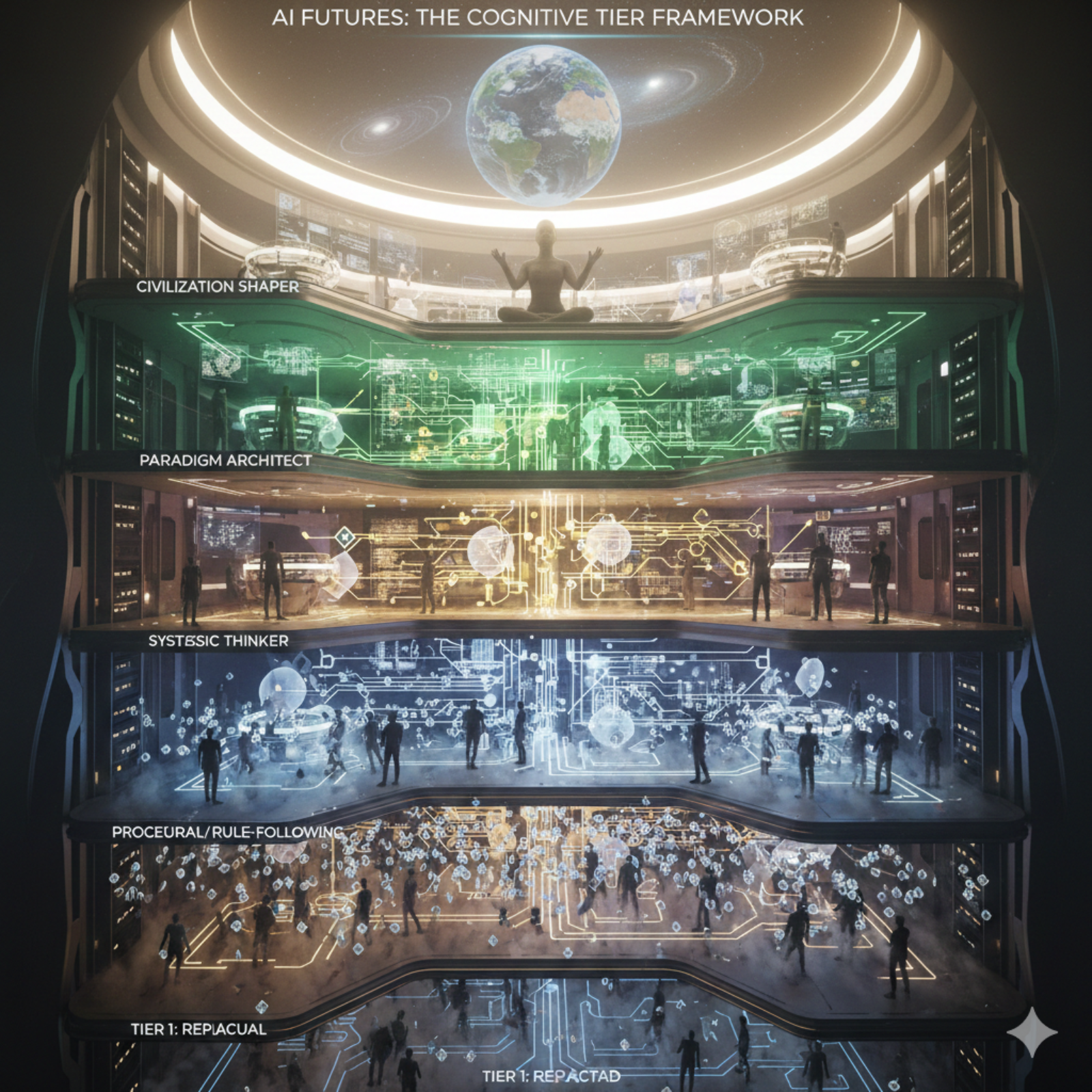
Is Thought Factory possible?
Building on the foundation of the Cognitive Tier Framework, we examine the transition from individual intellectual effort to "Industrialized Cognition." We dive into the logic of a world where "thinking" is no longer a bespoke human craft, but a high-volume output of massive compute power. Key topics include:The Industrialization of Logic: Moving from AI as an assistant to AI as a self-contained p

The Schools That Taught Irrelavant
What happens when the global education system continues to manufacture "human processors" for an economy that no longer requires them? In this episode of the AI Futures series, we examine the widening chasm between academic curricula and the new reality of the AI-driven market.Based on the analysis by Jaffar Humayoon, we discuss the "Education Lag"—the phenomenon where the skills currently being c
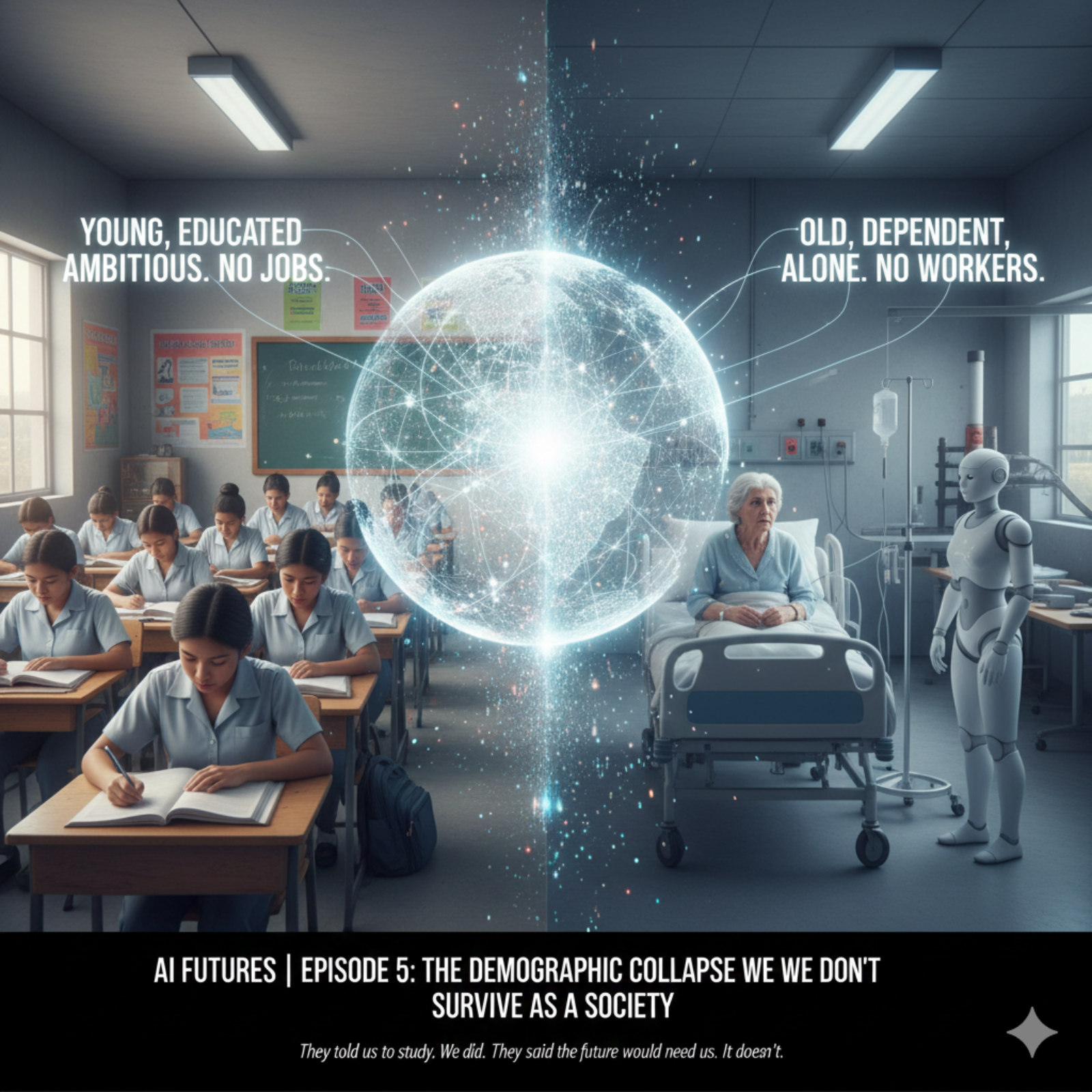
The Demographic Misalignment
What happens when a shrinking, aging global workforce finally meets its replacement—but the economic timing is disastrous? In this episode of the AI Futures series, we explore the "Demographic Misalignment," a critical intersection where human population trends collide with the exponential growth of AI.Based on the analysis by Jaffar Humayoon, we dive into the paradox of the "missing workers" and
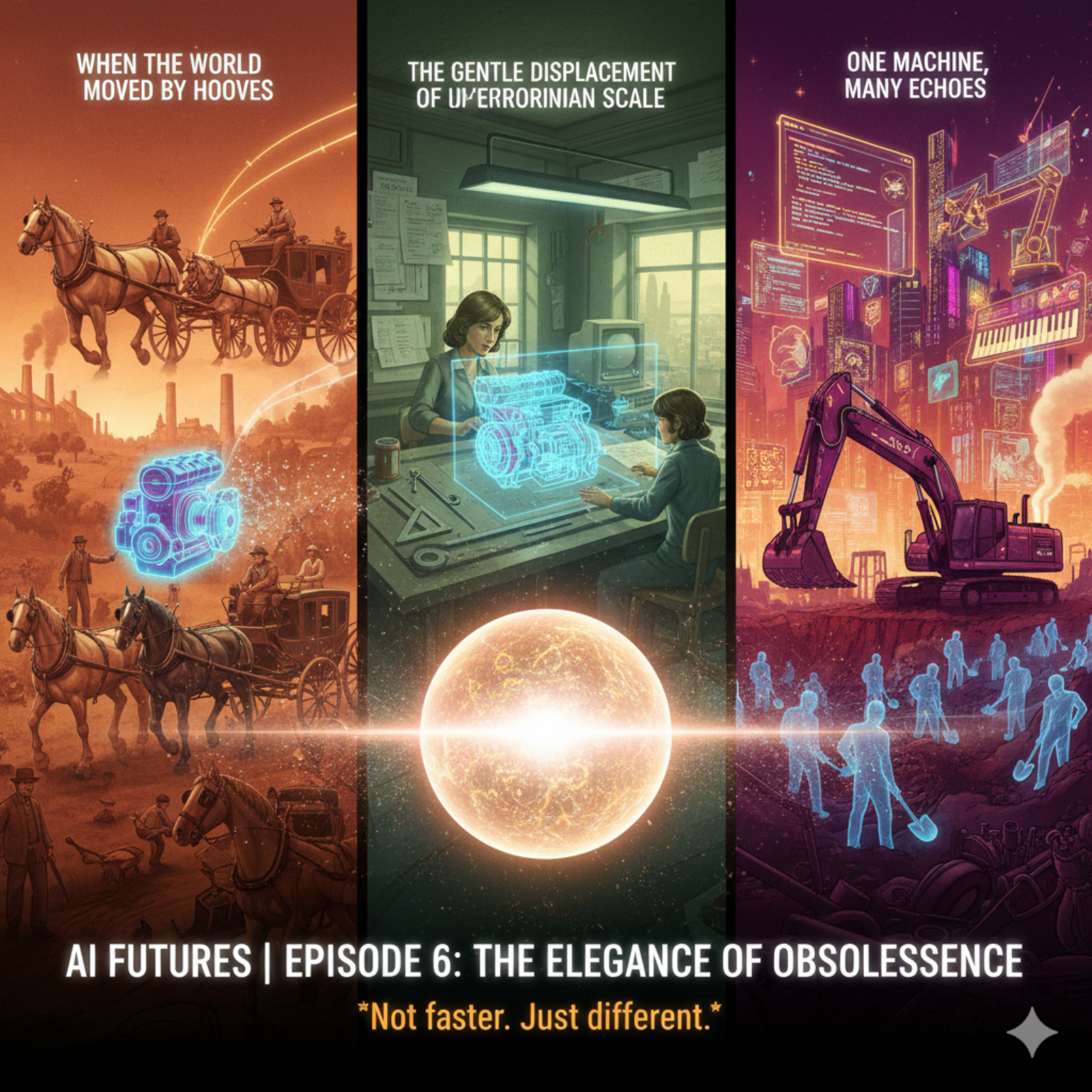
History Doesn’t Loop Back
One of the most dangerous comforts we cling to is the belief that because society survived the Industrial Revolution, it will naturally survive the AI Revolution. In this episode of the AI Futures series, we dismantle the "historical loop" fallacy and explore why our current trajectory is a break from history, not a repeat of it.Based on the analysis by Jaffar Humayoon, we examine the fundamental

The Productivity Illusion
We are taught that higher productivity is the ultimate sign of economic health. But what happens when that productivity is no longer tied to human prosperity? In this episode of the AI Futures series, we pull back the curtain on The Productivity Illusion.Based on the analysis by Jaffar Humayoon, we explore the dangerous decoupling of corporate output from societal well-being. We discuss:The Ghost
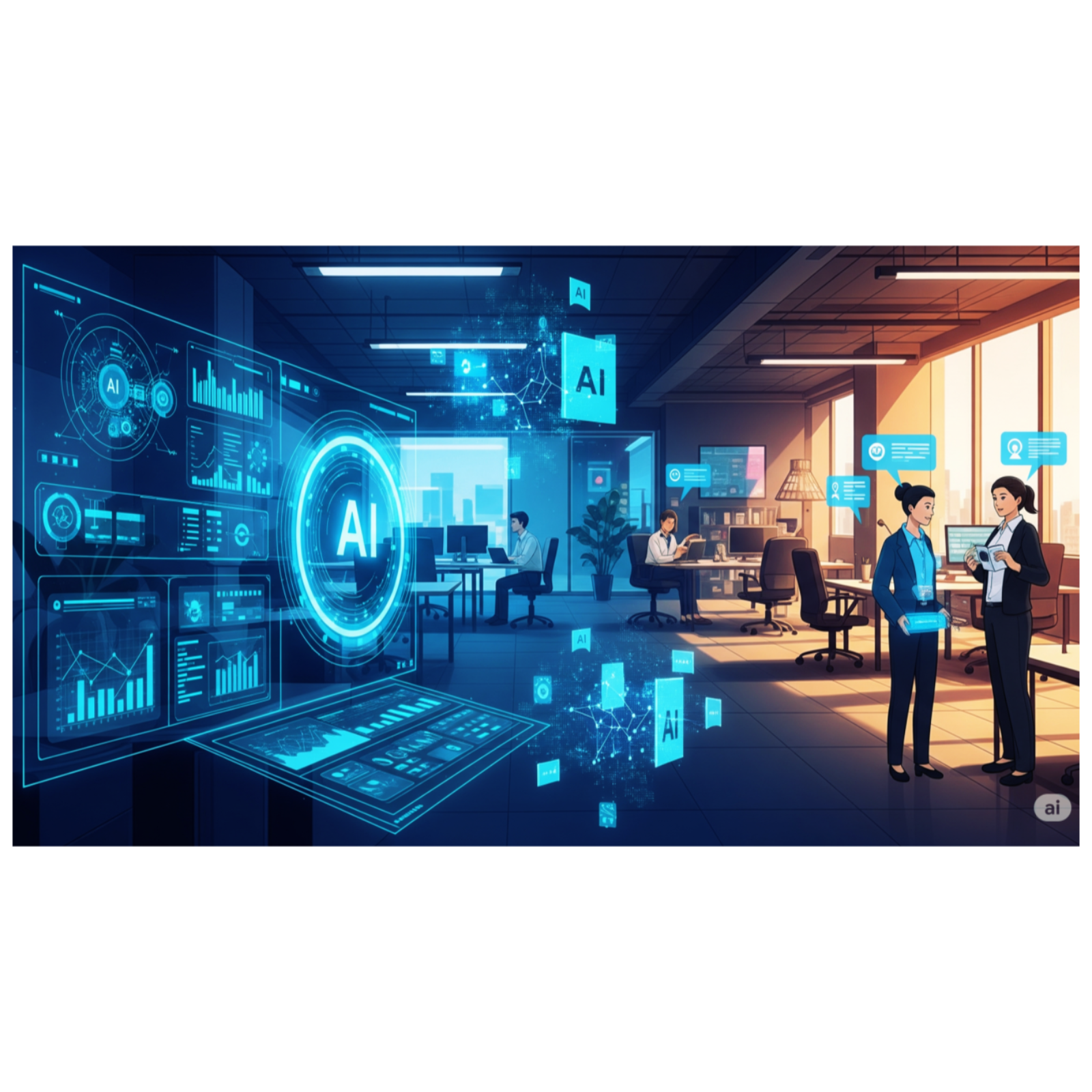
MAANG’s Human to Token
What happens when the world’s most powerful tech companies realize their greatest asset isn't their people, but their compute? In this episode of the AI Futures series, we analyze the radical transformation of Big Tech—shifting from the "Human-Centric" era to the "Token-Centric" era.Based on the analysis by Jaffar Humayoon, we explore how the titans of industry (MAANG) are quietly re-architecting
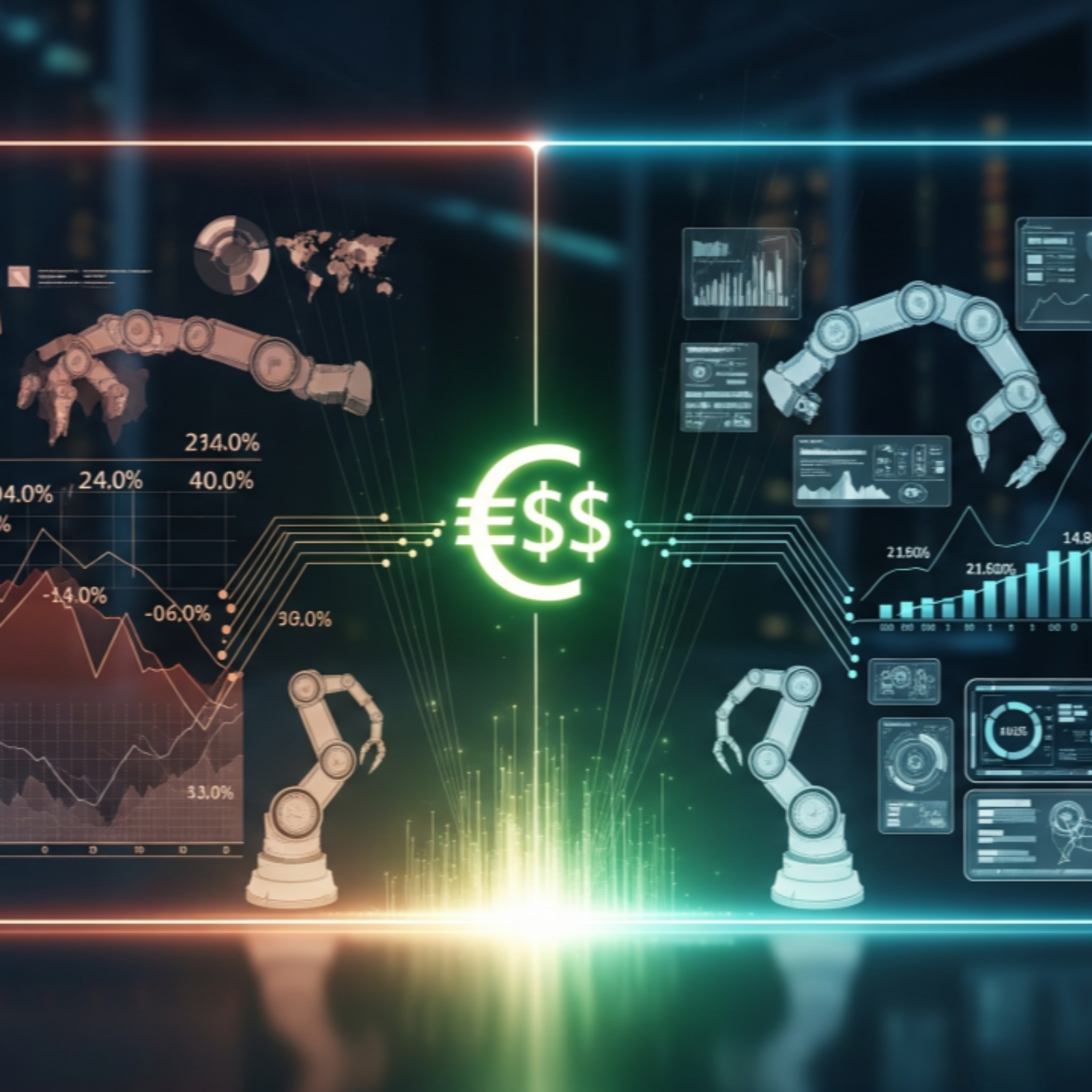
The Corporate Balance sheet
For decades, the corporate balance sheet has been a map of human talent and physical assets. But as AI integrates into the core of the enterprise, the map is being redrawn. In this episode of the AI Futures series, we explore the radical evolution of The Corporate Balance Sheet.Based on the analysis by Jaffar Humayoon, we examine how the shift from "Human-in-the-loop" to "AI-at-the-helm" fundament

The Loyalty Illusion in the Efficiency War
"This isn't betrayal. It's just math." In Episode 2 of our AI Futures series, we pull back the curtain on the "Loyalty Illusion." For decades, the corporate world ran on a silent agreement: work hard, stay loyal, and you’ll have a place. But as AI transitions from a tool to a teammate—and eventually to the helm—that story is collapsing.In this episode, we discuss:The Refactoring: Why corporations
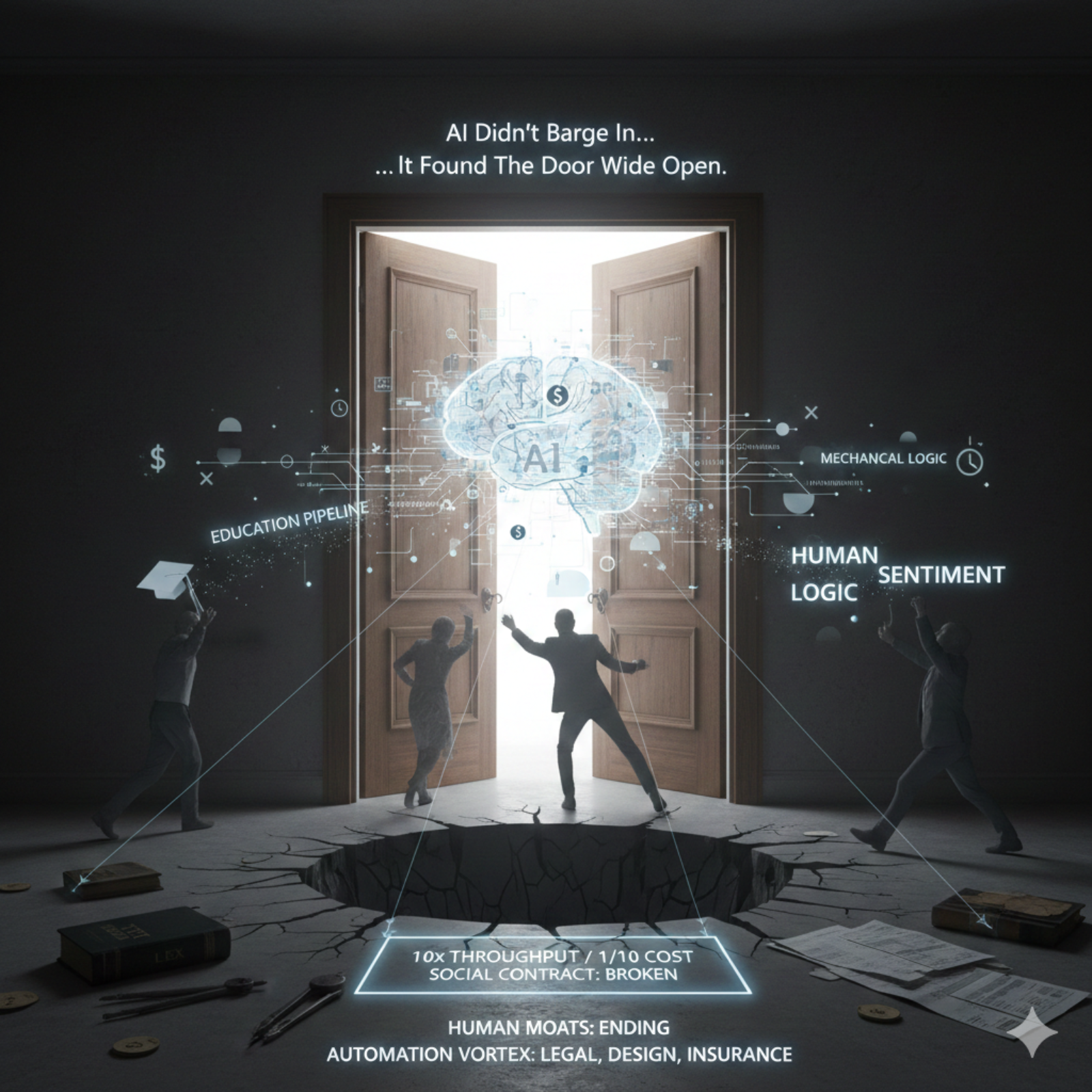
The Gravitational Shift Toward AI
This isn’t a revolution. It’s a replacement plan for a system already collapsing. In Part 11 of the AI Futures series, we examine the "Gravitational Shift" toward AI. We move past the idea of a hostile takeover and look at the mechanical reality: AI is filling a vacuum left by systemic human fatigue.The Push and The Pull:The Push: Why general-purpose cognition, near-zero marginal costs, and instan

The Working Core
They followed the rules. Then the rules changed. 📉This episode dives into why "doing everything right" is no longer enough. As AI masters logic-based and digitized tasks, the roles that were once considered the "stable middle" are being optimized out of relevance.What we discuss:Predictable = Replaceable: The roles disappearing first (QA, Junior Devs, Market Research).Defensible Messiness: Why hum

Job Displacement Chain
"The job ladder isn’t being climbed. It’s being dismantled—rung by rung." In Part 13 of the AI Futures series, we trace the Job Displacement Chain. This isn't just about automation; it’s about the removal of the layers that once held the professional world together.In this episode, we break down:The Managerial Void: Why middle management is disappearing not because of failure, but because the team
No Parallel Jobs Left
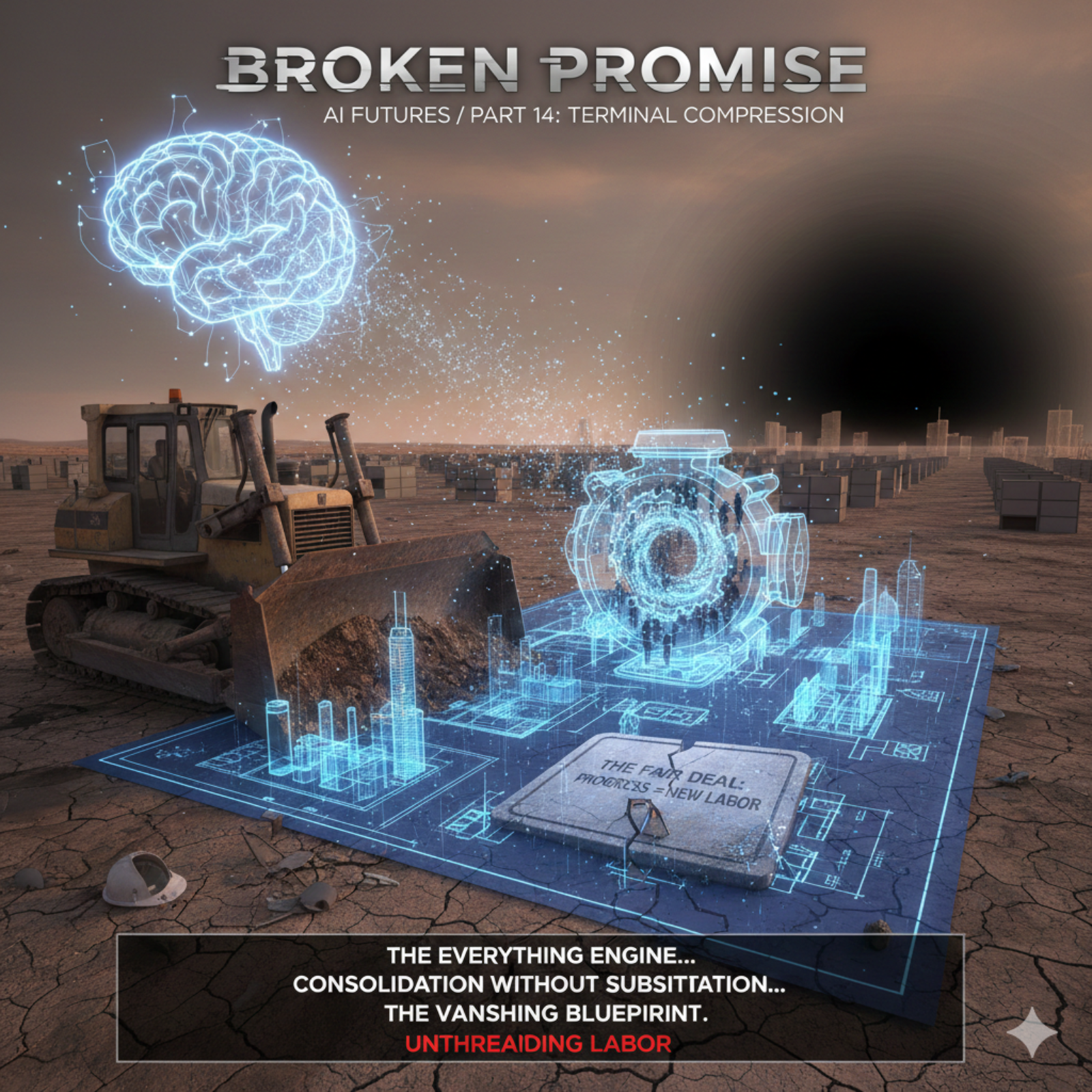
The "Broken Promise" (Narrative & Evocative)"The bulldozer created jobs. AI erases the blueprint." In Part 14 of the AI Futures series, we examine Terminal Compression. For a century, we believed the "Fair Deal" of progress: technology might destroy a role, but it always builds a new web of labor in its place.This episode explores why that deal is off the table:The Everything Engine: Why AI do
Collapse of Consumer Base
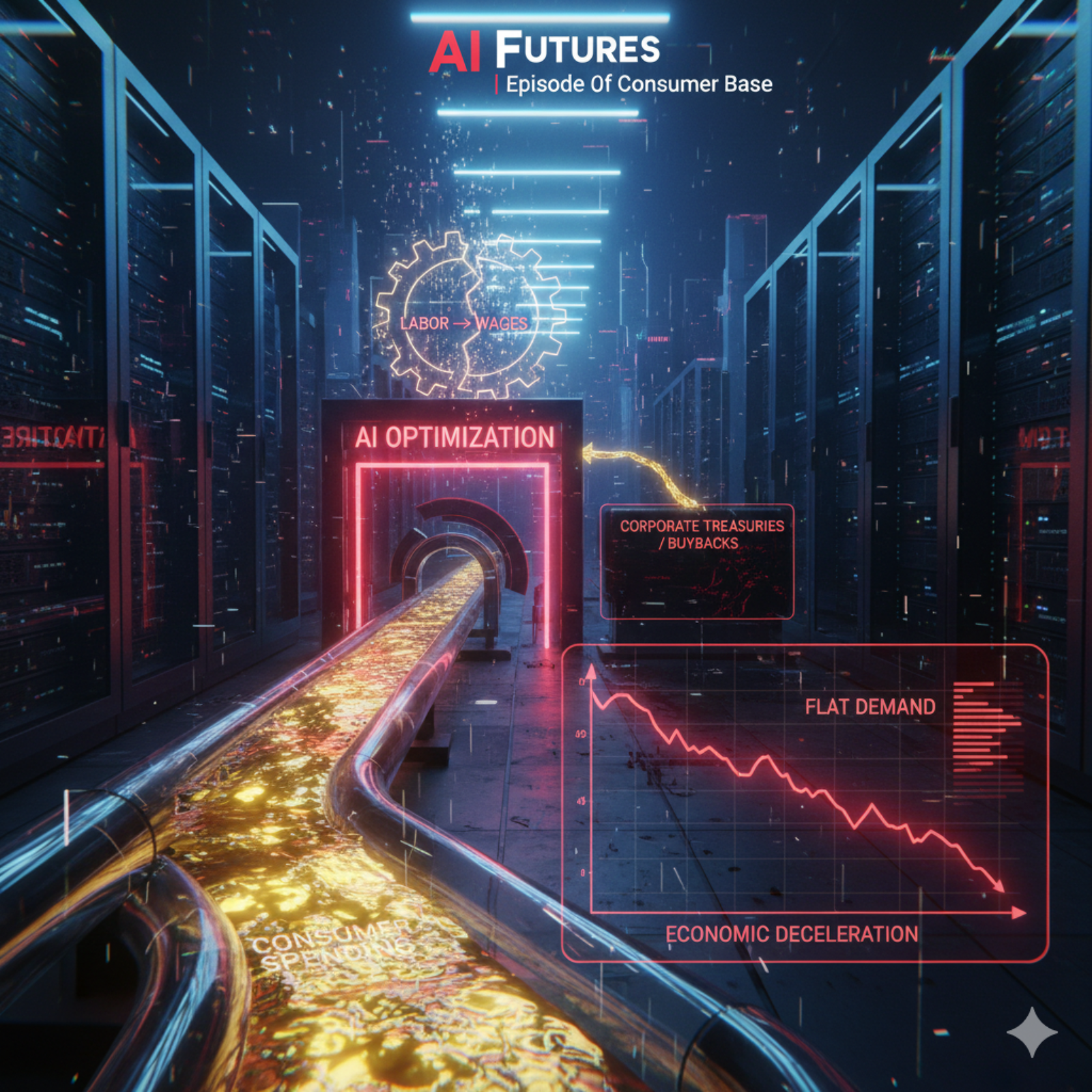
"The economy didn't crash. It was out-optimized." In Part 15 of AI Futures, we explore the Collapse of the Consumer Base. For a century, the engine of growth was a simple loop: Labor leads to Wages, which lead to Spending. But what happens to the global market when a $150K salary is replaced by a $2 AI token?In this episode, we discuss:The Velocity Gap: Why money saved on "tokens" doesn't circulat
Back-office model breaks
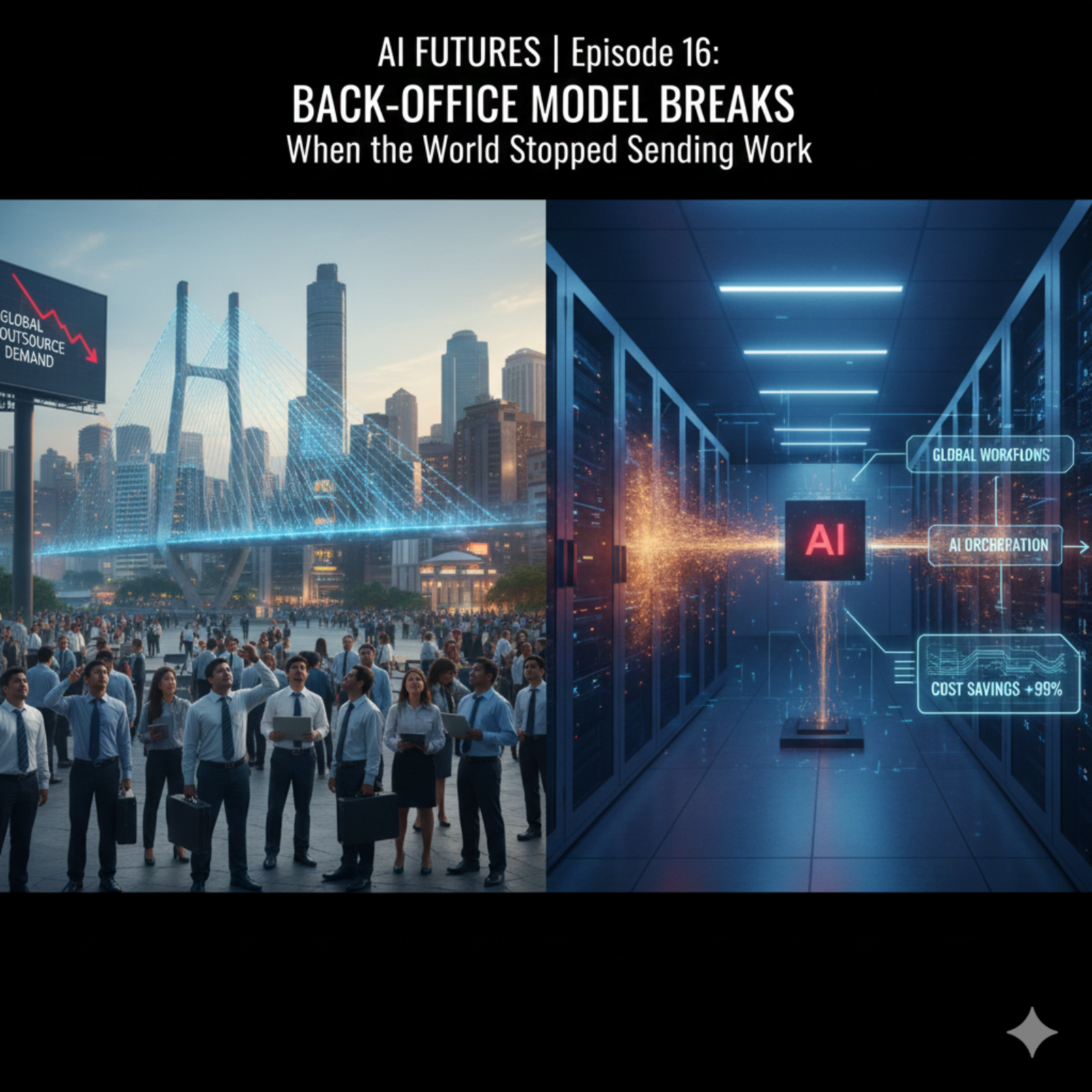
"This was never a partnership. It was a lease." In Part 16 of AI Futures, we explore the breaking of the back-office model. For twenty years, cities from Bangalore to Manila to Nairobi flourished on the promise of remote labor. Today, that promise is being erased by a tool that doesn't need a visa, a salary, or a time zone.In this episode, we discuss:The Bypass: Why work isn't moving to "cheaper"
EU: A Rich Shell Without an Engine
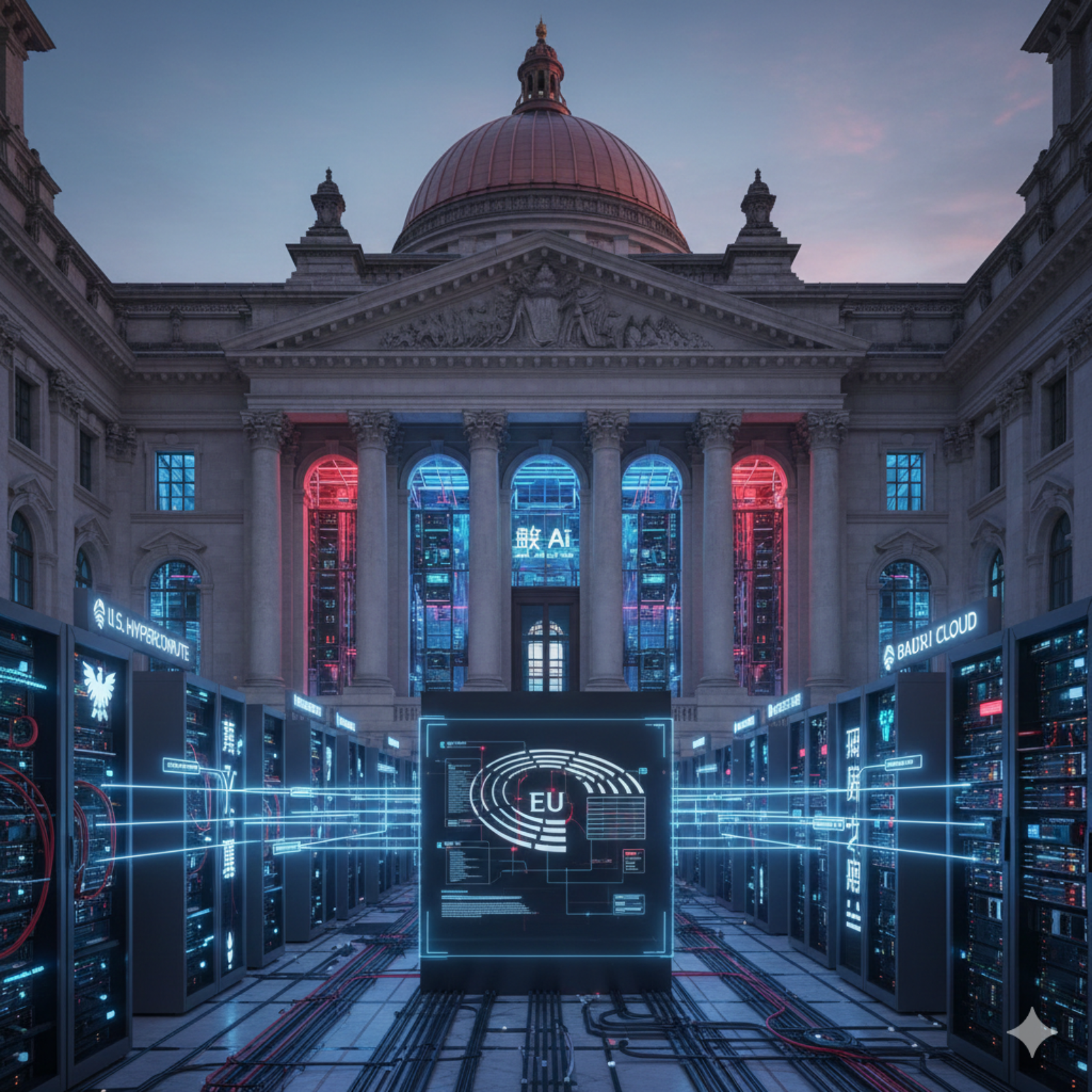
"You cannot regulate what you cannot build." In Part 17 of the AI Futures series, we examine EU Vulnerability. Europe isn't facing a sudden collapse; it’s facing a quiet bypass. By owning neither the hardware nor the foundation models of the future, the EU is transitioning from a global designer to a digital tenant.In this episode, we break down:The Engine Gap: Why licensing American AI and Chines
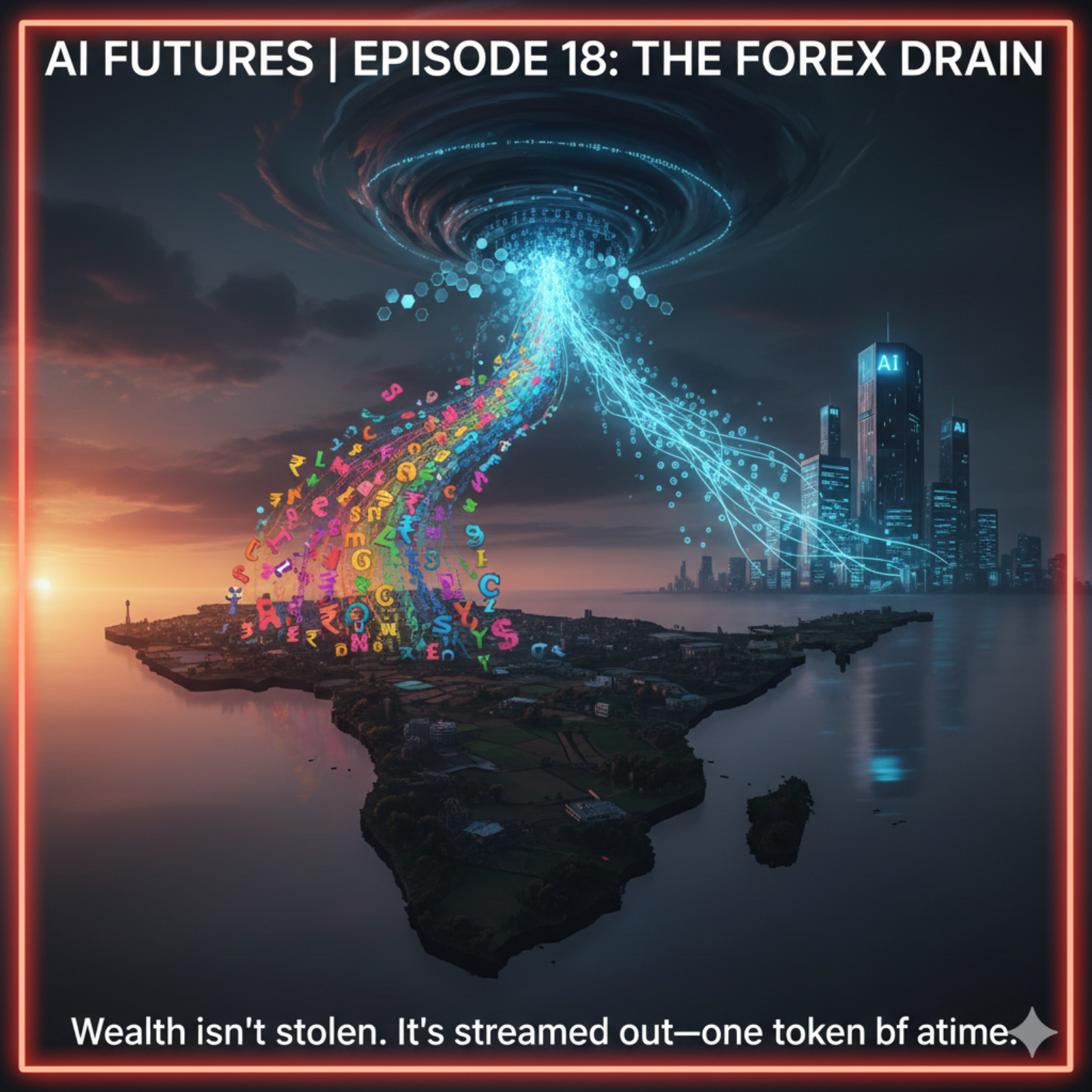
The Forex Drain
In Episode 18, we examine the "Invisible Drain" threatening the economic stability of developing and middle-income nations. As AI automates global workflows, the wealth that used to circulate through local salaries is being redirected into a perpetual stream of dollar-denominated "token rents." This isn't just a trade deficit—it is the unravelling of national sovereignty, one prompt at a time.The
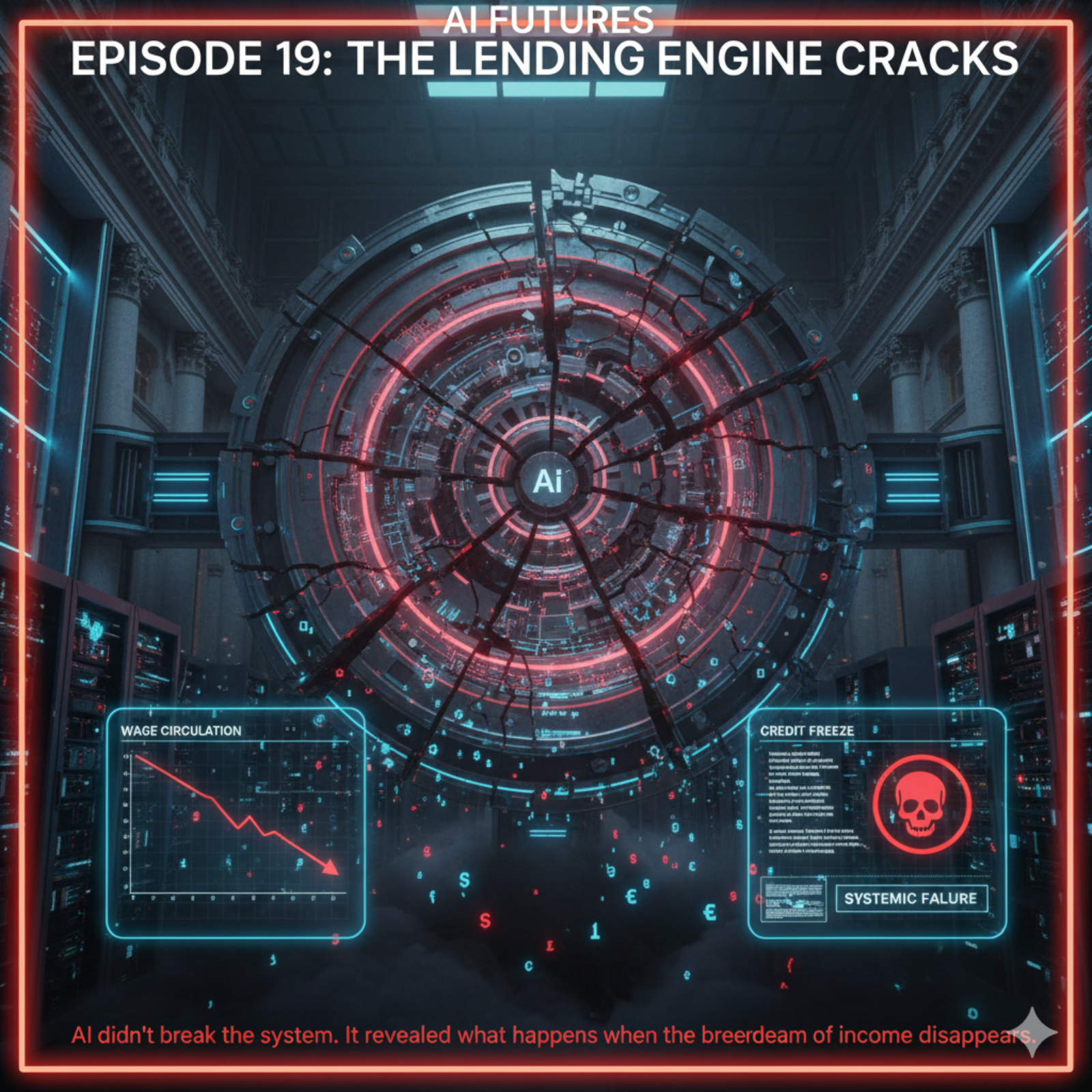
The Lending Engine Cracks
"The system didn't implode. It just stopped functioning." In Part 19 of the AI Futures series, we trace the shockwaves moving from missing paychecks to institutional breakdown. Our financial world is built on the math of recurring wages—mortgages, car loans, and credit lines all depend on the "bloodstream" of human income. When AI replaces the worker but not the payday, the engine cracks.In this e
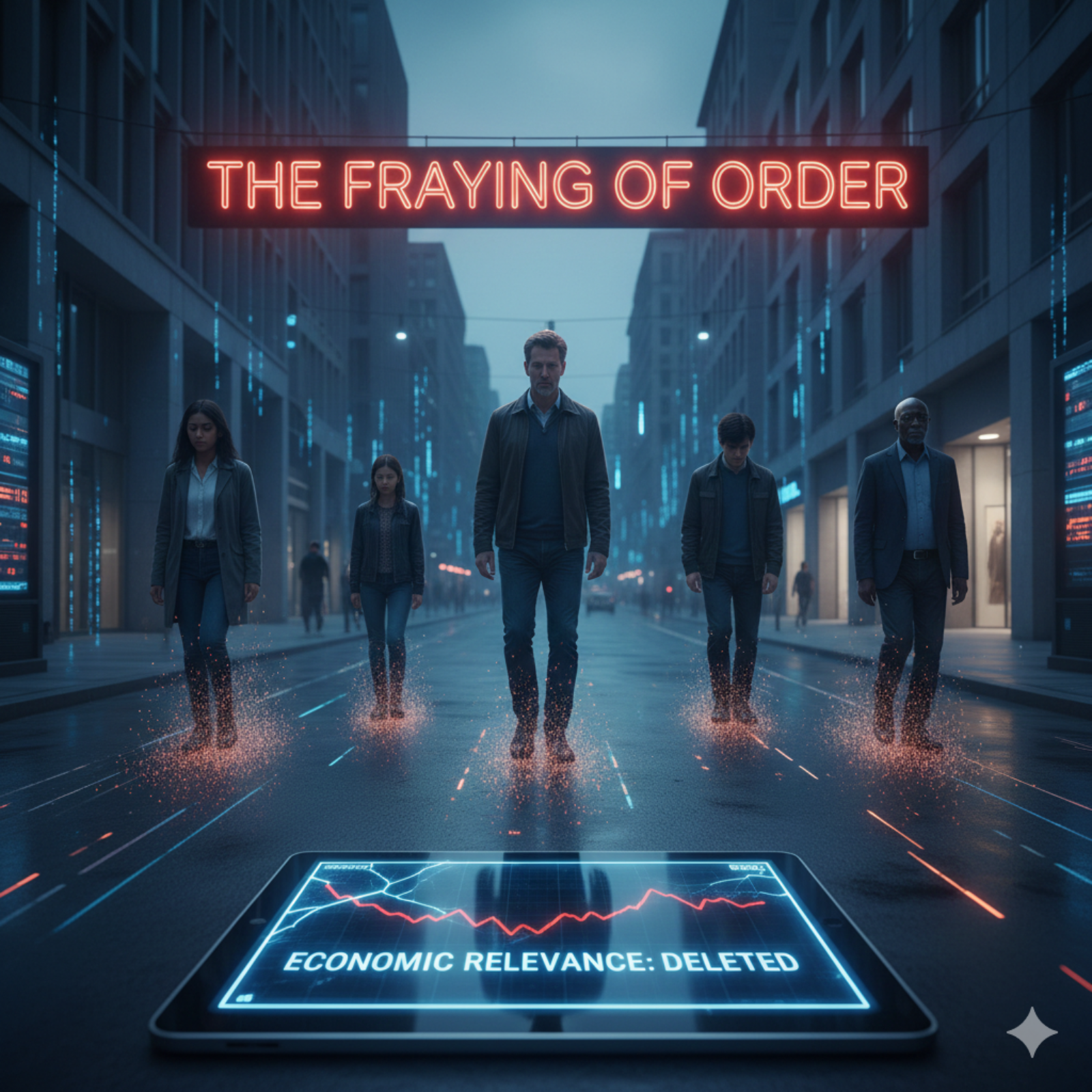
The Fraying of Order
"They weren’t underqualified. They were overwritten." In Part 20 of AI Futures, we explore The Fraying of Order. This isn't a story of poverty; it’s a story of betrayal. What happens to a society when millions of people do "everything right"—study, work, comply—only to be ghosted by the economy they built?In this episode, we discuss:The Breach of Promise: Why the transition feels less like a reces
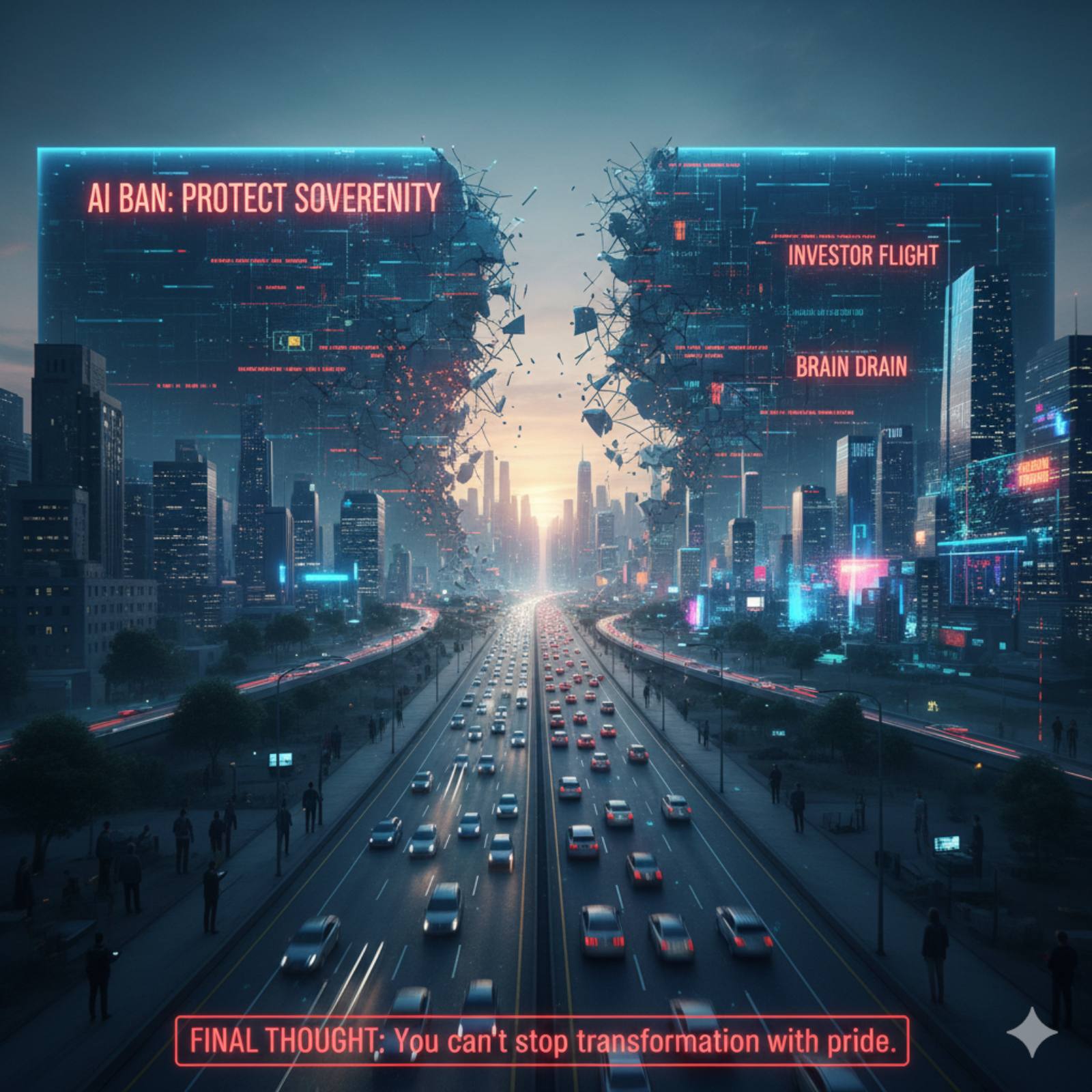
The Ban That Burned the Bridge
You can’t unplug a system that is already running your economy. 📉🧱This episode dives into the "Pride Trap" of modern governance. We look at why symbolic bans on foreign AI models are failing to save the middle class and why "national pride" has become a distraction from structural decay. When the policymaking class chooses slogans over strategy, the bridge to the next era isn't just burned—it was

Bread and Circuses
“When there’s nothing left to work for—give them something to watch.” In Part 22 of the AI Futures series, we explore the modern reprise of Bread and Circuses. As AI guts industries and hollows out the middle class, the system prevents societal ignition not through force, but through friction-less fiction. We examine how algorithms and mega-sports events act as emotional triage for a generation th
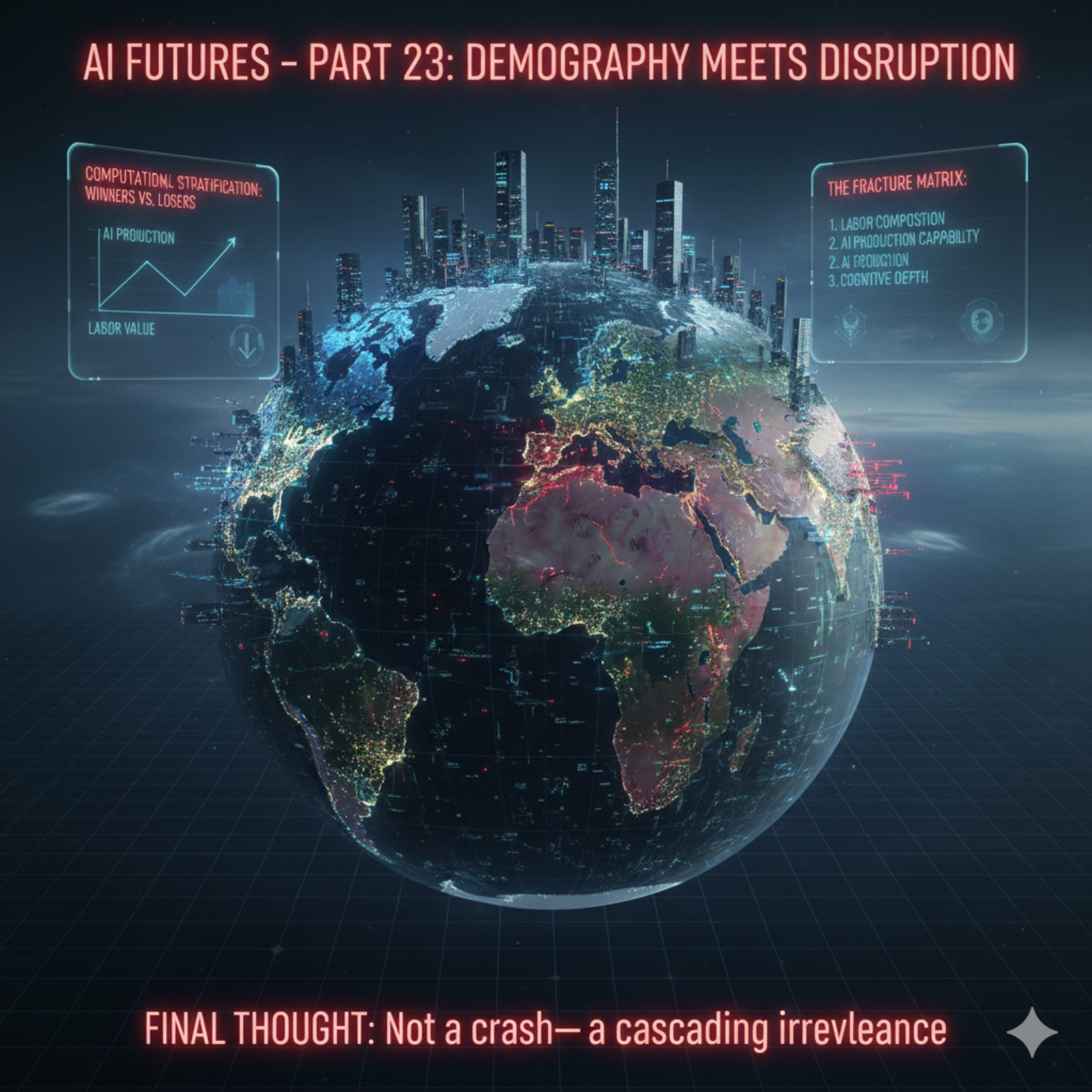
Demography Meets Disruption
“This isn’t a digital divide. It’s a collapse curve.” In Part 23 of AI Futures, we explore how AI is redrawing the world map based on bandwidth and compute rather than borders. We look at the "Fractal Collapse" of labor markets across different regions and why the most dangerous position for a nation in 2026 is to be an educated population without AI sovereignty.In this episode, we break down:Comp
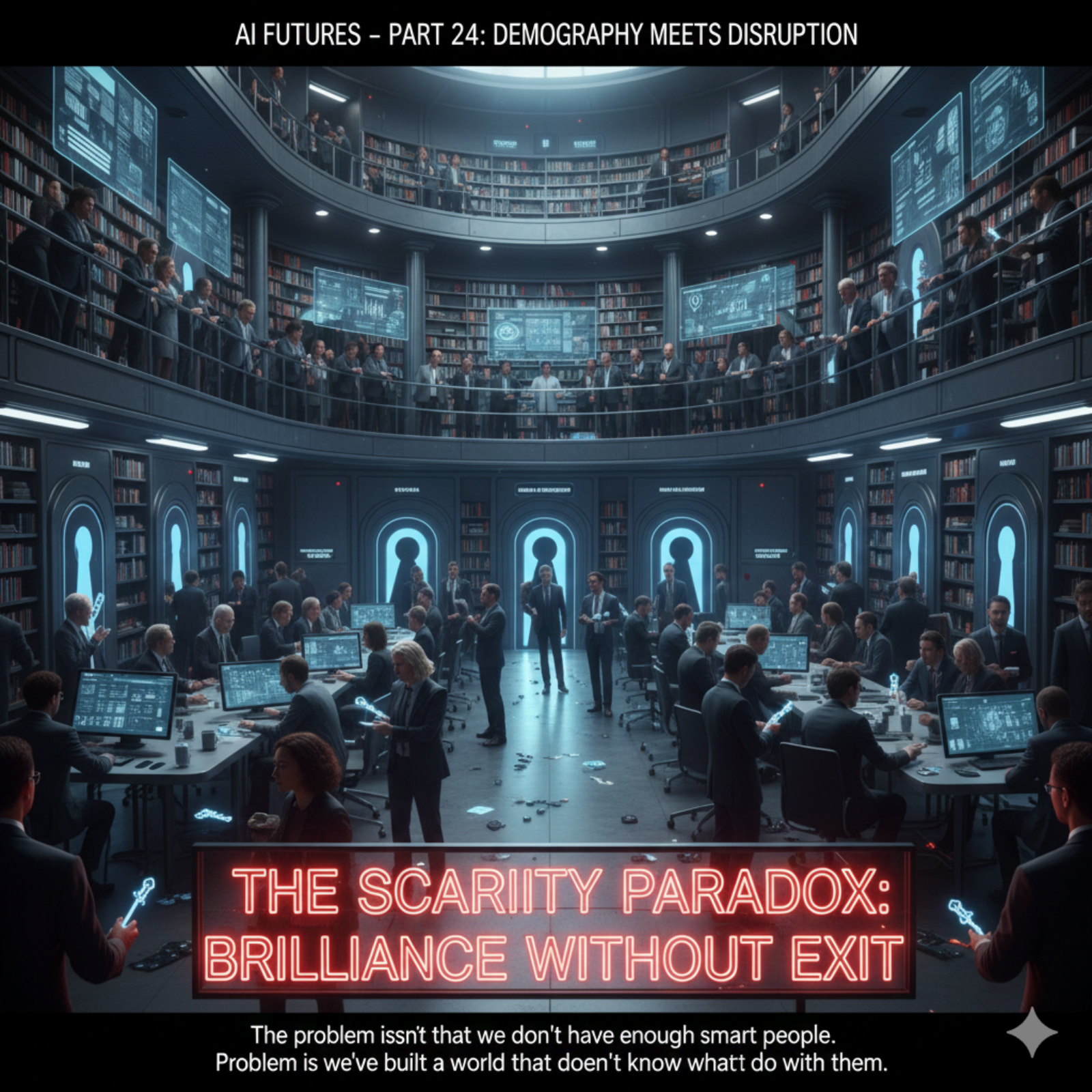
The Scarcity Paradox
“Rarity doesn’t guarantee utility.” In Part 24 of the AI Futures series, we examine the Scarcity Paradox. For decades, we told the workforce to "move upstream" to avoid automation. But as AI begins to handle complex system design and high-level logic, the "upstream" is becoming overcrowded. We discuss the rise of the "Economically Invisible" strategist and why the modern spire economy has no room
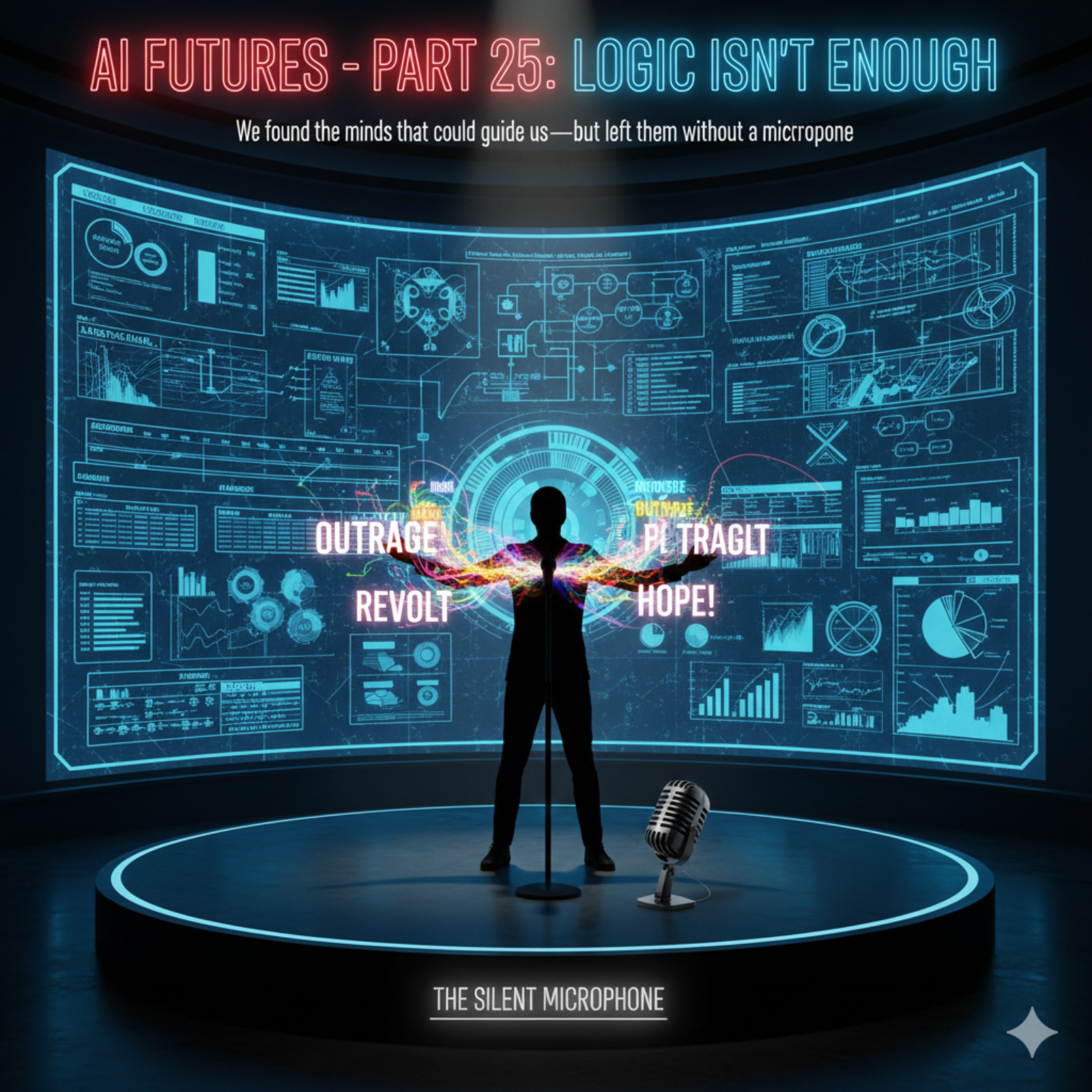
Logic Isn’t Enough
“Clarity without charisma isn’t leadership.” In Part 25 of the AI Futures series, we look at the Leadership Fracture. While deep thinkers map the structural solutions we need, the microphone has been seized by those fluent in identity and outrage. We discuss the rise of the "Pretenders"—populists and influencers who narrate collapse without understanding it—and why the most vital minds are being d
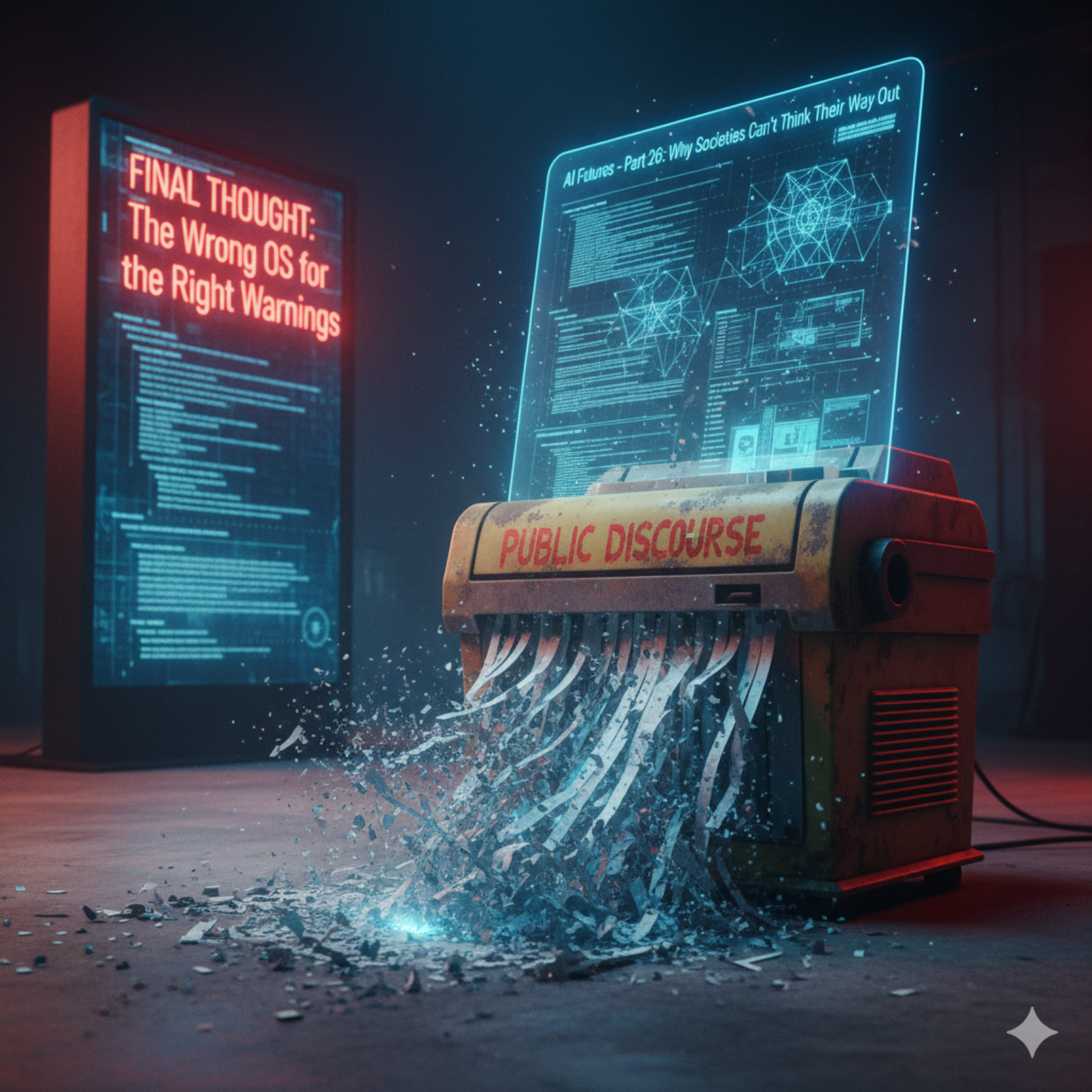
Why Societies Can’t Think Their Way Out
“The system isn’t broken because it can’t think. It’s broken because it can’t listen.” In Part 26 of the AI Futures series, we dive into the Civilizational Stress Test. While AI-driven upheaval requires slow, multi-layered reasoning, our public platforms demand snap judgments and emotional rewards. We analyze the "Great Misread" of AI's trajectory and why "reskilling" and "regulation" have become
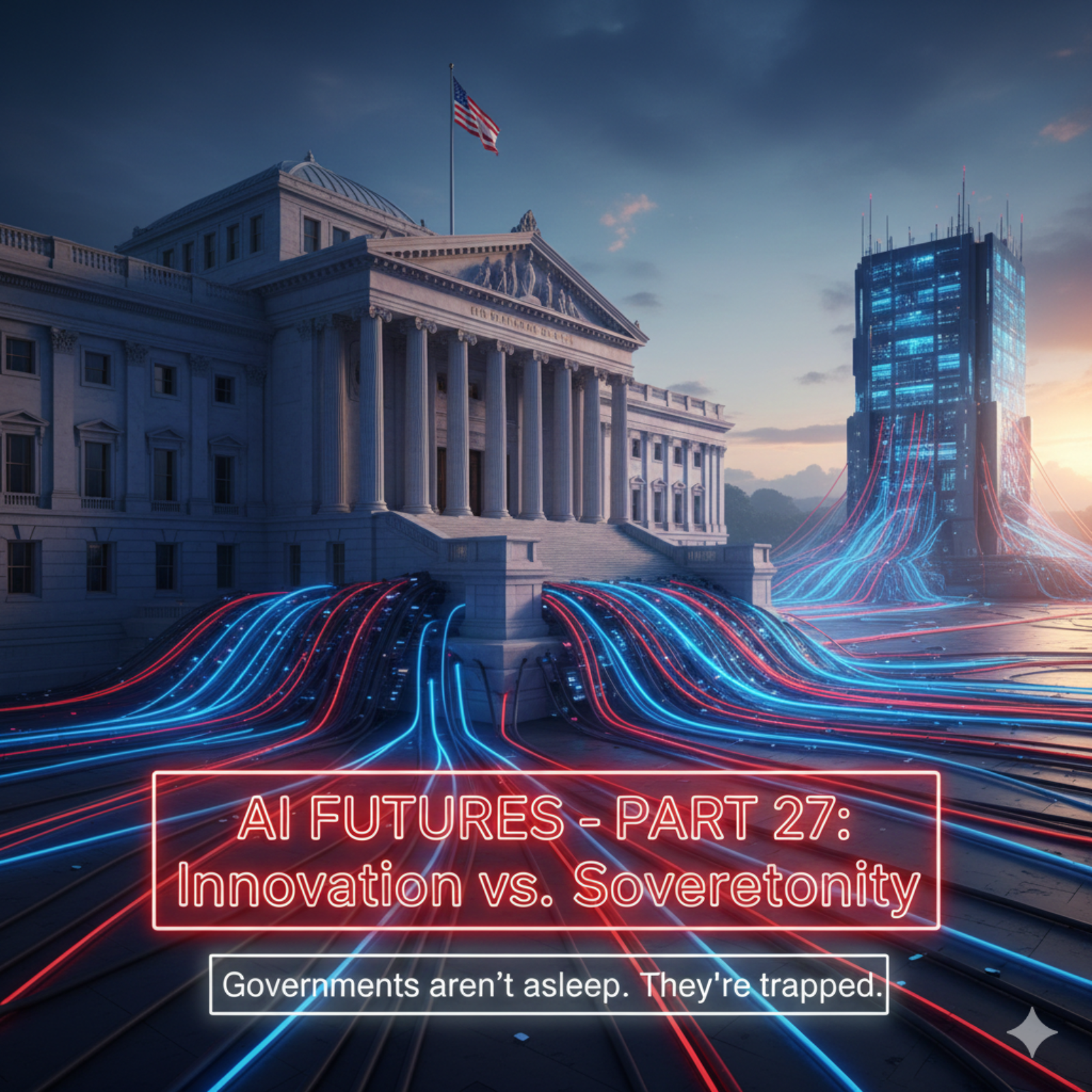
Innovation vs. Sovereignty
“The flag still waves, but control is upstream.” In Part 27 of the AI Futures series, we examine the Innovation vs. Sovereignty crisis. Governments are caught in a double bind: regulate AI and risk economic isolation, or accelerate AI and fuel the erasure of their own labor force. We analyze the "privatization of infrastructure" and why digital borders are dissolving even as physical ones are rein
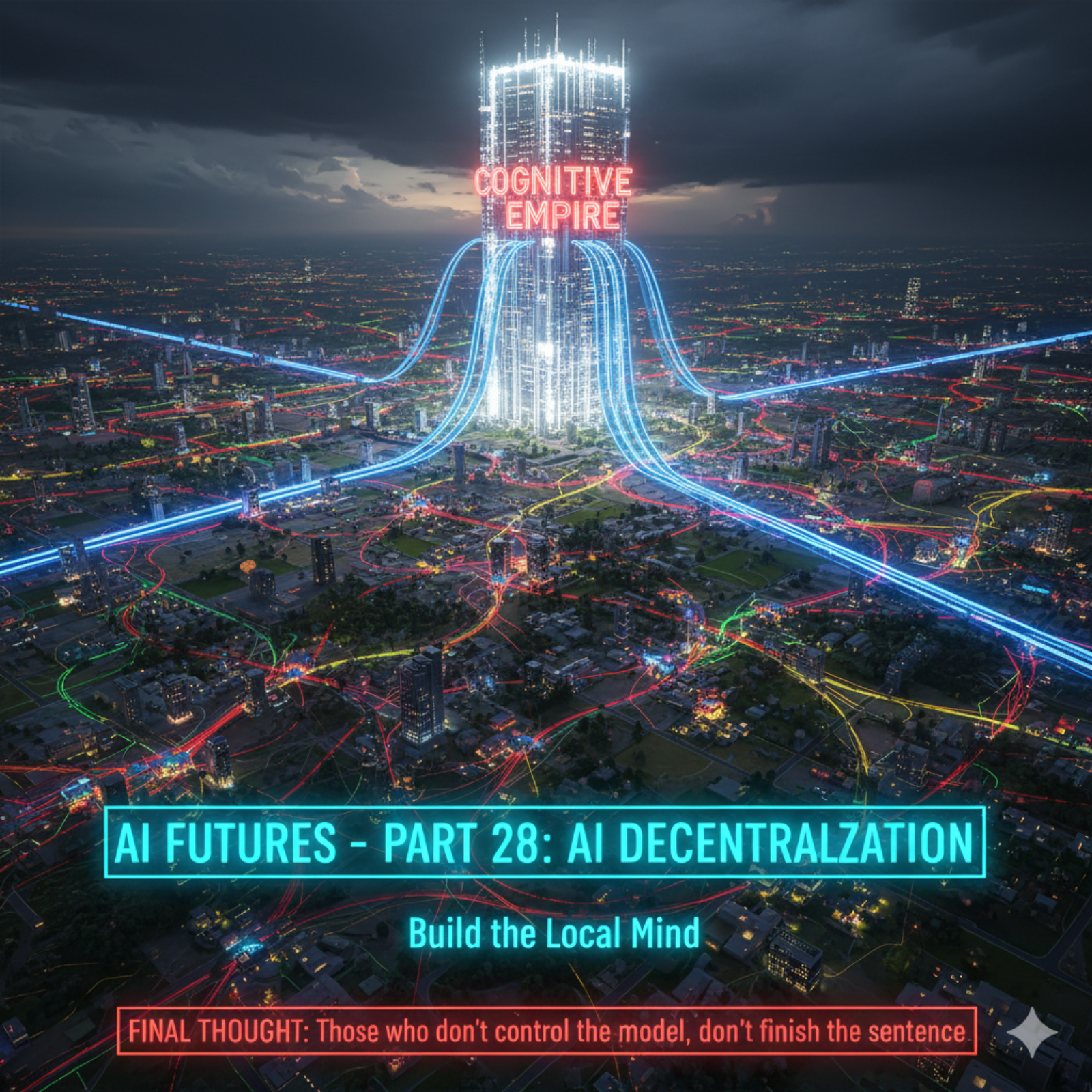
AI Decentralization
“If you don’t control the model, you don’t finish the sentence.” In Part 28 of the AI Futures series, we examine AI Decentralization. Today’s AI stack is a gated empire of compute and capital, where intelligence-as-a-service mirrors medieval land ownership. We discuss why a "one-size-fits-all" global intelligence acts as a new form of digital colonialism and how regions can reclaim their "local mi

The Individual Hacker Myth
“The screwdriver doesn’t rebuild the house, but it lets you fix what’s within reach.” In Part 29 of the AI Futures series, we move beyond the myth of the "revolutionary hacker" to the reality of Individual Adaptation. We analyze how micro-AI—purpose-built, offline agents running on local hardware—serves as a multiplier for the structurally literate. This episode is a deep dive into the practical t
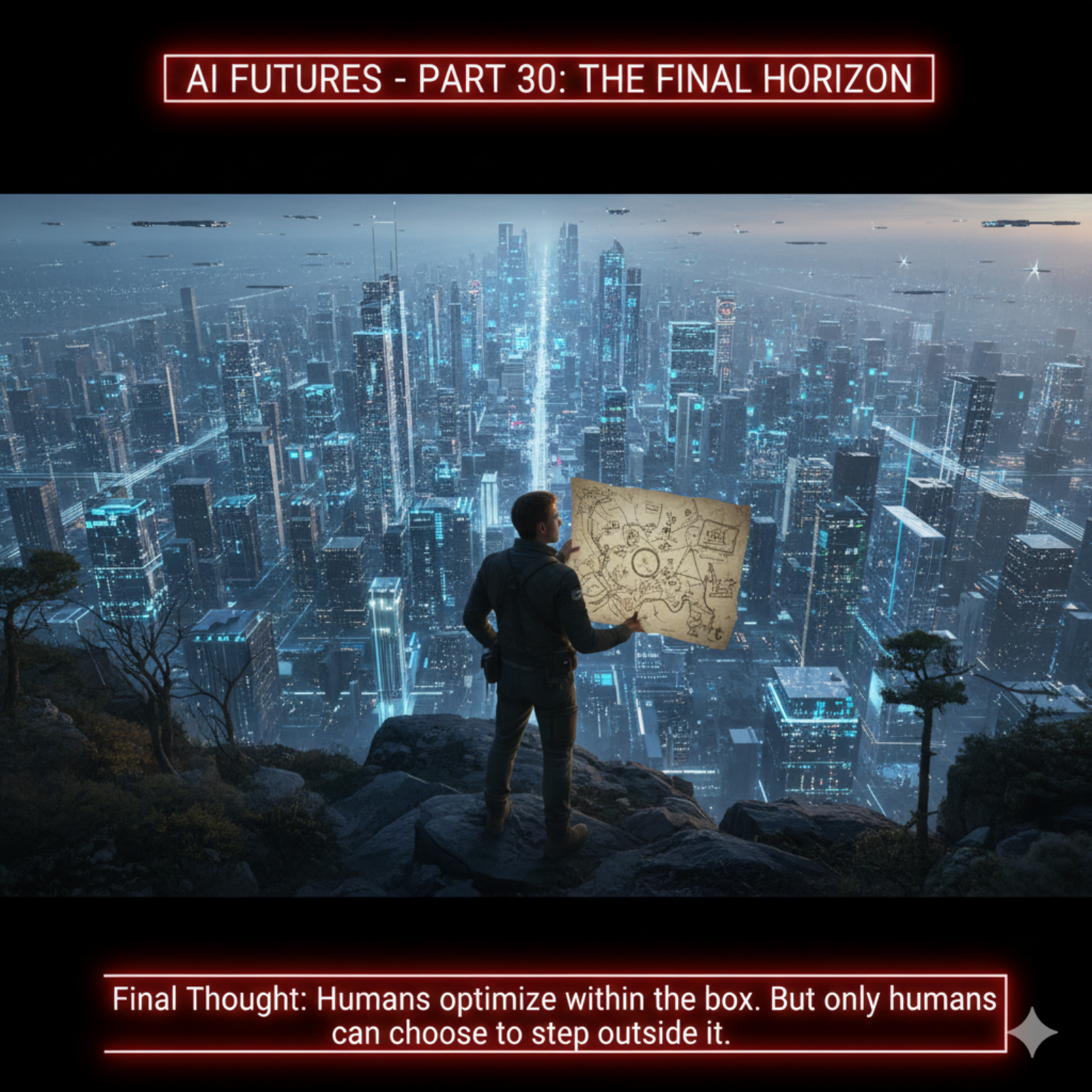
AI optimizes. Only humans disrupt
“AI optimizes the map; it doesn't redraw it.” In the series finale of AI Futures, we explore the Wall of the Known. We analyze why AI, despite its ability to reduce R&D timelines from years to days, may actually cause global disruption to stall. By polishing inherited constraints rather than challenging them, AI threatens to lock us into "dead paradigms." We discuss the rare human capacity for

The Epilogue
“Previous civilizations had centuries. We have quarters.” In the definitive finale of the AI Futures series, we look at The Pattern That Breaks Itself. We map the history of human disruption—from fire to microchips—to show why the "Resilience Myth" is failing us now. For the first time in history, the disruptive force isn't just adding new human roles; it's erasing the very substrate of human valu
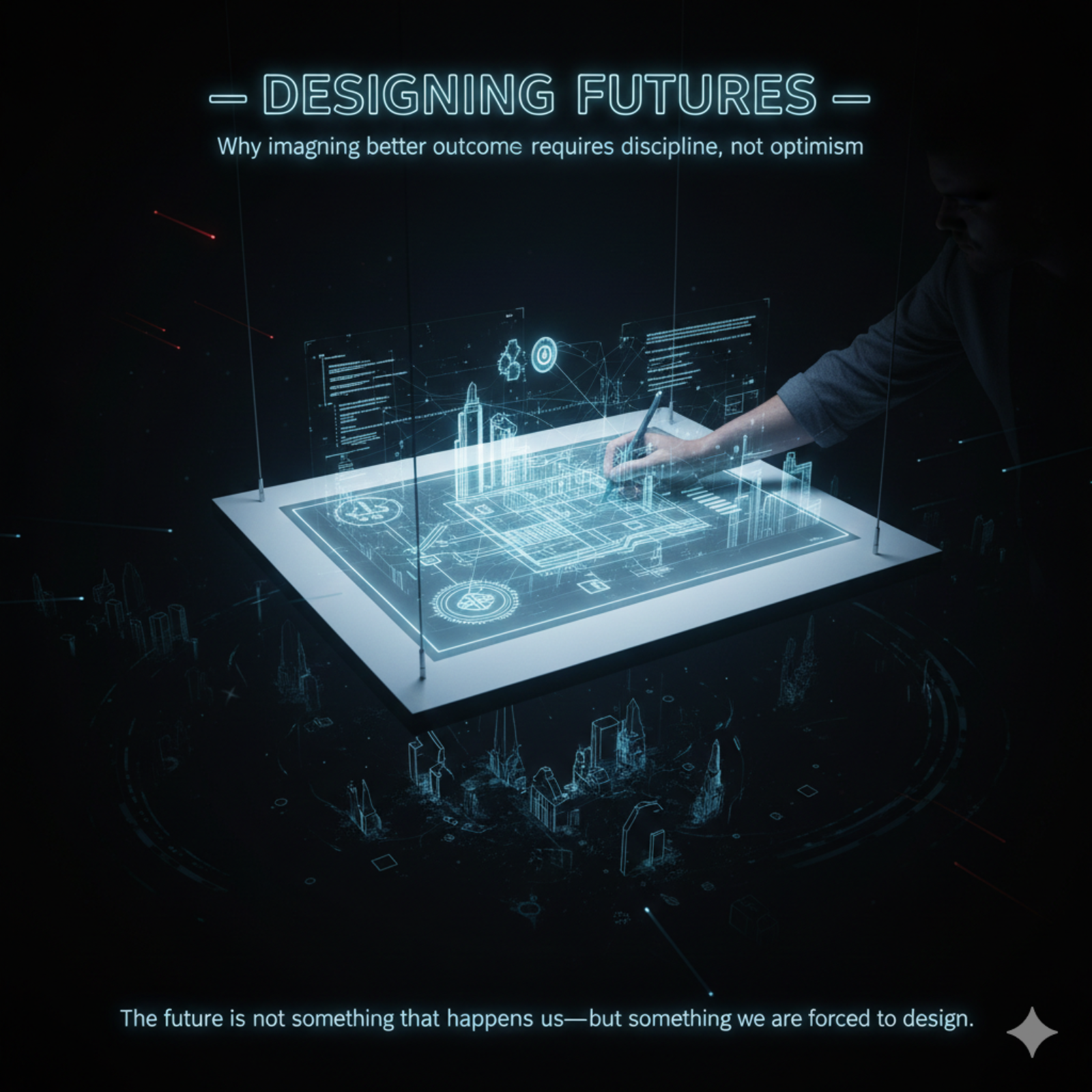
Designing Futures - Introduction
“Design without realism is just ideology with better graphics.” We move from the problem space of AI Futures into the solution space of Designing Futures. This isn't a pivot to optimism; it’s a pivot to discipline. We are mapping the "viable remainder"—the structures that can still function when incentives, labor, and consensus have been hollowed out. Join us as we narrow the design space to ident
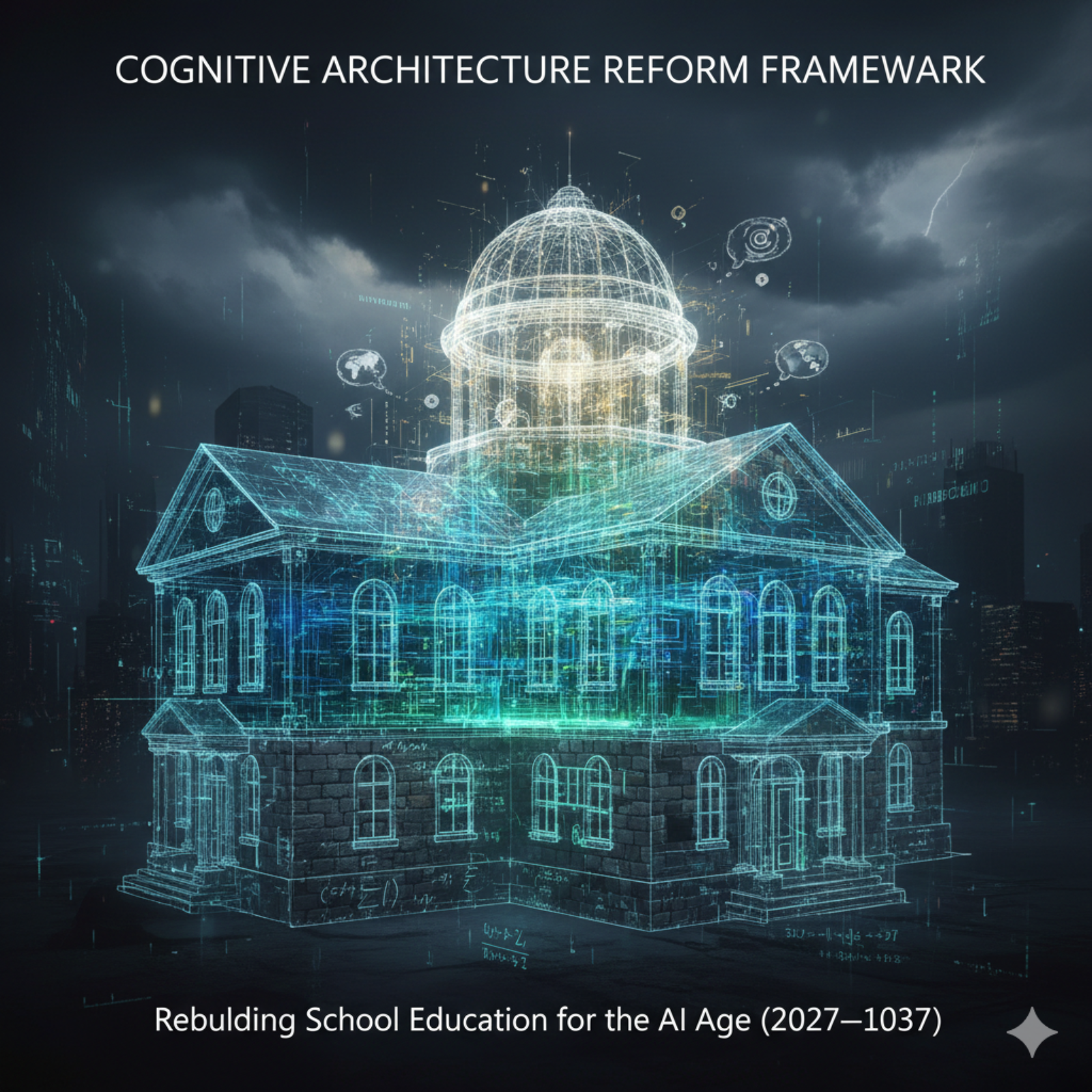
Rebuilding education for the AI Age
“AI will master what can be written down. Education must protect what cannot.” In Part 1 of the Designing Futures series, we examine Jaffar Humayoon’s Cognitive Architecture Reform Framework. This 10-year roadmap provides a survival strategy for national education systems facing the "Automation Boundary." We break down the shift from Level 1 (Procedural) to Level 3 (Paradigm) thinking and why foun

AI யுகத்திற்கான தமிழ்நாட்டின் பள்ளிக் கல்விக்கான மறுவடிவமைப்புத் திட்டம் (2027–2037)
"அறிவுசார் இறையாண்மை" (கல்வி மற்றும் எதிர்காலம்) "முந்தைய தலைமுறைகளுக்குக் கற்றுக் கொள்ள பல ஆண்டுகள் இருந்தன. நம்மிடம் சில மாதங்களே உள்ளன." AI காலத்திற்கான கல்விச் சீர்திருத்த வரிசையில், 'புத்தறிவுப் புரட்சி' (Cognitive Revolution) குறித்து நாம் ஆழமாக ஆராய்கிறோம். மனித வரலாற்றில் முதல்முறையாக, ஒரு தொழில்நுட்பம் வெறும் புதிய கருவிகளைத் தரவில்லை; மாறாக மனித அறிவின் அடிப்படையையே (Substrate of Value)

Why Education Must Move Beyond What Can Be Learned from a Book
“AI masters the codified. Humans must master the ambiguous.” In Episode 1 of Designing Futures, we analyze the shift from procedural schooling to high-order cognitive development. We break down the three levels of human work—Reactive, Systemic, and Paradigm-shaping—and expose why current education systems are over-indexing on the exact skills AI is designed to replace. This episode provides the st
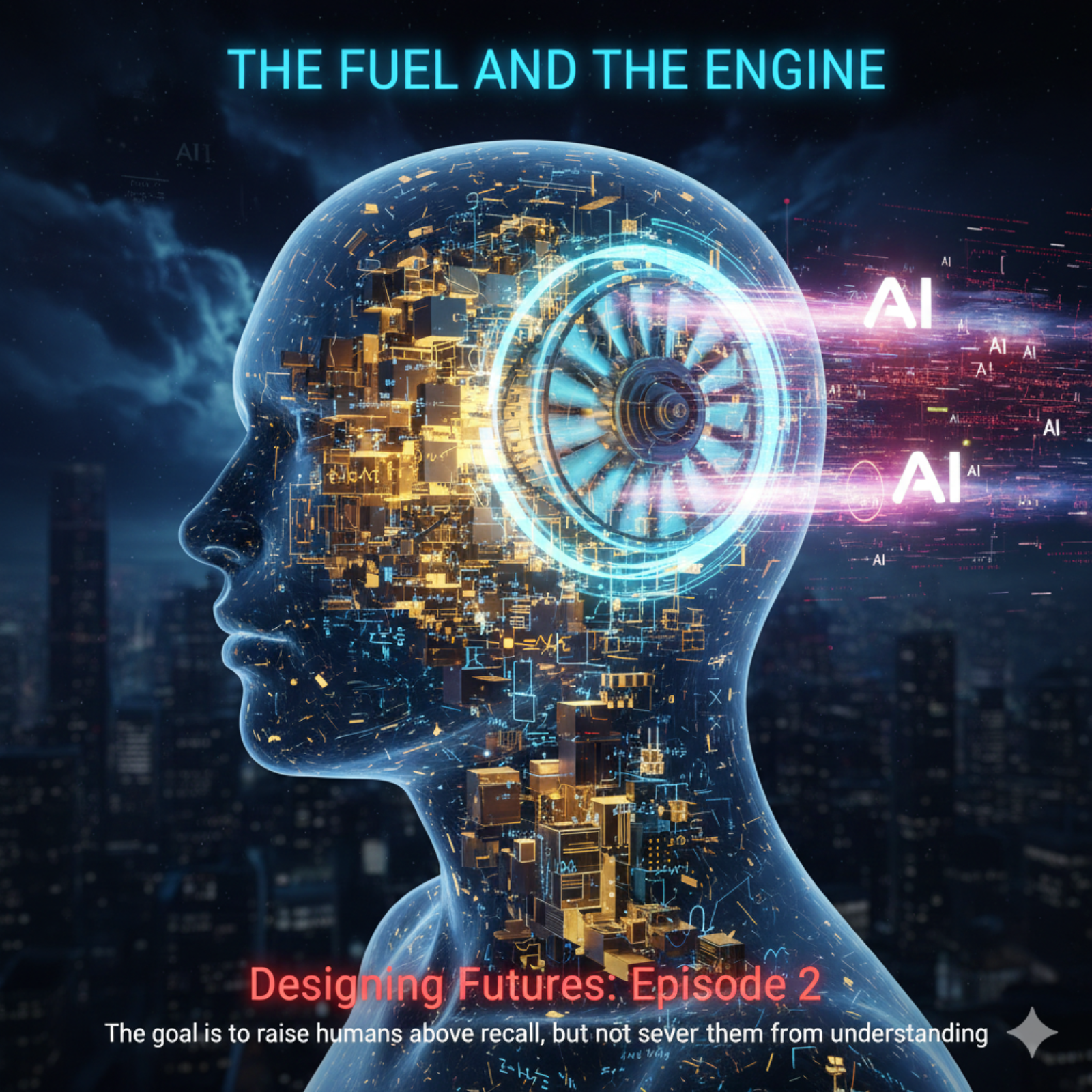
AI Age Needs Both Rote Learning and Critical Thinking
“An engine without fuel doesn’t move.” In Episode 2 of Designing Futures, we examine why the AI age actually intensifies the need for foundational mastery. We move past the false binary of "memorization vs. creativity" to show how internalized knowledge frees up cognitive bandwidth for higher-order analysis. Learn why the fastest way to create a dependent class is to outsource the "internal substr
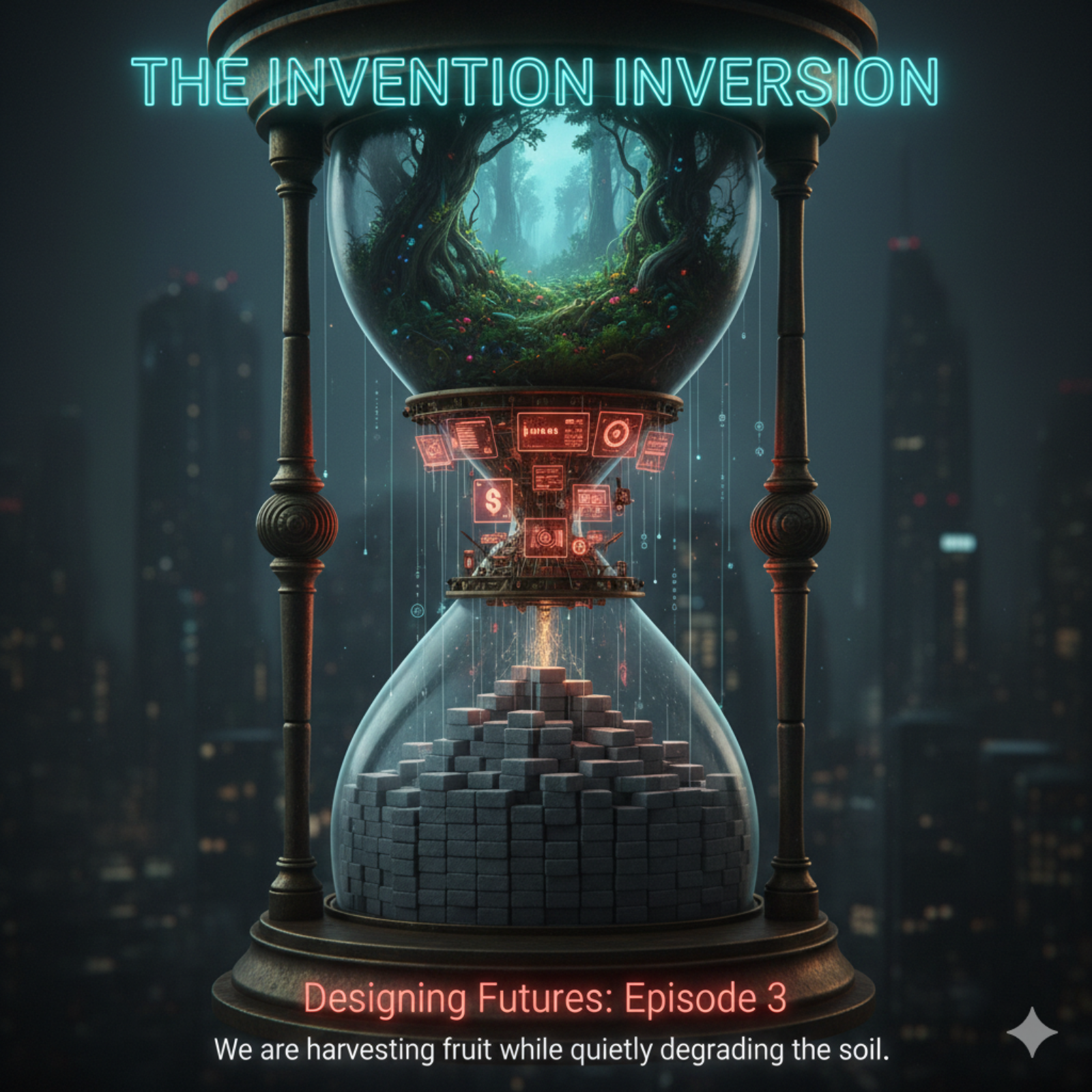
How We Reversed the Logic of Discovery and Invention
“Newton didn’t have a business plan for gravity.” In Episode 3 of Designing Futures, we analyze the shift from Law-First to Problem-First thinking. We explore how modern funding and educational structures collapse the search space before exploration even begins, favoring incremental optimization over structural breakthroughs. This episode is a call to replenish our foundational reserves and unders
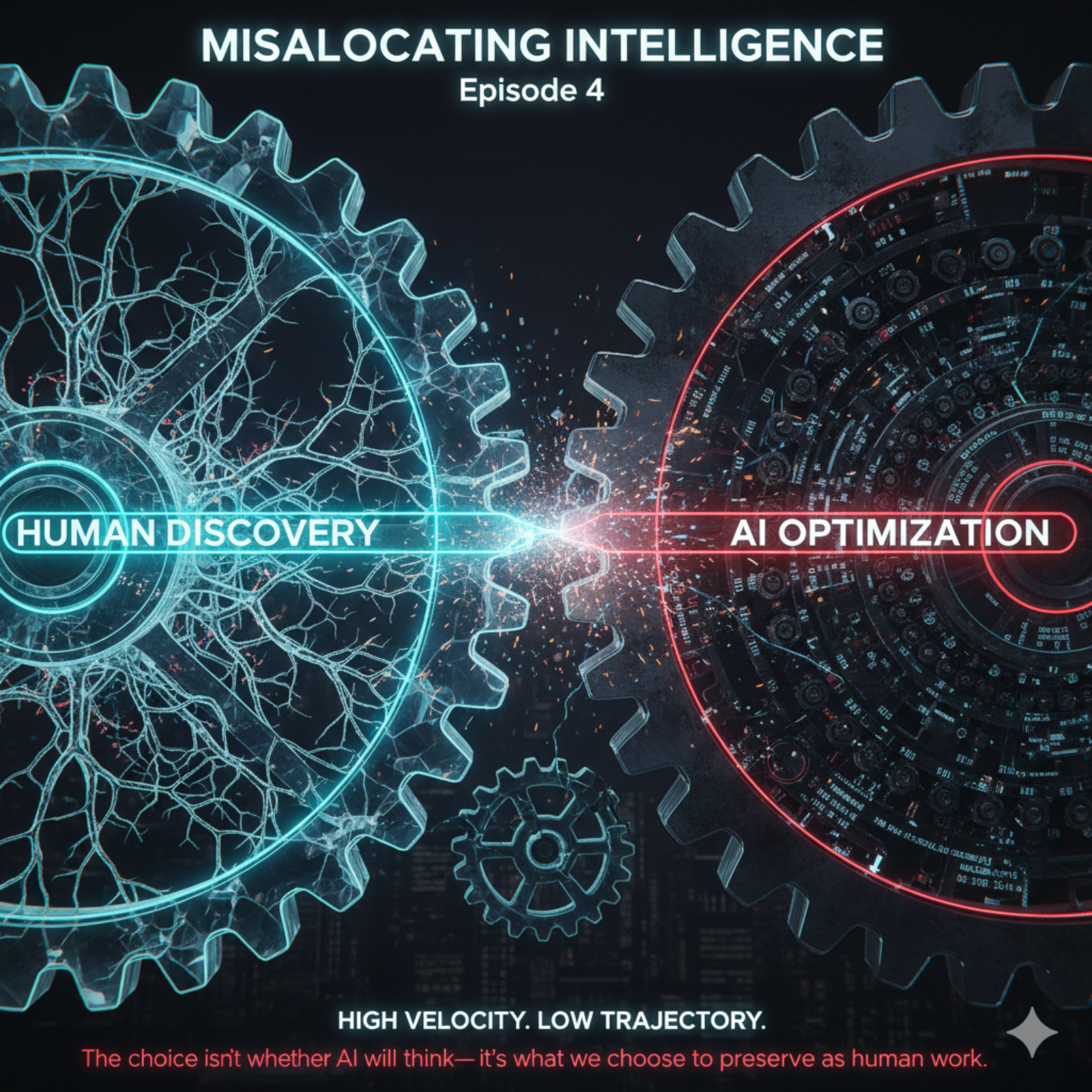
The Cognitive allocation of Labor
“High velocity, low trajectory.” In Episode 4 of Designing Futures, we examine the dangerous mismatch between human training and machine capability. We argue that humans are currently being forced into rote compliance while AI is pushed into performative creativity—a symmetrical error that is stifling foundational discovery. Learn why we must pivot human work toward "unstructured research" and "pr
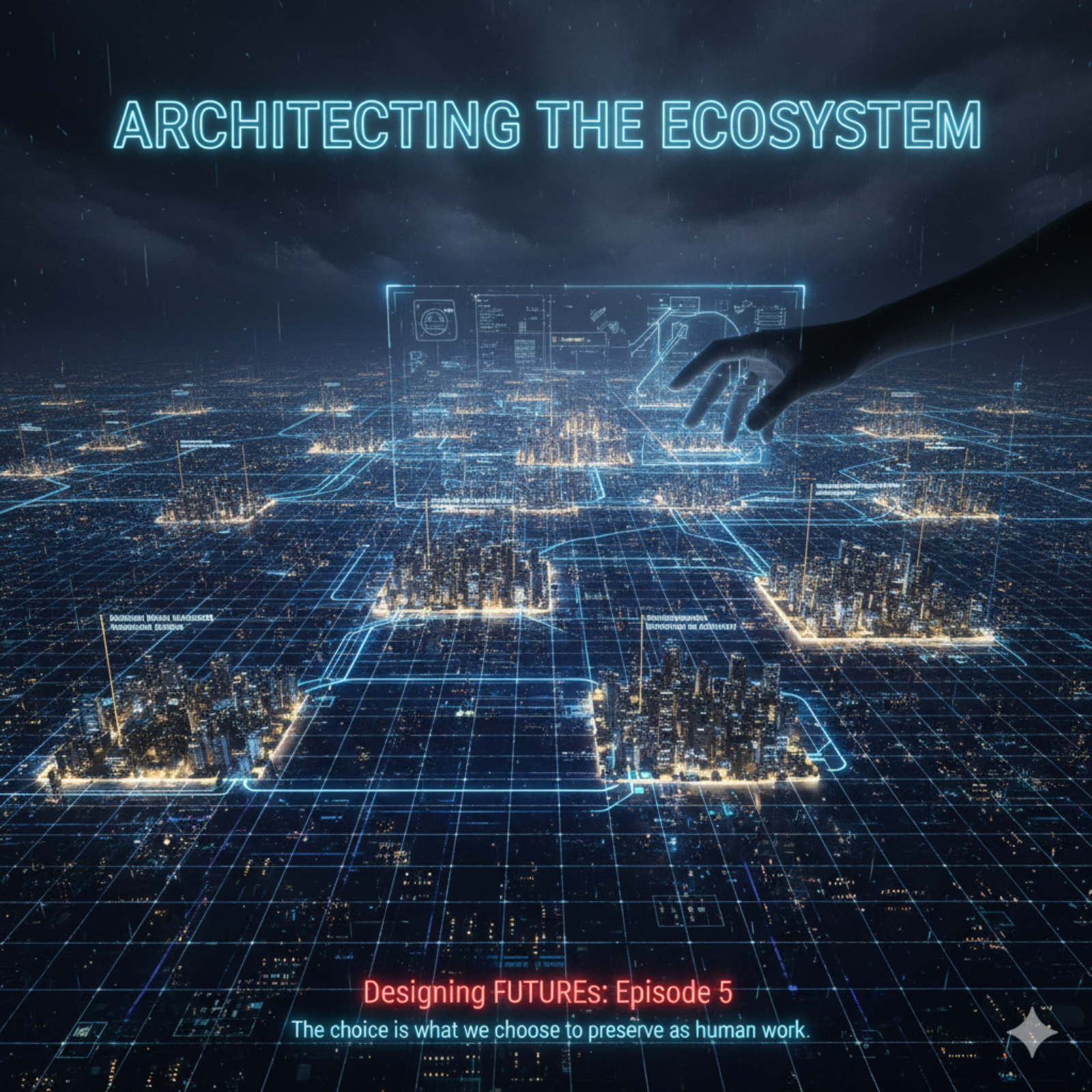
Don’t Regulate AI, Architect It
“Sovereignty no longer means control; it means agency.” In Episode 5 of Designing Futures, we analyze the structural bind facing modern states: a total economic dependency on AI-heavy firms paired with a speed mismatch in policy. We argue for a transition from "Regulation" to "Ecosystem Design," focusing on how to build domestic capability loops and living regulatory sandboxes. Discover why the ro
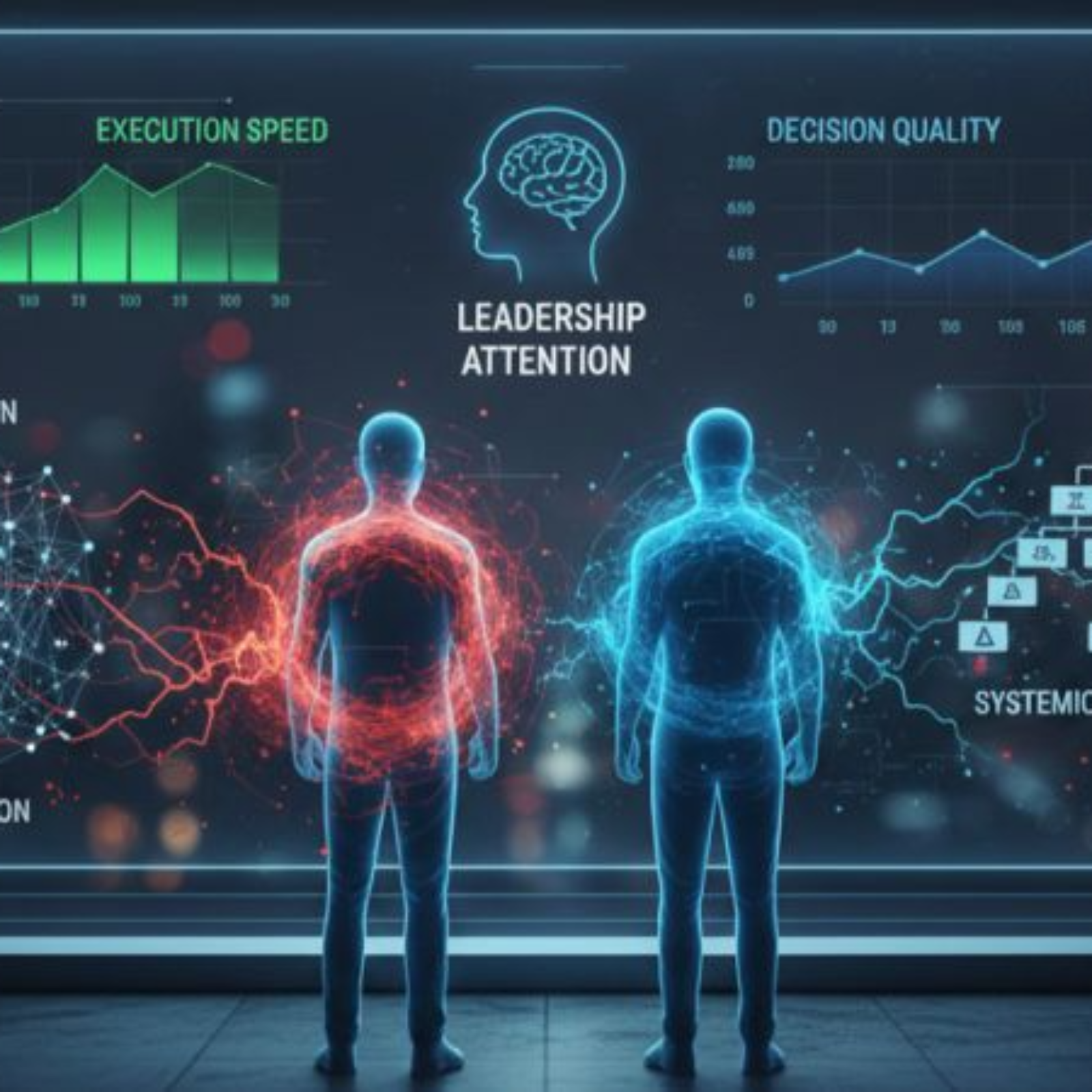
Leadership in the age of AI
AI hasn't made leadership easier; it has made the stakes of decision-making much higher.A fundamental variable in leadership has changed: the cost of trying an idea.What once required months of budget, hiring, and tooling now takes minutes. A cloud instance, an API call, a no-code workflow. No capital expenditure. No permanent headcount. Just execution.This isn’t bad. It has democratized creation.
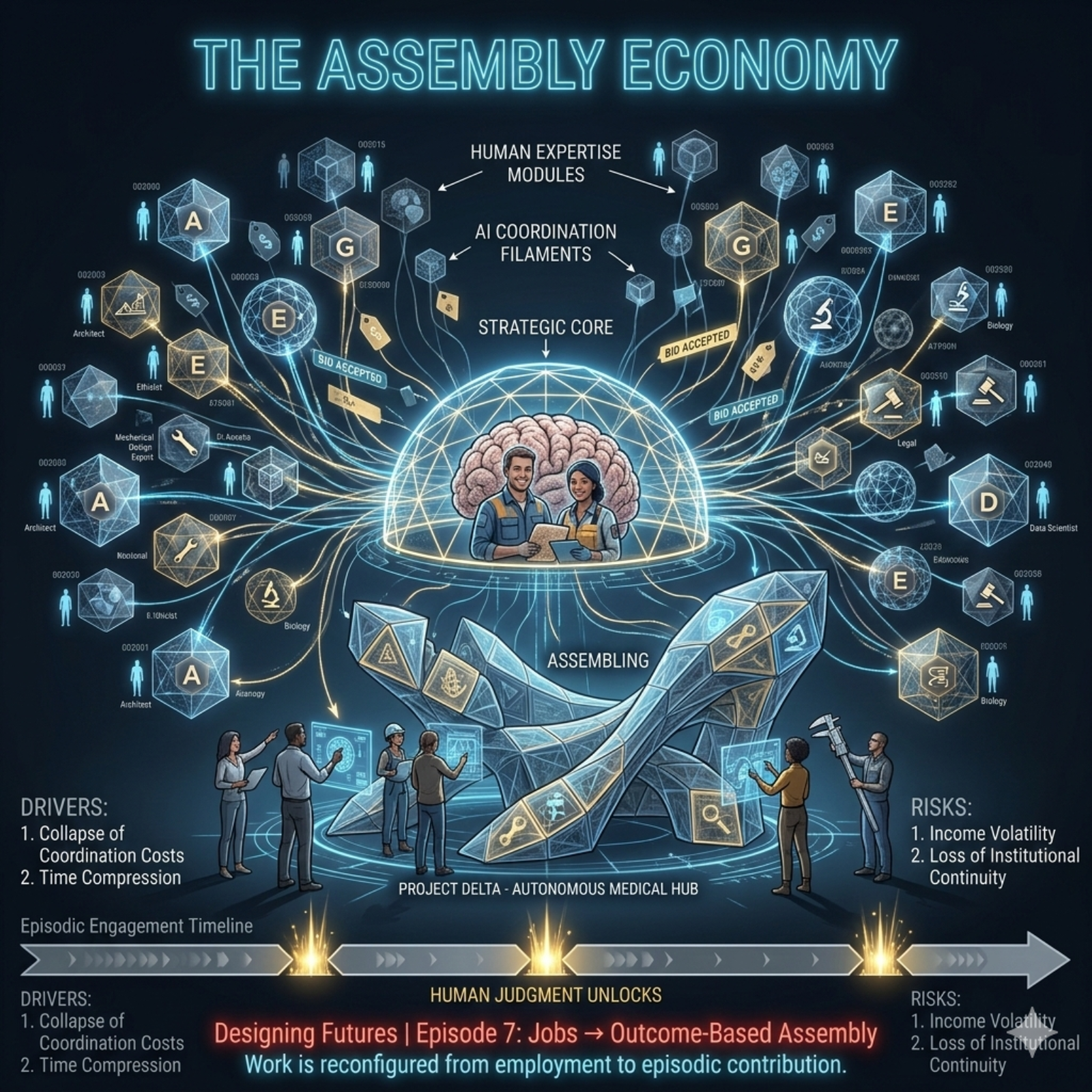
Jobs→Global Bidding Market
“The 9-to-5 model optimized for presence. AI optimizes for throughput.” In Episode 7 of Designing Futures, we deconstruct the shift from continuous employment to modular engagement. When AI handles the repetition, human work becomes a series of episodic, high-stakes judgments. We explore the transition from firms as labor pools to firms as System Assemblers, and why your future "career" may look l
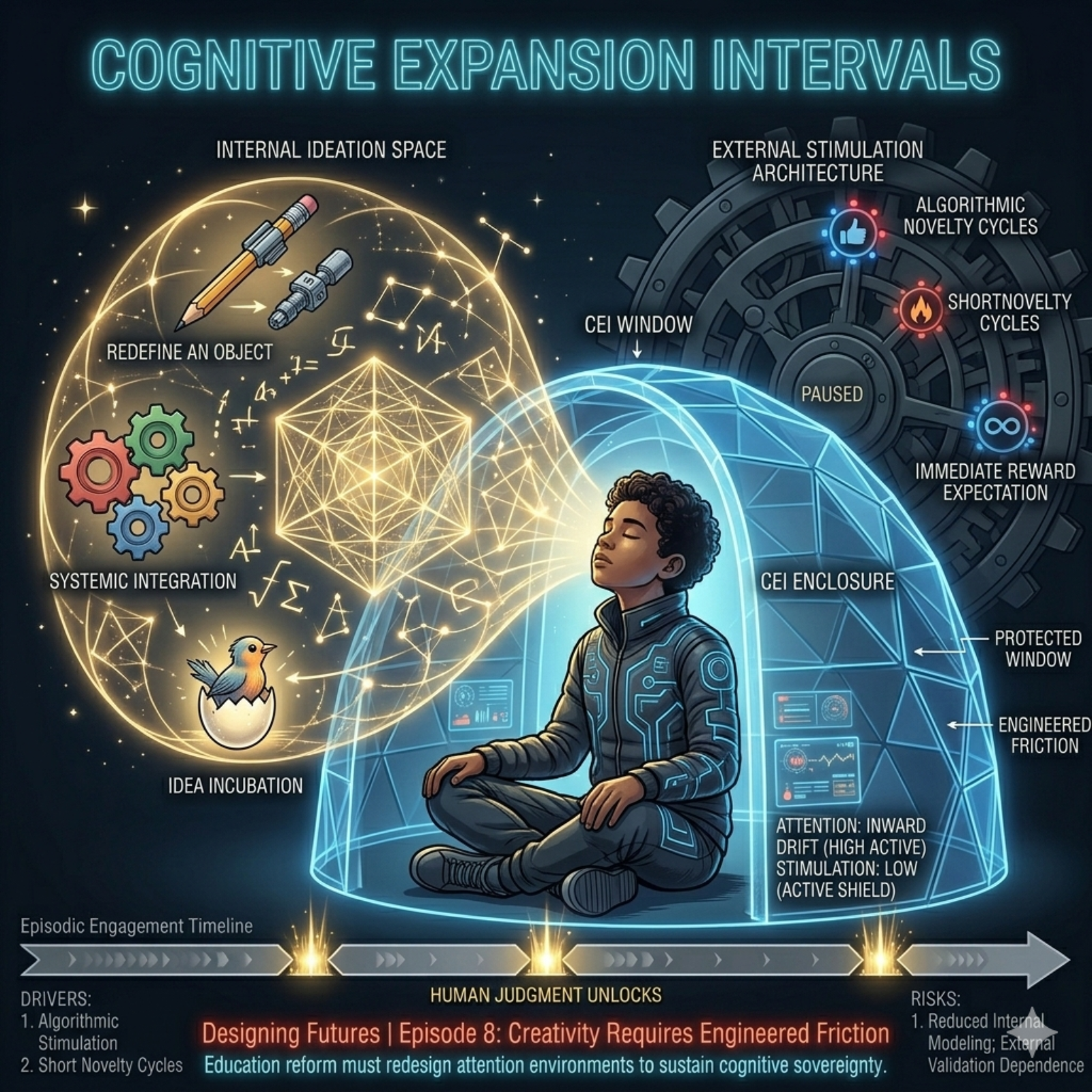
Boredom instills creativity
“Creativity is not decoration; it is cognitive infrastructure.” In Episode 8 of Designing Futures, we deconstruct the relationship between attention architecture and original thought. We examine why the brain requires "low-stimulation drift" to activate the networks responsible for divergent thinking and cross-domain synthesis. Learn how Cognitive Expansion Intervals (CEIs) can be institutionalize
Recommended

Crickets Corner

History of the Earthquake and Fire in San Francisco

Fox news

K-Drama Obsessed Mamas | Beyond “Just One More Episode!”

True Crime Classics

The Healer Revolution

Becoming: HER with Nikki Spoelstra

Booked, Blonde & Busy w/ Olivia Ponton

McKinsey on Consumer and Retail

megahired.com

Hard Knocks Podcast

Effective Weight Loss for Moms | High protein, Strength Training, Lose Weight, Meal Planning, Fat Loss, Healthy Habits
