
Europe Talks Solidarity
This podcast series explores the concept of solidarity by traveling through Europe and beyond, seeking a common narrative inspired by youth work and academic perspectives. It discusses how to foster solidarity in society, along with its limitations, challenges, and opportunities for a solidary Europe.
Episodes
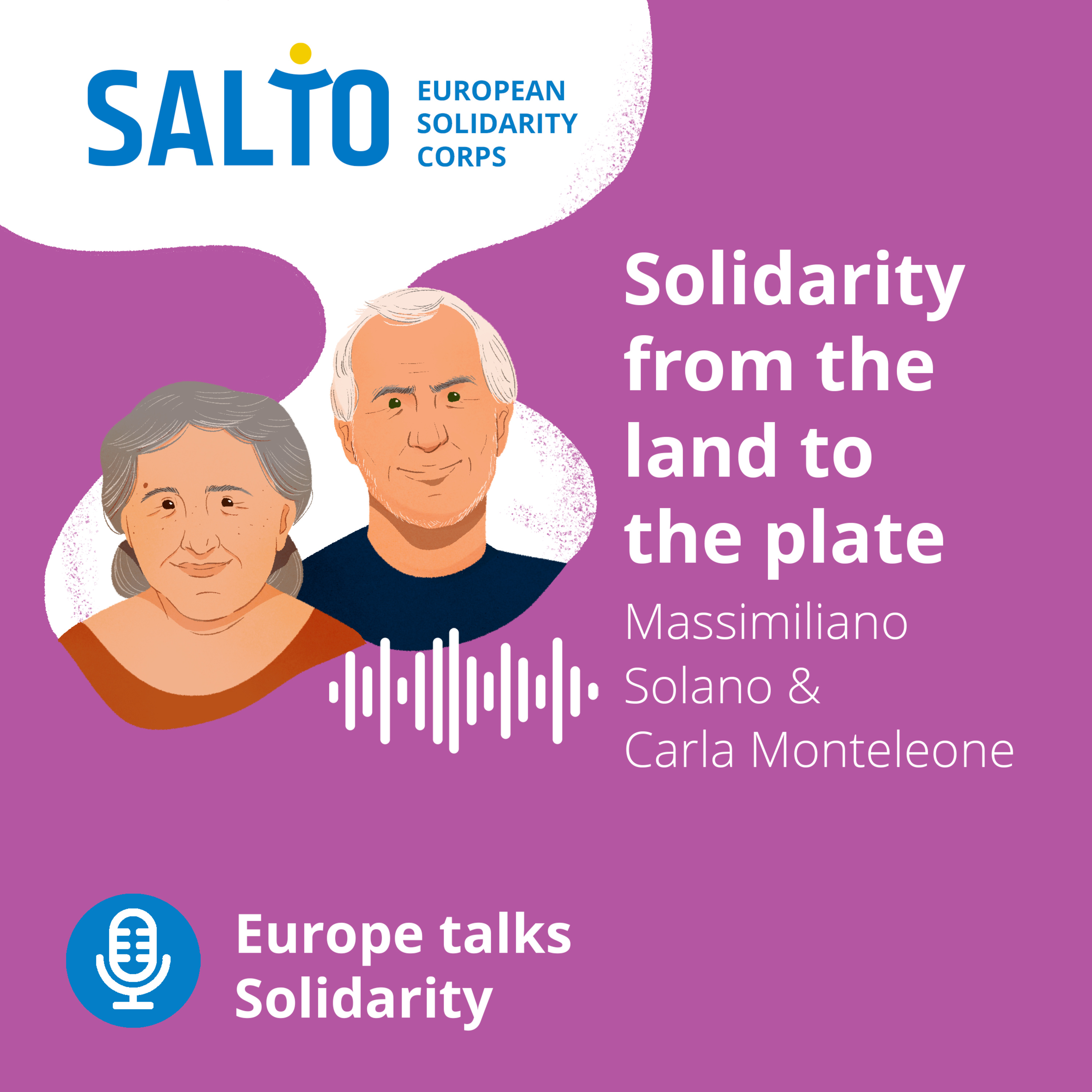
🇬🇧 4.6 Solidarity from the land to the plate
Food... can it be a source of solidarity? In this episode, we shift our attention towards Sicily to explore the relationship of land, climate change and solidary consumption across borders. For that we are talking with Massimilano Solano and Carla Monteleone about the unique stories of their organizations that link social and enviromental care through farming.
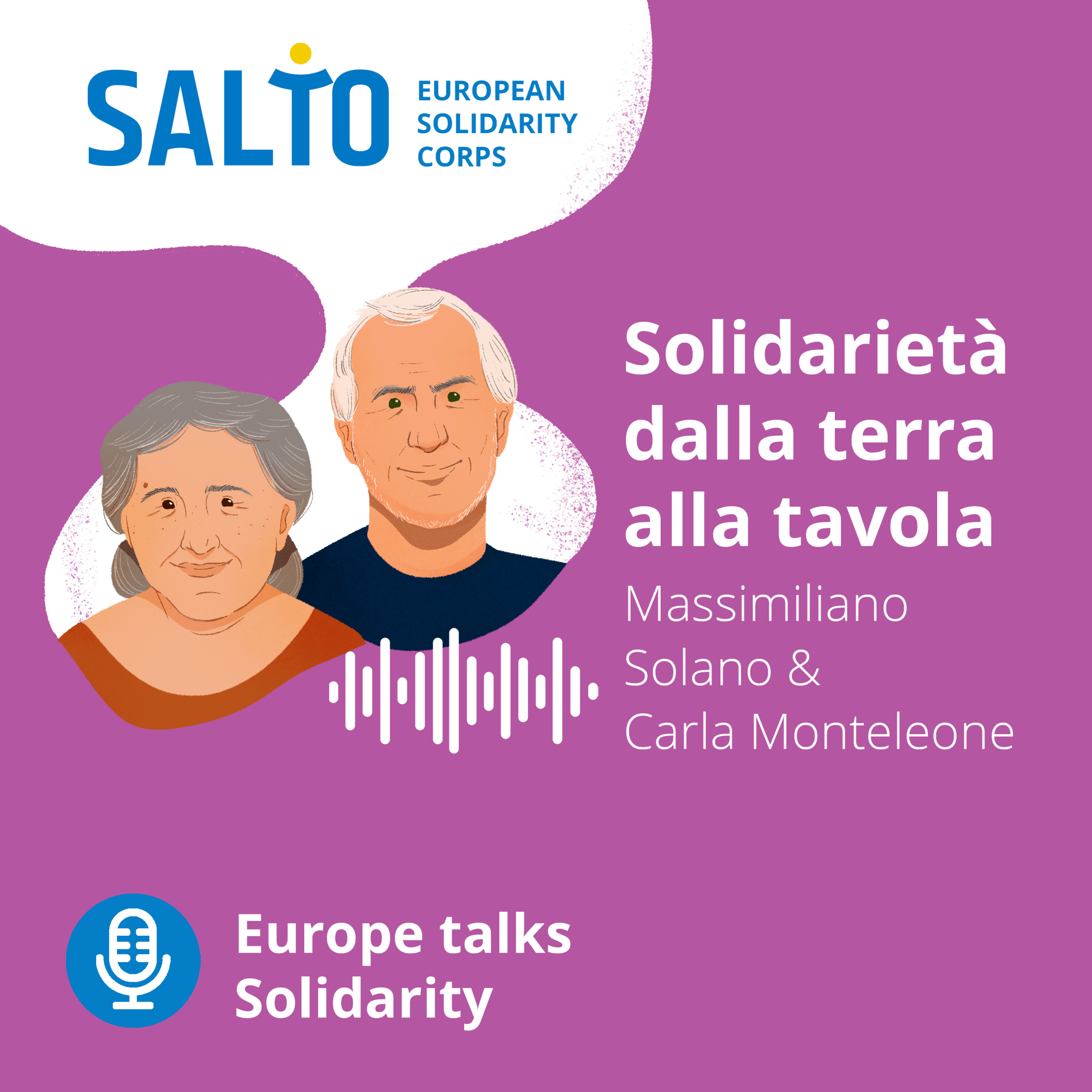
🇮🇹 4.6 Solidarietà dalla terra alla tavola
L’ alimentazione può essere fonte di solidarietà? In questo episodio spostiamo la nostra attenzione sulla Sicilia per esplorare il rapporto tra territorio, cambiamenti climatici e consumo solidale oltre i confini. Per farlo, parliamo con Massimiliano Solano e Carla Monteleone delle storie uniche delle loro organizzazioni, che uniscono l'attenzione sociale e ambientale attraverso l'agricolt
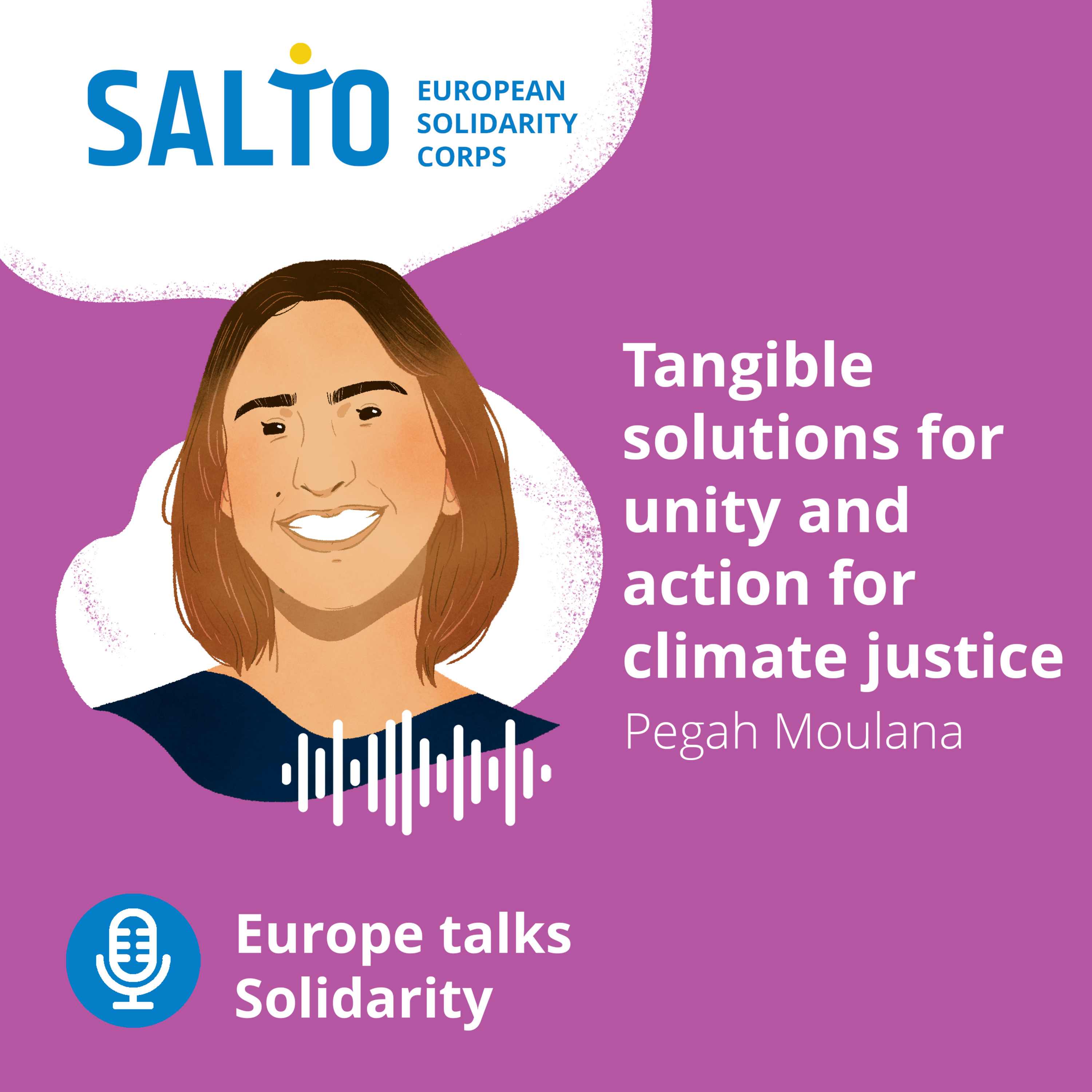
4.5. Tangible solutions for unity and action for climate justice
How can non-formal education open paths for young people who want to advocate for climate justice? Youth and Environment Europe (YEE) supports youth across the continent with tools, knowledge, and spaces to take action on the issues they see in their own communities. In this episode, Pegah Moulana, environmental lawyer and YEE Secretary General, shares her personal journey and offers practical ins
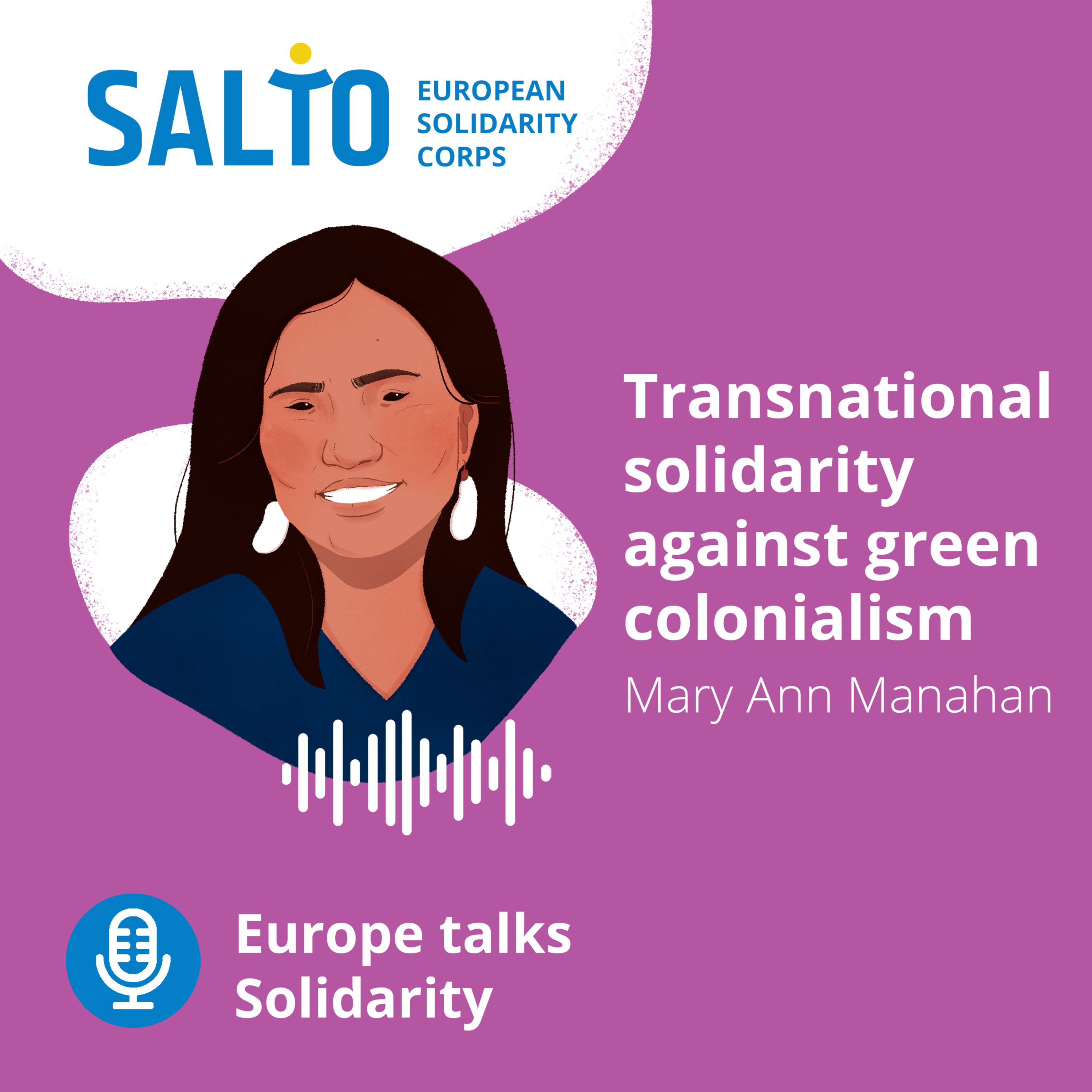
4.4. Transnational solidarity against green colonialism
How can we rethink our use of natural resources to aim at better climate justice ? In this episode we are talking to Mary Ann Manahan, a Filipina activist and researcher living in Belgium. Mary Ann walks us from the concept of green colonialism to the idea of deep and situated alliances in the process of imagining green futures. She shares real examples of cooperation between countries in the Glob

4.3. Meaningful youth inclusion in climate spaces
How can we inspire young people to act for climate justice? In this episode, Eimear Manning, Youth and Climate Justice Development Officer at the National Youth Council of Ireland takes us out to the Irish sea. Her stories showcase how solidarity and climate justice go hand-in-hand. Listen in for ready-to-use advice on how youth workers can support young people in their journey towards climate jus

4.2. With AI we can imagine a technologically empowered public sphere
What if a personal AI assistant could help you form an opinion on political topics? Would it increase participation? This is the hypothesis we are looking at in this conversation with Cesar Hidalgo, Director of the Center for Collective Learning at the University of Toulouse who explains what Augmented Democracies could look like and how AI opens new research fields when it comes to democratic par

4.1. People are never too young to think politically
What are the most important ingredients for young people to get involved in solidarity projects? To kick off Season 4, we invited Eva Feldmann, Director of the Youth and Europe Research Group at the Centre for Applied Policy Research at the Ludwig-Maximilians University in Munich, to discuss the results of research on young people's participation in European solidarity projects and how such resear

Season 4 of Europe Talks Solidarity is coming soon!
Join us for the fourth season of SALTO European Solidarity Corps Resource Centre’s podcast exploring solidarity from every angle. In this season we want to look at the shapes solidarity can take when it comes to addressing climate injustice and political turmoils in Europe.
Share with us your questions and themes you wish to be discussed in this season. Don’t forget to subscribe to the podcast to

3.6. Unconditional solidarity: remembering histories of collective struggles
In this episode we explore the importance of learning about history and global systems of oppression to better grasp what is going on in the world and be able to participate in democratic life. With the scholar and activist Howie Rechavia-Taylor we discuss how empathy can foster unlikely alliances and generate unconditional solidarity across movements. In this last episode of season 3, we expand o

3.5. Youth empowerment in Greece and beyond
Which kind of spaces and experiences work as fertilizers for an empowered and active youth? For Konstantinos Maragkos and Youthmakers Hub, young people can only become active citizens or change makers if they are well informed and know as much as possible about their rights, opportunities and power. In this episode of Europe Talks Solidarity, we invited Konstantinos to tell us about nEU citizenshi

3.4. Between freedom and responsibility: youth participation in EU elections
How to get young people involved in shaping democratic life in the European Union? With the EU Parliament elections around the corner, we talk to Sofia Afanasjeva about how young people express their interest in politics and what barriers there are to their participation. Sofia tells us about her position as the representative of the Youth Outreach Unit and the strategies put in place to inform yo

3.3. The role of freedom of expression for a democratic and solidary Europe
In this episode, we’re doing a pulse check:
How are European democracies doing? And what about the state of freedom of expression?
Join us for a conversation with Quinn McKew from the globally active NGO Article 19 that fights for press freedom.
Quinn tells us about the tools used by the NGO to measure freedom of expression. She also shares about tendencies in press freedom and freedom of expre

🇬🇧 3.2. Between language and action: inspiring young people for solidarity based participation
What can inspire young people to take action and become active citizens? How to show that sustainable development is also a question of solidarity? In this episode, Carla Dossenbach and Jennifer Obanla tell us about their Switzerland based organisation STEP into Action and the work they do to engage young people in solidarity-based participation.
This is a podcast of SALTO European Solidarity Cor

🇩🇪 3.2. Zwischen Sprache und Engagement: junge Menschen für solidarische Partizipation begeistern
Was motiviert junge Menschen dafür, sich zu engagieren? Wie kann aufzeigen, dass nachhaltige Entwicklung auch Solidarität voraussetzt? In dieser Episode sprechen wir mit Carla Dossenbach und Jennifer Obanla von der Schweizer Organisation STEP into Action. Sie erzählen wie sie junge Menschen durch ihre Arbeit an solidarische Partizipation heranführen.

3.1. Solidarity, volunteering and the refusal of indifference
How can young people collectively seek for solutions to the climate crisis?
In this first episode of season 3, Alessandra Grisoni talks to us about the youth participation she observes in Tunisia.
As a former volunteer in the ESC program she believes solidarity cannot be only made of good intentions: empathy and active listening should foster an informed solidarity and a collective responsabili
Season 3 of Europe Talks Solidarity is coming soon!
Join us for the third season of SALTO European Solidarity Corps Resource Centre’s podcast exploring solidarity from every angle. In this season we will look at solidarity related to democracy and participation.
What are you curious about? Share with us your questions and thoughts on solidarity and civic participation. Don’t forget to subscribe to the podcast to be the first to know when a new e

2.10. Is climate justice a question of solidarity?
What is the role of solidarity in the climate justice movement?
Agata Meysner and Sophia Wiegand, representatives of Generation Climate Europe, told us about the intersectional and intergenerational approach they chose when looking at ways to adress climate crisis.
This is a podcast of SALTO European Solidarity Corps Resource Centre, produced by Instituto NOW (institutonow.org). For more

2.9. How can solidarity bridge detained young people with the rest of society?
What happens when solidarity projects involve those who have been excluded from society?
Prisons are by definition barriers to participation. But what happens to young people who spend part of their formative years behind barriers?
In this episode, Diogo Pires talks to Linda Ulane and Daniel Gismera, both are developing projects with young people in prisons with the bigger objective of supporti

2.8. What can sustain solidarity in the face of violent conflicts?
In the wake of violent conflicts, it is not unusual to observe waves of solidarity rushing to civilian communities. How to make that solidarity sustainable as the conflicts continue? What are key ingredients that strengthen this solidarity and transform it into structured action? How can solidarity contribute to rebuilding communities after conflict? These are some of the questions we explore in o

2.7. Can Europride be a space for solidarity with and within the European LGBT+ community?
How can walking together be an act of solidarity? How do spaces of solidarity grow within spaces of tensions? What happens when a discriminated against community gathers around their rights? With Aleksa Saviç from IZADJI / COME OUT we look at the LGBT+ community in Serbia and how empathy can impulse resistance and solidarity.
This is a podcast of SALTO European Solidarity Corps Resource Centre, p

2.6. Does solidarity make societies healthier?
What defines a healthy society? Pr. Barbara Prainsack is bringing the topic of health and healthcare systems into our conversation around solidarity. We talked about digital data use but also about possible misuses of the concept of solidarity.
This is a podcast of SALTO European Solidarity Corps Resource Centre, produced by Instituto NOW (institutonow.org). For more information and resources on

2.5. How to promote humanitarian solidarity in a responsible way?
How can humanitarian solidarity happen on eye level? What are the biases and preconceptions needing to be addressed when European volunteers go to the Global South?
In this episode, Aga Byrczek and Loan Costil give concrete examples of challenges and strategies they have adopted in order to shift to more horizontal relationships in humanitarian solidarity.
This is a podcast of SALTO European Soli

2.4. Is Gen Z more solidary than previous generations?
2022 was the international year of youth. As part of it, we talked to Zahide Özdemir, Jan Emanuel Harry and Mariyah Kayat, three socially engaged young people from Turkey, the UK and Switzerland. We explored the role solidarity plays in their lives and how it connects with identities, education and the future they see for themselves on the borders of Europe.
This is a podcast of SALTO European So

🇫🇷 2.3. Quelle place donner à l'argent quand on parle de solidarité?
Peut-on parler de solidarité financière? Avec Louise Le Coz des CIGALES - Pays de la Loire, nous parlons de la manière dont des citoyens peuvent régler des problèmes locaux en utilisant leur épargne. Nous parlons aussi d’économie sociale et solidaire en France. Louise nous donne également son point de vue personnel sur la valeur des relations humaines et sur le pouvoir de la coopération.
This is a

🇬🇧 2.3. Does money belong to solidarity?
Can solidarity be financial? With Louise Le Coz from les Cigales we talked about how citizens can tackle local problems using their savings and the social and solidarity based economy in France in general. She also told us about the value of human connections and the power of cooperation.
This is a podcast of SALTO European Solidarity Corps Resource Centre, produced by Instituto NOW (institutonow

🇬🇧 2.2. Can you be solidary on an empty stomach?
In this episode we approach solidarity from what brings people together around the table: food. But what happens if you don't have enough food and how does this connect with migration, human rights and social inclusion? This and more is part of our conversation with Amine Diaré Condé, the founder of Essen für Alle, a food distribution initiative in Switzerland.
This is a podcast of SALTO European

🇩🇪 2.2. Kann man mit einem leeren Magen solidarisch sein?
Essen bringt Menschen gemeinsam an den Tisch und kann somit zu mehr Solidarität beitragen. Aber was passiert, wenn Mensch nicht genug zu essen haben? In dieser Ausgabe sprechen wir mit Amine Diaré Condé, dem Gründer von Essen für Alle, über das Projekt und seine Erfahrung mit Solidarität.
This is a podcast of SALTO European Solidarity Corps Resource Centre, produced by Instituto NOW (institutonow.

2.1. What makes a city solidary?
How does a solidary city look like? Which services, which places and spaces make citizens feel at home? In this episode, we talked with Tommi Laitio and Chloé Bonjean about what can help create a sense of home for inhabitants of Helsinki, Finland and Sevran, France. We also discussed the idea of conviviality as a fertiliser for more solidarity in Europe.
This is a podcast of SALTO European So
Season 2 of Europe Talks Solidarity is coming soon!
Join us for more in-depth conversations about solidarity, volunteering and connecting across differences. This season will focus especially on voices of youth and their contribution to building a more solidary Europe. #SolidarityUnifiesUs
Share your questions or ideas to solidarity@salto-youth.net

🇬🇧 1.10. In times of climate change, is it time to expand solidarity beyond humans?
What does climate change have to do with solidarity? In this episode, we’re exploring solidarity beyond the human species with Kerexu Yxapyry, indigenous leader from the South of Brazil. Kerexu invites us to explore our role as humans, the historic debt of Europe and the importance of choosing the right words.

🇧🇷 1.10. Em tempos de mudanças climáticas, chegou a hora de expandir a solidariedade para além dos seres humanos?
O que as mudanças climáticas têm a ver com solidariedade? Neste episódio vamos discutir solidariedade para além da espécie humana com Kerexu Yxapyry - líder indígena do povo Mbya Guarani na Terra Indígena Morro dos Cavalos, sul do Brasil. Kerexu nos convida a questionar nosso papel como humanos, a trazer à tona a profundidade da dívida histórica da Europa e a importância de analisar palavras enqua

1.9. How can we conjugate the word solidarity in present times?
How can COVID-19 be a starting point for more solidarity in Europe? That's the starting point for our conversation with Özgehan Şenyuva, a researcher and youth worker based in Turkey. Join us to hear Özgehan's thoughts on putting solidarity into action, the role of the joker effect, and how Harry Potter and Katniss Everdeen differ in their activism.

1.8. How to avoid being a white saviour?
In this episode, we are talking to Egyptian youth worker Amr Arafa, who wrote an article for the Europe Talks Solidarity series about the implications of putting "Solidarity" in the name of the European Solidarity Corps. With Amr we discuss the danger of hierarchies, the different layers of solidarity and the suggestions he has for young volunteers and the organisations that host them.

1.7. How can peace education create the soil for more solidarity?
What's the importance of peace education? What's the connection between peace and solidarity? In this episode we talk to Rebecca Petz, a German peace educator about her Christian upbringing, different types of peace and regional differences in solidarity.

1.6. How can solidarity help to heal polarized societies?
Join us on the border of Northern Ireland and the Republic of Ireland. We're here to talk to Férgal Barr, a trainer and facilitator, about solidarity as a path for healing polarized societies. Drawing on the local history, Férgal talks about stretching ourselves, trips that never happened and the power of a shared cup of tea.

1.5. What are the challenges of building solidarity over borders?
Join us in Hungary to talk with Jekatyerina Dunajeva, assistant professor and researcher. With her, we are exploring the role “borders” play in expanding solidarity across Europe. Drawing on the case of the Romani movement, Jekatyerina shares with us about the challenges of shaping an identity across borders and what it means to have different identities.

1.4. With whom are we solidary and up to what point?
What does discrimination have to do with solidarity? Whom are we solidairy with? And up to which point? These are questions addressed in our conversation with Oana Nestian-Sandu, psychologist and interculturalist based in Romania. Oana talks about sustainable solidarity and about the importance of looking at ourselves in the mirror to acknowledge prejudices and stereotypes.

1.3. How to expand solidarity beyond small groups?
In this episode, we are in North Macedonia to talk to Dragan Atanasov. He’s a youth worker and wrote an article about the saga of a man looking for belonging. The story Dragan tells can help us understand the differences of solidarity at the community and society levels and the role institutions play in that. Is society-wide solidarity posssible?

1.2. What can happen if we open up to others?
What if we opened up our hearts, minds and doors to solidarity? In this episode, we're in Germany to talk to Peter Mitchell. He wrote an article for “Europe Talks Solidarity” about a project for young migrants called “Café Bamako”. He invites us to go beyond the idea of solidarity as assistance by civil society towards “people in need”. Instead, he suggests that we look at it as an opportunity for

1.1. Looking for a common understanding of solidarity in Europe
What is solidarity? How would you define it? In this episode we're talking to Susie Nicodemi & Snežana Bačlija Knoch. They are the authors of "Forethought on Solidarity", a study looking for a common understanding of the topic in Europe. From Snežana and Susie we want to know about their experience in creating the study, how the understanding of solidarity varies throughout the continent and w

Europe Talks Solidarity - Trailer
Get to know the Europe Talks Solidarity Podcast of the SALTO European Solidarity Corps Resource Centre. Join in the quest for a common narrative on the concept Solidarity within the European Solidarity Corps Programme and beyond.
Recommended

Learn English B1 with Daily News | English Listening Practice

Talk About Talk - Executive & Leadership Communication Skills
English with Olivia | Slow Conversations & Vocabulary
Stand In The Circle
SLOW ENGLISH PODCAST (A1-A2) With Subtitles | Daily Videos | English With Us Podcast

Learn English A2 with Daily News | Simple English Listening Practice

پلی لیست | PlayList

Conspiracy Files with Paige Carter

Bad Friends

Learn 50 English Phrases While You Sleep | Everyday English Phrases & Vocabulary
This Past Weekend w/ Theo Von

Dateline NBC
