
Writing Tricks for College Essays and beyond
Master academic writing with ease! Writing Tricks is here to help you write with clarity and confidence. From crafting college essays to refining your writing style, this podcast is your guide to becoming a confident and effective writer. Whether you're a university student or simply want to write better, tune in for quick tips, step-by-step strategies, and inspiration to improve your skills today. Take your work to the next level. Perfect for students, professionals and lifelong learners.
Episodes
80. Essays | How to End Your Essay with a Memorable Conclusion
How can you leave a lasting impression on your reader and avoid a weak or repetitive ending? In today’s episode, we will look into one of the trickiest parts of essay writing: the conclusion. Discover three effective strategies to wrap up your essay with impact: the Echo Technique, the Call to Action, and the Forward-Thinking Statement. If you want to learn how to craft memorable conclusions that
79. Essays | 5 Transition Words That Can Make or Break Your Essay.
Struggling to make your essays flow smoothly? In this episode, we uncover 5 powerful transition words that can elevate your writing and ensure your ideas connect seamlessly. Learn how to use them effectively, avoid common mistakes, and transform your essays from good to exceptional. A must-listen for anyone aiming to write with clarity and impact!
****
Today, we're diving into something small bu
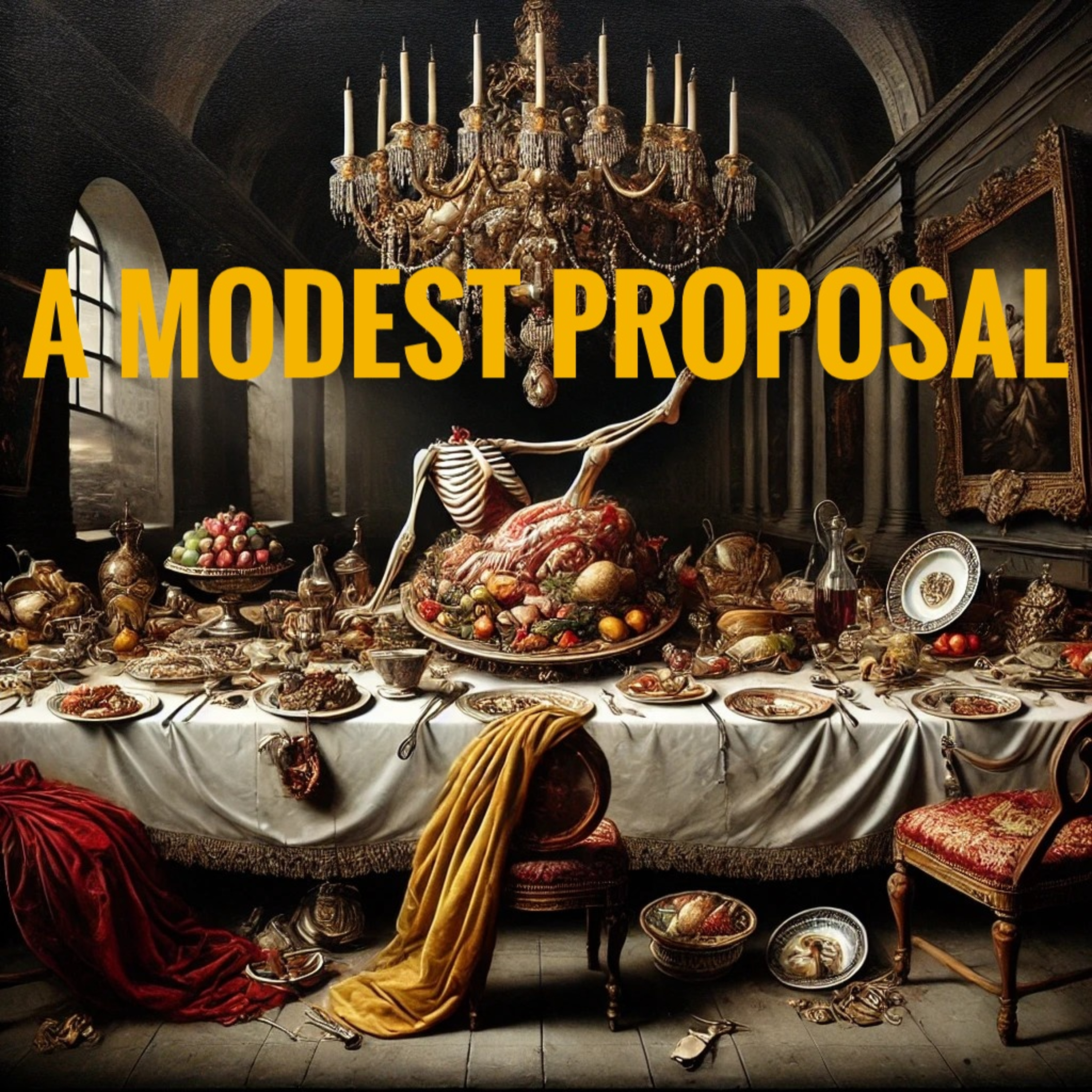
78. Historical Essays | Eating the Poor: The Genius of Swift’s Satire in ‘A modest proposal’
What if an essay could shock, amuse, and provoke all at once? In this episode, we’re uncovering the brilliance of Jonathan Swift’s A Modest Proposal. Published in 1729, this satirical essay suggests a shocking solution to poverty in Ireland: selling children as food for the wealthy. But beneath the absurdity lies a sharp critique of 18th-century society and its indifference to human suffering. It’
77. Essays | From Montaigne to Modern Blogs: The Evolution of the Essay
What do personal reflections, philosophical debates, and viral think-pieces have in common? They all trace their roots back to the essay, a literary form that has shaped how we think, write, and share ideas for centuries.
In this episode, we explore the fascinating journey of the essay, starting with Michel de Montaigne’s revolutionary Essais in the 16th century. Learn how the essay evolved from
76. Essays | Civil Disobedience: The Essay That Sparked Revolutions
What makes an essay powerful enough to inspire revolutions and shape history? In this special episode, we explore Henry David Thoreau’s Civil Disobedience—a timeless call to resist injustice that influenced leaders like Gandhi and Martin Luther King Jr.
Whether you're an ESL student, a college writer, or someone who loves great ideas, this episode offers insights into the art of persuasive writin
75. Essays | Common Essay Writing Mistakes and How to Avoid Them
Struggling with essays? This episode is here to help! We break down the most common mistakes students make in academic essay writing, from weak thesis statements to poor structure and misused evidence. For each mistake, we explain why it’s an issue and provide actionable tips to avoid it.
Here’s what you’ll learn:
1) How to craft a clear and strong thesis statement.
2) Strategies to organize your
74. Essays | 3 Words That Will Instantly Elevate a Native Speaker's Writing
Does your writing feel "good" but not exceptional? In this episode, we uncover three simple yet powerful words that can transform your essays, emails, or articles into polished, professional pieces. Learn how to add depth with "nuance," connect ideas seamlessly with "moreover," and tackle complex problems with "conundrum." Plus, we’ll show you practical before-and-after examples that prove just ho
73. Essays | Crafting the Perfect Roadmap: How to Guide Your Essay to Success
Have you ever started reading an essay and felt lost after the introduction? Chances are, it was missing a clear roadmap—a simple yet powerful guide to help readers navigate the journey ahead. In this episode, we’ll break down what a roadmap is, why it’s essential, and how to write one that keeps your audience hooked and informed.
Whether you're tackling a college essay or an important piece of ac
72. Essays | Nail Your Thesis Statement: The Key to a Successful Essay
Struggling to craft a strong thesis statement? This episode has you covered! In under 4 minutes, you’ll learn the three golden rules for writing a thesis that wows professors and makes your essay shine. Discover how to:
1) Answer the question with clarity and focus.
2) Add specific details that set your thesis apart.
3) Take a bold stand to guide your argument.
Whether you're prepping for an exam,
71. Essays | How to write an irresistible essay hook (video)
📚 Ready to grab your reader's attention in seconds? In this video episode, we dive into the art of crafting the perfect hook for your essay. Whether you're starting with a thought-provoking quote, an eye-opening fact, or a clever rhetorical question, I'll show you how to keep your audience intrigued from the very first line.
Perfect for anyone preparing for academic essays, official exams, or jus
70. Essays | How to write a captivating essay intro (video)
Struggling with how to start your essay? In this quick video, I break down the three essential elements for a captivating college introduction: an irresistible hook, a clear thesis statement, and a roadmap that sets the stage for your ideas. Perfect for students and lifelong learners who want their writing to stand out. Watch, learn, and take the poll to share what makes your intros pop!
THANK Y
69. Revamping Writing Tricks: New Format, New Goals
Welcome to the revival of Writing Tricks! In this special episode, I’m unveiling all the exciting changes: new formats, more interaction, and a renewed focus on helping you improve your English writing skills. Now with video and enhanced communication channels like Twitter/X and Buy Me a Coffee, this podcast is evolving to offer a more engaging and connected experience. Don’t miss out!
If you fi

68. Vocabulary | Easily confused words: beside and besides
Ever wondered about the difference between 'beside' and 'besides'? 📚 In our next episode, we're breaking down these two commonly confused words. We'll explore how 'beside' keeps things close and physical, while 'besides' opens up a world of additional information. Join me to clarify these distinctions and enhance your writing precision. Don't miss out on this enlightening journey into the finer po

67. Vocabulary | Easily confused words: rise vs. raise
Confused about when to use 'rise' and 'raise'? 🌅 In this episode, we're tackling this common grammar dilemma. Discover the key differences between these two verbs, how to use them correctly, and the simple rules that will boost your confidence in writing and speaking. Join me for a clear and concise breakdown that will help your language skills soar. Don't miss this enlightening guide to mastering
66. Grammar and Vocabulary | 'At the end,' or 'in the end'? What's the difference?
Have you ever been puzzled by the subtle difference between 'at the end' and 'in the end'? 🤔 In this episode, we'll unravel the mystery behind these two seemingly similar phrases. Join me as we explore how a small preposition can completely change the meaning of a sentence: from pinpointing precise moments to summing up entire journeys. Tune in to sharpen your language skills and master the art of

65. Vocabulary | How to talk about losing a job: "being fired" vs. "being laid off"
Curious about the fine line between being 'fired' and 'laid off'? 🤔 Join me in this episode as we unravel the distinct difference between these two workplace terms. From the origins of the expression "being fired" to its emotional impact, let's dissect the nuances that shape the narratives of job loss...
64. Vocabulary | How to say that you love someone
Ever wondered why a simple "Love you" can feel different from a heartfelt "I love you"? 🤔 In this episode, we delve into the subtle yet profound distinctions between these two expressions of affection. Join me as we explore the nuances of language, emotion, and intimacy in understanding the power behind these words.

63. Organisation | How to keep notes that inspire you
Are you tired of losing track of your inspiration? 📝 In our latest episode, I'm spilling the secrets to capturing creativity on the go! Say goodbye to scattered thoughts in old notebooks and hello to the future of note-taking. Join me as we explore the evolution from Moleskine musings to the digital age of apps designed to keep your inspiration at your fingertips. With audio, images, text, and sea
62. Motivation | How to write gratitude notes (by finding the right mindset)
Ever thought about leaving a little sparkle of gratitude for a stranger to stumble upon? 🌟 In our upcoming episode, we're diving into the art of writing gratitude notes and the unexpected joy they bring to both the writer and the recipient. Tune in, and we will explore how a simple act of kindness can light up someone's day in ways you never imagined. Get ready to spread some sunshine!
61. Writing process | How to approach editing your personal texts?
Join me in our latest writing episode as we delve into the art of editing personal texts. Discover a powerful writing trick that can elevate your editing process to new heights: reading your draft attentively before you even begin editing. Uncover the three key benefits of this strategy and learn how it can transform your writing journey. Tune in and unleash the potential of your words! ✍️🔍 #Writi

60. Formatting | How to format your messages in WhatsApp
How can you go from plain, boring messages in Whatsapp to spectacular ones? Keep listening. Learn how to impress all of your friends with these super-cool "writing tricks"!
TRICK 1: BOLD MESSAGES
To bold your message, place an asterisk on both sides of the text, like this:
*text*
TRICK 2: MESSAGES IN ITALICS
To italicize your message, place an underscore on both sides of the text, like so:
_te
59. Motivation | Are you writing too much? Well, don't!
Are you writing too much? Well, don't!
If you want to become a proud, consistent writer, just follow these two easy tricks…
TRICK 1: Set the bar ultra-low
Never set goals like, “I want to write 1000 words a day.” That’s too much, and you'll get disappointed with yourself as soon as you miss one day.
Instead, your goal is to write only one true sentence. Just one. The beauty of that goal is t

58. Reports | How to write reports, from the basics to the finished product
What is a report? Why should I care? How do I go about it? Find out in today's epidode
SAMPLE REPORT TASK:
The international organization where you work has a sum of money available for making improvement to the work environment in your office to make it more productive. You have been asked to write a report for your manager in with you
Outline the problems with your work environment
Sum

57. Proposals | How to write academic proposals
What on Earth is a proposal? Will I ever need to write one while I am in College? Well, there is an easy trick to help you with it. Here Is What You Should Do For Your PROPOSAL. Follow this sample one...
SAMPLE TASK:
“You are member of the Students’ Council at the college where you study. The principal of the college wants to make it easier for first year students from other countries to fi

56. Proposals | What is a proposal, and how does it work?
What's the Single Most Important Thing You Need To Know About PROPOSALS? No, not that kind of proposal... Proposals in an academic setting.
What Is a proposal, what is a report, and How Do they Work? Keep listening: here Is What You Should Do!
THANK YOU FOR LISTENING TO THIS EPISODE
Thank you for listening to this episode. I hope that it helped you discovering something about writing

55. Articles | How to write irresistible titles
So, you want to write addictive articles. What's the first step? The title. How do you write a “clickbait” one? Find out here...
HOW TO WRITE ADDICTIVE TITLES
- Write something shocking: “Computer games are way too soft; we want brutality!”
- Leave your reader interested: “You'll never believe the kind of night life waiting for you in Madrid!”
- Use mysterious explanations: “Madrid at night

54. Articles | How to write the perfect article for your blog
What are the top six steps that can turn your last article into a viral one? Is there anything you can do, or anything that you should avoid? Find out in today's episode
OUTLINE: 6 EASY STEPS TO WRITE AMAZING ARTICLES AND BLOGPOSTS
STEP 1. Select your topic. Narrow it down.
STEP 2. Address your audience's needs. Pick three words to describe them. For example, professional, single, men.
STEP

53. Articles | How to write an A+ article in an English exam
As we have covered in the previous episode, writing an article in an English exam context is just a way to show your examiners that you can write in a personal, direct, engaging way. What are the kind of things you will have to write about? Is there a sample article we could analyse? Can we have a glimpse of the features that will make it successful? Find out in today's episode.
ARTICLES - SAMPLE

52. Articles | How to write a winning article in the context of an exam
What is an article? Or, at least, what do examiners mean by an article? What is the difference between an article and other academic genres? What are the top 5 things to bear in mind when writing one? Find out in today's epidode.
THANK YOU FOR LISTENING TO THIS EPISODE
Thank you for listening to this episode. I hope that it helped you discovering something about writing that you did not know, &nb

51. Reviews | How to write an excellent review for Google Maps
Let's have a look at a sample review of a restaurant. I hope it will inspire you to feel confident and to post something online!
REVIEW
THE LOTUS FLOWER
I tried the Lotus flower for the first time this month with my family for my dad's birthday, and I realised that it was easily the best Chinese restaurant we've eaten in.
The surroundings were very modern, yet it still felt airy and cosy. The wa

50. Reviews | How to write an inspiring body and conclusion for
a review
What is the most optimum way to write the internal part of a review, as well as its conclusion? In this episode, we will have a look at how to solve this problem looking at different angles.
From a semantic point of view, we will look at what to include and how to distribute it in different paragraphs. In order to acomplish this, we will use the TiPToP strategy: Ti(=Time), P(=Point), To(=Topic),

49. Reviews | How to write the ideal introduction for a review
What is the first thing you need to know about writing a proper review? Discover how to establish your authority. Experiment and surprise your audience by including a revelation that you had thanks to the very same thing that you are reviewing. Invite your reader to come with you on that journey of discovery.
As you move through this episode, you will learn how to include adverbial starts,

48. Reviews | How to write the perfect review
Is there a strategy that can help you producing the perfect review? What are the main communicative functions that we need to portray when we are writing an excellent one? How can we optimize them so that in a few sentences we can produce a memorable review?
Whether you are trying to write about a product on Amazon, or a hotel on booking.com, an experience in a travelling website, or just w

47. Application letters | How to write a successful job application
What is the secret to writing a successful job application letter? Find out in today's episode.
SAMPLE TASK
Wanted
Friendly, English-speaking people to work as restaurant and bar staff on our Mediterranean cruise ships.
Tell us about
Why you would like to work for us
Any relevant experience you may have
Personal qualities that would be useful on board
Email your little of application to inf

46. Formal letters and emails | How to begin and end a formal letter correctly (salutations)
Do you know how to begin and end a formal letter (or email) correctly? Find out in today's episode
THANK YOU FOR LISTENING TO THIS EPISODE
Thank you for listening to this episode. I hope that it helped you discovering something about writing that you did not know, or that it helped you looking at things from a different perspective. If you enjoyed it, you might consider leaving a posi

45. Informal emails and letters | How to write them, from planning to finished product
What are the key ingredients of an informal email or letter? How can you approach this task? From planning to finished product, find everything you need in this episode.
INFORMAL EMAILS: SAMPLE TASKS
You have just received this email from Jo, a friend in Canada.
From: Jo
Subject: Help me!
I really want to be selected for the college ice hockey team, but I know I'm not fit enough. There are only f

44. Emails and letters | General considerations about emails and letters
Can you write an impressive email? Do you know how to include good content, score high in communicative achievement, show good organization and structure, and display appropriate language control? Find out in today's episode.
THANK YOU FOR LISTENING TO THIS EPISODE
Thank you for listening to this episode. I hope that it helped you discovering something about writing that you did not know, &

43. Academic writing | How examiners mark essay papers
How do Cambridge examiners mark papers? Find out about "Content", "Communicative achievement", "Organisation and structure" and "Language control". Discover what each one of them entails. Understand how grammar, syntax, punctuation, format, tone and ideas are assessed.
THANK YOU FOR LISTENING TO THIS EPISODE
Thank you for listening to this episode. I hope that it helped you discovering some
42. Discursive essays | How to write a discursive essay
What are the key ingredients of a discursive essay? How can you approach this task? From planning to finished product, find everything you need in this episode.
SAMPLE ESSAY TASK
In your English class, you have been talking about the benefits of regular exercise. Now, your teacher has asked you to write an essay.
Write an essay using all the notes and give reasons for your point of view.
"S

41. Argumentative and Persuasive essays | How to write a good "agree or disagree" essay
What makes a good "agree/disagree" essay for the Cambridge exams, at a B2 level? Find out in today's episode.
SAMPLE ESSAY TASK
In your English class, you have been talking about wildlife conservation. Now, your English teacher has asked you write an essay.
Write an essay using all the notes, and give reasons for your point of view.
"Not enough is being done to protect endangered animals."

40. Descriptive essays | How to write a good essay for the Cambridge exams (First Certificate, B2)
What makes a good essay for the Cambridge exams, at a B2 level? Find out in today's episode
SAMPLE ESSAY TASK
What can young people do to help the environment?
Write about:
1. Recycling
2. Using cars less
3. Your own idea
SAMPLE ESSAY (SIMPLE VERSION)
There are many things young people can do to protect their local environment. Some of these are recycling, using cars less, and planting tress.&n
39. Essays | How to write the perfect conclusion
What are the main communicative functions that you should ideally include in your conclusion? What is something that you should never include? Find out in today's episode.
THANK YOU FOR LISTENING TO THIS EPISODE
Thank you for listening to this episode. I hope that it helped you discovering something about writing that you did not know, or that it helped you looking at things from a di

38. Essays | How to write a good body paragraph
What are the key ingredients that make for a fantastic body paragraph? Find out in today's episode
THANK YOU FOR LISTENING TO THIS EPISODE
Thank you for listening to this episode. I hope that it helped you discovering something about writing that you did not know, or that it helped you looking at things from a different perspective. If you enjoyed it, you might consider leaving a posi

37. Essays | How to write a good essay intro
Do you know how to write a good essay intro? What would you use as a "hook"? What is a thesis statement? How would you structure your arguments in order to defend your point? Find out in today's episode.
THANK YOU FOR LISTENING TO THIS EPISODE
Thank you for listening to this episode. I hope that it helped you discovering something about writing that you did not know, or that it helped you looki

36. Essays | How to understand the structure of an essay
What is an essay? What are their main functions? How are essays organised? What are their main features? Find out in today's episode.
THANK YOU FOR LISTENING TO THIS EPISODE
Thank you for listening to this episode. I hope that it helped you discovering something about writing that you did not know, or that it helped you looking at things from a different perspective. If you enjoyed it

35. Academic writing | How to identify cohesive elements in texts
Do you know how to identify cohesive elements in texts? Listen to this episode to reflect upon some cohesive devices found in a short, given text.
THANK YOU FOR LISTENING TO THIS EPISODE
Thank you for listening to this episode. I hope that it helped you discovering something about writing that you did not know, or that it helped you looking at things from a different perspective. If y

34. Academic writing | How to produce cohesive texts (cohesion)
What is cohesion? What is the connection between cohesion and coherence? What are some cohesive devices at your disposal? What would happen to a text if you used cohesive devices excessively!? Find out in today's episode.
THANK YOU FOR LISTENING TO THIS EPISODE
Thank you for listening to this episode. I hope that it helped you discovering something about writing that you did not know,  

33. Academic writing | How to improve text coherence
In today's episode, we are going to explore how to fix a faulty, incoherent sentence in which some piece of key information is missing.
THANK YOU FOR LISTENING TO THIS EPISODE
Thank you for listening to this episode. I hope that it helped you discovering something about writing that you did not know, or that it helped you looking at things from a different perspective. If you enjoyed

32. Academic writing | How to identify coherent ideas (2/2)
Can you identify what supporting sentences will increase your text coherence? And more importantly, why? Find out in today's episode with a little bit of guided practice.
THANK YOU FOR LISTENING TO THIS EPISODE
Thank you for listening to this episode. I hope that it helped you discovering something about writing that you did not know, or that it helped you looking at things from a dif

31. Academic writing | How to identify coherent ideas (1/2)
Can you identify what supporting sentences will increase your text coherence? And more importantly, why? Find out in today's episode with a little bit of guided practice.
THANK YOU FOR LISTENING TO THIS EPISODE
Thank you for listening to this episode. I hope that it helped you discovering something about writing that you did not know, or that it helped you looking at things from a dif

30. Academic writing | How to produce coherent texts
What are the characteristics of coherent texts? How can you recognise them and use them to improve your writing? Find out in today's episode.
THANK YOU FOR LISTENING TO THIS EPISODE
Thank you for listening to this episode. I hope that it helped you discovering something about writing that you did not know, or that it helped you looking at things from a different perspective. If you en

29. Academic writing | How to achieve coherence and cohesion
Before we move any further into how to write a very good, decent paragraph, we need to consider two absolutely essential concepts: coherence and cohesion. They are transversal to all kinds of writing, and communication at large even. Any reader — examiners included — will notice immediately if any of this two aspects are missing. They might not be able to pinpoint what it is that is wrong with you
28. Academic writing | How to fix faulty topic sentences
Do you know how to identify a faulty topic sentence? Would you know how to fix it? Can you do it so that the rest of your related ideas flow naturally? Find out in today's episode.
THANK YOU FOR LISTENING TO THIS EPISODE
Thank you for listening to this episode. I hope that it helped you discovering something about writing that you did not know, or that it helped you looking at things

27. Academic writing | How to write the perfect topic sentence
What is the secret to the perfect topic sentence? Do you know how to build a topic sentence that is interesting, not too narrow, not too broad, and that is not a chunk? Find out all the yummy tricks of the trade in today's episode...
THANK YOU FOR LISTENING TO THIS EPISODE
Thank you for listening to this episode. I hope that it helped you discovering something about writing that you did not

26. Academic writing | How to write a paragraph. PEEL and TiPToP strategies.
What is a paragraph? What are the main "ingredients" of a successful one? How can you control its structure? Do you know when to start a paragraph and when to finish it? Find out in today's episode.
THANK YOU FOR LISTENING TO THIS EPISODE
Thank you for listening to this episode. I hope that it helped you discovering something about writing that you did not know, or that it helped you

25. Syntax | How to identify sentence structures
Can you identify sentence structures by understanding their underlying syntax? In this episode, we we'll have some guided practice so that you can become confident at deducing architectural features in sentences.
THANK YOU FOR LISTENING TO THIS EPISODE
Thank you for listening to this episode. I hope that it helped you discovering something about writing that you did not know, or that

24. Syntax and structure | How to identify compound-complex sentences
What are compound-complex sentences? How can you identify them? What are their main ingredients and characteristics? Find out all about them in this episode.
THANK YOU FOR LISTENING TO THIS EPISODE
Thank you for listening to this episode. I hope that it helped you discovering something about writing that you did not know, or that it helped you looking at things from a different perspe

23. Semantics and syntax | How to create compound and complex sentences from two independent clauses
In this episode, we are going to practice sentence formation. Starting from two independent clauses, we are going to create their corresponding compound and complex sentences at the same time. This way, we are going to go deep into the relationship between syntax, punctuation and meaning in English.
THANK YOU FOR LISTENING TO THIS EPISODE
Thank you for listening to this episode. I hope that

22. Syntax and semantics | How to transform compound sentences into complex ones
Find out how to convert compound sentences into complex ones. Follow these guided exercises and learn how to translate coordinating conjunctions and conjunctive adverbs into their corresponding subordinating adverbs. Semantically, let's change a relationship of independent equals into a relationship of inescapable dependency.
THANK YOU FOR LISTENING TO THIS EPISODE
Thank you for listening t
21. Semantics and syntax | How to create complex sentences
Let's review how to create complex sentences so that we can start converting compound sentences into complex ones.
THANK YOU FOR LISTENING TO THIS EPISODE
Thank you for listening to this episode. I hope that it helped you discovering something about writing that you did not know, or that it helped you looking at things from a different perspective. If you enjoyed it, you might conside

20. Syntax and punctuation | How to identify complex sentences
What do English teachers mean when they say that you should create complex sentences? How can we visualize them? In this episode, we will define them, give you tips so that you can identify and create them, and drill their corresponding punctuation.
THANK YOU FOR LISTENING TO THIS EPISODE
Thank you for listening to this episode. I hope that it helped you discovering something about writing

19. Syntax and semantics | How to distinguish between simple and compound sentences
Are the following sentences simple sentences or compound sentences? How can you even tell? Listen to this episode to find out the answer and to start the journey from meaning to structure in English.
THANK YOU FOR LISTENING TO THIS EPISODE
Thank you for listening to this episode. I hope that it helped you discovering something about writing that you did not know, or that it helped you

18. Punctuation and semantics | How to produce compound sentences (free production exercise)
Get some practice into creating compound sentences. In this episode, we will have a semi-guided exercise in which you will be able to blend syntax, punctuation and meaning in English.
THANK YOU FOR LISTENING TO THIS EPISODE
Thank you for listening to this episode. I hope that it helped you discovering something about writing that you did not know, or that it helped you looking at thin

17. Punctuation | How to create compound sentences (guided practice)
Practise how to blend two ideas into a compound sentence. Link them with coordinating conjunctions, semicolons, and conjunctive adverbs.
THANK YOU FOR LISTENING TO THIS EPISODE
Thank you for listening to this episode. I hope that it helped you discovering something about writing that you did not know, or that it helped you looking at things from a different perspective. If you enjoyed

16. Punctuation | How to make compound sentences using conjunctive adverbs
Find out how to link two independent clauses with conjunctive adverbs or adverbials.
THANK YOU FOR LISTENING TO THIS EPISODE
Thank you for listening to this episode. I hope that it helped you discovering something about writing that you did not know, or that it helped you looking at things from a different perspective. If you enjoyed it, you might consider leaving a positive review wh
15. Punctuation | How to use semicolons (;) in complicated lists
Find out about the second way in which you can use a semicolon: in complicated lists, in order to create internal order and taxonomy.
THANK YOU FOR LISTENING TO THIS EPISODE
Thank you for listening to this episode. I hope that it helped you discovering something about writing that you did not know, or that it helped you looking at things from a different perspective. If you enjoyed it

14. Punctuation | How to link two independent clauses. The semicolon (;) acting as a conjunction
Is there a way in which we can link to independent sentences, but without explicitly explaining what the connection is between them? Visualize the union between two independent clauses as a marriage of equals. Can we find the equivalent of a "wedding ring" indicating as that there is a marriage, but without explaining what the marriage is about? There sure is a way: meet the semicolon!
THAN
13. Syntax and punctuation | How to distinguish phrases and clauses. Compound subjects, verbs and objects
Do we always need to add a comma before the coordinating conjunctions of the FANBOYS? Find out in this episode. We will also explore what a phrase is, what a clause is, as well as introducing compound subjects, compound verbs, and compound objects.
THANK YOU FOR LISTENING TO THIS EPISODE
Thank you for listening to this episode. I hope that it helped you discovering something about writing t

12. Punctuation | How to link two independent clauses. Compound sentences with the FANBOYS
How to link two independent clauses or sentences into a compound sentence using a comma and a coordinating conjunction (FANBOYS). From a semantic point of view, this would be the equivalent of having a marriage of two strong, independent people. Individually, they can survive, but together, they're stronger. Coupling sentences in this way —using a comma plus a fanboy— is the equivalent of getting

11. How to create emphasis and direct attention to details using colons (:)
In this episode, we will talk about "the colon". This is a very interesting piece of punctuation that can allow us to expand on ideas, to create lists, and to alter sentence structure for impact. Listen to this episode, pay attention to the syntax involved, and I hope that you can make your writing far more interesting from now on!
THANK YOU FOR LISTENING TO THIS EPISODE
Thank you for liste

10. How to build exciting, interesting sentences
Do all sentences need to follow the structure subject + verb + object, or can we design more exciting ways to express thoughts? Find out in today's episode, in which we will combine syntax and punctuation to create meaning.
OUTLINE:
1. Reviewing previous episodes
2. How to begin a sentence following the standard sentence structure (subject + verb+ object)
3. How to begin with an adverbial c

9. How to use commas with disjuncts
Commas and disjuncts. What are they? How should you go about them?
OUTLINE:
1. Introduction (reviewing previous episodes): Forcing non-essential information and clauses into a sentence requires commas
2. How to punctuate personal opinions
- What are disjuncts?
- Some examples of disjuncts
- What are conjuncts, adjuncts and disjuncts?
- How to identify disjuncts: Sarah, unfortunately, has to

8. How to use commas in relative clauses
Using the comma to add extra, non-essential information to sentences.
OUTLINE:
1. Introduction: Reviewing previous episodes
2. How to use commas as a means to include non-essential, additional info: non-defining relative clauses
- My neighbour, who is from France, is an idiot.
3. Why we should not use commas with defining relative clauses
- My neighbour who is from France is an idiot.
KEYW
7. How to use the commas in other contexts. The Oxford comma.
Other comma uses: from places to time, from adjectives to lists, from extra info to the Oxford comma, and everything in between...
OUTLINE:
1. How to use commas to separate a city and its state
2. How to pile up prepositional phrases of place
3. How to use commas with dates: American and British systems to write dates
4. How and when to use commas with coordinating adjectives
5. How t

6. How to deal with negative adverbial starts
What will happen if I want to begin my sentence with a negative adverbial? Would it be enough with a comma, or is there a higher price to pay? Jump right into the fascinating world of negative inversions...
OUTLINE:
1. Introduction: A review of the previous episode; it is OK ro move an adverbial to the beginning of the sentence as long as I promise to give you a comma.
2.

5. How to use commas with adverbial starts
Can I challenge the common sentence structure "subject + verb + object/complement"? What if I feel like starting with place or time? Can I go for it? Sure, as long as you promise to add a comma...
OUTLINE:
1. Introduction: A review of the previous episode; he position and order of adverbial groups within a sentence.
2. What happens when we move adverbials to the beginning of the sentence? Brief p

4. How to use adverbials in sentences
Learn how to create the perfect sentence. Visualize it as a story. Follow the main pattern: subject + verb + object + space + time + manner + reason/purpose + others...
OUTLINE:
1. Introduction: A review of the five main sentence structures discussed in previous episodes (episode 3).
2. How to introduce adverbials in sentences: Subject + verb + object(s) + adverbials => I | like | my job | ver

3. How to visualise the five sentence structures
How many sentence structures are there? Is it just one, a couple of them, or almost infinite? Does it really matter? Well, listen to this episode to find out...
EPISODE OUTLINE:
1. Introduction: Setting the scene: “Five guys are moving a piano.”
2. What are the main parts of a sentence?
- Subject
- Verb
- Object
- Complement
-

2. How to identify the different parts of speech
Let's begin our journey into our tricks by having a look at words. They are the building blocks that we're going to use to create meaning in English. In today's episode, we will look at "word classes" or "parts of speech".
EPISODE OUTLINE:
1. A "metaphorical" café full of words
2. Identifying parts of speech in a sentence
3. What are the eight different parts of speech?&nb

1. An exciting look into our creative writing lab
Welcome to "writing tricks" podcast, the place where syntax, punctuation and meaning react with one another! Join me, and we will explore how to improve your English by experimenting with these things.
EPISODE OUTLINE: 1. Presentation and scope of the podcast 2. Contents that will be covered in future episodes
kEYWORDS: introduction, syntax, grammar, wor
Recommended
SLOW ENGLISH PODCAST (A1-A2) With Subtitles | Daily Videos | English With Us Podcast
Learn English A2 with Daily News | Simple English Listening Practice

پلی لیست | PlayList
Conspiracy Files with Paige Carter
Bad Friends

Learn 50 English Phrases While You Sleep | Everyday English Phrases & Vocabulary
This Past Weekend w/ Theo Von
Dateline NBC
Back to the 80s Radio
Crime Stories with Nancy Grace
Bible Tea

این نقطه
