A Product Market Fit Show | Startup Podcast for Founders
A Product Market Fit Show is a startup podcast that interviews successful founders and VCs to explore the journey from 0 to 1 in finding product-market fit. Guests have included founders of Reddit, Gusto, Rappi, Glean, Cohere, Huntress, and ID.me. The show aims to provide detailed, actionable examples for entrepreneurs. It is rated as one of the world's top startup podcasts.
Episodes

He has cold outbound data on 40 million startups. Here's what works. | Daniel Saks, Co-Founder of Landbase and AppDirect
Daniel Saks built AppDirect into a marketplace moving upwards of $10B a year in gross merchandise value. Now he runs Landbase, an AI go-to-market company with data on 40 million startups, and it just raised a $30M Series A. So when he talks about cold outbound, he is not guessing. He is reading what actually happens across millions of messages. He also spent two years in a windowless room building

He introduced his buyers to VCs instead of pitching them—then closed 20 deals in a row and a $20M Series A | Jonathan Awad, Co-Founder & CEO of Baselayer
Jonathan quit his job in early 2023 with no idea and no co-founder. Tim agreed to join only if he raised $3M. He lined up 75 investor meetings a month in advance. SVB crashed on day four and 40% of his meetings canceled. He closed the round anyway, then won 20 deals in a row, one of them a seven-figure deal with FIS. Baselayer just raised a $20M Series A.In this episode, Jonathan breaks down the 2

He runs 3 dinners a week instead of cold outbound—and closes $500K+ ARR deals. | Nick Fleisher, Co-Founder & CEO of Sandstone
Most investors told Nick not to hire a salesperson before he had product market fit. He hired the top rep in legal tech anyway and called him a product market fit finder. That rep signed a paid five-year deal in his first week, over lunch. By the time Sandstone came out of stealth, they had done hundreds of demos and had $10M+ of pipeline waiting. Sandstone just raised a $30M Series A.In this epis

Revenue fell from $25M to $8M—so he raised $75M in crowdfunding and ignored VCs. | Dan Novaes, Co-Founder & CEO of Mode Mobile
Dan's first app made over $1M in two months. Then Facebook sent a cease and desist and killed it. His next company, Mode Mobile, grew revenue 32,481% in three years and ranked #1 on the Deloitte Fast 500. Then his crypto advertisers went bankrupt, revenue fell from $25M to $8M, and he cut half his staff. No VC wanted a declining Series B. So he raised $5M from his own users in three months—th

He turned off a product with 20M users and went from 70 people to 7—then raised a $47M Series A. | Keith Peiris, Co-Founder & CEO of Lightfield
Keith raised a $43M Series B for Tome. The product had 20 million users. But retention was terrible and nobody cared enough to complain. So he turned it off before he knew what he'd build next, went from 70 people to 7, and started over. Lightfield just closed a $47M Series A.In this episode, Keith breaks down how he knew Tome would never grow up, why customers lighting up your Slack at 3am i

VCs chased crypto and passed on his “boring” startup—then he raised $385M at a $2B valuation. | Aaron Schumm, Founder & CEO of Vestwell
Aaron started Vestwell in 2016. Two years in, he had $500K in ARR and an investor asking if it would ever make money. During the 2021 bull market, VCs told him 401ks were too boring—they were busy chasing crypto. Then Morgan Stanley signed. Today Vestwell has 2.5 million people saving on the platform, over $200M in ARR, and just raised $385M at a $2B valuation.In this episode, Aaron breaks down wh

He sold his 8-figure business to bet on a side app—then grew it to 20x in a year. | Andrew Antos, Co-Founder & CEO of Within
Andrew spent two and a half years selling AI contract review to lawyers. It stalled at $800K. He rebuilt the company around finance teams and grew that to $10M. Then he demoed a little internal tool on the side at his own conference, and nobody wanted to talk about anything else. It did $350K in five weeks. He sold the $10M business and went all in on the side tool—Within went from zero to nearly

He spent $0 on marketing for 2 years—then raised $400M at a $3.25B valuation. | AJ Loiacono, Co-Founder & CEO of Judi Health
AJ spent two years selling health benefits with no customers and no references. His competitors told buyers their service was free. He charged a flat fee and told the truth about where the money actually went. Two years in, at $10M ARR, a Fortune 500 company called him. Judi Health just raised $400M at a $3.25B valuation.In this episode, AJ breaks down how he beat three Fortune 15 giants by operat

He spent $150K on brand before he had a product—then closed $1.5M ARR in 1 month. | Niklas Lindgren, Co-Founder & CEO of Endra
Niklas quit law school to install CCTV cameras in iPhone repair shops. Eight years later he sold that business to private equity at 26. Then he went after the most boring software in the world: the 1997 tool engineers use to design the wiring and plumbing inside buildings. He spent $150K on a website before he had a product and DM'd engineers on Reddit to find his first users. His first month

He lost all 5 of his first deals—then built the next Looker and raised $250M. | Colin Zima, Co-Founder of Omni
Colin spent eight years building Looker into a $2.7B Google acquisition. Then he left to compete with his own product. He thought traction would take a month—it took nine. A hundred demos got him five verbally-committed customers, and he lost all five. So he spent two months killing bugs, went on one podcast, and won every single trial that came out of it. Omni just raised over $250M.In this episo

He fired almost everyone, kept 2 engineers—then grew 12x and raised a $30M Series A. | Rafael Broshi, Co-Founder of Notch
Rafael launched a crypto insurance product in 47 states, backed by a real carrier. Everyone told him it was genius. Nobody needed it. He shut it down with $2M left in the bank, fired almost everyone, and rebuilt with two engineers on $20K a month. Notch just raised $30M.In this episode, Rafael breaks down how a POC he entered through the back door turned into a seven-figure contract, why "isn

He worked out of a police department for free for a year—then built a $6.8B company. | Ben Rudolph, Co-Founder of Peregrine
Ben and his co-founder had no product, no law enforcement background, and no pitch—just an offer to help detectives solve cases. One commander took a chance, handed them background checks, and said "let's see what you can do." They worked out of that police department every day for 18 months. Peregrine just raised $250M at a $6.8B valuation.In this episode, Ben breaks down how resea

1st-time solo founder does 90 interviews in 90 days—closes a $25M Series A 2 years in. | Damien Lewke, Founder of Nebulock
Damien left his job to start a startup solo. Two years later, Nebulock closed a $25M Series A. In between: 90 customer interviews in 90 days, a year of design partners, and a Fortune 500 deal that closed in 6 weeks.In this episode, Damien breaks down how his 90-in-90 customer discovery sprint killed his original architecture before he wasted money building it, how his design partner program conver

He tries 1,000 ideas a decade & kills nearly all—that's how X built Waymo & Google Brain. | Astro Teller, CEO of Moonshots at X (Alphabet)
Astro has run X, Alphabet's Moonshot Factory, for 16 years. His teams created Waymo, Wing, and Google Brain—by testing over 1,000 ideas a decade and killing nearly all of them. His whole system rests on one uncomfortable rule: celebrate the people who kill their own projects.In this episode, Astro breaks down why you should do the hard thing first, how pre-written kill criteria force intellec

He raised $75M—but kept his team to 21 people & pays everyone the same salary. | Cos Nicolaescu, Co-Founder of Accrual
Cos was the CTO of Brex, which he helped scale from 40 people to over 1,000. Before that, he led engineering at Stripe. When he finally left, he had no startup idea—just a co-founder he trusted and one rule: whatever they built had to have massive impact. Six months of brainstorming later, they landed on accounting.In this episode, Cos breaks down why he capped the company at 21 people after raisi

He quit Stripe and hit $10M ARR in 4 years—with $0 marketing spend. | Anurag Goel, Founder of Render
Anurag was employee #8 at Stripe, set for life and free to do anything next. Instead he spent a year and a half hunting for a problem worth decades of his life. He chose to build a product to make it simple for developers to ship apps, going head-to-head with AWS.In this episode, Anurag breaks down how he hit $10M ARR in 4 years with zero marketing spend, why refusing to launch a free tier was his

He shut down his last startup and gave the money back—then hit $1M ARR in 6 months. | George, Founder of Monk
George had to wind down his last startup and give investors their money back. He went deep into the valley of despair, certain he'd missed his window to build something big. Then he met a co-founder, decided to start over, and started selling.In this episode, George breaks down how a customer signed a $36K pilot off nothing but a Loom and a one-pager, how cold email took him from zero to $1M

He quit his $50M ARR startup to work as a paralegal—then raised a $60M Series A. | Dan Mishin, Founder of Manifest
Dan founded and scaled a $50M ARR, SoftBank-backed startup—and could've stayed to make tens of millions. Instead, he handed it to his chief of staff and started from scratch. He wanted something bigger. He took an entry-level paralegal job to learn everything about law hands on. Then he built Manifest, which just raised a $60M Series A.In this episode, Dan breaks down why he did intake calls

He churned 100% of his revenue on purpose—then grew 10x to $2M ARR in under 12 months. | Ali Khokhar, Founder of Amigo AI
Ali quit his job a few months after ChatGPT launched, convinced AI would eat labor marketplaces like Upwork. With no co-founder and no code, he collected $12K from real customers—using a faked demo and a cloned voice. Then he pitched 100 VCs in 10 days and got 47 straight 'no's.In this episode, Ali breaks down how he banked $12K in revenue before writing a single line of code, how a $20/

He hit $1M ARR by sending 500,000 cold emails—then raised a $25M Series A in 6 days. | Mark Hughes, Co-Founder of Solidroad
Mark was running a startup out of a tiny annex office in Dublin with zero product usage. Then one customer turned it on and overnight he saw usage spike to thousands of simulations. He got to $1M ARR 100% through outbound, by sending 500,000 cold emails. A few months ago he closed a $25M Series A.In this episode, Mark breaks down the pivot from sales roleplay to customer support that unlocked his

Q1 2026 w/Carta: What you need to raise a Series A. | Peter Walker, Head of Insights at Carta
The AI boom is making founders feel like the market is wide open, but the data tells a sharper story: valuations are up, round sizes are bigger, and the bar to “count” in a top-tier fund’s Monday meeting keeps rising. We sit down with Peter to translate Q1 2026 venture capital trends into founder reality, from seed-stage pricing distortions driven by AI infrastructure to the quieter pressure build

How to get a VC (like me) to wire you $2M in under 2 weeks (the FOMO playbook) | Solo Episode
I meet 1,000+ founders every year. Most are bad at fundraising.I also interview 100+ of the world's best founders on my podcast each year. Most are incredible at fundraising.One raised $14M in 17 days. another was 3x oversubscribed on a $3M round. another closed a seed in hours from a single X post. All are first-time, unproven founders.They don't waste time becoming "friends"

Coinbase's ex-CPO bet on AI agents before ChatGPT—now he's closing 7-figure Fortune 500 deals. | Surojit Chatterjee, Founder of Ema
Surojit spent 14 years at Google building mobile ads into a $100B+ business and then took Coinbase public as Chief Product Officer in 2021. In early 2023, before "agent" was even a word in AI papers, he started Ema in stealth—betting on a future where teams of AI agents would replace the "human glue" inside Fortune 500s.In this episode, Surojit breaks down how a Hitachi deploym

How this 1st-time founder went from closing customers for $500 a month to $300,000 a year. | Sean McCarthy, Founder & CEO of BackOps
Sean was spending four days a week inside customer warehouses at Amazon Shipping when he noticed the same thing everywhere: back-office admin staff churning every six months, buried under the same repetitive claims and reshipping tasks. He talked to eighty-five warehouse owners, quit Amazon in July 2024, and cold emailed his way to a pre-seed round within weeks.In this episode, Sean breaks down wh

He built for 2 years before raising a dollar—then hit $13M ARR and a $40M Series B. | Alex Halliday, Co-Founder & CEO of AirOps
Alex spent two years building AirOps nights and weekends during the pandemic before raising a single dollar. A chance conversation with Sam Altman—while walking down the street during SF Pride—sent him down the LLM rabbit hole months before ChatGPT existed. He pivoted his product toward AI, picked marketers as his customer, and never looked back.In this episode, Alex breaks down why he picked mark

180 VCs rejected him—then a $60K billboard got him to $2M ARR in 4 months. | Isaiah Granet, CEO of Bland AI
Isaiah pivoted mid-YC, landed in the bottom 10% of his batch, and watched 180 investors say no—their reason: phone calls won't exist a year from now. Voice AI was not yet a thing. With almost no money left, he and his co-founder bet everything on building AI phone calls from scratch. Bland went from pre-seed to a $40M Series B in a year.In this episode, Isaiah breaks down how a $60K billboard

She bet on a consumer app when every VC wanted B2B—then grew to $10M ARR. | Anada Lakra, Founder of BoldVoice
Anada Lakra just raised a $21M Series A for BoldVoice, a $150/year pronunciation app that helps immigrants speak English with confidence. But she started from zero in her Harvard dorm room and a problem most VCs didn't think was big enough. She recruited a Hollywood accent coach, shipped a bare-bones V1, and got into YC.In this episode, Anada breaks down why she launched a consumer app when e

He raised a $10M seed with no revenue—then grew 30x to $30M in year two. | Bobby Samuels, Founder of Protege
Bobby launched Protege in early 2024 to connect data holders with AI model builders. He raised a $10M seed with almost no demand pipeline. A year later, Protege jumped 30x to $30M in GMV and raised $30M from a16z.In this episode, Bobby breaks down how he built a 250-partner data network by leveraging prior healthcare relationships, why he flies from New York every week to close seven-figure enter
He ran Prime fulfillment for Amazon—then raised $20M to replace e-commerce with AI. | Maju Kuruvilla, Founder of Spangle
Maju ran Prime fulfillment technology for all of Amazon — same-day, one-hour shipping, global logistics during the pandemic. He became CEO at Bolt. Then he walked away to start Spangle in a basement with a co-founder, convinced AI could replace e-commerce infrastructure as we know it.In this episode, Maju breaks down why 40% of e-commerce traffic loses its context the moment it arrives on a brand&

She got rejected by 22 VCs—then built 6sense to $100M+ in revenue. Now she's back for AI. | Amanda Kahlow, Founder of 1mind
Amanda spent 16 years running a services business for Cisco and Intel. When she tried to productize her business, 22 VCs rejected her. That became 6sense, a $200M ARR company. After stepping aside as CEO and taking five years off, she's back with an AI startup called 1 mind. In this episode, Amanda breaks down why she always goes enterprise-first when everyone tells her to start small, how sh

How this AI founder is on track to hit $50M ARR just 2 years after launch. | Tarek Alaruri, Co-Founder of Stuut
Tarek already built a B2B software company to $30M ARR. But when the AI wave hit, he realized he could build a generational business by automating the manual world of accounts receivable. So, he left to start Stuut.In this episode, Tarek breaks down how he reached $1M ARR in a couple of months and is on track to hit up to $50M this year. He reveals how he pre-sold his first $65k contract with just

He launched a free product for enterprise customers—then grew to $12M ARR in 2 years. | Bhaskar Sunkara, Founding CTO of AppDynamics
DescriptionBhaskar was employee #1 at AppDynamics, which was sold to Cisco for $3.7B. He and co-founder Jyoti found a way to change how enterprise monitoring tools worked. From tracking low-level code metrics that ops teams didn't understand to monitoring what the business actually cares about.In this episode, Bhaskar breaks down how that one insight won them Netflix and Priceline as early cu

He raised $41M in one year to replace enterprise accountants with AI. | Yogi Goel, Founder of Maxima
Yogi spent 20 years living the nightmare of enterprise accounting. As a senior finance leader at Rubrik, he watched highly paid professionals spend three weeks every month manually wrangling data into spreadsheets—a problem that caused mass burnout and multi-million dollar stock corrections.When ChatGPT launched, Yogi knew the technology was finally ready to solve the problem. In this episode, he

How he grew his AI startup from $2M to $20M ARR in 12 months. | Omar Haroun, Co-Founder of Eudia
Omar already built and sold an AI startup for over $100M. But when the generative AI wave hit, he realized the technology wasn't just the future of software—it was the future of labor. So he started Eudia to completely transform how enterprise legal teams operate.In this episode, Omar breaks down how he scaled from $2M to $20M ARR in just 12 months. He reveals the exact cold email strategy he

She raised $20M from Accel to replace QuickBooks with AI. | Helen Hastings, Founder of Quanta
Helen was a software engineer who noticed a massive problem: accounting software for startups was broken, manual, and weeks out of date. Instead of just building a shiny new dashboard on top of legacy platforms, she decided to completely replace the offshore accounting model with AI.In this episode, Helen breaks down how she raised a $4.7M seed round pre-product as a solo founder and why she chose

He moved to the US with nothing. Now he does $750M ARR. | Mateo Marietti, Founder of CookUnity
Mateo had already built a successful food company in Argentina. But he wanted more. So he moved to New York with no network, no credibility, and a dream to build the "Spotify for Food."The first two years were messy. He nearly ran out of money multiple times, relied on corporate expense accounts to keep the lights on, and failed a major expansion into LA. But then, he noticed a strange b

This 3x founder hit $1M ARR in 5 months. Here's his playbook. | Roy Moussa, Founder of GetVocal
Roy is a three-time founder who has cracked the code on enterprise AI. After selling his first company and realizing his second idea was too slow, he pivoted to solving a massive problem: customer service automation.In this episode, Roy breaks down how GetVocal went from zero to $1M ARR in just five months. He reveals the "Context Graph" technology that allows them to beat LLM wrappers,

He made 0 sales for the first 8 months. Now he does $200M+ ARR. | Ryan Anderson, Founder of Filevine
Ryan was a successful lawyer with a massive problem. He couldn't find a task management tool that worked for his firm, so he built one himself. He thought he'd solved the problem, but for 8 agonizing months, he couldn't sell a single subscription.In this episode, Ryan breaks down the gritty reality of bootstrapping Filevine into a $3B legal tech startup doing over $200M in revenue.

He built heads down for a year. Then landed a $1M contract. | Sam Jones, Co-Founder of Method Security
Sam spent years at the Air Force and Palantir before deciding to build Method Security. Instead of launching an MVP and iterating with customers, he did the opposite: he shut out the world and built in the dark for a year based on his own conviction.In this episode, Sam breaks down his contrarian approach to building a platform for the enterprise and government. He reveals how he raised millions f

He raised $150M with $0 revenue. Then hit $1M ARR in 4 months. | Michel Tricot, Co-Founder of Airbyte
Michel raised $185M and achieved a unicorn valuation before he fully cracked monetization. How? By building a community so strong it broke his engineering team.In this episode, Michel breaks down the chaotic journey from a failed YC marketing idea to becoming the standard for open-source data movement. He reveals why he killed a high-growth fintech product, how he used the "Magic Wand" q
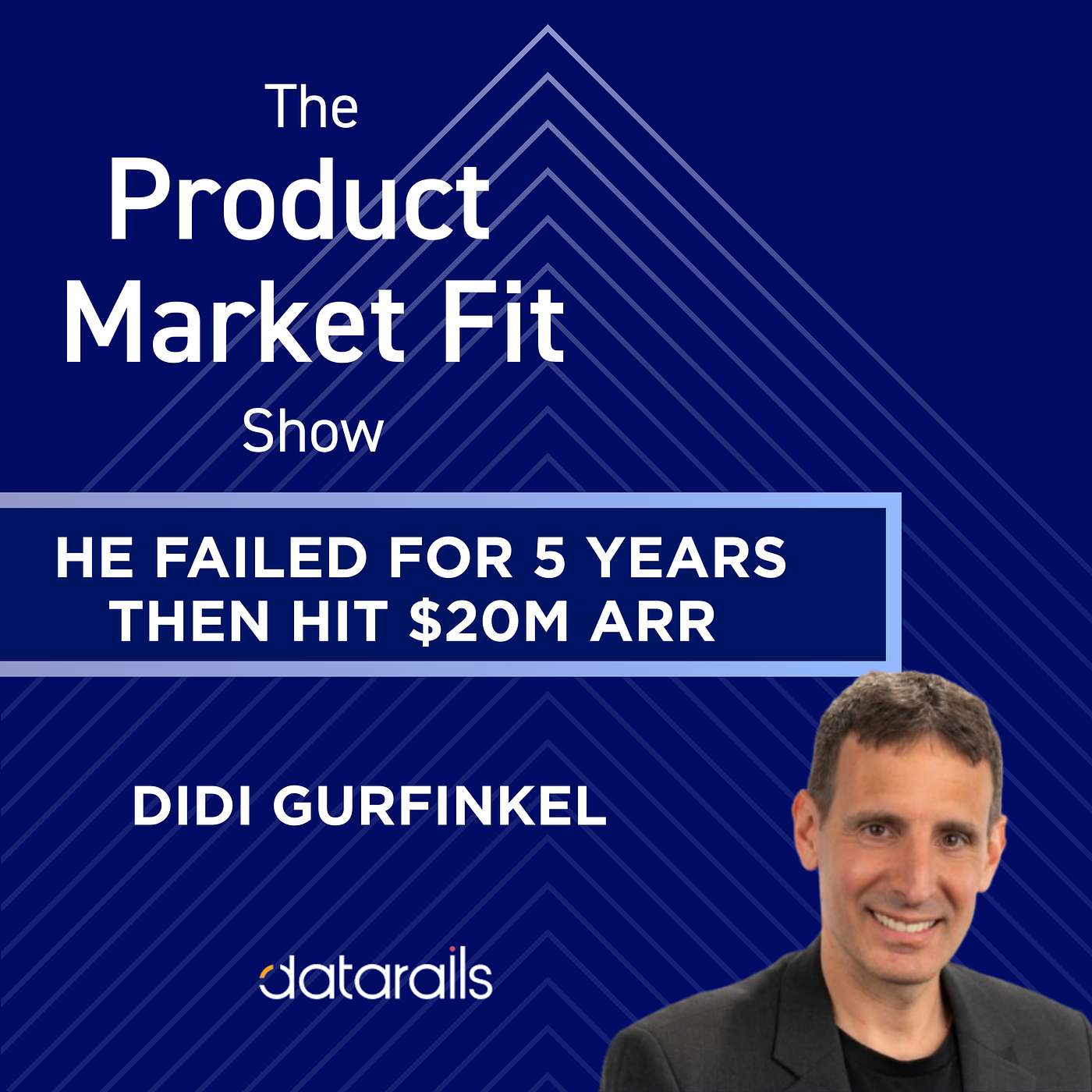
He failed for 5 years. Then hit $20M ARR with 100% outbound. | Didi Gurfinkel, Founder of Datarails
Didi spent five years building a product that no one really wanted. He raised $10 million, tried endless pivots, and was known as the "black sheep" of his investors' portfolio. Then, with his back against the wall, he made one final bet on a boring, unsexy market: FP&A for Excel users.In this episode, Didi breaks down how that final pivot turned into a rocket ship. He reveals wh
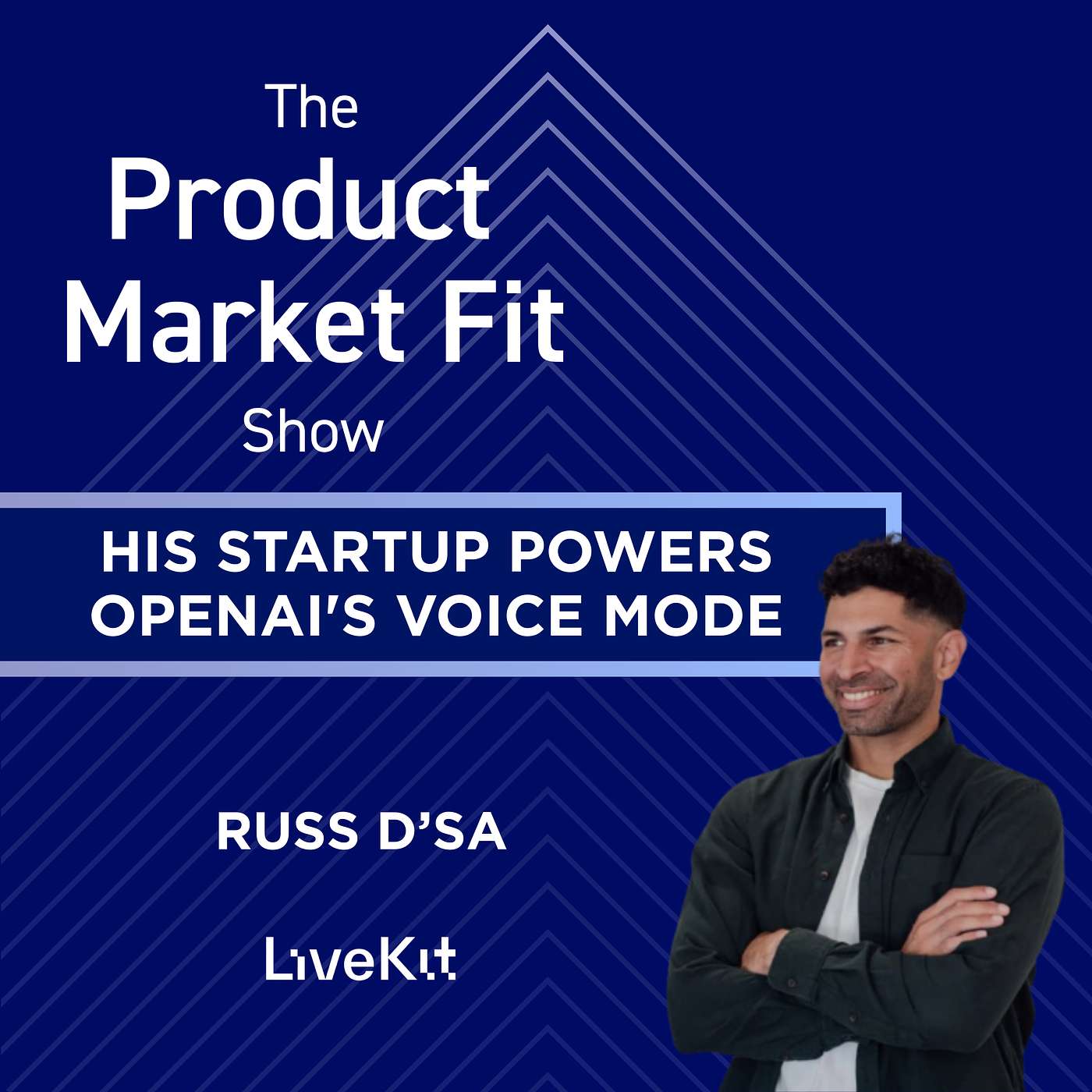
His startup powers OpenAI's Voice Mode. Last month, they became a unicorn. | Russ d’Sa, Co-Founder of LiveKit
Russ was running a moderately successful live streaming startup. Then he got a terrifying offer from a tech giant: sell to us for cheap, or we'll crush you. He had no leverage. He was about to fold.Then he got an email from OpenAI. They had secretly built ChatGPT's voice mode on his infrastructure. Overnight, everything changed. In this episode, Russ reveals the wild story of how LiveKit

He pivoted at $1M ARR—then raised $120M. | Kevin Tian, Co-Founder of Doppel
Kevin was building a successful startup in the NFT space. They'd hit $1M ARR. But he looked at the market and realized it wasn't big enough. So he made the terrifying choice to pivot the entire company into cybersecurity.In this episode, Kevin breaks down how he navigated that transition without killing the business. He reveals how he sold his first $5k/month contract with no product, wh

He sold his first startup for $100M. Then raised $250M in 18 months. | Dileep Thazhmon, Founder of Jeeves
Dileep sold his first company for over $100M. For his second act, he didn't just want another win; he wanted to solve a problem that banks refused to touch: global business banking.In this episode, Dileep breaks down how Jeeves scaled to $7M ARR in just over a year by doing things that "don't scale"—like physically mailing credit cards to Argentina. He reveals the counterintuit

He sold his first 2 startups. His 3rd grew to $1M ARR in 3 months. | Chaz Englander, Founder of Model ML
Chaz has founded 3 companies. The first sold for over $40M. The second sold to GoPuff for even more. Now, he’s on his third act with Model ML, having just raised $75M Series A <2 years in.In this episode, Chaz breaks down the playbook behind his successes. He reveals how he raised his first million by pitching strangers on LinkedIn, why his delivery startup was just a text message system on the

He fired all his customers. Then built a $1B startup in 2 years. | Jay Madheswaran, Co-Founder of Eve
Jay was running a respectable AI startup with $3M ARR. But he knew it wasn't a venture-scale rocket ship. So, he decided to fire all his customers, pivot the entire company, and bet everything on a new vertical: legal AI for plaintiff attorneys.Eve went from zero to unicorn status in under two years, raising $100M at a $1B valuation. In this episode, Jay breaks down the brutal reality of pivo

He wrote the book on Account Based Marketing. Here are his GTM secrets for enterprise. | Bassem Hamdy, Founder of Briq
Bassem took Briq from a failed data idea to a Series B leader in construction financial automation.But the path wasn't linear. In this episode, Bassem reveals how he pivoted to RPA bots, why he killed a high-growth fintech product to survive the 2023 cash crunch, and how he uses a relentless "Go-to-Market" strategy. He breaks down his exact ABM playbook, why he hates trade shows, an

He got rejected from YC—then grew to $1.8B in under 2 years. | Max Junestrand, Founder of Legora
Max went from a YC rejection to building a $1.8B company in less than two years. His company, Legora, is the fastest YC-backed company to become a unicorn in history. His path to insane growth was not standard: after raising a massive Series A, Max told his board he was pausing all new sales for six months to rebuild the product infrastructure.In this episode, Max breaks down the "burn the bo
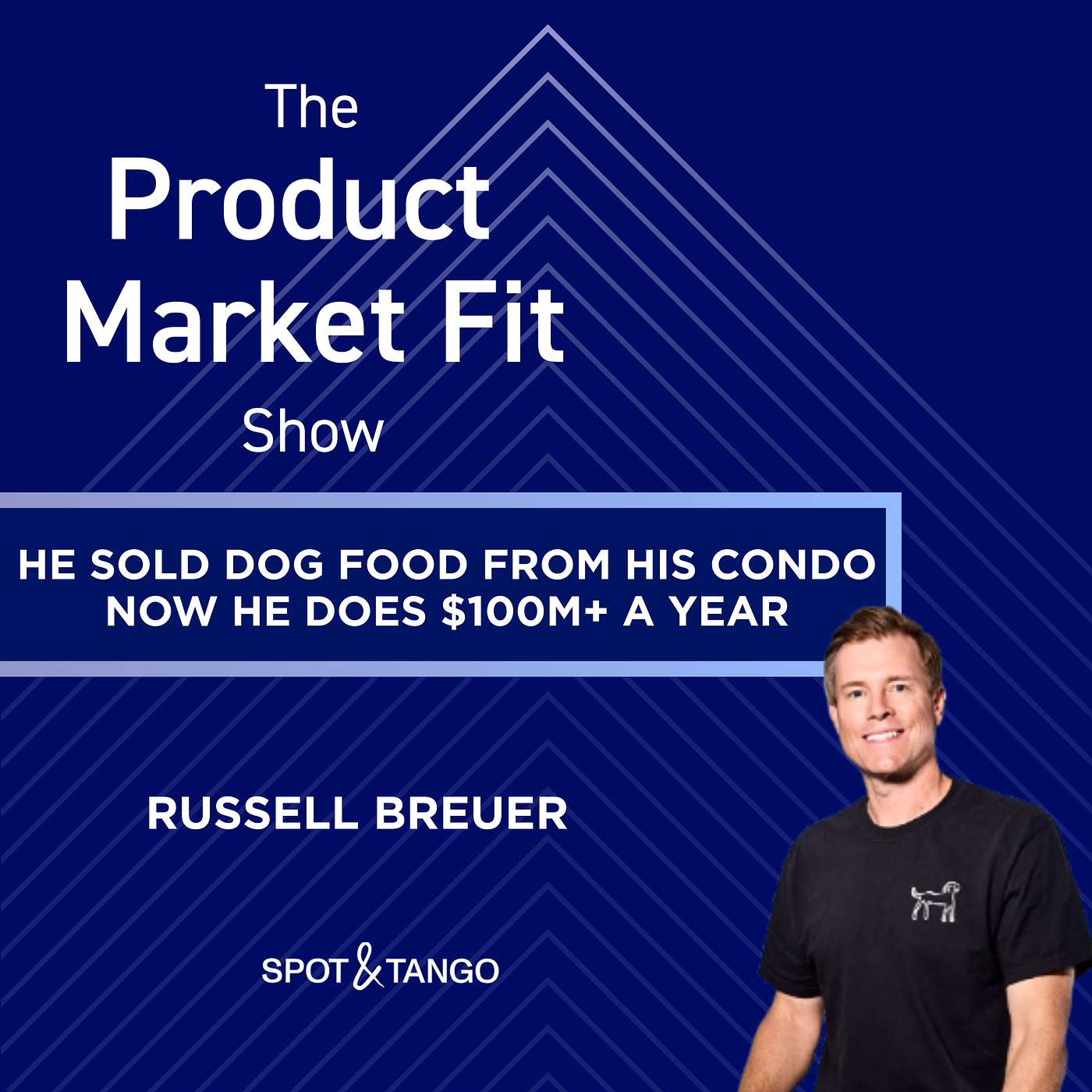
He sold dog food from his condo. Now he does $100M+ a year. | Russell Breuer, Founder of Spot & Tango
Russell went from working in private equity to hand-delivering dog food on the NYC subway at 5 a.m. He didn't start with a VC check; he started with a studio apartment kitchen and a belief that dog food was broken.In this episode, Russell breaks down how he turned a side hustle into Spot & Tango, a direct-to-consumer giant doing over $100M in revenue. He reveals the gritty reality of earl

He made 100 cold calls a day. Now his startup is worth $600M. | Harman Narula, Founder of Canary Technologies
Harman went from cold-calling hotels 100 times a day to building the category-defining guest management platform for the hospitality industry. Canary built a $600M company by first solving one tiny, annoying problem: paper credit card authorization forms.In this episode, Harman breaks down how a simple digital form became the wedge into thousands of hotels. He reveals why they stuck with outbound

He got 100k signups in 30 days. They all churned. 2 years later, he hit $10M ARR. | Rich White, Founder of Fathom
In this episode, Rich breaks down the wild story of Fathom's launch. He reveals how they secured a prime spot on the Zoom Marketplace and generated 100,000 signups in 30 days—only to realize 99.9% of them were useless. He discusses the pivot to monetization when the market crashed, how to design a product for viral loops, and why staying in private beta for 10 months was the best decision he

He grew his startup to $150M ARR & an IPO. Now he's back for the AI wave. | Bob Tinker, Founder of MobileIron & BlueRock
Bob is a serial entrepreneur who founded MobileIron, grew it to $150M in revenue, and took it public. Now, he's back with his fourth startup, BlueRock, tackling the next massive wave: agentic AI security.In this episode, Bob breaks down the distinct difference between finding Product-Market Fit and finding Go-To-Market Fit—and why confusing the two can kill your company. He shares the exact q

How his AI-enabled Services startup hit $1M ARR in just 3 months. | Shahar Peled, Founder of Terra Security
In less than 12 months, Shahar went from an idea to a $30M Series A and a team of 40. He didn't sell another AI tool—he built an AI-first service that replaced expensive human consultants in the massive pen-testing market.In this episode, Shahar breaks down the "Service-as-Software" playbook that allowed him to hit $1M ARR in just three months. He reveals how to convert design partn

He hit $1M ARR with just 2 people. 2 years later, he's worth $1.5B. | Ashwin Sreenivas, Co-Founder of Decagon
Ashwin built a $1.5B company in two years. He didn't do it with a massive team or a complex 5-year roadmap. He did it by ignoring "strategy" and talking to 100+ buyers until he found a problem so painful they would pay six figures for a solution that didn't fully exist yet.In this episode, Ashwin breaks down the exact playbook Decagon used to go from zero to unicorn. He reveals

His 1st startup failed. His 2nd became a unicorn in just 18 months. | Jake Stauch, Founder of Serval
Jake founded Serval in April 2024— by Dec 2025 he'd raised a $75M Series B from Sequoia at a $1B valuation.He didn't look for a "wedge" or a "niche." He looked at ServiceNow—a $160B, 20+ year-old incumbent that everyone IT team relies on—and rebuilt it from the ground up in a YEAR. In this episode, Jake reveals the audacity behind building a full-platform replacement

It took him 4 years to launch—then he hit $1M ARR in 30 days. | Siqi Chen, Founder of Runway
Siqi was the CEO of a hot startup doing $20M a year. Then COVID hit. Overnight, revenue went to zero. He had to lay off 95% of his staff. In the chaos of trying to save the company using broken spreadsheets, he found his next big idea: Runway.But the path wasn't a straight line. Siqi spent four years building the product before fully launching. In this episode, he breaks down why product tast

Solo Episode: B2B SaaS is dead. Here's what the best AI founders are doing instead.
The startup game has completely changed. If you are still building with the 2018-2022 B2B SaaS playbook, you are already behind. In this episode, we break down exactly how the GenAI shift has altered value creation, competition, and business models forever. This isn’t just about adding AI to your product—it’s about rethinking your entire reason to exist. If you want to know where the massive, uncr

He got rejected by 60 VCs, burned all his savings—then grew to $100M ARR & a $2B valuation. | Kyle Hanslovan, Founder of Huntress
For the holiday break we are resurfacing some of our best episodes so far. Here is the best episode of season 3.Kyle left his job as a hacker at the NSA to launch Huntress. He bootstrapped for 3 years and burned all his savings. One of his co-founders quit. He got into an accelerator program, but had to sleep in his car for 16 weeks because he couldn't afford a hotel.Finally, 3 years in he&ap

He killed a $100K ARR product & pivoted—then raised $375M. | Viraj Parekh, Co-Founder of Astronomer
They were building a Segment competitor. It was working—customers were paying. But every sales call, prospects kept asking about the backend tech instead of the product. So they killed the roadmap and pivoted. It took them 18 months to hit $1M ARR. Then they started growing. And so far, they've raised $350M. Viraj walks through exactly how he validated the pivot, landed the first 10 customers

Solo Episode: The Five Steps to Product Market Fit
For the holiday break we are resurfacing some of our best episodes so far. Here is the best episode of season 2.Here are the key lessons from the past 60 episodes that we've released to date. Each of the 5 steps to Product Market Fit is based on actual case studies with real examples you can use. It's a recap of everything I've learned over the last two years- you don't want t

He killed a viral app with 50k users. 2 years later, he hit $10M ARR and raised $30M from Sequoia. | David Paffenholz (Juicebox)
David had a consumer app with 50,000 users and viral traction—and he shut it down. The retention metrics weren't as good as what he'd seen at Snapchat.That difficult decision cleared the path for Juicebox, AI for recruiting that grew to $10M ARR in 2 years. In this episode, David reveals how he pivoted to AI recruiting, generated millions of views with a simple LinkedIn demo, and ground

Her VCs said she killed the company. 6 years later, it's worth $1.3B. | Jennifer Smith, Founder of Scribe
Jennifer went from VC to founder and immediately broke every rule in the book. When she pivoted Scribe from an automation tool to a documentation platform, her investors told her she had just killed the company. She ignored them. Instead of polishing her product, she launched a "janky" offline MVP on Product Hunt to test for real market pull. Scribe is now used by 95% of the Fortune 500.

He exited to Snap for $166M— built an AI video startup, then raised $50M. | Alex Mashrabov, Founder of Higgsfield AI
Alex built the original Snapchat filters-- and sold his company to Snap for $166M. Then he left to start Higgsfield. The company just raised a $50M Series A to help brands create AI-generated video ads at scale. We go deep on why he thinks Adobe is in trouble, how top advertisers are already producing 10,000+ ad creatives a year, and why the companies winning in AI video aren't building found

How his AI-first services company grew $0 to $40M ARR in one year. | Eric Foster, Founder of Tenex
Eric spent 30 years in cybersecurity. Built and sold an MSSP to private equity for hundreds of millions. Then he started Tenex and hit $43 million in revenue in ONE YEAR. This isn't theory. This is a founder who's done it multiple times breaking down exactly how AI-native companies are about to eat every services industry alive. If you're building anything that touches AI, services,

Q3 2025 w/Carta: What you need to raise a Series A. | Peter Walker, Head of Insights at Carta
Carta's Peter Walker is back with the freshest data on what's actually happening at the early stage—and it's not what you're reading on X. While headlines scream about record-breaking rounds, the reality on the ground tells a different story. Seed deals are down. Time between rounds is stretching. And there's a brutal divide between the companies getting all the attention

He added AI to parking lots—then raised $3.5B. | Alex Israel, Founder of Metropolis
Alex and his co-founders spent 2018 pitching parking lot owners on computer vision tech. Every meeting ended the same way: "Cute startup, come back in 30 years." So they did something else—they bought the parking operators and implemented the AI themselves. VCs called them delusional. But today, Metropolis has 20 million members and adds 1 million new members every month. Every 1-2 secon

He left a $2B ARR company to build AI agents—then hit $1M ARR in < 6 months | Amit Shah, Founder of Instalily
Amit walked away from being President of 1-800-Flowers after scaling it from $500M to $2B because he saw smart people trapped in dumb systems. His insight: half of global GDP is 90% manual work—salespeople entering data instead of selling, technicians reading manuals instead of fixing. He started Instalily in Spring 2023 when everyone said AI agents were impossible. Instead of replacing workers, h

He tested his idea in one weekend—then raised $120M. | Wayne Slavin, Founder of Sure
Wayne tested flight insurance over a single weekend with a WordPress site and Google ads. When people tried to pay, he showed a fake error message. The result: 15.9% conversion. That validation led to Sure, now powering insurance for Tesla, Toyota, and MasterCard. But the journey was brutal. Wayne worked solo for a year, burning through savings in San Francisco. Flew to South Africa for 7 weeks to

At 21 he made his 1st million. At 23, he grew his startup to $8M ARR in 6 months. | Matt Espinoza, Founder of Clover
Matt sold his first company at 19 and made $100K. He sold his second at 21 and made $800K. A couple years later, he launched Clover and grew it to $8M ARR in 6 months. His secret? Insane distribution. His formula is to ignore quality—and engineer quantity instead. While everyone obsesses over viral content, Matt posts 1,000 videos across 333 accounts daily, guaranteeing a million views through pur

He walked away from $5M ARR—then built a $50M company. | Russ Fradin, Founder of Larridin
Russ has started and sold multiple companies over 30 years, but his Dynamic Signal journey will change how you think about product-market fit. They had $5M ARR selling influencer marketing software. Then Russ told investors to pretend the $5M didn't exist and bet on a $200K pipeline instead. That pivot led to 600 Fortune 2000 customers and an exit at $50M ARR. Now building his AI measurement

He made 2 key changes —then grew to $100M ARR in 2 years & exited for $2B. | Harish Abbott, Founder of Deliverr & Augment
Harish spent 9 months building Deliver and could barely get 10 customers. The product worked. Merchants liked the fast delivery promise. But nobody was signing up.Then he made two changes—and scaled to $100M in revenue in 2 years. Shopify acquired them for over $2B.Harish says it wasn't about finding product-market fit. It was about finding product-PRICE-market fit. The product was fine. The

He built a $20B public company, left—then raised a $100M Series A. | Dheeraj Pandey, Founder of Nutanix & DevRev
Dheeraj built Nutanix into a $20B public company—then walked away to start DevRev. He just raised a $100M Series A.This episode breaks down why most founders "sell and run" (chase new logos instead of delivering value), why that strategy fails, and how Dheeraj thinks about building platforms with use cases instead of just features. He explains why the biggest opportunities come from bund

He built a new database in his bedroom—now he powers Cursor, Notion and Anthropic. | Simon Eskildsen, Founder of turbopuffer
Simon spent 10 years at Shopify scaling databases to millions of requests per second. Then he discovered vector databases were so expensive that companies couldn't launch AI features. So he solved it. When Cursor emailed about their crushing costs, Simon flew to San Francisco unannounced. They migrated their entire workload within a week, cutting their bill by 95%. Then came Notion. Justin pu
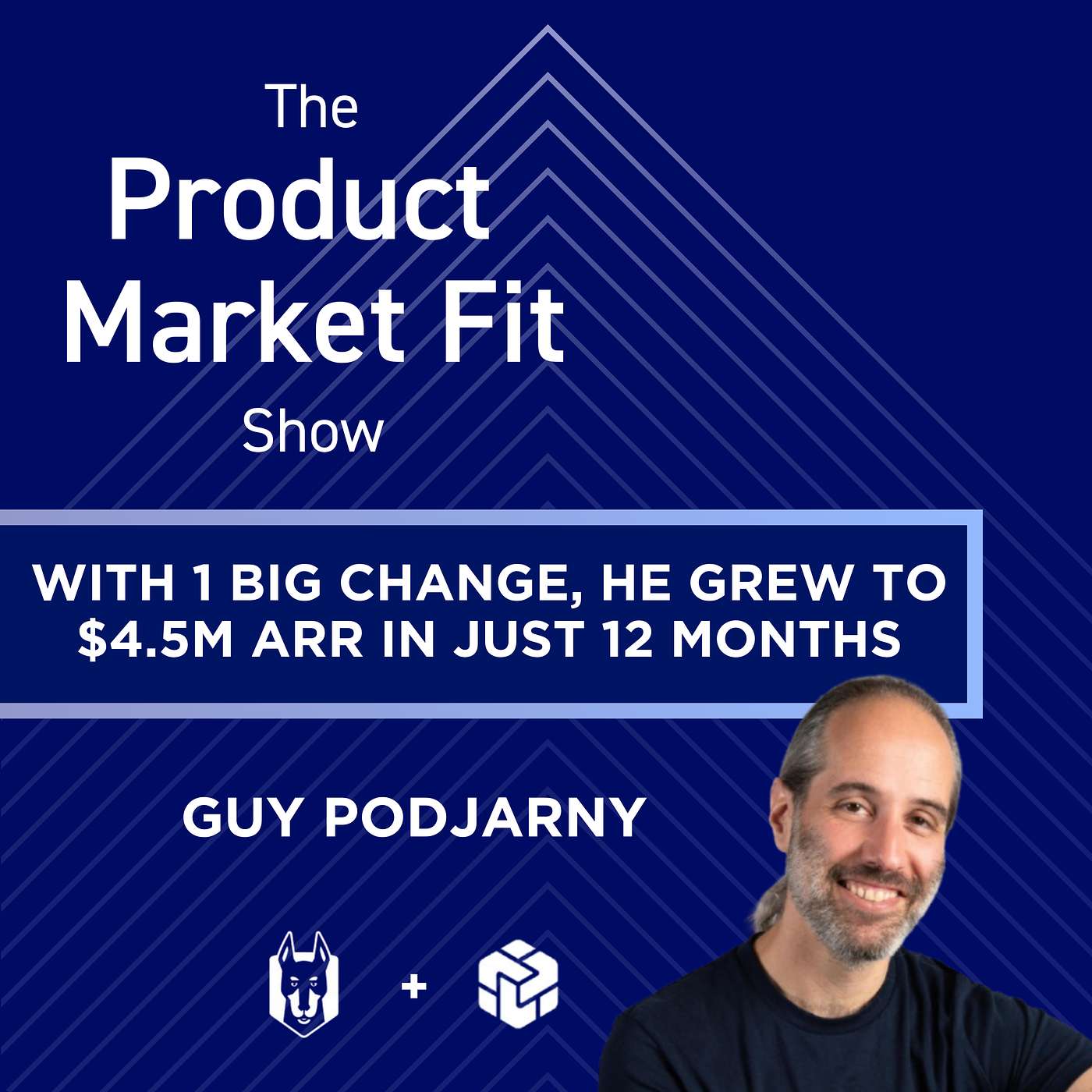
He burned $4M to hit $100K ARR—but with 1 big change, he grew to $4.5M ARR in just 12 months. | Guy Podjarny, Founder of Snyk & Tessl
Guy spent 2 years and $4M building Snyk to $100K ARR. Thousands of developers loved the product. They just wouldn't pay.Then he figured out the problem: he had product-user fit, but not product-buyer fit. Developers loved Snyk. Security teams (the actual buyers) didn't care about it. The distance between user and buyer was killing him.So Guy spent a year building governance features, rep

5x founder asked Ford for a contract so large—they acquired his company instead. | Amar Varma, Founder of Mantle
Amar is a 5x founder who helped birth Tinder (it was the 10th project—after the first 9 failed), then sold his next company to Ford for putting a platform in every single vehicle they make.But the wildest part? He got Ford to commit in under a year by doing something most founders would never do: he asked for SO MUCH money that only the CEO could approve it. That one move made him "part of th
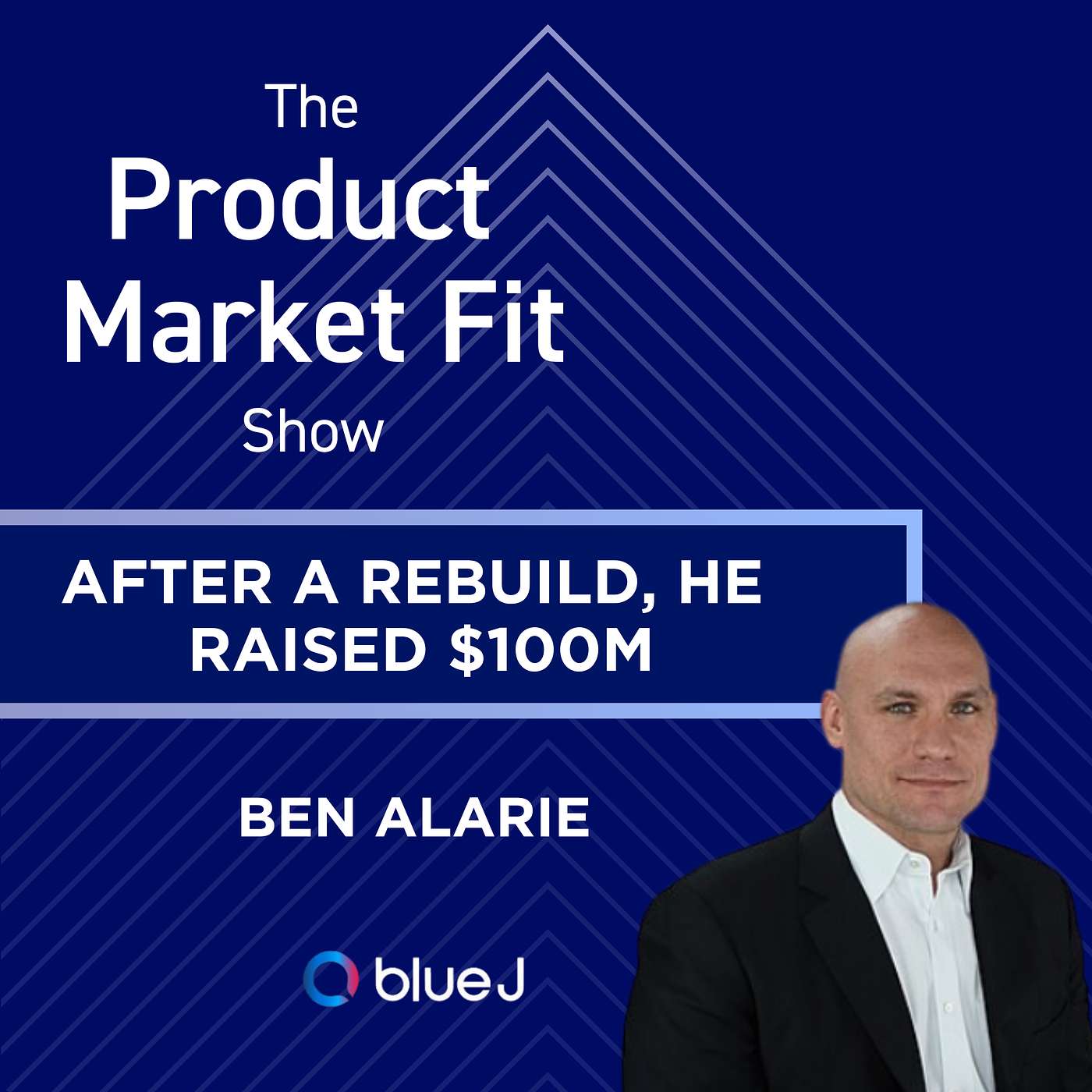
He "kind of" had PMF for 8 years—until, after a rebuild, he raised $100M | Ben Alarie, Founder of Blue J
Ben Alarie spent 8 years building Blue J with "partial product market fit"—real customers, real revenue, but no real market pull. Then he made a bet that would either kill the company or 10x it: he put the existing product in maintenance mode and gave his team 6 months to rebuild everything from scratch using a technology that barely worked.Two years later, Blue J went from $2M to $25M i

They failed every POC—then grew their cybersecurity platform to $100M ARR in 5 years. | Dean Sysman, co-founder of Axonius
Dean thought he'd have to bootstrap Axonius because no investor would fund a solution to a problem that had existed for 20 years. He was wrong—they've raised $500M. The breakthrough came when a Fortune 500 company was actively being hacked by Chinese state actors. Their first customer almost said no—they had 20 bugs during the POC. But Dean's team fixed each one within 48 hours whil

He tested his pitch on Uber drivers—then built a cybersecurity platform to $180M raised. | Casey Ellis, Founder of Bugcrowd
Casey turned hackers into a marketplace and built Bugcrowd to $180M+ raised. But the real story isn't about cybersecurity—it's about how he validated a two-sided marketplace with almost no product, refined his pitch by literally testing it on Uber drivers until it clicked, and cracked the code on category creation when everyone thought hackers were the enemy. You'll learn about the

He quit Google & his 1st startup failed—but his 2nd grows at $1M ARR every 10 days. | Zach Llyod, Founder of Warp.dev
Zach spent 8 years at Google leading engineering for Google Docs, then left to build a photo sharing app with zero go-to-market plan. Reality hit hard: "At Google, anything you launch gets millions of users. At a startup, the challenge isn't building—it's getting anyone to care." After writing a brutal postmortem documenting everything that went wrong, he started Warp with stri

He tried to return $200K to investors 30 days in—then exited to Microsoft 5 years later. | Alex Sherman, Founder of Bluefish AI
Alex had $2,000 in his checking account when Microsoft acquired his last company. For years, he paid himself $30K while his friends made six figures at corporate jobs. He had only 2 months of runway for 18 straight months. Then retail media exploded and everything changed—he went from grinding against the current to riding a wave.After selling to Microsoft, he took 6 months off, got bored, and sta
Recommended
TED Talks Daily

Learn English B1 with Daily News | English Listening Practice

Talk About Talk - Executive & Leadership Communication Skills
English with Olivia | Slow Conversations & Vocabulary
Stand In The Circle
SLOW ENGLISH PODCAST (A1-A2) With Subtitles | Daily Videos | English With Us Podcast

Learn English A2 with Daily News | Simple English Listening Practice

پلی لیست | PlayList

Conspiracy Files with Paige Carter
Bad Friends

Learn 50 English Phrases While You Sleep | Everyday English Phrases & Vocabulary
This Past Weekend w/ Theo Von
