One World, One Health
One World, One Health is a podcast by the One Health Trust that explores pressing global challenges such as pandemics, biodiversity loss, pollution, and climate change. Each episode features interviews with scientists and experts who discuss innovative solutions to improve the health of the planet and its people. The podcast aims to raise awareness and inspire action towards a more sustainable and healthy future.
Episodes
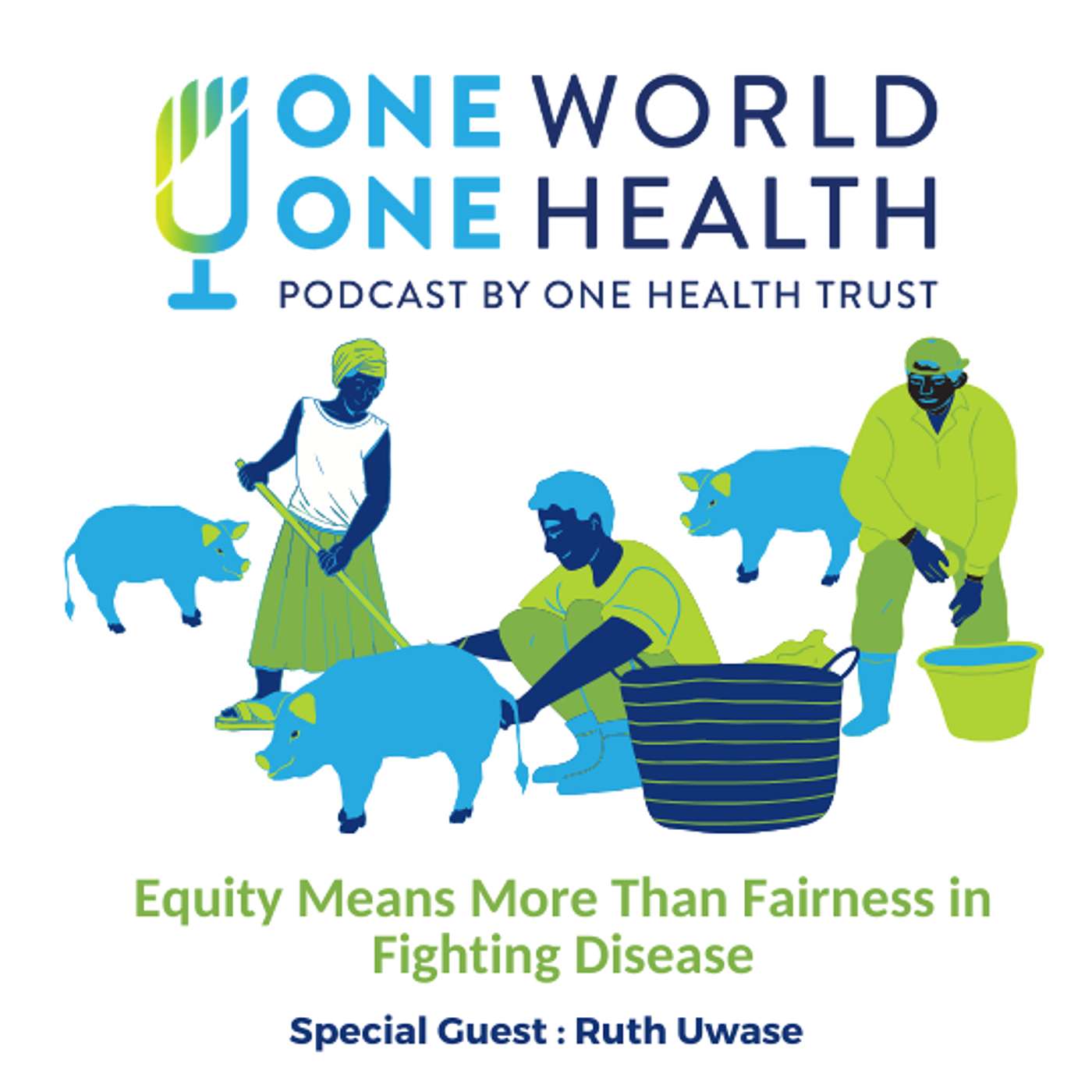
Equity Means More Than Fairness in Fighting Disease
Send us Fan MailEquity. The word brings up images of fairness and equality, and in Rwanda, it’s the law. On paper, at least, women are equal to men in Rwanda.Of course, like in so many other cases, the reality is a little different. But the Community One Health Empowerment in Rwanda (COHERS) project is working, one town, one community, and one village at a time to change that. COHERS is led by Vet

100 Conversations About One Health = 100 Surprises
Send us Fan MailThe best thing about good science is that it never fails to surprise you. And the best problem solvers are always willing to be surprised. In 100 episodes of One World, One Health, we've been surprised over and over again by what people have learned as they have set out to solve some of the biggest problems facing the planet – and by how often what everyone thought was going t

When Solutions Start with Listening
Send us Fan MailSometimes the best medicine is just listening. We’ve found this over and over again in this podcast – doctors, public health workers, ecologists and other people working in the One Health field struggle to solve some seemingly complicated problem, and then find it’s pretty straightforward when they stop and really listen to the people they’re trying to help. Whether it’s parents wo

One Shot, Big Shift – Brazil’s Homegrown Breakthrough Against Dengue
Send us Fan MailIt’s a rare piece of good news. A single-dose dengue vaccine developed in Brazil as part of an international collaboration protected people against at least two strains of the virus for five years or longer, and did so safely. The vaccine was already being tested across Brazil and the findings helped boost confidence in its use. “This is a big deal,” says Dr. Andre Siqueira, Head o

The Potential Nightmare of Mirror Bacteria
Send us Fan MailImagine a life form identical to your own, only backwards.At first, it would look normal. But just like when you try to use a mirror to read text on a page, it doesn’t quite translate. For some reason, all of the DNA of life on Earth is right-handed. The double helix of DNA that codes for all life on the planet spirals to the right – a quality called chirality. But, in theory, scie

Beyond the Frontlines – Tackling Drug Resistance in Conflict Zones
Send us Fan MailImagine this scene:A family’s house was destroyed when it was bombed during a war. They got out with the clothes on their backs – nothing more. When they were fleeing, the mother was hit with fragments from another bomb. It tore off part of her leg. Dirt got in the wound.They made it to a refugee camp, but the wound got infected. With nothing available to treat the injury, the infe

Saving Lives with Midwives
Send us Fan MailHaving a baby should be safe. Yet it’s far too often a death sentence for both the mother and the baby. An estimated 260,000 women died in 2023 during and right after giving birth, and those numbers will have risen with the loss of United States global aid dollars.There are ways to improve this – better prenatal care is an obvious one. According to the World Health Organization, wo

Food as Medicine — For People and the Planet
Send us Fan MailFighting climate change can feel like a hopeless battle. Who can take on the giant fossil fuel companies when governments are not even bothering? How can countries act when every day temperatures rise, superstorms flood coastal areas, droughts devastate crops, and weather patterns bring insects and new diseases to areas previously spared?But there is something powerful and importan

If Governments Aren't Doing Enough to Fight Climate Change, Who Else Can?
Send us Fan MailA new report on health and climate change paints the grimmest picture yet about what’s going on – not just that 2024 was the hottest year on record, but evidence that many governments have stopped even pretending to try to do anything about it.The 2025 Lancet Countdown on Health and Climate Change finds that more than half a million people die every year from heat-related causes, u

Protect Land Rights, Save Forests, Save Lives, Too
Send us Fan MailOf course, saving forests is good for the animals that live there and the environment. But saving forests where indigenous people live can have another surprising benefit. It can be good for the health of all of the people who live throughout the region, researchers have found.That benefit seems to come not just because forests are healthier ecosystems in general, but because indig

A Viral Surprise at a Bat Cave
Send us Fan MailBats can carry several viruses that can kills humans. Some well understood – rabies, the deadliest virus of all, is transmitted directly from bats to people from bat bites. Other viruses, such as Hendra virus, are a little more mysterious and indirect in how they spread. And researchers are still unsure how viruses such as Ebola, Marburg and the coronavirus that caused Covid-19 get

An Unknown Burden – Drug resistance and lab capacity in Africa
Send us Fan MailDrug-resistant germs are hidden killers in more than one way. Not only are the microbes invisible to the human eye, in many places, they’re invisible because people simply are not looking for them systematically.Doctors often do not know what infections their patients have and treat them based on best guesses, which allows for ineffective treatments and exacerbates drug resistance.

The Invisible Second Threat to Cancer Patients – Drug-Resistant Infections
Send us Fan MailIt’s a common scenario for a cancer patient. They’re undergoing treatment and get what’s known as a peripherally inserted central catheter or PICC (pronounced “pick”) line to make it more convenient to administer drugs. They are in and out of the hospital or just the clinic frequently to see various providers. The treatment they receive may run down their immune system a little bit

When Fear Spreads Faster Than Facts – Autism, Vaccines, and Measles
Send us Fan MailIt’s a really bad year for measles. Cases are spiking in countries where children should have been fully vaccinated, such as the United States, Canada, and Mexico. More than 1,000 cases have been reported in the United States just in the first half of 2025, with at least 3 deaths. The death of a child in Texas early in 2025 was the first time a child had died from the infection in

Cut Deep – What's at stake in the gutting of U.S. biodefense?
Send us Fan MailZombie movies may score at the box office and shows about dangerous contagions including “The Last of Us” may be a hit on streaming services, but preparedness for disasters is no winner for American politicians. Every recent U.S. presidential administration has dismantled the pandemic plan put together by the previous one, notes Dr. Asha M. George, Executive Director of the Biparti

From Seals to People – What H5N1 in Patagonia Foretells
Send us Fan MailThe scene on the beach was horrific. Thousands of mothers and baby elephant seals lay in the sand, taken out by a deadly virus.Dr. Marcela Uhart and her colleagues were shocked by what they found after the H5N1 avian influenza virus swept through a colony of elephant seals on the coast of Argentina’s far south Patagonia region. More than 17,000 of the animals had died, their bodies

Can Microplastics Spread Killer Bacteria?
Send us Fan MailPlastic is everywhere. So are drug-resistant microbes.What happens when the two team up?A raft of new studies show that bacteria can grow well on plastics, especially on microplastics. Other studies show just how widespread microplastics are – they are found in every ocean and sea tested so far. The most startling studies show these tiny bits of plastics can also build up in the hu

Cuts, Tariffs, and Tightening Borders – Trump's United States and Global Health
Send us Fan MailIt’s been a dire year for global health. Almost as soon as he took office as president of the United States, Donald Trump said he would withdraw the country from membership in the World Health Organization (WHO), he fired almost everyone at the U.S. Agency for International Development (USAID), and slashed staffing and budgets at U.S. health agencies such as the National Institutes

Clearing the Air – Can Pollution Affect Kid's Grades?
Send us Fan MailAir pollution is a big killer. Air pollution of all kinds helped kill 4.2 million people globally in 2019, according to the World Health Organization.It can damage nearly every organ in the body, worsening asthma and leading to cancer and heart disease. It especially affects pregnant women and can damage a growing fetus.Air pollution also has more insidious effects.Dr. Álvaro Hoffl

From Young Adult Romance to the World's Deadliest Infectious Disease – Writer John Green takes on TB
Send us Fan MailIt’s hard to overstate how popular writer John Green is. His most famous book, The Fault in Our Stars – a novel about teenagers with cancer, young love, and fate – has sold tens of millions of copies. The film based on the book brought in more than $300 million and it’s still popular to this day.Green has become a YouTube star and leader of online communities of fans including Nerd

Fighting the Rise of Anti-Science
Send us Fan MailPeople have always doubted science. In the 17th century, Galileo was sentenced to house arrest by the Catholic Church for reporting his observations that the sun is at the center of the solar system and that the other planets, including Earth, orbit it. In 1925, the U.S. state of Tennessee banned the teaching of evolution and when a high school teacher named John Scopes agreed to c

Spotty Coverage – Filling trust gaps in measles vaccination
Send us Fan MailMeasles is an extremely infectious virus that can both kill and cripple children. Luckily, there are highly effective vaccines to prevent the disease. The World Health Organization recommends that 95 percent of the population be fully vaccinated against measles because it’s so contagious. This helps to ensure that vulnerable children and infants who cannot be vaccinated are protect

“It’s Mind Blowing” – Governments support fossil fuels in face of climate destruction
Send us Fan MailGovernments and corporations are “undermining our future” by supporting fossil fuels in the face of overwhelming evidence that using coal, oil, and gas is killing people, a startling new report finds.The report, from the Lancet Countdown on Health and Climate Change, finds that in 2023 alone, more than double the number of people over 65 died from excessive heat compared to the 199

Fighting Killer Bugs in Babies
Send us Fan MailChildren under five years old are fragile. They’re more vulnerable than adults to malaria, pneumonia, diarrhea, and other infections. A growing number of these infections that sicken and kill children are resistant to the drugs developed to treat them – a phenomenon known as antimicrobial resistance, or AMR.AMR is a big killer. Nearly five million deaths are caused in part by drug-

Mpox – An evolving One Health problem
Send us Fan MailSmallpox may be gone but it’s got a cousin called mpox, and that virus is now spreading fast across parts of Africa.As of October 2024, this mpox outbreak had infected more than 40,000 people, mostly in the Democratic Republic of Congo, according to the Africa Centres for Disease Control and Prevention. More than 1,000 people have died from the infection. The World Health Organizat

Clearing forests makes room for farms – and disease outbreaks
Send us Fan MailFarmers need land to grow their crops, and in many parts of the world, that means clearing forests. That’s especially true in the Amazon region in South America. Crops just won’t grow under the thick forest canopy, so a new banana plantation means clearing trees. This has all sorts of effects on the ecosystem and researchers are seeing a new one.A virus called Oropouche was identif

A Life Cut Short When Antibiotics Stopped Working
Send us Fan MailMost people don’t even think twice when they get an infection. Much of the time, the best treatment is simple: fluids and rest. Bacterial infections can be treated with antibiotics – a quick course of pills, maybe a week or 10 days, and you’re done.But the rise of drug-resistant pathogens is changing that. These germs (viruses, bacteria, parasites, and fungi) have developed the abi

“My life is never going to be normal again.” – The toll of antibiotic resistance
Send us Fan MailRosemary Bartel had no idea her life was going to take a turn when she went to a hospital near her home in Chilton, Wisconsin in the United States for standard knee replacement surgery – her second such operation. She was ready to work hard to recover and return to her busy job at her Roman Catholic diocese. But Rosie developed an all-too-common infection known as MRSA—methicillin-

When Superbugs Get Personal – From professional preoccupation to a family's nightmare
Send us Fan MailDr. Nour Shamas knows about antimicrobial resistance. As a clinical pharmacist, she was trained in how to dispense drugs to treat infections, and her graduate studies in global health policy made her aware of the threat of antimicrobial resistance, or AMR. Antimicrobial resistance develops when bacteria, viruses, fungi, or parasites evolve the ability to shake off the effects of dr

Innovation to Save Antibiotics – Prize-Winning Diagnostics for UTIs
Send us Fan MailUrinary tract infections (UTIs) are common, uncomfortable, and embarrassing. They can also be deadly. These infections of the kidneys, bladder, or urethra affect about 1 in 10 men in their lifetimes and more than half of women. Untreated UTIs can cause a body-wide infection known as sepsis. An estimated 236,000 people globally die every year from UTIs. Most UTIs are fairly easy to

Hazardous Air in the Neighborhood– Local Pollution and Asthma
Send us Fan MailNo one wants to be exposed to air pollution. No one wants to raise their kids breathing in polluted air in their own neighborhoods.But in Austin, Texas, people of color are disproportionately forced to do both.Dr. Sarah Chambliss, a research associate in the Department of Population Health at Dell Medical School at the University of Texas at Austin, led a team that ran a study of w

The Next Pandemic
Send us Fan MailPeople don’t want to see any more pandemics, notes Nita Madhav, Senior Director of Epidemiology & Modeling at Ginkgo Biosecurity, the biosecurity and public health unit of Ginkgo Bioworks. The world is collectively traumatized by the horrors of the COVID-19 pandemic, Madhav says in this episode of One World, One Health. But just because we don’t want to see another pandemic do
Wanted: A New Approach to Funding Treatments for Drug-Defying Germs
Send us Fan MailDrug-resistant bacteria are major killers, playing a role in killing five million people a year. Antibiotics were miracle drugs when they were invented 100 years ago, but they are losing their power against always adapting and evolving bacteria. At the same time, the market for new antimicrobial drugs has collapsed. Hardly anyone wants to make new antibiotics, and even fewer compan
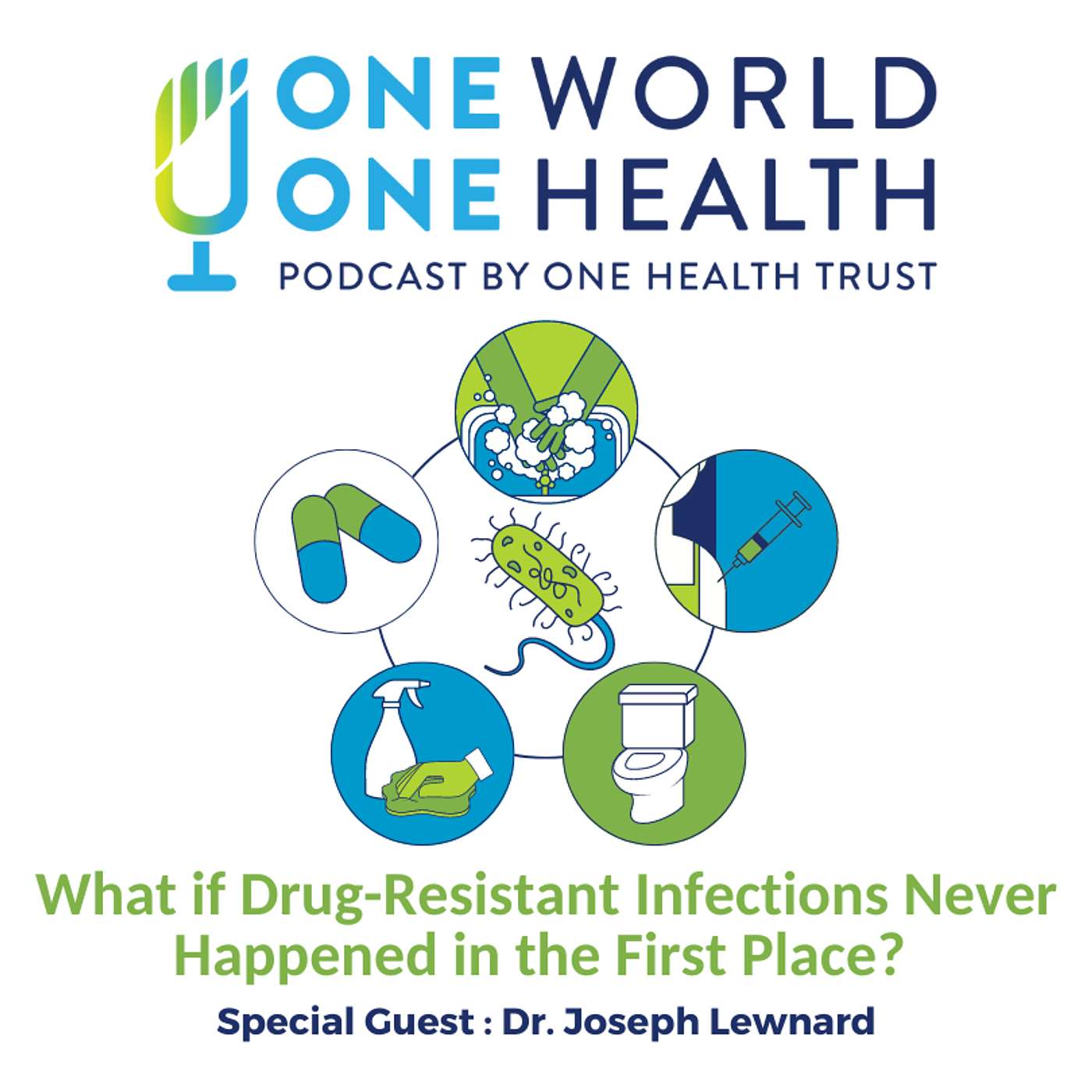
What if Drug-Resistant Infections Never Happened in the First Place?
Send us Fan MailAn estimated 7.7 million people die from bacterial infections a year around the world. A growing number of these deaths are caused by bacteria that have developed antibiotic resistance – the ability to thrive in the face of antibiotics. This ability of germs to defy the effects of drugs is called antimicrobial resistance, or AMR. But why wait to treat these infections after they’ve

Targeting Drug Resistance – Achievable Goals to Keep Antibiotics Working
Send us Fan MailThe problem of antimicrobial resistance – AMR for short – is clear. More and more of these germs resistant to existing treatments are emerging everywhere, and there’s little disagreement that governments, nonprofits, doctors, patients, and politicians all need to help tackle the problem.But people need to agree on what to do, and they need to agree on how to measure progress.That’s

The Stubborn Germs That are Getting the Upper Hand
Send us Fan MailWhat kills more people than HIV or malaria? What threatens anybody on the planet – and not just people, but animals, too?It’s antimicrobial resistance (AMR), the formal name for drug-resistant superbugs. These include bacteria that defy the effects of antibiotics, viruses that thrive in the face of antiviral drugs, and fungi that are immune to antifungal treatments.Each year, an es

Never Again: Making Sure Patients Get the Air They Need
Send us Fan MailThe second wave of the COVID-19 pandemic was especially bad in India. Patients filled hospitals as the Delta variant swept the country in April of 2021. As many as 2,000 people died every day.Many died literally gasping for air. Although India is a major producer of medical oxygen, supplies ran out amid the unprecedented demand. And while some areas of the vast country had access t
Vaccines for Adults Pay Off in Both Lives and Money
Send us Fan MailVaccines save lives. There’s no doubt about this: childhood vaccination saves four million lives every year, the US Centers for Disease Control and Prevention says. Children worldwide get a long list of vaccines, but what about adults?A study by the Office of Health Economics (OHE), an independent research organization, took a look at the cost-effectiveness of four commonly given a

What's Surprising and Scary About Avian Influenza Right Now?
Send us Fan MailBird flu – aka avian influenza – is doing what it does best yet again – surprising scientists, public health officials, farmers, and wildlife experts. It’s been spreading among dairy cattle in the United States, something that startles even long-term observers of the virus.The H5N1 strain of avian influenza was first noticed in the late 1990s and it immediately worried experts, who

A Noah’s Ark for Coral Reefs
Send us Fan MailCoral reefs are literally the foundation for much of the life on Earth. These living cities are made up of animals –coral – which exist in symbiosis with algae.They are home to thousands of species of fish, as well as important to the lives of as many as a billion people who rely on their production of food, their protection of coastal areas, and their attraction for tourists. They

A Problem of Access and Excess – Antibiotic Resistance
Send us Fan MailFrom the moment people discovered how to use penicillin, the first antibiotic, resistance has been a problem. Bacteria may be small, but they are not simple organisms and they have been fighting for survival for billions of years. Many bacteria have developed the tools they need to evade the effects of antibiotic treatments, and they can trade these weapons with other bacteria as t
Dengue in Brazil – Putting the heat on vaccine development and mosquito control
Send us Fan MailIt’s hotter and wetter than usual in Brazil, and climate conditions are driving an early blast of a killer virus – dengue. The mosquito-borne virus is spreading earlier than ever before and affecting far more parts of the country than usual – and all at once.Dengue’s a nasty virus. It causes pain so severe that it’s sometimes called breakbone fever. Patients often feel nauseated, d

When good bacteria are killed, C. difficile strikes
Send us Fan MailPeggy Lillis wasn’t expecting trouble when her dentist prescribed antibiotics after she had a root canal in 2010. It was a standard, just-in-case treatment to prevent infections after the procedure.She also wasn’t worried when she developed diarrhea soon afterward. The kindergarten teacher assumed she’d caught a bug from one of her young students.But within just a few days, the pre
Why Aren’t People Clamoring for a Vaccine that Prevents Cancer?
Send us Fan MailThere’s a virus that infects just about every adult. It’s passed by skin-to-skin contact – most often during sexual intercourse. It’s the human papillomavirus (HPV for short). It often doesn't show any symptoms, and at times the infection resolves on its own. It can cause warts, but more ominously, HPV is the single biggest cause of cervical cancer. It's also a factor in
Caught in a Cycle of Panic – “A fragile state of preparedness”
Send us Fan MailThe world acted as if the COVID-19 pandemic was a big surprise. However, just months before, the Global Preparedness Monitoring Board (GPMB) had warned that the world was vulnerable to a pandemic of respiratory illness and needed to act quickly. Kolinda Grabar-Kitarović, the former president of Croatia, says she felt frustrated and helpless when the pandemic took hold in early 202

The Smallest Victims of Drug Resistance
Send us Fan MailDrug-resistant infections are a problem for everyone, but especially for newborns. They don’t have fully developed immune systems, and their bodies are less equipped to fight infections.The risk is highest for infants born sick or prematurely. Bloodborne infections – sepsis – are one major threat to newborns. Sepsis can move quickly, overpowering the body and causing severe illnes

Air Pollution, Depression, and Pregnancy
Send us Fan MailAir pollution is a big killer, a culprit in 6.7 million deaths a year. It’s also depressing to live in a polluted area, and not simply for aesthetic reasons. Many people don't even know they are being exposed to some types of invisible air pollution.A team of researchers in California recently linked air pollution to depression during and after pregnancy. That’s dangerous to b

A Prize for Superbug Solutions
Send us Fan MailWhile innovative and effective ideas to help solve major global health problems are hard to come by, finding and attaining funding to put them into action can be even more difficult. The research grant review process takes time and can be bogged down in red tape. Decisions on who and what kind of research gets funded can pass over novel ideas in favor of familiar project plans.The

Beyond Bullets and Bombs – Conflicts and Disease Spread
Send us Fan MailIn Gaza, thousands have been killed, tens of thousands injured, and hundreds of thousands more are without shelter, clean water, or medical care.“You have these horrible, horrible scenes playing out in many places,” says Avril Benoit, executive director of Medecins Sans Frontieres-USA, also known as MSF or Doctors Without Borders in English.Humanitarian groups such as Doctors Witho

Forecasting for Hunger
Send us Fan MailIt’s heartbreaking when a drought or flood causes crops in a region to fail, and children to go hungry. Kids can starve to death or endure social, economic, and health problems well into adulthood due to malnutrition. But what if there was a way to predict when these weather disasters are likely to happen, so governments, aid organizations, and residents could prepare? A team at th

Community Health Workers – Indispensable, yet invisible
Send us Fan MailWho reminds an HIV-positive pregnant woman to take her vitamins and the drugs that will protect her baby from infection? Who explains to fearful parents that COVID-19 vaccines will protect them and their children from the disease? Who shows people how to wash their hands properly so they don’t spread germs to themselves and others? In many countries across the globe it’s community

Can Vaccines Help Slow the Spread of Superbugs?
Send us Fan MailVaccines are lifesavers. Childhood vaccines save 4 million lives every year, according to the US Centers for Disease Control and Prevention. And it turns out vaccines don’t just save lives by directly preventing disease. They can save lives by reducing the rise of drug-resistant pathogens (mostly bacteria and viruses). This is because people who are vaccinated are less likely to ge
Gasping for Air – The Oxygen Shortage is Still Killing People
Send us Fan MailAir – it’s our most basic need. It’s far more vital than water, food, or medicine. People can survive just minutes without its most important component: oxygen. But in much of the world, people struggling to breathe lack access to medical oxygen, a treatment that makes the difference between life and death. The COVID-19 pandemic highlighted the problem and made it exponentially wor

Watching Out for the Ever-Changing Bird Flu
Send us Fan MailBird flu is terrifying. Although avian influenza only rarely infects people, when it does, it kills half or more of them. For the past 25 years, the number one avian influenza threat has been highly pathogenic H5N1 avian influenza. Like other influenza A viruses, it gets its name from the two important components of the virus – the hemagglutinin, or H designation, and the neuramini

Mapping and Tracking Superbugs – Global wastewater monitoring of drug resistance
Send us Fan MailDrug-defying superbugs can be found in manure, soil, the ocean, and especially in sewers. These places are sources of infection, but they also provide a way to keep an eye on which drug-resistant germs are where – and how much they are changing. The World Health Organization encourages mapping all of the places drug-resistant organisms are popping up, and what kind of organisms th

Stigma and Antibiotics – STIs in a Sex Workers' Hub
Send us Fan MailSexually transmitted infections (STIs) are very, very common. One million people get infected with an STI every day, according to the World Health Organization. Many are easy to treat with antibiotics, or should be. These include gonorrhea, syphilis, and chlamydia. Like nearly all bacterial infections, they can and have begun to evolve resistance to antibiotics. The threat: these i

An Old Killer, Malaria, Learns New Tricks
Send us Fan MailMalaria is an ancient killer and it’s one that keeps outwitting humanity at every turn. It took centuries for people to figure out it was spread by mosquitoes. It evolved resistance to the drugs used to treat it and we developed new ones. It’s made comebacks thanks to climate change in places that got rid of the disease before by cleaning out mosquitoes. And now, the parasites that

Stranger Danger – How fear of migrants can worsen disease spread
Send us Fan MailWhen the so-called Spanish Influenza started spreading in 1918, people locked themselves in their homes or even into small towns and tried to ride it out. It seemed to make sense – travelers could bring the virus with them, so wouldn’t keeping them out keep the deadly germ out, too?It did not work, of course. No one could stay isolated for years on end while the virus and its desce

Wealth, Status, Meat, and Superbugs
Send us Fan MailMeat is never cheap – not in terms of the cost of raising animals for meat, or in terms of the impact on the environment. And now science has clearly shown that the way people use antibiotics in their flocks and herds can feed the rise of antimicrobial resistance. But antibiotics are so very useful, and in many countries, they are just “part of the furniture,” says Clare Chandler,

Racing Against Resistance – How will we win the fight against superbugs?
Send us Fan MailDr. Henry Skinner thought he had a winning new antibiotic – perhaps even more than one – when he was CEO of a small biotech company called SelectX Pharmaceuticals. But like so many other companies working to develop new antimicrobial drugs, it went bust.Skinner learned a fair bit from that experience. Many people working in antibiotics become “gun-shy,” he says, or simply get burne

Will superbugs win the arms race against humanity?
Send us Fan MailHumans developed antibiotics in the 20th century. These wonder drugs defeat killer microbes and have revolutionized medicine, making surgeries and treatments like chemotherapy much safer. Unfortunately, people are overusing and misusing antibiotics, helping bacteria learn how to defend themselves against these lifesaving drugs.Antimicrobial resistance is one of the top 10 global h

In Search of an Armor-Busting Antibiotic
Send us Fan MailDrug-resistant germs are big killers. The World Health Organization estimates that infections caused by drug-resistant microbes help kill close to five million people a year, a number that’s expected to grow. The world needs new antibiotics, but bacteria are outwitting scientists and drug developers at every turn. Microbes can produce complex molecules, such as antibiotics, to pro

What can Indigenous People Teach the World About One Health?
Send us Fan MailWhen COVID-19 started spreading around the world, many groups of indigenous people knew just what to do. They retreated into the forests they knew so well, an isolation practice that had helped their forebears survive countless other outbreaks, epidemics, and pandemics.But their survival skills didn’t stop there. Away from modern methods of food production, they turned to their kno

Cholera – Has Climate Change Given New Life to an Old Enemy?
Send us Fan MailFew diseases are as fast-moving and as horrific as cholera. Fiction may focus on the internal bleeding caused by Ebola, while movie scripts about zombie apocalypses pull from what’s known about rabies.But cholera can infect someone in the morning and kill them by the evening. It can carry off a child before a parent can even register the little one is suffering from more than a run

Bread, Cheese, and Deadly Infections – Unfriendly and Untreatable Fungi
Send us Fan MailFungi can be our friends. They’re responsible, after all, for some of our favorite foods and drinks, including beer, bread, wine, and cheese. Penicillin, the parent of all antibiotics, comes from the fungal family as well.But fungi can also cause disease in humans, animals, and plants. In this episode of One World, One Health, Dr. Ana Alastruey-Izquierdo, a research scientist at t

From Friendship Benches to Mental Health Apps – Making local ideas go global
Send us Fan MailSo many people are working to improve health around the world. But many of these efforts tend to go in one direction – people in wealthy countries traveling to lower-income countries with resources and ideas.Yet people everywhere have great ideas. It’s a shame not to make use of them. And in making good use of locally generated ideas, efforts to improve health naturally become fair

When Even the Best-Laid Plans Get Lost
Send us Fan MailBe prepared. It’s a great credo for parenting, camping, or, perhaps most important, an emergency. The world seemed ill-prepared for the COVID-19 pandemic, but in reality, experts had extensive plans in place. They just did not get put into action. One of the planners was Dr. Jesse Goodman, an infectious diseases physician who has held leadership positions at the US Food and Drug Ad

One Health Is a Big Ask But It Can Save Us
Send us Fan MailHindsight is 20-20 – it’s an old saying and never more true than when looking back at an epidemic. But sometimes looking backward can help people think more clearly when planning ahead.Dr. Sabine Franklin, a post-doctoral researcher at Yale University, is an economist using her training to better understand public health. She went to west Africa to talk to people about the Ebola ep

When Preparation Pays Off in the Fight Against Global Outbreaks
Send us Fan MailWhen Ebola virus was first spotted in west Africa at the end of 2013, few people were ready. The region had no developed or systematic health system, patients were scattered across remote rural areas, and other infections, such as malaria, were common and mimicked the early symptoms.But a team in remote Kenema, in Sierra Leone, had been working to fight a different virus – Lassa Fe

Taking Care of Our Most Precious Drugs
Send us Fan MailAntibiotics are lifesavers. These 20th-century drugs can save lives within hours, often given as just a handful of pills or an injection. But the germs they fight often fight back and evolve quickly. They develop what’s known as antimicrobial resistance, and then the drugs people use to treat infections become worthless. This happens naturally, but people and the way we behave ofte

Superbugs Everywhere All at Once – The not-so-simple fight to control drug-resistant bacteria
Send us Fan MailDrug-resistant superbugs are killers, and the problem is getting worse even as people become aware of the need to control how we use antibiotics.Researchers estimate close to five million people died in 2019 because of antibiotic-resistant bacteria alone. Yet, doctors continue to overprescribe these lifesaving drugs and farmers continue to give them to livestock and fish not only t

The Case of the Killer Eye Drops
Send us Fan MailIt was a real mystery. People showing up at hospitals and clinics across the US were infected with a rare and troubling strain of bacteria that was resistant to most of the drugs used to treat it. The strain itself had never been seen before. It was Pseudomonas aeruginosa, itself nothing rare. But this one carried a genetic change that allowed it to shake off the effects of even th

Tick, Tick... Boom! – Climate Change, tick tracking, and One Health
Send us Fan MailA walk in the woods can bring serenity and peace of mind. You can bring back souvenirs such as a beautiful leaf, or a pine cone. Sometimes your souvenir is less lovely - a tick. Dogs, cats, and even horses can suffer from tick bites and responsible pet owners regularly check their companions for these unwelcome parasites.Ticks can carry and transmit bacteria, viruses, and parasites

New Challenges from an Ancient Disease – Drug-Resistant Tuberculosis
Send us Fan MailConsumption. The White Plague. Scrofula. Tuberculosis (TB) has been known by so many names over the ages, and those names reflect just how long it’s been around and just how misunderstood it’s been. It’s killed kings and generals, playwrights, and poets.TB still sickens 10 million people every year and kills 1.5 million – even though it’s easily prevented and can be treated. It’s u

Making Superbugs Visible – Filming AMR
Send us Fan MailAntimicrobial resistance – the emergence of new drug-resistant superbugs – is one of the top 10 global health threats, the World Health Organization says.More than 700,000 people die each year from infections caused by drug-resistant microorganisms – which not only include antibiotic-resistant bacteria but also viruses, fungi, and parasites that can escape the effects of drugs desi

Hungry Bats, Flowering Trees, and Dead Horses – A tale of disease spillover
Send us Fan MailIt was 1994, and a new virus was killing racehorses in Australia. Then it killed a horse trainer who was caring for his charges. The virus, called Hendra after the Brisbane suburb where it first surfaced, is a relative of the measles virus.Hendra virus has been traced to large, furry bats known as flying foxes. While it doesn’t make the bats sick, they can spread it to animals such

The Origins of COVID-19 – What scientific research tells us
Send us Fan MailThree full years into the COVID-19 pandemic and the world still doesn’t have a firm answer about where the virus came from.People who have been studying coronaviruses and other viruses for decades say it’s overwhelmingly likely the SARS-CoV-2 virus came from animals, just as the 2002-2004 SARS virus did, the Middle East Respiratory Syndrome or MERS virus did, as Ebola does, and as

When fungal infections turn deadly
Send us Fan MailJust about everyone has had an unpleasant fungal encounter, usually something as simple as athlete’s foot, ringworm, or dandruff.But fungal infections can become much more dangerous and even deadly, especially in people whose immune systems are damaged by another infection such as HIV, tuberculosis, or even COVID-19. Mold species such as aspergillus are in the air all the time and
Suitcase Medicine – When good intentions aren’t enough in global health
Send us Fan MailHelping someone less fortunate feels good, right? But when people from rich countries show up in low- and middle-income countries dispensing goodwill and largesse, their efforts may, at best, be too little and, at worst, could do harm. Dr. Kirk Scirto, a family practice physician in Buffalo, New York, has devoted more than two decades to trying to help others through global health

Cartoons and Climate Change – Environmental science for everyone
Send us Fan MailWhen salty water seeps into a freshwater swamp, the resident alligators risk getting sick and have to fend off invading sharks. Can a monkey scientist and a pirate cat help solve the conflict?Dr. Susannah Sandrin, Clinical Professor in Environmental Science & Science Education at Arizona State University helped make sure the science was sound in this episode of the cartoon seri